

Introduction
Let’s explore how to spend 7 days in Andalusia, in the south of Spain. With just one week, you won’t be able to see everything, but you can still cover the highlights—Seville, Córdoba, Granada, and Málaga. Be prepared for an intense but rewarding journey, full of history, culture, and incredible food.
One thing you can count on is the weather: Andalusia is known for its sunshine and warm climate almost year-round. Whether you’re wandering through royal palaces, admiring Moorish architecture, or relaxing by the sea, this 7-day Andalusia itinerary will give you a real taste of what makes this region so special.
So, let’s dive into this 7-day Andalusia itinerary and discover the best of southern Spain in just one week.


Getting there
Andalusia is easy to reach thanks to its multiple international airports and great train connections. The main entry points are Seville, Málaga, and Granada airports, all with direct flights from major European cities. If you’re coming from outside Europe, the most convenient way is to fly into Madrid or Barcelona and then connect with a local flight or high-speed train (AVE) to Andalusia.
If you’re already in Spain, the AVE high-speed train is the best option. From Madrid, it takes about 2h30 to Seville or 2h40 to Córdoba, making it a fast and comfortable way to start your trip. Buses are also available, though slower, and better for budget travelers.
For those on a road trip, Andalusia is well-connected by highways. Driving during your 7-day Andalusia itinerary gives you the most freedom to explore charming white villages, scenic countryside, and smaller towns that trains don’t reach.


Moving Around
Getting around this 7-day Andalusia itinerary is pretty straightforward, and the best option really depends on your travel style.
If you’re focusing only on the big cities like Seville, Córdoba, Granada, and Málaga, you don’t need a car at all. The AVE high-speed trains and regional trains connect these cities quickly and comfortably, and buses fill in the gaps where trains don’t go. Once inside the cities, you can walk almost everywhere, especially in the historic centers.
But if you want to explore the pueblos blancos (white villages), scenic countryside, or places like Ronda, Setenil de las Bodegas, or the Alpujarras mountains, renting a car is a game-changer. The roads are in great condition, parking is usually manageable outside the historic centers, and you’ll get the flexibility to stop wherever you like.


When to Visit
Andalusia is a year-round destination, but the experience changes a lot with the seasons. So you can pretty much do that 7-day Andalusia itinerary anytime.
- Spring (March to May) – One of the best times to visit. Days are warm and sunny, evenings are pleasant, and you’ll see orange blossoms everywhere. It’s also festival season, with Seville’s Semana Santa (Holy Week) and Feria de Abril being highlights.
- Summer (June to August) – Expect scorching heat, especially in Córdoba and Seville, where temperatures often climb above 40°C (104°F). Coastal areas like Málaga and Cádiz are cooler, but this is peak tourist season.
- Autumn (September to November) – Another fantastic time. Temperatures are mild (20–28°C / 68–82°F), the crowds are smaller, and it’s perfect for sightseeing and road tripping.
- Winter (December to February) – Winters are mild compared to northern Europe, with daytime highs around 12–18°C (54–64°F). This is when we visited, and we loved it—fewer tourists, cheaper prices, and still plenty of sunshine.
If we had to pick the absolute best months for a 7-day Andalusia itinerary, we’d recommend April–May or September–October for that perfect mix of good weather and manageable crowds.
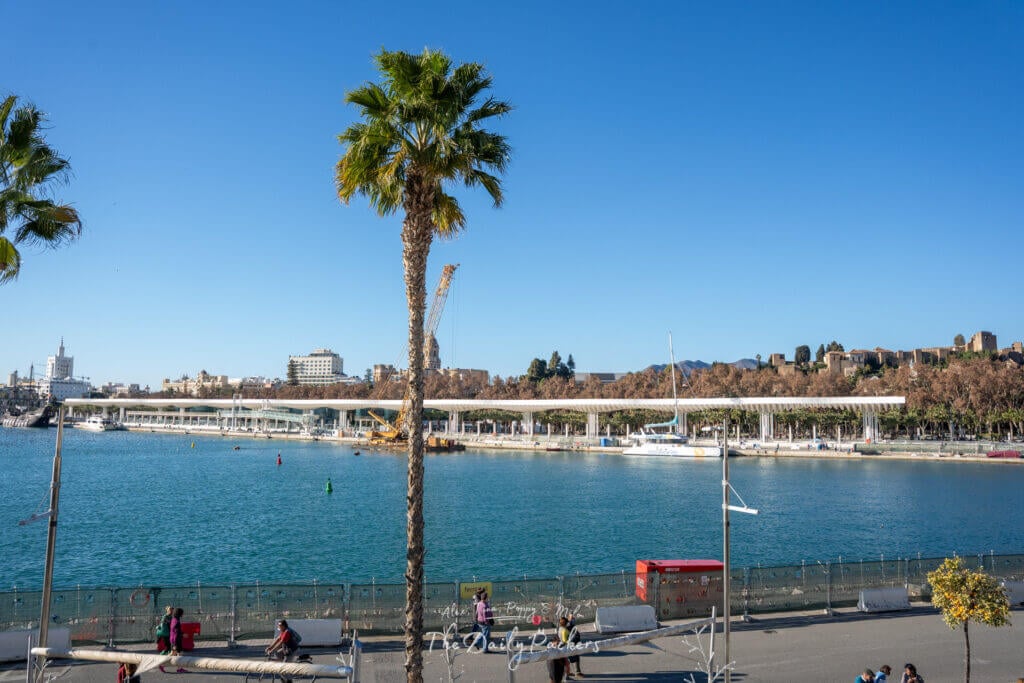

Check all your transportation options online — from buses to trains and ferries — it makes planning so much easier.
Where to Stay
For a 7-day Andalusia itinerary, it’s best to move between cities rather than staying in just one place. Andalusia is large and diverse, and splitting your time across Seville, Córdoba, Granada, and Málaga makes the most sense.
Here’s what to expect in each city and the types of stays you can book:
- Seville – Stay at least 3–4 nights. The old town and Santa Cruz district are packed with charming boutique hotels and traditional Andalusian-style patios. If you want something more local, book a family-run guesthouse tucked in the narrow streets.
- Córdoba – One night is usually enough or a day trip from Seville. The best stays here are cozy riad-style hotels and guesthouses inside historic buildings. Try to stay close to the Mezquita to really soak up the atmosphere.
- Granada – Plan for 1 night. You’ll find a mix of cave houses in the Sacromonte district, budget-friendly hostels in the Albaicín, and beautiful boutique hotels with Alhambra views.
- Málaga – End with 1–2 nights. Choose between modern city hotels in the historic center, apartments with terraces near Calle Larios, or beachfront resorts if you want to relax by the sea.
Outside the main cities, Andalusia is full of unique options too. You can spend a night in a cortijo (traditional farmhouse) surrounded by olive groves, or even book a stay in a converted monastery or palace hotel for something truly memorable.


Don’t forget to book your accommodations in advance – the best places always fill up quickly.
What to Eat
One of the best parts of your 7-day Andalusia itinerary will be the food. Southern Spain is all about fresh ingredients, bold flavors, and tapas culture. Meals are meant to be shared, slowly enjoyed, often with a glass of local wine or sherry. Here are some must-try dishes:
- Tapas – Andalusia is the birthplace of tapas. Order a few small plates instead of one big dish and try a bit of everything.
- Salmorejo – Similar to gazpacho but thicker, creamier, and topped with cured ham and hard-boiled egg. A Córdoba specialty.
- Gazpacho – A refreshing cold tomato soup, perfect on hot days.
- Flamenquín – Pork wrapped in ham, breaded, and fried. A filling Córdoba classic.
- Rabo de Toro (Oxtail stew) – Rich, slow-cooked, and one of Andalusia’s heartiest dishes.
- Pescaito frito – Freshly fried fish, especially popular in coastal Málaga.
- Tortilla de camarones – Crispy shrimp fritters from Cádiz.
- Churros con chocolate – Fried dough sticks dipped in thick hot chocolate — the perfect breakfast or afternoon snack.
- Tarta de Santiago – Almond cake topped with powdered sugar, more common in the north of Spain but easy to find in Andalusia too.
For vegetarians, Andalusia is surprisingly friendly: dishes like berenjenas con miel (fried eggplant with honey), ensaladilla rusa (Spanish potato salad), vegetable paella, and, endless tapas with grilled veggies, cheeses, and olives are always on the menu.
And don’t forget to pair your meals with local drinks:
- Sherry (Jerez) – Andalusia’s most famous export. Try a glass in Seville or Jerez.
- Tinto de Verano – A lighter alternative to sangria, made with red wine and lemon soda.
- Local wines – Málaga and Granada both produce fantastic regional wines.

7-day Andalusia Itinerary Overview
You don’t need a car to explore Andalusia, this 7-day Andalusia itinerary can be done easily by train and bus, connecting the main cities. Here’s how to make the most of your 7 days:
- Day 1: Arrive in Seville: Arrive at Seville Airport, transfer to the city center, and settle into your accommodation.
- Day 2: Visit Seville: Discover the highlights of the city, from Plaza de España to the charming Santa Cruz district.
- Day 3: Visit Seville: Spend the day visiting Seville’s UNESCO monuments like the Royal Alcázar, Cathedral, and Archivo de Indias.
- Day 4: Day trip to Córdoba: Take the train to Córdoba and explore the Mezquita-Catedral, Alcázar gardens, and the old Jewish Quarter.
- Day 5: Transfer to Granada & Visit: Travel by train or bus to Granada, then wander the Albaicín district or relax in the city center.
- Day 6: Visit Granada & Transfer to Málaga: Explore the Alhambra in the morning, then transfer to Málaga in the afternoon and enjoy the old town.
- Day 7: Visit Málaga & Return: Spend your final day at the Alcazaba, Gibralfaro, or the beach before heading home.
Note: If you’re renting a car, you can easily extend this 7-day Andalusia itinerary with more stops or adjust it to your pace.


Check our Google Map of Spain
7-day Andalusia Itinerary – Day by Day
Day 1: Arrive in Seville
Arrive in Seville through its international airport. From there, hop on the EA bus, which takes you directly to the city center in about 35 minutes. Once you reach the center, head to your accommodation, settle in, and take it easy. If you arrive early enough, go for a relaxed evening stroll through the old town and enjoy your first tapas in Andalusia.
Where to stay in Seville: (€): Hotel Giralda Center, (€€): Only YOU Hotel Sevilla, (€€€): Hotel Alfonso XIII,

Day 2: Visit Seville
Kick off your second day of the 7-day Andalusia itinerary with a Free Walking Tour—a great way to get your bearings while learning about Seville’s history, legends, and hidden corners from a local guide. Once you’ve walked through the highlights of the old town, head over to Parque de María Luisa, Seville’s biggest park. Take your time strolling under the shady trees, relaxing by fountains, and enjoying its lush gardens.

Within the park, you’ll find the stunning Plaza de España, the city’s most iconic square. Its sweeping semi-circular building, tiled alcoves, and bridges over a canal make it one of the most photogenic spots in Andalusia.
As evening approaches, walk back toward the riverbank. It’s a beautiful place to wind down your day—sit at one of the terraces along the Guadalquivir River, enjoy the view of the water, and soak in the evening atmosphere of Seville.
Where to stay in Seville: (€): Hotel Giralda Center, (€€): Only YOU Hotel Sevilla, (€€€): Hotel Alfonso XIII,


Read: 22 Best things to do in Seville in 4 days
Day 3: Visit Seville
Spend the next day of your 7-day Andalusia itinerary exploring the heart of Seville’s old town, home to three UNESCO World Heritage sites. Start with the Royal Alcázar of Seville, a breathtaking palace complex where Islamic, Gothic, Renaissance, and Baroque architecture blend seamlessly. Take your time wandering through its ornate halls, tranquil courtyards, and lush gardens.

Next, head to the Catedral de Sevilla, one of the largest Gothic cathedrals in the world. Inside, you’ll find stunning chapels, priceless art, and the tomb of Christopher Columbus. Don’t skip climbing the Giralda Tower for panoramic views over the city.

Just nearby is the Archivo de Indias, a must-see for history lovers. This archive houses invaluable documents from Spain’s colonial era, showcasing the country’s role in global history.

In the afternoon, wander through the Santa Cruz district, the old Jewish quarter. Its narrow, winding streets, charming squares, and flower-filled patios are perfect for a leisurely stroll.

End your day with a flamenco show at Casa de la Memoria, one of the most intimate and authentic venues in Seville. It’s the perfect way to experience the passion and artistry of this Andalusian tradition.
Where to stay in Seville: (€): Hotel Giralda Center, (€€): Only YOU Hotel Sevilla, (€€€): Hotel Alfonso XIII,


Tip: Now, that we travel with baby Milo, we always bring this Babybjorn baby carrier with us.
Day 4: Day trip to Cordoba
On your fifth day, take a break from Seville with a day trip to Córdoba, one of Andalusia’s most enchanting cities. The fastest and most convenient way to get there is by train. The 9:13 am high-speed AVE train will get you to Córdoba in just 45 minutes, leaving you with plenty of time to explore.
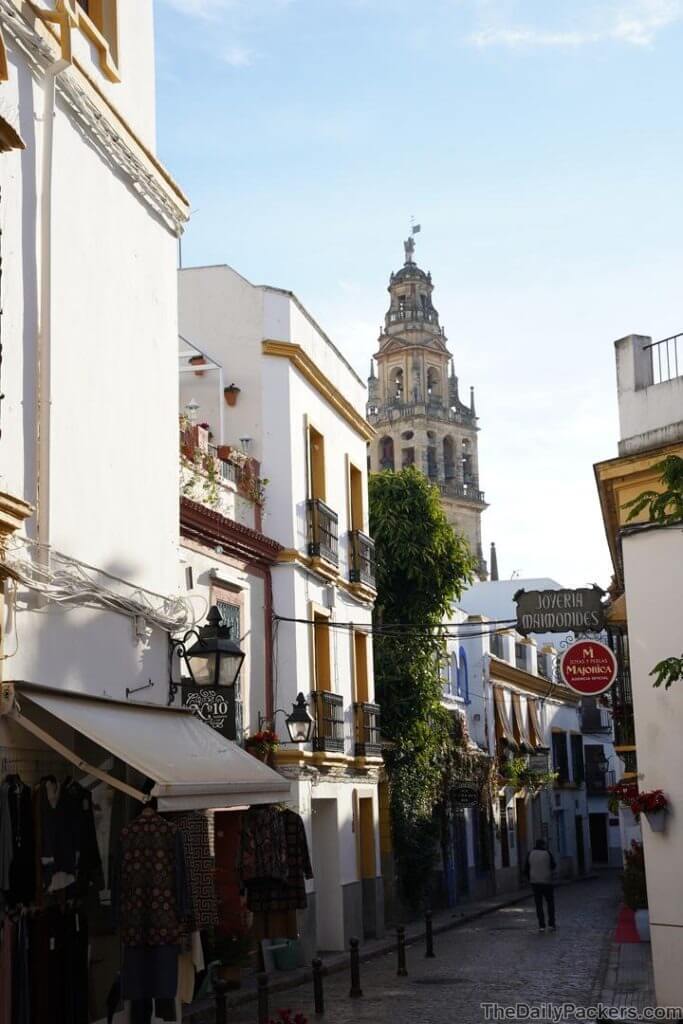
Your first stop should be the city’s crown jewel: the Mezquita-Catedral (Mosque-Cathedral of Córdoba). This architectural wonder is unlike anything else in the world, blending Islamic and Christian influences with its endless red-and-white arches and ornate chapels. It’s the kind of place that stays with you long after your visit.

From there, make your way to the Alcázar de los Reyes Cristianos (Alcázar of the Christian Monarchs). The palace itself is interesting, but the real highlight is its beautifully kept gardens, with reflecting pools, fountains, and orange trees that make it a perfect spot to wander slowly.

Afterwards, stroll through Córdoba’s charming streets and discover its other highlights:
- Roman Bridge crossing the Guadalquivir River
- Jewish Quarter with its whitewashed houses and narrow alleys
- Hidden patios decorated with colorful flowers
If you prefer a more relaxed experience without having to plan trains and tickets, you can also join a guided tour from Seville to Córdoba, which typically covers all the main highlights and gives you extra context about the city.

By the evening, take the train back to Seville and enjoy a quiet night after a full day of sightseeing.
Where to stay in Seville: (€): Hotel Giralda Center, (€€): Only YOU Hotel Sevilla, (€€€): Hotel Alfonso XIII,

Read: 9 best things to do in Cordoba in 1 day
Day 5: Transfer to Granada & Visit
After a few busy days in Seville, take the morning slow. Enjoy a last walk along the Guadalquivir River, maybe grab a coffee on the riverbank, and soak in the atmosphere before moving on to your next stop. Maybe make a stop at the Setas de Sevilla.

From Seville, you can reach Granada either by bus (around 3 hours) or train (about 2.5–3 hours depending on the connection). Both options are comfortable and run several times a day.
Once you arrive in Granada, check into your accommodation and decide how much energy you have left. If you feel like exploring, start with a gentle stroll through the old city center and the lively Albaicín district with its narrow streets and Moorish charm. If not, simply relax, settle in, and save your energy for tomorrow’s big highlight: the Alhambra.
Where to stay in Granada: (€): Hotelito Suecia, (€€): NH Collection Victoria:, (€€€): Seda Club Hotel

Read: 13 best things to do in Granada in 2 days
Day 6: Visit Granada & Transfer to Malaga
Start your day with the Alhambra, the most visited monument in Spain and a true highlight of Andalusia. Perched high above the city, this fortress and palace complex is famous for its intricate Islamic architecture, peaceful courtyards, and the lush gardens of the Generalife. Be sure to book your tickets well in advance, as entry is limited and sells out quickly.
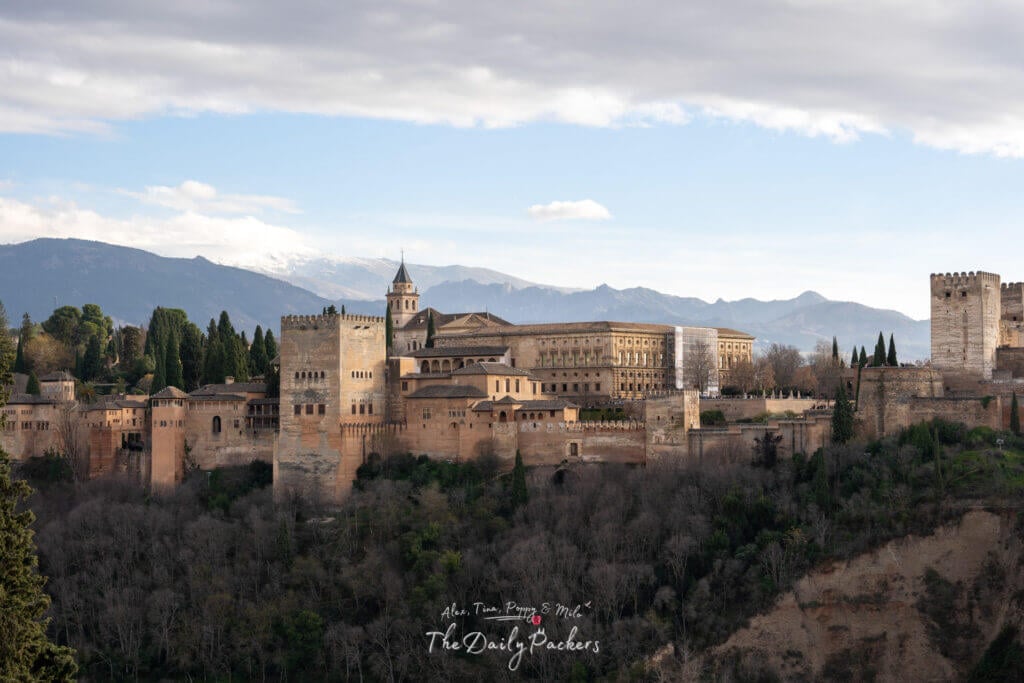
After exploring the Alhambra, you’ll still have a little time to wander through the Albaicín district or grab a leisurely lunch in Granada before moving on.

In the afternoon, catch a bus or train to Málaga. The journey takes around 1.5 to 2 hours, making it an easy transfer. Once in Málaga, check into your accommodation and, if you have energy left, go for a short evening stroll through the city center or down to the waterfront.
Where to stay in Malaga: (€): Coeo Hernán Ruiz , (€€): Soho Boutique Equitativa, (€€€): Only YOU Hotel Málaga
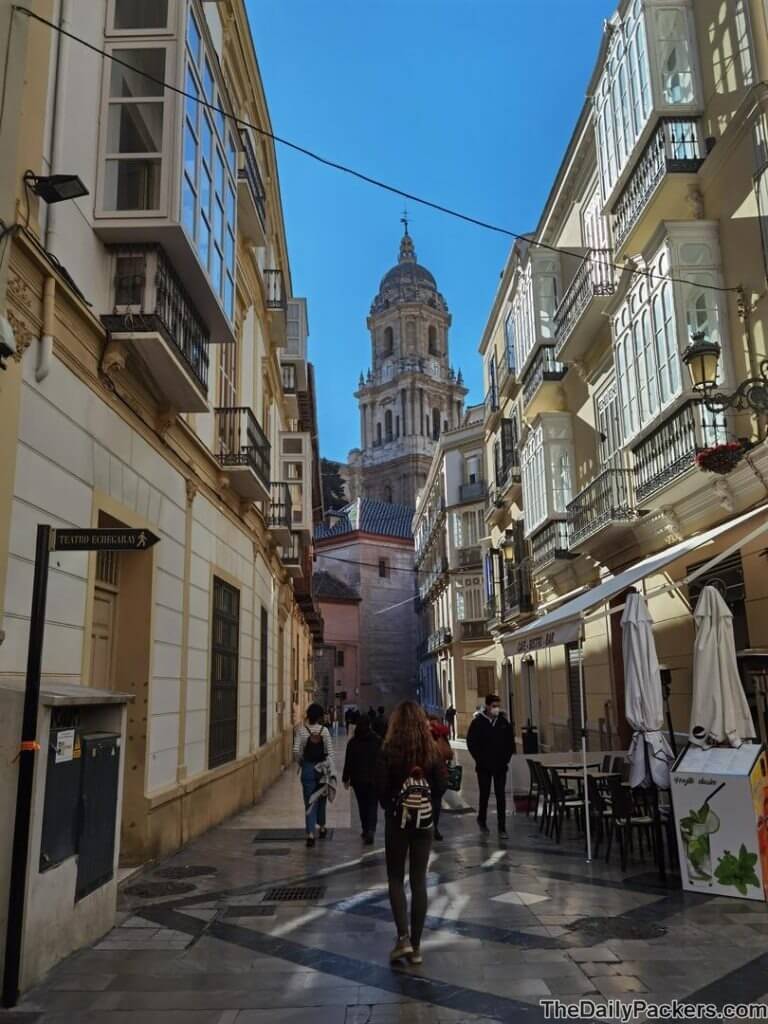
Read: 12 best things to do in Malaga in 2 days
Day 7: Visit Malaga
Dedicate this day to exploring Málaga’s rich history and coastal charm. Start your morning at the Teatro Romano de Málaga, the Roman theatre that sits at the foot of the Alcazaba. It’s one of the city’s oldest monuments and gives a glimpse into Málaga’s ancient past.

From there, head straight into the Alcazaba, a stunning Moorish fortress built in the 11th century. Its courtyards, gardens, and arches are beautifully preserved, and the views over the city and harbor from its walls are breathtaking.

Next, take the uphill walk (or bus, if you prefer) to the Castillo de Gibralfaro, the castle that overlooks both the Alcazaba and the Mediterranean. The panoramic views from here are some of the best in all of Andalusia—you’ll see the bullring, port, old town, and beaches all in one sweep.
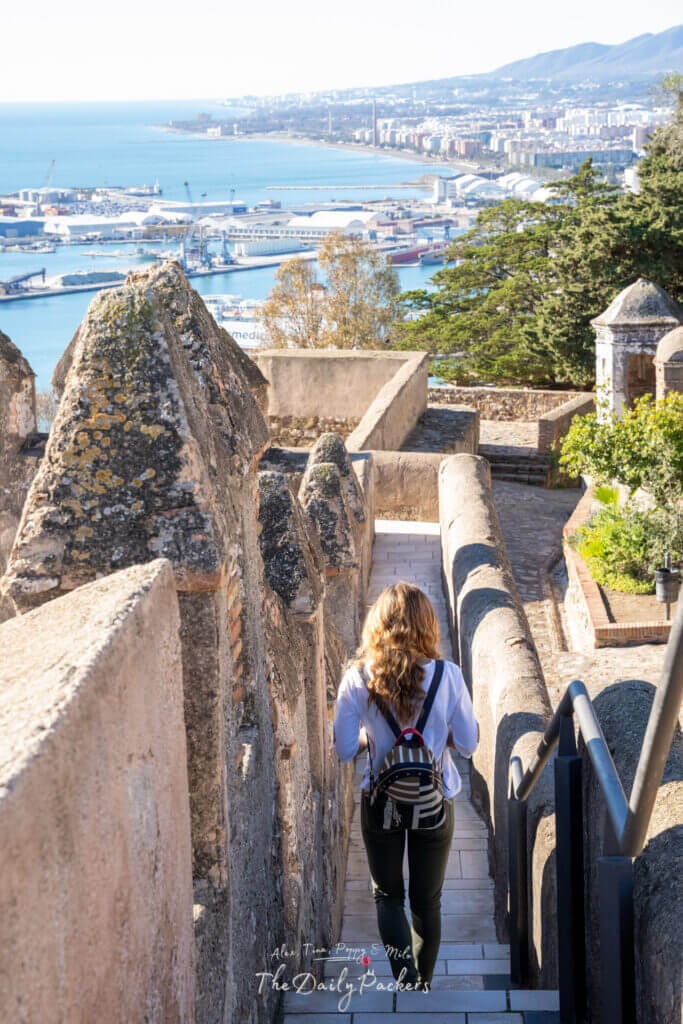
After a morning of sightseeing, stop for lunch in the city center, then head toward the coast. Walk along the Pérgolas de la Victoria to reach the beach and enjoy some time by the sea.
In the evening or late afternoon, fly back as it is the end of your 7-day Andalusia itinerary

About the authors
We are Alex and Tina, a French-Serbian couple who met in China back in 2014. We spent three incredible years there before making France our home. Our shared passion for travel has been the heartbeat of our relationship for over 12 years, taking us across 44 countries and counting.
We launched TheDailyPackers in 2019 as a way to document our adventures. In 2026, we reached a major milestone by officially turning our blog into our full-time job. While we are still growing toward financial independence through this platform, every article we write is fueled by our mission to make your voyages easier through in-depth guides, honest advice, and the lessons we’ve learned from our own mistakes.
Our journey has not been without its storms. In 2023, our world changed forever when our first son, Poppy, was stillborn on November 25th. It was, and remains, the hardest chapter of our lives. In 2025, we were blessed with our second little boy, Milo. He has since joined our traveling tribe, and you’ll be seeing him—and the reality of traveling with a little one-on the blog more and more.
We hope to inspire you to explore the world with curiosity and resilience. Thank you for being part of our story.
You may also like those related posts
10 Best things to do in Mostar, Bosnia-Herzegovina, in 1 day
Cordoba Airport to Capilla del Monte: Easy Budget Bus Guide
8 best things to do in Trogir, Croatia, in 1 day
TMB Stage 10: Guide from Tre-le-champs to Flégère
Merzouga Luxury Desert Camp: 3 Days in the Sahara Dunes
3-week South America Packing List: What to Bring
Strasbourg Christmas Market: How to spend 3 magical days
Self‑Drive Husky Sledding in Tromso: The Ultimate Day Trip
Pssst, did you know that…
If you purchase something through our links, we earn a small fee. However, you still pay the same. Win-win! And one day we may get to be full-time travel bloggers =)
Find Hotels with Booking.com
Do Yoga with KVY
Buy us a Coffee
Rent a car with DiscoverCars
Find Attractions with GetYourGuide
Find Flights with Expedia
Buy an eSIM with Airalo
Get insured with World Nomads
Get ready with Amazon.com