
Introduction
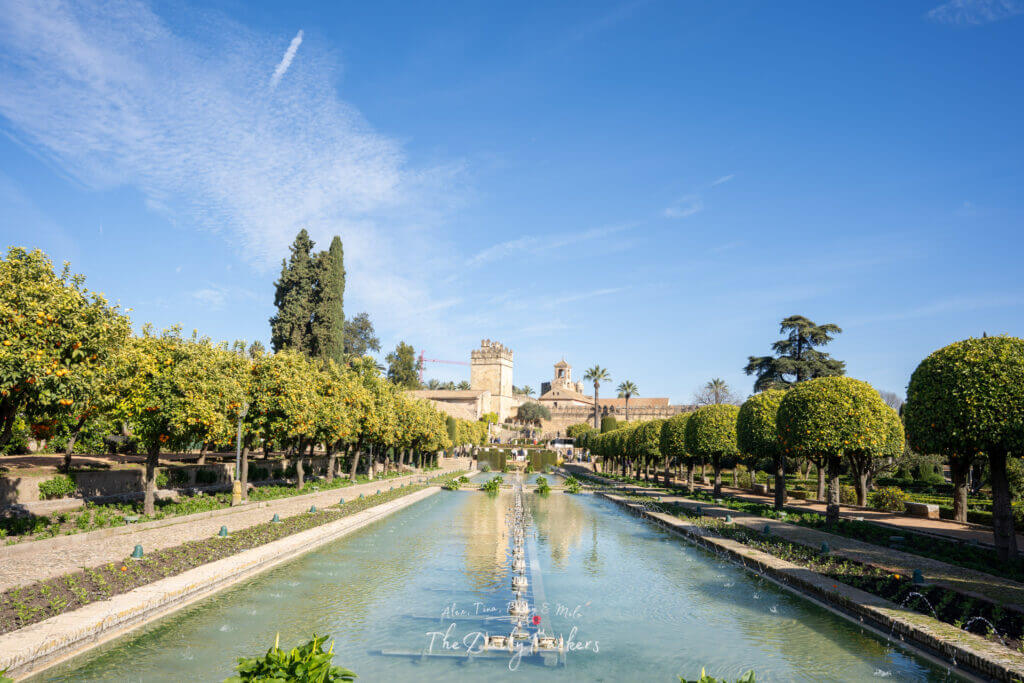
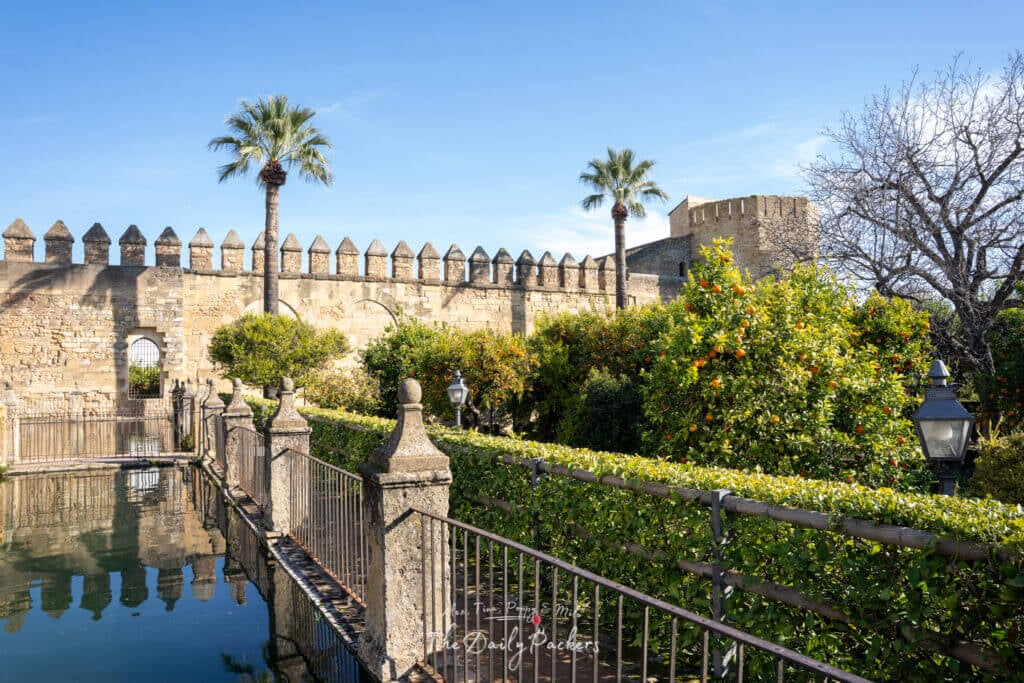
The Alcazar de los Reyes Cristianos is one of those places in Córdoba and in Spain that completely surprises you. From the outside, it looks like a simple fortress – solid stone walls, square towers, nothing too fancy.
But once you step in, you’re suddenly walking through lush gardens, royal patios, ancient mosaics, and some of the most peaceful corners in the city.
We visited Córdoba on a day trip during our Andalusia road trip, and the Alcazar of Cordoba ended up being one of the highlights. It’s compact, incredibly historic, and easy to visit even if you’re short on time.
Whether you’re here for the history, the views from the tower, or to wander through the gardens, the Alcázar is one of the must-see places in Córdoba.


Read: 9 best things to do in Cordoba, Spain, in 1 to 2 days
Why visit?
The Alcázar de los Reyes Cristianos – often called the Alcazar of Córdoba, the Alcazar of the Christian Monarchs, or simply the Córdoba Alcazar – is one of the city’s most meaningful historical sites. It may not have the grandeur of the Alhambra, but it carries an incredible mix of cultures, stories, and viewpoints that make it an essential stop on any Córdoba itinerary.
Built in the 14th century under King Alfonso XI, the Alcázar became the royal home of the Catholic Monarchs, Isabel and Fernando, who famously planned the final stages of the Reconquista from within these very walls. It’s also where the monarchs met Christopher Columbus before he set sail toward the “New World.” Later, these halls housed the Spanish Inquisition, and centuries before that, the site formed part of the sprawling palace-city of the Caliphate of Córdoba.
Walking through the Alcázar feels like peeling back the layers of Córdoba itself — a city shaped by Romans, Muslims, Jews, and Christians.

Inside, you’ll find:
- Impressive Roman mosaics unearthed beneath the city
- Four fortification towers, from which you get some of the best views of Córdoba, including the Mezquita
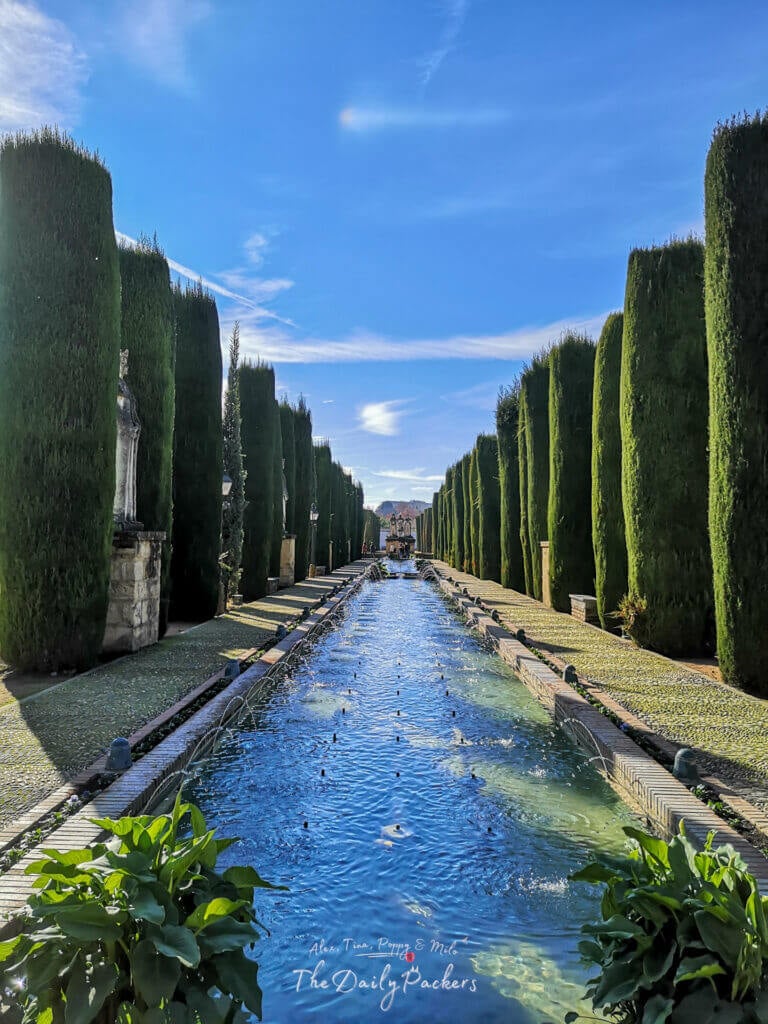
- Lush terraced gardens, long reflective pools, and fountains lined with orange trees
- Quiet pathways where you can wander with the scent of jasmine and citrus in the air
The Alcazar of Cordoba is small enough to explore without rushing, yet rich enough to give you a powerful sense of Córdoba’s heritage. If you’re interested in architecture, history, storytelling, or photography, visiting the Alcázar de los Reyes Cristianos is something you absolutely shouldn’t miss.
We personally really loved its garden. It is actually where we spent most of our time.


How to get to the Alcazar of Cordoba
The Alcázar of Córdoba is located right in the historic heart of the city, making it incredibly easy to reach on foot from almost anywhere in the center.
Here’s the simplest way to get there depending on where you’re staying:
From the Mezquita–Cathedral (5 minutes walking): Just follow the river direction, keeping the Mezquita behind you. Cross the charming narrow streets of the Jewish Quarter toward the Puerta del Puente, and you’ll see the Alcazar of Cordoba’s stone walls appear on your right.
From Córdoba Train/Bus Station (25–30 minutes walking): If you’re arriving by AVE or bus, you can walk straight down Avenida del Gran Capitán until you enter the old town, then follow signs to the Mezquita, and continue toward the river.


By Car: There is no parking directly at the Alcazar of Cordoba (the historic center is restricted), but you have several paid parking areas nearby:
By Taxi: Taxis can drop you off right at the entrance on Plaza Campo Santo de los Mártires. It’s the most convenient option if you’re short on time.
Address: C. Caballerizas Reales, s/n, Centro, 14004 Córdoba, Spain


Tip: If you don’t feel like walking, take bus lines 3 or 5 and get off near Puerta del Puente.
When to visit the Alcazar of Cordoba
The Alcázar de los Reyes Cristianos is beautiful year-round, but the experience can vary a lot depending on the season and time of day. Here’s what to expect so you can choose the perfect moment for your visit.
- Spring (March–May): This is without a doubt the best time to visit. The gardens are at their peak—blooming, fragrant, and full of life. The weather is warm but not overwhelming, making it perfect for wandering through the patios and climbing the towers. It’s also festival season in Córdoba, so expect more people but an incredible atmosphere.
- Summer (June–August): Prepare for serious Andalusian heat. Temperatures often pass 40°C, so the midday sun can make the gardens and towers challenging to enjoy. If you visit in summer, go early in the morning (right when it opens) or one hour before closing when the light becomes magical and the crowds are thinner. Nights are also beautiful thanks to cool breezes along the river.
- Autumn (September–November): A fantastic alternative to spring. Temperatures drop to pleasant levels, crowds thin out, and the gardens are still gorgeous. It’s an ideal season if you want a calmer visit without the intense heat or major festivals.
- Winter (December–February): Winters in Córdoba are mild, and the Alcazar of Cordoba stays enjoyable. The gardens are less lush but still peaceful, and you’ll often have the place nearly to yourself. If you prefer quiet, this is your season.

Best Time of the Day to visit the Alcazar of Cordoba
- Early morning: The absolute best. Soft light, cooler temperatures, fewer people.
- Late afternoon: Golden hour in the gardens is stunning, especially from the towers.
- Midday: Avoid if visiting in summer—it gets overwhelmingly hot.

How Long to Spend at the Alcázar of Córdoba
A visit to the Alcázar de los Reyes Cristianos usually takes 1 to 1.5 hours, depending on how much time you spend wandering through the gardens, climbing the towers, and exploring the interior rooms.
If you love photography or slow travel, you might easily stretch it to 2 hours—the gardens alone can keep you busy.
Here’s a quick breakdown:
- Gardens: 30–45 minutes
- Towers & viewpoints: 15–25 minutes
- Interior rooms & patios: 20–30 minutes
If you’re combining it with the Mosque–Cathedral and the Jewish Quarter, plan for a half-day to truly enjoy everything without rushing.

Tip: If you want a deeper understanding of the Alcázar—its Roman origins, Moorish influence, Christian reconquest, and role during the Spanish Inquisition—join a guided tour. The Jewish Quarter, Mosque, and Alcázar Tour is the best option, with a 4.7/5 rating from over 5,000 reviews, and covers all three major sites efficiently.
How to Visit
Visiting the Alcázar of Córdoba is very straightforward, but a little planning helps make the experience smoother – especially because this monument can get busy. Here’s how to make the most of your visit.
Start With the Exterior & Tower
Begin your visit by walking along the fortress walls and climbing the towers. The staircase is narrow, but the panoramic view from the top is absolutely worth it – terracotta roofs, the Roman Bridge, and the Guadalquivir River all at once. If you come early in the morning, the light is perfect and the heat is more manageable.

Explore the Interior Rooms
Inside, you’ll walk through several halls that tell the long and layered story of the Alcázar – Roman mosaics discovered beneath the city, Mudejar-inspired tiles and arches, the Hall of Mosaics, and references to the Catholic Monarchs who used this place as their base during the Reconquista. The rooms are relatively small, so take your time before the crowds arrive.

Wander the Terraced Gardens
The highlight for most visitors (including us) is the garden area. These terraces are full of fountains, orange trees, ponds, trimmed hedges, and paths that feel refreshingly peaceful. Give yourself at least 30–45 minutes here. The layout is perfect for slow wandering and photography, especially around the long reflecting pools.
Don’t Miss the Statues of the Monarchs
Before exiting the gardens, you’ll see the statues of Ferdinand and Isabella meeting Christopher Columbus – one of the most important historic scenes tied to this palace. It’s a nice final stop before heading back out into the Jewish Quarter.

Tickets & Opening Hours
Visiting the Alcázar de los Reyes Cristianos is simple, but knowing how tickets work will save you time (and money). Here’s everything you need to know before you go.
You can buy tickets online, at the automatic machines at the entrance, at the bus station, at the Visitor Center, or even at the 24h totem in Camposanto de los Mártires (right in front of the Alcazar of Cordoba).
Prices (2026):
- General ticket online: 7.16 €
- General ticket at the ticket office: 7.50 €
Your ticket includes:
- Entry to the Alcázar of the Christian Monarchs at the selected date and time
- Entry to the Baños del Alcázar Califal (any day you want)
Important: You must enter within 30 minutes of the time shown on your ticket. Not earlier, not later.

Hours vary significantly depending on the season: Winter schedule (16 September – 15 June)
- Tuesday to Friday: 8:15–20:15
- Saturday: 9:30–17:30
- Sunday & holidays: 8:15–14:15
Summer schedule (16 June – 15 September)
- Tuesday to Sunday: 8:15–14:15
- Closed on Mondays.
The towers close at sunset or one hour before the monument closes, whichever comes first.

You can visit the Alcazar of Cordoba for free on:
- February 28 — Andalusia Day
- September 27 — World Tourism Day
- December 17 — Anniversary of Córdoba’s World Heritage declaration
- Every non-holiday Thursday:
- In winter: free from 18:00
- In summer: free from 12:00
First-come, first-served – once the capacity is full, no more entries. Free tickets must be collected directly at the entrance ticket office.

Tip: If you want a deeper understanding of the Alcázar—its Roman origins, Moorish influence, Christian reconquest, and role during the Spanish Inquisition—join a guided tour. The Jewish Quarter, Mosque, and Alcázar Tour is the best option, with a 4.7/5 rating from over 5,000 reviews, and covers all three major sites efficiently.
Is it Worth It?
Absolutely – the Alcázar de los Reyes Cristianos is one of those places that feels even more special once you’re standing inside it. It’s not the biggest monument in Córdoba (you’ll spend far more time inside the Mosque–Cathedral), but the Alcazar of Cordoba is the perfect mix of history, architecture, and peaceful gardens.
What makes it worth visiting is the contrast: you walk from solid stone towers and medieval halls into a world of pools, fountains, orange trees, roses, shaded pathways, and views that make you stop without even noticing. Even if you’ve seen many castles or palaces before, the Alcazar of Cordoba has its own unique charm — more intimate, more serene, and deeply connected to Córdoba’s layered history.
It also plays a major role in Spain’s past: Roman mosaics below your feet, Moorish baths beneath the main tower, and the palace where the Catholic Monarchs lived while planning the conquest of Granada. Christopher Columbus himself came here to pitch his voyage — that alone makes the visit goosebump-worthy.
If you love quiet, atmospheric places full of stories, or if you simply want a beautiful break from the busy streets of Córdoba, the Alcázar is 100% worth it.

Here are all your accommodation options in Córdoba
Travel Tips
To make the most of your visit to the Alcazar of Cordoba, a bit of planning goes a long way. Here are our top practical tips:
- Arrive early – really early: The Alcazar of Cordoba’s gardens are stunning, but they get crowded fast, especially after tour groups arrive mid-morning. If you can be there right at opening time, you’ll enjoy the fountains, reflections, and flower-lined paths almost entirely in peace.
- Buy your ticket online in advance: It saves you time, and the online prices are slightly cheaper than buying at the gate. Plus, entry is tied to a 30-minute time slot — you don’t want to miss yours because the line is too slow.
- Don’t skip the towers (when they’re open): Climbing the towers is one of the best things to do in the Alcazar of Cordoba. The views over the gardens, the river, and the Mosque–Cathedral are some of the prettiest panoramas in Córdoba. Just keep in mind that tower access closes at sunset or one hour before the monument closes — whichever happens first.
- Keep your ticket for the Baños del Alcázar Califal: With the combined ticket, you can visit the Caliphal Baths on any day — not necessarily the same day as the Alcázar. They’re small but fascinating and worth popping into while exploring the Jewish Quarter.
- If you want deeper history, join a guided tour: The Alcázar is beautiful but a bit light on signage. A guide will help you understand the Roman, Moorish, and Christian eras — especially the mosaics and the role of the fortress during the Spanish Inquisition. A great option is the Jewish Quarter, Mosque, and Alcázar Tour (4.7/5 from 5,000+ reviews).
- Visit the gardens slowly: The upper terraces, orange trees, long pools, and blooming alleys are the highlight. Take your time – most people rush through, but the charm is in the quiet corners.
- Stay hydrated in summer: Córdoba can be brutally hot. There’s little shade inside the Alcázar, so bring water (or buy one near the entrance) and avoid midday visits if possible.

Where to stay
While many travelers visit Córdoba as a day trip from Seville, we’d honestly recommend spending at least one night here if you can. Staying overnight gives you time to enjoy the city once the day crowds leave — when the streets quiet down, the Mezquita glows under the evening light, and locals fill the tapas bars. It’s a completely different, more authentic experience.
Here are a few great accommodation options depending on your travel style and budget:
(€) Eurostars Azahar – A modern and affordable option located near the city center. The rooms are bright and comfortable, perfect for travelers who want good value without compromising on location.
(€€) H10 Palacio Colomera – Set inside a beautifully restored historic building on Plaza de las Tendillas, this boutique hotel offers elegant rooms and a rooftop pool with panoramic views of Córdoba. Ideal for couples or those wanting a stylish, central stay.
(€€€) Hospes Palacio del Bailio, a Member of Design Hotels – This luxury hotel combines ancient Roman ruins with Andalusian charm. It features lush courtyards, an outdoor pool, and even a Roman bath spa. A fantastic choice if you want to immerse yourself in Córdoba’s history and unwind in total comfort.

Tip: Staying overnight also means you can explore Córdoba’s narrow streets early in the morning or late at night — the best times to truly feel the magic of the city without the crowds.
About the authors
We are Alex and Tina, a French-Serbian couple who met in China back in 2014. We spent three incredible years there before making France our home. Our shared passion for travel has been the heartbeat of our relationship for over 12 years, taking us across 44 countries and counting.
We launched TheDailyPackers in 2019 as a way to document our adventures. In 2026, we reached a major milestone by officially turning our blog into our full-time job. While we are still growing toward financial independence through this platform, every article we write is fueled by our mission to make your voyages easier through in-depth guides, honest advice, and the lessons we’ve learned from our own mistakes.
Our journey has not been without its storms. In 2023, our world changed forever when our first son, Poppy, was stillborn on November 25th. It was, and remains, the hardest chapter of our lives. In 2025, we were blessed with our second little boy, Milo. He has since joined our traveling tribe, and you’ll be seeing him—and the reality of traveling with a little one-on the blog more and more.
We hope to inspire you to explore the world with curiosity and resilience. Thank you for being part of our story.
You may also like those related posts
10 best things to do in Villa General Belgrano, Argentina
How We Got the Cheapest Flight Ticket of Our Lives
9 Best Things to Do on Ilha do Cardoso, Brazil, in 4 days
6 Stunning Places in Balagne to discover in just 1 Day
21 Best things to do in Pecs, Hungary, in 2 to 4 days
2-week Vietnam Itinerary: The best of Vietnam
12 Best Things to do in Bangkok, Thailand, in 3 to 4 days
11 Best things to do in Chiang Mai, Thailand, in 3 to 4 days
Pssst, did you know that…
If you purchase something through our links, we earn a small fee. However, you still pay the same. Win-win! And one day we may get to be full-time travel bloggers =)
Find Hotels with Booking.com
Do Yoga with KVY
Buy us a Coffee
Rent a car with DiscoverCars
Find Attractions with GetYourGuide
Find Flights with Expedia
Buy an eSIM with Airalo
Get insured with World Nomads
Get ready with Amazon.com