

Introduction
The Royal Alcazar of Seville is one of those places that actually lives up to the hype. On our 10-day Andalusia road trip, it was the moment we slowed down, stepped through a carved horseshoe arch, and felt the city’s layered history wrap around us. The Alcazar isn’t just a palace—it’s a timeline you can walk: Islamic fort, Mudéjar masterpiece, Gothic chapel, Renaissance patios, Baroque touches, and, yes, the current royal residence still used for state visits.
Expect cool, shaded courtyards laced with intricate stucco, cedar-scented ceilings, glazed tiles that appear freshly painted, and gardens that seem to unspool forever—complete with fountains, pavilions, peacocks, and more. If you’re planning a Seville itinerary, this is a non-negotiable anchor: it pairs perfectly with the Cathedral and Santa Cruz. It easily fills a slow morning (or a dreamy late afternoon).
In this guide, we’ll show you why the Alcazar of Seville matters, the smartest ways to get in (and avoid the lines), when to go for the softest light and thinnest crowds, what not to miss once you’re inside, and a few mistakes we made so you don’t have to. Think of it as the on-the-ground version we wish we’d had—practical, honest, and built for travelers who want the story and the strategy.


Why visit?
Few places in Spain capture its layered, multicultural history like the Royal Alcazar of Seville. The palace isn’t just old—it’s a thousand years of architecture, power, and beauty folded into one space. Every courtyard and wall tells a story about who once ruled here, and how each culture left its mark.
The Alcazar of Seville began in the 10th century, when the Muslim rulers of Al-Andalus built a fortress on this very site. That original fortress became the foundation of what we see today. Then, in the 14th century, King Pedro I of Castile—known as Pedro the Cruel—decided to turn the fortress into a royal palace. What he built was the stunning Mudéjar-style masterpiece we now know as the Alcazar of Seville: Islamic artisanship blended with Christian symbols, geometric perfection meeting Gothic grandeur.

Over the centuries, different monarchs expanded and transformed the complex, adding Renaissance halls, Baroque touches, and even modern royal apartments still used by Spain’s royal family today. The result? A palace that feels less like one building and more like a living museum of styles, cultures, and centuries coexisting in harmony.
The Alcazar of Seville has hosted kings, queens, explorers, and—more recently—film crews. If you’re a Game of Thrones fan, you might recognize it as the Water Gardens of Dorne. Standing in the Patio de las Doncellas, you can almost picture the series’ royal intrigues unfolding among the arches and fountains.
This isn’t a place you visit just to check off a list. It’s a place you feel.


Tip: Here are all your accommodation options in Seville
How to get there
The Royal Alcazar of Seville sits right in the heart of the old town, next to two other icons — the Cathedral of Seville and the Archivo de Indias. If you’re staying anywhere near the city center, you’ll probably be able to walk there in under 15 minutes.
Here’s how to reach it depending on where you’re coming from:
- On foot: If you’re staying near Santa Cruz, Arenal, or El Centro, the Alcazar of Seville is just a pleasant stroll away. Most of Seville’s old town is pedestrian-friendly, so walking is the easiest and most scenic option.
- By bus: Several city bus lines stop near the palace. Take lines C1, C2, 5, 41, or 42, and get off at Prado de San Sebastián or Puerta de Jerez, both within 5 minutes’ walk of the entrance.
- By tram: The T1 tram line is another easy option. Hop off at Archivo de Indias, and you’ll practically be at the gates.
- By bike: Seville is one of the most bike-friendly cities in Spain, with over 180 km of dedicated bike paths. The Sevici bike-sharing stations have docks right near the Alcazar of Seville.
- By car: We don’t recommend driving into the old town—it’s a maze of one-way streets and limited parking. If you’re on a road trip, park in one of the garages near Prado de San Sebastián or Paseo de Colón and continue on foot.
Address: Patio de Banderas, s/n, 41004 Sevilla, Spain


Tip: The Alcazar of Seville’s main entrance is through the Puerta del León (Lion’s Gate) — you’ll recognize it by the lion emblem painted above the archway. That’s where the ticket control starts and where most guided tours begin.
When to visit
Timing your visit can make all the difference at the Alcazar of Seville. This is one of Seville’s most visited landmarks, and for good reason — but it also means crowds, especially during spring and summer. Here’s how to make the most of your visit.
Best Time of Year:
- Spring (March to May) is by far the most beautiful time to visit Seville and its Alcazar. The weather is warm but not yet hot, the orange trees are in full bloom, and the city smells incredible. It’s also when Seville hosts its most iconic celebrations — Semana Santa (Holy Week) and the Feria de Abril — filling the city with processions, flamenco dresses, and music. The gardens are at their greenest and most colorful, and the temperature usually ranges between 20 and 28°C. The only downside is that prices and crowds rise during these major events, so it’s best to book in advance.
- Summer (June to August), on the other hand, is the hottest season. Temperatures often reach 40°C, and walking around under the Andalusian sun can be exhausting. If you visit during the summer, plan to enter the Alcazar as soon as it opens in the morning or later in the evening to avoid the heat. The good news is that the city tends to be quieter in July and August, as many locals leave for the coast, and the gardens remain surprisingly green thanks to regular watering.
- Autumn (September to November) is another ideal time to explore the Alcazar of Seville. The weather stays pleasantly warm, between 22 and 30°C, but it’s far more comfortable than summer. The crowds drop, the light becomes golden, and the gardens take on a softer, more peaceful atmosphere. You might experience the occasional rain shower in November, but overall, it’s one of the best seasons for sightseeing.
- Winter (December to February) is mild and peaceful, with daytime temperatures between 10 and 18°C. It’s the quietest time of the year, perfect if you prefer to wander slowly and take in the details of the palace without rushing. The only trade-off is that the gardens aren’t as lush, and the days are shorter, but the lack of tourists more than makes up for it.

Best Time of Day: To enjoy the Alcazar of Seville at its quietest and most magical, aim to arrive as soon as it opens (usually around 9:30 am). The early morning light pours through the arches beautifully, and you’ll have the courtyards almost to yourself.
Alternatively, the late afternoon (around 4 pm in winter, 5–6 pm in summer) is also lovely — the golden light in the gardens makes for stunning photos, and most tour groups are gone by then.
How Long to Spend: Plan at least 2–3 hours for your visit. If you want to take it slow, sit in the gardens, or explore every corner, you could easily spend half a day here.
Tip: If you’re short on time or want to learn more, book the Priority Access Cathedral, Giralda & Alcazar Tour to see the city’s main landmarks with a guide and skip the lines — a great way to experience Seville’s history in one go.

How to Visit
Visiting the Royal Alcazar of Seville is like walking through centuries of history — from Islamic palaces to Gothic halls and Renaissance courtyards. To make the most of your visit, it’s important to understand how the site is laid out and what to expect depending on your ticket type.
If you have a regular ticket, your visit begins at the Lion’s Gate (Puerta del León), the main entrance of the palace. Once inside, you’ll walk through the Patio del León and enter the Palace of Pedro I (Palacio del Rey Don Pedro), the highlight of the Alcazar of Seville. This palace is a masterpiece of Mudéjar art, with intricate stucco carvings, colorful tiles, and breathtaking courtyards.

Take your time exploring the Patio de las Doncellas (Courtyard of the Maidens), the Salon de Embajadores (Hall of Ambassadors), and the royal chambers, all decorated with incredible attention to detail.

From there, you’ll move through the Gothic Palace, which contrasts with the Islamic architecture of the previous sections, before heading outside to the gardens.

The gardens are massive, filled with fountains, pavilions, orange trees, and shaded alleys. They’re one of the most peaceful parts of the visit and a great place to rest.

If you’re a fan of Game of Thrones, you’ll probably recognize some areas — the Alcazar of Seville was used as a filming location for Dorne’s Water Gardens in Season 5. The Patio de las Doncellas and the gardens feature prominently, so keep an eye out for familiar scenes.

If you’ve booked the Royal Bedrooms (Cuarto Real Alto) ticket, your visit will begin upstairs, before entering the general area. This section is still used by the Spanish royal family when visiting Seville and includes private chambers decorated with tapestries, portraits, and antique furniture. Access is limited to small groups at fixed times, and photography isn’t allowed. After touring the Royal Bedrooms, you’ll continue through the same route as the regular visit.

The audio guide is free and available directly on your phone via the official Alcazar of Seville’s website — just bring your earphones and connect to the palace’s Wi-Fi to download it at the entrance.
You’ll need at least two hours for the standard visit, and around three hours if you include the Royal Bedrooms and want time to enjoy the gardens
Tip: Secure your spot and visit the Alcazar of Seville by buying your tickets online in advance
Tickets & Opening Hours
You can buy your tickets for the Royal Alcazar of Seville either online or at the entrance, but booking in advance is strongly recommended, especially during weekends or holidays when lines can get long.
Here are the main ticket options:
- General Admission – Includes access to the main palaces, courtyards, and gardens. (Cost 15,5€)
- Royal Bedrooms (Cuarto Real Alto) – Includes everything in the general admission, plus access to the upper royal apartments. Entry is timed and limited to small groups, so make sure to choose your time slot when booking. (+5,5€)
- Free Entry – Residents of Seville and EU citizens can enter for free on Mondays during the last two hours of opening time (advance online booking still required).
Tickets can be purchased through the official Alcazar website or trusted partners like GetYourGuide (which we often use), which also offers skip-the-line options and guided tours.

The opening hours vary slightly by season:
- October to March: 9:30 AM – 5:00 PM
- April to September: 9:30 AM – 7:00 PM
The palace is closed on January 1st, January 6th, Good Friday, and December 25th.

Tip: If you’d rather skip the logistics and learn more about the site’s deep history, architecture, and film connections, consider joining a guided tour like the “Seville: Priority Access Cathedral, Giralda & Alcazar Tour.” It’s a great option if you want to experience Seville’s main landmarks in one go without worrying about tickets or lines.
Is it Worth It?
Absolutely — visiting the Royal Alcazar of Seville is one of those travel experiences that truly stays with you. It’s not just another palace; it’s a living timeline of Andalusia’s history and a symbol of Seville’s cultural richness.
What makes the Alcazar of Seville so special is how each era left its mark — from the Islamic arches and mosaics of the Palace of Pedro I, to the Gothic halls built after the Christian reconquest, to the Renaissance touches added by later monarchs. You’ll walk through spaces that once hosted caliphs, kings, and explorers who shaped the world.
Even if you’re not a history buff, the Alcazar of Seville’s atmosphere is captivating. The sound of water trickling through fountains, the scent of orange blossoms in the gardens, and the intricate details carved into every wall make it feel like stepping into another time.
And if you’re a Game of Thrones fan, the fact that it served as Dorne’s Water Gardens adds a fun layer of excitement. Standing where those scenes were filmed makes the experience even more surreal.
It’s definitely worth dedicating half a day to the visit — longer if you want to relax in the gardens or take a guided tour. Whether you’re in Seville for two days or a full week, the Alcazar of Seville deserves a top spot on your itinerary.




Travel Tips
To make the most of your visit to the Royal Alcazar of Seville, a bit of planning goes a long way. Here are our top practical tips:
- Book your ticket in advance — It’s essential, especially during weekends, public holidays, or spring (Seville’s busiest season). The Alcazar of Seville limits daily visitors, and time slots for the Royal Bedrooms sell out quickly.
- Arrive early — Even with a timed ticket, aim to arrive 20–30 minutes before your entry. Security checks and scanning can take a few minutes.
- Bring earphones — The free audio guide is available through the official Alcazar of Seville website on your phone. You can connect to the palace’s Wi-Fi to access it at the entrance.
- Wear comfortable shoes — You’ll be walking on cobblestone paths, tiled floors, and garden trails.
- Visit early or late in the day — Mornings before 11 AM or late afternoons after 4 PM are the quietest times to explore. Midday gets crowded with group tours.
- Don’t rush the gardens — Many visitors hurry through, but they’re one of the most peaceful parts of the Alcazar of Seville. It’s a great spot to rest after visiting the palaces.
- Combine with nearby attractions — The Seville Cathedral and La Giralda Tower are just next door, so you can easily see them on the same day. If you want to skip the logistics, join the Seville: Priority Access Cathedral, Giralda & Alcazar Tour to explore them all with a guide.

Where to stay
Staying near the Royal Alcazar of Seville is a great choice if you want to explore the city’s main attractions on foot. The palace sits right in the historic center, next to the Cathedral and the charming Barrio Santa Cruz, making it one of the best areas to stay in Seville.
Here are a few great options depending on your budget:
(€) Hotel Giralda Center – A modern and comfortable hotel located near the city center, perfect if you’re looking for good value and easy access to main attractions. The rooms are spacious, and the rooftop terrace is a nice touch for sunset views.
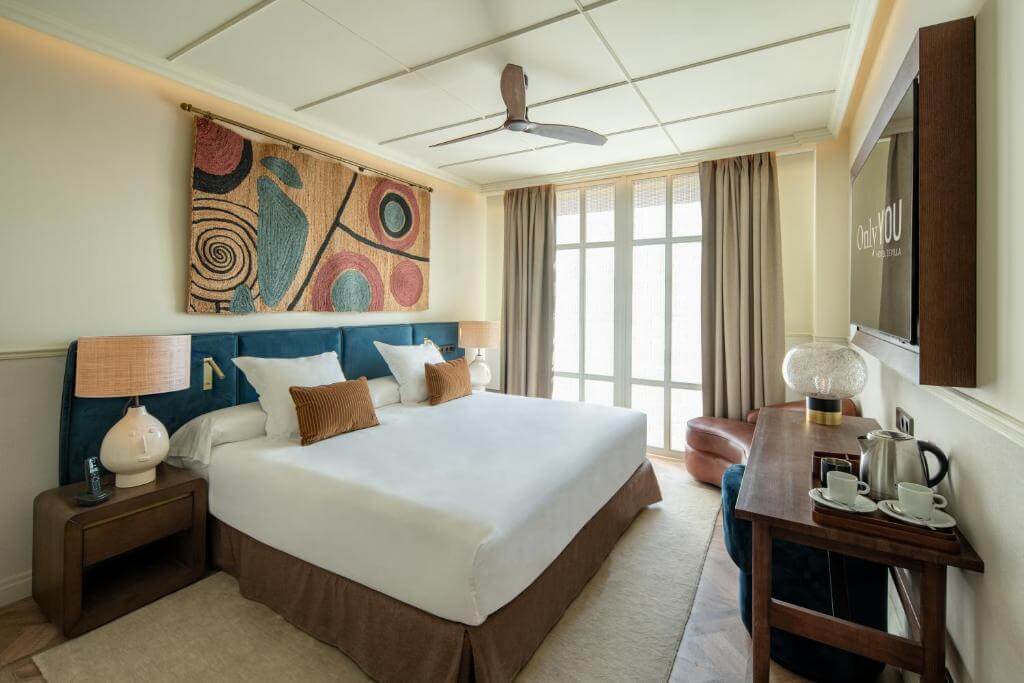
(€€) Only YOU Hotel Sevilla – A stylish boutique hotel with elegant design, cozy rooms, and excellent service. It’s close to Santa Justa Station, making it ideal if you’re arriving by train.
(€€€) Hotel Alfonso XIII, a Luxury Collection Hotel, Seville – Seville’s most iconic hotel. This masterpiece of Moorish-inspired architecture sits between the Cathedral and Plaza de España. It’s a true Andalusian gem — luxurious, historic, and unforgettable.

Read: 22 Best things to do in Seville, Spain, in 3 to 5 days
About the authors
We are Alex and Tina, a French-Serbian couple who met in China back in 2014. We spent three incredible years there before making France our home. Our shared passion for travel has been the heartbeat of our relationship for over 12 years, taking us across 44 countries and counting.
We launched TheDailyPackers in 2019 as a way to document our adventures. In 2026, we reached a major milestone by officially turning our blog into our full-time job. While we are still growing toward financial independence through this platform, every article we write is fueled by our mission to make your voyages easier through in-depth guides, honest advice, and the lessons we’ve learned from our own mistakes.
Our journey has not been without its storms. In 2023, our world changed forever when our first son, Poppy, was stillborn on November 25th. It was, and remains, the hardest chapter of our lives. In 2025, we were blessed with our second little boy, Milo. He has since joined our traveling tribe, and you’ll be seeing him—and the reality of traveling with a little one-on the blog more and more.
We hope to inspire you to explore the world with curiosity and resilience. Thank you for being part of our story.
You may also like those related posts
13 Easy Ways to Reduce Your Backpack Weight for Hiking
12 Best things to do in Saint Malo, France, in 2 days or more
Bratislava Old Town Hall: History, Museum & Tower Views
16 best things to do in Budapest, Hungary, in 1 day or more
Sangaste Castle: The Baltics’s Best Gothic Castle in 2025
10 Best things to do in Tartu, Estonia, in 1 day or more
The Perfect 2-week Cuba itinerary for first-timers
11 Best Coffee Shops in Hanoi, Vietnam and 4 top restaurants
Pssst, did you know that…
If you purchase something through our links, we earn a small fee. However, you still pay the same. Win-win! And one day we may get to be full-time travel bloggers =)
Find Hotels with Booking.com
Do Yoga with KVY
Buy us a Coffee
Rent a car with DiscoverCars
Find Attractions with GetYourGuide
Find Flights with Expedia
Buy an eSIM with Airalo
Get insured with World Nomads
Get ready with Amazon.com