
Introduction
For a while, we weren’t sure whether to spend a night in Cabo Polonio or just visit it as a day trip from Punta del Diablo. Since we were traveling without a fixed plan in South America and couldn’t find accommodation that suited us, we decided to go early in the morning and return the same day — and it turned out to be the perfect choice.
Cabo Polonio is both a tiny village and a national park, located on Uruguay’s eastern coast. The village lies about 7 km from the main road, deep within the dunes, and is only accessible by 4×4 vehicles or on foot — there are no paved roads leading there. That’s part of its charm: it feels like stepping off the grid and into another world.
What makes Cabo Polonio truly unique is its sense of isolation. With only around 95 permanent inhabitants, a handful of rustic cabins, and no electricity grid, it remains one of the last truly wild and untouched coastal towns in South America. Between its endless dunes, roaring ocean, and sea lion colonies, Cabo Polonio is the kind of place that makes you disconnect completely — a reminder that simplicity can be the ultimate luxury.
In this guide, we’ll share everything you need to know about visiting Cabo Polonio, from how to get there and what to expect, to whether it’s worth staying overnight or keeping it as a one-day adventure.


Read: All the best Things to do in Punta Del Diablo
Getting there
Getting to Cabo Polonio is an adventure in itself — part of what makes the experience so special.
We checked the Rutas del Sol bus schedule the day before and, on the morning of our trip, simply went to the Punta del Diablo bus terminal to buy our tickets for the next departure. At the time of our visit, the bus ticket cost 157 UYU per person, and after about 1 hour and 40 minutes, it dropped us off at the entrance of Cabo Polonio National Park.
Bus schedule in January (Rutas del Sol): 7:40, 10:30, 14:10, 18:00, 18:20, and 20:15 (be sure to check online as those can change quickly)
You can also easily access Cabo Polonio from Montevideo. Or even start in Punta Del Diablo and then head to Montevideo. As there are lockers at the bus terminal of Cabo Polonio, it is convenient for day trippers transiting between Punta del Diablo and Montevideo.
The bus schedule to Punta del Diablo was in January: 7h00, 10h20, 11h40, 13h50, 16h40, and 19h35.

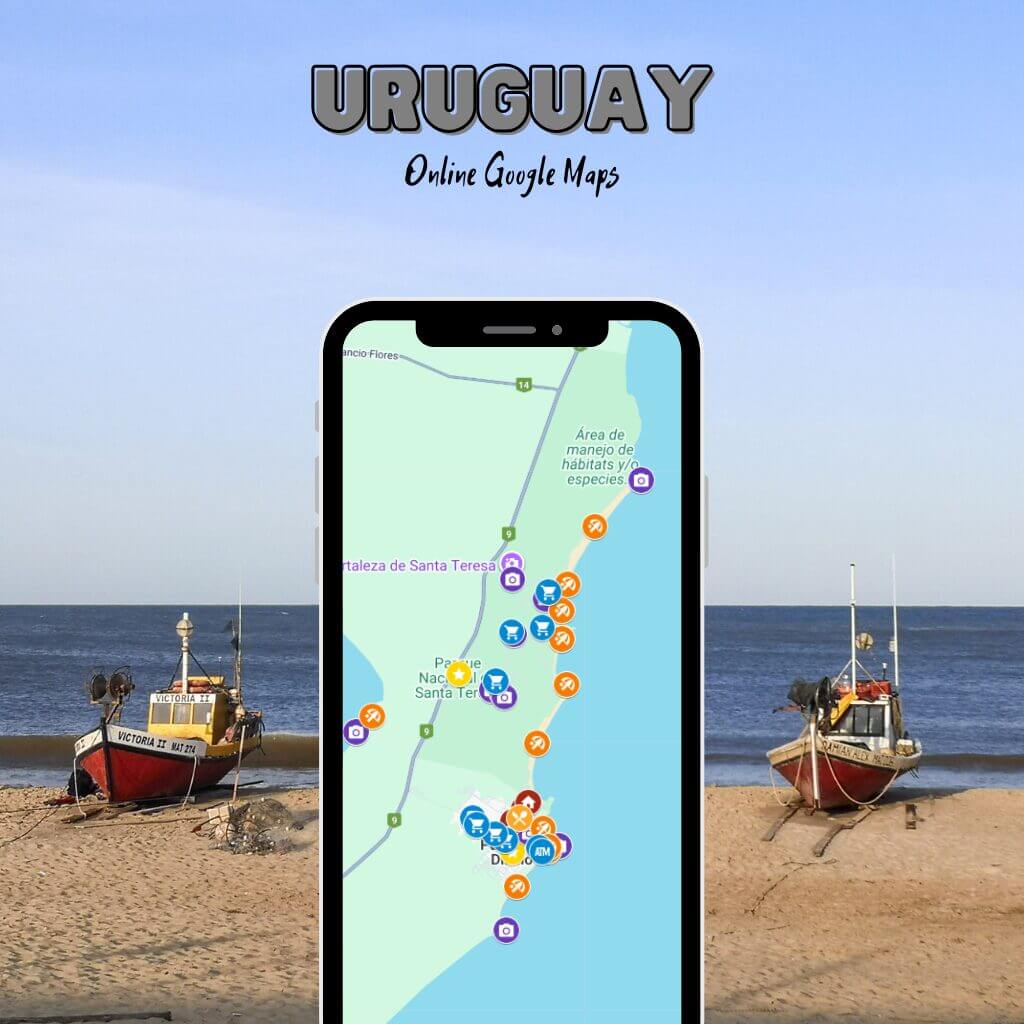
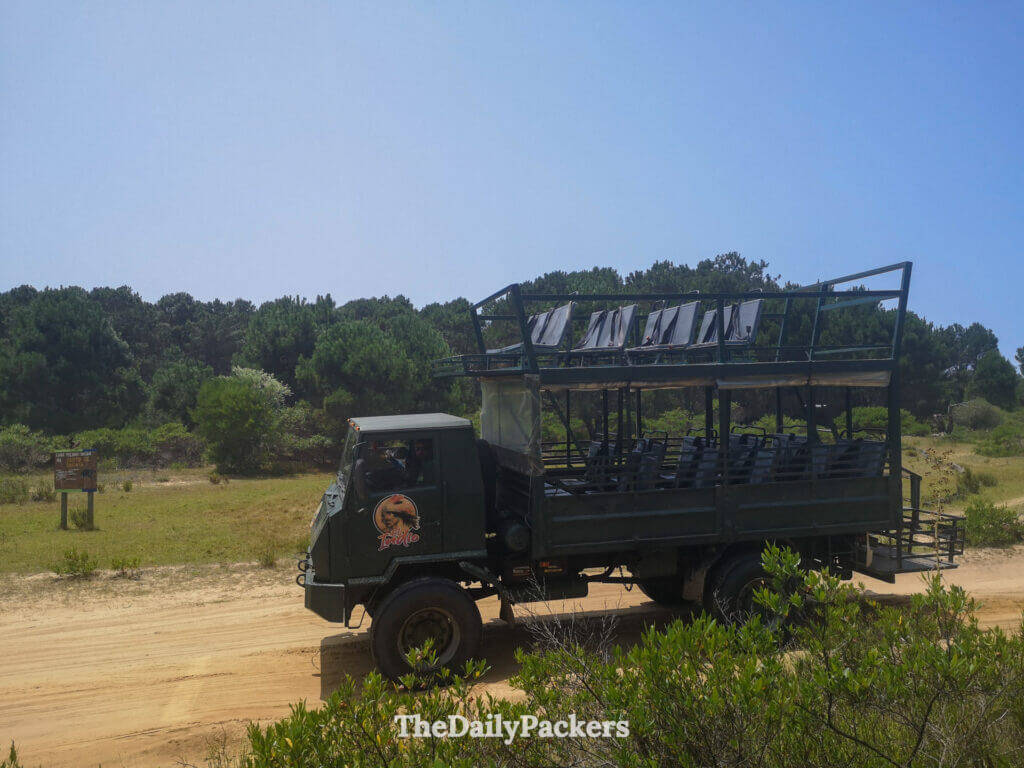
From there, you’ll need to buy a separate ticket for the 4×4 truck transfer that takes you into the town. Tickets cost around 270 UYU each, and the ride itself is an experience — you’ll hop on a massive, open-air truck that rumbles through forests and sand dunes for about 30 minutes before finally reaching the Cabo Polonio village terminal.
4×4 truck departures: every hour from 7:30 to 19:30, then at 20:00 and 22:00. The 4×4 schedule returns every hour from 8h00 to 20h.
The whole trip from Punta del Diablo to Cabo Polonio takes around 2.5 hours, including both the bus and 4×4 transfer — and it’s totally worth it for what’s waiting at the end.

Moving Around
Once you arrive in Cabo Polonio, forget about cars — the town is completely walkable. There are no paved roads, no vehicles (except the 4x4s that drop visitors off), and no streetlights. Everything is done on foot, giving the place a calm, timeless vibe.
You can easily explore the entire village in less than an hour, wandering from one beach to another, stopping for a drink, or chatting with locals selling handmade crafts. The sandy paths connect everything: beaches, the lighthouse, and small restaurants.
If you want to explore further, you can also walk along the coast to reach quieter stretches of beach or spot sea lions resting near the rocks by the lighthouse. Just make sure to bring comfortable shoes or sandals — you’ll be walking on sand most of the time.
There’s no need for any transport here — in Cabo Polonio, slow travel is the only way to go.


When to Visit
The best time to visit Cabo Polonio depends on what kind of experience you’re looking for.
- Summer (December to March): This is the most popular time to visit. The weather is warm, perfect for swimming and enjoying the beaches, and most restaurants, guesthouses, and shops are open. However, it’s also when the small village gets busier with both locals and tourists.
- Autumn (April to May): Fewer visitors, cooler temperatures, and quieter beaches make this an ideal time if you prefer a peaceful trip. Some places start to close for the low season, but it’s still beautiful.
- Winter (June to August): Expect windy days, chilly temperatures, and limited services — but you’ll have the village almost entirely to yourself. It’s perfect for travelers who love solitude and raw coastal landscapes.
- Spring (September to November): A great balance between pleasant weather and fewer crowds. The dunes are lush, and wildlife like sea lions are very active around this time.
If you can, plan your visit between late November and early March for the best mix of atmosphere, weather, and accessibility.


Tip: We never travel without our DJI Mini 3 PRO drone anymore — it’s totally worth having to capture places from a whole new perspective.
Where to stay in Cabo Polonio
If, like us, you’re visiting Cabo Polonio as a day trip from Punta del Diablo, that’s a great choice — it’s super doable and gives you plenty of time to explore without rushing. The last 4×4 back to the park entrance leaves around sunset, which fits perfectly for a full-day visit.
But if you have more time, staying overnight in Cabo Polonio is a completely different experience. Once the day-trippers leave, the whole place becomes calm, with only a few lights from the small guesthouses and the soft sound of the waves. There’s no electricity grid — most places run on solar panels or generators, which makes the atmosphere even more magical.
You’ll find several eco-lodges, rustic cabins, and hostels right in the village, often run by locals. Accommodations are simple but charming, with a focus on sustainability and community living.
If you’re short on time, stay in Punta del Diablo and make Cabo Polonio your day trip. But if you can, spend one or two nights in Cabo Polonio — waking up there, disconnected from everything, is one of those rare travel experiences that truly stays with you.


Here are all your accommodation options in Cabo Polonio and Punta del Diablo,
What to eat
Food options in Cabo Polonio are simple but delicious — just like the village itself. You basically have two good choices: eat at a local restaurant or bring your own picnic.
There are a few small seaside restaurants and family-run cafés scattered around the village, serving local dishes like fresh fish, empanadas, and homemade pizzas. Prices are a bit higher than in Punta del Diablo since everything here needs to be brought in by 4×4, but the food is good and the views are unbeatable.

If you’re planning a day trip, bringing your own picnic is a great option. Pack sandwiches, snacks, and plenty of water, especially if you want to spend the afternoon exploring the dunes or relaxing by the beach. There are no supermarkets in Cabo Polonio, so don’t expect to find much beyond a few convenience stalls.
Tip: if you decide to stay overnight, book a guesthouse that offers dinner, as not all restaurants stay open in the evening — and having a warm homemade meal under the stars is part of the charm.

Best things to do in Cabo Polonio
Walk Around the Small Hamlet
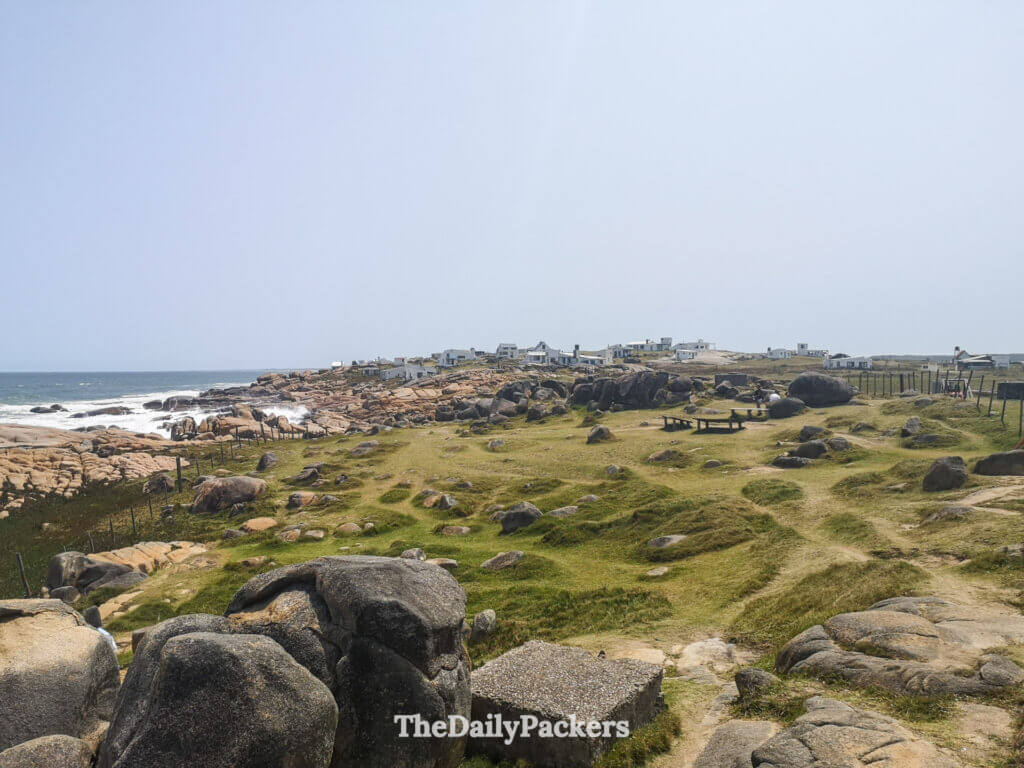
The best way to experience Cabo Polonio is simply to walk. The entire village is made up of sandy paths, colorful wooden houses, and small seaside huts — no cars, no noise, just the sound of waves and wind.
Take your time wandering between homes and cafes, chatting with locals, and soaking up the peaceful atmosphere. It’s small enough that you can cross the whole hamlet in 15–20 minutes, but you’ll want to linger — it’s that charming.

Here are all your accommodation options in Cabo Polonio and Punta del Diablo,
Visit the Plaza Central
At the heart of the village, you’ll find the Plaza Central, a sandy square surrounded by restaurants, small shops, and a relaxed crowd of locals and travelers. It’s where everyone eventually ends up — whether for a morning coffee, a lunch break, or a sunset beer. The energy here is friendly and laid-back, the kind of place where time seems to slow down.

Tip: We use the DJI Action 4 to film our vlogs — compact, durable, and perfect for capturing every adventure.
Explore the Local Boutiques
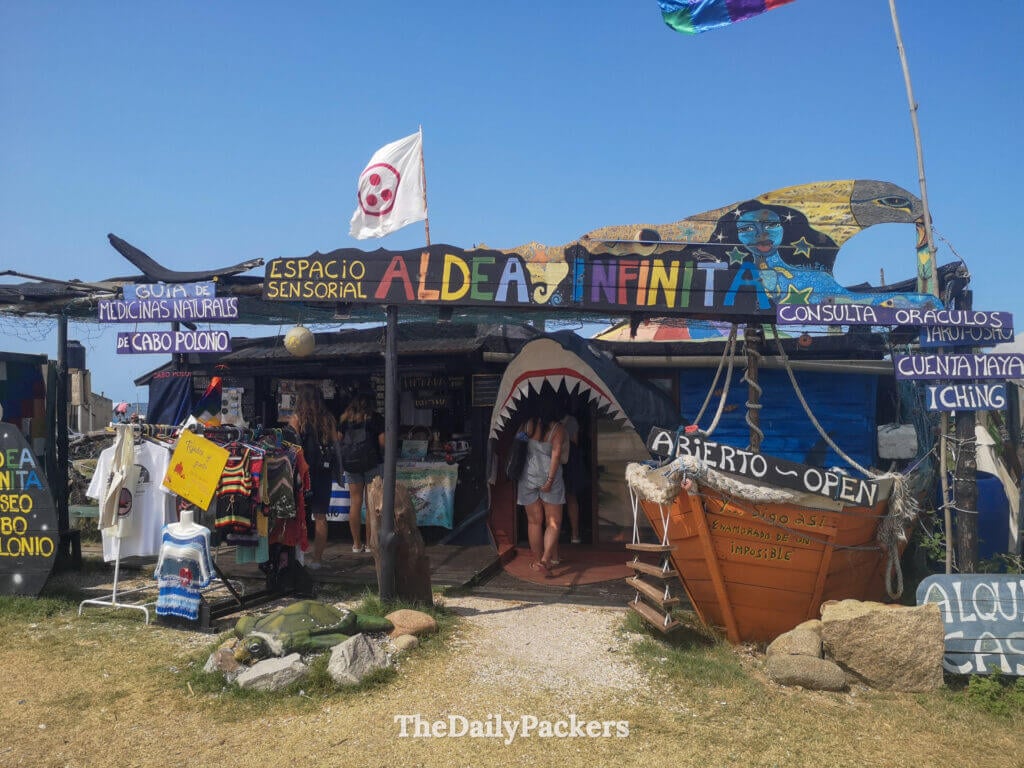
Cabo Polonio may be tiny, but it has some surprisingly lovely artisanal shops and boutiques. Locals sell handmade jewelry, pottery, natural soaps, and woven clothes — all crafted with materials found in the region. There’s a real sense of authenticity here, and buying something directly supports the small community that calls this place home.

Visit the Museo Espacio Sensorial
This small museum tells the story of Cabo Polonio — its origins, isolation, wildlife, and way of life. The name “Espacio Sensorial” comes from its interactive displays and focus on natural sounds and textures, offering a multi-sensory experience. It’s simple but gives you a deeper appreciation for how unique this community is and why it’s so well protected.
Climb the Lighthouse (Faro de Cabo Polonio)
The Cabo Polonio Lighthouse is the most famous landmark in the area, built in 1881 to guide ships through the rough Atlantic waters. You can climb to the top for a small fee and enjoy panoramic views of the coastline, dunes, and ocean. The view is incredible — especially on a clear day.

If you want to visit the lighthouse, it’s open from 10 am to 1 pm and from 3 pm to 5 pm. The entry cost is 25 UYU.
Here are all your accommodation options in Cabo Polonio and Punta del Diablo,
Watch the Sea Lion Colony
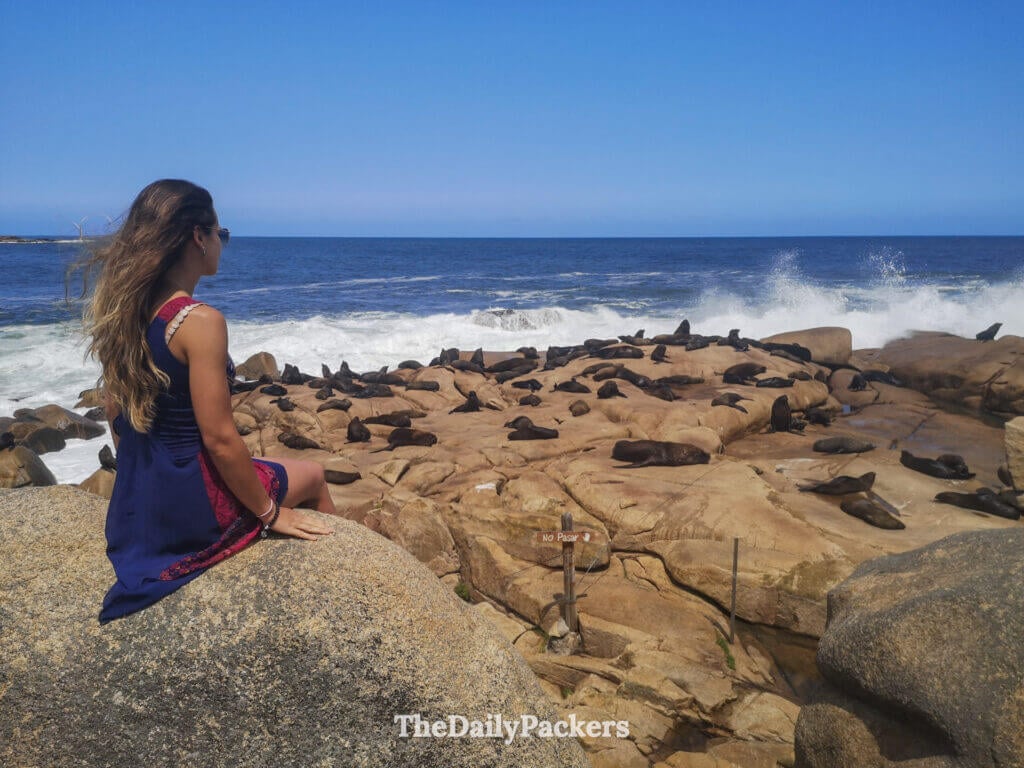
Right next to the lighthouse, you’ll find one of the largest sea lion colonies in South America. You can easily spot them resting on the rocks or playing in the waves — sometimes just a few meters away! Bring binoculars if you have them, and keep your distance to avoid disturbing them. It’s one of the highlights of Cabo Polonio and an unforgettable wildlife encounter.
Relax on the Beach
The beaches in Cabo Polonio are wild and untouched, with soft golden sand and powerful Atlantic waves. They stretch for kilometers, so it’s easy to find a quiet spot to relax, read, or swim (if the water isn’t too rough). The sunsets here are magical — the kind that make you stop and just watch in silence.

As you move further away from the village center, you’ll notice the crowds thinning out until it’s just you, the wind, and the ocean. Near town, a few travelers and locals relax on the sand, but the farther you go, the quieter it becomes — almost completely wild.
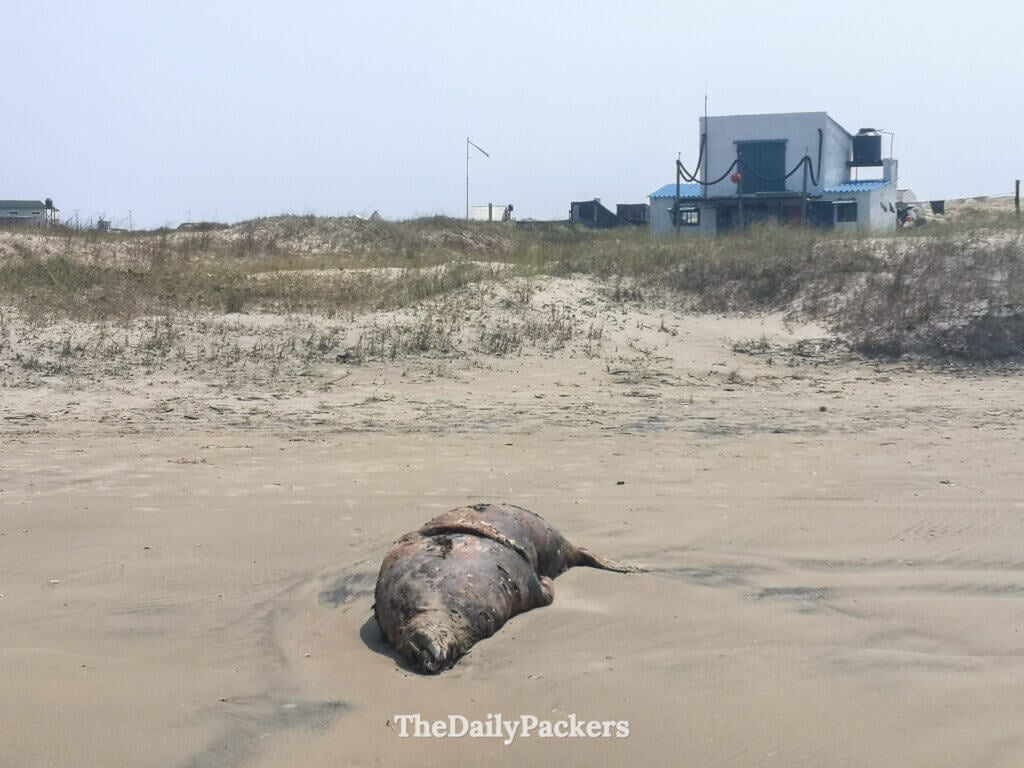
Along the way, you might come across sea lions resting or, sadly, some that didn’t survive. When one dies, the ocean naturally washes it onto the shore. It’s a reminder of how raw and real nature is here — Cabo Polonio isn’t manicured or controlled, it’s wild and alive in every sense.
Here are all your accommodation options in Cabo Polonio and Punta del Diablo,
Explore the Sand Dunes
The sand dunes surrounding Cabo Polonio are huge and constantly shifting with the wind. You can climb them for amazing views over the village and ocean, or just walk along their ridges for a real desert-meets-sea feeling. It’s a photographer’s dream — especially in the late afternoon light when everything turns golden.



1-Day Cabo Polonio Itinerary from Punta del Diablo (or Montevideo)
If you’re visiting Cabo Polonio as a day trip, the best way is to start early from Punta del Diablo — or even Montevideo if you don’t mind a long travel day. Here’s a simple, realistic plan to make the most of your adventure:
Morning – Getting There
- 7:30 a.m. – Take the morning Rutas del Sol bus from Punta del Diablo to Cabo Polonio Park Entrance (1h40 ride).
- If you’re coming from Montevideo, take an early morning bus to Cabo Polonio (approx. 5–6h), arriving around 11:30 a.m.
- 9:15 a.m. – Arrive at the Parque Nacional de Cabo Polonio entrance and buy your ticket for the 4×4 truck that takes you through the dunes to the coast (270 UYU).
- 9:30 a.m. – Hop on the 4×4 safari ride — it takes about 30 minutes through the sandy national park until you reach the small terminal in Cabo Polonio village.
Late Morning – Explore the Village
- 10:00 a.m. – Walk around the small hamlet, get a feel for the atmosphere, and maybe grab a coffee or snack in the Plaza Central.
- 10:30 a.m. – Visit the Museo Espacio Sensorial to learn about Cabo Polonio’s story and its connection to nature.
- 11:15 a.m. – Explore the local boutiques and small artisan shops — perfect for handmade jewelry or souvenirs.
Midday – Lighthouse & Sea Lions
- 12:00 p.m. – Walk toward the Cabo Polonio Lighthouse (Faro de Cabo Polonio). Climb to the top for sweeping views of the coastline.
- 12:45 p.m. – Just below the lighthouse, watch the sea lion colony — one of the largest in South America. Take your time, it’s a unique sight.
- 1:15 p.m. – Enjoy a picnic lunch by the beach or stop at one of the local restaurants for fresh fish or empanadas.
Afternoon – Beach & Sand Dunes
- 2:00 p.m. – Walk along the wild beaches, heading away from town for more solitude and a sense of pure wilderness.
- 3:00 p.m. – Climb the sand dunes to take in panoramic views of the Atlantic Ocean and the village — a great spot for photos.
- 4:00 p.m. – Return to the village for a last drink or to explore any area you missed earlier.
Evening – Return Trip
- 5:00 p.m. – Take the 4×4 back to the park entrance (last departures are around 7 p.m., but better to go earlier).
- 5:45 p.m. – Catch the Rutas del Sol bus back to Punta del Diablo (arriving around 7:30 p.m.) or continue to Montevideo if you’re heading south.
Optional 2-Day Extension
If you want to take it slow, stay overnight in Cabo Polonio. You’ll be able to enjoy sunset at the beach, stargaze (no light pollution here!), and wake up early for sunrise over the ocean — a rare experience in such a remote and peaceful place.
Read: Our complete 10-day Uruguay Itinerary
About the authors
We are Alex and Tina, a French-Serbian couple who met in China back in 2014. We spent three incredible years there before making France our home. Our shared passion for travel has been the heartbeat of our relationship for over 12 years, taking us across 44 countries and counting.
We launched TheDailyPackers in 2019 as a way to document our adventures. In 2026, we reached a major milestone by officially turning our blog into our full-time job. While we are still growing toward financial independence through this platform, every article we write is fueled by our mission to make your voyages easier through in-depth guides, honest advice, and the lessons we’ve learned from our own mistakes.
Our journey has not been without its storms. In 2023, our world changed forever when our first son, Poppy, was stillborn on November 25th. It was, and remains, the hardest chapter of our lives. In 2025, we were blessed with our second little boy, Milo. He has since joined our traveling tribe, and you’ll be seeing him—and the reality of traveling with a little one-on the blog more and more.
We hope to inspire you to explore the world with curiosity and resilience. Thank you for being part of our story.
You may also like those related posts
25 best things to do in Salvador, Brazil, in 1 to 3 days
Haarlem, A Perfect 1-Day Trip from Amsterdam, Netherlands
11 Best things to do in Essaouira, Morocco, in 1 to 2 days
W-Trek Day 5: From Chileno to Central
7 to 18-Day Peru Itinerary: Best Guide for Exploring Peru
Travelling After Loss: Learning to Live Again
16 best things to do in Budapest, Hungary, in 1 day or more
Ella train: An Unforgettable Experience from Nuwara Eliya 2025
Pssst, did you know that…
If you purchase something through our links, we earn a small fee. However, you still pay the same. Win-win! And one day we may get to be full-time travel bloggers =)
Find Hotels with Booking.com
Do Yoga with KVY
Buy us a Coffee
Rent a car with DiscoverCars
Find Attractions with GetYourGuide
Find Flights with Expedia
Buy an eSIM with Airalo
Get insured with World Nomads
Get ready with Amazon.com