
Introduction
During our trip to Andalusia, Spain, we spent a full day exploring Córdoba, one of the most beautiful and historically fascinating cities in southern Spain. We visited it as a day trip from Seville, and honestly, it turned out to be one of the highlights of our journey.
Córdoba, the capital of its province, is the third most populated city in Andalusia after Seville and Málaga. Once a Roman settlement and later a major Islamic center during the Middle Ages, the city became the capital of the Umayyad Caliphate and one of the most advanced cities in Europe. It was known for its scholars, architecture, and rich cultural exchange between Muslim, Christian, and Jewish communities.
Even if you only have one day, Córdoba will captivate you — from the stunning Mezquita-Catedral to its charming patios, narrow streets, and peaceful courtyards.
Let’s dive into the best things to do in Córdoba and how to make the most of your visit.


Read: Our complete 10-day Andalusia Itinerary: The best of the south of Spain
Getting there
Getting to Córdoba is super easy, whether you’re traveling independently or joining a guided tour.
- By Train: The fastest and most convenient option is the high-speed AVE train. From Seville, the journey takes just 40–45 minutes, and from Madrid, it’s about 1 hour and 45 minutes. Trains arrive at Córdoba Central Station, which is around a 15–20 minute walk or a short taxi ride from the historic center.
- By Bus: If you’re traveling on a budget, you can take an intercity bus. It’s slower (around 2.5 hours from Seville), but usually cheaper than the train. Buses drop you off close to the city center.
- By Car: For those who prefer flexibility, renting a car is another excellent option. The drive from Seville takes around 1 hour and 30 minutes, mostly along the A-4 motorway. Parking near the historic center can be tricky, so aim for one of the public parking areas just outside.
- By Tour from Seville: For those staying in Seville and not wanting to plan the logistics, several day tours to Córdoba are available. These include round-trip transportation, skip-the-line tickets to the Mezquita, and sometimes visits to Medina Azahara — the ruins of a medieval Islamic city.


Check all your transportation options online — from buses to trains and ferries — it makes planning so much easier.
Moving Around
Córdoba’s historic center is compact and easily walkable, which makes exploring it on foot the best option. Most of the main attractions — including the Mezquita-Catedral, Roman Bridge, Alcázar de los Reyes Cristianos, and Jewish Quarter (Judería) — are within a 10–15-minute walk of each other.
Here’s how to get around efficiently:
- On Foot: The old town’s narrow cobbled streets are best explored at a slow pace. Wear comfortable shoes and let yourself wander — half of Córdoba’s charm lies in getting lost in its maze-like alleys.
- By Bike: Córdoba is bike-friendly and has several rental shops in the city center, as well as great bike tours. A great way to see more in less time, especially if you want to visit places a bit farther away like the Medina Azahara ruins.
- By Bus or Taxi: If you’re staying overnight or need to reach the train/bus station, the local bus system (run by Aucorsa) connects most areas. Taxis are also widely available and affordable for short rides.
- Hop-On Hop-Off Bus Tour: For a relaxed way to explore the city, take the Córdoba City Sightseeing Hop-On Hop-Off Bus. It covers all major landmarks, including the Mezquita, Alcázar, and Viana Palace, with audio guides explaining the city’s rich history.
Córdoba is one of those cities where you don’t need to rush. Take your time walking through the whitewashed courtyards, stop for tapas, and enjoy the rhythm of Andalusian life.


When to Visit
Córdoba can be visited year-round, but the experience changes a lot with the seasons — especially because of its famously hot summers. Here’s what to expect depending on when you go:
- Spring (March to May): The absolute best time to visit Córdoba. The weather is warm but pleasant, and the city comes alive with flowers and festivals. If you can, try to visit during May, when the Patio Festival (Fiesta de los Patios) takes place — locals open their stunning flower-filled courtyards to the public. It’s one of the most beautiful events in Spain.
- Summer (June to August): Expect scorching temperatures, often exceeding 40°C (104°F). Sightseeing during midday is almost impossible, so plan early morning and late evening visits. The good news? Fewer tourists and lower prices on hotels.
- Autumn (September to November): A great alternative to spring. Temperatures drop back to comfortable levels, making it perfect for walking around the historic center and visiting the Mezquita without crowds.
- Winter (December to February): Mild temperatures and a calmer atmosphere make winter a peaceful time to explore Córdoba. You’ll miss the patio flowers, but you’ll have the city’s landmarks almost to yourself.
Travel Tip: Visit Córdoba in April or early May for the perfect mix of good weather, open courtyards, and fewer crowds — it’s when the city is at its most photogenic.


Where to Stay
While many travelers visit Córdoba as a day trip from Seville, we’d honestly recommend spending at least one night here if you can. Staying overnight gives you time to enjoy the city once the day crowds leave — when the streets quiet down, the Mezquita glows under the evening light, and locals fill the tapas bars. It’s a completely different, more authentic experience.
Here are a few great accommodation options depending on your travel style and budget:
(€) Eurostars Azahar – A modern and affordable option located near the city center. The rooms are bright and comfortable, perfect for travelers who want good value without compromising on location.
(€€) H10 Palacio Colomera – Set inside a beautifully restored historic building on Plaza de las Tendillas, this boutique hotel offers elegant rooms and a rooftop pool with panoramic views of Córdoba. Ideal for couples or those wanting a stylish, central stay.
(€€€) Hospes Palacio del Bailio, a Member of Design Hotels – This luxury hotel combines ancient Roman ruins with Andalusian charm. It features lush courtyards, an outdoor pool, and even a Roman bath spa. A fantastic choice if you want to immerse yourself in Córdoba’s history and unwind in total comfort.
Tip: Staying overnight also means you can explore Córdoba’s narrow streets early in the morning or late at night — the best times to truly feel the magic of the city without the crowds.


Here are all your accommodation options in Cordoba
What to Eat
Córdoba’s cuisine is hearty, flavorful, and full of Andalusian soul. Influenced by its Roman, Moorish, and Jewish past, the food here blends Mediterranean ingredients with bold spices and local traditions. Even if you’re only in town for a day, make time to try a few of its famous dishes — they’re as much a part of the experience as the Mezquita itself.
Here are some must-try local specialties:
- Salmorejo Cordobés – The star dish of Córdoba. It’s a thick, creamy version of gazpacho made with tomatoes, olive oil, and bread, usually topped with hard-boiled egg and jamón. You’ll find it everywhere, from traditional taverns to fancy restaurants.
- Flamenquín – Rolled-up pork loin filled with ham, breaded, and deep-fried — crispy on the outside and juicy inside. Perfect for meat lovers.
- Berenjenas con Miel – Fried eggplant drizzled with local honey. A sweet-and-savory combo that perfectly represents Andalusian flavors.
- Rabo de Toro – A traditional oxtail stew slow-cooked in red wine and vegetables until tender.
- Montilla-Moriles Wine – Córdoba’s local fortified wine, similar to sherry — ideal for pairing with tapas.
Where to Eat in Córdoba: If you’re spending a night in town or simply looking for the best spots to eat, here are a few great picks:
- Bodegas Campos – A Córdoba classic, serving traditional Andalusian dishes in a beautiful courtyard setting.
- Taberna Salinas – One of the city’s most iconic taverns, known for its authentic atmosphere and hearty local food.
- Regadera – For something more modern, this restaurant offers creative twists on classic recipes.
- Sojo Ribera – Perfect for a drink or light tapas along the river, with views of the Roman Bridge.
Tip: Order a few small tapas instead of one big meal — it’s the best way to sample Córdoba’s diverse cuisine without spending too much or feeling too full.
Best Things to do In Cordoba
Synagogue & La Juderia
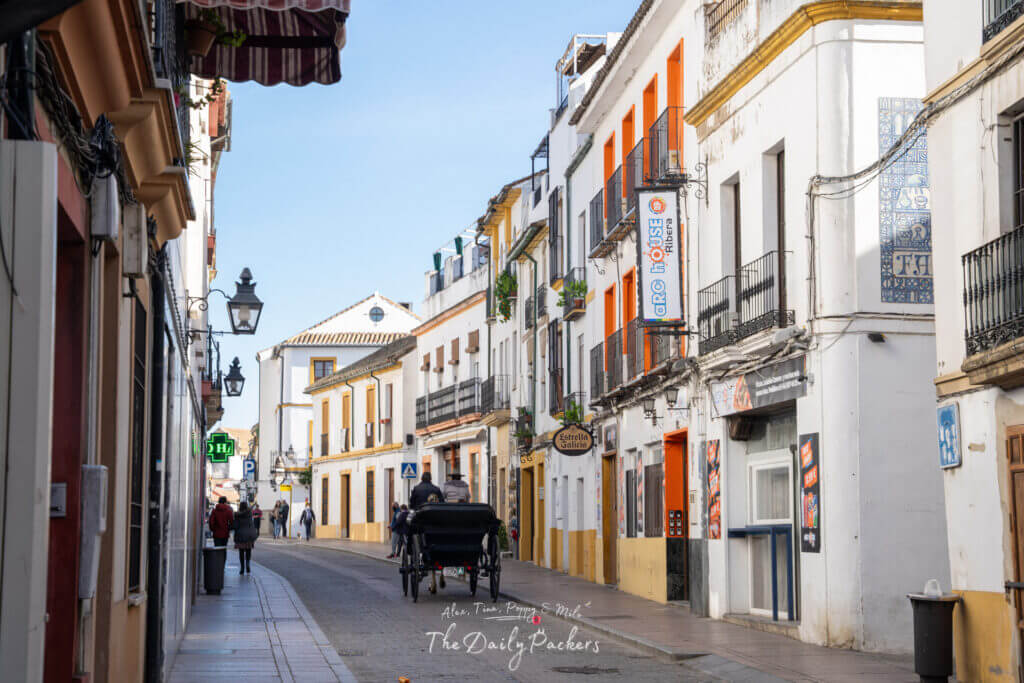
Start your visit in La Judería, Córdoba’s historic Jewish quarter and one of the city’s most charming neighborhoods. This maze of narrow, cobbled streets is filled with whitewashed houses, colorful flower pots, and wrought-iron balconies — it’s one of the best areas to simply wander without a plan. Every corner looks like a postcard, and you’ll find plenty of small artisan shops, hidden courtyards, and tapas bars along the way.
In the heart of La Judería stands the Córdoba Synagogue, built in 1315. Though it’s tiny, it’s one of only three remaining pre-expulsion synagogues in Spain, making it a powerful reminder of the city’s Jewish heritage. The interior features beautiful Mudejar-style decorations, with intricate stucco work and Hebrew inscriptions still visible on the walls.

Here are all your accommodation options in Cordoba
Visit the Mosque-Cathedral (La Mezquita de Córdoba)
The Mosque-Cathedral of Córdoba, or La Mezquita, is without a doubt the city’s most breathtaking landmark — and one of the most extraordinary architectural wonders in the world. Originally built as a mosque in 785, it was later converted into a cathedral after the Christian reconquest in 1236, yet much of its Islamic design was beautifully preserved.
Walking inside feels like stepping through centuries of history layered in one place. The endless forest of red-and-white arches, delicate columns, and golden mihrab (prayer niche) are mesmerizing, while in the very center stands a Christian cathedral nave — a striking symbol of the city’s mixed heritage.

You can also climb the bell tower (Torre del Alminar) for panoramic views of Córdoba, but spots are limited, so it’s best to book in advance.
Tips for visiting the Mezquita:
- Book your tickets early, especially during weekends or holidays.
- If you want a richer experience, take a guided tour or skip-the-line ticket, like the Mosque-Cathedral Guided Tour, to learn more about its fascinating history.
- Visit early in the morning or close to closing time for fewer crowds and better lighting for photos.


Tip: Get the Skip-the-Ticket-Line Mosque-Cathedral Guided Tour
Walk Through the Puerta del Puente (Bridge Gate)
At the entrance of Córdoba’s famous Roman Bridge, you’ll find the Puerta del Puente, or Bridge Gate — a striking stone archway that welcomes you into the city’s historic center. Built in the 16th century under King Philip II, it stands on the same spot where the ancient Roman and Moorish gates once stood, marking Córdoba’s long and layered history.
The gate was originally constructed to celebrate King Philip II’s visit to Córdoba and served as one of the main entrances to the walled city. Its grand columns and classical design make it a great photo stop, especially with the Mezquita’s tower rising behind it and the Roman Bridge stretching out ahead.
Tip: Come early in the morning or during golden hour to catch the best light for photos — the contrast between the sandstone gate, the river, and the bridge is stunning.


Walk Across the Roman Bridge (Puente Romano)
From the Puerta del Puente, continue straight onto the Roman Bridge, one of Córdoba’s most iconic landmarks. Originally built in the 1st century BC by the Romans, this impressive structure spans the Guadalquivir River and has been the city’s main crossing for nearly 2,000 years. For almost twenty centuries, it was the only bridge connecting both sides of Córdoba — a true testament to its enduring engineering.
The bridge has been rebuilt several times throughout history, but it still retains much of its original character. As you walk along its 16 arches, you’ll enjoy some of the best panoramic views of the Mosque-Cathedral and the Puerta del Puente behind you.

Tips for visiting the Roman Bridge:
- Come at sunrise or sunset for the most beautiful light and reflections on the river.
- Halfway across, stop to see the statue of San Rafael, a symbol of protection for the city.
- The bridge also appears in pop culture — fans of Game of Thrones may recognize it as part of the setting for the city of Volantis!

Visit the Torre de la Calahorra
At the far end of the Roman Bridge, you’ll find the Torre de la Calahorra, a medieval defensive tower that once protected Córdoba from invasions. Originally built by the Moors and later reinforced by King Henry II in the 14th century, this tower played a key role in guarding the southern entrance to the city.
Today, the tower houses the Museum of Al-Andalus, dedicated to the period when Muslims, Jews, and Christians coexisted peacefully in Córdoba. The museum offers scale models, artifacts, and music that illustrate the city’s golden age of cultural exchange.

You can climb to the top for beautiful views of the Roman Bridge and the Mezquita, or simply admire the structure from the outside — it’s one of the most photogenic spots in the city.
Tips for visiting the Torre de la Calahorra:
- Entry is optional, but if you’re interested in Córdoba’s multicultural history, it’s worth the short visit.
- The tower is especially beautiful when viewed from the bridge at sunset, with the city glowing in the background.

Here are all your accommodation options in Cordoba
Explore the Alcázar de los Reyes Cristianos
The Alcázar de los Reyes Cristianos, or Alcázar of the Christian Monarchs, is one of the most beautiful and historically significant landmarks in Córdoba. Originally built in the 14th century by King Alfonso XI, it served as a royal residence for the Catholic Monarchs, Ferdinand and Isabella, who ruled from here during their campaign against Granada — the final Muslim stronghold in Spain.
Later, the Alcázar became the seat of the Spanish Inquisition, giving this elegant palace a dark chapter in its long history. Today, though, it’s best known for its magnificent gardens, filled with fountains, orange trees, and perfectly manicured hedges — truly one of the most enchanting places to visit in Córdoba.

You can climb the towers for panoramic views of the city and the Guadalquivir River, or wander through the peaceful courtyards and mosaics that showcase Córdoba’s mix of Roman and Moorish influences.
Tips for visiting the Alcázar de los Reyes Cristianos:
- Book your ticket in advance — the system can be confusing, and entry times often fill up fast. We didn’t know this and almost missed our chance, managing to get the last available spot in the afternoon.
- Visit early or late in the day to enjoy the gardens in softer light and with fewer crowds.

Tip: Get the whole experience with the Jewish Quarter, Synagogue, Mosque, and Alcázar Tour
Relax at Plaza de la Corredera
The Plaza de la Corredera is Córdoba’s most famous square — and one of the most striking in Andalusia. Its rectangular shape, surrounded by colorful arcaded buildings, is reminiscent of the classic Plaza Mayor of Castile, making it unique in southern Spain. In fact, it’s the only square of its kind in Andalusia.

Throughout history, this plaza has been the heart of local life — hosting everything from markets and celebrations to bullfights and public executions. Today, it’s much more peaceful, filled with terraces, cafés, and tapas bars, making it the perfect place to sit down, have a drink, and watch daily life unfold.
Travel Tip: Grab a seat at one of the cafés under the arcades and try some local tapas — it’s one of the best spots in Córdoba to soak in the atmosphere.

Admire the Templo Romano
Just a short walk from Plaza de la Corredera, you’ll find the Templo Romano, the ancient Roman Temple of Córdoba. Built around 41 AD during the reign of Emperor Claudius, these ruins once formed part of a much larger complex dedicated to the imperial cult — honoring the Roman emperors as gods.

Although only a few massive marble columns remain today, they’re beautifully illuminated at night and stand as a reminder of Córdoba’s long and diverse history, stretching back to Roman times.
Travel Tip: You can’t enter the site, but it’s easily visible from the street — perfect for a quick stop on your walking tour.

Stroll Through Plaza de las Tendillas
The Plaza de las Tendillas marks the transition between Córdoba’s old town and its more modern district. Surrounded by elegant early 20th-century buildings, it’s a lively square where locals gather for coffee, shopping, or simply to relax by the central fountain featuring a statue of the famous Cordoban horseman, El Gran Capitán.
It’s also the starting point of Córdoba’s main shopping streets, filled with boutiques, cafés, and restaurants — the perfect place to take a short break from sightseeing and enjoy a more contemporary side of the city.


1-Day Self-guided Cordoba itinerary
If you’re visiting Córdoba as a day trip from Seville, it’s totally doable — the high-speed train makes it quick and easy. Here’s how to make the most of one full day in this stunning Andalusian city.
- Take the 9:13 AM train from Seville Santa Justa Station
- Arrive in Córdoba at 9:56 AM
- Visit the Synagogue and stroll through La Judería
- Visit the Mosque–Cathedral of Córdoba (Mezquita)
- Walk to the Puerta del Puente (Bridge Gate)
- Cross the Roman Bridge of Córdoba
- Admire the Torre De Calahorra
- Lunch
- Visit the Alcázar of the Christian Monarchs
- Relax at Plaza de la Corredera
- See the Templo Romano
- Walk toward Plaza de las Tendillas
- Head back to Córdoba Train Station
- Take an evening train back to Seville
Start early, wear comfortable shoes, and book your Mezquita and Alcázar tickets in advance — they’re two of the most popular attractions in Córdoba!
Read: Our complete 10-day Andalusia Itinerary: The best of the south of Spain
About the authors
We are Alex and Tina, a French-Serbian couple who met in China back in 2014. We spent three incredible years there before making France our home. Our shared passion for travel has been the heartbeat of our relationship for over 12 years, taking us across 44 countries and counting.
We launched TheDailyPackers in 2019 as a way to document our adventures. In 2026, we reached a major milestone by officially turning our blog into our full-time job. While we are still growing toward financial independence through this platform, every article we write is fueled by our mission to make your voyages easier through in-depth guides, honest advice, and the lessons we’ve learned from our own mistakes.
Our journey has not been without its storms. In 2023, our world changed forever when our first son, Poppy, was stillborn on November 25th. It was, and remains, the hardest chapter of our lives. In 2025, we were blessed with our second little boy, Milo. He has since joined our traveling tribe, and you’ll be seeing him—and the reality of traveling with a little one-on the blog more and more.
We hope to inspire you to explore the world with curiosity and resilience. Thank you for being part of our story.
You may also like those related posts
Thuy Tien Lake: Exploring Hue’s Forgotten Abandoned Water Park
15 Best things to do in Kaunas, Lithuania, in 1 day
Obernai Christmas Market: The Hidden Gem of Alsace
W-Trek Day 4: From Frances to Chileno
Saleccia & Lotu: Best Beaches of Corsica’s Agriates Desert
20 Best things to do in Ajaccio, Corsica, in 2 days or more
Manosque, Provence, the best base to explore Lavender fields
The perfect 2-week Baltic States Itinerary
Pssst, did you know that…
If you purchase something through our links, we earn a small fee. However, you still pay the same. Win-win! And one day we may get to be full-time travel bloggers =)
Find Hotels with Booking.com
Do Yoga with KVY
Buy us a Coffee
Rent a car with DiscoverCars
Find Attractions with GetYourGuide
Find Flights with Expedia
Buy an eSIM with Airalo
Get insured with World Nomads
Get ready with Amazon.com