
Introduction
Corsica is one of Europe’s most beautiful and yet underrated islands. With its turquoise waters, rugged mountains, medieval villages, and authentic culture, it offers the best of both beach life and mountain adventure.
Often referred to as the “Island of Beauty,” Corsica truly lives up to its name. Whether you’re looking for wild hikes, hidden beaches, picturesque towns, or rich gastronomy, Corsica delivers an unforgettable experience.
Even if Corsica has become one major travel destination (Especially for the French), it has retained its authentic charms. Some regions are less traveled by tourists, making it enjoyable even during the peak season.
But before you hop on a plane or ferry, here are some essential Corsica travel tips that will make your journey even better.

Read: The Ultimate Corsica Itinerary, 13-day Corsica Road trip
How to Travel to Corsica
Corsica can be reached by ferry or by plane — and choosing the right option depends on your travel style and schedule.
By Plane: Corsica has four international airports: Bastia (BIA), Ajaccio (AJA), Figari (FSC), and Calvi (CLY).
From mainland France, you’ll find direct flights from Paris, Marseille, Nice, Lyon, and Bordeaux, especially between April and October. Return tickets from Paris can cost between €100–€200, depending on the season.
By Ferry: If you’re traveling with a car (recommended!), ferries are your best bet. Ferries depart from Nice, Toulon, and Marseille in France, and from Savona or Livorno in Italy.
Expect prices for a car + two passengers around €150–€250 one way during mid-season, but they can jump higher in summer.
Tip: Book your ferry tickets well in advance if you’re traveling in July or August!

Weather
Corsica enjoys a Mediterranean climate with long, hot summers and mild, wet winters.
- Spring (March-May): A great time for exploring the coastline, but the sea is still too cool for swimming (15-19°C / 59-66°F). The beaches are quiet, and the island is in full bloom, making it perfect for scenic coastal hikes.
- Summer (June-August): Peak beach season with hot temperatures (25-30°C / 77-86°F) and warm sea (22-27°C / 72-81°F). This is the best time for swimming, snorkeling, and island-hopping, but expect crowded beaches, higher prices, and busy roads.
- Autumn (September-October): The ideal time for a beach holiday. The sea is still warm (20-24°C / 68-75°F), the crowds are gone, and the weather remains sunny and pleasant (20-27°C / 68-81°F). September is especially perfect for enjoying Corsica’s stunning beaches without the summer rush.
- Winter (November-February): Too cold for swimming (sea temperatures drop to 13-16°C / 55-61°F), but the beaches are completely empty, making it a peaceful time for long coastal walks and photography. Some beachside restaurants and tourist services may be closed.
We recommend late May to early July or September for a perfect balance of weather, prices, and crowds.
Also, be aware that in winter most of the hotels and attractions are closed. So, be sure to check before going there at this time


Here are all your accommodation options in Corsica
Renting a Car in Corsica
Public transport is very limited in Corsica, so renting a car is almost essential if you want to explore the island properly.
- Rental prices start around €25–€40/day in the low season and can rise to €60–€90/day in high season (July–August).
- Choose a small car for better maneuverability on narrow village roads.
- Automatic cars used to be rarer and more expensive (+25–30%). We booked a manual car and received a brand new automatic one.
- Most rental agencies are located at airports and ferry ports.
- We recommend and use com. We have never been disappointed by what we got.
Tip: Take full insurance coverage — small scratches from narrow roads are not uncommon.
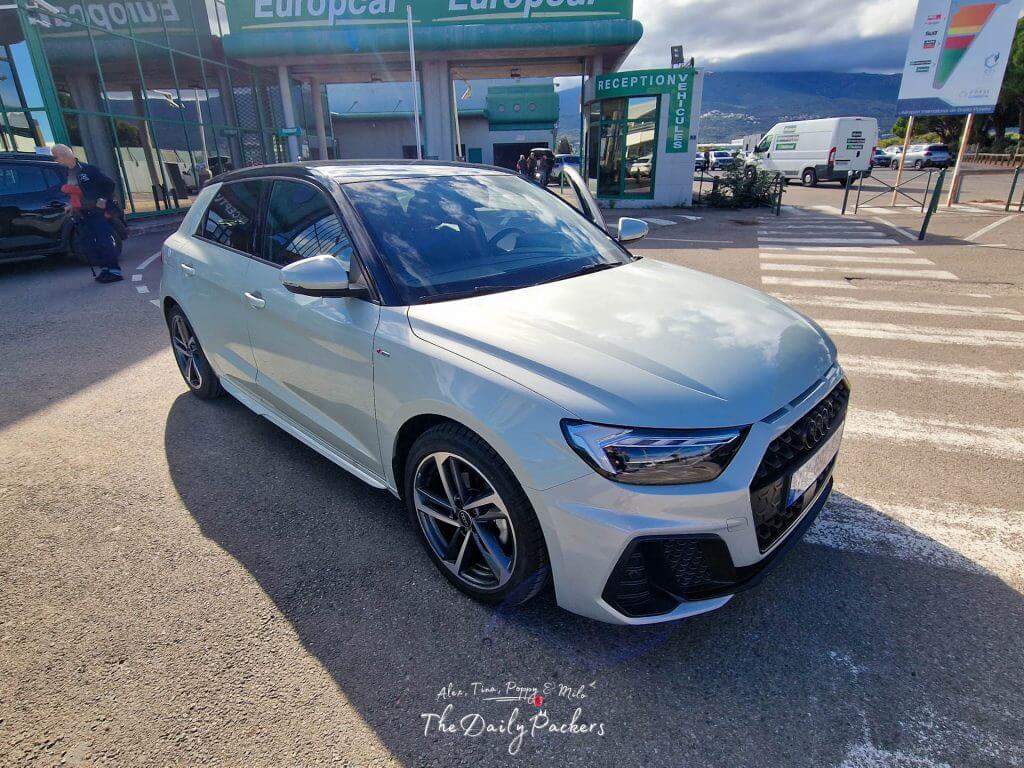

We recommend to rent a car through Discover Cars with free cancellation. Book your rental car here.
While Corsica is known for its stunning landscapes, quaint villages, and remote beaches, public transportation is very limited compared to mainland Europe. If you’re planning to rely on buses or trains, here’s what you need to know:
Corsica does have a small train network, operated by Chemins de Fer de la Corse (CFC). It connects a few major towns and cities such as:
- Ajaccio → Corte → Bastia
- Ajaccio → Calvi (seasonal connection)
- Bastia → Calvi (crossing through Ponte Leccia)
The most famous line is called the “Trinichellu”, which means “little train” in Corsican. It’s scenic, winding through mountains, valleys, and offering spectacular views.
However, trains are slow (expect long journey times) and not very frequent. Think 2–4 trains per day depending on the route.
Ticket Price Example:
- Ajaccio to Bastia: around 22–25€ one way
- Bastia to Calvi: around 16–18€ one way
You can check timetables and book tickets directly at the station or on the CFC website (French only).

Here are all your accommodation options in Corsica
Buses do exist but are:
- Infrequent: Most routes have 1 or 2 buses a day, sometimes fewer on weekends.
- Seasonal: Some routes (especially those to beaches and villages) only operate in summer.
- Unreliable for remote areas: If you’re planning to reach hidden beaches or mountain villages, buses won’t get you there.
Ticket Price Example:
- Ajaccio to Porto-Vecchio: around 20–25€ one way
- Bastia to Saint-Florent: around 10€ one way
You usually buy your ticket directly from the driver. It’s best to have cash.
Important Tip: Bus timetables can change from year to year, so always check schedules in advance and reconfirm them with your accommodation.
Taxis exist, but they are extremely expensive in Corsica. For example:
- Ajaccio Airport to Ajaccio city center (10 km): 30–40€
- Bastia Airport to Bastia center (25 km): 50–70€
There’s no Uber in Corsica. Some companies offer private transfers, especially for long distances, but the price can be similar to renting a car for a day.
Conclusion: Should You Use Public Transport?
- If you plan to stay in one city (Ajaccio, Bastia, Calvi, Corte) and do only a few day trips, public transport can work but will be limiting.
- If you want to explore beaches, mountains, and small villages, renting a car is absolutely necessary.

We recommend to rent a car through Discover Cars with free cancellation. Book your rental car here.
Driving Around Corsica
Driving is without a doubt the best way to explore Corsica’s dramatic landscapes, hidden beaches, and charming villages. However, it’s important to know that driving in Corsica comes with its own set of rules and challenges.
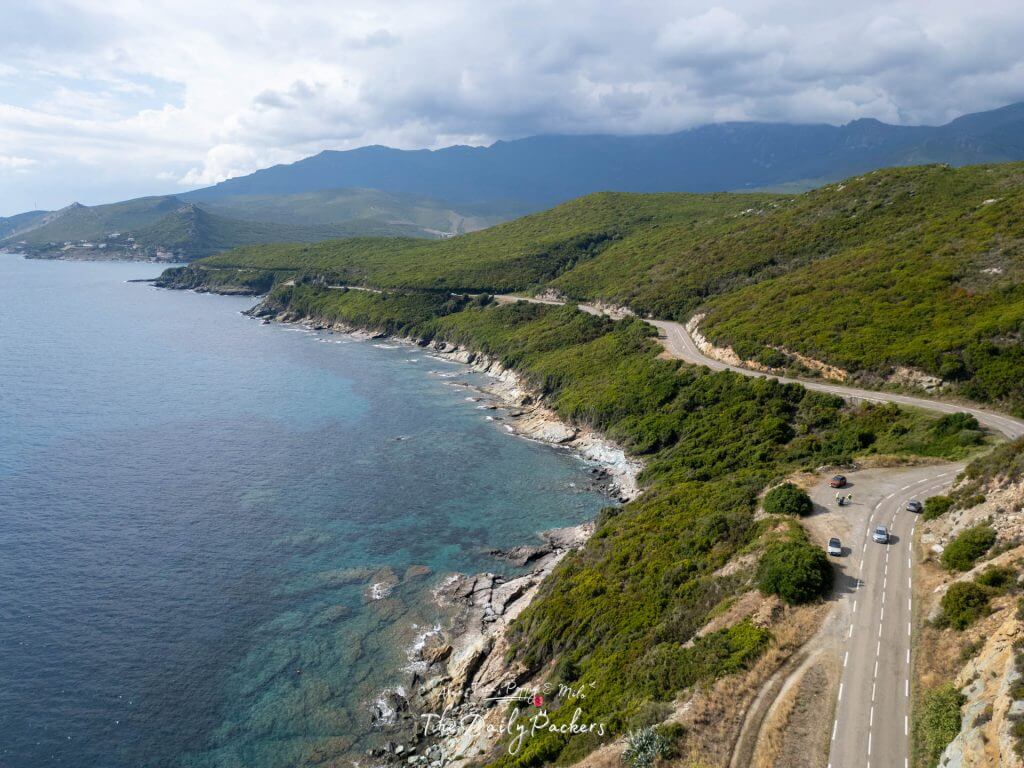
Corsica’s roads are famously narrow, winding, and often steep, especially in the mountainous regions. There are no highways on the island, and even the “main” roads are usually just regular two-lane roads.
Because of the terrain, your average speed will rarely exceed 30–40 km/h, even on supposedly “fast” routes. Always plan extra time for your trips — what looks like a short distance on the map may take much longer than expected.
Corsicans know their roads by heart and tend to drive fast and confidently, even on tight bends. If you find a local driver behind you, don’t feel pressured to speed up. Instead, as soon as you find a safe spot (a small widening or a lay-by), pull over and let them pass.
Locals are used to these driving habits and will appreciate your courtesy.
Driving Safety Tips
- Take blind curves slowly, honk lightly if needed on very narrow sections to warn incoming traffic.
- Watch out for animals: Cows, goats, and pigs are often roaming freely, especially in the center of the island. They can appear suddenly around a curve or even be lying right in the middle of the road.
- Use your horn wisely on very narrow bends or mountain paths — it’s common practice.
Here are all your accommodation options in Corsica
Parking in Corsica can be a challenge depending on where you are:
- In small villages, parking is often limited and streets can be extremely narrow. Budget a few euros for parking meters or dedicated parking lots.
- In bigger cities (like Ajaccio, Bastia, Bonifacio, Porto-Vecchio) and at major tourist attractions, parking lots are more available but they fill up fast in the high season (July and August). Arriving early in the morning is your best bet to find a spot.
- Parking Prices: You can expect to pay around 1.5–2.5€ per hour in touristy areas. Some remote beaches or natural sites may have free parking, but others charge a flat rate of 5–10€ for the day.
When driving inland, be extra cautious:
- Herds of goats and other animals can cross the roads at any time, especially near farms and mountain villages.
- Roads can be even narrower and poorly lit, so avoid night driving if possible in rural areas.
Driving in Corsica is an adventure on its own, but it’s also what makes exploring the island so rewarding. Take your time, enjoy the journey, and don’t rush — Corsica is a place to be savored slowly.

Read: The Ultimate Corsica Itinerary, 13-day Corsica Road trip
Refueling in Corsica
When planning a road trip around Corsica, keeping an eye on your fuel level is crucial. Gas stations (called station-service in French) are mostly found in and around larger towns like Ajaccio, Bastia, Porto-Vecchio, and Calvi. Once you get into the mountains or along more remote coastal roads, gas stations become rare — sometimes you won’t see one for over 50 kilometers.
Fuel prices tend to be about €0.10–€0.15 more expensive than on mainland France. As of summer 2024, you can expect:
- Diesel (Gazole) around €1.85/L
- Petrol (Sans plomb 95) around €1.95/L
All stations are self-service, and most are open 24/7. However, the automatic payment terminals often only accept European credit cards with a chip (and sometimes a PIN). Visa and Mastercard are widely accepted, but it’s always safer to check your card settings before arriving.
If you don’t have a European card, refuel during daytime when the station office is open and staff can assist you.
Some very remote stations only accept cash or have limited hours — especially in smaller villages.
Always fill up before venturing into remote areas or when heading inland. In mountainous regions like Corte, Bavella, or Cap Corse, gas stations can be few and far between. Better to be safe than stranded!
Tip: When planning longer drives (especially cross-island ones), top off your tank even if it’s only half-empty. Distances might look short on the map, but the slow winding roads and possible detours mean you’ll burn fuel faster than expected.
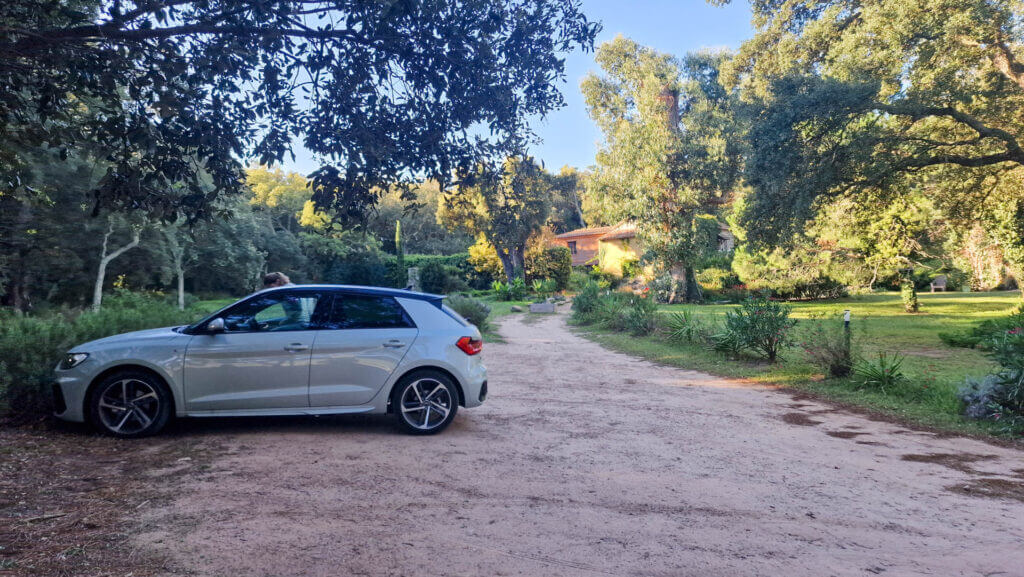
The car we had was an Audi A1 automatic and we refilled it twice. After picking it up in Bastia, we had to refuel a bit before Bonifacio in the south. The second refuel was before giving the car back as all rental cars must be drop off with a full gas tank.
Here are all your accommodation options in Corsica
Cleaning Your Car
Corsica’s beauty often comes with a bit of dust, mud, and sand, especially after a few days of mountain adventures, beach hopping, and countryside drives.
Rental companies usually require you to return the car in a reasonably clean condition. It doesn’t have to be spotless, but if you return it full of sand, mud, or dust, you may get charged an extra cleaning fee (often between €30–€80).
Here’s how to easily clean your car before returning it:
- Self-service car washes are available in most gas stations in or near bigger towns (Ajaccio, Bastia, Porto-Vecchio, Calvi, Corte, etc.).
- Cost: Expect to pay around €3–€5 for a basic wash.
- Most car washes have: Pressure hoses, Vacuum cleaners (around €1–€2 for a few minutes)
- It’s very easy to do a quick rinse and vacuum to avoid any extra fees at car return.
TIP: If you’re flying from Bastia or Ajaccio airport, plan a quick stop at a gas station near the airport for a wash and full tank. It will save you money and a lot of stress!
We recommend to rent a car through Discover Cars with free cancellation. Book your rental car here.
Booking Accommodation in Corsica
Corsica has a wide variety of accommodation options, from charming boutique hotels hidden in mountain villages to luxurious beachfront resorts and family-friendly campsites.
Where you stay often shapes your Corsican adventure, so it’s worth planning ahead.
Here’s a breakdown of what you’ll find:
- Hotels: From boutique hotels in the old towns of Bonifacio and Calvi to luxury seaside resorts along Porto-Vecchio’s coast. Expect to pay around €80–€150/night for mid-range hotels and €200–€400+ for luxury options during high season.
- Guesthouses & B&Bs: Corsica has plenty of cozy guesthouses (called chambres d’hôtes). Staying in one gives you an authentic local experience — often run by Corsican families who can give great tips about the region. Prices generally range from €60–€120/night, and many include delicious homemade breakfasts with local products.
- Camping: If you’re traveling on a budget or love the outdoors, Corsica’s campgrounds are fantastic. You’ll find them all over the island, often close to beaches or in the mountains. Some even offer glamping options, pools, or bungalows. Expect to pay around €20–€50 per night depending on the location and facilities. Tip: Corsica is one of the few places where camping is a very popular way to travel, even among locals.
- Villas & Vacation Rentals: Ideal for families or groups of friends. Villas can be surprisingly affordable if split between several people, and they often come with private pools, BBQs, and sea views. Prices vary greatly depending on location and season but expect €100–€500+ per night for a full house. Important: Villas and holiday homes get booked extremely early, especially for July and August — booking 6 months ahead is highly recommended.

Best Time to Book Accommodation in Corsica
- High Season (July–August): This is the peak summer season when the island is buzzing with tourists. Book at least 3–6 months ahead to secure good accommodations, especially along the coast (Porto-Vecchio, Bonifacio, Calvi, Ajaccio) and famous villages (Pigna, Sant’Antonino).
- Shoulder Season (May–June and September): Our favorite time! You’ll find better prices, more availability, and fewer crowds. The weather is still amazing, the sea is warm (especially in September), and you can often book just a few weeks in advance without stress.
- Low Season (October–April): Accommodation is cheaper, but many hotels, guesthouses, and campsites close outside the tourist season. Always double-check availability.
We personally booked most of our accommodations through Booking.com. It was super easy to compare places, read honest reviews, and often cancel for free if needed. Plus, it helped us find charming local stays that weren’t listed elsewhere!
Pro Tip: If you’re planning a road trip around Corsica, consider mixing types of stays: a few nights in cozy mountain guesthouses, a couple of nights camping near the beaches, and ending with a little luxury stay in a boutique hotel. It gives a full flavor of what Corsica has to offer!
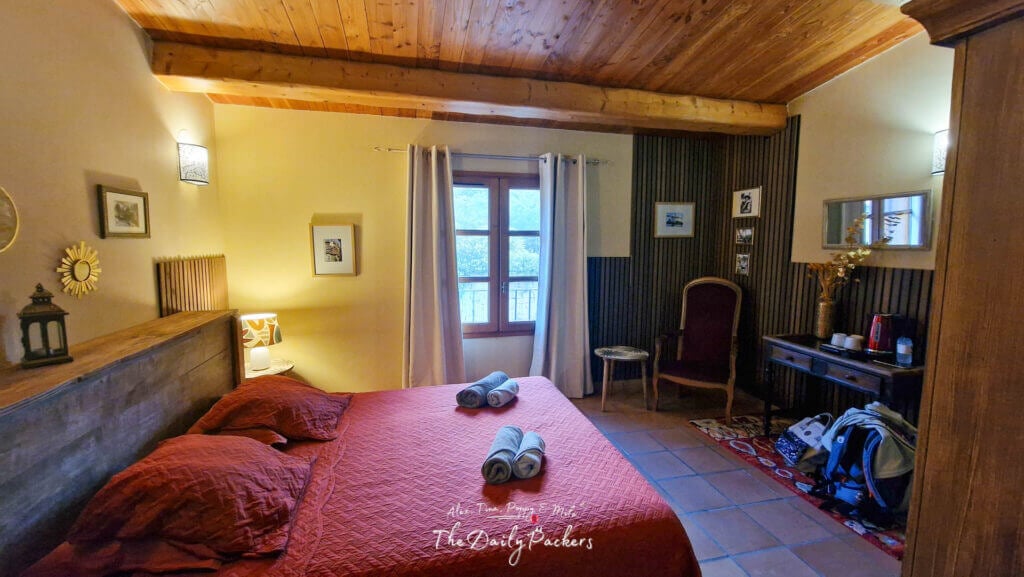
Here are all your accommodation options in Corsica
Tipping in Corsica
Unlike some countries where tipping is expected, tipping in Corsica is not mandatory — but it’s always appreciated if the service has been good.
In France and therefor Corsica, a service charge is most of the time already included (for example: “service compris 15%”). If that’s the case, no extra tip is needed unless you feel the service was exceptional.
The culture around tipping here is more relaxed, much like the island’s general atmosphere.
- Restaurants: In Corsica (and France in general), a service charge (service compris) is included in the menu prices. However, if you’re happy with your meal and the service, it’s customary to leave a little extra — usually around 5–10% of the bill. Tip: In casual spots or beach cafés, just rounding up the bill is perfectly fine. In nicer restaurants, a bit more is appreciated.
- Bars and Cafés: If you’re just having a coffee, a glass of wine, or a small meal at a café or bar, it’s common practice to round up to the nearest euro. Example: If your coffee costs €2.70, leaving €3 is perfect. No need to tip large amounts.
- Hotels: Housekeeping: Leaving €1–€2 per day in your room for housekeeping is a thoughtful gesture, especially if you’re staying for several nights. However this is not expected at all.
Corsicans are proud and appreciate politeness above all. A simple “Merci beaucoup” (Thank you very much) and a smile often go just as far as a tip — especially in smaller, family-run businesses.
Pro Tip: Keep some small change in euros handy during your trip for spontaneous tipping — it’s easier than trying to break a €50 bill after your coffee!


Check our Google Map of Corsica
Mobile Network in Corsica
Staying connected while road-tripping around Corsica is important — especially for navigation on Google Map. The good news is that mobile network coverage in Corsica is quite decent — but not perfect.
Here’s what you need to know:
- Networks: The main mobile providers are Orange, SFR, and Free Mobile. Coverage is solid around the coastal areas, main towns, and major roads.
- Inland and mountain regions: If you’re heading into remote villages or hiking the GR20 trail, be prepared for spotty or no signal in some places.
- For EU travelers: Thanks to EU free roaming agreements, you can use your regular mobile plan without any additional cost — just like at home.
- For non-EU travelers: If you’re coming from outside Europe, consider picking up a local SIM card. They are affordable — around €10–€20, often with several gigabytes of data. Or even better, get yourself an eSim online with Airalo.
Tip: Download offline maps (like Google Maps Offline or Maps.me) before you head into remote areas — better safe than sorry!

WIFI in Corsica
Need your daily internet fix? You’ll be happy to know that Wi-Fi is widely available in Corsica, but with some limitations.
- Hotels: Almost all hotels, from small B&Bs to luxury resorts, offer free Wi-Fi. Speeds are usually good enough for browsing, social media, and booking your next accommodation.
- Cafés and restaurants: Many cafés, especially in tourist towns like Bonifacio, Calvi, or Porto-Vecchio, provide free Wi-Fi. Just ask for the password (“Quel est le mot de passe du Wi-Fi, s’il vous plaît?”).
- Rural areas: In remote villages and mountain lodges, expect little or no Wi-Fi. Take it as a chance to digitally detox!
Tip: Always double-check Wi-Fi quality with your hotel in advance if you plan to work remotely.


Food in Corsica
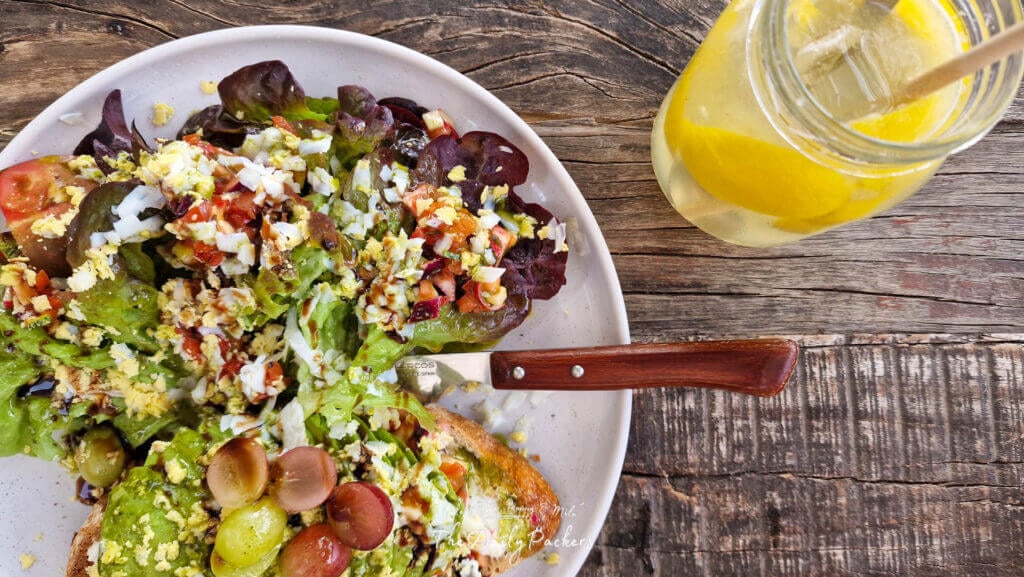
Corsican cuisine was one of our highlights during the trip. It’s rustic, hearty, and full of flavors you won’t easily find elsewhere in France.
What you absolutely must try:
- Charcuterie:
- Figatellu: A smoked liver sausage, often eaten grilled.
- Prisuttu: Dry-cured ham, rich in flavor.
- Coppa: Dry-cured pork shoulder. Perfect for a picnic!
- Brocciu cheese: A soft cheese made from goat or sheep milk — used in everything from omelets to desserts like fiadone (a Corsican cheesecake).
- Wild Boar Stew (Civet de Sanglier): A hearty dish, especially popular inland.
- Chestnut everything: Chestnut cakes, bread, polenta (made from chestnut flour), and even chestnut beer.
- Seafood: Try fresh oysters, mussels, and lobsters along the coast.
If like us you don’t eat meat, you will easily find vegetarian option as many dishes are made with Brocciu cheese.
Eating out costs:
- Mid-range restaurant: Around €20–€40 per person (excluding wine).
- Casual places (pizzerias, beach cafés): Expect €10–€15 for a simple pizza or salad.
- Markets: The best spot for grabbing local cheeses, sausages, pastries, and fruits for a picnic at a fraction of the restaurant prices.
Tip: Always ask for the menu du jour (daily menu) at lunch — it’s usually a great deal!
Don’t forget to book your accommodations in advance – the best places always fill up quickly.
Flying a Drone in Corsica
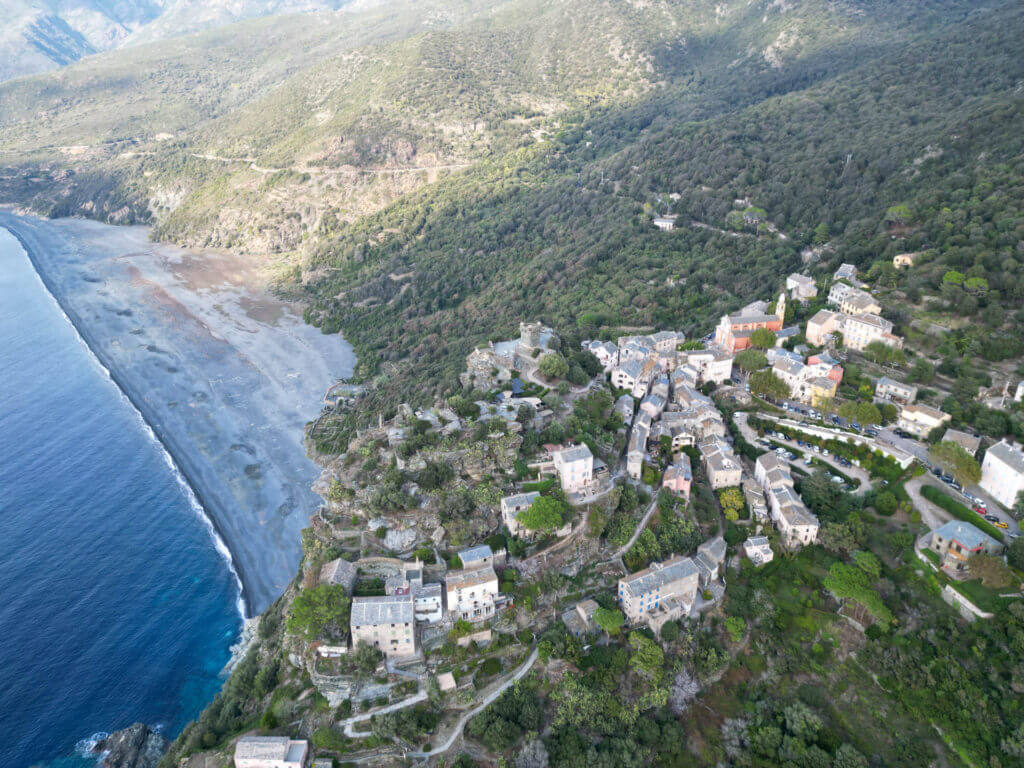
If you’re planning to capture Corsica’s jaw-dropping landscapes from the sky, there are a few important rules you need to know:
- Drones are allowed only outside of natural reserves, airports, and military areas.
- Iconic spots like the Scandola Nature Reserve or Lavezzi islands are completely off-limits for drones.
- You must stay under 150 meters in altitude.
- Corsicans value their privacy highly. Avoid flying over private homes, beaches, or crowds.
- Before flying, always check the official Geoportail website for restricted or no-fly zones. Rules can change from one commune to another.
Tip: Always carry a copy of your drone insurance and registration (if applicable). Some areas can have random checks.
Check our Google Map of Corsica
Cost of travel in Corsica
Corsica is generally slightly more expensive than mainland France, especially during the high season (July and August) when accommodation and car rental prices peak.
However, it’s absolutely possible to explore Corsica on a more modest budget:
- Accommodation: Outside peak season, you can find good guesthouses from €60–€100 per night or campsites from €20–€50.
- Food: Picnicking with local market products can save a lot compared to restaurant meals.
- Transportation: Renting a small car early can help cut costs.
Tip: Visit during the shoulder seasons (May-June or September) to enjoy better prices, fewer crowds, and pleasant weather.
Check our complete article: Cost to Travel in Corsica, Our 2024 Budget breakdown


Tip: We never travel without our DJI Mini 3 PRO drone anymore — it’s totally worth having to capture places from a whole new perspective.
Drinking Tap Water
Tap water is safe to drink almost everywhere, including rural areas and small mountain villages.
- In some extremely remote regions, you might see signs warning about untreated water (eau non potable), but that’s rare.
- Bring a reusable water bottle to stay hydrated, especially during hikes and beach days.
Tip: Many public fountains in towns and villages provide fresh drinking water — just check if it says eau potable before filling up!

Tip: We use the DJI Action 4 to film our vlogs — compact, durable, and perfect for capturing every adventure.
Safety in Corsica
Corsica is one of the safest destinations in Europe. Violent crime is extremely rare, and locals are welcoming and proud of their island.
However, some simple precautions still apply:
- Lock your car and keep valuables out of sight, especially at beaches and popular hiking spots.
- Be careful on narrow, winding roads, especially at night.
- Respect local customs and nature reserves — Corsicans are very attached to their traditions and environment.
Good to know: Medical care is very good, with hospitals in main towns like Ajaccio, Bastia, and Corte.

English in Corsica
French is the main language, and Corsican (Corsu) is still spoken among locals, especially in villages.
In tourist areas (hotels, major restaurants, some shops):
- Basic English is usually understood.
- In small rural villages, you might encounter little or no English, but locals are generally patient and friendly.
Tip: Learning a few basic phrases in French — like Bonjour (Hello), Merci (Thank you), and Parlez-vous anglais ? (Do you speak English?) — will go a long way!

Check our Google Map of Corsica
About the authors
We are Alex and Tina, a French-Serbian couple who met in China back in 2014. We spent three incredible years there before making France our home. Our shared passion for travel has been the heartbeat of our relationship for over 12 years, taking us across 44 countries and counting.
We launched TheDailyPackers in 2019 as a way to document our adventures. In 2026, we reached a major milestone by officially turning our blog into our full-time job. While we are still growing toward financial independence through this platform, every article we write is fueled by our mission to make your voyages easier through in-depth guides, honest advice, and the lessons we’ve learned from our own mistakes.
Our journey has not been without its storms. In 2023, our world changed forever when our first son, Poppy, was stillborn on November 25th. It was, and remains, the hardest chapter of our lives. In 2025, we were blessed with our second little boy, Milo. He has since joined our traveling tribe, and you’ll be seeing him—and the reality of traveling with a little one-on the blog more and more.
We hope to inspire you to explore the world with curiosity and resilience. Thank you for being part of our story.
You may also like those related posts
19 Best things to do in Graz, Austria, in 1 to 2 days
What Pollution in China was like in our daily life in 2016
Curitiba to Joinville: The Ultimate 2h Bus Guide
14 Best things to do in Santiago de Chile, in 1 to 3 days
11 Best things to do in Unawatuna, Sri-Lanka, in 3 days
TMB Stage 10: Guide from Tre-le-champs to Flégère
Easter Island itinerary: 5 days of Moai, magic and wonders
18 Best things to do in Split, Croatia, In 2 to 9 days
Pssst, did you know that…
If you purchase something through our links, we earn a small fee. However, you still pay the same. Win-win! And one day we may get to be full-time travel bloggers =)
Find Hotels with Booking.com
Do Yoga with KVY
Buy us a Coffee
Rent a car with DiscoverCars
Find Attractions with GetYourGuide
Find Flights with Expedia
Buy an eSIM with Airalo
Get insured with World Nomads
Get ready with Amazon.com