

Introduction
When you live in another country, you can expect surprises—some will blow your mind, some might be shocking at first, and others will just be plain fun!
We spent 3 years living and working in central China, in a city of over 10 million people, and quickly discovered that everyday life came with plenty of mind-boggling culture shocks in China. From daily habits to social norms, so many things felt different from what we were used to.
Depending on your own background and personality, some of these quirks might feel frustrating, while others could feel exciting or even refreshing. What’s funny is that after moving back home, we also started noticing “reverse culture shocks” in France—yes, even for me as a native!
These are some of our favorite mind-boggling culture shocks in China, though of course, every traveler or expat might experience them differently. One thing is certain—we loved our time there, and we can’t wait to go back.
So, let’s dive into the culture shocks in China that left the biggest impression on us!
Culture Shocks in China
The Open Pants
One of the first culture shocks in China we experienced was seeing babies and toddlers wearing what locals call open-crotch pants (or split pants). At first glance, they look like regular pants—except there’s a wide opening in the middle so that kids can easily pee or poop without taking them off.
The idea is simple: when a child needs to go, they just squat down, or the parent holds them in position. No diapers needed.
Of course, this can get… interesting. Imagine being on a crowded bus and suddenly realizing the kid next to you needs to pee! Sometimes parents would hold them out the door at a bus stop, other times accidents happened right on the floor. In supermarkets, we often saw children squatting between the fruit aisles, or parents rushing to hold them over a trash bin before it was too late. And winter? Let’s just say the idea of cold air blowing through those pants made us shiver.
But here’s the flip side: no diapers means no diaper rash, no waste to recycle, and kids learn toilet habits much faster. Once we got past the shock factor, we realized it’s actually a very practical system—just one of those things you need to adjust to when living in China.
The spitting
Another one of those unforgettable culture shocks in China was the spitting. We get it—with pollution, dust, and smog, your throat needs constant clearing. And sure, in Europe you’ll see runners spit during a jog, or someone discreetly spit outside.
But in China? It’s a whole other level. Picture being at the airport, surrounded by people waiting for their flights, and suddenly the guy next to you spits right on the shiny floor. Or sitting in an office when your colleague casually leans over his trash bin and hocks one up with no shame at all.
And then there’s the sound. That deep, throat-clearing, rattling noise that makes your skin crawl before the spit finally lands. At first, it was shocking and a bit gross, but after three years living there, it almost became background noise. Almost.
The Farting/burping
In our culture, farting or burping in public is usually considered rude. Most of us would blush, apologize, or at least try to hide it. But in China? Not so much.
I’ll never forget one particular business meeting. We were deep into negotiations, things were getting serious, and then—pfffff. A guy just let out a fart. Loud enough that probably the entire floor heard it. No one blinked, no one laughed. Business as usual.
For me, it was both awkward and hilarious at the same time. Over time, I realized burping and farting in public isn’t seen with the same shame as in Europe. It’s just natural. And while at first it felt shocking, after a while it became another one of those little reminders: you’re not in France anymore.
Feeling like a Panda
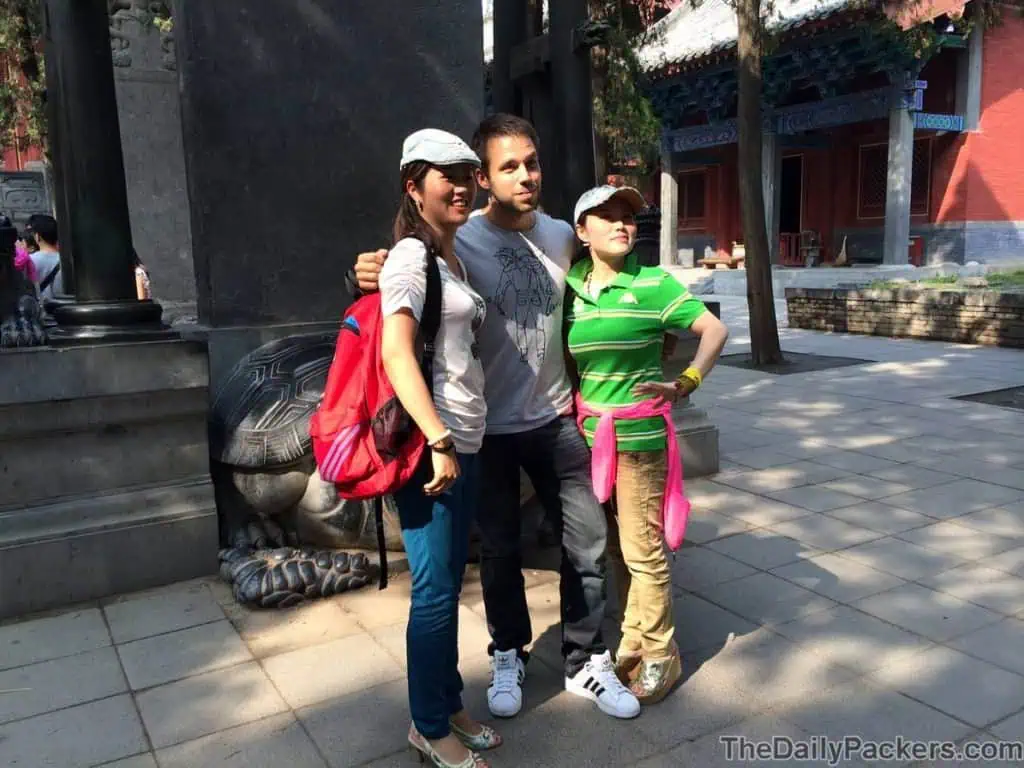
If you’ve ever been to the zoo and seen people crowd around a panda, snapping endless photos, you’ll understand how we felt living in central China. For many locals back then, running into a foreigner was rare — so we became the pandas.
Sometimes it was sweet. People would come up, smile, and politely ask for a photo together. We didn’t mind that at all. But other times? Not so great. Strangers would just whip out their phones and snap pictures without asking, or even follow us around. After a full day of hiking in a remote area, constantly being photographed could get exhausting.
Even in everyday places, like sitting in a doctor’s waiting room, people would just stare. Not in a mean way — just out of pure curiosity. Most had never left their region, let alone seen foreigners in person.
And if you happen to be blonde, like Tina, prepare for even more attention. People would sometimes ask to touch her hair, fascinated because everyone around had long, dark hair. It could be overwhelming at times, but it was also one of those quirky “China moments” that we’ll never forget.
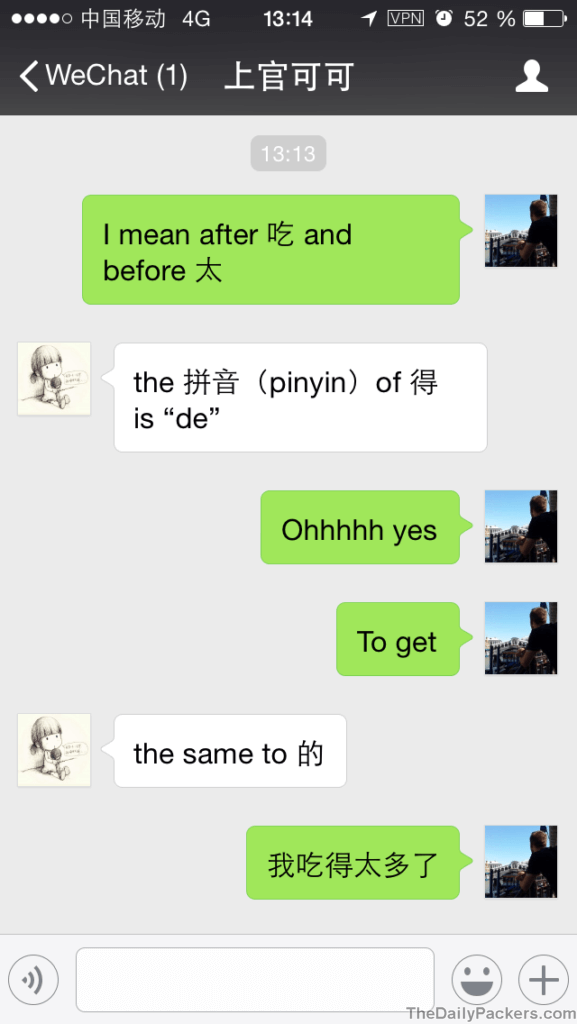
If there’s one thing that blew our minds in China, it was WeChat. Imagine WhatsApp, Facebook, Instagram, PayPal, Google Maps, and even your bank all rolled into one app — that’s WeChat. Honestly, using it made Europe feel like the medieval ages.
We used it for everything: chatting with friends, organizing parties, arranging business meetings, and, of course, paying for literally anything. From a fancy restaurant to a tiny street food stall, everyone used WeChat Pay. Even better, if someone paid the whole bill, the rest of us could just transfer our share instantly through the app. No fuss, no waiting.
It also had a built-in translator, which was a lifesaver when we first arrived and struggled with the language. Suddenly, communication became so much easier.
Of course, there were some unspoken rules: you don’t really discuss government topics on WeChat. But to be fair, our Western platforms have their own limits too.
After three years of living with it, going back to Europe felt like a downgrade. WeChat was truly a glimpse into the future of how one single platform can simplify daily life.
The great Firewall
Nope, it’s not the Great Wall — it’s the Great Firewall. One of the biggest culture shocks in China was realizing just how different the internet works there. Forget Google, Facebook, Instagram, WhatsApp, YouTube, and most of the apps we’re used to — they’re all blocked.
If you want to access them, you’ll need a VPN (Virtual Private Network). Without one, you’ll quickly feel cut off from the digital world you’re used to. Even with a VPN, it doesn’t always work perfectly, and connections can be slow or suddenly drop, which can be frustrating if you rely on these platforms for work or to stay in touch with family.
On the flip side, this is why platforms like WeChat and local apps are so developed and used for literally everything. But for newcomers, the Great Firewall is always a shock — it’s like stepping into a parallel internet.


Tip: When traveling, it’s smart to have a VPN so you can safely access all your apps and social media anywhere in the world.
Nap Time
One of the cultural habits that really surprised us in China was the importance of napping after lunch. In Europe, naps are more of a luxury (or something kids do), but in China, it’s simply part of daily life. From school to office life, everyone grows up with the idea that a short rest in the middle of the day is normal — and even necessary.
In my office, it was almost like a ritual: after lunch, colleagues would pull out their foldable beds or mats, dim the lights, and take at least an hour’s nap. In factories, it could be more basic — workers would just lie down on wooden planks or mats — but everyone joined in.
What’s even more surprising is how hard their beds are compared to what we’re used to. Chinese beds are often little more than wooden frames with a thin cushion, and people swear it’s better for your back and overall health. At first, it felt shocking, but after a while, it starts to make sense why they wake up so fresh after just an hour’s rest.

Toilets
Toilets in China can be an adventure of their own. The good news is that things are slowly changing, and more and more Western-style seated toilets are showing up in cities. Still, most of the time you’ll be faced with squat toilets, which are actually healthier and cleaner — but only if you’re flexible enough.
The first few times can feel like climbing a mountain. I still remember coming out of a squat toilet completely sweaty, my legs shaking like I had just done a workout.
And if you travel deeper inland, brace yourself: you’ll sometimes find toilets without doors, or a row of squat holes only separated by low walls. In some places, there’s just a large trench in the ground with no partitions at all. Privacy isn’t really a thing.
One important tip: always bring your own toilet paper — it’s rarely provided.
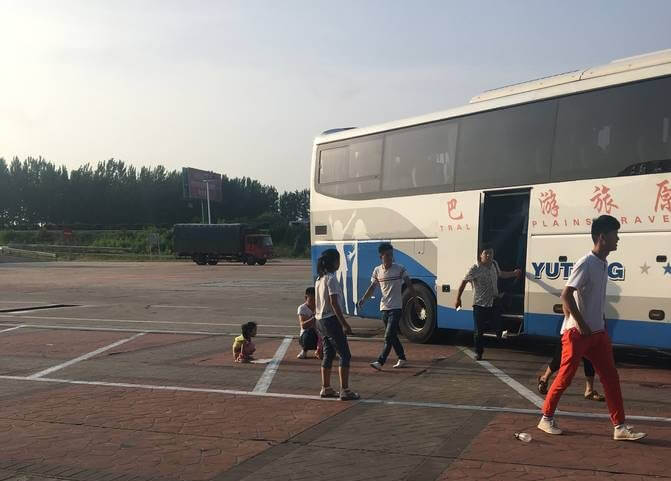
And then there’s the other “toilet culture” in China. On more than one occasion, I saw kids doing their business just about anywhere — behind a bus stop, on a street corner, even next to a hiking trail. Once, I watched a little girl squat right in front of a bus we had just stepped out of, even though a restroom was only 100 meters away.
That’s just part of the reality in rural China — surprising at first, but something you eventually get used to.
Eating
Planning to try all the Chinese food? Forget it — it’s impossible. China is bigger than Europe, and its cuisine is just as diverse. Every region has its own flavors, specialties, and cooking traditions, so no matter how long you stay, you’ll only scratch the surface.
One of the funniest (and sometimes most intimidating) parts was ordering in local restaurants. Imagine sitting down, opening the menu, and realizing it’s pages and pages of Chinese characters with no pictures whatsoever. Unless you read Mandarin, you’re left with two options: play it safe by sticking to what you already know… or embrace the adventure.
Our trick? Point randomly, close your eyes, and let fate (and the chef) decide what you’ll be eating that day. Sometimes it was amazing, other times… well, let’s just say it was memorable.
That’s the charm of eating in China — it’s always a surprise, and every meal becomes part of the travel story.

Pollution level
One of the biggest shocks we had in China was the pollution. While things have improved in recent years, there are still days when the air quality reaches extreme levels. You might wake up excited to explore a new city, only to find everything hidden behind a grey, foggy curtain of smog.
In winter, it could get so bad that it literally felt like standing in front of a wall — buildings just a few hundred meters away would disappear from view. Walking outside meant masks, itchy eyes, and a constant layer of dust on your clothes by the end of the day.
Of course, pollution isn’t unique to China, but it was there that we experienced it at its most intense. The contrast was striking: stunning temples, skyscrapers, or mountains barely visible through the haze. Yet locals carried on as if it were just another day, a reminder of how adaptable people can be.

Ni he re shui ba
One of the most common pieces of advice you’ll hear from a Chinese doctor is: “你喝热水吧” (Nǐ hē rè shuǐ ba) — you should drink hot water. For a Westerner, that’s definitely one of the more mind-boggling culture shocks in China.
In Chinese medicine, hot water isn’t just a drink, it’s part of the cure. The belief is that warm water helps balance the body, supports digestion, boosts circulation, and promotes overall health. So, whether you come in with a headache, a stomachache, or even just a sore throat, chances are the first recommendation won’t be pills, but simply to drink more hot water.
And it doesn’t stop there. After the hot water often comes the herbal teas and medicinal brews — bitter, earthy, and unlike anything you’d taste in Europe. They’re an acquired taste for sure, but locals swear by their healing properties.
For us, it was fascinating to see how alternative medicine plays such a central role in daily healthcare. It’s a whole different perspective: simple remedies first, Western-style medicine second.
“Mody Mody” – The Local Taxi
In Henan province, taxis don’t always look like the yellow cars we’re used to. Instead, you might hear someone shouting “Mody Mody!” and see a man pulling up on an electric scooter. That’s your taxi.
The word “Mody” isn’t even standard Chinese — it comes from the local dialect. But once you know it, you’ll start recognizing it everywhere. These little scooters are the go-to transportation for short rides across town.
The routine is simple: wave them down, negotiate a price on the spot, and hop on the back. No meter, no app, no receipt — just you, your driver, and a breezy ride through the chaos of Henan’s streets.
For us, it was such a funny discovery. The first time we heard “Mody Mody,” we had no idea what was happening until a scooter stopped and gestured for us to hop on. It quickly became one of our favorite ways to get around — cheap, fast, and very local.
How are you?
In most countries, when you meet someone, you say “How are you?” In China, you’ll often hear something a bit different: “Ni chi fan le ma?” (你吃饭了吗?) which literally means “Did you eat?”
This greeting comes from the country’s difficult past. During years of famine, when food was scarce and people were surviving on things like tree bark soup, asking if someone had eaten was a genuine way of checking on their well-being. Over time, it simply became a common way to greet people.
Nowadays, younger generations might also use “Ni hao ma?” (你好吗?), which directly translates as “How are you?” But don’t be surprised if locals still greet you by asking if you’ve had a meal — it’s a phrase full of history and cultural meaning.
Skin Color and Social Status
One of the things that surprised us most in China was how important skin color is. In Europe today, having a tan is often seen as healthy or even fashionable, but in China the mindset is almost the opposite — closer to how things were in Europe a century ago.
Having pale, clear skin is considered more beautiful and is often associated with wealth and higher social status. Traditionally, darker skin suggested working outdoors in the fields, which linked it to the working class.
Because of this, you’ll see people using whitening creams and sunscreens, and even in the middle of summer, many cover their arms and legs completely with clothing, gloves, or umbrellas to avoid tanning. It’s a striking contrast to what we’re used to in the West and definitely one of those cultural differences you notice right away.
The Belly Out Shirt
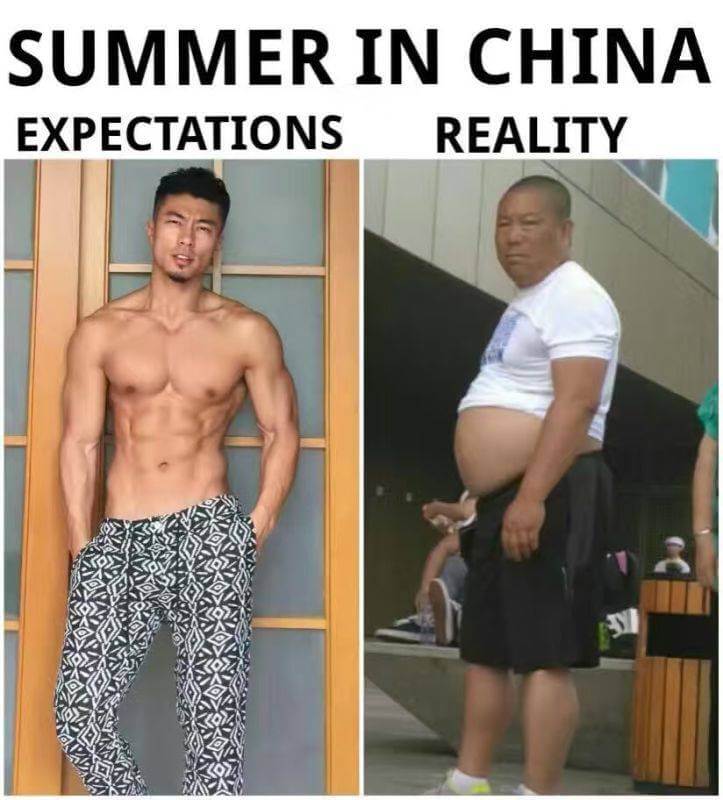
This one made us laugh a lot. In the heat of the summer, many men in China simply deal with it in the most straightforward way possible: they lift their T-shirt and let their belly hang out.
It’s especially common in rural areas or smaller towns, though you might still spot it in cities on really hot days. At first, it feels unusual to us Westerners, but honestly, it makes sense — it’s practical, simple, and who cares what anyone thinks?
It became one of those little cultural quirks we actually found super cool. Why bother with fancy ways to cool down when you can just… lift your shirt?
About the authors
We are Alex and Tina, a French-Serbian couple who met in China back in 2014. We spent three incredible years there before making France our home. Our shared passion for travel has been the heartbeat of our relationship for over 12 years, taking us across 44 countries and counting.
We launched TheDailyPackers in 2019 as a way to document our adventures. In 2026, we reached a major milestone by officially turning our blog into our full-time job. While we are still growing toward financial independence through this platform, every article we write is fueled by our mission to make your voyages easier through in-depth guides, honest advice, and the lessons we’ve learned from our own mistakes.
Our journey has not been without its storms. In 2023, our world changed forever when our first son, Poppy, was stillborn on November 25th. It was, and remains, the hardest chapter of our lives. In 2025, we were blessed with our second little boy, Milo. He has since joined our traveling tribe, and you’ll be seeing him—and the reality of traveling with a little one-on the blog more and more.
We hope to inspire you to explore the world with curiosity and resilience. Thank you for being part of our story.
You may also like those related posts
eBike China: Driving around the city like a local in 2019
Morocco SIM card: Stay Connected in Just 10 Minutes
Torres del Paine Guide: The Best 5-day W-Trek
The Ultimate Great Wall Hiking Guide in 2025
19 Best things to do in Avignon, France, in 3 days
Te Ara o Te Ao Trail: Hike to Rano Kau and Orongo, Easter Island
16 best things to do in Budapest, Hungary, in 1 day or more
Tam Coc Boat Tour: Exploring Vietnam’s Ha Long Bay on Land
Pssst, did you know that…
If you purchase something through our links, we earn a small fee. However, you still pay the same. Win-win! And one day we may get to be full-time travel bloggers =)
Find Hotels with Booking.com
Do Yoga with KVY
Buy us a Coffee
Rent a car with DiscoverCars
Find Attractions with GetYourGuide
Find Flights with Expedia
Buy an eSIM with Airalo
Get insured with World Nomads
Get ready with Amazon.com