

Introduction
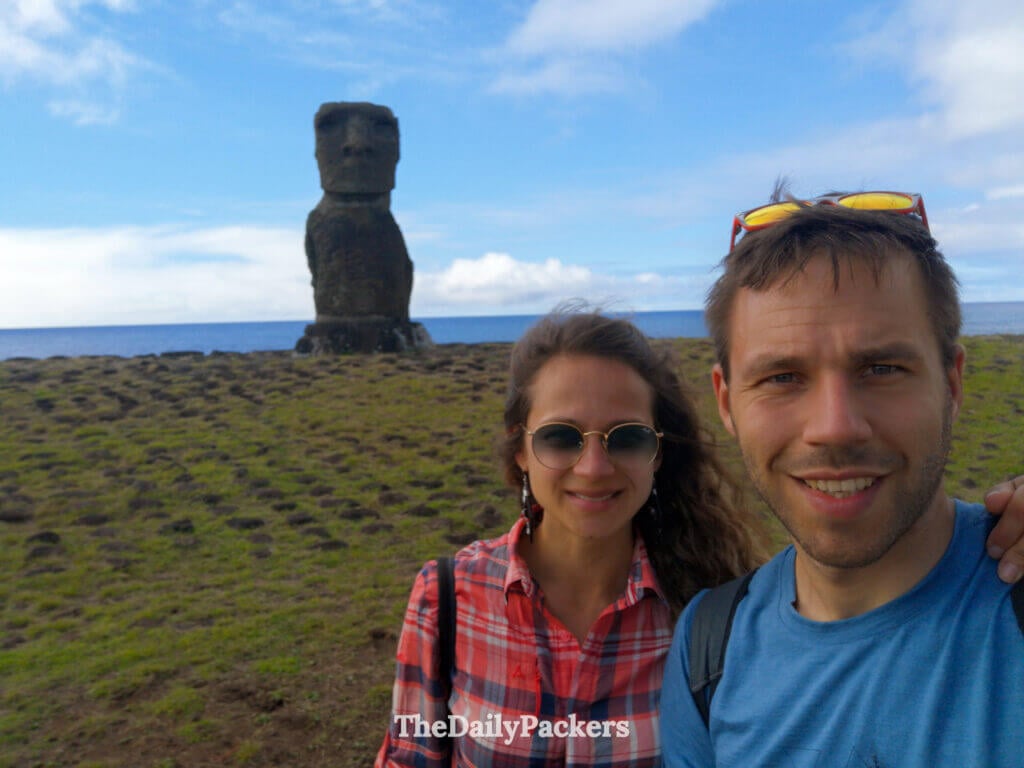
Easter Island ended up being one of the absolute highlights of our trip to Chile. There’s something about this place that stays with you – the isolation, the quiet roads, the volcanic rocks, and of course, the moai scattered across the island. Even before you understand their history, the statues already feel powerful, and once you start exploring, everything becomes even more fascinating.
Almost everything starts in Hanga Roa, the island’s only town and the place where you’ll land. In the Rapa Nui language, Hanga Roa means wide or long bay, and it’s home to around 90% of the island’s population. Half of the residents are Rapa Nui, the other half are continental Chileans, with a very small number of foreigners living here too. It’s a small town, but it holds everything you’ll need: the airport, the small port, shops, rental agencies, supermarkets, cafés, restaurants, and all the hotels and guesthouses.
One thing to know is that opening hours here follow a rhythm of their own. Most places open from 9:00 am to 1:00 pm, then again from 4:00 pm to 8:00 pm. You get used to it quickly, but it’s good to keep in mind for anything important.
Outside of Hanga Roa, the island feels wide open. The moai stand on windswept platforms facing the ocean, the volcanic craters rise above the coastline, and the roads take you from one dramatic landscape to the next. In this article, we’ll share the best things to do on Easter Island, how to make the most of your time here, and a few personal experiences that made our stay unforgettable.

Getting there
Getting to Easter Island is easier than it sounds, even if it feels like you’re flying to the edge of the world. The only way to reach the island is by plane, and all flights depart from Santiago. LATAM is the only airline operating this route, and the flight takes about 5 hours. It’s long enough to remind you how remote the island is, but still comfortable enough to arrive ready to explore.
The airport in Hanga Roa is tiny, so once you land, everything moves quickly. You’ll walk straight across the runway into the terminal, pick up your luggage within minutes, and you’re already in the centre of town. Most accommodations offer transfers if you arrange it in advance, but even if not, the town is so small that getting around is easy.

There are no international ferry connections or alternative routes — flying from Santiago is the only option. Because seats can sell out in high season, it’s worth booking your ticket early, especially if you’re visiting between December and March.
Something interesting, and something we honestly regret not doing, is continuing your trip toward French Polynesia. Bora Bora and the rest of the archipelago are not that far from Easter Island on the map. There used to be flights connecting both, and even though they aren’t operating at the moment, it’s worth keeping an eye on this option if routes reopen in the future. Finishing Easter Island with a few days in French Polynesia must feel like stepping from one dream into another.

Moving Around
Easter Island is small and easy to explore, which makes moving around one of the nicest parts of the trip. Most of the roads are in good condition, traffic is almost non-existent, and you never feel rushed. Everything starts in Hanga Roa, so once you’re set there, the rest of the island opens up pretty naturally.
The most popular option is renting a scooter or a car. A scooter gives you the most freedom, especially for quick stops along the coast or smaller viewpoints that aren’t marked on maps. A car is great if you prefer something more comfortable or if you’re travelling with kids. Rental agencies are all in town, and prices are fairly similar from one place to another.
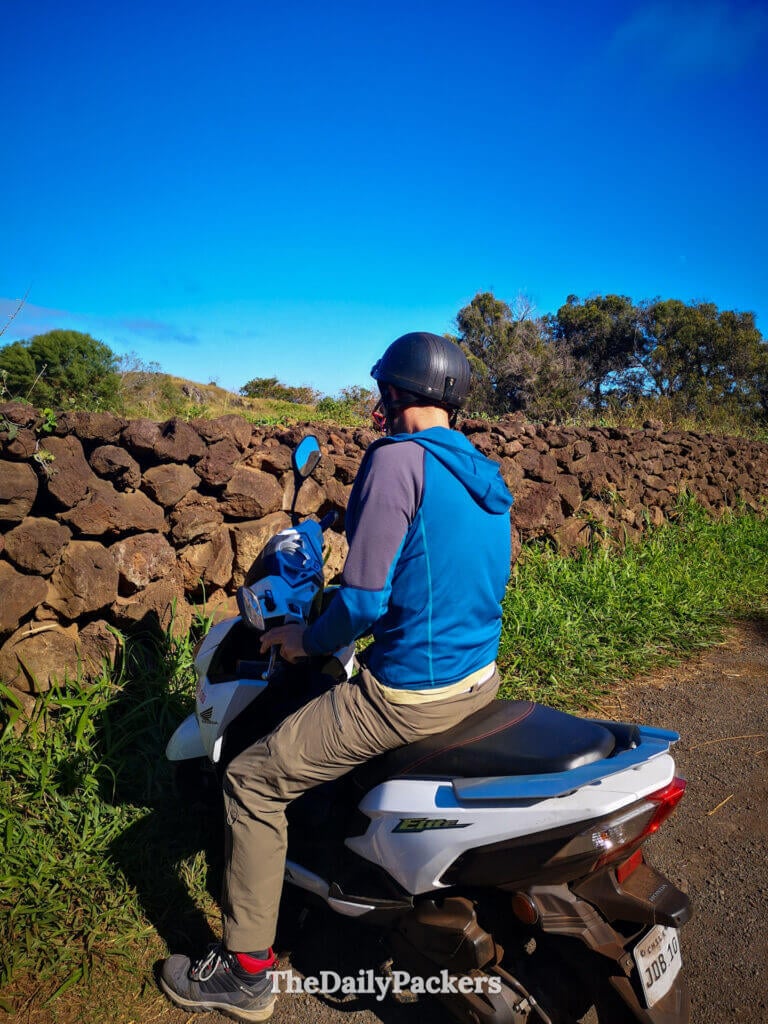
You can also rent a bike if you’re used to cycling long distances. The island is hilly and the wind can be strong, so it’s doable but a bit more demanding. Another option is joining organised tours, which is the easiest way if you don’t want to drive at all — they cover the main sites and take care of all logistics.
Inside Hanga Roa, everything can be done on foot. Shops, cafés, the market, the harbour… it’s all within walking distance. Once you leave town, though, the distances grow quickly, so having your own wheels makes a big difference.

When to Visit
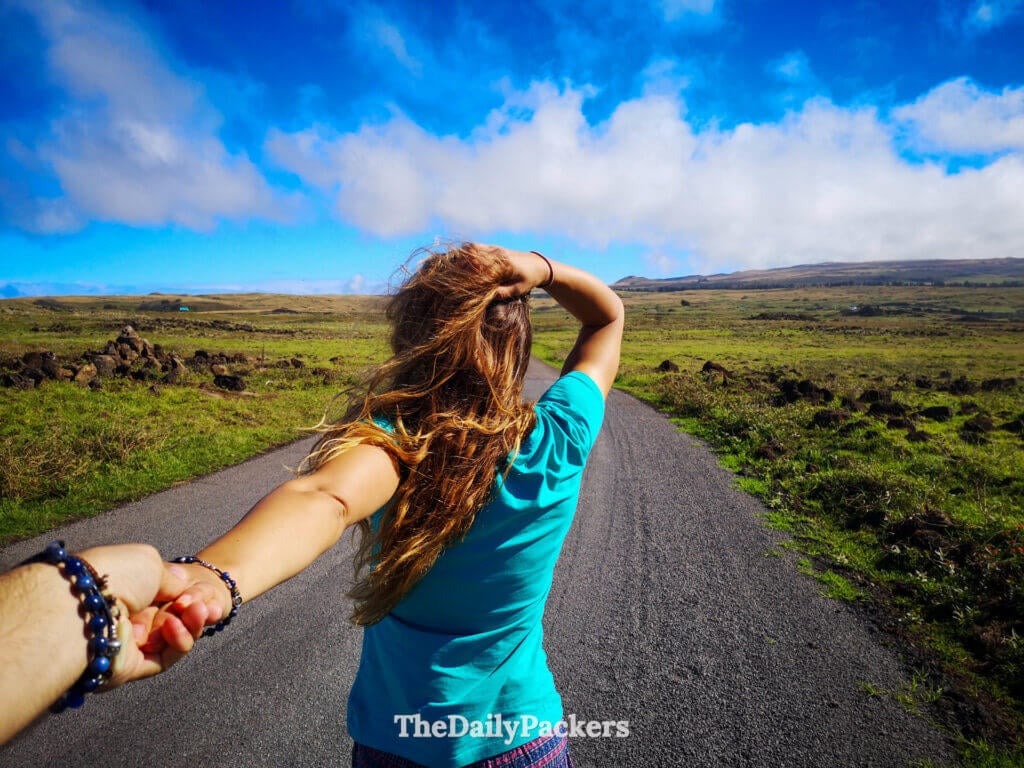
Easter Island can be visited year-round, but each season has its own mood. The weather changes fast here — sun, wind, and clouds often take turns in the same day — so the best approach is to embrace it and plan around the broader seasonal patterns.
- Summer (December to February): Temperatures range between 23–28°C (73–82°F). Days are long, warm, and often sunny. It’s high season, so expect more visitors at sunset spots and popular ahu, but the island still never feels crowded. Good for swimming and beach time at Anakena.
- Autumn (March to May): Expect 20–25°C (68–77°F). The weather becomes softer and more stable, with fewer people around the main sites. Landscapes stay green after the summer rains, and the light is beautiful for photos. This is one of the calmest and most comfortable times to visit.
- Winter (June to August): Temperatures drop to around 17–21°C (63–70°F). It’s cooler and windier, and rain can appear suddenly, but the island feels incredibly peaceful during this time. If you don’t mind clouds and a bit of wind, it’s a great season for hiking and visiting cultural sites without anyone around.
- Spring (September to November): Temperatures sit between 19–24°C (66–75°F). The weather is quite stable, flowers start appearing, and it’s generally a very easy time to plan a trip. Trails are dry, the views are clear, and the island feels relaxed before the summer season begins.
Tip: If you want the most balanced conditions – good light, fewer visitors, and mild weather – plan your trip for late autumn or spring. These periods give you the best mix of comfort and quiet landscapes.


Where to stay on Easter Island
Choosing the right place to stay in Hanga Roa makes your whole experience so much better. The town is small, so you’ll never be far from restaurants, shops, or the coastal sunset spots — but comfort, views, and style vary a lot.
Here are three great options depending on your travel style:
Cabaña del Mar Rapanui: A super charming, cozy stay right by the ocean. Perfect if you want your own space, a kitchen, and that easy “home on the island” feeling. Great for couples or slow travelers who want peace and privacy.
Hare Nua Hotel Boutique: A beautiful boutique hotel with a warm atmosphere and lovely décor. They have a wellness vibe, friendly staff, and one of the best breakfasts in town. Ideal if you want comfort without going full luxury.
Nayara Hangaroa: If you’re looking for a stunning, eco-luxury stay — this is the one. Gorgeous architecture, beautiful ocean views, spa services, and high-end comfort. A splurge, but absolutely memorable.


Here are all your accommodation options in Hanga Roa
What to Eat
Food on Easter Island is simple, fresh, and often centred around fish. Tuna is the star of the island and you’ll find it everywhere — raw, grilled, marinated, or inside empanadas. Ceviche is another must-try, usually served with plenty of lime and local vegetables. If you want something more traditional, look for po’e, a sweet cake made from pumpkin or banana, or dishes cooked in the umu, the underground oven still used during ceremonies and special events.
You’ll also see plenty of Chilean classics like empanadas, pastel de choclo, or completos, especially in the small cafés around town. Portions are usually big, and meals are often simple but satisfying — exactly what you want after a long day exploring moai sites or hiking up the crater.
Hanga Roa has a good mix of casual cafés, local restaurants, and a couple of places with really special settings. Here are a few places we liked and recommend trying during your stay:
- Tataku Vave: This restaurant sits right by the ocean, a little outside the centre, and the setting alone makes the meal worth it. Fresh tuna, ceviche, and grilled fish are the highlights here. If you come around sunset, the light on the rocks and waves is incredible.
- Te Ra’ai: A cultural experience as much as a meal. If you want to try traditional Rapa Nui dishes cooked in the umu, this is the place. It’s pricier than the average restaurant, but it’s a good way to connect with local food and traditions.
- MA’ARA Restobar & Coffee Shop Rapa Nui: A relaxed spot in the centre of Hanga Roa, perfect for breakfast or a simple lunch. Good coffee, sandwiches, smoothies, and light meals. It’s an easy choice when you want something quick and not too heavy.
- Makona Restaurant: A classic option in town with big portions and a varied menu. You’ll find tuna, pastas, salads, and a few local dishes. It’s a comfortable, no-pressure place to eat after exploring all day.
- Oheho Surf Café: Small and laid-back with a nice ocean vibe. Ideal for smoothies, sandwiches, and simple snacks. It’s the kind of place where you stop for a short break and end up staying a bit longer.
- Restaurante Hani-Hani: A friendly spot serving good local dishes without any fuss. Their fish plates are generous and tasty, and it’s a great place to try something traditional in a relaxed atmosphere.

Best Things to Do on Easter Island
One of the first things to do when you arrive on Easter Island is to buy your national park ticket. You’ll need it to access all the main archaeological sites on the island, including Orongo and Rano Raraku. The ticket costs 95,000 CLP and can be purchased at the ticket office in Hanga Roa or online on the Rapanui website. It gives you unlimited access to all sites for ten days, with one-time entry to Orongo and one-time entry to Rano Raraku. It’s quick to organise, and having it sorted from the start makes the rest of your trip much easier.
Visit Ahu Tahai
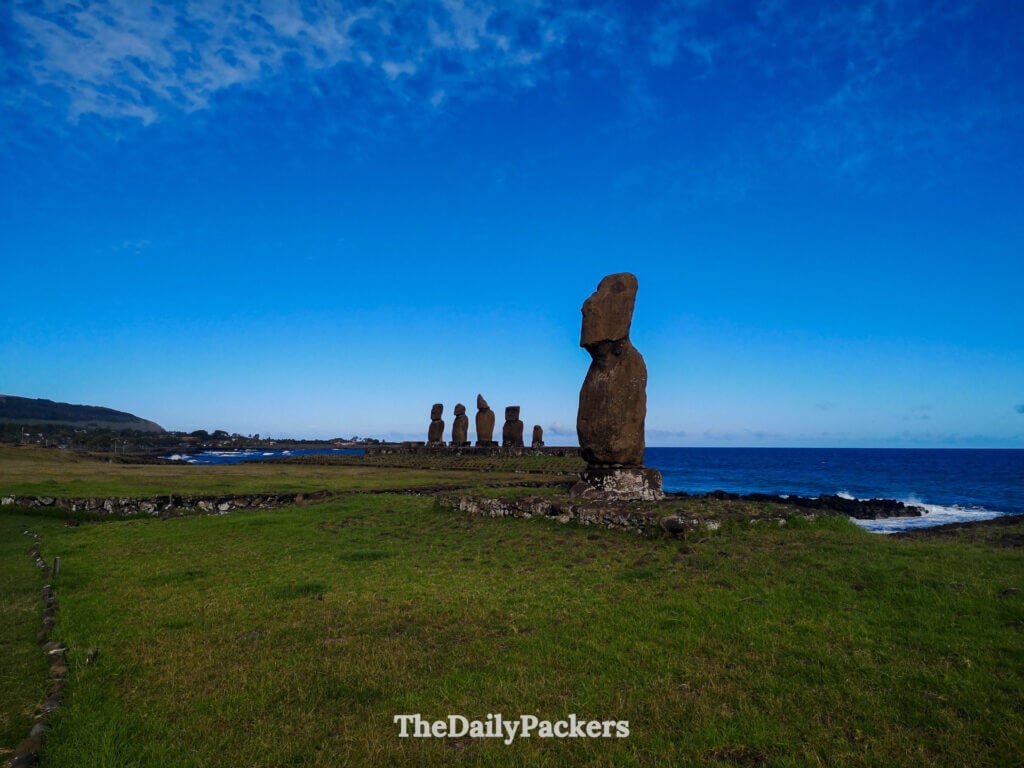
Ahu Tahai is the perfect place to start exploring the moai world on Easter Island. It’s close to Hanga Roa, easy to reach on foot, and gives you your first real moment face-to-face with the statues.

The site is made of three different ahu, all facing the ocean, and the light at the end of the day is simply beautiful. We came here more than once, and we always enjoyed seeing those Moais.


Explore Ahu Vai Ure
Ahu Vai Ure is one of the main platforms within the Tahai complex and gives you a good look at how coastal ahu were built. The statues here are arranged in a straight line on a long stone platform, and archaeologists believe it may have been an important ceremonial space for the nearby village.
You can still see the original stonework that supported the moai. We liked stopping here because you can walk around the site freely and take your time noticing details you might miss at the larger, more crowded ahu.
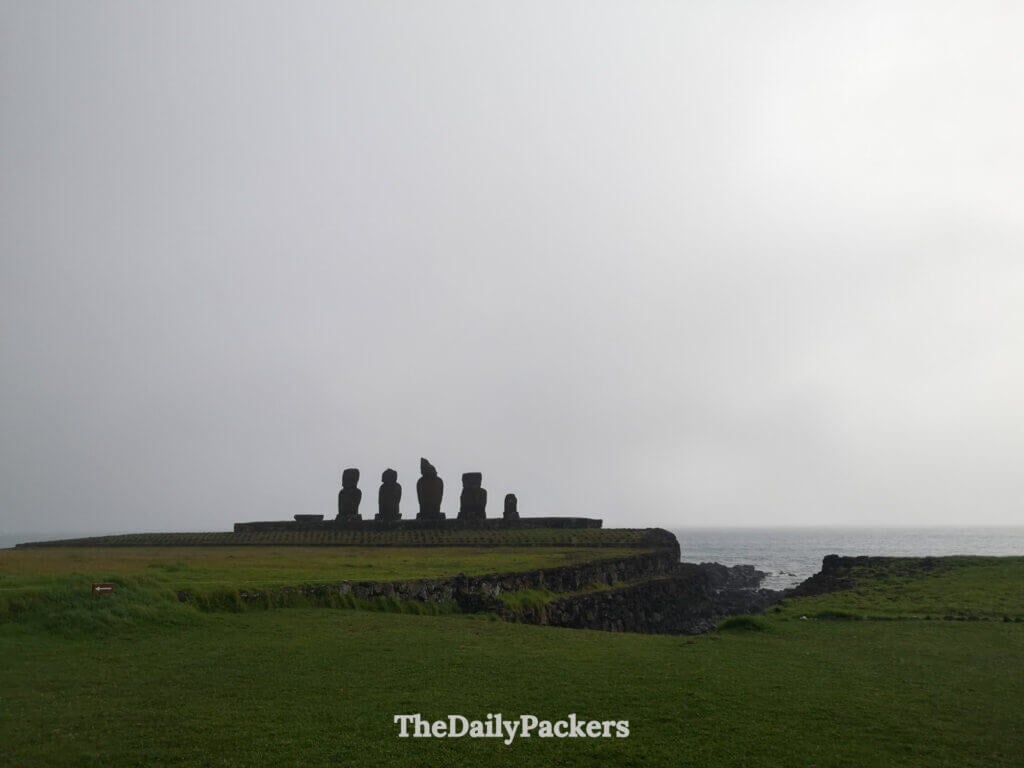
See Ahu Ko Te Riku
Ahu Ko Te Riku is one of the best things to do on Easter Island, as it is the only moai on the island with fully restored eyes, which immediately gives it a different presence. The coral-and-obsidian eyes were added during restoration work to show how the statues originally looked once they were “brought to life.”

The moai also wears a pukao, the red stone topknot carved at Puna Pau. We found this ahu especially interesting because it helps you visualise the statues the way the Rapa Nui people would have seen them centuries ago.

Visit Ahu Hanga Kioe
Ahu Hanga Kioe sits a little north of the Tahai group and feels more isolated, which makes the single moai here stand out even more. The statue faces inland, as all moai do, and the ahu is linked to one of the ancestral clans that once lived in this area.

Its name refers to the howl of the kioe, the rat, which appears in several local legends. We liked stopping here on the way out of town because it gives you a quieter look at a coastal ahu before reaching the bigger sites further along the road.

Here are all your accommodation options in Hanga Roa, the only town on Easter Island.
Hike to Ana Kakenga
Ana Kakenga is one of the top things to do on Easter Island and one of the most interesting lava tube caves on the island, known for its double ocean window at the end of the tunnel. The entrance is small and easy to miss, but once inside, the path opens into a long corridor carved naturally by ancient volcanic activity.

At the end, two openings look straight out over the cliffs and the Pacific. It’s a spot tied to local legends, and some say it was once used as a refuge. We enjoyed the short walk along the coast to get here — the scenery alone makes it worth the visit.


Read: Easter Island National Park: Best 1-Day Hiking Adventure
Explore Ana Te Pora
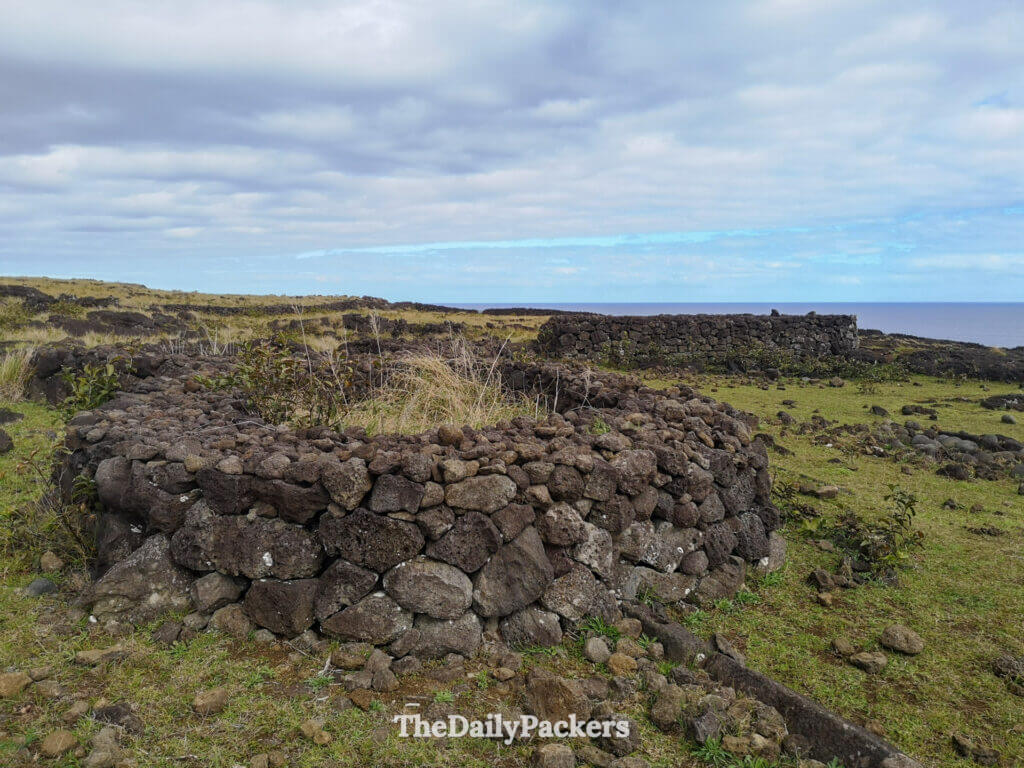
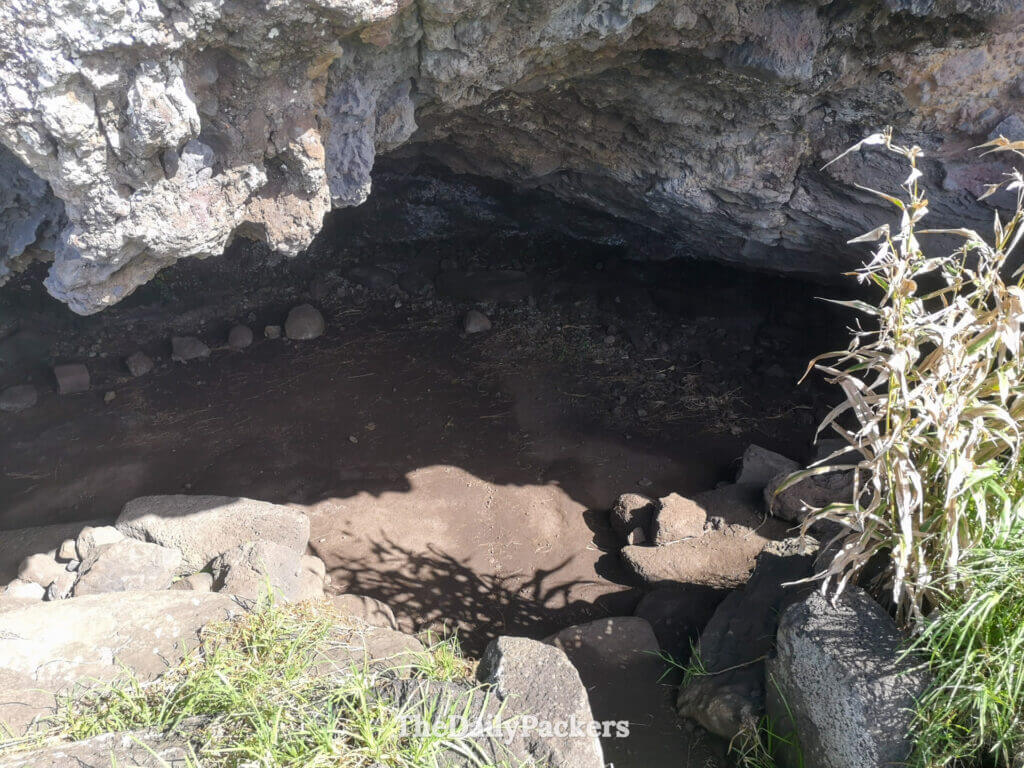
Ana Te Pora is another lava tube cave, but this one has a different atmosphere from Ana Kakenga. The entrance is wider, and once you step inside, you find a long chamber shaped by ancient volcanic flows.

Archaeologists believe the cave may have been used as a shelter, and stone structures inside suggest it served practical purposes for the people living in the area. The walk to get there follows the same coastal path as other caves, and we liked seeing how each one has its own character and story.

Tip: We use the DJI Action 4 to film our vlogs — compact, durable, and perfect for capturing every adventure.
Discover Ana Te Pahu
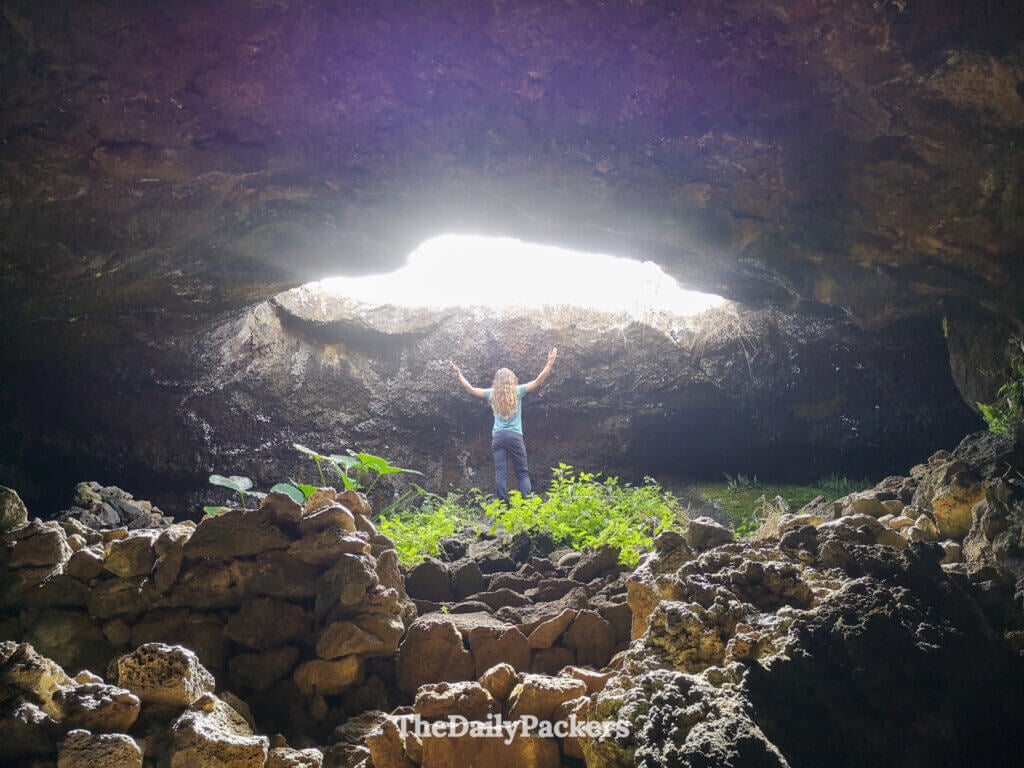
Ana Te Pahu is the largest lava tube cave on Easter Island. And one of the most historically significant things to do on Easter Island. Its size and natural openings made it an ideal shelter for the Rapa Nui people, especially during periods of conflict. Inside, you can still see traces of ancient habitation, including stone walls and small cultivated areas where people once grew food using the humidity of the cave.
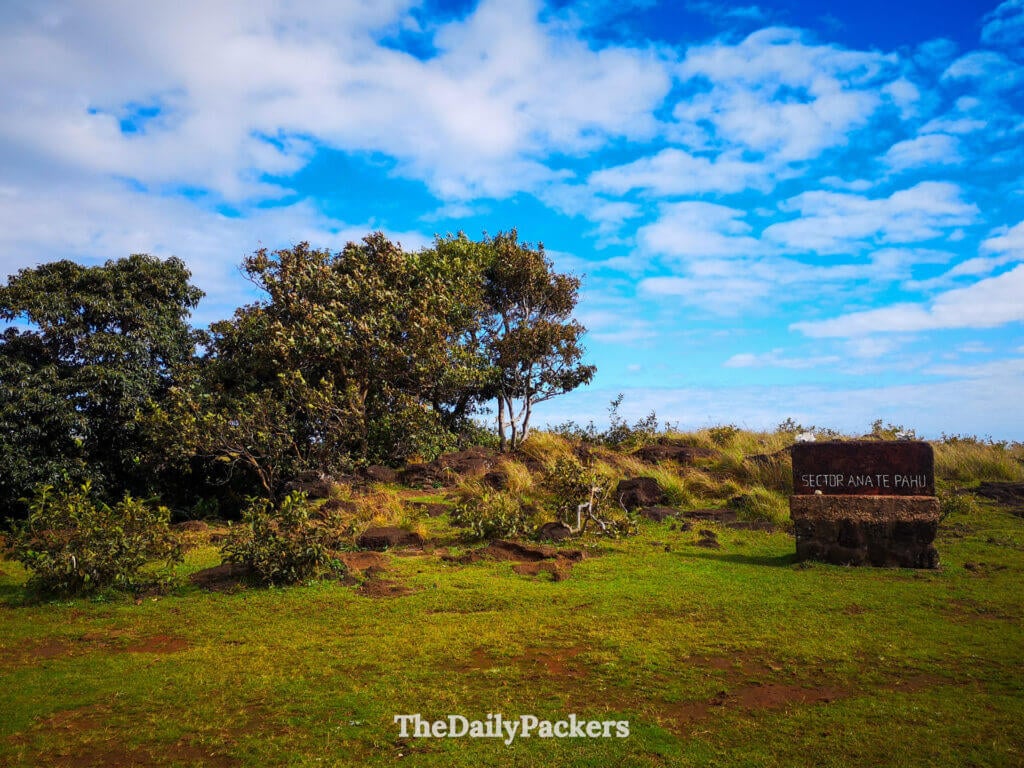
Reaching it involves a short walk across a dry, rocky landscape, and we liked how the entrance appears suddenly in front of you, almost hidden until the last moment. It’s a fascinating stop if you want a deeper look into how people adapted to the island’s volcanic terrain.
Stop at Ahu Akivi
Ahu Akivi is unique on the island because its seven moai face the ocean, unlike all the others that look inland. These statues are linked to a legend describing seven explorers sent ahead of the first Polynesian settlers making it one of the most interesting things to do on Easter Island.
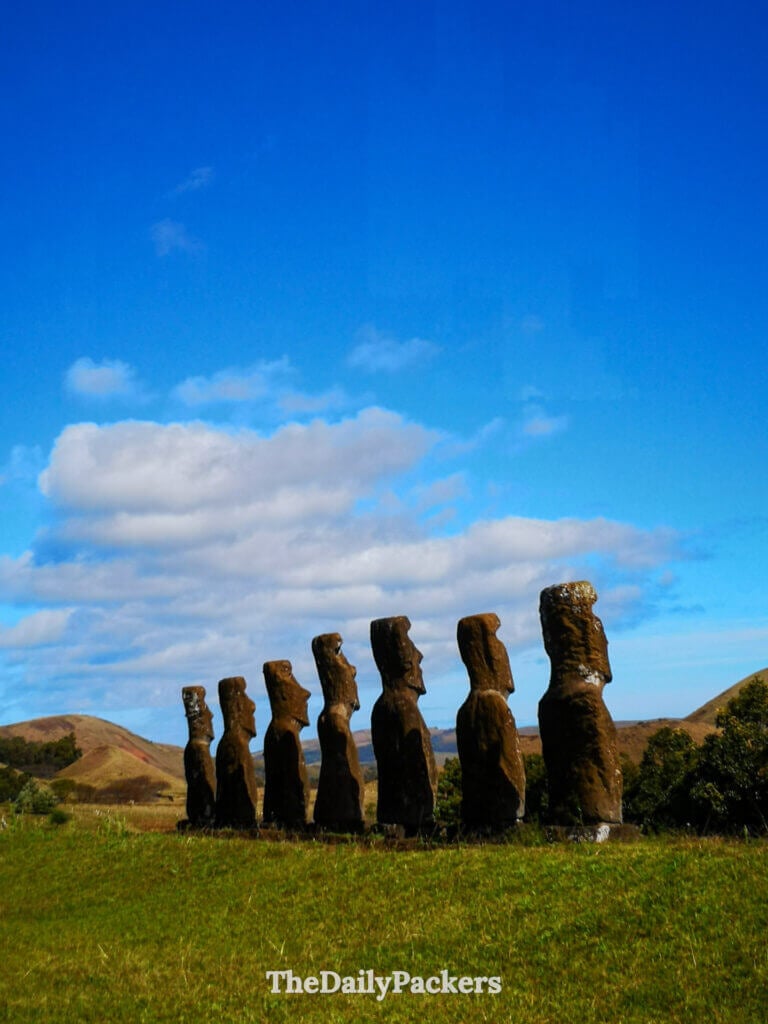
The site is inland, set on a gentle slope with wide open views, and the alignment of the moai is incredibly precise — they were positioned to mark the spring and autumn equinoxes. We liked the calm atmosphere here and the way the platform feels perfectly balanced within the landscape.


Climb Terevaka
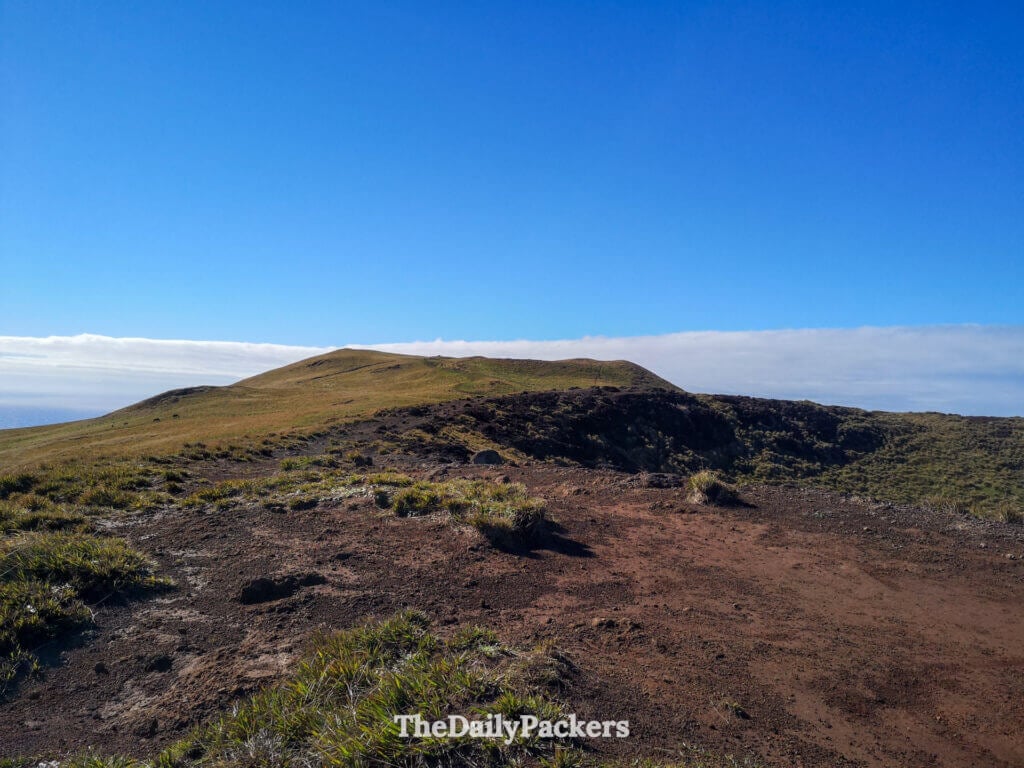
Terevaka is the highest point on Easter Island, and hiking to the top gives you a full 360-degree view of the island. The trail is gentle and open, crossing grassy slopes and volcanic terrain until you reach the summit.

From up there, you can really feel how isolated Rapa Nui is — nothing but the Pacific in every direction. We enjoyed this hike because it gives you a completely different perspective than the coastal ahu, showing the island’s shape, colours, and wide open spaces all at once. Even if that’s of the top things to do on Easter Island, don’t feel like you have to go all the way
Read: Easter Island National Park: Best 1-Day Hiking Adventure
Explore Ahu Akahanga
Ahu Akahanga is one of the most atmospheric sites on the island because the moai here remain exactly as they were found — fallen and untouched. The ahu is connected to the legend that the first king, Hotu Matu’a, was buried in this area, which gives the place a strong cultural weight, making it another one of the top things to do on Easter Island.

You’ll find several toppled statues, broken platforms, and remains of ancient houses scattered around the site. We liked visiting Akahanga because nothing feels reconstructed; it gives you a raw sense of the island’s past and the changes that happened over time.
Here are all your accommodation options in Hanga Roa, the only town on Easter Island.
See Ahu Huri A Urenga
Ahu Huri A Urenga is a single-moai platform known for its precise astronomical alignment. The statue faces the sunrise during the winter solstice, which shows how closely the Rapa Nui people observed the movement of the sun.
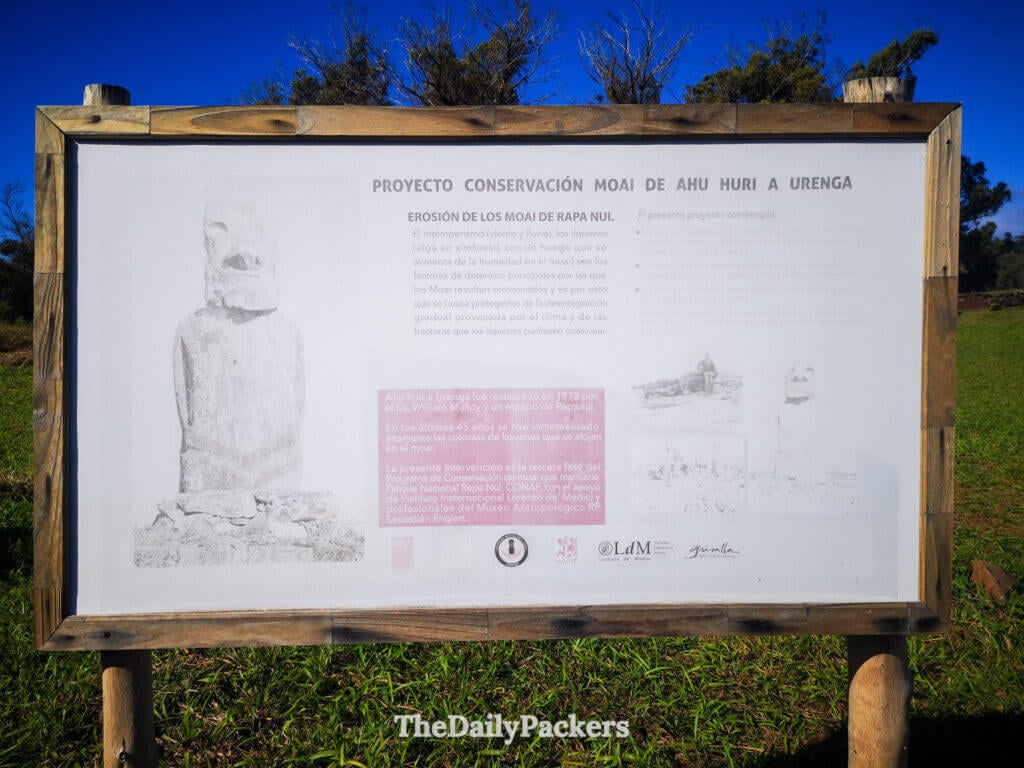
The moai itself has two pairs of hands, a rare detail that makes it stand out from others on the island. The site sits inland in a wide open field, and we liked stopping here because it adds another layer to understanding how the Rapa Nui organised their ceremonial sites.

Read: Easter Island Road Trip: A Perfect 1-Day Adventure
Explore Rano Raraku
Rano Raraku is one of the most important places on Easter Island because this is where nearly all the moai were carved. The quarry sits on the slopes of an ancient volcano, and the entire area feels like an open-air museum.
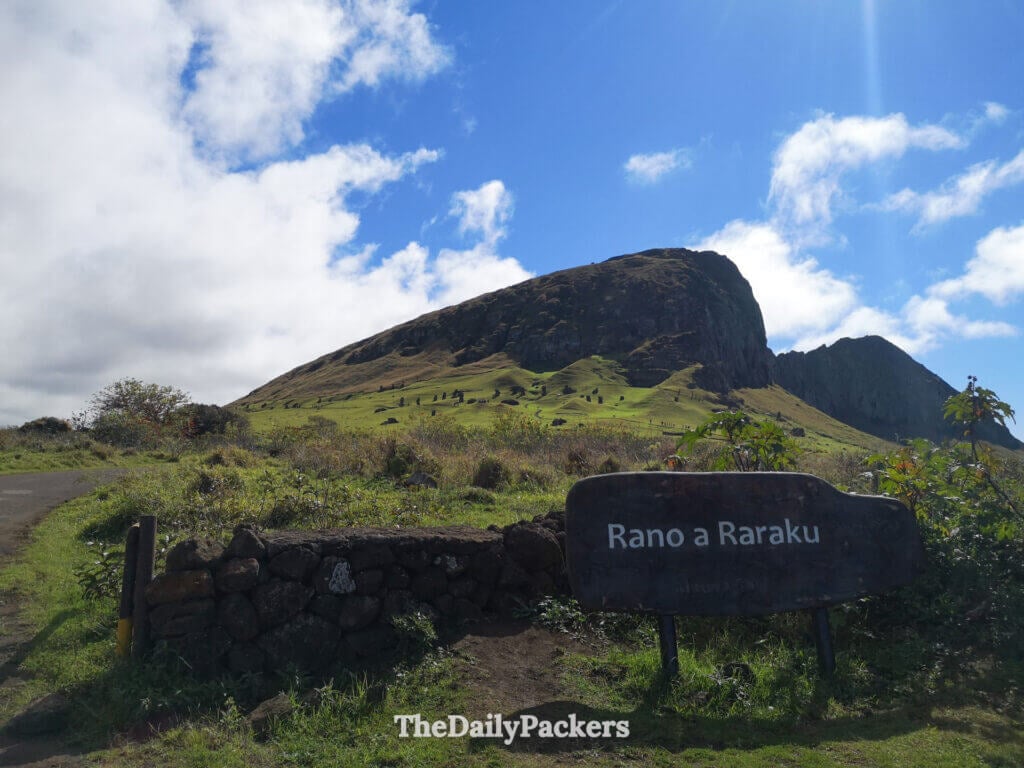
Dozens of statues lie scattered across the hillside — some standing, some half-buried, others still attached to the rock where they were being carved. Walking the loop trail gives you a clear sense of how the moai were shaped, transported, and abandoned when work suddenly stopped.

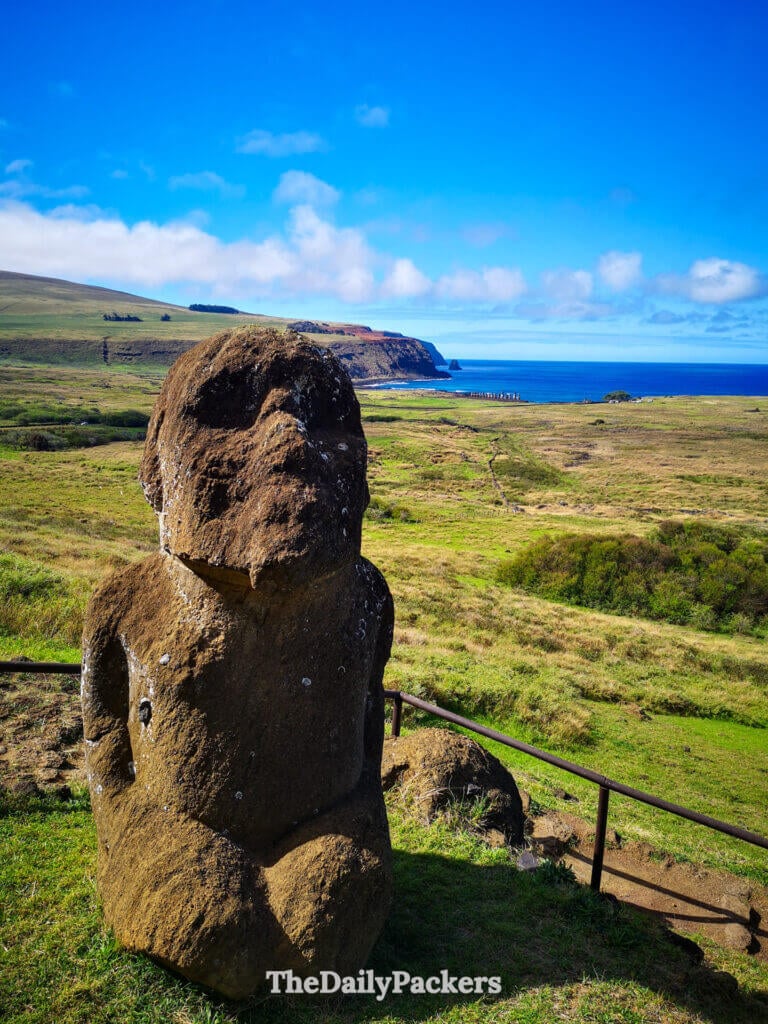
We found this site unforgettable because it shows the moai in every stage of creation, something you won’t see anywhere else on the island. It is also there that you can see the only kneeled Moai. It is one of the most interesting things to do on Easter Island.
Visit Ahu Tongariki
Ahu Tongariki is the best things to do on Easter Island as it is the most iconic site of the island, home to fifteen massive moai lined up on a long restored platform. The statues face inland with the ocean behind them, and the scale of the site is impressive the moment you arrive.

After a tsunami in 1960 pushed the moai inland, the ahu was rebuilt, making it one of the largest restoration projects on the island. We loved visiting Tongariki because you can walk the entire length of the platform and feel the presence of each moai individually, all while taking in the dramatic coastal landscape.

See the Petroglifos of Papa Vaka
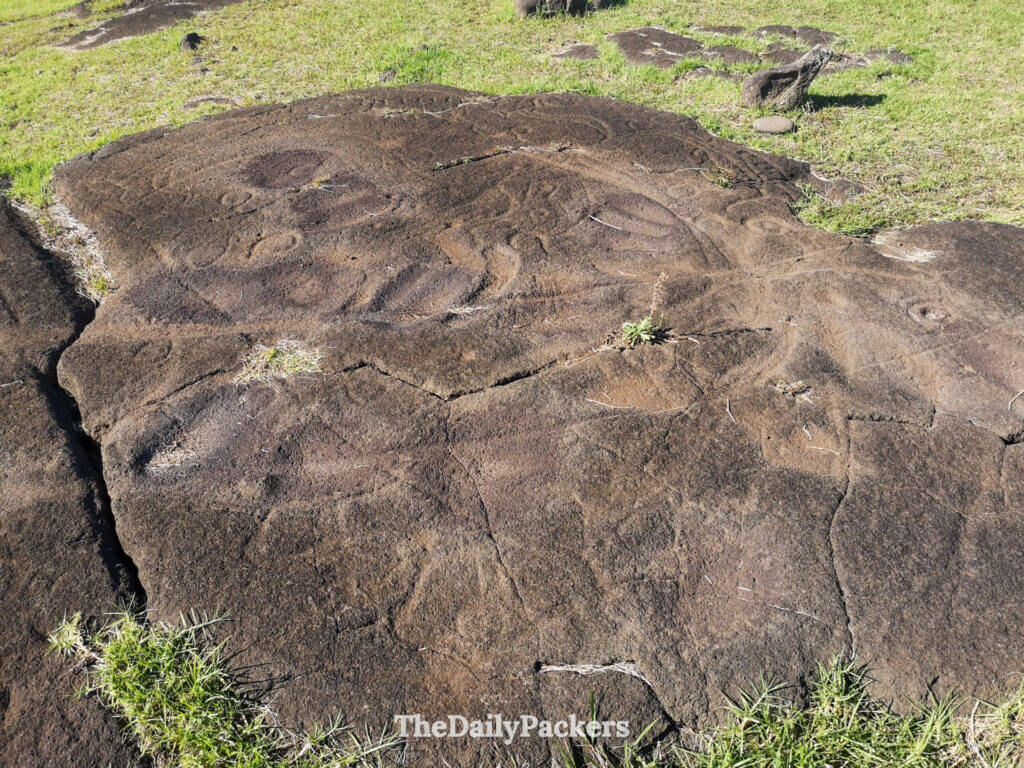
Papa Vaka is one of the best places to see ancient petroglyphs on Easter Island. The rock here is a long, flat volcanic slab covered with carved figures, many of them linked to fishing traditions — tuna, sharks, octopuses, hooks, and even long Polynesian canoes.

The engravings are subtle, so you need to walk slowly and let the light reveal the shapes. We liked this stop because it shows another side of Rapa Nui culture, one that isn’t about moai but about daily life and the strong connection to the ocean.
Stop at Ahu Te Pito Kura
Ahu Te Pito Kura is home to the largest moai ever transported and raised upright on Easter Island. The statue now lies face down, but its size is still impressive when you stand next to it. Nearby, you’ll find Te Pito o Te Henua, a perfectly round stone known as the “navel of the world.”
According to local tradition, it holds a strong spiritual or magnetic energy, and it’s one of those places where mythology and archaeology blend naturally. We liked this stop because it adds a different layer to the island’s story — one that mixes ancestral beliefs with the sheer engineering behind the moai.

Tip: We use the DJI Action 4 to film our vlogs — compact, durable, and perfect for capturing every adventure.
Pop by at Ovahe Beach
Ovahe is a small, hidden beach tucked between reddish cliffs on the north coast of Easter Island, and it feels completely different from the rest of the island. The sand has a slight pink tone, the water is bright and clear, and the whole cove stays quiet because it’s harder to access.
You reach it by following a short rocky path down to the shore, and once you’re there, the setting feels wild and untouched. We liked stopping at Ovahe because it’s one of those spots where you can take a break from visiting archaeological sites and enjoy a more natural, secluded part of the island.

Enjoy Anakena Beach
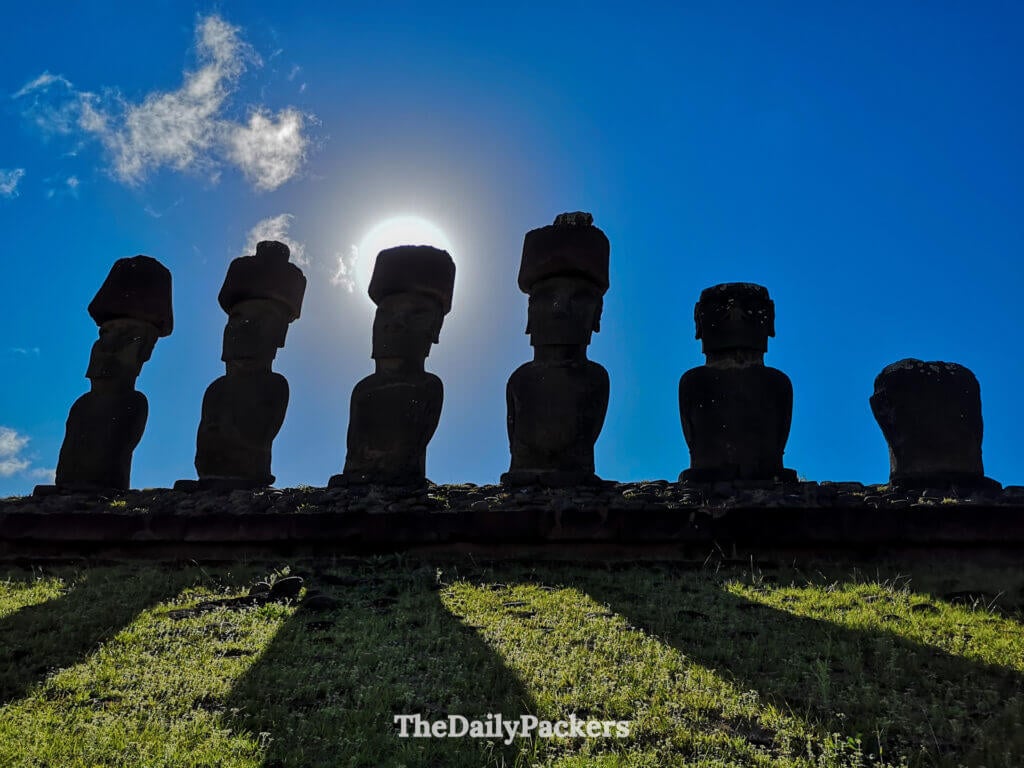
Anakena is the most famous beach on Easter Island, a wide stretch of white sand backed by palm trees and turquoise water. It’s also home to Ahu Nau Nau, one of the best-preserved platforms on the island, where several moai still have detailed carvings and their pukao in place.

The mix of swimming, calm waves, and culture makes Anakena special. We liked coming here because it’s one of the few places where you can relax on the beach, explore an archaeological site, and grab something to eat — all in the same spot.
Here are all your accommodation options in Hanga Roa, the only town on Easter Island.
Explore Puna Pau
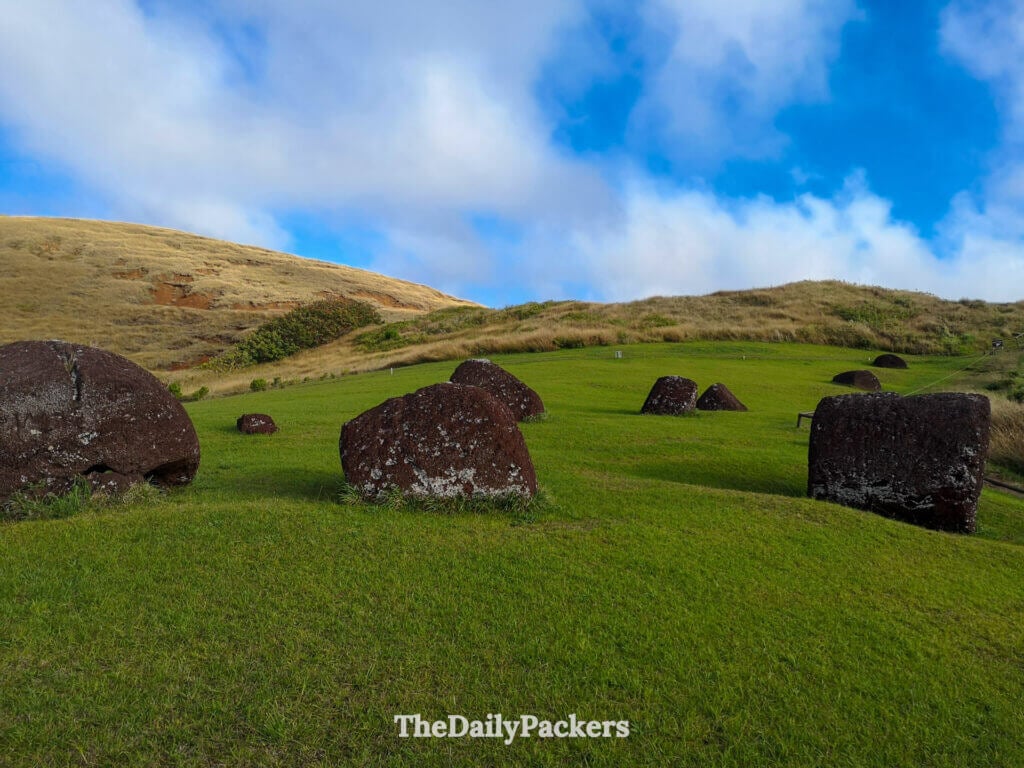
Puna Pau is another one of the top things to do on Easter Island. The small volcanic quarry is where the Rapa Nui carved the pukao, the red stone topknots placed on top of certain moai. The rock here has a deep reddish colour that stands out immediately, and you can still see several unfinished pukao lying along the path.

The walk up to the crater is easy, and once you reach the top, the view over the surrounding hills is beautiful. We liked this stop because it shows another step in the creation of the moai and helps you understand how much work went into each statue.
Read: Easter Island Road Trip: A Perfect 1-Day Adventure
Hike to Rano Kau
Rano Kau is the largest volcano on Easter Island and one of the best things to do on Easter Island. Standing at its rim is one of the most impressive moments of any trip here. The crater is huge, filled with a freshwater lake covered by floating totora reed islands, and the steep walls around it create a natural amphitheatre.

The contrasts of colours — the deep greens, the dark slopes, the bright patches of water — make the view unforgettable. We liked coming here because the crater shows a completely different side of the island, far from the coastal platforms and cliffs.

Read: Te Ara o Te Ao Trail: Hike to Rano Kau and Orongo, Easter Island
Explore Orongo
Orongo is one of the most fascinating cultural sites on Easter Island, perched right on the edge of the Rano Kau crater with the ocean on the other side. This ceremonial village was used during the Birdman competition, an annual event where representatives from different clans competed to retrieve the first manutara egg from the offshore islets.

The stone houses here are low and oval-shaped, built to withstand the strong winds, and many of them still preserve their original layout. Walking through Orongo gives you a clear look at how important rituals were in Rapa Nui society, and we liked the mix of dramatic views, petroglyphs, and history that all come together in one place, making it one of the best things to do on Easter Island.

Read: Te Ara o Te Ao Trail: Hike to Rano Kau and Orongo, Easter Island
Watch the turtles at Hanga Roa Harbour
At the end of the harbour in Hanga Roa, between the boats and the pier on the left side, you can often spot sea turtles swimming close to the rocks. They come here regularly, and if the water is clear, you’ll see them surfacing or gliding just below you.
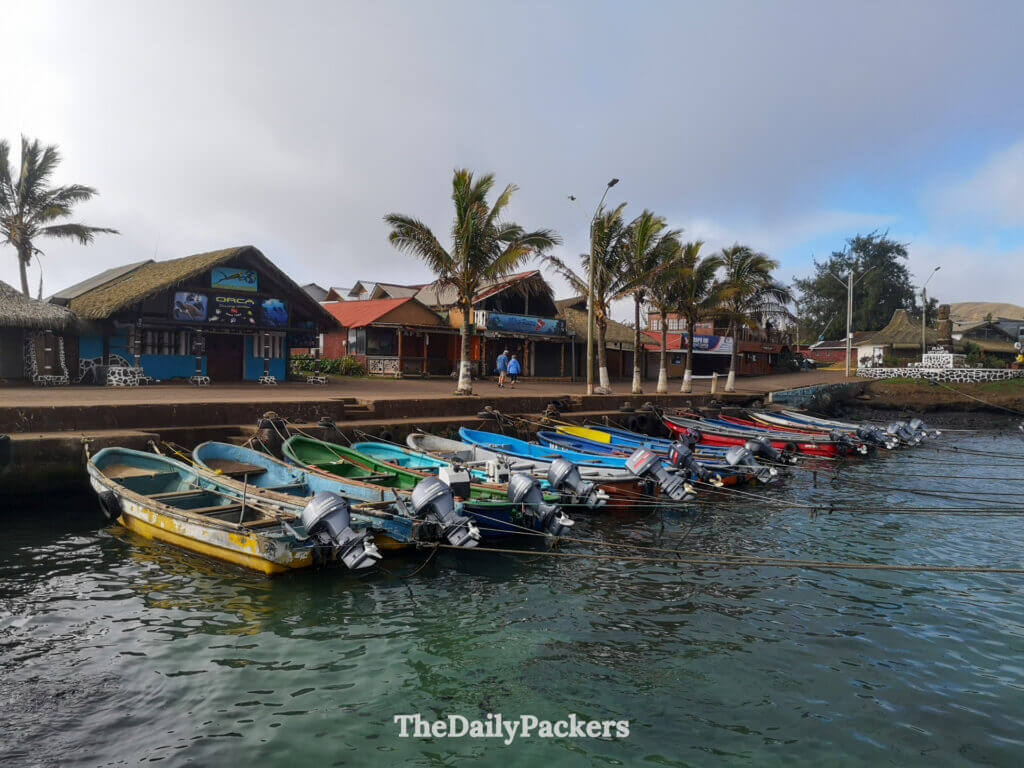
It is maybe not one of the top things to do on Easter Island but it’s one of those simple moments we kept coming back for during our stay. This is also the spot to ask about scuba diving if you’re interested, as the dive centres are right along the harbour.

Here are all your accommodation options in Hanga Roa, the only town on Easter Island.
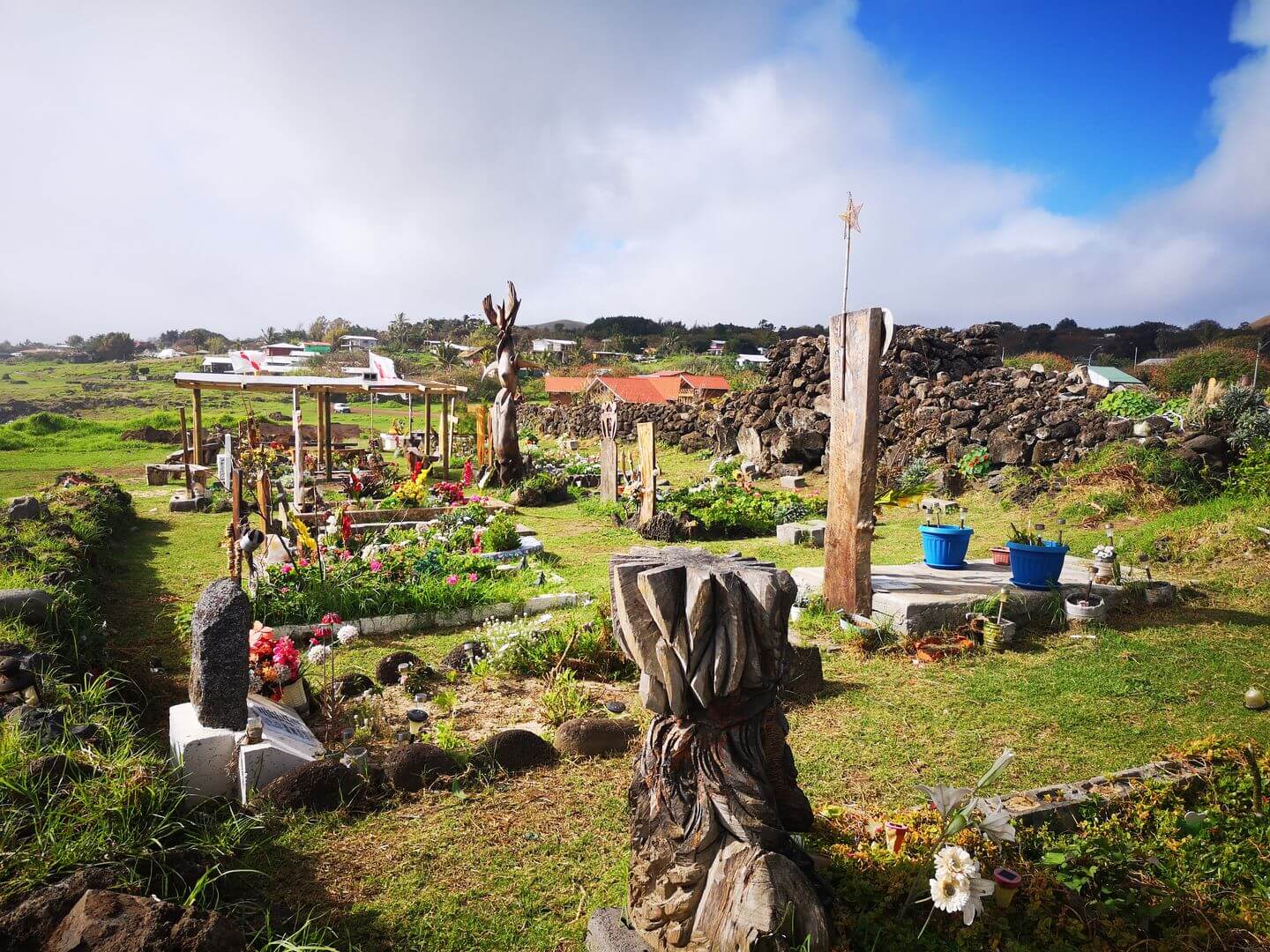
Visit the Cemetery of Hanga Roa
The cemetery in Hanga Roa is unlike any other we’ve seen. The tombs are decorated with bright colours, carved symbols, and even small moai figures, blending local traditions with more recent influences.

Walking through it gives you a quiet look at how families honour their ancestors on the island, and the mix of Christian and Rapa Nui elements makes the place feel deeply personal. We liked stopping here because it adds another layer to understanding the island’s culture beyond the archaeological sites.

See the Seven Archangels (Hitu Merahi)
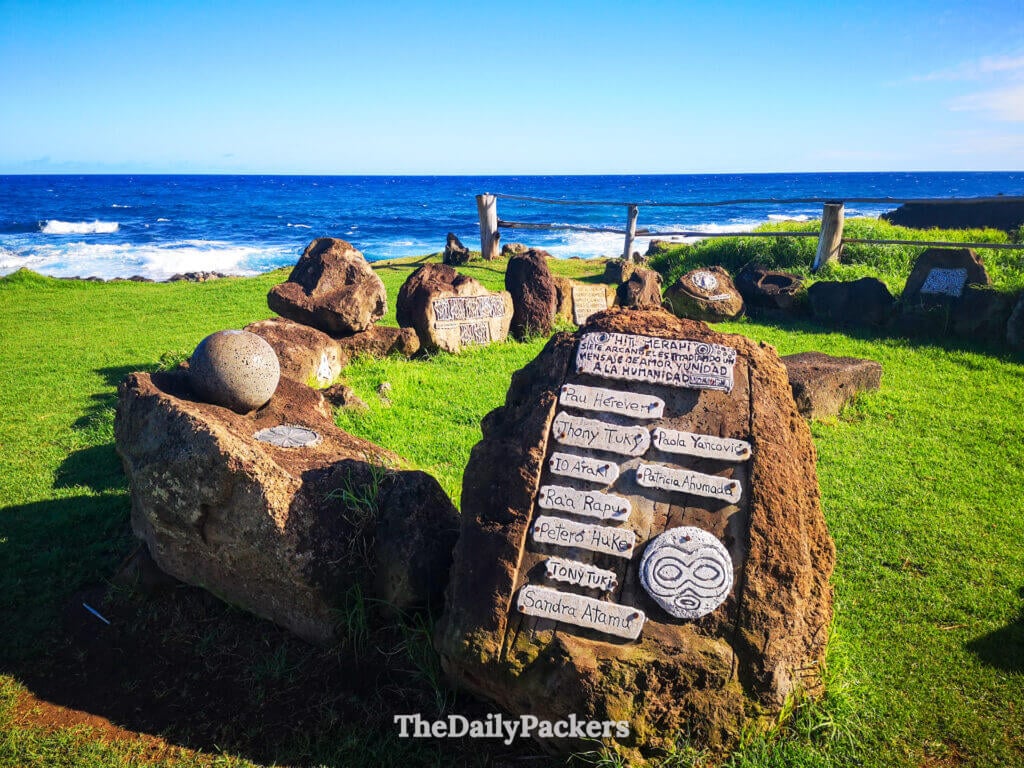
Hitu Merahi, often called the Seven Archangels, is a group of modern sculptures created to honour Rapa Nui spirituality and the island’s ancestral guardians. The figures stand facing the ocean, each one representing a protective presence linked to local beliefs.

It’s not an archaeological site, but it has become a meaningful stop for many visitors because of its symbolism and its quiet location overlooking the coast. We liked passing by here on a slow walk around town — the sculptures catch the light beautifully at the end of the day and that’s why it is on our list of the best things to do on Easter Island.
Visit the Local Market (Feria Artesanal Hare Umanga)
The local market in Hanga Roa is one of the best things to do on Easter Island and one of the best places to see everyday life on the island and pick up handmade souvenirs. You’ll find wood carvings, small moai, jewellery, natural cosmetics, textiles, and a few food stalls depending on the day. It’s small but lively, and many of the artisans make their pieces right on the island.
We liked coming here in the morning when the stalls were fully open and the atmosphere was relaxed — it’s an easy stop if you want to support local crafts or buy something meaningful to bring home.

Relax at the Town Beaches
You don’t need to leave Hanga Roa to enjoy the ocean. The town has a few small beaches where you can swim, sit in the sun, or watch the waves between activities. The water is clear, calm on good days, and perfect for a quick dip after exploring the sites around town. We liked these spots because they’re easy to reach on foot and let you enjoy the coast without having to plan a long trip across the island.

See the Moai of Peace
The Moai of Peace is a modern statue offered as a symbol of unity and cultural pride. It stands near the entrance of Hanga Roa and mixes traditional carving techniques with contemporary intention. While it’s not an ancient moai, it represents the island’s ongoing connection to its heritage and the desire to share that identity with visitors.

Listen to a Live Concert in Hanga Roa
Hanga Roa often feels quiet, but every now and then the town suddenly comes alive with music. One evening, the local authorities closed the street near the market for a small outdoor concert, and a Rapa Nui band called Tumu Tapu was playing.
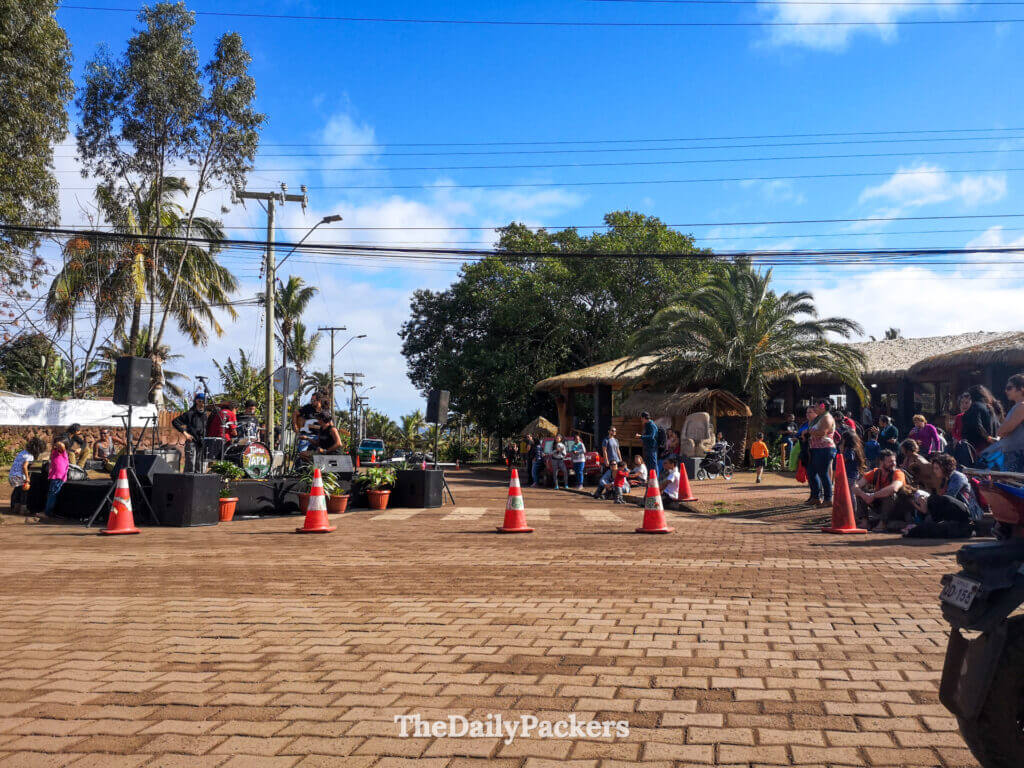
The music had a local reggae vibe, people were dancing in the street, and the whole atmosphere felt warm and spontaneous. We liked moments like this because they show a different side of the island — one that’s modern, relaxed, and full of life when you least expect it.

Easter Island Itinerary
Day 1 – Hanga Roa & sunset at Tahai
- Arrive on Easter Island
- Explore Hanga Roa, the harbour, and the local market.
- Look for sea turtles near the pier.
- Visit the Moai of Peace and stroll around town.
- Enjoy the sunset at the Ahu Tahai complex.
- If there’s live music in town, stop and listen — we once heard Tumu Tapu playing reggae in the street.
Day 2 – Northern coast & the caves
- Stop at ahu like Ahu Hanga Kioe and Ahu Vai Ure.
- Hike inside the Easter National Park and see: Ana Kakenga, Ana Te Pahu, Ahu Akivi
- If you have energy left, hike or drive up Terevaka for a 360° view.
- Relax at one of Hanga Roa’s small beaches at the end of the day.
Day 3 – The moai loop around the island
- Start at Ahu Huri A Urenga.
- Continue to Ahu Akahanga.
- Visit the Rano Raraku quarry.
- Walk along Ahu Tongariki.
- See the petroglyphs at Papa Vaka.
- Stop at Ahu Te Pito Kura.
- Keep on to Ovahe
- Relax at Anakena Beach.
- End the day at Puna Pau
Day 4 – Rano Kau & Orongo
- Hike the Te Ara o Te Ao Trail.
- Take in the crater views at Rano Kau.
- Walk to the ceremonial village of Orongo.
Day 5 – Slow final morning
- Revisit your favourite spot — Tahai, Anakena, or a town beach.
- Visit the cemetery if you missed it.
- Grab a last meal in town before heading to the airport.
And that concluded our best things to do on Easter Island.



About the authors
We are Alex and Tina, a French-Serbian couple who met in China back in 2014. We spent three incredible years there before making France our home. Our shared passion for travel has been the heartbeat of our relationship for over 12 years, taking us across 44 countries and counting.
We launched TheDailyPackers in 2019 as a way to document our adventures. In 2026, we reached a major milestone by officially turning our blog into our full-time job. While we are still growing toward financial independence through this platform, every article we write is fueled by our mission to make your voyages easier through in-depth guides, honest advice, and the lessons we’ve learned from our own mistakes.
Our journey has not been without its storms. In 2023, our world changed forever when our first son, Poppy, was stillborn on November 25th. It was, and remains, the hardest chapter of our lives. In 2025, we were blessed with our second little boy, Milo. He has since joined our traveling tribe, and you’ll be seeing him—and the reality of traveling with a little one-on the blog more and more.
We hope to inspire you to explore the world with curiosity and resilience. Thank you for being part of our story.
You may also like those related posts
Easter Island itinerary: 5 days of Moai, magic and wonders
Seville Cathedral: Visit the World’s Largest Gothic Cathedral
Te Ara o Te Ao Trail: Hike to Rano Kau and Orongo, Easter Island
W-Trek Day 5: From Chileno to Central
Best eSIM for International Travel in 2025
Hill of Crosses: Lithuania’s most incredible site in 2025
14 Best things to do in Punta Del Diablo, Uruguay, in 3 days
TMB Stage 11: Guide from La Flégère to Les Houches
Pssst, did you know that…
If you purchase something through our links, we earn a small fee. However, you still pay the same. Win-win! And one day we may get to be full-time travel bloggers =)
Find Hotels with Booking.com
Do Yoga with KVY
Buy us a Coffee
Rent a car with DiscoverCars
Find Attractions with GetYourGuide
Find Flights with Expedia
Buy an eSIM with Airalo
Get insured with World Nomads
Get ready with Amazon.com