

Introduction
Granada is one of those cities that instantly captures your heart — where snow-capped mountains meet Moorish palaces, narrow alleys, and the unmistakable scent of orange blossoms.
Nestled at the foot of the Sierra Nevada mountains, Granada is the capital of the province of the same name and has around 237,000 inhabitants, ranking as the 13th largest urban area in Spain. The weather here is noticeably cooler than in Seville, especially during winter, but the atmosphere feels just as warm and vibrant.
Granada’s history is a fascinating mix of civilizations — from Iberians, Romans, and Visigoths, to becoming a major city of Al-Andalus in the 11th century. In the 13th century, it flourished under Nasrid rule as the capital of the Emirate of Granada — the last Muslim-ruled state in the Iberian Peninsula — until its fall in 1492 to the Catholic Monarchs. The layers of its past are still visible in its streets, architecture, and culture today.
We spent two unforgettable days in Granada during our 10-day Andalusia trip, right after visiting Seville and Cordoba. From the magical Alhambra to the charming streets of Albaicín, Granada is a city full of contrasts and beauty that feels timeless.
So, here’s our complete Granada Travel Guide — a list of the 13 best things to do in Granada, whether you have 1, 2, or 3 days to explore this incredible city.
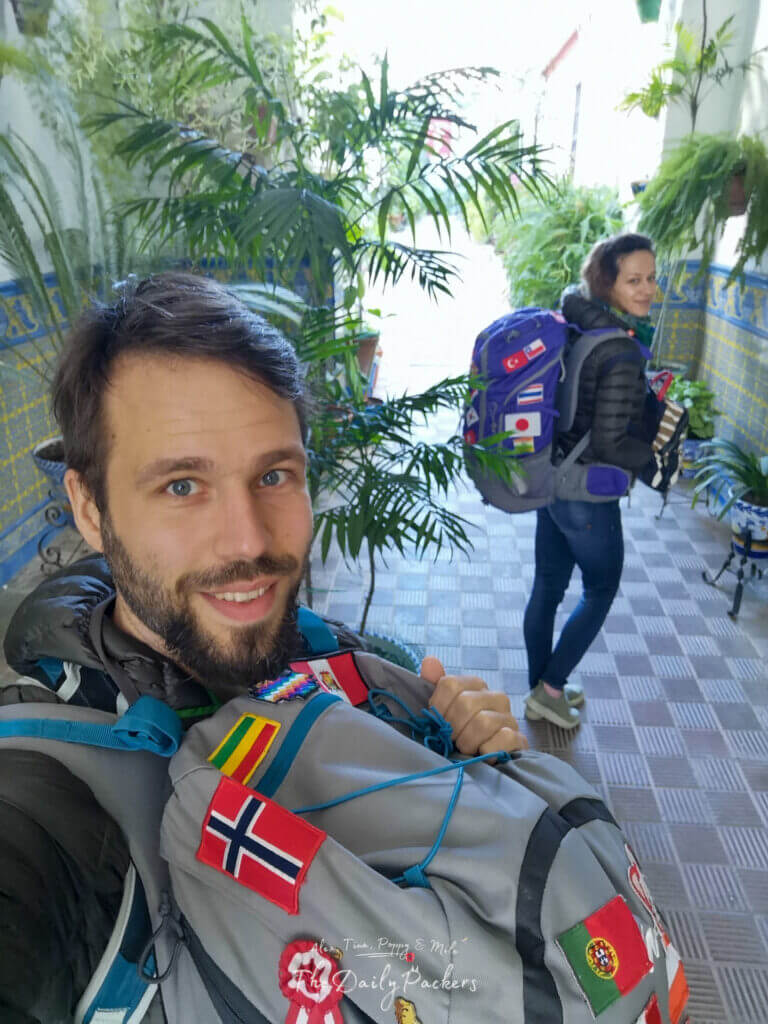

Read: Our complete 10-day Andalusia Itinerary: The best of the south of Spain
Getting there
Getting to Granada is easy thanks to its good connections with other major Andalusian cities like Seville, Málaga, and Cordoba — all of which make it a popular stop on any southern Spain itinerary.
- By Train: The Renfe high-speed train (AVE) connects Granada with Seville (around 2h30), Cordoba (1h45), and Madrid (3h15). The station is just a 20-minute walk or a short taxi ride from the city center.
- By Bus: Buses are often cheaper and just as convenient, especially if you’re coming from smaller towns. The ALSA company operates frequent routes to and from Seville, Malaga, and Cordoba. The bus station is located 3 km from the center, with local buses running regularly.
- By Plane: Granada-Jaén Airport (GRX) is small but efficient, located just 20 minutes from the city. You can find direct flights from Madrid, Barcelona, and some international cities. From the airport, take a taxi or the airport bus to the city center (around 3€–4€).
- By Car: If you’re doing a road trip through Andalusia, driving to Granada is a great option. The city is well connected by highways — just 2.5 hours from Seville and 1.5 hours from Malaga. However, parking in the city center can be tricky due to narrow streets and restricted access zones, so it’s better to stay in a hotel with parking or leave your car in a public lot outside the center.
Travel Tip: If you’re short on time you can also visit Granada on a day trip from Malaga or on a day trip from Seville. Many guided tours include transportation, skip-the-line Alhambra tickets, and a city walking tour — perfect if you want to explore without the hassle of logistics.


Check all your transportation options online — from buses to trains and ferries — it makes planning so much easier.
Moving Around
Granada is a compact and walkable city, especially in the historic center where most of the main attractions are located. Still, the city’s hilly streets—especially around the Albaicín and Alhambra—mean you’ll want to plan your routes wisely.
- On Foot: Most of Granada’s charm lies in its small streets, hidden courtyards, and scenic viewpoints. Walking is by far the best way to explore the old town and feel the city’s atmosphere. Just be prepared for cobblestone alleys and some steep climbs.
- By Bus: Granada’s local buses are a great way to reach places like the Alhambra, Albaicín, and Sacromonte without exhausting yourself. Look for the red minibuses run by Transportes Rober — they go through narrow streets where regular buses can’t. Bus C30 and C32 go to the Alhambra, Bus C31 and C34 run through the Albaicín and Sacromonte.
- By Taxi: Taxis are easy to find and relatively affordable. It’s a good option if you’re short on time or visiting late at night.
- By Bike or E-Scooter: Granada also has several e-scooter and bike rental options, which are great for flat areas of the city but not ideal for steep hills.
- Hop-On Hop-Off Tourist Train: If you prefer a comfortable way to see everything without walking too much, Granada offers a Hop-On Hop-Off tourist train that loops through all the major landmarks, including the Alhambra, Albaicín, and city center. It’s a fun and easy way to explore if you’re visiting for just a day.

When to Visit
Granada is one of those destinations that’s worth visiting year-round, but the experience changes a lot with the seasons. The best time to visit depends on what kind of trip you’re looking for — sightseeing, skiing, or simply soaking up the Andalusian sun.
- Spring (March to May): This is the best time to visit Granada. The weather is mild, the gardens of the Alhambra and Generalife are in full bloom, and the city feels alive with outdoor cafés and festivals. Temperatures range from 15°C to 25°C, perfect for walking around.
- Summer (June to August): Summer can be very hot, with temperatures often reaching 35°C or more. However, evenings are pleasant, and this is when the city’s nightlife thrives. If you visit in summer, plan your sightseeing early in the morning or after sunset.
- Autumn (September to November): Another great season to visit. The weather is still warm but less crowded than summer. Autumn light also makes the city’s golden and red rooftops look even more beautiful.
- Winter (December to February): Winters in Granada are generally mild, but since the city sits at the foot of the Sierra Nevada mountains, it can get chilly at night. The bonus? You can ski in the Sierra Nevada by day and explore the Alhambra in the afternoon — a unique combination few cities can offer.
Travel Tip: If you want to avoid the biggest crowds and get the best balance of weather, prices, and atmosphere, aim for April, May, September, or October.

Where to Stay
Granada offers a wide range of accommodations — from cozy family-run guesthouses to luxurious palaces with views of the Alhambra. Whether you’re a backpacker or looking for a romantic getaway, there’s something for every travel style and budget.
(€) Hotelito Suecia: A charming budget-friendly hotel just a short walk from the city center. The rooms are simple but comfortable, and some have balconies with beautiful city or mountain views. It’s a great choice if you’re looking for value and a quiet atmosphere.
(€€) NH Collection Victoria: This elegant 19th-century building sits right in the heart of Granada, close to the Cathedral and main attractions. The rooms are modern, the breakfast is excellent, and the location couldn’t be better for exploring the city on foot.
(€€€) Seda Club Hotel – Small Luxury Hotels – Small Luxury Hotels of the World: A luxury boutique hotel combining Andalusian charm with modern sophistication. Located near Plaza de la Trinidad, this hotel offers beautifully designed rooms, refined service, and a rooftop terrace perfect for evening drinks.
How long to stay in Granada: We recommend staying 2 to 3 nights to experience the best of the city — from the Alhambra and Albaicín to local tapas culture and sunset views at Mirador de San Nicolás.


Here are all your accommodation options in Granada
What to Eat
Granada’s food scene is one of the best in Spain — and the best part? Tapas are free when you order a drink. It’s one of the few cities in Spain where this tradition is still alive, so you can easily enjoy a full meal just by hopping from bar to bar.
Here are some must-try dishes and food experiences during your trip:
- Tapas Culture: Order a drink (beer, wine, or tinto de verano) and you’ll automatically get a free tapa — anything from grilled vegetables and croquetas to jamón or paella. Every bar serves something different, so it’s worth trying several.
- Berenjenas con Miel (Fried Eggplant with Honey): A sweet and savory Andalusian classic made from crispy fried eggplant drizzled with local cane honey. Simple but addictive.
- Tortilla del Sacromonte: Granada’s own version of the Spanish omelette, traditionally made with offal — but don’t worry, most modern versions skip that and use chorizo or ham instead.
- Gazpacho and Salmorejo: Cold tomato-based soups that are refreshing on warm days. Salmorejo, thicker than gazpacho, comes from nearby Córdoba but is also very popular here.
- Piononos: A small, syrup-soaked pastry from nearby Santa Fe, filled with cream and topped with caramelized sugar. You’ll find them in most bakeries around the Cathedral area.

If you’re looking for great places to eat in Granada, you’ll find everything from traditional Andalusian taverns to trendy modern cafés. Here are a few of our favorite spots to try during your stay:
- Wild Food – A cozy, plant-based restaurant offering creative vegetarian and vegan dishes made with local ingredients. Perfect if you want something fresh, flavorful, and a bit different from the usual tapas. Their bowls and smoothies are amazing for a lighter lunch.
- Bodegas Castañeda – A must-visit for anyone who wants the full tapas experience. This lively tavern near Plaza Nueva is packed with locals and travelers enjoying free tapas with their drinks.
- Los Manueles – One of Granada’s most beloved traditional restaurants, serving delicious Andalusian dishes like oxtail stew, croquetas, and salmorejo.
- Café Fútbol – A Granada institution for churros with hot chocolate. It’s a great spot to start your day or enjoy a sweet break in the afternoon.
- La Galletera Carrera del Darro: For those who love homemade cookies
Whether you’re after a relaxed meal or a tapas crawl, Granada’s food scene is made for slow, social dining — and you definitely won’t leave hungry.

Best Things to Do in Granada
Visit the Alhambra
The Alhambra is not only Granada’s top attraction — it’s one of the most visited monuments in all of Spain. People travel from Seville, Córdoba, and even Málaga just for a day trip to see it. That alone tells you how extraordinary it is.
A UNESCO World Heritage Site, the Alhambra — meaning “The Red Palace” — was built in the 13th century by the Moorish rulers as their royal residence. This vast complex spans over 140,000 m² and combines breathtaking Islamic architecture with Renaissance influences added later by the Catholic monarchs.

The site is divided into several main areas:
- The Nasrid Palaces – The highlight of the visit, featuring intricate carvings, peaceful courtyards, and beautifully decorated royal chambers. This was the official residence of the Nasrid sultans.
- The Generalife – The summer palace and gardens of the sultans, where they would retreat for relaxation. The views from here are stunning.
- The Alcazaba – The oldest part of the Alhambra, this 11th-century fortress offers panoramic views over Granada and the Sierra Nevada.
The full visit takes around 3 hours, and tickets must be booked in advance, especially because entry to the Nasrid Palaces is limited to specific time slots. You can explore on your own or join a guided tour, but we’d recommend skipping the audio guide — it’s not particularly detailed and adds unnecessary time to your visit.

We took the 8:30 AM entry to the Nasrid Palaces and arrived about 20 minutes early to secure a good spot in line. Keep in mind that the audio guide collection point is separate, so if you choose that option, you might lose your place in the queue.
You can book your ticket directly online or save time by getting the Alhambra & Nasrid Palaces Guided Tour with Tickets, which covers everything in one booking.


Tip: Get your ticket in advance or get the Alhambra & Nasrid Palaces Tour with Tickets
Explore the Alcaicería
Next, head to the Alcaicería, Granada’s most famous shopping street and a remnant of its Moorish past. Once the city’s main silk and spice market, it’s now a colorful maze of narrow alleyways filled with souvenir shops, handmade crafts, and traditional Andalusian goods.
You’ll find everything from intricate ceramics and leather bags to lamps, scarves, and tea sets inspired by Arabic design. It’s not very big — just a few connected streets — but it’s worth strolling through to soak up the lively atmosphere.

Even if you’re not planning to buy anything, the Alcaicería gives you a glimpse of what Granada’s bazaar might have looked like centuries ago when merchants traded exotic goods from across the Mediterranean.


Visit the Cathedral of Granada & the Royal Chapel
The Cathedral of Granada is one of the city’s major landmarks, built in the 16th century on the site of the city’s former mosque. Its architecture is a fascinating mix of Renaissance, Baroque, and Gothic styles, reflecting Granada’s transition from Moorish to Christian rule.
Right next to it stands the Royal Chapel of Granada, constructed in the 15th century as the burial place of Spain’s Catholic Monarchs — Queen Isabella I and King Ferdinand II — who completed the Reconquista by capturing Granada in 1492.

Both buildings can be visited, but each requires a separate ticket (around €5 each). If you’re short on time, we recommend just stopping by to admire them from the outside. While they’re historically important, they’re not the most striking monuments compared to what you’ll see elsewhere in Andalusia — especially after visiting Seville’s grand cathedral or the Alhambra.
Still, it’s worth a quick look to appreciate the details of the facades and get a sense of the monumental shift in Spanish history that these sites represent.

Here are all your accommodation options in Granada
Stop at Plaza Nueva & Iglesia de San Gil y Santa Ana
While exploring Granada, you’ll naturally pass through Plaza Nueva, one of the city’s most charming and lively squares. It’s a great spot to pause, people-watch, or grab a coffee while soaking in the local atmosphere.
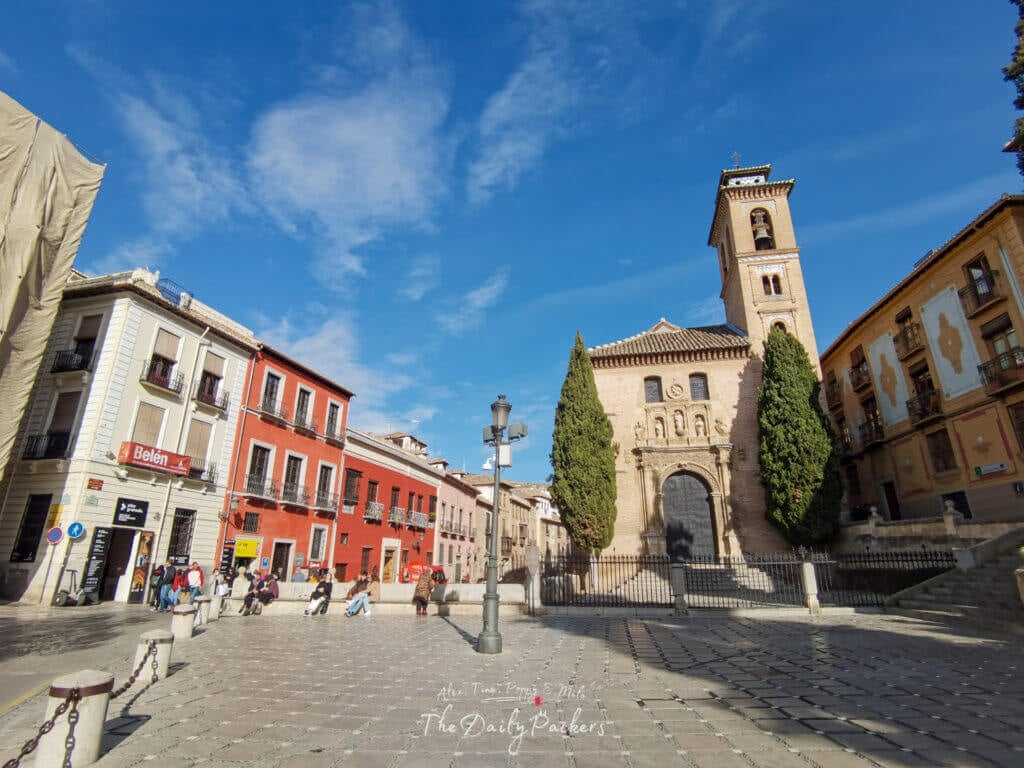
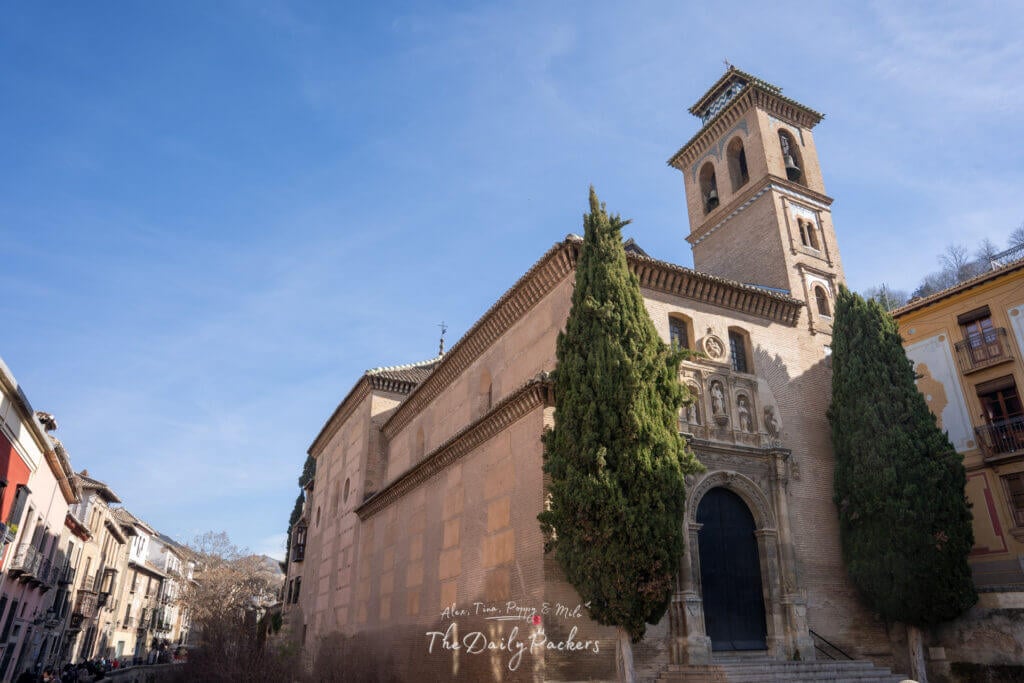
Dominating one side of the square is the Iglesia de San Gil y Santa Ana, a beautiful 16th-century church built in the Mudejar style — a blend of Islamic and Christian architectural elements typical of Andalusia. Even if the church is closed when you visit, it’s worth admiring its striking brick façade and elegant bell tower, which add so much character to the plaza.
Plaza Nueva is also a great starting point for exploring the Albaicín district and heading up toward the Alhambra or Mirador de San Nicolás, making it a central hub for sightseeing in Granada.
Tip: Get your ticket in advance or get the Alhambra & Nasrid Palaces Tour with Tickets
Visit the Corral del Carbón
The Corral del Carbón is one of Granada’s hidden gems — and best of all, it’s free to visit. Built in the 14th century, this beautifully preserved building served as a warehouse and trading post for merchants who came to Granada to sell wheat and other goods. It also provided lodging for traveling traders, making it a key hub of commercial life during the Moorish period.

The structure is one of the oldest surviving Arabic monuments in the city, with a stunning horseshoe arch at its entrance and a peaceful courtyard surrounded by wooden balconies.
Today, the Corral del Carbón occasionally hosts small exhibitions and cultural events, but even if nothing is happening during your visit, it’s worth stepping inside to imagine what life was like here centuries ago — and to admire its simple yet elegant Nasrid architecture.

Here are all your accommodation options in Granada
Explore El Bañuelo – The Ancient Arab Baths of Granada
For just €5, you can purchase a combined ticket that grants access to Granada’s Andalusian monuments, including El Bañuelo, Palacio Dar al-Horra, and Casa Horno del Oro — three remarkable glimpses into the city’s Moorish past.
El Bañuelo, dating back to the 11th century, is one of the oldest and best-preserved Arab baths in Spain. Located along the Darro River at the foot of the Albaicín, these baths once served as an essential part of daily life, where people came not only to bathe and purify themselves but also to socialize and conduct business.
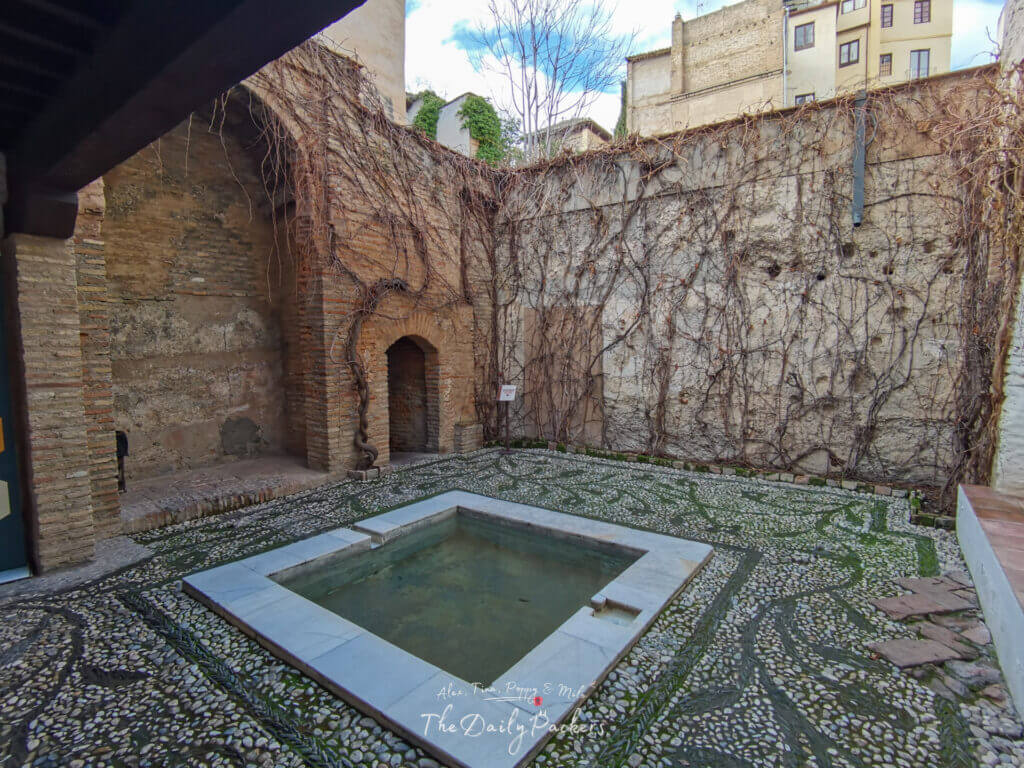
The structure features beautiful horseshoe arches, star-shaped skylights, and a calm, atmospheric interior that instantly transports you back in time. You can still see the layout of the cold, warm, and hot rooms, a design inspired by Roman bathhouses but adapted to Islamic traditions.
It’s a quick but fascinating visit — typically 20 to 30 minutes — and a must-see for anyone interested in Granada’s Moorish history.


Tip: We use the DJI Action 4 to film our vlogs — compact, durable, and perfect for capturing every adventure.
Visit Palacio Dar al-Horra – The Palace of the Honest
The Palacio Dar al-Horra, meaning “House of the Honest”, is one of Granada’s most elegant and lesser-known Moorish palaces — and it quickly became one of our favorite spots in the city.
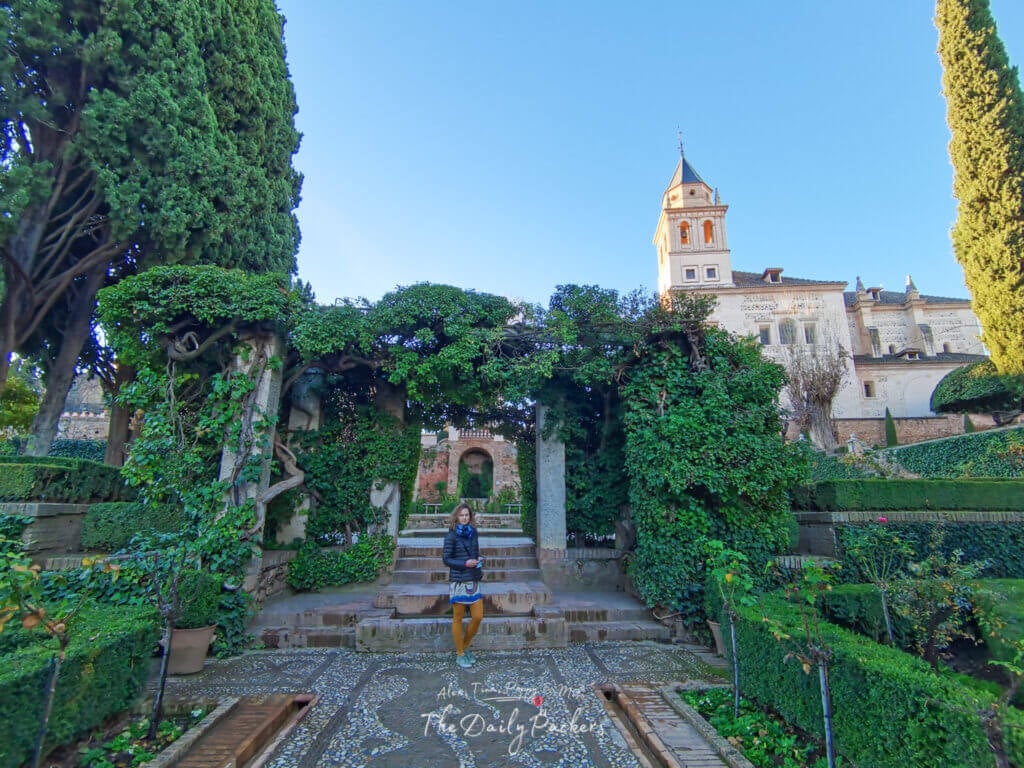
Originally part of the palace complex of Zirid King Badis, this 15th-century Nasrid residence later became home to Aixa, the mother of Boabdil, the last Muslim ruler of Granada. The palace is remarkably well preserved, with arched courtyards, intricate stucco work, and a peaceful central patio that reflects the grace of Nasrid architecture.

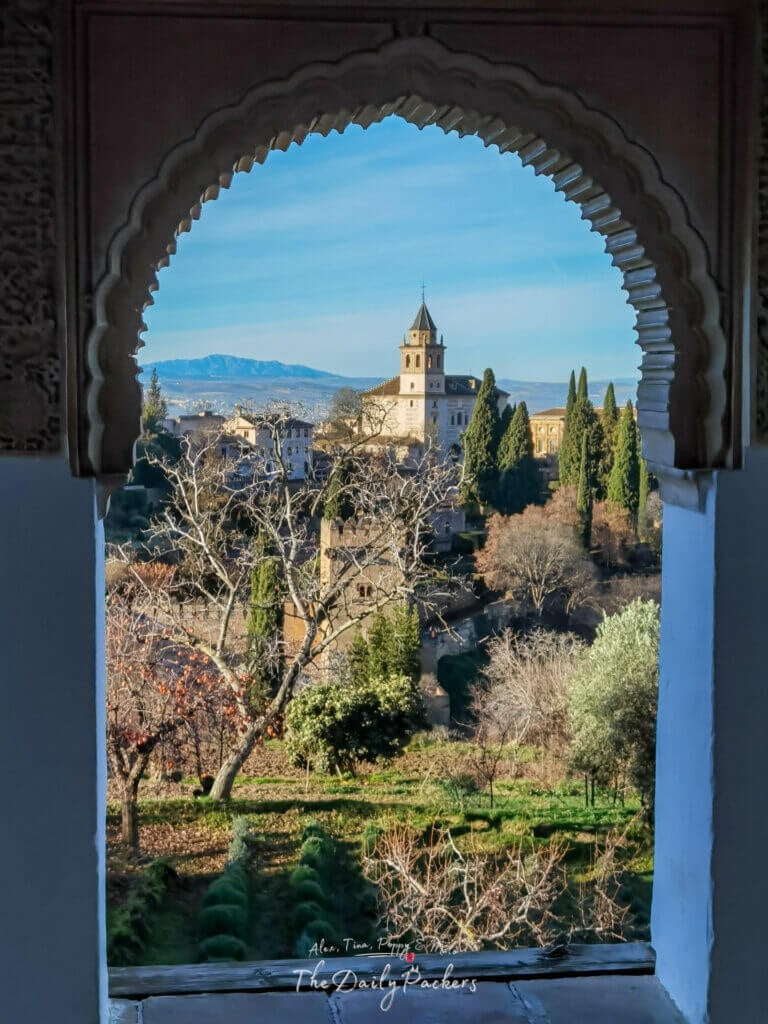
What truly makes it special, though, is the upper floor balcony, which offers breathtaking views of the Alhambra framed by the Albaicín’s whitewashed rooftops. It’s one of those rare places in Granada where you can admire the city’s history in complete tranquility, away from the big tourist crowds.
Since it’s included in the Andalusian Monuments ticket, it pairs perfectly with visits to El Bañuelo and Casa Horno del Oro.

Step Inside Casa Horno del Oro – A Glimpse into Moorish Daily Life
The Casa Horno del Oro is a small but beautifully preserved Nasrid-era house, included in the Andalusian Monuments ticket alongside El Bañuelo and Palacio Dar al-Horra.
This intimate residence offers a fascinating look at how Moorish families once lived in Granada. Built around a central courtyard with a small pool, it showcases the elegance and simplicity of traditional Andalusian-Moorish architecture — arched doorways, wooden balconies, and detailed stucco work that reflect the Islamic influence of the time.

Though modest in size, the house feels incredibly peaceful, almost frozen in time. Walking through it, you can easily picture daily life during the Nasrid period — conversations in the courtyard, the sound of water echoing softly, and the Alhambra visible in the distance.
It’s a quick visit but one that adds a lot of depth to your understanding of Granada’s Moorish heritage.

Here are all your accommodation options in Granada
Explore Sacromonte – Granada’s Gypsy Quarter and Cave Homes
Continue your Granada adventure by heading to Sacromonte, the city’s vibrant gypsy neighborhood, known for its whitewashed cave houses, or cuevas. Perched on the hillside opposite the Alhambra, this district offers a completely different vibe — authentic, lively, and deeply tied to Granada’s flamenco culture.

Walking through Sacromonte feels like stepping into another world. The narrow, winding paths lead you past homes carved directly into the rock, many still inhabited today. From several viewpoints along the way, you’ll get some of the best panoramic views of the Alhambra, especially at sunset when the red fortress glows under the last light.
Sacromonte is also the birthplace of Zambra flamenca, a passionate and intimate form of flamenco danced in the caves.

Admire the View from Mirador de San Nicolás – The Iconic Alhambra Viewpoint
No trip to Granada is complete without stopping at the Mirador de San Nicolás, the city’s most famous viewpoint. Perched in the heart of the Albaicín district, this spot offers the best panoramic view of the Alhambra, with the snow-capped Sierra Nevada mountains standing majestically behind it.
It’s easy to see why this is one of the most photographed places in Spain — the sight of the Alhambra glowing red at sunset is simply unforgettable. The atmosphere here is lively and local, with street musicians playing flamenco guitar and artists selling handmade jewelry and sketches of the view.

You can reach the Mirador by walking uphill through the narrow streets of Albaicín or by taking a taxi if you prefer to skip the climb. The effort is absolutely worth it.
If you want a quieter experience, come early in the morning when the square is still peaceful. But for that magical Granada sunset glow, the Mirador de San Nicolás at golden hour is the place to be.

Here are all your accommodation options in Granada
Discover Mirador Placeta de Carvajales – A Peaceful Hidden Gem
If the crowds at San Nicolás feel a bit too much, walk a few minutes downhill to the Mirador Placeta de Carvajales, one of Granada’s most peaceful viewpoints. Tucked away in a quiet corner of the Albaicín district, this small square overlooks the Alhambra from a lower angle, offering a more intimate — and often less crowded — perspective.
What makes this spot special is the tranquil atmosphere. There’s a small reflecting pool in the center, framed by orange trees and whitewashed houses, with the Alhambra perfectly mirrored in the water on a calm day. It’s a favorite spot among locals, photographers, and anyone looking to enjoy the view in silence.
You can easily combine it with a “viewpoint crawl”, starting from Mirador de San Nicolás, then continuing down through the Albaicín to Placeta de Carvajales, and even further to other hidden miradores scattered through the neighborhood.

Tip: We use the DJI Action 4 to film our vlogs — compact, durable, and perfect for capturing every adventure.
Stop by Mirador Ojo de Granada – A Local Favorite
Another great viewpoint to include in your Granada itinerary is the Mirador Ojo de Granada. This one is less known to tourists but loved by locals for its panoramic views of the Alhambra, the Cathedral, and the Sierra Nevada mountains.
It’s located a bit lower than San Nicolás, which means fewer crowds and a more relaxed atmosphere — perfect if you want to sit for a while and take in the scenery without the noise of tour groups. There’s also a small café nearby where you can grab a drink and enjoy the view.
You can easily add Mirador Ojo de Granada to your “viewpoint crawl” — starting from the upper Albaicín at San Nicolás, passing by Placeta de Carvajales, and ending here for one last look over the city.
We marked several of these miradores on our map, so it’s really up to you which ones you want to see — each offers a unique angle of Granada’s magic.

Stroll Through Carmen de los Mártires – Granada’s Secret Garden
If you’re looking to escape the crowds of the Alhambra and the busy city center, head to the Carmen de los Mártires, one of Granada’s best-kept secrets. This peaceful garden, located just a short walk from the Alhambra, is completely free to enter and offers a beautiful blend of styles and influences.
Inside, you’ll find:
- A French-style garden with elegant symmetry and flowerbeds.
- An English garden, featuring a charming three-tier fountain surrounded by lush greenery.
- A Nasrid patio and maze, a nod to Granada’s Moorish heritage.
- A tranquil lake, complete with peacocks roaming freely and swans gliding across the water.

The atmosphere here is calm and romantic — perfect for a quiet walk, some shade in summer, or a moment to recharge between sightseeing stops.
Opening hours: 10:00 a.m. to 2:00 p.m. (hours may vary slightly depending on the season).
It’s one of those places that feels worlds away from the tourist bustle, yet it’s right in the heart of Granada — a true hidden gem.

Experience a Flamenco Show in a Cave in Sacromonte
While Seville is known as the heart of Flamenco, Granada offers one of the most authentic Flamenco experiences in all of Spain — especially in the Sacromonte neighborhood.
Here, Flamenco is performed in traditional cave houses, known as cuevas, where the sound of the singing, guitar, and dancing echoes off the stone walls. It’s intimate, powerful, and deeply emotional — the kind of performance that gives you goosebumps.
Many families in Sacromonte have been performing Flamenco for generations, keeping the art form alive in its purest, most passionate form. You’ll sit just a few meters from the dancers, feeling every stomp and clap resonate through the space.
You can easily book a show on the spot or reserve in advance at one of the most famous venues like La Alboreá or Granada Flamenco Theater.
Even if you’ve already seen a Flamenco performance in Seville, the atmosphere in Granada’s caves makes this a completely different and unforgettable experience.



2-Day Granada Itinerary
If you’re wondering how to make the most of your time in Granada, this 2-day itinerary covers all the city’s highlights — from the Alhambra to the lively Albaicín and Sacromonte neighborhoods. It’s a perfect mix of history, culture, and Andalusian charm.
Morning: Visit the Alhambra: Start your Granada itinerary early with a visit to the Alhambra, the city’s most iconic monument. Spend the morning exploring the Nasrid Palaces, Generalife Gardens, and the Alcazaba fortress. Make sure to book your ticket in advance and arrive early for your time slot.
Lunch Break: Grab lunch at one of the nearby restaurants, or bring a light picnic to enjoy with views of the city.
Afternoon:
- Alcaicería: Wander through the narrow alleyways of Granada’s old bazaar, full of colorful crafts, souvenirs, and local products.
- Cathedral & Royal Chapel: Visit the impressive Catedral de Granada and the Royal Chapel, where Spain’s Catholic Monarchs are buried.
- Carmen de los Mártires: End the afternoon with a peaceful stroll through this lush garden just outside the Alhambra complex — a beautiful place to unwind and watch the sunset.
Evening: Watch a Flamenco show to end the day.
Day 2 – The Albaicín and Sacromonte
Morning: Begin with a relaxed walk around Plaza Nueva and the Iglesia de San Gil y Santa Ana, two of Granada’s most picturesque spots.
Continue with a few short visits:
- Corral del Carbón – a 14th-century Moorish warehouse and inn.
- El Bañuelo – ancient Arab baths, part of the Andalusian Monuments ticket.
- Casa Horno Del Oro – a traditional Nasrid house with a serene courtyard.
- Palacio Dar al-Horra – one of our favorite lesser-known palaces with a fantastic view of the Alhambra.
Afternoon: Explore the Sacromonte neighborhood, famous for its troglodyte cave houses and Flamenco shows. Wander through the hills, admire the views, and if you have time, catch an evening performance in one of the caves.
Finish your trip with a “Mirador crawl”, visiting the city’s best viewpoints:
- Mirador de San Nicolás – the most iconic view of the Alhambra.
- Mirador Placeta de Carvajales – a quieter alternative nearby.
- Mirador Ojo de Granada – for a final panoramic look over the city.
If you didn’t make it the first day, you can also swing back to Carmen de los Mártires before leaving Granada — it’s worth a second visit.
Read: Our complete 10-day Andalusia Itinerary: The best of the south of Spain
About the authors
We are Alex and Tina, a French-Serbian couple who met in China back in 2014. We spent three incredible years there before making France our home. Our shared passion for travel has been the heartbeat of our relationship for over 12 years, taking us across 44 countries and counting.
We launched TheDailyPackers in 2019 as a way to document our adventures. In 2026, we reached a major milestone by officially turning our blog into our full-time job. While we are still growing toward financial independence through this platform, every article we write is fueled by our mission to make your voyages easier through in-depth guides, honest advice, and the lessons we’ve learned from our own mistakes.
Our journey has not been without its storms. In 2023, our world changed forever when our first son, Poppy, was stillborn on November 25th. It was, and remains, the hardest chapter of our lives. In 2025, we were blessed with our second little boy, Milo. He has since joined our traveling tribe, and you’ll be seeing him—and the reality of traveling with a little one-on the blog more and more.
We hope to inspire you to explore the world with curiosity and resilience. Thank you for being part of our story.
You may also like those related posts
Seville Cathedral: Visit the World’s Largest Gothic Cathedral
18 best things to do in Shanghai, China, in 6 days
17 Best Things to Do in Lausanne, Switzerland, in 2 to 4 Days
2-week Vietnam Itinerary: The best of Vietnam
Travelling with a Newborn: Our First Road Trip with a Baby
Lake Lucerne Road Trip: The Ultimate 1-day Guide
12 Best Things to do in Chiang Rai, Thailand, in 3 to 4 days
Granada Itinerary: Our Perfect 2 Days in Granada, Spain
Pssst, did you know that…
If you purchase something through our links, we earn a small fee. However, you still pay the same. Win-win! And one day we may get to be full-time travel bloggers =)
Find Hotels with Booking.com
Do Yoga with KVY
Buy us a Coffee
Rent a car with DiscoverCars
Find Attractions with GetYourGuide
Find Flights with Expedia
Buy an eSIM with Airalo
Get insured with World Nomads
Get ready with Amazon.com