
Why You’ll Love Visiting Iguazu Falls
We were blessed to have been able to visit the Iguaçu waterfalls during our three-month backpacking trip across South America. We had seen plenty of waterfalls before, but nothing prepared us for what we were about to discover there. To this day, the Iguazu Falls remain the most beautiful waterfalls we have ever seen.
Now, we must be honest with you, nothing can really prepare you for the beauty of the Iguazu Falls. Today, we like to compare it to another national park we really enjoyed visiting, the Plitvice Lakes National Park in Croatia. Even if the waterfalls there aren’t as impressive as the Devil’s Throat, something is amazing about Plitvice, most probably the fairy-tale vibes.
This is going to be a long and old-fashioned article – We’ve got facts, we’ve got figures, and great tips for you to prepare your trip to the Iguazu Falls.
Note: Because Argentina’s currency experiences insane and uncontrolled fluctuations daily, the prices we mentioned are not the ones from today. While we tried adding the right price of today in it, it isn’t always possible to follow through.


Where are the Iguaçu Waterfalls
Iguazu Falls sit right on the border between Argentina and Brazil, along the Iguazu River. The waterfalls stretch across two national parks: Iguazú National Park on the Argentine side and Iguaçu National Park on the Brazilian side. Same river, same waterfalls, but two very different experiences.
Around 80 percent of the Iguazu Falls are on the Argentine side, which means long boardwalks, lots of jungle paths, and tons of trails that take you right up close to the water. The Brazilian side, on the other hand, holds the remaining 20 percent of the falls and delivers a more panoramic views that really show you how massive the whole waterfalls system is.
Most travelers base themselves in Puerto Iguazú in Argentina or Foz do Iguaçu in Brazil. Visiting both sides is absolutely worth it, as each offers a completely different perspective.
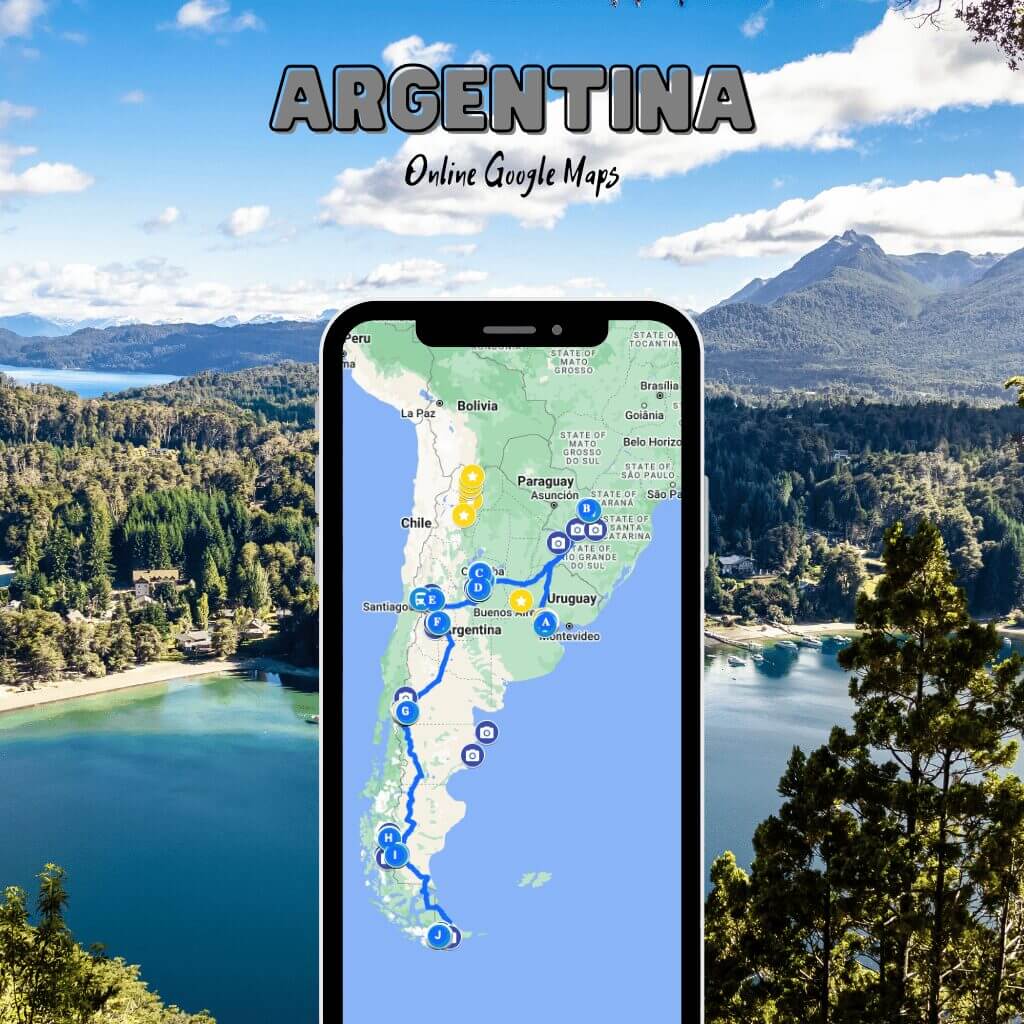
We reached the Iguazu falls after traveling from São Paulo, heading south along the coast through Uruguay before crossing to Buenos Aires and entering Argentina. From there, getting to Puerto Iguazú turned out to be the easiest and most practical option for us. In this guide, we’ll break down exactly how to visit Iguazu Falls from both Argentina and Brazil, so you can decide what works best for your trip and your travel style.

How to reach the Iguazu Falls
Most travelers try to decide between the 18-hour bus from Buenos Aires and a quick flight to reach the Iguazu Falls. We wrestled with this too, trying to save every penny as we budget backpacking at that time. In the end, we chose the flight, and it was the best $30 “extra” we ever spent.
You also have to remember that you can only fly to either airport from the country it’s located in. Meaning, you couldn’t fly from Buenos Aires to the Brazilian airport; you could only fly to the Argentinian side. Be careful with that, as if you book your hotel on the wrong side, it’s not gonna be fun crossing the border, especially late at night
To Puerto Iguazú, Argentina:
- By Air: The quickest option is to fly from Buenos Aires (AEP or Ezeiza International Airport) to Cataratas del Iguazú International Airport (IGR), which is about 15 minutes from Puerto Iguazú. That’s the option we opted for, and flights typically take around 1.5 to 2 hours.
- By Bus: If you prefer to travel by land, you can take an overnight bus from Buenos Aires to Puerto Iguazú, which takes approximately 18-20 hours. Several bus companies operate this route. However, it may not be cheaper as the distance is quite great.
To Foz do Iguaçu, Brazil:
- By Air: If you’re flying into Brazil, the nearest airport is Cataratas International Airport (IGU) in Foz do Iguaçu. You can find flights to this airport from major Brazilian cities like São Paulo or Rio de Janeiro.
- By Bus: Buses connect Foz do Iguaçu with other Brazilian cities, and there are buses from Puerto Iguazú (Argentina) to Foz do Iguaçu as well. The bus ride across the border typically takes around 30-45 minutes.
Once you are in either town, you can easily cross the border to reach the other side of the waterfalls. But we will talk about that later.

Which side should you visit first?
To be honest, it doesn’t really matter which side of the Iguazu Falls you hit first; they’re both incredible, but they offer such different perspectives that you’ll be happy either way.
We stayed in Puerto Iguazú since we were arriving from the Argentine side, so naturally, we did the Iguazu Falls Argentine park first. It just made the most sense logistically. We actually preferred this side because it feels a bit more rugged; there’s more to explore, and it didn’t feel quite as packed with people. Of course, that usually depends on the day and the season you’re visiting.

That being said, a lot of travelers like to save the Brazilian side for last. It’s like the “grand finale” of the trip because you get those massive, sweeping panoramic views. Plus, you can get right up into the mist of the falls on the Brazilian catwalks, which is a pretty epic way to end your visit.
Since you’ll likely want to see both sides of Iguazu Falls, just pick the one that fits your travel schedule better. You won’t feel like you missed out regardless of the order.


Psst, you can join Tina’s Yoga Studio and get access to hundreds of Yoga, Meditation, and Well-being videos.
How Many Days Should You Spend at Iguazu Falls?
Two days is the perfect amount of time to spend at Iguazu Falls. We had 2 full days in Puerto Iguaçu, meaning that we stayed 4 night,s and we saw absolutely everything we wanted. If you plan on staying longer, we’re not quite sure what you could do beyond reentering the park and looking at the same waterfalls for a second time.
You will need one day for the Argentinian side. This will allow you to discover the upper trail and lower trail, stroll along the Green Trail, ride the train a couple of times, and take a speedboat up to the falls.
And you will need another full day to cross the border into Brazil and make it to the park’s entrance by opening time. The Brazilian side is much smaller, so you don’t need more than half a day to see it all, even if you are opting to take the speedboat. If you wanted to take a helicopter ride, you could fit that in the afternoon.

How to visit the Iguazu waterfalls in Argentina
Let’s start to explore the Iguazu Falls Argentine side. You’ll head straight to the Iguazú National Park Nature Interpretation Center. This is basically the starting point for everything.
There are six different trails you can take, and we managed to hit four of them during our visit to Iguazu Falls. Honestly, even if you don’t do all six, you still get the full experience. Here is the breakdown of what we did:
- The Devil’s Throat (Garganta del Diablo): This is the one everyone talks about. You take a little train and then walk a long catwalk over the river until you’re standing right above the biggest drop in Iguazu Falls park.
- The Upper Trail: This path takes you along the top edge of several waterfalls. It’s great because you get to see the water before it actually makes the plunge.
- The Lower Trail: This was our favorite for getting right into the thick of it. You walk through the jungle and end up at the base of the falls, looking up at the wall of water.
- The Green Trail: This is just a short, easy walk through the forest that connects the entrance area to the train station. It’s a nice way to spot some birds, coatis, or monkeys if you aren’t in a rush to catch the train.
We ended up skipping the Macuco Trail, which leads to a smaller, more secluded waterfall, mostly because we were already exhausted. We also couldn’t do the San Martin Island trek because the boat crossing was closed when we were there, which is pretty common for that one to shut down if the water levels are too high.

How to get to Iguazú National Park in Argentina
Getting to the Argentine side of the Iguazu Falls is actually really straightforward, and going by bus is definitely your best bet if you want to save some cash.
The main company running the route is called Rio Uruguay. Their buses head straight from the terminal in Puerto Iguazú out to the Iguazu Falls park (look for “Cataratas” on the front). They run every day from 7:00 am until 10:15 pm, and they even put on extra night services if there’s a special event going on.
The easiest thing you can do is just ask at your accommodation where the nearest stop is. For us, it was right on Avenida Victoria, just across from the EOS Supermarket.

Since the Iguazu Falls park opens at 8:00 am, we wanted to be there as soon as the gates open. We left our guesthouse around 6:55 am and caught the bus at 7:10 am. It was great because it was mostly empty, just us, a couple of other travelers, and the park staff heading in for their shift.
The ticket cost us 200 pesos (which is roughly €1.10) per person. But prices in Argentina are changing a lot. So, expect to pay more than that today. You don’t need to worry about booking ahead; you just pay the driver directly when you get on. The ride only took about 30 minutes, and we were at the entrance by 7:40 am, ready to go before the big crowds arrived.

Buying an Iguazú National Park Ticket
When you pull up to the entrance of Iguazu Falls, you’ll see two rows of ticket offices. One on the right and one on the left. Most people seem to go toward the right, so we just headed to the left, where the bus dropped us off. Nobody was waiting, so we went right through and stood by the gates until they opened at 8 am.

A quick heads-up: because of the crazy inflation in Argentina, the entrance prices change almost faster than the park’s official website can keep up. When we were there, it was around 1,600 pesos (roughly €20 for the two of us), but don’t be surprised if the number looks completely different when you arrive.
As of early 2026, international visitors are paying Iguazu Falls ticket around 45,000 pesos (roughly 40€ to 50€ depending on the exchange rate). It feels like a lot, but for a place like this, it’s worth every cent. They usually accept credit cards now, but it’s always smart to have some cash on you just in case the system is acting up.


Tip: If you want to come back for a second day, make sure you get your ticket stamped at the ticket window before you leave the park on day one. They’ll give you a 50% discount on your entry for the next day, which is a massive win if you want to take your time and see the trails you missed!
Exploring the devil’s throat
The Devil’s Throat, or Garganta del Diablo, is the absolute beast of the Iguazu Falls park. It’s the tallest waterfall in the whole complex, dropping about 80 meters into a massive canyon of mist.
To get there, you need to head to the central train station. One thing we didn’t realize at first was that you actually need a separate ticket for the train. There’s a little counter in the square just before the station on the right where they hand them out. We made the mistake of walking straight onto the platform and got turned back, so don’t be like us, grab your ticket first! It’s completely free; they just use it to manage the number of people on each train.

We managed to get a spot on the very first train at 8:20 am. It was perfect because the air was still cool and we didn’t have to fight through any massive crowds. Once you get off the train, you follow a long series of bridges that stretch right over the river. The scenery is stunning, but nothing really prepares you for the moment you see the river just… disappear.

Standing at the edge of that massive flow of water is an experience you won’t forget. We spent a good while just staring admiring the power of the Devil’s throat before heading back to catch the 9:30 am train to the Cataratas station. Getting there early was easily the best decision we made; by the time we were leaving, the platforms were starting to get packed.


Walking the Upper circuit
After hopping off the train, you’ve got a choice between the upper and lower circuits of the Iguazu Falls. We noticed most of the crowd was heading toward the lower trail, so we did the opposite and hit the upper circuit first.
It turned out to be a great move. This trail runs right along the top edge of the Iguazu Falls, so you’re looking down as the water starts its plunge. You get a front-row seat to a whole string of Iguazu waterfalls, we passed the Sisters, Chico, Bossetti, Adam & Eve, and even got another perspective of the Devil’s Throat and San Martín.

The Iguazu Falls park has put up signs all along the path, so you actually get to learn a bit about each specific fall as you go. It’s a relatively easy walk and, because we timed it right, we managed to enjoy the views without having to shoulder our way through a sea of selfie sticks.

Discovering the Lower circuit
Once we finished up the upper circuit of the Iguazu Falls, we headed straight down to the lower circuit. When you get to the lighthouse, you’ll see stairs on the right-we took those as a shortcut. If you want to skip the stairs, you can keep going straight, but it’s a much longer walk since that path is designed for wheelchair access.

The big difference here is the perspective. While the upper trail is all about looking down over the edge, the lower circuit drops you right at the base of the Iguazu Falls. We passed back by the Sisters and Chico waterfalls, then followed the trail along the coast looking out toward San Martín Island. It eventually leads you to another set of falls called Lanusse and Alvar Núñez.
Being down at the bottom of the Iguazu Falls makes the whole thing feel way more powerful. At one point, just as we passed the last waterfall, we saw a group of birds circling in the mist. It was breathtaking and so unexpected.

It was also right around here that we ran into our first Coati. They’re these local animals with long noses and striped tails that look a bit like raccoons. They might look cute and harmless, but they are incredibly bold! They’ve learned that tourists usually have food in their bags, so they’ll come right up to you to see what they can scavenge. Keep your zippers closed and your snacks hidden, or you’ll find yourself sharing your lunch before you know it.

Lunch break
By the time we finished the lower circuit, it was already noon, and we were pretty hungry. Most of the main trailheads and stations inside the Iguazu Falls park have small shops where you can grab the basics-sandwiches, salads, empanadas, and typical fast food. They also have seating areas and restrooms, which is handy.

We found a quiet spot to sit down and eat the lunch we’d packed that morning to save a bit of money. Of course, the local wildlife had other plans. The second we opened our bags, coatis started appearing from every direction. They definitely know exactly when lunchtime is! It was pretty funny to see them all come out of the woodwork, but you really have to keep your wits about you so they don’t snatch your sandwich right out of your hand.

Green trail
After about an hour of resting and dodging coatis, we started slowly making our way back. We headed toward the Cataratas station and hopped on the Green Trail, which is a nice, easy forest path that leads you back to the main entrance.

It was a great way to end the day because we actually spotted some monkeys hanging out in the trees along the way, plus even more coatis (seriously, they are everywhere). By this point, early afternoon, the Iguazu Falls park was a completely different world compared to when we arrived at 8:00 am. It was way more crowded, so we were really glad we’d made the effort to get that early start.

We hung around for a bit longer than we needed to, crossing our fingers that we’d spot a Toucan in the canopy, but no luck this time.

Leaving from the Iguazu Falls
When we finally made it out of the Iguazu Falls park, we headed over to the right toward the bus station. There’s a little ticket office right across from the stop where we grabbed our tickets back to town, still 200 pesos each. We caught the 2:15 pm bus and just gave the driver a shout when we reached our stop in Puerto Iguazú.
Looking back, we’re actually really glad we visited the Iguazu Falls in the order we did, even if we didn’t plan it that way from the start. Since the Devil’s Throat is the biggest draw, it gets absolutely swamped by mid-morning. By hitting it first thing, we missed the worst of the crowds. The same went for the upper circuit; it was still relatively quiet when we were there, and we only really noticed the masses once we reached the lower circuit in the afternoon.
We spent about six hours in the Iguazu Falls Argentine park, which felt perfect for us. We never felt rushed and had plenty of time to just stand there and take it all in. If you’re on a tighter schedule, five hours is probably enough to see the main highlights of this side of the Iguazu Falls.
If you have a bit more room in your budget, there are some extra ways to see the falls too:
- The Boat Tour: This takes you right under the waterfalls. It’s a 10-minute ride and costs about 3,000 pesos when we were there. Expect to get completely drenched!
- The Boat Ride to Devil’s Throat: If you want to skip the train, you can take a boat for about 700 pesos.
- Helicopter Tours: For the ultimate view from above, there are 10-minute flights for around $120 USD.
Honestly, even without the add-ons, the Argentine side is a total sensory overload. Just make sure you get that early bus!



How to visit the Iguaçu National Park in Brazil
To see the falls from the Brazilian side, you have to head over to Parque Nacional do Iguaçu. Since we were based in Puerto Iguazú, this meant crossing the international border, which is an adventure in itself.
How to get to the Iguaçu National Park in Brazil
Since the Brazilian park opens at 9 am, we wanted to be on one of the first buses out. We left our place around 7:55 am and headed toward the main bus station. By 8:08 am, a yellow coach from a company called Crucero del Norte pulled up with a big “Brasil Cataratas Iguazú Falls” sign in the window. We just waved our hands, and the driver pulled over for us.

The tickets were 300 pesos each (roughly €1.70 back then, though prices in 2026 have jumped significantly to around $7 – $8 USD due to inflation). The driver was helpful and gave us the return times: 11 am, 1 pm, 3 pm, and 5 pm. We decided to just buy the one-way ticket for now since we didn’t want to feel rushed.
The bus was basically empty—just us, a few other travelers, and plenty of space to stretch out. We also noticed later that Rio Uruguay runs a similar service with both city buses and coaches, so you have plenty of options.

Passing through immigration was pretty easy for us. The bus makes two main stops:
- The Argentine Border: About 5 minutes into the drive, everyone has to hop off. You head into the immigration office, get your exit stamp, and walk out the other side, where the bus is waiting for you.
- The Brazilian Border: After crossing the bridge, the bus stops again. This time, we had to walk to the other side of the building to get our entry stamps into Brazil.
Once everyone was back on board and stamped in, it was a quick hop to the National Park entrance. We pulled up at 8:41 am, perfectly timed to get our tickets and be ready for the 9 am opening.

Psst, you can join Tina’s Yoga Studio and get access to hundreds of Yoga, Meditation, and Well-being videos.
Buying Iguaçu National Park Tickets
The Brazilian side of the Iguazu Falls park opens at 9 am, but here’s the catch: unlike Argentina, the ticket offices don’t open a minute earlier. We learned that the hard way!
When we arrived, the line for the ticket window was already starting to grow. If you’re in a hurry and don’t want to wait, you can use the electronic terminals right there to buy your tickets with a credit card. It’s a lot faster.
We paid 72 BRL each (about €13 at the time). Even though we were in Brazil, they are pretty flexible; you can pay in Reais, pesos, euros, or dollars. Since then, prices have definitely climbed with inflation; as of 2026, you’re looking closer to 97 BRL to 100 BRL (roughly $18 – $20 USD) for international tourists.

The fee is actually broken down into three parts:
- The park entry itself
- The mandatory bus that takes you to the trails
- A small contribution to a conservation foundation
Before jumping on the bus, we got a quick photo at the entrance, the classic “hands up and a kiss” shot. They have photographers there who will try to sell you a printed version when you exit the park later.
The bus ride takes about 15 to 20 minutes, winding through the jungle. By 9:40 am, we were finally dropped off at the start of the trail, ready to see the Iguazu Falls from the “panorama” side.

Tip: If you’re feeling incredibly athletic, you can skip the bus and bring a bike or walk, but it’s an 11 km trek just to get to the start of the Iguazu Falls. Most people (us included) just take the bus!
Trail to the Iguazu Falls
On the Brazilian side, the Iguazu Falls experience is much more linear. There is really only one main trail to follow: the Trilha das Cataratas. While the other paths you might see on the map are generally for optional, paid adventures, like the Macuco Safari boat ride.

The trail is strictly one-way to keep the flow of people moving. You start at the furthest viewpoint of the Iguazu Falls and work your way toward the main Iguazu Falls: Garganta del Diablo (Devil’s Throat). Because there is only one path, it definitely felt more crowded than the Argentine side, but the “wow” factor of the views makes it worth it.

The nice things of this side is the perspective you get of the Iguazu Falls. While Argentina puts you on top of the water, Brazil puts you in front of it. The first half of the walk gives you those iconic, wide-angle views of the 270+ individual falls across the canyon. It’s a photographer’s dream.

At the end of the trail, you reach a long bridge that extends right over the river. You’re standing directly in the middle of the “Horseshoe,” surrounded by crashing water on three sides. It’s loud, it’s windy, and you’ll definitely get a face full of mist!

Once you’ve had enough of the views (and the water), the trail leads you to a large visitor complex. This is a great spot to take a break.
- The Food Court: There’s a proper complex here with seating areas, restrooms, and souvenir shops.
- Porto Canoas: This is the main restaurant at the end of the trail. You can have a sit-down buffet lunch or just grab a quick snack and eat while standing at the railing, watching the river disappear over the edge of the Iguazu Falls.

After we finished our lunch and dried off a bit, we headed to the nearby bus stop to catch the ride back to the park entrance.

Going back from the Iguaçu waterfalls in Brazil
When you’ve finished taking in the panoramic views, the return process is just as straightforward as the arrival. We decided to head back around 12:20 pm, catching the bus from the Porto Canoas station back to the park entrance.
It was interesting to see the shift in crowd dynamics. By early afternoon, the ticket offices were much quieter than the morning rush, but the heat had definitely risen. If you are someone who struggles with humidity, that 8:00 am start we talked about is non-negotiable!

To get back to Puerto Iguazú, you simply walk back to the same area where the coach dropped you off. The return buses (like Crucero del Norte or Rio Uruguay) run roughly every couple of hours. The border process is exactly the same:
- Exit Brazil: Get your exit stamp.
- Enter Argentina: Get your entry stamp.
Just like before, keep your bus ticket handy, as you’ll likely be switching buses at the border if yours doesn’t wait.

While the Argentine side feels like a rugged adventure through the jungle, the Brazilian side is the “grand finale” that puts the sheer scale of the falls into perspective. It’s impossible not to be impressed by that final catwalk over the water.
Update for 2026: A quick reminder if you’re traveling this year—as of April 2025, citizens of the US, Canada, and Australia now require an e-Visa to enter Brazil. Make sure you have that sorted at least a week before you head to the border, or the bus driver won’t even let you board!
Where to stay to visit the Iguazu Falls
You can choose to stay in either Puerto Iguazú in Argentina or Foz do Iguaçu in Brazil; there’s no need to change accommodations to visit the other side of the Iguazu Falls. We personally stayed in Puerto Iguazú, which was really convenient.
Accommodation options range from budget to more luxurious options:
- (€) The Host Puerto Iguazú: If you’re on a budget and looking for good vibes, this is a solid choice. It’s a great place to meet people if you’re traveling solo, and the staff is super helpful with figuring out the bus to the falls.
- (€€) Iguazu Jungle Lodge: We really like the feel of this one. It’s just outside the main town area, so it’s quiet and surrounded by greenery, but you can still walk to dinner.
- (€€€) Gran Meliá Iguazú: This is the big one. It’s actually located inside the national park on the Argentine side. You literally have views of the falls from the pool. And even if you can access the Iguazu Falls national park, it must be during the opening hours.
Make sure to set aside two days to fully explore both sides of the Iguazu Falls. This way, you can enjoy the unique experiences each side offers without feeling rushed.

The Gran Meliá is the most luxurious hotel on the Argentine side. However, while it offers stunning views of the waterfalls, it comes at a particularly high price. Additionally, even though the hotel is close to the Iguazu Falls, you cannot access them outside of the regular park hours. This is where the most luxurious hotel on the Brazilian side comes into play.
Hotel das Cataratas, A Belmond Hotel, is the only hotel within Brazil’s Iguaçu National Park, making it an ideal choice for guests who want to be as close as possible to the Iguazu Falls. You can enjoy direct access to the falls through a private entrance, allowing you to explore the park at your own pace—before or after it opens to the public. This offers a fantastic advantage, as you can experience the beauty of Iguassu Falls without the crowds, especially during the early morning or evening hours.
So, if you’re looking for a luxurious experience, it’s worth considering Hotel das Cataratas, A Belmond Hotel, even if you’re staying on the Argentine side, as crossing the border is quick and easy.

But there are lots of great and more affordable hotels on the Brazilian side:
- (€) Pousada Cris Garden Bed&Breakfast
- (€€) JL Hotel by Bourbon
- (€€€) Hotel das Cataratas, A Belmond Hotel, Iguassu Falls
All about Puerto Iguazu in Argentina
How to get from the Airport to Puerto Iguazu
Once you land at the Cataratas del Iguazú International Airport (IGR), you’ve got a few ways to reach Puerto Iguazú. For us, the shuttle was the clear winner for balancing cost and convenience.
As soon as you walk out of the baggage claim area, you’ll see the counters for transfer services. Here are your main options:
- Four Tourist Shuttle (Our choice): This is the most popular shared service. We went straight to their desk and bought tickets for 280 pesos each (note that in 2026, prices have shifted significantly due to inflation; expect to pay closer to $8–$12 USD or the current peso equivalent). The best part is that they ask for your hotel address and drop you off right at the door.
- Taxi: You’ll find official taxis right outside. It’s faster since you don’t have to wait for other passengers or make multiple stops, but it’s pricier—usually about 3 to 4 times the cost of the shuttle.
- Rent a Car: All the big names (Hertz, Alamo, Avis) are on the ground floor if you want total freedom.
- Public Bus (Rio Uruguay): There is actually a public bus service now that runs roughly every hour between the airport and the main bus terminal in town. It’s the cheapest option (around $2–$5 USD), but it’s less convenient if you have heavy luggage since it won’t drop you at your hotel door.
Getting back to the airport works the same way, but you have to be a bit more organized. Since the public bus isn’t always perfectly timed with flights, the shuttle is still the safest bet.
You can ask your guesthouse or hostel to book the Four Tourist pickup for you; they are used to doing this. If you’re a “last-minute” person like us, you can call them yourself at 03757 42-0681.
We actually had a bit of a scramble on a Sunday morning. We called at 11:10 am, and they only had spots for 11:30 am or 1:00 pm. We had to sprint to the main street meeting point to catch the 11:30 am van! We paid the driver once we arrived at the airport, and it was totally stress-free once we were actually on board.

How to move around Puerto Iguazu
Getting around the town itself is pretty low-key. Puerto Iguazú is relatively small, so if you’re staying near the center, your own two feet will get you to most restaurants and shops.
If your guesthouse is a bit further out, or you just want to save your legs for the trails, the local bus is a great option. You just wait at the stops, usually marked by a small sign or shelter, though they don’t have official names like “Station A.”
A ride within the city limits now costs roughly 350 to 450 pesos (about $0.40 – $0.50 USD). The 40-peso days are unfortunately a thing of the past due to Argentina’s high inflation!
As you noticed, “fixed schedule” is a loose term here. The buses generally run every 20–30 minutes during the day, but it’s more of a “show up and wait” situation.
If you’re in a hurry or it’s late at night, taxis (or remises, which are unmetered cars with fixed rates) are everywhere. A trip within town usually costs between $3 and $6 USD (roughly 3,000 to 6,000 pesos).

Tip: Always confirm the price with the driver before you pull away, as meters aren’t always used for short city hops.
Best things to do in Puerto Iguazu
Visit The Three Borders (Hito Tres Fronteras)
This is the spot where Argentina, Brazil, and Paraguay meet, separated only by the Iguazú and Paraná rivers. Each country has its own obelisk painted in its national colors on its respective bank. It does feel like the Golden Triangle in the north of Thailand.

It’s best to visit in the late afternoon. You can grab a local beer, walk through the small flea market for some handmade souvenirs, and watch the sunset over the water.
Most nights (usually around 7:30 pm or 8:00 pm), there’s a free fountain show with lights and music. They even project holographic-style images of traditional dancers onto the mist

Pop by the Main Plaza
Another great experience is visiting the Main Plaza at night, where the church is located. It’s a lively spot in the evening, where locals can be seen playing with their kids, skating, biking, or simply relaxing. Since the weather is hot and humid, the night is the perfect time to go out.

Stroll on the Feria street
If you’re looking for restaurants and local shops, Feria Street is your best option. This street starts with bars and restaurants, then gradually transitions into street food stalls and shops. It is open every day, usually from 10:00 am to 11:30 pm, though some stalls may close for a siesta in the early afternoon between 2:00 pm and 4:00 pm.

Cost of visiting the Iguazu Falls
Here is a summary of the costs you can expect for your visit in 2026. Please keep in mind that local prices in Pesos (ARS) and Reais (BRL) fluctuate frequently due to inflation, so these estimates are provided in USD for better planning.
For international tourists, the entrance fee for the Argentine side (Iguazú National Park) is approximately $45 USD. On the Brazilian side (Parque Nacional do Iguaçu), the fee for international visitors is roughly $18 to $22 USD.
Getting from the Iguazú Airport to your hotel in town via the Four Tourist shuttle costs about $11 to $13 USD per person, while a private taxi for the same route typically ranges from $18 to $25 USD.
For day trips to the Iguazu Falls, the local bus from Puerto Iguazú to the Argentine side is roughly $2 to $4 USD. Crossing to the Brazilian side via an international bus costs approximately $7 to $8 USD. Once you are in Puerto Iguazú, a single ride on a city bus is very affordable at roughly $0.40 to $0.50 USD.
If you want to get right under the water, the Gran Aventura boat tour on the Argentine side costs between $125 and $135 USD. The equivalent experience on the Brazilian side, the Macuco Safari, typically costs between $130 and $160 USD, depending on the package. For those looking for a bird’s-eye view, a 10-minute helicopter tour on the Brazilian side costs between $180 and $220 USD per person.
A budget traveler using local buses and eating at street markets should plan for about $65 to $85 USD per day, excluding accommodation. A mid-range traveler who includes a boat tour and sit-down dinners should budget between $130 and $190 USD per day.
About the authors
We are Alex and Tina, a French-Serbian couple who met in China back in 2014. We spent three incredible years there before making France our home. Our shared passion for travel has been the heartbeat of our relationship for over 12 years, taking us across 44 countries and counting.
We launched TheDailyPackers in 2019 as a way to document our adventures. In 2026, we reached a major milestone by officially turning our blog into our full-time job. While we are still growing toward financial independence through this platform, every article we write is fueled by our mission to make your voyages easier through in-depth guides, honest advice, and the lessons we’ve learned from our own mistakes.
Our journey has not been without its storms. In 2023, our world changed forever when our first son, Poppy, was stillborn on November 25th. It was, and remains, the hardest chapter of our lives. In 2025, we were blessed with our second little boy, Milo. He has since joined our traveling tribe, and you’ll be seeing him—and the reality of traveling with a little one-on the blog more and more.
We hope to inspire you to explore the world with curiosity and resilience. Thank you for being part of our story.
You may also like those related posts
20 Best Things to do in Havana, Cuba, in 2 to 4 days
Balkans itinerary: 3-week roadtrip from Slovenia to Serbia
19 Best things to do in San Sebastian, Spain, in 3 days
Bratislava Castle: Exploring the City’s Most Iconic Landmark
10 Best Things to do in Trinidad, Cuba, in 1 to 3 days
16 Best things to do in Fes, Morocco, in 3 days or more
18 Best things to do in Split, Croatia, In 2 to 9 days
São Paulo to Curitiba: The Ultimate 6h Bus Guide
Pssst, did you know that…
If you purchase something through our links, we earn a small fee. However, you still pay the same. Win-win! And one day we may get to be full-time travel bloggers =)
Find Hotels with Booking.com
Do Yoga with KVY
Buy us a Coffee
Rent a car with DiscoverCars
Find Attractions with GetYourGuide
Find Flights with Expedia
Buy an eSIM with Airalo
Get insured with World Nomads
Get ready with Amazon.com