

Introduction
In June 1940, Nazi Germany began constructing a massive submarine base in Lorient (France), spanning 26 hectares. Built to shield German U-boats from British aerial bombardments, this became the largest U-boat base of the Third Reich during World War II. All German submarines operating in the Atlantic were docked and maintained here.
Initially, submarines accessed the sea through pens in the K2 block. After operations, they were transported via a platform to storage areas in the K1 or K2 blocks—a vulnerable moment, as they were exposed to potential attacks. To overcome this risk, the K3 block was later built. With seven protected pens, it allowed submarines to sail in directly and undergo maintenance safely, fully sheltered from air strikes.
In this guide, we’ll share everything you need to know to visit the Keroman Submarine Base in Lorient—from its fascinating history to what to see, how to get there, and practical tips for your visit.

Get our complete Google Map
Our complete Google Map of Western France features tons of pins, including things to do, dining spots, accommodations, points of interest, and a trip itinerary.
Getting there
The easiest way to reach the Keroman Submarine Base—now known as Lorient La Base—is by car. There are plenty of parking spaces available around the site, making it the most convenient option if you’re exploring Brittany by road. From Rennes, the drive takes about 2 hours, and from Nantes around 2.5 hours.
If you prefer public transport, you can take a direct TGV from Paris Montparnasse to Lorient, which takes around 3 hours and 15 minutes.
FlixBus also offers direct connections from Paris, though the ride takes about 7 to 8 hours depending on the schedule. Once you arrive in Lorient, you can easily reach the base by taking a city bus—line 13 or T2—which will drop you right by the entrance.

Moving Around
Once you’re at Lorient La Base, everything is easily accessible on foot. The entire site is well-organized and compact, with clear signage pointing to the various attractions. You can walk between the different blocks (K1, K2, K3), exhibition areas, the museum, and the Cité de la Voile Éric Tabarly within just a few minutes.
If you’re planning to explore the city of Lorient itself, the local bus network (CTRL) is reliable and well-connected. Buses and shuttles can take you from the base to the city center, the train station, or even the nearby beaches. For more flexibility, especially if you want to visit nearby coastal towns or historical sites, having a car remains the most convenient option.

When to Visit
The best time to visit Lorient La Base is between May and September, when the weather is mild and the site is fully operational with exhibitions, guided tours, and events. Here’s a seasonal breakdown to help you plan:
- Spring (March to May): Spring is a great time to visit if you prefer fewer crowds. The weather can still be a bit cool and rainy, but many parts of the base start reopening for the season, and flowers begin to bloom around the harbor.
- Summer (June to August): Summer is peak season. Everything is open, including the Cité de la Voile Éric Tabarly, submarine tours, and temporary exhibitions. The Festival Interceltique de Lorient also takes place in August, adding even more life to the city. Expect more visitors, so book tickets and accommodations in advance.
- Autumn (September to November): Early autumn is still a great time to visit with pleasant weather and fewer crowds than summer. Most attractions remain open through September, and the coastal light is beautiful at this time of year.
- Winter (December to February): Winter is quiet, and while some parts of the base remain open year-round (especially indoor museums and exhibitions), many tours and activities are limited. It’s a good time for history buffs who prefer a quiet, reflective experience without tourist crowds.

Where to Stay
We’d generally recommend stopping by Lorient La Base for a few hours and continuing your Brittany itinerary. But if you do decide to stay overnight in Lorient, here are a few solid accommodation options:
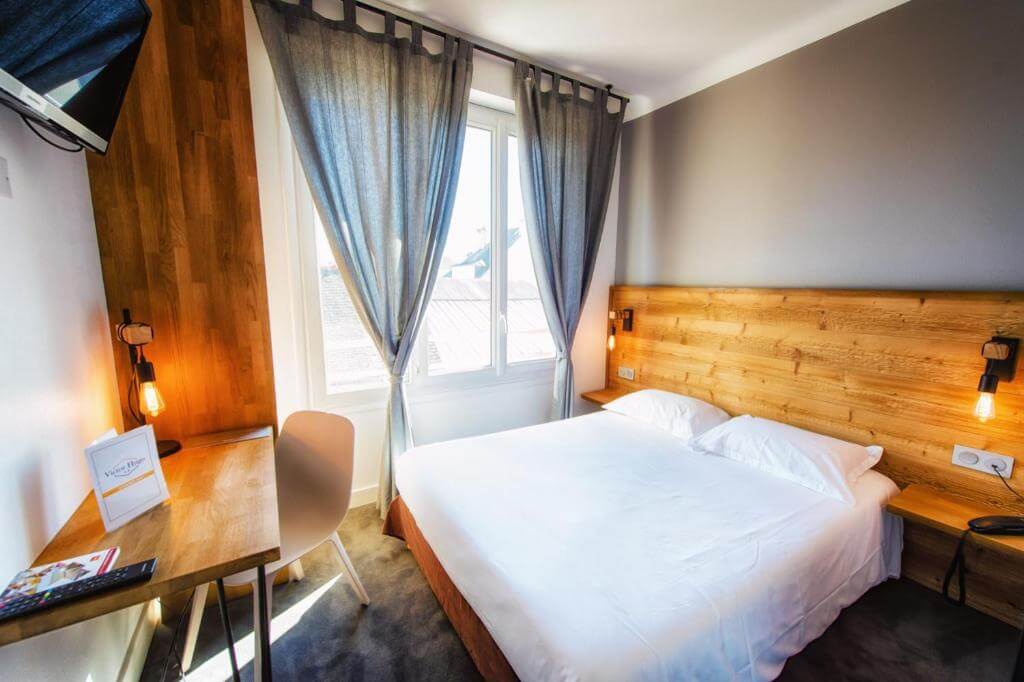
(€) Hôtel Victor Hugo Lorient – A comfortable and affordable stay near the city center, with easy access to the base and local amenities.
(€€) Brit Hôtel Confort Cléria Lorient Centre – A great value hotel with modern rooms and a quiet location just a short walk from restaurants and shops.
(€€€) Mercure Lorient Centre – If you’re looking for more comfort, this 4-star option offers stylish rooms, quality service, and a central location perfect for exploring Lorient.
What to Eat
There are two restaurants on-site at Lorient La Base: a traditional crêperie and a more classic brasserie-style restaurant.
We chose the crêperie, and it was an absolute delight. The savory and sweet crêpes were delicious, the cider was crisp and flavorful, and the service was warm and welcoming. The rustic, maritime atmosphere added to the charm—and best of all, we had a view of the stern of the Submarine Flore right from our table. A perfect stop to refuel during your visit!
Things to do in Lorient La Base
Explore Lorient La Base & Submarine Block K1
You can freely walk around Lorient La Base, soaking in the atmosphere of this former WWII submarine hub. Block K1 has been repurposed into a modern boat construction and storage facility, yet traces of its wartime past remain. You can still see the original submarine pens, now used to shelter other vessels—an eerie yet fascinating glimpse into history.
Visit the Flore Submarine, Museum & Block K2
Step inside Block K2 and dive into the fascinating world of submarine life. Begin your visit with an immersive museum that explains the inner workings of a submarine, followed by a captivating multi-dimensional video experience. Then, walk through the Submarine Flore, a real French Navy vessel, and see up close what life was like underwater.
Duration: Allow between 45 minutes and 1 hour 15 minutes for the full experience.

Explore the Submarine Base & Block K3
Join a guided tour of Block K3, the most impressive structure in Lorient’s former submarine base. Once the massive doors open, you’ll step into a colossal space of 24,000m², featuring seven submarine pens—a striking reminder of its strategic wartime role.
Duration: Approximately 1 hour 30 minutes
➡️ Book the tour in French
➡️ Book the tour in English
Prefer to explore on your own? You can still get a great view of the pens from the pier just in front of the K3 block, without joining the tour.

Visit the Undersea Museum of Lorient
Step into the world’s oldest submariners’ rescue center, operating since 1942 and now the only one open to the public. This unique experience in Europe lets you discover the evolution of deep-sea rescue techniques through immersive exhibits and historic equipment.
Duration: Around 1 hour 30 minutes
A fascinating stop for anyone interested in maritime history and naval innovation.
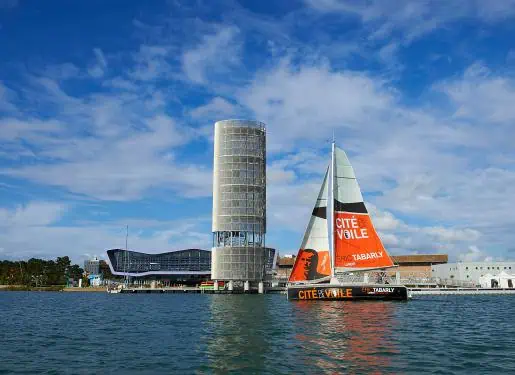
Experience the Cité de la Voile Eric Tabarly
Dive into the exciting world of sailing and offshore racing at the Cité de la Voile Eric Tabarly. Through films, hands-on exhibits, 4D cinema, and virtual regattas, you’ll explore life at sea like never before. It’s a fun and educational stop for all ages—whether you’re a sailing enthusiast or just curious.
Duration: Plan around 2h30 for a full visit.
Opening Hours & Tickets
Cité de la Voile Éric Tabarly (main museum & exhibition center)
- April to August: open daily, 10:00 AM – 7:00 PM
- September: daily, 10:00 AM – 6:00 PM
- October to March: Tuesday to Sunday, 10:00 AM – 6:00 PM
- Closed: January 1st and December 25th
Ticket prices (2025):
- Adults: €12.50
- Children (7–17): €8.50
- Under 7: Free
- Family ticket: €33 (2 adults + 2 children)
- Reduced: €10.50
“Permission to lower the scope!”
You may also like
About the authors
We are Alex and Tina, a French-Serbian couple who met in China back in 2014. We spent three incredible years there before making France our home. Our shared passion for travel has been the heartbeat of our relationship for over 12 years, taking us across 44 countries and counting.
We launched TheDailyPackers in 2019 as a way to document our adventures. In 2026, we reached a major milestone by officially turning our blog into our full-time job. While we are still growing toward financial independence through this platform, every article we write is fueled by our mission to make your voyages easier through in-depth guides, honest advice, and the lessons we’ve learned from our own mistakes.
Our journey has not been without its storms. In 2023, our world changed forever when our first son, Poppy, was stillborn on November 25th. It was, and remains, the hardest chapter of our lives. In 2025, we were blessed with our second little boy, Milo. He has since joined our traveling tribe, and you’ll be seeing him—and the reality of traveling with a little one-on the blog more and more.
We hope to inspire you to explore the world with curiosity and resilience. Thank you for being part of our story.
You may also like those related posts
Lake Lucerne Road Trip: The Ultimate 1-day Guide
Manosque, Provence, the best base to explore Lavender fields
9 best things to do in Jericoacoara, Brazil, in 2 to 4 days
Thuy Tien Lake: Exploring Hue’s Forgotten Abandoned Water Park
8 Best things to do in Florianópolis, Brazil, in 2 days
6 Best Places to Visit in January
18 Most beautiful Places in Corsica, France
7 Proven Tips to travel blog at home
Pssst, did you know that…
If you purchase something through our links, we earn a small fee. However, you still pay the same. Win-win! And one day we may get to be full-time travel bloggers =)
Find Hotels with Booking.com
Do Yoga with KVY
Buy us a Coffee
Rent a car with DiscoverCars
Find Attractions with GetYourGuide
Find Flights with Expedia
Buy an eSIM with Airalo
Get insured with World Nomads
Get ready with Amazon.com