

Introduction
If there’s one place in Andalusia and Spain that completely swept us off our feet, it’s the Mosque–Cathedral of Cordoba — or simply la Mezquita of Cordoba. It doesn’t matter how many photos you’ve seen or how many times someone tells you it’s impressive… nothing prepares you for that first step inside.
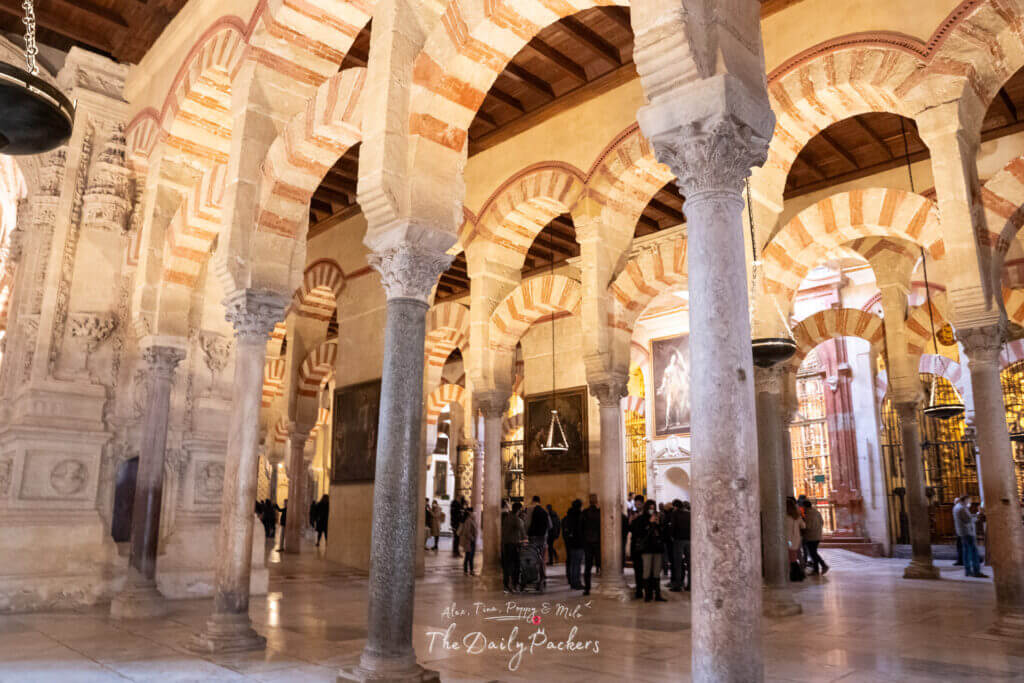
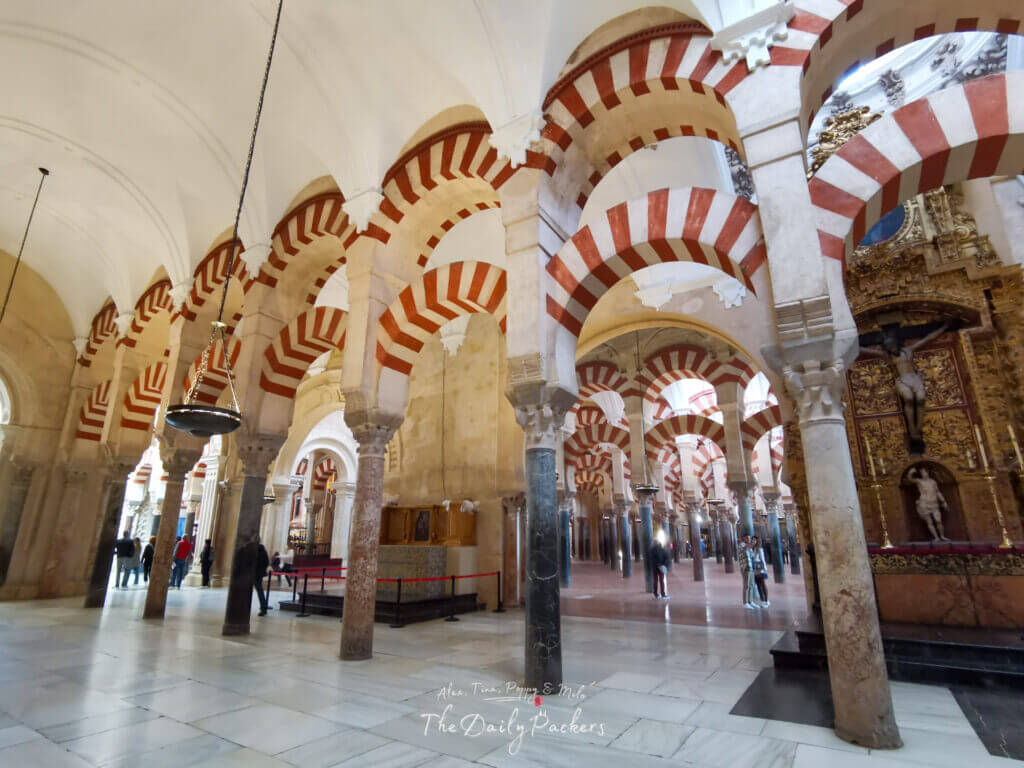
Suddenly, you’re standing under hundreds of red-and-white arches, in what feels like an endless forest of columns. It’s quiet, peaceful, almost hypnotic — and then, right in the middle of it all, a cathedral rises from the heart of the mosque. It’s unexpected, dramatic, and honestly one of the most fascinating architectural surprises we’ve ever seen.
We visited the Mosque–Cathedral of Cordoba during our Andalusia road trip, and it instantly became one of our favorite stops. What makes it so special is the story behind it: first a Visigothic church, then one of the most important mosques in the Islamic world, and later transformed into the Cordoba Cathedral after the Christian reconquest.
You walk through more than 1,200 years of history in just a few minutes — and somehow, it all makes sense together.
If you’re planning a trip to Cordoba, the Mosque–Cathedral of Cordoba is the one place you simply cannot skip.


Read: 9 best things to do in Cordoba, Spain, in 1 to 2 days
Why visit the Mosque–Cathedral of Cordoba
Visiting the Mosque–Cathedral of Cordoba feels like walking through a living timeline – every corner reveals a different chapter of Andalusia’s past. It’s the kind of place where you stop, stare, and think: How is this even real?
Long before it became the world-famous Cordoba Cathedral, this spot was home to a Visigothic church. In the 8th century, the Umayyads arrived in Spain and built what would become the Great Mosque of Cordoba, one of the largest and most important mosques in the entire Islamic world. It kept expanding for centuries, each ruler adding more arches, more columns, more beauty. At its peak, it was considered a masterpiece of Islamic architecture — and honestly, it still feels like one.
When the Christians reconquered Cordoba in 1236, they didn’t destroy the mosque. Instead, they built a Renaissance cathedral inside it. Not on top, not next to it — right in the middle of the mosque. The result is one of the most unusual and striking religious buildings in the world: an elegant Gothic–Renaissance church rising out of a hypnotic forest of red-and-white Islamic arches.
Today, you can wander through dimly-lit prayer halls, admire the intricate mihrab, and then suddenly find yourself under soaring cathedral vaults. It’s contrasting, surprising, harmonious, and mind-blowing all at once – which is exactly why the Mezquita of Cordoba is a UNESCO World Heritage site and one of Spain’s most iconic landmarks.
This is not just a monument. It’s a story of cultures, faiths, and centuries blending together — and it’s one of the most unforgettable places you’ll ever step into.


Tip: Here are all your accommodation options in Cordoba
How to get to the Mosque–Cathedral of Cordoba
Reaching the Mosque–Cathedral of Cordoba is super easy, whether you’re already exploring Andalusia or arriving from another Spanish city. The building sits right in the historic center (Judería), so once you’re in Cordoba, everything else is just a short walk away.
Arriving in Cordoba: The city is well connected by public transport:
- By train: High-speed AVE trains run frequently from Seville (45 minutes), Madrid (1h45), and Málaga (50 minutes). Once at Cordoba Central, it’s a 25–30 minute walk to the Mezquita or a quick 10-minute bus/taxi ride.
- By bus: The bus station is right next to the train station. From there, walk or hop on a local bus toward the historic center.
- By car: You cannot drive into the old town without a special permit, so park outside the historic center – either in a paid parking lot or a free zone a bit further away — and walk in.
Once you’re within the old city, just wander – honestly, getting lost in the narrow streets is half the fun. The Mezquita of Cordoba is impossible to miss: it’s the massive building with fortress-like stone walls and tall palm trees right beside the river.
If you’re staying further away, several lines stop near the Mosque–Cathedral of Cordoba. Bus lines 3, 7, or 12 typically work well (depending on your accommodation).
Address: C. Cardenal Herrero, º 1, Centro, 14003 Cordoba, Spain


When to visit the Mosque–Cathedral of Cordoba
The Merquita of Cordoba is beautiful year-round, but the experience can vary a lot depending on the season and time of day. Here’s what to expect so you can choose the perfect moment for your visit.
- Spring (March–May): Spring is without a doubt the best season to visit the Mosque–Cathedral of Cordoba. The weather is warm but comfortable, the city is full of flowers, and the light inside the Mezquita is beautiful. May gets busier because of the Patio Festival, but the atmosphere is incredible.
- Summer (June–August): Summer in Cordoba is extremely hot, often reaching 38–45°C. If you come during these months, plan your visit early in the morning — it’s the only time the heat is manageable. Crowds are larger too, but the interior stays naturally cool.
- Autumn (September–November): Autumn is another fantastic time to visit. The days are mild, the evenings are pleasant, and the crowds thin out sharply after mid-September. If you want great weather without spring-level crowds, this is your season.
- Winter (December–February): Winter is peaceful and underrated. The Mosque–Cathedral feels incredibly atmospheric with fewer visitors, and temperatures are crisp without being too cold. It’s a great time for photographers and slow travelers.


Best Time of Day
If you want the quietest and most enjoyable experience, go right at opening time (usually 10:00 AM). The morning light hits the arches beautifully, and you’ll have more space to explore before the big tour groups arrive.
Late afternoon is another lovely moment — the interior becomes warmer and more golden as the sun lowers. Try to avoid 11:00 AM to 1:00 PM, which is the peak for guided tours.

How Long to Spend at the Mosque–Cathedral of Cordoba
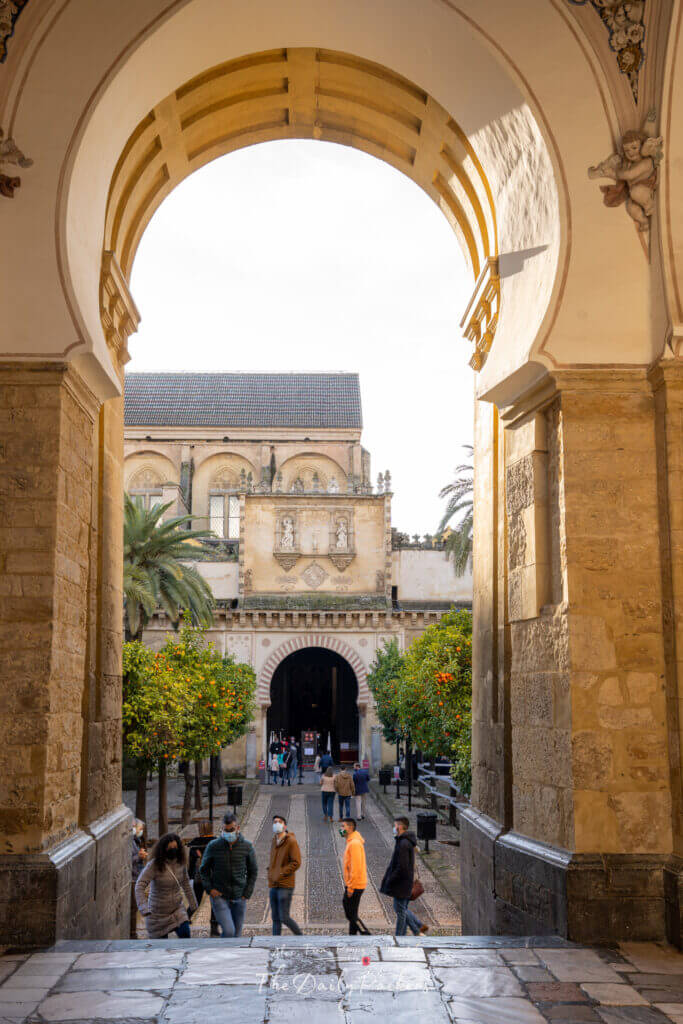
Most travelers spend 1 to 1.5 hours inside the Mezquita, and that feels just right — enough time to wander through the forest of arches, explore the cathedral area, take photos, and enjoy the Patio de los Naranjos.
If you love history or photography, give yourself 2 hours — there’s a lot to absorb.
If you’re combining it with the Mosque–Cathedral of Cordoba and the Jewish Quarter, plan for a half-day to truly enjoy everything without rushing.


Tip: For a deeper look into the Mezquita’s history, join a guided tour. The Jewish Quarter, Mosque, and Alcázar Tour is our favorite — 4.7/5 from 5,000+ reviews and the easiest way to see all three major sites with proper context.
How to Visit
Visiting the Mezquita of Cordoba is incredibly easy, but timing and planning make a big difference in how much you’ll enjoy it. Here’s exactly how to visit without the stress, confusion, or crowds.
1. Enter Through the Patio de los Naranjos: Your visit starts in the beautiful orange-tree courtyard, a peaceful space that already sets the tone. This is where you’ll scan your ticket and step into the main hall.
2. Explore the Forest of Arches: Once inside, go slowly — the first glimpse of the endless red-and-white arches is overwhelming in the best way. Wander between the columns, let your eyes adjust to the light, and take your time absorbing the atmosphere. This is the heart of the Andalusian Islamic world, and honestly, one of the most breathtaking interiors in Europe.

3. Visit the Mihrab: Make your way to the famous mihrab, the richly decorated prayer niche that faces Mecca. This is the most ornate and symbolic part of the original mosque, and its golden mosaics are spectacular up close.
4. Walk Into the Cathedral Nave: Suddenly, the Islamic arches open into a towering Gothic–Renaissance cathedral built right in the center of the mosque. The contrast is dramatic — and that’s exactly what makes the Mezquita so unique. Take a moment to look up at the dome, choir stalls, and chapels.

5. Circle the Perimeter Chapels: The outer aisles are lined with chapels containing artwork, sculpture, and religious relics. Even if you’re not into churches, the craftsmanship is impressive.
6. Optional: Climb the Bell Tower: The Torre del Alminar (the old minaret, now the bell tower) isn’t included in the standard ticket, but you can add it at the entrance. The climb is easy, and the panoramic view over Cordoba’s rooftops is absolutely worth it — especially in the morning light.

7. Audio Guide or Not? The free official audio guide on your phone is surprisingly good, easy to use, and all you need unless you prefer a human guide with storytelling flair.
8. Duration: On average, expect to spend:
- 60–75 minutes for a relaxed, self-guided visit
- 90 minutes if you also climb the tower
- 2 hours if you really take your time with photos, chapels, and the patio

Tickets & Opening Hours
Visiting the Mezquita of Cordoba requires a ticket, and thankfully, the process is very simple. You can buy your ticket either online on the official website or on one of their partners (the easiest and quickest option) or directly at the ticket office. Tickets often sell out during busy months, so booking online is still the safest choice.
Ticket Prices (Daytime Visit):
- A standard general entrance to the Mosque–Cathedral costs 13€.
- 10€ for visitors over 65, students aged 15–26, and holders of the European Youth Card.
- 7€ for children aged 10–14, visitors with disabilities up to 64%, and adults from large families.
- 5€ for children aged 10–14 who are part of large families.
- 23€ with an audio guide.
Some people can enter completely free of charge: residents of the Diocese of Cordoba, children under 10, “Andalucía Junta 65” cardholders, people with disabilities above 64% (with one accompanying caregiver), and ICOMOS members.
There is also the famous free visit from Monday to Saturday between 8:30 and 9:30 a.m. — a magical, quiet hour with no crowds. You still need to collect a free ticket at the door.
Night Visit — The Soul of Cordoba: The Mezquita also offers a beautiful immersive night experience called “El Alma de Cordoba”.
General entry is 20€, with a reduced price of 14€ for seniors (65+), students up to 26, and visitors with disabilities (all with official accreditation). Children under 7 enter free, though they do not receive the audio guide.
It’s a completely different atmosphere at night: dim lights, soft narration, and almost no people. It’s worth planning ahead if you want to experience both day and night.

Bell Tower Ticket
If you’d like to climb the historic Torre del Alminar, the ticket is only 3€, and the climb rewards you with one of the best city views in Cordoba. The visit is free for anyone born or residing in the Diocese of Cordoba.
Tower visits run on strict timed entries throughout the day, so booking your slot in advance is important — especially in spring and autumn when Cordoba is busiest.

Opening Hours
The Mosque–Cathedral is generally open from 10:00 to 18:00 every day, although hours may shift on religious holidays or during special church events. Since it’s an active cathedral, occasional closures can happen without much notice, so checking the official schedule the day before is always a good idea.
The Bell Tower offers multiple entry slots from 9:30 a.m. until 6:30 p.m., running every 30 minutes.
The night visit to The Soul of Cordoba usually runs daily, depending on the season.

Tip: For a deeper look into the Mezquita’s history, join a guided tour. The Jewish Quarter, Mosque, and Alcázar Tour is our favorite — 4.7/5 from 5,000+ reviews and the easiest way to see all three major sites with proper context.
Is it Worth It?
Absolutely — the Mosque–Cathedral of Cordoba is one of the most extraordinary monuments in Spain and, honestly, one of the most memorable places we’ve ever visited. Even if you’ve already seen photos of the endless red-and-white arches, nothing prepares you for the feeling of stepping inside. The forest of columns, the soft light, the quiet echo… it’s breathtaking.
What makes the Mezquita so special isn’t just its beauty but the layers of history you walk through — Roman foundations, a Visigothic basilica, an Islamic mosque that grew into one of the most important in the world, and finally a cathedral placed right in the middle of it. You literally move through centuries of architecture in one single building.
It’s also one of those places where you’ll want to slow down. We spent well over an hour wandering around without even realizing it. Every corner feels different, and the more you look, the more details you start noticing.
If you only have one day in Cordoba, the Mosque–Cathedral of Cordoba is the sight you simply can’t miss.
Travel Tips
- Visiting the Mezquita of Cordoba is pretty straightforward, but a few small tips can make the experience much smoother — and much more enjoyable.
- Book your Mosque–Cathedral of Cordoba’s ticket online: The lines at the entrance can get long, especially in spring and autumn. Booking online saves time and guarantees your spot, especially if you’re visiting on a busy weekend or planning to climb the bell tower.
- Arrive early (or go late): If you want peace, fewer crowds, and that magical “you have the place almost to yourself” feeling, go right at opening time. Late afternoons are also lovely — the light is softer, and the atmosphere feels calmer.
- Don’t skip the Patio de los Naranjos: The orange-tree courtyard is completely free to enter and a wonderful place to relax before or after your visit. It’s one of the most peaceful corners of Cordoba.
- Wear comfortable shoes: Between the Mezquita, the Jewish Quarter, and the Roman Bridge, you’ll walk a lot. The streets are cobbled, so comfy shoes make a big difference.
- Bring a scarf or light layer: The interior stays cool — great in summer, but a bit chilly in winter. A light layer makes the visit more comfortable.
- Consider a guided tour if you love history: The building spans over 1,300 years of architecture, so a guide can help you understand what you’re actually looking at. If you only take one tour in Cordoba, we recommend the Jewish Quarter, Mosque, and Alcázar Tour — it’s one of the highest-rated (over 5,000 reviews, 4.7/5) and covers all three major landmarks at once.
- Plan for extra time: Even if you think “I’ll be in and out in 40 minutes,” trust me — you’ll stay longer. The Mezquita pulls you in.
- Respect the atmosphere: It’s still an active cathedral, so keeping voices low and avoiding flash photography helps keep the peaceful ambiance intact.
Where to stay
While many travelers visit Cordoba as a day trip from Seville, we’d honestly recommend spending at least one night here if you can. Staying overnight gives you time to enjoy the city once the day crowds leave — when the streets quiet down, the Mezquita glows under the evening light, and locals fill the tapas bars. It’s a completely different, more authentic experience.
Here are a few great accommodation options depending on your travel style and budget:
(€) Eurostars Azahar – A modern and affordable option located near the city center. The rooms are bright and comfortable, perfect for travelers who want good value without compromising on location.
(€€) H10 Palacio Colomera – Set inside a beautifully restored historic building on Plaza de las Tendillas, this boutique hotel offers elegant rooms and a rooftop pool with panoramic views of Cordoba. Ideal for couples or those wanting a stylish, central stay.
(€€€) Hospes Palacio del Bailio, a Member of Design Hotels – This luxury hotel combines ancient Roman ruins with Andalusian charm. It features lush courtyards, an outdoor pool, and even a Roman bath spa. A fantastic choice if you want to immerse yourself in Cordoba’s history and unwind in total comfort.

Tip: Tip: Staying overnight also means you can explore Cordoba’s narrow streets early in the morning or late at night — the best times to truly feel the magic of the city without the crowds.
About the authors
We are Alex and Tina, a French-Serbian couple who met in China back in 2014. We spent three incredible years there before making France our home. Our shared passion for travel has been the heartbeat of our relationship for over 12 years, taking us across 44 countries and counting.
We launched TheDailyPackers in 2019 as a way to document our adventures. In 2026, we reached a major milestone by officially turning our blog into our full-time job. While we are still growing toward financial independence through this platform, every article we write is fueled by our mission to make your voyages easier through in-depth guides, honest advice, and the lessons we’ve learned from our own mistakes.
Our journey has not been without its storms. In 2023, our world changed forever when our first son, Poppy, was stillborn on November 25th. It was, and remains, the hardest chapter of our lives. In 2025, we were blessed with our second little boy, Milo. He has since joined our traveling tribe, and you’ll be seeing him—and the reality of traveling with a little one-on the blog more and more.
We hope to inspire you to explore the world with curiosity and resilience. Thank you for being part of our story.
You may also like those related posts
14 Best things to do in Santiago de Chile, in 1 to 3 days
9 Best things to do in Ninh Binh & Tam Coc, Vietnam
12 Best Things to do in Chiang Rai, Thailand, in 3 to 4 days
10 Travel Documentaries to Inspire Your Next Adventure
12 Best things to do in Porto-Vecchio, Corsica, France
Lake Lucerne Road Trip: The Ultimate 1-day Guide
5 Best Things to do in Remedios, Cuba, in 1 single day
25 Best things to do in Bratislava, Slovakia, in 2 to 4 days
Pssst, did you know that…
If you purchase something through our links, we earn a small fee. However, you still pay the same. Win-win! And one day we may get to be full-time travel bloggers =)
Find Hotels with Booking.com
Do Yoga with KVY
Buy us a Coffee
Rent a car with DiscoverCars
Find Attractions with GetYourGuide
Find Flights with Expedia
Buy an eSIM with Airalo
Get insured with World Nomads
Get ready with Amazon.com