
Introduction
We visited Montevideo in January and stayed for four nights, spending two full days exploring the city and taking a day trip to Punta del Este. Honestly, that was the perfect amount of time — Montevideo is a lovely city to discover, but two days are enough to see its main highlights without rushing.
Montevideo is the capital and largest city of Uruguay, home to about 1.5 million people, nearly one-third of the country’s entire population. Its history is fascinating: originally founded as a Spanish fortress to stop the Portuguese from advancing toward Buenos Aires, Montevideo quickly became a strategic and cultural hub on the Río de la Plata.
During the colonial era, tensions between Spain and Portugal over South American territories were high. Despite papal rulings dividing the continent, the Portuguese pushed westward beyond the agreed line, eventually occupying much of what is now Brazil. This border conflict between empires is what led to the creation of Uruguay — a small but resilient nation sandwiched between two giants, Argentina and Brazil.
Today, Montevideo blends European charm and laid-back coastal vibes, offering a perfect mix of culture, history, and seaside relaxation.

Read: Our complete 10-day Uruguay Itinerary
Getting there
Montevideo is well-connected and easy to reach whether you’re coming from Argentina, Brazil, or other parts of Uruguay.
By Plane: The Carrasco International Airport (MVD) is located about 20 km (30–40 minutes) from the city center. It’s the main international gateway to Uruguay, with direct flights from major South American cities like Buenos Aires, São Paulo, Santiago, and Lima, as well as a few connections to Europe. From the airport, you can reach the city by taxi, Uber, or airport shuttle.
By Ferry (from Buenos Aires): This is one of the most popular and scenic ways to get to Montevideo. You can take a Buquebus or Colonia Express ferry from Buenos Aires to Colonia del Sacramento (1 hour), and then continue by bus to Montevideo (2–2.5 hours). Alternatively, Buquebus also runs a direct ferry from Buenos Aires to Montevideo (around 3 hours) if you prefer a faster, single connection.
By Bus (from Brazil or other parts of Uruguay): Long-distance buses connect Montevideo with Punta del Este (2.5 hours), Colonia (2.5 hours), and Salto (6–7 hours), as well as Brazilian cities like Porto Alegre (12 hours). Buses in Uruguay are generally comfortable, reliable, and punctual. We personally came by bus from Punta Del Diablo. If you are interested in this journey, we have even made an article about it.
By Car: If you’re on a South America road trip, Montevideo is a great stop. Roads are in good condition, and driving from Buenos Aires (via ferry + highway) or southern Brazil is straightforward. Parking in the city is relatively easy compared to other capitals in South America.
Tip: If you’re coming from Buenos Aires, we recommend taking the ferry to Colonia and the bus from there. The journey is smooth, scenic, and a fun way to cross the Río de la Plata.

Check all your bus options on Busbud — it’s simple to compare routes, prices, and book your tickets in advance.
Moving Around
Getting around Montevideo is fairly easy, even though the city doesn’t have a metro or tram system. The main form of public transportation is the local bus network, which is extensive and connects almost every neighborhood in the city.
There’s no metro, underground, nor tram in Montevideo, but buses are everywhere and one of the most affordable and reliable ways to get around. To figure out which bus to take, just use Google Maps or the Moovit app, both of which work very well for local routes and real-time schedules.
When taking a bus:
- Raise your hand when you see your bus coming — if you don’t, the driver might not stop.
- When boarding, tell the driver your destination, and he’ll charge you accordingly (usually around 55 UYU, about €1.30).
- Once inside, press the stop button when you want to get off — there are no automatic stops.
You can also use Uber, DiDi, or Bolt, all available in Montevideo and quite affordable compared to European or North American cities.
For shorter distances, walking is a great option — the city is very walkable, especially around Ciudad Vieja, the Rambla, and Parque Rodó. And if you want a local experience, you can even rent a bike or electric scooter to cruise along the scenic Rambla of Montevideo, one of the longest coastal promenades in the world.

Tip: You can also take the Sightseeing Hop-On Hop-Off Bus Tour to get around Montevideo
When to Visit
The best time to visit Montevideo depends on what kind of experience you’re after — beach days, city exploration, or local festivals.
- Summer (December to February): This is the most popular time to visit Montevideo, with warm temperatures around 25–30°C and plenty of sunshine. It’s perfect for enjoying the beaches along the Rambla, open-air cafés, and outdoor events. Keep in mind that this is also peak season, so accommodation prices rise, and the city can get busier — though it’s still much calmer than Buenos Aires or Rio.
- Autumn (March to May): A great time for mild weather (18–25°C) and fewer crowds. The beaches are quieter, and you can stroll comfortably through the old town and local markets. It’s also harvest time, so you’ll find local food and wine festivals across Uruguay.
- Winter (June to August): Winters in Montevideo are cool but not freezing, with temperatures between 8–15°C. While it’s not beach weather, this season is perfect if you prefer fewer tourists and cheaper prices. Just bring a jacket, as evenings can get chilly.
- • Spring (September to November): One of the best times to visit Montevideo, with blooming parks, pleasant weather, and fewer crowds. It’s warm enough to enjoy the coast without the summer rush.
If you can, plan your trip around February, when the Montevideo Carnival takes place — the longest carnival in the world, lasting over 40 days, with colorful parades, music, and cultural performances all over the city.

Where to stay in Montevideo
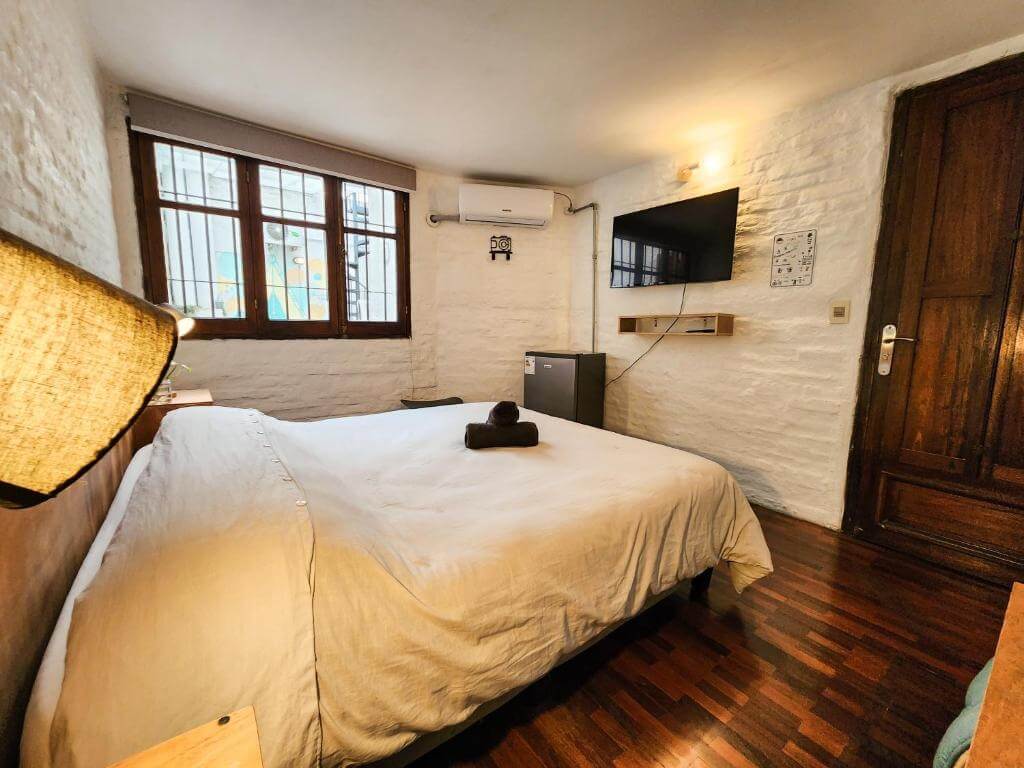
Montevideo has a great mix of accommodations, from stylish boutique hotels to cozy hostels near the Rambla. Since the city is compact and easy to explore, it’s best to stay near Punta Carretas, Parque Rodó, or Ciudad Vieja, where most attractions and restaurants are located.
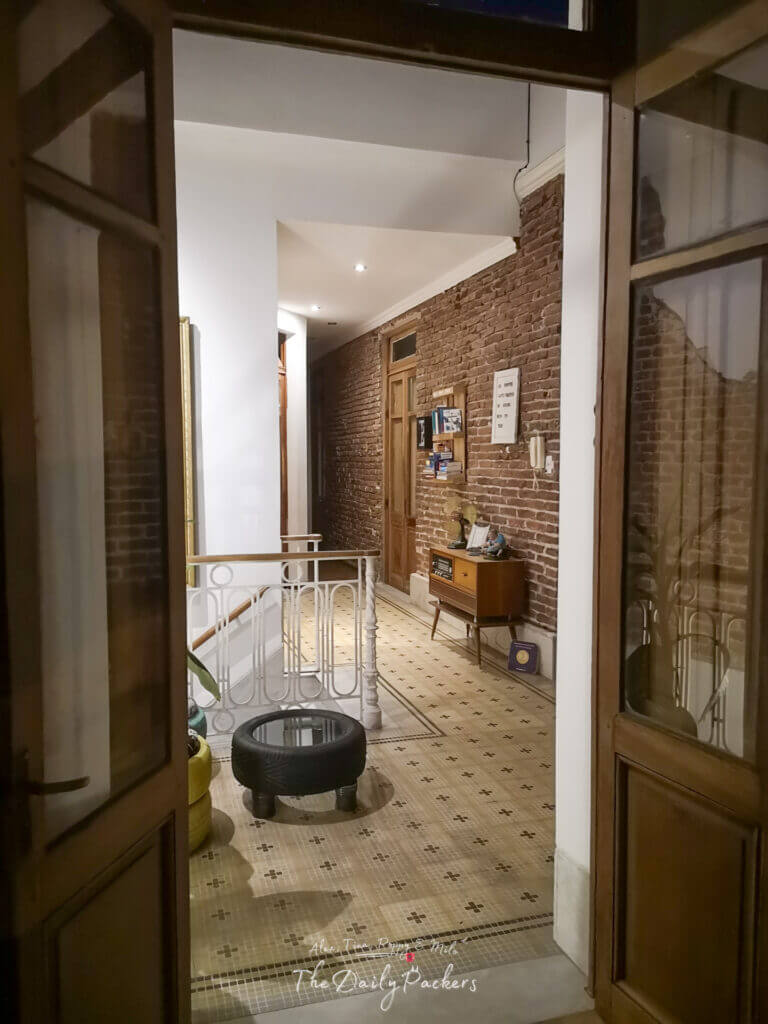
- (€): MedioMundo Hostel: A charming and social hostel in the Parque Rodó area, just a few blocks from the Rambla. It’s clean, cozy, and has a relaxed, artsy vibe with a small garden and kitchen for guests.
- (€€): FAUNA Montevideo: A beautifully designed boutique hotel in the old town, blending style and comfort. The rooms are modern with natural tones and wood finishes, and the rooftop terrace offers great city views.
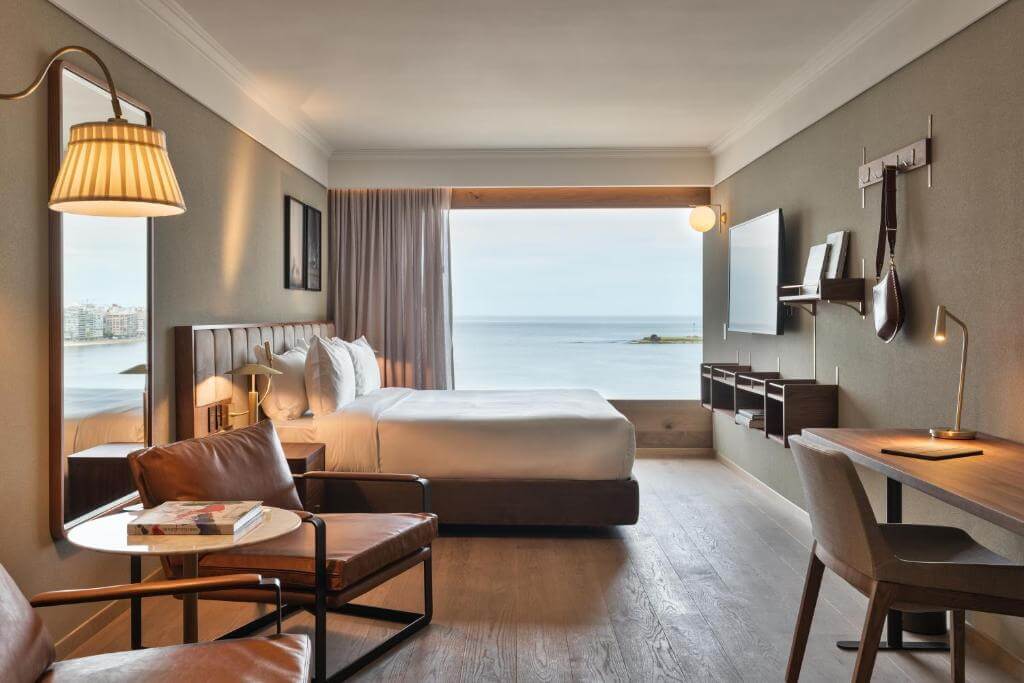
- (€€€): Hotel Costanero MGallery: One of the best luxury hotels in Montevideo, right across from Pocitos Beach. It offers elegant rooms, an indoor pool, a spa, and a restaurant — perfect for those who want comfort and sea views.
We recommend 2 full days in Montevideo — enough time to explore the city, enjoy the coast, and even take a day trip to Punta del Este or Colonia del Sacramento if you have extra time.

Here are all your accommodation options in Montevideo
What to eat
Montevideo has a vibrant food scene that mixes traditional Uruguayan flavors with modern and international cuisine. From juicy steaks to coastal seafood and great wines, you’ll find something delicious for every taste.
Here are a few local dishes and drinks you shouldn’t miss:
- Asado (Uruguayan BBQ): Uruguay is famous for its grilled meats. You’ll find parrillas (barbecue restaurants) everywhere — locals take pride in their asado.
- Chivito: A hearty steak sandwich loaded with ham, cheese, lettuce, tomato, and a fried egg. It’s Uruguay’s national dish.
- Empanadas: Perfect for a snack on the go, filled with meat, cheese, or spinach.
- Milanesa: Breaded meat (usually beef or chicken), similar to schnitzel, often served with fries.
- Dulce de leche desserts: Uruguayans are obsessed with this caramel spread — try it in cakes, pastries, or ice cream.
- Mate: Not a food, but a must-try drink — the national herbal tea, traditionally shared among friends.
Where to Eat in Montevideo:
- Mercado del Puerto (Ciudad Vieja): The best place to experience Uruguayan cuisine. It’s a lively covered market filled with parrillas where the smell of grilled meat fills the air. Try El Palenque or La Chacra del Puerto for an authentic asado.
- La Perdiz (Punta Carretas): A local favorite serving classic Uruguayan dishes and excellent steaks in a relaxed, stylish atmosphere.
- Jacinto (Ciudad Vieja): A modern café and restaurant with a cozy atmosphere. Perfect for brunch or lunch — try their seasonal plates or homemade pastries.
- OBRADOR Social Club (Parque Rodó): A great vegan-friendly café offering delicious sandwiches, healthy bowls, and amazing coffee.
If you love wine, don’t forget to try Tannat, Uruguay’s signature red grape — it pairs perfectly with an asado or a sunset by the Rambla.

Best things to do in Montevideo
Take a Free Walking Tour in Montevideo
One of the best ways to start exploring Montevideo is by joining a Free Walking Tour. They run every day — Monday to Friday at 10:00 a.m. and 3:00 p.m., and on weekends at 3:30 p.m. There’s one in English and one in Spanish, though sometimes, if one group is too small, it might be merged or canceled.
We did the Free Walking Tour Ciudad Vieja, which focuses on Montevideo’s old town. You’ll find the guides easily — look for the red t-shirts and umbrellas in Plaza Independencia, right under the Artigas monument.
Our guide was Rodrigo, and honestly, he was fantastic. He had a strong accent, spoke like he was half-singing at times, and made the entire tour fun and engaging. The group was small, around ten people, which made it super easy to ask questions and chat along the way.
The tour lasted about 2 hours, and we covered all the main landmarks of Montevideo’s old town while learning tons of cool stories — from Uruguay’s independence to why the country is so peaceful today. The walk ended in Mercado del Puerto, the perfect place to grab lunch and a drink afterward.
Since it’s a tip-based tour, you can give whatever you feel is fair — we left 200 UYU in total, which felt reasonable for the experience.

Tip: Don’t like the Free Walking tours? Get the Half-Day Sightseeing Tour
Explore Plaza Independencia
The Plaza Independencia is Montevideo’s most important square and the perfect place to start your walking tour. It’s the symbolic heart of the city — marking the division between the Old Town (Ciudad Vieja) and the modern downtown.
Right in the center stands the equestrian statue of José Gervasio Artigas, Uruguay’s national hero, who led the fight for independence. Beneath the statue, you can actually enter the Mausoleo de Artigas, a quiet, dimly lit chamber guarded by soldiers where his ashes are kept — it’s free to visit and worth a quick stop.

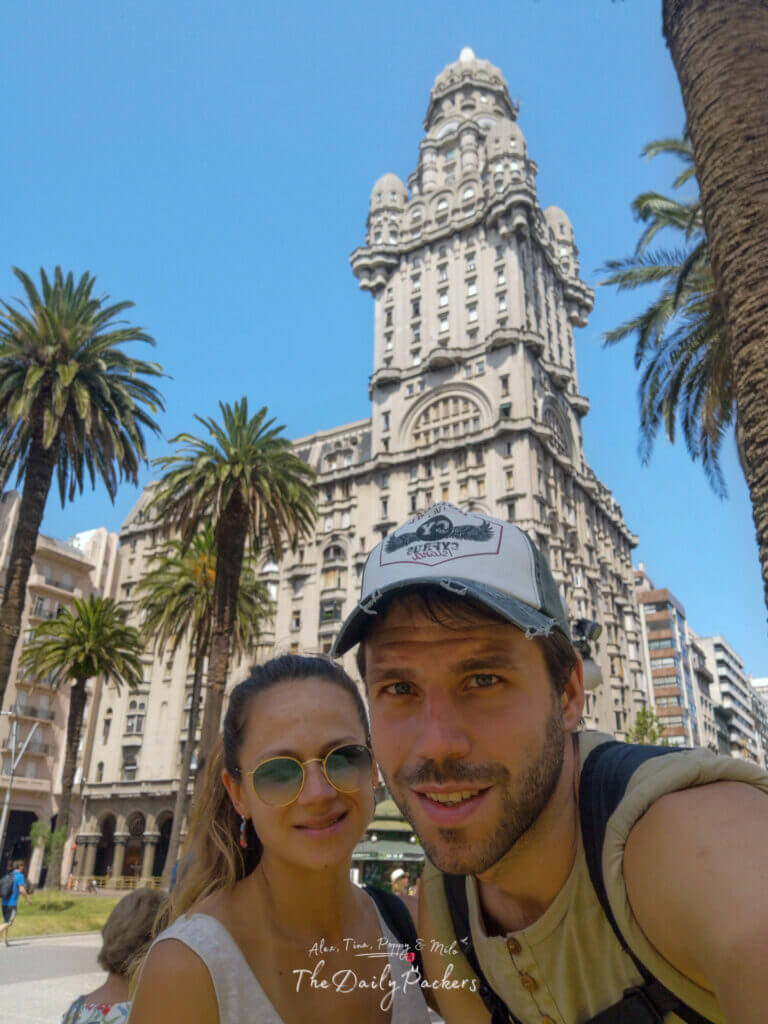
Around the square, our guide Rodrigo told us stories about the surrounding buildings. One of them was the Palacio Salvo, an eccentric 26-story tower built in 1928 that was once the tallest building in South America. Another was the Radisson Montevideo Victoria Plaza Hotel, which he jokingly described as “too luxurious for its own good.”

Here are all your accommodation options in Montevideo
Visit Teatro Solís
Just a short walk from Plaza Independencia, you’ll find Teatro Solís, one of the most beautiful and prestigious theaters in South America. Built in 1856, it’s actually older than the famous Teatro Colón in Buenos Aires, and our guide couldn’t stop mentioning how proud Uruguayans are of it.
We didn’t go inside during the tour, but even from the outside, the theater is stunning — its neoclassical façade and massive columns make it one of Montevideo’s most iconic landmarks. Rodrigo explained how the theater played a key role in bringing art and culture to the city, and how performances here are surprisingly affordable — so if you can catch a show, do it!
Today, Teatro Solís hosts a diverse mix of opera, ballet, concerts, and local theater productions, and you can also join a guided tour to explore the inside and learn more about its history. The tour usually lasts around 45 minutes and costs only a few euros, making it a great little stop if you’re exploring Montevideo on your own after the walking tour.

Walk Along Peatonal Sarandí
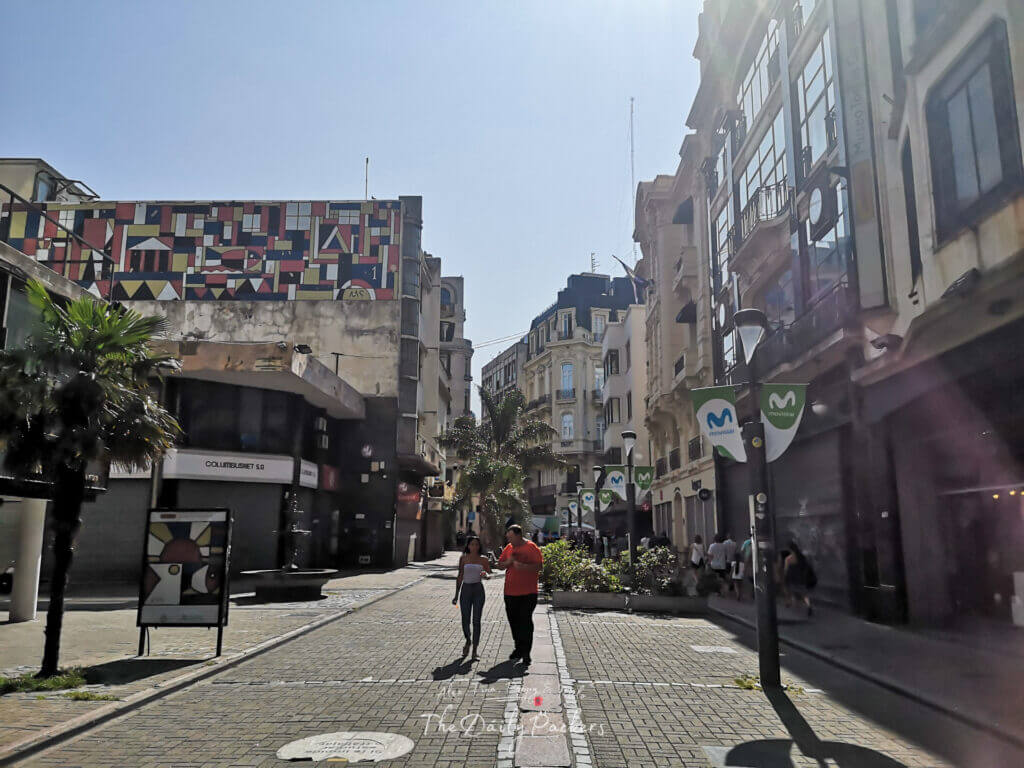
From the cathedral, you can walk down Peatonal Sarandí, the lively pedestrian street that connects Plaza Independencia to Plaza Matriz. It’s one of the most popular streets in Montevideo, lined with souvenir shops, cafés, street art, and local vendors selling crafts and jewelry.

This street has always been the “artery” of Ciudad Vieja, where people gather, perform music, and sell just about everything. It’s a great place to people-watch and soak up local life. Along the way, we noticed stars embedded in the pavement, just like in Hollywood — except these celebrate famous Uruguayan artists, writers, and musicians. It’s a fun little detail that adds personality to the walk.
If you want to grab a coffee, there are plenty of stops along Sarandí. We’d recommend Café Brasilero, one of the oldest cafés in the city, just a short detour from the main street.

Tip: We use the DJI Action 4 to film our vlogs — compact, durable, and perfect for capturing every adventure.
Explore Plaza Matriz (Plaza Constitución)
Plaza Matriz, also known as Plaza Constitución, is the oldest square in Montevideo and the original heart of the city. It’s surrounded by some of the most historic buildings in town — including the Cabildo (the old City Hall) and the Templo Inglés (Cathedral).
This plaza used to be the center of colonial life, where official ceremonies, religious events, and markets were held. Today, it’s much quieter but still full of charm — locals sit under the big palm trees, chatting or reading on benches, while artisans set up stalls to sell handmade jewelry, antiques, and paintings.

The centerpiece of the plaza is a beautiful fountain built in 1871, made entirely of marble and bronze. It’s especially nice in the morning when the light filters through the trees, and you can hear the faint music of street performers nearby.

Here are all your accommodation options in Montevideo
Discover Templo Inglés (Cathedral of Montevideo)
Templo Inglés, also known as the Montevideo Metropolitan Cathedral — one of the most important religious landmarks in Uruguay. It sits right in the heart of Ciudad Vieja, facing the charming Plaza Matriz, and marks the spiritual center of the old town.
Unfortunately, it was closed when we visited on a Sunday, but Rodrigo gave us some background while we admired its neoclassical façade from the outside. The cathedral was originally built in 1740 and later rebuilt in the 19th century after being damaged by fires and time.
Inside, it’s known for its elegant yet simple design, with whitewashed walls, high ceilings, and beautiful altars. It’s also where several important national figures are buried — including the country’s first independent government members.
Even if you can’t enter, it’s worth stopping here for a few photos and to take in the atmosphere of Montevideo’s oldest square, surrounded by colonial buildings and leafy trees.


Tip: Now, that we travel with baby Milo, we always bring this Babybjorn baby carrier with us.
Relax in Plaza Zabala
From Plaza Matriz, you can walk just a few minutes to reach Plaza Zabala, another charming square but with a completely different feel. It’s greener, quieter, and feels almost like a small park tucked inside the old town.
At the center stands an impressive equestrian statue of Bruno Mauricio de Zabala, the founder of Montevideo. Around it, there are trees everywhere and a few wrought-iron benches — perfect for sitting down and taking a short break from walking.
We stopped here for a bit during our walking tour and learn how Montevideo evolved from a fortress into the capital it is today. What we really liked about this plaza is how peaceful it is — you’re still in the heart of the city, but it feels miles away from the busy streets.

Explore the Mercado del Puerto
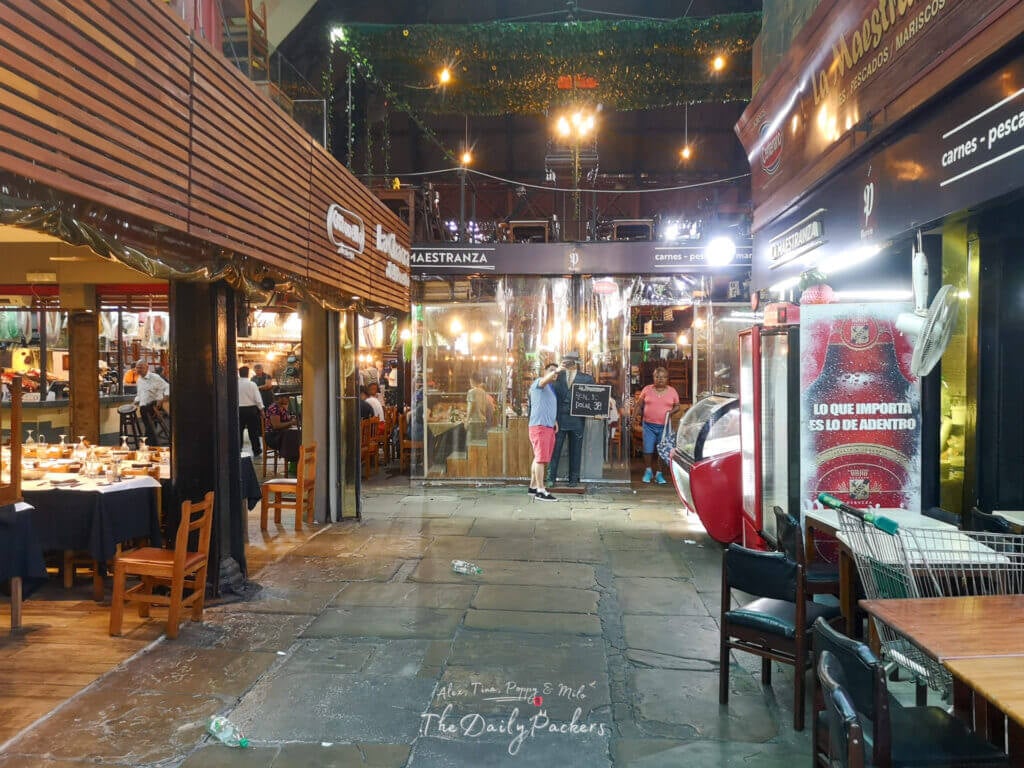
This historic market dates back to the 1800s and was originally built as a port market for ships docking nearby. Today, it’s packed with parrillas (traditional barbecue restaurants), souvenir stands, and local musicians adding to the atmosphere.
We stayed a bit after the tour to wander between the stalls. If you’re into meat, this is the place to try Uruguay’s famous asado. If not, you can still grab a drink or just soak in the ambiance — it’s one of those places that really captures the local vibe.
Explore the Feria de Tristán Narvaja
If you happen to be in Montevideo on a Sunday, don’t miss the Feria de Tristán Narvaja — one of the biggest and most authentic flea markets in South America. It runs every Sunday from 9 a.m. to 4 p.m., and trust us, it’s huge. We walked around for more than two hours and somehow never used the same street twice.
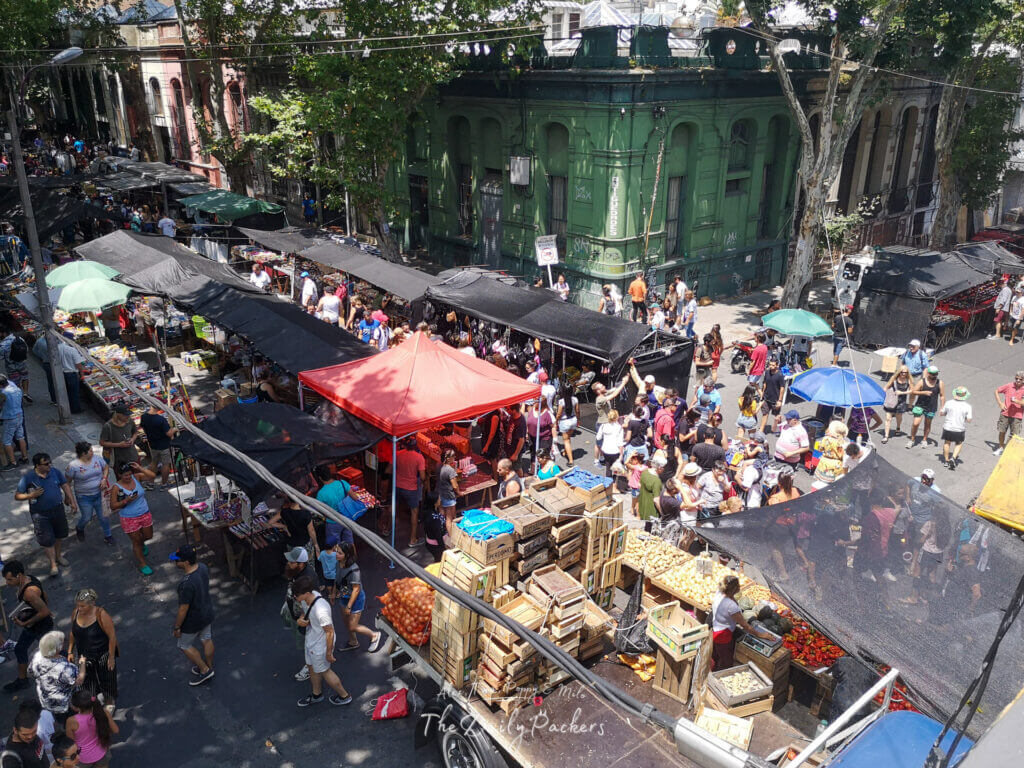
This market stretches across several blocks and offers absolutely everything — from antiques, vinyl records, books, and toys to fresh fruits, vegetables, and local groceries. Unlike many markets that are tourist-focused, this one feels genuinely local. It’s where Montevideanos come to shop, chat, and enjoy their Sunday morning.

We loved wandering aimlessly through the crowd, grabbing a snack from a street vendor, and watching people bargain for vintage treasures.

Here are all your accommodation options in Montevideo
Visit Babilonia Libros
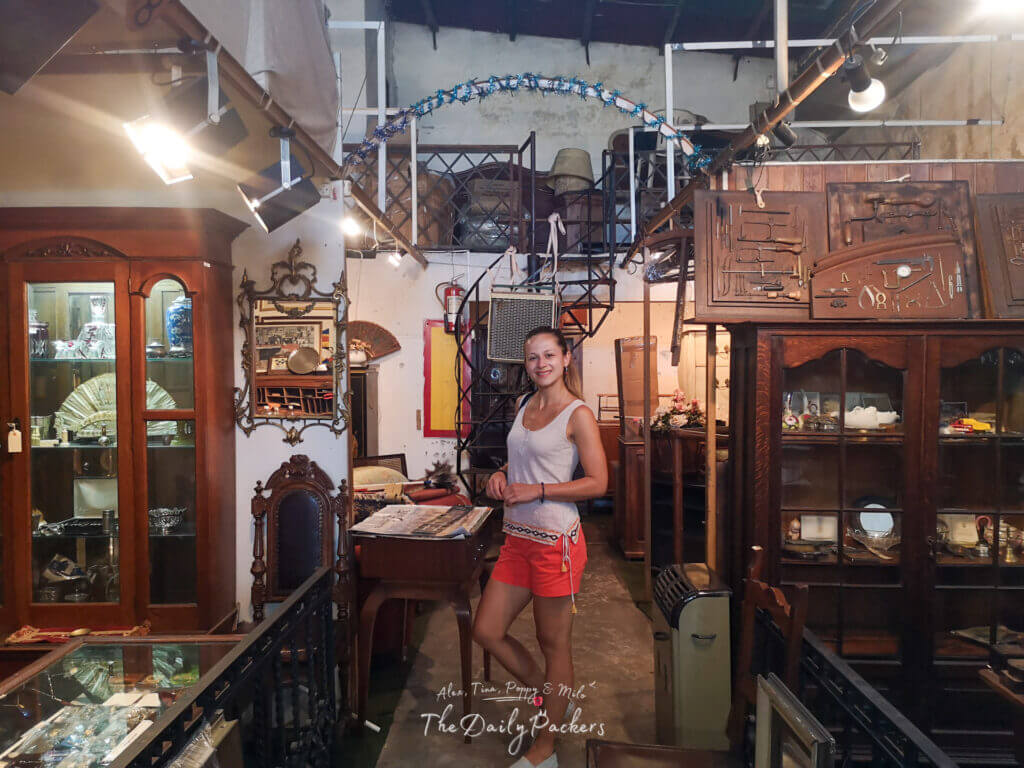
Right along the streets of the market, we stumbled upon Babilonia Libros, an incredible second-hand bookstore that instantly became one of our favorite stops. Even if you don’t plan to buy a book, step inside — it’s full of charm, with piles of old books stacked everywhere and a nostalgic atmosphere that feels frozen in time.
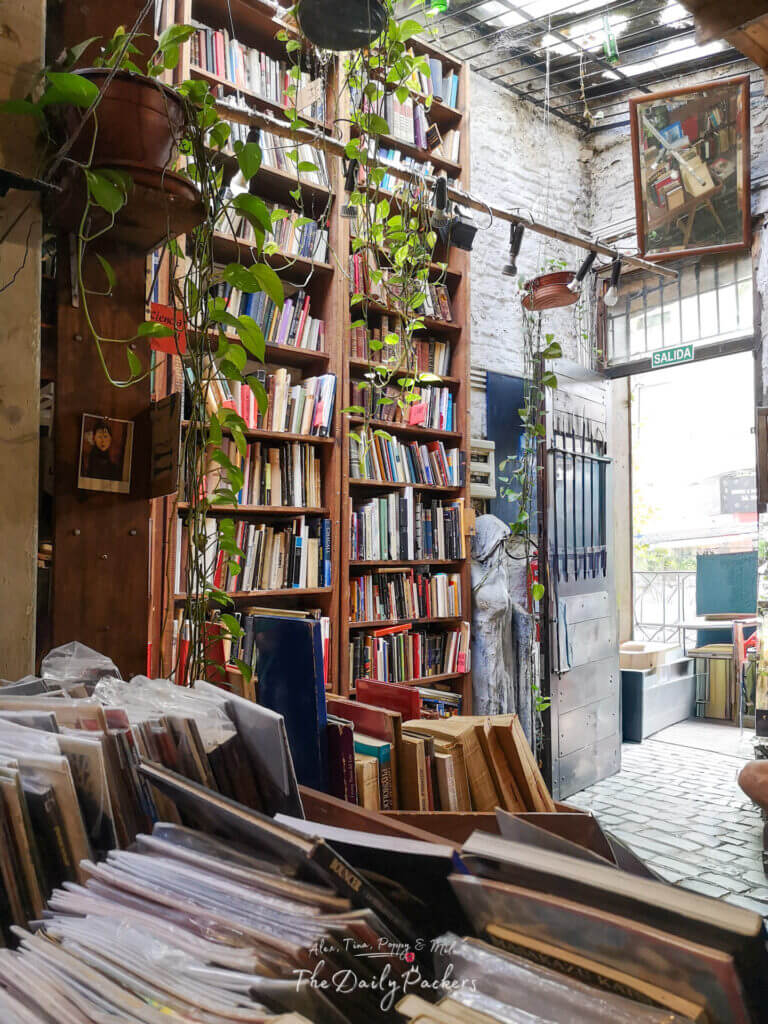
It’s the kind of place where you could spend an hour just browsing, flipping through books, and enjoying the calm inside compared to the lively market outside. Many people stop just to take a few photos, but it’s definitely worth going in and getting lost in its aisles.

Tip: We use the DJI Action 4 to film our vlogs — compact, durable, and perfect for capturing every adventure.
Grab a Drink at El Imperio
After exploring for hours, we needed a break — and that’s when we found El Imperio, a super local bar right in the middle of the market. It’s one of those places that feels like a neighborhood institution, with live bands playing and locals chatting over beers.

The best part? They have a rooftop terrace with a great view of the flea market below. Sitting there with a drink, watching the organized chaos of the fair from above, was one of those perfect travel moments for us.

Walk the Rambla of Montevideo
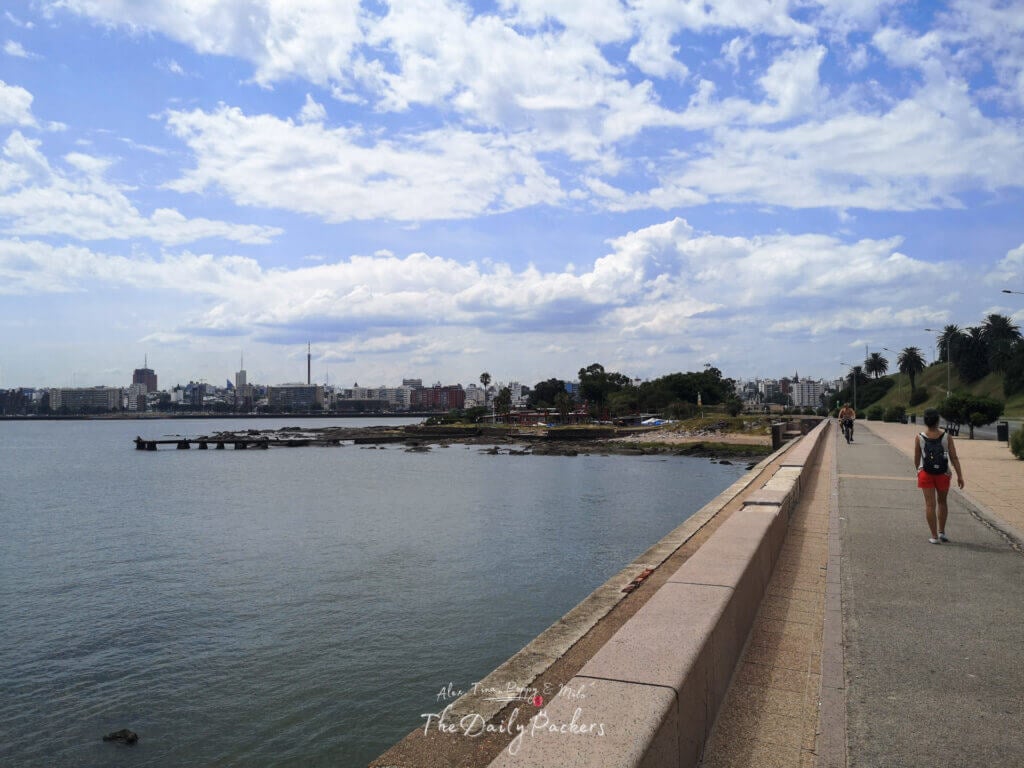
The Rambla of Montevideo is one of the city’s greatest treasures — a 22.2 km-long seaside promenade that stretches all along the coast. It’s actually considered the longest continuous sidewalk in the world, and it’s where locals come to walk, bike, mate, or simply watch the waves.

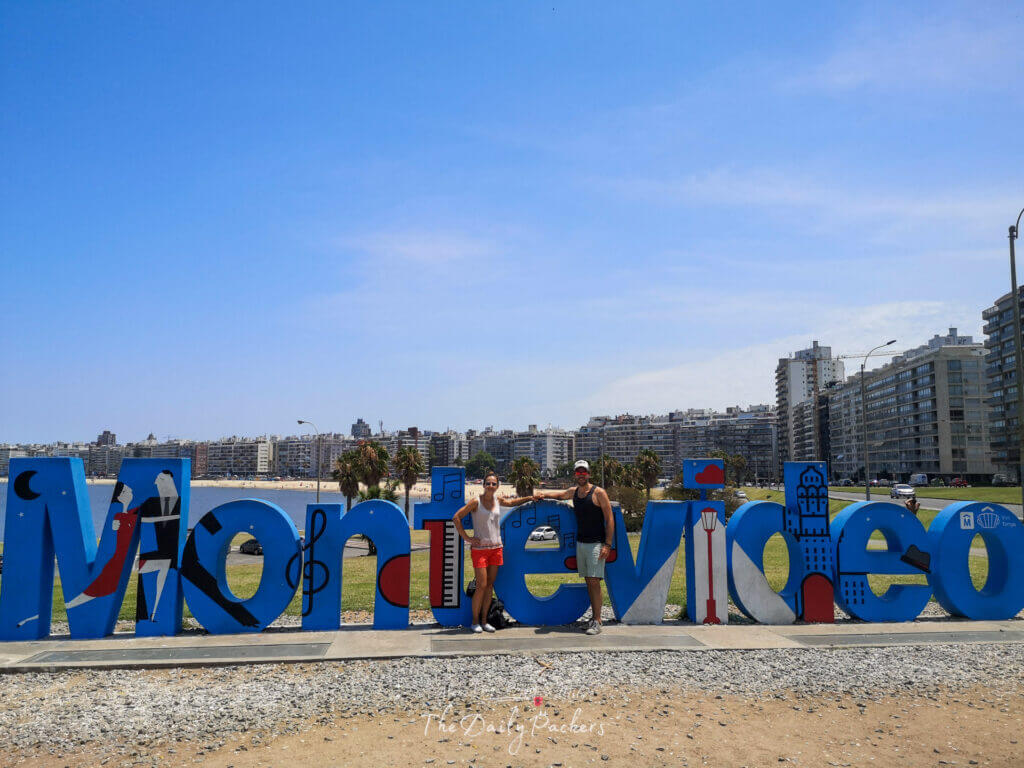
We didn’t walk the entire thing (that would take a while!), but we started from the Montevideo sign and followed it all the way toward the historic city center. The views were amazing, and the breeze from the Río de la Plata made it the perfect morning walk.
Relax in Parque Rodó
Right along the Rambla, you’ll find Parque Rodó, one of Montevideo’s prettiest parks and a favorite weekend spot for locals. The park has a small lake, green lawns, sculptures, and plenty of shady trees — perfect for a picnic or a short break after your walk.
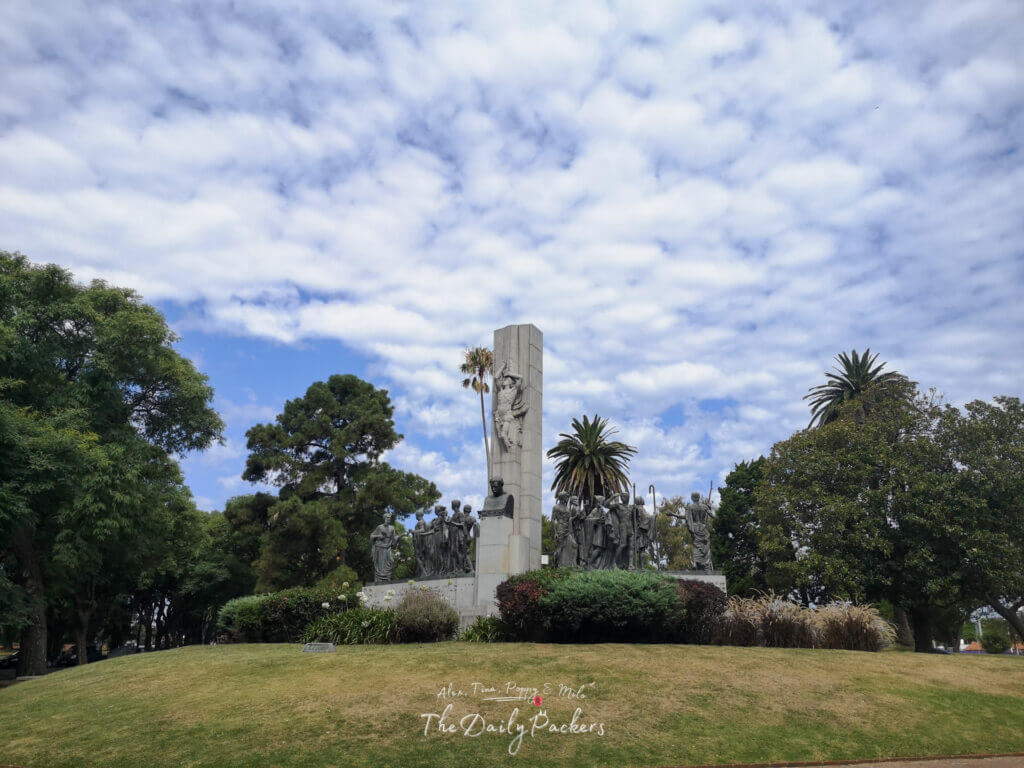
There’s also a small amusement park nearby, street vendors selling snacks, and on Sundays, a market where you can find local crafts and vintage goods. We loved sitting by the lake for a while, watching people paddle in small boats and enjoying the relaxed atmosphere.

Stop at the Montevideo Sign
The Montevideo sign is one of those classic photo stops — simple, but fun. It’s located along the Rambla, near Playa Pocitos, and has become one of the city’s most recognizable landmarks.
Enjoy Montevideo’s Beaches
Montevideo might not be the first place that comes to mind when you think of beaches, but the city actually has several beautiful stretches of sand right along the Rambla. The water comes from the Río de la Plata, so it’s not turquoise like the Caribbean, but the atmosphere is relaxed and local — more about hanging out than sunbathing all day.
The most popular spot is Playa Pocitos, located near the Montevideo sign. It’s wide, clean, and lined with cafés and small restaurants. Locals come here to play volleyball, drink mate, or just walk their dogs by the shore.
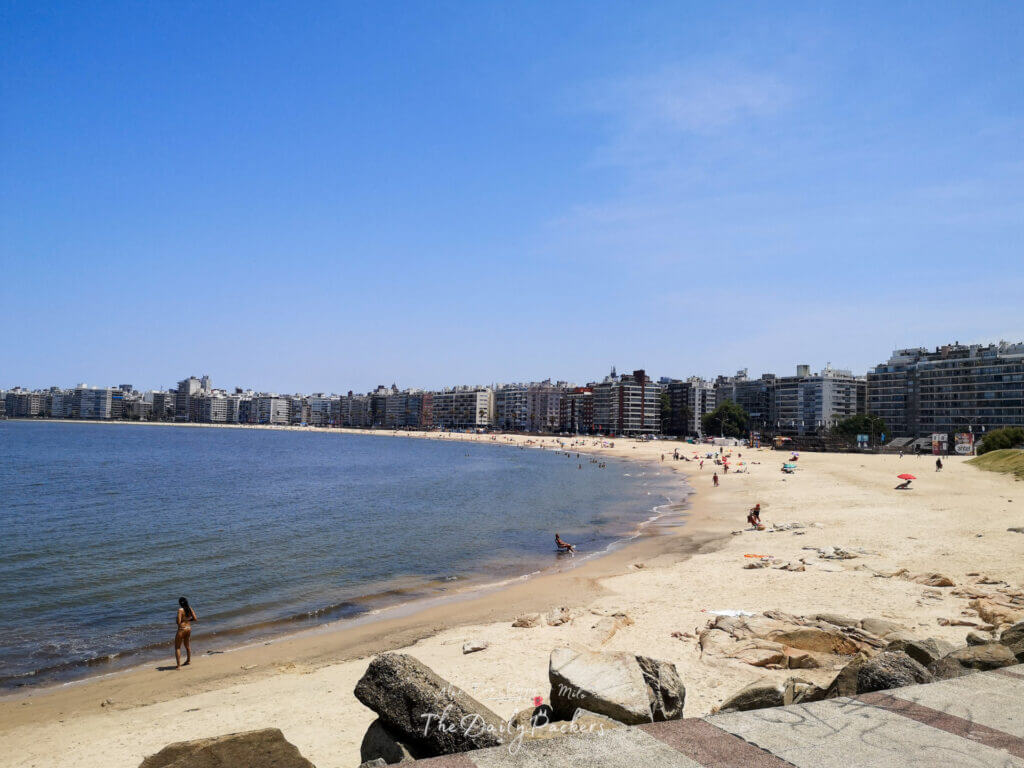
If you prefer something quieter, head to Playa Ramírez near Parque Rodó or Playa Buceo, a bit further east, where you’ll find a small marina and calmer waves.
We loved stopping by the beach after our Rambla walk — just to sit on the sand, feel the breeze, and watch the city slow down. It’s one of those moments when you realize how laid-back Montevideo really is.

Take a Day Trip to Punta del Este
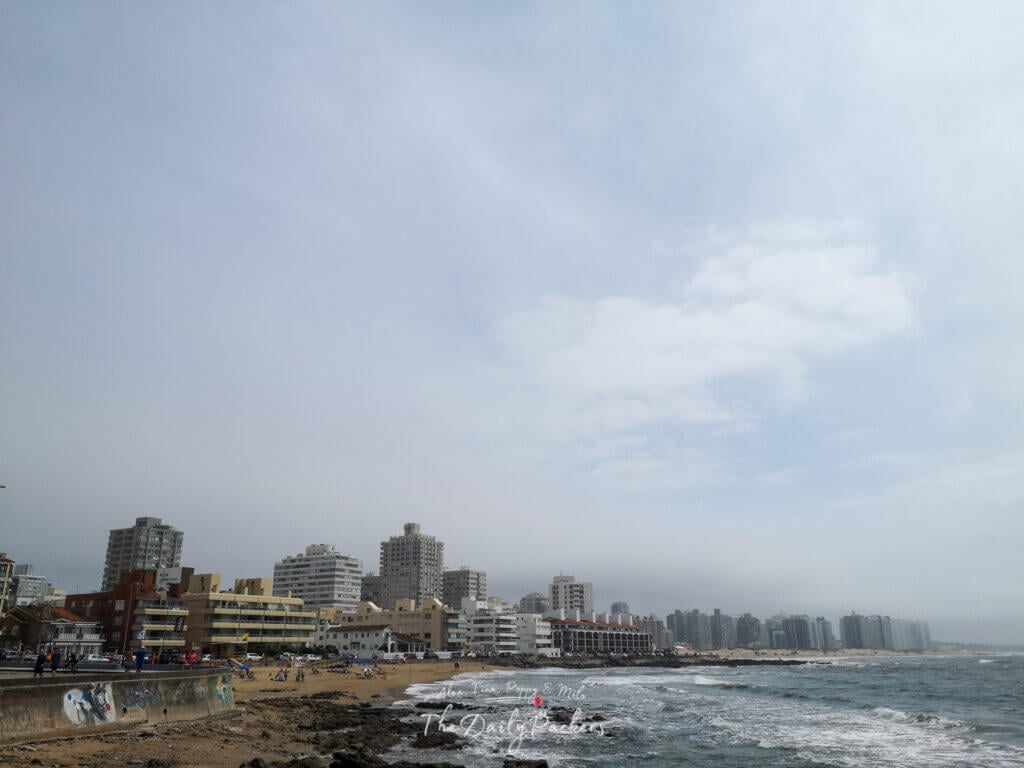
Punta del Este is Uruguay’s most famous beach resort — a mix of natural beauty, seaside luxury, and a touch of Miami glamour. Located about two hours from Montevideo, it’s a favorite weekend escape for locals and a hotspot for travelers in summer.
The town is known for its long beaches, trendy cafés, and lively nightlife, but if you’re not into the party scene, it’s still worth a visit for the scenery alone. You can stroll along Playa Brava to see the iconic “La Mano” sculpture (the giant hand emerging from the sand), then cross over to Playa Mansa for calmer waters and great sunset views.
We visited Punta del Este as a day trip from Montevideo, and honestly, that’s all you really need. It’s a beautiful place, but beyond the beaches and a few landmarks, there isn’t much to do unless you’re staying for the nightlife. Still, it’s a great change of pace — a quick escape from the city to feel the sea breeze and enjoy Uruguay’s coastal charm.
Tip: This Punta Del Este tour is the best in Montevideo
Montevideo Itinerary
Day 1:
- Breakfast at your accommodation – Start the day slow and easy.
- Walk to Feria de Tristan Narvaja – Dive into Montevideo’s most authentic flea market. You’ll find antiques, books, souvenirs, food, and a lively local crowd.
- Spend 2–3 hours exploring – Don’t rush it; the market stretches over several streets. Stop by Babilonia Libros and El Imperio Bar for a true local vibe.
- Lunch at your guesthouse (cooked by us) – We preferred simple, home-cooked meals during our stay.
- Join the Free Walking Tour (Ciudad Vieja) – Learn about Montevideo’s history, visit Plaza Independencia, Teatro Solis, and end at Mercado del Puerto.
Day 2
- Breakfast at your accommodation
- Walk along the Rambla – Enjoy the world’s longest sidewalk, passing by beaches and scenic spots.
- Visit the Montevideo Letters – Take your classic photo with the city skyline behind you.
- Stop at the Lighthouse – Climb up for panoramic views of the coastline.
- Relax in Parque Rodó – A peaceful green space with small lakes and street performers.
- Grab a snack along the way – Try local empanadas or dulce de leche treats.
Day 3
- Day trip to Punta del Este
Read: Our complete 10-day Uruguay Itinerary









muy interesantes las recomendaciones
Gracias :)