

Introduction
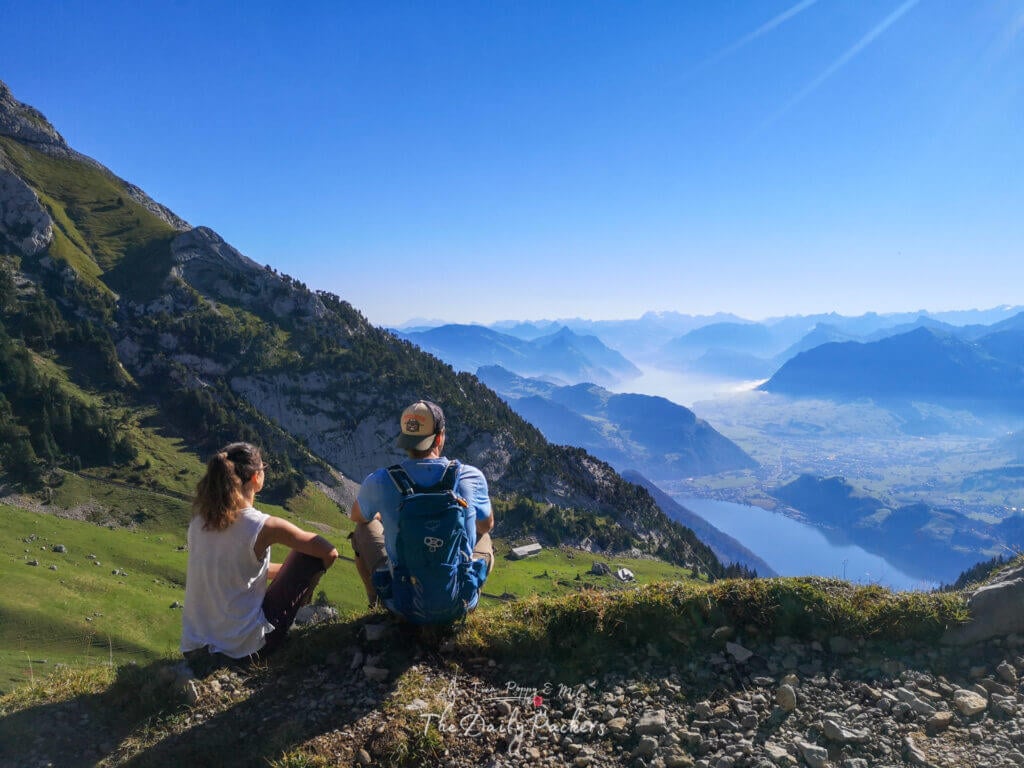
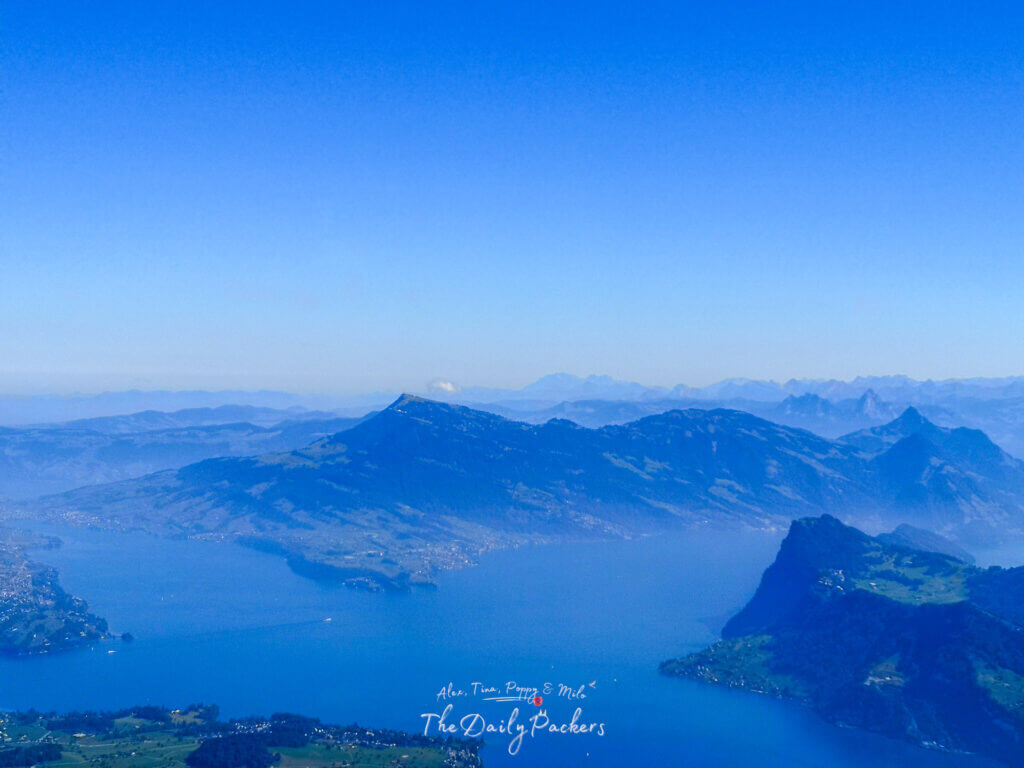
Pilatus, or Mount Pilatus, is one of the most iconic peaks surrounding Lake Lucerne in central Switzerland. Part of a mountain massif with several summits, its highest point, Tomlishorn, rises to 2,128 meters and offers panoramic views over the lake, nearby valleys, and distant alpine ranges.
What makes Mount Pilatus so special isn’t just its scenery, but how accessible it is. You can reach the summit with the world’s steepest cogwheel railway or glide up in a gondola cable car. But for those looking for a more active adventure, hiking Mount Pilatus is an incredible one-day experience.
We chose to do a bit of everything, combining cogwheel train, hike, and gondola, for a rewarding loop that gave us both the thrill of the trail and the ease of the ride.

Read: Best things to do in Lucerne
Getting there
There are several ways to start your Mount Pilatus adventure, but we recommend looping your route to avoid unnecessary backtracking. That’s what we did, starting in Alpnachstad and finishing in Kriens.
To reach Alpnachstad, you have a few easy options from Lucerne:
- By Boat: Take a scenic ferry from Lucerne port directly to Alpnachstad. It’s a peaceful and beautiful way to begin the day.
- By Train: Trains from Lucerne to Alpnachstad run regularly and take about 20 minutes.
- By Swiss Travel Pass: You can also buy a day trip ticket that covers all transportation (train, cogwheel, gondola, and bus) for a stress-free round trip.
- By organised tour: The easiest and most comfortable way to get a cruise, cable car, and Pilatus experience.
This looped route lets you hike part of the way, ride the world’s steepest cogwheel train, and descend via gondola—making it the most complete way to experience Mount Pilatus.
When to Visit
The best time to hike Mount Pilatus is between late spring and early autumn, when the trails are clear, and all transport options (cogwheel train and gondola) are running.
- Spring (May to June): Trails start to open, and the mountain is still peaceful before the summer crowds arrive. Expect temperatures between 10–20°C (50–68°F). Some higher trails might still have snow, so check local conditions.
- Summer (July to August): The most popular time to visit. Warm temperatures (15–25°C / 59–77°F), clear skies, and full access to all activities. Be ready for more hikers and tourists, especially at the summit.
- Autumn (September to early October): Still a beautiful time to visit, with fewer people and mild temperatures (10–18°C / 50–64°F). The changing colors around Lake Lucerne are an added bonus.
- Winter (late October to April): Hiking trails are closed due to snow, but Mount Pilatus remains open via gondola or cogwheel train for snowshoeing and views. Temperatures can drop below 0°C (32°F).
Our tip: Aim for early morning starts in June or September for the best combination of good weather and fewer crowds. Always check the weather and transport schedules before heading out.
Where to Stay
The best base to hike Mount Pilatus is, without a doubt Lucerne. It’s a charming lakeside city with easy access to both Alpnachstad (cogwheel railway) and Kriens (gondola), making it the most practical option for a loop itinerary.
€) Capsule Hotel – Lucerne Old Town: A modern, budget-friendly choice right in the heart of the old town. You’ll get a clean, private capsule bed, shared bathrooms, and a super central location for exploring on foot. Perfect if you’re traveling solo or want to keep costs low without sacrificing location.
(€€) KoBi Apartments Hirschenplatz: Ideal for a bit more space and independence. These serviced apartments are right on Hirschenplatz in the old town, with easy access to shops, cafés, and all the main sights. A great pick if you want to stay central but prefer apartment-style amenities.
(€€€) Hotel Schweizerhof Luzern: A classic luxury option on the lakefront, famous for its historic charm and excellent service. Rooms are elegant and many offer lake views. It’s a fantastic choice if you’re looking to treat yourself while staying close to everything.
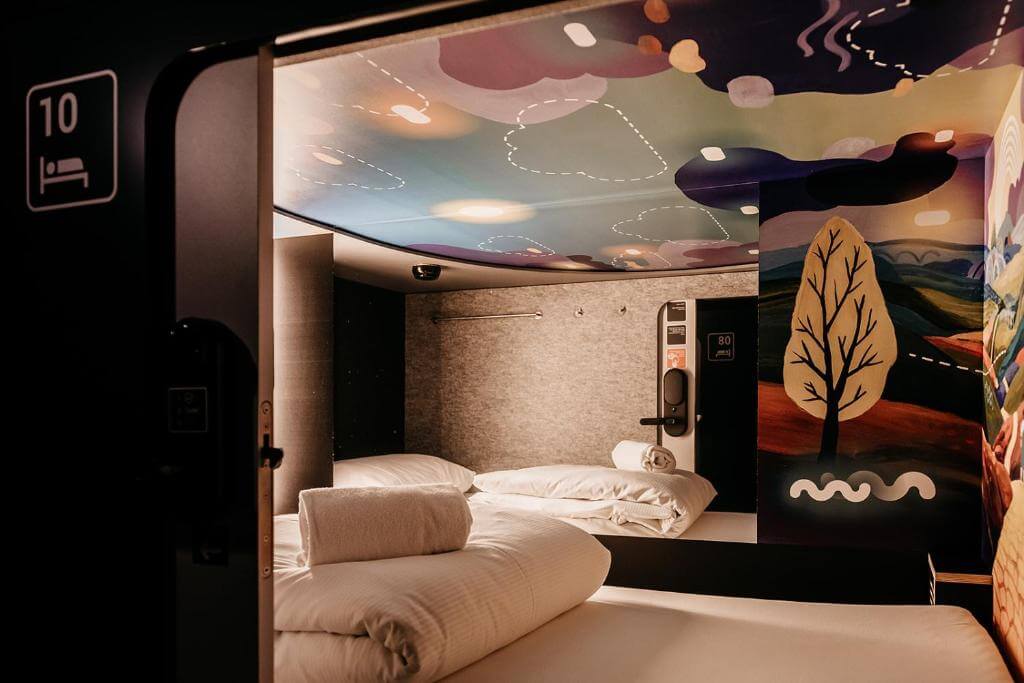

Here are all your accommodation options in Lucerne
What to Eat
For this day-hike, we’d recommend bringing your own food and making a picnic at the top. There are several scenic spots near the summit where you can sit down, relax, and enjoy incredible alpine views with your sandwich.
That said, if you prefer to travel light or just want to treat yourself, there are also restaurants and snack bars at the top of Mount Pilatus. Prices are typically Swiss—meaning, on the higher side—but you’ll find warm meals, local dishes, and sweet treats to refuel after the climb.
Whether it’s a picnic or a mountain-view meal, the summit is the perfect place to enjoy it.


Tip: We never travel without our DJI Mini 3 PRO drone anymore — it’s totally worth having to capture places from a whole new perspective.
Mount Pilatus hike – Step by Step
Alpnachstad
We started our day by taking a bus and a short train ride in the direction of Hergiswil, arriving in Alpnachstad at 8:29 AM—just in time to catch the 8:50 AM departure. The train station is conveniently located right next to the cogwheel railway station, so there’s no need to rush.
Once off the train, just walk downhill for a minute to reach the ticket office. Make sure to tell them you’re planning to hike from Aemsigen rather than going all the way up to the top with the cogwheel. When you board, remind the driver that you want to get off at Aemsigen; otherwise, they’ll take you straight to the summit.
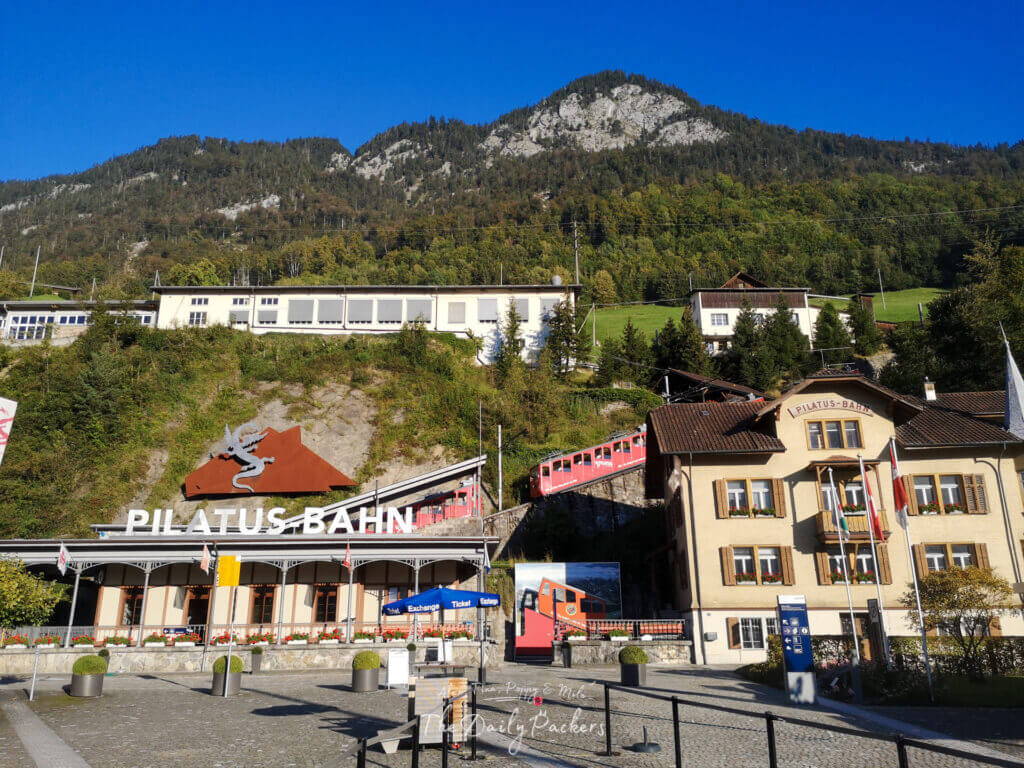
Here are all your accommodation options in Lucerne
Cog Railway to Aemsigen
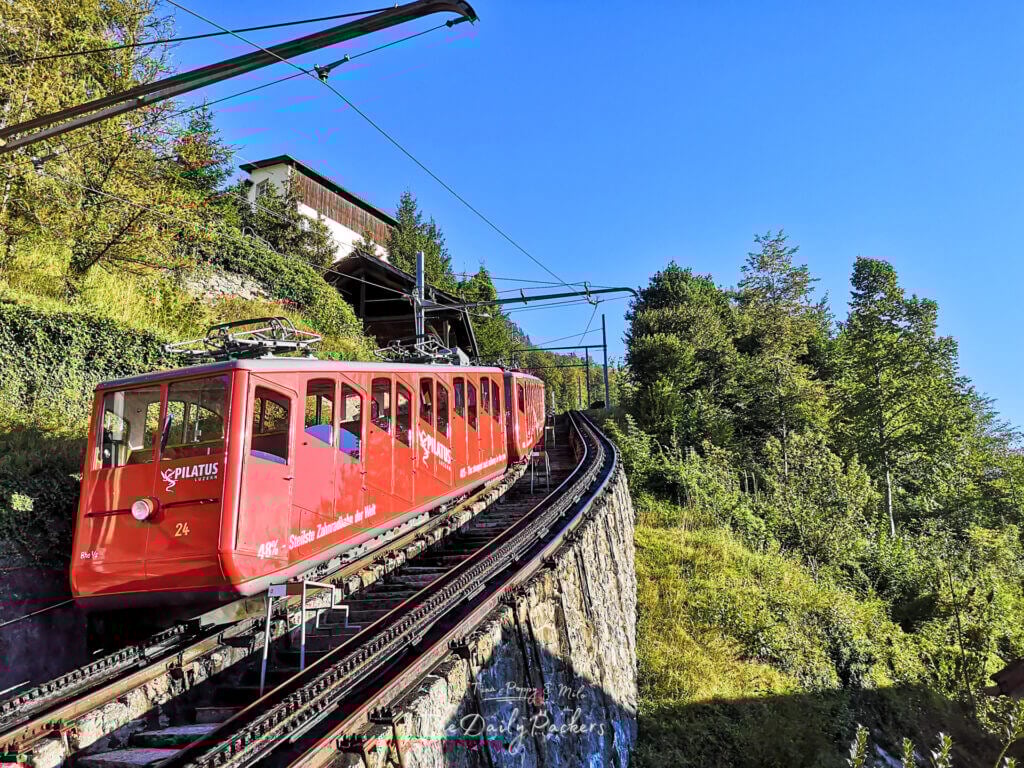
The cogwheel train from Alpnachstad is officially the steepest railway in the world, with a jaw-dropping incline that reaches 48%. You’ll hit one of those steepest parts almost immediately after departure—an experience in itself—and the second one comes just before the summit (which we skipped on this leg of the trip).
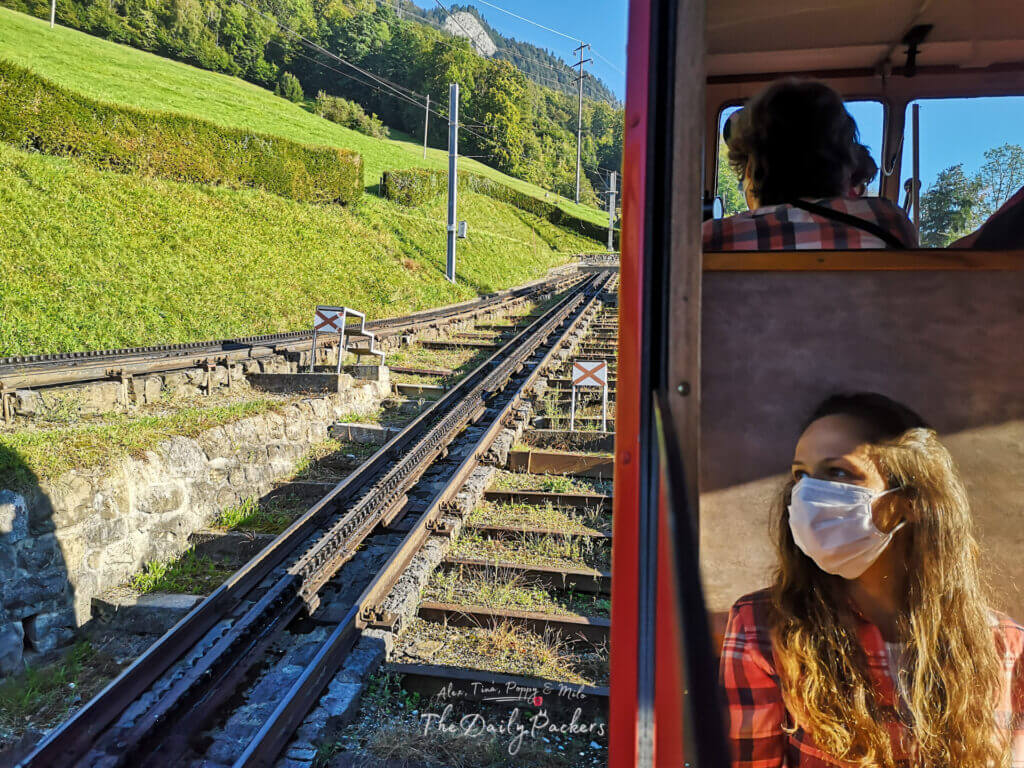
The ride is super comfortable and honestly, just so cool. The carriages have this charming, old-school wooden vibe that makes the experience feel even more special. Add in the sweeping views over Lake Lucerne and the surrounding mountains, and the whole journey becomes part of the adventure. Unfortunately, those old carriages have been replaced by modern one today.
We arrived at Aemsigen at 9:05 am, ready to start our hike.
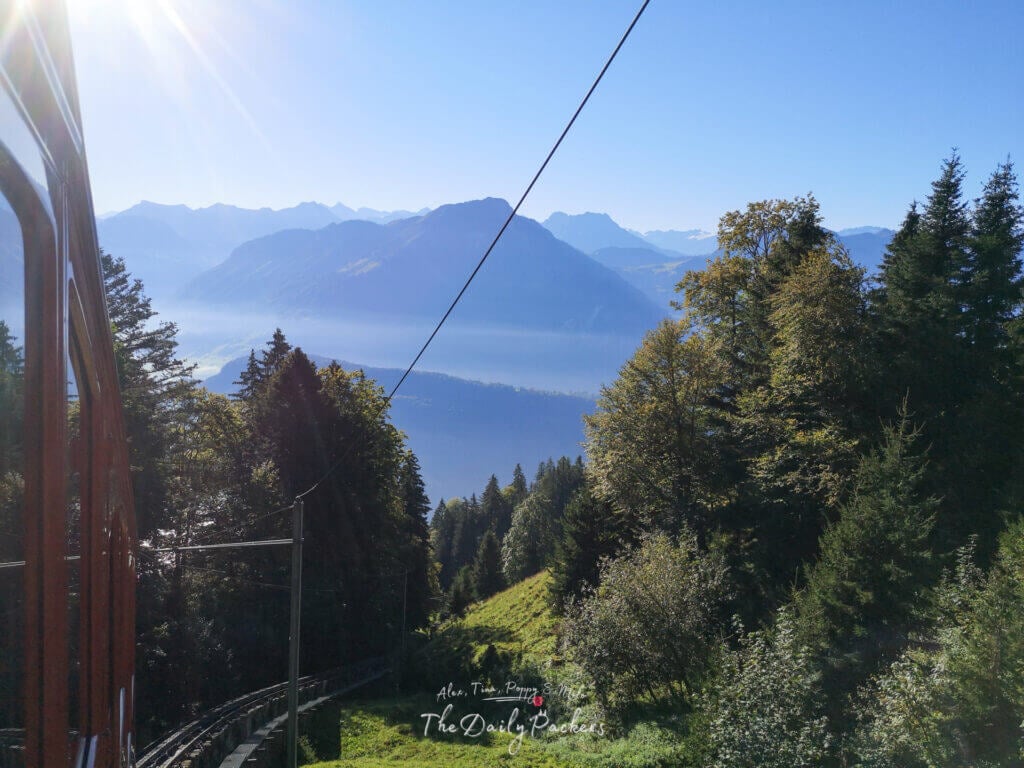

Tip: Here is the timetable for the cog railway
Trail to the Matthorn/Pilatus intersection
Once you step off the cogwheel train at Aemsigen, start by crossing the small wooden cow bridge just in front of you and get to the other side. From there, the trail kicks off straight into the climb. You’ll soon reach a trail junction—one path goes toward Matthorn and the other toward Pilatus.
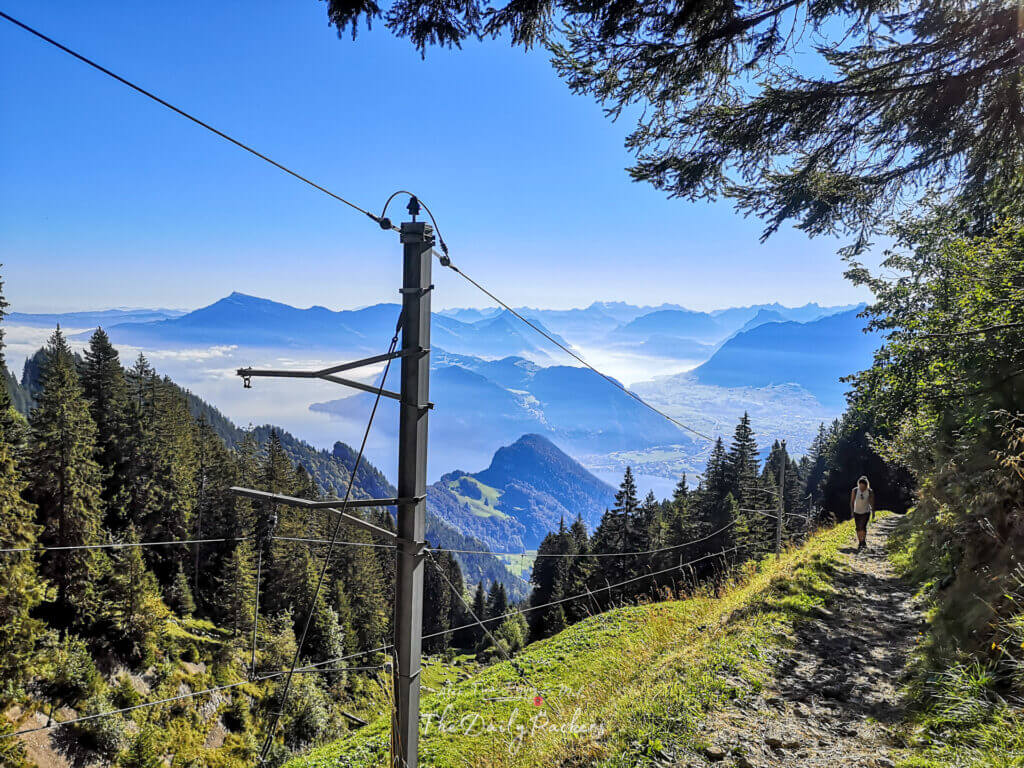
Stick to the Pilatus direction. This route is more direct and follows along the cog railway line, making it the quicker option if you want to summit without detouring.
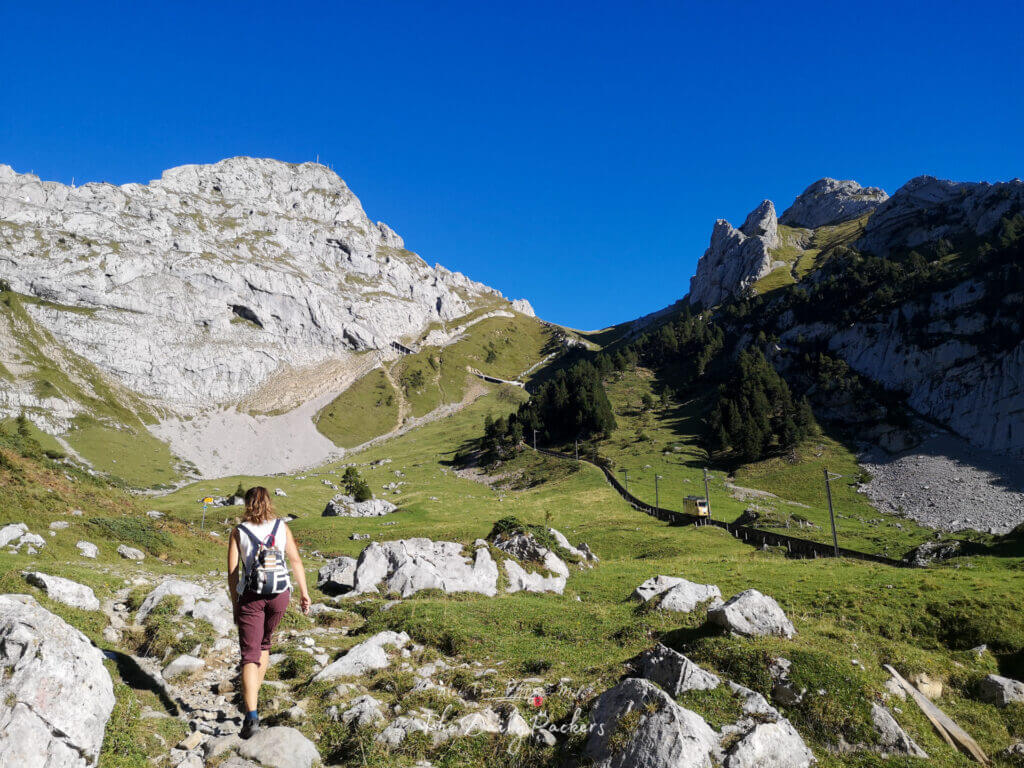
The trail is steep, but manageable if you take your time. And the views? Absolutely stunning. You’ll get wide open alpine scenery, Lake Lucerne sparkling below, and the train chugging up beside you—it’s the kind of hike that makes you stop for photos every few steps.
We reached the Matthorn/Pilatus intersection by 10:30am, with plenty of time and energy to keep going.
Tip: This complete tour of Mount Pilatus is the best in Lucerne
Detour to Matthorn
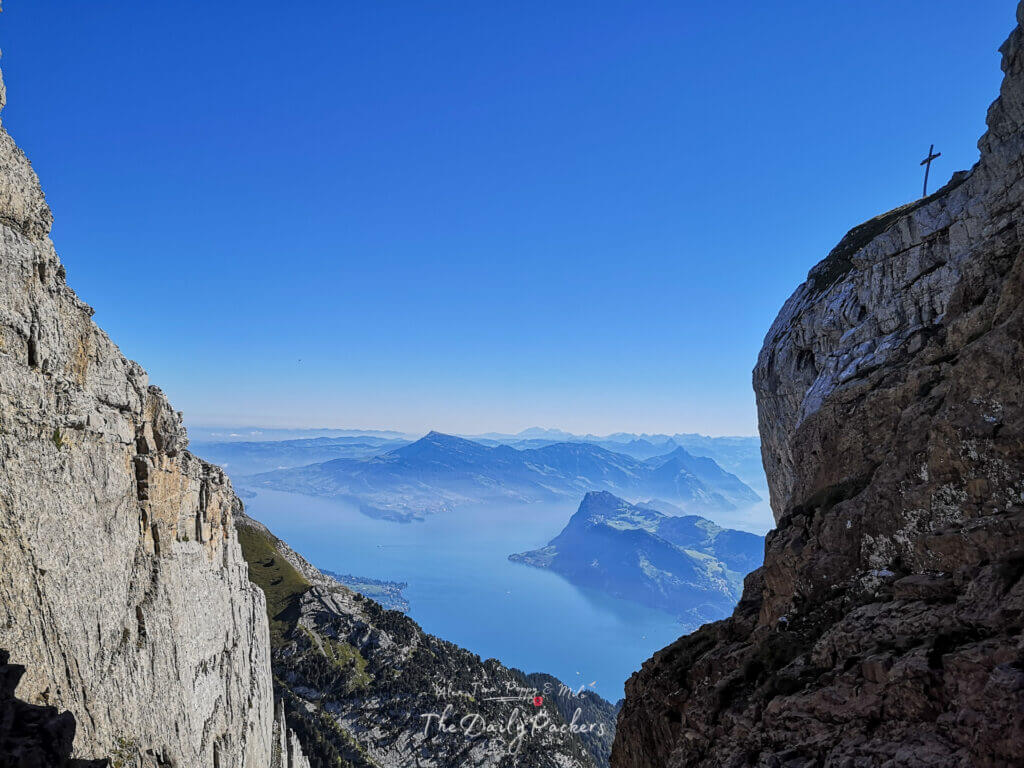
Before heading straight up to Pilatus, take a left at the intersection and backtrack slightly toward Matthorn. It’s a bit of a detour, but totally worth it for the views—and you’ll return the same way after.
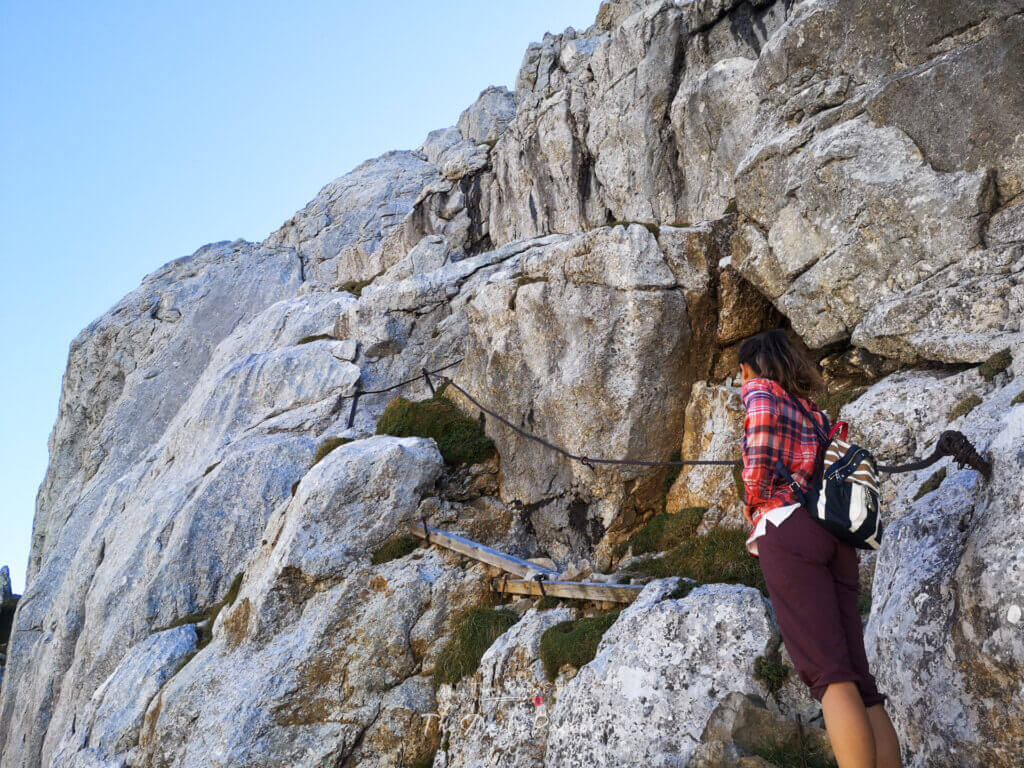
The trail to Matthorn isn’t very long and remains quite manageable. There’s a short section with ropes to assist on the steeper part, but nothing technical or too challenging. Just take your time and enjoy the surroundings.
It took us around 30 minutes to reach the top, and the views over the surrounding peaks and valleys were spectacular.
Here are all your accommodation options in Lucerne
Matthorn
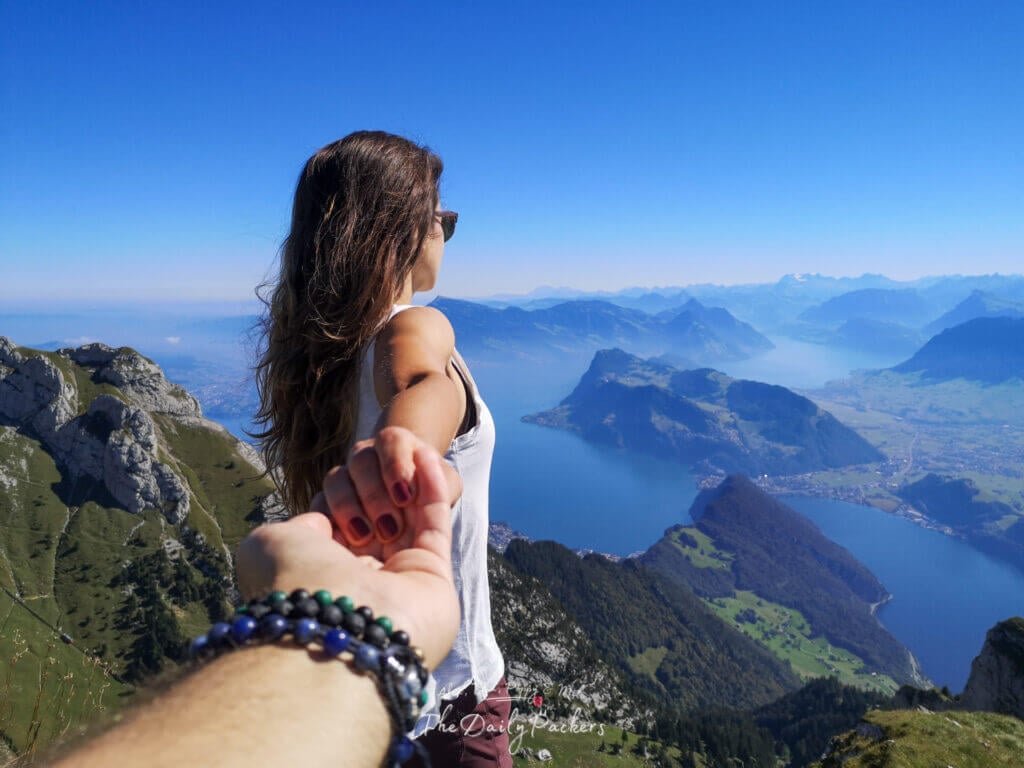
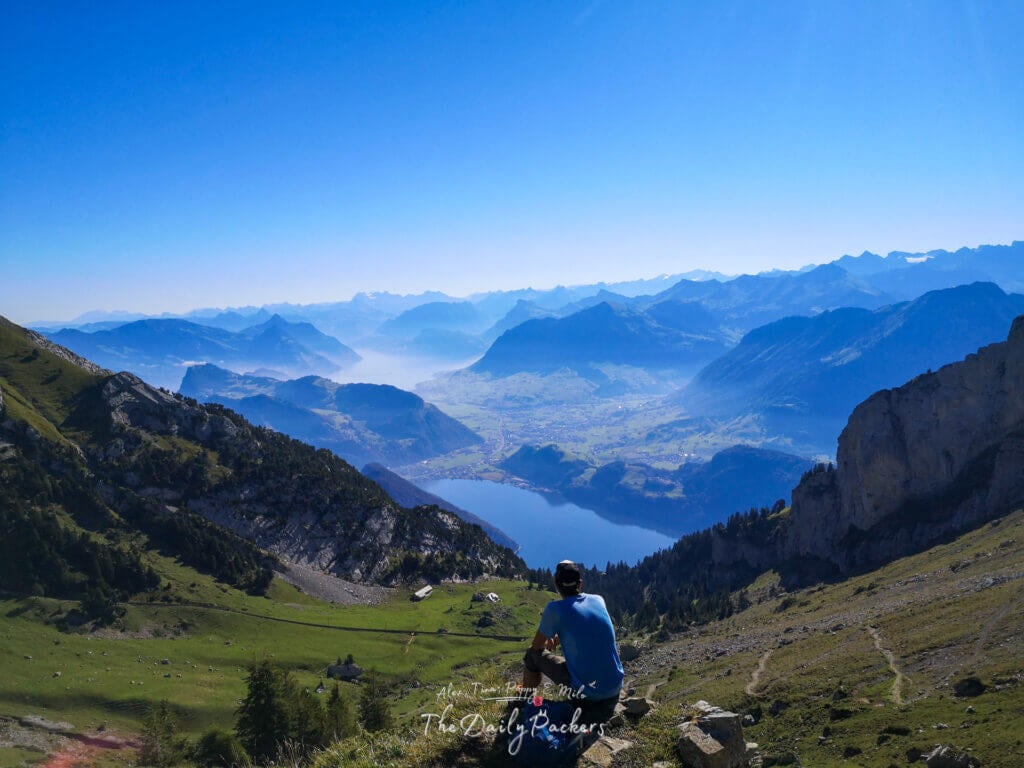
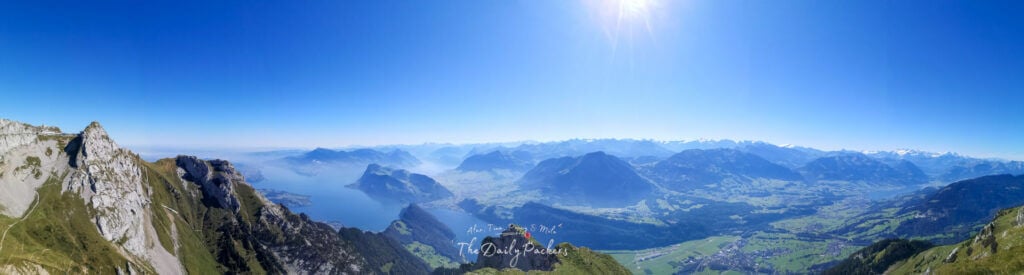
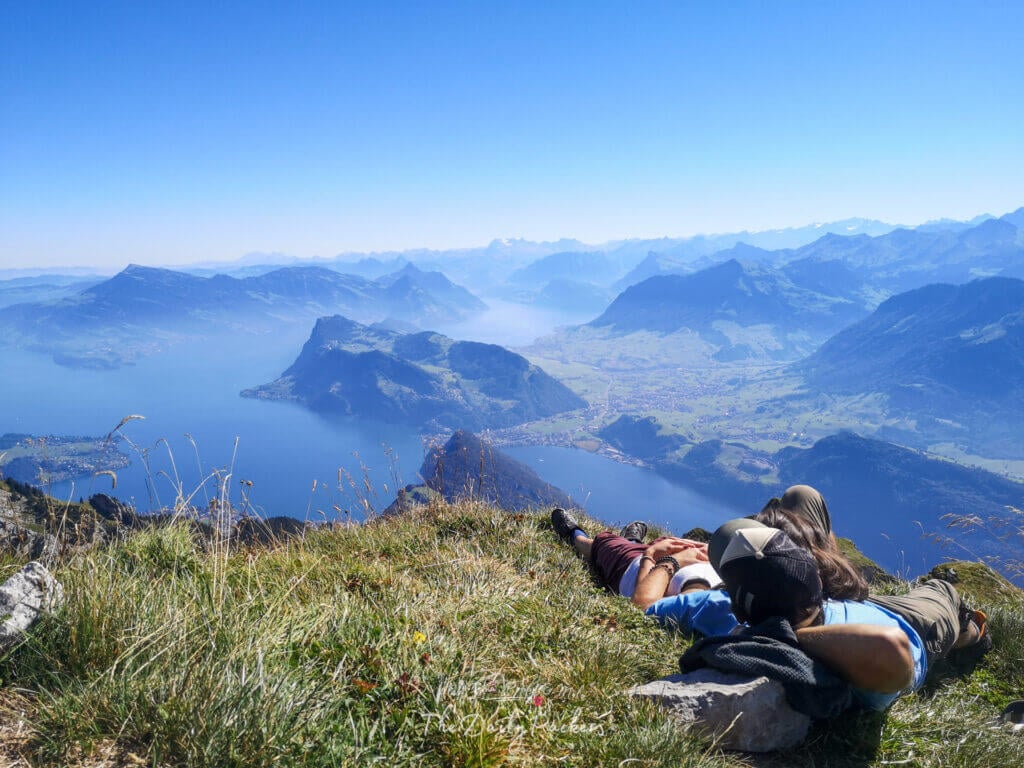
This was hands down our favorite spot of the day. The views from Matthorn are absolutely stunning, with rolling peaks, dramatic drops, and Lake Lucerne far below. What made it even more magical was that we had the whole place to ourselves.
And just as we were soaking in the view, a group of Swiss locals showed up with Alpine horns. They started playing, and suddenly we had this surreal soundtrack echoing across the mountains. It felt like a private concert just for us.
Once you’ve had your fill, head back the same way to rejoin the main trail at the intersection toward Pilatus.
Trail to Pilatus
This stretch was definitely the least enjoyable part of the day. The trail from the intersection up to Pilatus takes around 30 minutes, but it’s a steady uphill climb that just seems to drag on. The views are still great, but the path itself feels more like a final push than a scenic walk.
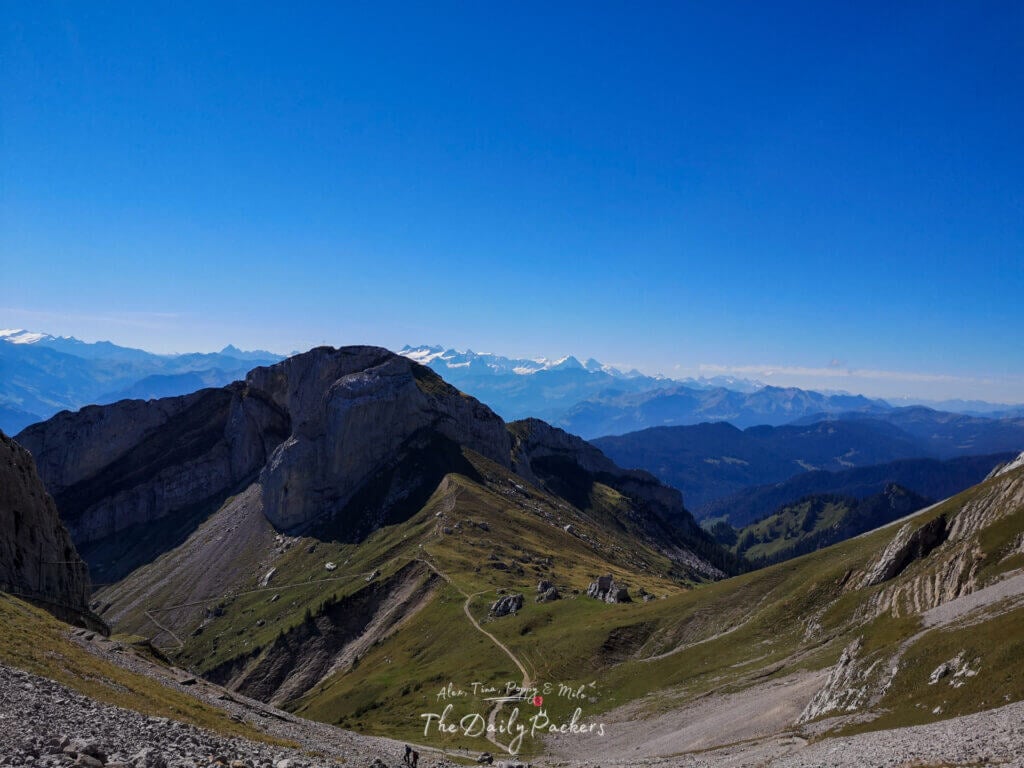
Once you reach the top, you’ll arrive at the Pilatus summit complex—a total contrast from the peaceful trail behind you. There’s a big building with restaurants, restrooms, souvenir shops, and plenty of people coming from the gondolas and cogwheel train.
It’s busy and buzzing, but that’s part of the experience too. Time to rest your legs, grab a snack, and enjoy the views from a different angle.
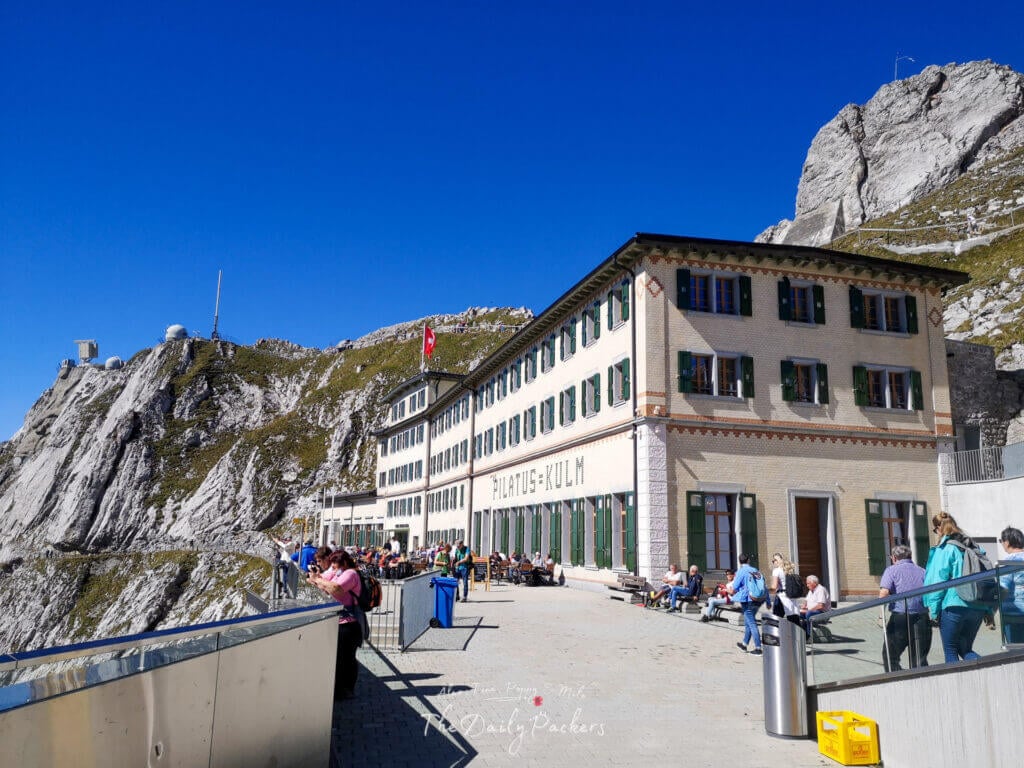
Tip: This complete tour of Mount Pilatus is the best in Lucerne
Dragon Trail
From the ground level inside the Pilatus summit complex, look for signs pointing toward the Dragon Trail (Drachenweg). It’s a short but scenic loop that starts with a tunnel carved straight through the mountain. The cool air and dim light inside set a mysterious tone, echoing the legend of dragons that once inhabited Pilatus.
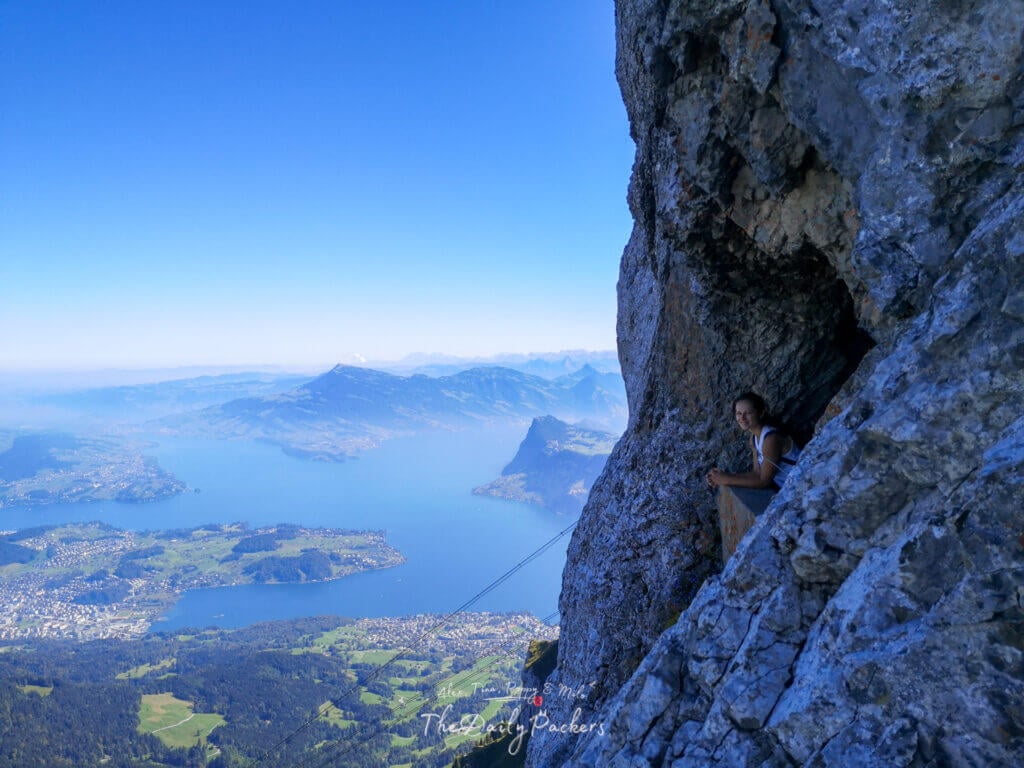
As you exit the tunnel, the trail wraps around the cliff edge, offering a dramatic contrast between the rugged rock and sweeping views toward Lake Lucerne. The path is safe and well-maintained, but it still feels adventurous—especially with the sheer drops just beside you.
At the end, there’s a small viewpoint where you can pause to soak it all in. It’s a great way to finish your time at the summit before heading down or grabbing a bite.

Tip: We use the DJI Action 4 to film our vlogs — compact, durable, and perfect for capturing every adventure.
Esel Viewpoint
If you still have a bit of energy left, the Esel is a quick 10-minute hike from the main Pilatus complex—just follow the signs. It’s a rocky outcrop that offers one of the best panoramic views over Lake Lucerne, the surrounding peaks, and even the Central Plateau of Switzerland.
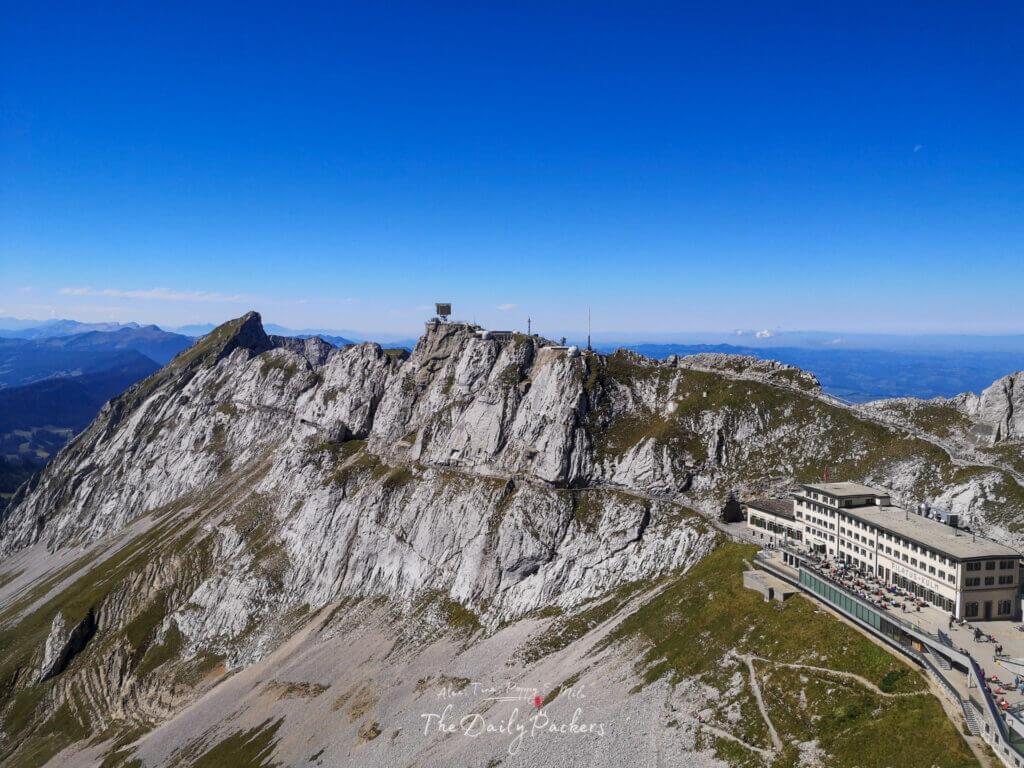
The path is short but slightly steep with some stairs, and the viewpoint can get a little crowded, especially around midday. Still, it’s absolutely worth the detour, especially on a clear day. If you’re lucky, you might even spot paragliders launching from nearby slope

Flower Trail and Tomilshorn
The Flower Trail leads you to Tomlishorn, the highest point of Mount Pilatus at 2,128 meters. It’s easily one of the most scenic stretches of the day—and also the most relaxing.
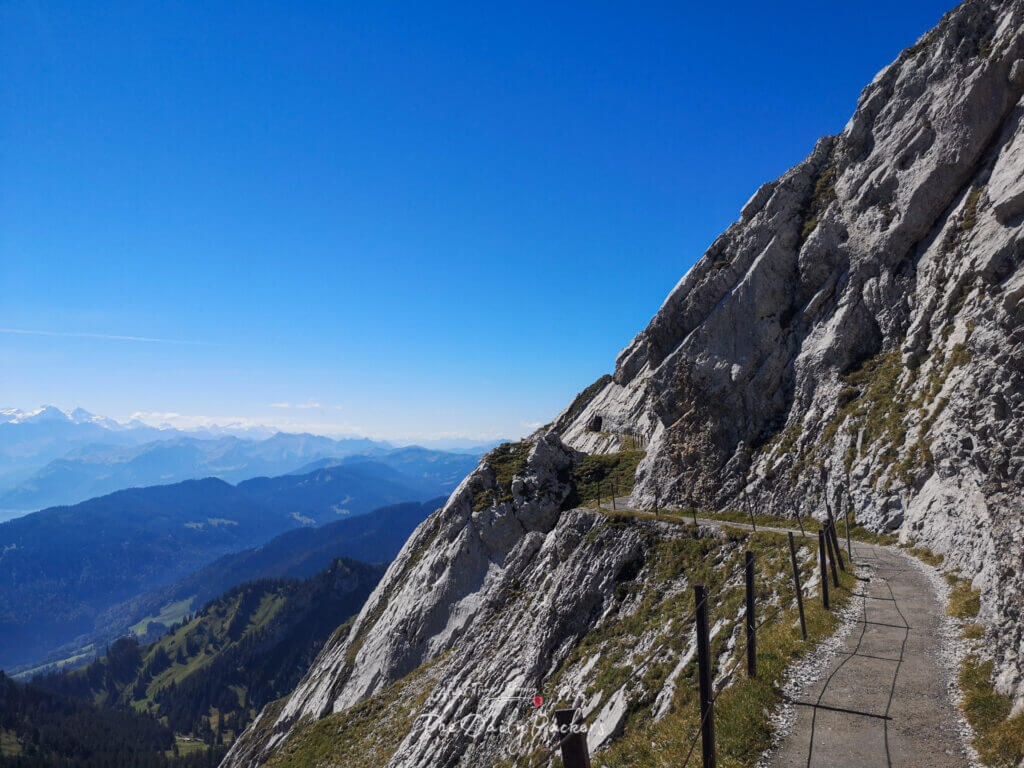
The trail starts right behind the Pilatus complex and stays mostly flat for the first half. As its name suggests, it’s lined with alpine flowers, and small boards along the path help you identify each plant. It’s a gentle, educational walk that contrasts nicely with the steeper ascents earlier in the day.
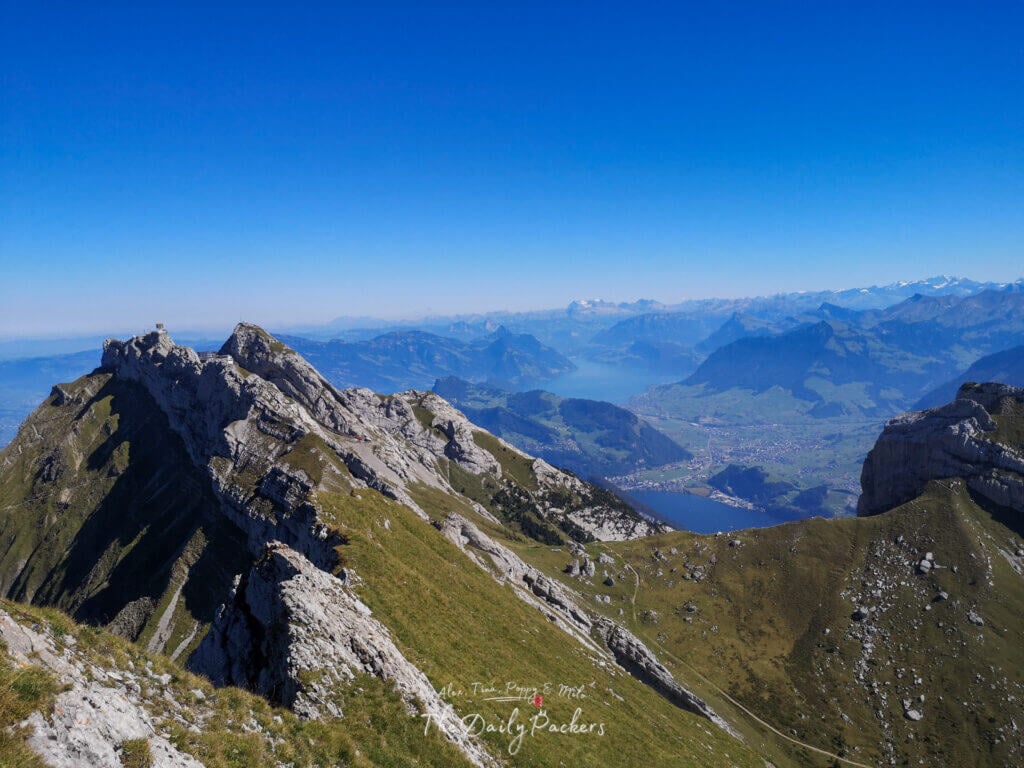
Toward the end, the path climbs a little more steeply as you approach the summit of Tomlishorn. From the top, you’ll get sweeping views over Lake Lucerne and the surrounding Alps, making it a fantastic reward.
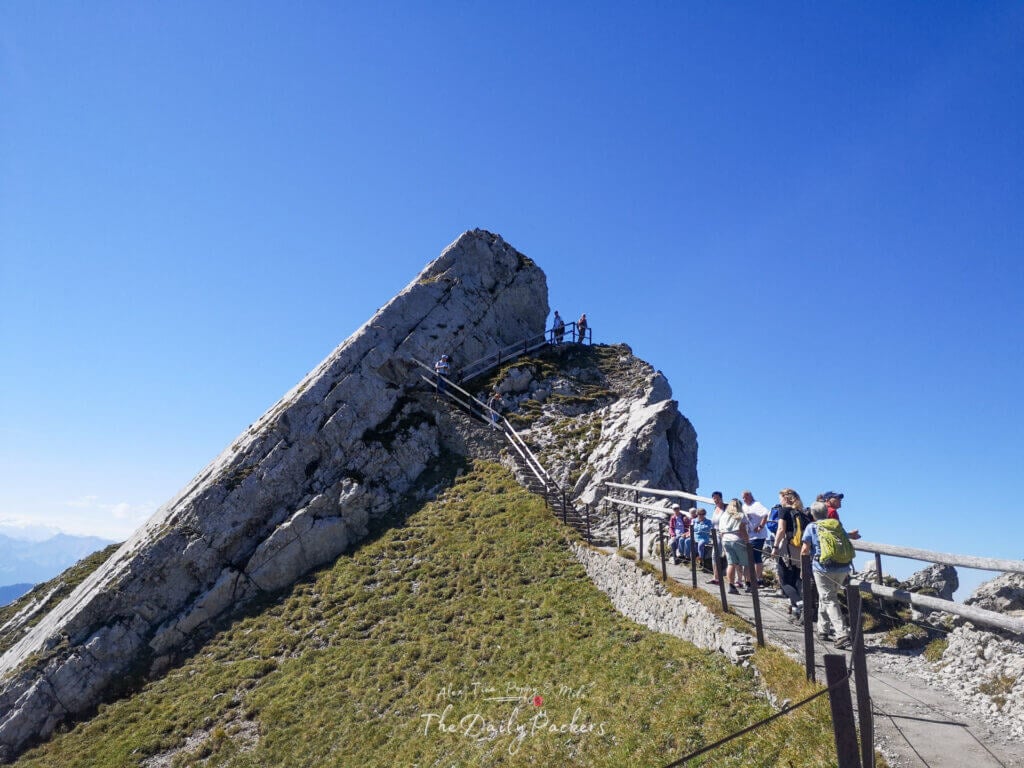
Alex hiked this one solo (Tina wasn’t feeling great that day—lady stuff), and even though he rushed it a bit, he managed to complete the out-and-back trail in just under an hour. If you take your time, plan for around 50 to 55 minutes round trip.
Cable car to Kriens
After finishing the Flower Trail and taking in the last views from Pilatus, we headed back inside the complex to buy our ticket down to Kriens. These tickets are flexible—you can use them on any of the cable cars down within a 3-day window, which is quite handy if your plans change.
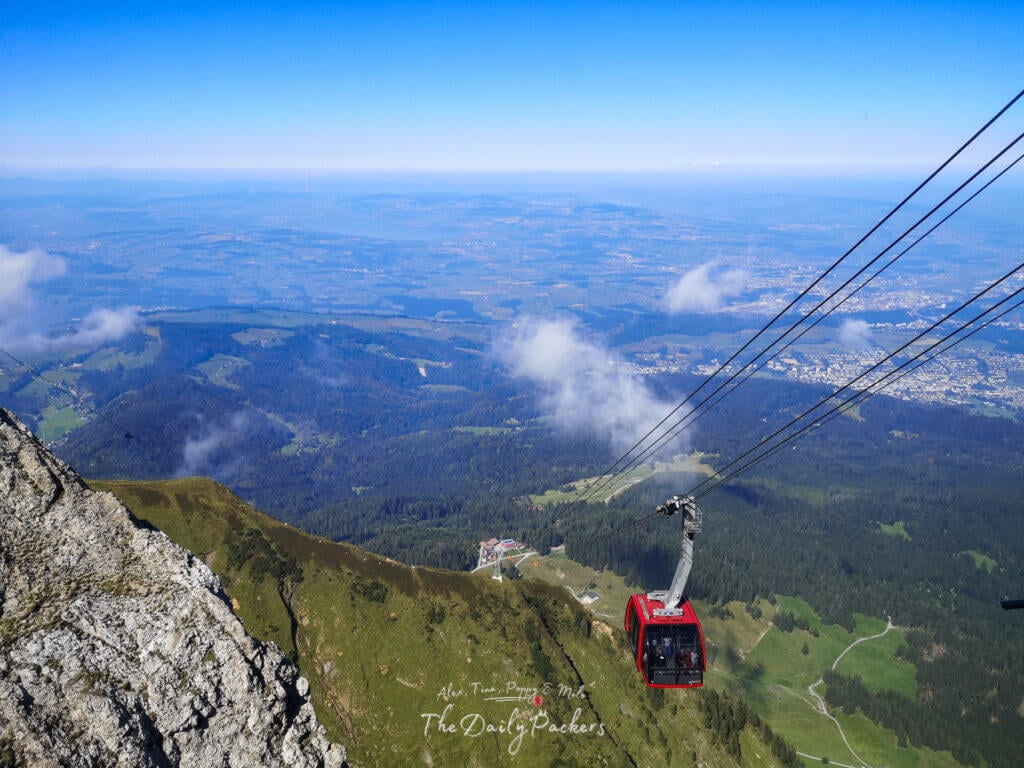
The descent is done in two segments:
- Pilatus to Fräkmüntegg via panoramic Gondola Cable Car – The ride runs approximately every 15 minutes or whenever it’s full. We lucked out and were the first ones in, which gave us an unobstructed, front-row view over the lake. Absolutely beautiful.
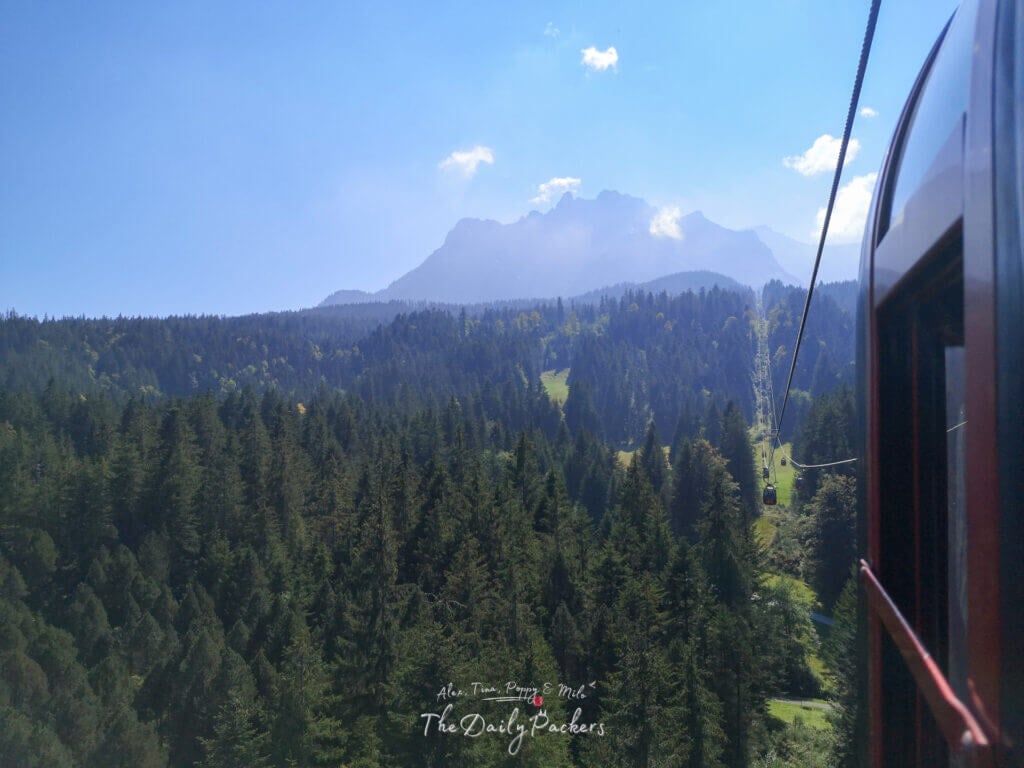
- Fräkmüntegg to Kriens via smaller aerial cable cars – At Fräkmüntegg, everyone needs to switch cabins. The second leg of the descent takes you down through forested slopes and farmland all the way to Kriens.
Once in Kriens, you’ll be just a short walk from Lucerne’s city buses and trains, making it super easy to get back to the city center or your accommodation.
Our Schedule on Mount Pilatus
- Cog Railway: 8:50 am
- Aemsigen 9:05 am
- Intersection Matthorn/Pilatus: 10:30 am
- Matthorn: 10:55 am
- Intersection Matthorn/Pilatus: 11:37 am
- Pilatus: 12:03 pm
- Dragon Path: 12:10 pm
- Lunch Break: 12:30 pm
- Esel: 12:40 pm
- Flower Trail start: 1:12 pm
- Tomilshorn: 1:30 pm
- Pilatus: 1:55 pm
- Cable car: 2:08 pm
- Kriens: 2:46 pm
You could spend more time on Mount Pilatus, exploring the trails, grabbing a drink, or just soaking in the views. We had to rush a bit because Tina had a yoga class in the evening, but if you’ve got the whole day, it’s worth slowing things down.
Here are all your accommodation options in Lucerne
Cost of hiking Mount Pilatus
- Morning Bus: 2.5 CHF each
- Train: 4.1 CHF each
- Cog Railway: 25 CHF each
- Cable car to Kriens: 36 CHF each

Read: Best things to do in Lucerne
About the authors
We are Alex and Tina, a French-Serbian couple who met in China back in 2014. We spent three incredible years there before making France our home. Our shared passion for travel has been the heartbeat of our relationship for over 12 years, taking us across 44 countries and counting.
We launched TheDailyPackers in 2019 as a way to document our adventures. In 2026, we reached a major milestone by officially turning our blog into our full-time job. While we are still growing toward financial independence through this platform, every article we write is fueled by our mission to make your voyages easier through in-depth guides, honest advice, and the lessons we’ve learned from our own mistakes.
Our journey has not been without its storms. In 2023, our world changed forever when our first son, Poppy, was stillborn on November 25th. It was, and remains, the hardest chapter of our lives. In 2025, we were blessed with our second little boy, Milo. He has since joined our traveling tribe, and you’ll be seeing him—and the reality of traveling with a little one-on the blog more and more.
We hope to inspire you to explore the world with curiosity and resilience. Thank you for being part of our story.
You may also like those related posts
6 Best things to do in Nuwara Eliya, Sri-Lanka, in 2 days
Little Adam’s Peak: Ella’s most iconic hike
The perfect 2-Week Sri Lanka Itinerary: Culture & Beach
Visit the Palace of Versailles: France’s Best Castle in 2025
Travel from Home: How to Stay Inspired Between Trips
Balneário Camboriú to Florianópolis: The Ultimate 1h Bus Guide
19 Best things to do in Nimes, France, in 3 days or more
Money in Argentina: Your Complete Guide to Exchange Rates and Cash
Pssst, did you know that…
If you purchase something through our links, we earn a small fee. However, you still pay the same. Win-win! And one day we may get to be full-time travel bloggers =)
Find Hotels with Booking.com
Do Yoga with KVY
Buy us a Coffee
Rent a car with DiscoverCars
Find Attractions with GetYourGuide
Find Flights with Expedia
Buy an eSIM with Airalo
Get insured with World Nomads
Get ready with Amazon.com