

Introduction
We visited Moustiers Sainte Marie after spending the day exploring the Valensole plateau and its famous lavender fields. It was actually recommended to us by the tourism office of Manosque, and honestly, it was one of the best tips we received on that trip. Moustiers Sainte Marie turned out to be one of the most beautiful villages we’ve seen in Provence.
The village is tucked between dramatic cliffs, is fully pedestrian, and filled with charm. Think cozy little boutiques, good food everywhere, artisanal shops, and some of the best ice cream we’ve had in the region. What really makes it stand out is how peaceful it feels despite its popularity. If you’re up for a bit of a climb, the hike to the chapel above the village is totally worth it for the view alone.
With Milo in the carrier, we took it slow and just soaked in the atmosphere. But if you’re the adventurous type, Moustiers Sainte Marie is also the perfect base to keep going, whether it’s a drive through the Route des Crêtes or exploring the wild beauty of the Verdon Gorges.


Here are all your accommodation options in Manosque
Why visit?
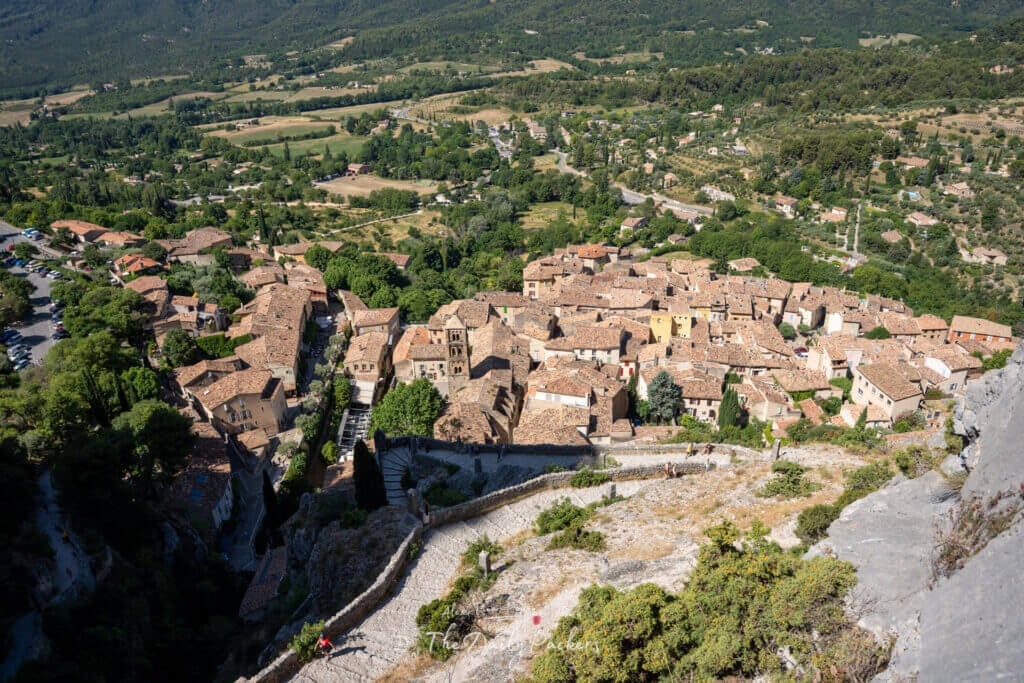
Moustiers Sainte Marie isn’t just another pretty village in Provence; it’s a place that feels like a hidden gem carved into the mountainside. Officially listed as one of “Les Plus Beaux Villages de France”, it has that perfect mix of natural beauty and historical charm.
The village is known for its pastel-colored houses, narrow alleyways, and its signature star suspended between two cliffs. Whether you’re here for a stroll, browsing local ceramics, or sitting down for a Provençal meal with a view, it just feels special.

It’s also a great escape from the busier towns of the French Riviera. If you’re road-tripping through the lavender fields or heading toward the Verdon Gorges, Moustiers Sainte Marie makes for an unforgettable stop along the way.
How to get there
Moustiers Sainte Marie is located in the Alpes-de-Haute-Provence region, right on the edge of the Verdon Regional Natural Park. The best way to reach it is by car, especially if you’re planning to explore the lavender fields or the nearby Gorges du Verdon.
We reached Moustiers Sainte Marie after spending time around the Valensole plateau, and it was a scenic drive all the way through. If you’re flying in, the closest major airports are Marseille (about 2 hours away) or Nice (around 2.5 hours). From there, renting a car is your best option; public transport to Moustiers Sainte Marie is very limited.
If you’re already based in Manosque like we were, it takes just over an hour by car, passing through some lovely countryside. And while the roads can be narrow and winding, the drive itself is part of the experience.


We recommend to rent a car through Discover Cars with free cancellation. Book your rental car here.
When to visit
The best time to visit Moustiers Sainte Marie is between late spring and early autumn, when the village and surrounding nature are at their most vibrant.
- Spring (April to June): This is a peaceful time to visit, with mild temperatures (15–25°C / 59–77°F) and blooming flowers everywhere. It’s also before the big summer crowds arrive.
- Summer (July to August): Summer brings warm weather (25–35°C / 77–95°F) and the busiest tourist season. But if you’re coming for the lavender fields or plan to pair your visit with a trip to the Verdon Gorges, this is the time. We were there mid-July, and even though we expected big crowds, the vibe remained quite relaxed—likely thanks to the heat keeping most people off the streets midday.
- Autumn (September to October): September is still warm and far less crowded, with temperatures around 20–28°C (68–82°F). It’s a great time to hike and enjoy the views with fewer people around.
- Winter (November to March): While the village is open year-round, many shops and restaurants close during the low season, and temperatures can drop to 5–10°C (41–50°F). It’s very quiet, which can be appealing if you’re after total peace.
Our tip: If you’re chasing lavender fields too, aim for early July, but keep in mind that most fields around Valensole may already be harvested by mid-July due to heat, while areas around Sault and Banon bloom a little later.


How to Visit
Moustiers Sainte Marie is best explored on foot. The village is pedestrian-friendly and compact, making it easy to wander through its narrow stone streets, browse artisan shops, and enjoy a leisurely meal at a local restaurant without needing to drive or navigate public transport.
There are several paid parking areas just outside the village. From there, it’s only a short walk—just a few minutes—before you’re right in the heart of Moustiers Sainte Marie. The walk is easy and already scenic, with views of the cliffs and rooftops guiding you in.

If you’re up for it, one of the most rewarding things to do is to climb the steep path up to Notre-Dame de Beauvoir, the chapel perched above the village. The climb involves about 250 stone steps and takes around 20–30 minutes. It’s a bit of a workout, especially in the summer heat, but the panoramic view over Moustiers Sainte Marie and the surrounding mountains is well worth it. Be careful on your way down, as the stone path is slippery.
You can also combine your visit with a short drive to Lac de Sainte-Croix or explore part of the Verdon Gorges if time allows. If you’re with kids (like we were with Milo), Moustiers Sainte Marie itself makes a great slow stop to relax between more adventurous parts of a Provence road trip.


Tip: We use the DJI Action 4 to film our vlogs — compact, durable, and perfect for capturing every adventure.
Tickets & Opening Hours
There’s no entrance fee to visit the village of Moustiers Sainte Marie itself—it’s open and free to wander at any time. Shops and restaurants generally open around 10:00 and close between 18:00 and 20:00, depending on the season. In the summer months, especially on weekends, some shops stay open later.
If you plan to hike up to the Notre-Dame de Beauvoir chapel, it’s also free to enter. However, the path is steep and not accessible with strollers. The chapel is usually open during the day, though not permanently staffed, so hours may vary.

For the Ceramics Museum (Musée de la Faïence), which showcases Moustiers’ famous pottery tradition, opening hours are typically:
- April to October: 10:00–12:30 and 14:00–18:00
- November to March: 10:00–12:30 and 14:00–17:00
- Closed on Tuesdays and during some public holidays
- Entry fee: around €3 (free for children under 12)
As for parking, there are several paid lots just before entering the village. Expect to pay about €2 per hour, or around €6 to €8 for half a day. It’s a short walk (5 to 10 minutes) from the parking to the village entrance. If you’re visiting in summer, arrive early to find a spot easily.

Don’t forget to book your accommodations in advance – the best places always fill up quickly.
Is it Worth It?
Absolutely. Moustiers Sainte Marie is one of those rare places that actually exceeds expectations. Tucked between dramatic limestone cliffs, the village feels like it’s been carved right into the rock. The charming stone houses, narrow alleys, and trickling fountains create a peaceful atmosphere, while the views from the chapel above are simply stunning.
We stopped here after exploring the lavender fields around Valensole and couldn’t have picked a better place to pause and soak it all in. Whether you’re into history, photography, hiking, or just relaxing with good food and ice cream, Moustiers Sainte Marie offers a bit of everything.
If you’re exploring the region, especially in summer, this village is a perfect detour or even a full day trip on its own.
Travel Tips
- Come early or late in the day: Especially during summer, the village can get a bit busier around midday. Morning or late afternoon offers the best light and a quieter atmosphere.
- Wear comfortable shoes: The village is all cobblestone and has some gentle inclines, especially if you plan to hike to the chapel.
- Bring water: If you’re planning to walk up to the Notre-Dame de Beauvoir chapel, it’s a short but steep climb with little shade.
- Don’t rush it: Even though it’s small, Moustiers Sainte Marie deserves time. Grab a drink in the shade, stroll slowly, and enjoy the details.
- Avoid Mondays off-season: Some shops and restaurants might be closed.
- Parking tip: Paid parking is just a short walk from the village. It’s well signposted and costs around 3 to 5€ for a few hours, depending on the season.

Where to stay
For our trip, we chose Manosque, a lovely little town that turned out to be the perfect base. It sits right between the two main lavender areas, and the Verdon Gorges
Here is where we would recommend staying:
- La Bastide de l’Adrech – A charming, welcoming spot with Provençal character and relaxing countryside views.
- Airbnb: T2 Hypercentre climatisé Véranda Parking gratuit – Great for those who want their own space in the center of town, with the bonus of air conditioning and free parking.
If you want to stay in a bigger city with more amenities and better access:
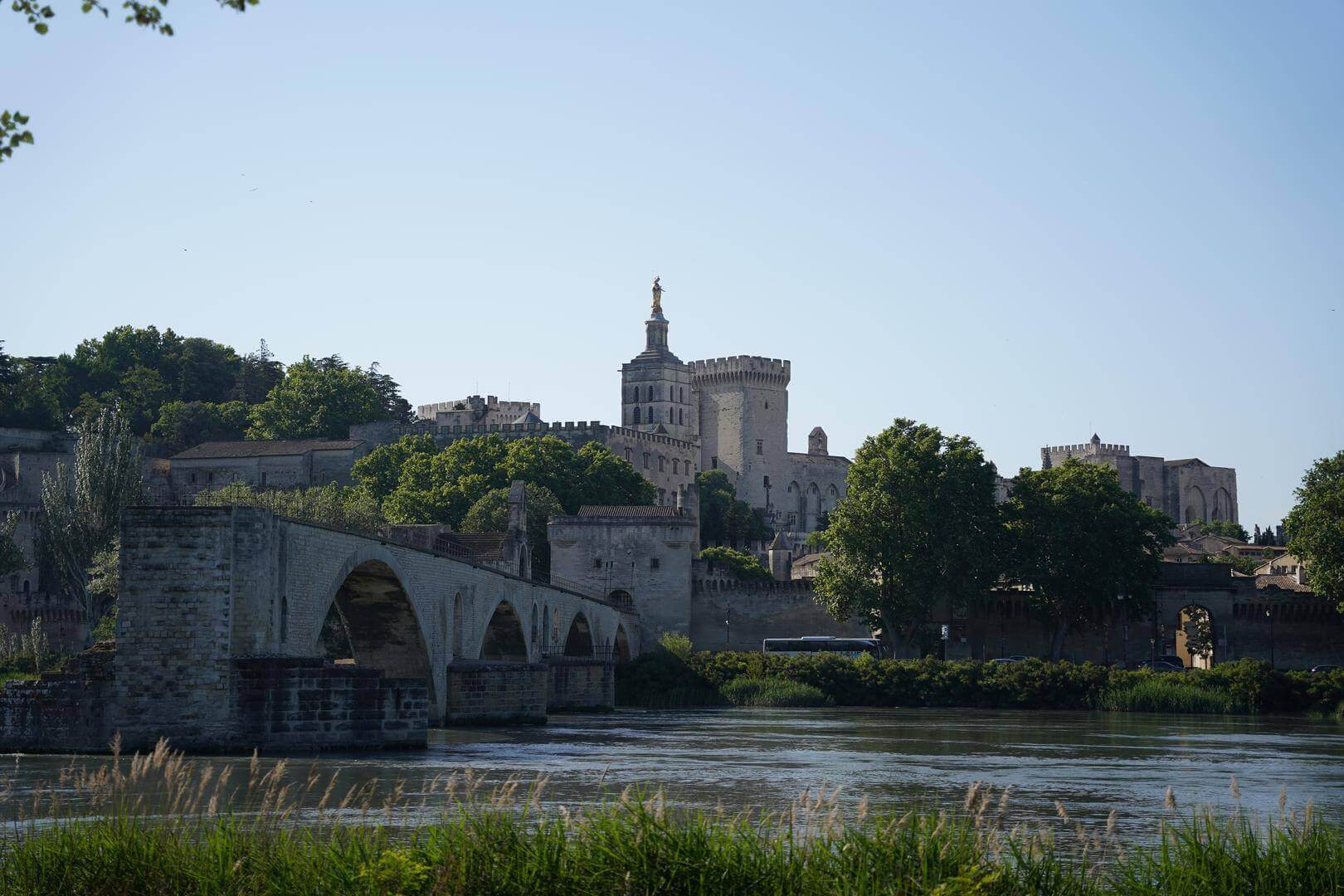
- Avignon – Great for history, culture, and easy access to tours. Plus, we love Avignon
- Marseille – A lively port city with plenty of transport links and services. Marseille is the biggest city in the area, but we don’t like it too much, especially because it isn’t a safe place.
- Nice – Ideal for combining lavender adventures with the French Riviera. Nice is an amazing place to stay at.
Here are all your accommodation options in Manosque
About the authors
We are Alex and Tina, a French-Serbian couple who met in China back in 2014. We spent three incredible years there before making France our home. Our shared passion for travel has been the heartbeat of our relationship for over 12 years, taking us across 44 countries and counting.
We launched TheDailyPackers in 2019 as a way to document our adventures. In 2026, we reached a major milestone by officially turning our blog into our full-time job. While we are still growing toward financial independence through this platform, every article we write is fueled by our mission to make your voyages easier through in-depth guides, honest advice, and the lessons we’ve learned from our own mistakes.
Our journey has not been without its storms. In 2023, our world changed forever when our first son, Poppy, was stillborn on November 25th. It was, and remains, the hardest chapter of our lives. In 2025, we were blessed with our second little boy, Milo. He has since joined our traveling tribe, and you’ll be seeing him—and the reality of traveling with a little one-on the blog more and more.
We hope to inspire you to explore the world with curiosity and resilience. Thank you for being part of our story.
You may also like those related posts
W-Trek Day 3: From Paine Grande to Frances
9 best things to do in Seoul, South Korea, in 3 days
18 best things to do in Bariloche, Argentina, in 5 days
9 Best Things to do in Bruges, Belgium, in 1 day
10 Best places in Argentina You Shouldn’t Miss on Your Next Trip
17 Best things to do in Curonian Spit, Lithuania, in 3 days
22 best things to do in Bali, Indonesia, in 5+ days
15 Best Things to Do in El Chaltén, Argentina, in 3 to 5-Day
Pssst, did you know that…
If you purchase something through our links, we earn a small fee. However, you still pay the same. Win-win! And one day we may get to be full-time travel bloggers =)
Find Hotels with Booking.com
Do Yoga with KVY
Buy us a Coffee
Rent a car with DiscoverCars
Find Attractions with GetYourGuide
Find Flights with Expedia
Buy an eSIM with Airalo
Get insured with World Nomads
Get ready with Amazon.com