

Reaching the Peru Bolivia Border
The easiest and most direct way to cross the Peru–Bolivia border by land is to take the bus from Puno to Copacabana. There’s a daily 7:00 am departure, and the journey takes roughly 3.5 hours, making it a smooth and simple transition between the two countries. Of course, you can continue toward La Paz or other destinations afterward, but skipping Copacabana would be a shame.
We booked our bus through the BusBud app, which was straightforward and quick. We chose Transzela, mostly because their reviews were better than the others and their seats looked huge in the photos. Prices were similar across all companies, so Transzela seemed like a safe bet.
Since our hotel was close to the bus terminal in Puno, we set the alarm for 5:30 am, grabbed a quick breakfast at 6:00, and walked over. Make sure you go to the right terminal — Puno has two, and the one you need is the Terminal Terrestre. After checking in at the company’s desk, we boarded on time.
Not long after leaving Puno, the bus made a quick stop near the Peru–Bolivia border so passengers could exchange money. We skipped it — there were so many buses stopping at the same time that the entire place turned into a chaotic crowd within seconds. We figured we could change money later if needed. Back on the road, we finally reached the Peru–Bolivia border at 10:10 am, ready to begin what would become one of the most absurd border-crossing experiences we’ve ever had.
The Peruvian Border
Once the bus dropped us off at the Peru side of the border, everyone got out and walked toward the Peruvian immigration office. The process looked chaotic from the outside, but the line actually moved surprisingly fast. Within ten minutes, we had our exit stamps and were already walking toward the Bolivian side.
It was simple, quick, and painless — which is more than we can say about what came next.


Between Countries at the Peru–Bolivia Border
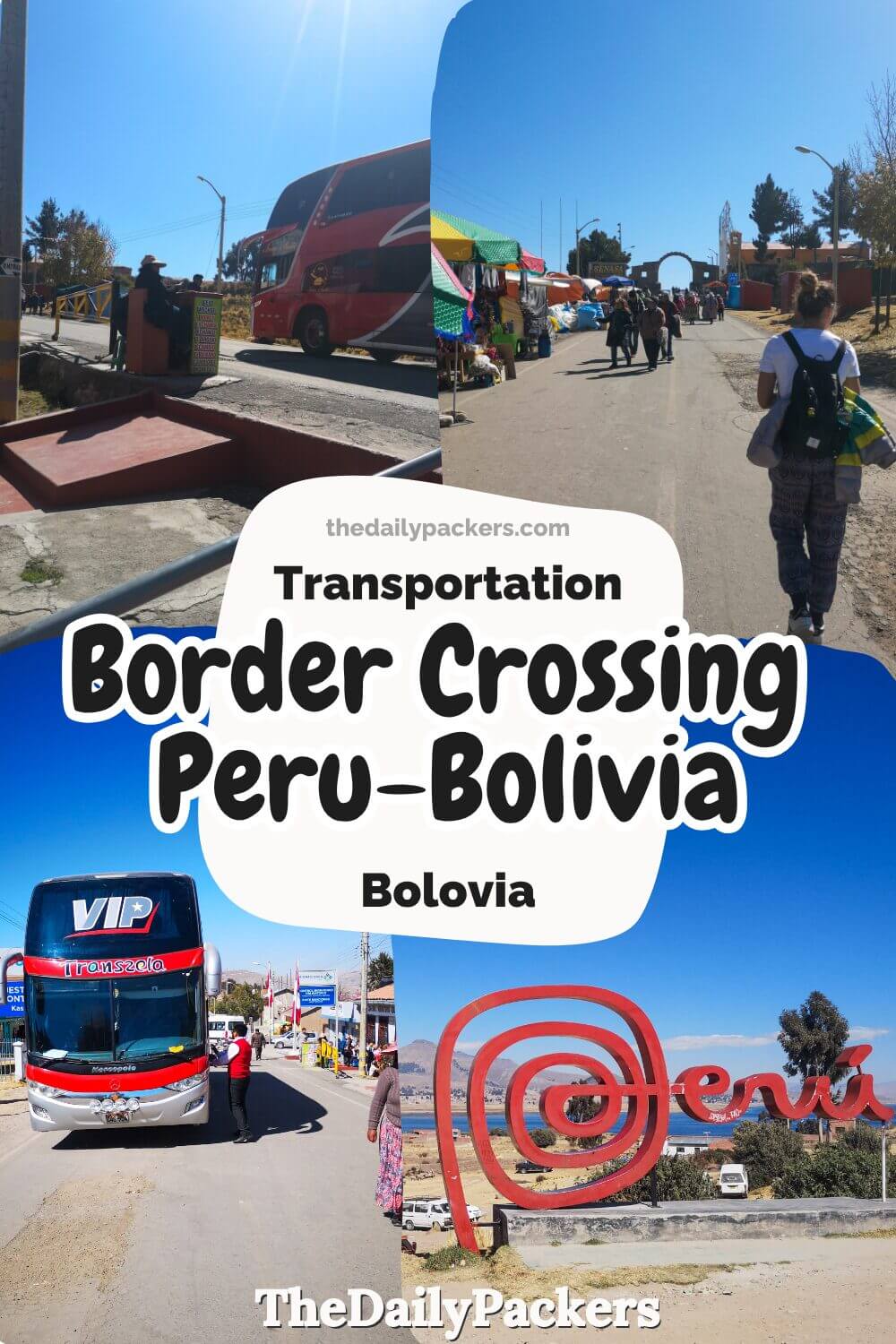
Once you leave the Peruvian immigration office, you walk through a small “international zone” that sits between the two countries. It’s a strange in-between space — neither Peru nor Bolivia — with a few street stalls, a little church, and even a big Peru sign if you want one last photo before crossing over.
Keep walking under the stone archway and you’ll immediately spot the Bolivian immigration office on your left. That’s where the real Peru–Bolivia border adventure begins.

Bolivian Border: A Surprisingly Chaotic “Visa on Arrival” Experience
As Crossing into Bolivia was extremely easy for me — I just walked into the immigration office, handed over my passport, and got stamped in less than five minutes. But for Tina… things got a bit more interesting.
As a Serbian passport holder, she needed a visa on arrival, which we naively assumed would be a quick formality. We hadn’t checked the requirements, and—unsurprisingly—had prepared absolutely nothing. That was our first mistake.
What You Actually Need for the Bolivian Visa on Arrival. Here’s the full list (which we only learned about after being rejected at the window):
- Proof of onward and return travel
- Hotel reservations
- Passport-style photos
- Passport main page copy
- Recent bank statement
Naturally… we had none of it. The Mini Crisis (and the Shop That Saved Us). Thankfully, right next to the immigration office there’s a tiny convenience shop with WiFi, a printer, and even SIM cards. That shop ended up saving our entire Peru–Bolivia border crossing.
We connected to WiFi and scrambled to gather everything:
- Bank statements via the banking app
- Old flight emails for return details
- Hotel bookings from Booking.com
- Quick passport photo taken on the spot
- A passport scan printed directly in the shop
The printing cost us 45 BOB. If you don’t have Bolivianos yet, don’t panic — there’s also a money exchange booth right next to the shop. Honestly, this Peru–Bolivia border has everything you need to build your visa application from scratch. Rejected… Again
Feeling confident, Tina went back to the immigration office with all documents neatly printed. Two minutes later she came back out… rejected again.
Why? Because the hotel reservation was under my name, not hers. We tried explaining (in Spanish!) that we were traveling together, staying in the same room, all totally normal… but nope. The officer wouldn’t have it.
We walked back to the shop, a bit lost, trying to figure out our next move. Maybe book another hotel room under Tina’s name? But then the owner of the shop overheard us and asked:
“Do you have the Booking.com reservation code and PIN?” We did. He logged into Booking.com for us, changed the reservation name to Tina, printed the new confirmation, and saved the day.
Honestly — this guy deserves a medal.
Third Time’s the Charm. We returned to immigration, handed over the updated papers, and finally everything was accepted. The visa cost 690 BOB (or USD), and you can pay by card right at the counter. Ten minutes later, she had her visa, we had our passports back, and we walked toward the bus — where everyone else was already waiting for us, looking both bored and mildly amused.
What a moment. But hey — that’s the joy of overland travel in South America. A bit chaotic, sometimes absurd, but always a great story in the end.


Side Stories at the Peru–Bolivia Border
Borders are always interesting places, and this one definitely had its share of little dramas unfolding around us. While we were inside the Bolivian immigration office trying to sort out Tina’s paperwork, an American woman was also applying for her visa on arrival. When the officer told her the fee, her jaw almost dropped — 160 USD.
That’s when we realized something important: Bolivia’s visa fees aren’t fixed. They vary depending on your nationality. So before you cross, always check the most up-to-date price for your passport. Some travelers pay nothing, others pay a lot.
A few minutes later, another situation popped up. Two backpackers walked into the office looking completely lost. Their bus had left without them — literally drove away while they were still doing immigration formalities.
Moral of the story? Always keep an eye on your bus when crossing borders. Drivers won’t wait forever, and buses in South America tend to leave the moment they think everyone is on board… even when they’re not.
These little moments added to the chaos of the Peru–Bolivia border crossing, but honestly, they also made the whole experience memorable in a very South American way.
End of the Peru–Bolivia Border Adventure & Our Recommendation
Once everyone finally had their stamps and paperwork sorted, the bus left the border and continued toward Copacabana. About 20 minutes later, at 11:25 am, the driver stopped again and an older man stepped onto the bus holding a bag of… something.
No announcement, no explanation — just a mystery product being waved in front of everyone. A few passengers bought it, most didn’t, and we definitely didn’t.
No one ever checked anything afterward, so whatever he was selling wasn’t an official requirement. It honestly felt like one of those classic border-area scams where someone tries to sell you something “important” that turns out to be completely useless.
Eventually, we rolled into the Copacabana bus terminal — which is basically just a section of the street — at around 11:30 am. We were almost two hours late, which seems pretty standard for this route.
A Key Recommendation
If you need a Bolivian visa (like Tina did), here’s something we wish we had known:
You can apply for a Bolivian visa online before your trip, directly through the Bolivian embassy website.
It’s quick, usually processed in 24 hours, and — unlike the visa on arrival — it’s free.
So if your country requires a visa, and you have a Bolivian consulate or embassy near you, do yourself a favor and apply online. It will save you time, stress, and a lot of unnecessary chaos at the border.


About the authors
We are Alex and Tina, a French-Serbian couple who met in China back in 2014. We spent three incredible years there before making France our home. Our shared passion for travel has been the heartbeat of our relationship for over 12 years, taking us across 44 countries and counting.
We launched TheDailyPackers in 2019 as a way to document our adventures. In 2026, we reached a major milestone by officially turning our blog into our full-time job. While we are still growing toward financial independence through this platform, every article we write is fueled by our mission to make your voyages easier through in-depth guides, honest advice, and the lessons we’ve learned from our own mistakes.
Our journey has not been without its storms. In 2023, our world changed forever when our first son, Poppy, was stillborn on November 25th. It was, and remains, the hardest chapter of our lives. In 2025, we were blessed with our second little boy, Milo. He has since joined our traveling tribe, and you’ll be seeing him—and the reality of traveling with a little one-on the blog more and more.
We hope to inspire you to explore the world with curiosity and resilience. Thank you for being part of our story.
You may also like those related posts
6 Best Places to Visit in June
Walk With Penguins in Ushuaia: Everything You Need to Know
The Perfect Mendoza Wine Tour: 1-Day on the Bus Vitivinicola
5 Best Places to Visit in October
20 Best things to do in Bonifacio, Corsica in 3 days
W-Trek Day 4: From Frances to Chileno
Galle Fort: Sri Lanka’s Historic Coastal Gem in 2025
Eguisheim Christmas Market: Beauty and the Beast’s real village
Pssst, did you know that…
If you purchase something through our links, we earn a small fee. However, you still pay the same. Win-win! And one day we may get to be full-time travel bloggers =)
Find Hotels with Booking.com
Do Yoga with KVY
Buy us a Coffee
Rent a car with DiscoverCars
Find Attractions with GetYourGuide
Find Flights with Expedia
Buy an eSIM with Airalo
Get insured with World Nomads
Get ready with Amazon.com