
Introduction
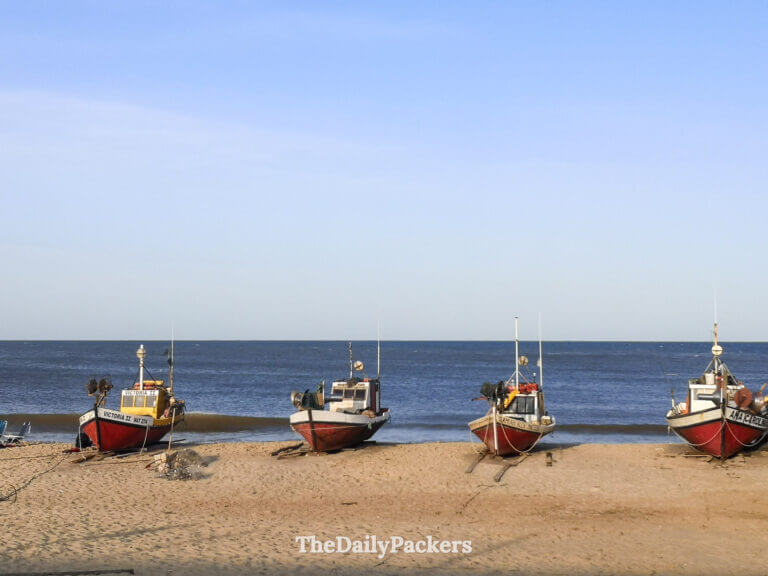
Punta del Diablo is one of Uruguay’s most charming seaside towns — a mix of rustic fishing roots, bohemian spirit, and endless ocean views.
We arrived here after crossing the border from Brazil during our three-month trip across South America, making Punta del Diablo our first stop in Uruguay before heading to Montevideo and later Colonia. After nearly 23 hours on the road, this quiet beach town instantly felt like the perfect reward — peaceful, authentic, and surrounded by nature.
Originally a tiny fisherman village, Punta del Diablo’s story began in 1935 when the Rocha family moved here so their son could breathe the clean ocean air to treat his asthma. They built their small ranch by the sea, unknowingly becoming the first residents of what would one day become a beloved coastal getaway.
By the 1940s, fishermen from nearby Valizas began arriving seasonally to fish for sharks, whose liver oil was valuable for export. With no real access road, reaching Punta del Diablo meant navigating sandy dunes that constantly shifted with the wind.
In 1949, the first road and the “Hostería del Pescador” were built — marking the start of a new era. Soon after, fishermen’s wives began crafting souvenirs from seashells, wood, and local stones, which led to the creation of the first artisanal market — a tradition that still defines the town’s atmosphere today.
Over the years, Punta del Diablo has evolved into one of Uruguay’s most authentic coastal destinations, balancing its fishing heritage with its artistic, laid-back vibe. It’s a place where time slows down, the sunsets are spectacular, and the sound of waves replaces city noise.
In this guide, we’ll share the best things to do in Punta del Diablo — from relaxing beaches to natural parks and hidden gems — all while soaking in the peaceful rhythm of this magical seaside village.
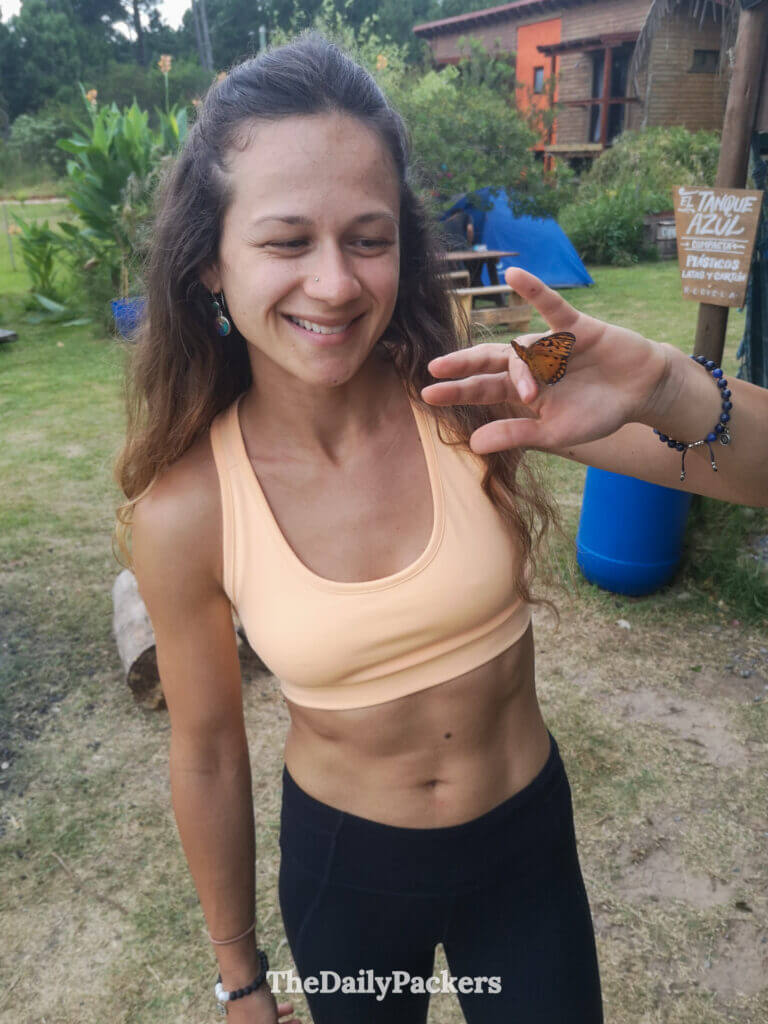

Read: Our complete 10-day Uruguay Itinerary
Getting there
Getting to Punta del Diablo can feel like part of the adventure — especially if, like us, you’re coming from Brazil by bus.
We reached Punta del Diablo after a 23-hour journey from Florianópolis, with multiple bus connections and a land border crossing between Chuí (Brazil) and Chuy (Uruguay). It was long but smooth, and honestly, a great way to transition from Brazil’s busy coast to Uruguay’s peaceful rhythm.
Here are the main ways to get there, depending on where you’re coming from:
From Brazil
- Florianópolis → Pelotas → Chuy → Punta del Diablo: This is the most practical route. Take a night bus from Florianópolis to Pelotas (10h), then another to Chuy (4h), and finally a short one-hour bus from Chuy to Punta del Diablo.
- Alternative: Some travelers go through Porto Alegre, but the transfer is less convenient and often more expensive.
From Montevideo: Daily buses connect Montevideo to Punta del Diablo in about 5 to 6 hours. You can book your ticket with COT or Rutas del Sol. Buses leave from Tres Cruces Terminal and drop you off at Punta del Diablo’s small terminal.
From Punta del Este: The easiest way is to take a direct Rutas del Sol bus (around 4 hours). There are usually one or two departures per day, but check in advance as schedules can vary outside the summer season.

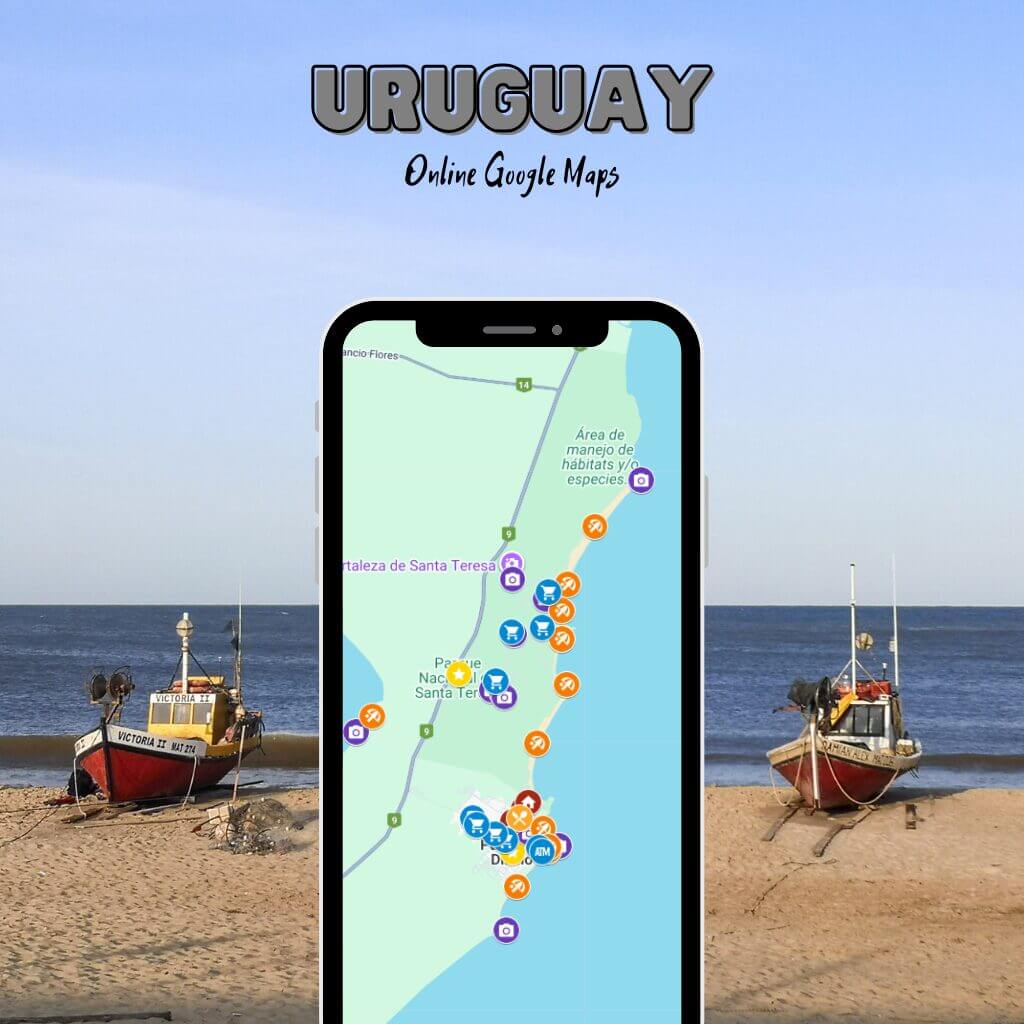
If you’re renting a car, the drive is straightforward:
- From Montevideo, follow Route 9 east for about 290 km (4.5 hours).
- From Punta del Este, it’s 220 km (3.5 hours).
Parking in Punta del Diablo is easy, especially outside the summer rush. Many accommodations also have small private parking areas.
Whichever way you come, the last stretch toward Punta del Diablo is beautiful — sandy dunes, pine forests, and the smell of the ocean. When the bus finally stopped and we stepped out, we instantly felt that quiet, laid-back energy that defines Uruguay’s coast.
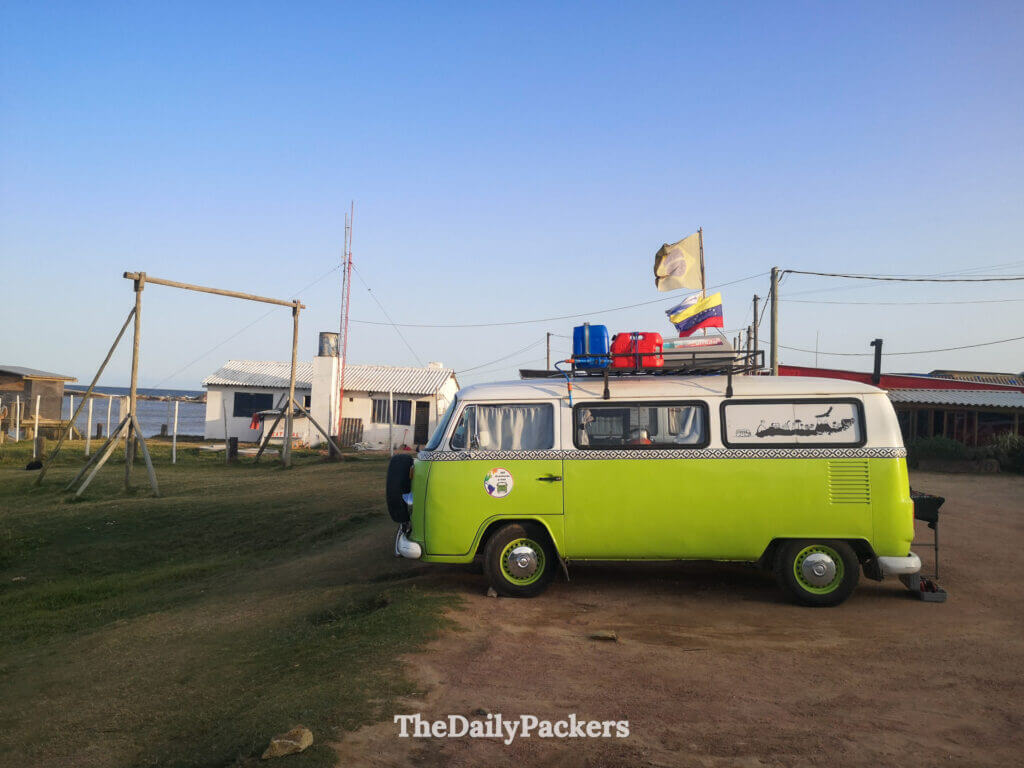

Check all your bus options on Busbud — it’s simple to compare routes, prices, and book your tickets in advance.

Moving Around
Punta del Diablo is small enough to explore mostly on foot — that’s part of its charm. You can easily walk from one beach to another, through sandy streets lined with colorful houses, small cafés, and craft shops. The relaxed pace makes walking the best way to soak in the local vibe.
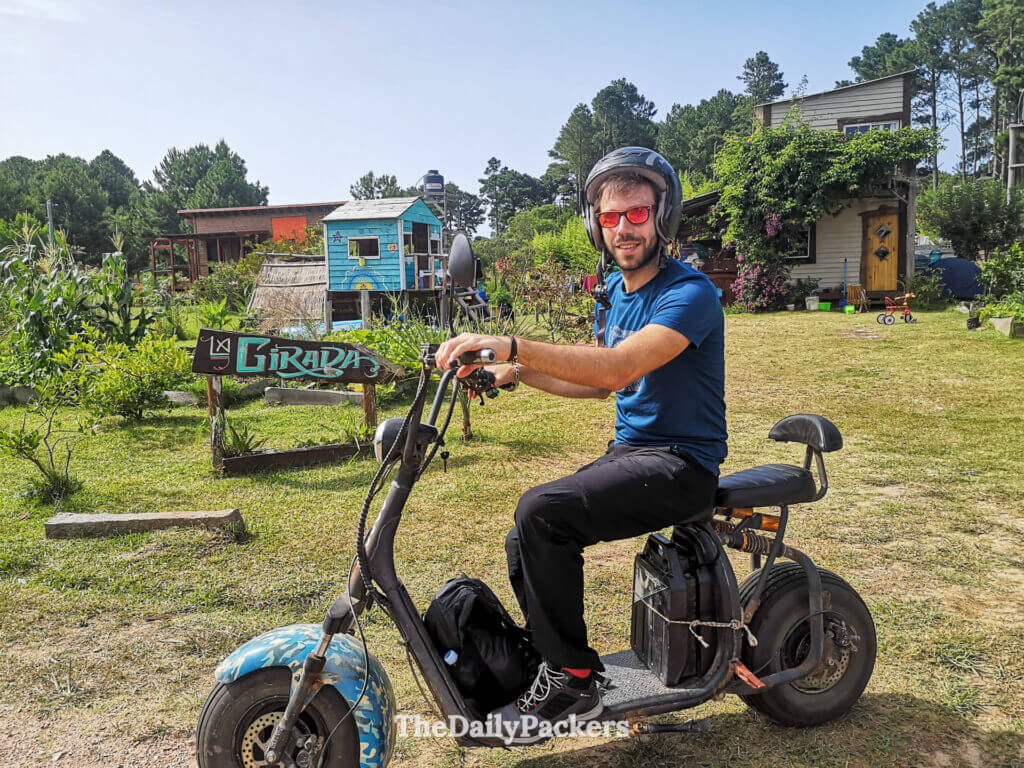
If you want to venture further, like to Santa Teresa National Park or Laguna Negra, renting an electric bike is the perfect option. That’s what we did during our stay, and it made the trip much more fun (and a lot faster).
- Price: 1,000 UYU per day per bike
- Spare battery: 300 UYU (recommended — we just made it back with two batteries)
- Contact (English/Spanish): WhatsApp +598 96 684 774
The bikes are a bit old, but they did the job perfectly for a full-day ride through the park and around the area. If you prefer, you can also rent regular bikes or even get around by hitchhiking — it’s quite common here and locals are very friendly.
There’s no public transport within Punta del Diablo, but the distances are short, and every corner of the village feels like part of the adventure.

When to Visit
Choosing when to visit Punta del Diablo really depends on the kind of experience you want — peaceful beach walks, lively summer nights, or quiet coastal escapes. Each season offers something unique, from laid-back local life to vibrant seaside energy.
- Spring (September – November): Spring is one of the best times to visit Punta del Diablo. The weather starts warming up (20–25°C), the ocean is calm, and the town slowly wakes up after winter. Most cafés and small hostels reopen, but the beaches are still quiet — perfect for those who want sun and nature without the summer crowd.
- Summer (December – February): This is high season in Punta del Diablo. Expect warm days (25–30°C), packed beaches, and lively evenings with music, street markets, and beach bars. It’s when the fishing village transforms into a vibrant coastal town. However, accommodations sell out fast, so book early if you’re traveling during this time.
- Autumn (March – May): Autumn is a great time to visit for balance — pleasant temperatures, fewer tourists, and lower prices. It’s also when the sunsets get particularly colorful. Many places remain open until mid-April, and you can still swim or surf comfortably during the day.
- Winter (June – August): Winter brings a different charm. Punta del Diablo returns to being a sleepy fishing village with misty mornings and quiet beaches. Some restaurants and shops close, but it’s peaceful, raw, and perfect if you love solitude and photography. Expect cooler temperatures (10–18°C) and a few windy days.
Travel Tip: We’d recommend visiting between late November and early March for the best mix of atmosphere, weather, and open businesses — but avoid the peak of January if you’d rather skip the crowds.
Where to stay
Even though Punta del Diablo is a small coastal village, it offers a surprising variety of places to stay — from rustic eco-cabins and beach bungalows to stylish boutique hotels. Most accommodations are locally owned and blend perfectly with the laid-back vibe of the town.
(€) Eco House Via Verde – A friendly, budget-friendly eco-lodge surrounded by nature. It’s simple but cozy, with clean rooms, a shared kitchen, and a peaceful garden. Perfect if you’re traveling on a budget or backpacking across South America.
(€€) Eco Boutique B&B – A stylish bed & breakfast with a strong focus on sustainability and comfort. The breakfast here is delicious, and the rooms are warm and bright, ideal for a couple looking for a calm retreat after long travel days.
(€€€) Bella Bungalows – Beautifully designed wooden bungalows just a short walk from the beach. Each bungalow has a private terrace and nature views, making it perfect if you want to unwind and enjoy Punta del Diablo’s relaxed atmosphere.


Here are all your accommodation options in Punta del Diablo
What to Eat
Food in Punta del Diablo is simple, fresh, and full of flavor — very much in tune with its fishing village roots. Don’t expect fancy restaurants, but rather small seaside eateries, family-run parrillas, and cozy cafés serving local dishes with a smile.
Seafood is a must. Try freshly grilled fish caught by local fishermen that same morning, especially corvina (sea bass) and brótola (hake). You’ll often find them served with fries, salad, or mashed pumpkin.

If you’re a meat lover, Uruguay’s famous asado (barbecue) is everywhere — from local restaurants to beachside food stalls. Even in a small village like Punta del Diablo, you’ll smell it in the air by the evening.
Vegetarians and vegans will also find more options than expected. Some cafés and guesthouses offer plant-based meals made from local produce, like homemade veggie burgers, quinoa bowls, or roasted vegetables.
And of course, no Uruguayan meal is complete without mate, the traditional herbal drink you’ll see everyone carrying around. Pair it with local pastries or alfajores (dulce de leche-filled cookies) for an afternoon snack by the ocean.
Travel Tip: If you’re staying in a place with a kitchen — and most guesthouses or campings have one — head to the small market near the town center to buy fresh produce and cook your own meal. It’s a great way to save money and live like a local.

Best things to do in Punta Del Diablo
Go to the Beaches in Punta del Diablo
Punta del Diablo may be a small fishing village, but it has some of the most beautiful and wild beaches in Uruguay. Each one has its own atmosphere — from lively surf spots to quiet stretches of golden sand perfect for sunset walks.
Playa Grande
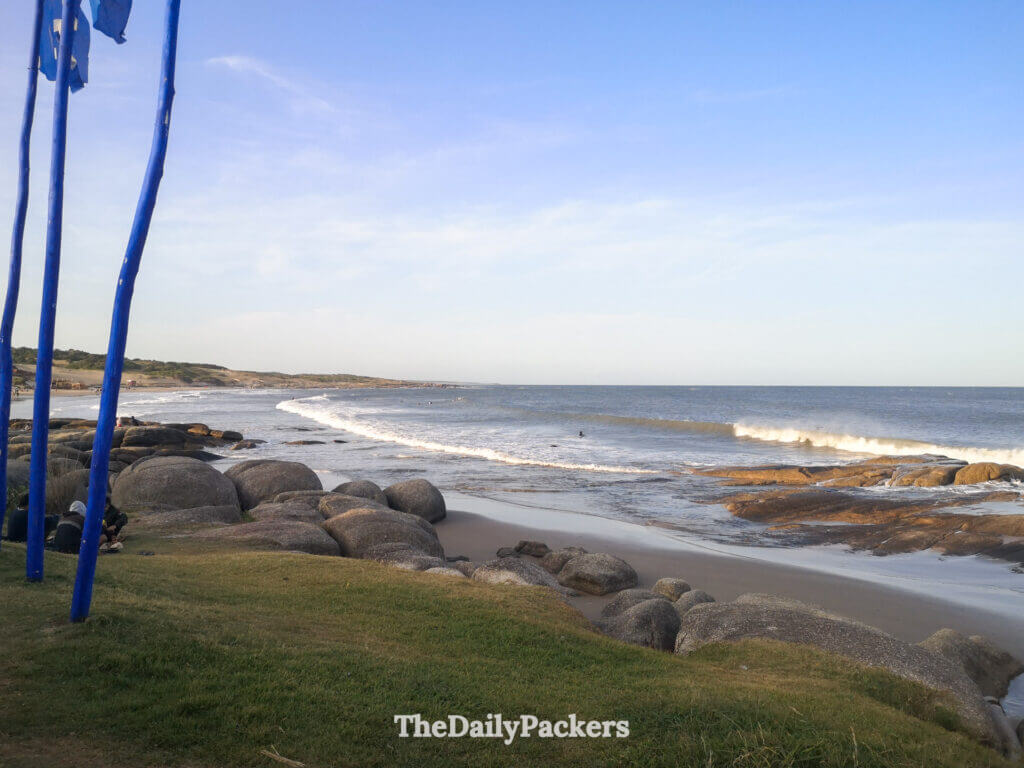
Located south of the village, Playa Grande is the longest and wildest beach in Punta del Diablo. It stretches all the way to Parque Nacional Santa Teresa, making it ideal for long walks or even bike rides along the shore. It’s usually quiet, with fewer people than the central beaches, and surrounded by sand dunes and native vegetation. The waves here can be strong, so it’s more for experienced swimmers or surfers.
Here are all your accommodation options in Punta del Diablo
Playa del Rivero
This is one of the most popular beaches in Punta del Diablo — lively, social, and perfect for both surfing and sunbathing. It’s close to the main area of the village, with small bars and restaurants nearby. You’ll often see locals and travelers mingling here, surfers catching waves, and people hanging out to watch the sunset.
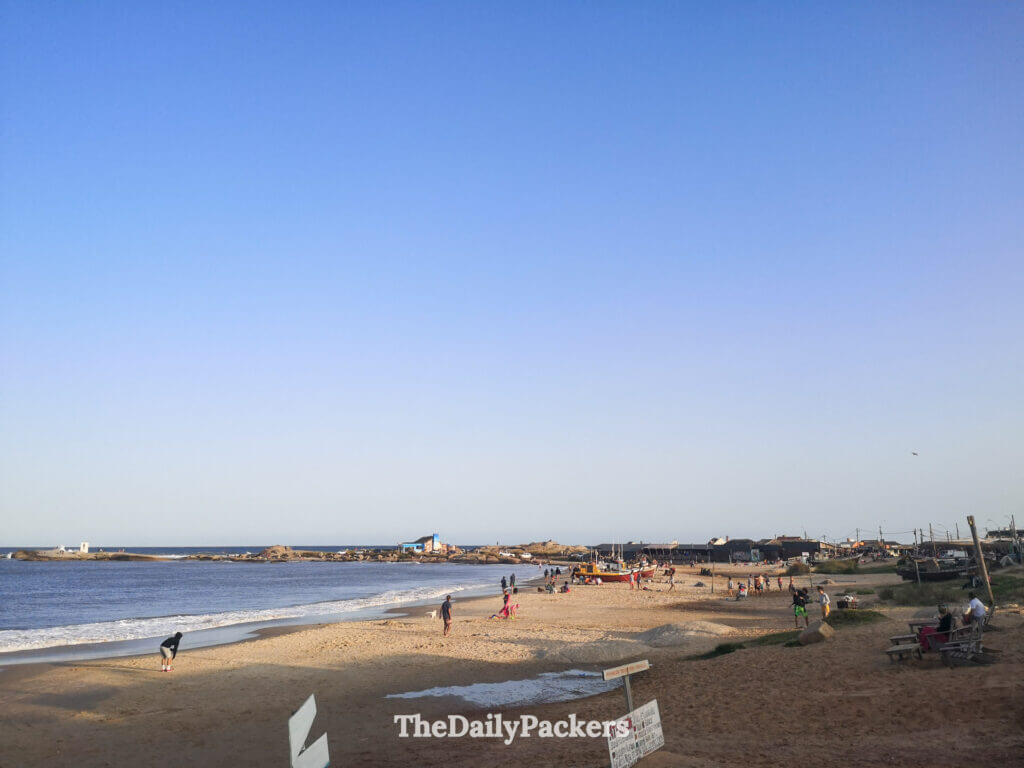
Playa de los Pescadores
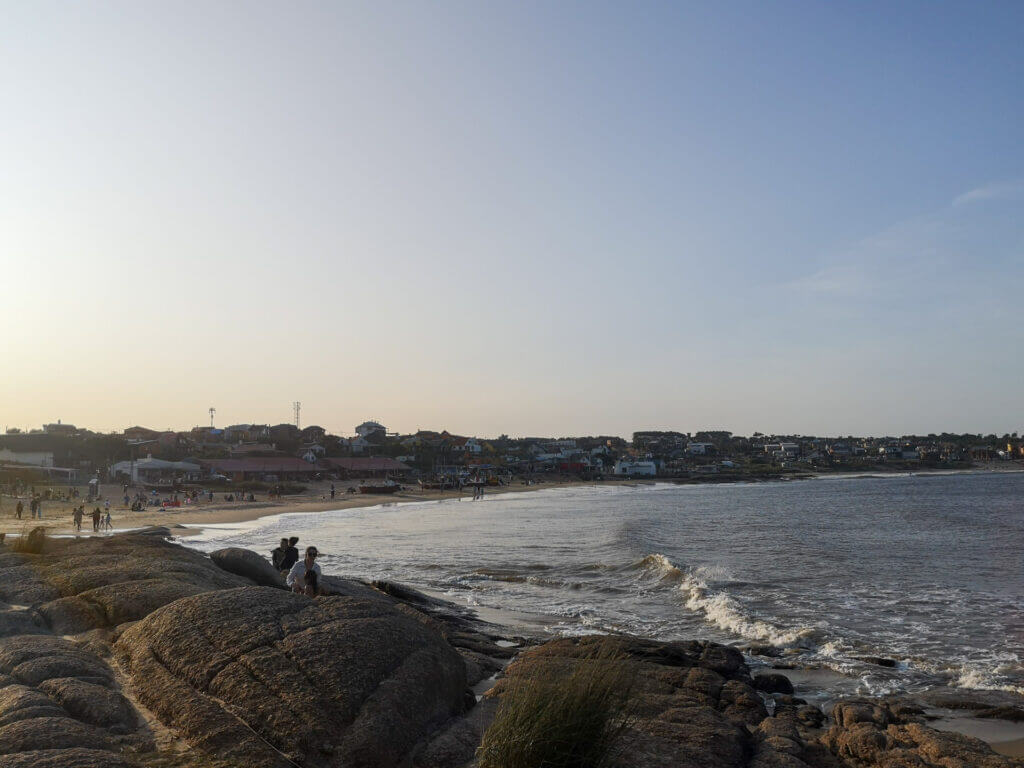
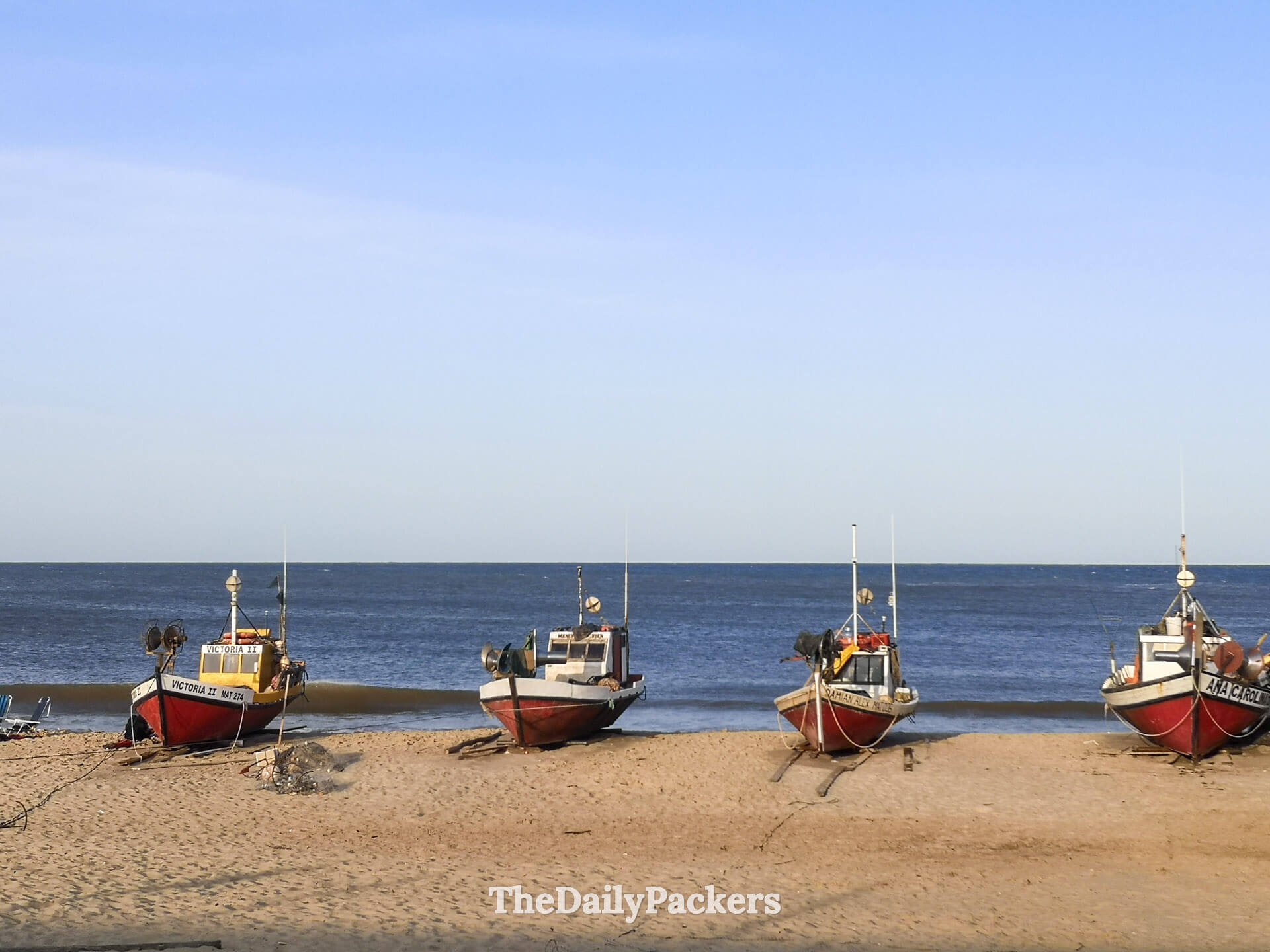
Right next to the colorful fishing boats, this beach is where you really feel the soul of Punta del Diablo. Early in the morning, fishermen bring their daily catch ashore, and later in the day, families and travelers relax by the calm waves. It’s also a great spot to buy fresh fish directly from the fishermen — one of the most authentic local experiences you can have.
Playa de la Viuda
Playa de la Viuda is located on the northern side of town and is known for its wilder vibe and strong surf. It’s a favorite among surfers and photographers because of its open views and powerful waves. The beach is framed by dunes, and at the far end, you’ll find a small lighthouse viewpoint overlooking the ocean — a great place to watch the sunset.
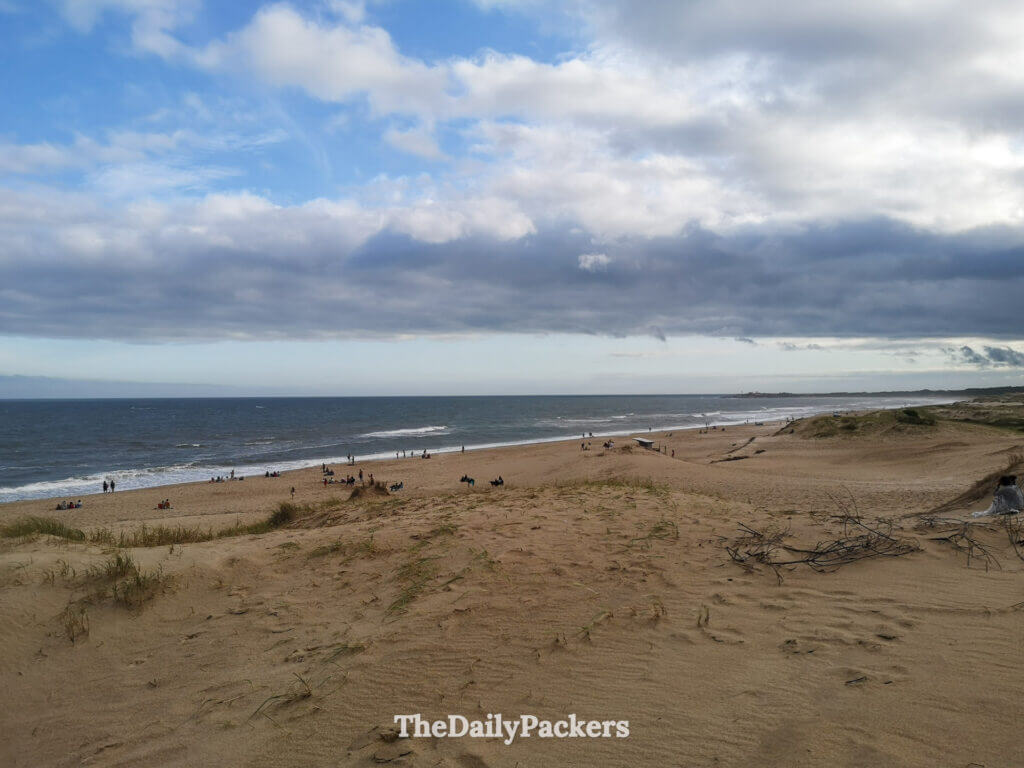
Travel Tip: The weather in January, when we visited, was a mix of sun and rain. The beaches can get windy, especially near the village, which makes them perfect for surfing but sometimes a bit chilly for just lying in the sun. Bring a light jacket or windbreaker if you’re visiting during summer evenings.


Tip: We use the DJI Action 4 to film our vlogs — compact, durable, and perfect for capturing every adventure.
Visit the Local Market
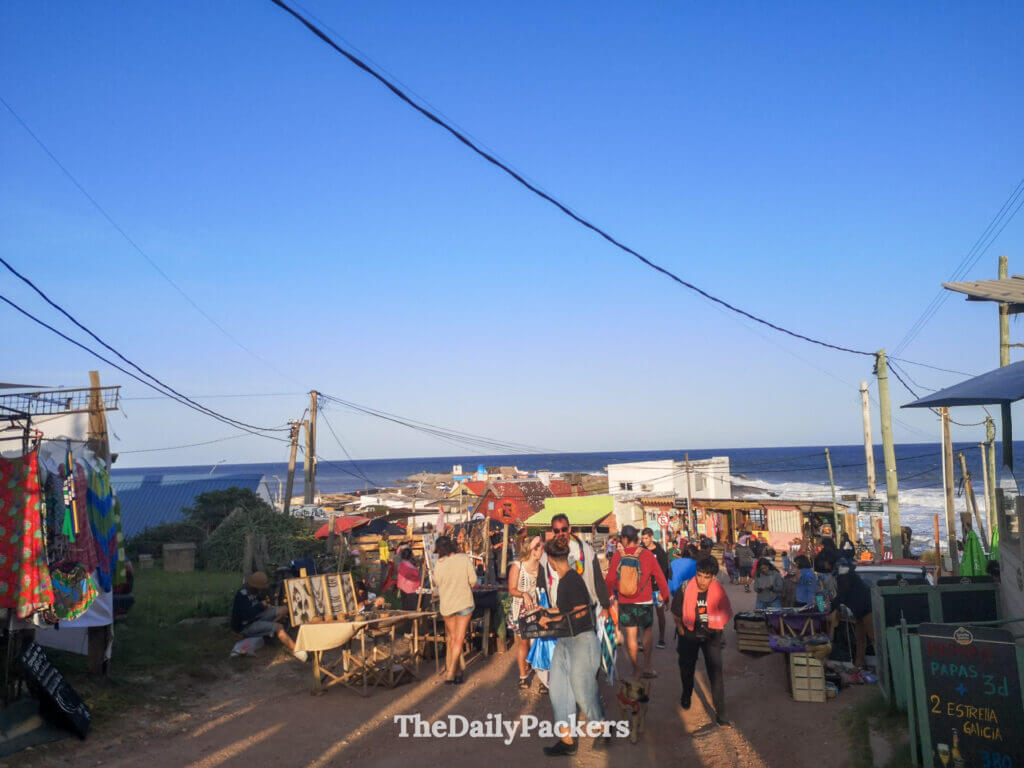
Punta del Diablo doesn’t really have a defined town center — everything is spread out between sandy paths, beachside houses, and dunes. But if there’s one place that feels like the heart of the village, it’s the Feria de Artesanos Punta del Diablo, the local handcraft market near Playa de los Pescadores.
This small open-air market perfectly reflects the spirit of Punta del Diablo — creative, local, and relaxed. You’ll find artisans selling handmade jewelry, seashell crafts, leather goods, wooden souvenirs, and colorful fabrics. Most of them are locals or travelers who settled here for a while, creating and selling their art to support a simple coastal life.
It’s the best place to pick up a unique souvenir that actually has a story behind it. Go there in the afternoon, grab a fresh juice or an ice cream from a nearby stall, and enjoy the lively yet laid-back atmosphere.
Here are all your accommodation options in Punta del Diablo
Visit Cabo Polonio
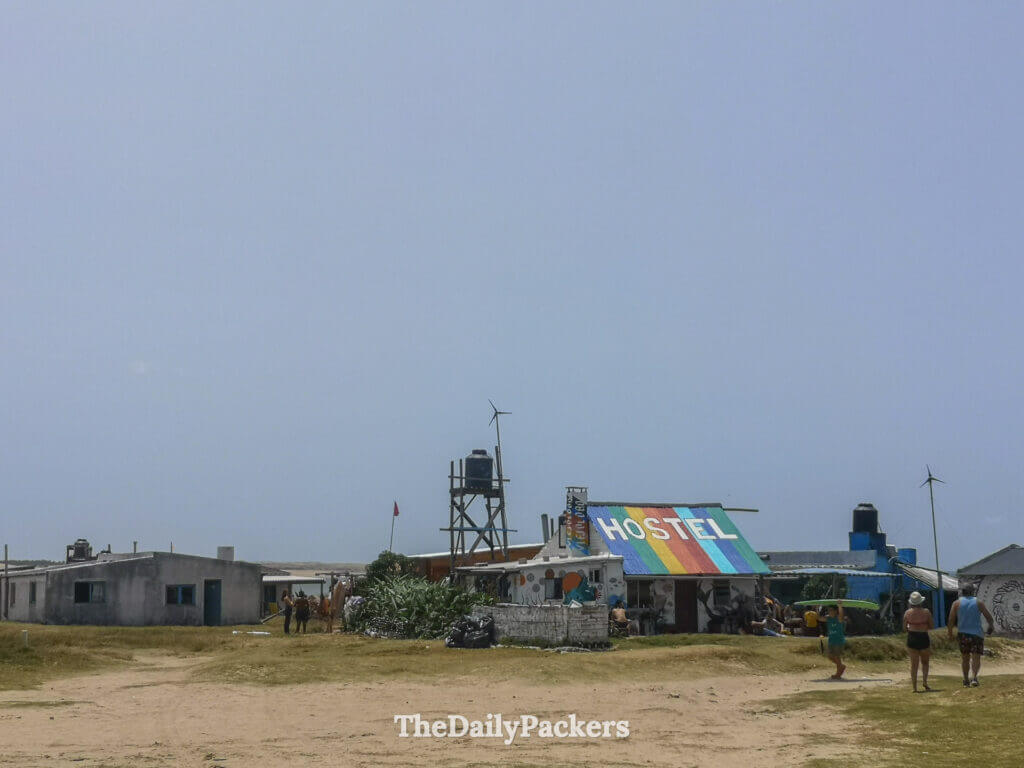
If you’re staying in Punta del Diablo, a day trip to Cabo Polonio is one of the most unique experiences you can have in Uruguay. Located about an hour away, this remote national park feels like stepping back in time — no roads, no electricity, no noise, just sand dunes, ocean breeze, and a small village of colorful houses scattered by the sea.
To reach Cabo Polonio, you’ll first travel to the park entrance, where only official 4×4 trucks are allowed to take visitors across the vast dunes and forests. The ride itself is an adventure, bouncing through sand paths until you finally see the Cabo Polonio Lighthouse rising above the horizon.
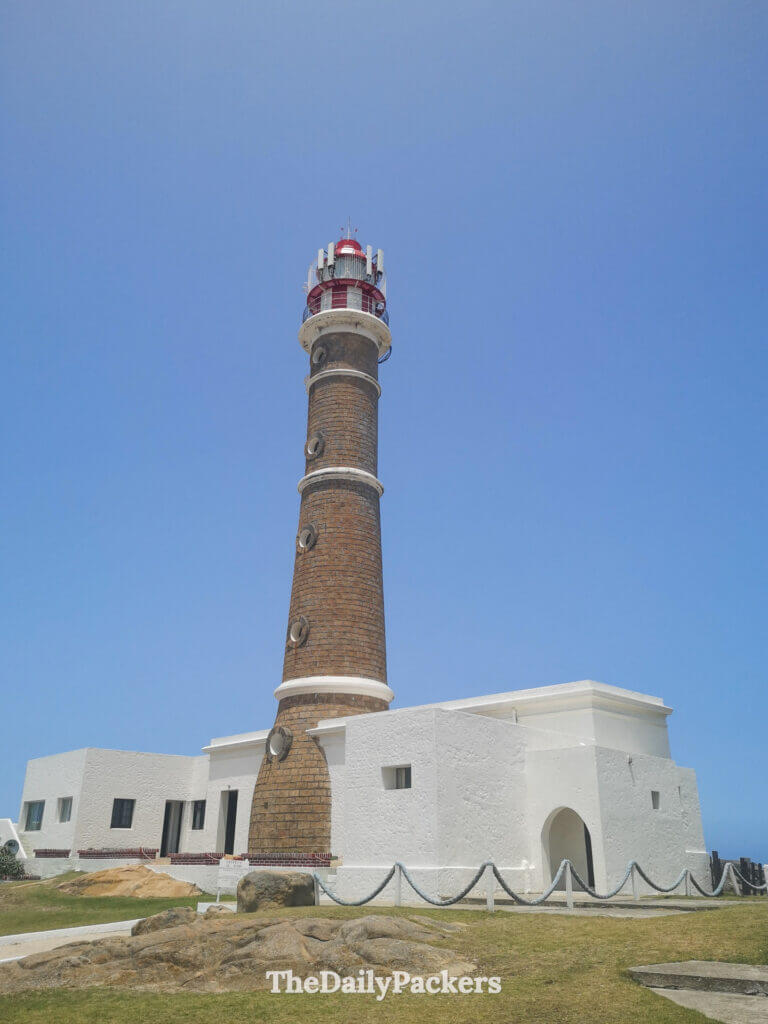
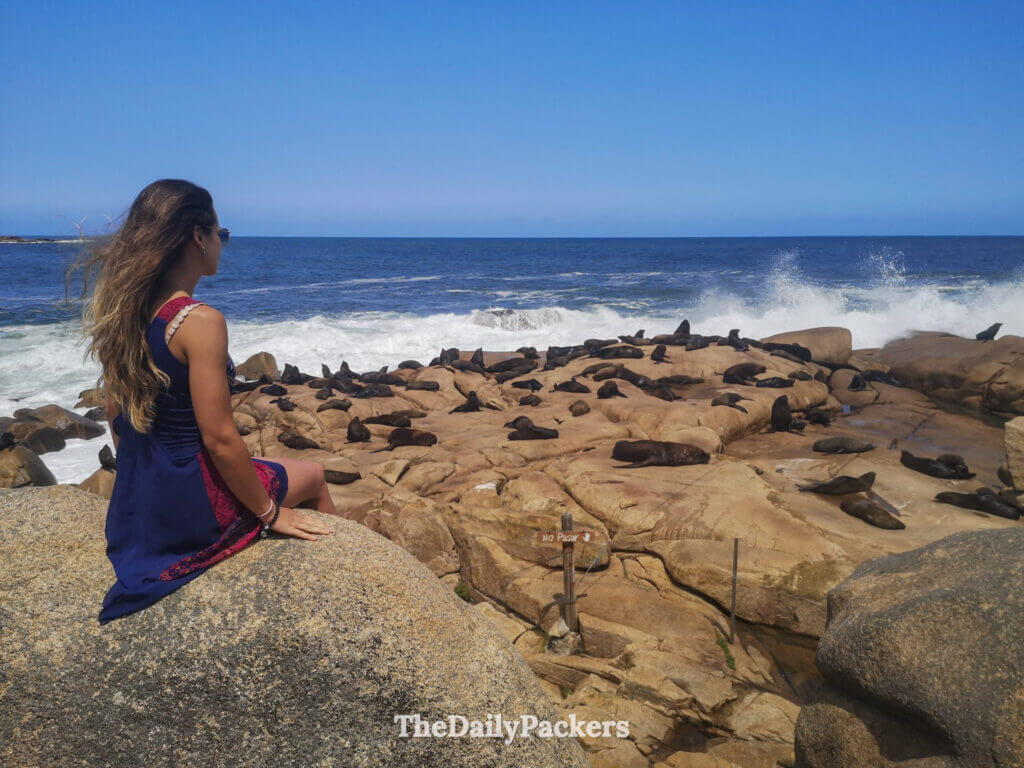
Once there, you can explore the lighthouse for panoramic views, wander along the beaches, and visit the sea lion colony, one of the largest in South America. The village itself is home to a few locals living off-grid — many are artisans and small café owners who welcome visitors with fresh juices and handmade crafts.
It’s a peaceful, almost magical place where time seems to slow down. Don’t expect Wi-Fi or fancy restaurants — that’s the charm of Cabo Polonio. Just bring cash, water, and your sense of adventure.
Read: The Ultimate Cabo Polonio Travel Guide
Explore Santa Teresa National Park
Just a few kilometers from Punta del Diablo lies Parque Nacional Santa Teresa, one of Uruguay’s most impressive natural areas. Covering over 3,000 hectares, this protected park combines history, wildlife, and pristine landscapes — all open for visitors to explore. Around 1,400 hectares are forested, home to more than 2 million trees (both native and exotic species).
The park is free to visit from 8 a.m. to 8 p.m. during the high season (December to March). It’s managed by the Uruguayan army, so don’t be surprised if you see soldiers along the trails — the military base is located inside the park.
Here are the main highlights to see within Santa Teresa National Park:
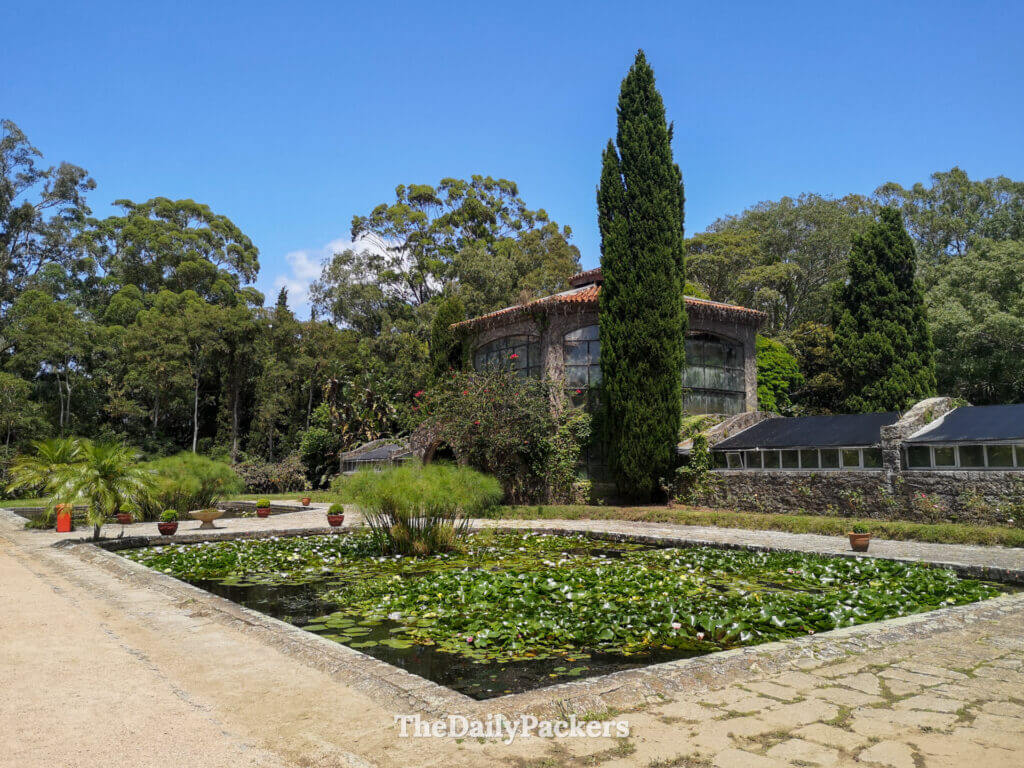
Capatacía (Visitor Center)
This is the best place to start your visit. The Capatacía area serves as the park’s visitor hub, where you can grab maps, learn about the different trails, and get recommendations for your route. There’s also a small exhibition about the park’s history and biodiversity.
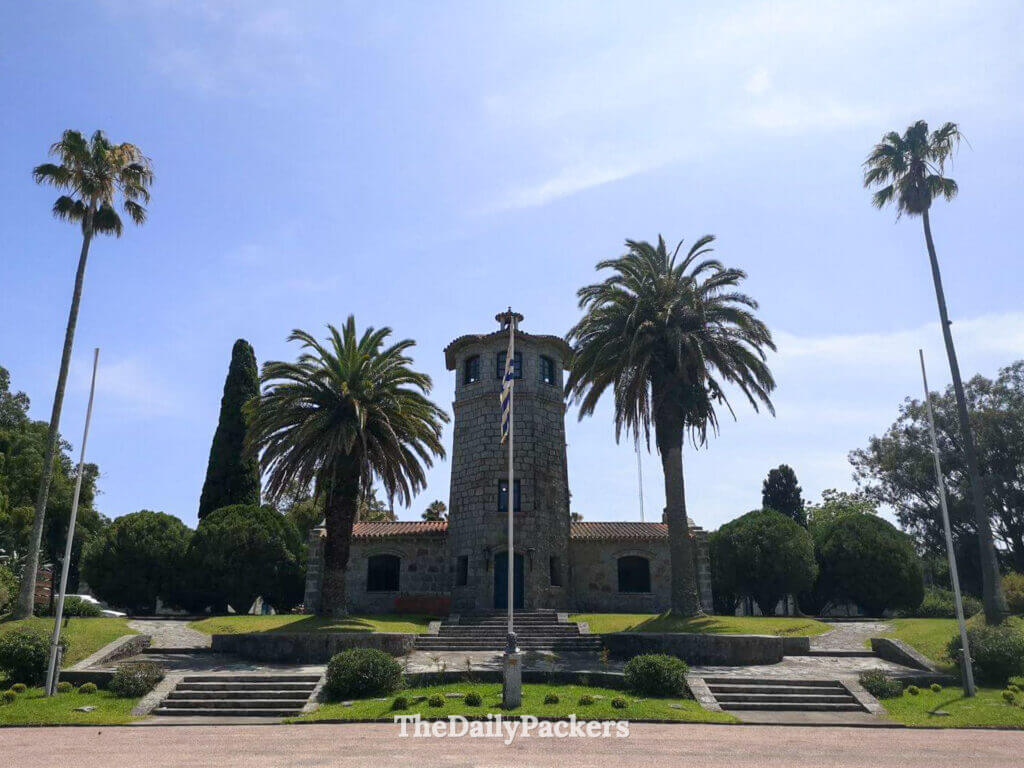
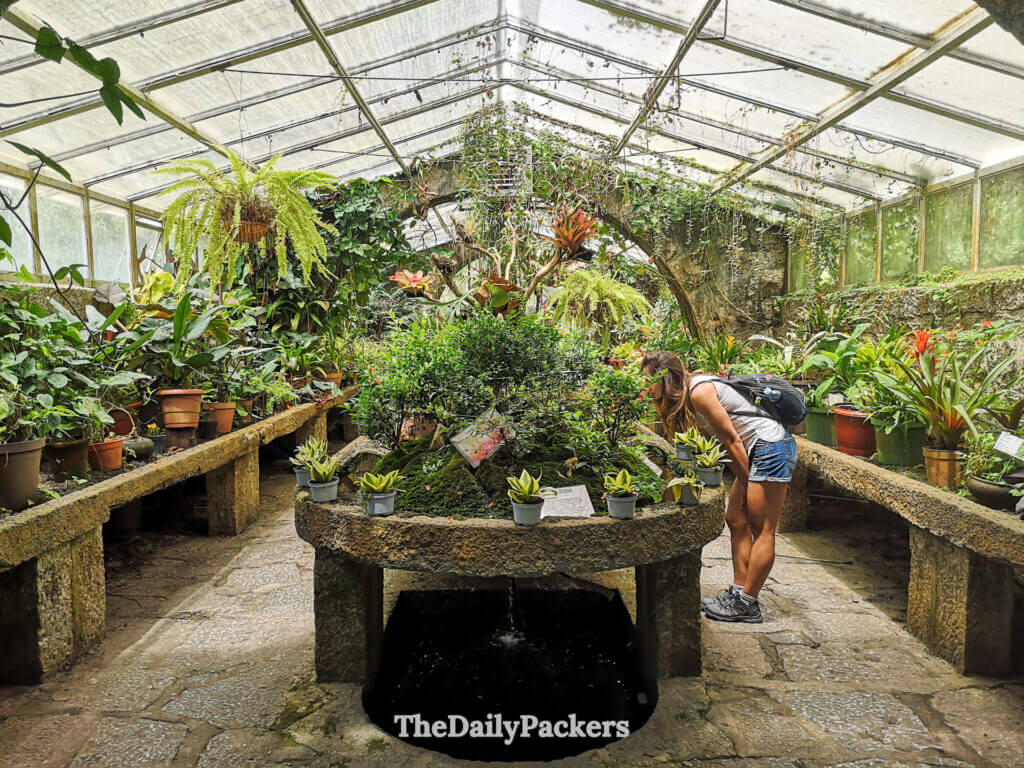
Botanical Garden
Located near the main entrance, the Botanical Garden is one of the most peaceful spots in the park. It showcases Uruguay’s diverse flora — from eucalyptus and pine to native species like ombú and ceibo. It’s a lovely place for a quiet stroll or to take a break in the shade.
Here are all your accommodation options in Punta del Diablo
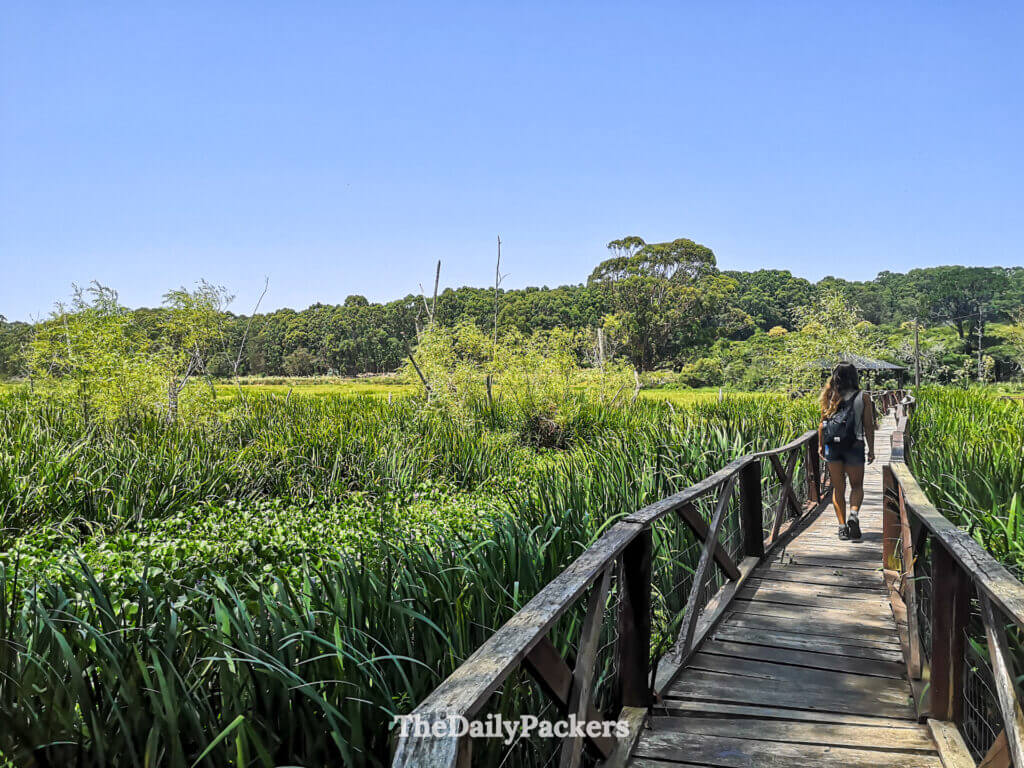
Laguna de Peña (Peña Lagoon)
This tranquil lagoon is one of our favorite parts of the park. Surrounded by greenery and frequented by birds, it’s perfect for a picnic or some light wildlife watching. You can also rent small boats during the high season.
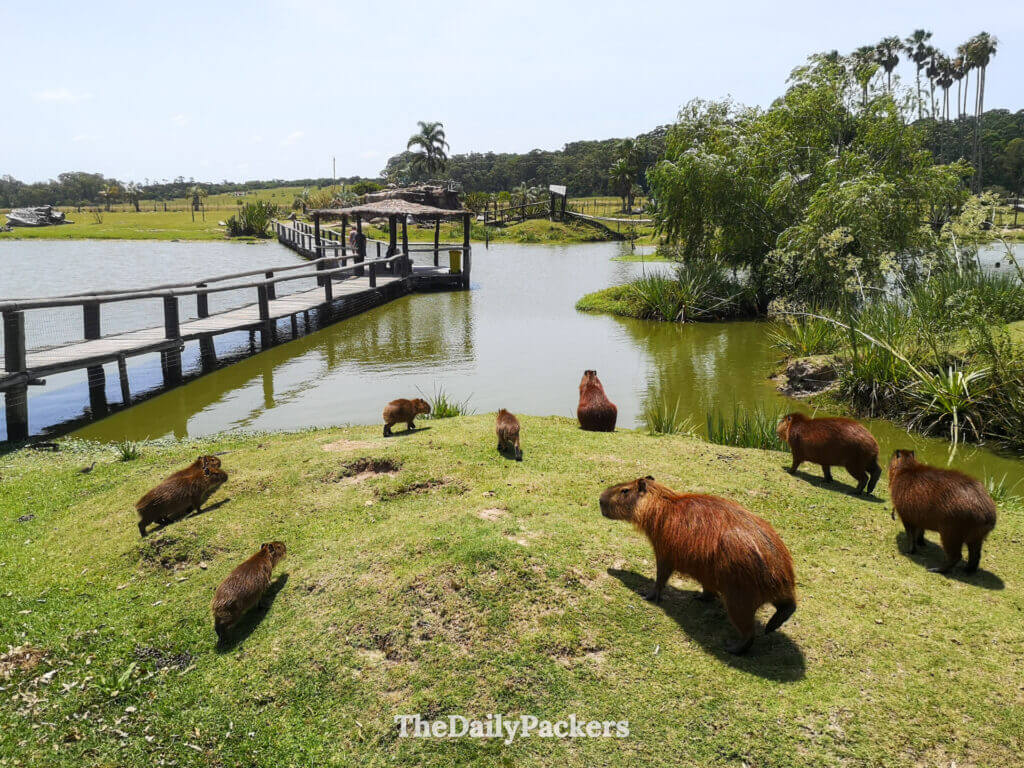
La Pajarera (Wildlife Refuge and Reserve)
La Pajarera is a small wildlife refuge that shelters injured or rescued birds and animals. It’s educational and heartwarming, especially if you’re traveling with kids. The refuge also plays an important role in species conservation within the park.
El Chorro Waterfall
Hidden deeper within the park, El Chorro is a small but beautiful waterfall surrounded by forest. The short hike to get there is worth it — it’s peaceful, green, and far less crowded than the beaches.
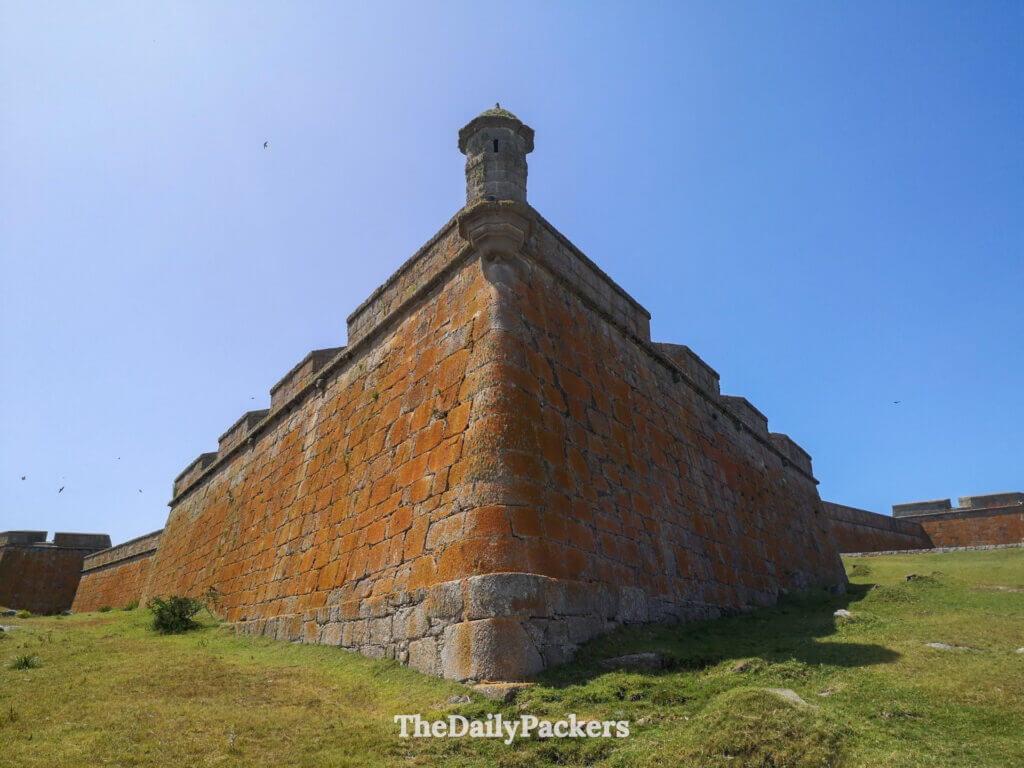
Santa Teresa Fortress
One of the main historical attractions in the region, the Fortaleza de Santa Teresa dates back to the 18th century. Built by the Portuguese and later taken over by the Spanish, it once played a key role in regional defense. You can walk along its ramparts, visit the small museum, and admire the ocean views.
The Beaches of Santa Teresa
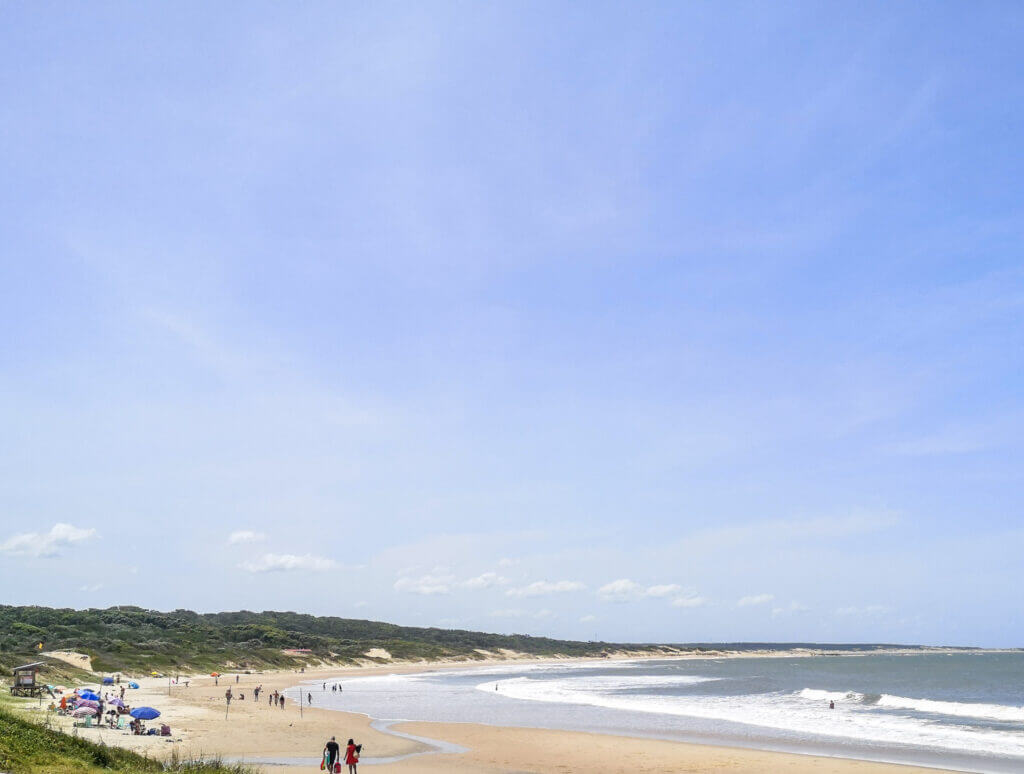
The park is also home to several wild and pristine beaches. Playa del Barco, Playa de la Moza, and Playa de las Achiras are among the most beautiful, with soft sand, clear water, and very few people. They’re perfect for relaxing after exploring the park’s trails.
Read: The Ultimate Santa Teresa National Park Travel Guide
Visit Laguna Negra
After exploring Santa Teresa National Park, you can take a small detour toward Laguna Negra, one of the largest freshwater lagoons in Uruguay. The road is easy to follow at first, with clear signs, but after the roundabout it quickly turns into a dusty dirt path. Keep following it until you reach Puesta del Sol, which marks the end of the road.
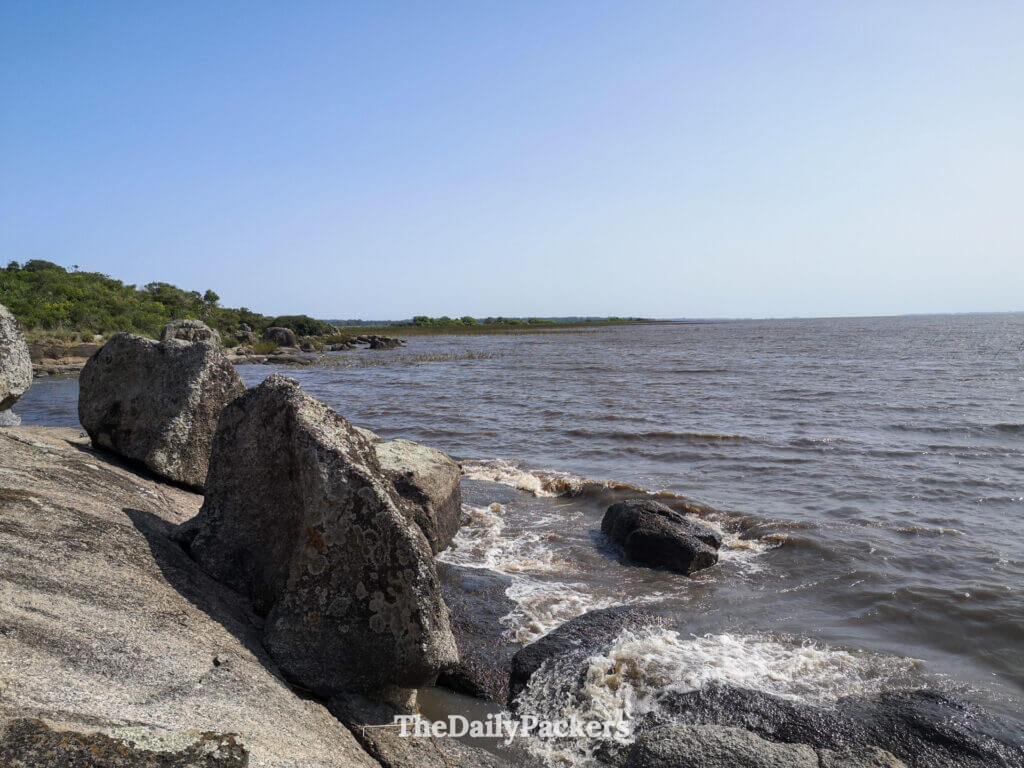
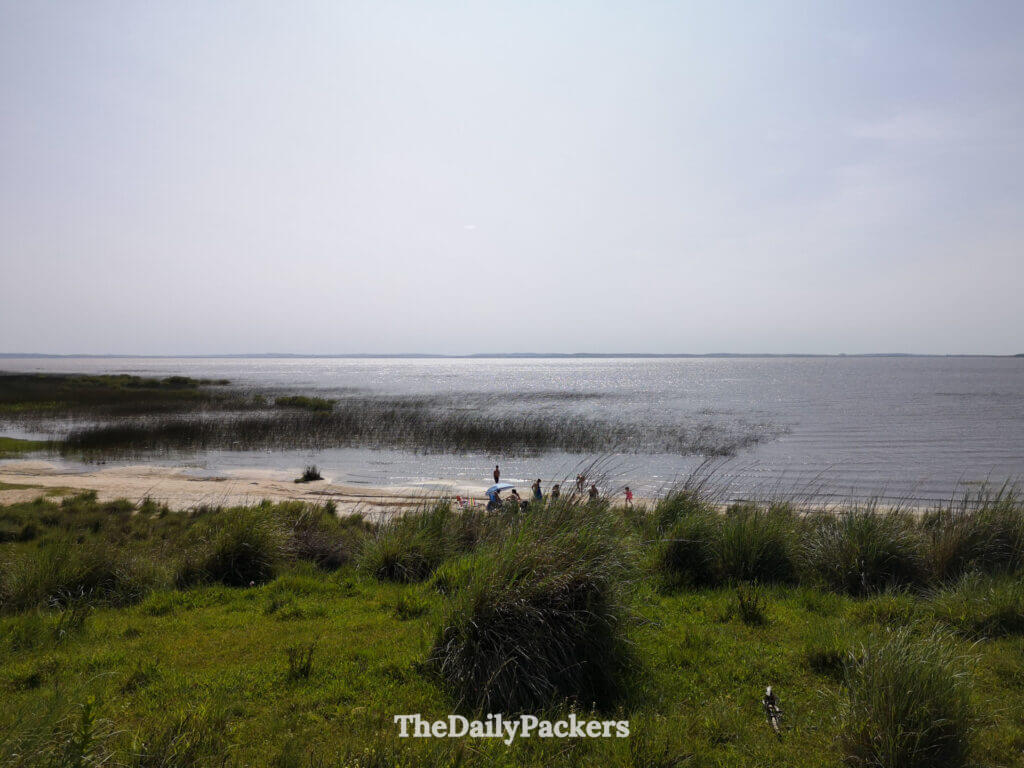
Once there, you’ll find total peace and quiet — just water, birds, and wide-open nature. You might even come across a few locals fishing by the shore, enjoying the calm of the lagoon. It’s not a touristy place, and that’s exactly what makes it special.
There’s no infrastructure, so bring water, snacks, and anything you might need. If you have time, stay until sunset — locals say it’s one of the most beautiful in the region, with golden light reflecting on the still lagoon. It’s the perfect way to end your day before heading back to Punta del Diablo.
Here are all your accommodation options in Punta del Diablo
Punta del Diablo Travel Tips
Grocery Stores
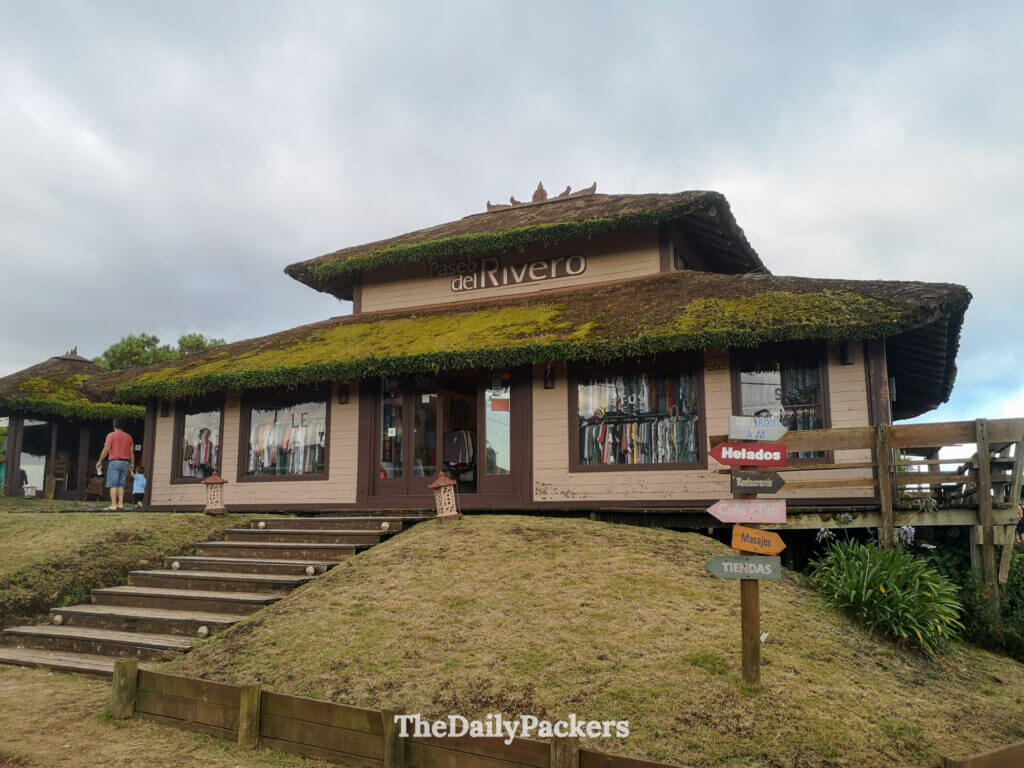
Punta del Diablo has plenty of small supermarkets and local shops, so you’ll easily find most essentials if you prefer cooking your own meals. You can buy vegetables, canned food, meats, cheese, coffee, tea, snacks, and bread almost anywhere in town. However, if you follow a vegan diet, options are quite limited — it’s best to bring a few basics with you.
Pharmacy
There’s one pharmacy conveniently located near Playa de Los Pescadores, right in the center of town. It’s small but carries all the usual essentials.
ATM & Money Tips
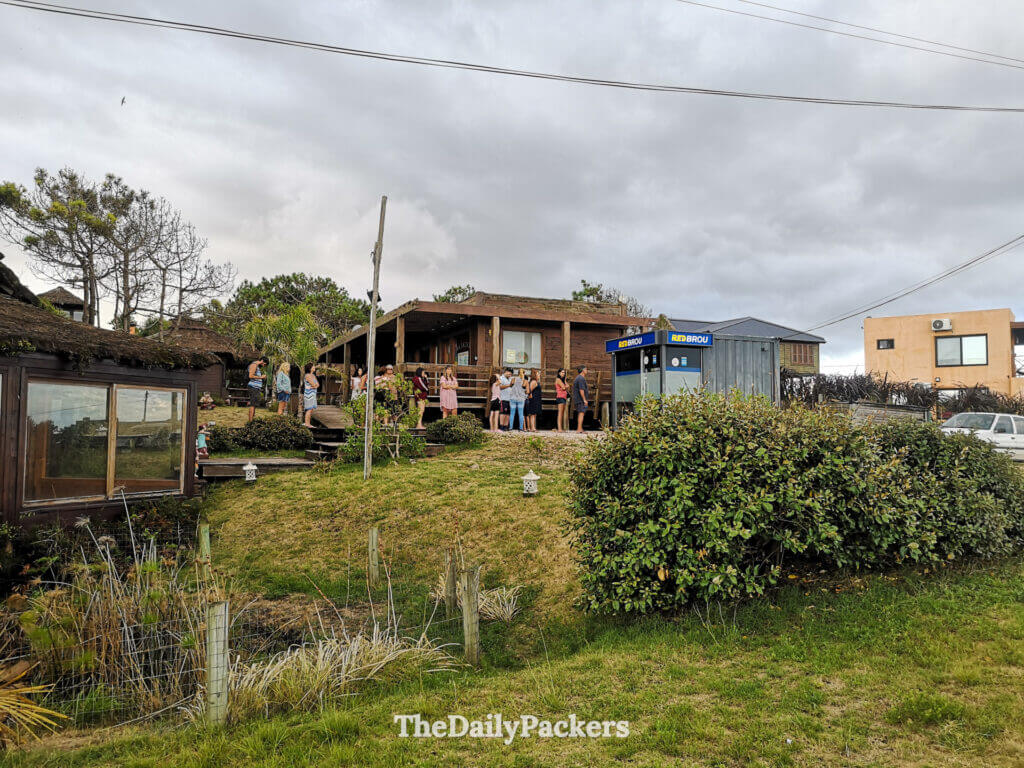
There’s only one ATM in Punta del Diablo, and it tends to run out of cash quickly — especially during weekends or high season. Expect lines of up to 15 people. A good alternative is the ATM inside Santa Teresa National Park, which is less crowded and more reliable.
Most supermarkets also accept Brazilian Reals (BRL) at an approximate exchange rate of 8.5 BRL = 1 UYU. We used one of the larger supermarkets near the center, which accepted BRL without any issues.
If possible, bring cash with you before arriving — it’ll make your stay smoother, especially if you’re planning to visit small cafés, local markets, or take buses.

Punta del Diablo Itinerary
Day 1 – Settle in and Explore the Village
- Morning: Arrive in Punta del Diablo and settle into your accommodation. If you’re staying somewhere like La Girada or Eco House Via Verde, take a moment to relax and get a feel for the peaceful surroundings.
- Late Morning: Head toward Playa de Los Pescadores, the heart of the village. Watch the colorful fishing boats come and go, stroll along the sand, and stop by the Feria de Artesanos, the local craft market.
- Lunch: Grab something simple from a seaside café or cook your own meal with fresh groceries from one of the local markets.
- Afternoon: Enjoy the nearby Playa del Rivero, a great spot for swimming and surfing. It’s lively but still has that relaxed Punta del Diablo vibe.
- Evening: Watch the sunset from Playa de la Viuda — one of the best sunset spots in town — and finish your day with dinner at a cozy restaurant like Il Tano Cucina or Franca Resto Bar.
Day 2 – Santa Teresa National Park & Laguna Negra
- Morning: Rent an electric bike or take a short taxi ride to Santa Teresa National Park. Spend a few hours exploring its highlights:
- Capatacía
- Botanical Garden
- Laguna de Peña and La Pajarera (Wildlife Refuge)
- Santa Teresa Fortress, with beautiful ocean views
- Lunch: Have a picnic in the park or eat at the small café inside the fortress area.
- Afternoon: On your way back, take a detour to Laguna Negra, one of Uruguay’s largest lagoons. The last part of the road is dusty, but the views and peaceful atmosphere are worth it. If you have time, stay for sunset — it’s stunning.
- Evening: Return to Punta del Diablo, relax at your accommodation, and enjoy a quiet dinner or a shared meal around a campfire if you’re staying in a guesthouse like La Girada.
Day 3 – Cabo Polonio Day Trip
- Morning: Take a day trip to Cabo Polonio National Park, one of Uruguay’s most unique and untouched places. The only way to get there is by special 4×4 vehicles that cross dunes and forests — a true adventure.
- Midday: Visit the Cabo Polonio Lighthouse, explore the dunes, and watch the sea lions resting on the rocks.
- Lunch: Eat at one of the small beachside restaurants — most offer fresh fish and local dishes.
- Afternoon: Walk around the colorful village, enjoy the ocean views, and relax before heading back.
- Evening: Return to Punta del Diablo for your last night. Have a quiet dinner or grab a drink at one of the beach bars to celebrate the end of your trip.
Read: Our complete 10-day Uruguay Itinerary
About the authors
We are Alex and Tina, a French-Serbian couple who met in China back in 2014. We spent three incredible years there before making France our home. Our shared passion for travel has been the heartbeat of our relationship for over 12 years, taking us across 44 countries and counting.
We launched TheDailyPackers in 2019 as a way to document our adventures. In 2026, we reached a major milestone by officially turning our blog into our full-time job. While we are still growing toward financial independence through this platform, every article we write is fueled by our mission to make your voyages easier through in-depth guides, honest advice, and the lessons we’ve learned from our own mistakes.
Our journey has not been without its storms. In 2023, our world changed forever when our first son, Poppy, was stillborn on November 25th. It was, and remains, the hardest chapter of our lives. In 2025, we were blessed with our second little boy, Milo. He has since joined our traveling tribe, and you’ll be seeing him—and the reality of traveling with a little one-on the blog more and more.
We hope to inspire you to explore the world with curiosity and resilience. Thank you for being part of our story.
You may also like those related posts
9 Inspiring Travel Stories that Happened Along the Journey
São Paulo to Curitiba: The Ultimate 6h Bus Guide
Balkans itinerary: 3-week roadtrip from Slovenia to Serbia
Sigiriya Lion Rock: Visit the famous Sri Lanka’s Icon
3 Best Places to Visit in March
Lourmarin, One of Provence’s Most Beautiful Villages in 2025
Southern Thailand: The Perfect 2-week Itinerary
The perfect 2-week Baltic States Itinerary
Pssst, did you know that…
If you purchase something through our links, we earn a small fee. However, you still pay the same. Win-win! And one day we may get to be full-time travel bloggers =)
Find Hotels with Booking.com
Do Yoga with KVY
Buy us a Coffee
Rent a car with DiscoverCars
Find Attractions with GetYourGuide
Find Flights with Expedia
Buy an eSIM with Airalo
Get insured with World Nomads
Get ready with Amazon.com