

Introduction
When visiting Sigiriya, most people come for the iconic Lion Rock, but for us, one of the most unforgettable and emotional experiences was going on a safari to see wild elephants. Surrounded by jungle, lakes, and open grasslands, this part of Sri Lanka is home to three national parks—Kaudulla, Minneriya, and Hurulu Eco Park—each offering the chance to see elephants living freely in their natural habitat.
What made the experience especially meaningful for us is that we had recently lost our son. In our grief, we found comfort in imagining he had become one of those baby elephants- innocent, gentle, and surrounded by love. So when we found ourselves quietly observing a herd with little ones in the wild, it wasn’t just magical—it was deeply touching and healing.
Even more powerful was the sense of peace and solitude. For most of the afternoon, it felt like we had the entire park to ourselves. No rush, no noise, just the soft sounds of the wilderness and the calm, grounding presence of the elephants. It gave us the space to simply be—with our thoughts, with each other, and with nature.
In this guide, we’ll share everything you need to know about going on a safari in Sigiriya—how to choose the right park, what to expect, what it costs, and why we think it’s one of the most meaningful things you can do in Sri Lanka.


Here are all your accommodation options in Sigiriya.
Why Go on a Safari in Sigiriya?
Sigiriya may be best known for its ancient rock fortress, but just beyond the archaeological sites lies something equally extraordinary: wild elephants roaming free in their natural habitat. The area is surrounded by three national parks—Minneriya, Kaudulla, and Hurulu Eco Park—which form part of a protected corridor where hundreds of elephants migrate throughout the year.
Unlike the crowded wildlife parks in other national parks in Sri-Lanka, these safaris feel intimate and wild. You won’t find paved roads or fenced-in reserves here. Instead, you drive through forest tracks, open grasslands, and lakeshores where elephants drink, bathe, and care for their young, completely undisturbed.
We chose an afternoon safari, and from the moment we entered the park, it felt like we’d stepped into a different world. No other jeeps in sight, no human noise—just birds, trees, and the slow movements of elephants emerging from the trees. There’s something incredibly grounding about being in their presence, especially when they surround your jeep in total silence, as they did for us.
For anyone visiting Sigiriya, we can’t recommend this experience enough. Whether you’re a wildlife lover, a family with kids, or simply someone craving a connection with nature, this is one of those rare moments that stays with you long after the trip is over.

Which National Park to Choose: Kaudulla, Minneriya, or Hurulu?
One of the most common questions when planning a safari in Sigiriya is: which park should you visit? The truth is, all three—Kaudulla National Park, Minneriya National Park, and Hurulu Eco Park—are part of the same elephant corridor, and elephants move freely between them depending on the season, weather, and water availability.
Minneriya National Park
Best known for “The Gathering,” an extraordinary event between July and October, when hundreds of elephants congregate around the Minneriya Tank (reservoir). It’s one of the largest elephant gatherings in Asia and a must-see if you’re visiting during those months.
- Best for: Peak dry season safaris and large herds
- Landscape: Open grasslands and lakes
Kaudulla National Park
Located just north of Minneriya, Kaudulla is a great alternative when the elephants move further north in search of water. The park features similar landscapes but tends to be a little less crowded.
- Best for: Safaris from October to January, when Minneriya starts drying out
- Landscape: Wetlands, forest, and open plains
Hurulu Eco Park
Smaller and more forested than the other two, Hurulu is often the best option during the inter-monsoon periods or rainy seasons when elephants retreat into the thicker jungle.
- Best for: Safaris in March–June, or during unpredictable weather
- Landscape: Dense forest and shaded trails

How to Know Where to Go
Elephants don’t follow a calendar, so the best way to choose your park is to ask your accommodation the morning of your Safari in Sigiriya. Most local guesthouses and hotels have up-to-date info on which park currently has the most elephant activity, and they can help you book the right one accordingly.
This flexibility makes it easy to adapt your plans—and ensures you get the best chance to see elephants in the wild.


Tip: We use the DJI Action 4 to film our vlogs — compact, durable, and perfect for capturing every adventure.
How to Book a Safari in Sigiriya
Booking a safari in Sigiriya is surprisingly easy. You don’t need to arrange it weeks in advance; most guesthouses and hotels can organize it for you on the same day, depending on where the elephants are currently located.
Ask Your Accommodation
The simplest and most reliable way is to ask your host in the morning. Locals are often in close contact with jeep drivers and rangers, so they know which park currently has the most elephants. Based on that, they’ll help arrange:
- A private jeep and driver
- The right national park permit
- Pickup directly from your accommodation
This local approach takes out the guesswork and ensures you get the best possible experience.

Booking Independently
If you prefer more control, you can also book in advance through:
- Tour operators in Sigiriya or Dambulla
- Online platforms like GetYourGuide or Viator
- Direct contact with safari jeep drivers (often listed on Google Maps)
Just make sure your driver is licensed and that the entrance fee is not included in the jeep price, unless clearly stated.
Our Experience
We booked through our guesthouse the morning of our Safari in Sigiriya. At 1:30 PM, a private jeep picked us up and took us straight to the entrance of the park. No stress, no crowds—just a peaceful drive into the wilderness.

How Much Does a Safari in Sigiriya Cost?
The total cost usually includes two parts: the jeep rental and the national park entrance fees.
- Private jeep: Around 12,000 LKR (approx. €33 / $35) per vehicle
- Entrance fee: Around 5,000 LKR (approx. €13 / $14) per person
- Optional tip: Most drivers appreciate a small tip, especially if they were friendly, respectful of the animals, and took their time
This means for two people, you can expect to pay around 22,000–24,000 LKR total (€60–65) for a private Safari in Sigiriya. If you’re sharing the jeep with others, the cost per person drops significantly.

Here are all your accommodation options in Sigiriya.
When Do Safaris Take Place?
Most safaris are offered in the afternoon, as this is when elephants are more likely to be near the open water and easier to spot.
- Typical start time: Between 1:00 PM and 2:00 PM
- Total duration: About 3–4 hours, including transport to and from the park
- Return: Around 5:30–6:00 PM, just before sunset
While morning safaris are occasionally available, afternoons are widely considered the best time to see elephants, especially during the dry season.

What to Expect on the Safari in Sigiriya
Our safari in Hurulu Eco Park started in the morning, after asking our host to help us book a tour. The parks in this region—Hurulu, Kaudulla, and Minneriya—are all part of the same elephant corridor, so in the morning, our host checked where the elephants had last been spotted. That day, they were in Hurulu Eco Park, so that’s where we went.
Getting to the Park
From our guesthouse, it took about 30–40 minutes by jeep to reach the park entrance. The entrance ticket was just under 5,000 LKR per person, and the private jeep cost 12,000 LKR in total. Our driver handled all the logistics and entry, and once we got inside, he popped open the roof so we could enjoy the full Safari in Sigiriya experience.

The First Sightings
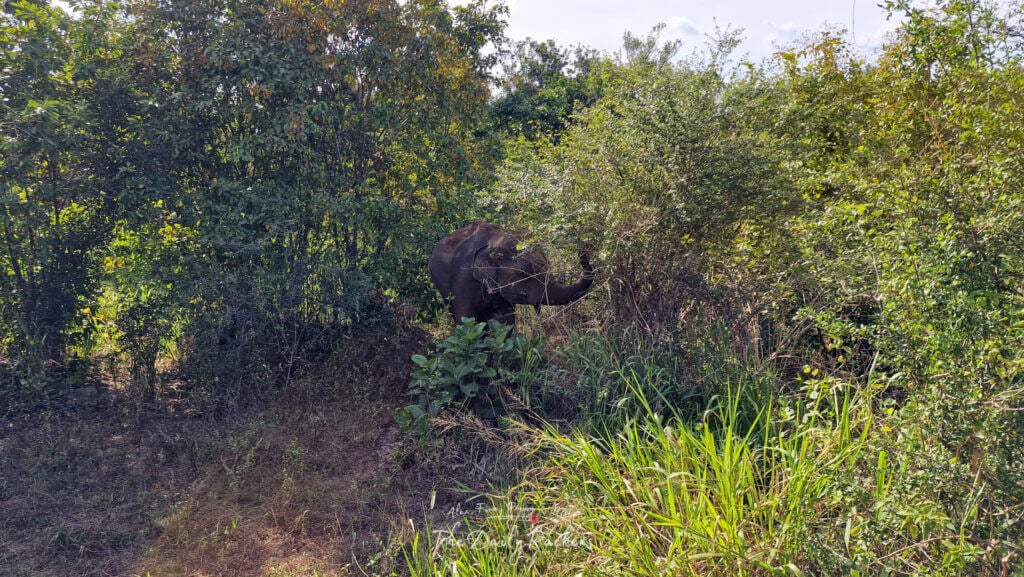
At first, the Safari in Sigiriya felt a bit like a slow treasure hunt. We saw our first elephant not long after entering, but it quickly retreated into the forest. A little further down the track, we spotted another, but again, it disappeared into the trees. It was a reminder that this is not a zoo—the elephants roam freely, and sightings aren’t instant.

A Pause and a Viewpoint
Our driver suggested a short hike to a viewpoint within the park, giving us time to stretch and take in the peaceful landscape. From there, we got back into the jeep and continued driving, not knowing just how special the next hour would become.

Surrounded by Elephants
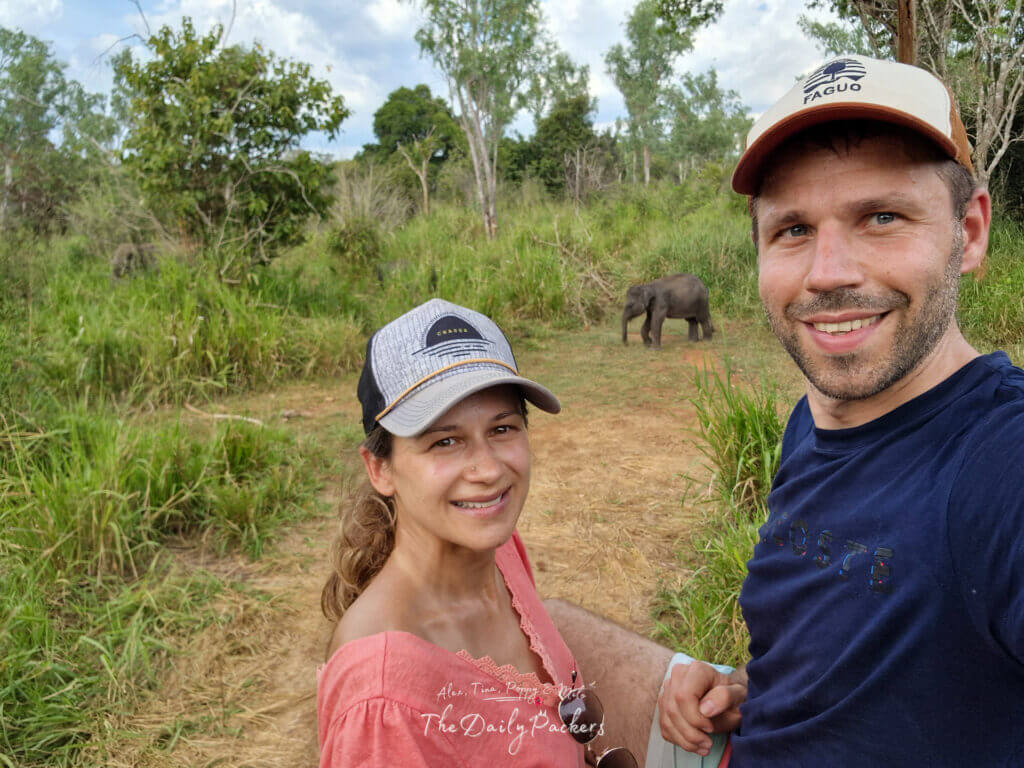
As we moved deeper into the park, it felt like we were completely alone—just us, the trees, and the occasional sound of birds. Then, all at once, elephants began appearing from every direction. A large group emerged from the trees, including two baby elephants—one of them so young it could barely keep up. It was a moment we’ll never forget.
In that instant, we both thought of Poppy, our son who we lost. It brought tears to our eyes to see this newborn elephant, surrounded and protected by its family. In our hearts, we imagined that maybe—just maybe—he had become that baby elephant. It’s the kind of thought that brings peace in its own way, and being surrounded by these quiet, majestic creatures made it feel real, even just for a moment.

Even More Elephants
We continued through the park and came across multiple herds, some standing still in the tall grass, others wandering slowly. At one spot, we counted at least ten elephants all gathered together. It wasn’t loud or chaotic—it was peaceful, natural, and deeply moving.
Our driver took his time. He never rushed us, never crowded the elephants. And because the jeep was entirely private, we had the space to just observe, feel, and be fully present.

Here are all your accommodation options in Sigiriya.
What to Bring and Wear for Your Safari in Sigiriya
A safari in Sigiriya is laid-back and comfortable, but the weather, dust, and sun can catch you off guard if you’re not prepared. Here’s what we recommend to make the most of your experience.
What to Wear
- Light, breathable clothing – The heat can sneak up on you, especially in the afternoon. Choose clothes that are comfortable and quick-drying.
- Earth tones – Stick to neutral colors like khaki, olive, or beige to blend into the environment and avoid attracting insects.
- Hat or cap – Essential for keeping the sun off your face, especially in open areas.
- Sunglasses – For sun protection and to shield your eyes from dust on the jeep tracks.
- Closed shoes or sandals – You won’t be doing much walking, but it’s helpful to wear something secure and dust-resistant, especially if you take a short walk like we did.
What to Bring
- Water bottle – Bring more than you think you’ll need, especially if you’re doing an afternoon safari.
- Camera or phone – For those unforgettable elephant encounters. A zoom lens helps, but even phone cameras can capture the magic.
- Sunscreen – Apply before and during the ride, especially on your arms, face, and neck.
- Insect repellent – Useful in the wetter months or near water sources.
- Light snack – Something simple like a fruit or granola bar in case the safari runs long.
- Tissues or wet wipes – Great for dusty hands or a quick freshen-up after the ride.
- Scarf or buff (optional) – If it’s a windy day, having something to protect your face from dust is helpful.
Because the jeep is private, you’ll have space to keep your backpack or essentials nearby without worry. Most importantly, bring your sense of calm and patience—it’s not just about the wildlife, but the rhythm of the landscape itself.


Tips for a Respectful and Memorable Safari
A safari in Sri Lanka is about more than just seeing animals—it’s about experiencing nature with humility and care. Here are a few tips to help make your experience meaningful for both you and the wildlife:
- Be Quiet and Present: Elephants are sensitive creatures. The quieter you are, the more likely they are to stay close and behave naturally. Skip the loud talking and take in the moment—some of the most beautiful memories are made in silence.
- Don’t Ask Drivers to Chase Animals: We’ve seen it happen, and it’s never okay. Trust your driver and let them guide the experience. Respectful distances allow elephants to stay relaxed—and that’s when you see their most natural behavior.
- Avoid Feeding or Touching Wildlife: It may be tempting, but never feed or attempt to approach the animals. Not only is it dangerous, it disrupts their natural patterns and can lead to harmful dependency.
- Keep the Park Clean: Bring everything you take in, back out with you. This includes plastic bottles, snack wrappers, and anything that could harm the environment. Most jeeps have bins—use them.
- Don’t Expect a Show: Nature doesn’t operate on a schedule. There might be long stretches with little action—but that’s part of the magic. Stay patient and open. When wildlife does appear, it feels like a gift.
- Support Local, Responsible Tourism: Book with local drivers and accommodations that care about the environment and animal welfare. Ask questions if you’re unsure about their practices—a good safari respects both the land and its inhabitants.
- Embrace the Emotional Side: If you’re traveling with a personal story—as we were—let yourself feel it. Being surrounded by wild elephants was healing in a way we hadn’t expected. Sometimes nature knows exactly what you need, even before you do.

Here are all your accommodation options in Sigiriya.
Is a Safari in Sigiriya Worth It?
Without a doubt—yes.
A safari in Sigiriya isn’t just a wildlife excursion. It’s a quiet, moving experience that connects you with nature in a way few other activities can. Whether you see one elephant or twenty, the stillness of the landscape, the anticipation of each sighting, and the presence of these gentle giants make it unforgettable.
For us, it was even more than that. After the heartbreak of losing our son, this safari gave us space to grieve, to heal, and to feel a deeper connection to something greater than ourselves. Watching a herd surround their young—calm, protective, and strong—touched us more than words can explain. We like to think maybe our little one was there with us, in the form of that baby elephant, reminding us that life continues, gently and beautifully.
Whether you’re traveling with kids, chasing wildlife sightings, or just want to experience something real and grounding—this is it.
If you’re visiting Sigiriya, don’t leave without stepping into one of these parks. It’s a moment of calm, wonder, and wild beauty you’ll carry with you long after you leave Sri Lanka.
Where to stay in Sigiriya
If you’re planning to explore Sigiriya and its surroundings, it’s worth spending at least a night or two nearby to enjoy the area without rushing. From peaceful guesthouses to charming mid-range hotels and stylish resorts, here are a few great places to stay depending on your budget:
(€) Shady Mango Villa: A quiet and cozy guesthouse surrounded by nature, perfect for budget travelers looking to relax in a peaceful garden atmosphere not far from Sigiriya Rock.
(€€) Il Frangipane: A charming mid-range stay with a lush tropical vibe, pool access, and warm hospitality—great for couples or families seeking comfort and style.
($$$) Sigiriya King’s Resort: A more luxurious option with elegant rooms, views of the rock fortress, and all the amenities you’d want for a relaxing, high-end experience in Sigiriya.

Here are all your accommodation options in Sigiriya.
About the authors
We are Alex and Tina, a French-Serbian couple who met in China back in 2014. We spent three incredible years there before making France our home. Our shared passion for travel has been the heartbeat of our relationship for over 12 years, taking us across 44 countries and counting.
We launched TheDailyPackers in 2019 as a way to document our adventures. In 2026, we reached a major milestone by officially turning our blog into our full-time job. While we are still growing toward financial independence through this platform, every article we write is fueled by our mission to make your voyages easier through in-depth guides, honest advice, and the lessons we’ve learned from our own mistakes.
Our journey has not been without its storms. In 2023, our world changed forever when our first son, Poppy, was stillborn on November 25th. It was, and remains, the hardest chapter of our lives. In 2025, we were blessed with our second little boy, Milo. He has since joined our traveling tribe, and you’ll be seeing him—and the reality of traveling with a little one-on the blog more and more.
We hope to inspire you to explore the world with curiosity and resilience. Thank you for being part of our story.
You may also like those related posts
Cost to Travel in Corsica, Our 2024 Budget breakdown
Hoi An Tailor Guide: Our Experience at Blue Eye
Northern Thailand: The Perfect 2-week Itinerary
11 Best Coffee Shops in Hanoi, Vietnam and 4 top restaurants
Valensole, Provence: Driving by the Lavender Village of France
Merzouga to Fes: Best Road to the Moroccan Alps in 1-Day
20 Best things to do in Bonifacio, Corsica in 3 days
9 Best things to do in Nusa Penida, Bali, in 4 days
Pssst, did you know that…
If you purchase something through our links, we earn a small fee. However, you still pay the same. Win-win! And one day we may get to be full-time travel bloggers =)
Find Hotels with Booking.com
Do Yoga with KVY
Buy us a Coffee
Rent a car with DiscoverCars
Find Attractions with GetYourGuide
Find Flights with Expedia
Buy an eSIM with Airalo
Get insured with World Nomads
Get ready with Amazon.com