

Introduction
Sainte Marie de la Mer was one of the highlights of our trip through the south of France. We heard about it from my mother, who would love to visit it. After spending time in Arles, we decided to take the scenic route through the Camargue National Park before reaching the town of Sainte Marie de la Mer.
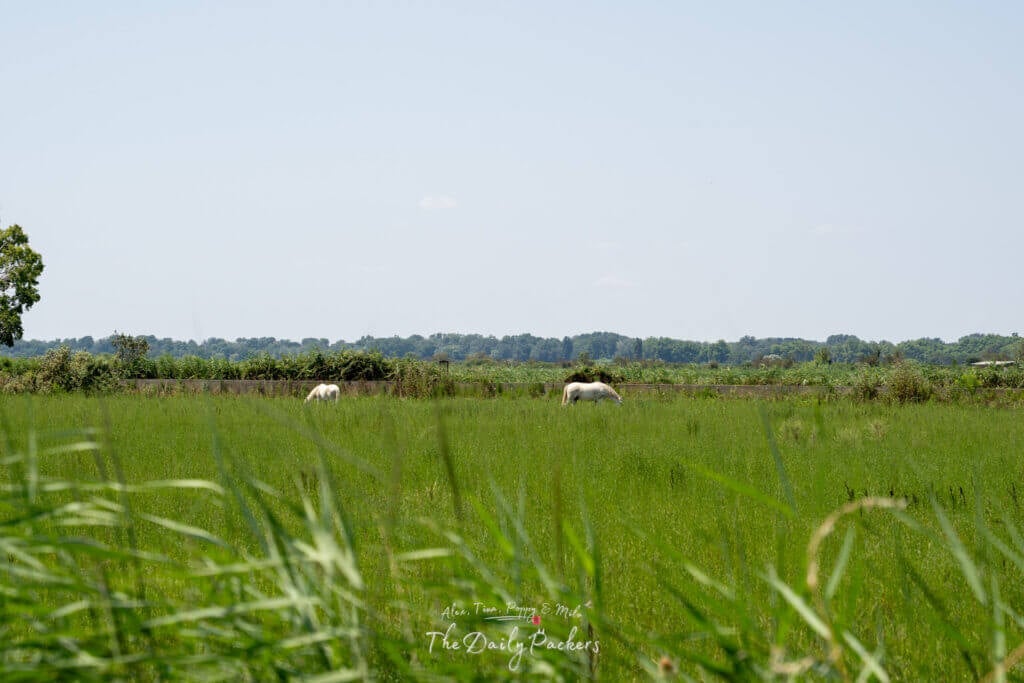
The drive itself was an experience — passing wild white horses grazing near the road, stretches of shimmering rice paddies, and the occasional flock of flamingos in the distance.
We even crossed the Petit Rhône on the Bac Sauvage, a small ferry that shuttles cars across the river — such a simple thing, but honestly one of the coolest moments of the day. By the time we arrived in Sainte‑Marie‑de‑la‑Mer, the mix of sea air, quiet streets, and the wild landscape around us made it feel like we had entered a completely different side of Provence.

Here are all your accommodation options in Arles
Why visit?
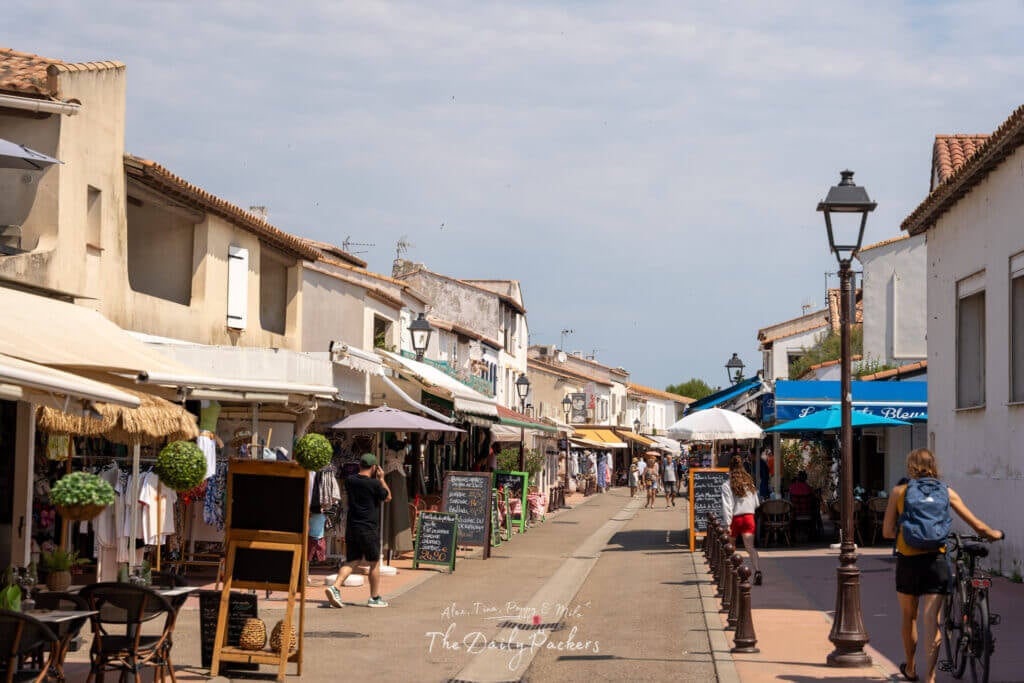
Sainte‑Marie‑de‑la‑Mer feels like stepping into another world. It’s the heart of the Camargue, where the rhythm of life is slower, and the landscapes are wild and untouched. The town itself is charming, with narrow streets, whitewashed houses, and a relaxed coastal vibe that makes you want to slow down.
It’s also a cultural hub – home to the famous Romani pilgrimage every May – and surrounded by the iconic scenery that makes the Camargue so special: pink flamingos wading in salt lagoons, white horses grazing in the marshes, and endless flatlands stretching to the sea.
Whether you’re coming for the atmosphere, the beaches, or the chance to see this unique region up close, Sainte‑Marie‑de‑la‑Mer is the perfect base to soak in the magic of the Camargue.

How to get there
Sainte‑Marie‑de‑la‑Mer is easy enough to reach, though it feels a world away once you’re there.
If you’re driving, it’s about 35 minutes from Arles and just under 1h30 from Montpellier, following scenic roads that cut through the Camargue’s wetlands and rice paddies. Along the way, you’ll likely spot the region’s famous white horses, black bulls, and pink flamingos.
If you don’t have a car, there are regional buses from Arles that run a few times a day, but having your own vehicle makes it much easier to explore the surrounding Camargue.
A fun alternative is to cross the Petit Rhône river on the “Bac Sauvage” ferry — a free, tiny, old-school ferry that shuttles cars and bikes back and forth. It’s a short ride but adds a real sense of adventure to the trip.


We recommend to rent a car through Discover Cars with free cancellation. Book your rental car here.
When to visit
The best time to visit Sainte‑Marie‑de‑la‑Mer and the Camargue really depends on what you want to see and do, but here’s a seasonal breakdown to help:
- Spring (March to May): Mild and pleasant, with temperatures around 15–22°C (59–72°F). It’s perfect for exploring the Camargue’s landscapes and spotting flamingos before the summer crowds arrive.
- Summer (June to August): Expect hot weather, often 28–34°C (82–93°F), and busy streets, especially in July and August. This is when the town feels most alive, with festivals, music, and a real beach-town energy — but also the most tourists.
- Autumn (September to November): A sweet spot. The weather stays warm (20–28°C / 68–82°F) but the crowds thin out. The landscapes turn golden, and it’s a calmer, more authentic experience.
- Winter (December to February): Quiet and much cooler, with temperatures around 8–14°C (46–57°F). Some shops and restaurants close for the season, but the wild beauty of the Camargue makes it worthwhile for those seeking solitude.
Tip: Late spring and early autumn are the best times if you want warm weather, fewer crowds, and the chance to enjoy the nature around Sainte‑Marie‑de‑la‑Mer without the summer rush.


How to Visit
Exploring Sainte‑Marie‑de‑la‑Mer and the Camargue is best done slowly, taking time to enjoy both the town and the surrounding nature.
Start by driving through the Camargue from Arles — the journey is part of the experience. You can find official maps of the recommended scenic routes online, which guide you past salt flats, rice paddies, and open fields.
While driving, keep your eyes peeled for the famous white Camargue horses, pink flamingos, and even the dark bulls that roam the wetlands.

One thing you shouldn’t miss along the way is the Bac du Sauvage. It’s just a tiny ferry that shuttles cars across the Petit Rhône in under two minutes, but we personally loved it —something is charming about how simple and old‑school it feels.
From there, continue to Sainte‑Marie‑de‑la‑Mer. Wander the pedestrian streets, browse the little shops, and take the time to climb the Notre‑Dame‑de‑la‑Mer church — the rooftop view over the town and the sea is worth it.

When you’re done, grab a table at one of the many small restaurants in town for lunch; most serve fresh seafood and local dishes that fit perfectly with the seaside vibe.

If you’re feeling adventurous, book a horseback ride or a 4×4 safari tour — they’re some of the best ways to get closer to the wildlife without disturbing it.
End your visit with some time at the beach. Sainte‑Marie‑de‑la‑Mer has long stretches of sand where you can walk, relax, or simply sit and watch the waves roll in before heading back.

Here are all your accommodation options in Arles
Tickets & Opening Hours
There’s no fee to simply wander around Sainte‑Marie‑de‑la‑Mer, enjoy the beaches, or drive through the Camargue, but a few things do come with a small cost. Climbing the rooftop of Notre‑Dame‑de‑la‑Mer church is just a few euros and gives you an incredible view over the town and the sea. If you plan to book a horseback ride or 4×4 safari tour, expect to pay around €30–€60 for shorter tours.
Parking in Sainte‑Marie‑de‑la‑Mer is mostly paid. We used Parking des Arènes, which is central and easy to access. Prices were around €2 for 1 hour, €4 for 4 hours, and €8 for the day – worth it for being able to leave the car and explore without stress.

Most restaurants and shops stay open daily, though in low season some close mid‑week. The church is open all day, but the rooftop tends to close earlier in the evening, so plan to go up earlier in the day to be safe.
There is also a little tourist train that costs 10€


Is it Worth It?
Absolutely — Sainte‑Marie‑de‑la‑Mer and the Camargue are one of those places that feel completely different from the rest of Provence. Between the salt flats, grazing white horses, pink flamingos, and a town that feels like a mix of fishing village and pilgrimage site, it’s an experience you don’t really get anywhere else in France.
We loved the slow pace, the feeling of being on the edge of land and sea, and the fact that you can see so much in just a day: drive scenic roads, take the Bac Sauvage ferry, climb the church for rooftop views, then end with your feet in the sand.
If you enjoy nature, a bit of culture, and that slightly wild feeling of being somewhere remote, it’s absolutely worth the detour.

Travel Tips
- Start early. The Camargue feels magical in the morning when the roads are quiet, the light is soft, and the wildlife is most active.
- Pack for all conditions. Even in summer, mornings can be breezy and afternoons scorching, so bring layers, sunscreen, and a hat.
- Don’t forget binoculars. They’re perfect for spotting flamingos and birds without getting too close.
- Carry cash. Some smaller cafés, the Bac Sauvage ferry, and even a few parking machines only take coins.
- Stay on the paths. When you stop to take photos of horses or flamingos, keep your distance and avoid stepping onto private farmland.
- Plan for a late lunch. Many restaurants in Sainte‑Marie‑de‑la‑Mer are touristy; ask locals or check side streets for quieter, more authentic spots.
- If you have time, stay overnight. The Camargue feels totally different at dusk, when the light turns golden and the day‑trippers are gone.

Where to stay
If you want to spend the night in the Camargue area, Arles is the best base. It’s just a short drive from Sainte‑Marie‑de‑la‑Mer and offers way more choice when it comes to hotels, guesthouses, and restaurants. Plus, you’ll have the bonus of exploring Arles’ Roman ruins and lively old town in the evenings, which makes the stay even more rewarding.
(€) Le Mas d’Isnard – A peaceful countryside stay just outside Arles, perfect if you’re looking for space, quiet mornings, and a more local feel.
(€€) Maison de charme d’Arles – A cozy guesthouse in the old town with lots of character, ideal for wandering the cobbled streets straight from your door.
(€€€) Jules César Hotel & Spa Arles – MGallery Collection – A luxury boutique hotel with a spa, right in the city center. A great choice if you want to treat yourself after long days of exploring.
Here are all your accommodation options in Arles
About the authors
We are Alex and Tina, a French-Serbian couple who met in China back in 2014. We spent three incredible years there before making France our home. Our shared passion for travel has been the heartbeat of our relationship for over 12 years, taking us across 44 countries and counting.
We launched TheDailyPackers in 2019 as a way to document our adventures. In 2026, we reached a major milestone by officially turning our blog into our full-time job. While we are still growing toward financial independence through this platform, every article we write is fueled by our mission to make your voyages easier through in-depth guides, honest advice, and the lessons we’ve learned from our own mistakes.
Our journey has not been without its storms. In 2023, our world changed forever when our first son, Poppy, was stillborn on November 25th. It was, and remains, the hardest chapter of our lives. In 2025, we were blessed with our second little boy, Milo. He has since joined our traveling tribe, and you’ll be seeing him—and the reality of traveling with a little one-on the blog more and more.
We hope to inspire you to explore the world with curiosity and resilience. Thank you for being part of our story.
You may also like those related posts
16 Best things to do in Montevideo, Uruguay, in 3 days
9 Best things to do in Nusa Penida, Bali, in 4 days
Soomaa National Park: Estonia’s Best national park in 2025
17 Essential Corsica Travel Tips to Know Before Your Trip
13 Best things to do in Lucerne, Switzerland, in 4 days
Valley of the Moon: 4h sunset tour from San Pedro de atacama
How to Visit Iguazu Falls: Argentina and Brazil Side Guide
Cusco Itinerary: How to spend 6 magical days in Cusco, Peru
Pssst, did you know that…
If you purchase something through our links, we earn a small fee. However, you still pay the same. Win-win! And one day we may get to be full-time travel bloggers =)
Find Hotels with Booking.com
Do Yoga with KVY
Buy us a Coffee
Rent a car with DiscoverCars
Find Attractions with GetYourGuide
Find Flights with Expedia
Buy an eSIM with Airalo
Get insured with World Nomads
Get ready with Amazon.com