
Introduction
Sarajevo was the final stop our 4-week road trip from France to Serbia, passing through the Balkans. After exploring Croatia and stopping in Trebinje and Mostar, our final stop in Bosnia and Herzegovina was Sarajevo.
Sarajevo is the capital and largest city of the country, with around 276,000 inhabitants in the city itself and over 550,000 in its metropolitan area. Nestled in a valley and surrounded by the Dinaric Alps, the city offers a unique blend of cultures, religions, and histories.
Often called the “Jerusalem of Europe” or the “Jerusalem of the Balkans,” Sarajevo is one of the rare places in the world where a mosque, a Catholic church, an Orthodox church, and a synagogue stand within the same neighbourhood — a reflection of its long-standing religious and cultural diversity.

Read: The perfect Balkans Itinerary
Getting there
Sarajevo is well connected by road, rail, and air, making it accessible whether you’re traveling from within the Balkans or further abroad.
If you’re on a road trip like us, the drive into Sarajevo is quite scenic, especially coming from Mostar through the mountainous landscapes. The roads are generally in decent condition, but expect narrow passes and some winding sections.
By air, Sarajevo International Airport (SJJ) is just 12 km from the city center. It serves regular flights from European hubs like Vienna, Istanbul, Munich, and Zurich. From the airport, you can take a taxi (around 20 BAM / 10 €), or use the trolleybus and local buses for a more budget-friendly option.
From Mostar, you can also take a train or a bus. The train journey is especially beautiful as it cuts through dramatic landscapes and tunnels. Buses run more frequently and take about 2.5 to 3 hours.
From Dubrovnik, if you skipped Mostar (but we don’t recommend that), you can drive or take a bus — Sarajevo is about a 4.5-hour drive depending on border traffic. Buses also operate daily between the two cities, making it easy to do even without a car.
Moving Around
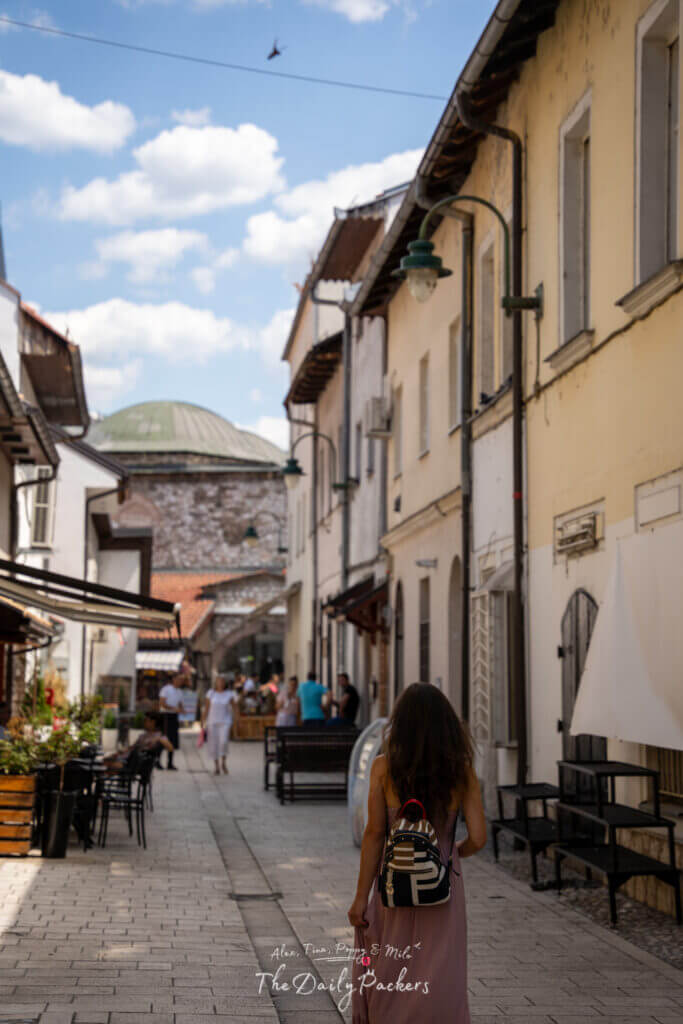
Sarajevo is a walkable city, especially around the old town (Baščaršija), where most of the main attractions are within easy reach. The cobbled streets, historic façades, and cozy cafés are best enjoyed on foot — just bring comfortable shoes as some areas are quite uneven.
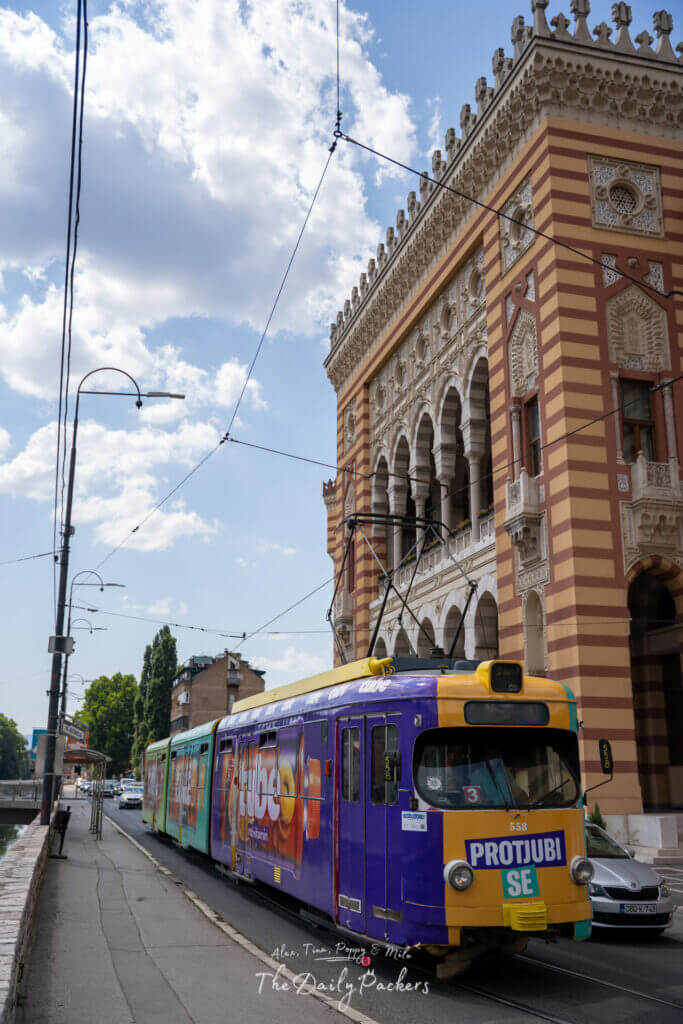
For longer distances, you can hop on one of the trams, trolleybuses, or buses. The tram line — one of the oldest in Europe — is a great way to move east to west through the city. Tickets can be bought at kiosks or directly from the driver (slightly more expensive).
Taxis are cheap and easy to find, just make sure the meter is running or agree on the fare in advance. Most rides across the city cost between 5–10 BAM (2.50–5 €).
If you’re driving, street parking exists but can be hit or miss. The best option is to use the underground parking near the Sarajevo Town Hall (Vijećnica) — it’s central, secure, and puts you right by the Old Town.
And if you’re up for a view, take the Trebević cable car to get a panoramic look over the city and the surrounding mountains.

We recommend to rent a car through Discover Cars with free cancellation. Book your rental car here.
When to Visit
Sarajevo is a year-round destination, but the experience you get will vary depending on the season. From snowy hills to lively summer nights, each period offers its own charm. Here’s what to expect throughout the year:
- Spring (March to May): Spring is one of the most pleasant times to visit Sarajevo. The city slowly wakes up from winter, flowers bloom, and the weather is mild with temperatures ranging from 10–20°C (50–68°F). It’s perfect for wandering the old town or sitting at a café terrace in Baščaršija.
- Summer (June to August): Summer brings warm and sunny days, with temperatures reaching 25–35°C (77–95°F). It’s the liveliest time of year with festivals like the Sarajevo Film Festival in August. However, it can get hot in the city and quite busy with tourists.
- Autumn (September to November): Autumn is a quieter and very scenic time to visit. Temperatures stay comfortable (10–22°C / 50–72°F) through most of September and early October. The fall colours over the hills around the city are beautiful, and the crowds start to fade.
- Winter (December to February): Winters are cold (averaging -5 to 5°C / 23–41°F), but if you love snow, this is a great time. Sarajevo hosted the 1984 Winter Olympics, and ski resorts like Jahorina and Bjelašnica are close by. The city also gets a charming winter vibe, especially if you visit around New Year.
Our tip: The best months are May to mid-June or September, when the weather is great and the crowds are smaller. It’s also easier to enjoy Sarajevo’s outdoor culture without the summer heat.

Where to Stay
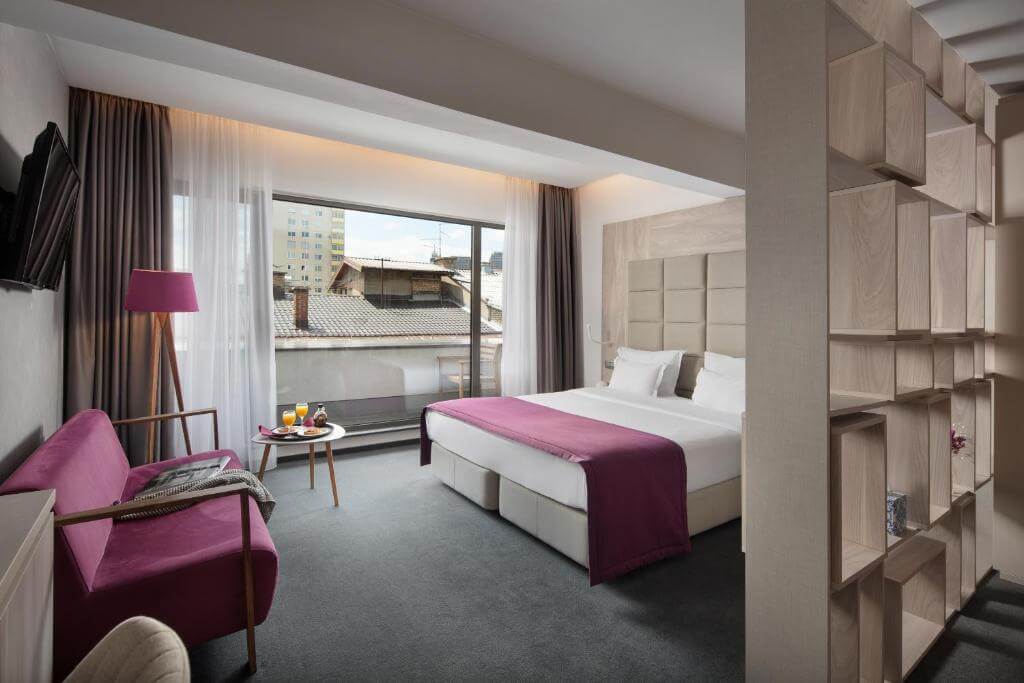
Here’s where to stay in Sarajevo — whether you’re on a budget, looking for comfort, or in the mood for something more luxurious. All these options are well located for exploring the city, especially around the old town and the main walking areas.
- (€) VILLA BASAMAK – A simple but well-rated guesthouse just above the city center, offering quiet surroundings and great views over the city.
- (€€) Hotel Colors Inn – A comfortable boutique hotel located close to the historical center. Perfect for those wanting a stylish stay without breaking the bank.
- (€€€) Swissotel Sarajevo – A luxurious hotel in the heart of the city, offering top-notch amenities, wellness center, and panoramic views from the upper floors. Great for a relaxing and premium experience.

Here are all your accommodation options in Sarajevo.
What to Eat
One of the absolute must-do experiences in Sarajevo is eating Ćevapi. These grilled minced beef sausages are a national favorite — even Tina’s brother occasionally drives from Serbia just to have them in Sarajevo. Served in soft pita or flatbread with chopped onions and a side of kaymak or yogurt, they’re simple, juicy, and full of flavor.
Vegetarian or plant-based options can be trickier to find in traditional restaurants, but you’ll still enjoy Baklava and other delicious Middle Eastern and Balkan sweets. Many pastry shops in the old town offer trays full of sticky, nut-filled pastries that are hard to resist.
If you’re looking for a truly local food experience, the old town (Baščaršija) is where to go — from hole-in-the-wall spots to cozy family-run eateries.

Tip: We never travel without our DJI Mini 3 PRO drone anymore — it’s totally worth having to capture places from a whole new perspective.
Things to do in Sarajevo
Visit Sarajevo City Hall
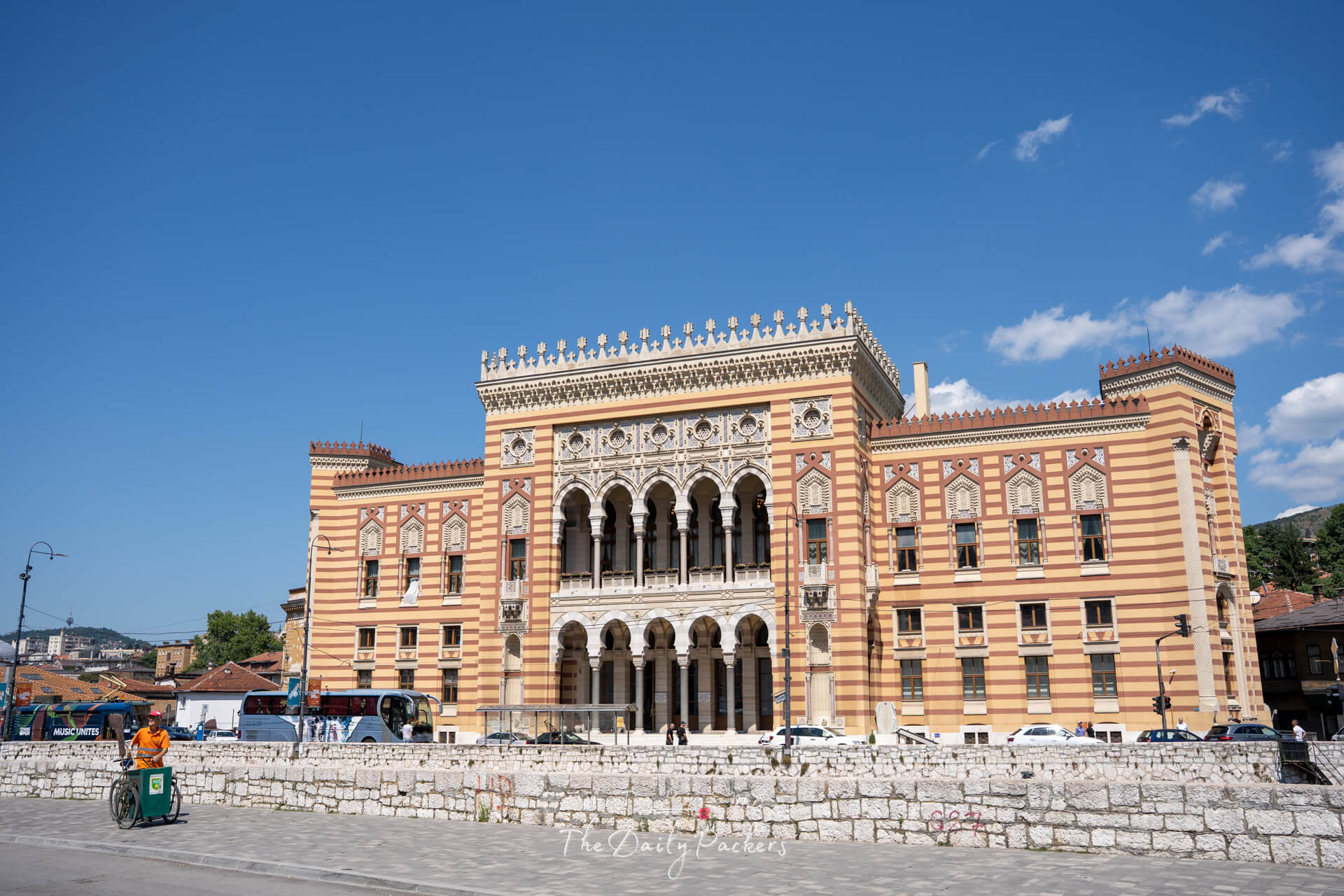
Start your exploration with one of the city’s most iconic landmarks — the Sarajevo City Hall (Vijećnica). Located just outside the underground parking lot near the Old Town, this grand building is a masterpiece of neo-Moorish architecture. Originally constructed during the Austro-Hungarian period, it once served as the city’s administrative center.
Today, it houses a museum and exhibition space. Whether you decide to visit inside or just admire it from the outside, it’s a must-see stop in Sarajevo.

Tip: One of the best way to discover the city is with the Grand Walking Tour Through Time and Cultures
Discover Inat Kuća and Its Bold Story
Located right next to the city hall. It was originally located where the city wall was. And after long negotiation with the Austro-Hungarian monarchy, it was decided to Just across the river from Sarajevo City Hall, you’ll find the charming Inat Kuća, which literally means “House of Spite.” The story behind it is one of local legend. Originally standing where the Austro-Hungarian authorities planned to build the City Hall, the owner refused to sell unless his house was rebuilt — brick by brick — on the other side of the river.
His wish was granted, and the house stands today as a symbol of stubborn resistance and pride. It’s now a traditional Bosnian restaurant, and even if you don’t stop for a meal, it’s worth a visit for the story alone. the house on the other side of the river brick by brick.

Here are all your accommodation options in Sarajevo.
Admire the Iconic Sebilj Fountain
Located right in the heart of Baščaršija Square, the Sebilj is one of Sarajevo’s most iconic landmarks. This wooden, Ottoman-style fountain was originally built in 1753 and is the last of its kind in the city. It once served as a public water source and a meeting point for locals.
Surrounded by pigeons and local cafés, the Sebilj is the perfect place to pause, soak up the atmosphere, and begin your exploration of Sarajevo’s historic old town.
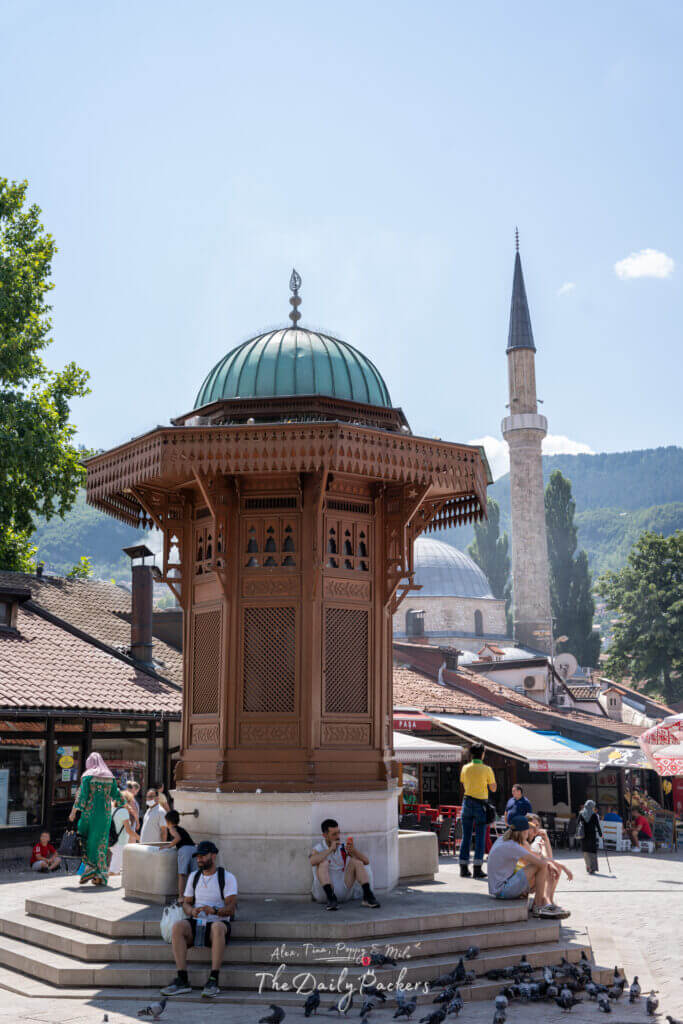
Wander Through Baščaršija, Sarajevo’s Historic Old Town
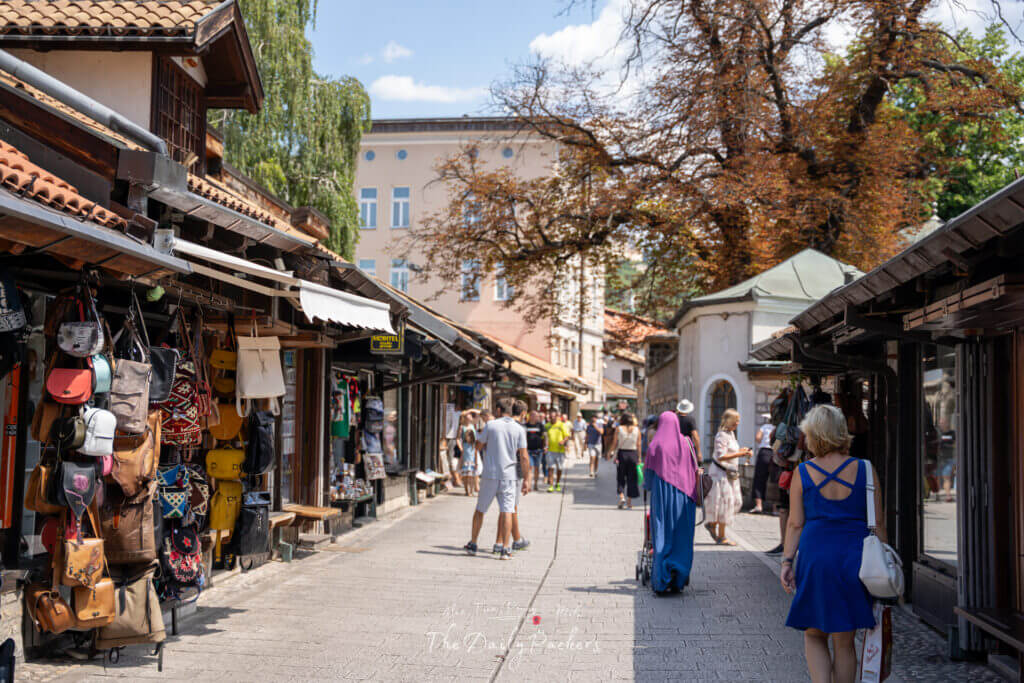
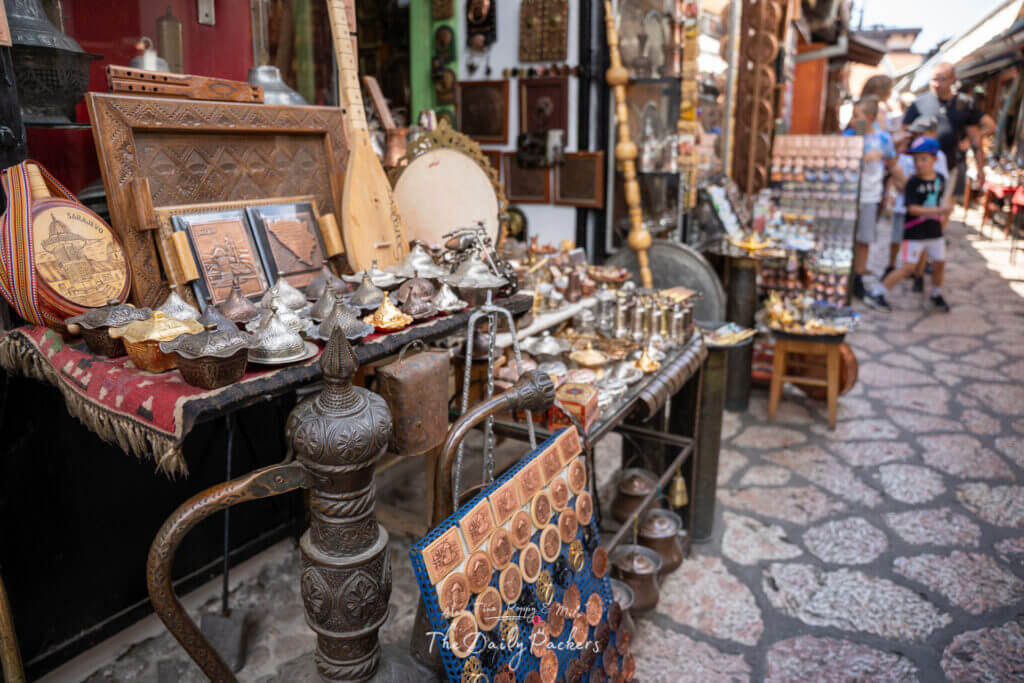
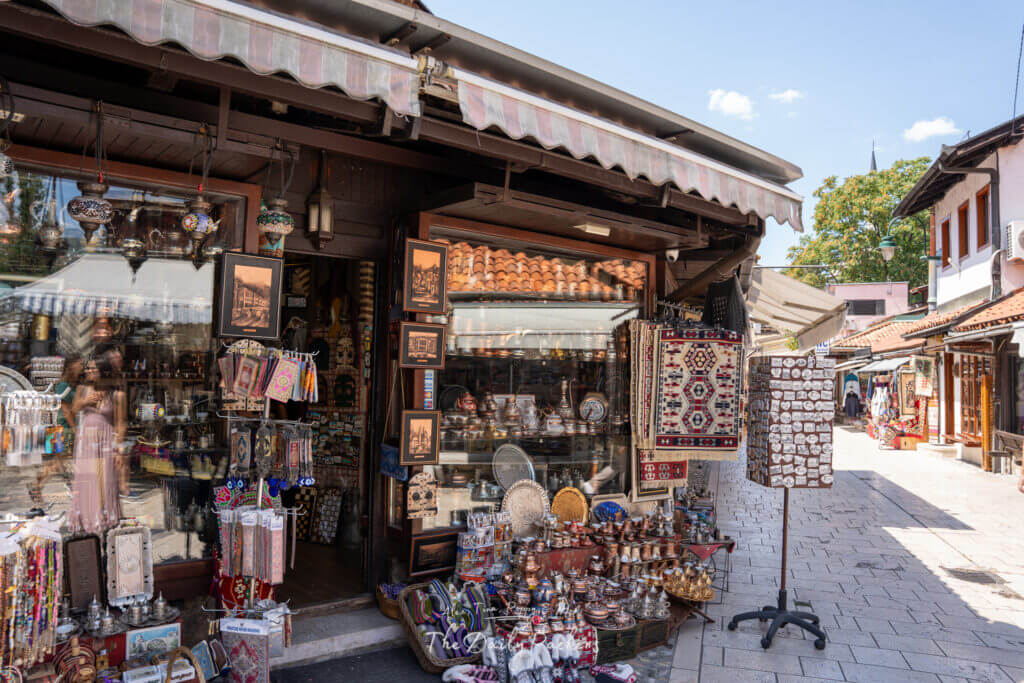
Step into the heart of Sarajevo by exploring Baščaršija, the city’s 15th-century Ottoman bazaar and old town. This vibrant neighborhood is filled with narrow alleys, traditional wooden shops, and a mix of cafés, mosques, and craft stalls.
It’s the perfect place to learn about the city’s Ottoman heritage, shop for copperware or rugs, and enjoy some local dishes. You’ll also come across historical mosques, clock towers, and artisan workshops—this is where Sarajevo’s soul truly shines.
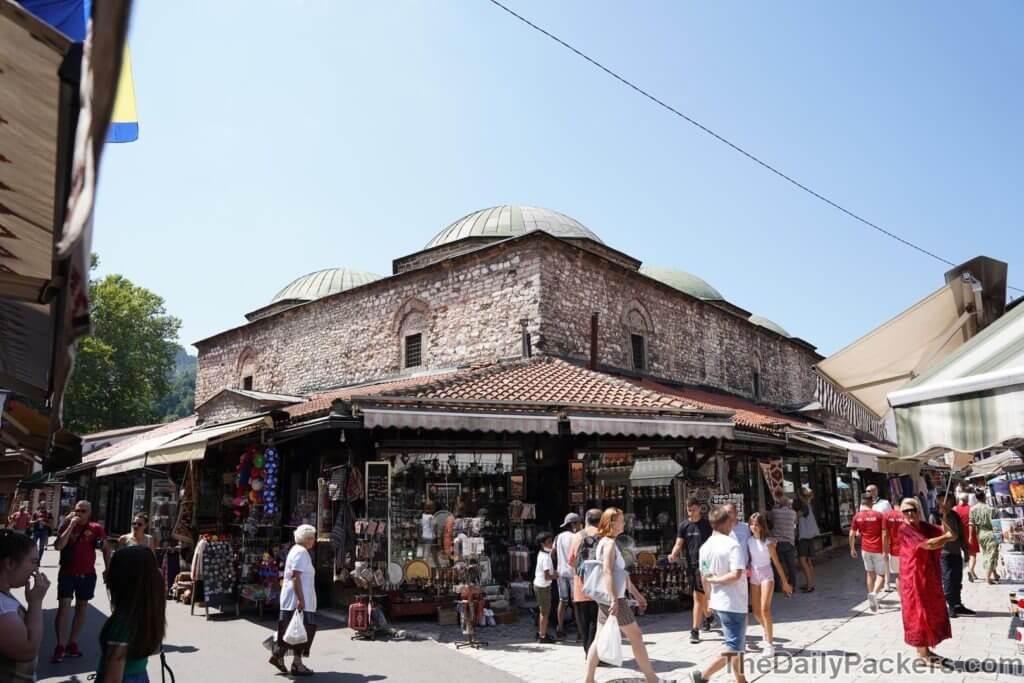
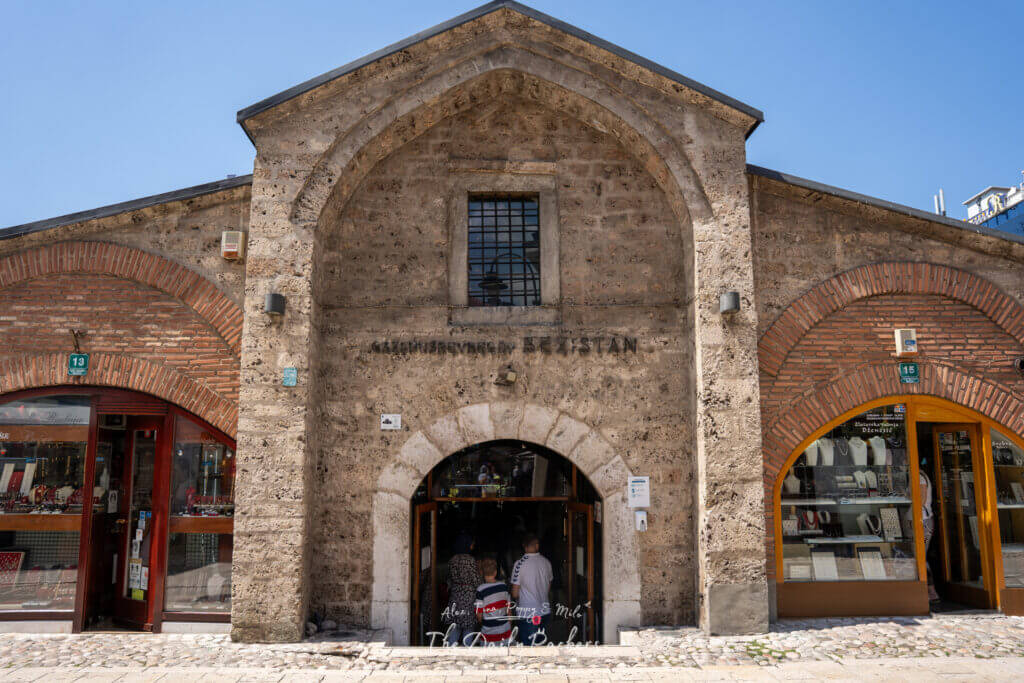
Shop Through Gazi Husrev-beg Bezistan, the Covered Market
Tucked inside Sarajevo’s old town, this 16th-century covered market is one of the best-preserved Ottoman structures in the city. Built by Gazi Husrev-beg, it was once the main trading center for silk, spices, and textiles.
Today, you can still feel that atmosphere as you walk through its stone corridors. It’s a great spot to pick up souvenirs, admire old architecture, or simply escape the sun (or snow) for a little while.
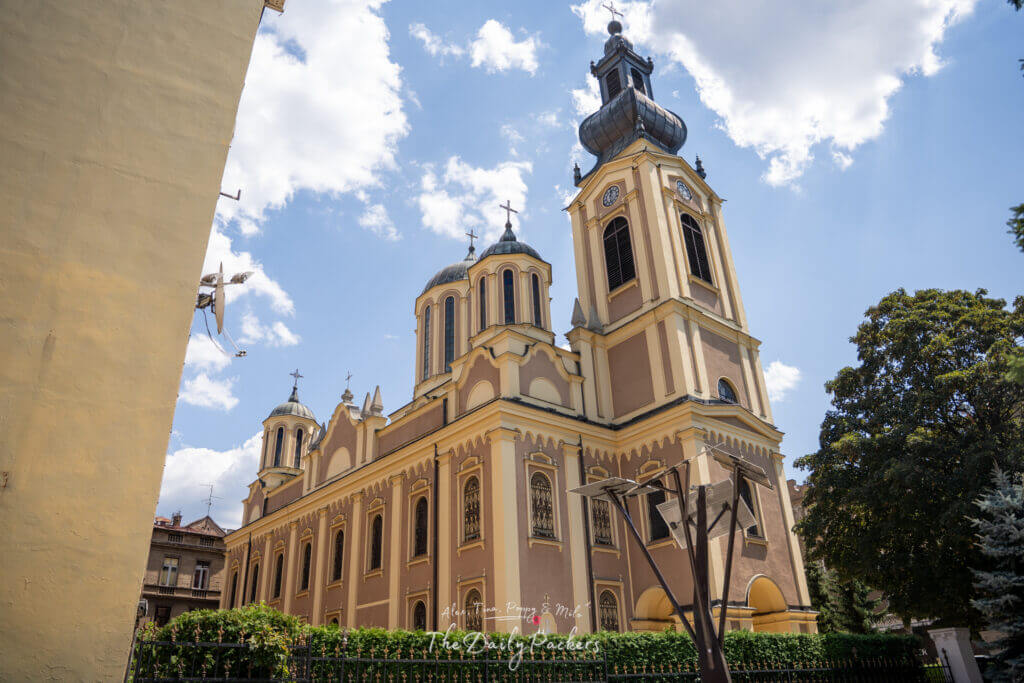
Visit the Cathedral Church of the Nativity of the Theotokos
Step inside the largest Serbian Orthodox church in Sarajevo and one of the biggest in the Balkans. Built in the 19th century, this church stands out with its impressive iconostasis and richly decorated interior.
It’s located in the city center and offers a peaceful escape from the busy streets. Whether you’re into religious architecture or just curious, it’s worth a short stop to appreciate the detail and atmosphere.
Visit Gazi Husrev-beg Mosque
While strolling through Sarajevo’s old town, don’t miss the largest mosque in Bosnia and Herzegovina. Built in 1532 during Ottoman rule, the Gazi Husrev-beg Mosque is one of the best-preserved examples of Islamic architecture in the region.
Its peaceful inner courtyard is open to visitors, and the mosque’s main entrance is beautifully decorated with intricate Islamic patterns. Whether you’re visiting for its history, design, or quiet atmosphere, it’s one of Sarajevo’s most iconic sites.

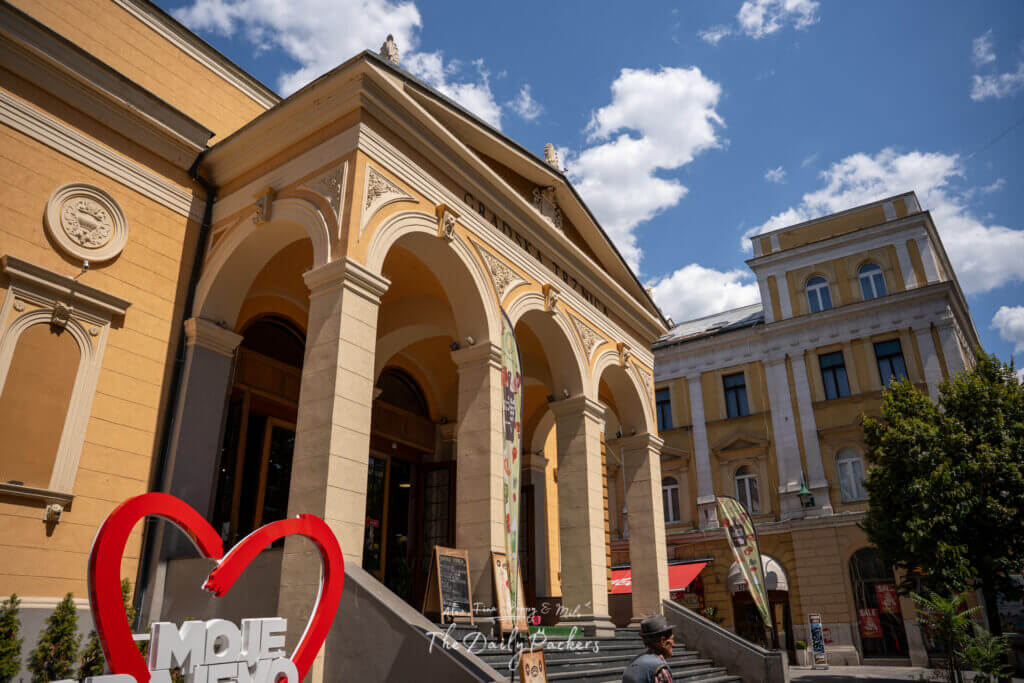
Explore Gradska Tržnica Markale
Step into the heart of local life at Gradska Tržnica, also known as Markale. This historic market hall has been Sarajevo’s main produce market since Austro-Hungarian times. Inside, you’ll find locals buying fresh fruits, vegetables, cheeses, and meats, while the outside stalls often sell flowers and other goods.
It’s a great place to experience daily life in Sarajevo, try some local snacks, and soak up the city’s atmosphere — all while supporting small vendors.
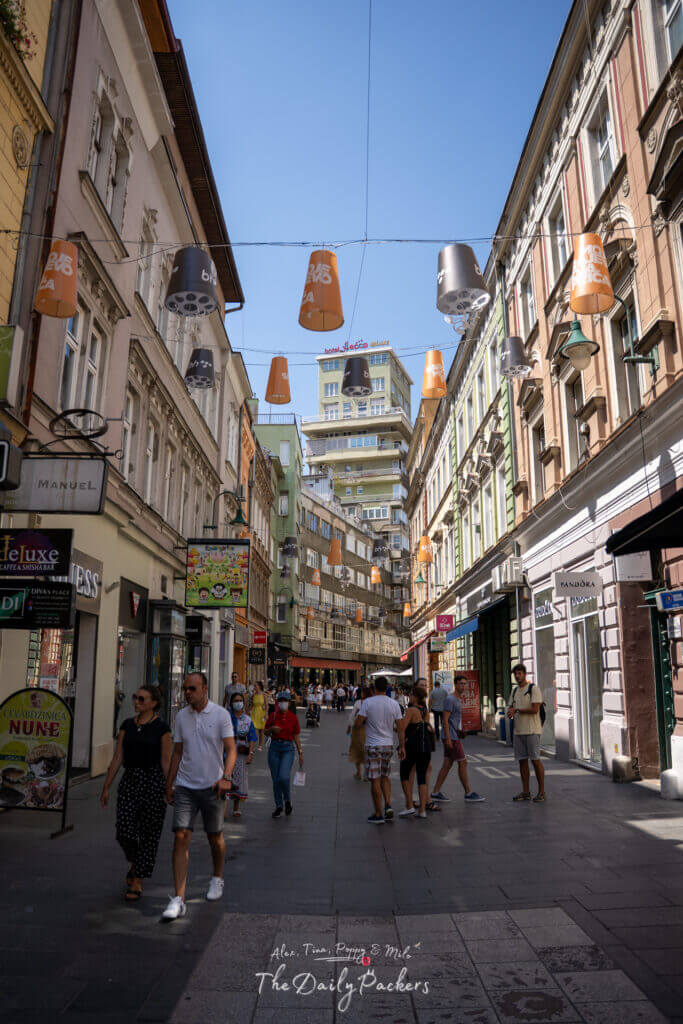
Stroll Along Ferhadija Street
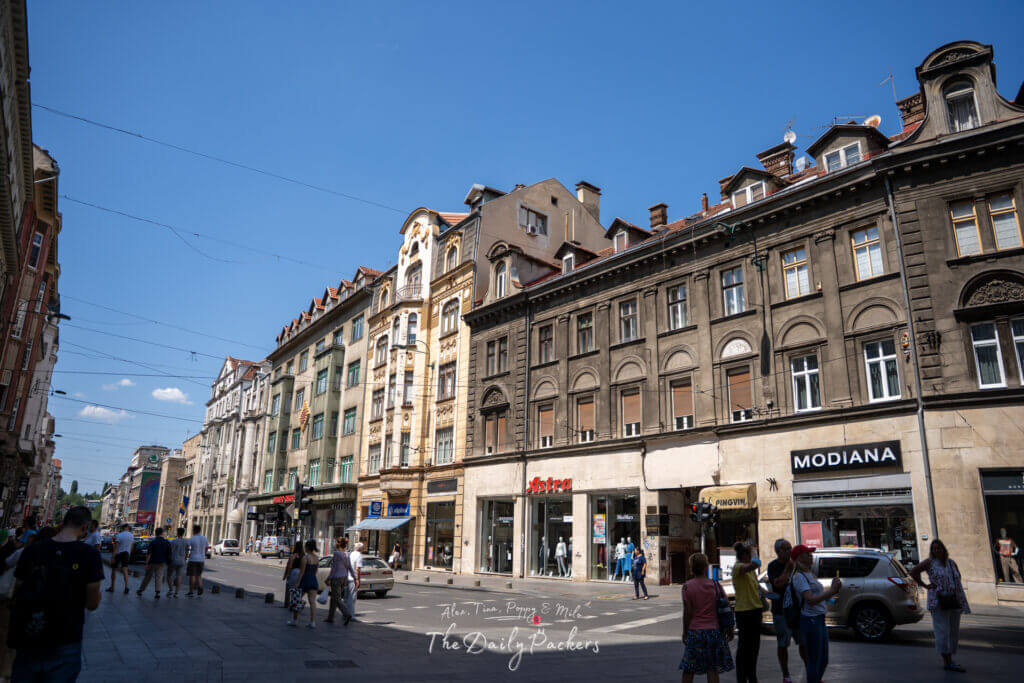
Ferhadija Street is one of the liveliest pedestrian avenues in Sarajevo. Stretching from Baščaršija to the modern city center, it perfectly blends the old and the new. Lined with Austro-Hungarian buildings, cafés, bakeries, and shops, it’s the ideal place for people-watching or just enjoying a slow walk.
It’s also where you’ll feel the unique mix of cultures that makes Sarajevo so special — from mosques to cathedrals, all along one single street.
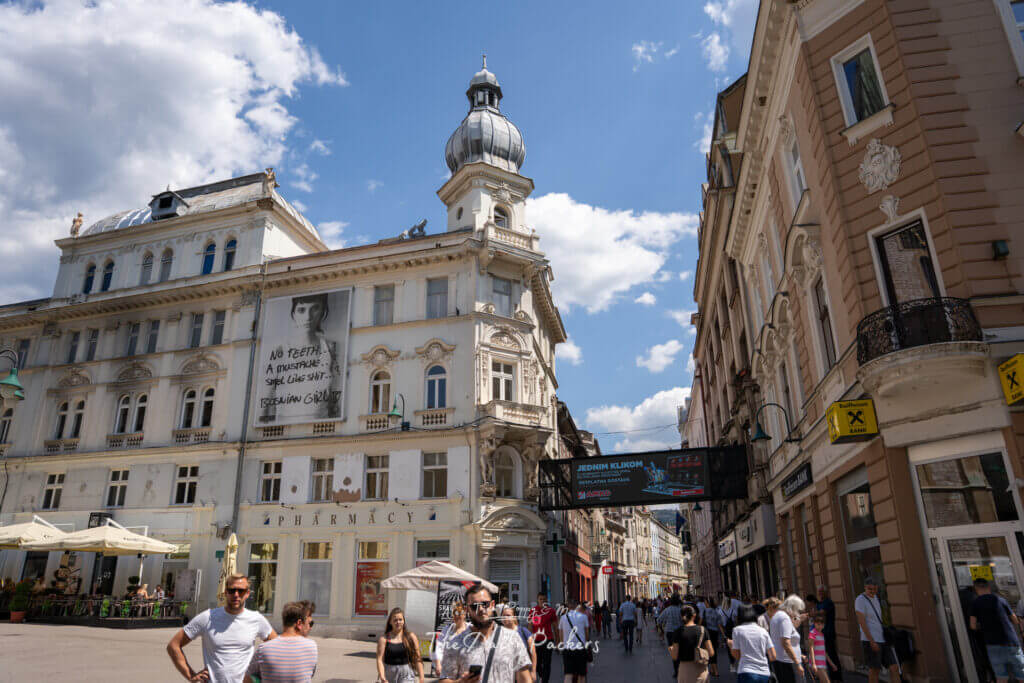
Visit the Gallery 11/07/95
This moving memorial art gallery is dedicated to the victims of the Srebrenica genocide, one of the darkest chapters in Bosnia’s recent history. Located in the heart of Sarajevo, Gallery 11/07/95 is much more than a museum — it’s a space for reflection, remembrance, and learning.
You can choose to just pass by and pay your respects or take the time for a full visit. The gallery combines powerful photography, video, and audio testimony to give a voice to the victims and survivors. If you want to understand Bosnia a little deeper, this is an important place to visit.
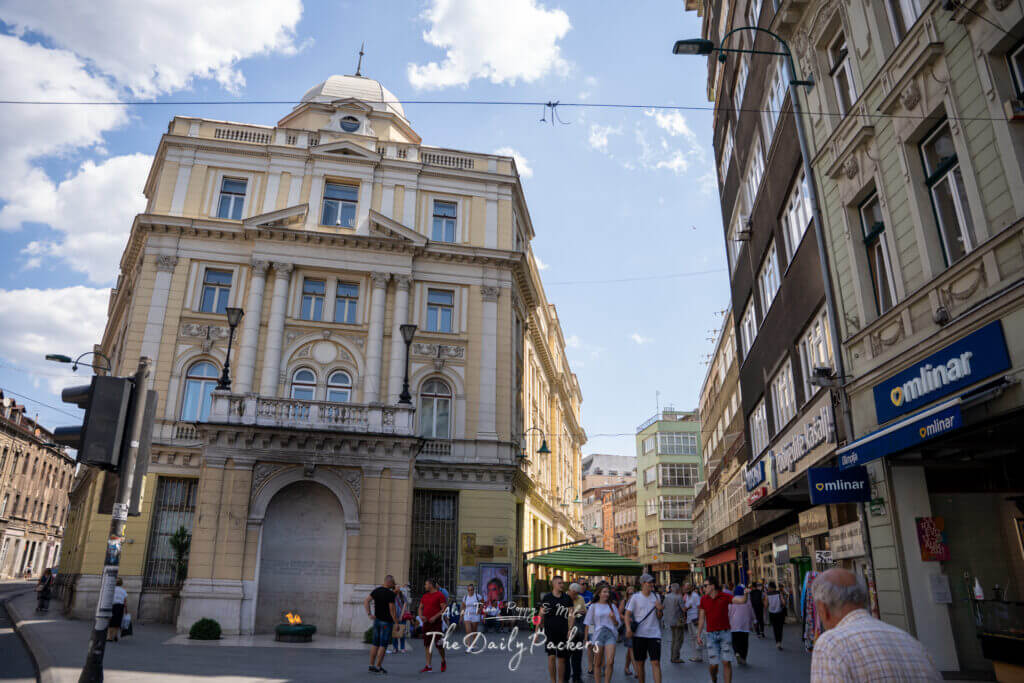
See the Vječna Vatra (Eternal Flame)
End your stroll through Sarajevo’s city center at the Vječna Vatra, the Eternal Flame. This memorial honors the military and civilian victims of World War II and has been burning continuously since it was first lit in 1946. Located at the edge of Ferhadija Street, it’s a simple yet powerful tribute that marks both history and resilience.
Tip: We use the DJI Action 4 to film our vlogs — compact, durable, and perfect for capturing every adventure.
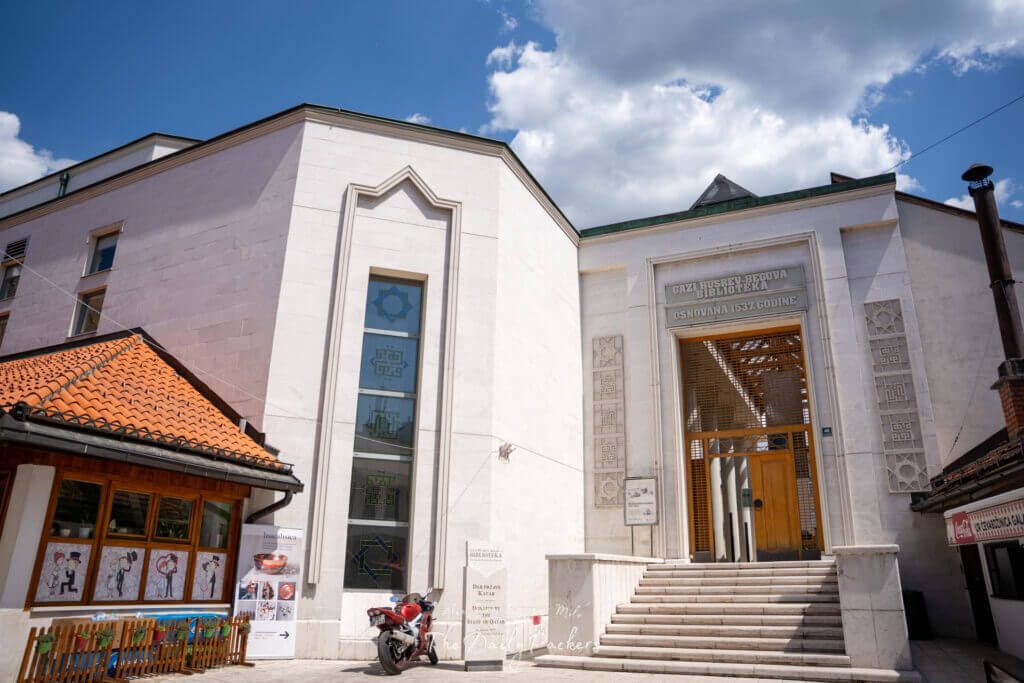
Visit Gazi Husrev-beg’s Library
Step into one of the oldest libraries in the region, founded in 1537 by Gazi Husrev-beg. This public library is home to a remarkable collection of Islamic manuscripts, books, and documents—many of which were originally donated by Gazi Husrev-beg himself. It’s part of a larger religious and educational complex that includes the medresa (Islamic school), and offers a peaceful and culturally rich stop in the heart of Sarajevo’s old town.
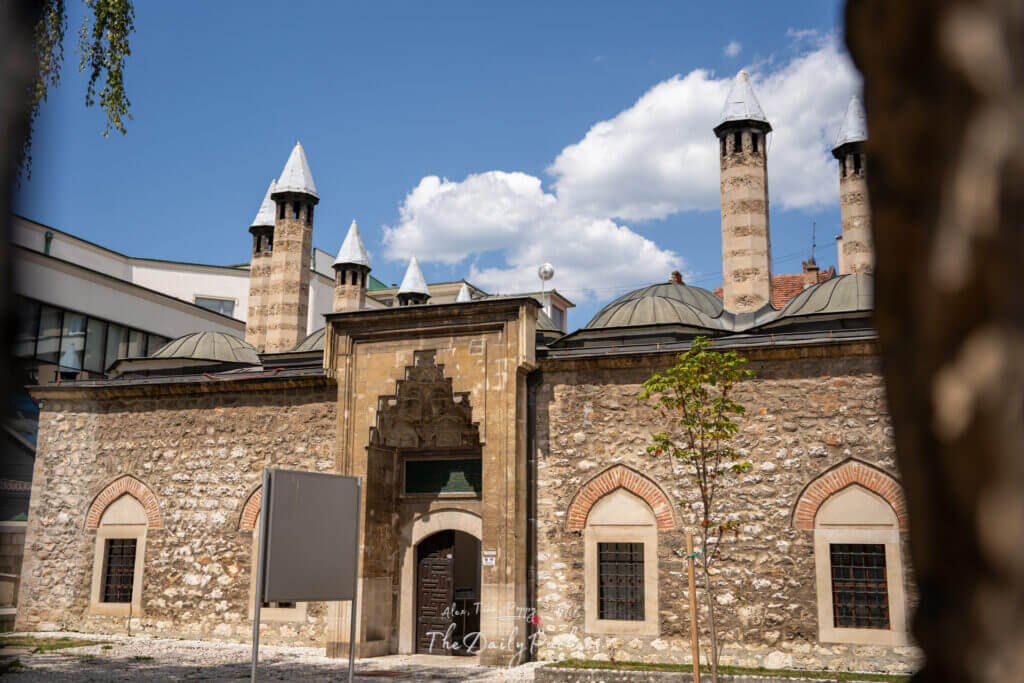
Discover the Gazi Husrev-beg Hamam Museum
Right in the heart of Sarajevo’s old town, the Gazi Husrev-beg Hamam Museum gives you a look into what traditional Ottoman bathhouses were like. Built in the 16th century as part of Gazi Husrev-beg’s endowment, the hamam was once a central part of daily life for locals. Today, it’s been turned into a small museum where you can learn how these spaces functioned—offering both hygiene and social gathering. The architecture alone is worth the visit, with beautifully restored domes and a serene interior.
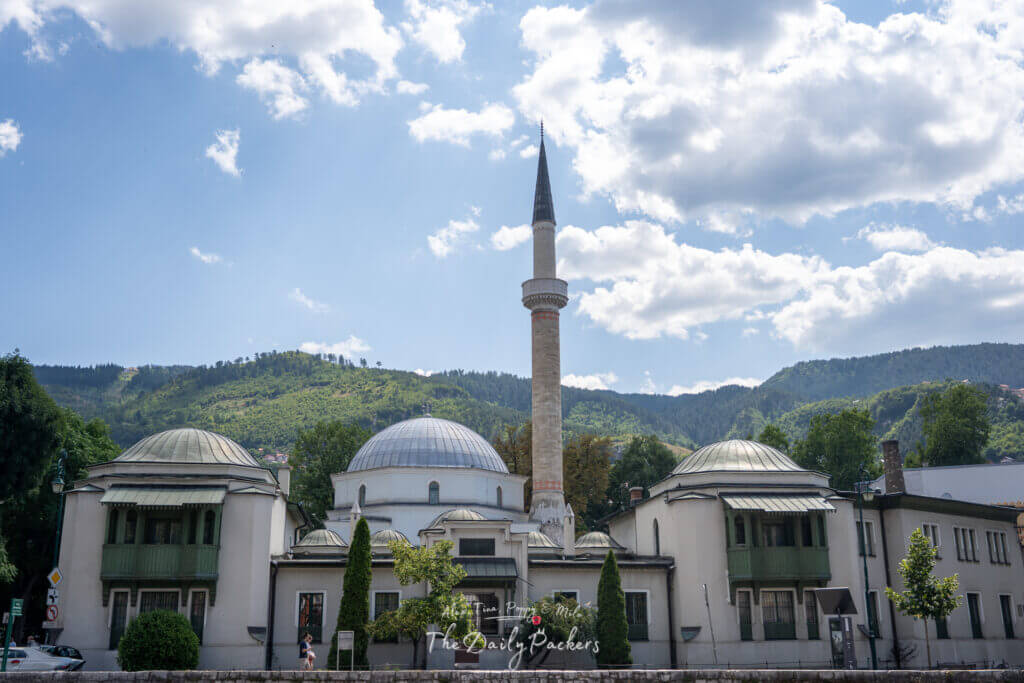
Visit the Historic Emperor’s Mosque
Cross the river to explore the Emperor’s Mosque, the first mosque built in Sarajevo after the Ottoman conquest. Originally constructed in 1457 and later rebuilt, it stands as the largest single-subdome mosque in Bosnia and Herzegovina. Its architecture reflects the classical Ottoman style, with a peaceful courtyard and elegant interior that make it a calming and historically rich place to visit.
Tip: We never travel without our DJI Mini 3 PRO drone anymore — it’s totally worth having to capture places from a whole new perspective.
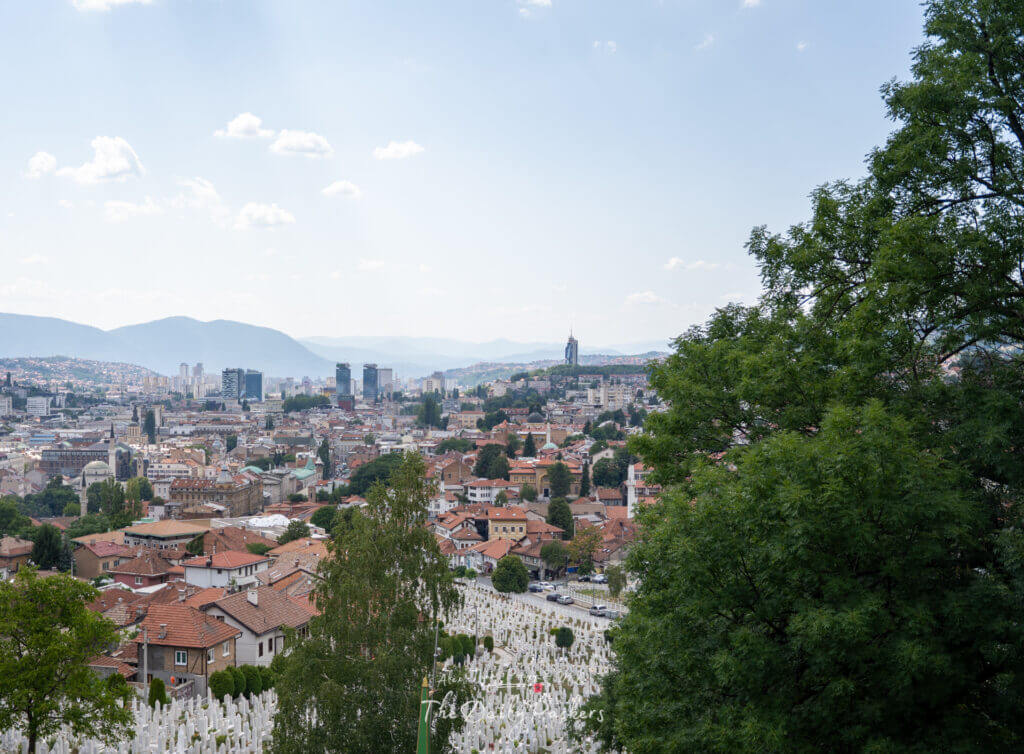
Climb to the Yellow Bastion for Panoramic Views
Just outside the historical center, the Yellow Bastion (or Yellow Fortress) is a former cannon fortress built between 1727 and 1739 at the entrance of Sarajevo’s old walled city of Vratnik. While the interior was closed when we visited, the short climb is well worth it for the stunning panoramic views over the rooftops of Sarajevo — especially beautiful at sunset.
Here are all your accommodation options in Sarajevo.
Take the Funicular to the Sarajevo Viewpoint
For one of the best panoramic views over Sarajevo, head to the Sarajevo Viewpoint. The most enjoyable way to get there is by taking the city’s funicular — it’s quick, scenic, and avoids the confusing uphill drive (we tried by car and got stuck in the narrow backstreets). Once at the top, the view over the city and surrounding mountains is breathtaking.

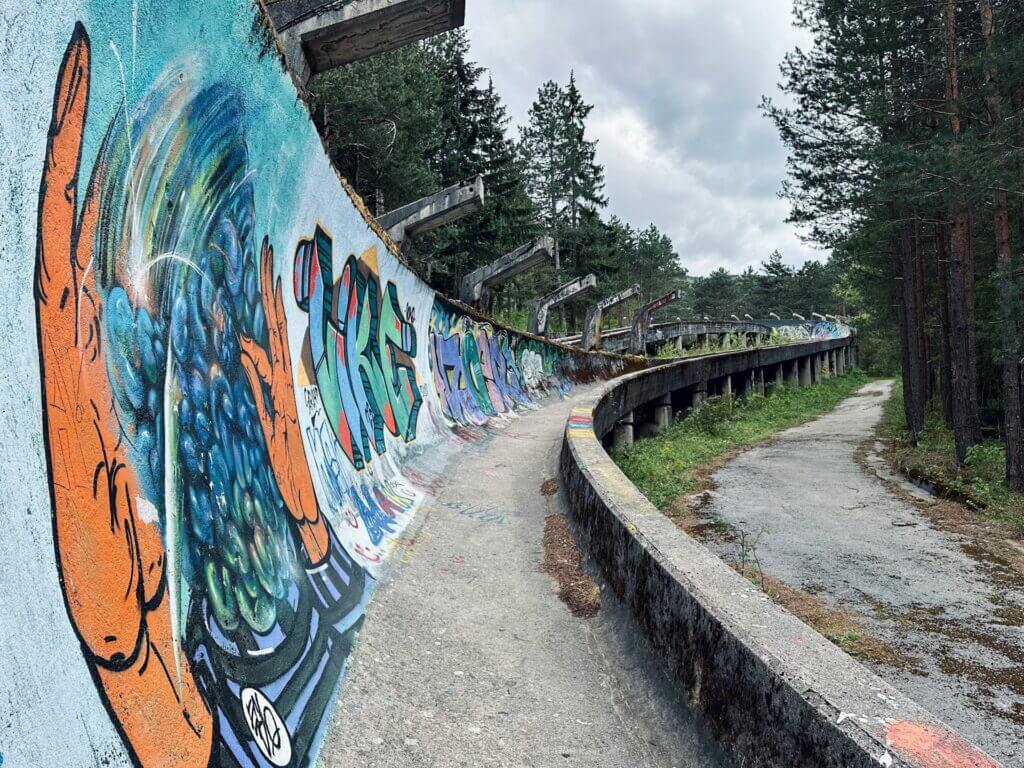
Sarajevo Walk the Abandoned Sarajevo Bobsled Track
Just next to the viewpoint, you’ll find the haunting remains of the Sarajevo Olympic Bobsleigh and Luge Track. Built for the 1984 Winter Olympics, the track has since been overtaken by nature and graffiti, turning it into a unique, open-air urban artwork. You can walk along its curves and imagine what this place once was — it’s eerie, beautiful, and strangely peaceful.
Visit the Sarajevo Tunnel of Hope
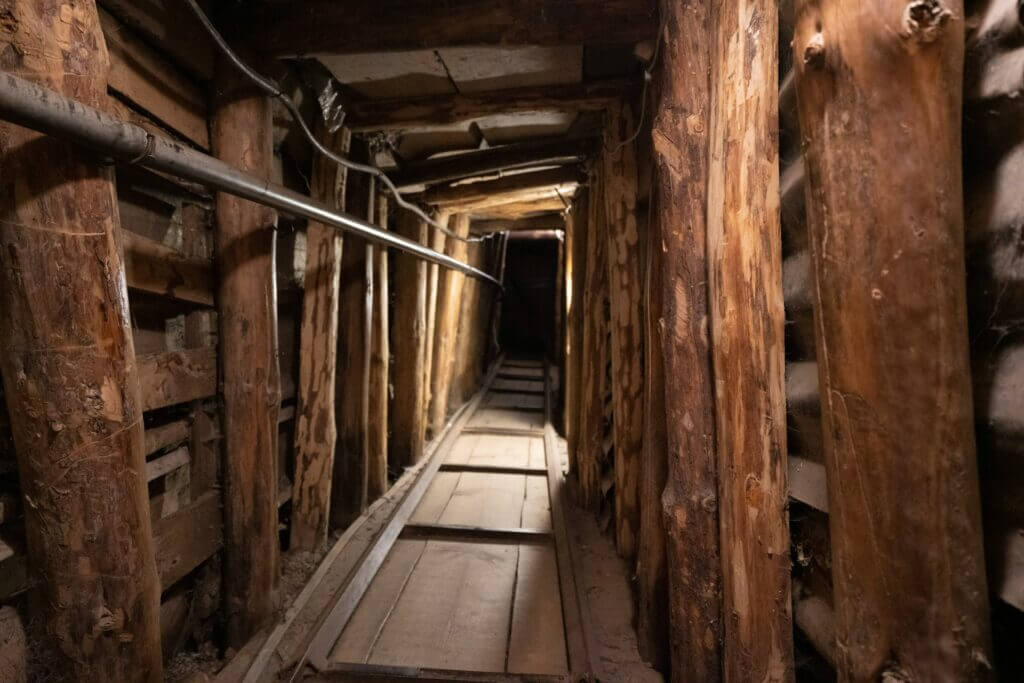
Located a bit further from the city center, the Sarajevo Tunnel (often called the Tunnel of Hope) is a powerful site that tells the story of the city’s resilience during the siege in the 1990s. This underground passage was used to smuggle in food, supplies, and people when Sarajevo was cut off. You can visit a preserved section of the tunnel and learn more through the small museum on site — a moving and essential stop to better understand Sarajevo’s recent history., it was from there that food, aid, resources, weapons and often people were coming into and out of the besieged city.
Take a day trip to Mostar
Mostar is compact enough to see its highlights in just a few hours. Stroll through the Ottoman bazaar, cross the iconic Old Bridge, and stop at Koski Mehmed Pasha Mosque for a unique view. End the day with dinner at Urban Grill — ideally with a view over the bridge.
Or join a full-day tour from Sarajevo and explore the highlights of Herzegovina hassle-free with hotel pickup and a guide. You’ll see not only Mostar but also Konjic, Blagaj, Počitelj, and the stunning Kravica Waterfall all in one go.

Itinerary
Day 1: Sarajevo
Morning:
- Start at Sarajevo City Hall and admire its Austro-Hungarian architecture.
- Walk over to Inat Kuća to see the famous house that was moved brick by brick.
- Head into Baščaršija, Sarajevo’s old town, and grab a local breakfast (maybe some baklava or börek).
- Visit Sebilj, the wooden fountain at the heart of the old bazaar.
Midday:
- Tour the Gazi Husrev-beg Mosque and step inside its serene courtyard.
- Pop into the Gazi Husrev-beg Library or Hamam Museum nearby.
- Have lunch at a traditional restaurant and try ćevapi, the must-eat dish in Sarajevo.
Afternoon:
- Stop by the Gallery 11/07/95 for a powerful look at Bosnia’s recent history.
- Walk down Ferhadija Street and explore the Gradska Tržnica (Market Hall).
- See Sarajevo Cathedral and the Cathedral Church of the Nativity of the Theotokos.
Evening:
- End the day at the Yellow Bastion or Sarajevo Viewpoint for sunset over the city.
Day 2: Mostar
About the authors
We are Alex and Tina, a French-Serbian couple who met in China back in 2014. We spent three incredible years there before making France our home. Our shared passion for travel has been the heartbeat of our relationship for over 12 years, taking us across 44 countries and counting.
We launched TheDailyPackers in 2019 as a way to document our adventures. In 2026, we reached a major milestone by officially turning our blog into our full-time job. While we are still growing toward financial independence through this platform, every article we write is fueled by our mission to make your voyages easier through in-depth guides, honest advice, and the lessons we’ve learned from our own mistakes.
Our journey has not been without its storms. In 2023, our world changed forever when our first son, Poppy, was stillborn on November 25th. It was, and remains, the hardest chapter of our lives. In 2025, we were blessed with our second little boy, Milo. He has since joined our traveling tribe, and you’ll be seeing him—and the reality of traveling with a little one-on the blog more and more.
We hope to inspire you to explore the world with curiosity and resilience. Thank you for being part of our story.
You may also like those related posts
TMB Stage 3: Guide from Croix du bonhomme to Rifugio Elisabetta
Hallstatt: How to Visit Austria’s Most Picturesque Village
Isla del sol: An epic 1-day adventure in Copacabana, Bolivia
12 Most beautiful beaches in Corsica, France
Sigiriya Lion Rock: Visit the famous Sri Lanka’s Icon
Laguna Esmeralda Ushuaia: The Ultimate 1-Day Hiking Guide
13 Useful Maldives Travel Tips
Traveling as a Couple: 5 Real Truths You Should Know
Pssst, did you know that…
If you purchase something through our links, we earn a small fee. However, you still pay the same. Win-win! And one day we may get to be full-time travel bloggers =)
Find Hotels with Booking.com
Do Yoga with KVY
Buy us a Coffee
Rent a car with DiscoverCars
Find Attractions with GetYourGuide
Find Flights with Expedia
Buy an eSIM with Airalo
Get insured with World Nomads
Get ready with Amazon.com