

Introduction
During our 10-day trip through Andalusia, Seville was our first stop — and easily one of the highlights. We spent five nights in this incredible city, where Roman, Muslim, and Christian influences blend together to create something truly unique.
We already wrote a complete Seville Travel Guide, but this time, we wanted to share our Seville itinerary — what to do day by day if you’re planning around 5 days in Seville.
We’ve designed this itinerary to make sense geographically, so you won’t waste time going back and forth. It’s based on how we actually experienced Seville and how we made our own Seville itinerary — with a few tweaks to make it flow better (because, as always, we didn’t plan much and had to improvise along the way!).


Read: Our complete 10-day Andalusia Itinerary: The best of the south of Spain & 22 Best things to do in Seville, Spain, in 3 to 5 days
Where to Stay during your Seville Itinerary
Seville offers accommodations for every style and budget — from charming boutique hotels in the old town to luxurious stays near its grand monuments. Here are a few great options depending on your travel style:
(€) Hotel Giralda Center – A modern and comfortable hotel located near the city center, perfect if you’re looking for good value and easy access to main attractions. The rooms are spacious, and the rooftop terrace is a nice touch for sunset views.
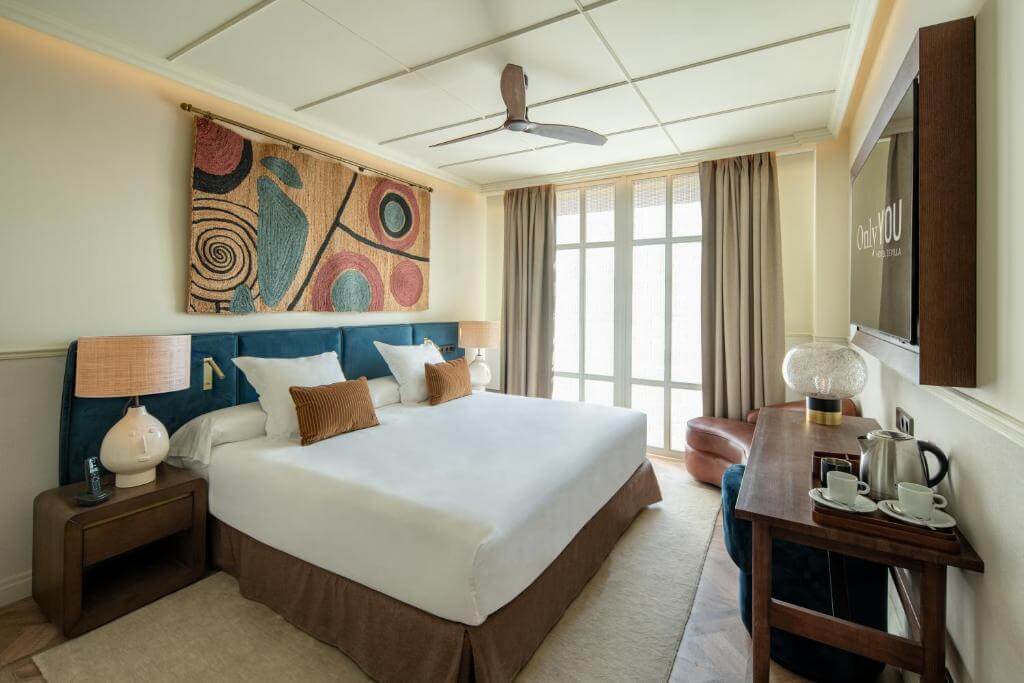
(€€) Only YOU Hotel Sevilla – A stylish boutique hotel with elegant design, cozy rooms, and excellent service. It’s close to Santa Justa Station, making it ideal if you’re arriving by train.
(€€€) Hotel Alfonso XIII, a Luxury Collection Hotel, Seville – Seville’s most iconic hotel. This masterpiece of Moorish-inspired architecture sits between the Cathedral and Plaza de España. It’s a true Andalusian gem — luxurious, historic, and unforgettable.


Here are all your accommodation options in Seville
Seville Itinerary Day 1
Start Your Seville Itinerary with a Free Walking Tour
If you’re following this Seville itinerary, there’s no better way to start your trip than with a Free Walking Tour. It’s the perfect introduction to the city — you’ll get the local stories, a bit of history, and a feel for Seville’s energy before exploring it on your own.
You can book the Seville Free Walking Tour online in advance, but honestly, we just signed up the same morning and it worked perfectly. For a smaller, more personal experience, join the English tour — when we did it, our group had only ten people, while the Spanish one had over thirty!
The meeting point is Plaza del Salvador, right next to the statue. Your Seville itinerary begins here with your guide explaining the history of the Church of the Divine Saviour, once a mosque, now a baroque masterpiece.

From there, you’ll head to Plaza Nueva (technically called Plaza de San Francisco) to admire the City Hall and the monument to Fernando III El Santo. It’s a great way to understand Seville’s evolution — from Al-Andalus to the Reconquista — and how each period shaped the city you’re about to explore throughout this Seville itinerary.
Next, you’ll stop at Plaza del Triunfo, where you can see Seville’s three most iconic landmarks in one place: the Cathedral, its bell tower La Giralda, the Royal Alcázar, and the Archivo de Indias. This square alone is worth including in every 5-day Seville itinerary — it’s where the city’s history truly comes alive.
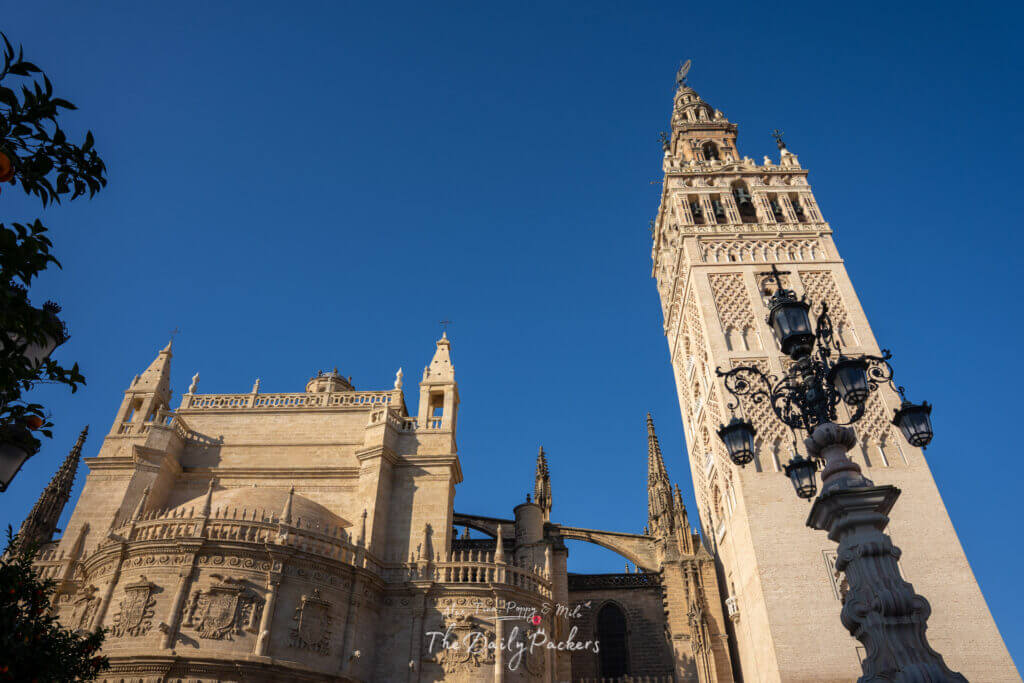
Then, continue toward Puerta de Jerez, passing the Híspalis Fountain, Yanduri Palace, and Santa María de Jesús Chapel, with a short stop near the old Royal Tobacco Factory.
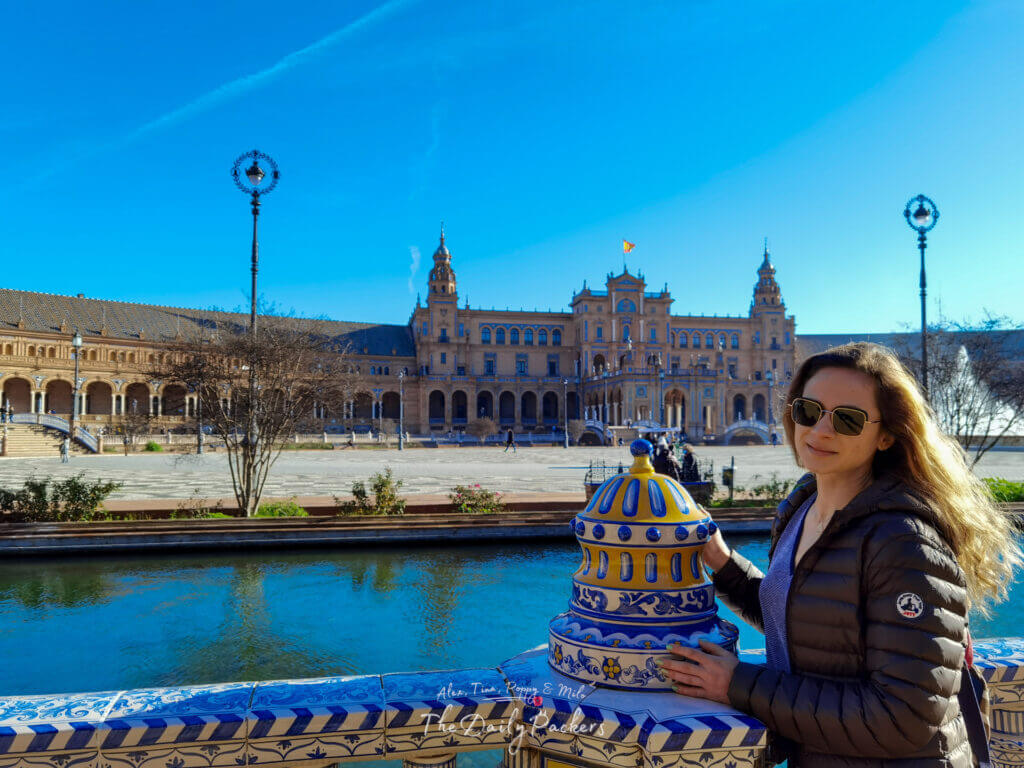
Finally, your morning ends at the spectacular Plaza de España, one of the highlights of any Seville itinerary. Its grand architecture, colorful tiles, and romantic bridges make it one of the most photogenic places in Spain. Your guide will share its connection to the 1929 Ibero-American Exhibition — a fitting conclusion to the tour.
The Free Walking Tour in Seville lasts about two hours (from 10:00 a.m. to 12:00 p.m.), leaving you plenty of time to grab lunch and continue exploring the city at your own pace.
Take a Lunch Break in the Heart of Your Seville Itinerary
After your Free Walking Tour, it’s time to recharge before continuing your Seville itinerary. Since you’ll already be near Plaza de España and Parque de María Luisa, we’d recommend bringing your own lunch if you can — it’s a lovely area to sit down, relax, and enjoy a picnic under the orange trees or by the fountains.
If you prefer to eat out, no problem — just walk a few minutes back toward the city center and stop at El Rincón de Beirut, a cozy Lebanese restaurant that serves delicious falafels, wraps, and vegetarian-friendly dishes. It’s a great place to take a break before diving into the second part of your Seville itinerary.
Once you’re done, head back toward Parque de María Luisa to continue exploring Seville’s most beautiful green space and one of the highlights of any 5-day Seville itinerary.


Stroll Through Parque de María Luisa
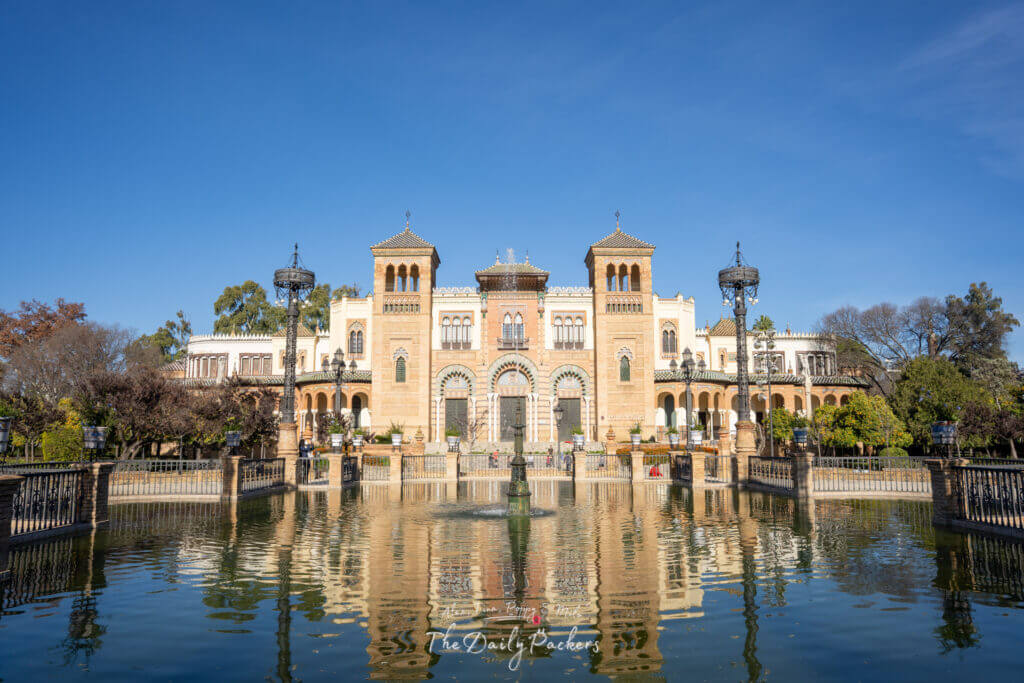
The next stop on your Seville itinerary is the beautiful Parque de María Luisa, one of the city’s most peaceful and charming spots. After your walking tour and lunch, it’s the perfect place to unwind — whether you want to have a picnic, take a slow digestive walk, or simply enjoy the shade of its orange trees and palms.
The park is huge and full of life. You’ll see ducks and swans gliding across its ponds, fountains surrounded by blooming flowers, and horse-drawn carriages passing by — a truly classic Seville scene.

If you’re into architecture, make sure to walk toward the far end of the park, where you’ll find two stunning landmarks: the Museum of Popular Arts and Traditions and the Archaeological Museum of Seville. Even if they’re closed, the buildings themselves are worth admiring — they’re perfect examples of the city’s elegant mix of Andalusian and Moorish influences.
Take your time here — Parque de María Luisa is one of the highlights of any Seville itinerary, and a great place to pause before heading toward the riverbank for the next part of your day.
Here are all your accommodation options in Seville
Walk Along the River to Torre del Oro
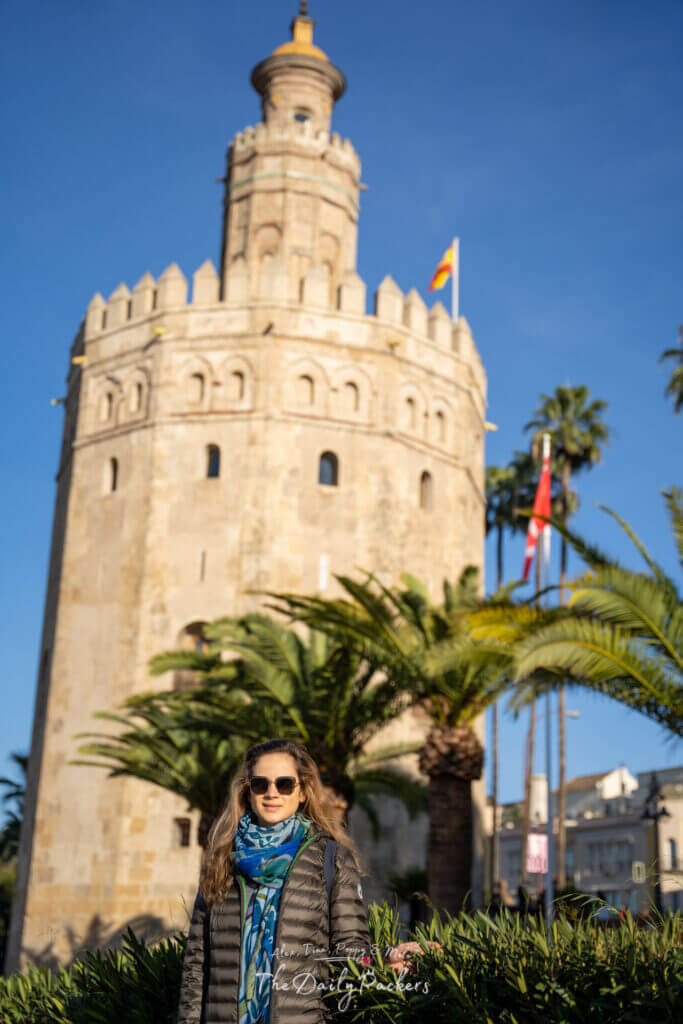
When you’re ready to continue your Seville itinerary, leave Parque de María Luisa and make your way toward the Guadalquivir River. The walk from the park to the Torre del Oro is lovely — it’s peaceful, lined with palm trees, and gives you a beautiful view of the water and the Triana neighborhood across the river.
The Torre del Oro, or “Tower of Gold,” isn’t named after hidden treasure but rather for the golden shimmer of its walls when the sun hits them. Built in the 13th century, the tower once served as part of the city’s defensive walls and is now home to a small naval museum.
If you’re into maritime history, you can step inside for a short visit — it’s quick and inexpensive. But if not, simply enjoy the view from the outside and take a slow walk along the riverbank. It’s one of those simple pleasures that makes this Seville itinerary so enjoyable — history, sunshine, and the calm rhythm of local life all around you.
Visit the Plaza de Toros de la Real Maestranza de Caballería de Sevilla
Continue your Seville itinerary by walking a bit further along the riverbank until you reach the Plaza de Toros de la Real Maestranza de Caballería de Sevilla, one of the most iconic landmarks in the city.
This grand bullring is where Seville’s famous ferias (bullfighting festivals) take place, and even if you’re not into bullfighting, it’s worth a visit for its architecture and cultural importance. The exterior, painted in white and ochre, is stunning — especially under the Andalusian sun.

You can visit the Plaza de Toros on your own or join a short guided tour that includes access to the small museum and the arena itself. Inside, you’ll learn about the history of bullfighting in Spain and the deep traditions that surround it in Andalusian culture.
Whether you step inside or just admire it from the outside, the Plaza de Toros adds an authentic cultural touch to your Seville itinerary before you cross the bridge to explore the lively neighborhood of Triana.


End the Day by Watching the Sunset Over the River
To wrap up your first day in this Seville itinerary, slow things down and enjoy one of the city’s simplest pleasures — a sunset by the river.
Find a cozy spot along the Guadalquivir River, near the Torre del Oro or the bridge leading to Triana, and just take in the view. As the sun sets, the sky glows orange over the water, the city lights start to sparkle, and the whole scene feels timeless.

Locals come here for an evening walk, couples sit by the riverbanks, and street musicians often play in the distance — it’s one of those moments where Seville truly shows its charm.
After a full day exploring, this peaceful sunset view is the perfect way to close Day 1 of your Seville itinerary before heading out for dinner or a relaxed evening drink.

Here are all your accommodation options in Seville
Seville Itinerary Day 2
Visit the Royal Alcázar of Seville
Start your second day of this Seville itinerary with one of the city’s most stunning landmarks — the Royal Alcázar of Seville. Still the official residence of Spain’s royal family when they visit the city, this is the oldest royal palace in Europe and an absolute must-see.
To make the most of your visit, we recommend purchasing your general entry ticket online, and if you feel like it once there, the Royal bedroom access onsite. It gives you access not only to the general palace areas but also to the royal apartments — a section usually closed to visitors. Choose the 10 a.m. time slot if you can, as you’ll be among the first to enter and enjoy the palace before it gets crowded.

You can also add an audio guide for extra insight into the site’s long and fascinating history. Plan to spend around 2 to 3 hours here. The visit begins with the Cuarto Real Alto, continues through the palace’s intricate rooms and courtyards, and ends in the vast and peaceful gardens.
Make sure to explore both levels — head up the stairs on the right to visit the upper floor before wandering through the breathtaking Mudejar-style interiors. Every tile, arch, and fountain tells part of Seville’s layered history.
Pro tip: If you can’t get an early ticket, go for a late-afternoon visit instead. When we went at 3 p.m., it was packed, but by the time we left around 5 p.m., the crowds had completely thinned out — and the golden light on the palace walls was incredible.


Tip: Book your ticket for the Royal Alcazar online to get the time slot you want.
Lunch at El Liberto
By now, it’ll probably be around 1 p.m., which means it’s time for a well-deserved lunch break. A great stop on your Seville itinerary is El Liberto, a cozy local restaurant known for its friendly atmosphere, delicious tapas, and even a few vegan options.
Here, you can’t go wrong with their tapas selection — everything is full of flavor and perfect for sharing — or go for a paella, which they make really well. It’s the kind of place where both locals and travelers end up staying longer than planned, enjoying a drink and soaking in the Andalusian vibe.
If you want a good spot inside or on the terrace, it’s best to make a reservation in advance. We personally just walked in and got lucky with a table, but it can get busy, especially on weekends.
It’s a great little pause before continuing your Seville itinerary toward the cathedral and La Giralda in the afternoon.


Tip: We use the DJI Action 4 to film our vlogs — compact, durable, and perfect for capturing every adventure.
Visit the Catedral de Sevilla and La Giralda
Next on your Seville itinerary is the breathtaking Catedral de Sevilla, one of the most impressive religious landmarks in the world — and the third largest church ever built. Its sheer size and detail are mind-blowing, and every corner tells a story of Seville’s layered history.
Start your visit by heading up La Giralda, the cathedral’s famous bell tower. The climb is unique — instead of stairs, you’ll walk up a series of ramps that were originally built for the muezzin to ride his horse or donkey to the top to call for prayer. Once you reach the top, you’ll be rewarded with a 360° panoramic view of Seville’s rooftops, the Alcázar gardens, and the distant Sierra Morena hills.

After that, make your way back down and take your time exploring the cathedral itself. Inside, you’ll find the tomb of Christopher Columbus, beautiful Gothic chapels, and a small museum showcasing centuries of religious art and treasures.
Before leaving, step into the Patio de los Naranjos, the inner courtyard filled with orange trees — a peaceful reminder of the mosque that once stood here.

Tip: You must buy your ticket online before visiting. If you forget (like we did), don’t panic — you can easily buy it on your phone while standing in front of the entrance. It saves you from walking all around the cathedral to the ticket office and lets you enter directly.
Stop by the Archivo de Indias
Right next to the cathedral is the Archivo de Indias, another UNESCO World Heritage site and an important stop on your Seville itinerary. You won’t find any bustling trade happening here anymore, but this elegant 16th-century building once held the official records of Spain’s colonies and trade with the Americas.
Today, it serves as an exhibition space, offering a glimpse into Spain’s maritime past and its role in global exploration. While most of the displays are in Spanish, it’s still worth popping in — the architecture alone is stunning, and some of the light projections and interactive exhibits are fun to watch even if you don’t understand the language.

You won’t need much time here; 15 to 30 minutes is enough to get a feel for the place and appreciate its atmosphere before moving on with your day. It’s also a great quick stop to rest your feet and enjoy a bit of air conditioning in the summer!


Tip: Now, that we travel with baby Milo, we always bring this Babybjorn baby carrier with us.
Wander Through the Santa Cruz District
To wrap up your Seville itinerary for the day, take some time to wander through the Santa Cruz district, one of the most charming and historic areas in the city.
El Liberto, where you probably had lunch earlier, is already right in this neighborhood — but there’s much more to discover once you start exploring its maze of narrow streets. The area was once Seville’s old Jewish quarter, and it’s full of whitewashed houses, flowered patios, and small artisan shops tucked around every corner

Don’t miss a stop at the Orange Tree Sevilla store, a lovely boutique that specializes in all things made from oranges — soaps, perfumes, and even liqueurs. It’s a fun and fragrant little stop, and perfect for small souvenirs.
Take your time getting lost here — that’s part of the magic. As you stroll north, the streets start to open up into wider boulevards, leading you toward a more modern side of Seville. It’s a nice contrast that really shows how the city blends its past and present.

Here are all your accommodation options in Seville
Experience Flamenco at Casa de la Memoria
To end your Seville itinerary on a high note, there’s nothing quite like experiencing an authentic flamenco show — and Casa de la Memoria is one of the best places in town to do it.
This intimate cultural center hosts an incredible one-hour performance that captures all the passion, rhythm, and emotion that flamenco is known for. The show takes place in a beautiful old Andalusian palace, and you can really feel the energy of the dancers, guitarists, and singers filling the room.

If you want to sit close to the stage, try to arrive early — seats are first come, first served. We showed up a bit late and ended up on the side, but it honestly didn’t matter much. The performers move across the stage in every direction, and you feel completely immersed wherever you sit.
After the show, you can either head back to your accommodation or stop at a nearby restaurant for dinner to soak up the last bit of the city’s evening buzz — the perfect way to close your second day in Seville.

Tip: Casa de la Memoria is a small place, so book your ticket online as soon as possible.
Seville Itinerary Day 3
Visit the Real Parroquia de Santa María de Sevilla
Start the third day of your Seville itinerary by heading to the Real Parroquia de Santa María de Sevilla — a hidden gem that’s well worth a visit if you can catch it open. This church may not look like much from the outside, but once you step inside, the interior is stunning. The golden altars, intricate artwork, and peaceful atmosphere make it a lovely stop to begin your morning.
Keep in mind that the opening hours are quite limited, and the church is usually closed on Mondays and Saturdays, so it’s worth double-checking the schedule before you go.

From there, make your way to the Iglesia de San Lorenzo, located north of the city. It’s not the most spectacular church in Seville, but the square where it stands is charming and full of life. What makes it interesting is that there are actually two churches sharing the same plaza, giving it a unique and authentic Andalusian feel.
It’s a nice spot to pause for a few photos, grab a quick coffee nearby, and keep exploring before moving on to the next stop of your Seville itinerary.

Here are all your accommodation options in Seville
Explore Alameda de Hércules
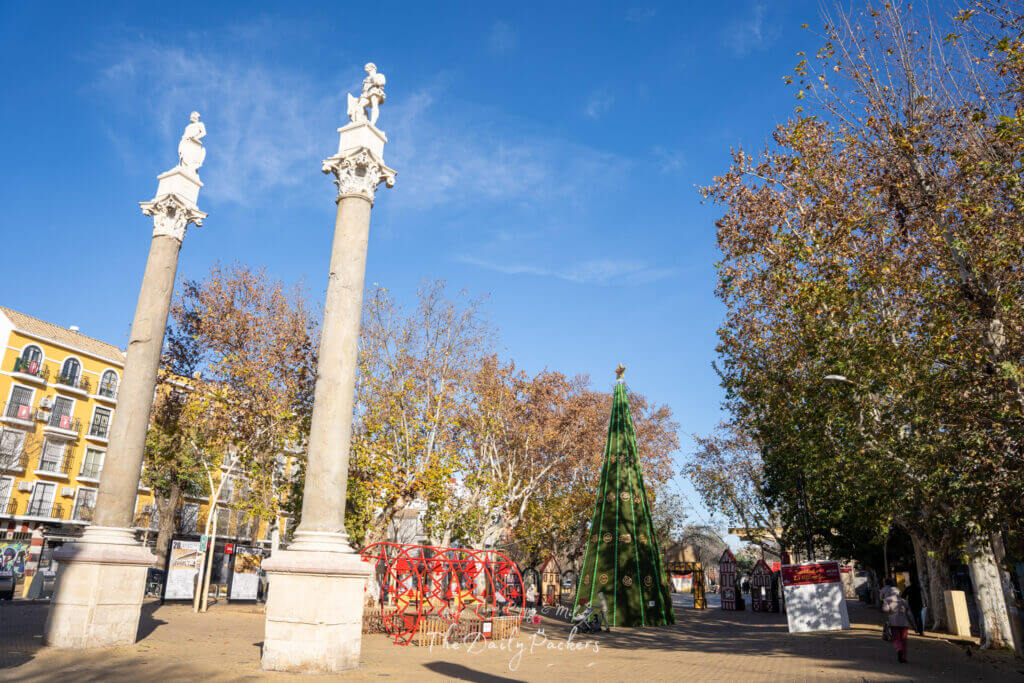
Next on your Seville itinerary is Alameda de Hércules, one of the city’s most vibrant and lively squares. It’s a large open space lined with cafes, tapas bars, and shaded trees — the perfect place to take a short break and watch local life unfold.

At the heart of the square stand two ancient Roman columns topped with statues of Hercules and Julius Caesar, the legendary founders of Seville. It’s a fun mix of history and local energy, especially during the day when families gather and children play in the small park.
If you visit in the late afternoon or evening, Alameda really comes alive with street performers and locals meeting up for drinks. It’s a great spot to slow down and enjoy a different side of Seville before continuing your explorations.
Admire the Setas de Sevilla
Keep following your Seville itinerary toward one of the city’s most modern landmarks — the Setas de Sevilla, also known as the “Mushrooms of Seville.” Built in 2011, this massive wooden structure brings a bold, contemporary touch to the city’s otherwise historic skyline.
You can admire the Setas from the ground and take in its unique architecture, but if you have time, it’s worth heading up to the rooftop walkway. From there, you’ll get panoramic views of Seville, especially beautiful around sunset when the golden light hits the old town.
If you’re not planning to go up, it’s still a great place to stop for a few photos or grab a drink at one of the nearby terraces. The square underneath often hosts small markets or local events, adding even more atmosphere to this spot.

Tip: Here is where you can get your ticket for the Setas de Sevilla.
Visit Casa de Pilatos
From the Setas, continue your Seville itinerary by walking back south toward Casa de Pilatos, one of the most beautiful palaces in the city — and surprisingly, not too crowded.

This stunning residence once belonged to the Dukes of Medinaceli and is often considered the most important palace in Seville after the Royal Alcázar. It’s a perfect mix of Italian Renaissance architecture and Moorish Mudéjar details, with colorful tiles, intricate arches, and a peaceful courtyard that feels like stepping into another time.
Take your time to wander through the rooms, admire the carved ceilings, and enjoy the lush garden tucked inside. It’s a calm and elegant stop that perfectly balances the energy of Seville’s bustling streets.

Relax in the Jardines de Murillo
Next on your Seville itinerary, take a slow walk toward the Jardines de Murillo, one of the city’s most peaceful green spaces. Located right behind the Royal Alcázar, these gardens are perfect for catching a breath of fresh air after a busy morning of sightseeing.
The park is full of shaded paths, benches, fountains, and colorful ceramic benches, all surrounded by palm trees and orange trees. It’s a lovely spot to sit for a while, have a snack, or just watch people go by.
You’ll often find street performers or local musicians playing near the fountains, which makes the atmosphere even more pleasant. It’s also a nice shortcut if you’re walking toward the Santa Cruz neighborhood — and a reminder that Seville knows how to blend nature and architecture perfectly.

Here are all your accommodation options in Seville
Cross the River to Explore Triana
To keep your Seville itinerary going, cross the Puente de Isabel II and head into Triana, one of Seville’s most character-filled neighborhoods.
Triana has always been the soul of Seville — home to sailors, gypsies, flamenco dancers, and artisans who shaped the city’s identity. It’s here that flamenco culture was truly born, and you can still feel that creative energy in the narrow streets, tile workshops, and local taverns.
Stroll along the Calle Betis, the riverfront promenade lined with colorful houses and tapas bars, offering beautiful views of Seville across the water. If you have time, step inside the Iglesia de Santa Ana, one of the oldest churches in the city, or simply get lost in the smaller alleys — every corner of Triana has a story to tell.
It’s also the perfect area to grab a drink at sunset or end your day with a casual dinner before heading back to the city center.


Visit Centro Cerámica Triana
To wrap up this day of your Seville itinerary, stop by the Centro Cerámica Triana, a small but surprisingly fascinating museum dedicated to the city’s famous tile-making tradition.
Even if you’re not usually into museums, this one is worth a visit. It takes you through the history of Seville’s ceramic industry — from the early days of handcrafted tiles to the large kilns used in the old factories. You’ll walk through rooms that still preserve the atmosphere of a real workshop and see how those beautiful azulejos that decorate so many buildings in Seville were made.
It’s a short visit, but a really nice one to end your day in Triana before heading back across the river for dinner.

Here are all your accommodation options in Seville
End of the Day
To wrap up this third day of your Seville itinerary, head back toward the river and slow things down a little. Grab a drink, sit on the riverbank, and watch the sunset over the city — it’s one of the best ways to end the day.
Seville’s evenings have something special about them — the light, the warmth, the people chatting on terraces — everything feels calm and alive at the same time. It’s the perfect moment to just enjoy where you are before diving into your next adventure tomorrow around this Seville itinerary.

Read: Our complete 10-day Andalusia Itinerary: The best of the south of Spain
Seville Itinerary Day 4: Day trip to Cordoba
If you have the time during your Seville itinerary, spending a day in Córdoba is a must. The city is only about 40 minutes away by train, making it one of the easiest and most rewarding day trips from Seville.
Córdoba is famous for its stunning Mosque-Cathedral (La Mezquita) — one of the most breathtaking monuments in Spain. Its mix of Islamic arches and Christian chapels perfectly reflects the city’s layered history. Inside, you’ll walk through a forest of red-and-white arches that feel almost endless.
Once you’ve explored La Mezquita, take time to wander around the Jewish Quarter (Judería), a maze of narrow streets filled with flowers, small shops, and hidden patios. Don’t miss the Roman Bridge over the Guadalquivir River, especially at sunset — it’s one of those views you’ll never forget.
If you have a bit more time, visit the Alcázar de los Reyes Cristianos, known for its peaceful gardens and towers with panoramic views over the city. Córdoba is compact enough to explore on foot, so you’ll be able to see most of it in a single day before returning to Seville in the evening.

Read: All the best things to do in Cordoba, Spain, in 1 day
Seville Itinerary Day 5: Day trip to Ronda
To end your Seville itinerary on a high note, take a day trip to Ronda, one of Andalusia’s most beautiful and dramatic towns. Perched on top of a deep gorge, Ronda offers postcard views from every angle.
It takes about 2 hours by car or tour from Seville, and it’s absolutely worth it. Once there, head straight to the Puente Nuevo, the massive stone bridge that connects the old and new parts of the town. The view of the gorge below is incredible — and yes, it’s even better in person than in photos.
Ronda is also known as the birthplace of bullfighting, and you can visit its historic Plaza de Toros, one of the oldest arenas in Spain. Even if you’re not a fan of bullfighting, the building and museum are fascinating pieces of Spanish history.

Take a stroll through the old town, filled with cobblestone streets, whitewashed houses, and small local shops. Stop for tapas at one of the terraces overlooking the valley — the views are unreal.
On the way back to Seville, you can also stop by Setenil de las Bodegas, a small white village famous for its houses built directly into the rock.
It’s the perfect way to wrap up your 5-day Seville itinerary — a mix of culture, architecture, nature, and pure Andalusian charm. Don’t hesitate to comment if you like or would improve this Seville itinerary. We are always glad to be able to get our Seville itinerary better for other travellers.



About the authors
We are Alex and Tina, a French-Serbian couple who met in China back in 2014. We spent three incredible years there before making France our home. Our shared passion for travel has been the heartbeat of our relationship for over 12 years, taking us across 44 countries and counting.
We launched TheDailyPackers in 2019 as a way to document our adventures. In 2026, we reached a major milestone by officially turning our blog into our full-time job. While we are still growing toward financial independence through this platform, every article we write is fueled by our mission to make your voyages easier through in-depth guides, honest advice, and the lessons we’ve learned from our own mistakes.
Our journey has not been without its storms. In 2023, our world changed forever when our first son, Poppy, was stillborn on November 25th. It was, and remains, the hardest chapter of our lives. In 2025, we were blessed with our second little boy, Milo. He has since joined our traveling tribe, and you’ll be seeing him—and the reality of traveling with a little one-on the blog more and more.
We hope to inspire you to explore the world with curiosity and resilience. Thank you for being part of our story.
You may also like those related posts
6 Best Places to Visit in June
3-Month South America Packing List: What to Bring
Cusco Itinerary: How to spend 6 magical days in Cusco, Peru
9 best things to do in Jericoacoara, Brazil, in 2 to 4 days
17 Essential Corsica Travel Tips to Know Before Your Trip
6 Best Tourist destinations in Uruguay in 2026
12 best things to do in Osaka, Japan, in 4 days or more
Cost to Travel South America, Our 3-month Budget Breakdown
Pssst, did you know that…
If you purchase something through our links, we earn a small fee. However, you still pay the same. Win-win! And one day we may get to be full-time travel bloggers =)
Find Hotels with Booking.com
Do Yoga with KVY
Buy us a Coffee
Rent a car with DiscoverCars
Find Attractions with GetYourGuide
Find Flights with Expedia
Buy an eSIM with Airalo
Get insured with World Nomads
Get ready with Amazon.com