

Introduction
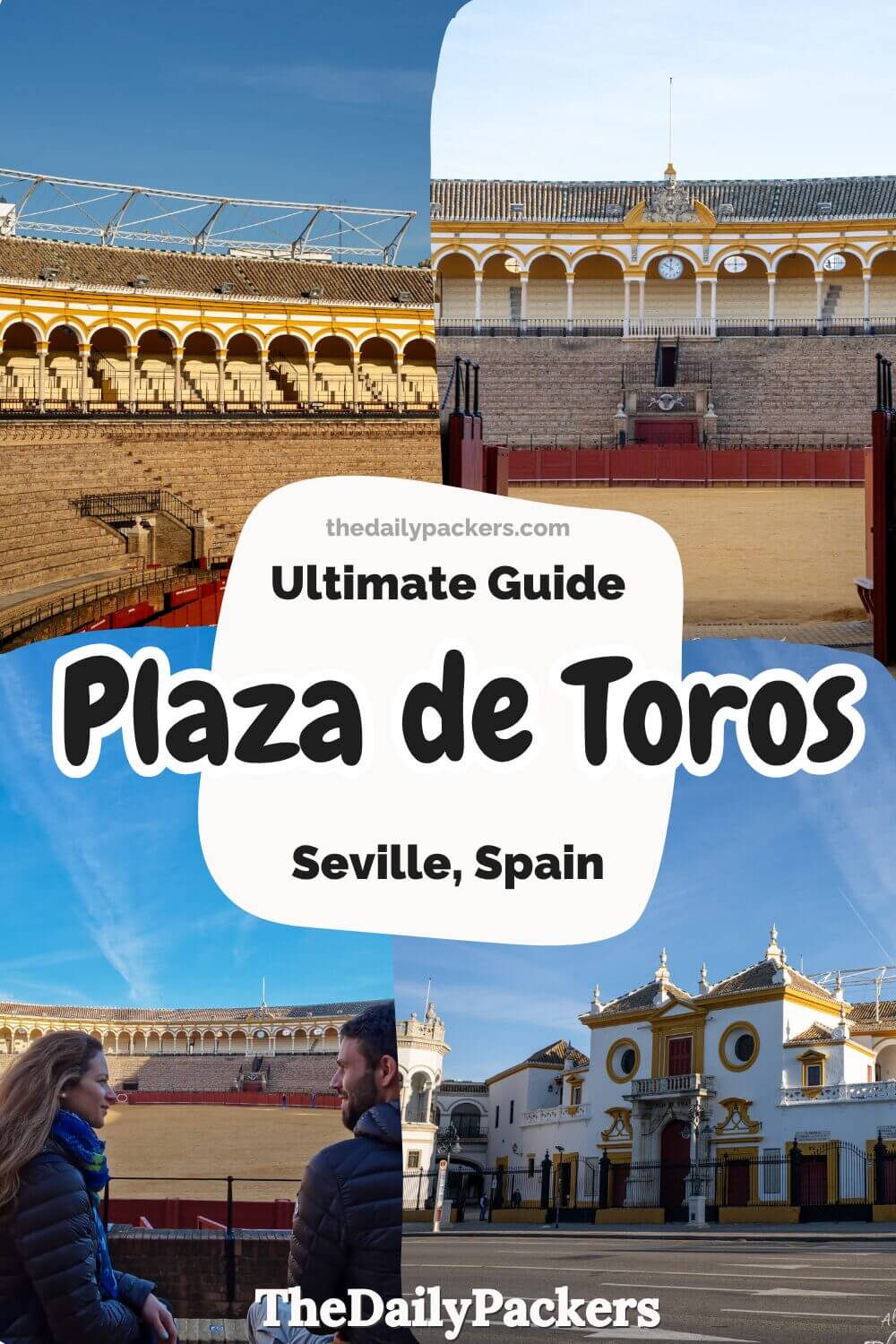
The Plaza de Toros de la Real Maestranza de Caballería de Sevilla is one of Seville’s most iconic landmarks and one of the oldest bullrings in Spain. Built in the 18th century, this grand arena is a masterpiece of Baroque architecture and a cornerstone of Andalusian culture.
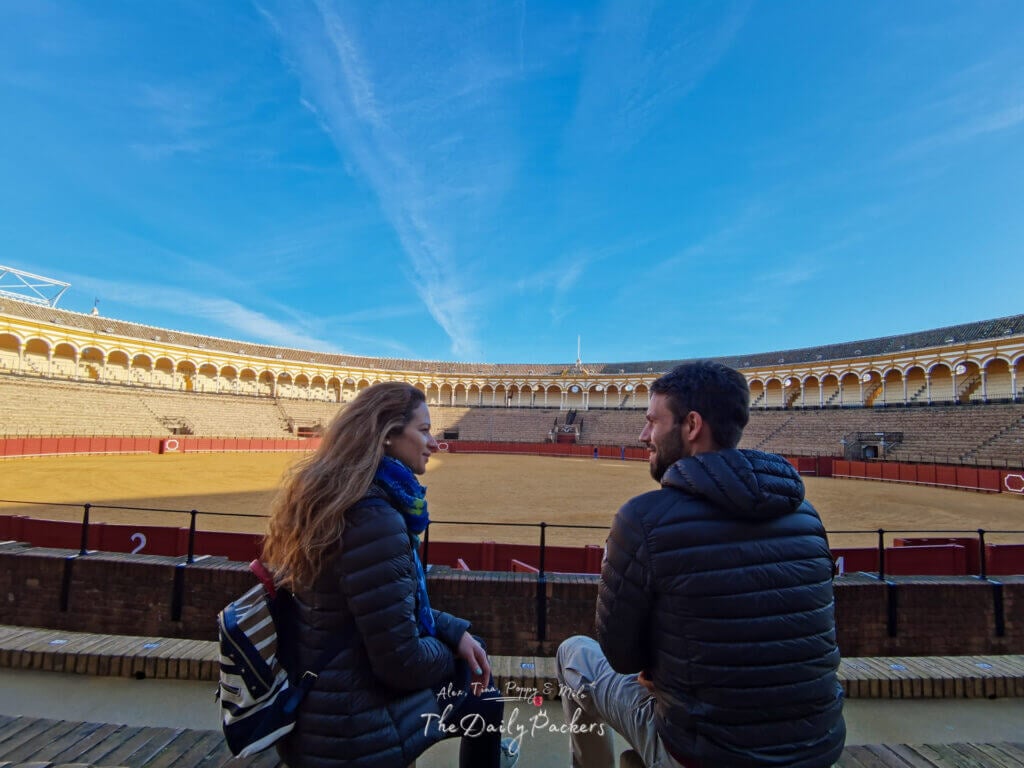
Even if you’re not interested in bullfighting, it’s still worth visiting for its historical and architectural value. Inside, you’ll find a fascinating museum that tells the story of Spain’s bullfighting tradition, along with beautifully preserved galleries, arches, and the grand arena itself — a place that has witnessed centuries of history and spectacle.
We visited the Plaza de Toros during our 10-day Andalusia road trip, and it turned out to be one of the most surprising visits of Seville — much more than just a stadium, it’s a glimpse into a deep part of Spanish identity and artistry.

Read: 22 Best things to do in Seville, Spain, in 3 to 5 days
Why visit?
The Plaza de Toros de la Real Maestranza de Caballería de Sevilla is not just any bullring — it’s one of the oldest and most prestigious in Spain, and one of the best examples of 18th-century Baroque architecture in the country.
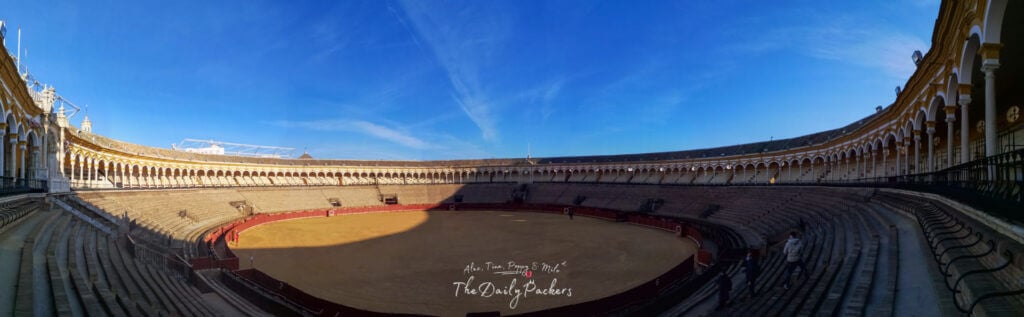
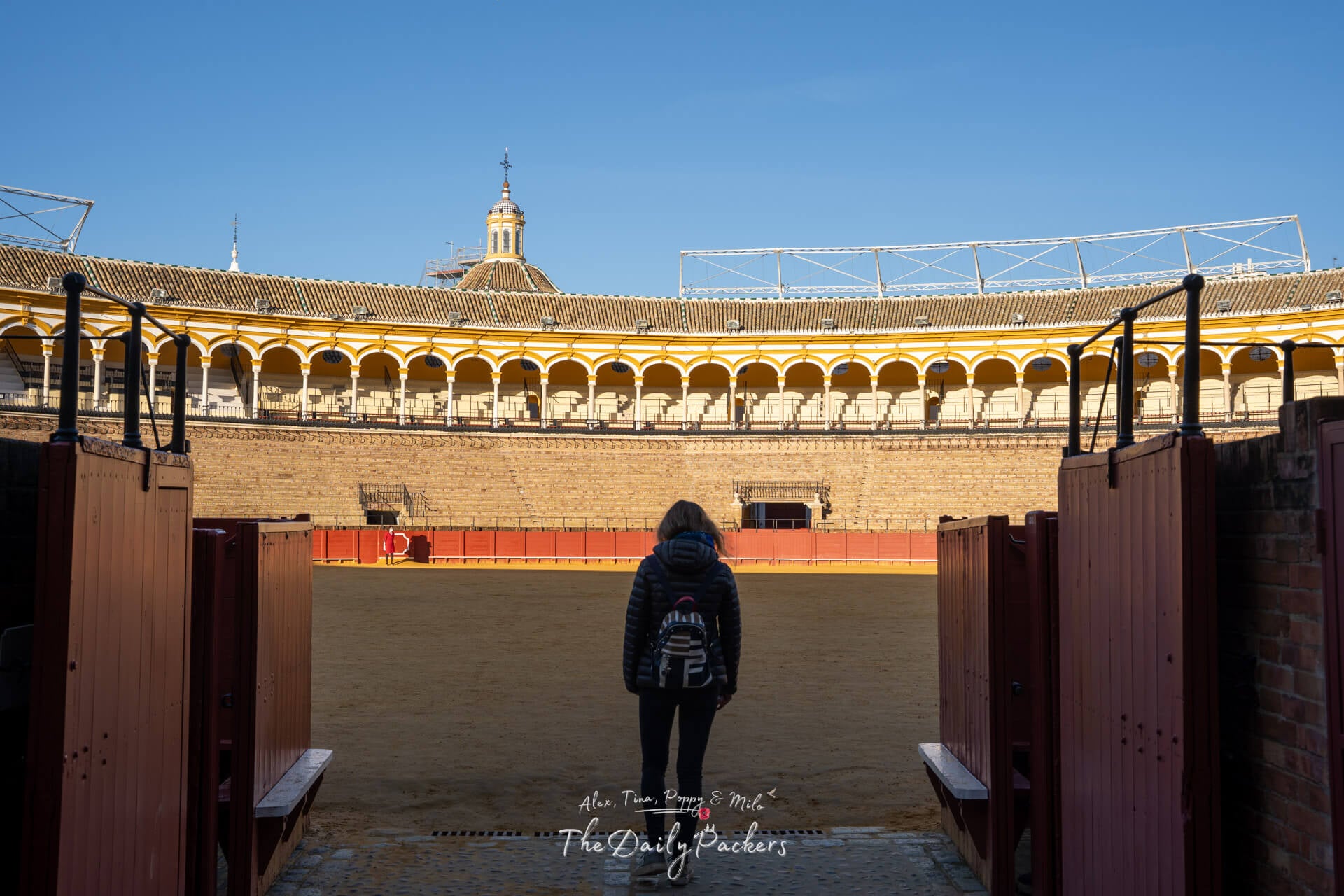
Its story began in 1749, when the Real Maestranza de Caballería, a noble brotherhood originally founded to train horsemen for the Spanish army, decided to build a permanent arena for bullfights. Before that, bullfights were held in Seville’s main squares. Construction took decades — the elliptical shape, unique for its time, was started in 1761 and completed nearly a century later. The result is an architectural masterpiece with graceful curves, arcaded galleries, and a sand-colored arena that can hold more than 12,000 spectators.

The main entrance gate, known as the Puerta del Príncipe (Prince’s Gate), has deep symbolism — it’s where victorious matadors exit the arena, lifted on the shoulders of the crowd. This gate has seen some of the most legendary moments in bullfighting history.
During the 18th and 19th centuries, the Maestranza became one of the key cultural centers of Seville. Beyond bullfights, it hosted celebrations, parades, and equestrian events that reflected the grandeur of the Andalusian nobility. In 1931, it was declared a Spanish National Monument, recognizing its historical and artistic importance.
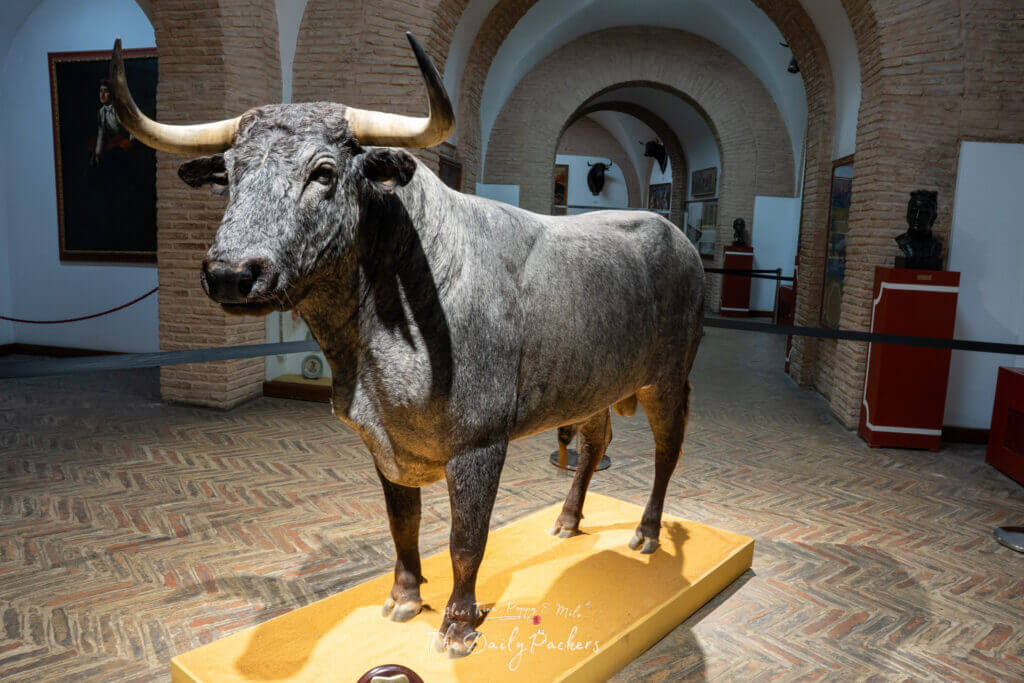
Today, even for visitors who aren’t interested in bullfighting, the Plaza de Toros is fascinating. The Bullfighting Museum showcases centuries of history through matador costumes, antique posters, and paintings by artists such as Goya and Carmen Laffón. It’s a place that helps you understand not just bullfighting, but also the evolution of Seville’s traditions, craftsmanship, and social life.
How to get there
The Plaza de Toros de la Real Maestranza is located in the heart of Seville, right next to the Guadalquivir River and just a short walk from the city’s other major landmarks like the Seville Cathedral, La Giralda, and the Torre del Oro.
You can easily reach it on foot if you’re staying in or near the historic center. From the cathedral, it’s just a 5-minute walk along the riverfront. The bullring sits on Paseo de Cristóbal Colón, one of Seville’s most scenic boulevards, lined with palm trees and cafés.

If you’re coming from further away:
- By bus: Several city buses stop nearby, including lines C3, C4, 21, and 40, all stopping at Paseo Colón.
- By tram: The MetroCentro (T1) line stops at Archivo de Indias, about 7 minutes away on foot.
- By bike or e-scooter: Seville has a great network of bike lanes, and there are docking stations for city bikes near the entrance.
The area is pedestrian-friendly and packed with restaurants and tapas bars, so it’s easy to combine your visit with a walk along the river or a meal in the nearby Arenal neighborhood.
Address: P.º de Cristóbal Colón, 12, Casco Antiguo, 41001 Sevilla, Spain

Tip: To truly understand Spain’s bullfighting culture, join the Bullring Guided Tour with Skip-the-Line Ticket.
When to visit
The Plaza de Toros de la Real Maestranza can be visited year-round, but your experience will vary depending on the season and whether you want to attend an event or simply explore the site.
If your goal is to visit the bullring and its museum, any time of year works. However, the best months are spring and autumn, when temperatures are mild and walking around Seville is most pleasant.
If you’re curious about seeing a bullfight, the official season typically runs from April to October, with the most important events taking place during Seville’s Feria de Abril (April Fair) — one of the city’s biggest festivals. During this period, the atmosphere around the Maestranza is electric, with crowds dressed in traditional attire and parades filling the streets. Even if you don’t attend a bullfight, the energy in the area is something to experience at least once.

In summer (June to August), Seville can get extremely hot, often above 40°C (104°F). If you visit during these months, plan your trip early in the morning or late in the evening, when the temperature cools down and the golden light over the arena makes for great photos.
In winter (December to February), the city is much quieter. You won’t find bullfights during this time, but the museum remains open, and it’s an excellent time for travelers who prefer fewer crowds and cooler weather.
Overall, the best time to visit is April to early June or September to November, when Seville is lively, comfortable, and at its most beautiful.


Here are all your accommodation options in Seville
How to Visit
Visiting the Plaza de Toros de la Real Maestranza is straightforward, and even if you’re not into bullfighting, it’s absolutely worth stepping inside to appreciate its architecture, history, and cultural importance to Seville.

Your visit starts in the main courtyard, where you’ll see the whitewashed façade and yellow trim that have become iconic of Andalusian style. From there, you’ll enter through the Prince’s Gate (Puerta del Príncipe) — the same gate where victorious bullfighters traditionally exit after a successful performance.

Inside, the visit follows a guided circuit that combines the open-air arena with the museum. You’ll explore:
- The stands and arcades, where you can take in the vastness of the ring and imagine the energy on fight days.
- The Chapel of the Bullfighters, where matadors traditionally pray before entering the arena.
- The Bullfighting Museum, which houses paintings, costumes, posters, and historic memorabilia that tell the story of bullfighting in Spain.
- The Royal Box, reserved for members of the Real Maestranza, one of Spain’s oldest noble brotherhoods.

If you’re more interested in the cultural and historical side, you can skip the fight season and visit on a regular day to focus on the art and architecture — the Maestranza is a masterpiece of 18th-century Andalusian design.
And for fans of film or photography, the arena’s golden tones and perfect symmetry make it one of the most photogenic places in Seville, especially in the late afternoon light.
Tip: To truly understand Spain’s bullfighting culture, join the Bullring Guided Tour with Skip-the-Line Ticket.
Tickets & Opening Hours
The Plaza de Toros de la Real Maestranza is open almost every day of the year, and visiting it is easy whether you’re buying tickets on-site or online.
Here are the main ticket options:
- General admission: €12
- Children under 7: Free
- Family ticket available
- Audioguide: Included (accessed via QR code on your phone)

The opening hours are:
- Monday to Sunday: 9:30 a.m. to 7:30 p.m.
- The schedule of bullfighting show days is from 9:30 a.m. to 3:00 p.m.
- Ticket office closes 30 minutes before

Tickets can be purchased directly at the entrance or online through the official website of the Real Maestranza de Caballería de Sevilla.
If you’re visiting during the Feria de Abril or any other festival week, it’s best to book in advance, as availability can be limited and hours may change due to bullfighting events.


Tip: If you want to attend a bullfight (corrida), tickets for those specific events are sold separately — often weeks in advance — and prices vary depending on the seating area and event importance. You can buy them directly through official sellers or at the box office of the Plaza itself.
Is it Worth It?
Even if you have no interest in bullfighting, visiting the Plaza de Toros de la Real Maestranza is absolutely worth it. This landmark is more than just an arena — it’s a cultural monument that tells the story of Seville’s traditions, craftsmanship, and passion.
The architecture alone makes it a must-see. The white and ochre arches, the perfectly symmetrical oval ring, and the atmosphere of centuries of history give it a powerful presence. Standing in the middle of the arena, you really feel how significant this place has been in Andalusian culture.
The museum is surprisingly well done, offering a balanced view of the art, controversy, and history of bullfighting. It’s compact, visually engaging, and even if you’re not a fan of the sport, you’ll leave with a better understanding of why it has played such a central role in Spain’s identity for so long.
And if you’re visiting during the Feria de Abril, the experience becomes even more alive. You’ll see the plaza filled with locals in traditional outfits, the streets buzzing with music, carriages, and color.
So, whether you come for the architecture, the culture, or the photography — the Plaza de Toros de la Real Maestranza deserves a place on your Seville itinerary.
We personally are not fans of the bullfighting tradition, but enjoyed the monument itself.


Travel Tips
To make the most of your visit to the Seville bullring, here are our top practical tips:
- Go early or late in the day: The best time to visit the Plaza de Toros is either right after opening or a few hours before closing. The light is softer, the crowds are smaller, and you’ll have plenty of time to enjoy the arena without rushing.
- Combine it with a river walk: The Plaza is just a few steps from the Guadalquivir River, so after your visit, take a relaxing stroll along the riverside or cross the Triana Bridge to explore the colorful Triana neighborhood.
- Bring water in summer: Seville gets extremely hot, especially from June to August, and there’s little shade inside the arena. A hat, sunglasses, and a bottle of water are essential.
- Don’t expect live events year-round: Bullfighting season usually runs from April to September, with the Feria de Abril being the main highlight. Outside of this period, the arena is dedicated to tours and cultural events.
- Photography tip: The golden tones of the arena and the play of shadows make it a fantastic place for photos. Late afternoon offers the best light for capturing its signature warm colors.
- Accessibility: The museum and arena are partially accessible for visitors with reduced mobility, though some upper sections and the royal box may not be reachable.

Where to stay
If you’re visiting Seville and want to stay near the Plaza de Toros de la Real Maestranza, the El Arenal neighborhood is a perfect choice. It’s one of the most central and authentic areas of the city — just steps away from the river, the Cathedral, and the Alcázar. From here, you can walk everywhere easily.
Here are a few great options depending on your budget:
(€) Hotel Giralda Center – A modern and comfortable hotel located near the city center, perfect if you’re looking for good value and easy access to main attractions. The rooms are spacious, and the rooftop terrace is a nice touch for sunset views.
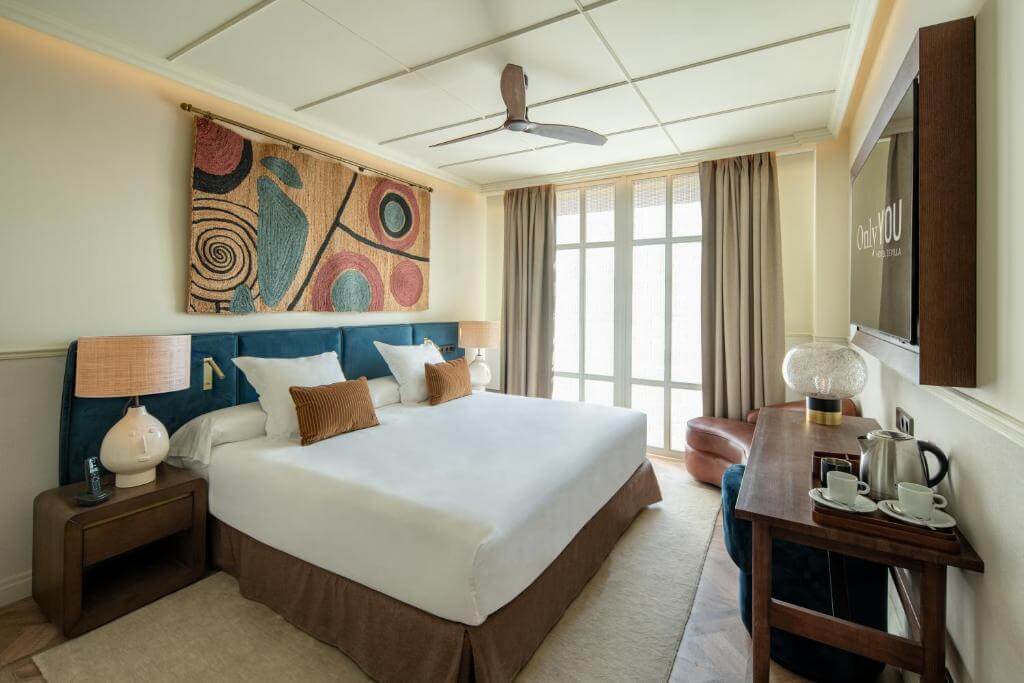
(€€) Only YOU Hotel Sevilla – A stylish boutique hotel with elegant design, cozy rooms, and excellent service. It’s close to Santa Justa Station, making it ideal if you’re arriving by train.
(€€€) Hotel Alfonso XIII, a Luxury Collection Hotel, Seville – Seville’s most iconic hotel. This masterpiece of Moorish-inspired architecture sits between the Cathedral and Plaza de España. It’s a true Andalusian gem — luxurious, historic, and unforgettable.
No matter which you choose, staying in central Seville means you’ll be within walking distance of the city’s main highlights — including the Plaza de Toros, the Cathedral, and the Royal Alcázar — making it easy to explore at your own pace.

About the authors
We are Alex and Tina, a French-Serbian couple who met in China back in 2014. We spent three incredible years there before making France our home. Our shared passion for travel has been the heartbeat of our relationship for over 12 years, taking us across 44 countries and counting.
We launched TheDailyPackers in 2019 as a way to document our adventures. In 2026, we reached a major milestone by officially turning our blog into our full-time job. While we are still growing toward financial independence through this platform, every article we write is fueled by our mission to make your voyages easier through in-depth guides, honest advice, and the lessons we’ve learned from our own mistakes.
Our journey has not been without its storms. In 2023, our world changed forever when our first son, Poppy, was stillborn on November 25th. It was, and remains, the hardest chapter of our lives. In 2025, we were blessed with our second little boy, Milo. He has since joined our traveling tribe, and you’ll be seeing him—and the reality of traveling with a little one-on the blog more and more.
We hope to inspire you to explore the world with curiosity and resilience. Thank you for being part of our story.
You may also like those related posts
Lake Lucerne Road Trip: The Ultimate 1-day Guide
One Day in Seville: How to See the Best of Seville in 24 Hours
14 Best things to do in Arequipa, Peru, in 2 to 3 days
Holafly eSIM Review: The Best eSIM for Digital Nomads?
Morocco SIM card: Stay Connected in Just 10 Minutes
23 Best things to do in Cusco, Peru, in 2 to 6 days
The Perfect Argentina Itinerary: 2, 3 & 6 Weeks of Adventure
Tam Coc Boat Tour: Exploring Vietnam’s Ha Long Bay on Land
Pssst, did you know that…
If you purchase something through our links, we earn a small fee. However, you still pay the same. Win-win! And one day we may get to be full-time travel bloggers =)
Find Hotels with Booking.com
Do Yoga with KVY
Buy us a Coffee
Rent a car with DiscoverCars
Find Attractions with GetYourGuide
Find Flights with Expedia
Buy an eSIM with Airalo
Get insured with World Nomads
Get ready with Amazon.com