

Introduction
We spent several unforgettable days in Seville, a vibrant city bursting with life, color, and history. With roots in Roman, Muslim, and Christian civilizations, Seville is one of the most culturally rich and historically diverse cities in Spain. Famous for its flamenco, delicious tapas, and sun-soaked streets, it’s a place that instantly captures your heart.
Home to around 690,000 people, Seville is Spain’s fourth-largest city and one of Europe’s most enchanting. Its historic city center — spanning just 4 km² — is packed with architectural gems, lively plazas, and multiple UNESCO World Heritage sites.
Seville is perfect for a 3- to 4-day visit, with a day-trip to Cordoba and Ronda. It is offering a balance of culture, history, and pure Andalusian charm. From its orange-scented streets to its iconic landmarks, this ultimate Seville travel guide will help you discover everything that makes this city so special.
If you are looking for a step by step guide, we got you cover with our Seville Itinerary: Our Perfect 5 Days in Seville, Spain. And if sadly, you only have one day, don’t worry and read this article: One Day in Seville: How to See the Best of Seville in 24 Hours
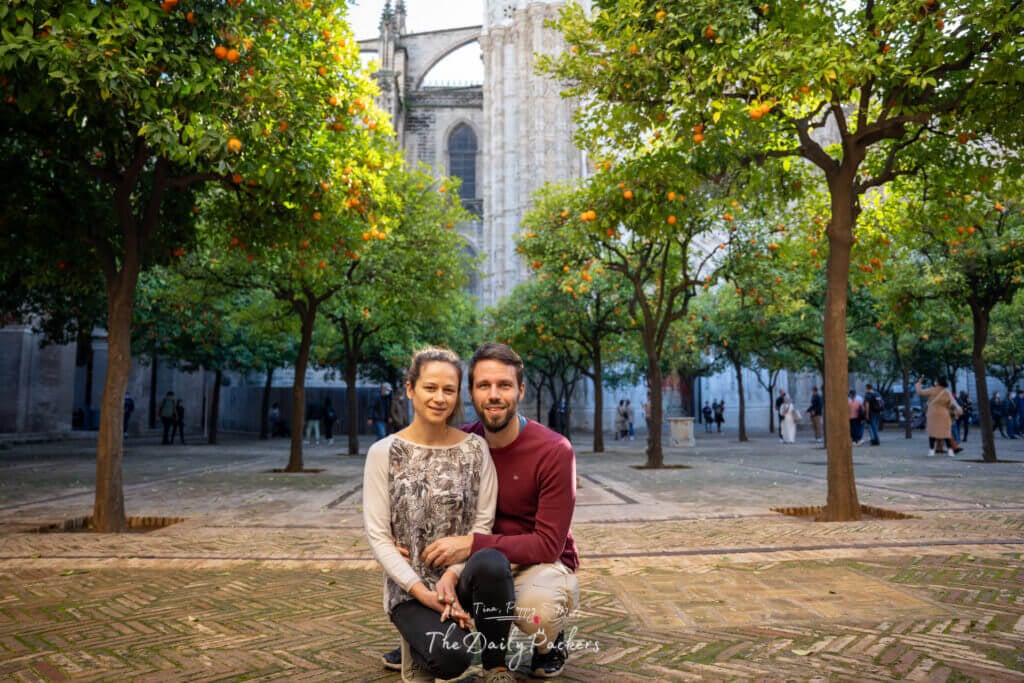

Read: Our complete 10-day Andalusia Itinerary: The best of the south of Spain
Getting there
Seville is well connected by air, train, and road, making it easy to reach from anywhere in Spain or Europe.
By Plane: Seville Airport (Aeropuerto de Sevilla-San Pablo) is located about 10 km from the city center. It’s a hub for both international and domestic flights, with regular connections from major European cities. From the airport, you can reach the center by:
- Bus (EA Line): Runs every 20–30 minutes and costs around €4.
- Taxi or Rideshare: Takes about 15–20 minutes and costs between €20–€30 depending on traffic.
- By renting a car and then driving 15-20 minutes. That’s a great choice if you plan on visiting a few cities in Andausia.
By Train: The Santa Justa Station is one of Spain’s main train hubs, with high-speed AVE trains connecting Seville to Madrid (2.5 hours), Córdoba (45 minutes), and Málaga (2 hours). Trains are comfortable, frequent, and a great way to see more of Andalusia.
By Bus: Seville has two main bus stations: Plaza de Armas (for long-distance and international routes) and Prado de San Sebastián (for regional lines). Buses are often cheaper than trains but take longer — for example, Madrid to Seville by bus takes around 6–7 hours.
By Car: Driving is another option, especially if you plan to explore other Andalusian gems like Ronda, Córdoba, or Granada. The highways are in great condition, and parking is easiest at hotels or public garages around the city edge.


Moving Around
Seville is one of those cities that’s best explored slowly (we always say that as we love strolling around) — walking through its narrow cobbled streets, soaking in the atmosphere, and stopping for tapas whenever you feel like it. Most of the main attractions are located close to each other within the historic center, so you can easily get around on foot.
That said, there are plenty of ways to move around the city depending on your plans:
- On Foot: Seville’s old town is compact and pedestrian-friendly. Walking is the best way to truly experience its charm — from the Cathedral to Plaza de España, you’ll find hidden courtyards, lively plazas, and countless photo-worthy corners along the way.
- By Bike or Scooter: The city has an excellent network of bike lanes and public bike rentals through Sevici. Electric scooters are also available and perfect for short rides along the river or through the parks.
- By Tram or Bus: Seville’s public transportation system, managed by TUSSAM, includes reliable trams and buses covering most areas of the city. Tickets can be bought on board or with a rechargeable card from kiosks and metro stations.
- By Metro: The Seville Metro currently has one line, but it’s useful if you’re staying a bit outside the city center.
- Hop-On Hop-Off Bus: If you prefer a more relaxed way to sightsee, explore Seville at your own pace with the City Sightseeing Hop-On Hop-Off Bus Tour. It stops at all major attractions like Plaza de España, the Torre del Oro, and Triana. You can get off whenever you like, enjoy the visit, then hop back on to continue your route — perfect for first-time visitors or if you’re short on time.
- By Taxi or Rideshare: Taxis are affordable and easy to find, especially late at night or if you’re heading somewhere outside the center. Apps like Cabify or Bolt also operate in Seville.


Tip: The City Sightseeing Hop-On Hop-Off Bus Tour is a great way to move around Seville
When to Visit
Seville is beautiful year-round, but the experience changes drastically with the seasons — especially because this is one of the hottest cities in Europe!
- Spring (March to May): This is hands-down the best time to visit Seville. The weather is warm and pleasant (around 20–28°C), orange trees are in bloom, and the city bursts with energy during its two most famous events like Semana Santa (Holy Week): A deeply traditional celebration with processions filling the streets, or Feria de Abril (April Fair): A week-long fiesta of flamenco, horse carriages, and late-night dancing.. If you can, plan your trip around these — it’s Seville at its liveliest.
- Summer (June to August): Expect extreme heat, often reaching over 40°C. The city slows down in the afternoon, and locals escape to the coast. If you visit during summer, plan early morning or evening sightseeing and spend midday relaxing in shaded patios or cafés.
- Autumn (September to November): Another fantastic time to visit. Temperatures cool down, crowds are smaller, and the light is perfect for photos. It’s also great for exploring Andalusia’s nearby towns without the summer rush.
- Winter (December to February): Mild and sunny most days, with temperatures around 10–18°C. The city is decorated for Christmas, the crowds are thin, and prices are lower — perfect if you prefer a quieter, more local vibe.
Best overall time: March to May and September to early November — when the weather is ideal, the atmosphere is festive, and Seville feels truly magical.


Where to Stay
Seville offers accommodations for every style and budget — from charming boutique hotels in the old town to luxurious stays near its grand monuments. Here are a few great options depending on your travel style:
(€) Hotel Giralda Center – A modern and comfortable hotel located near the city center, perfect if you’re looking for good value and easy access to main attractions. The rooms are spacious, and the rooftop terrace is a nice touch for sunset views.
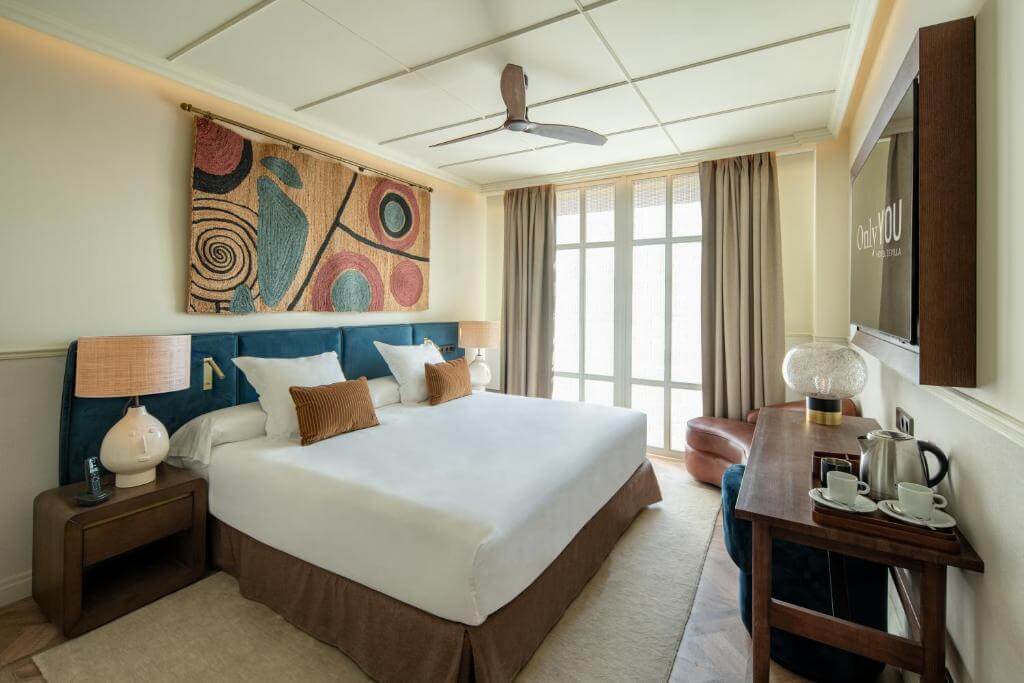
(€€) Only YOU Hotel Sevilla – A stylish boutique hotel with elegant design, cozy rooms, and excellent service. It’s close to Santa Justa Station, making it ideal if you’re arriving by train.
(€€€) Hotel Alfonso XIII, a Luxury Collection Hotel, Seville – Seville’s most iconic hotel. This masterpiece of Moorish-inspired architecture sits between the Cathedral and Plaza de España. It’s a true Andalusian gem — luxurious, historic, and unforgettable.
How long to stay in Seville? We recommend staying 3 to 5 nights to make the most of your visit. Three days is enough to see the highlights — the Cathedral, Alcázar, Plaza de España — while five days gives you time to explore neighborhoods like Triana and even do a day trip to Córdoba or Ronda.
No matter where you stay, Seville is compact enough that you’ll never be far from the city’s rhythm — the tapas bars, the flamenco music, and those golden sunsets over the Guadalquivir River.


Here are all your accommodation options in Seville
What to Eat
Seville is one of the best cities in Spain for food lovers — it’s the birthplace of tapas, after all. Eating here is all about sharing small plates, hopping from bar to bar, and savoring the rich flavors of Andalusia.
Here are some must-try dishes and local favorites you can’t miss:
- Salmorejo – A thicker, creamier version of gazpacho made from tomatoes, bread, and olive oil, often topped with hard-boiled egg and jamón. Perfect for warm days.
- Espinacas con garbanzos – A classic Sevillian dish made of spinach and chickpeas, seasoned with garlic, cumin, and paprika. It’s simple but incredibly tasty.
- Tortilla Española – Spain’s famous potato omelet. Try it cold or warm, and always with a drizzle of olive oil.
- Jamón Ibérico – Cured ham from southern Spain, often served thinly sliced. The best comes from nearby Jabugo.
- Flamenquín – Pork rolled with ham, breaded, and fried — crispy, rich, and delicious.
- Churros con chocolate – A sweet classic, perfect for breakfast or a late-night snack.
- Tapas & Montaditos – Tiny sandwiches or small bites — you’ll find endless variations in every tapas bar.
And of course, pair everything with a glass of local wine, sherry, or tinto de verano (a lighter version of sangria).

Where to Eat in Seville: You can eat incredibly well here without spending a fortune. Some great spots to try:
- El Rinconcillo – Founded in 1670, it’s the oldest tapas bar in Seville and a true local institution.
- La Brunilda Tapas – Modern tapas with creative twists and great presentation — worth the wait if it’s busy.
- Bodeguita Romero – Famous for its montadito de pringá, a small sandwich packed with slow-cooked meats.
- Espacio Eslava – A favorite among locals for its award-winning tapas and relaxed atmosphere.
- Mercado de Triana – Across the bridge in the Triana neighborhood, this market is a must for trying local products and small bites.
Tip: Eat like a local — have lunch around 2–3 p.m. and dinner after 9 p.m. Tapas bars are the heart of Seville’s social life, and hopping between them is one of the best ways to experience the city’s vibrant culture.

Tip: Do you want to learn more about the local cuisine, try the Tapas Crawl
Things to do in Seville
Take a Free Walking Tour in Seville
One of the best ways to start your trip in Seville is with a Free Walking Tour (FWT). It’s the perfect introduction to the city — you’ll learn about its history, legends, and architecture while getting a feel for the streets you’ll be exploring later on your own.
The tour typically starts near Iglesia del Salvador, then winds its way through the charming old town, past key landmarks like the Seville Cathedral, the Alcázar, and ends at the magnificent Plaza de España.
- Schedule: Every day at 10 a.m.
- Duration: Around 2 hours
- Languages: English and Spanish

When we joined, the English-speaking group had about 10 people, which made it easy to follow and ask questions — while the Spanish groups had more than 30 participants, split into several tours.
It’s a great way to start your visit — you’ll get an overview of the city’s layout, local recommendations, and fascinating stories from passionate guides.
Tip: The tour doesn’t include entry to monuments, so plan to revisit your favorite spots (like the Cathedral or Alcázar) the next day to explore them in depth. And don’t forget — while the tour is technically free, tips are always appreciated if you enjoyed it.

Here are all your accommodation options in Seville
Visit Salvador Church
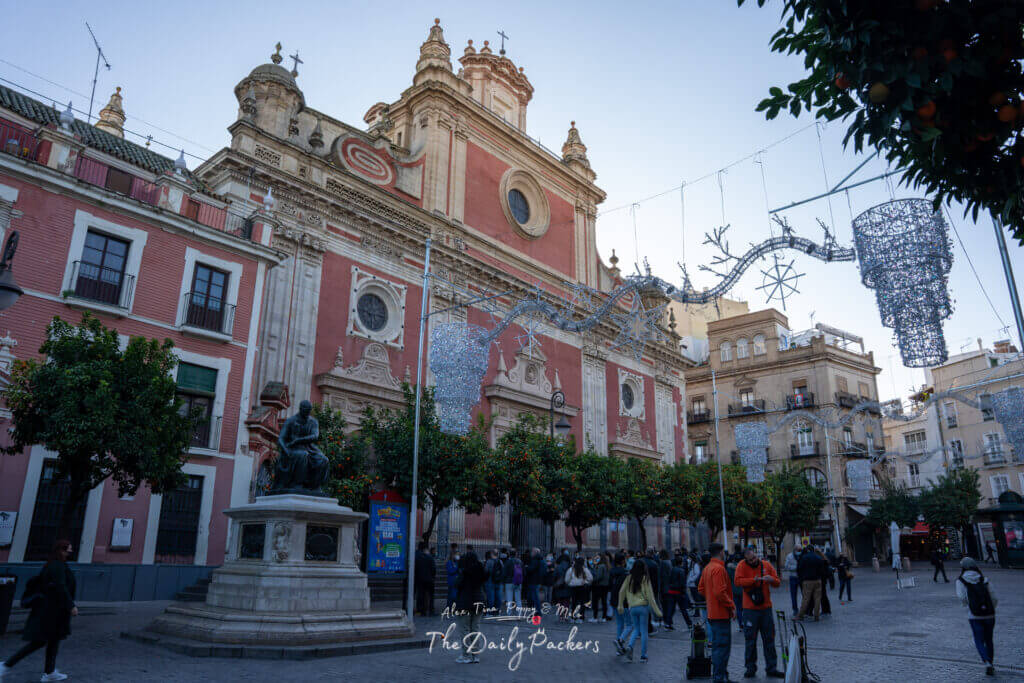
Begin your Seville adventure at Plaza del Salvador, one of the liveliest squares in the city and home to the stunning Iglesia del Salvador.
This church has a fascinating story — it was originally a mosque during the Moorish period, and when Seville became Christian, it was converted into a Baroque Roman Catholic church. At the time, the kings didn’t have the funds to build entirely new churches, so many mosques across Andalusia were transformed instead.
Today, Iglesia del Salvador stands as one of Seville’s most beautiful examples of Baroque architecture, with a richly decorated interior and a golden altar that will leave you speechless.
Explore the Catedral de Sevilla
The Cathedral of Seville is one of the city’s most iconic landmarks — and for good reason. It’s the third-largest church in the world (after St. Peter’s Basilica in Rome and St. Paul’s in London) and a UNESCO World Heritage Site that embodies centuries of Seville’s history, power, and devotion.
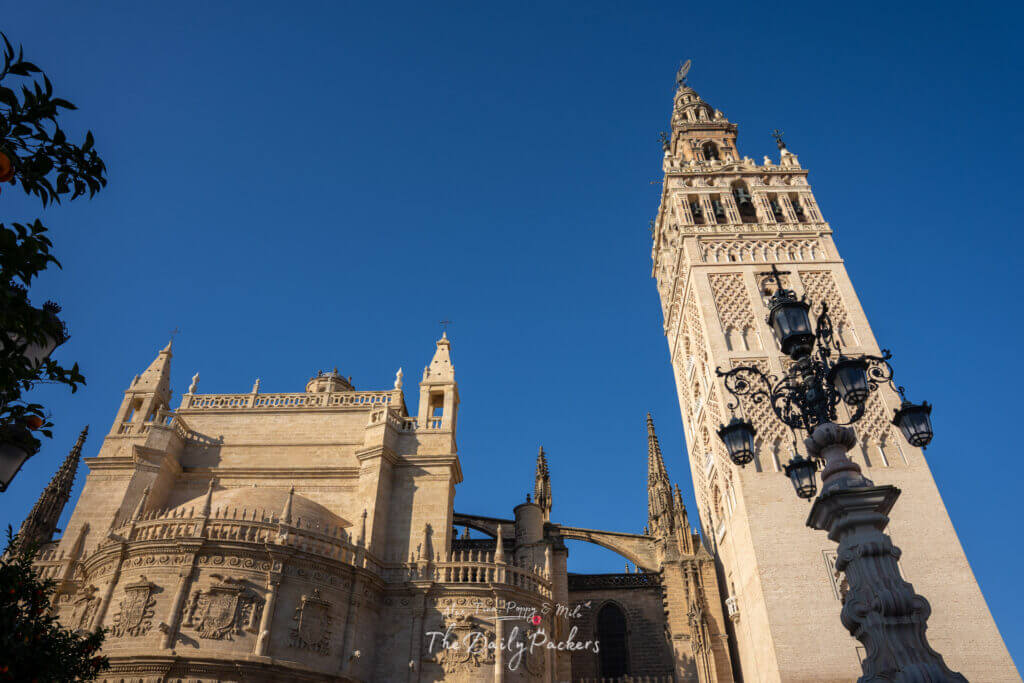
Construction began in 1401 on the foundations of a former Almohad mosque, and it took more than 100 years to complete. Even today, you can still see traces of its Islamic past — most notably in the Patio de los Naranjos (Courtyard of the Orange Trees) and the Giralda Tower, which originally served as the mosque’s minaret.
Inside the cathedral, don’t miss:
- The Capilla Mayor, with its magnificent Gothic altar, carved from wood and covered in gold leaf, depicting 45 scenes from the life of Christ.
- The Tomb of Christopher Columbus, an elaborate monument honoring the famous explorer.
- •The Treasury, displaying a dazzling collection of religious jewelry, paintings, and artifacts.
Tips:
- Tickets must be purchased online in advance — the lines can get long, especially in high season.
- If you want to truly understand the cathedral’s history, consider booking the Cathedral, Giralda & Alcázar Entry With Guided Tour, which offers skip-the-line access and expert insights into Seville’s most famous monuments.

Tip: Don’t forget that you must get your ticket online to visit the cathedral.
Hike La Giralda
The Giralda Tower is one of Seville’s most recognizable landmarks — and an essential stop during your visit to the cathedral. Originally built as the minaret of the Great Mosque of Seville in the 12th century, it was later transformed into a bell tower after the Christian reconquest.
The lower section still reflects its Moorish origins, with intricate brick patterns and arched windows, while the upper part — added by the Christians in the 16th century — holds 24 bells and a bronze weather vane known as El Giraldillo, symbolizing faith.

One of the most fascinating features of La Giralda is how you reach the top: instead of stairs, there’s a series of ramps that spiral upward. This unique design allowed the muezzin (the man who called to prayer) to ride a horse or donkey to the top seven times a day — quite the climb!
Tip: Climb to the top for one of the best panoramic views of Seville. You’ll see the city’s rooftops, the Alcázar gardens, and the river — especially magical at sunset.


Visit the Archivo de Indias
Right next to the cathedral, you’ll find the Archivo de Indias (Archives of the Indies) — one of Seville’s most historically significant buildings.
Back when Seville was Spain’s main port of trade with the Americas, this building served as the House of Trade, where all documents related to the Spanish colonies were stored and managed. It symbolized Seville’s role as the gateway between Europe and the New World during the Age of Exploration.

Today, the Archivo de Indias functions as a museum and archive, preserving more than 43,000 documents that detail three centuries of colonial history, including letters written by explorers such as Christopher Columbus, Hernán Cortés, and Francisco Pizarro.
Tip: Entrance is free, and it’s a quick yet fascinating visit — perfect to pair with your stop at the Cathedral and Giralda right next door. Occasionally, you’ll find temporary exhibitions displaying original maps, manuscripts, and royal decrees that helped shape world history.

Explore the Royal Alcázar of Seville
The Royal Alcázar of Seville is one of the city’s most breathtaking landmarks — and a true masterpiece of Mudéjar architecture. Originally built as a Moorish palace in the 10th century, it was later expanded by Christian kings after the Reconquista, blending Islamic, Gothic, Renaissance, and Baroque styles into a single, stunning complex.
What makes the Alcázar truly special is that it’s still the official royal residence in Seville — the oldest royal palace in Europe still in use. When members of the Spanish royal family visit the city, they actually stay here.

Inside, you’ll find exquisitely carved arches, colorful tiles, and peaceful courtyards like the Patio de las Doncellas, which perfectly captures the elegance of Andalusian design. Every corner feels like stepping back in time.
At the end of your visit, don’t miss the vast royal gardens — a serene maze of palm trees, fountains, and orange groves. You could easily spend an hour wandering through them.
Tip: The Alcázar is one of Seville’s most popular attractions, so it’s essential to buy your ticket in advance. If you want to skip the lines and learn more about its fascinating history, consider joining a guided tour that includes both the palace and the gardens.

Tip: Don’t forget to buy your ticket online before going there.
Visit the Real Fábrica de Tabacos de Sevilla
The Real Fábrica de Tabacos de Sevilla (Royal Tobacco Factory) is one of Seville’s most intriguing historic buildings — and a must-see for anyone who loves architecture and history.
Built in the 18th century, it was once the largest industrial building in Europe and supplied tobacco to the entire continent. Thousands of workers, mostly women known as “cigarreras,” worked here rolling cigars by hand. Their story even inspired the famous opera Carmen by Bizet.
Today, the building houses part of the University of Seville, and it’s open to the public. You can walk through its grand courtyards, admire the stone corridors, and imagine the days when tobacco leaves filled the air.
Tip: Entry is free, and it’s well worth a quick visit — even just to appreciate the mix of industrial power and baroque elegance. We honestly wished we had studied in such a beautiful place!

Here are all your accommodation options in Seville
Discover the Plaza de España
The Plaza de España is one of the most iconic and breathtaking landmarks in Seville — and perhaps in all of Spain. Built in 1928 for the Ibero-American Exposition of 1929, it was designed to showcase Spain’s architectural brilliance and to celebrate its connections with the Americas.
The plaza’s design is absolutely stunning: a huge semi-circular building adorned with colorful azulejos tiles, bridges over a peaceful canal, and a beautiful central fountain. It represents a symbolic embrace — Spain welcoming its former colonies.

One of the highlights is the series of 48 tiled benches, each representing a different province of Spain. The details are incredible, and every bench tells a small piece of the country’s story through handcrafted ceramic art.
You might also recognize the Plaza de España from several movies — it’s famously featured as Naboo in Star Wars: Episode II – Attack of the Clones and appeared in Lawrence of Arabia.
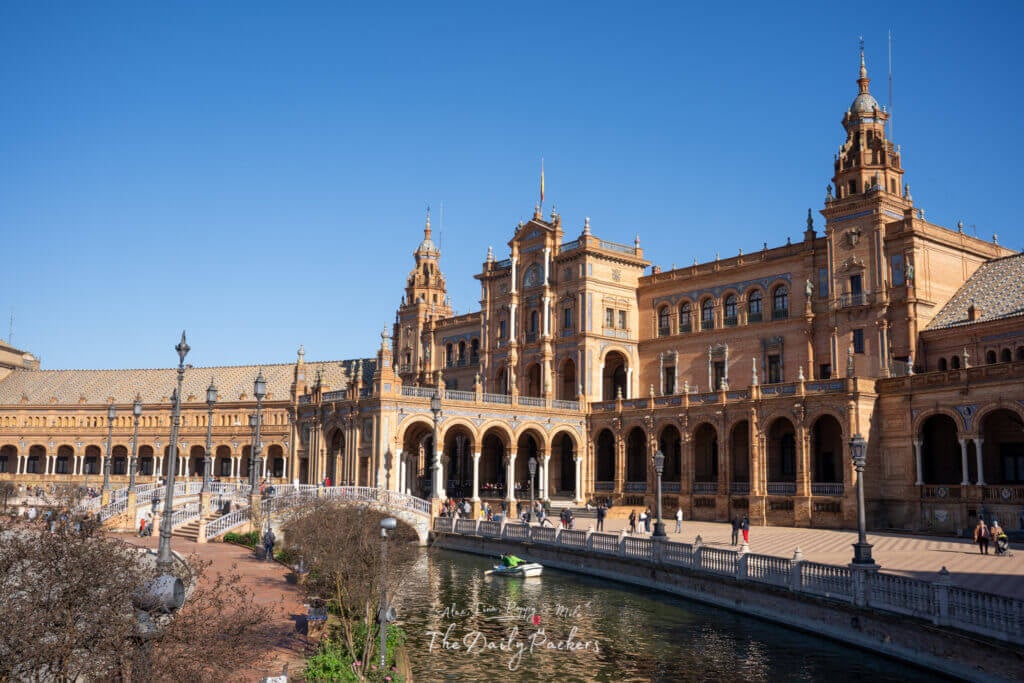
I think we came 3 times to Plaza de España!
Tip: Visit early in the morning or around sunset when the light hits the tiles beautifully. You can also rent a small rowboat and paddle along the canal for a fun (and romantic) perspective of the plaza.

Stroll Through Parque de María Luisa
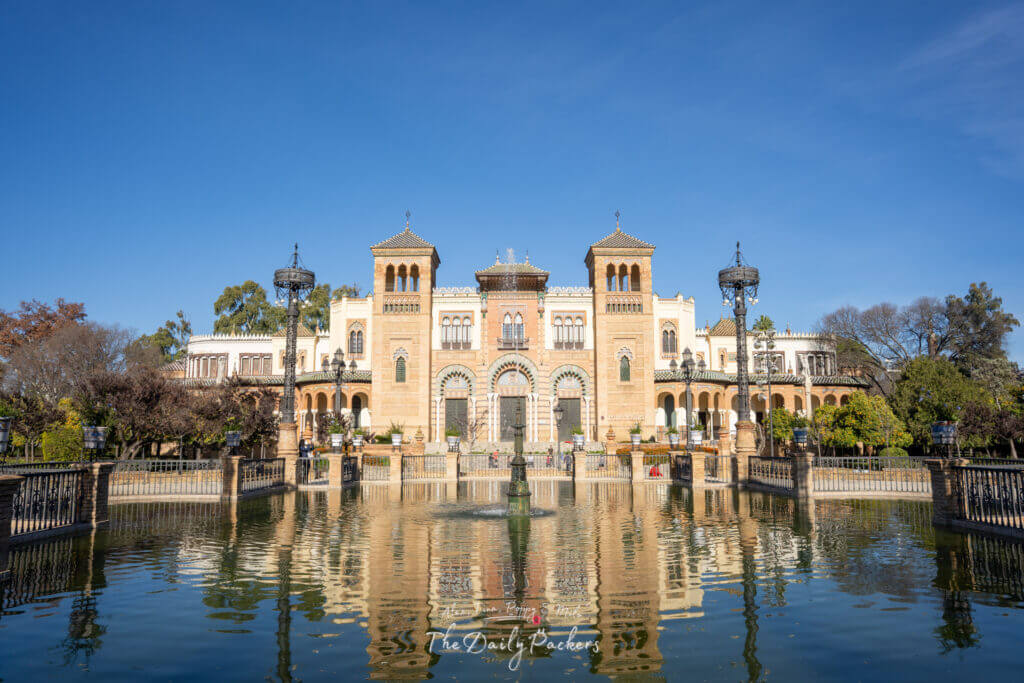
Right next to the Plaza de España, you’ll find the lush and tranquil Parque de María Luisa — Seville’s most famous and beloved park. It’s a peaceful escape from the busy city and the perfect spot to unwind after exploring the nearby landmarks.

The park is massive, filled with shady palm trees, fountains, flower gardens, and quiet paths that make you forget you’re still in the middle of Seville. You’ll also find plenty of ducks and swans gliding across the ponds — it’s a beautiful spot for a walk, a picnic, or even just sitting under a tree with a book.
At the far end of the park stand two remarkable buildings: the Museum of Popular Arts and Traditions and the Archaeological Museum of Seville. Both are stunning examples of Neo-Mudéjar architecture, though they were temporarily closed during our visit.

Tip: We use the DJI Action 4 to film our vlogs — compact, durable, and perfect for capturing every adventure.
Visit the Torre del Oro
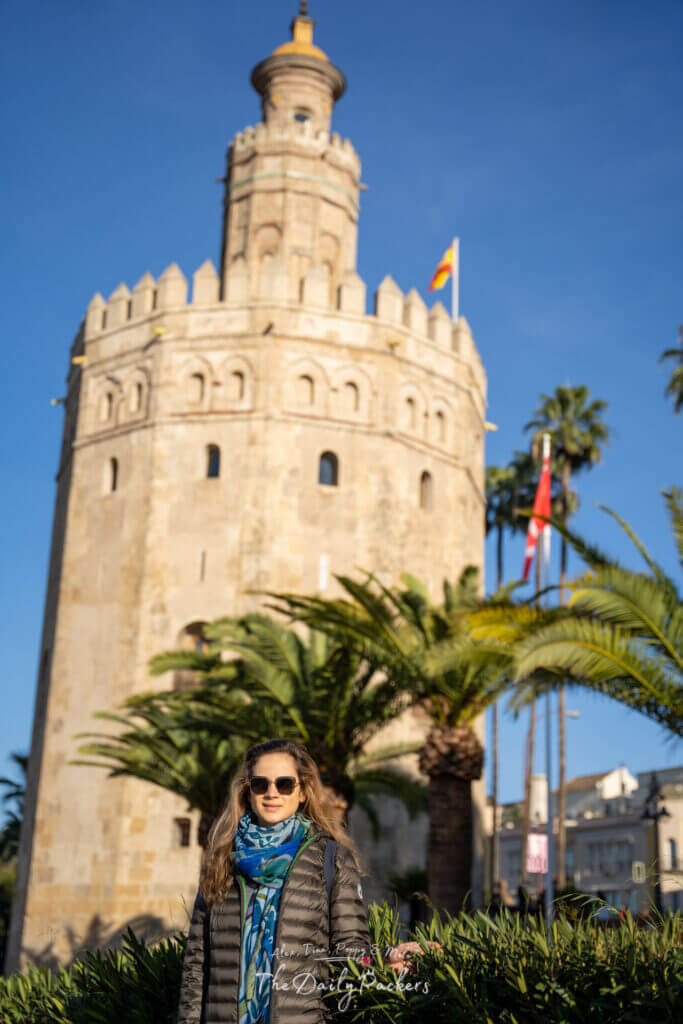
The Torre del Oro, or Tower of Gold, is one of Seville’s most recognizable riverside landmarks — though the name can be a bit misleading. Despite its golden title, the tower wasn’t used to store treasure; it actually got its name from the golden reflection it casts on the Guadalquivir River at sunset.

Built in the 13th century by the Almohads, it once served as part of the city’s defensive wall system and was used to control access to the river. Later, it became a watchtower and even a prison.
Today, the Torre del Oro houses a small naval museum, displaying Seville’s maritime history and its role during Spain’s era of exploration. But honestly, even if you’re not a museum person, it’s worth visiting just for the views — or for a pleasant stroll along the riverbanks, where locals love to walk, run, or relax in the evening sun.
Explore the Plaza de Toros de la Real Maestranza de Caballería de Sevilla
The Plaza de Toros de la Real Maestranza is one of the most iconic bullrings in Spain and an essential part of Seville’s cultural heritage. Built in the 18th century, it’s considered one of the oldest and most beautiful bullfighting arenas in the country.

Even if you’re not into bullfighting, the site is well worth a visit. You can explore the arena on your own or join a guided tour, which includes access to the museum inside. The museum traces the history of bullfighting in Andalusia, displaying old posters, traditional costumes, and artwork inspired by this centuries-old Spanish tradition.
Walking into the arena itself is quite impressive — the golden sand, white arches, and striking red barriers give the place a unique atmosphere that feels like stepping back in time.

Wander Through Santa Cruz — Seville’s Most Charming Neighborhood
The Santa Cruz district is the heart and soul of Seville — and without a doubt, one of its most beautiful areas. Once the city’s Jewish quarter, it’s now a maze of narrow cobblestone streets, whitewashed houses, colorful flower pots, and hidden courtyards that seem to appear out of nowhere.

You can easily spend hours here just wandering without a map, getting lost between the charming alleys and small squares filled with orange trees. It’s the kind of place where every corner looks like it was made for photos.
The atmosphere is lively but peaceful, with street musicians, small tapas bars, and local artisans selling their crafts. Don’t miss Plaza de Doña Elvira — one of the prettiest little squares in the neighborhood, surrounded by tiled benches and orange trees.

Here are all your accommodation options in Seville
End the Day with a Flamenco Show at Casa de la Memoria
There’s no better way to end a day in Seville than with an authentic flamenco show — and one of the best places to experience it is at the Centro Cultural Flamenco “Casa de la Memoria.”

Located in a beautifully restored 17th-century palace, this intimate venue offers one of the most authentic and emotional flamenco performances in the city. The setting itself adds to the magic — a small courtyard surrounded by arches, dim lighting, and the raw energy of live music.
Flamenco is more than just dance; it’s an art form born from the soul of Andalusia, combining guitar, song, and movement to tell stories of love, pain, and passion. You don’t need to understand Spanish to feel its power — it’s pure emotion.

Tip: Shows often sell out, especially on weekends, so book your ticket in advance. You can reserve it directly on their official website or through platforms like GetYourGuide. Arrive early to get good seats — the space is small, and that’s what makes it so special.
Visit the Real Parroquia de Santa María de Sevilla
Seville is full of churches — each with its own charm — but the Real Parroquia de Santa María is one that really stood out to us. From the outside, it looks rather modest compared to the city’s grand cathedrals, but once you step inside, it’s absolutely stunning.

The interior is richly decorated, with beautiful baroque altars, golden details, and colorful frescoes that take you by surprise given the simplicity of its façade. It’s one of those hidden gems that many travelers walk past without realizing how special it is.

Stroll Through Alameda de Hércules
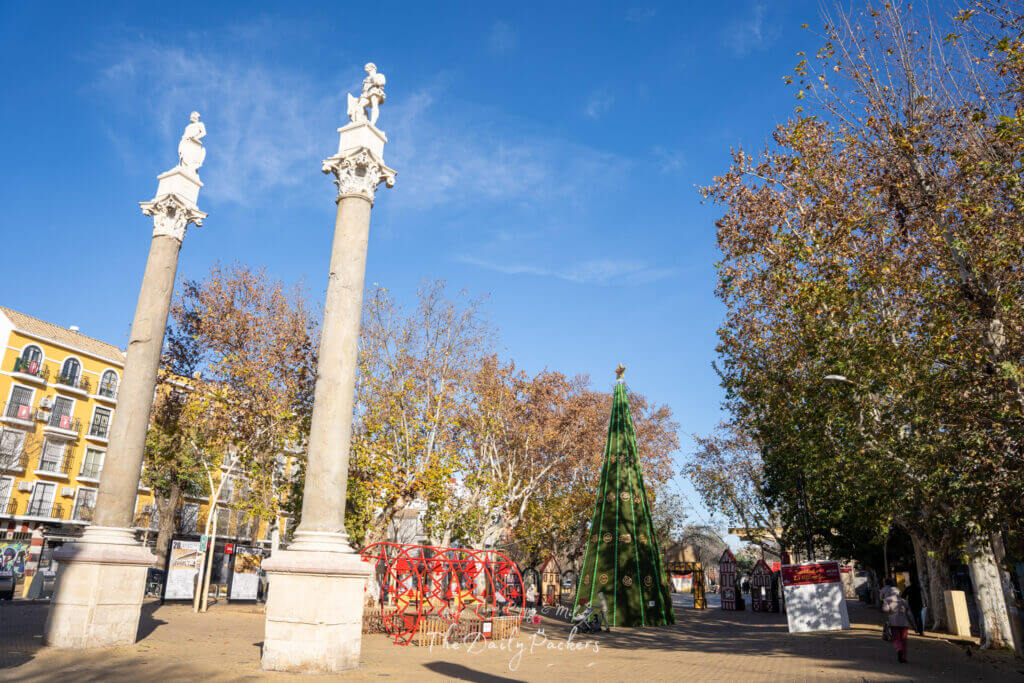
The Alameda de Hércules is one of Seville’s most vibrant and eclectic areas — a lively garden square located just north of the historic center. Originally built in the 16th century, it’s considered one of the oldest public gardens in Europe and has transformed over time into a trendy local hangout.

At each end of the square stand two Roman columns topped with statues of Hercules and Julius Caesar, the legendary founders of Seville. These ancient relics give the plaza its name and a touch of history amid the modern atmosphere.
Today, Alameda is full of cafés, tapas bars, and restaurants, and it’s especially popular in the evenings when locals gather for drinks, music, and late-night food.
Tip: We use the DJI Action 4 to film our vlogs — compact, durable, and perfect for capturing every adventure.
See the Setas de Sevilla (The Seville Mushrooms)
The Setas de Sevilla, also called Metropol Parasol or simply the Seville Mushrooms, is one of the city’s most striking modern landmarks. Completed in 2011, this massive wooden structure sits right in the heart of the old town at Plaza de la Encarnación, creating a fascinating contrast with Seville’s historic architecture.
The structure is made of six giant, interlocking wooden parasols, forming a shape that looks like enormous mushrooms — hence the nickname. It’s both futuristic and artistic, and it has become one of the city’s most photographed spots.

You can walk beneath it, where there’s a lively plaza, bars, and even a small market. For a few euros, you can also head up to the rooftop walkway for panoramic views over Seville, especially beautiful at sunset.
Tip: Even if you don’t go up, it’s worth visiting just to admire the architecture and the energy of the square — it’s a perfect mix of Seville’s old charm and its modern creativity.

Here are all your accommodation options in Seville
Visit Casa de Pilatos
The Casa de Pilatos is one of Seville’s most beautiful and underrated landmarks — a hidden gem that perfectly blends Italian Renaissance architecture with Moorish Mudéjar design. It serves as the permanent residence of the Dukes of Medinaceli, one of Spain’s oldest noble families, and was once considered the most important palace in Seville after the Royal Alcázar.

Built in the 15th and 16th centuries, the palace showcases an exquisite mix of azulejos (ceramic tiles), marble courtyards, and ornate arches. Every corner feels like a piece of art — from its peaceful central courtyard surrounded by columns to its lush gardens and richly decorated rooms.
What makes Casa de Pilatos special is that it still feels intimate and lived-in, unlike the grandeur of the Alcázar. You can really take your time wandering through its halls and imagining what life was like for Seville’s nobility centuries ago.


Check our Google Map of Andalusia
Relax at Jardines de Murillo
Just behind the Royal Alcázar, you’ll find the peaceful Jardines de Murillo — a lovely urban park that’s perfect for a quiet break after exploring Seville’s busy historic center.

These gardens were originally part of the Alcázar grounds and were later gifted to the city. Today, they’re a mix of shaded walkways, tiled benches, fountains, and palm trees, creating a calm oasis right in the middle of Seville. You’ll often see locals resting on benches, street performers playing music, and families taking leisurely strolls.
The park is also full of Sevillian charm, with azulejos benches and monuments dedicated to artists and historical figures, including the painter Bartolomé Esteban Murillo, after whom the gardens are named.

Explore the Triana Neighborhood
Across the Guadalquivir River from Seville’s historic center lies Triana, one of the city’s most authentic and character-filled neighborhoods. Traditionally home to sailors, gypsies, flamenco dancers, and ceramic artists (azulejeros), Triana has long been the beating heart of Seville’s popular culture.

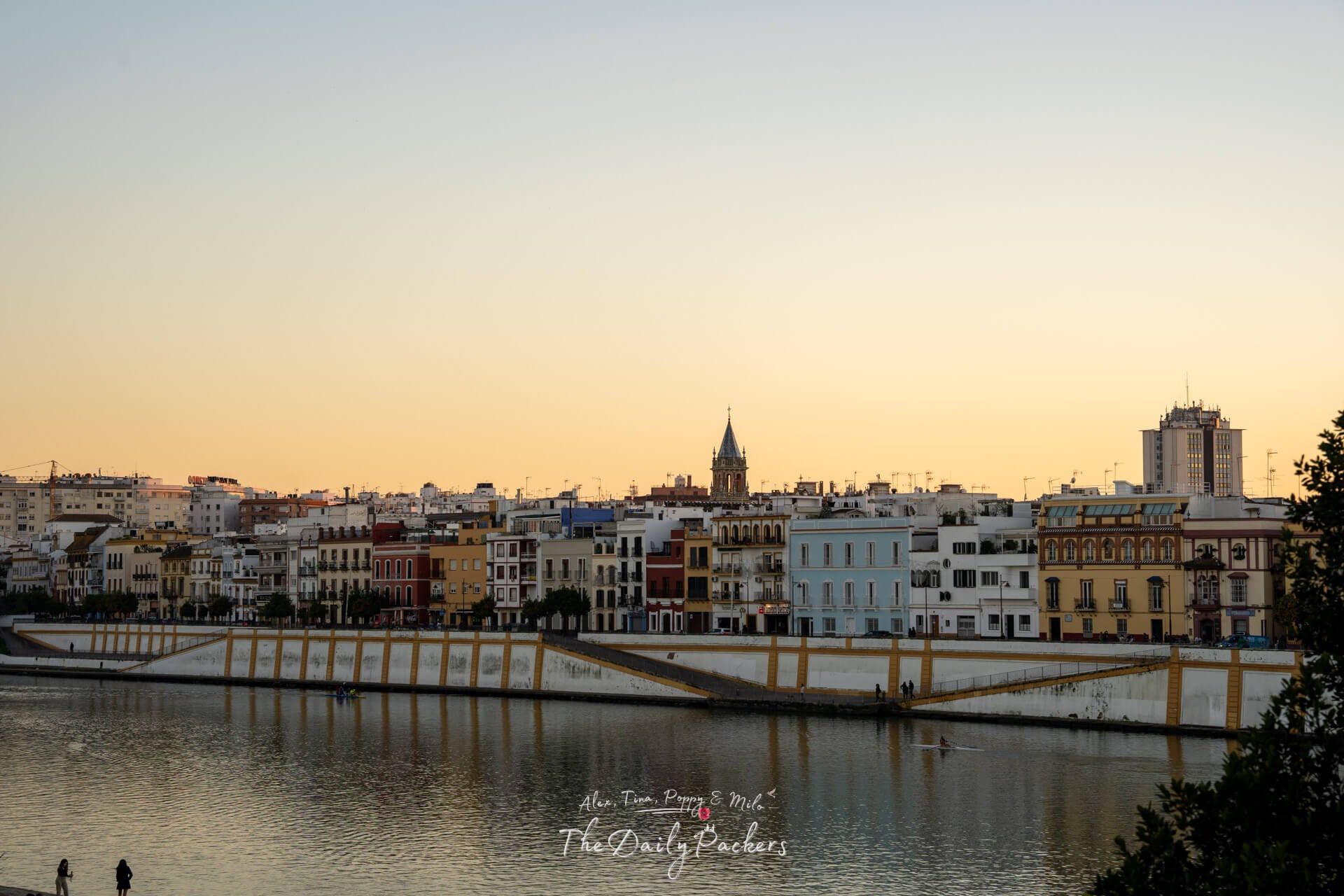
Wandering its narrow streets, you’ll find colorful ceramic-tiled façades, small family-run tapas bars, and a more local, laid-back vibe compared to the touristy center. The Calle Betis, which runs along the riverbank, offers some of the best views of Seville — especially at sunset when the light reflects beautifully on the water and the skyline glows.
Don’t miss a stop at the Iglesia de Santa Ana, one of Seville’s oldest churches, or visit one of the traditional ceramic workshops where artisans still handcraft tiles in the old-fashioned way.

Tip: We use the DJI Action 4 to film our vlogs — compact, durable, and perfect for capturing every adventure.
See the Museo del Castillo de San Jorge
As you cross the Triana Bridge (Puente de Isabel II), you’ll pass by the Museo del Castillo de San Jorge, a small archaeological site and museum located on the ruins of a medieval fortress. While it’s not a must-visit attraction inside, it’s worth stopping for a quick look as you make your way into Triana.

This spot has an interesting past — the Castle of San Jorge once served as the headquarters of the Spanish Inquisition. Today, it’s been turned into a small museum and memorial to that period of history, but most travelers simply admire it from outside while enjoying the views of the river.
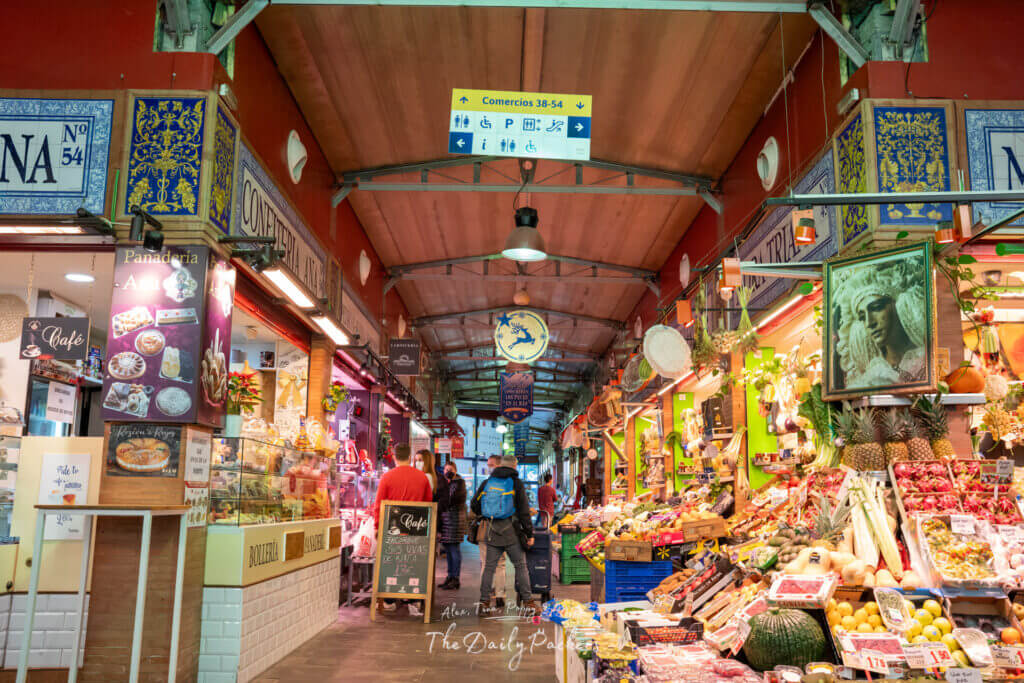
And right behind it, you will find one of our favorite attractions in Seville: the Mercado de Triana
Visit the Centro Cerámica Triana
If you have time for just one museum in Triana, make it the Centro Cerámica Triana. This small but fascinating museum is dedicated to Seville’s famous azulejos — the colorful ceramic tiles that decorate buildings all across Andalusia.

Housed in a former tile factory, the museum gives you a real sense of how ceramics have shaped the city’s identity. You’ll walk through the original kilns, workshops, and clay pits, and see how artisans crafted and painted tiles by hand for centuries. The exhibits show both the traditional techniques and how the craft evolved into modern design.
It’s a quiet, immersive visit that adds great context to what you see around Seville — after visiting, you’ll start noticing the different patterns and colors on façades everywhere you go.

Take a Day Trip to Córdoba
If you have an extra day in your Seville itinerary, Córdoba is absolutely worth it. Located just 40 minutes away by high-speed train, it’s one of the easiest and most rewarding day trips from the city.
Once the capital of the Moorish Empire in Spain, Córdoba was a place where Muslim, Jewish, and Christian cultures coexisted and thrived — something you can still feel as you walk through its narrow streets. The city’s main highlight is, of course, the Mezquita-Catedral, a breathtaking mosque-cathedral and one of the most extraordinary architectural sites in the world. Its forest of red-and-white arches, intricate mosaics, and Christian altar built inside the old mosque perfectly reflect the city’s layered history.
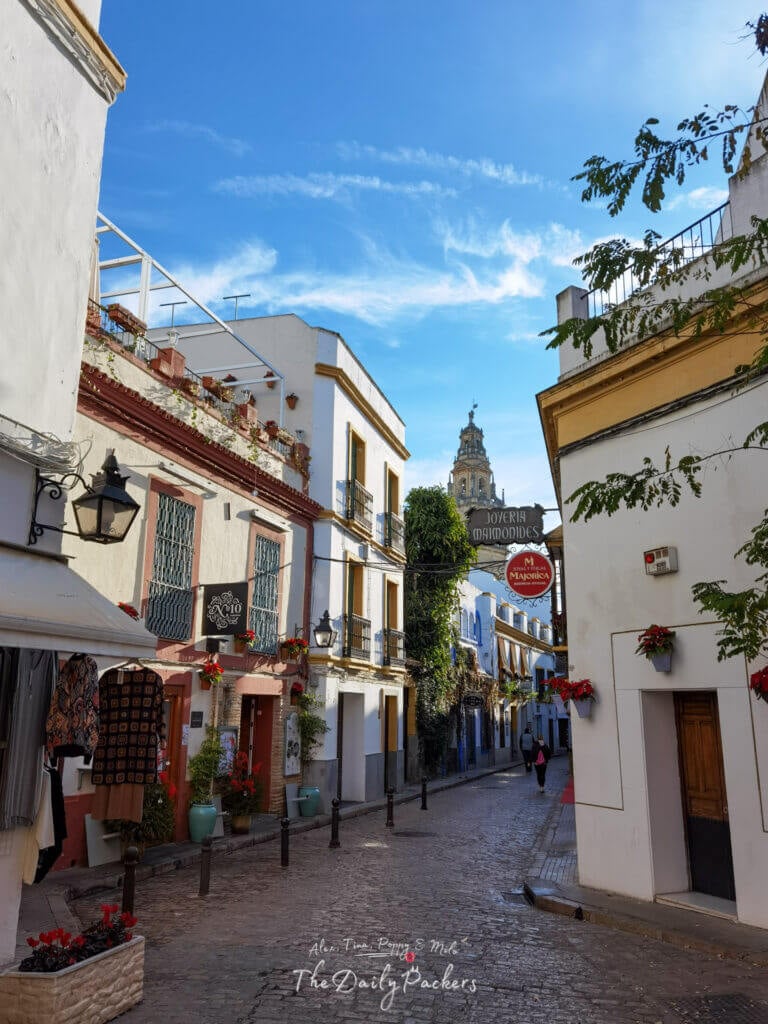
After visiting the Mezquita, take a stroll through the Jewish Quarter (La Judería), one of the most charming areas in town, with whitewashed alleys, patios filled with flowers, and small artisan shops.
Tip: Try to catch an early train from Seville so you can spend a full day in Córdoba. Most of the main attractions — including the Roman Bridge, Alcázar de los Reyes Cristianos, and Calleja de las Flores — are within walking distance of each other, making it easy to explore everything on foot. Or take a day tour to sit back, relax ,and enjoy.

Read: All the best Things to do and See in Cordoba
Visit Ronda (and Setenil de las Bodegas)
Ronda is still high on our travel bucket list — and if you have an extra day in Seville, it’s one you shouldn’t miss. Perched dramatically on a cliff above the El Tajo Gorge, Ronda is one of Andalusia’s most breathtaking towns. The views alone are worth the trip.
You can get there by car or guided tour (around two hours each way), and it’s often paired with a stop in Setenil de las Bodegas, a unique white-washed village built directly into the rock.

In Ronda, don’t miss the iconic Puente Nuevo, the massive bridge that spans the gorge — it’s one of Spain’s most photographed spots. Then, wander through the old town, visit the Plaza de Toros (Spain’s oldest bullring), and enjoy the peaceful atmosphere of the Arab Baths and gardens.
Tip: If you don’t have a car, many day tours from Seville combine Ronda and Setenil with hotel pickup and drop-off, so you can relax and simply enjoy the scenery. The landscapes along the way — olive groves, rolling hills, and mountain villages — make the journey itself unforgettable.


4-Day Seville itinerary
Day 1
- Free Walking Tour
- Salvador Church
- Real Fábrica de Tabacos de Sevilla
- Plaza de España
- Parque de María Luisa
- Museum of Popular Arts and Traditions, Sevilla
- Archeological Museum of Seville
- Torre del Oro
- Plaza de toros de la Real Maestranza de Caballería de Sevilla
Day 2
- Royal Alcázar of Seville
- Catedral de Sevilla
- La Giralda
- Archivo de Indias
- Santa Cruz, Seville
- Centro Cultural Flamenco “Casa de la Memoria”
Day 3
- Iglesia de San Lorenzo
- Alameda de Hércules
- Setas de Sevilla
- Casa de Pilatos
- Jardines de murillo
- Triana
- Museo Del Castillo De San Jorge
- Centro Cerámica Triana
Day 4
- Day Trip to Cordoba
Read: Our complete 10-day Andalusia Itinerary: The best of the south of Spain/
About the authors
We are Alex and Tina, a French-Serbian couple who met in China back in 2014. We spent three incredible years there before making France our home. Our shared passion for travel has been the heartbeat of our relationship for over 12 years, taking us across 44 countries and counting.
We launched TheDailyPackers in 2019 as a way to document our adventures. In 2026, we reached a major milestone by officially turning our blog into our full-time job. While we are still growing toward financial independence through this platform, every article we write is fueled by our mission to make your voyages easier through in-depth guides, honest advice, and the lessons we’ve learned from our own mistakes.
Our journey has not been without its storms. In 2023, our world changed forever when our first son, Poppy, was stillborn on November 25th. It was, and remains, the hardest chapter of our lives. In 2025, we were blessed with our second little boy, Milo. He has since joined our traveling tribe, and you’ll be seeing him—and the reality of traveling with a little one-on the blog more and more.
We hope to inspire you to explore the world with curiosity and resilience. Thank you for being part of our story.
You may also like those related posts
Bratislava Castle: Exploring the City’s Most Iconic Landmark
Climbing Mua Cave in Ninh Binh: Vietnam’s Best Viewpoint
Discover Belle Ile en Mer: Brittany’s Hidden Island Gem
Epic Nurse Sharks & Stingray Tour from Maafushi 2025
8 Best things to do in Florianópolis, Brazil, in 2 days
Travelling After Loss: Learning to Live Again
Bus from La Paz to Uyuni: The Ultimate 10-Hour Journey Guide
Arnold Schwarzenegger Museum: A Must-Visit for Fans of the Terminator
Pssst, did you know that…
If you purchase something through our links, we earn a small fee. However, you still pay the same. Win-win! And one day we may get to be full-time travel bloggers =)
Find Hotels with Booking.com
Do Yoga with KVY
Buy us a Coffee
Rent a car with DiscoverCars
Find Attractions with GetYourGuide
Find Flights with Expedia
Buy an eSIM with Airalo
Get insured with World Nomads
Get ready with Amazon.com