
Introduction
In June 2022, we set off on a 2-week road trip through the Baltic States. We started in Vilnius (Lithuania), rented a car, and made our way north to Tallinn (Estonia), exploring as much as we could along the way with a stop in Latvia.
Soomaa National Park was our second stop in Estonia, visited on day 11 of our journey while we were going from Tartu to Parnu —and it turned out to be one of the most unique natural areas we experienced on the entire trip.
The name ‘Soomaa’ literally means ‘land of mires’ in Estonian, and it couldn’t be more fitting. Founded in 1993, the park protects the heart of the Soomaa landscape region—an untouched wilderness made up of vast peat bogs, dense forests, winding rivers, and seasonal floodplains.
Soomaa is best known for its five distinct seasons, with the famous “fifth season” occurring when melting snow causes the rivers to overflow and flood the forest floors, turning the entire park into a surreal, water-filled world. These floods typically happen once or twice a year, and are an incredible natural phenomenon to witness.
The park’s four largest bogs—Kuresoo (10,843 ha), Valgeraba (3,379 ha), Ordi (7,135 ha), and Kikerpera (8,775 ha)—are crisscrossed by rivers like the Pärnu, Halliste, Navesti, Raudna, Lemmjõgi, and Kõpu. Between them, you’ll find rich floodplain meadows, swamp forests, and a whole ecosystem that feels worlds away from city life.
If you’re planning a trip through the Baltic States, Soomaa deserves a spot on your itinerary. Let’s dive into this Ultimate Soomaa National Park Guide—what to do, how to get there, when to go, and why it’s one of Estonia’s most unforgettable nature escapes.

Read: The Perfect 2-Week Baltic States Itinerary
Getting to Soomaa National Park
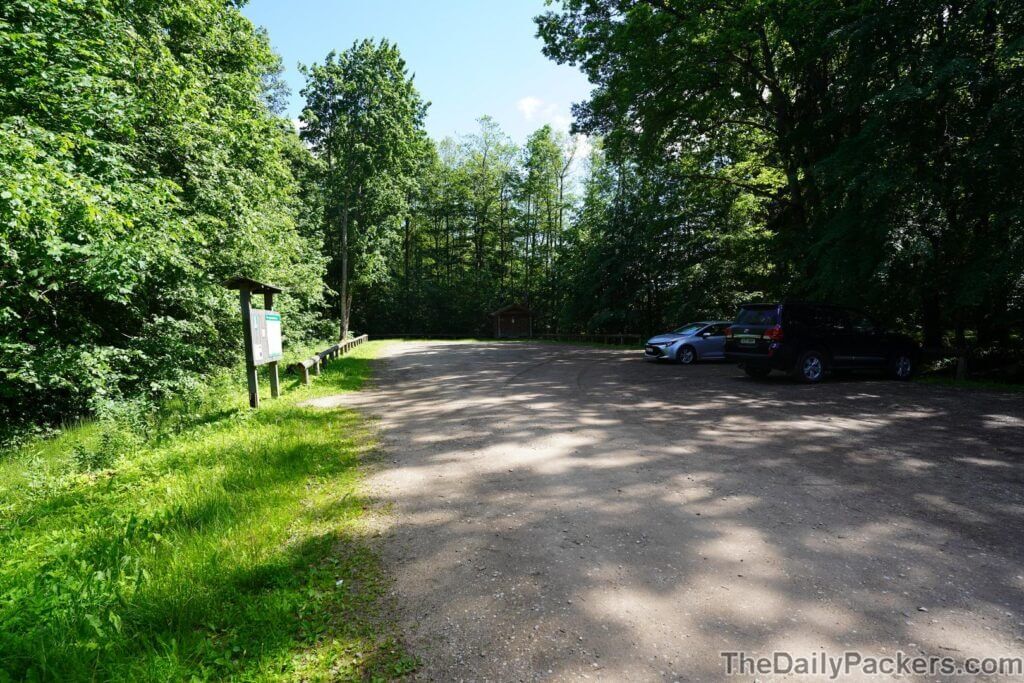
The easiest and most flexible way to reach Soomaa National Park is definitely by car. Well-maintained main roads connect the park with both Tartu and Pärnu, two of Estonia’s key cities. Once you arrive in the park, roads turn into dirt tracks limited to 30 km/h—but don’t worry, we managed just fine with a regular rental car. It’s all part of the off-the-beaten-path experience!
If you’re not renting a car, you can still reach Soomaa by bus, though it requires a bit more patience—and some walking. The best option is to travel from Pärnu, which has morning and afternoon bus connections to the villages near Soomaa. That said, buses don’t run frequently, so you’ll need to plan your route carefully and check schedules in advance (you can do that here).
Also important to note: the main trails and sites in Soomaa are spread out, not clustered together. So even if you’re staying nearby, you’ll need some way to move between trailheads and visitor spots—another reason why having a car makes the experience much smoother.

We recommend to rent a car through Discover Cars with free cancellation. Book your rental car here.
Moving Around Soomaa
Once you’re in Soomaa, the best way to explore the park is by car. It gives you the flexibility to move between trailheads, visitor centers, and remote spots without depending on a schedule. Since the trails and key points of interest are spread out, having your own wheels makes it possible to see much more in a single day.
If you don’t have a car, it is possible to catch local buses—but they pass infrequently and require careful planning to make them work with your itinerary.
Alternatively, you could try to walk between the main areas, but this can take a lot of time and energy, making it much harder to fully experience the park in just one day.

Check our Google Map of the Baltic States
Good to know
If you’re planning to visit during Soomaa’s famous fifth season—the flooding season in early spring after the snow melts—keep in mind that some roads and trails may be underwater. It’s part of what makes the park so unique, but it also means you’ll need to stay updated on current conditions. Before your visit, be sure to check:
- Soomaa.com – for flood updates and local info
- RMK Soomaa – the official Estonian Forest Management Center site
- Pärnu Visitor Centre – for up-to-date trail and access conditions
Also, a few practical notes to keep in mind:
- The only place to get drinking water is at the Soomaa Information Centre, so plan accordingly.
- All official camping areas in the park have DC power and toilets (WC) available.
- As of now, the park sees very few visitors—only about 30 people per day, compared to over 100 before the pandemic. If you love solitude in nature, now’s the perfect time to go!

When to Visit Soomaa
Soomaa is a year-round destination, but the experience you’ll have changes dramatically with the seasons. Each one reveals a different side of the park—from peaceful bog walks to canoeing across flooded forests.
- Spring (March to May): This is when Soomaa’s famous fifth season happens—usually in late March to early April, when melting snow causes rivers to flood. Trails and roads may be submerged, but it’s the best time to experience the park’s flooded forests by canoe, a truly one-of-a-kind adventure. Be sure to check conditions in advance.
- Summer (June to August): Summer is ideal for hiking, biking, and wildlife watching. The weather is mild and most trails are dry and accessible. It’s also the best time to explore the bogs and forests on foot and take advantage of long daylight hours. While this is the busiest season, Soomaa remains peaceful and never overcrowded.
- Autumn (September to October): Early autumn brings beautiful foliage, cool air, and fewer visitors. It’s a great time for quiet hikes, photography, and enjoying the stillness of the bog landscapes. Some facilities may begin to close down toward the end of the season.
- Winter (November to February): In winter, Soomaa becomes a snowy wilderness. Though activities are more limited, snowshoeing and cross-country skiing are possible in some areas. Services are minimal, so winter visits are best suited for experienced outdoor travelers.
Our recommendation: Visit in late spring or summer (May to August) for the most accessible and flexible experience—unless you’re aiming for the unique fifth season flood adventure, in which case March to early April is your window.
Where to Stay
If you’re planning to stay overnight in Soomaa National Park, you’ll find several well-maintained camping areas—and the best part? They’re completely free of charge. These spots are peaceful, surrounded by nature, and equipped with DC power and WC facilities.
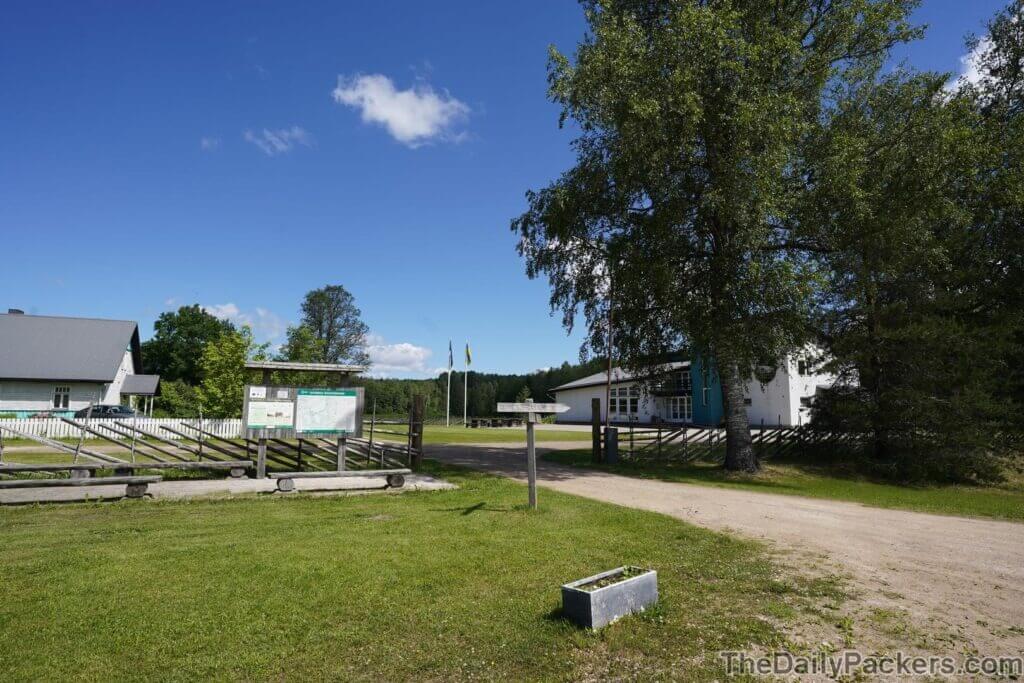
You can fill up your water bottles for free at the Soomaa Information Centre, which is also the place to stop for maps, trail updates, and basic essentials you might need during your stay. The staff there are super friendly and helpful, always happy to answer questions or share tips.
If you’re not into camping, there are also a few huts available within the park. For more details on how to book them or check availability, you’ll need to contact the park directly here or through the RMK website.
Otherwise, the nearest city would be Tartu where lots of accommodations can be found:
- (€) Looming Hostel: A creative and eco-friendly hostel with a relaxed vibe. Perfect for budget travelers who like a bit of personality in their stay.
- (€€) Estonishing Stay Premium Lofts: Modern and stylish loft-style apartments with everything you need for a comfortable stay, including a small kitchen—ideal for couples or longer stays.
- (€€€) Antonius Hotel: Located right in the heart of the city, this elegant boutique hotel offers classic rooms, excellent service, and a touch of luxury with views of the university and Old Town.


Here are all your accommodation options in Tartu
What to Eat
We highly recommend bringing your own food and snacks when visiting Soomaa National Park. There are no restaurants, cafés, or shops inside the park itself, and the closest convenience stores are in small villages outside the park—often a 20 to 30-minute drive away.
If you’re staying overnight, whether camping or in a hut, plan your meals ahead of time. Stock up in Pärnu or Tartu before arriving, as those cities have the best selection of supermarkets and outdoor supplies.
Also good to know:
- There are picnic areas in and around many of the main trailheads, perfect for lunch stops.
- Open fires are allowed only in designated fire pits at official campsites—so if you’re planning to cook, make sure you’re using the correct spots.
- You can refill your water bottles for free at the Soomaa Information Centre—but there are no other drinking water sources inside the park.
Bringing your own supplies ensures you’ll have everything you need to enjoy Soomaa’s wilderness without having to leave the park mid-day for food or essentials.

Tip: We use the DJI Action 4 to film our vlogs — compact, durable, and perfect for capturing every adventure.
Best things to do in Soomaa national Park
Riisa study trail
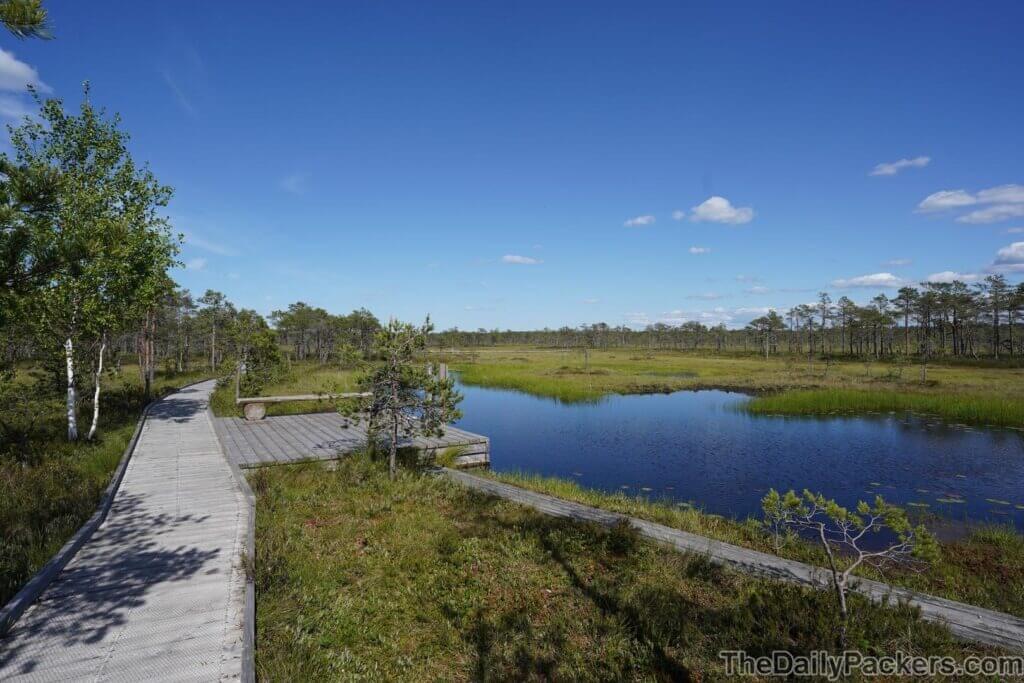
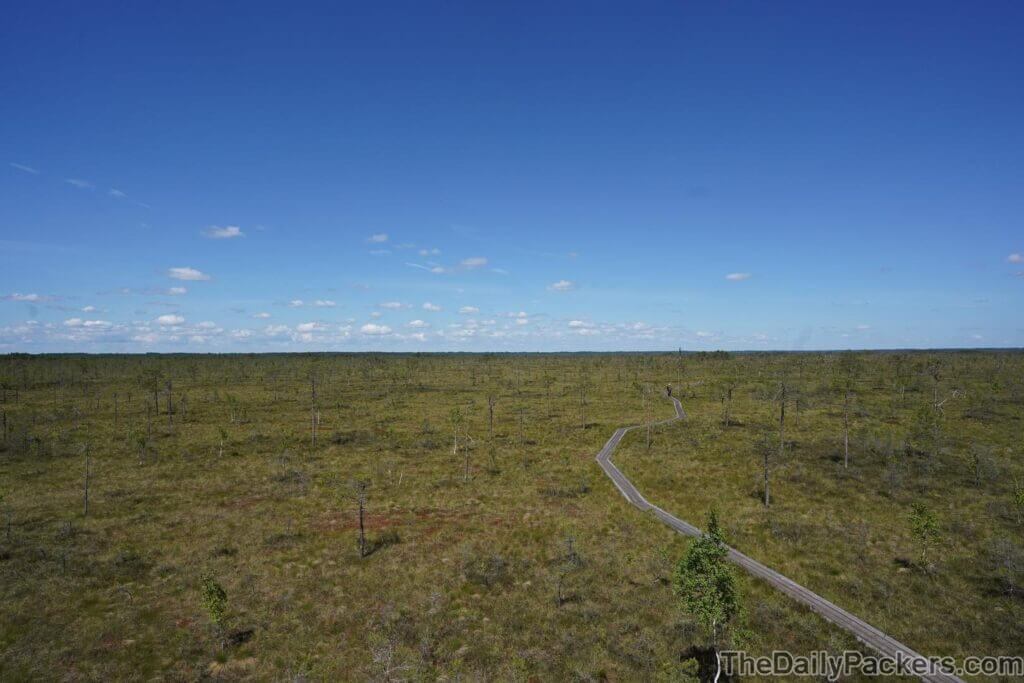
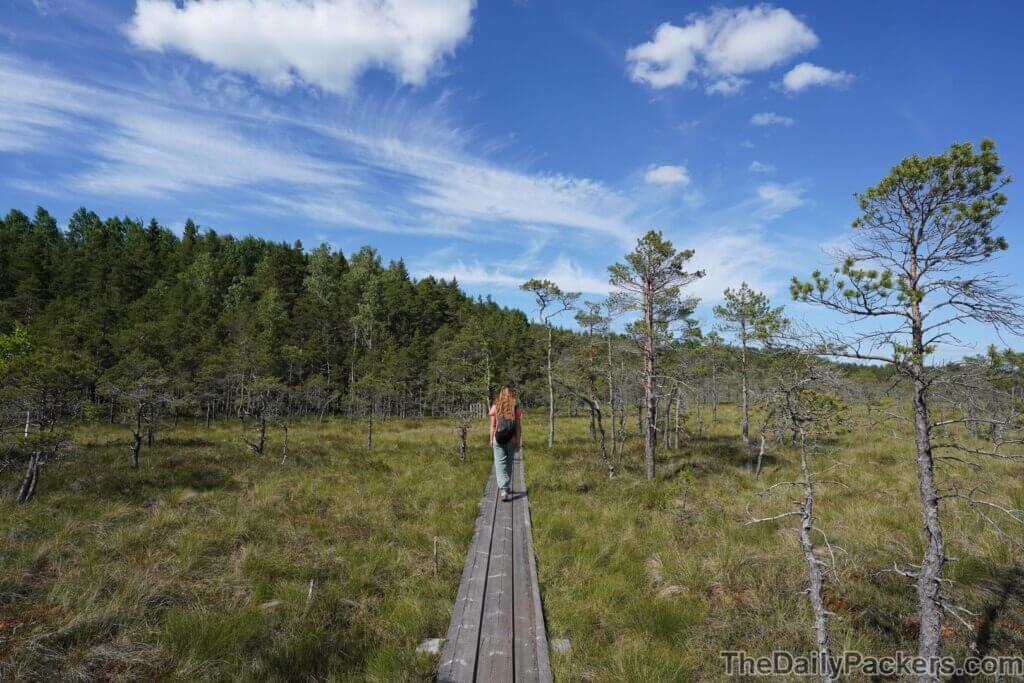
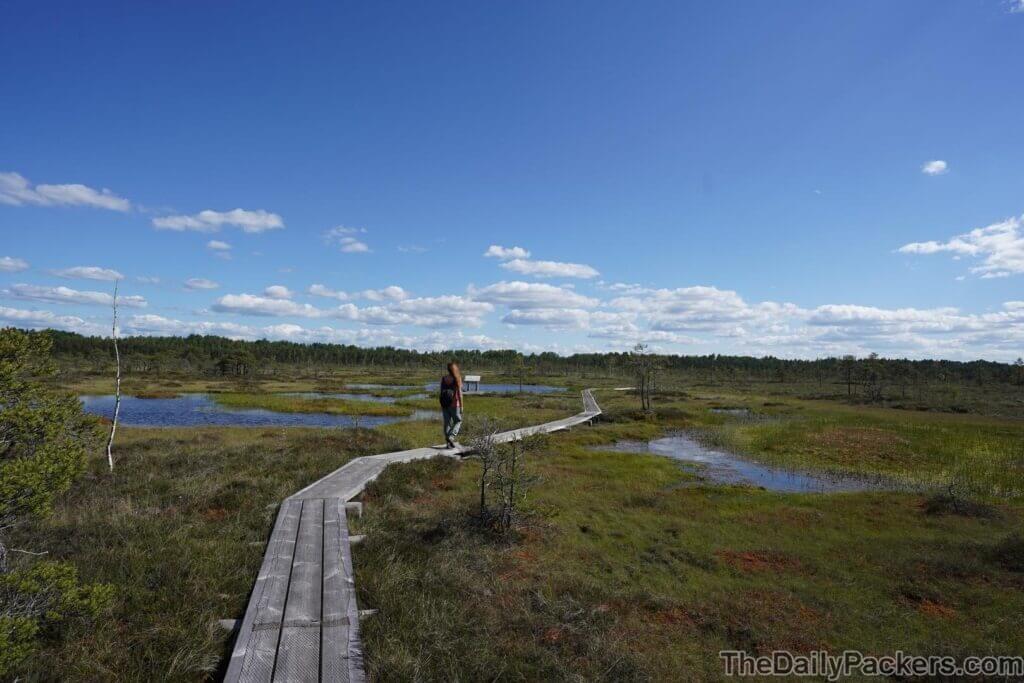
One of the most accessible and beautiful hikes in Soomaa National Park is the Riisa Study Trail. This 4.8 km loop takes you on a scenic journey through bog landscapes, forest paths, and along the Navesti River.
The first 1.22 km of the trail is wheelchair-accessible, making it a great option for all types of visitors. The path begins on the bog boardwalk and eventually winds into a lush forest section by the river, offering a peaceful mix of scenery and habitats.
As you continue, the trail returns to the marshland, where you’ll spot several bog pools—and yes, in some of them, you can even swim! The water is fresh, clean, and surprisingly pleasant in summer.
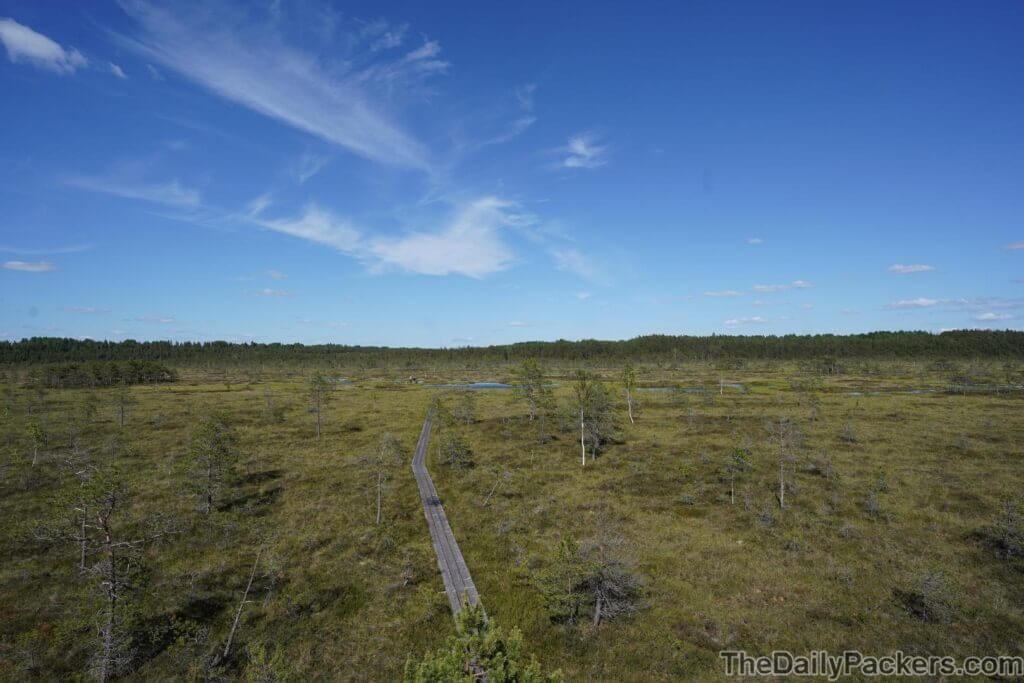
A bit further along the trail, you’ll come across a small observation tower, perfect for catching panoramic views of the bog before looping back to the starting point.
It’s an easy, rewarding trail and a great introduction to the landscapes that make Soomaa so unique.
Tip: We never travel without our DJI Mini 3 PRO drone anymore — it’s totally worth having to capture places from a whole new perspective.
Hike the Ingatsi Study Trail to the Edge of Kuresoo Bog
The Ingatsi Study Trail offers a more immersive and slightly wilder experience of Soomaa’s unique ecosystems. This 4.3 km wooden trail begins by winding through a marsh forest, where the atmosphere is quiet and humid—and yes, you’ll want to bring mosquito repellent!
Midway through the hike, you’ll reach a wooden observation tower with stunning views over the forest and bog. From there, the trail climbs up the high ridge of Kuresoo bog, one of the largest raised bogs in Estonia.
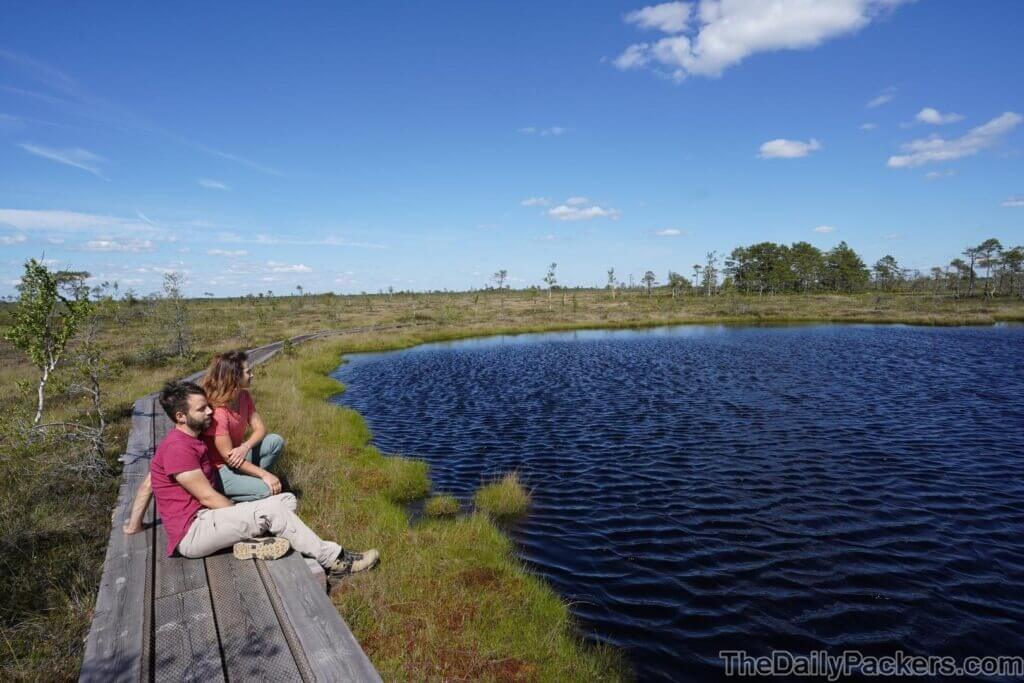
At the end of the boardwalk, you’ll find platforms next to small bog pools—perfect if you want to dip your feet or even go for a swim in the clear, soft peat water. It’s a refreshing break before heading back.
To return, you’ll loop back through the forest and then walk a short section along the main road to reach the trailhead. Do be aware: the forest section can be mosquito-heavy, and the road walk may come with a few giant horseflies in summer—so come prepared!
It’s a peaceful and scenic trail that gives you a close-up view of the bog’s textures, colors, and solitude.
Here are all your accommodation options in Tartu
Explore the Beaver Trail (Koprarada) Behind the Visitor Centre
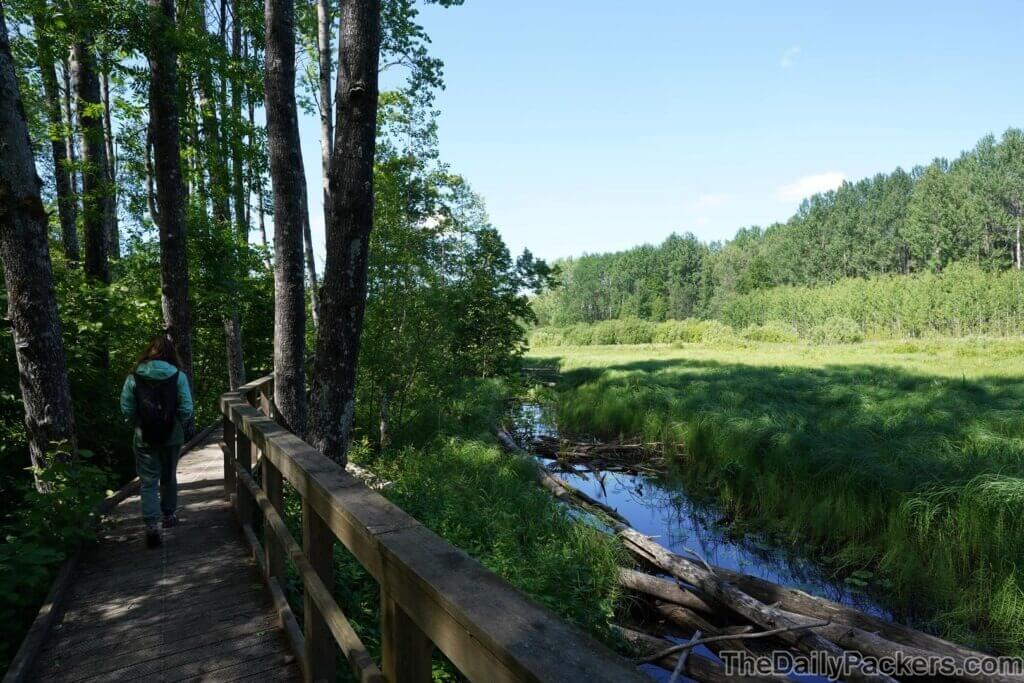
Just behind the Soomaa Information Centre, you’ll find the short but fascinating Beaver Trail (Koprarada)—a 1.8 km study trail, with the first 0.67 km wheelchair accessible.
This trail is a great way to experience Soomaa’s diverse forest types in a compact loop. It leads you through dark spruce woods, birch groves filled with ferns, and marshy wetland forest, all the way to the Mardu stream—home to a colony of wild beavers.
Along the way, you can spot gnawed tree trunks, beaver dams, and the clear signs of their impressive construction work. Information boards on the trail explain what you’re seeing, making it a fun and educational walk for all ages.
Do note: during winter and spring floods, much of the boardwalk may be submerged under water, so check trail conditions in advance—especially during the fifth season.
Check our Google Map of the Baltic States
Other Trails in Soomaa National Park
In total, there are eight marked trails in Soomaa National Park. While we only did the Riisa Trail, Ingatsi Trail, and the Beaver Trail (Koprarada), those were the ones recommended to us by the information center—and we completely agree. They offer the best variety of landscapes, from open bogs and swimming spots to forest paths and wildlife observation.
There are five additional trails scattered throughout the park, but many of them are harder to access without a high-clearance vehicle. In particular, the road to the Hüpassaare Trail was in poor condition when we visited, and not suitable for a regular rental car. If you’re curious and well-equipped, they might be worth exploring, but for most visitors, the three main trails already give a rich and memorable experience of Soomaa.
Best experience to do Soomaa national Park (Paid)
Canoe Through the Heart of Soomaa’s Wilderness (Wilderness Trips)
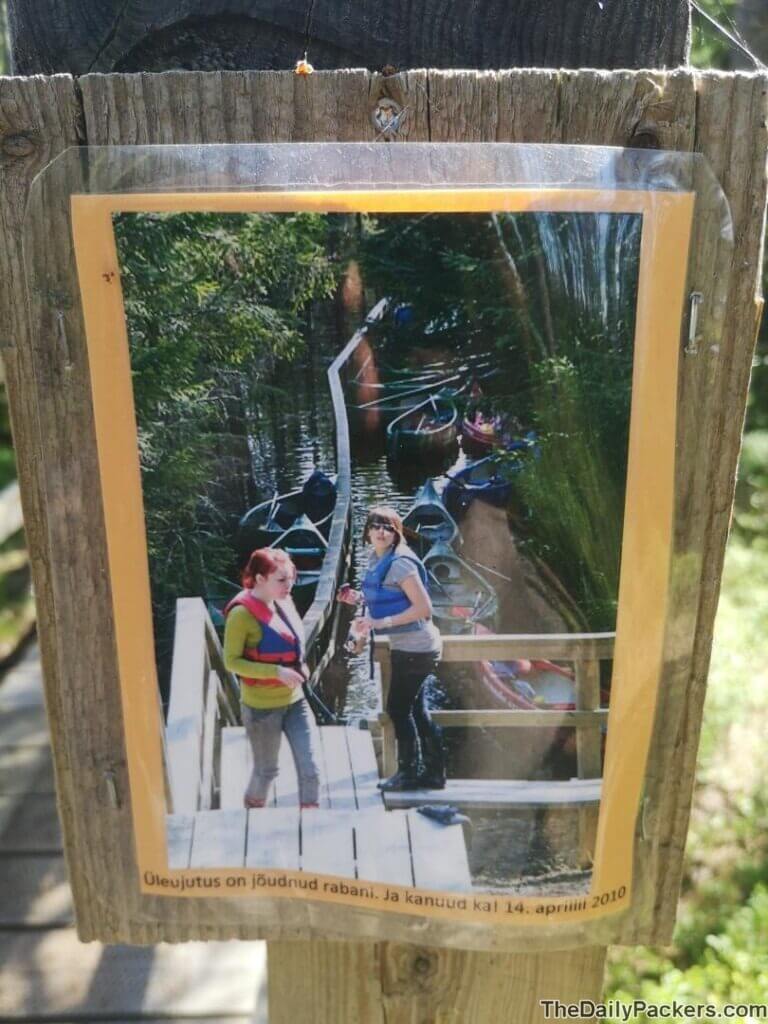
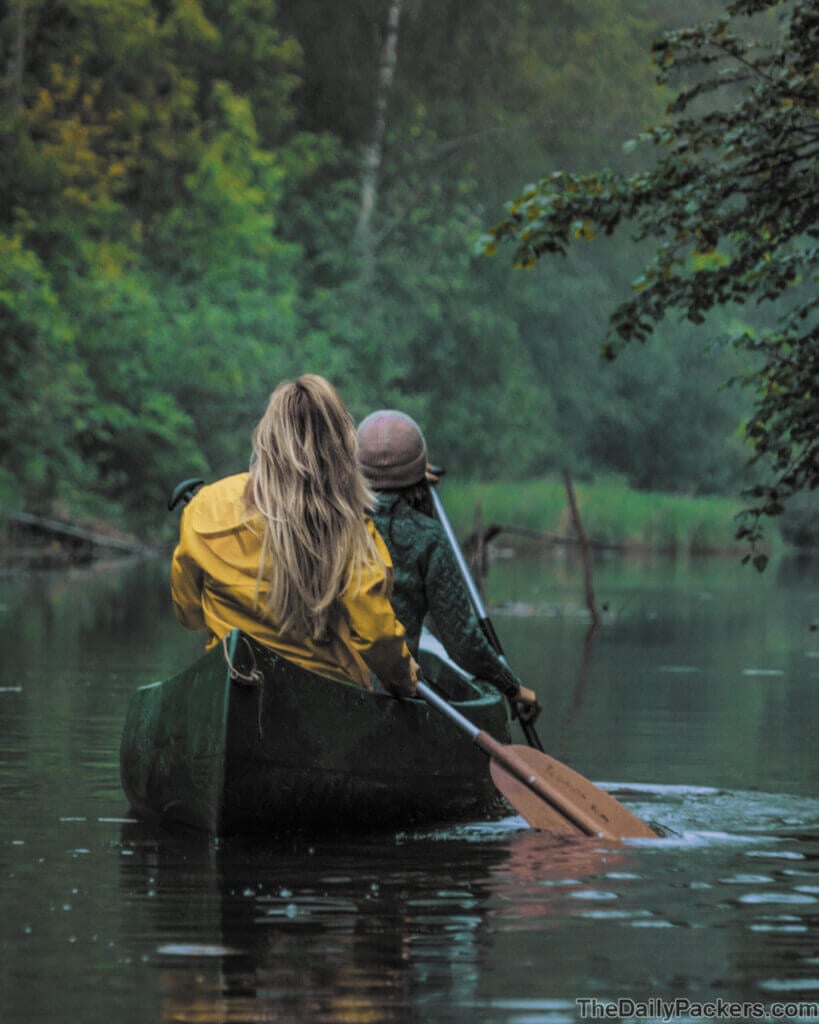
If you want to fully experience the magic of Soomaa, canoeing is hands-down the best way to do it. Especially during the fifth season, when the rivers overflow and flood the forests, a canoe lets you glide through floodplain meadows, alluvial forests, and the quiet backwaters of this untouched wilderness.
One of the best options is a self-guided day trip that covers about 12 km of paddling, with the option to stop and explore two different hiking trails:
- The Lemmjõe Keelemetsa Nature Trail (4 km), which takes you through lush, alluvial forest
- The Ingatsi Nature Trail (3 km), leading up to the edge of Estonia’s largest raised peat bog
The combination of river and land gives you a diverse and immersive experience of the park’s landscapes—much of which can’t be accessed any other way.
You can choose to do the trip self-guided or go with a guided canoe tour if you’d like local insight and navigation help (more info here).
Tip: We use the DJI Action 4 to film our vlogs — compact, durable, and perfect for capturing every adventure.
Join a Guided Wilderness Day Trip: Bog Shoeing & Canoeing
For a truly unforgettable experience in Soomaa, consider joining a guided wilderness day trip that combines bog shoeing and canoeing—a perfect way to immerse yourself in the park’s wild landscapes.
The day begins with a walk through Riisa village and surrounding forest, leading you to Kuresoo, the largest peat bog in Estonia. There, you’ll strap on bog shoes (a bit like snowshoes, but for bogs) and explore the surreal, spongey terrain that’s impossible to walk on otherwise. It’s one of the most unique and peaceful landscapes we’ve ever set foot on.
Afterward, enjoy a wilderness lunch in the open air—simple, rustic, and satisfying—before finishing the day with a relaxing canoe trip down Soomaa’s meandering rivers, soaking in the quiet and the scenery.
Here are all your accommodation options in Tartu
Experience a Night Canoe Trip in Soomaa
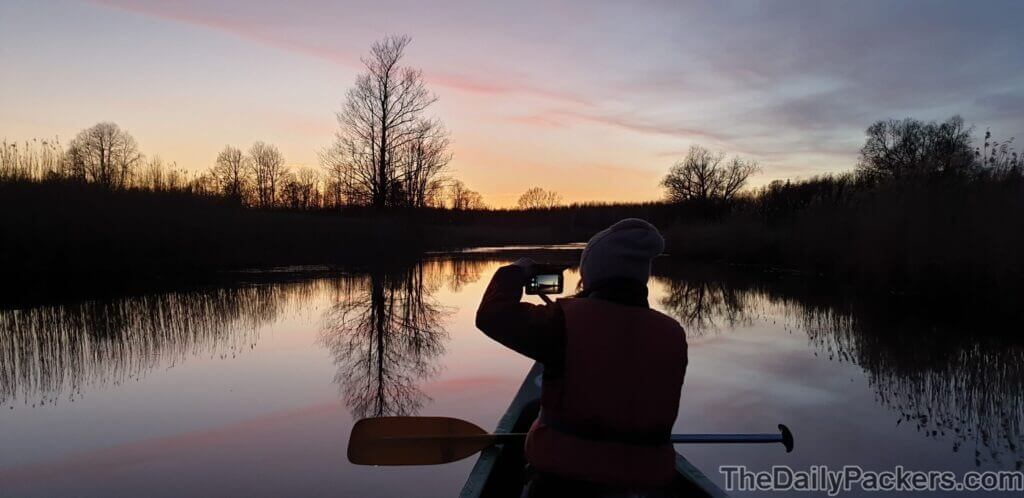
There’s something truly special about being on the water after dark—and in Soomaa, a night canoe trip offers a whole new way to connect with nature.
Things in the dark feel different—shapes blur, sounds shift, and your senses heighten. You can’t always see clearly, but your imagination fills in the rest. Led by experienced local guides, this 2–3 hour peaceful paddle along the river lets you experience Soomaa in its most mysterious and quiet state.
There’s even a chance to spot beavers, as well as hear or glimpse other nocturnal wildlife that call the park home. It’s not just a canoe trip—it’s a meditative, almost magical experience you won’t forget.
Check our Google Map of the Baltic States
Extend Your Canoe Trip for a Multi-Day Adventure
If you’re looking for a deeper dive into Soomaa’s wilderness, you can also extend your canoe trip into a multi-day adventure. Paddling for several days allows you to explore more remote river sections, stop at less-visited trails, and even camp overnight at designated spots along the way.
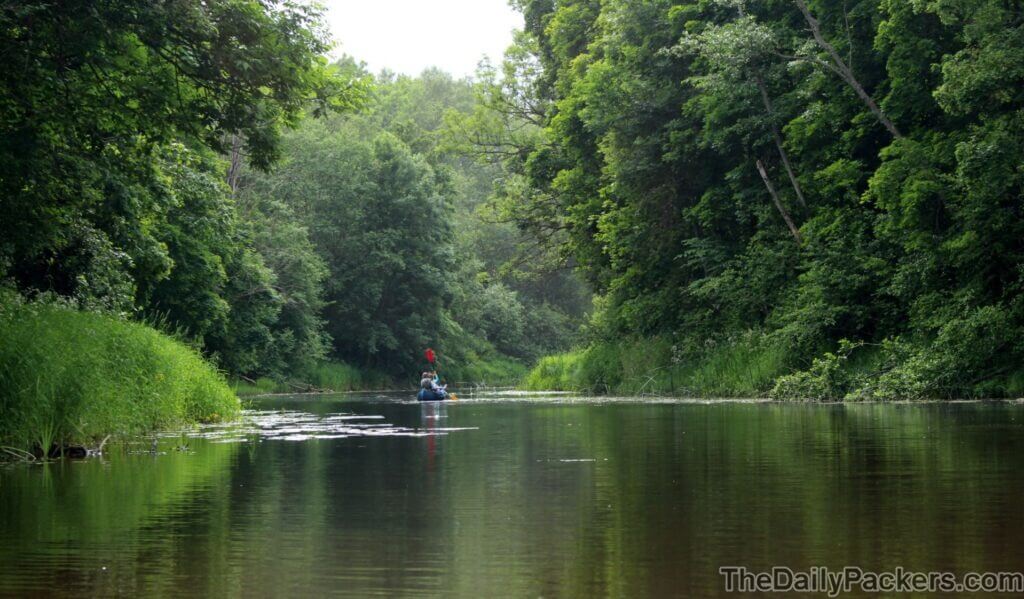
Try Stand-Up Paddleboarding (SUP) on Soomaa’s Calm Rivers
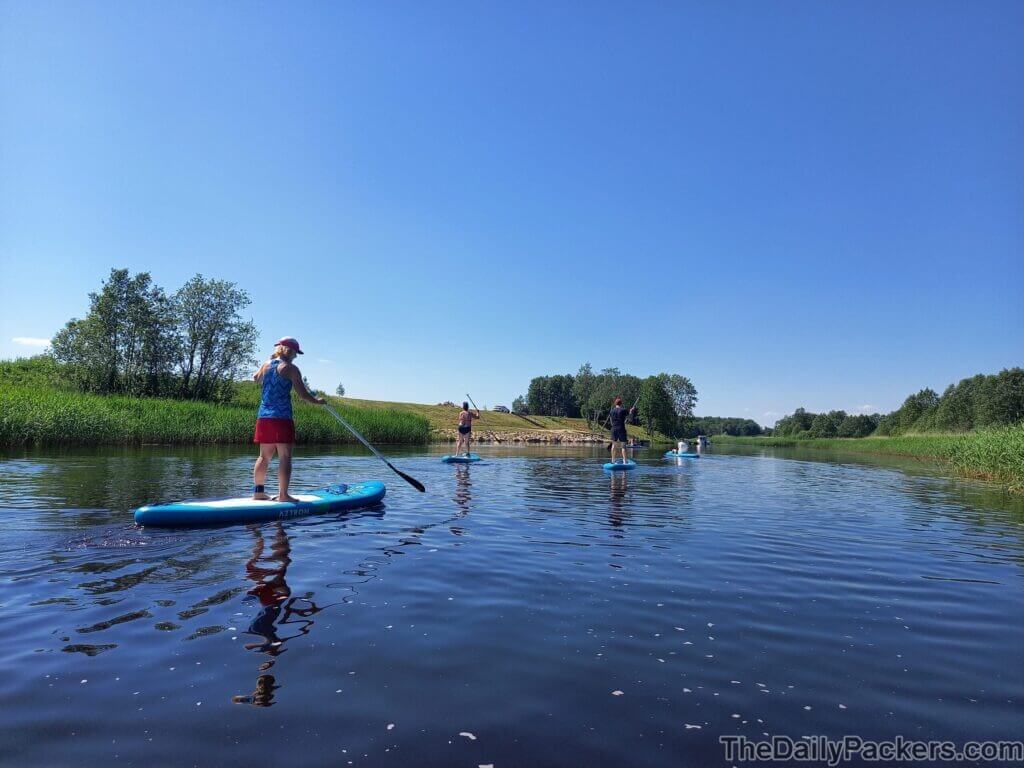
If you’re looking for a fun and active way to explore Soomaa, stand-up paddleboarding (SUP) is a fantastic option—even if you’re a total beginner! The rivers in Soomaa, like the Raudna and Halliste, are slow-moving and peaceful, making them perfect for first-timers and those wanting a relaxed paddle through nature.
You can join a 3-hour guided SUP tour with Jane, a knowledgeable and patient local guide who’ll teach you the basics and lead you along some of the park’s most scenic stretches of river. It’s a unique and exciting way to experience the water, spot wildlife, and soak in the natural beauty of the park from a new perspective.
Here are all your accommodation options in Tartu
Walk on the Bogs – One of Estonia’s Most Unique Experiences
Walking on the bogs of Soomaa is more than just a hike—it’s one of the most iconic outdoor activities in Estonia, even recognized by Lonely Planet as one of the top things to do in the country.
To explore these wetlands, you’ll use bog shoes, a traditional tool similar to snowshoes that spreads your weight and allows you to walk across soft, spongy peat bogs that would otherwise be impossible to reach on foot. It’s a peaceful, otherworldly experience—quiet, remote, and like walking on nature’s sponge.

Tip: We never travel without our DJI Mini 3 PRO drone anymore — it’s totally worth having to capture places from a whole new perspective.
Glide Through Frozen Floods on a Kicksled in Winter
While Soomaa is best known for its spring floods, flooding can also happen before or during winter—either from heavy autumn rains or midwinter snowmelt. And when temperatures suddenly drop below freezing, the flooded meadows turn into a vast sheet of ice.
That’s when it’s time for one of the park’s most unusual and fun winter activities: kicksledding. With the entire landscape frozen over, you can glide across the ice-covered floodplains on a traditional kicksled, a lightweight sled with a handlebar and metal runners.
It’s a rare and magical way to experience the park, and one you won’t easily forget. If your timing is lucky and the weather aligns just right, ask at the Soomaa Information Centre about kicksled rental and conditions.

Go on a Guided Snowshoe Hike Across Frozen Bogs
In winter, Soomaa transforms into a silent, snow-covered wilderness—and one of the best ways to explore it is on a guided snowshoe hike. As the bogs, rivers, and floodplains freeze over, the landscapes that are inaccessible during warmer months suddenly open up.
With snowshoes, you can trek across frozen bogs, through quiet forests, and even into marginal wetland areas that would normally be too swampy or remote to reach. It’s a peaceful and truly unique experience, offering a different perspective on Soomaa’s raw and untouched beauty.
Guided tours are available in winter, and they often include local stories, wildlife spotting, and insight into how nature adapts to the cold. It’s a must for anyone visiting Soomaa during the snowy season.
Here are all your accommodation options in Tartu
How to spend 1 day in Soomaa national Park
If you’re short on time but still want to get a feel for Soomaa’s unique landscapes, it’s absolutely possible to experience some of the park’s highlights in just one day—especially if you’re traveling by car. Here’s the itinerary we followed, driving from Tartu to Pärnu with a full day of hiking and nature stops in between:
- Stop at the Soomaa Information Centre: Pick up a map, refill your water, and ask about current trail and flood conditions.
- Walk the Beaver Trail (Koprarada): Just behind the visitor center, this short and scenic trail offers a glimpse of forest diversity and beaver activity.
- Drive to Ingatsi Trail: Head toward the raised bog and prepare for a walk through forest and open peatland.
- Hike the Ingatsi Trail & Swim in the Bog Pool: Enjoy the observation tower, peaceful boardwalk, and—if the weather allows—a refreshing dip in the bog pond at the end.
- Drive to Riisa Trail: The final stop of the day is one of the park’s best and most accessible bog hikes.
- Walk the Riisa Trail: This 4.8 km loop offers a perfect blend of bog, forest, and riverside views—plus another chance to swim in a natural bog pool if you’re up for it.
- Continue your drive to Pärnu: Wrap up the day with a scenic countryside drive to Estonia’s seaside town.
It was a full but very doable day, and we felt like we got a fantastic glimpse into what makes Soomaa so special.
Read: The Perfect 2-Week Baltic States Itinerary
About the authors
We are Alex and Tina, a French-Serbian couple who met in China back in 2014. We spent three incredible years there before making France our home. Our shared passion for travel has been the heartbeat of our relationship for over 12 years, taking us across 44 countries and counting.
We launched TheDailyPackers in 2019 as a way to document our adventures. In 2026, we reached a major milestone by officially turning our blog into our full-time job. While we are still growing toward financial independence through this platform, every article we write is fueled by our mission to make your voyages easier through in-depth guides, honest advice, and the lessons we’ve learned from our own mistakes.
Our journey has not been without its storms. In 2023, our world changed forever when our first son, Poppy, was stillborn on November 25th. It was, and remains, the hardest chapter of our lives. In 2025, we were blessed with our second little boy, Milo. He has since joined our traveling tribe, and you’ll be seeing him—and the reality of traveling with a little one-on the blog more and more.
We hope to inspire you to explore the world with curiosity and resilience. Thank you for being part of our story.
You may also like those related posts
Merzouga Luxury Desert Camp: 3 Days in the Sahara Dunes
Cost to Travel in Morocco, Our 2022 Budget breakdown
18 best things to do in Bariloche, Argentina, in 5 days
Uyuni Salt Flats Tour: An Epic 3-day Adventure in Bolivia
Sasbachwalden: Hiking Alde Gott panorama tour, Germany, 2025
12 best things to do in Osaka, Japan, in 4 days or more
18 Best things to do in Hong Kong, China, in 4 days
Refugio Frey via Cerro Catedral: The Ultimate Hiking Guide
Pssst, did you know that…
If you purchase something through our links, we earn a small fee. However, you still pay the same. Win-win! And one day we may get to be full-time travel bloggers =)
Find Hotels with Booking.com
Do Yoga with KVY
Buy us a Coffee
Rent a car with DiscoverCars
Find Attractions with GetYourGuide
Find Flights with Expedia
Buy an eSIM with Airalo
Get insured with World Nomads
Get ready with Amazon.com