

Introduction
Just a few kilometres from San Pedro de Atacama, the Valley of the Moon (Valle de la Luna) feels like stepping onto another planet. The cracked salt crust, the sharp ridges, and the wind-carved rock formations give this place an atmosphere that’s as close as you’ll get to walking on the moon — without leaving Chile. It’s one of those landscapes where the light shifts every minute, and sunset makes everything glow in warm pink and golden tones.
This was actually the first activity we did after arriving in San Pedro de Atacama, right after finishing our 3-day Uyuni Salt Flats tour. We were still covered in dust, a bit tired, and very ready to see what the Chilean side of the desert had to offer — and the Valley of the Moon turned out to be the perfect introduction.
We joined a 4-hour sunset tour, which is the easiest way to visit if you don’t have a bike or car. The valley is part of the Flamenco National Reserve, and beyond its famous dunes and rock formations, it holds a lot of geological and cultural history. Guides share stories of how this strange landscape was shaped and why it was considered sacred by the Likan Antay community long before tourism arrived.
Whether you’re here for photography, the colours of the desert, or simply to experience one of the most iconic places in Atacama, the Valley of the Moon is a must-see. And honestly, sunset is the moment when the whole valley becomes pure magic. Let’s dive into everything you need to plan your visit.
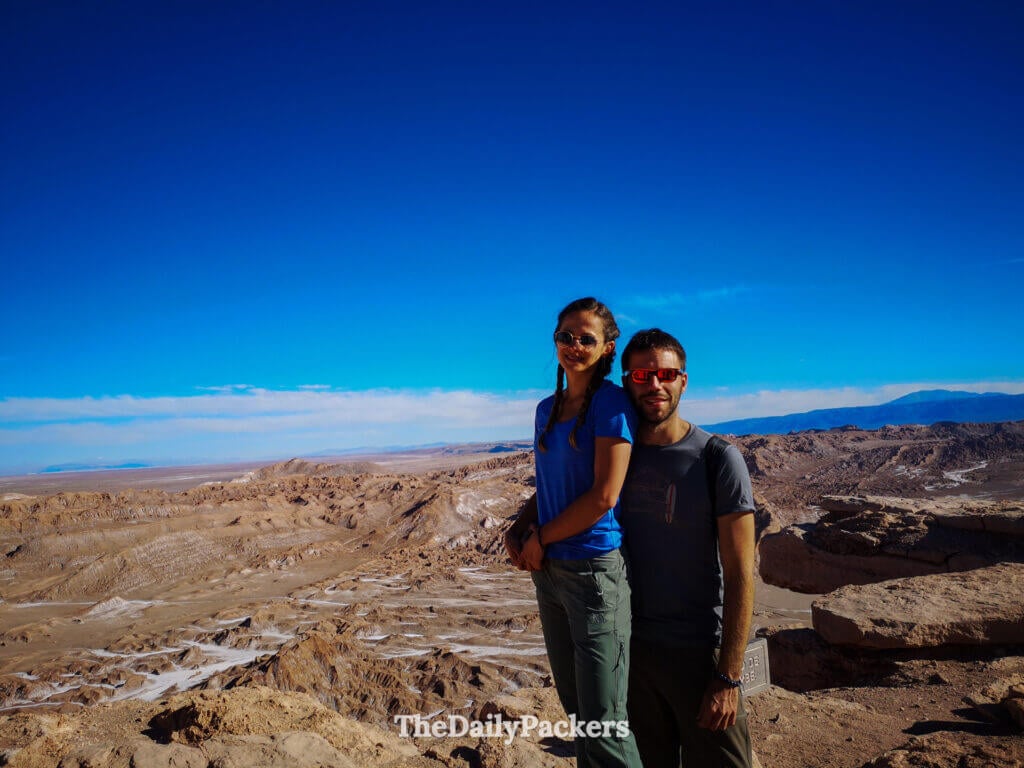

Why Visit the Valley of the Moon?
The Valley of the Moon is one of those places where you immediately understand why people cross half the world to visit the Atacama Desert. Everything here feels extreme — the silence, the dry air, the cracked salt flats, and the shapes carved by millions of years of wind. It’s surreal, dramatic, and honestly unlike anything we had seen before, even after coming straight from the Uyuni Salt Flats.
What makes Valle de la Luna Chile special is how compact it is. In just a few hours, you see sand dunes, sharp ridges, salt caves, viewpoints, and rock formations like the famous Tres Marías. It’s the kind of landscape that constantly changes colour depending on the sun, especially at the end of the day when the whole valley turns gold and orange.

Visiting the San Pedro de Atacama Moon Valley also gives you a deeper look at the region’s natural history. This was once a sacred area for the Likan Antay people, and the geology tells a story of ancient lakes, intense erosion, and tectonic shifts that shaped the desert into what it is today.
Whether you’re into photography, hiking, desert landscapes, or simply want that “I’m on another planet” feeling, Moon Valley is an absolute must during your time in San Pedro de Atacama — especially at sunset.


How to Get to the Valley of the Moon
Reaching the Valley of the Moon is simple, and you have two main options depending on the kind of experience you want. The valley sits about 13 km west of San Pedro de Atacama, along an easy paved road followed by a short dirt stretch — nothing technical, no off-road driving needed.
The easiest way is to join a Valle de la Luna sunset tour, which is what we did. After arriving in San Pedro straight from our Uyuni Salt Flats tour, we didn’t feel like dealing with logistics, so we booked the tour directly through our hostel. They even had a preferential rate, and we were able to book just three hours before departure. Tours usually start around 2:45 pm and return around 7:00 pm, which fits perfectly with the sunset timing.

Your second option is to rent a bike and go on your own. A lot of travellers love this, especially if you want to move at your own pace, stop wherever you want, and enjoy the emptiness of the desert without a group. It’s a beautiful ride, but keep in mind the sun is strong and the return can feel long after a day in the heat.


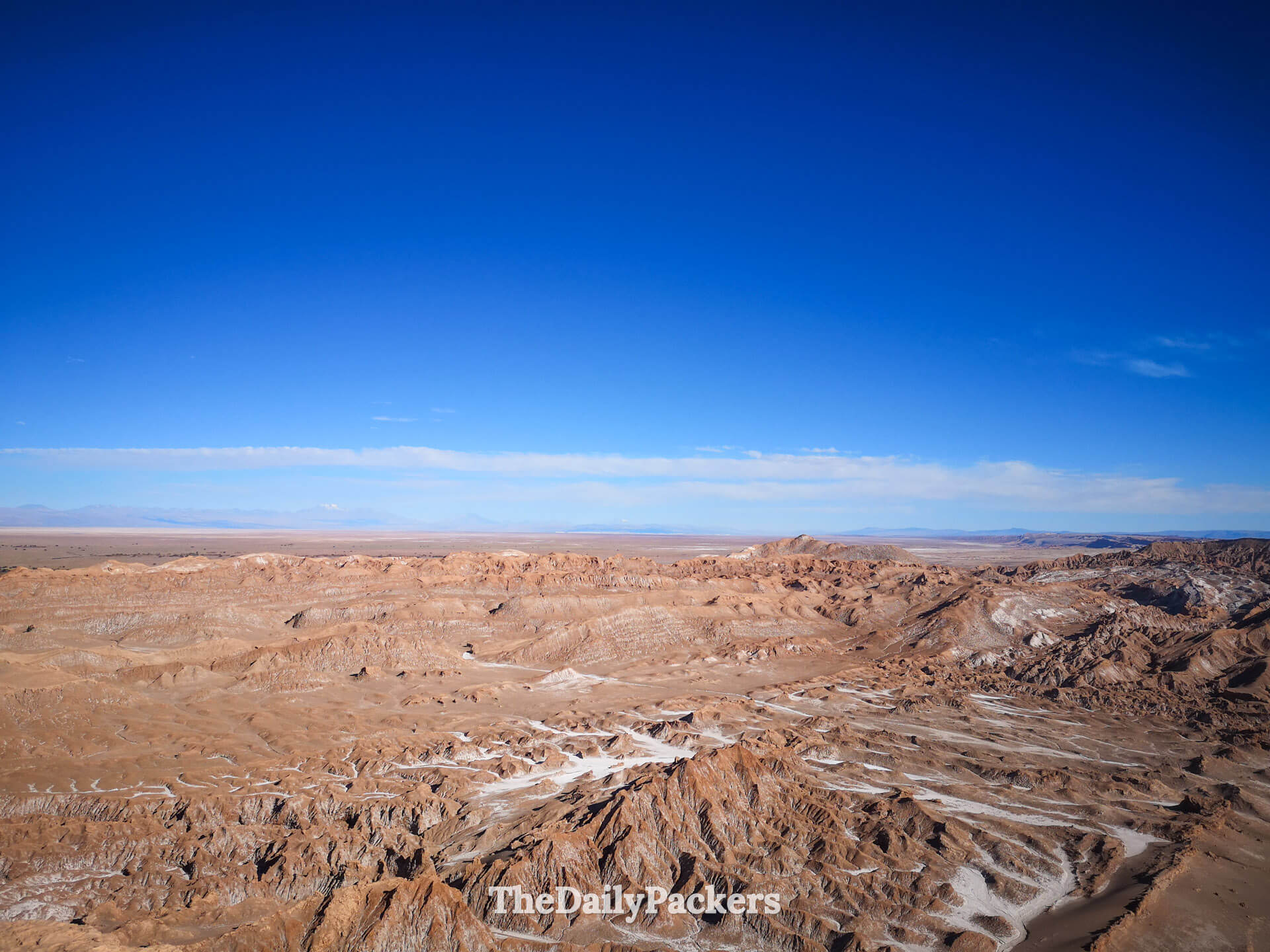
When to Visit
The Valley of the Moon is beautiful year-round, but the experience changes depending on the season and the time of day. The Atacama Desert is one of the driest places on the planet, so rain is almost never a concern — it’s more about managing the sun, the dry air, and the temperature swings.
- Summer (December to February): Hot, dry, and intense. Daytime temperatures usually sit around 25–30°C (77–86°F), and the sun feels very strong. Afternoons can be exhausting, which makes a sunset visit perfect for this season.
- Autumn (March to May): Probably the best moment to visit. Temperatures cool down to 18–25°C (64–77°F), the light gets softer, and the valley looks incredible in the late afternoon. Ideal for the Valley of the Moon sunset tour.
- Winter (June to August): Cold mornings and chilly evenings, with daytime temperatures around 10–20°C (50–68°F). Sunset is still stunning, but bring a warm layer — once the sun drops behind the Andes, the temperature drops instantly.
- Spring (September to November): Dry, sunny, and comfortable. Days are pleasant and the crowds aren’t as heavy as in summer. A great time if you’re planning to rent a bike and cycle to Valle de la Luna.
Tip: No matter the season, sunset is the best time to visit. The colours change by the minute, and the whole valley glows — it’s the moment when the landscape truly feels otherworldly.

How to visit the Valley of the Moon
You can explore the Valley of the Moon either on a guided tour or on your own by bike, and both options give you a very different feel for the desert. Since this was our first activity after arriving in San Pedro de Atacama (straight from the Uyuni Salt Flats), we went for the easiest option: the 4-hour sunset tour.
We met up with our friend Patricia in town and headed to the tour office (On the side, we also met Patricia in 2023 at the Strasbourg Christmas Market). After picking up a few more travellers, we switched to a 23-seater van at the bus terminal — a short and comfortable ride, though we’d avoid the very last row if you have the choice.

Our first stop wasn’t actually the Moon Valley yet, but the Likan Antay viewpoint, overlooking the Salar de Atacama. The guide explained in Spanish and English how this is the third-largest salt flat in the world, after Salar de Uyuni in Bolivia and Salinas Grandes in Argentina. Unlike Uyuni, the Atacama salt flat isn’t perfectly white. Because of evaporation, lack of standing water, and the tectonic activity below, the salt crust forms in rough, textured patterns with different shades. We stayed just a few minutes — enough to admire the view and learn a bit of geology before continuing.

From there, it was a short drive into the Valley of the Moon, which became part of the Flamingo National Reserve in 1982. It’s also believed to have been a sacred place, and its name may come from a Spanish priest who used the valley as a sort of natural observatory.
The first main stop inside the valley was Tres Marías, a rock formation said to resemble three women in prayer. One of them has unfortunately broken due to past tourist activity, so access is now restricted, but you can still observe the shapes from a short distance. After listening to the guide, we wandered around freely. It wasn’t too crowded, which made the whole place feel even more surreal.

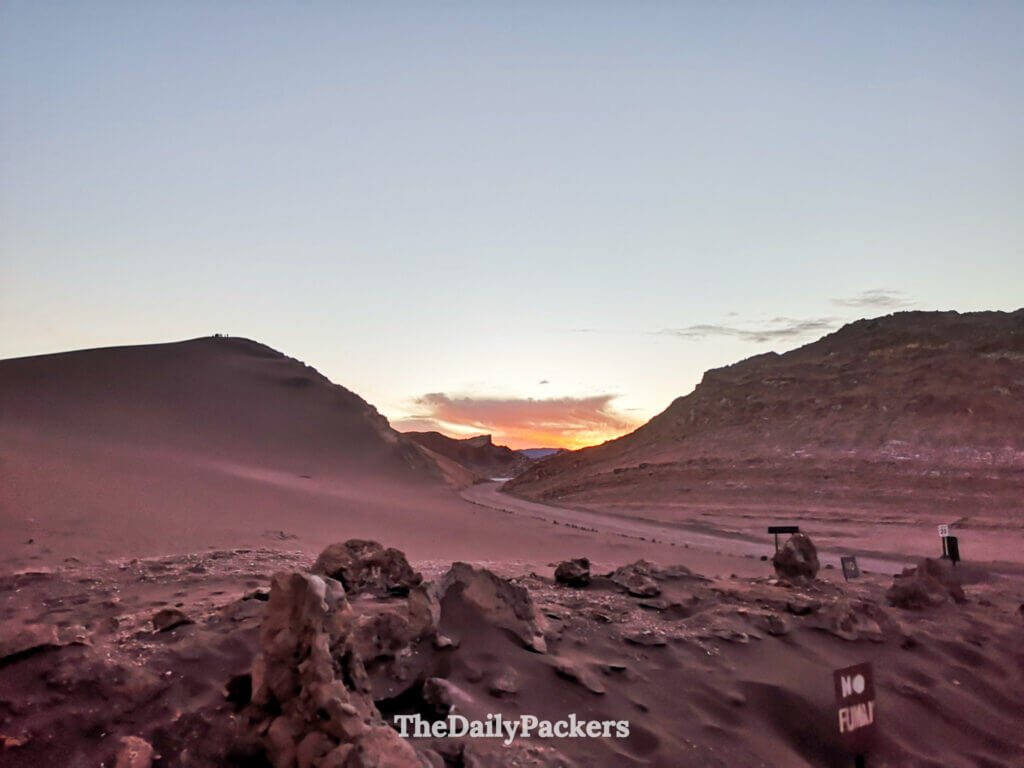
The tour then continued with a short walk along the road before climbing one of the ridges for the highlight of the day: sunset over Valle de la Luna. We spent around 30 minutes at the viewpoint, watching the colours shift across the desert — from gold to orange to deep pink. Once the sun dropped behind the mountains, we headed back to the van for the return to San Pedro.

The tour was easy and the landscapes were beautiful, but it did feel a bit like hopping from one stop to another with tight timing. If you prefer taking your time, stopping for extra photos, or exploring more quietly, renting a bike and visiting the Moon Valley independently is a great alternative — especially if you’re not in a rush and want a more flexible experience.

Tickets & Opening Hours
Because the Valley of the Moon is part of the Reserva Nacional Los Flamencos, you’ll need to buy an entrance ticket whether you visit on your own or with a tour. Most Valle de la Luna sunset tours do not include the ticket in their price, so be ready to pay it separately at the entrance gate. A Valley of the Moon tour costs around 50€ per person.
Opening hours change slightly throughout the year, but the valley generally opens late morning and closes shortly after sunset. If you’re visiting independently, you can go earlier in the day and enjoy the viewpoints without the groups. Tours usually arrive mid-afternoon to catch the best light.
If you’re going on your own:
- Arrive before 5:00 pm if you want to stay for sunset
- Bring your passport/ID for the ticket purchase
- Keep your ticket on you — there are checkpoints inside the reserve
The entrance fee is affordable and valid only for that day. For sunset visits, give yourself enough time to ride or drive the 13 km from San Pedro, buy your ticket, and reach the viewpoints at a relaxed pace. Rangers clear the park shortly after sunset, so once the colours fade, it’s time to head back to town.
Is It Worth It?
Yes — the Valley of the Moon is absolutely worth it. Even after spending days crossing the Uyuni Salt Flats and arriving in San Pedro covered in dust, this landscape still managed to surprise us. It’s one of the most iconic places in the Atacama Desert, and seeing it at sunset feels almost unreal.
The short 4-hour tour is perfect if you’ve just arrived in town or don’t feel like organising anything. It’s easy, accessible, and you get to see the main viewpoints without worrying about logistics. The colours alone make the visit worthwhile — the way the valley turns gold, orange, and pink right before the sun disappears behind the Andes is something you don’t forget.
That said, the tour can feel a bit structured, moving from one stop to the next with a guide sharing facts. If you enjoy freedom and want more time to explore, cycling to Valle de la Luna on your own is a great option. You get the silence, the space, and the feeling of being completely alone in the desert.
Either way, visiting Moon Valley Atacama is a must during your trip to San Pedro. It’s close, beautiful, easy to reach, and one of those places where the Atacama Desert reveals just how special it really is.

Travel Tips
- Avoid the last row of the van. It’s noticeably less comfortable, especially on the dirt sections of the road.
- Book through your accommodation. Many hostels in San Pedro offer better prices for the Valley of the Moon sunset tour, and you can often book just a few hours before departure. Or book online for guaranteed availability.
- Bring water and snacks. The desert air is extremely dry, and there are no shops once you enter the reserve.
- Wear layers. Sunset is warm when you arrive but surprisingly cold once the sun disappears behind the Andes.
- Protect yourself from the sun. Sunscreen, sunglasses, and a hat are essential — even late afternoon light is strong in San Pedro de Atacama.
- Don’t expect long walks. Tours are more about short stops and viewpoints. If you want real freedom, rent a bike and explore at your own pace.
- Footwear matters. Sneakers are enough, but avoid sandals — the terrain is rocky, dusty, and uneven.
- Arrive early for sunset. Whether you bike or join a tour, the best spots fill up quickly as soon as the colours start changing.
These small things make your visit much smoother and let you focus on what really matters — enjoying one of the most beautiful landscapes in the Atacama Desert.


Tip: We use the DJI Action 4 to film our vlogs — compact, durable, and perfect for capturing every adventure.
Where to Stay
San Pedro de Atacama has plenty of accommodation options, but staying somewhere comfortable makes a big difference when you’re spending your days in the desert heat. Here are three great places to consider, depending on your style and budget.
Hostal Montepardo: A friendly, budget-friendly option that works well if you’re looking for something simple and cosy. Rooms are clean, the atmosphere is relaxed, and the shared spaces make it easy to chat with other travellers. It’s also close enough to walk into town, which is perfect for booking last-minute tours like the Valley of the Moon sunset trip.
Hotel La Casa de Don Tomás: This is one of the most popular mid-range choices in San Pedro — and for good reason. The rooms are comfortable, the courtyard is peaceful, and the whole place feels like a quiet retreat after a day exploring the desert. The location is excellent too, only a short stroll from the centre without being stuck in the noise.
Hotel Desertica: If you want something more refined, Hotel Desertica is a beautiful boutique option. The adobe-style architecture blends perfectly with the Atacama landscape, and the rooms are spacious, warm, and carefully designed. It’s calm, elegant, and a great base if you want a bit more comfort while visiting the desert’s highlights, including Valle de la Luna.


Here are all your accommodation options in San Pedro de Atacama
About the authors
We are Alex and Tina, a French-Serbian couple who met in China back in 2014. We spent three incredible years there before making France our home. Our shared passion for travel has been the heartbeat of our relationship for over 12 years, taking us across 44 countries and counting.
We launched TheDailyPackers in 2019 as a way to document our adventures. In 2026, we reached a major milestone by officially turning our blog into our full-time job. While we are still growing toward financial independence through this platform, every article we write is fueled by our mission to make your voyages easier through in-depth guides, honest advice, and the lessons we’ve learned from our own mistakes.
Our journey has not been without its storms. In 2023, our world changed forever when our first son, Poppy, was stillborn on November 25th. It was, and remains, the hardest chapter of our lives. In 2025, we were blessed with our second little boy, Milo. He has since joined our traveling tribe, and you’ll be seeing him—and the reality of traveling with a little one-on the blog more and more.
We hope to inspire you to explore the world with curiosity and resilience. Thank you for being part of our story.
You may also like those related posts
Bratislava Old Town Hall: History, Museum & Tower Views
13 Best things to do in Lucerne, Switzerland, in 4 days
Malaga Itinerary: Our Perfect 2 Days in Malaga, Spain
Cost to Travel in the Baltic States, Our 2022 Budget Breakdown
9 best things to do in Cordoba, Spain, in 1 to 2 days
The Royal Alcazar of Seville: A Journey Through Centuries of History
17 Best things to do in Helsinki, Finland, in 1 day or more
Safari in Sigiriya: An underrated tour to see Wild Elephants
Pssst, did you know that…
If you purchase something through our links, we earn a small fee. However, you still pay the same. Win-win! And one day we may get to be full-time travel bloggers =)
Find Hotels with Booking.com
Do Yoga with KVY
Buy us a Coffee
Rent a car with DiscoverCars
Find Attractions with GetYourGuide
Find Flights with Expedia
Buy an eSIM with Airalo
Get insured with World Nomads
Get ready with Amazon.com