

Introduction
Arequipa was one of the last stops in Peru during our 3-week in South America, and a real change of pace after the intensity of Cusco and Machu Picchu. We arrived here right after exploring the Sacred Valley and the world-famous ruins, before continuing our journey toward Bolivia and the Uyuni Salt Flats. In many ways, Arequipa felt like a pause – calmer, more grounded, and perfect for slowing down.
Often called the White City because of its white volcanic stone architecture, Arequipa boasts one of Peru’s most elegant historic centers. You’ll find wide plazas, impressive monasteries, colonial churches, and plenty of quiet courtyards to escape the bustle. Step outside the historic center, though, and the city quickly becomes louder and more chaotic, with heavy traffic and visible pollution.
That’s why how you experience the city really matters. If you stay central and focus on the main Arequipa attractions, you’ll see why it’s worth a visit. We recommend spending at least two full days here — enough time to explore the historic center, enjoy the local food scene, and decide whether a trip to Colca Canyon fits your itinerary.
In this guide, you’ll find the best things to do in Arequipa, along with practical tips on where to stay, what to eat, and how to organize your time so you can enjoy the city without rushing — especially if, like us, Arequipa is a stepping stone on a bigger South American adventure.


Getting there
Reaching Arequipa is fairly straightforward, especially if you’re coming from Cusco, which is the most common route. You have two main options: flying or taking an overnight bus.
If you’re short on time or want a smoother transition after altitude-heavy days in Cusco, flying is the easiest choice. Flights take just over an hour and run several times a day. You’ll land at Rodríguez Ballón International Airport, which is small and efficient. From there, the historic center is about 20–30 minutes away by taxi. Your accommodation can easily arrange a pickup, or you can grab a taxi outside the terminal.
We personally chose to fly early in the morning. Leaving Cusco before sunrise felt much easier than spending another long night on a bus, and it gave us almost a full day to explore once we arrived in Arequipa.
Buses are the cheaper option and work well if you’re traveling on a tighter budget. Overnight buses from Cusco to Arequipa usually take around 10 hours. Companies like Cruz del Sur or Oltursa are reliable and offer comfortable seats, but keep in mind that it’s a long ride, especially after several intense travel days.
If Arequipa is your last stop in Peru before heading toward Copacabana in Bolivia, arriving well-rested makes a real difference. Flying costs more, but it saves time and energy — something you’ll appreciate once you start exploring the city. Plus, you will have to take a bus to reach Bolivia.

Moving Around
Getting around Arequipa is easy, especially if you stay within or near the historic center. Most of the main Arequipa attractions are clustered around the Plaza de Armas, which means you can explore a large part of the city on foot.
Walking is the best way to move around the historic center. Streets are relatively flat, distances are short, and wandering through white volcanic stone alleys is part of the experience. Just be aware that traffic can be intense once you move away from the central area, and sidewalks aren’t always pedestrian-friendly.

For longer distances, taxis are the most practical option. They are affordable, widely available, and can be flagged down almost anywhere. Always agree on the price before getting in, as meters are rarely used. If you have mobile data, ride-hailing apps work in Arequipa and are often more convenient.
Public buses and colectivos exist, but they’re not very intuitive if you’re only staying a couple of days. Routes aren’t clearly marked, and unless you’re familiar with the city, they tend to slow you down rather than help.
If you plan to visit places like viewpoints across the river or neighborhoods outside the center, combining walking with short taxi rides is the most efficient way to see the city without wasting time or energy.


When to Visit
Arequipa can be visited year-round, but the experience changes quite a bit depending on the season. Thanks to its high-altitude desert climate, the city enjoys mild temperatures most of the year, with plenty of sunshine.
- Dry season (May to September): This is the most popular time to visit Arequipa. Days are sunny and dry, with daytime temperatures averaging 18–22°C, while nights can drop to 5–8°C, especially in June and July. It’s ideal for walking around the historic center, visiting monasteries, and joining outdoor activities without worrying about rain. If Arequipa is your last stop before heading toward Bolivia and the Uyuni Salt Flats, this season offers the most reliable weather overall.
- Shoulder season (April & October): These months offer a great balance between good weather and fewer crowds. Daytime temperatures sit around 20–24°C, with evenings cooling down to 8–10°C. Rain is minimal, landscapes are pleasant, and exploring Arequipa attractions feels more relaxed than during peak season.
- Wet season (November to March): Summer in Arequipa is warmer but comes with occasional rain, usually in the afternoon. Expect daytime temperatures of 23–26°C and nights around 10–12°C. January and February see the most rainfall, which can impact trips outside the city, such as Colca Canyon. However, the city itself remains enjoyable, greener, and noticeably less busy.
A small tip: Arequipa sits at around 2,300 m altitude, so temperatures can change quickly between sun and shade, no matter the season. Sunscreen during the day and a light jacket in the evening are always a good idea.


Psst, you can join Tina’s Yoga Studio and get access to hundreds of Yoga, Meditation, and Well-being videos.
Where to Stay
Staying within or close to the historic center makes exploring Arequipa much easier. Most things to do in Arequipa are walkable from here, and you’ll avoid the heavy traffic and pollution found further out.
- Plaza Central: A simple and well-located option right near Plaza de Armas. It’s ideal if you want to keep costs low while staying in the heart of the city and close to Arequipa attractions, cafés, and museums.
- Katari Hotel at Plaza de Armas: A great choice if you want comfort, location, and views. Some rooms and the rooftop terrace overlook the main square, making it a perfect base to enjoy the historic center both day and night.
- CIRQA – Relais & Châteaux: If you’re looking for a special stay, this beautifully restored former monastery offers refined rooms, calm interiors, and excellent service. It’s ideal if you want a quiet retreat after busy days exploring Arequipa.
Tip: Choose accommodation inside the historic center if possible. You’ll spend less time in traffic and more time enjoying the city on foot.
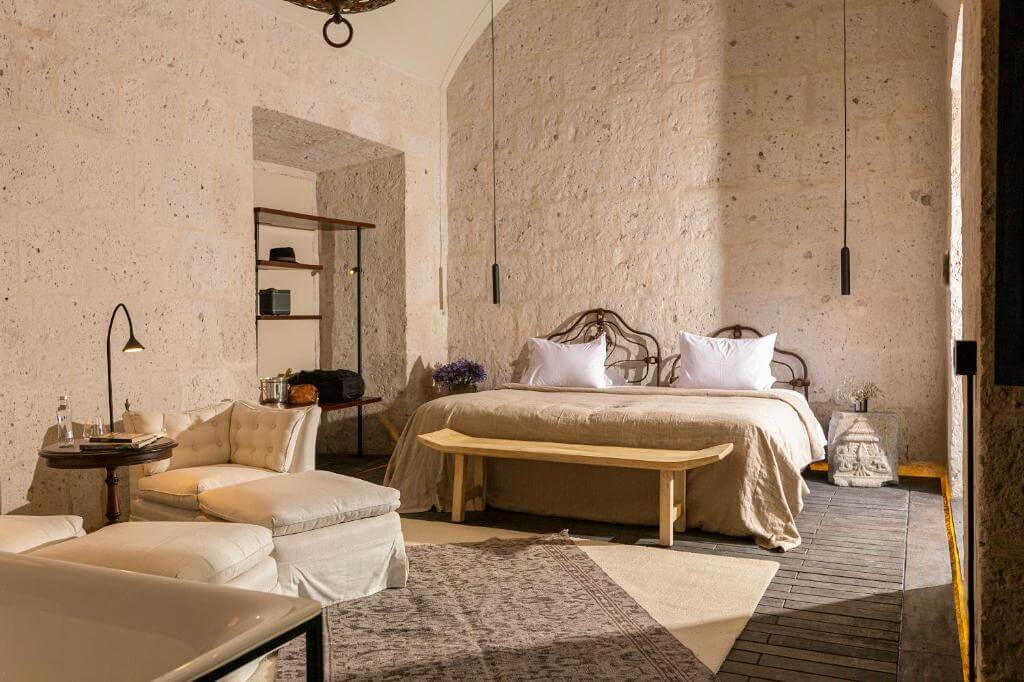

Here are all your accommodation options in Arequipa
What to Eat
Arequipa has one of the strongest food identities in Peru, and trying the local cuisine is easily one of the best things to do in Arequipa. You’ll find everything from traditional picanterías to modern cafés and excellent vegetarian spots.
Start with traditional Arequipean dishes. If you eat meat, classics like rocoto relleno (spicy stuffed pepper), ají de gallina, and adobo arequipeño are deeply rooted in local culture and usually served in family-run restaurants. These dishes are filling, flavorful, and often spicier than what you’ll find elsewhere in Peru.
If you prefer vegetarian or vegan food, you’re in luck. Arequipa surprised us with some of the best plant-based food we had during our South America trip.
- Prana is a must. Their daily menu is incredibly affordable, generous, and full of flavor. It’s easily one of the best value meals you’ll find in the city.
- Burger Chills is a great alternative when you want something casual, with solid vegan options and a relaxed vibe.
For coffee and chocolate, head to Chaqchao. It’s both a chocolate factory and café, where you can taste high-quality Peruvian chocolate paired with good coffee. You can also join chocolate-making workshops if you have extra time.
If you’re looking for a nice dinner spot, Zig Zag is a great choice. The menu mixes local flavors with more refined dishes, and it’s a good place to try traditional food in a comfortable setting. It’s not the cheapest, but the quality and atmosphere make it worth it.
Tip: Many restaurants offer a menú del día at lunchtime (usually between 12:00 and 3:00 pm). It’s the best way to eat local food for a very low price while traveling in Arequipa.

Things to do in Arequipa
Visit the Templo Museo Tercera Orden Franciscana
You might not plan to visit this place, and that’s exactly why you should. While wandering through Arequipa’s historic center, you’ll likely stumble upon the Templo Museo Tercera Orden Franciscana almost by accident. From the outside, it looks like just another church. Inside, it’s a quiet surprise.

For a small entrance fee, you’re taken on a short guided visit that brings you beyond the main church and into hidden spaces most travelers never see: inner courtyards, cloisters, old living quarters, and peaceful gardens tucked away from the city noise. The guide shares stories about Franciscan life, earthquakes that shaped Arequipa, and how religion influenced daily life here centuries ago.

It’s not a long visit, but it’s intimate and calm — a great first cultural stop, especially if you’ve just arrived and want something meaningful without being overwhelming.
Tip: Go earlier in the day when it’s quieter, and don’t rush it. This is one of those places where slowing down really pays off.


Explore the Santa Catalina Monastery
If there is one place that truly defines Arequipa, it’s the Santa Catalina Monastery. Visiting it feels less like entering a museum and more like stepping into a completely separate city, sealed off from the outside world.
Behind its massive walls lies a labyrinth of colorful streets, small plazas, kitchens, laundry areas, chapels, and former living quarters of the nuns. You can wander freely, choosing your own rhythm, and it’s easy to spend two to three hours here without even noticing the time pass. Every corner feels different — deep blues, bright reds, white volcanic stone — each area with its own atmosphere.

As you walk through the monastery, you start to understand how enclosed and structured life was here. Many of the women who lived inside entered at a very young age, often coming from wealthy families. The contrast between the beauty of the place and the strictness of life within its walls is striking.

We loved taking our time, reading the panels, eavesdropping on guides passing by, and sitting quietly in shaded courtyards when the crowds thinned.
Tip: Visit mid-morning or early afternoon for the best light and fewer tour groups. If you enjoy history but prefer independence, you don’t need a guide — the explanations on site are excellent.

Psst, you can join Tina’s Yoga Studio and get access to hundreds of Yoga, Meditation, and Well-being videos.
Join a Walking Tour of Arequipa
A walking tour is one of the best ways to understand Arequipa beyond its beautiful facades. Joining one early in your stay helps you get your bearings, learn the city’s history, and spot places you might want to return to later.
Most walking tours start at the Plaza de Armas and run for about two to three hours. You’ll move at an easy pace through the historic center while learning how Arequipa was shaped by volcanic eruptions, earthquakes, Spanish influence, and its strong local identity. Guides often mix history with everyday life stories, which makes the city feel much more alive.

We found this especially helpful after coming from Cusco and Machu Picchu — Arequipa has a very different energy, and the tour helped us understand that contrast right away.
Tip: Free walking tours work on tips. Aim for the morning tour when temperatures are cooler and your energy is higher.

Stroll Around Plaza de Armas
No visit to Arequipa feels complete without spending time in the Plaza de Armas. This is the heart of the city, framed by elegant white volcanic stone buildings and overlooked by the impressive cathedral. It’s lively without being chaotic and feels much more relaxed than plazas in some larger cities.

This is the place to slow down. Sit on a bench, watch daily life unfold, and admire how the light changes the color of the stone throughout the day. Locals meet here, street musicians perform, and cafés line the arcades, making it a perfect spot for a coffee break or an evening drink.
We passed through the plaza multiple times a day and it never felt repetitive — mornings were calm, afternoons busier, and evenings had a warm, social atmosphere.

Here are all your accommodation options in Arequipa
Visit the Cathedral of Arequipa
The Cathedral of Arequipa, sitting proudly on the Plaza de Armas, is one of the city’s most iconic landmarks. Built almost entirely from white sillar volcanic stone, it perfectly represents why Arequipa is called the White City.
Step inside and you’ll notice how calm and spacious it feels compared to the busy square outside. The interior is elegant rather than overly ornate, with high ceilings, a beautiful altar, and religious art that reflects the city’s Spanish colonial past. Earthquakes have damaged and reshaped the cathedral several times over the centuries, and learning about its reconstruction adds another layer to the visit.
If you have time, you can also visit the cathedral museum, which houses religious artifacts, paintings, and historic objects that help you better understand Arequipa’s role during colonial times.


Tip: We use the DJI Action 4 to film our vlogs — compact, durable, and perfect for capturing every adventure.
Admire the Church of the Company
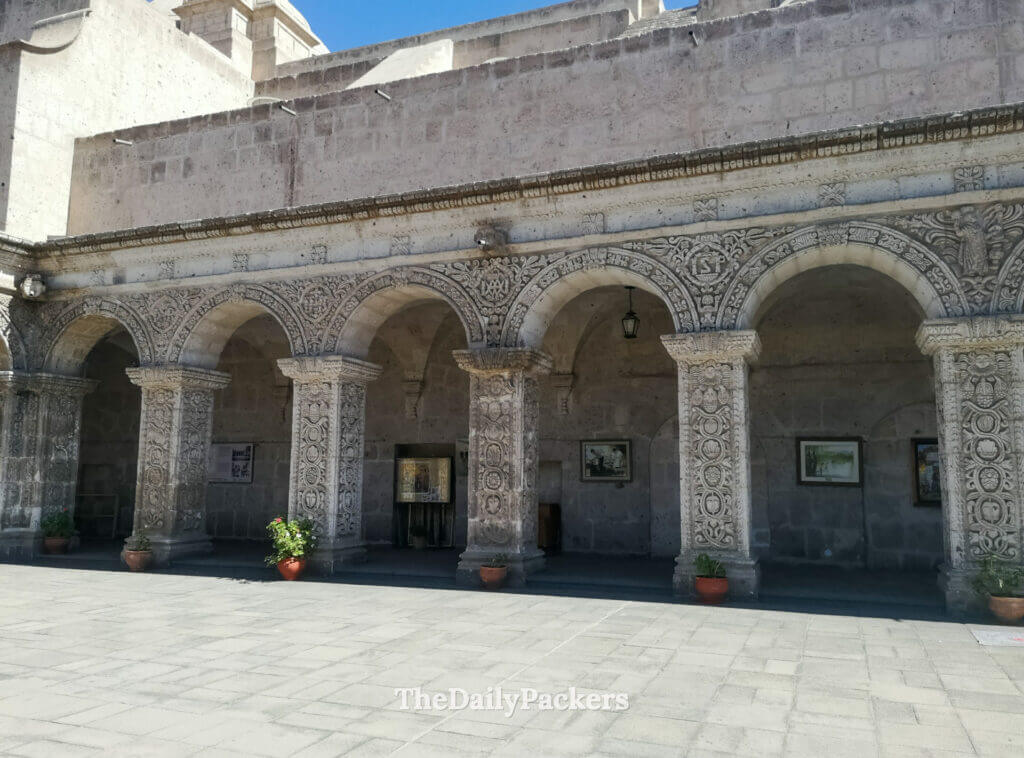
Just a short walk from the Plaza de Armas, the Church of the Company is one of the most impressive religious buildings in Arequipa. Built by the Jesuits in the 17th century, it’s famous for its incredibly detailed baroque façade carved from volcanic stone.
Take your time here. The exterior alone is worth a long look, but stepping inside reveals even more beauty — gold-leaf altars, intricate woodwork, and colorful murals blending Christian and indigenous symbols. This mix reflects how local traditions were woven into Spanish religious architecture.
We found this church more visually striking than expected, especially compared to others we had seen throughout Peru. It feels intimate, artistic, and deeply connected to Arequipa’s identity.
Wander Through Mercado San Camilo
A visit to Mercado San Camilo gives you a raw and lively glimpse into everyday life in Arequipa. Designed by Gustave Eiffel, this covered market is where locals come to buy fresh produce, cheese, meat, bread, and street food — and it’s one of the best places to feel the city’s rhythm.

Walking through the narrow aisles, you’ll see piles of colorful fruit, huge sacks of grains, and small stalls serving local dishes and fresh juices. Vendors are usually happy to let you taste fruit you’ve never seen before, and prices are incredibly affordable.
We loved stopping here during the walking tour, sampling local cheese and fruit while listening to the guide explain how important markets like this are to daily life in Arequipa.

Enjoy the View from Mirador del Puente Grau
The Mirador del Puente Grau offers one of the best viewpoints in the city, especially if you want a break from busy streets. From here, you can look over the Chili River, the green valley below, and, on clear days, the surrounding volcanoes.
It’s not a place you’ll spend hours at, but it’s a great stop during a walking tour or a relaxed afternoon stroll. Standing here really shows the contrast between Arequipa’s historic center and the natural landscape that surrounds it.
We appreciated this spot as a quiet pause between visits, a place to breathe a little and take in how dramatic the setting of Arequipa actually is.

Here are all your accommodation options in Arequipa
Taste Local Chocolate at Chaqchao
Stopping at Chaqchao Chocolate Factory is a must if you enjoy good coffee and even better chocolate. This place is more than just a café — it’s a working chocolate factory where you can learn about cacao from bean to bar, all sourced from Peru.
You can join a chocolate-making workshop if you have time, but even a simple visit is worth it. Head upstairs to the café, order a coffee, and pair it with one of their handmade chocolates. Tasting chocolate here feels different once you know it’s produced on-site, and the flavors are far richer than what you’ll find in souvenir shops.
We ended up buying a few bars to take with us, telling ourselves they were gifts — they didn’t all survive the trip.
Tip: If you’re short on time, skip the workshop and just enjoy a drink and chocolate tasting upstairs.

Psst, you can join Tina’s Yoga Studio and get access to hundreds of Yoga, Meditation, and Well-being videos.
Explore the Yanahuara District
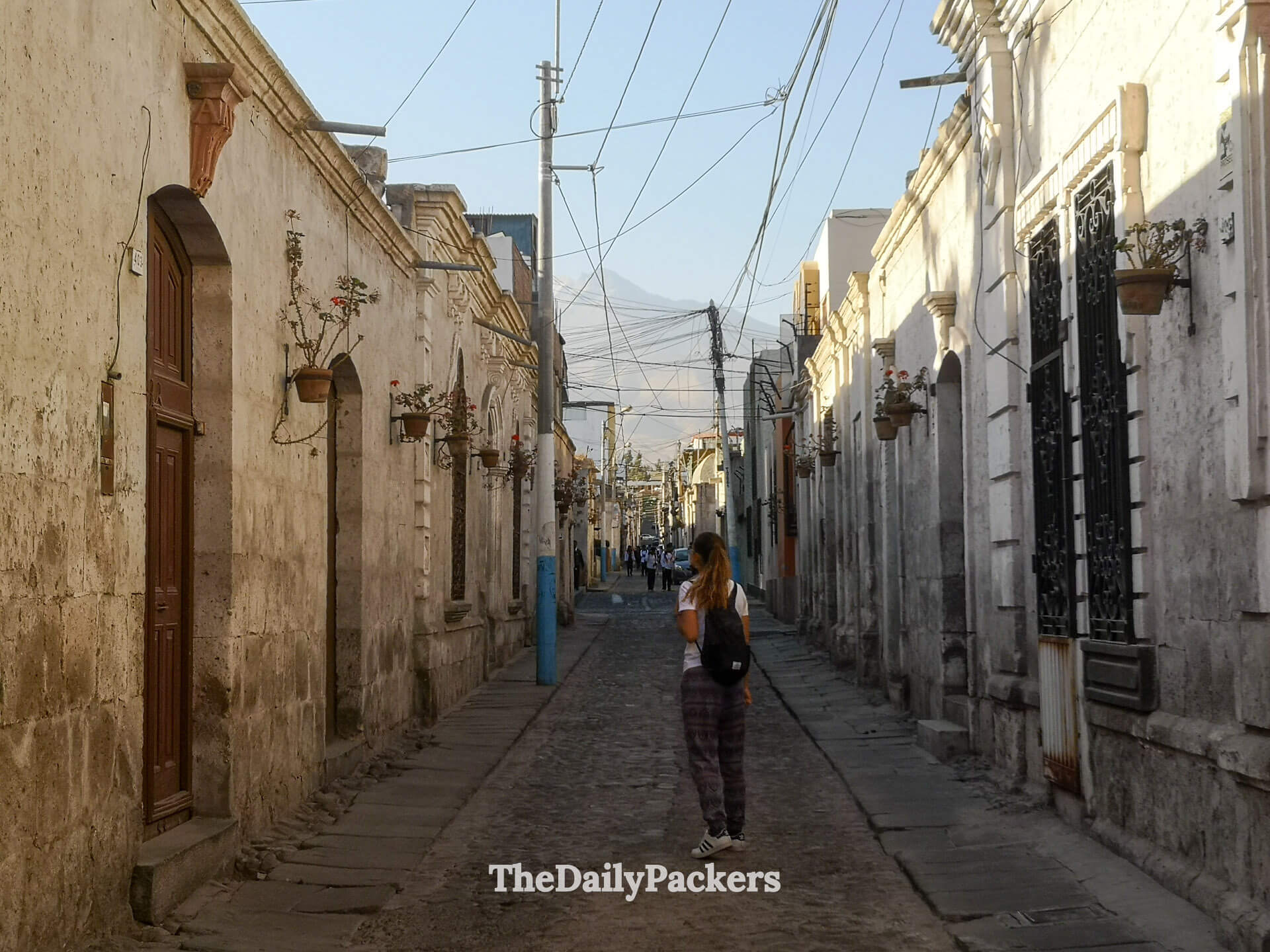
The Yanahuara district is one of the prettiest areas to explore outside the historic center. Known for its narrow streets made of white volcanic stone, it feels quieter and more residential, yet still full of charm.

Walking through Yanahuara is a refreshing change from the busy city center. The architecture is beautiful, the pace slower, and the streets are perfect for wandering without a plan. It’s also a great area for photography, especially if you like textured walls, arches, and traditional details.
We crossed the river to reach Yanahuara and immediately felt the difference in atmosphere — calmer, cleaner, and more relaxed.

Here are all your accommodation options in Arequipa
Relax at Plaza de Yanahuara
Plaza de Yanahuara is a small and peaceful square that feels worlds away from the busy streets of central Arequipa. Surrounded by white sillar stone buildings and shaded by trees, it’s the kind of place where you naturally slow down.
Locals come here to sit, chat, and enjoy the calm atmosphere, and it’s a nice spot to pause after walking through the Yanahuara district. The square is also home to a charming church and traditional houses that give you a sense of what life in this neighborhood has been like for generations.
We liked this stop because it didn’t feel touristy at all — just a simple, authentic corner of the city where daily life continues quietly.

Tip: We use the DJI Action 4 to film our vlogs — compact, durable, and perfect for capturing every adventure.
Admire the View from Yanahuara Viewpoint
Just a short walk from the plaza, the Yanahuara Viewpoint is one of the most iconic viewpoints in Arequipa. From here, you get a stunning panorama of the city framed by the surrounding volcanoes — Misti, Chachani, and Pichu Pichu — when the sky is clear.
The viewpoint is built with elegant stone arches engraved with poetic inscriptions, adding character to the already impressive view. Seeing Arequipa from above really helps you understand how the city sits between the mountains and the valley.
We spent more time here than expected, watching the light change over the volcanoes and taking in the scale of the landscape.

Spot Alpacas in a Local Park
While exploring Arequipa, keep an eye out for small local parks where alpacas sometimes roam freely, especially near cultural sites or quieter neighborhoods. Seeing alpacas outside of major tourist attractions feels surprisingly natural here and gives a glimpse into how closely everyday life in Peru is still connected to these animals.
We stumbled upon alpacas almost by accident, calmly grazing while people walked past them as if it were the most normal thing in the world. It’s a small moment, but one that sticks with you — simple, authentic, and very Peruvian.

Here are all your accommodation options in Arequipa
Take a Trip to Colca Canyon
A visit to Colca Canyon is one of the most famous excursions from Arequipa and a highlight for nature lovers. Located several hours from the city, it’s one of the deepest canyons in the world and offers dramatic landscapes, traditional villages, and the chance to see Andean condors soaring overhead at Cruz del Cóndor.
You can visit Colca Canyon as a long day trip, but it’s worth knowing that most of the time will be spent on the road. That’s why many travelers choose a 2- or 3-day tour, which allows time for hiking, visiting villages like Chivay, and even relaxing in hot springs.
We decided to skip it this time, feeling that a canyon of this scale deserves more than a rushed visit. It’s one of those places better saved for a slower trip.
Tip: If you’re short on time, a day tour works. If you want a deeper experience, plan at least two days in the canyon.

Arequipa Itinerary: 2 to 3 Days
Day 1 – Historic Center & Monuments
- Arrive in Arequipa and settle into your accommodation in the historic center
- Visit the Templo Museo de la Tercera Orden Franciscana
- Explore the Santa Catalina Monastery (allow at least 2–3 hours)
- Walk around Plaza de Armas and admire the Cathedral
- Visit the Church of the Company (Iglesia de la Compañía)
- Dinner in the historic center and a relaxed evening stroll
Day 2 – Local Life & Viewpoints
- Join a walking tour of Arequipa
- Visit Mercado San Camilo to taste local products
- Stop at Mirador del Puente Grau for city and valley views
- Taste local chocolate at Chaqchao
- Cross the river to explore the Yanahuara district
- Relax at Plaza de Yanahuara and enjoy the Yanahuara Viewpoint
- Dinner back in town or rooftop drinks
Day 3 – Nature or Slow Exploration (Optional)
- Day trip to Colca Canyon (1-day or 2-day tour depending on time)
- Or enjoy a slow day in Arequipa: cafés, museums, yoga, and local parks
- Spot alpacas in quiet green areas around the city
- Final dinner before continuing your journey toward Bolivia and the Uyuni Salt Flats
About the authors
We are Alex and Tina, a French-Serbian couple who met in China back in 2014. We spent three incredible years there before making France our home. Our shared passion for travel has been the heartbeat of our relationship for over 12 years, taking us across 44 countries and counting.
We launched TheDailyPackers in 2019 as a way to document our adventures. In 2026, we reached a major milestone by officially turning our blog into our full-time job. While we are still growing toward financial independence through this platform, every article we write is fueled by our mission to make your voyages easier through in-depth guides, honest advice, and the lessons we’ve learned from our own mistakes.
Our journey has not been without its storms. In 2023, our world changed forever when our first son, Poppy, was stillborn on November 25th. It was, and remains, the hardest chapter of our lives. In 2025, we were blessed with our second little boy, Milo. He has since joined our traveling tribe, and you’ll be seeing him—and the reality of traveling with a little one-on the blog more and more.
We hope to inspire you to explore the world with curiosity and resilience. Thank you for being part of our story.
You may also like those related posts
25 Best things to do in Salzburg, Austria, in 2 to 6 days
3 Best Places to Visit in April
19 Best things to do in Marrakech, Morocco, in up to 10 days
28 best things to do in Rome and the Vatican
4 best things to do in Nara, Japan, in a 1-day trip
10 best things to in Lijiang, China, in 3 days or more
Southern Thailand: The Perfect 2-week Itinerary
Tam Coc Boat Tour: Exploring Vietnam’s Ha Long Bay on Land
Pssst, did you know that…
If you purchase something through our links, we earn a small fee. However, you still pay the same. Win-win! And one day we may get to be full-time travel bloggers =)
Find Hotels with Booking.com
Do Yoga with KVY
Buy us a Coffee
Rent a car with DiscoverCars
Find Attractions with GetYourGuide
Find Flights with Expedia
Buy an eSIM with Airalo
Get insured with World Nomads
Get ready with Amazon.com