
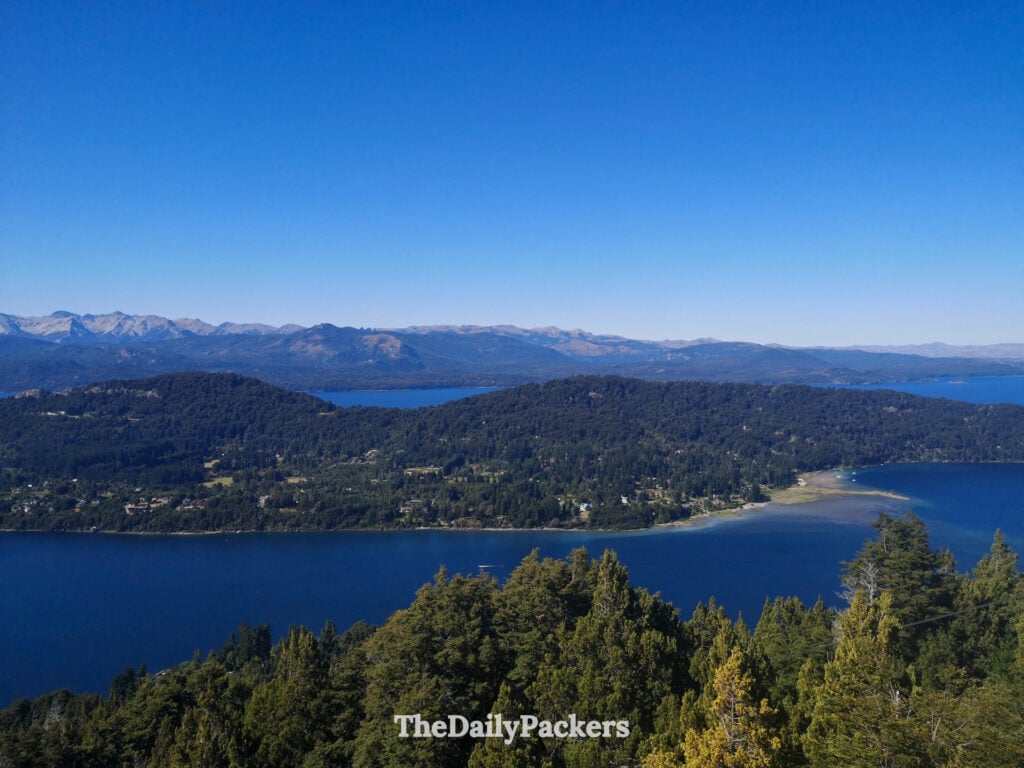
Why You’ll Love Visiting Bariloche
Bariloche is one of those places that stays with you long after you’ve left. We first arrived thinking we’d stay for five days, but the beauty of the lake and the many mountain activities really got to us. We ended up staying for nine! Even now, whenever we talk about our favorite spots in South America, San Carlos de Bariloche is always at the top of our list.
You’ll love Bariloche because it’s where the wild beauty of Patagonia meets the warmth of a mountain village. We often call it the “Switzerland of Argentina” for its wooden chalets and world-class chocolate shops on every corner, but it has a soul that is purely Patagonian.
Whether you are here to push your limits on a steep mountain trail towards Refugio Frey, or you just want to sit by the deep blue waters of Lake Nahuel Huapi with a locally brewed beer, Bariloche is the place you need to go.
If you’ve been exploring the wind-swept trails of El Chaltén or the “End of the World” in Ushuaia, Bariloche will feel like a beautiful, slightly softer change of pace, though the mountains here are just as epic.

Best Things to Do in Bariloche
Feel the Alpine Magic at Centro Cívico & Francisco Moreno Museum
When you first walk into the Centro Cívico, you might have a moment where you forget you’re in South America. The dark wood and green stones make it look like a little piece of Switzerland was dropped right into Argentina. If you. We remember standing in the middle of the square, thinking how cool it is to have such architecture here. Today, it somehow reminds us of places like Annecy in France or even Lucerne in Switzerland
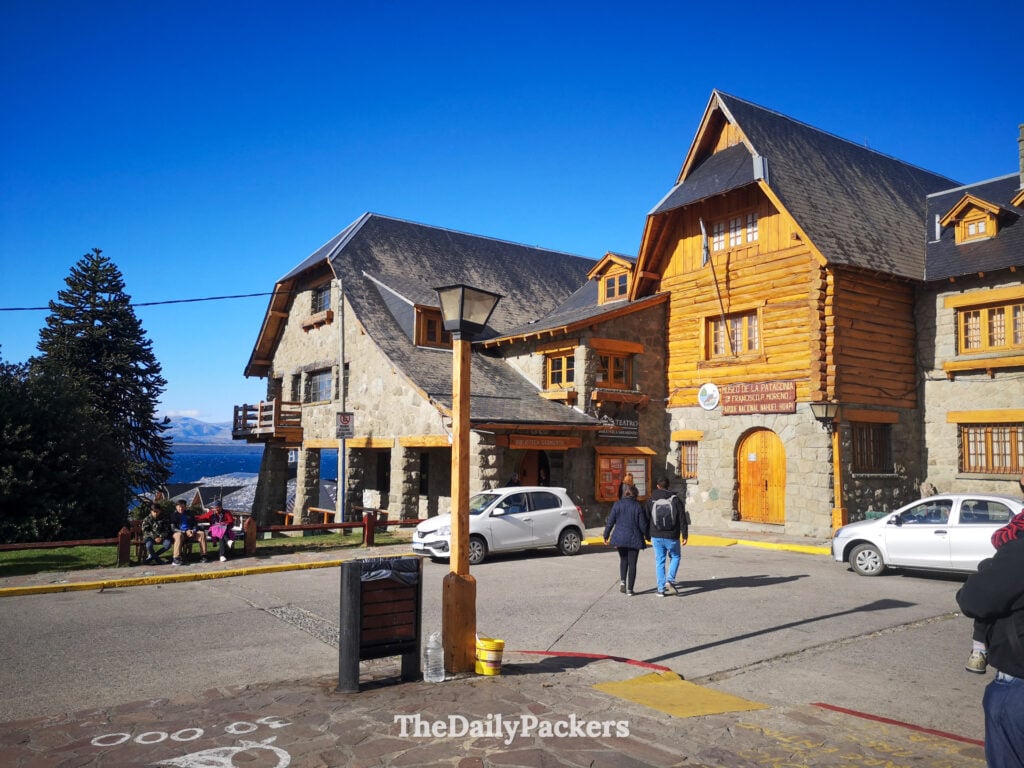
Inside the square, you’ll find the Francisco Moreno Museum of Patagonia. You should definitely head inside if you want to learn more about this region. It’s not just about old photos; it’s more about the people and the nature that shaped this place.

Snap Your Iconic Photo at the Bariloche Letters
You can’t leave without visiting the Bariloche Letters. You will find them right on the edge of the lake, just a few steps down from the main square. It’s one of those classic Bariloche attractions that every traveler does. The giant white letters standing out against the blue of Nahuel Huapi Lake make for the perfect photo souvenir.


Tip: We suggest you head there early in the morning. When we went later in the day, there was a bit of a queue, and it’s much nicer when you have the mountains in the background all to yourself.
Take a Moment at Playa Centro
Once you’ve finished exploring the city center, you really should walk down to the shore. Playa Centro is the city’s main beach, and it’s one of those things to do in Bariloche where you can slow down. Don’t expect the white sand of the Maldives; this is a rocky Patagonian beach, but the views of the mountains sitting over the water are unmatched.
We spent a few hours there, just sitting on the stones, chilling and thinking about our next adventure around Circuito Chico. You might see some brave souls diving into the water, but be warned: it is incredibly cold, even in the middle of summer!

Step Inside the Cathedral Our Lady of Nahuel Huapi
Walking towards the lake, you can’t miss this massive stone building. The Cathedral is one of the top Bariloche attractions, and even if you’ve seen a thousand churches while traveling through South America, we still think it is worth a stop. It was designed by the famous architect Alejandro Bustillo, the man who shaped much of the iconic look of San Carlos de Bariloche.

What really caught our eye were the stained-glass windows inside. Unlike the ones we usually see in Europe, these actually depict the history of the region, the local people, and Patagonian landscapes. We found it to be a very peaceful place to escape the afternoon heat or the wind for a bit. If you’re making a list of the best things to do in Bariloche and what to see that combines history with local art, you should definitely put this at the top.

Find Hidden Gems at the Feria Artesanal Centro Cívico
Just behind the main square, you’ll find a vibrant open-air market. We loved strolling through here every time we went into town.
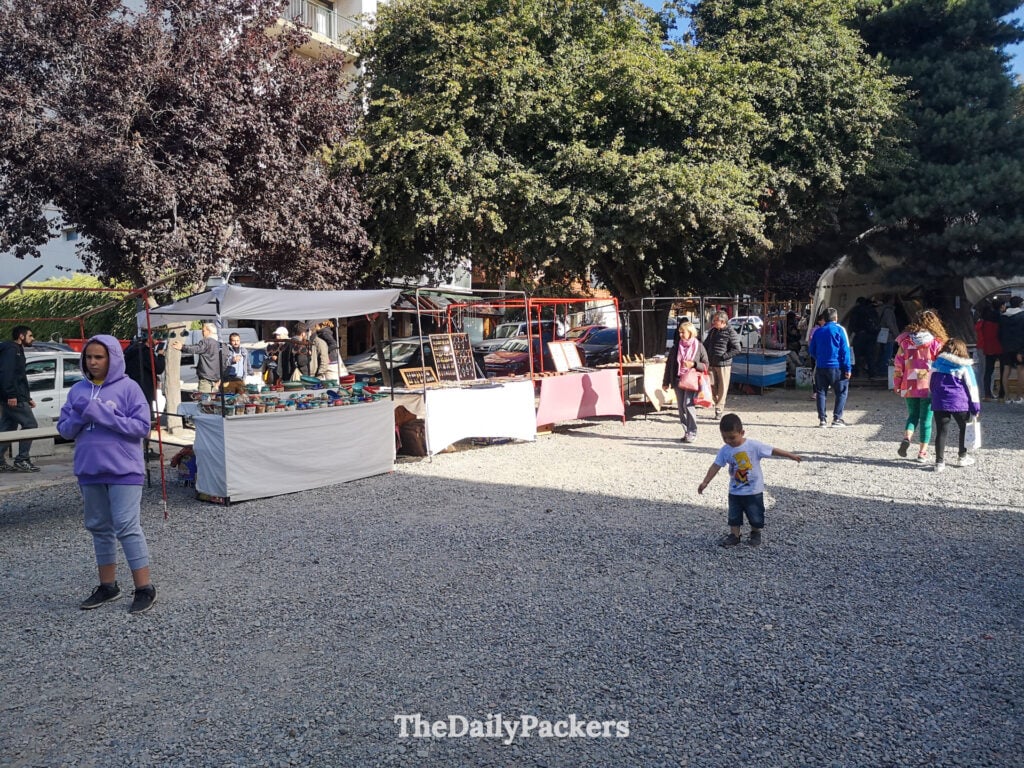
You’ll see a massive range of handmade goods, from delicate silver jewelry to sturdy, hand-carved wooden kitchenware that smells like the surrounding forests. Unlike the more commercial shops on Mitre Street, the prices here are often much better, and you’re supporting the actual regional producers.

Meet the Makers at the Municipal Kraft Fair
If you want something even more authentic, head over to the intersection of Moreno and Villegas to find the oldest fair in the city. This one is mostly indoors, which makes it a perfect escape if the Patagonian weather decides to get a bit moody.

There, you aren’t just looking at products; you are often meeting the artisan who spent days working on that specific leather belt or hand-forged knife. We were especially drawn to the Zuem Mapuche section, where women from the Southern Line sell incredible textiles made with hand-spun and hand-dyed wool.


Hunt for Sweet Gold at the Chocolate Factories
You will smell it before you see it. Mitre Street is often called “The Chocolate Mile,” and for good reason, it’s lined with some of the best chocolate shops in the world. We spent way more time (and definitely more money) than we planned, just hopping from shop to shop. The two heavyweights you absolutely cannot miss are Rapa Nui and Mamuschka.

- Rapa Nui: Walking in here feels like entering a chocolate-themed Art Deco palace. There’s even an indoor ice-skating rink at the back!. You have to try the Fra-Nui—frozen Patagonian raspberries covered in two layers of chocolate. They are so addictive that we went back for a second box.
- Mamuschka: You’ll spot this one by the bright red Russian Matryoshka dolls spinning in the window. Their Timbal de Dulce de Leche is legendary, and the vibe inside is cozy and festive year-round.

Tip: As we mentioned in our Iguaçu Falls guide, Argentina’s currency fluctuates like crazy. Many chocolate shops will give you a better price if you pay in cash (pesos), but it’s always worth checking if they have a “promo” of the day.
Discover the Pulse of Puerto San Carlos
When we extended our stay, we started looking for places where the local community actually gathers, and this is exactly where we found them. Located right on the water’s edge at Puerto San Carlos (the old port building), this center is a massive, light-filled space that feels incredibly alive. It’s a mix of an art gallery, a tech lab, and a community theater.
We loved the “surprise factor” here. One afternoon, you might walk in and find a high-tech photography exhibition about Patagonian glaciers, and the next day there’s a Feria Vintage with people trading vinyl records and retro comics. If you’re lucky, you’ll catch a live rehearsal of a local orchestra or a tango workshop right in front of those massive windows overlooking the lake.


Stroll along the Bariloche Promenade (Costanera)
The Costanera is a long lakeside path that stretches for miles along the edge of Nahuel Huapi Lake. We just love walking down or up. To be honest, we never got bored with the views.

You’ll see the “real” Bariloche here: groups of friends sitting on the low stone walls sharing a mate, people jogging with their dogs, and families watching the sunset.

Kayaking on Nahuel Huapi
Getting onto the water is a completely different experience from looking at it from the shore. You can rent kayaks from Circuito Chico Adventure, located at Av. Bustillo Km 18. We were a bit nervous about the wind, but we went early in the morning when the lake was like a giant blue mirror.

The water is so clear that you can see the rocks deep below you. It reminds us a bit of our time in Corsica, where the mountains meet the sea, but with that distinct, chilly Andean edge.
Just a heads-up: the weather here can change in a heartbeat. One minute it’s calm, and the next, the “white caps” start appearing on the waves. If you see the wind picking up, it’s time to head back to shore!

Tip: Just like when we traveled through Morocco, we recommend booking your gear locally to get the best feel for the day’s conditions. Most rentals include a life vest and a spray skirt to keep you dry from the icy splashes.
Behold the 360-Degree view at Cerro Campanario
If we had to pick just one view that defines our trip, this would be it. Cerro Campanario, which is easily one of the best things to do in Bariloche. National Geographic once named Cerro Campanario one of the top 10 views in the world, and honestly, we agree.
Standing at the top, you are surrounded by a 360-degree panorama of the Nahuel Huapi and Moreno lakes, the Llao Llao peninsula, and the jagged, snow-capped Andes.

We had a bit of a debate about how to get up. You can hike the trail, which is a very steep 30-minute climb through the trees, or you can take the chairlift. Since we were planning a longer trek later that week, we opted to hike the way up and take the chairlift down.

Hiking the Circuito Chico Loop
While most travelers rent bikes for the 60km loop, we decided to take a different approach. We wanted to truly get into the heart of the Llao Llao Municipal Park, so we laced up our boots and hit the trails instead, and it ended up being one of the best things to do in Bariloche.
By hiking, we were able to weave together a personal loop that hit all the iconic spots while staying completely immersed in the nature that makes Bariloche so famous
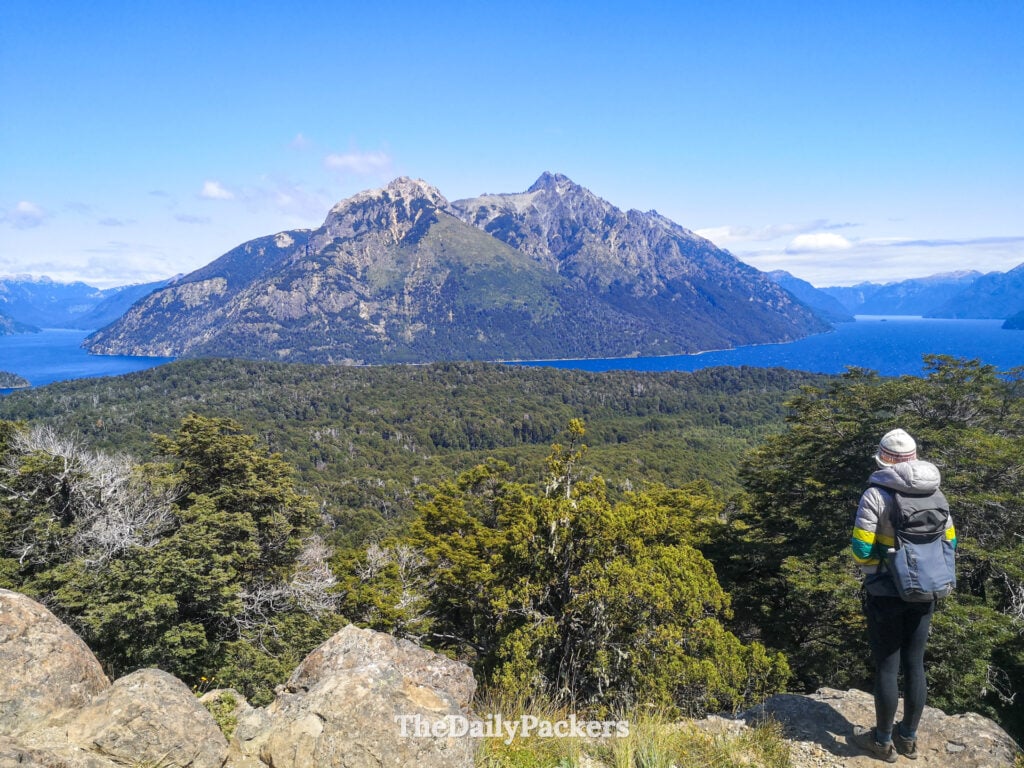
Here is how we spent that incredible day:
- Cerro Llao Llao: We started with this climb. It’s a relatively short but steady hike through a forest of coihues and arrayanes. When we reached the summit, the reward was a view that rivaled Cerro Campanario.
- Mirador de Tacul: From the summit, we wound our way down toward the shoreline to this viewpoint. It’s a quieter spot where the forest meets the rocky beach of Lake Nahuel Huapi.
- Lago Escondido (Hidden Lake): True to its name, this little lake feels like a secret sanctuary. There’s a beautiful wooden pier where we stopped to rest our legs.
- Patagonia Beer Factory: After all that hiking, we definitely earned a break. We made our way to the famous brewery located right on the circuit.
- Punto Panorámico: We ended our loop at this classic lookout. It’s one of the most famous views in Argentina, and seeing it at the end of the day, after having walked the land ourselves, made us appreciate it so much more.

Choosing to hike instead of bike allowed us to find a rhythm that felt much more “us.” It turned a standard sightseeing route into a deep, personal connection with the Patagonian wilderness. Especially since we hitchhiked at the end of the hike and met a friendly Chilean couple.


Read: Circuito Chico Bariloche: The Ultimate 1-Day Hiking Guide
Grab a Cold One at the Patagonia Beer Factory
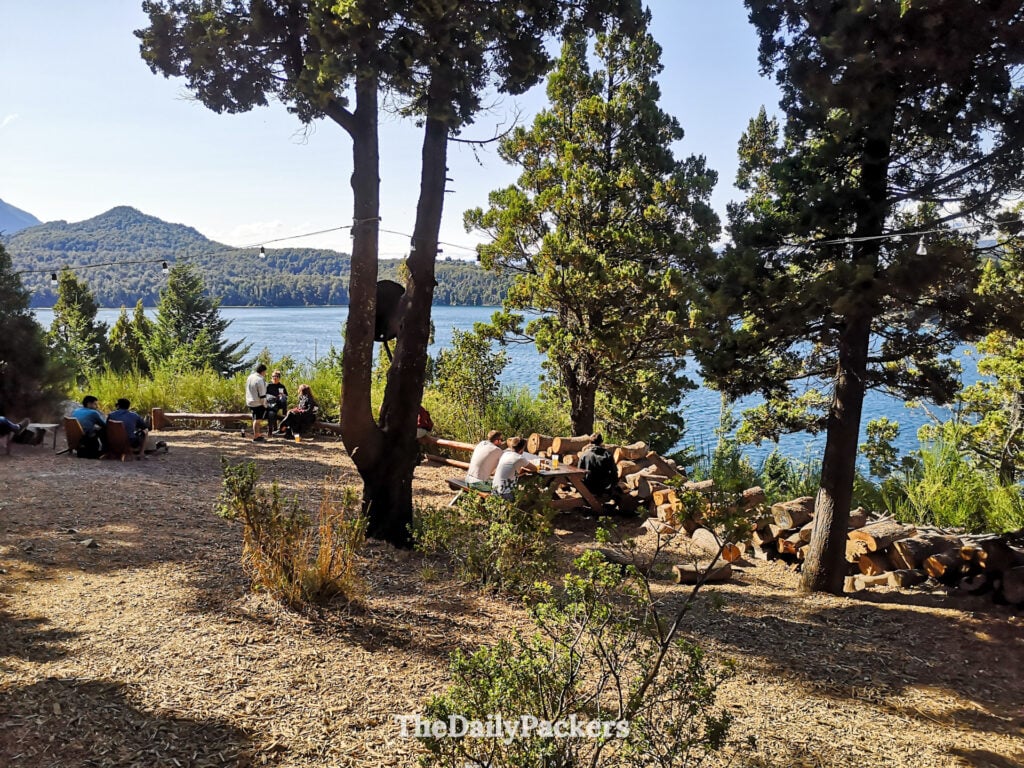
After a long day of exploring, there is no better reward than a cold craft beer, and let us tell you, the Patagonia Beer Factory has arguably the best “beer garden” view in the entire world, making it one of the best things to do in Bariloche. It’s located right on the Circuito Chico route, and even if you aren’t a massive beer drinker, the location alone makes it a must-stop.

We sat on the wooden terrace, looking out over the mountains we had just hiked, feeling that pleasant post-adventure exhaustion. The vibe is super relaxed, very “mountain life”, and it’s the perfect spot to toast to your trip.
We recommend trying a flight of their local brews to find your favorite, but honestly, with that view of the lake, anything tastes like five-star luxury.
Conquer the Trek to Refugio Frey
For those of you looking for a real challenge, the hike to Refugio Frey is the legendary one and one of the best things to do in Bariloche. It’s a full-day commitment that takes you deep into the granite spires of the Andes. The trail starts near the base of the Cerro Catedral ski resort, and while it’s a long walk (about 4 to 5 hours each way), every single step is worth it.

When you finally reach the refuge, you’re greeted by a cold, crystal-clear mountain lagoon called Laguna Toncek. We saw climbers tackling the vertical walls above us, but we were perfectly happy just sitting by the water, catching our breath.

Take a Dreamy Road Trip to Villa La Angostura
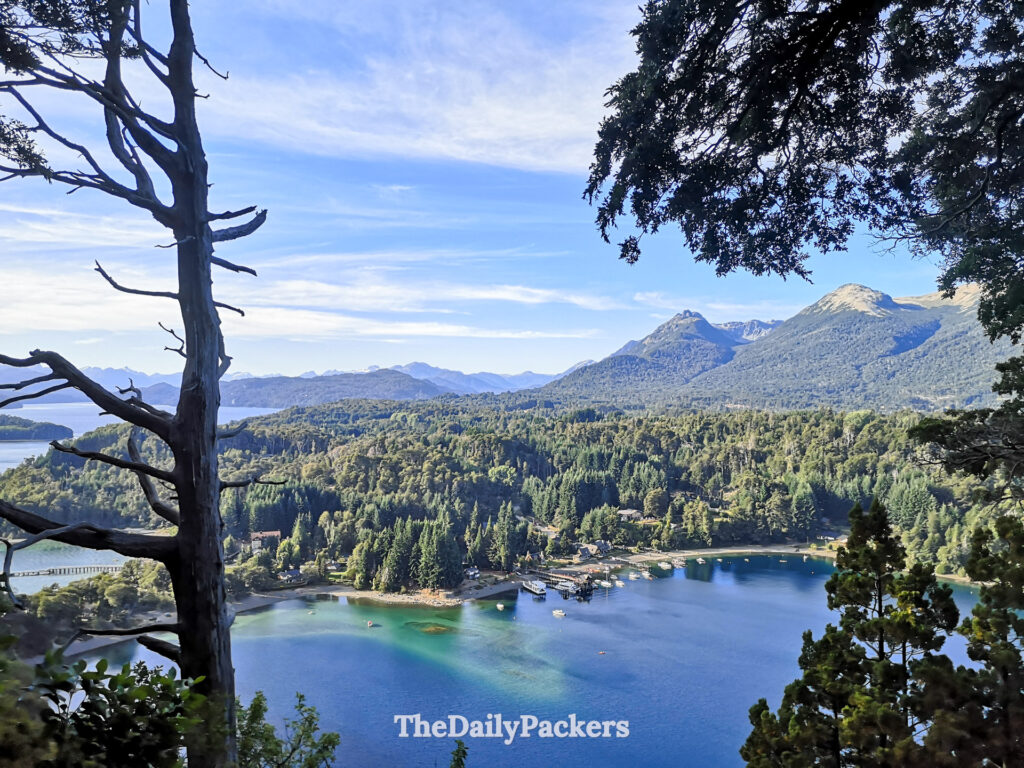
If you feel like Bariloche is the “capital,” then Villa La Angostura is its quieter sister. Located about an hour’s drive north, this village is honestly one of the most picturesque places we’ve ever seen. Especially around the port area.

The town is famous for its strict “Alpine” building codes; everything is made of local stone and wood, and there isn’t a single neon sign in sight. We loved just walking down the main street, popping into tiny boutiques, and grabbing a coffee by the pier.
It’s smaller and more intimate than Bariloche, making it the perfect escape if you want to feel that cozy mountain village vibe without the crowds. It’s also the gateway to our next favorite spot, the Arrayanes forest.

Read: Los Arrayanes National Park: The Best of Villa La Angostura
Wander Through the Fairytale Los Arrayanes National Park
This is one of the most unique forests in the world and a must in any of the best things to do in Bariloche’s articles. The Arrayán tree is famous for its smooth, cinnamon-colored bark that is actually cold to the touch. Legend has it that Walt Disney was inspired by this very forest when creating the setting for Bambi, and once you’re standing among those orange-hued trunks, you’ll see why.

You can reach the heart of the park by taking a boat from Villa La Angostura, or you can hike or bike the 12km trail that runs down the peninsula. We chose to get there by boat and walk the wooden boardwalks back that wind through the ancient trees.
Read: Los Arrayanes National Park: The Best of Villa La Angostura
Embark on the Legendary Seven Lakes Route
If you have a car (otherwise, you should rent one), you absolutely cannot leave Argentina without driving the Seven Lakes Route (Ruta de los Siete Lagos). It’s a 110km stretch of the famous Route 40 that connects Villa La Angostura to San Martín de los Andes.
While we didn’t do it, it is one of the things to do in Baricloche that we really missed. We heard that every time you round a corner, a new lake appears—Correntoso, Espejo, Escondido, Villarino, Falkner, Machónico, and Lácar.
The Perfect Itinerary: How to Spend Your Days
Since we ended up extending our stay to nine days, we had plenty of time to build the perfect itinerary and gather the best things to do in Bariloche. However, we know most people only have about five days to explore. Based on our experience, here is how you can organize your time so you don’t feel rushed, but still see all the icons.
Day 1: Alpine Charm & Lakeside Vibes: Once you arrive, drop your luggage and visit the Centro Cívico. Take those iconic photos, visit the Francisco Moreno Museum, and then wander down to Playa Centro. For lunch, hit Mitre Street for a “chocolate crawl.” In the afternoon, walk the Costanera (promenade) all the way to the Cathedral and end your day at the Centro Municipal de Arte by the lake to see what the local community is up to.

Day 2: The Best View in the World: Head out early to kayak on the lake. If you can cross it all the way to Paila Co Salón de Tè. In the afternoon, head to Cerro Campanario. Whether you hike or take the chairlift, spend time at the top, the coffee with that 360-degree view is worth every penny.

Day 3: The Immersive Circuito Chico: This is your big nature day. As we did, skip the bikes and hike the loop instead. Start with the climb up Cerro Llao Llao, then wind your way down to Mirador de Tacul and the serene Lago Escondido. It’s a long day on your feet, so plan your grand finale at the Patagonia Beer Factory for sunset drinks and food with a view of the mountains you just conquered.
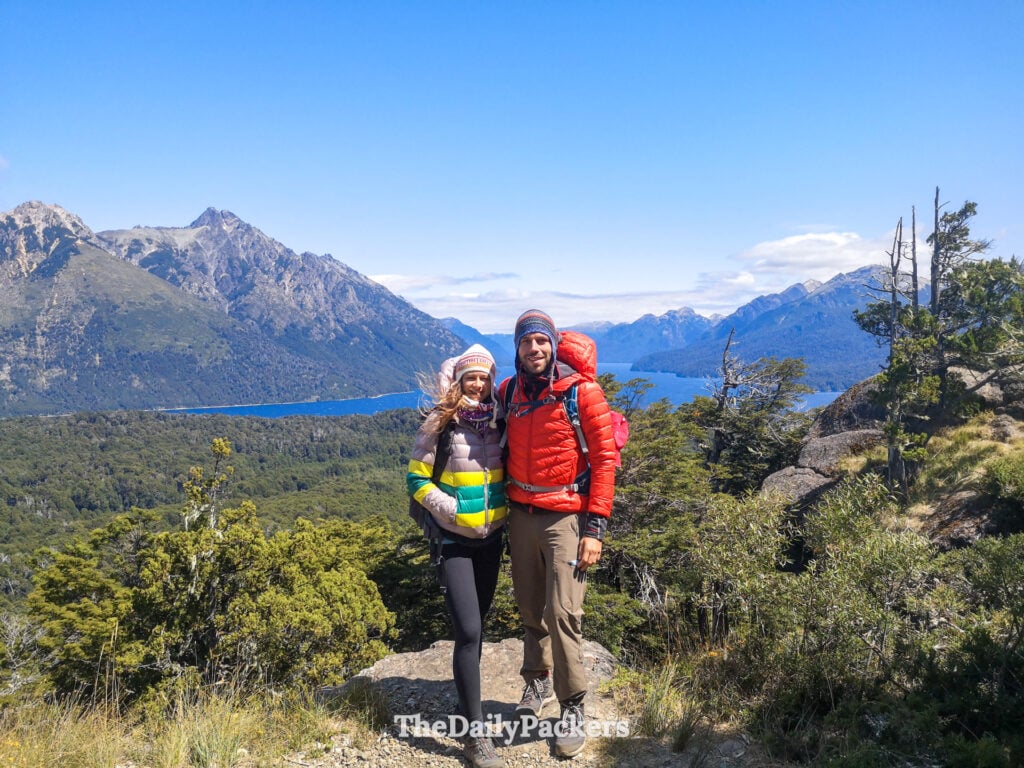
Day 4: High Mountain Adventure: Lace up your boots for the trek to Refugio Frey. This is a full-day commitment (8-9 hours round-trip). It’s challenging, but standing by that alpine lagoon surrounded by granite spires is a feeling you’ll never forget. If you aren’t a big hiker, you can spend this day taking a boat excursion to Isla Victoria instead.

Day 5: The Fairytale Road Trip: Rent a car and head north. Drive through the stunning landscapes to Villa La Angostura. Spend your morning slowly around Villa La Angostura. And in the afternoon, take the boat to Los Arrayanes National Park.
If you have the energy, drive a portion of the Seven Lakes Route before heading back to Bariloche for one last box of chocolates.


Psst, you can join Tina’s Yoga Studio and get access to hundreds of Yoga, Meditation, and Well-being videos.
The Best Time to Visit: Weather & Local Events
We realized during our stay that San Carlos de Bariloche is truly a year-round destination, but the “vibe” changes completely depending on when you show up. Our best things to do in Bariloche are really focus for Summer.
Summer (December to February): This is when we visited, and honestly, we loved it. The days are long, sometimes the sun doesn’t set until 9:30 PM, which gives us so much extra time for those long hikes like Refugio Frey. You can expect beautiful highs between 18°C and 26°C, making it perfect for kayaking on Nahuel Huapi or having a beer at the Patagonia Brewery while watching the sunset.
Winter (June to August): If you’re a skier or just love that “cozy cabin” feeling, this is your time. Bariloche transforms into the premier ski destination of South America. It stays cold, with averages between -2°C and 8°C. Think snow-capped mountains, bustling ski slopes at Cerro Catedral, and a lot of thick hot chocolate by a fireplace. It’s much more crowded and expensive during these months.
Shoulder Seasons (Spring & Autumn): If you want to avoid the crowds we encountered in the town center, consider visiting in the “in-between” months. In Autumn (March to May), the lenga forests turn incredible shades of red and orange—very similar to the magic we felt in the Arrayanes forest. In Spring (September to November), everything is in bloom, and the mountain peaks are still covered in snow, creating a stunning contrast with the green valleys.

How to Get to Bariloche
Apart from driving, the two easiest ways to reach Bariloche are by bus or by plane.
If you’re arriving by bus, as we did, your journey in Bariloche will start at the Terminal Autobuses Bariloche. From there, you can take a local city bus to the city center. However, having a SUBE card (the same public transportation card used in Buenos Aires) is essential.
From the bus terminal, you can hop on Bus N°20, which travels along the scenic lake route all the way to Villa Llao Llao. However, be aware that you cannot buy or top up a SUBE card at the bus terminal.
If you don’t have a SUBE card, don’t worry—locals are often willing to swipe their card for you in exchange for cash. We did this multiple times, and it worked without any issues.

Even though we arrived by bus, we noticed that for those flying into San Carlos de Bariloche Airport (BRC), the logistics are pretty similar. From the terminal, you can hop on Line 72, which is the main artery of the city. It runs every 20 minutes and drops you right near the Civic Center. Just remember that it’s strictly SUBE only—no cash is accepted on board!
If you have heavy bags, there’s a taxi rank right outside the terminal entrance. A ride to the center is quick (about 10 minutes) and costs roughly $5–$8 USD, depending on the exchange rate. It’s cash-only in pesos, so make sure you have some small bills ready.


Check all your bus options on Busbud — it’s simple to compare routes, prices, and book your tickets in advance.
Getting Around the City Like a Local
The absolute cheapest way to get around is by bus. Depending on where you’re staying, you’ll find yourself relying on different routes, but Line 20 (the lakefront route) and Line 10 (to Colonia Suiza) will likely be your most frequent rides.
However, there is a reality to the bus system that the brochures don’t mention: during high season or long weekends, these buses get extremely full. If you aren’t waiting at one of the first few stops of the line, the bus may simply sail past you because there isn’t an inch of standing room left.

Since the frequency is only every 20 to 30 minutes, you can imagine how quickly large, frustrated crowds gather at the stops. When the bus doesn’t stop, we found our options were pretty limited: you can wait and hope the next one has space, or you can do what we did, start walking toward an earlier station to “beat the crowd” and secure a spot before the bus fills up.
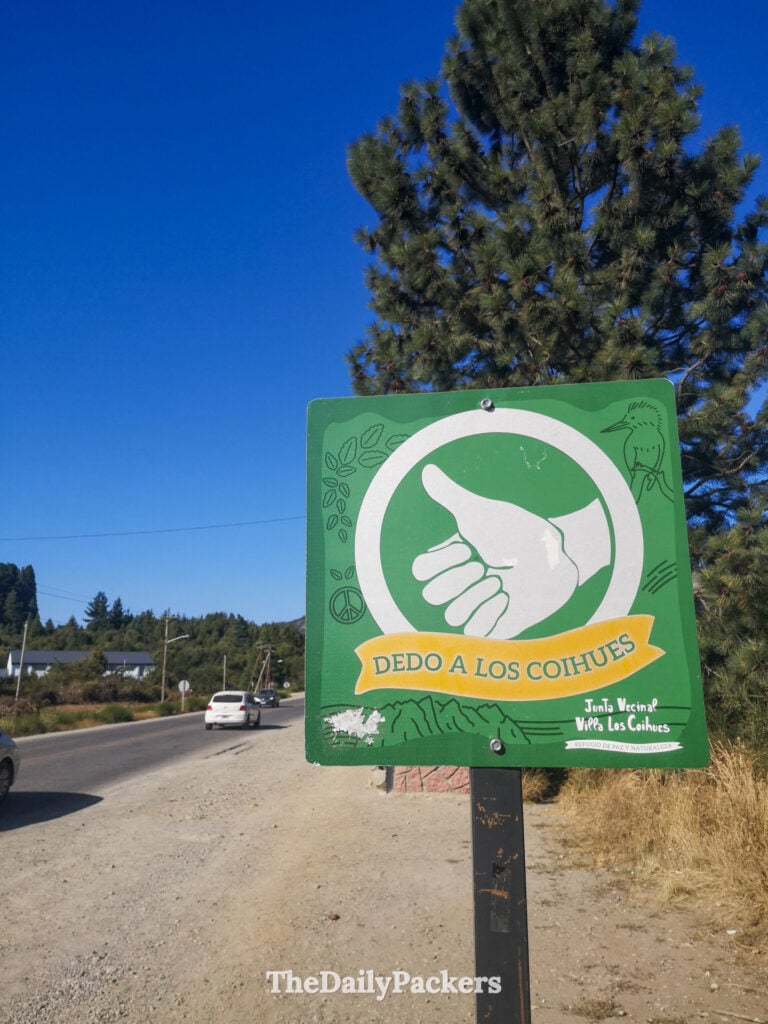
If you’re feeling a bit more adventurous, hitchhiking is surprisingly common and safe in this part of Patagonia. We saw everyone from solo backpackers to local students catching rides along Avenida Bustillo. It’s a great way to meet locals and often much faster than waiting for a third full bus to pass you by.
Where to Stay: Our Favorite Neighborhoods
Choosing where to stay in Bariloche really comes down to how much you want to rely on that unpredictable bus system. Because the city is so spread out, your choice of neighborhood completely changes the logistics of your day.
Downtown (Centro): This is the most convenient spot if you want to be close to the bus terminal, chocolate shops, and restaurants. It makes catching Bus 55 to the mountains very easy. We recommend Hotel Cottbus for a comfortable, central stay that won’t break the bank.
Avenida Bustillo (The “Kilometers”): This is the long road hugging the lake. It’s quieter than downtown, and many hotels here offer incredible views of Nahuel Huapi. It’s a great middle ground. A fantastic option here is Design Suites Bariloche, where you can soak in the views after a long day of trekking.
Llao Llao / Colonia Suiza: These areas are further out and feel much more “mountain-chic.” You’ll be closer to other hikes, but you’ll have to transfer buses to get to Cerro Catedral. For a total “bucket list” experience, the Llao Llao Resort, Golf-Spa is the most iconic hotel in Argentina.

What to Eat: Iconic Local Dishes
After exploring Bariloche for nine days, we realized the food scene is much more than just steak and red wine. There is a deep European influence—mostly Swiss and German—that creates this unique Alpine-meets-Andean cuisine. It’s also surprisingly easy to navigate as a vegetarian, as long as you know where to look.
What to Eat: Iconic Local Dishes
- Argentinian Chocolate: Bariloche is the chocolate capital of the country.
- Empanadas: These were our South American survival food. While beef is the standard, keep an eye out for Trucha Patagónica (Patagonian trout) or vegetarian versions like Humita (sweet corn) and Roquefort with walnut.
- Fondue: A nod to the Swiss settlers. You’ll find amazing cheese fondues served with local breads and potatoes. It’s the perfect “après-hike” meal.
- Goulash & Spätzle: This hearty beef stew with small German-style pasta is a local staple. Some places even offer a mushroom-based version for vegetarians.
- Alfajores & Strudel: If you love sweets with your coffee, the Apple Strudel here is legendary, reflecting the German heritage of the region.
Our Recommended Places to Eat
- For Vegetarians & Healthy Vibes: We spent a lot of time at Rico Vegetariano, which is a fantastic pay-by-weight buffet. For something more modern, Chimi Deli Cocina Natural and Maleza are great for vegan-friendly lunches and fresh juices.
- For the “Classic” Experience: Familia Weiss is an institution—it feels like an old mountain lodge and serves everything from smoked meats to pastas. For the best steak in town, Alto el Fuego and El Boliche de Alberto are the places to go (just make sure to book ahead!).
- For Pizza & Beer: Santa Muzza Pizzería has that thick, cheesy Argentine-style pizza we loved. For beer, you have to visit the Patagonia Beer Factory on the Circuito Chico; the views of the lake from their terrace are worth the bus ride alone.
- For a Quick Bite: Mexicano Café and El Molinito were our go-to spots for a quick coffee or a light brunch when we didn’t want a heavy sit-down meal.

What No One Tells You
There are a few “unspoken rules” we picked up during our stay. First, the Siesta is very real. Many shops downtown (except for the major chocolate boutiques) close between 1:00 PM and 4:00 PM, so don’t plan your shopping spree for mid-afternoon.
Also, the sun and wind are no joke. Because of the altitude and the thin ozone layer, you will burn even on a cloudy 15°C day. We learned to keep a high-SPF sunblock and a windbreaker in our bags at all times. Finally, if you’re eating at the popular spots like Familia Weiss, reservations are mandatory during high season—don’t expect to just walk in at 8:00 PM and get a table.

What it Costs: Budgeting for Your Day
To finish off the practical side of our trip, we need to talk about the money. Argentina’s economy is always a bit of a rollercoaster, and by 2026, things haven’t exactly slowed down. However, for travelers with foreign currency, Bariloche remains an incredible value if you know how to play the system.
Based on our nine days on the ground, here is a realistic breakdown of what you can expect to spend.
The Backpacker Budget ($30–$40 USD): If you’re staying in a hostel dorm, sticking to those delicious vegetarian empanadas for lunch, and cooking dinner at your accommodation, you can get by on very little. Most of your money will go in supermarkets and toward the SUBE card for buses and the occasional craft beer.
The Mid-Range Experience ($70–$100 USD): This was more our speed. It covers a comfortable private room (like Hotel Cottbus), one nice sit-down dinner at a place like Familia Weiss, a couple of pints of Patagonia beer, and the occasional remise/taxi when the buses are too full to stop.
The Splurge ($200+ USD): If you’re staying at Design Suites or Llao Llao, renting a private car for the week, and eating trout and fondue every night, your costs will climb. However, compared to European or North American ski resorts, you’re still getting a world-class luxury experience for a fraction of the price.
Quick Price Checks (Approximate):
- Bus Ride: $0.50 – $1.00 USD
- A Dozen Empanadas: $8 – $12 USD
- Nice Steak Dinner with Wine: $20 – $30 USD
- Craft Beer Pint: $3 – $5 USD
- Box of Premium Chocolates: $10 – $20 USD
About the authors
We are Alex and Tina, a French-Serbian couple who met in China back in 2014. We spent three incredible years there before making France our home. Our shared passion for travel has been the heartbeat of our relationship for over 12 years, taking us across 44 countries and counting.
We launched TheDailyPackers in 2019 as a way to document our adventures. In 2026, we reached a major milestone by officially turning our blog into our full-time job. While we are still growing toward financial independence through this platform, every article we write is fueled by our mission to make your voyages easier through in-depth guides, honest advice, and the lessons we’ve learned from our own mistakes.
Our journey has not been without its storms. In 2023, our world changed forever when our first son, Poppy, was stillborn on November 25th. It was, and remains, the hardest chapter of our lives. In 2025, we were blessed with our second little boy, Milo. He has since joined our traveling tribe, and you’ll be seeing him—and the reality of traveling with a little one-on the blog more and more.
We hope to inspire you to explore the world with curiosity and resilience. Thank you for being part of our story.
You may also like those related posts
15 Best things to do in Kaunas, Lithuania, in 1 day
10 Best things to do in Mostar, Bosnia-Herzegovina, in 1 day
7 best things to do in Gili Air, Lombok, in 3 days
9 Best things to do in Ninh Binh & Tam Coc, Vietnam
Curitiba to Joinville: The Ultimate 2h Bus Guide
W-Trek Day 2: From Grey Glacier to Paine Grande
Torres del Paine Guide: The Best 5-day W-Trek
22 Best things to do in Seville, Spain, in 3 to 5 days
Pssst, did you know that…
If you purchase something through our links, we earn a small fee. However, you still pay the same. Win-win! And one day we may get to be full-time travel bloggers =)
Find Hotels with Booking.com
Do Yoga with KVY
Buy us a Coffee
Rent a car with DiscoverCars
Find Attractions with GetYourGuide
Find Flights with Expedia
Buy an eSIM with Airalo
Get insured with World Nomads
Get ready with Amazon.com