

Introduction
Cusco is one of those cities that immediately pulls you in — a mix of ancient Inca history, lively streets, mountain views, and a culture that feels very much alive. Sitting at 3,400 meters above sea level, it was once the capital of the Inca Empire and is now one of the most fascinating cities in all of South America. From narrow cobblestone streets to grand plazas and impressive archaeological sites, Cusco is the perfect base to explore some of Peru’s biggest attractions.
You’ll spend your days wandering the historic center, sipping coffee in charming cafés, discovering hidden markets, and climbing ancient ruins overlooking the city. And if you’re planning to visit places like Machu Picchu, the Sacred Valley, or Rainbow Mountain, Cusco is where every adventure begins.
We visited Cusco in winter (July), and even then, the days were sunny, the sky was bright blue, and the temperatures were perfect for long walks and sightseeing. The altitude, however, is something you’ll feel — so take it slow at first. It was our first stop in Peru, before going to Arequipa and later Bolivia.
This guide brings you the best things to do in Cusco in 2 to 6 days, plus ideas for the most iconic day trips if you want to extend your stay.
If you are looking for a complete itinerary around Cusco, we wrote a dedicated article: “Cusco Itinerary: How to spend 6 magical days in Cusco, Peru, and the sacred valley.”


Getting There
Reaching Cusco is easier than it looks on the map, even though the city sits high in the Andes. You’ll most likely arrive at Alejandro Velasco Astete International Airport (CUZ), located just a short 15–20 minute drive from the historic center. Taxis and airport transfers are easy to find, and rides are reasonably priced — just make sure to agree on the fare before getting in or use an app like InDriver or Uber (Uber works, but drivers may ask you to sit in the front to avoid attention from authorities).
If you’re coming from Lima, expect a quick 1h20 flight. Flying is the most common way to reach Cusco, as the alternative is a very long bus journey over winding mountain roads. Some travelers do it for the experience, but unless you’re on a strict budget, flying is definitely the better and safer option.
Once you land, take your time. The altitude hits differently in Cusco, and even walking up a small hill can feel like a workout. Your adventure starts the moment you arrive, but there’s no rush — the city rewards slow travel.

Moving Around Cusco
Getting around Cusco is surprisingly easy, as long as you embrace the hills and the altitude. The historic center is very walkable, and you’ll spend most of your time exploring on foot — wandering through narrow cobblestone streets, climbing staircases that seem to lead to hidden viewpoints, and discovering small plazas that aren’t even on the map.
Walking is truly the best way to experience Cusco, but here are all your options:
- Walking (your main method of transport) Most attractions in the historical center are close to each other: Plaza de Armas, Plaza San Blas, the cathedral, markets, museums… all within a few minutes’ walk. Expect many uphill streets — take breaks, drink water, and let your body adjust, especially if it’s your first day.
- Taxis & Ride Apps: Taxis are everywhere, but not all of them use meters. Always agree on the price before getting in. For peace of mind, use InDriver or Uber. They’re inexpensive and perfect for longer rides, like reaching the bus terminal or getting to the trailhead for Cristo Blanco if you don’t want to walk.
- Local buses: Cheap and mostly used by locals. You’ll take one if you follow the same itinerary we did for the archaeological sites outside the city — for instance, the small blue-and-white Huerto bus that connects Sacsayhuamán, Qenqo, Puka Pukara, and Tambomachay. It’s only 1 sol per ride, incredibly convenient, and part of the local experience.
- Tours & Day Trips: For destinations farther away — Sacred Valley, Rainbow Mountain, Humantay Lake, or Machu Picchu (if you’re not doing the train route) — you’ll rely on organized tours or private drivers. They’re easy to book in person, but booking online in advance saves you time.
- Biking: Not very common due to the steep streets and altitude, but you’ll see a few visitors renting bikes for fun. Unless you’re very used to high-altitude cycling, stick to walking and taxis.

When to Visit Cusco
Cusco is beautiful all year long, but the experience changes a lot depending on the season. Because the city sits at 3,400 meters, the weather can feel unpredictable at first—bright sun at midday, chilly air at night, and temperatures that swing quickly. What matters most is whether you visit during the dry or rainy season, as this will shape how comfortable your days feel and how enjoyable the surrounding hikes will be.
- The dry season, from May to September, is widely considered the best time to visit. Days are sunny and crisp, the sky is usually bright blue, and trails around the Sacred Valley, Machu Picchu, and Rainbow Mountain are at their safest. It’s also the busiest period of the year, especially from June to August. When we visited in July, mornings were cold enough for a jacket, but by noon we were in T-shirts wandering through the historic streets.
- The rainy season, from November to March, brings frequent showers—mostly in the afternoons—and some trekking routes can get muddy or slippery. Cusco turns beautifully green at this time, and prices and crowds drop quite a bit. Machu Picchu is still open and impressive, but viewpoints like Rainbow Mountain can be completely covered by clouds. February is the wettest month of the year, and several trails, including parts of the Inca Trail, close for maintenance.
- The shoulder months, April and October, offer a very good balance: fewer visitors, relatively stable weather, and landscapes that are still vibrant from the rains. Many travelers find these months ideal if they want good conditions without the high-season crowds.
Tip: No matter when you visit, give yourself time to adjust to the altitude. Drink plenty of water, eat lightly on your first day, and take the city slowly. Cusco is best enjoyed when you’re not rushing.


Where to stay
Cusco has no shortage of charming places to stay, especially around the historical center and the San Blas district. You’ll find everything from boutique guesthouses to beautifully restored colonial homes, all within walking distance of the city’s main sights. Here are three great options depending on your style and budget.
- Amaru Colonial: If you want something affordable and full of character, this is a lovely pick. Set inside a traditional Andean home with leafy courtyards and mountain views, it feels peaceful yet remains close to Plaza de Armas. Rooms are simple but comfortable, breakfasts are generous, and the atmosphere is friendly in that old-Cusco way that makes you want to stay longer.
- Antigua Casona San Blas: A beautiful boutique hotel right in the heart of San Blas. It blends rustic stone walls, cozy rooms, and small courtyards with thoughtful touches like heated floors and a surprisingly good onsite restaurant. You step outside and you’re already in the middle of Cusco’s artisan shops and cafés, which makes it perfect for slow mornings and evening strolls.
- JW Marriott El Convento Cusco: For a luxury stay, this restored 16th-century convent is something special. The mix of Inca stonework and modern comfort feels unique to Cusco, and the service is excellent. Rooms are elegant, the courtyards are beautiful, and they even offer oxygen-enriched rooms if you struggle with the altitude.
If possible, stay close to San Blas or the historic center—you’ll be able to walk everywhere, enjoy the atmosphere of the old streets, and make the most of your time without relying on taxis.


Here are all your accommodation options in Cusco
What to eat
Cusco is one of those cities where you can eat incredibly well without even trying. Traditional Andean dishes, hearty soups, fresh juices, street snacks, cozy cafés… it’s all part of the experience. You’ll find plenty of local restaurants around the historic center and especially in San Blas, where the food scene feels a bit more intimate.
Start with the classics. Peruvian cuisine is famous for its comforting, rich flavors, and Cusco has its own staples: trout, alpaca, ají de gallina, quinoa soups, and slow-cooked stews perfect for cool Andean evenings. If you’re vegetarian or vegan, you’ll also be well taken care of—there’s no shortage of plant-based dishes in town.
For a true local moment, visit Mercado San Blas and head straight to the smoothie counters. The portions are huge, inexpensive, and incredibly fresh. We shared a lucuma smoothie there, and it kept us full for hours. If you prefer a full local lunch, El Encuentro is a simple spot where you can try homestyle Peruvian dishes like panaterra and chicharrón in a very local atmosphere.
Cusco also has great cafés, perfect when you need a break between visits. Laggart Café was one of our favourites—half art gallery, half coffee shop—with a cozy vibe and great empanadas. We also liked Peru Bar Café Restaurant, especially for the little terrace upstairs overlooking San Blas.
If you’re in the mood for something completely different, Green Point in San Blas is one of the best plant-based restaurants in the city. We ended one of our days there with a shared vegan platter that was honestly one of the best meals of our time in Peru.
Between markets, cafés, and small restaurants tucked into narrow streets, Cusco makes it very easy to eat well. No matter where you go, you’ll always find something comforting and full of flavour.

Best Things to do in Cusco
Explore the Historic Center
Cusco’s historic center is the best place to start your journey through the former Inca capital. The streets themselves are part of the story — colonial buildings built directly on top of perfectly carved Inca foundations, small plazas tucked between churches, and narrow alleys where you suddenly stumble upon a viewpoint or a tiny café.

Walk without a plan here. Let yourself drift from block to block, noticing how the stones change shape and color, how the walls lean slightly inward — all details left by Inca builders centuries ago. If you’re arriving from lower altitudes, this slow wandering is the perfect way to ease into Cusco’s atmosphere (and its 3,400 meters).
It’s calm in the morning, lively by midday, and full of charm throughout the day. This simple walk is how you start to understand Cusco.


Discover the Plaza de Armas
Every visit to Cusco begins at Plaza de Armas. It’s the political, historical, and social heart of the city — and has been since the days of the Inca Empire. Today, it’s surrounded by arcades, churches, and restaurants, and the square is always full of life.

The mountains form a dramatic backdrop, and if you head upstairs to Cappuccino Café, the view over the plaza is one of the nicest in town. Early morning feels peaceful; by midday, the square becomes a lively meeting point for travellers and locals.

Visit the Cathedral
Stepping into Cusco’s cathedral is like walking into a living archive of the city’s layered history. Built directly on top of an Inca palace, the cathedral blends Spanish colonial architecture with unmistakable Andean influences. Inside, the artworks from the Cusco School stand out — religious scenes painted with local colors, local faces, and local symbolism.
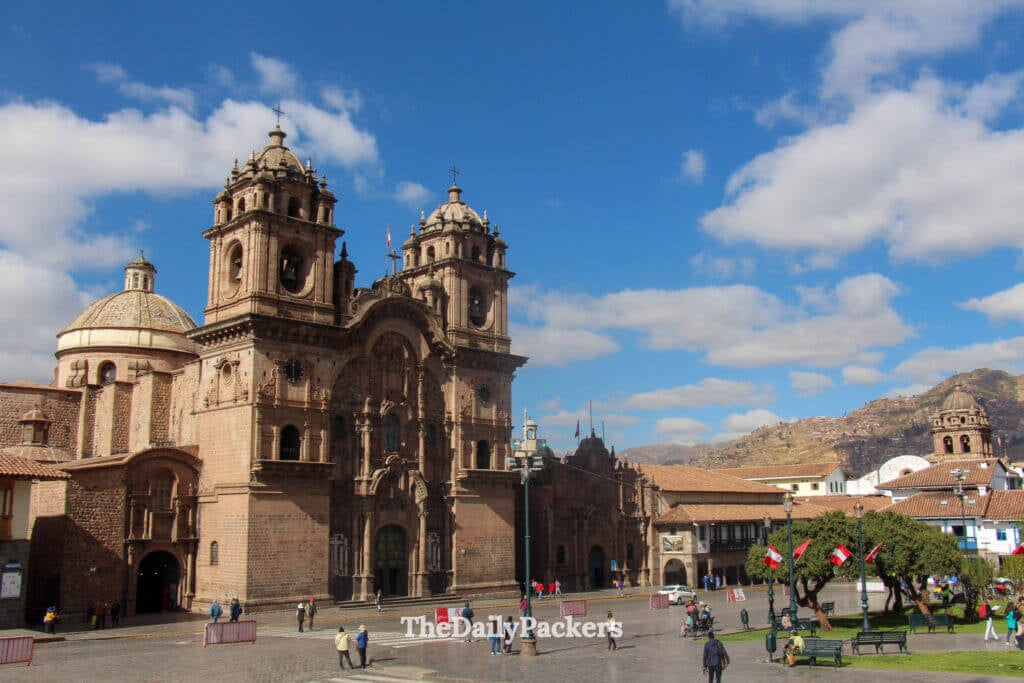
One of the most fascinating pieces is the Last Supper, where Jesus and the apostles are gathered around a traditional Peruvian dish: roasted cuy. It’s these subtle cultural details that make the cathedral much more than a religious monument — it’s a reflection of how two cultures met, adapted, and shaped something new.
Even if churches aren’t usually your thing, this one is worth slowing down for. It tells you a lot about Cusco before you even head to the ruins.

Wander Around Plaza San Francisco and Its Convent
Just a short walk from the busy center, Plaza San Francisco feels like stepping into a quieter, more local side of Cusco. The square is wide, open, and usually less crowded than Plaza de Armas, making it a good place to pause and settle into the rhythm of the city.

Right beside it stands the San Francisco Convent, known for its impressive library filled with centuries-old books and its collection of religious art. The atmosphere here is calmer and more contemplative than in the main square, and it gives you a deeper glimpse into the colonial history of the city.
If you enjoy photographing daily life or simply observing how locals move through their day, this plaza is a great stop before diving back into the more touristic streets.

Here are all your accommodation options in Cusco
Stroll the Inca Streets
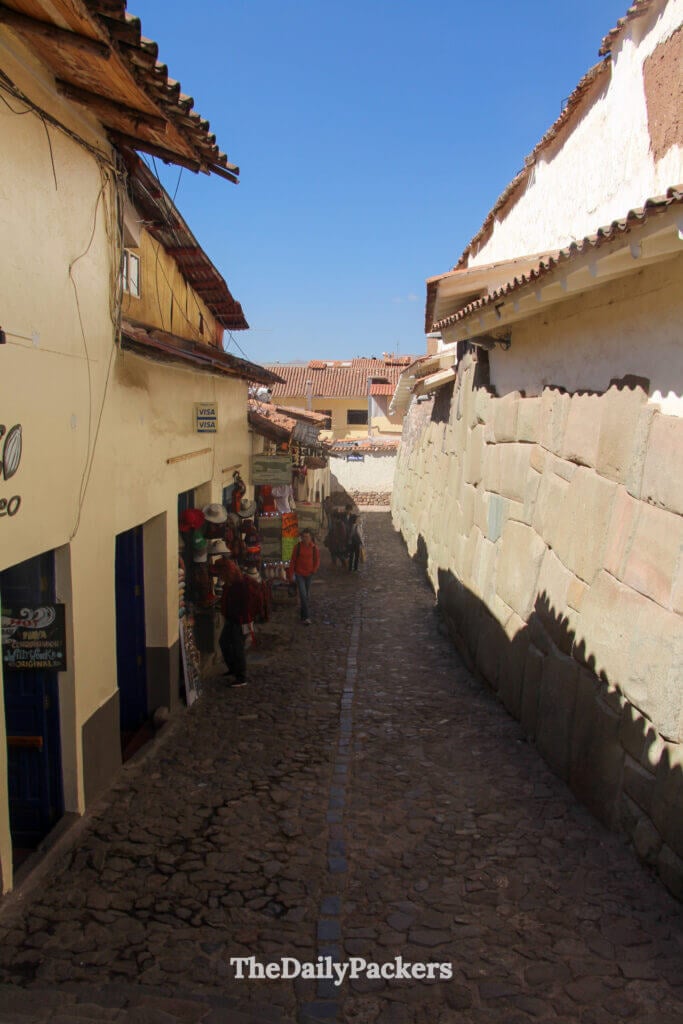
Cusco is one of the few places where you can still walk along original Inca streets, and it’s one of the most memorable parts of exploring the city. The stone walls here are more than architecture — they’re engineering masterpieces carved with absolute precision, fitted together without mortar, and still standing strong after centuries of earthquakes.

Hatunrumiyoc is the most famous example, home to the legendary twelve-angled stone. But don’t stop there — many smaller streets around San Blas and the historic center have the same craftsmanship. Walk slowly, look closely at the stones, and you’ll start noticing all the details: the shapes, the curves, the slight inward tilt designed to resist earthquakes.
It’s one thing to read about Inca engineering, but seeing these walls up close is what makes you appreciate just how advanced their techniques really were.

Tip: We use the DJI Action 4 to film our vlogs — compact, durable, and perfect for capturing every adventure.
Explore Plaza San Blas
Plaza San Blas sits in the heart of Cusco’s bohemian district, and it’s one of those places where you instantly feel the change in atmosphere. The square itself is small, bordered by white adobe houses and narrow cobblestone streets that twist upward toward viewpoints and artisan workshops.
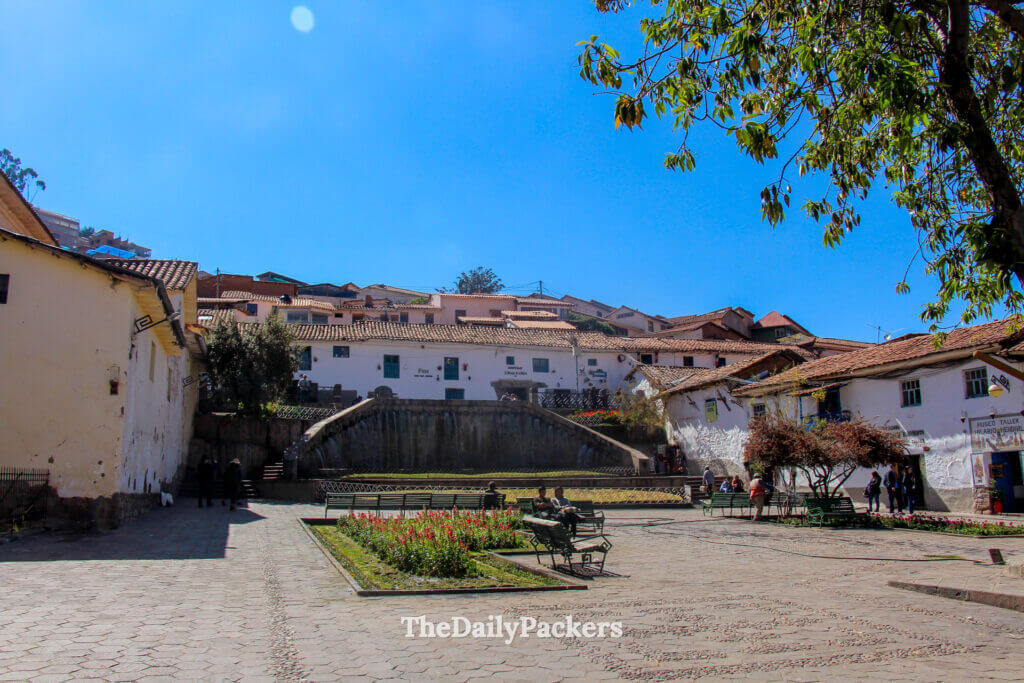
This neighbourhood has a slower, creative energy — painters, musicians, and craftspeople often set up around the square, and the little cafés nearby are perfect for a break between visits. If you enjoy browsing boutique shops, San Blas is full of handmade textiles, jewellery, ceramics, and alpaca wool pieces.


Tip: Now, that we travel with baby Milo, we always bring this Babybjorn baby carrier with us.
Step Inside the San Blas Church
Right next to the plaza, the San Blas Church looks modest from the outside, but don’t let that fool you — the interior holds one of Cusco’s finest artistic treasures. The carved wooden pulpit, created from a single massive piece of wood, is considered one of the most impressive examples of colonial religious art in Peru. The level of detail is extraordinary, especially when you remember it was entirely hand-carved.
The church itself is peaceful, dimly lit, and a good place to pause if you’ve been climbing the steep streets of San Blas. It’s small, intimate, and gives you a sense of how colonial architecture blended with Andean influences in this part of the city.

Experience Mercado San Blas
Mercado San Blas is a small, local market that feels worlds away from the busier tourist streets. It’s the kind of place where you’ll see women selling fresh fruit, locals picking up vegetables for the day, and a row of smoothie stands that are impossible to resist.

If you want a real taste of Cusco’s daily rhythm, this is where you’ll find it. The smoothies are huge, inexpensive, and incredibly fresh — definitely enough for two people. We shared a lucuma smoothie here, and it kept us full for hours.
You can also grab simple meals, buy snacks for your day trips, or just enjoy watching everyday life unfold around you. It’s a perfect stop when you want something authentic without going far from the historic center.

Tip: We use the DJI Action 4 to film our vlogs — compact, durable, and perfect for capturing every adventure.
Observe Quechua Daily Life
One of the most beautiful things about Cusco is how present Quechua culture remains in everyday life. As you walk through the city, you’ll often see women in traditional clothing carrying woven blankets, selling fruit, or walking with alpacas. Families gather in the plazas, children play in the market aisles, and street vendors prepare snacks the same way they’ve done for generations.

This isn’t a staged experience — it’s daily life, and observing it respectfully gives you a much deeper appreciation of the region. If someone invites you to take a photo with their alpaca, do remember that this is their livelihood, and tipping a few soles is normal practice.
Watching these small interactions while you explore Cusco brings the culture to life in a way museums never could.

Here are all your accommodation options in Cusco
Shop for Souvenirs in Local Boutiques
Cusco is one of the best places in Peru to shop for quality handmade goods, especially around the San Blas district and the small streets branching off the historic center. You’ll find everything from alpaca wool clothing and woven textiles to ceramics, jewellery, and home decor pieces made by local artisans.

Take your time comparing shops — not all “alpaca” is the same, and you’ll come across sheep wool, baby alpaca, and blends at very different price points. We spent almost a whole day going from boutique to boutique before choosing a poncho we both loved. The variety can be overwhelming, but that’s also what makes the experience fun.

If you’re looking for meaningful, long-lasting souvenirs rather than mass-produced items, this is the place to find them.

Tip: Now, that we travel with baby Milo, we always bring this Babybjorn baby carrier with us.
Taste Local Chocolate
Cusco is one of Peru’s best cities for chocolate lovers, thanks to the high-quality cacao grown in the surrounding regions. As you wander through the historic center or San Blas, you’ll come across small chocolate boutiques offering handmade bars, truffles, hot chocolate, and even tastings that walk you through the process from bean to bar.

It’s the perfect little break between walks — stepping inside, inhaling the rich cacao smell, and sampling a few pieces before choosing what to take home. Many shops also explain the difference between cacao varieties and roasting techniques, so you actually learn something while enjoying your treat.

Visit the Santo Domingo Convent (Qorikancha)
The Santo Domingo Convent is one of the most fascinating places in Cusco because it shows, in a single building, how two civilizations overlapped. The Dominican order built their convent directly on top of Qorikancha, the most important Inca temple dedicated to the Sun. When you visit, you can clearly see the contrast: the solid, perfectly angled Inca walls forming the base, and the Spanish colonial structure rising above them.
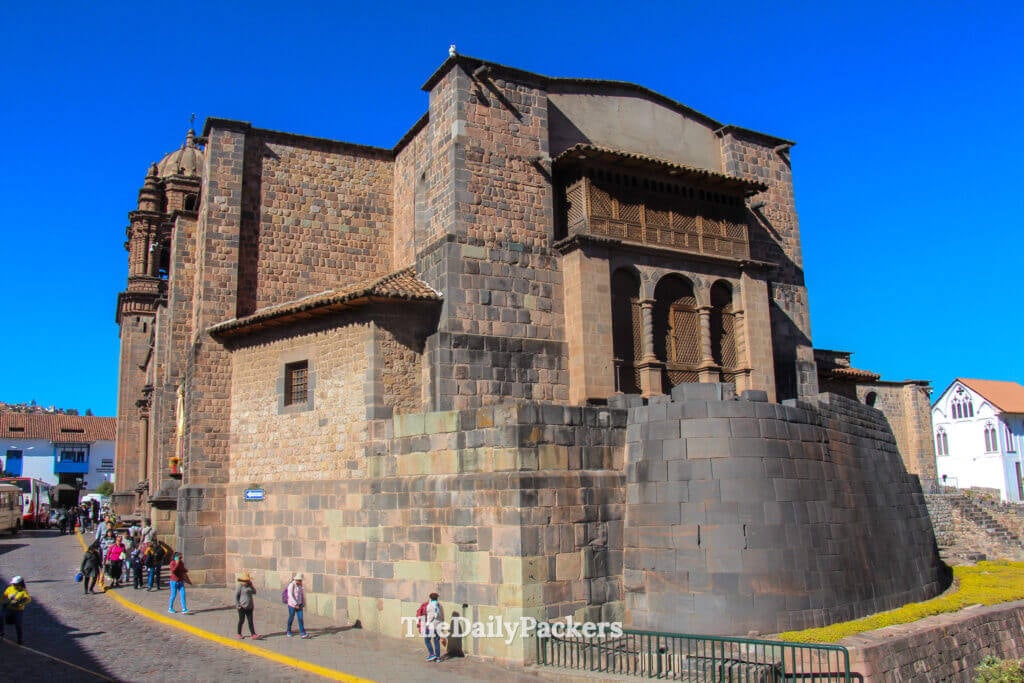
Walking through the interior courtyards feels like stepping between two eras. The Inca stonework is some of the finest in the city — polished blocks that fit together so precisely you can’t slide a sheet of paper between them. Then you turn a corner and suddenly you’re standing inside a Catholic cloister with arches and paintings.

It’s one of the best places in Cusco to understand how Inca engineering and Spanish influence collided, blending into something entirely unique.

Hike Up to Cristo Blanco
Cristo Blanco stands on a hill just above Cusco, and reaching it is half the experience. The walk starts from the San Blas area and quickly turns into a steep climb — the kind where you stop every few minutes, partly to catch your breath and partly to admire the view opening behind you. At 3,400 meters, even a short staircase feels like a workout, so take your time.

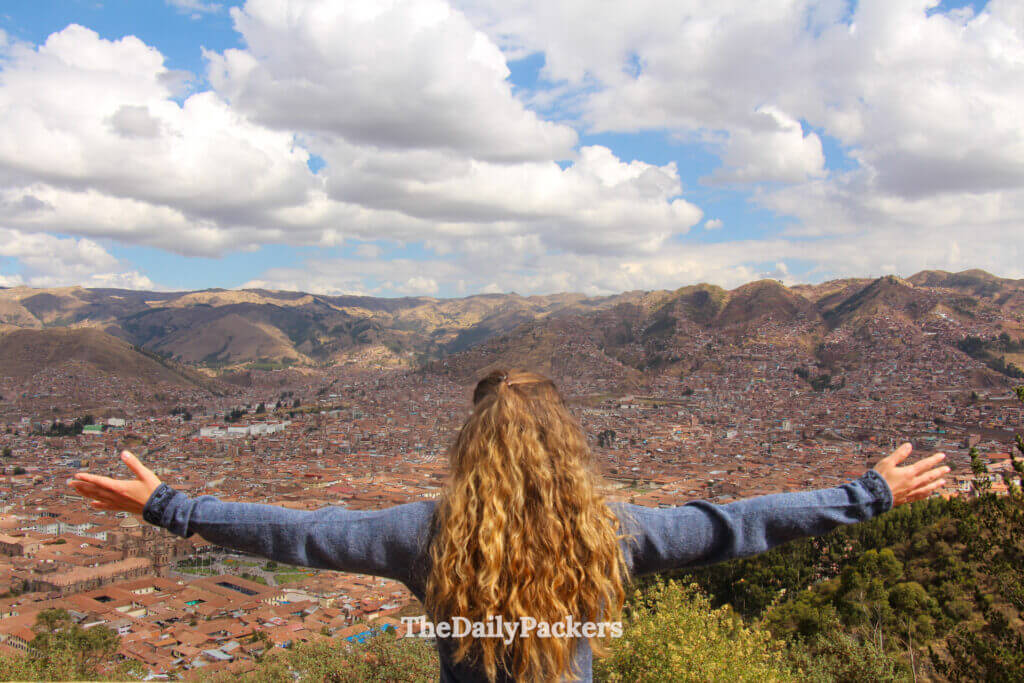
Once you reach the top, the reward is immediate. Cristo Blanco overlooks the entire city, offering one of the best panoramic views of Cusco — the red rooftops, the mountains wrapping around the valley, and the Plaza de Armas sitting quietly in the middle. It’s a simple viewpoint, but the atmosphere is peaceful, and it’s a great place to rest after the climb.

If you’re already planning to continue to Sacsayhuamán, this is the perfect warm-up spot.
Explore Sacsayhuamán
From Cristo Blanco, a short walk brings you to Sacsayhuamán, one of the most impressive Inca sites in all of Peru. The scale of the stonework is the first thing that hits you — enormous boulders, some weighing over 100 tons, carved so precisely that they slot into each other without mortar. Standing in front of these walls, it’s hard not to wonder how the Incas managed to move and shape stones of this size with the tools they had.

The site is spread over three main terraces, each one forming massive zigzagging walls overlooking Cusco. From up here, the views are spectacular, and the wide central meadow adds to the sense of space. If you walk a bit further into the site, you’ll often find alpacas grazing — a charming reminder that this place is very much alive, not just a historical attraction. One of them spat on a couple right next to us, so yes, admire them… but give them a little space.

Sacsayhuamán is more than a fortress. It’s a statement of Inca engineering and a place where major ceremonies once took place. Visiting it after exploring the city gives you a much clearer picture of how Cusco was built and defended.

Here are all your accommodation options in Cusco
Visit Qenko
Qenko is one of the most intriguing archaeological sites just outside Cusco, and it feels very different from Sacsayhuamán. Instead of massive walls, here you’ll find a series of carved rock formations, tunnels, altars, and intricate channels whose exact purpose is still debated. Many believe Qenko was a ceremonial center, possibly used for offerings and rituals linked to the seasons or the sun.

The site is smaller, but the atmosphere is unique. Walking through the carved passages gives you a sense of how the Incas blended nature and architecture — instead of moving stone to build walls, they shaped the rock directly where it stood. From Qenko, you also get a beautiful view over the surrounding hills, making it a peaceful stop before continuing the archaeological circuit.
If you’re doing all four sites in a day, this is usually your second visit after Sacsayhuamán, and it adds a more mystical layer to the experience.

Tip: We use the DJI Action 4 to film our vlogs — compact, durable, and perfect for capturing every adventure.
Explore Puka Pukara
A short ride from Qenko brings you to Puka Pukara, whose name means “Red Fortress” in Quechua — a reference to the stone’s reddish tone at sunset. This site was likely a military outpost that guarded the entrance to Cusco and controlled the routes coming from the Sacred Valley and the Andes beyond.
Puka Pukara is made of terraces, walls, staircases, and wide open spaces that give you a sense of how watchtowers and resting points along the Inca road system were designed. It’s not as monumental as Sacsayhuamán, but it’s an important piece of the puzzle, showing how the Incas protected and organized their empire.
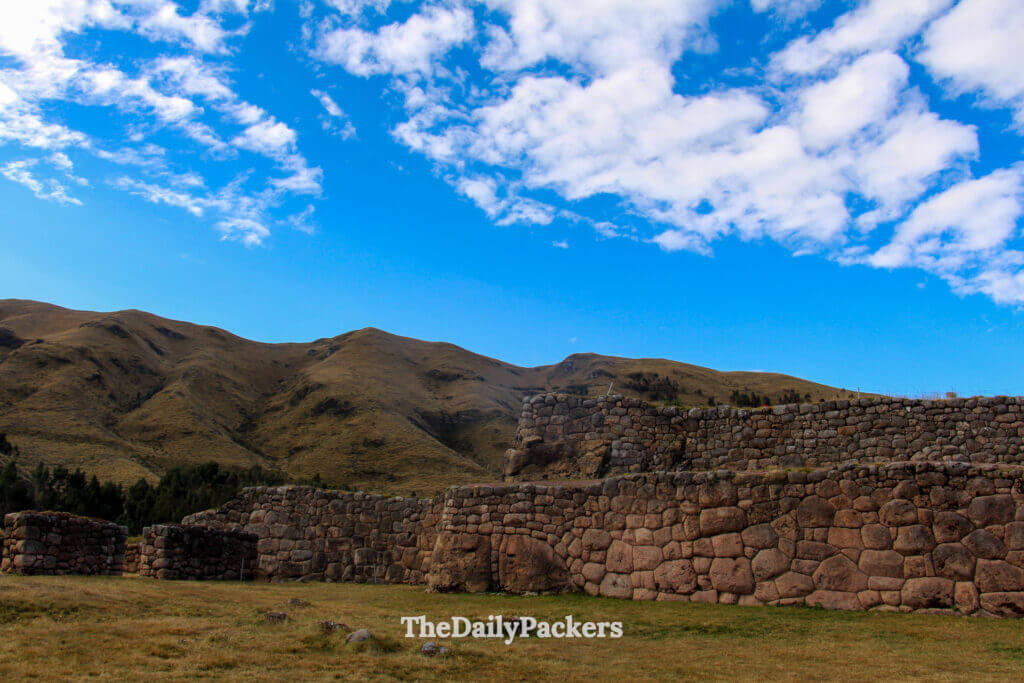
You also get beautiful views of the surrounding landscape, and because it’s often quieter than the larger sites, it’s a nice moment to pause, breathe, and take in the high-altitude scenery.
Most travellers visit Puka Pukara using the small blue-and-white “Huerto” bus, which is exactly what we did — easy, cheap, and straightforward.

Visit Tambomachay
Tambomachay is the final stop on the classic archaeological circuit outside Cusco, and it’s one of the most peaceful. The site is small but beautifully preserved, centered around a series of aqueducts, canals, and cascading water that still flows today. Many believe Tambomachay was a ceremonial site dedicated to water — a sacred element in Andean culture — while others think it may have been a resting place or even a kind of spa for Inca elites.

The stonework here is remarkably precise, especially around the water channels. Standing in front of the main fountain, you can imagine how important this place must have been, both spiritually and practically. The sound of the water, the surrounding hills, and the quiet atmosphere make it an inviting place to slow down before heading back to the city.
From the entrance, you can easily catch the “Huerto” bus back to Cusco, just like we did. It’s a quick ride that drops you near San Blas, where you can continue exploring on foot.

Here are all your accommodation options in Cusco
Take a Yoga Class
Cusco has a surprisingly vibrant yoga scene, especially around the San Blas neighbourhood. After a day of climbing steep streets, exploring ruins at altitude, and walking for hours, a yoga session feels like the perfect reset. Many studios offer drop-in classes, and the atmosphere is always relaxed, friendly, and full of travellers trying to recover from the long days of sightseeing.
We ended one of our days with an evening class before heading out for dinner, and it made a huge difference — not only for the legs, but also for the altitude. Slow breathing and stretching help your body adjust more easily to Cusco’s 3,400 meters, and it’s a great way to end the day feeling grounded rather than exhausted.
If you’re staying in San Blas, you’ll probably find a studio within a few minutes’ walk. It’s an easy activity to fit between visits and meals, and it gives you a quiet moment in a city full of energy.

Tip: We use the DJI Action 4 to film our vlogs — compact, durable, and perfect for capturing every adventure.
Explore the Sacred Valley
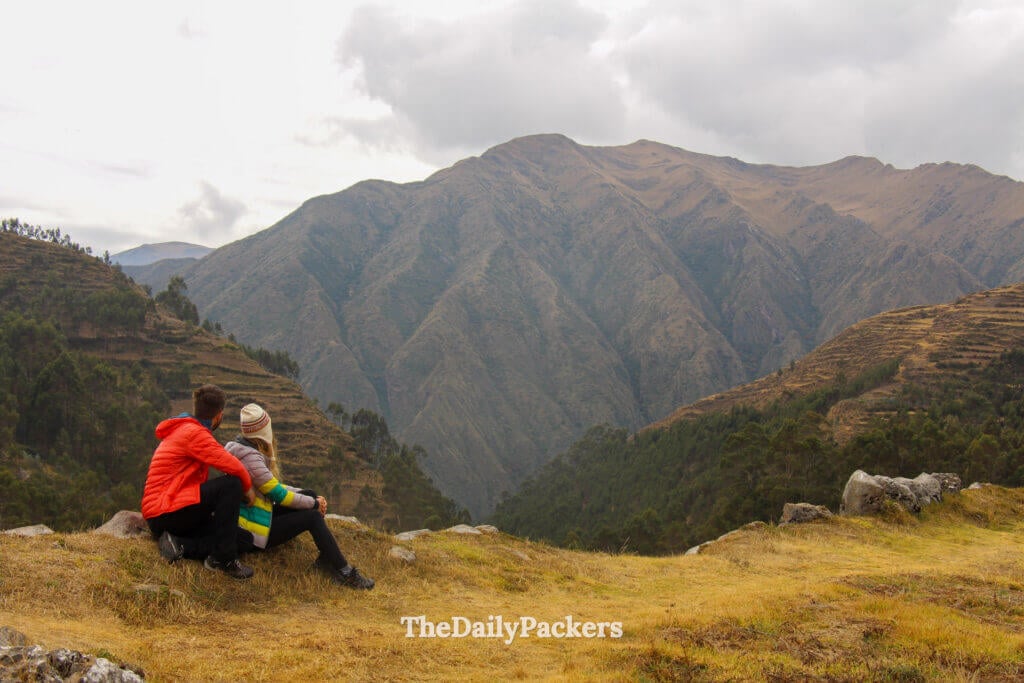
If you have an extra day in Cusco, the Sacred Valley is one of the most rewarding places to explore. Stretching between Pisac and Ollantaytambo, this region was once the agricultural and spiritual heart of the Inca Empire. The landscape alone is worth the trip — terraced hillsides, wide valleys carved by the Urubamba River, and small villages where life still follows Andean traditions.
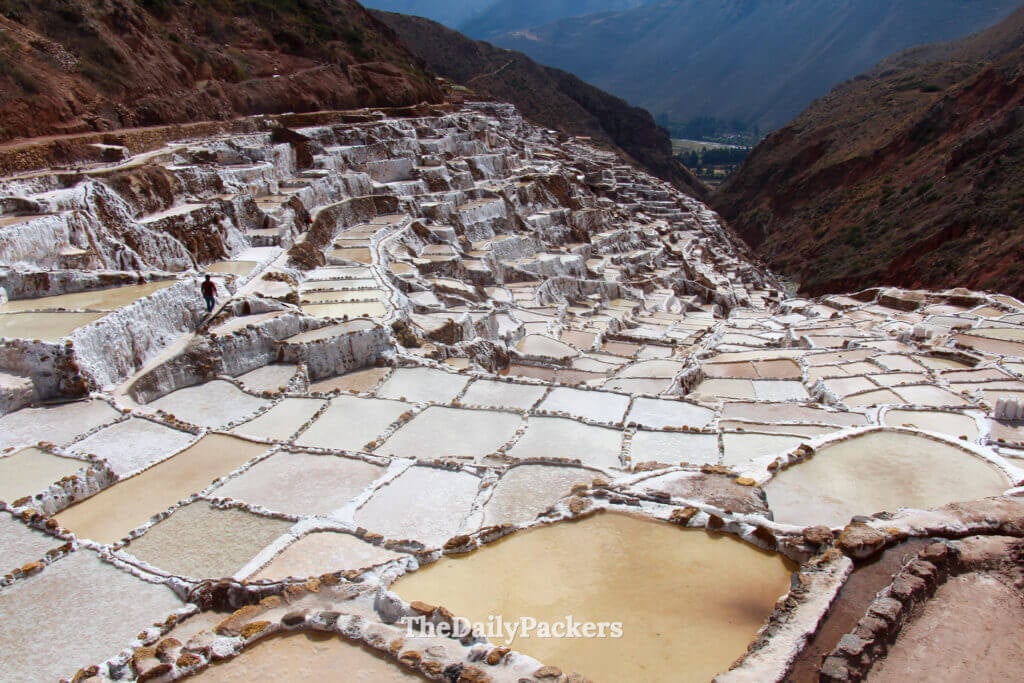
Each stop adds a different layer to the story. Pisac has impressive hillside ruins and one of the most famous artisanal markets in Peru. Moray surprises everyone with its circular agricultural terraces, which look like something straight out of an ancient amphitheater. The Maras Salt Mines show how Andean communities have harvested salt for centuries using thousands of small evaporation pools. And Ollantaytambo, with its fortress rising over the village, is the best-preserved example of an Inca town still in use today.

You can visit the Sacred Valley on your way to Machu Picchu or as a full-day trip from Cusco. Either way, it gives you a deeper understanding of the geography, engineering, and daily life that shaped the Inca world.

Read: Cusco to Machu Picchu: Best things to do in Sacred Valley, Peru, in 1-day
Visit Machu Picchu
No trip to Cusco feels complete without seeing Machu Picchu. Even if you’ve seen the photos a hundred times, nothing prepares you for that first moment when the citadel appears between the mountains. Perched high above the cloud forest, the site feels both grand and intimate — massive stone terraces and temples surrounded by silence, mist, and steep green peaks rising in every direction.

Getting there is part of the adventure. You’ll either take the train through the Sacred Valley to Aguas Calientes or hike one of the famous trails. Once inside the site, take your time. Follow the upper terraces for the classic view, walk along the agricultural slopes, and explore the temples and narrow passageways where the stones fit together so perfectly it’s hard to believe they were carved by hand.
Whether you visit at sunrise, midday, or late afternoon, Machu Picchu has a special atmosphere that stays with you long after you leave. It’s the kind of place that makes every step of the journey worth it.

Read: Machu Picchu: Everything you need to know about this wonder of the world
Trek to Rainbow Mountain (Vinicunca)
Rainbow Mountain is one of those places that looks almost unreal — a natural ridge painted in stripes of red, yellow, green, and lavender thanks to the mineral-rich soil of the Andes. Located at over 5,000 meters above sea level, it’s a challenging but incredibly rewarding day trip from Cusco.
The adventure starts long before you reach the viewpoint. The drive takes you through quiet Andean villages, herds of alpacas grazing freely, and wide open valleys surrounded by glacier-covered peaks. The hike itself isn’t technically difficult, but the altitude makes every step slower and more intentional. Take your time, drink plenty of water, and enjoy the scenery along the way.
Once you reach the top, you understand why Rainbow Mountain became one of Peru’s most iconic sights. The colors are surprisingly vivid, the wind is crisp, and the panoramic views stretch endlessly in every direction. If you have the energy, continue toward the Red Valley — it’s just as spectacular, with rolling crimson hills that look like they belong on another planet.
If you only have time for one challenging day hike from Cusco, Rainbow Mountain is a strong contender.

Hike to Humantay Lake
Humantay Lake is one of the most breathtaking alpine lakes in Peru — a turquoise mirror tucked beneath the dramatic Humantay and Salkantay mountains. It’s a popular day trip from Cusco and an unforgettable introduction to the Andean landscapes you’ll see on the Salkantay Trek.
The journey starts early in the morning with a drive through the Sacred Valley toward Mollepata, where you stop for breakfast before continuing to the trailhead in Soraypampa. From there, the hike begins gently but quickly turns into a steady climb. The altitude is the biggest challenge here, so pace yourself and take breaks whenever needed.
As you get closer to the lake, the turquoise color suddenly appears between the rocks — a moment that truly feels magical. Once you reach the top, you can walk around part of the lake, sit on the rocks, and take in the scenery while the glacier towers above you. The contrast between the crystal-blue water and the rugged mountain backdrop is unforgettable.
If you’re lucky, you may even witness small avalanches of snow falling from the cliffs into the lake — a reminder of how alive this landscape is. Despite the effort required, Humantay Lake is absolutely worth it and remains one of the most spectacular day trips you can take from Cusco.

Ride Through the Red Valley (Often Combined With Rainbow Mountain)
If you’re already planning to hike Rainbow Mountain, add a detour to the Red Valley — it’s one of the most underrated and surreal landscapes in the Cusco region. While Rainbow Mountain gets the fame, the Red Valley often ends up being people’s favorite part of the day.
The extension begins just after the main viewpoint of Vinicunca. Instead of heading straight back down, you follow a quieter trail that cuts into a deep valley painted entirely in shades of rust, crimson, and terracotta. The color is natural — the iron-rich soil gives the mountains their intense red tones.
The best part? Almost no crowds. While Rainbow Mountain can feel busy, the Red Valley is peaceful, wide open, and incredibly scenic. You walk along ridgelines with 360° views of Andean peaks, glacier caps in the distance, and rolling red hills that genuinely look like another planet.
The trail does involve some steep sections, and the altitude (above 5,000m) makes everything a bit harder, but the experience is worth every slow, thoughtful step. If you’re comfortable with high-altitude hiking and want to see something truly unique, don’t skip this add-on. Many travelers say the Red Valley ended up being the highlight of their entire trip.
Read: Cusco Itinerary: How to spend 6 magical days in Cusco, Peru and the sacred valley
2-Day Cusco Itinerary
Day 1 – Explore Cusco’s Historic Heart:
- Start in the Historic Center, wandering the narrow Inca streets until you reach the iconic Plaza de Armas. Visit the Cathedral and take time to sit in one of the cafés overlooking the square — it’s the perfect way to soak in the atmosphere.
- Walk up to Plaza San Francisco, admire the convent from outside, and continue exploring the charming streets on your way to Plaza San Blas.
- Step inside San Blas Church, then head to Mercado San Blas for fresh juice or a smoothie. This is also a great spot to observe Quechua daily life and the local food culture.
- Make your way to Santo Domingo Convent (Qoricancha) and explore the mix of Inca and colonial architecture. Afterwards, spend time wandering the artisan boutiques of San Blas — perfect for alpaca clothing, crafts, and local chocolate.
- Enjoy a relaxing dinner and, if you feel like it, join a yoga class in the San Blas neighborhood to end your day in a calm, grounded way.
Day 2 – Inca Ruins Above Cusco
- Begin the day with the steep walk up to Cristo Blanco, then continue to Sacsayhuamán, one of the most impressive Inca fortresses in the region. Take your time — the altitude makes everything slower.
- Walk or take a colectivo to Qenko, explore the carved stone passages, then continue toward Puka Pukara, an ancient military outpost. End the archaeological loop at Tombomachay, known for its sacred water system.
- Return to Cusco and enjoy a slow afternoon coffee in San Blas. This is also your chance to shop for souvenirs, like alpaca wool ponchos or local art.
- Have dinner in the historic center or San Blas. If you still have energy, take a gentle walk through the illuminated streets — Cusco at night has a special charm.
Add-On Options if You Have More Time or want to use Cusco as a base:
- Sacred Valley (Ollantaytambo, Pisac, Maras, Moray)
- Machu Picchu (full-day or multi-day trip)
- Rainbow Mountain or Red Valley
- Humantay Lake
About the authors
We are Alex and Tina, a French-Serbian couple who met in China back in 2014. We spent three incredible years there before making France our home. Our shared passion for travel has been the heartbeat of our relationship for over 12 years, taking us across 44 countries and counting.
We launched TheDailyPackers in 2019 as a way to document our adventures. In 2026, we reached a major milestone by officially turning our blog into our full-time job. While we are still growing toward financial independence through this platform, every article we write is fueled by our mission to make your voyages easier through in-depth guides, honest advice, and the lessons we’ve learned from our own mistakes.
Our journey has not been without its storms. In 2023, our world changed forever when our first son, Poppy, was stillborn on November 25th. It was, and remains, the hardest chapter of our lives. In 2025, we were blessed with our second little boy, Milo. He has since joined our traveling tribe, and you’ll be seeing him—and the reality of traveling with a little one-on the blog more and more.
We hope to inspire you to explore the world with curiosity and resilience. Thank you for being part of our story.
You may also like those related posts
Hanoi to SaPa: Luxury Van Transfer in 6h
W-Trek Day 3: From Paine Grande to Frances
Santa Teresa Park & Laguna Negra 1-day Trip Guide, Uruguay
How I got Deported From China: Unique 2016 Travel Experience
Riquewihr Christmas Market: The Fairytale Village of Alsace
18 best things to do in Bariloche, Argentina, in 5 days
14 Best things to do in Punta Del Diablo, Uruguay, in 3 days
16 best things to do in Bled, Slovenia, in 3 days or more
Pssst, did you know that…
If you purchase something through our links, we earn a small fee. However, you still pay the same. Win-win! And one day we may get to be full-time travel bloggers =)
Find Hotels with Booking.com
Do Yoga with KVY
Buy us a Coffee
Rent a car with DiscoverCars
Find Attractions with GetYourGuide
Find Flights with Expedia
Buy an eSIM with Airalo
Get insured with World Nomads
Get ready with Amazon.com