
Why You’ll Love Visiting El Chaltén
If you love the outdoors, you are going to be obsessed with El Chaltén. It is this tiny, dusty village right in the middle of Los Glaciares National Park that feels like the edge of the world. We honestly loved the “mountain-town” vibe where everyone is just there to hike and hang out. One of the best things is that you don’t even need a car, you just walk to the end of the street, and the trail begins.
We originally planned to stay for only three nights in El Chaltén, but that was a mistake. We really wish we had stayed longer, maybe a week, just to take it easy, do some more hiking and soak in the views without rushing the 2 big hikes. The scenery here is actually what gave us the dream to go and do the Tour du Mont Blanc later on.
Whether you want to push yourself on a 10-hour hike or just sit in a cozy bar staring at the peaks of Fitz Roy and Cerro Torre with a local beer, El Chaltén is special. It’s windy and rugged, but it’s easily one of the places we dream about going back to the most.


Best Things to Do in El Chaltén
Mirador al Chaltén
This isn’t a hike you have to plan for once you arrive; it’s actually your first “welcome” to El Chaltén. As you are driving or taking the bus toward El Chaltén, you’ll see the road stretch out perfectly toward the mountains.
- Distance: N/A (Roadside stop)
- Timing: 5–10 minutes
- Key Information: Keep your camera ready! Most buses and shuttles will slow down or even stop for a few minutes here so you can get that classic photo of the long, straight road leading directly into the peaks of Fitz Roy and Cerro Torre. It’s the best way to start the trip.

Mirador Río de las Vueltas
If you choose to do the Laguna de los Tres hike standard route, this will be one of your first rewarding views.
- Distance: 2 km (1.2 miles) round-trip from the trailhead in El Chaltén.
- Timing: About 1 hour total.
- Key Information: The trail starts with a bit of an incline, but after about 30 minutes, you reach this viewpoint. You get a fantastic look at the river snaking through the valley below. It can be incredibly windy here, so hold onto your hat! It’s a great “warm-up” for your legs.

Mirador del Fitz Roy
If you keep pushing past the river viewpoint, you’ll eventually reach a fork in the trail. To the left is Laguna Capri, and to the right is the Mirador del Fitz Roy.
- Distance: 8 km (5 miles) round-trip from El Chaltén.
- Timing: 3 to 4 hours total.
- Key Information: This is usually the first place you’ll see the “full” silhouette of Mount Fitz Roy. There is a large sign here that labels all the different peaks, so you know exactly what you’re looking at. If you’re not feeling up for the full trek to the lagoon, this is a perfect turnaround point because the view is already spectacular.


Laguna de los Tres (Mount Fitz Roy)
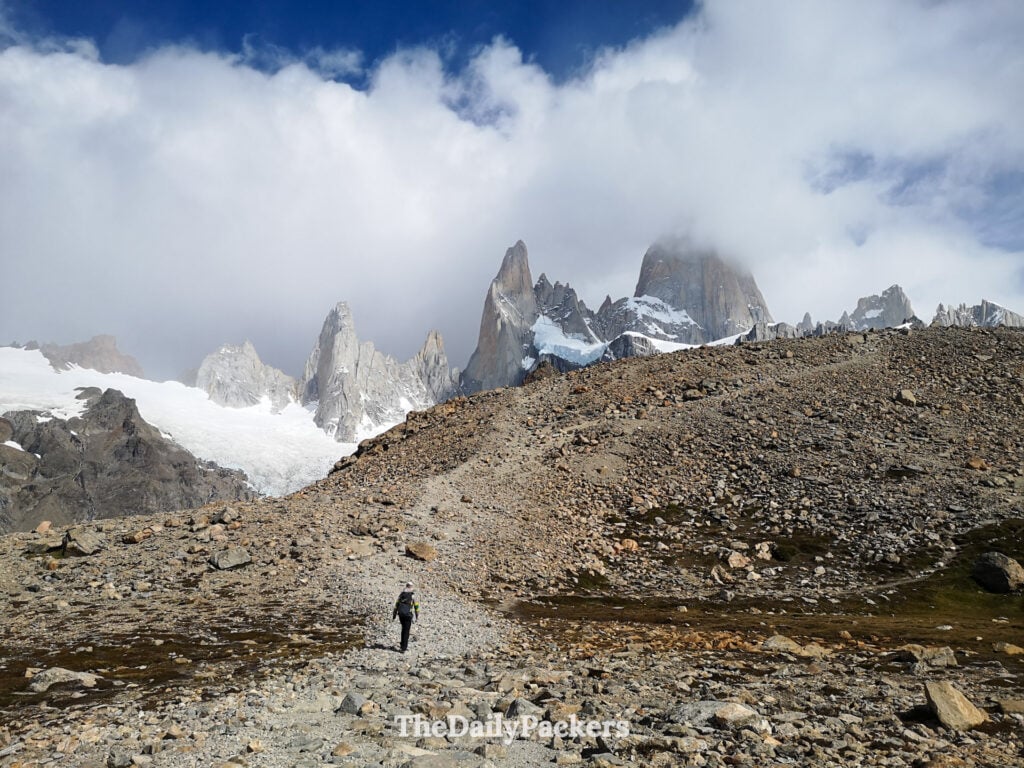
This is the “crown jewel” of El Chaltén, one of the best treks in El Chaltén as well as in the world. It is the most famous trek in the area, leading you directly to the base of the iconic granite spires of Mount Fitz Roy. It’s a long, challenging day, but standing at the base of that turquoise lagoon is a life-changing experience.
- Distance: 22.5 km (~14 miles) round-trip from El Chaltén.
- Timing: 8 to 10 hours total.
- Key Information: The hike is relatively flat through the valley until you reach the final kilometer. Here, you’ll climb about 400 meters in just 1 km over steep, rocky terrain. This section alone can take over an hour.

Glacier Piedras Blancas (way to Laguna de los Tres)
If you want to see a hanging glacier without the intense climb of Laguna de los Tres, this is a fantastic addition. Most people visit this viewpoint as a side trip when returning from Fitz Roy or as a dedicated hike from the El Pilar trailhead.
- Distance: Adds about 4 km (2.5 miles) to your total hike if done as a side trip from the main trail.
- Timing: Roughly 1 hour round-trip from the Campamento Poincenot area.
- Key Information: Unlike the “Big Two” hikes, where you end at a lake, this viewpoint allows you to see the glacier cascading down the side of the mountain. If you start your day at the El Pilar trailhead (taking a shuttle from El Chaltén), you will actually pass the Piedras Blancas viewpoint about 2 hours into your hike toward Fitz Roy. It’s a great way to see more of the park without repeating the same path twice.

Mirador Margarita
This is the first viewpoint you’ll hit after leaving El Chaltén towards Laguna Torre. It’s a nice reward for that initial uphill stretch and gives you a reason to stop and catch your breath.
- Distance: 2 km (1.2 miles) round-trip from El Chaltén.
- Timing: About 45 minutes to 1 hour total.
- Key Information: From here, you get a double view. On one side, you can see the Margarita waterfall tucked into the trees, and if you look across the valley, you’ll get your first proper glimpse of the Fitz Roy and Cerro Torre peaks together. It’s a great spot for a quick photo before the trail levels out.

Mirador Emilio Daniel
This viewpoint is a bit of a “hidden” gem along the Torre trail. Most hikers pass it without realizing it has a name, but it offers one of the most serene perspectives of the valley.
- Distance: Located approximately 4.5 km (2.8 miles) from El Chaltén.
- Timing: About 1.5 to 2 hours into the hike.
- Key Information: This viewpoint is situated between the Cerro Torre viewpoint and the lagoon. It is named after a local park ranger and offers a unique, lower-angle view of the Fitz Roy River valley. It’s a perfect spot to take a quick break if you want to avoid the windier peaks of the main viewpoints.

Mirador Cerro Torre
If you keep going for another hour or so past Mirador Margarita, you’ll reach this classic viewpoint. This is where the landscape really starts to open up.
- Distance: 8 km (5 miles) round-trip from El Chaltén.
- Timing: 3 hours total.
- Key Information: This is widely considered the best panoramic view of the Torre valley without doing the full 18km trek. You’ll see the Fitz Roy river flowing below and the jagged spire of Cerro Torre straight ahead. If the weather is clear, it’s one of the most iconic views in Patagonia.


Psst, you can join Tina’s Yoga Studio and get access to hundreds of Yoga, Meditation, and Well-being videos.
Laguna Torre
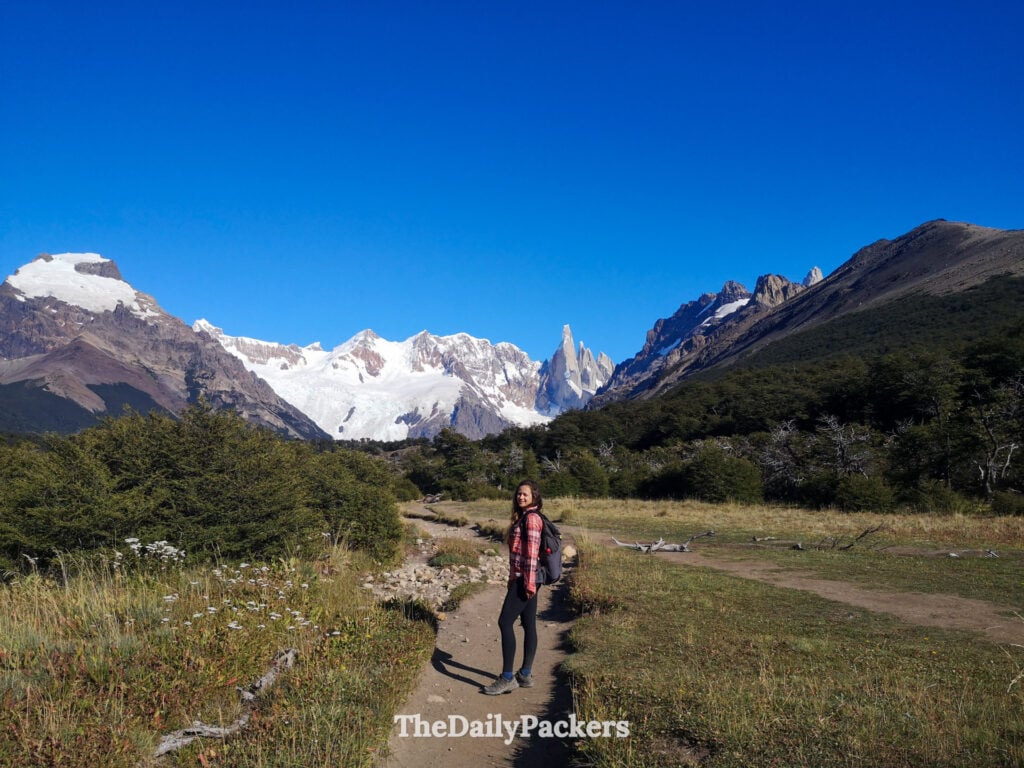
This is the ultimate goal of the trail, one of the other big treks in El Chalten. The lagoon sits right at the base of the massive Cerro Torre mountain range, and the atmosphere here is completely different from the Fitz Roy trek.
- Distance: 18 km (11 miles) round-trip from El Chaltén.
- Timing: 6 to 8 hours total.
- Key Information: You’ll be greeted by a glacial lake often filled with floating icebergs that have broken off from the Grande Glacier. Unlike Fitz Roy, this hike is relatively flat after the first 2 km, making it a “moderate” trek that is more about distance than steep climbing.

Mirador Maestri
If you have made it all the way to Laguna Torre and still have some gas in the tank, you absolutely have to continue to Mirador Maestri. Most people stop at the shore of the lake, but this extra effort gives you the best perspective of the entire glacial system.
- Distance: Adds 4 km (2.5 miles) round-trip from Laguna Torre (Total 22 km / 13.6 miles from town).
- Timing: Adds about 1 to 1.5 hours to your day.
- Key Information: From the right side of the lagoon, the trail climbs up along the lateral moraine (the ridge of rocks left by the glacier). It is a bit rocky and can be very windy, but once you reach the end, you are looking directly down onto the Glacier Grande. It’s the best place to truly appreciate the scale of the ice.


Mirador de los Cóndores
We didn’t have the time to do the following hikes. As we said, we were missing a few nights so we focused on the big ones. But those sound like great treks in El Chalten as well.
This is one of the best “bang-for-your-buck” hikes in El Chaltén. It starts right from the National Park Visitor Center (Guardaparque) at the entrance of the town, making it the perfect activity for your first afternoon or a recovery day.
- Distance: 2.5 km (1.5 miles) round-trip from the Visitor Center in El Chaltén.
- Timing: 1 to 1.5 hours total.
- Key Information: It’s a short, steady climb that leads to a natural balcony overlooking the entire village. As the name suggests, this is the best spot to see Andean Condors. They love the thermal winds here, and we often saw them gliding incredibly close to the viewpoint. It is also one of our favorite spots to watch the sunset over the Fitz Roy range.
Mirador de las Águilas
This trail usually goes hand-in-hand with the Condors viewpoint. Once you reach the first balcony, you’ll see a fork in the path—taking the one to the right leads you here.
- Distance: 7,2 km (3 miles) round-trip from the Visitor Center in El Chaltén (combined with Mirador de los Cóndores).
- Timing: About 2.5 to 3 hours for the full loop.
- Key Information: While the Condor’s viewpoint looks over the town, Mirador de las Águilas faces the opposite direction. You get a massive, sweeping view of Lake Viedma and the vast Patagonian steppe. It feels much more expansive and “empty” in a beautiful way. Because most people just stop at the first viewpoint, this one is usually much quieter.
Mirador Paredon
This is a bit of a local secret and a great spot if you want to get away from the main hiking crowds. It’s located near the river and offers a completely different perspective of the tall rock walls surrounding the valley.
- Distance: 7,5 km (1.8 miles) round-trip from the trailhead in El Chaltén.
- Timing: About 3 hours.
- Key Information: The “Paredon” is a massive vertical rock face that is a favorite for local climbers. The trail to the viewpoint is relatively easy and follows the river. It’s a great spot to bring a mate or a coffee and just sit by the water while watching the climbers tackle the granite walls above you.
Chorrillo del Salto
This is probably the easiest “hike” in El Chaltén, making it a perfect choice for your arrival day or if your legs are feeling heavy after the big treks. It’s a flat, well-maintained path that leads to a beautiful 20-meter high waterfall.
- Distance: 7 km (4.3 miles) round-trip from the El Chaltén center.
- Timing: 2 to 3 hours total.
- Key Information: The trail is mostly shielded from the wind by trees, which is a rare treat in Patagonia! If you don’t feel like walking from town, there is a small parking lot closer to the falls that reduces the walk to just 1 km. It’s a peaceful spot to sit and enjoy the sound of the water before heading back for a craft beer in town
Laguna Capri
If you are doing the full trek to Fitz Roy, you’ll pass right by this lagoon. However, it’s also a fantastic destination on its own if you want a medium-length hike with a massive payoff.
- Distance: 8 km (5 miles) round-trip from El Chaltén.
- Timing: 3 to 4 hours total.
- Key Information: This is often where hikers get their first “wow” moment. The lagoon is surrounded by forest, and on a calm day, you can see the reflection of Mount Fitz Roy perfectly in the blue water. There’s a campsite nearby, so the area has a really cool, adventurous energy. It’s the perfect place to have your packed lunch before deciding whether to push on to Laguna de los Tres or head back to the village.
The Perfect Itinerary: How to Spend Your Days
Deciding how to spend your time in El Chaltén really depends on the weather and how your legs are feeling. We recommend staying at least 3 to 4 nights, but if you have 5, you’ll be able to see everything at a much more relaxed pace.
Day 1: Arrival & The Warm-up
Once you drop your bags at your hostel in El Chaltén, head straight to the National Park Visitor Center at the entrance of town. From there, hike up to Mirador de los Cóndores and Mirador de las Águilas. It’s the perfect way to get your bearings, see the town from above, and hopefully spot some condors. In the evening, grab a local craft beer and prep your lunch for tomorrow.

Day 2: The Big One (Fitz Roy)
Since you’ll have the most energy today, tackle Laguna de los Tres. We suggest taking the morning shuttle to the El Pilar trailhead. This way, you’ll see Glacier Piedras Blancas on the way up, reach the lagoon for lunch, and then walk back into town via Laguna Capri. It’s a long day (8-10 hours), so start early!
Day 3: Recovery & Waterfalls
Your legs will likely be sore today. Keep it easy with a walk to Chorrillo del Salto. It’s mostly flat and very relaxing. If you still have some energy in the afternoon, wander over to Mirador Paredon to watch the climbers or just hang out by the river.
Day 4: The Towering Spires
Time for your second big trek: Laguna Torre. It’s a long distance, but much flatter than the Fitz Roy hike. Make sure to push on to Mirador Maestri for that incredible view of the glacier. If you are only staying 3 days, this will be your final big adventure before heading out.

Day 5: Taking it Easy
If you have a fifth day in El Chaltén, use it for anything the wind or rain might have prevented you from doing earlier. This is the day to visit any viewpoints you missed, like Mirador Río de las Vueltas, or simply spend the day at a local bakery “taking it easy”—which is exactly what we dream of doing when we go back!

The Best Time to Visit: Weather & Local Events
Deciding when to go to hit the best hikes in El Chaltén is a bit of a balancing act between having the best weather and avoiding the biggest crowds. Because it’s so far south, the seasons are the opposite of what you might be used to in the Northern Hemisphere.
Spring (September – November): This is a beautiful time to visit as the flowers start to bloom and the village wakes up from winter. You’ll find much quieter trails, though some higher paths might still be blocked by leftover snow. Temperatures usually hover between 5°C and 15°C (41°F to 59°F). It’s a great budget-friendly time to visit, but you should be ready for those unpredictable spring showers.
Summer (December – February): This is the peak season for a reason. You get the longest daylight hours—sometimes sunset is as late as 10 PM—and the warmest weather for trekking, with temperatures between 10°C and 25°C (50°F to 77°F). However, it is also the windiest time of year, and the town will be completely full, so you really need to book your stay months in advance.
Autumn (March – May): This may be the most photogenic time to be here. The forests turn incredible shades of bright red and orange, and the winds start to die down. While it’s cooler, with temperatures between 5°C and 18°C (41°F to 64°F), the colors make every hike feel like a painting. Aim for late March to mid-April if you want to catch the peak of the fall colors.
Winter (June – August): Most of the town actually shuts down in winter. Many hotels and restaurants close their doors and the trails are often covered in deep snow. It’s only for the very experienced or those who want total solitude in a frozen landscape. Temperatures can drop from 10°C down to -5°C (50°F to 23°F). If you go, check ahead to see which buses are actually running.

How to Get to El Chaltén
The Flying Route (What we did)
Most travelers start by flying into El Calafate International Airport (FTE). We actually flew in from Bariloche, which is a quick and easy way to jump between the Lake District and the heart of the glaciers. From El Calafate, you have about 200 km (125 miles) of road left to cover. The drive takes roughly 3 hours along fully paved and incredibly scenic routes.
The “Lengas” Shuttle: This was our choice. They offer a “door-to-door” service where they pick you up directly from the airport and drop you off right at your hotel in El Chaltén. It saves a lot of hassle with luggage.
By Bus: Companies like Chaltén Travel or Cal-Tur run multiple buses daily. Many stop at the airport, so you don’t necessarily have to go into El Calafate town first.

The Adventurous Alternative: The Carretera Austral
If you are looking for a true “once-in-a-lifetime” journey and have more time, you can do a road trip from Bariloche to El Chaltén along the Carretera Austral in Chile.
This route is world-famous for a reason—it hits a massive number of Chilean national parks (like Queulat and Patagonia Park) and passes the stunning Marble Caves. We didn’t end up doing it ourselves because renting a car to cross the border was unfortunately out of our budget at the time, and one-way drop-off fees in Patagonia can be quite steep. But if you have the budget and a couple of weeks to spare, it is easily one of the most beautiful drives on the planet.
The “La Leona” Stop
Regardless of how you travel from Calafate to El Chalten, almost every bus and shuttle makes a halfway stop at La Leona Roadhouse. It’s a legendary spot where you can grab a coffee and a massive piece of cake. It’s even famous for once being a hideout for Butch Cassidy and the Sundance Kid!

Psst, you can join Tina’s Yoga Studio and get access to hundreds of Yoga, Meditation, and Well-being videos.
Where to Stay: From Social Hubs to Eco-Camps
El Chaltén might be small, but it has a massive range of vibes. Whether you’re looking to meet fellow hikers over a beer or want a “once-in-a-lifetime” night under the stars, these are the spots we’d point you toward.
The Best Budget & Mid-Range Stays
- Rancho Grande Hostel: This is a legend in town. It’s huge, social, and has a 24-hour restaurant that is a lifesaver if you roll into town late or want an early pre-hike breakfast. It’s located right on the main avenue near the trailheads, making it super convenient.
- Aparts La Farfalla: If you want a bit more privacy and the ability to cook your own meals, these apartments are fantastic. They are modern, clean, and right on the main street. Having your own little “home base” to return to after a long day on the trails is a major plus.
- Hosteria El Puma: For a more traditional lodge feel, this is a great pick. It’s tucked away on a quieter side street but still just a block from the action. It has a cozy fireplace in the lounge that is basically a magnet for hikers in the evening.

The “Life Experience” Stays: Glamping & Domes: If you have the budget to splurge for a night or two, you have to look at the eco-camps. These aren’t just hotels; they are an experience in themselves.
- Patagonia Eco Domes: Located about 15km out of town, these geodesic domes sit right on the trail to Fitz Roy. You wake up with a front-row seat to the sunrise hitting the peaks. It’s off-grid, eco-friendly, and incredibly peaceful.
- Chalten Camp: This is luxury glamping at its best. The domes are nestled in the forest with massive windows facing Fitz Roy. They use wood-burning stoves to keep things cozy, and the service is incredibly personal. It’s the kind of place that makes you realize why you traveled all the way to the end of the world.

What to Eat: Iconic Local Dishes
Iconic dishes
The food in El Chaltén is designed for hungry hikers. It’s hearty, warming, and uses some of the best ingredients Patagonia has to offer. Here’s what you shouldn’t miss:
- Patagonian Lamb (Cordero Patagónico): This is the king of regional dishes. It’s usually roasted over an open fire (al asador) until the skin is crispy and the meat falls off the bone. Look for it at places like Parrilla La Oveja Negra or The Asadores.
- Locro: A thick, soul-warming traditional stew made with corn, beans, squash, and various meats (usually beef or chorizo). It’s the ultimate “recovery meal” after a rainy hike.
- Calafate Berry Treats: Legend has it that if you eat a Calafate berry, you are destined to return to Patagonia. You’ll find it in jams, ice creams at Heladería Domo Blanco, and even in sauces for your steak.
- Empanadas de Cordero: These are lamb-filled pastries, and they are the perfect trail snack. Grab a few from Panaderia Don Luis or the bakery by the Laguna de los Tres trailhead.
- Craft Beer: El Chaltén has a thriving craft beer scene. La Cervecería Chaltén is the classic spot—try their “Pilsen” or “Stout” alongside a massive portion of stew.
- Guanaco: If you’re feeling adventurous, try Guanaco meat. It’s a lean, wild relative of the llama and is often served in stews or as a tartare. La Viñeria Grill is known for doing a great gourmet version.

Grocery Shopping & Bakeries
If you prefer to prep your own meals, there are several supermarkets in El Chalten where you can find fresh fruits, vegetables, coffee, snacks, crackers, bread, and other essentials. You’ll also find many bakeries scattered around town offering fresh pastries and bread—perfect for grabbing a couple of croissants before a morning trek.
Our Favorite Bars & Restaurants
If you prefer not to cook or don’t have the facilities, there are plenty of great spots throughout the village:
- Laborum: Hands down the best pizza in town. They specialize in Neapolitan-style sourdough pizza with creative toppings. It’s a small, cozy spot that often has a line, so get there early!
- The Asadores: If you want the definitive Argentinian steak experience, this is it. They offer a 5-course set menu featuring incredible wood-fired meats in a very intimate, high-end setting.
- La Cervecería Chaltén: The heart of the village’s social scene. Go for the home-brewed craft beer and their famous Locro (a traditional hearty stew).
- Cúrcuma: A haven for vegan and gluten-free hikers. Their food is incredibly fresh, healthy, and colorful—exactly what your body craves after days of trail mix.
- La Waflería: The best place for a recovery treat. They serve massive sweet and savory waffles. Try one with Calafate berry ice cream for the full Patagonian experience.


Tip: Most restaurants and bakeries in town offer Lunch Boxes for hikers. These usually include a sandwich or empanadas, fruit, a sweet treat, and a drink. It’s the perfect “grab-and-go” option if you want a prepared meal waiting for you at the top of the mountain.
What No One Tells You: The “Know Before You Go”
Money & Cash
Bring Cash: While credit cards are accepted in many restaurants and hotels (Visa is the most common), small gift shops and remote stops often only take cash. ATMs in El Chaltén are notoriously unreliable—they frequently run out of money or have very low withdrawal limits with high fees. Withdraw your pesos in El Calafate before you head out!
The “Blue Dollar” Rate: If you are traveling in Argentina, keep an eye on the exchange rates. You can often get a much better deal by bringing USD and exchanging them locally, or by using a foreign credit card which now often receives a favorable exchange rate (MEP rate).
Tipping: A 10% tip is standard in restaurants. You usually cannot add this to a credit card bill, so keep some small change in your pocket for your servers.

Connectivity
Wi-Fi is a Luxury: Most hostels and cafes have Wi-Fi, but it is often very slow and can drop out during high winds or peak tourist hours. Don’t expect to jump on a Zoom call or upload 4K videos from your hostel room in El Chalten.
Cell Service: You’ll have decent signal in the town center, but once you step onto the trails, you are off the grid. Download your maps (like Maps.me or AllTrails) for offline use before you leave the village.

Hiking Essentials
The “Three-Layer” Rule: The weather changes every 15 minutes. Wear a moisture-wicking base layer, a warm fleece mid-layer, and a windproof/waterproof outer shell. Even if it looks sunny, never leave town without that shell!
Drinking Water: One of the best things about El Chaltén is that the water in the mountain streams is generally safe to drink. You don’t need to carry 5 liters of water; just bring a refillable bottle and top it up as you go.
Gear Rental: If you realized you forgot trekking poles or a waterproof jacket, don’t panic. There are several rental shops in town (like Viento Oeste or Bajo Zero) where you can hire high-quality gear for a few dollars a day.
Sustainability & Rules
Leave No Trace: There are no trash cans on the trails. Whatever you pack in, you must pack out—including organic waste like banana peels.
No Fires: Forest fires are a massive risk in Patagonia. Lighting a fire anywhere in the national park is strictly prohibited and carries heavy fines. Use a small camping stove if you are staying at the campsites.

What it Costs: Budgeting for Your Day
While El Chaltén is known as one of the more expensive towns in Argentina due to its remote location, it is still very manageable if you plan ahead. In 2026, you should think of your budget in two categories:
The Budget Backpacker ($70 – $100 USD per day)
- If you are staying in hostel dorms and making use of those local supermarkets, this is your range.
- Sleep: A bed in a highly-rated hostel dorm (like Rancho Grande) typically costs between $25 and $35 USD per night.
- Eat: If you buy groceries for breakfast and trail snacks, and stick to one casual meal like a burger or empanadas at La Roti, you’ll spend about $20 to $30 USD on food.
- National Park: The mandatory entrance fee for foreigners is currently about $35 USD for a single entry, though you can save by getting a multi-day pass.
The Mid-Range Explorer ($185 – $315 USD per day)
- If you prefer a private room and the comfort of sit-down dinners with wine or craft beer, expect this range.
- Sleep: A private room in a comfortable lodge or boutique apartment (like Aparts La Farfalla or Hosteria El Puma) usually ranges from $120 to $180 USD per night.
- Eat: If you’re heading to places like The Asadores for a steak dinner or Laborum for pizza and beer, your daily food and drink spend will be closer to $45 to $75 USD.
- Extras: Factoring in the $30 USD shuttle to the El Pilar trailhead and some gear rentals (like trekking poles for $5 USD a day) brings you to the higher end of this budget.
Money-Saving Realities:
- Cash is King: You will often get a 10% to 15% discount in restaurants and shops if you pay in cash (Pesos or USD) rather than by card.
- Free Water: Remember, you don’t need to buy bottled water! Refilling from the mountain streams is safe and free, saving you a few dollars every single day.
- Group Up: If you are a group of three or four, renting a basic car for about $70 USD a day can sometimes be cheaper and more flexible than paying for multiple individual shuttle seats.

About the authors
We are Alex and Tina, a French-Serbian couple who met in China back in 2014. We spent three incredible years there before making France our home. Our shared passion for travel has been the heartbeat of our relationship for over 12 years, taking us across 44 countries and counting.
We launched TheDailyPackers in 2019 as a way to document our adventures. In 2026, we reached a major milestone by officially turning our blog into our full-time job. While we are still growing toward financial independence through this platform, every article we write is fueled by our mission to make your voyages easier through in-depth guides, honest advice, and the lessons we’ve learned from our own mistakes.
Our journey has not been without its storms. In 2023, our world changed forever when our first son, Poppy, was stillborn on November 25th. It was, and remains, the hardest chapter of our lives. In 2025, we were blessed with our second little boy, Milo. He has since joined our traveling tribe, and you’ll be seeing him—and the reality of traveling with a little one-on the blog more and more.
We hope to inspire you to explore the world with curiosity and resilience. Thank you for being part of our story.
You may also like those related posts
Cost to Travel in Sri Lanka, Our 2024 Budget breakdown
11 Best things to do in 1-day in Rome
20 Best things to do in Ajaccio, Corsica, in 2 days or more
7 Proven Tips to travel blog at home
19 Best things to do in Nimes, France, in 3 days or more
18 best things to do in Bariloche, Argentina, in 5 days
Mont Saint Michel: Everything you need to know
14 Best Things to do in Koh Samui, Thailand, in 4 to 5 days
Pssst, did you know that…
If you purchase something through our links, we earn a small fee. However, you still pay the same. Win-win! And one day we may get to be full-time travel bloggers =)
Find Hotels with Booking.com
Do Yoga with KVY
Buy us a Coffee
Rent a car with DiscoverCars
Find Attractions with GetYourGuide
Find Flights with Expedia
Buy an eSIM with Airalo
Get insured with World Nomads
Get ready with Amazon.com