

Introduction
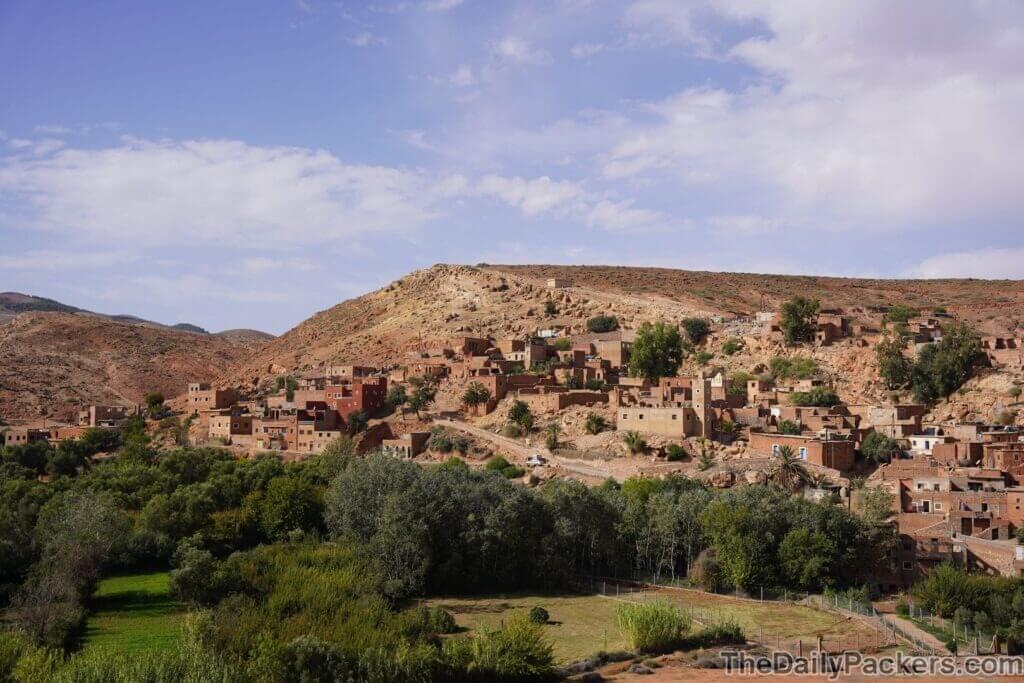
After exploring Marrakech, we decided to slow things down and drove about an hour and a half south into the High Atlas Mountains, where we reached the small village of Imlil. The drive was easy for the most part, with good roads except for one rough stretch that turned into a dirt track, but that only added to the adventure.
Imlil sits at 1,800 meters above sea level and feels worlds away from the busy streets of Marrakech. It’s a laid-back mountain village, surrounded by peaks and valleys, and the perfect base to discover the High Atlas. From here, you can set off on gentle hikes through Berber villages or take on more challenging treks, including the climb to Mount Toubkal, the highest mountain in Morocco. Just above Imlil lies Aroumd, the last Berber village before the Toubkal National Park at 1,900 meters.
We loved our time in Imlil, especially the place we stayed and the view we woke up to every morning. It’s a destination that feels both peaceful and inspiring.
In this article, we’ll share our experience and all the best things to do in Imlil—so if you’re planning a trip to Morocco and want to explore the mountains, let’s dive in.

Read: Our complete 2-week Morocco Road Trip Itinerary
Getting there
Reaching Imlil is fairly straightforward, but it can only be done by car or with an organized tour from Marrakech. The easiest option is to get yourself to Marrakech first and then transfer south into the mountains.
Since we were on a road trip, we simply drove there and parked on the street for 20 dh per day. Only later did we realize that our accommodation actually had free private parking—something worth checking in advance if you’re driving.
If you’re not on a road trip, joining a tour is the most practical way. For a soft introduction to the area, the Imlil Village and Kik Plateau Day Trip is a great choice. If you’re looking for more adventure, you can tackle the Mount Toubkal 2-Day Trekking Tour, which sets off right from Imlil.
Moving Around
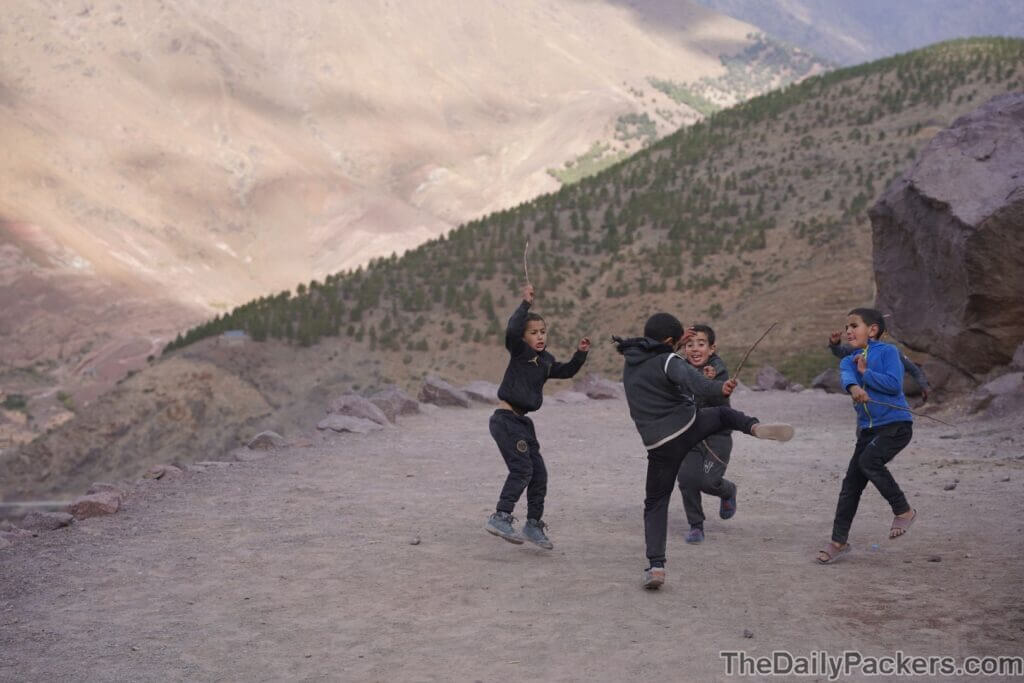
Imlil and the surrounding villages are very small, so you can get around easily on foot—especially if you enjoy hiking. Most trails start right from the village, and walking is really the best way to soak in the scenery and atmosphere.
If you’re heading into Toubkal National Park, most accommodations in Imlil can arrange a free transfer by car to the trailhead, which makes it simple to start longer hikes without worrying about logistics.

We recommend to rent a car through Discover Cars with free cancellation. Book your rental car here.
When to Visit
Being high up in the Atlas Mountains at 1,800 meters, Imlil has a very different climate from the cities in Morocco. The seasons here shape your experience, whether you’re coming to hike, relax, or even attempt Mount Toubkal.
- Spring (March – May): Spring is one of the best times to visit Imlil, with temperatures ranging between 10°C and 22°C (50°F to 72°F). The valleys turn green, the cherry and apple trees blossom, and hiking conditions are perfect.
- Summer (June – August): Unlike Marrakech, summer in Imlil is pleasant thanks to the altitude. Expect daytime temperatures around 20°C to 28°C (68°F to 82°F), with cooler evenings. It’s the most popular season for hiking, especially for those aiming to summit Mount Toubkal.
- Autumn (September – November): Another great season, with temperatures from 12°C to 24°C (54°F to 75°F). The weather is still warm, the skies clear, and the trails quieter than in summer. It’s ideal for trekking and enjoying the landscapes without the heat.
- Winter (December – February): Winters are cold, with daytime temperatures averaging 5°C to 12°C (41°F to 54°F), and nights dropping close to freezing. Snow covers the peaks, and while hiking is still possible, it requires proper gear and often a guide.
Tip: Spring and autumn are the most comfortable seasons, while summer is perfect if you want to escape the heat of Marrakech. Winter is beautiful but only recommended for experienced hikers.

Where to Stay
We stayed at Riad Atlas Toubkal and couldn’t recommend it enough. The room was comfortable, the food was delicious, and the views over the valley were breathtaking. What really stood out, though, was the honesty and friendliness of the staff—they made us feel completely at home.
If you’re heading to Imlil, a stay like this is the perfect way to enjoy the mountains in a warm, welcoming setting.


Here are all your accommodation options in Imlil
What to Eat
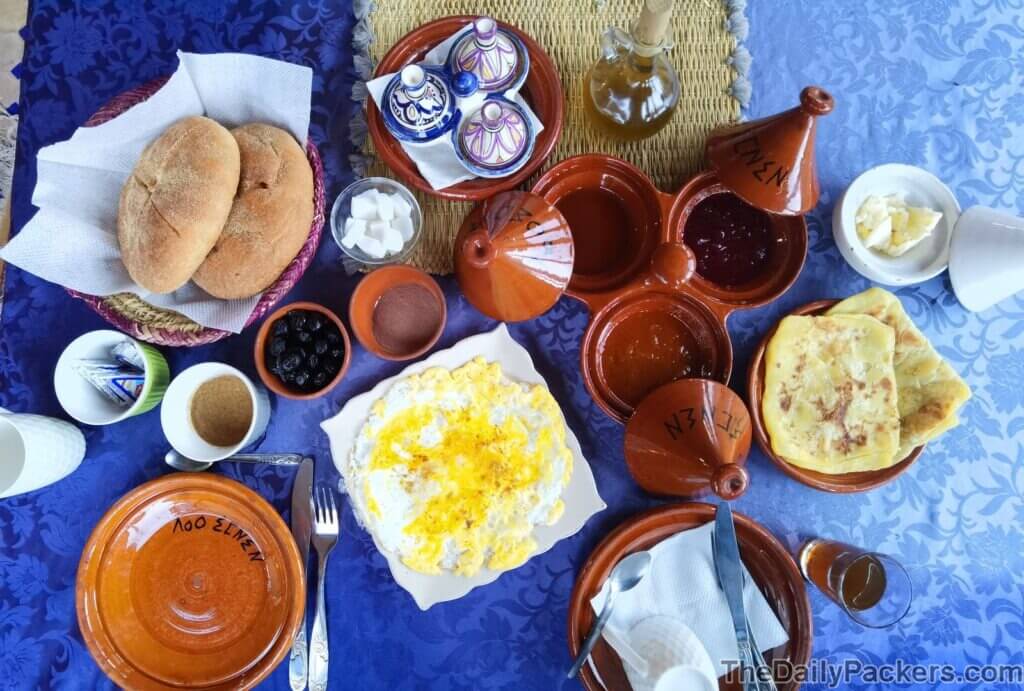
Food in Imlil is simple, hearty, and best enjoyed in the local riads. We had most of our meals directly at Riad Atlas Toubkal, and honestly, it was amazing—the kind of home-cooked Moroccan food that makes you feel taken care of after a day of hiking.
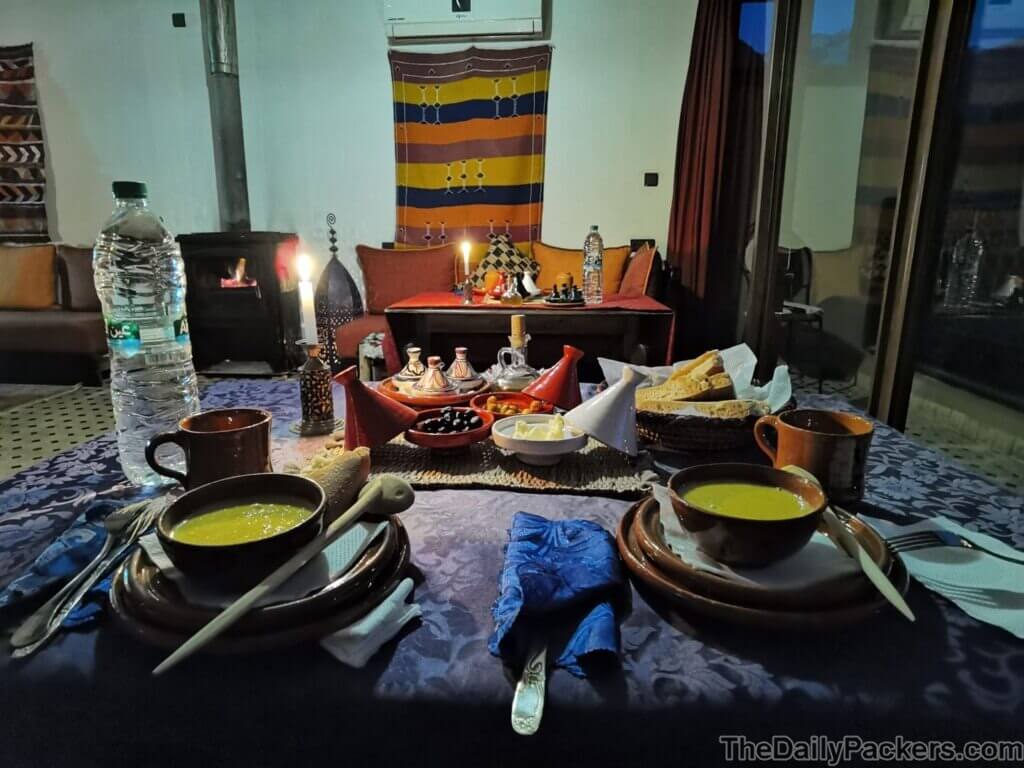
Since the village is small, there aren’t many standalone restaurants, but you can usually eat at other riads if you’re not staying there. Two good options worth trying are La Table de Tigmi Ait Mizane, which offers traditional dishes with a view, and Cascade Imlil Restaurant, located near the waterfalls and perfect for a meal after a walk.
In Imlil, don’t expect fancy dining—what you’ll get is fresh, local, and served with genuine hospitality, which makes it even better.
Best things to do in Imlil
Hike the Imlil Valley
One of the best ways to experience Imlil is simply by heading out on a short hike. We asked at our riad about a 2–3 hour walk around the valley, got some directions, and set off. Before leaving, we grabbed a bottle of water, and when we tried to pay, they just smiled and told us it was free—a small gesture that really summed up the kindness we felt in Imlil.
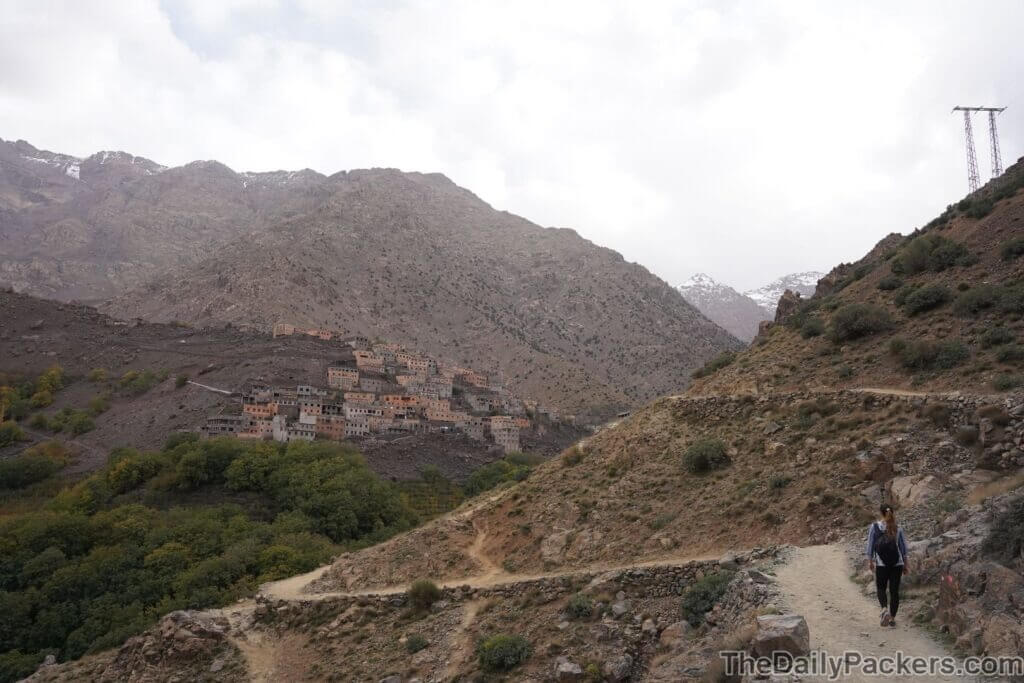
The hike itself was straightforward, and we didn’t need a guide. The trail made a loop around the valley, passing through a handful of Berber villages with views of the mountains all around. It was peaceful, scenic, and exactly the kind of walk that makes Imlil special.

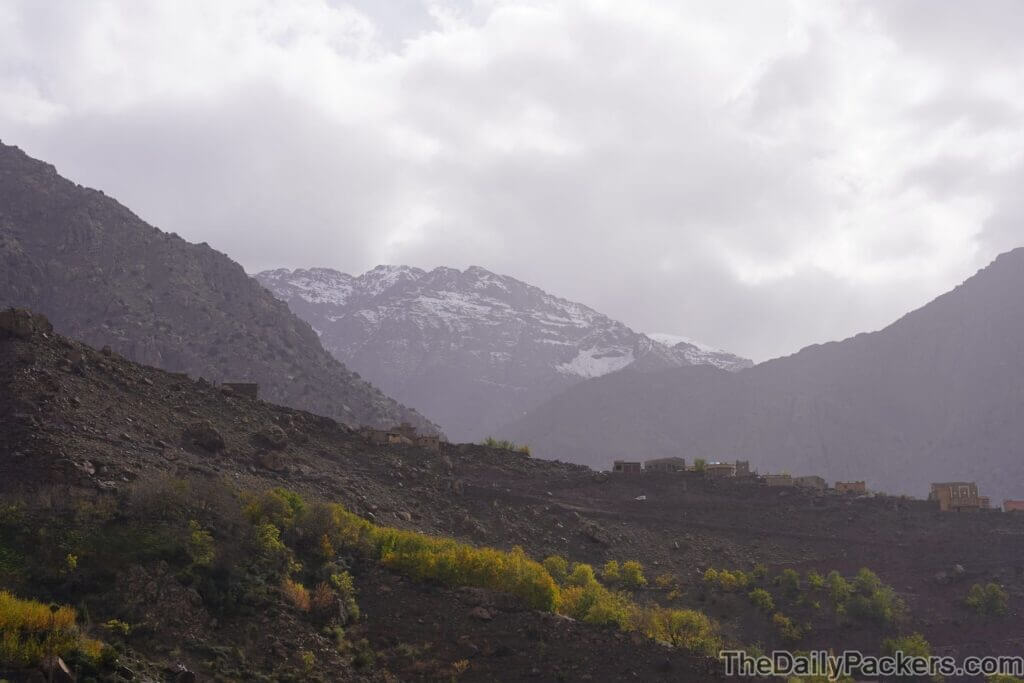
The landscapes along the way were beautiful—quiet valleys, stone houses, and views of the surrounding peaks. Compared to the busy streets of Marrakech, this felt like another world, so much calmer and slower. We hardly saw anyone on the trail, just a few groups making their way back toward the village as we were heading out.
That sense of space and tranquility is exactly what makes hiking in Imlil so rewarding.


Tip: If you do not want to sleep in Imlil, get this Atlas Mountains Full-Day Hiking Trip
Toubkal National Park
Established in 1942, Toubkal National Park covers an area of 380 km² and is home to the highest peak in North Africa, Jbel Toubkal, which rises to 4,167 meters. The landscapes here are dramatic—rugged valleys, snow-capped peaks in winter, and traditional Berber villages scattered along the trails.
Since 2018, it has been mandatory to hire a local guide if you want to hike up to Mount Toubkal. This rule was introduced after a tragic incident when two young women, one from Denmark and the other from Norway, were killed on the trail. The regulation aims to improve both safety and visitor experience, as guides not only ensure secure passage but also share insights into the region’s culture and environment.
If you’re planning to attempt the Toubkal summit, be prepared for a challenging but rewarding trek. For shorter hikes, the park still offers plenty of accessible trails that showcase the beauty of the High Atlas without requiring an intense climb.
1-Day Hike in Toubkal National Park
Start your morning with breakfast at your riad—if you’re staying at Riad Atlas Toubkal, the views and service make it extra special. From there, you can arrange a local guide through your accommodation (guides are mandatory for hikes in the park since 2018). A day hike with a guide costs around 200 dh.
The trail is fairly easy and takes you up to the small restaurant area, the last set of shops before the mountain hut at the base camp of Mount Toubkal. The walk up takes about 1 hour 30 minutes. Once there, take a break with a mint tea (around 10 dh), enjoy the scenery, and then make your way back down in about an hour.
Along the way, you’ll likely meet other hikers, some heading up to attempt Toubkal over two days. It’s always a nice spot to swap stories with fellow travelers while resting on the trail.
At the end of your hike, don’t forget to tip your guide—a small gesture like 20 dh goes a long way.

Here are all your accommodation options in Imlil
2-day Summit Mount Toubkal
If you’re looking for adventure, you can climb Mount Toubkal, the highest peak in North Africa at 4,167 meters. The classic way to do it is in 2 days:
- Day 1: Hike from Imlil to the refuge at the base of Toubkal.
- Day 2: Start around 4 am to reach the summit for sunrise, then descend back to the refuge and continue to Imlil.
If you’d prefer a slower pace, many hikers opt for a 3-day trek instead. In this version, you summit on the second day and spend another night at the refuge before walking back to Imlil on the third day. This way, you avoid the very early wake-up.
The cost of hiring a guide is about 500 MAD per day, and you’ll also need to budget for food and accommodation at the refuge. If you don’t have all the proper gear, don’t worry—equipment like boots, crampons, or walking poles can be rented directly in Imlil.
Climbing Toubkal is challenging but incredibly rewarding, offering sweeping views over the High Atlas and a real sense of achievement.
If you’re based in Marrakech and don’t plan to stay overnight in Imlil, you can also book a 2-day tour to Toubkal National Park directly from Marrakech, which includes transport and a guided hike.
Imlil itinerary
Day 1:
- Arrive in Imlil
- Get to your accommodation
- Hike around the Imlil valley
Day 2:
- 1-Day Hike in Toubkal National Park
- Option: Keep on until the Toubkal base camp
Day 3 : (Option)
- Summit Toubkal
- Return to Imlil
Read: Our complete 2-week Morocco Road Trip Itinerary
About the authors
We are Alex and Tina, a French-Serbian couple who met in China back in 2014. We spent three incredible years there before making France our home. Our shared passion for travel has been the heartbeat of our relationship for over 12 years, taking us across 44 countries and counting.
We launched TheDailyPackers in 2019 as a way to document our adventures. In 2026, we reached a major milestone by officially turning our blog into our full-time job. While we are still growing toward financial independence through this platform, every article we write is fueled by our mission to make your voyages easier through in-depth guides, honest advice, and the lessons we’ve learned from our own mistakes.
Our journey has not been without its storms. In 2023, our world changed forever when our first son, Poppy, was stillborn on November 25th. It was, and remains, the hardest chapter of our lives. In 2025, we were blessed with our second little boy, Milo. He has since joined our traveling tribe, and you’ll be seeing him—and the reality of traveling with a little one-on the blog more and more.
We hope to inspire you to explore the world with curiosity and resilience. Thank you for being part of our story.
You may also like those related posts
2-week Vietnam Itinerary: The best of Vietnam
Haarlem, A Perfect 1-Day Trip from Amsterdam, Netherlands
Travel from Home: How to Stay Inspired Between Trips
14 Best things to do in Arles, France, in 2 days or more
Moustiers Sainte Marie: one of France’s most beautiful villages in 2025
Granada Itinerary: Our Perfect 2 Days in Granada, Spain
How to visit Rome in 4 days: A step by step guide to this magnificent city
18 Most beautiful Places in Corsica, France
Pssst, did you know that…
If you purchase something through our links, we earn a small fee. However, you still pay the same. Win-win! And one day we may get to be full-time travel bloggers =)
Find Hotels with Booking.com
Do Yoga with KVY
Buy us a Coffee
Rent a car with DiscoverCars
Find Attractions with GetYourGuide
Find Flights with Expedia
Buy an eSIM with Airalo
Get insured with World Nomads
Get ready with Amazon.com