

Why You’ll Love Visiting Mendoza: The Ultimate Guide
Mendoza was the next stop on our backpacking trip through South America, arriving here right after spending some time in Villa General Belgrano. We must admit that the city itself is alright-it’s nice and chilled-but the activities you have to do from Mendoza are truly some of the best in Argentina.
Known as the heart of Argentina’s wine country, it’s the kind of place where you use the city as your comfortable home base to explore everything around it. Whether you are looking for a world-class Mendoza Wine Tour, some serious hiking in Aconcagua Provincial Park, or a relaxing morning at the Cacheuta Spa, you’ll find that the real magic happens just a short drive from the center.
We loved the vibe of the tree-lined streets that resemble Buenos Aires, but the real highlights are the mountains and the vineyards. If you want a mix of adventure and good wine, you are going to love it here.


Best Things to Do in Mendoza
Explore the Five Plazas
If you are familiar with South America, every city has many plazas. But the layout of the city center is actually quite unique. After a major earthquake in 1861, Mendoza was redesigned with one huge central square and four smaller ones placed exactly two blocks away from each corner. It’s like a giant dice!
Plaza Independencia: This is the big one. It covers four city blocks and is the heart of the city. You’ll find an underground theater, a museum, and a massive fountain that glows at night. On weekends, there is usually a craft market where you can pick up local leather goods or jewelry.
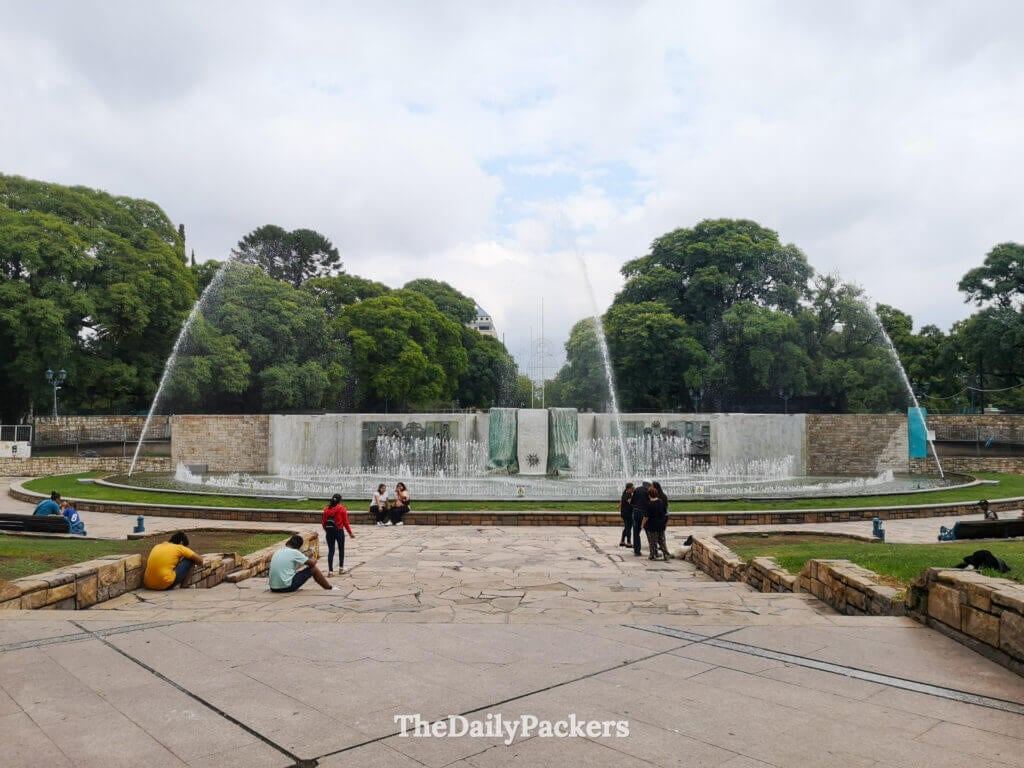
Plaza España: This is definitely the most beautiful of the five and our favourite. It’s decorated with traditional Spanish tiles (azulejos) and mosaics that tell the story of the city’s founding.

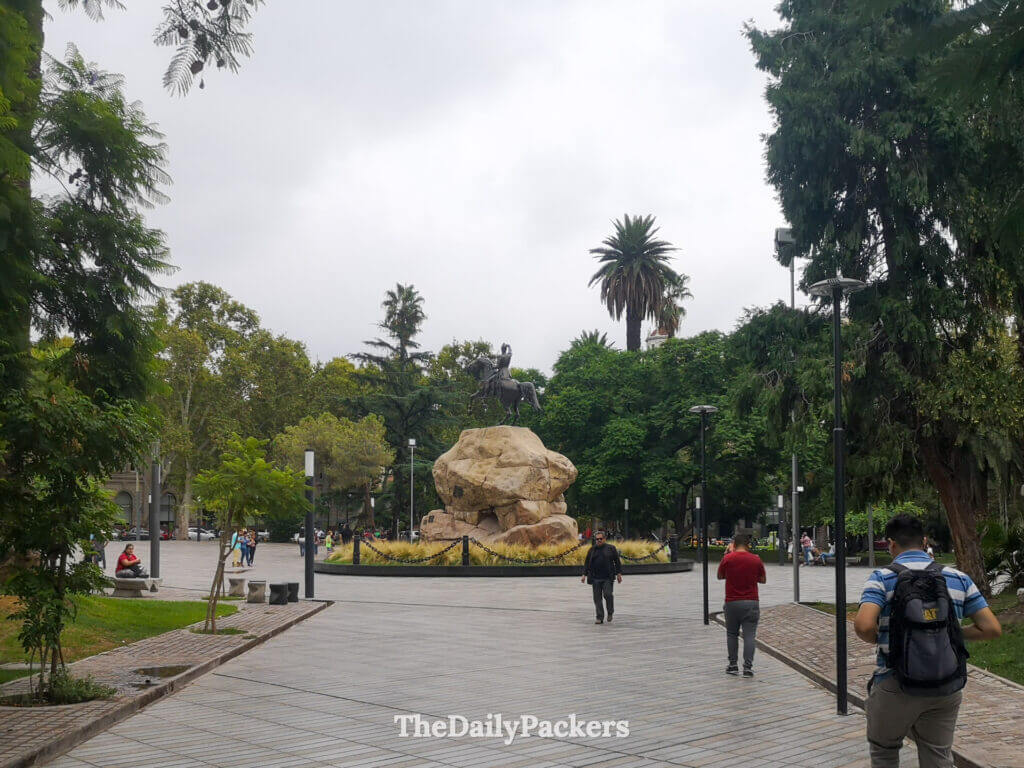
Plaza Italia, Plaza San Martín, and Plaza Chile: Each of these is dedicated to a different community that helped build the city. They are filled with statues, fountains, and massive trees that provide a much-needed break from the Argentine heat.
Walk down Peatonal Sarmiento
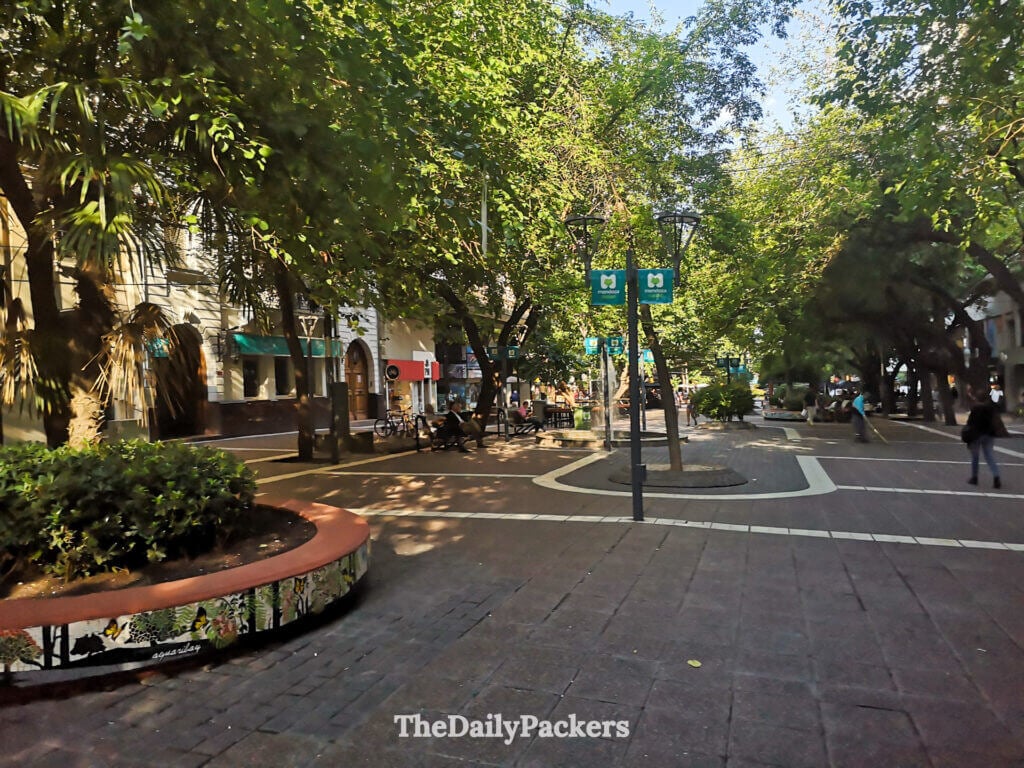
This three-block pedestrian street is where the “vibe” of the city is strongest. It’s lined with mulberry trees and dozens of outdoor cafés. It’s a bit of a local tradition to sit outside, order a coffee or a glass of wine, and watch the world go by.
You’ll see everyone from business people in suits to backpackers here. Even if you aren’t hungry, it’s worth a stroll just to see the beautiful architecture and the flower stalls that fill the air with amazing scents.
Take a Wine Tour in Maipú or Luján de Cuyo
You can’t visit the wine capital of the world and skip a Wine Tour. This is hands-down the most popular thing to do in Mendoza.
Maipú: This area is very close to the city and is famous for its “Wine and Ride” tours. You rent a bike and pedal between wineries. It’s a lot of fun, but honestly, biking back after four tastings in the sun is harder than it looks!

Luján de Cuyo: This is where the heavy hitters are. Many of these wineries are world-famous for their Malbec. The views here are incredible because you have the vineyards in the foreground and the snow-capped Andes in the back.
Our Recommendation: We used the Bus Vitivinícola. It’s a hop-on, hop-off service that picks you up from the city. It’s way cheaper than a private driver and much safer than trying to drive yourself after a few tastings.

Hike in Aconcagua Provincial Park
Standing at 6,960 meters (22,834 ft), Aconcagua is the highest mountain outside of Asia. Doing some Aconcagua hiking is an absolute must. You don’t need to be a professional climber; you can take a day trip from Mendoza and do the “Horcones” circuit.
It’s an easy 1-2 hour walk that takes you to a viewpoint where you can see the massive peak right in front of you. The air is thin up there, so take it slow, but the feeling of being that close to a giant of the Andes is something you won’t forget.
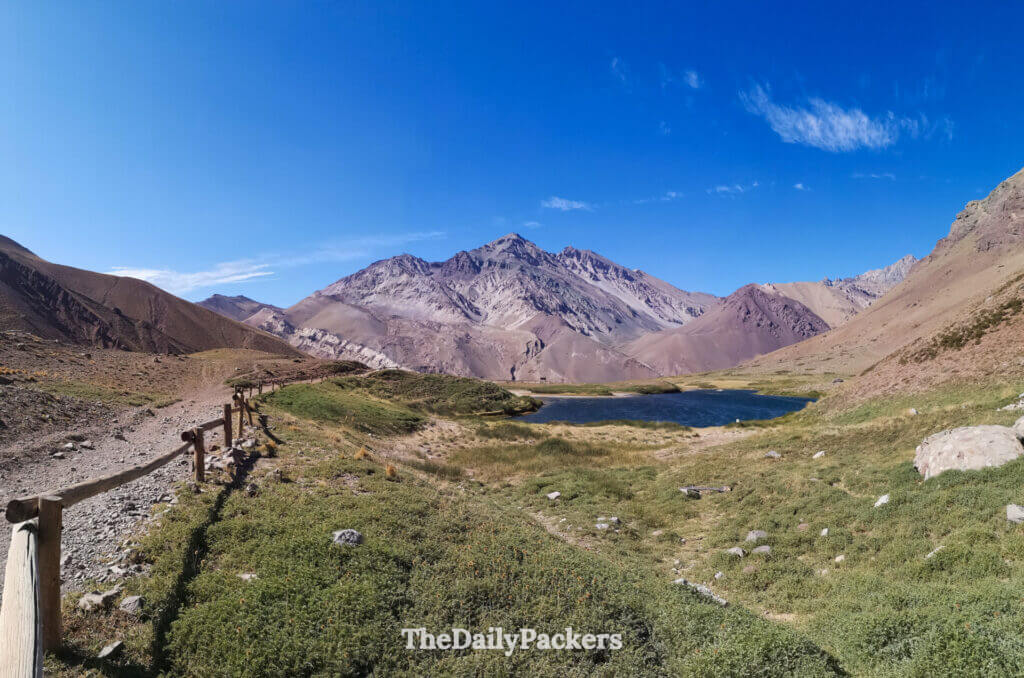
However, if you are looking for something a tiny bit more adventurous, we recommend hiking the 12km one-way to Confluencia, the base camp from which you climb on Mount Aconcagua. This was one of our favorite things to do in Mendoza.
We did it, and even if it is a long day, it is one of the most beautiful hikes in Argentina, along with Laguna de Los Tres in El Chalten, Cerro Uritorco in Capilla del Monte, and Laguna Esmeralda in Ushuaia.


Read: The Ultimate Aconcagua Provincial Park 1-Day Hiking Guide
Relax at Cacheuta Spa
After the Swizz vibes of Villa General Belgrano, we wanted something more local. Cacheuta Spa was the perfect experience. These are natural thermal baths located right on the edge of the Mendoza River, tucked into the mountains. There are different pools with temperatures ranging from 28°C to 42°C.
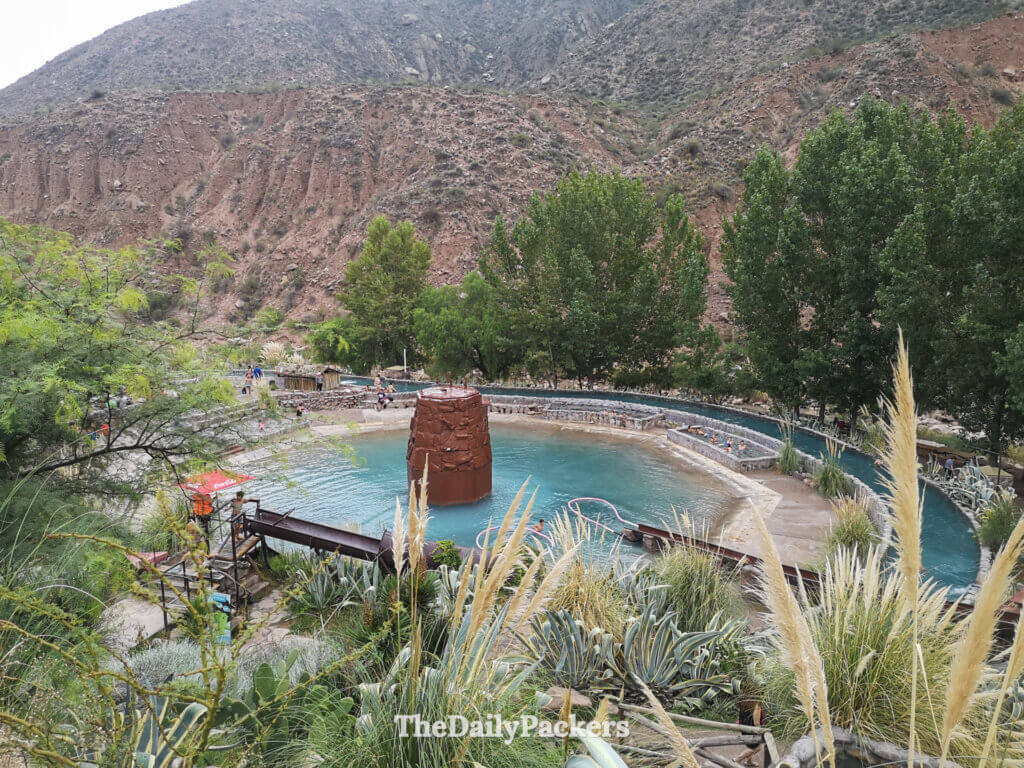
You can soak in the hot mineral water while looking up at the rugged stone cliffs. They also have a mud bath area, which is a lot of fun—just cover yourself in the gray clay and let it dry in the sun before rinsing off in the pools.


Tip: While this is definitely one of the best things to do in Mendoza, remember that it is a very local experience
Spend a Day at Potrerillos Dam
About an hour’s drive from the city is another one of the best things to do in Mendoza, the Potrerillos Dam. It has created a massive, bright turquoise lake in the middle of a desert landscape. It looks almost unreal against the brown mountains.
This is where locals go on the weekends to escape the city heat. You can go kayaking, windsurfing, or just find a quiet spot along the shore for a picnic. The drive there is also spectacular as the road winds through deep canyons and tunnels.

You can easily combine Potrerillos with Cacheuta Spa. For us, the highlight was the garden of the Grand Hotel. You have a lake, vineyards, mountains, and a beautiful property.

Read: How to Spend 1 Perfect Day in Cacheuta and Potrerillos
Visit the Central Market (Mercado Central)
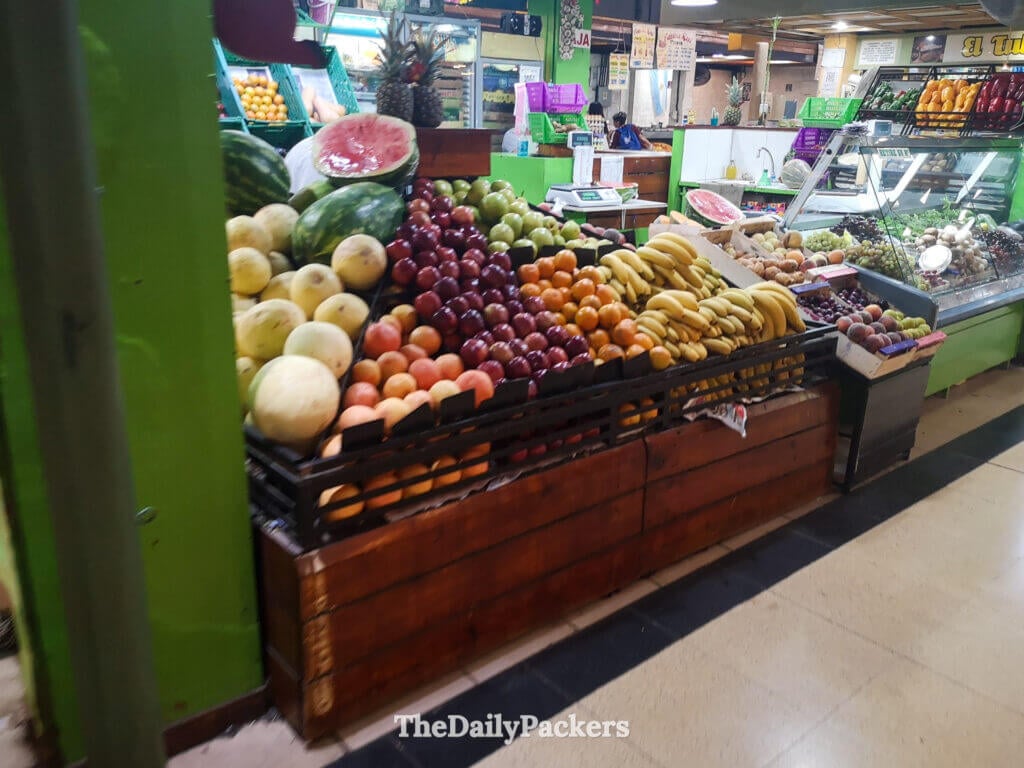
This market has been around since 1884, and it’s the best place to see the “real” Mendoza. It’s not a polished tourist spot; it’s a working market where locals buy their daily groceries.

You’ll see rows of spices, massive wheels of cheese, and butchers displaying every cut of meat imaginable. If you are looking for a cheap, authentic lunch, head to one of the small counters inside for a “lomo” (steak sandwich) or some fresh empanadas.
Since first experiencing this type of market in Cusco, Peru, we are chasing them whenever we are in South America. So, it is no surprise to find the central market as one of our best things to do in Mendoza.
Hike Cerro de la Gloria
For the absolute best view of the region, you have to go to the top of Cerro de la Gloria. You can either hike up or take a quick taxi. At the summit, there is a massive bronze monument dedicated to General San Martín’s Army of the Andes.

It’s impressive, but the real star is the panoramic view. You can see the entire city of Mendoza spread out below you, and in the other direction, the start of the Andes mountain range.
It’s a popular Mendoza attraction for sunset, and for good reason—the colors on the mountains are incredible.


Party at Arístides Villanueva
While the city center is quiet at night, Arístides Villanueva is where the party is. This street is packed with bars, craft breweries, and restaurants. It’s the heart of the city’s nightlife.
Most places have big outdoor terraces, and the atmosphere is always lively. Whether you want a fancy cocktail or just a big “litro” of beer to share with friends, this is the place to be. It usually doesn’t get busy until after 9:00 PM, as Argentines eat dinner very late!
Admire the Pasaje San Martín
This is one of the oldest buildings in the city and a real architectural gem. We actually popped in there by luck. We were coming back from our wine tour and saw its beautiful entrance.

It was the first “high-rise” in Mendoza and survived many tremors. The highlight is the stunning stained-glass dome in the center. It’s located right in the middle of the shopping district, so it’s easy to pop in for five minutes to take a few photos.
The detail in the glass and the old-school elevators give you a glimpse into what the city looked like a hundred years ago.

Try Local Chocolates at Chocolezza
Mendoza isn’t just about wine; it’s also famous for its chocolate! We visited a factory called Chocolezza, and it was interesting. They make incredible “alfajores”-two soft cookies joined by a thick layer of dulce de leche and covered in chocolate.
They offer free tours where you can see how they make them, and yes, they usually give you plenty of free samples to try before you buy. It’s the perfect place to get some souvenirs for home (if you don’t eat them all first).


Visit an Olive Oil Factory (Olivícola)
This is something we didn’t have the chance to do, but Mendoza’s dry climate is perfect for olives, and the oil here is some of the best in South America.
Many of the same areas that grow grapes also have olive groves. You can take a tour to see how they press the olives and then do a tasting.
It’s very similar to a wine tasting—you learn to identify the different aromas and levels of bitterness. Pairing the fresh oil with some local bread and salt is a simple but amazing snack.
Walk through Parque General San Martín
This park is truly massive. It was designed by a French architect and feels more like a forest than a city park. You enter through huge, gold-trimmed iron gates that were originally made in England.
Inside, there is a large lake where people go rowing, several rose gardens, and even a football stadium. It’s the lungs of the city, and on a hot afternoon, the temperature inside the park feels at least five degrees cooler than on the streets.
The Perfect Itinerary: How to Spend Your Days
If you have 4 days to spend in Mendoza, you are in luck. It is the perfect amount of time to see the city, drink some of the best wine in the world, and get lost in the beauty of the Andes. Here is how we recommend you organize your days to see it all without rushing too much.
Day 1: City Vibes and Sunset Views: Since you probably just arrived (maybe from Villa General Belgrano like us!), take it easy today. Start your morning with a walk through the best things to do in Mendoza city center.
Head to Plaza Independencia, the heart of the city. If it’s the weekend, check out the artisan market. From there, walk down Peatonal Sarmiento and grab a coffee at one of the outdoor tables. It’s the best way to soak in the local atmosphere.
In the afternoon, visit the Central Market for a quick and cheap lunch. Afterward, walk or take a taxi to Parque General San Martín. It’s huge, so don’t try to see it all! Just walk to the lake and then head up to Cerro de la Gloria to see the monument and catch the sunset over the city.
End the day by walking down Arístides Villanueva. This is the place for dinner and drinks. Every bar has a different vibe, so just pick one that looks busy and enjoy your first Mendocinian night.

Day 2: The Malbec Route (Maipú or Luján de Cuyo): Today is all about the wine! This is why most people come to Mendoza, so enjoy it. It is also one of the most popular things to do in Mendoza.
The Plan: We suggest heading to either Maipú (closer and more casual) or Luján de Cuyo (stunning views and famous Malbecs).
Our Way: Don’t worry about driving. Take the Bus Vitivinícola. It picks you up in the city and drops you off at different wineries. You can spend a few hours at one, have a tasting, and then hop on the next bus to another bodega for a big “winery lunch.” If you want an easier experience that you can easily book online, check out the All Day, Small Group, Luxury Wine Tour with Gourmet Lunch

Day 3: High Altitude Adventure in the Andes. Get ready for a long but spectacular day. You are going into the heart of the mountains.
You can rent a car, join a “High Mountain Tour” or even take a super early bus. You’ll drive along Ruta 7, following the Mendoza River. You will pass the Potrerillos Dam—the turquoise water is incredible for photos.
The highlight of the day is Aconcagua Provincial Park. Do the short “Laguna de los Horcones” hike to see the peak of Aconcagua.
Then continue towards the base camp. It gets a bit trickier and harder once you pass the suspension bridge. But it is totally worth it, and that section isn’t crowded at all.

Day 4: Relaxation at the Hot Springs. After the hiking and the wine, use your last day to totally unwind before moving on to your next destination.
Head to Cacheuta Spa. It’s about 45 minutes from the city. Spend the day hopping between the different thermal stone pools. The contrast of the hot water and the fresh mountain air is the best feeling.
From there, continue toward Potrerillos, and enjoy a calm and tranquil Argentinian countryside village.

The Best Time to Visit: Weather & Local Events
The best time to visit Mendoza really depends on what you want to do. Because it is a high-altitude desert, the weather can be quite extreme, but it also means you get very clear skies and beautiful colors throughout the year.
As we are a French and Serbian couple, we are used to European seasons, but remember that in Argentina, everything is flipped! Summer is in December, and Winter is in June.
Summer (December to February): Summer in Mendoza is hot and dry. Temperatures often reach 35°C (95°F) during the day, though it can feel even hotter in the sun. This is the best time for Aconcagua hiking because the mountain passes are clear of snow.
Autumn (March to May): This is probably the best time. The temperatures are very pleasant, usually between 18°C and 25°C (64°F – 77°F). This is the harvest season, and the vineyards turn from green to stunning shades of gold and red. In early March, the city hosts the Fiesta Nacional de la Vendimia (Grape Harvest Festival). It’s a massive celebration with parades, music, and a huge show in the Greek theater. It’s the biggest event in Mendoza, so you should book your stay way in advance.
Winter (June to August): Winter is cool and crisp. Daytime temperatures range from 3°C to 15°C (37°F – 59°F). While the vineyards are “sleeping” and look a bit bare, the Andes are covered in deep snow. It is the best time for skiing or just enjoying the snow-capped mountain views from the Cacheuta Spa hot pools. You will have clear blue skies and sunny days, but you will definitely need a good jacket for when the sun goes down.
Spring (September to November): Spring is beautiful as the city’s millions of trees start blooming. Temperatures sit comfortably between 15°C and 27°C (59°F – 81°F). It’s a great time for a Wine Tour before the summer heat arrives. There are fewer tourists than in Autumn or Summer, so you can often get better deals on accommodation. The vibe is fresh, green, and perfect for exploring the city plazas or biking through Maipú.
Our recommendation: If you can, visit in March. The combination of the harvest colors and the energy of the Vendimia festival is something you have to experience once!


How to Get to Mendoza
Mendoza is well-connected to the rest of Argentina and neighboring Chile.
By Plane: Mendoza’s El Plumerillo International Airport (MDZ) is located about 10 km from the city center. It receives both domestic and international flights daily. Once you land, the easiest way to reach the center is by taxi, which takes about 20 minutes. If you are on a budget, you can take the public bus (Linea 680), though it is a bit slower.
If you are coming from Buenos Aires, there are several daily flights from both Ezeiza (EZE) and Aeroparque (AEP). The flight time is just under 2 hours. From Santiago, Chile, direct flights are very quick, taking only about 1 hour to cross the Andes. You can also find regular flights from other Argentine cities like Córdoba, Salta, and Bariloche.
By Bus: Mendoza has a large central bus terminal with connections from all over the country and Chile. Long-distance buses in Argentina are generally very comfortable, often with seats that fully recline like a bed (called “cama” or “super cama”). That’s how we arrived in Mendoza, as we were in a nearby city (only 8h drive by bus)
From Buenos Aires, it’s a long journey of about 12 to 14 hours. We recommend taking a night bus so you can sleep through the trip and save on a night of accommodation. Major companies like CATA and Andesmar operate this route frequently. From Santiago, Chile, the bus ride takes around 6 to 7 hours. This is one of the most beautiful bus rides in the world as you cross directly through the Andes mountains, so try to book a seat during the day to see the views!
By Car: If you enjoy a road trip, Mendoza is accessible via well-maintained highways. Just be aware that distances in Argentina are massive!
From Buenos Aires, it’s a straight but long drive of about 1,050 km, which usually takes 12 to 14 hours via Ruta Nacional 7. From Santiago, Chile, the drive is only about 360 km and takes 6 to 7 hours via the Paso Internacional Los Libertadores. This route involves a lot of winding mountain roads and a border crossing. Be sure to check the weather and border wait times before you leave, as the pass can sometimes close in winter due to snow.


Check all your bus options on Busbud — it’s simple to compare routes, prices, and book your tickets in advance.
Getting Around the City Like a Local
Mendoza is a very walkable city, especially in the center, where everything is flat and shaded by those famous trees.
For exploring the “Five Plazas” or walking down Arístides, your own two feet are the best way to go. The city is designed like a grid, so it’s very hard to get lost. If you want to go a bit further, like to the far end of General San Martín Park, many hostels and shops rent out bikes for the day. It’s a very bike-friendly city!
Mendoza has a huge network of city buses that can take you almost anywhere. To use them, you absolutely need a SUBE card. This is the same rechargeable plastic card used in Buenos Aires and other big cities in Argentina. You can buy them and top them up at “Kioskos” (small convenience stores) all over town. You just tap the card when you board the bus.
One thing to know: Google Maps works okay for bus routes, but it’s not always 100% right with the schedules. If you are unsure, just ask a local “hace una parada aquí el colectivo para…?” (does the bus to… stop here?). People are super friendly and will usually help you out.
Mendoza also has a clean and modern light rail system called the Metrotranvía. It connects the city center with suburbs like Maipú. It’s a great, cheap way to get closer to the wineries in the Maipú area. You also use your SUBE card for this. It’s much faster than the bus because it doesn’t get stuck in traffic!

Where to Stay: OurFavorite Neighborhoods
Mendoza is more spread out than it looks, so picking the right base is key. The City Center (Microcentro) is the most practical area for a first-time visit. You’ll be right next to the main plazas and the best transport links like the Metrotranvía or the bus terminal. It’s the heart of the city and perfect for exploring everything on foot.
Fifth Section (Quinta Sección) This is a more residential and “green” neighborhood located right next to the massive General San Martín Park. It’s much quieter than the center and feels very safe and local. It’s the perfect spot if you want a more relaxed vibe away from the city noise.
Arístides Villanueva: If you are in Mendoza to enjoy the bars and nightlife, stay near Arístides. You’ll be steps away from the best craft beer and cocktails in the city. It’s a very high-energy neighborhood, so it’s best for those who don’t mind a bit of noise in exchange for being where the party is.
Depending on your budget, here are the places we personally recommend for your stay:
(€): Clover Hostel. Located in the city center, this is a fantastic choice if you are looking for a budget-friendly and social atmosphere. It’s perfect for meeting fellow travelers to share a wine tour with.
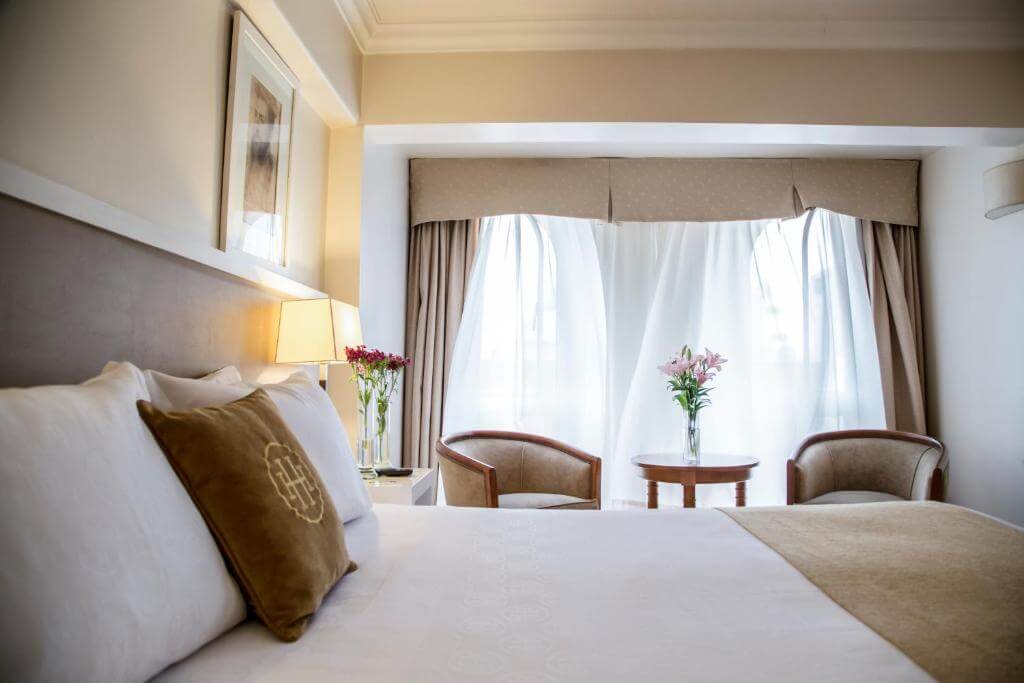
(€€): Huentala Hotel. This is a beautiful boutique option in the heart of the city. It has a very cool, classic vibe and even features its own wine cellar—perfect for starting your tastings before you even leave the hotel!
(€€€): Diplomatic Hotel. For a bit of luxury, this is our favorite. It is very elegant, has top-notch service, and is located on one of the most beautiful streets in the city center.
What to Eat: Iconic Local Dishes
Mendoza is a paradise for food lovers. While Argentina is world-famous for its beef, the food scene here has its own unique flavor thanks to the high-altitude produce and the strong Italian and Spanish influence. Since we don’t eat meat all the time, we were happy to find that Mendoza has plenty of delicious options for everyone.
Argentine Asado: You really can’t say you’ve been to Mendoza without sitting down for a proper asado. This isn’t just a “BBQ”; it’s a ritual. The meat is cooked slowly over wood fires for hours. If you go to a winery lunch, you’ll often get several courses of beef, but keep an eye out for the “Choripán” (chorizo sandwich) at the start—it’s a local favorite.
Mendocinian Empanadas: Every province in Argentina claims to have the best empanadas, but the ones in Mendoza are special. They are typically baked in a wood-fired oven, and the traditional “carne” filling includes onions, olives, and hard-boiled eggs.
Vegetarian-Friendly Options: If you aren’t a meat-eater, don’t worry! You should definitely try Humita en Chala. It’s a delicious mixture of fresh corn, cheese, and spices wrapped in a corn husk and steamed. We also loved the Milanesa de Berenjena (breaded eggplant) and Tortilla de Papa, which is a thick potato and egg omelet that you can find in almost every local café.
Alfajores: These are the king of Argentine snacks. They are two soft cookies sandwiched together with a huge amount of Dulce de Leche. In Mendoza, you’ll find them covered in dark chocolate, white chocolate, or even Maizena (cornstarch), which makes them melt in your mouth.
Local Chocolates As we mentioned before, the chocolate here is top-tier. Visit places like Chocolezza or Fabrika to try handmade bonbons and chocolates infused with local flavors like Malbec or walnuts.
If you’re staying in a hostel or an apartment and want to cook, skip the big supermarkets for your fresh stuff. For the best experience, visit a Dietética for health foods and snacks. We found that the selection can vary, but we really liked Dietetica Camomila for their fresh bread. For fruits and veggies, look for the small local “fruterías” on the street corners—the produce is much fresher and cheaper!

What No One Tells You
While Mendoza is a dream for many travelers, there are a few things that aren’t usually in the brochures but are good to know so you aren’t surprised when you get there.
The Siesta is Real: This is something that caught us off guard a few times. Between 1:00 PM and 5:00 PM, almost all the shops, pharmacies, and even some smaller restaurants in the city center will close their doors. The streets become very quiet as everyone goes home for lunch and a nap. It’s the perfect time for you to do the same, or head to a park.
The Acequias (Open Ditches): When you walk down the beautiful tree-lined streets, you’ll notice deep, open stone ditches running along the sidewalks. These are called acequias. They are an ancient irrigation system used to keep the city’s millions of trees alive in this desert climate. They are very cool, but be careful! It is very easy to trip or drop your phone into them if you aren’t looking where you are going, especially at night.
Cash and the “Blue Dollar”: Argentina’s economy can be a bit confusing. You will often hear about the “Blue Dollar,” which is an unofficial exchange rate that gives you much more local currency for your USD or Euros than the official bank rate. While using cards is becoming more common, having cash is still king for small shops, tips, and some local markets. We recommend bringing some crisp, high-denomination bills (like $100 USD) to exchange at “cuevas” (exchange houses) to get the best value for your money.
Wine is Cheaper Than Water (Almost): It sounds like a joke, but in some restaurants, a bottle of local Malbec can actually be cheaper than a large bottle of sparkling water. Mendoza is all about the wine, and the local pride is huge. Don’t be afraid to try the “house wine” in a carafe (often called a pingüino if it’s in a penguin-shaped pitcher)—it’s usually delicious and very affordable.
The Border to Chile Can Close: If you are planning to head to Santiago after Mendoza, remember that the mountain pass is at a very high altitude. Even if it’s sunny and warm in the city, a snowstorm in the Andes can close the border for days, especially in winter. Always check the official border status a day before you plan to travel.

What it Costs: Budgeting for Your Day
Argentina’s economy is famous for being a bit of a rollercoaster, so prices can change quickly. However, Mendoza remains a destination where you can have an amazing time, whether you are backpacking or looking for luxury. Here is a rough guide to help you budget for your trip.
To give you a clear idea, we’ve broken down the daily costs into three different travel styles. These estimates include your food, transport, and activities, but exclude your long-distance flights.
- Budget (Backpacker): $30 – $50 USD per day. This covers a bed in a hostel like Clover Hostel, eating street food or cooking some meals, and using public buses or the Metrotranvía.
- Mid-Range: $80 – $150 USD per day. This includes a nice room at a place like Huentala Hotel, sitting down for a proper asado lunch, and taking the Bus Vitivinícola for your wine tours.
- High-End: $250+ USD per day. If you stay at the Diplomatic Hotel, book private wine tours with a chauffeur, and dine at high-end bodega restaurants with 5-course tasting menus.
To help you plan more specifically, here are some typical prices you’ll see around Mendoza:
- A glass of Malbec at a bar: $3 – $6 USD
- A dozen empanadas from a local bakery: $8 – $12 USD
- A “Lomo” (steak sandwich) and a drink: $10 – $15 USD
- Public Bus/Tram ride (with SUBE): $0.50 – $1 USD
- Day Trip to Aconcagua (Guided): $40 – $70 USD
- Entrance to Cacheuta Spa (Full Day): $20 – $35 USD
Don’t forget about the “Blue Dollar” we mentioned earlier! If you bring physical USD or Euro bills and exchange them at local exchange houses, your money will go much further than if you just withdraw from an ATM. Also, many wineries offer “tastings only” which are much cheaper than the full lunch packages if you want to visit more places on a budget.
About the authors
We are Alex and Tina, a French-Serbian couple who met in China back in 2014. We spent three incredible years there before making France our home. Our shared passion for travel has been the heartbeat of our relationship for over 12 years, taking us across 44 countries and counting.
We launched TheDailyPackers in 2019 as a way to document our adventures. In 2026, we reached a major milestone by officially turning our blog into our full-time job. While we are still growing toward financial independence through this platform, every article we write is fueled by our mission to make your voyages easier through in-depth guides, honest advice, and the lessons we’ve learned from our own mistakes.
Our journey has not been without its storms. In 2023, our world changed forever when our first son, Poppy, was stillborn on November 25th. It was, and remains, the hardest chapter of our lives. In 2025, we were blessed with our second little boy, Milo. He has since joined our traveling tribe, and you’ll be seeing him—and the reality of traveling with a little one-on the blog more and more.
We hope to inspire you to explore the world with curiosity and resilience. Thank you for being part of our story.
You may also like those related posts
How to get from Puerto Natales to Ushuaia by bus
Refugio Frey via Cerro Catedral: The Ultimate Hiking Guide
TMB Stage 4: Guide from Rifugio Elisabetta to Courmayeur
Bratislava Old Town Hall: History, Museum & Tower Views
19 Best things to do in San Sebastian, Spain, in 3 days
4 Best Places to Visit in May
Best eSIM for International Travel in 2025
One Day in Seville: How to See the Best of Seville in 24 Hours
Pssst, did you know that…
If you purchase something through our links, we earn a small fee. However, you still pay the same. Win-win! And one day we may get to be full-time travel bloggers =)
Find Hotels with Booking.com
Do Yoga with KVY
Buy us a Coffee
Rent a car with DiscoverCars
Find Attractions with GetYourGuide
Find Flights with Expedia
Buy an eSIM with Airalo
Get insured with World Nomads
Get ready with Amazon.com