
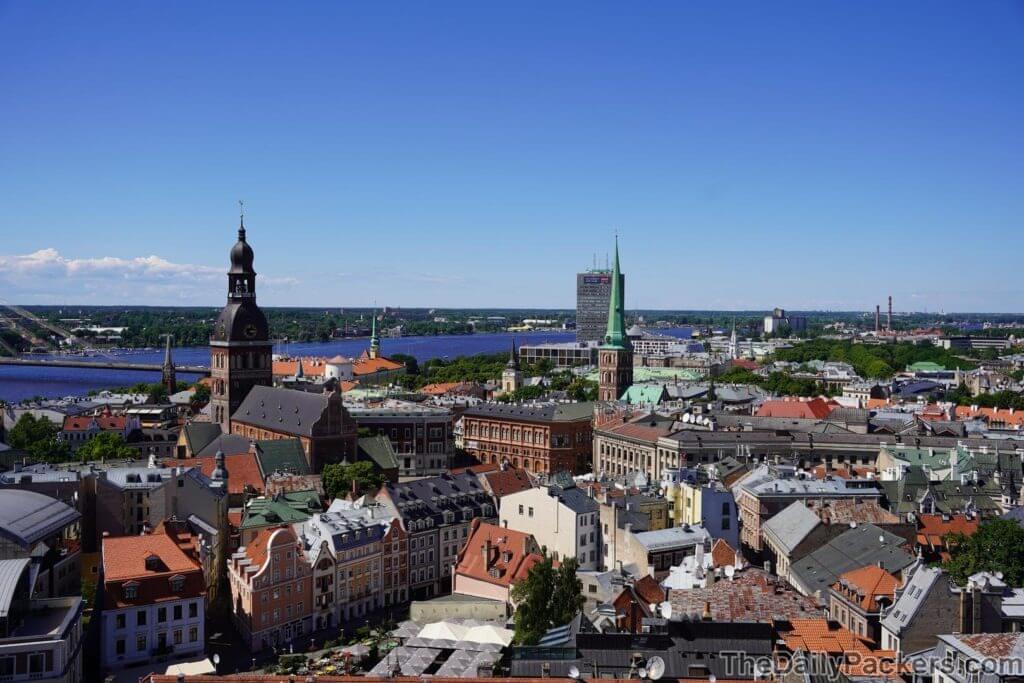
Introduction
In June 2022, we set off on a 2-week road trip through the Baltic States. Starting in Vilnius, Lithuania, we rented a car and made our way north, exploring as much as we could along the route to Tallinn, Estonia—with a memorable stop in Latvia along the way.
Riga was our fourth stop and our first introduction to Latvia. As the capital and largest city in the country, Riga sits on the Baltic Sea at the mouth of the River Daugava. Home to over 630,000 people, it’s known for its rich mix of wooden houses, striking Art Nouveau architecture, and its charming medieval Old Town.
Slightly bigger than Vilnius, Riga carries a subtle trace of its Soviet past—but it’s also full of character, color, and beautiful spots to wander. We only spent a day and a half here, so we didn’t dive deep into museums or guided tours. Instead, we did what we love most: walking, exploring, and soaking in the atmosphere.
If you’re planning your own trip through the Baltics and wondering what to do in Riga, here are the best things to see and experience in this fascinating city.

Read: The Perfect 2-Week Baltic States Itinerary
Getting there
Getting to Riga is straightforward. Several transportation options are available depending on where you’re coming from and how you like to travel.
By Plane: Riga International Airport (RIX) is the largest in the Baltic States and offers direct flights from many major European cities, including Berlin, Paris, London, Oslo, and Warsaw. Budget airlines like Ryanair and airBaltic frequently operate here, making it an easy and affordable destination to reach.
Once you land, the airport is about 10 km from the city center. You can:
- Rent a car directly at the airport—a great option if you’re planning to road trip through Latvia or the wider Baltic region.
- Take Bus 22, which runs between the airport and Riga city center. It’s cheap, reliable, and takes around 30 minutes.
- Use Bolt (the local ride-hailing app, similar to Uber) for a quick and affordable transfer.
By Bus: If you’re coming from nearby capitals like Vilnius, Tallinn, or even Warsaw, international bus services such as Lux Express, Flixbus, and Ecolines operate comfortable and affordable routes to Riga. Buses typically have free Wi-Fi, charging ports, and spacious seating.
Approximate travel times:
- Vilnius to Riga: 4.5 hours
- Tallinn to Riga: 4.5–5 hours
- Warsaw to Riga: 10 hours
By Ferry: If you’re coming from Sweden, Finland, or Germany, you can consider arriving by ferry:
- Stockholm to Riga: Operated by Tallink, this overnight ferry offers cabins, restaurants, and views of the Baltic Sea.
- Travemünde (Germany) to Riga: A longer ferry route mostly used by travelers with cars or campers.
- From the port, you can drive or take public transport into the city.
By Train: Train travel to Riga is more limited, but there are connections from certain towns in Latvia and nearby regions. However, buses are usually faster and more convenient for international travel.
By Car: Driving to Riga is a great option if you’re doing a Baltic road trip. Roads are in decent condition, and crossing borders between Lithuania, Latvia, and Estonia is smooth and easy within the Schengen zone. Parking in Riga can be tricky in the center, so look for accommodations with private parking or use park-and-ride options.
Moving Around
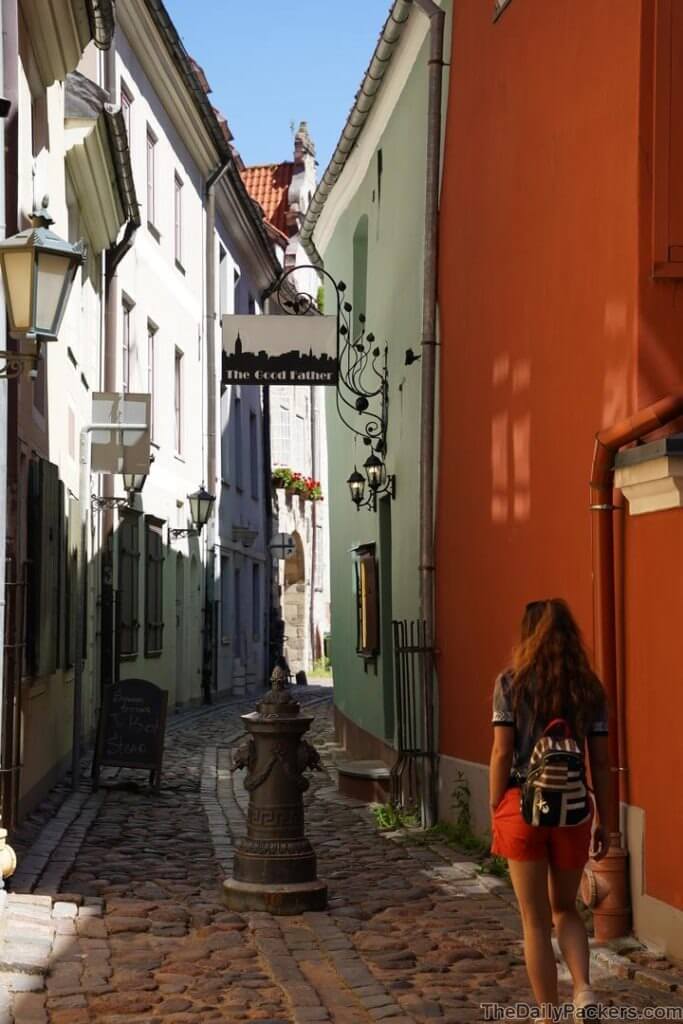
Once you’re in the city center, Riga is very walkable. It’s not a large capital, and most of the main attractions—especially in the Old Town and surrounding neighborhoods—are within easy walking distance. Strolling around is actually one of the best ways to soak in the atmosphere, admire the art nouveau buildings, and discover hidden courtyards and local cafés.
The only main site located further out is the Latvian Ethnographic Open-Air Museum, which you’ll need to reach by public transport or car.
That said, if you want to cut down on walking or reach a few neighborhoods outside the center, Riga has an excellent network of trams, buses, and trolleybuses. Tickets are affordable and can be purchased from kiosks or directly through the Rīgas Satiksme app. You can also use Bolt (the local Uber equivalent) for quick rides across the city.


We recommend to rent a car through Discover Cars with free cancellation. Book your rental car here.
When to Visit
Riga is a year-round destination, but the best time to visit depends on the kind of experience you’re after:
- Late Spring to Early Autumn (May to September): This is the best time to visit Riga if you want to enjoy outdoor cafés, strolls through the Old Town, and long daylight hours. June to August are the warmest months, with average temperatures around 20–25°C. Summer is also the season for festivals, open-air concerts, and cultural events—expect a lively, vibrant atmosphere.
- Autumn (October to early November): If you’re into cozy vibes and fewer tourists, early autumn can be magical. The parks turn golden, the city feels quieter, and accommodation prices start to drop. Just be prepared for shorter days and some rain.
- Winter (December to February): Riga in winter has a fairytale feel—especially around Christmas, when the Old Town lights up with markets, mulled wine, and festive decorations. Snow is likely, and temperatures often dip below freezing, but if you don’t mind the cold, it’s a beautiful and peaceful time to visit.
- Early Spring (March to April): These months can still feel chilly, and the city is just waking up from winter. It’s a quieter and less popular time to visit, but if you’re looking for a budget-friendly trip with fewer crowds, it’s worth considering

Where to Stay
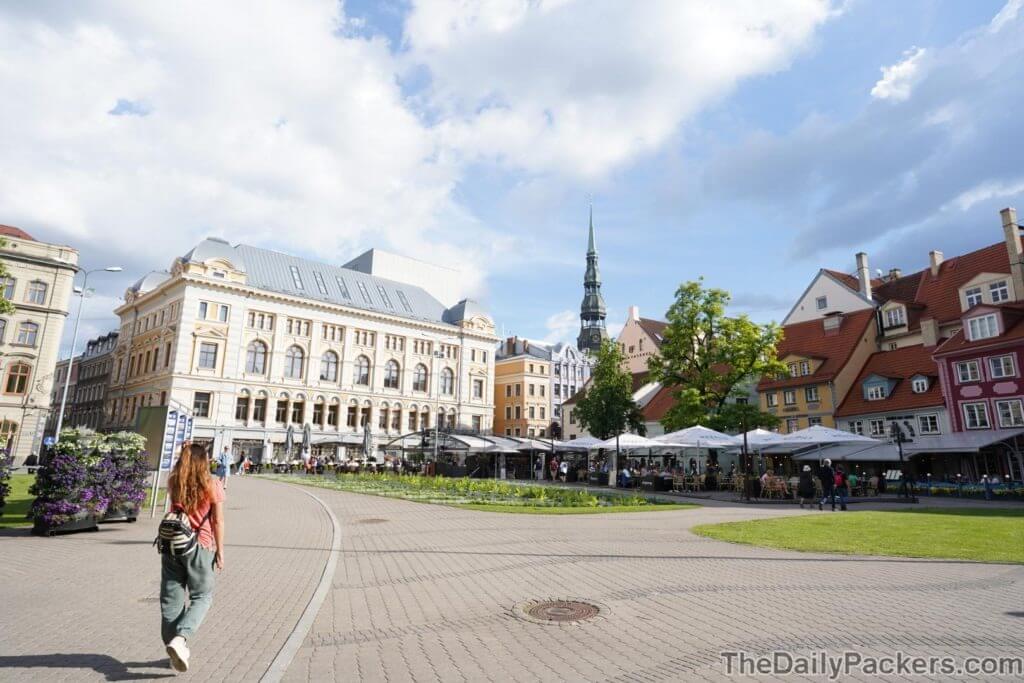
Whether you’re traveling on a budget or looking for a bit of luxury, Riga offers great accommodation options right in or near the Old Town.
- (€) Emily: A simple yet stylish budget-friendly option with cozy rooms and a great central location. Perfect if you’re looking for comfort without breaking the bank.
- (€€) Konventa Sēta Hotel – Keystone Collection: Set in a restored historic building right in the heart of the Old Town, this charming mid-range hotel blends modern comfort with old-world character. You’ll be steps away from all the main sights.
- (€€€) Grand Hotel Kempinski Riga: If you’re after luxury, this 5-star hotel offers elegance, spacious rooms, a wellness center, and stunning views of the Opera House. A perfect treat-yourself stay for a memorable trip.


Here are all your accommodation options in Riga
What to Eat
While we usually stick to our regular diet, we couldn’t resist trying some local Latvian specialties during our stay in Riga—and it was totally worth stepping out of our comfort zone.
- Province: Located in the city center near the river, this traditional Latvian restaurant gave us a real taste of local cuisine. We tried sprats (a small smoked fish), green pea soup served in rye bread, and marinated herring. The flavors were bold and earthy—definitely something different, but an authentic experience we were glad to try.
- Vērmane Garden: For a simple and local lunch, we stopped at a café in Vērmane Garden, one of the city’s oldest public parks. We had a plate of boiled potatoes and cabbage, a comforting, no-fuss meal that’s very typical in the region.
- Parunāsim: Tucked away in a quiet courtyard of the Old Town, Parunāsim is often called the most romantic café in Riga. With its cozy interior, charming decor, and peaceful vibe, it was the perfect place to relax with a coffee after all the exploring.
If you’re looking to dive deeper into Latvian cuisine, here are a few other dishes to look out for:
- Grey peas with bacon (Pelēkie zirņi ar speķi) – considered the national dish
- Rye bread (Rupjmaize) – dark, dense, and served with everything
- Cold beet soup (Aukstā zupa) – a vibrant pink soup popular in summer
- Kārtojums – a traditional dessert made with rye bread, whipped cream, and berries
- Kvass – a fermented rye drink, somewhere between a soda and a beer


Tip: If you want to discover more foods, try the Central Market Traditional Food Tour
Best things to do in Riga
Wander Through the Charming Streets of Riga’s Old Town
For us, the heart of Riga was simply strolling through its Old Town (Vecrīga)—and it quickly became one of our favorite parts of the trip. With its cobblestone alleys, pastel façades, and a mix of Gothic, Baroque, and Art Nouveau architecture, Riga’s historic center feels like stepping into a storybook.
Every corner seems to reveal a hidden courtyard, a charming café, or a striking church tower. Whether you’re into photography, architecture, or just aimless wandering, the Old Town is the perfect place to slow down and soak it all in.
This UNESCO World Heritage site is where you’ll find many of the best things to do in Riga, from iconic landmarks to cozy coffee shops. It’s compact, walkable, and buzzing with atmosphere—especially in the warmer months when terraces spill out into the streets.
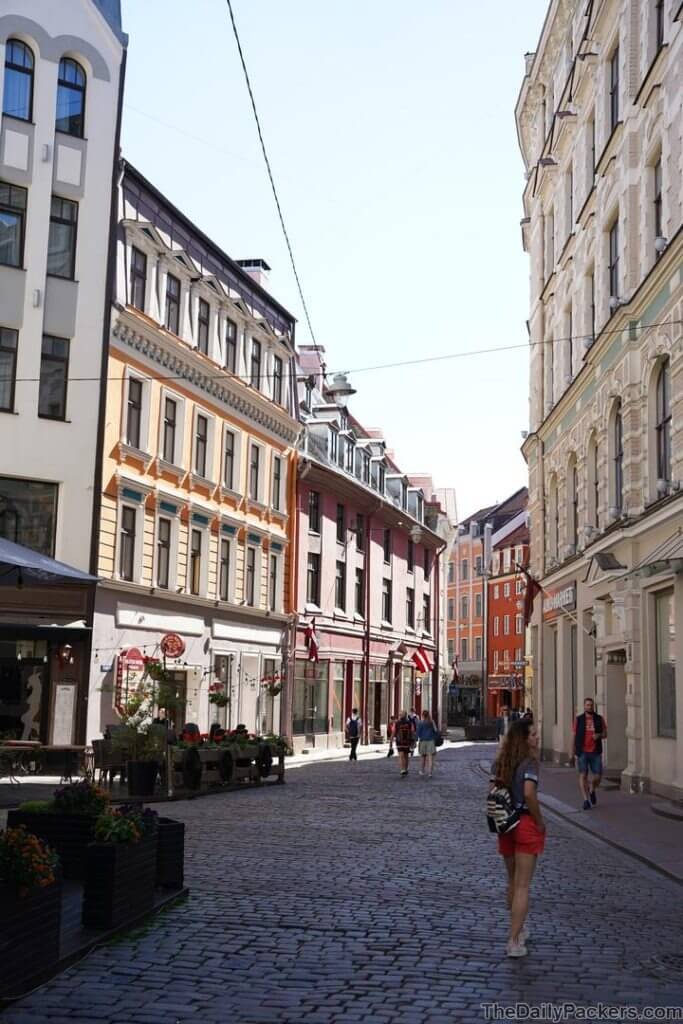
Tip: Interested in learning more about Riga? The Guided Old Town Walking Tour is the best.
Climb St. Peter’s Church Tower for the Best View of Riga
Located right in the heart of the Old Town, St. Peter’s Church is one of Riga’s most iconic landmarks. Originally built in 1209 and rebuilt several times over the centuries, it now stands as a striking example of Gothic and Baroque architecture—and a symbol of the city’s layered history.
While the church itself is beautiful, the real highlight is the bell tower. For €9 per person, you can take the elevator up to the viewing platform—and we have to say, it’s worth every cent. From the top, you get a breathtaking 360-degree view over Riga, with the red rooftops of the Old Town, the Daugava River, and the towering skyline all stretching out below.

Step Back in Time at the House of the Blackheads
One of the most unique and eye-catching landmarks in Riga’s Old Town, the House of the Blackheads is a must-see. Originally built in the 14th century, it served as the headquarters for the Brotherhood of Blackheads—a guild of unmarried merchants, shipowners, and foreign traders who played a big role in Riga’s economic life during the Middle Ages.
Although it was heavily damaged during World War II and later rebuilt, the building today is a stunning reconstruction that reflects its original grandeur. Its ornate façade and rich detailing make it one of the most photographed spots in the city.
Today, the House of the Blackheads is a museum, offering a glimpse into the city’s mercantile history, with opulent interiors, historical artifacts, and occasional cultural events hosted inside.

Here are all your accommodation options in Riga
Admire the Grandeur of Riga Cathedral
Also known as The Cathedral Church of Saint Mary, Riga Cathedral is one of the city’s most iconic and historic landmarks. As the largest medieval church in the Baltics and a functioning Evangelical Lutheran cathedral, it holds a central place in Latvia’s religious and cultural heritage.
With its mix of Romanesque, Gothic, Baroque, and Art Nouveau elements, the cathedral is a true architectural patchwork—reflecting centuries of transformation. Its silhouette is instantly recognizable and has become a symbol of the city, often featured in paintings, photographs, and travel documentaries.
Inside, you’ll find an atmosphere of quiet grandeur and one of the world’s most famous pipe organs, making it a popular venue for classical concerts.

Tip: Interested in learning more about Riga? The Guided Old Town Walking Tour is the best.
Stop by the Three Brothers, Riga’s Oldest Homes
As you wander through the Old Town, make sure to pause at the Three Brothers—a charming complex of three historic houses standing side by side. Together, they make up the oldest group of residential buildings in Riga, each one reflecting a different era of architectural style and home design.
The oldest house dates back to the 15th century, with its thick stone walls and Gothic touches. The middle one, built in the 17th century, features Dutch Renaissance influences, while the youngest brother from the late 17th century showcases Baroque elements.
If you’re curious to learn more, you can step inside—today, the Three Brothers are home to the Latvian Museum of Architecture, which offers a small but insightful look into the country’s building traditions.

See the Presidential Residence at Riga Castle
Just a short walk from the Old Town, Riga Castle sits quietly along the banks of the Daugava River. Originally built in 1330, this historic fortress has been rebuilt and renovated many times, and today it blends medieval foundations with a more modern appearance.
Despite its understated look, Riga Castle holds great importance—it’s the official residence of the President of Latvia and the seat of the Latvian government. Parts of the castle are also home to several national museums, including the Museum of the History of Latvia and the Museum of Foreign Art.
While access inside may be limited due to its official functions, it’s still worth passing by to appreciate its history and significance in Latvian statehood.


Tip: We use the DJI Action 4 to film our vlogs — compact, durable, and perfect for capturing every adventure.
Walk Through History at the Swedish Gate
Tucked away in the Old Town, the Swedish Gate is a small but fascinating remnant of Riga’s medieval past. Built in 1698, it was once part of the city’s fortification wall and served as an access point to the military barracks outside the old city.
Today, it’s the only surviving gate of the original eight that once protected Riga, making it a rare and special find. The gate opens onto one of the most charming little corners of the Old Town, with cobbled streets, historic façades, and a peaceful, almost storybook atmosphere.
It’s a quick but meaningful stop as you explore the hidden corners of Riga’s past.

Tip: We never travel without our DJI Mini 3 PRO drone anymore — it’s totally worth having to capture places from a whole new perspective.
Spot the Famous Felines on the Roof of the Cat House
One of Riga’s quirkiest landmarks, the Cat House is easy to recognize thanks to the two black cat sculptures perched on its rooftop—arched backs, raised tails, and a hint of mischief in their posture.
Built in 1909 by architect Friedrich Scheffel, the building combines medieval architectural elements with touches of Art Nouveau, blending right into the surrounding streets of central Riga. The story behind the cats varies depending on who you ask—some say they were placed to mock a rival guild across the street, others see them as symbols of good luck.
Whatever the origin, the Cat House adds a playful twist to the city’s architectural mix and is definitely worth a quick stop (and a photo).

Tip: Interested in learning more about Riga? The Guided Old Town Walking Tour is the best.
Admire the Elegance of the Latvian National Opera
Situated between the Old Town and the modern part of the city, the Latvian National Opera is one of Riga’s most elegant buildings. Its neoclassical façade stands proudly within Bastejkalna Park, offering a beautiful blend of culture and green space right in the city center.
If you’re visiting during the season—from mid-September to the end of May—you can catch a live opera, ballet, or classical music performance inside the grand hall. Even if you’re not attending a show, the building itself is worth admiring, especially when it’s lit up in the evening.

Here are all your accommodation options in Riga
Reflect at the Freedom Monument in Bastejkalna Park
While strolling through Bastejkalna Park, you’ll come across one of Latvia’s most important landmarks—the Freedom Monument. Erected to honor the soldiers who died during the Latvian War of Independence, the monument stands as a powerful symbol of the country’s freedom, independence, and national pride.
At 42 meters tall, it’s hard to miss. Topped by the figure of Liberty holding three stars—representing the historical regions of Latvia—the monument is a place of reflection and national significance. It’s often the site of public gatherings, ceremonies, and quiet moments of remembrance.
It’s not just a monument; it’s the heart of Latvia’s story.

Unwind in the Green Calm of Bastejkalna Park
Perched on the edge of the Old Town, Bastejkalna Park is a peaceful green space that, for us, felt like the natural border between historic Riga and the more modern city. With its gentle walking paths, bridges, and flowerbeds, it’s the perfect place to slow down and take a break from sightseeing.
The park stretches along the canal and is beautifully landscaped, with benches, sculptures, and views of nearby landmarks like the Freedom Monument and Latvian National Opera. Whether you’re just passing through or looking for a quiet spot to relax, Bastejkalna Park is one of the most charming corners of central Riga.


Check our Google Map of the Baltic States
Visit the Glorious Nativity of Christ Cathedral
One of the most striking buildings in modern Riga is the Nativity of Christ Cathedral—a stunning Neo-Byzantine church built between 1876 and 1883, during Latvia’s time under the Russian Empire. With its shimmering golden domes and richly detailed façade, it’s impossible to miss as you explore the city beyond the Old Town.
The cathedral is free to visit and offers a peaceful, atmospheric interior filled with icons, chandeliers, and colorful frescoes. Whether you’re into history, architecture, or just want to see something beautiful, it’s well worth a stop.

Relax Like a Local at Vērmane Garden
Vērmane Garden is the oldest public park in Riga and still one of the city’s favorite green spaces. Covering around 5 hectares, this peaceful spot sits just outside the Old Town and offers a mix of shaded paths, fountains, flowerbeds, and lively atmosphere.
The garden’s name is actually a Latvian adaptation of its original German name, reflecting the city’s layered history. When we visited, we stumbled upon a small flea market and a charming food stand serving up local Latvian dishes for lunch—simple, hearty, and perfect for an authentic experience.
It’s a great place to take a break, people-watch, or enjoy a laid-back picnic in the heart of the city.

Check our Google Map of the Baltic States
Explore Latvian Creativity at the National Museum of Art
The Latvian National Museum of Art is a must for anyone interested in art, culture, or simply beautiful architecture. It holds the richest collection of national art in Latvia, with over 52,000 works showcasing the evolution of professional art in the Baltic region—from the mid-18th century to the present day.
Beyond its impressive exhibitions, the museum is also worth admiring from the outside. Its grand façade, elegant detailing, and domed roof make it one of the most beautiful buildings in Riga—a favorite spot for photographers and architecture lovers alike.

Tip: We use the DJI Action 4 to film our vlogs — compact, durable, and perfect for capturing every adventure.
Stroll Down Albert Street for Riga’s Best Art Nouveau Architecture
If you’re a fan of architecture, Albert Street (Alberta iela) is an absolute must-visit in Riga. This elegant street is the heart of the city’s famous Art Nouveau district, home to some of the most elaborate and beautifully preserved facades in all of Europe.
The buildings were constructed in 1901, during Riga’s Art Nouveau boom, and the street was named after Bishop Albert, the city’s founder in 1201. Every building here is a masterpiece, with intricate carvings, mythological figures, and ornate balconies—don’t forget to look up!
It’s one of the best places in the city to appreciate Riga’s artistic heritage and take some truly stunning photos.


Read: All our gears and equipments for hiking, blogging, vlogging and so much more…
Experience Local Life at Riga Central Market
f you’re looking for a more authentic, local experience, make your way to the Riga Central Market—Europe’s largest market and bazaar. Housed in five massive former Zeppelin hangars, this bustling space is not just a place to shop, but a landmark in itself.
Planned in 1922 and built between 1924 and 1930, the market is considered one of the most remarkable 20th-century architectural structures in Latvia. In 1998, it was added to the UNESCO World Heritage Site list along with Riga’s Old Town.
Inside, you’ll find just about everything: fresh fruits and vegetables, meats, fish, spices, cheeses, flowers, clothes, household items, and even natural remedies. It’s where locals shop and visitors get a taste of daily life in Riga. Don’t miss the food stalls and bakeries—you might just find your next favorite snack.

Tip: If you want to discover more food, try the Central Market Traditional Food Tour
Take in the Skyline from the Latvian Academy of Sciences
A bit further from the Central Market, you’ll spot one of Riga’s most striking and unusual landmarks: the Latvian Academy of Sciences. Often nicknamed “Stalin’s birthday cake” due to its Soviet-era architecture, this towering structure is impossible to miss.
While it serves as the official science academy of Latvia—bringing together some of the country’s leading researchers and academics—it’s also open to visitors. For a small fee, you can head up to the rooftop observation deck, which offers panoramic views over Riga, including the Old Town, Central Market, and beyond.
It’s a great alternative to more crowded viewpoints and gives you a unique perspective on the city’s mix of history and modern life.

Here are all your accommodation options in Riga
Cross the River to See the Castle of Light
The National Library of Latvia is one of Riga’s most modern and eye-catching landmarks. Located across the Daugava River, this striking glass structure is also known as the Castle of Light, symbolizing knowledge and cultural rebirth.
Founded in 1919, shortly after Latvia gained independence in 1918, the library has grown into a major national cultural institution, operating under the Ministry of Culture. It houses millions of publications and serves as a hub for education, exhibitions, and events.
Even if you don’t go inside, the architecture alone makes it worth the detour. But if you do visit, you’ll find a peaceful atmosphere and sometimes even panoramic views from the upper floors.

Check our Google Map of the Baltic States
Step Back in Time at the Ethnographic Open-Air Museum of Latvia
Located just outside of Riga, the Ethnographic Open-Air Museum of Latvia is one of the most fascinating ways to experience the country’s rural history. Spread out in a peaceful lakeside forest, the museum recreates entire traditional Latvian villages, complete with houses, barns, windmills, and workshops from different regions and time periods.
Each building is staffed by friendly guides who are happy to share stories, answer questions, and bring the exhibits to life. It’s like walking through a living history book—immersive, quiet, and incredibly authentic.
Entrance is only €4 per person, and in our opinion, it’s absolutely worth it. In fact, this was one of the only museums we visited during our Baltic road trip, and it ended up being one of our favorites.

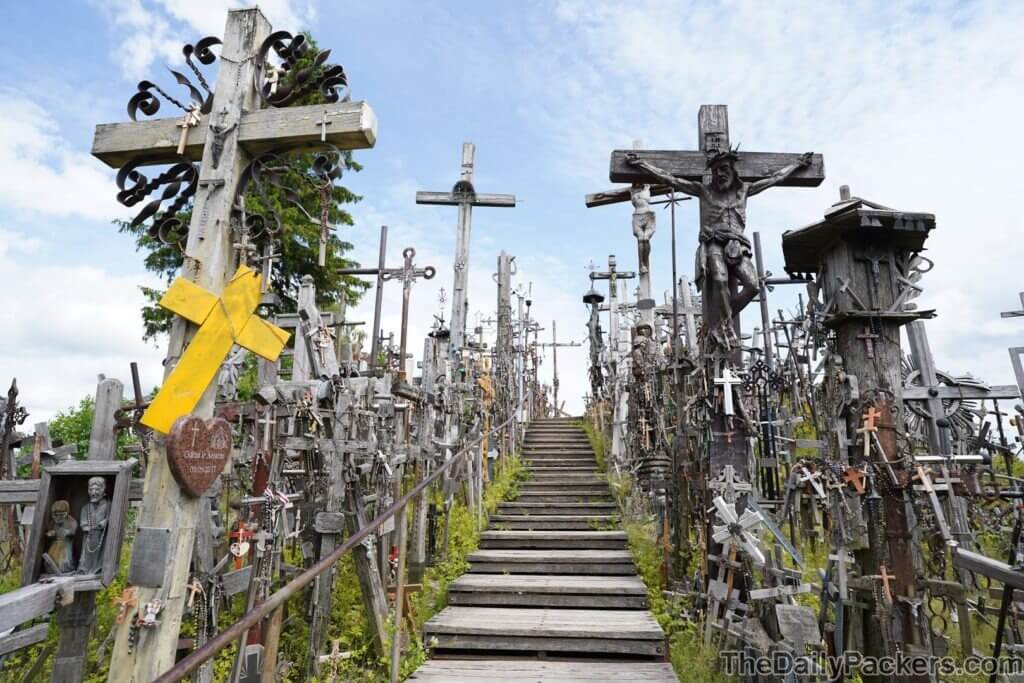
Visit the Hauntingly Beautiful Hill of Crosses
Located near the city of Šiauliai in northern Lithuania, the Hill of Crosses is one of the most unique and moving places you can visit in the Baltics. This sacred site is covered in over 100,000 crosses, crucifixes, statues, and rosaries—placed there by pilgrims, travelers, and locals as symbols of faith, remembrance, and resistance.
No one knows exactly when the first cross appeared, but the site gained major significance during Soviet occupation, when placing a cross here was a quiet act of defiance. Despite repeated attempts by the Soviets to bulldoze the site, locals kept returning—placing more crosses, again and again.
Today, the Hill of Crosses is a peaceful, powerful place that’s open 24/7 and free to visit. Whether you’re religious or not, it’s a deeply atmospheric stop that leaves a lasting impression.
How to Get There:
- From Riga: It’s around a 2.5-hour drive south, making it an ideal stop on your way into Lithuania.
- From Vilnius: Roughly 2.5–3 hours by car or a train to Šiauliai + short taxi ride.
Tip: This highly rated tour is amazing to visit the hill of crosses from Riga.
More Things to Do in Riga (and a Few to Skip)
If you have more time in Riga and want to dive deeper into its history, consider visiting the Museum of the Occupation of Latvia. It offers a sobering but important look into Latvia’s experience under Soviet and Nazi rule and gives great context to the country’s resilience and identity today.
A Couple of Things Not to Do:
- Latgale Market: We made the trip out there, but unfortunately, most of it was closed. Only a few stalls were open, and there really wasn’t much to see.
- Monument to the Liberators of Soviet Latvia and Riga from the German Fascist Invaders: This monument has been closed and dismantled, so it’s no longer a stop worth making.
Here are all your accommodation options in Riga
Gauja National Park
If you’re craving nature during your time in Latvia, Gauja National Park is the perfect escape. Located just an hour’s drive from Riga, it’s the oldest and largest national park in the country, and one of the most scenic spots in the Baltics.
Nicknamed the “Switzerland of Latvia,” the park is full of forests, sandstone cliffs, rivers, caves, and castles—making it a dream for hikers, cyclists, and history lovers alike. The Gauja River winds through the park, offering opportunities for canoeing or peaceful riverside walks.
Some highlights not to miss:
- Sigulda: A charming town often used as a base for exploring the park, home to the Sigulda Castle ruins and a bobsleigh track you can ride in summer.
- Turaida Castle: A fairytale red-brick castle perched on a hill with amazing views.
- Gutmanis Cave: The largest cave in the Baltics, covered in centuries-old inscriptions.

Riga Itinerary: What to See and Do
This itinerary is based on what we did and how we did it. It is quite intense and if you have more time, you can easily be spending 4 days in Riga.
Day 1 – Explore the Heart of Riga
- Start with the best city view from St. Peter’s Church
- Pop by the House of the Blackheads
- Stroll around Vecrīga (Old Town)
- Visit Riga Cathedral
- Pass by the Three Brothers and the Latvian Museum of Architecture
- Stop at Riga Castle
- Walk under the Swedish Gate
- Spot the famous cats on the Cat House
- Head toward the Latvian National Opera
- Pause at the Freedom Monument
- Discover the peaceful paths of Bastejkalna Park
- Pop into the Latvian National Museum of Art
- Visit the Riga Nativity of Christ Orthodox Cathedral
- Have a local lunch at Vērmane Garden
- Wander through Albert Street to admire Art Nouveau facades
- Do some shopping at the Riga Central Market
- Optional: Walk to the Latvian Academy of Sciences for a rooftop view
- Cross the river to see the National Library of Latvia
- Note: The Monument to the Liberators has been dismantled
Day 2 – Step Back in Time
- Visit the Ethnographic Open-Air Museum of Latvia just outside the city
- Continue your road trip north toward the Gauja National Park
Read: The Perfect 2-Week Baltic States Itinerary
About the authors
We are Alex and Tina, a French-Serbian couple who met in China back in 2014. We spent three incredible years there before making France our home. Our shared passion for travel has been the heartbeat of our relationship for over 12 years, taking us across 44 countries and counting.
We launched TheDailyPackers in 2019 as a way to document our adventures. In 2026, we reached a major milestone by officially turning our blog into our full-time job. While we are still growing toward financial independence through this platform, every article we write is fueled by our mission to make your voyages easier through in-depth guides, honest advice, and the lessons we’ve learned from our own mistakes.
Our journey has not been without its storms. In 2023, our world changed forever when our first son, Poppy, was stillborn on November 25th. It was, and remains, the hardest chapter of our lives. In 2025, we were blessed with our second little boy, Milo. He has since joined our traveling tribe, and you’ll be seeing him—and the reality of traveling with a little one-on the blog more and more.
We hope to inspire you to explore the world with curiosity and resilience. Thank you for being part of our story.
You may also like those related posts
Soomaa National Park: Estonia’s Best national park in 2025
5 Essential Argentina Travel Tips: SIM Cards, Transport & More
Travelling with a Newborn: Our First Road Trip with a Baby
Dambulla Cave Temple: Sri Lanka’s most unique temple
Dar Baba Diali: Unique stay in Essaouira’s best Guesthouse
25 Best things to do in the Black Forest, Germany, in 5 days or more
Terracotta Army: Xi’an’s Unmissable Ancient Wonder
Crossing the Peru Bolivia Border: an Absurd chaos
Pssst, did you know that…
If you purchase something through our links, we earn a small fee. However, you still pay the same. Win-win! And one day we may get to be full-time travel bloggers =)
Find Hotels with Booking.com
Do Yoga with KVY
Buy us a Coffee
Rent a car with DiscoverCars
Find Attractions with GetYourGuide
Find Flights with Expedia
Buy an eSIM with Airalo
Get insured with World Nomads
Get ready with Amazon.com