
Introduction
Salvador, the vibrant capital of Brazil’s Bahia state, was our stop right after Jericoacoara and Fortaleza. It has one of the most beautiful historial center we have seen in Brazil.
Home to nearly 3 million people, it pulses with history, culture, and Afro-Brazilian soul. Founded by the Portuguese in 1549, Salvador holds the title of Brazil’s first capital and is one of the oldest colonial cities in the Americas.
The city is uniquely split into two levels—Cidade Alta (Upper City) and Cidade Baixa (Lower City)—separated by an 85-meter escarpment. These two parts have been connected since 1873 by the iconic Elevador Lacerda, Brazil’s first urban elevator.
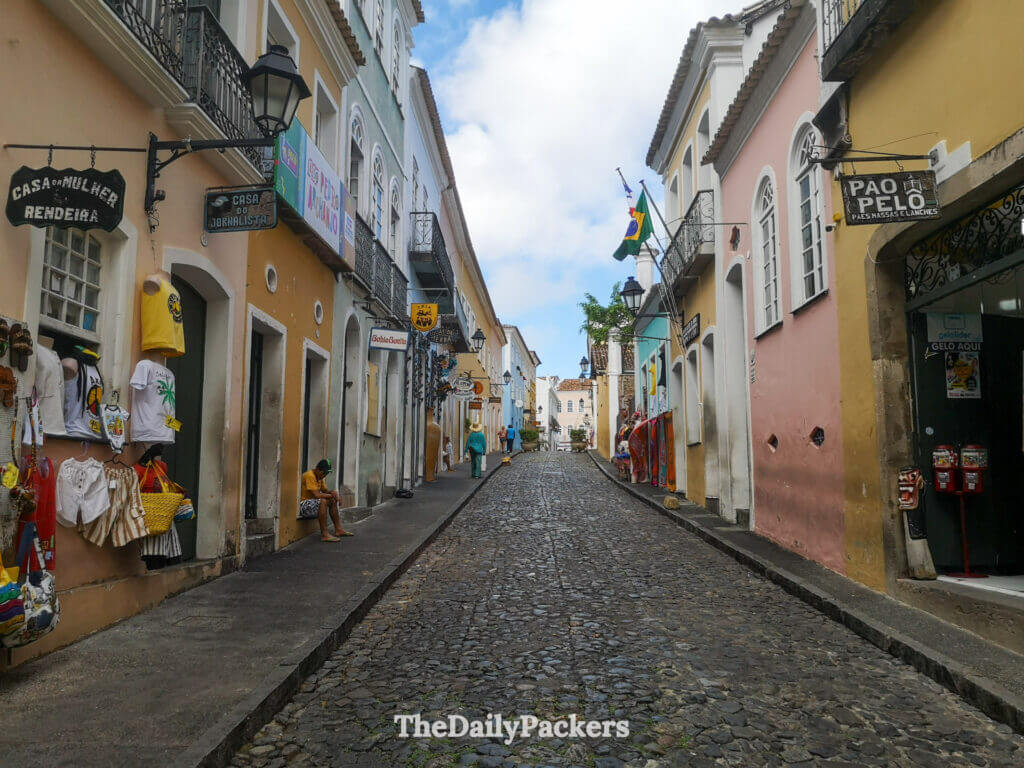
Strolling through the colorful streets of Pelourinho, a UNESCO World Heritage Site, feels like stepping back in time. This historic district is packed with vibrant colonial buildings, centuries-old churches, and the rhythms of capoeira and samba echoing in the air.
Salvador also has a complex and powerful history. As one of the first major slave ports in the Americas, it became the cultural heart of Afro-Brazilian identity. Today, its food, music, religion, and art are infused with that deep African heritage.
And let’s not forget the beaches—Porto da Barra, located in the Barra neighborhood, has earned its place on the list of the best beaches in the world.
Whether you’re here for the culture, the coastline, or the energy of the people, Salvador is an unmissable stop in any Brazilian journey.


Getting there
Salvador is well connected and surprisingly easy to reach, whether you’re flying in from abroad or traveling within Brazil.
By Plane (the easiest way): The main airport, Deputado Luís Eduardo Magalhães International Airport (SSA), is located about 30 km (18 miles) from the city center. It serves both domestic and international flights, with direct routes from major Brazilian cities like São Paulo, Rio de Janeiro, Brasília, and Recife. International flights often come from Portugal, Panama, or nearby South American countries.
From the airport, you can reach the city by:
- Taxi or Uber (40–60 BRL, 30–45 min) – The street going off the airport is beautiful with lots of bamboo trees.
- Airport shuttle (if offered by your hotel)
- City bus (budget-friendly but slower)
- Subway + Bus Combo: Take the metro from the airport to the city (Linha 2), then connect with a bus or taxi to your final destination.
By Bus: If you’re already in Brazil and traveling on a budget, you can reach Salvador by long-distance bus. The Rodoviária de Salvador (main bus station) connects Salvador to cities like Recife, Maceió, Aracaju, and even as far as São Paulo and Rio. Be prepared for long hours on the road—Brazil is huge!
By Car: Driving to Salvador can be scenic but is best suited for those already traveling the northeast coast. Roads are generally in good condition, but distances can be long.

Moving Around
When it comes to getting around Salvador, Uber was hands-down our go-to—just like in most parts of Brazil. It’s affordable, safe, and super convenient, especially if you’re unfamiliar with the city layout or want to avoid the hassle of figuring out local buses.
You can also consider these options:
- On foot: In historic areas like Pelourinho, walking is the best way to explore. The colorful streets, colonial buildings, and lively squares are made for slow wandering. Just avoid wandering too far off-track, especially after dark.
- Elevador Lacerda: This iconic elevator connects the Upper City (Cidade Alta) with the Lower City (Cidade Baixa) for just a few cents. It’s both a practical and historic way to move around the city’s steep geography.
- Public transport: Salvador has a metro system that connects the airport and key parts of the city, and it’s modern and clean. Buses are more complicated to navigate and not always the safest, especially for tourists unfamiliar with the routes.
- Biking: Salvador does have some bike lanes, especially along the coast in Barra, but the hills and heat make it less appealing for longer distances.
Overall, Uber remains the easiest and most reliable choice—it’s widely used, inexpensive, and ideal for day-to-day travel, airport transfers, or reaching beaches and cultural sights with minimal fuss.

Psst, you can join Tina’s Yoga Studio and get access to hundreds of Yoga, Meditation, and Well-being videos.
When to Visit
Salvador is a vibrant year-round destination, but the best time to visit depends on whether you’re looking for sunny beach days, cultural festivals, or fewer crowds. Here’s a breakdown to help you plan:
- Summer (December–March): This is the high season and the hottest time of the year (30–32°C / 86–90°F). Expect lively energy, packed beaches, and major cultural events like Carnival in February or March. It’s the perfect time for beach lovers and festival seekers, but also the most crowded and expensive.
- Autumn (April–June): Temperatures cool slightly (26–29°C / 79–84°F), and tourist numbers drop. The weather is generally pleasant with short bursts of rain. It’s a great time to explore Salvador’s historical sites and cultural scene without the crowds.
- Winter (July–September): The coolest and wettest time of the year, though still warm by most standards (24–27°C / 75–81°F). Expect occasional rain showers but also great travel deals. A good option if you’re looking for a quieter visit and lower prices.
- Spring (October–November): One of the best times to visit Salvador. The weather is warm (27–30°C / 81–86°F), mostly dry, and the city begins to buzz with energy again as local festivals start to pop up.
Our tip: Visit between September and November for the perfect balance of warm weather, fewer tourists, and a vibrant local vibe. If you’re after the ultimate party, time your trip with Carnival in February for an unforgettable experience.


Where to stay
We spent 3 nights in Salvador, but in hindsight, we think 2 nights would be ideal. That way, you get a full day to explore the main highlights without feeling rushed, especially if you’re combining Salvador with other destinations in Brazil.
Whether you want to stay in the heart of the colonial old town or near the ocean, Salvador has some great options depending on your travel style:
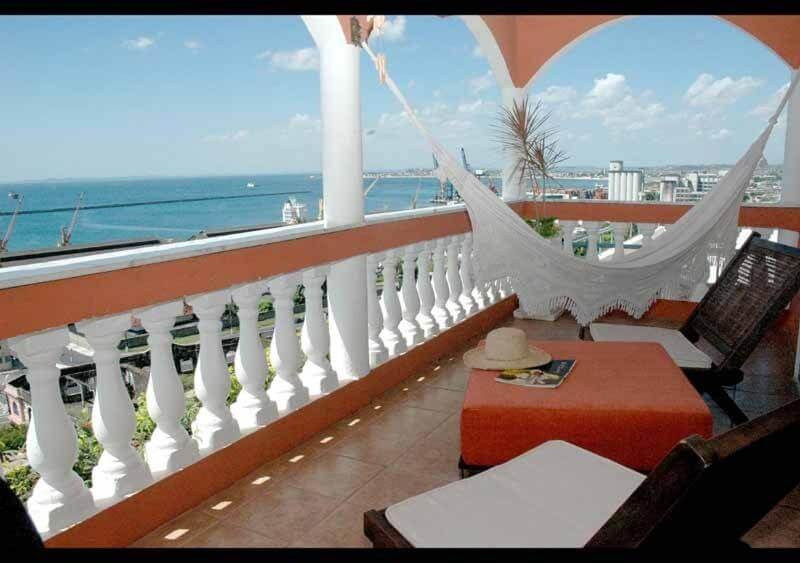
- (€) Bed & Breakfast Villa Carmo – A cozy and affordable option right in the heart of Pelourinho. This charming B&B offers colorful rooms with character and a lovely view over the bay. Ideal if you’re looking for something simple and local.
- (€€) CASA Di VINA Boutique Hotel – Located near the beach in Itapuã, this hotel is a unique tribute to the famous Brazilian poet Vinícius de Moraes. It’s a peaceful, stylish retreat with a garden and pool, perfect if you want to be away from the busy center.
- (€€€) Hotel Villa Bahia – This beautiful colonial mansion in Pelourinho offers elegance, history, and impeccable service. It’s the perfect place to soak up Salvador’s cultural charm while enjoying luxury touches like a rooftop terrace and plunge pool.


Here are all your accommodation options in Salvador
What to eat
Salvador is a true food capital of Brazil, known for its bold flavors and strong Afro-Brazilian culinary roots. Expect lots of coconut milk, dendê oil (palm oil), and spicy touches throughout.Here are some must-try dishes—plus tips for finding vegan or vegetarian options:
- Acarajé: The most iconic street food in Salvador. It’s a deep-fried black-eyed pea dough filled with spicy vatapá (shrimp paste), salad, and more. If you’re vegetarian or vegan, just ask for it sem camarão (without shrimp) and sem vatapá—some vendors will happily fill it with salad, hot sauce, and vegan options.
- Moqueca Baiana: A fish stew with coconut milk, dendê oil, peppers, and cilantro. You can find moqueca de banana da terra or moqueca de legumes in more modern or vegetarian-friendly restaurants.
- Vatapá: A rich paste of bread, peanuts, coconut milk, and dendê oil—often served with rice or acarajé.

Things to do in Salvador
Explore Rio Vermelho
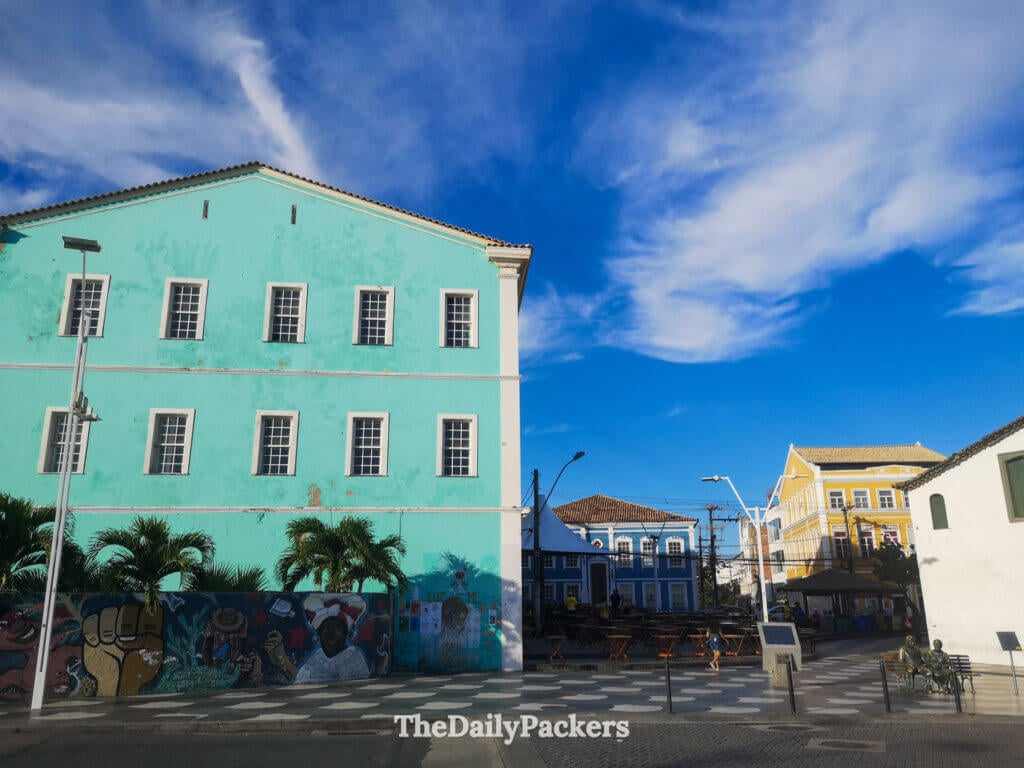
Rio Vermelho is one of the best places to start your time in Salvador because it shows you the city as it really is, not just its postcard version. This coastal neighborhood is lively, slightly chaotic, and deeply local. It’s where people come to live, eat, walk, argue, laugh, and watch the ocean—often all at the same time.

Walking along the seafront, you’ll see fishermen checking their lines on the rocks, locals sitting with a beer in hand, and street vendors selling snacks or coconut water. The coastline isn’t a classic sandy beach you’d lie on all day, but it’s perfect for a long walk and enjoying the vibes.


Watch Sunset from Morro do Cristo
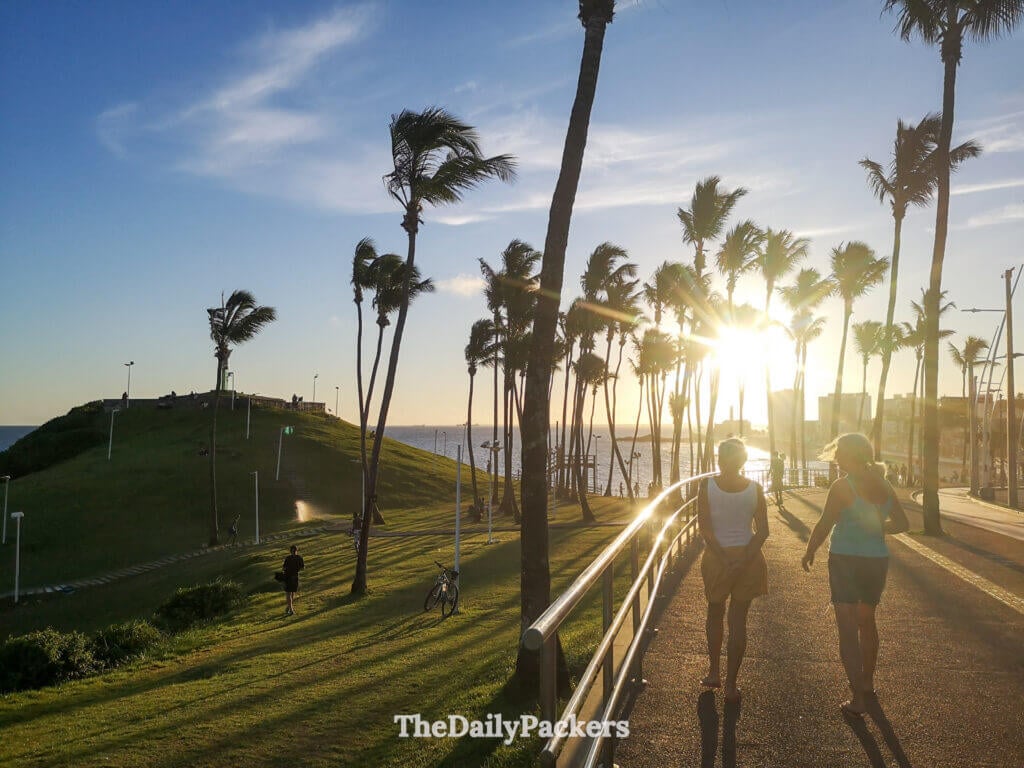
Morro do Cristo is one of the best sunset spots in Salvador, and it’s popular for a reason. Sitting above the Barra coastline, this viewpoint gives you a wide, open view over the ocean, the lighthouse, and the curve of the city stretching away in both directions.
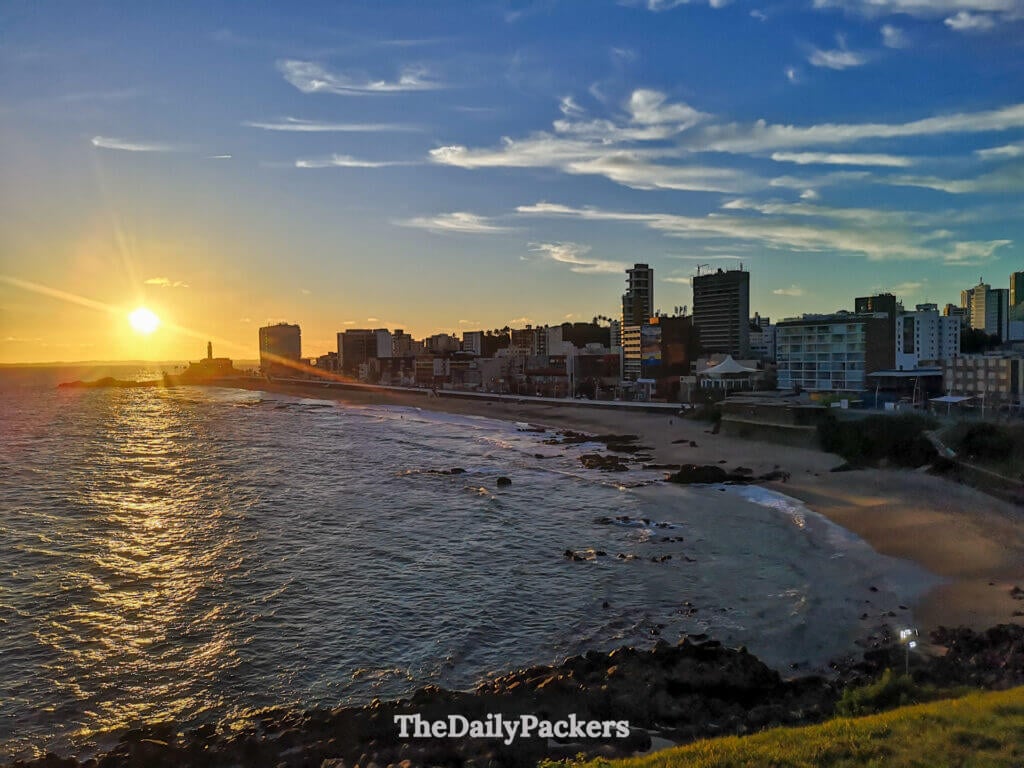
Arrive a bit before sunset and you’ll see people slowly gathering—locals finishing their day, couples with drinks, travelers with cameras. The vibe is relaxed and social without feeling overcrowded. When the sun drops into the Atlantic, the light turns golden and the whole Barra area glows.
When you’re done, it’s easy to call an Uber from nearby and continue your evening elsewhere.
Here are all your accommodation options in Salvador
Wander Through Pelourinho (Historical Center)
Pelourinho is the heart of Salvador’s history, and walking through it feels like stepping into a different rhythm of the city. The colorful colonial buildings, uneven cobblestone streets, and constant sound of music make it impossible to take in all at once. This is a place to wander slowly, not rush through.
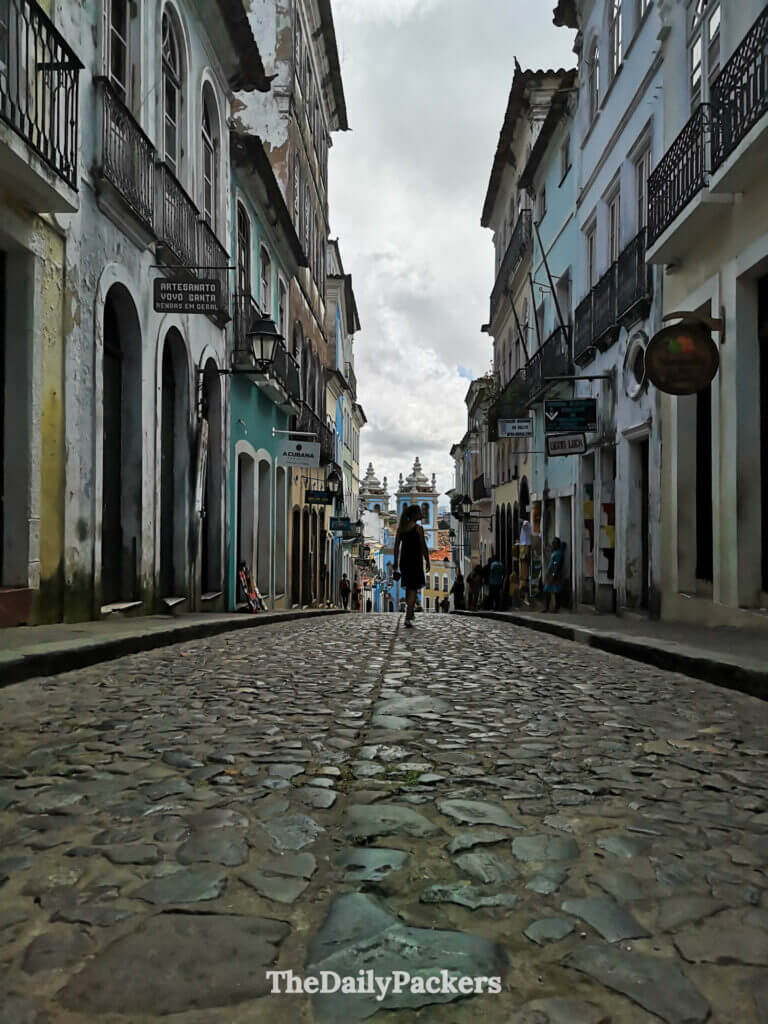
During the day, Pelourinho is lively and intense—school groups, tourists, street vendors, musicians, and capoeira circles all share the same narrow streets. Some areas feel polished, others more raw, but that contrast is part of what makes the neighborhood interesting. Stick to the main streets and squares, keep an eye on your belongings, and take breaks often to absorb the atmosphere rather than trying to see everything in one go.

Psst, you can join Tina’s Yoga Studio and get access to hundreds of Yoga, Meditation, and Well-being videos.
Visit the Memorial of the Municipal Chamber of Salvador
Tucked inside Pelourinho, the Memorial of the Municipal Chamber is an easy place to miss—but it adds useful context to everything you see around you. The building itself dates back to the colonial period and once played a key role in Salvador’s political life, when the city was Brazil’s capital.
Inside, the exhibitions focus on the city’s administrative history, old documents, and how power was organized during colonial times. It’s not a long visit, but it helps connect the colorful streets outside with the deeper, often uncomfortable layers of Salvador’s past. If you’re already wandering Pelourinho, it’s a calm and informative stop away from the noise.

Step Inside the Igreja da Misericórdia
The Igreja da Misericórdia sits quietly along the edge of the historic center, slightly removed from Pelourinho’s busiest streets. Built in the 17th century, it’s one of Salvador’s oldest churches and feels noticeably calmer than many of the grander religious sites nearby.
What makes this church interesting is its location and simplicity. From the outside, it blends almost discreetly into the cityscape, but inside you’ll find traditional colonial details and a peaceful atmosphere.


Tip: We use the DJI Action 4 to film our vlogs — compact, durable, and perfect for capturing every adventure.
Walk Through Praça da Sé
Praça da Sé is one of those places you’ll almost certainly pass through without planning to—but it ends up anchoring your time in Salvador’s historic center. It’s a wide, open square that connects several key landmarks and gives you space to breathe after the tighter streets of Pelourinho.

From here, you get a real sense of the city’s layers: colonial buildings, churches, street vendors, people waiting for buses, tourists figuring out directions. It’s not polished or quiet, but that’s the point. This square feels functional and lived-in, and it’s a good spot to stop, look around, and understand how the old city actually works today.

Step Inside the Cathedral Basilica of Salvador
Right next to Praça da Sé, the Cathedral Basilica is easy to overlook from the outside, but it’s worth stepping in. Built by the Jesuits in the 17th century, it feels more restrained than some of Salvador’s more extravagant churches, yet still carries a strong sense of presence.
Inside, the atmosphere is calm and slightly austere, with dark wood, stone details, and high ceilings that soften the city noise outside. It’s a good contrast to the energy of Pelourinho—less decorative, more reflective—and a place where you naturally slow down for a few minutes before continuing deeper into the historic center.

Visit the Casa do Carnaval da Bahia
Casa do Carnaval da Bahia gives you context to something you’ve probably already felt in Salvador: rhythm is everywhere. This small but well-designed museum walks you through the history of Carnival, from Afro-Brazilian roots to the massive street celebrations Salvador is famous for today.
It’s interactive without being overwhelming, and even if you’re not a museum person, it helps you understand why music, movement, and celebration are so deeply woven into daily life here. A good stop to connect the dots between Salvador’s past and the energy you see in the streets outside.

Here are all your accommodation options in Salvador
Ride the Plano Inclinado Gonçalves
The Plano Inclinado is one of those very Salvador ways of moving around that feels both practical and historical. It connects the upper city to the lower areas, much like the Elevador Lacerda, but with a more local, everyday feel.
Riding it gives you a glimpse into daily life—commuters heading to work, locals carrying groceries, kids hopping on and off without thinking twice. It’s quick, cheap, and slightly old-school, and that’s exactly what makes it interesting. You’re not doing it for the views, but for the experience of moving through the city the same way locals have for generations.

Wander Through Largo Terreiro de Jesus
Largo Terreiro de Jesus is one of those places where Salvador’s energy really hits you. It’s busy, noisy, and full of movement, sitting right between some of the city’s most important churches and historic buildings. You’ll hear music drifting from somewhere, vendors calling out, and people stopping mid-walk to chat or argue about football.

It’s not a place you rush through. Sit on the steps for a few minutes and just watch the scene unfold—street performers, small groups gathering, tourists looking a bit lost, locals completely at ease. This square feels lived-in, not staged, and it’s a good reminder that Salvador’s history isn’t locked in museums—it’s happening out in the open, every day.

Step Inside Igreja da Ordem Terceira de São Domingos de Gusmão
Tucked just off the main flow of Pelourinho, this church is easy to miss—but it’s worth slowing down for. From the outside, it blends into the surrounding buildings, but once inside, the contrast is striking. The interior is calm, restrained, and far less overwhelming than some of Salvador’s more ornate churches.
What makes this stop interesting is the feeling of balance. After the intensity of Pelourinho’s colors, sounds, and crowds, this church offers a quieter pause. It’s a good place to step out of the heat, take a breath, and reset before continuing deeper into the historic center.
Wander Through Largo do Pelourinho
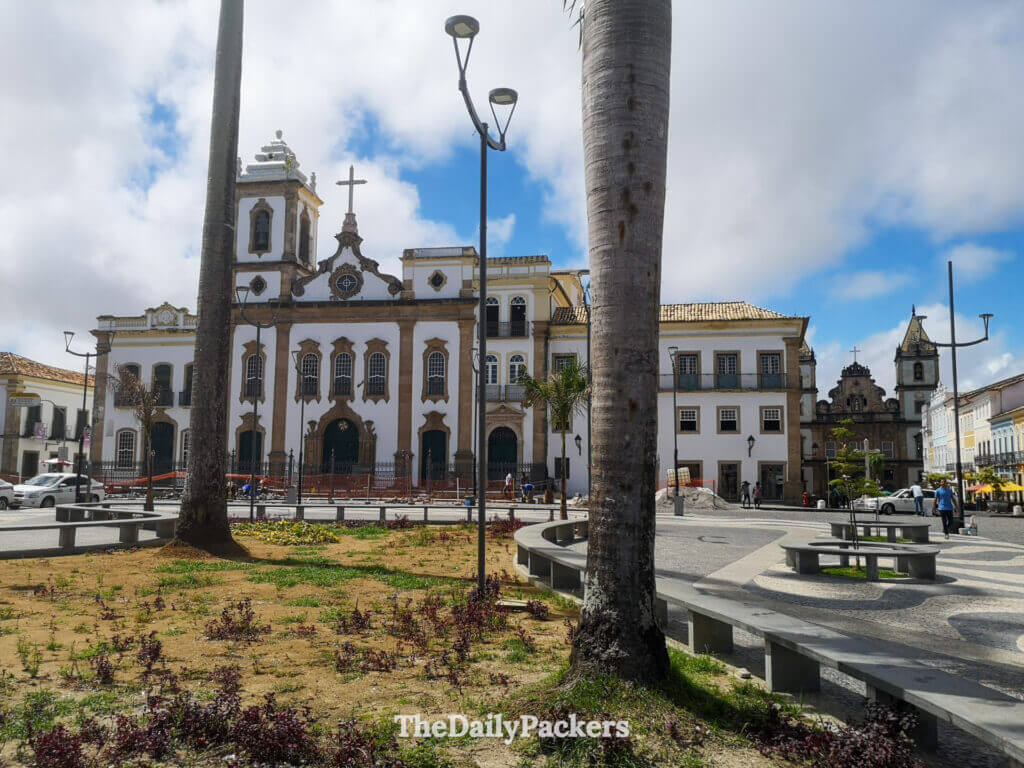
This is the heart of Pelourinho and the place most people picture when they think of Salvador. Colorful colonial houses line the square, music drifts through the air, and there’s almost always something happening—capoeira circles, musicians setting up, or small groups gathering on the steps.
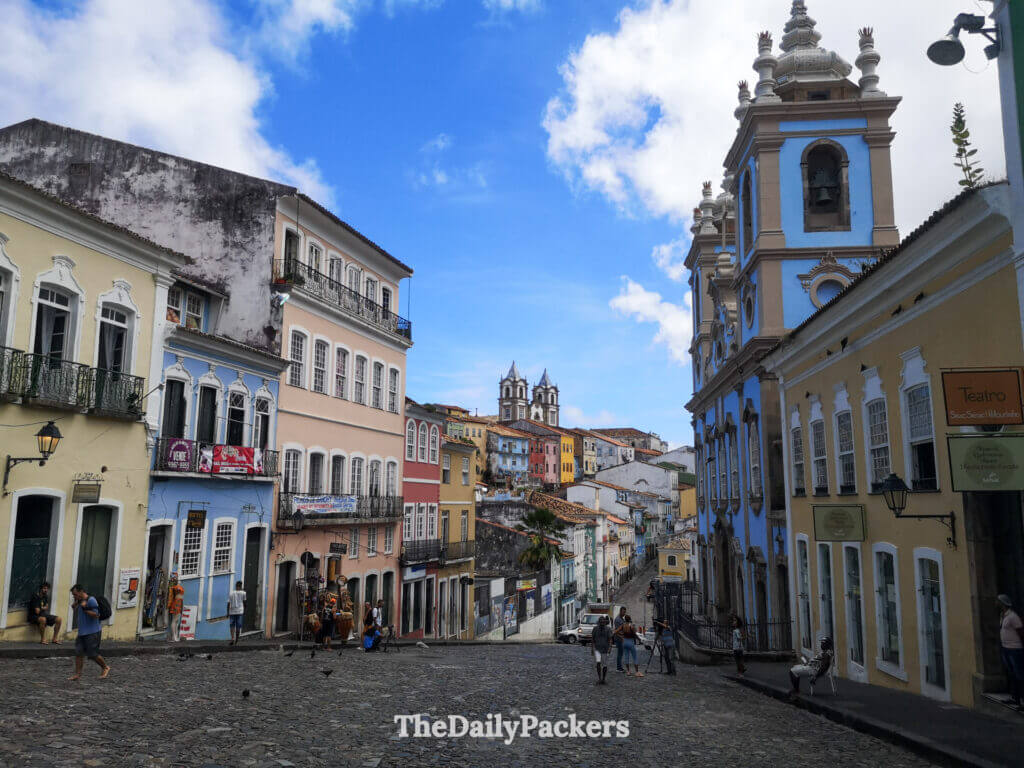
It can feel busy and a bit intense, especially in the middle of the day, but that’s part of the experience. The key is not to rush through it. Walk slowly, sit on the steps for a moment, and just observe. Early morning or late afternoon is our favorite time, when the light softens the colors and the square feels more lived-in than staged.

Psst, you can join Tina’s Yoga Studio and get access to hundreds of Yoga, Meditation, and Well-being videos.
Visit Our Lady of the Rosary of the Black People
This church is one of the most meaningful stops in Pelourinho, even if it doesn’t look as ornate as others nearby. It was built and maintained by enslaved Africans and freed Black communities who were excluded from white churches during colonial times. That history gives the place a weight you can feel as soon as you step inside.
The interior is simple, almost austere, but that’s exactly what makes it powerful. It tells a story of resistance, faith, and community rather than wealth or spectacle. Take a moment to read the plaques and sit quietly—it adds an essential layer of understanding to Salvador and to Pelourinho beyond the colorful façades.

Visit the Foundation Casa de Jorge Amado
This stop adds cultural depth to Pelourinho, especially if you want to understand Salvador beyond churches and squares. Jorge Amado is one of Brazil’s most important writers, and many of his novels are rooted in Bahia’s Afro-Brazilian culture, street life, and social struggles. Visiting his former home helps put a lot of what you see in Salvador into context.
Inside, you’ll find photos, manuscripts, short texts, and temporary exhibitions that explain his work and his connection to the city. Even if you’ve never read his books, the visit is accessible and doesn’t take long. It’s a good pause between outdoor wandering and a nice way to reconnect Pelourinho’s colors, music, and energy with the stories that shaped its identity.

Here are all your accommodation options in Salvador
Step Inside the San Francisco Church
From the outside, the Church and Convent of São Francisco looks almost modest compared to its reputation. Step inside, though, and it hits you instantly. This is one of the most impressive baroque churches in Brazil, covered floor to ceiling with gold-leaf woodwork. It’s overwhelming in the best possible way.
Take your time here. The details are everywhere—walls, ceilings, side chapels—each carved and decorated with scenes that mix religious imagery and colonial symbolism. It also says a lot about Salvador’s history: extreme wealth, deep faith, and stark contrasts. Practical tip: photography rules can change, so check before pulling out your camera, and dress respectfully—this is still an active religious site.

Browse Local Boutiques in Pelourinho
After the churches and museums, slow things down by wandering into Pelourinho’s small boutiques and artisan shops. This is where Salvador’s creative side really shows—handmade jewelry, Afro-Brazilian art, locally designed clothes, musical instruments, and colorful souvenirs that actually feel tied to the city.
Prices vary a lot, so it’s worth taking your time and comparing. Some shops are clearly aimed at tourists, others feel more like small workshops where the owner is happy to explain how something was made. We found this was one of the nicest ways to interact with locals without feeling rushed. Tip: keep your bag close and avoid flashing valuables—Pelourinho is lively, but it’s still a busy tourist area.

Psst, you can join Tina’s Yoga Studio and get access to hundreds of Yoga, Meditation, and Well-being videos.
Ride the Elevador Lacerda
The Elevador Lacerda is one of Salvador’s most practical landmarks—and one of its most iconic. It connects the upper city (Pelourinho) with the lower city in just a few seconds, saving you a long and steep walk. Locals use it daily, which already tells you it’s more than just a tourist attraction.
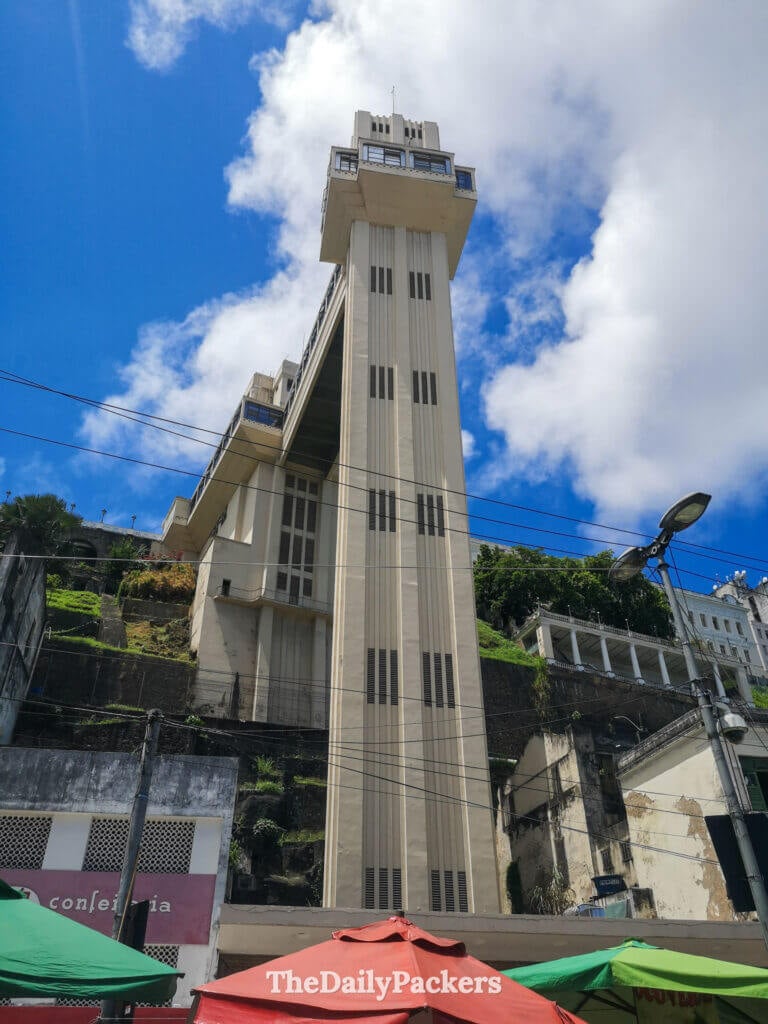
Before going down, take a moment on the upper platform to look out over the Bay of All Saints. The view is wide, busy, and very Salvador: boats moving slowly, the port below, and the city stretching out in every direction. The ride itself is short and inexpensive, but it’s a natural transition point in your day—from colonial streets above to the more commercial, working side of the city below.
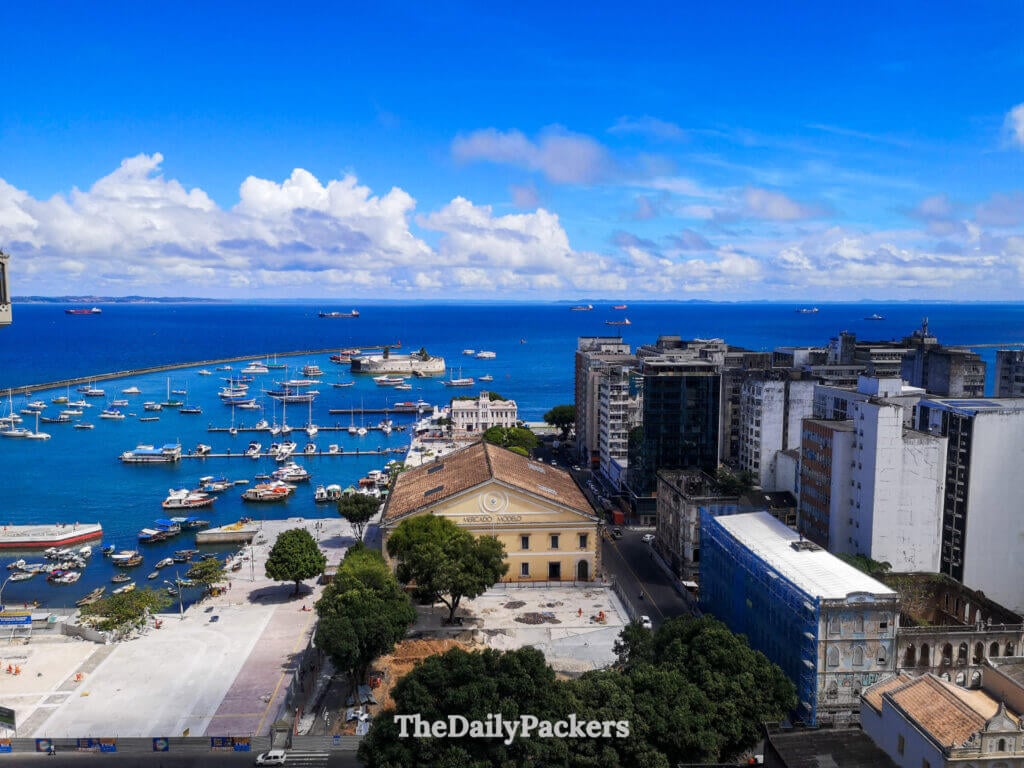
Browse the Mercado Modelo
Right at the bottom of the Elevador Lacerda, Mercado Modelo is hard to miss—and hard to ignore. This large yellow building is packed with souvenir stalls selling everything from handmade jewelry and wooden carvings to Bahian dresses and percussion instruments. Yes, it’s touristy, but it’s also part of Salvador’s everyday rhythm.

Take your time wandering through the aisles rather than rushing to buy. Prices are negotiable, and chatting a bit usually helps. Outside, the square often fills with capoeira circles and musicians, which makes the whole area feel alive. Even if you don’t buy anything, it’s a good place to pause, people-watch, and feel the energy of the lower city before moving on.

See Nossa Senhora da Conceição da Praia
This church is easy to miss if you’re rushing between sights, but it’s worth slowing down for. Nossa Senhora da Conceição da Praia sits close to the waterfront and feels very different from the more ornate churches uphill. It’s calmer, more grounded, and closely tied to Salvador’s maritime history.
Step inside and you’ll notice the blue-and-white Portuguese tiles and a softer, more restrained atmosphere. Sailors used to come here before heading out to sea, and that connection still lingers. It’s a good stop after Mercado Modelo—less crowded, more reflective, and a nice transition before heading toward Barra.

Walk to Farol da Barra
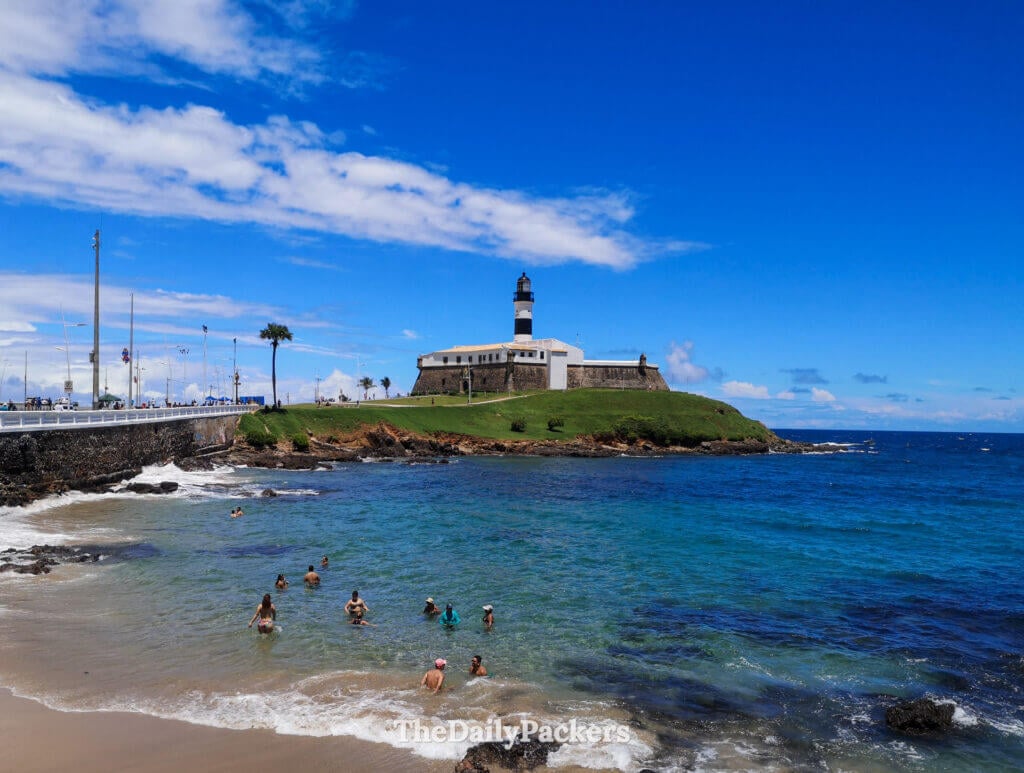
Farol da Barra is one of those places where Salvador really opens up. The lighthouse sits right at the edge of the city, where the bay meets the open ocean, and the scale suddenly feels bigger—more wind, more space, more light.
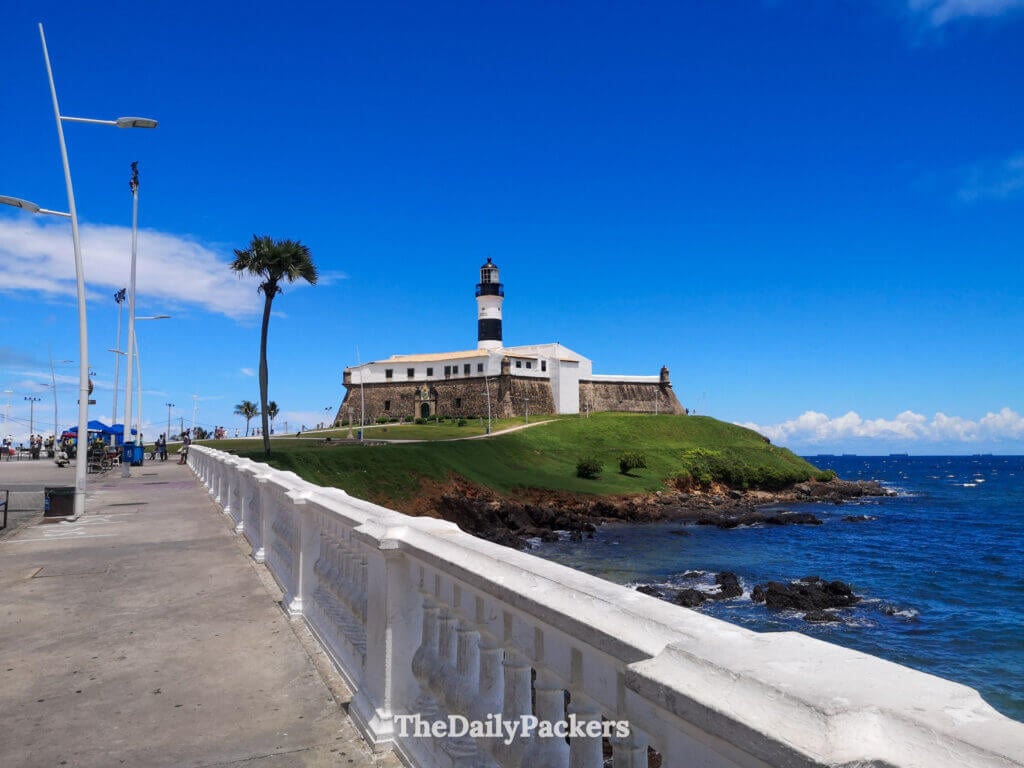
It’s a natural pause in the day. People gather here to walk, sit on the walls, or just watch the waves roll in. Even if you don’t go inside the lighthouse museum, walking around it gives you a strong sense of Salvador’s relationship with the sea, past and present.

Tip: We use the DJI Action 4 to film our vlogs — compact, durable, and perfect for capturing every adventure.
Relax at Farol da Barra Beach
Right next to the lighthouse, Farol da Barra Beach is one of the easiest places to slow down in Salvador. The water here is calmer than on other parts of the coast, protected by the bay, which makes it popular with both locals and visitors.
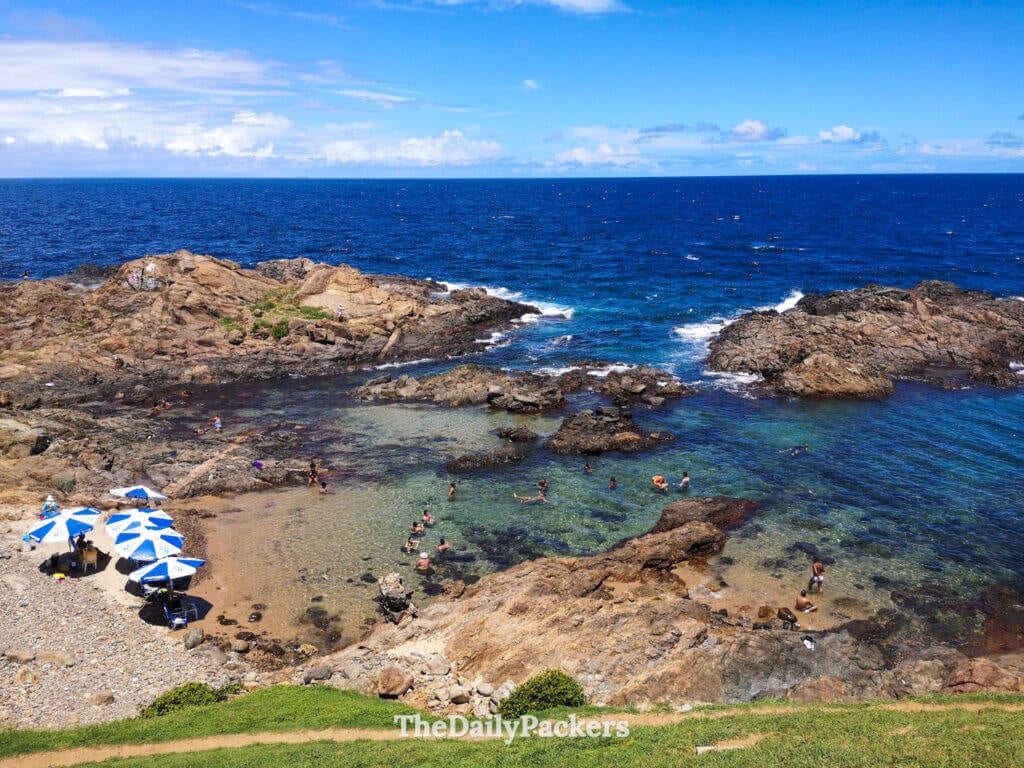
It’s not a wild beach, but that’s exactly the point. People come here to swim, float, chat, and watch the sun drop lower. Grab a spot on the sand, buy a cold drink from a vendor, and let the city noise fade into the background.
Visit Forte São Diogo
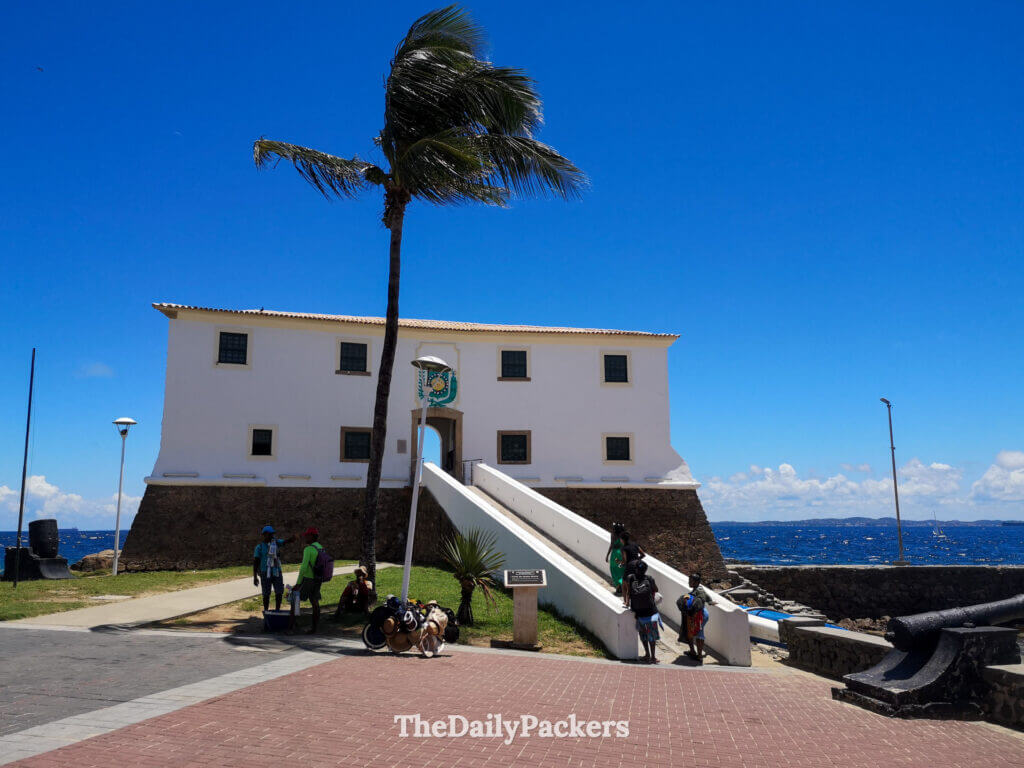
A short walk from the lighthouse, Forte São Diogo is small and often overlooked—but that’s what makes it nice. Built to defend the city, it now feels more like a quiet historical pause between beach stops.
You don’t need long here. A quick walk around is enough to appreciate its position and imagine how strategic this stretch of coast once was. It’s an easy add-on rather than a main highlight.
Psst, you can join Tina’s Yoga Studio and get access to hundreds of Yoga, Meditation, and Well-being videos.
Unwind at Forte São Diogo Beach
Just below the fort, this little beach feels more local and less touristic than Barra’s main stretch. It’s smaller, slightly tucked away, and often used by people who know the area well.

It’s a good place for a quiet swim or a short break if Barra Beach feels too busy. Nothing fancy—just sand, sea, and a slower rhythm.

End the Day at Shopping Barra
Shopping Barra might not be a “must-see,” but it’s practical. After a long day of walking, heat, and sun, it’s a comfortable place to cool down, grab food, or pick up anything you’re missing.
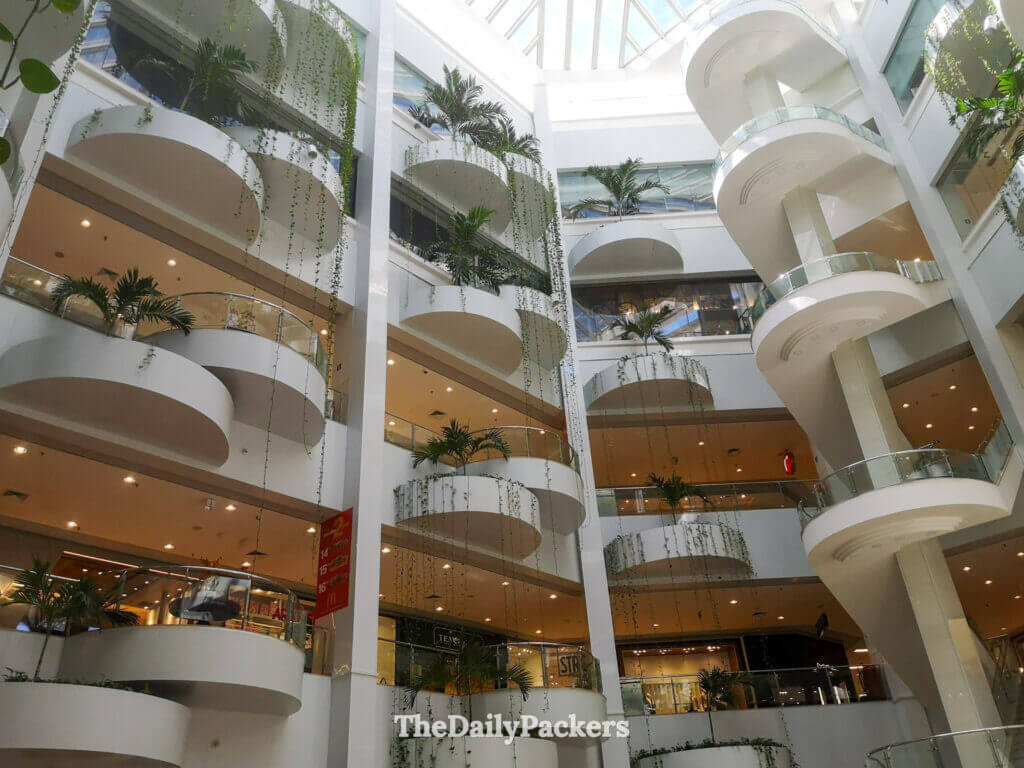
If you want air conditioning, clean bathrooms, and an easy dinner option before heading back, this is where Salvador suddenly feels very modern—and honestly, that contrast works well at the end of the day.

Here are all your accommodation options in Salvador
Salvador Itinerary
Day 1 – Historic Salvador & the Soul of the City
- Start your day in Pelourinho, wandering its colorful streets early before it gets busy
- Visit Praça da Sé and step inside the Cathedral Basilica
- Walk through Largo Terreiro de Jesus and Largo do Pelourinho, soaking in the energy
- Stop at Our Lady of the Rosary of the Black People – small, powerful, and deeply symbolic
- If museums interest you, choose one: Casa do Carnaval or Casa de Jorge Amado
- Pass by the Memorial of the Municipal Chamber and Igreja da Misericórdia
- Take time to browse small boutiques tucked into the historic streets
- Ride the Elevador Lacerda or Plano Inclinado down
- Lunch near the port or grab something simple around the market area
- Explore Mercado Modelo for crafts and local souvenirs
- Walk along the waterfront near Capitania dos Portos
- Visit Nossa Senhora da Conceição da Praia, one of Salvador’s most important churches
- Head back to your accommodation to rest
Day 2 – Coastline, Views & Local Life
- Start slow in Rio Vermelho, walking along the seafront
- Watch fishermen on the rocks, grab a coffee or coconut water
- This is one of the best places to feel Salvador’s everyday rhythm
- Uber toward Barra
- Walk around Farol da Barra and learn a bit about its maritime history
- Relax on Farol da Barra Beach if the sea is calm
- Continue on foot toward Forte São Diogo and its small beach
- Take a break at Shopping Barra for lunch, AC, or just some calm
- Head up to Morro do Cristo for sunset
- Head back to your accommodation to rest
About the authors
We are Alex and Tina, a French-Serbian couple who met in China back in 2014. We spent three incredible years there before making France our home. Our shared passion for travel has been the heartbeat of our relationship for over 12 years, taking us across 44 countries and counting.
We launched TheDailyPackers in 2019 as a way to document our adventures. In 2026, we reached a major milestone by officially turning our blog into our full-time job. While we are still growing toward financial independence through this platform, every article we write is fueled by our mission to make your voyages easier through in-depth guides, honest advice, and the lessons we’ve learned from our own mistakes.
Our journey has not been without its storms. In 2023, our world changed forever when our first son, Poppy, was stillborn on November 25th. It was, and remains, the hardest chapter of our lives. In 2025, we were blessed with our second little boy, Milo. He has since joined our traveling tribe, and you’ll be seeing him—and the reality of traveling with a little one-on the blog more and more.
We hope to inspire you to explore the world with curiosity and resilience. Thank you for being part of our story.
You may also like those related posts
Visiting Perito Moreno Glacier: Everything You Need to Know
Sangaste Castle: The Baltics’s Best Gothic Castle in 2025
7 Best things to do in Sigiriya, Sri-Lanka, in 3 days
São Paulo to Curitiba: The Ultimate 6h Bus Guide
5 Best Things to do in Remedios, Cuba, in 1 single day
French Riviera: How to See the Best in Just 1 Week
TMB Stage 11: Guide from La Flégère to Les Houches
The Best Corsica Itinerary, 13-day Corsica Road trip
Pssst, did you know that…
If you purchase something through our links, we earn a small fee. However, you still pay the same. Win-win! And one day we may get to be full-time travel bloggers =)
Find Hotels with Booking.com
Do Yoga with KVY
Buy us a Coffee
Rent a car with DiscoverCars
Find Attractions with GetYourGuide
Find Flights with Expedia
Buy an eSIM with Airalo
Get insured with World Nomads
Get ready with Amazon.com