
Why You’ll Love Visiting San Rafael
If you’re looking for a spot in Argentina that feels a bit more “real” and a lot less toursisty than the big hubs, you’re going to love San Rafael. It’s tucked away in the south of the Mendoza province, and while most people stay only in the big city of Mendoza for the wine tours and the hiking in Aconcagua Provincial park, they often skip right over this gem. That’s a mistake, but honestly, it’s part of the charm, it feels much more authentic here.
You get this great mix of total peace and wild adventure. One afternoon you’re walking through quiet, tree-lined streets, and the next, you’re navigating the massive rock formations of a canyon. For us, our time here was all about slowing down. We had been backpacking for more than a month and it was time to slow down.
We stayed in a place with a great kitchen (the best we found in South America, actually!) and spent our mornings slow-cooking and our afternoons by the pool. Even though the water was freezing, the heat in San Rafael is no joke, so it felt amazing.
It’s the perfect bridge if you’re traveling between the buzz of Buenos Aires and the mountain vibes of Bariloche. It’s laid-back, the people are incredibly welcoming, and the olive oil is some of the best you’ll ever taste.


Best Things to Do in San Rafael
Explore the City Center and the Green Streets
Unlike Mendoza, San Rafael has a charming small-town feel, making it a great place to spend a few hours exploring. The first thing you’ll notice when you arrive is how green the city is.

Because it’s a dry region, they have these cool irrigation channels (acequias) running along the sidewalks to keep the rows of massive trees hydrated. It creates a natural canopy over the roads that makes walking around really pleasant, even when it’s hot.
We spent hours just strolling through the center, popping into little shops and watching the world go by.

Step inside the Cathedral (San Rafael Arcángel)
Right in the heart of the city, you’ll find the Cathedral. It’s a beautiful building with a simple but striking design. Even if you aren’t religious, it’s worth stepping inside for a few minutes.

It’s incredibly quiet and cool, which is a lifesaver if you’re visiting during the summer heat. It sits right across from the main square, so it’s an easy stop while you’re exploring the center.


Relax at Plaza San Martin
This is the main hub of the city. We spent a good amount of time here just people-watching. It’s a classic Argentine plaza—perfectly manicured, full of history, and surrounded by some of the city’s most important buildings. In the evenings, it really comes alive with families and couples out for a walk. It’s a great place to get your bearings when you first arrive in San Rafael.

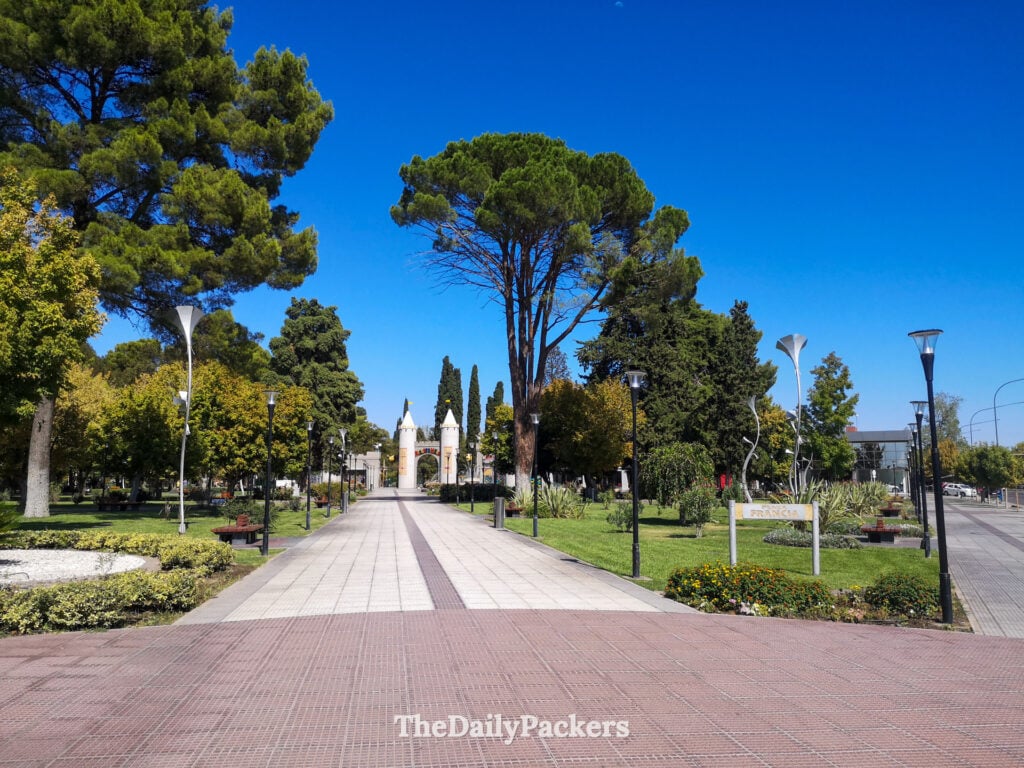
Soak up the vibe at Plaza Francia
This was actually one of our favorite spots in San Rafael. It’s one of the most well-maintained plazas we’ve seen, with plenty of shaded benches and a big central fountain. It feels a bit more modern and trendy than Plaza San Martin. There are usually some nice cafés nearby where you can grab a coffee or an ice cream and just enjoy the afternoon breeze.
Take the kids (or your inner child) to Parque de los Niños
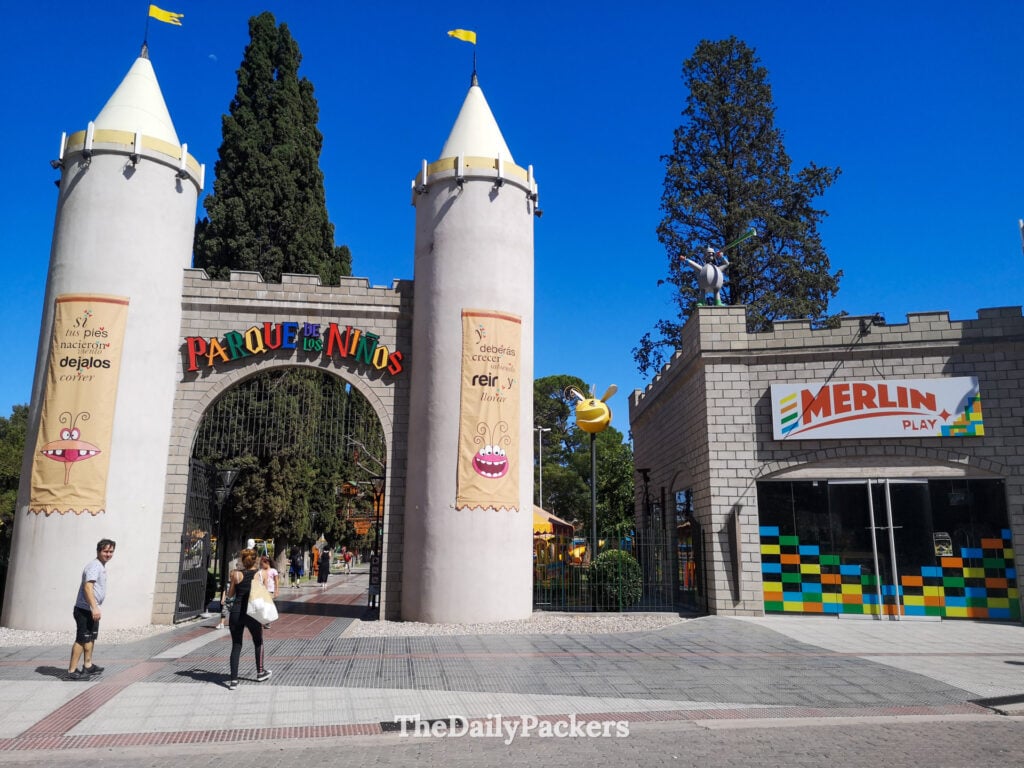
If you’re traveling as a family, this is a must-stop. It’s right next to Plaza Francia and is basically a giant, colorful playground that looks like something out of a fairytale. Even if you don’t have kids, the architecture of the park is pretty fun to see. It’s a very lively, happy area of the city.

Psst, you can join Tina’s Yoga Studio and get access to hundreds of Yoga, Meditation, and Well-being videos.
Enjoy local product tastings at Yancanelo
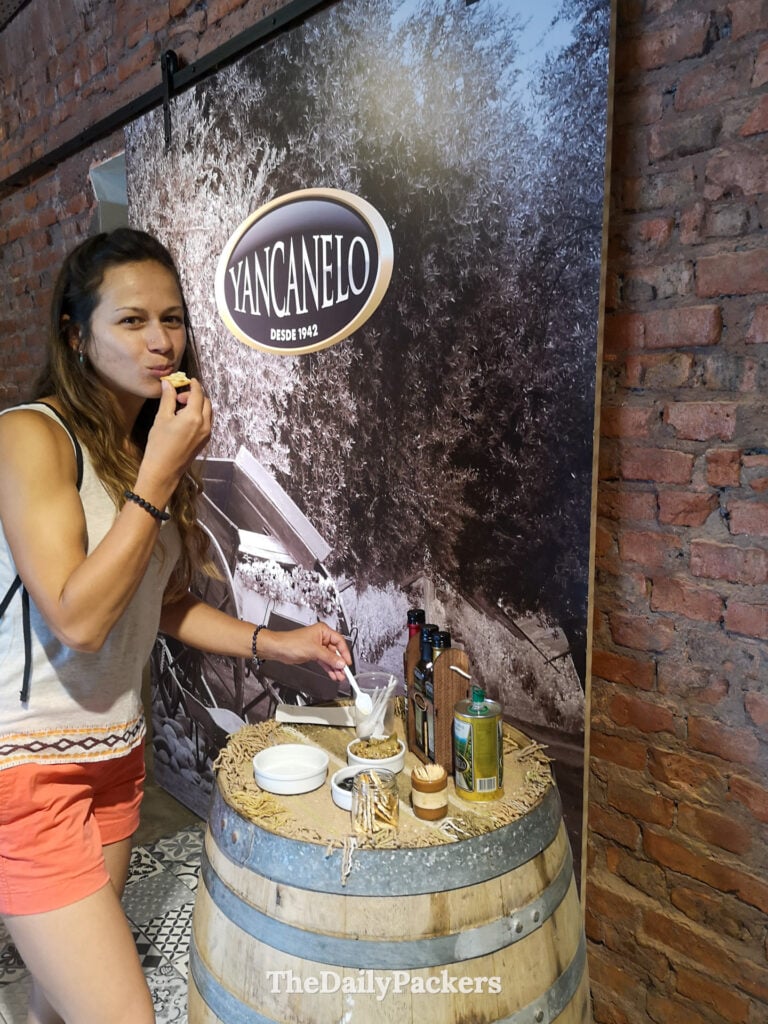
You can’t leave this region without trying the olive oil. We headed to Yancanelo, which is one of the most famous olive oil factories in the area. They offer tours where you can see how they press the olives, but the best part is the tasting.

They have incredible oils, balsamic vinegars, and olives. It’s a great way to support local producers and maybe pick up a souvenir that isn’t a fridge magnet.
Get lost in the Borges Labyrinth
This place is dedicated to the famous writer Jorge Luis Borges. It’s a massive hedge maze designed to look like an open book (if you see it from above!). We actually struggled with the logistics of getting here because we didn’t have a car and the buses were… well, a challenge.
We ended up missing out on the maze itself, which was a bummer! That’s why we really recommend renting a car or booking a transfer in advance so you don’t run into the same trouble we did.


Marvel at the Atuel Canyon (Cañón del Atuel)
If there is one thing you absolutely cannot miss, it’s this. The Atuel Canyon is mind-blowing. The rock formations have these crazy shapes and colors that change as the sun moves. You can drive through it, but if you’re feeling adventurous, this is the place to go rafting or kayaking on the river.
You can ask your accommodation to organise this tour for you if you do not have a rental car.
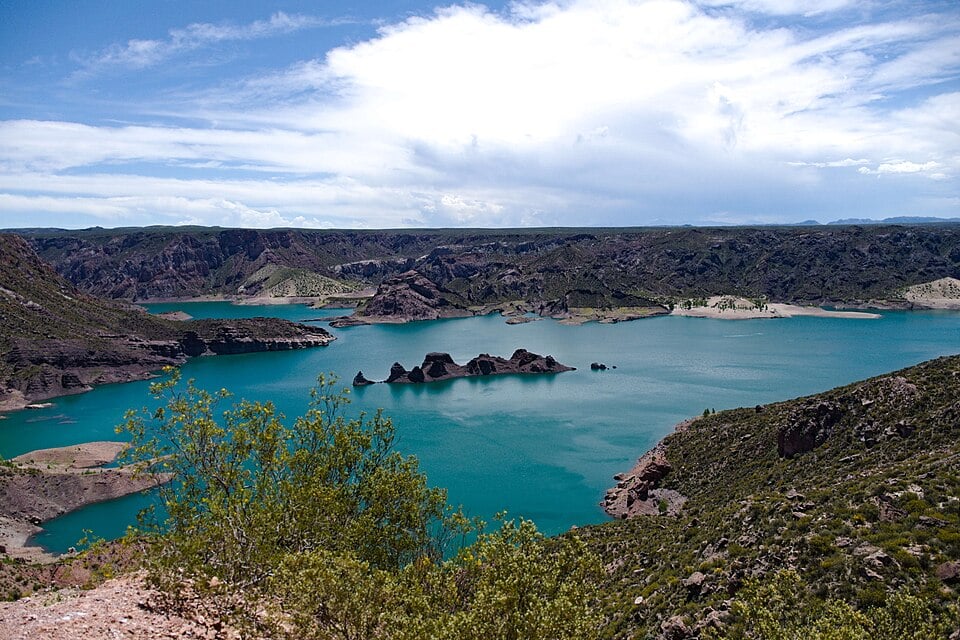
Visit the vast El Nihuil
At the end of the canyon drive, you’ll hit El Nihuil. It’s a massive reservoir and a great spot to just pull over and enjoy the view. The water is a deep blue and contrasts perfectly with the orange, sandy dunes nearby. It’s a popular place for locals to go fishing or just spend a lazy Sunday.
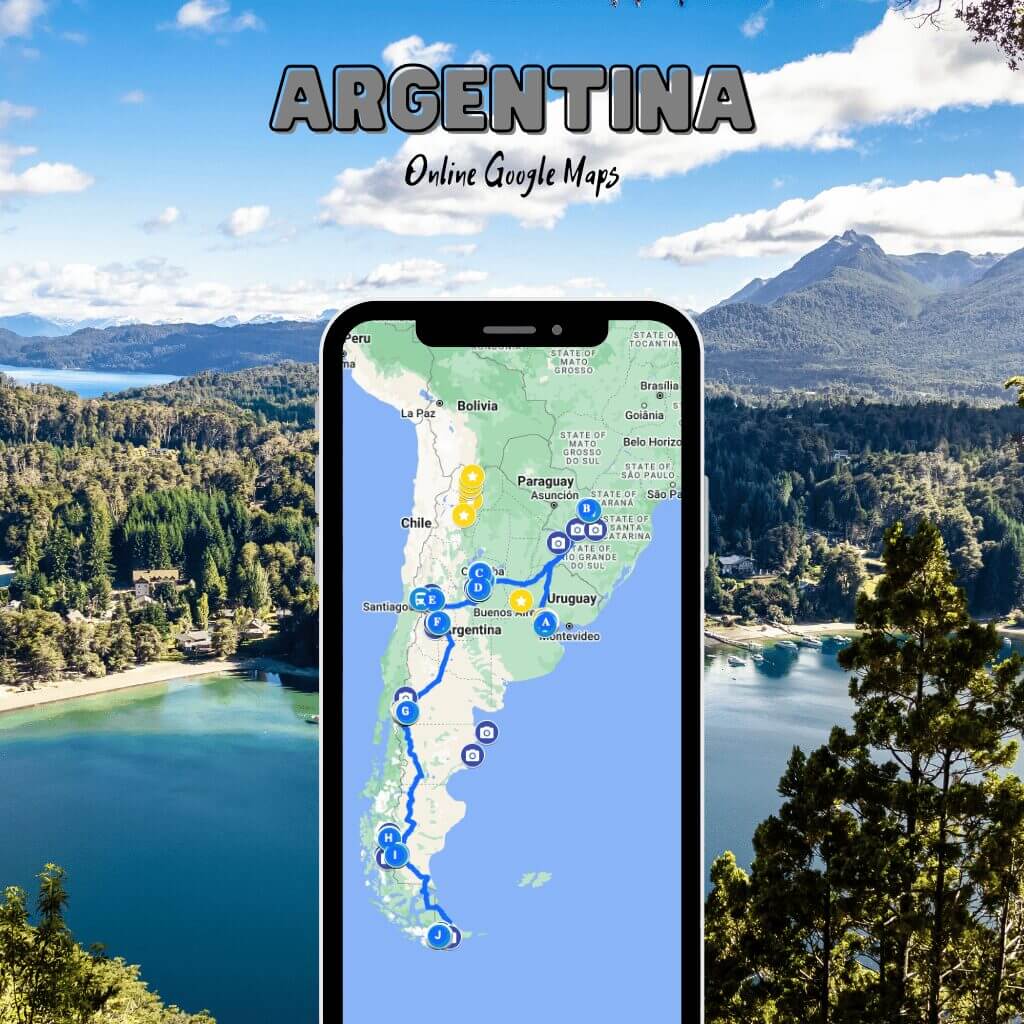
If you have our Argentina Google Map, you’ll see exactly where the best viewpoints are around here.
Check out the Los Reyunos Dam
Last but definitely not least is Los Reyunos. This is another artificial lake, but the setting is totally different—it’s surrounded by jagged rocky mountains. The water is incredibly clear. You can rent a boat or just find a quiet spot for a picnic. It’s a bit of a drive from the city center, but it’s the kind of place that makes you realize why people fall in love with this part of South America.


The Perfect Itinerary: How to Spend Your 3 Days
Now that you know the highlights, here is how we would piece them together so you aren’t rushing around.
Day 1: City Vibes & Local Flavors Start your first day getting a feel for the city. Walk through the City Center, check out the Cathedral, and relax in Plaza San Martin. For lunch, head towards Plaza Francia and grab a bite nearby. In the afternoon, visit Yancanelo for an olive oil tasting—it’s a great introduction to the local produce. End your day with a slow dinner in San Rafael; we’ll give you our favorite restaurant spots in a bit!
Day 2: The Big Nature Day This is your “canyon day.” You’ll want to head out early toward the Atuel Canyon. Spend the morning driving through the canyon, stopping at the viewpoints, and maybe doing some rafting if you’re up for it. Follow the road all the way to El Nihuil for lunch with a view. It’s a long day, but it’s the highlight of the trip.
Day 3: Labyrinths & Lakes On your final day, try to visit the Borges Labyrinth in the morning (learn from our mistake and make sure your transport is sorted!). In the afternoon, head over to Los Reyunos Dam for some final photos and a bit of relaxation by the water before you pack your bags for your next stop—maybe Bariloche or back up toward Mendoza.

The Best Time to Visit: Weather & Local Events
The best time to visit San Rafael really depends on what you want to do. If you’re here for the water, summer is king, but for vineyards and trekking, the shoulder seasons are much more comfortable. Here is the breakdown:
- Summer (December to February): It gets seriously hot and dry, with average highs of 31°C – 32°C (88°F – 90°F), though it can often spike higher. This is the peak time for rafting the Atuel River and swimming in the dams. We found the heat intense, but it makes that freezing pool water at your accommodation feel like a dream.
- Autumn (March to May): This is arguably the most beautiful time. Temperatures drop to a pleasant 18°C – 28°C (64°F – 82°F). The vineyards turn incredible shades of gold and red, and it’s the harvest season (Vendimia).
- Winter (June to August): Winters are cool and crisp with highs around 13°C – 15°C (55°F – 59°F) and nights that can drop near freezing (1°C / 34°F). It’s the quietest time to visit, perfect if you want the wineries to yourself and don’t mind wrapping up warm.
- Spring (September to November): Another favorite of ours. Everything starts to bloom, and the weather is ideal for exploring, with temperatures between 19°C and 28°C (66°F – 82°F).
Tip: No matter the season, the desert air means temperatures drop quickly once the sun goes down, so always have a light jacket ready for the evening.

How to Get to San Rafael
Getting here is pretty straightforward, whether you’re coming from the big city or deeper in wine country.
From Mendoza: This is the most common route. It’s about a 3 to 3.5-hour drive or bus ride south. We actually had a bit of a “classic travel moment” here, we showed up for a 10 AM CATA bus we saw online, only to find out it didn’t exist! We ended up taking the 1 PM Iselin bus instead, and it was honestly one of the cleanest and most comfortable rides we had in all of Argentina.
From Buenos Aires: If you’re coming from the capital, you can take a long-distance bus (around 13 hours) with companies like Andesmar or Chevallier. If you’re short on time, Aerolíneas Argentinas flies directly into San Rafael’s small airport (AFA) a few times a week, which takes less than 2 hours.


Tip: Many travelers, including us, use San Rafael as a jumping-off point before heading further south towards Bariloche.
Getting Around the San Rafael Like a Local
The city center is very compact and flat. You can easily walk between the main plazas and the cathedral without any trouble.
If you want to see the Atuel Canyon or Los Reyunos, we really recommend renting a car. Public buses to these spots are rare and hard to track down online. Having your own wheels gives you the freedom to stop at every viewpoint on our Argentina Google Map without stress.
For shorter trips where you don’t want to walk, you can use local taxis or “remises” (private car services). Even Uber has started to appear in the area, often connecting you with local cab drivers.


We recommend to rent a car through Discover Cars with free cancellation. Book your rental car here.
Where to Stay
The accommodation we stayed in, Posada Villa Liliana, isn’t available anymore, but it taught us that having a place with a pool and a good kitchen is a game-changer in San Rafael. We spent so much time resting and cooking that it became the highlight of our trip.
If you’re looking for a similar vibe, here are some great spots we’ve found:
- Posada Boutique La Barrica: Great for that boutique, cozy feel.
- La Matera Posada de Campo: Perfect if you want to be a bit more surrounded by nature.
- Posada La Victoria: Another solid choice for a relaxing stay.
We generally recommend staying slightly outside the very center if you want that peaceful “wine country” feel, but stay close enough that a quick taxi can get you to the restaurants.

What to Eat: Iconic Local Dishes
While Argentina is famous for its steak, San Rafael has a fantastic food scene that includes some amazing options even if you don’t eat meat. Because of the heavy Mediterranean and wine country influence, you’ll find plenty of fresh, local produce and unique dishes. Here are a few things you definitely need to try:
- Empanadas de Verduras: Most bakeries and spots like The BOX resto • bar serve these. Look for the ones filled with spinach and cheese or creamy corn (humita).
- Humita en Chala: This is a classic Northern Argentine dish made of ground corn, cheese, and spices wrapped up in a corn husk and steamed. It’s pure comfort food.
- Milanesa de Berenjena: A great vegetarian twist on the national favorite. Instead of beef, it’s a breaded and fried eggplant steak, often topped with tomato sauce and melted cheese.
- Pastel de Papas (Vegetarian): Similar to a shepherd’s pie but made with local flavors. You can often find versions made with lentils or extra veggies instead of meat.
- Tortilla de Papa: A thick potato and egg omelet that is a staple in local eateries like El Viejo Bodegón. It’s simple, filling, and always delicious.
Where to grab a bite:
- El Viejo Bodegón: The place to go for traditional, hearty portions.
- The Club: A solid local favorite.
- Quinchos De Ortubia: Excellent if you want to eat surrounded by a more rustic setting.

What No One Tells You
The one thing we really struggled with was the transportation. We read online that there were buses, but when we actually got to the terminal, the schedules didn’t match at all. Don’t rely on online timetables for the local Iselin or CATA buses; always go to the terminal the day before to confirm in person.
Also, the “siesta” is very real here. Between 1:00 PM and 5:00 PM, San Rafael city center almost completely shuts down. If you need to run errands or go to a specific shop, do it in the morning, or you’ll find yourself standing in front of a lot of closed doors!

What it Costs: Budgeting for Your Trip
Argentina’s economy moves fast, and prices can fluctuate, but here is a general idea of what to expect for your 3-day stay in San Rafael:
- Accommodation: Expect to pay between $40 – $90 USD per night for a nice posada or boutique stay.
- Meals: A meal at a mid-range restaurant will usually cost you between $10 – $20 USD per person. If you’re cooking at your accommodation like we did, you can save a ton—groceries for a few days cost us very little.
- Transport: A rental car is the biggest expense (roughly $50 – $70 USD per day), but it’s worth it for the freedom. Local taxi rides in the San Rafael city are usually under $5 USD.
- Activities: Entering the Atuel Canyon is free if you drive yourself, but organized tours or activities like rafting usually start around $25 – $40 USD.
Budget Tip: If you’re coming from abroad, look into using the “Blue Dollar” exchange rate or apps like Western Union to get much more value for your money than the official bank rate.
About the authors
We are Alex and Tina, a French-Serbian couple who met in China back in 2014. We spent three incredible years there before making France our home. Our shared passion for travel has been the heartbeat of our relationship for over 12 years, taking us across 44 countries and counting.
We launched TheDailyPackers in 2019 as a way to document our adventures. In 2026, we reached a major milestone by officially turning our blog into our full-time job. While we are still growing toward financial independence through this platform, every article we write is fueled by our mission to make your voyages easier through in-depth guides, honest advice, and the lessons we’ve learned from our own mistakes.
Our journey has not been without its storms. In 2023, our world changed forever when our first son, Poppy, was stillborn on November 25th. It was, and remains, the hardest chapter of our lives. In 2025, we were blessed with our second little boy, Milo. He has since joined our traveling tribe, and you’ll be seeing him—and the reality of traveling with a little one-on the blog more and more.
We hope to inspire you to explore the world with curiosity and resilience. Thank you for being part of our story.
You may also like those related posts
3 Weeks South America Itinerary: Peru, Bolivia & Chile Travel Route
19 Best things to do in Graz, Austria, in 1 to 2 days
23 Best things to do in Cusco, Peru, in 2 to 6 days
13 Best things to do in Šibenik, Croatia, in 1 to 3 days
Lake Lucerne Road Trip: The Ultimate 1-day Guide
5 Best things to do in Trebinje, Bosnia, in 1 day
16 Best Things to do in Valparaiso, Chile, in 1 day
19 Best things to do in San Sebastian, Spain, in 3 days
Pssst, did you know that…
If you purchase something through our links, we earn a small fee. However, you still pay the same. Win-win! And one day we may get to be full-time travel bloggers =)
Find Hotels with Booking.com
Do Yoga with KVY
Buy us a Coffee
Rent a car with DiscoverCars
Find Attractions with GetYourGuide
Find Flights with Expedia
Buy an eSIM with Airalo
Get insured with World Nomads
Get ready with Amazon.com