

Introduction
San Sebastian, or Donostia if you want to sound local, is a place that just feels good the moment you arrive in the old town and see the Concha. Just a beautiful bay, a compact old town, and a food scene that quietly reminds you you’re in one of Spain’s most serious culinary cities.
I didn’t visit San Sebastian on a classic holiday. I ended up there because I used to work for a company nearby, and during my onboarding, I spent two full weeks living in the city. That meant slow mornings, daily walks through the old town, beach breaks after work, and plenty of time to really get a feel for the place. And honestly, that’s when San Sebastian shines.
It’s elegant without being stiff, lively without being overwhelming. One minute you’re wandering tiny streets lined with pintxos bars, the next you’re watching surfers roll into Zurriola Beach or strolling along La Concha with an ice cream in hand. The only real downside? It’s known as the most expensive city in Spain, and yes, you do feel it. But once you’re there, it makes sense.
Set in the Basque Country, close to the French border, San Sebastian doesn’t feel like the rest of Spain. The culture is strong, traditions matter, and food is taken very seriously. It’s a great contrast if you’re also visiting places like Seville further south, or even heading toward coastal destinations such as Corsica later on.
This article focuses on the best things to do in San Sebastian over roughly three days. Nothing rushed, nothing crammed in for the sake of it. Just a good balance of things to see, coastal walks, beaches, and a few viewpoints, with plenty of time to stop, eat, and enjoy the city as you go.


Here are all your accommodation options in San Sebastian
How to get to San Sebastian
Getting to San Sebastian is pretty straightforward, even though it sits right in the corner of northern Spain, close to the French border.
If you’re flying in, the closest airport is San Sebastián Airport (EAS), located just outside the city in Hondarribia. It’s small, easy to navigate, and mainly connects with Spanish cities like Madrid and Barcelona. From the airport, you can reach the city center in about half an hour by bus or taxi.
Another good option is flying into Bilbao Airport, which is bigger and usually cheaper. From Bilbao, it’s about a one-hour bus ride to San Sebastian, with frequent departures throughout the day. This option is actually how most travelers arrive, especially if you’re already exploring the Basque Country.
If none of those work for you, you can also consider flying to Biarritz Airport, in France. From there, you can rent a car and drive for about 45 minutes to reach San Sebastian. That’s how I used it most, as I was coming from Strasbourg.
San Sebastian is also well connected by train and bus. If you’re coming from other parts of Spain, or even from France, long-distance buses are often the fastest and most affordable option. Trains work too, but they tend to be slower on this route.
If you’re already traveling around Spain, adding San Sebastian after cities like Seville or Malaga makes for a nice contrast: less heat, more ocean air, and a completely different atmosphere.

How to move around San Sebastian
One of the best things about San Sebastian is how easy it is to get around. You really don’t need a car here, especially if you’re staying anywhere near the center.
The old town, the beaches, and most of the main San Sebastian attractions are within walking distance. Walking is honestly the best way to experience the city. You can wander through narrow streets, stop for a coffee or a pintxo whenever you feel like it, and follow the coastline without any plan.
If you want to go a bit further, the city has a solid bus network that’s cheap and easy to use. Buses connect the center with neighborhoods like Antiguo, Ondarreta Beach, and the areas around Monte Igueldo. Taxis are also easy to find and reasonably priced for short rides.
During my stay, I mostly walked everywhere. Between the old town, La Concha, and the surrounding hills, everything felt close enough, and walking made it easy to slow down and enjoy the city rather than rushing from one spot to the next.


Best time to visit San Sebastian
You can visit San Sebastian all year-round, but the experience changes quite a bit depending on the season, mostly because of the weather and crowds.
- Spring (March to May) is a great time to visit if you want mild temperatures and fewer people. The city slowly comes back to life after winter, terraces reopen, and walking along the bay is especially pleasant. Expect temperatures around 15–20°C (59–68°F), perfect for sightseeing and coastal walks.
- Summer (June to August) is peak season. At that time, San Sebastian feels at its liveliest, with locals and visitors filling the beaches, bars, and promenades. Temperatures usually sit between 22–26°C (72–79°F), sometimes warmer, but the ocean breeze helps. It’s ideal for beach time and long evenings outside, just be ready for higher prices and busy streets.
- Autumn (September to November) is one of my favorite times. The water stays warm enough for swimming in early autumn, the crowds thin out, and the food scene really shines. Temperatures range from 15–22°C (59–72°F), making it comfortable for hiking and city exploration.
- Winter (December to February) is quieter and moodier. You’ll get cooler temperatures around 8–14°C (46–57°F), more rain, and fewer tourists. That said, it’s a nice time to experience the local side of San Sebastian, especially if food is your main focus.
If you’re visiting for the first time, late spring or early autumn usually offers the best balance between weather, atmosphere, and crowd levels


Where to Stay in San Sebastian
Choosing where to stay in San Sebastian really depends on what kind of trip you’re after, but in general, staying close to the center makes everything much easier. The city isn’t huge, and being within walking distance of the old town or the beaches saves you a lot of time.
If it’s your first visit, look for accommodation near the Old Town (Parte Vieja), Centro, or around La Concha. You’ll be close to most things to do in San Sebastian, from pintxos bars to coastal walks, and you won’t need to rely much on public transport.
Here are a few solid places to stay, covering different styles and budgets:
Intelier Villa Katalina: A quiet option slightly away from the busiest areas, but still well located. Intelier Villa Katalina offers a relaxed, comfortable atmosphere with modern rooms. It’s a good choice if you want easy access to the city while staying in a peaceful place.
Catalonia Donosti: Set in a former convent on a hill, Catalonia Donosti offers great views over the city and a more upscale feel. The rooms are stylish, there’s a spa on-site, and it’s only a short walk down to the center. It works well if you want something a bit special without being right in the middle of the crowds.
Hotel Boutique Villa Favorita: If location is everything, this one is hard to beat. Right on La Concha Bay, Hotel Boutique Villa Favorita combines classic elegance with incredible sea views. It’s perfect for a romantic stay or for waking up to one of the best views in San Sebastian.
No matter where you stay, expect prices to be higher than in most other Spanish cities, especially in summer. Booking early really makes a difference here.

Here are all your accommodation options in San Sebastian
What to Eat
Food is a huge part of life in San Sebastian, and honestly, it’s one of the main reasons people come here. You don’t need to plan anything fancy to eat well. Most of the time, the best meals happen standing at a bar with a small plate and a glass of wine in hand.
Pintxos are the star of the show. Think of them as small bites, usually served on bread, topped with anything from anchovies and cheese to slow-cooked beef or fresh seafood. The best way to eat is to move from bar to bar, ordering one or two pintxos at each place rather than settling in for a long sit-down meal.
If you want a break from classic pintxos, there are also plenty of casual spots doing healthy bowls, vegetarian food, and international flavors.
A few places worth checking out:
- Maiatza: A relaxed spot that mixes traditional flavors with a slightly modern twist. It’s a good place to slow down a bit and enjoy a proper sit-down meal without going too formal.
- Mapa Verde: Great if you’re looking for something lighter or more creative. Mapa Verde focuses on fresh ingredients and colorful plates, and it’s a nice change if you’ve been eating pintxos for a few days in a row.
- El Fresh: Simple, healthy, and easy. El Fresh is perfect for breakfast or lunch, especially if you’re craving smoothies, bowls, or something plant-based.
If you are into food, you can check out the San Sebastian Old Town Pintxos & Wine Tour Small Group Tour


Tip: Locals tend to eat late. Lunch usually starts after 1:30 pm, and dinner often doesn’t really kick off until 8:30 or 9 pm. Plan around that, or embrace it.
Best things to do in Sigiriya
Explore the old town
If there’s one place you’ll keep coming back to in San Sebastian, it’s the old town. Compact, lively, and full of character, Parte Vieja is where daily life, food, and history all come together.
This is where I spent most of my evenings during my stay. Wandering without a plan, popping into whatever bar looked busy, grabbing a pintxo, then moving on to the next one. The streets are narrow, sometimes loud, and always full of energy, especially in the evening.
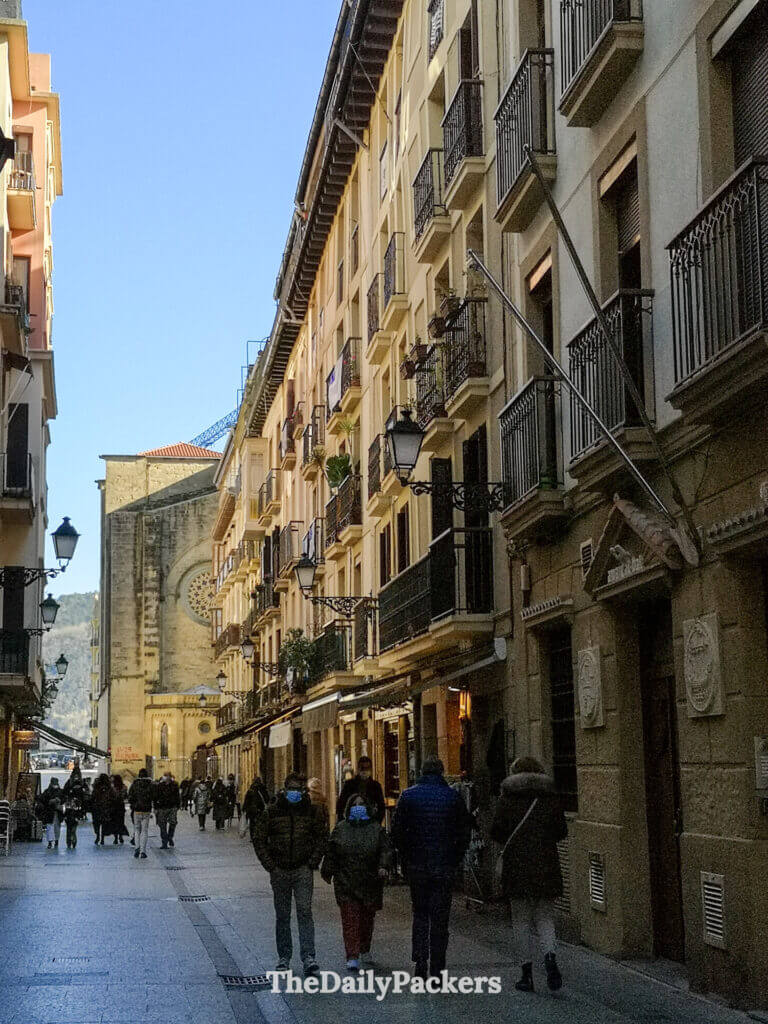
During the day, it’s calmer and just as enjoyable. You’ll notice small local shops, traditional facades, and churches tucked between bars. It’s also where many of the main things to see in San Sebastian are located, making it a good starting point for your visit.


Discover the Basílica de Santa María del Coro
Right in the middle of the old town, you’ll stumble across the Basílica de Santa María del Coro almost without trying. One minute you’re surrounded by pintxos bars, the next you’re standing in front of this impressive baroque church.
The outside already catches your eye, especially the detailed façade and the two towers framing it. The interior is elegant rather than overwhelming, with warm colors, carved details, and a quiet atmosphere that invites you to slow down for a few minutes.

It’s worth popping in even if churches aren’t usually your thing. I often did it mid-walk, just to take a break from the noise of the old town and enjoy the change of pace.
You don’t need much time here, but it’s one of those small stops that adds a lot to your understanding of San Sebastian’s historic center.

Stroll by the Church San Vicente
Just a few steps from the Basílica de Santa María del Coro, the Church of San Vicente feels very different, even though they’re so close to each other. This one is older, more solid, and a bit more understated.
San Vicente is the oldest church in San Sebastian, and you can feel it in its heavy stone walls and simple gothic style. Even if you don’t go inside, it’s worth stopping for a moment outside. The small square around it is a nice place to pause, watch people pass by, and take in a quieter side of the old town.

It’s an easy stop, but one that fits naturally into a walk through the historic center and adds a bit more context to what you’re seeing around you.

Walk to the San Telmo Museum
At the edge of the old town, right where the streets start opening up toward the hills, you’ll find the San Telmo Museum. Even if museums aren’t usually high on your list, this one is worth considering.
The building itself is interesting, mixing an old convent with a modern extension that blends into the hillside. Inside, the museum focuses on Basque culture, history, and identity, which helps make sense of why San Sebastian feels so distinct from the rest of Spain.

Even if you decide not to go in, the area around the museum is a nice transition point between the old town and the greener parts of the city. It naturally leads you toward some of the best walks and viewpoints nearby.

Hike to the Baluarte del Mirador
From the San Telmo Museum, it’s an easy transition from city streets to nature. The path toward the Baluarte del Mirador starts gently and slowly winds its way up Monte Urgull. Nothing too intense, just a steady walk with benches along the way if you feel like stopping.

As you climb, the views start opening up behind you. First over the old town rooftops, then across La Concha Bay. This is one of those spots where you suddenly realize how compact San Sebastian really is, with the city, beaches, and hills all packed together.
The Baluarte del Mirador itself is more about the view than the structure. It’s a simple lookout point, but the perspective over Parte Vieja and the sea is one of the best in the city.


Psst, you can join Tina’s Yoga Studio and get access to hundreds of Yoga, Meditation, and Well-being videos.
Continue to Motako Gaztelua
If you’re already at the Baluarte del Mirador, it makes sense to keep going a bit further. The walk up to Motako Gaztelua is short and still very manageable, even if you’re not in full hiking mode.
This small fortress sits at the top of Monte Urgull and has played an important role in the city’s history, especially when San Sebastian was a strategic military point. Today, it’s mostly a quiet spot with open views in every direction.

From up here, you can see the old town below, the curve of La Concha Bay, and on a clear day, the coastline stretching far beyond the city. It’s less crowded than the viewpoints near the beaches, which makes it feel a bit more special.

Walk to construccion Vacía
After coming back down from Monte Urgull, head toward the coastline and walk in the direction of Paseo Nuevo. This is where you’ll find Construcción Vacía, one of San Sebastian’s more unusual landmarks.
Created by Basque sculptor Jorge Oteiza, this concrete structure sits right by the sea, facing the open water. At first glance, it can feel a bit strange or even unfinished, but that’s kind of the point. It’s designed to frame the space around it rather than dominate it.

What makes this stop special is the setting. Waves crash below, the wind picks up, and the city feels far away even though you’re still right next to it. It’s a good place to pause, sit for a bit, and just watch the ocean do its thing.

Pop by the Donostia-San Sebastián City Hall
Sitting right at the edge of La Concha Bay, the Donostia–San Sebastián City Hall is hard to miss. With its grand façade and waterfront location, it feels more like a palace than a government building.
The building was originally a casino, and you can still see its elegant early-20th-century architecture. Even if you don’t go inside, it’s worth stopping in front of it while walking along the bay.

This area is also a natural pause point. From here, you get beautiful views over La Concha, with the beach stretching out in front of you and the hills framing the bay.

Visit the Plaza de la Constitution
Tucked right in the middle of the old town, Plaza de la Constitución is one of those places you’ll probably pass through without even realizing its history at first. Take a second to look up and you’ll notice the numbers on the balconies, a reminder that this square was once used for bullfights.

Today, it’s much calmer. Surrounded by colorful buildings, cafés, and restaurants, the square feels lively without being chaotic. It’s a great spot to grab a drink, sit outside, and watch the city go by for a bit.
During the day, it’s relaxed and local. In the evening, it becomes a natural meeting point before people head off for pintxos. It’s not a must-see in the classic sense, but it’s very much part of everyday life in San Sebastian.

Here are all your accommodation options in San Sebastian
Enter the Cathedral Buen Pastor de San Sebastián
A bit further inland from the old town, the Cathedral of Buen Pastor feels like a change of scenery. Taller, darker, and more imposing than the churches in Parte Vieja, it stands out as soon as you approach it.

Built in a neo-gothic style, the cathedral is relatively modern compared to others in the city, but it still has a strong presence. Inside, it’s quiet and spacious, with high ceilings, stained glass windows, and a calm atmosphere that makes you slow down almost automatically.

Chill at the Beach of La Concha
La Concha is the postcard image of San Sebastian, and for good reason. The bay is perfectly curved, the water is usually calm, and the whole place feels polished without being over the top.
This is the kind of beach where you don’t need a plan. You can lay your towel down, go for a swim, or just sit on the sand watching people come and go. Even when it’s busy, it never feels chaotic, probably thanks to the size of the bay and how spread out everything is.
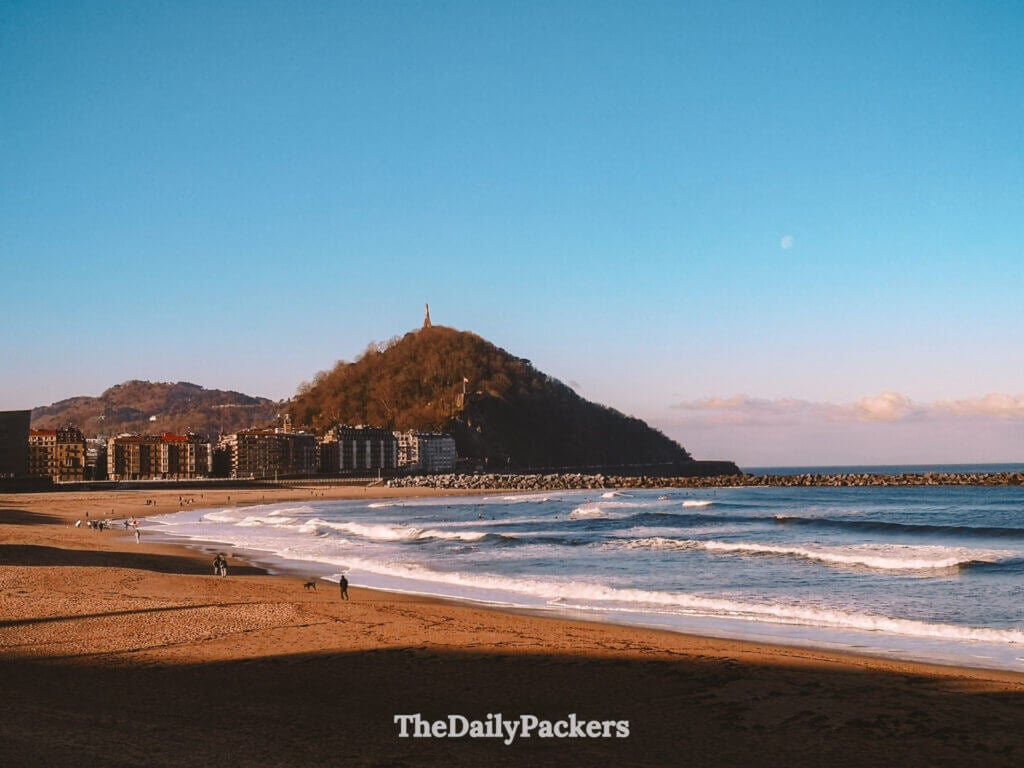
During my time in the city, I came here often, sometimes just to walk along the sand after work, other times to cool off in the water on warmer days. It’s one of those places that works at any time of day, whether it’s a quiet morning or a golden-hour stroll.

Psst, you can join Tina’s Yoga Studio and get access to hundreds of Yoga, Meditation, and Well-being videos.
Walk along the Kontxa Pasealekua
Right behind La Concha Beach runs the Kontxa Pasealekua, the city’s iconic seaside promenade. You’ll recognize it instantly by its white railings and classic street lamps, which have become one of San Sebastian’s most photographed details.
This walk is simple but really pleasant. Flat, easy, and open, it’s perfect for a slow stroll at any time of day. In the morning, you’ll see locals walking their dogs or heading out for a swim. In the evening, it turns into a favorite sunset route, with the light reflecting on the bay and the island right in front of you.

Stroll around Miramar Jauregia
At the western end of La Concha Bay, Miramar Jauregia sits quietly on a small hill, overlooking the beach and the sea. It was built as a summer residence for the Spanish royal family, and while the palace itself isn’t always open to visit, the gardens are the real reason to come.
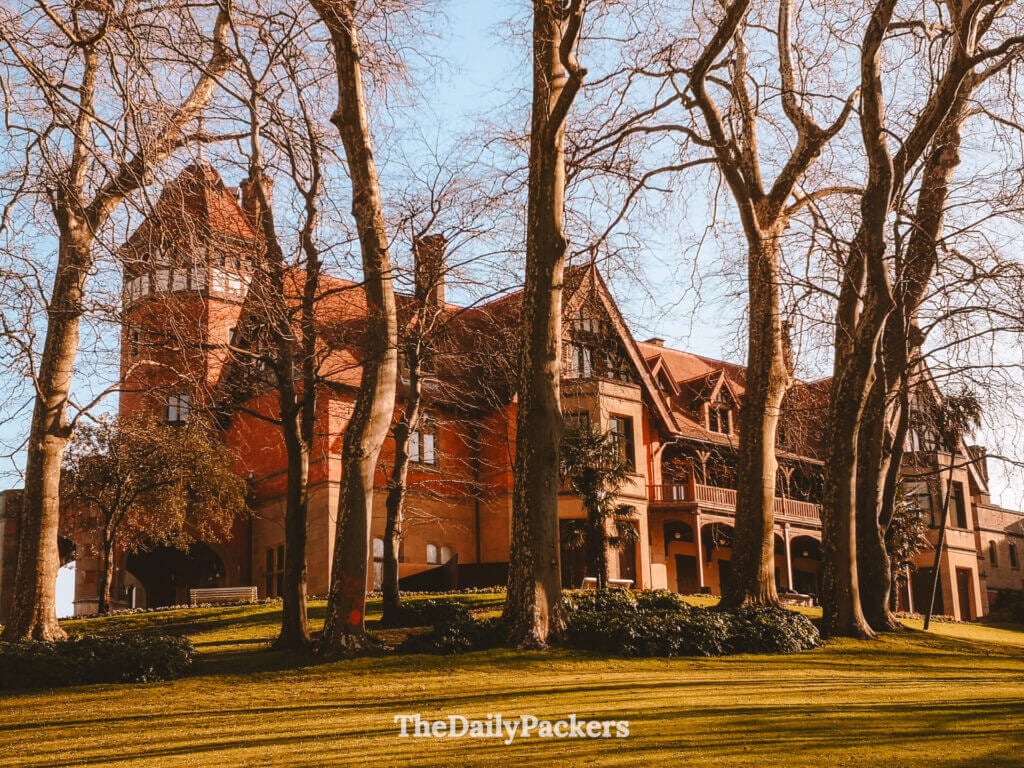
The walk up is short and easy, and once you’re there, it feels like you’ve stepped out of the city for a moment. Wide lawns, paths lined with trees, and one of the best views over La Concha make this a perfect place to slow down.
It’s a nice stop if you want a break from walking along the promenade or spending time on the sand. Bring a coffee, sit on the grass, and enjoy the view without feeling like you need to rush anywhere.

Unwind at Ondarreta Beach
Right below Miramar Jauregia, Ondarreta Beach feels a bit more laid-back than La Concha. It’s still beautiful, but slightly less busy, especially outside peak summer hours.
This beach is popular with families and locals, and it has a more open, relaxed vibe. The sand stretches wide, the water is usually calm, and you get a great view of Monte Igueldo rising behind it. It’s a good spot if you want to swim, read, or just take it easy for a while.

Find the Comb of the Wind
At the far end of Ondarreta Beach, where the city meets the open sea, you’ll find the Comb of the Wind. This is one of San Sebastian’s most iconic landmarks, and also one of its most dramatic.
Created by sculptor Eduardo Chillida, the artwork consists of three large steel sculptures anchored into the rocks, constantly exposed to waves and wind. On rough days, the sea crashes hard against the cliffs, sending water spray into the air and making the whole place feel alive.
It’s worth coming here even if the weather isn’t perfect. In fact, a bit of wind and waves makes the experience better. Just be careful, as it can get slippery and the gusts are no joke.

Visit Santa Clara Island
Sitting right in the middle of La Concha Bay, Santa Clara Island is easy to spot and surprisingly easy to visit. In summer, small boats run regularly from the harbor, and the ride only takes a few minutes.
Once you’re there, the vibe changes completely. No traffic, no noise, just sea views and a small beach tucked between rocks. It’s not a place you need to spend hours exploring, but it’s a fun little escape if you want to see San Sebastian from a different angle.
You can swim, lie on the rocks, or simply walk around and enjoy the views back toward the city. I liked it as a short break from the busier beaches, especially on warm days when La Concha was packed.

Relax at Zurriola beach
On the other side of the river, Zurriola Beach has a completely different energy from La Concha and Ondarreta. This is the surf beach, and you feel it as soon as you arrive. More waves, more movement, and a younger, livelier crowd.
Zurriola is where surfers hang out year-round, whether they’re heading into the water or just watching the conditions from the promenade. Even if you don’t surf, it’s a great place to sit, people-watch, or grab a drink nearby and enjoy the atmosphere.
Psst, you can join Tina’s Yoga Studio and get access to hundreds of Yoga, Meditation, and Well-being videos.
See the San Inazio Parrokia
In the Gros neighborhood, not far from Zurriola Beach, you’ll come across San Inazio Parrokia. It’s not one of those churches you plan a visit around, but it’s the kind of place you notice as you walk by and end up appreciating.

The building is fairly simple and modern compared to the older churches in the old town, but it fits well into the everyday life of the neighborhood. Gros feels younger and more local, and this church is very much part of that atmosphere.
If you’re already exploring the area around Zurriola, it’s worth a short stop, or at least a look from the outside. It adds a bit more depth to your walk and shows another side of the city beyond the main San Sebastian attractions.

See the Paloma de la paz
Tucked away on Monte Urgull, the Paloma de la Paz is one of those places you don’t stumble upon by accident. You usually come here on purpose, and that’s part of what makes it feel special.
The sculpture itself is simple: a white dove symbolizing peace, set in a quiet, green area overlooking the city. There’s no big crowd, no dramatic setup, just a calm spot with wide views over San Sebastian and the sea beyond.
Hike to Monte Igueldo
Monte Igueldo is easily one of the best viewpoints in San Sebastian, and a great way to wrap up your sightseeing. Sitting at the western end of the bay, it gives you that classic postcard view over La Concha, the city, and the surrounding hills.

You can hike up if you’re feeling motivated, but most people take the old-school funicular, which is honestly part of the experience. It’s been running for over a century and slowly pulls you up the hill, giving you glimpses of the view before you even reach the top.

3-Day San Sebastian Itinerary
Day 1 – Old Town & Monte Urgull
- Start the day in the Old Town (Parte Vieja), wandering the streets without a plan
- Visit the Basílica de Santa María del Coro
- Walk by the Church of San Vicente
- Stop at Plaza de la Constitución for a coffee or drink
- Head to the San Telmo Museum
- Walk up Monte Urgull toward the Baluarte del Mirador
- Continue to Motako Gaztelua for views over the city
- End the day back in the Old Town with a pintxos crawl
Day 2 – Beaches & Coastal Walks
- Spend the morning at La Concha Beach
- Walk along the Kontxa Pasealekua promenade
- Stroll through the gardens of Miramar Jauregia
- Unwind at Ondarreta Beach
- Walk to the Comb of the Wind
- Enjoy sunset by the sea or dinner nearby
Day 3 – Gros, Island & Viewpoints
- Head to Zurriola Beach and explore the Gros neighborhood
- See San Inazio Parrokia
- Take a boat to Santa Clara Island (summer months)
- Relax, swim, or walk around the island
- Finish the trip with a visit to Monte Igueldo
- Enjoy the panoramic view over La Concha Bay
About the authors
We are Alex and Tina, a French-Serbian couple who met in China back in 2014. We spent three incredible years there before making France our home. Our shared passion for travel has been the heartbeat of our relationship for over 12 years, taking us across 44 countries and counting.
We launched TheDailyPackers in 2019 as a way to document our adventures. In 2026, we reached a major milestone by officially turning our blog into our full-time job. While we are still growing toward financial independence through this platform, every article we write is fueled by our mission to make your voyages easier through in-depth guides, honest advice, and the lessons we’ve learned from our own mistakes.
Our journey has not been without its storms. In 2023, our world changed forever when our first son, Poppy, was stillborn on November 25th. It was, and remains, the hardest chapter of our lives. In 2025, we were blessed with our second little boy, Milo. He has since joined our traveling tribe, and you’ll be seeing him—and the reality of traveling with a little one-on the blog more and more.
We hope to inspire you to explore the world with curiosity and resilience. Thank you for being part of our story.
You may also like those related posts
Cost to Travel in the Baltic States, Our 2022 Budget Breakdown
16 best things to do in Bled, Slovenia, in 3 days or more
14 best things to do in Zadar, in Croatia, in 1 to 4 days
15 Proven ways to shortcut the TMB
TMB Stage 10: Guide from Tre-le-champs to Flégère
Sangaste Castle: The Baltics’s Best Gothic Castle in 2025
Travelling After Loss: Learning to Live Again
6 Best Places to Visit in June
Pssst, did you know that…
If you purchase something through our links, we earn a small fee. However, you still pay the same. Win-win! And one day we may get to be full-time travel bloggers =)
Find Hotels with Booking.com
Do Yoga with KVY
Buy us a Coffee
Rent a car with DiscoverCars
Find Attractions with GetYourGuide
Find Flights with Expedia
Buy an eSIM with Airalo
Get insured with World Nomads
Get ready with Amazon.com