
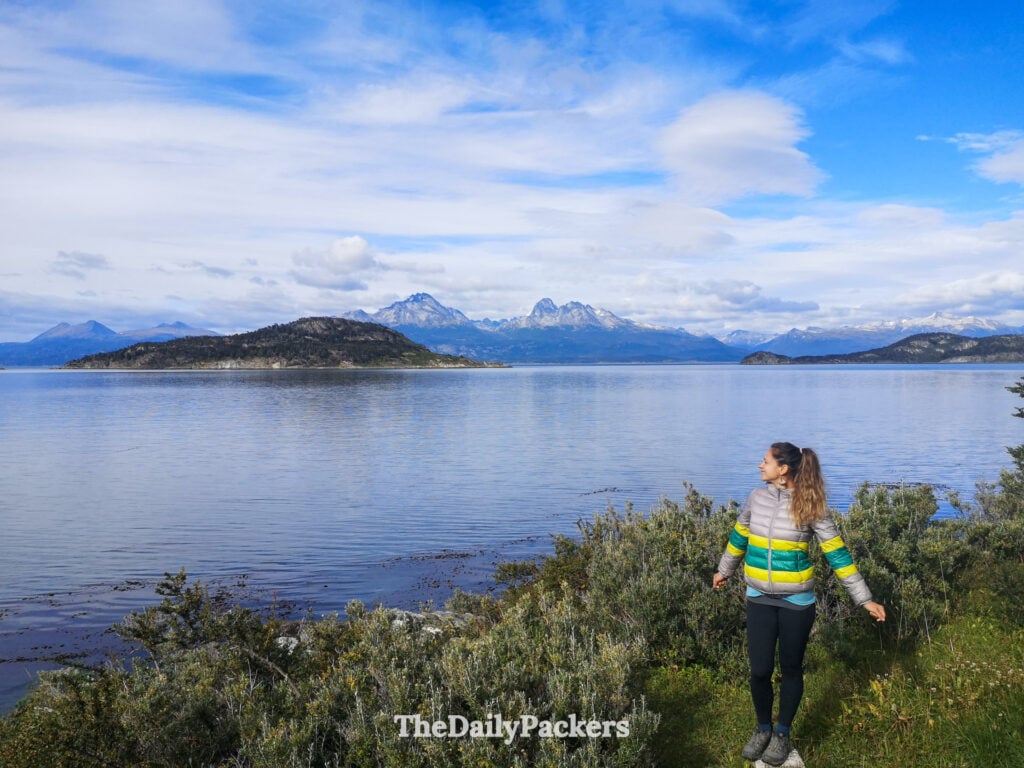
Why You’ll Love Hiking in Tierra del Fuego National Park
If you are traveling all the way to Ushuaia, you simply cannot miss Tierra del Fuego National Park. It is a place that feels truly wild, where the Andes mountains finally meet the sea at the very end of the world. For us, visiting Tierra del Fuego National Park was as important as walking with Penguins or hiking to Laguna Esmeralda.
You’ll love it because it’s one of the few places in Argentina where you can hike through deep, ancient forests and, just a few minutes later, be standing on a pebble beach looking out over the Beagle Channel. The air is some of the freshest you’ll ever breathe, and the scenery changes so quickly—from mirror-like lakes to dramatic, jagged peaks.
When we visited in March, we were blown away by how peaceful it felt. Even though it’s a popular spot, the Tierra del Fuego National Park is huge enough (630 km²!) that you can easily find a quiet corner to yourself. Whether you want a challenging climb to see the world from above or just a relaxing stroll along the water, Tierra del Fuego National Park has a trail for you. It really is the ultimate Patagonian playground.


Choosing Your Trail: Tierra del Fuego Hiking Options
One of the things you will love about the Tierra del Fuego National Park is that there is a trail for everyone. Whether you want a short walk to a viewpoint or a full-day challenge, you can find it here. Most paths are well-marked, but it’s always good to have a rough idea of what to expect before you’re dropped off by the shuttle.
Pampa Alta Trail
- Difficulty: Moderate
- Distance: 4.9 km (3 miles)
- Time: About 1 hour to the lookout
- The Vibe: This is a great choice if you want a bird’s-eye view. It takes you up above the Pipo River Valley and gives you a stunning perspective of the Beagle Channel. It’s not too long, so it’s easy to fit into a shorter day.
Costera Trail (Coastal Path)
- Difficulty: Moderate
- Distance: 8 km (5 miles)
- Time: Around 4 hours
- The Vibe: This was our personal favorite! It follows the shoreline, so you get to walk through lush forests while constantly catching glimpses of the sea and hidden pebbly beaches. It’s mostly flat but has some roots and rocks to step over.

Hito XXIV Trail
- Difficulty: Moderate
- Distance: 7 km (4.3 miles) round trip
- Time: About 3 hours
- The Vibe: If you want a peaceful walk along the water, this is the one. You’ll hike along the shore of Acigami Lake all the way to the international border between Argentina and Chile. It’s very quiet and perfect for soaking in the nature.
Cerro Guanaco Trail
- Difficulty: Strenuous
- Distance: 4 km (2.5 miles) one way
- Time: 4 hours to the summit (plus return)
- The Vibe: This is the big one! If you are an experienced hiker looking for a challenge, this trail takes you to the summit of Cerro Guanaco. It is a steep and tough climb, but once you reach the top, you get a 360-degree panoramic view of the mountains and the Beagle Channel.

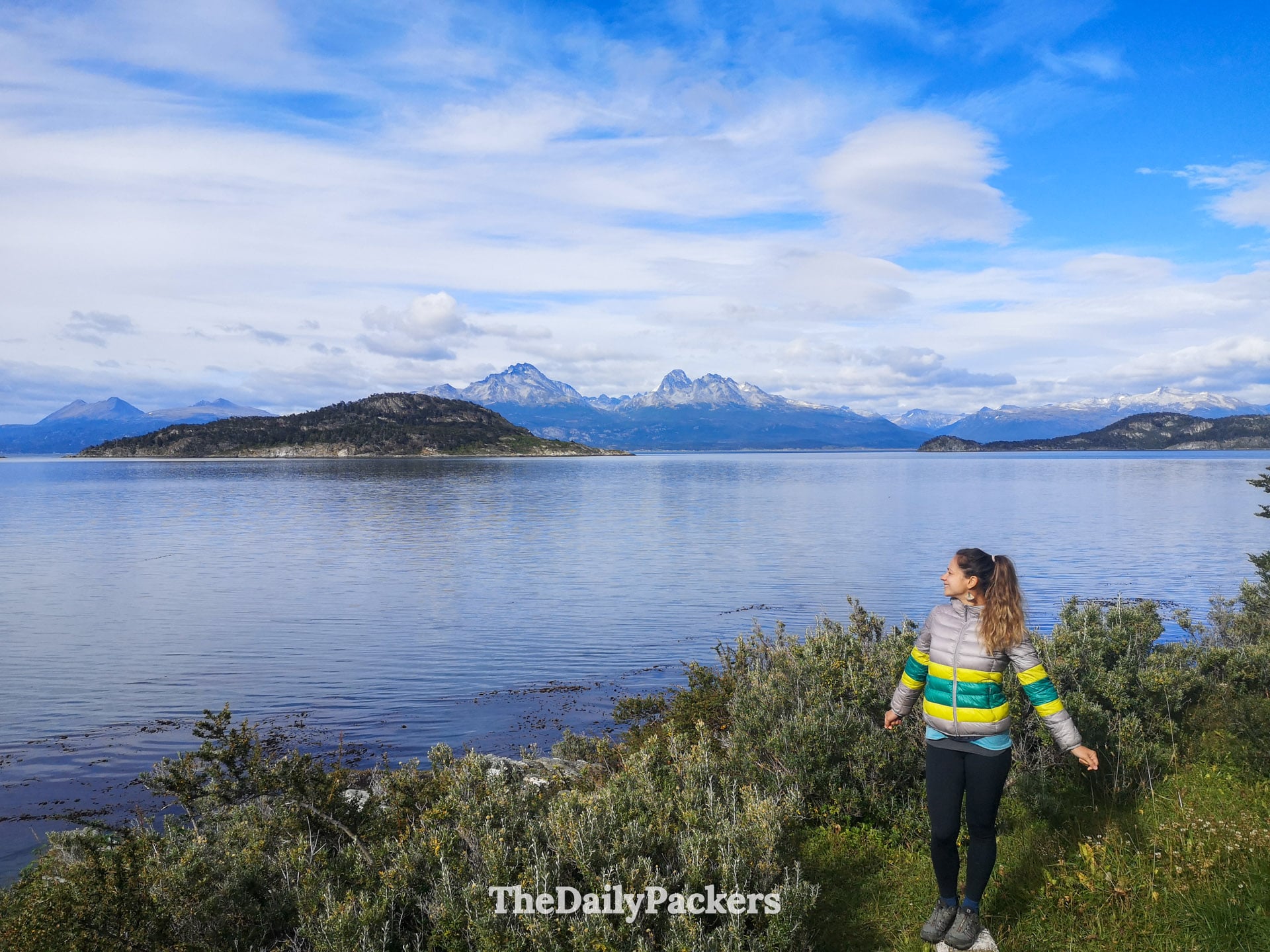
How to Hike the Costera Trail: Our Experience
If you only have one day in Tierra del Fuego National Park and want a mix of everything, we highly recommend the Costera Trail. It’s a fantastic way to see the coastline and the forest without the exhausting vertical climb of Cerro Guanaco.
We started our hike at 11:05 AM, right after the shuttle dropped us off. The first part of the trail is arguably the most beautiful; you’ll follow a narrow coastal path with constant, stunning views of the Beagle Channel. It feels very peaceful to have the mountains on one side and the cold, blue water on the other.

As you move deeper into the hike, the trail winds into the forest. You’ll be surrounded by lush beech trees and “Winter’s Bark” (a local tree with very green leaves).

Every now and then, the trees open up to reveal small, hidden pebble beaches. We suggest taking a few minutes to step onto the sand, listen to the waves, and enjoy the silence.

It took us approximately 3.5 hours to complete the hike, finishing at the Alakush Visitor Center around 2:35 PM. The terrain is mostly flat, but be prepared for some “natural” obstacles—there are plenty of tree roots and rocks to step over, so you’ll want to keep an eye on your feet!

Once you finish the Costera Trail, you’ll arrive at Alakush. It’s the perfect place to warm up and take a break. Inside, you will find:
- Restrooms: Very clean and much-needed after a 4-hour trek.
- Restaurant & Café: You can grab a hot coffee or a full meal here.
- Small Museum: We spent some time here reading about the indigenous Yámana people and the local wildlife. It’s small but really well done.
We were quite lucky—the weather was beautiful until exactly 3:00 PM when it started to pour. Thankfully, our return shuttle arrived at 3:10 PM, so we stayed dry!



How to Get to Tierra del Fuego National Park
Getting to Tierra del Fuego National Park is actually very straightforward once you are in Ushuaia. Here is the breakdown of how to get there and what to expect during the journey.
How to Get to Tierra del Fuego National Park
The most common and convenient way to reach Tierra del Fuego National Park is by taking a shuttle from the main bus terminal in Ushuaia. It’s located right in the center of town, and you’ll find several small offices and desks opposite the bus stop. Don’t worry if people approach you outside offering shuttle services; they are official operators.
A shuttle typically departs at 10:00 AM, with several return times in the afternoon, usually at 3:00 PM, 5:00 PM, and 7:00 PM.
We recommend arriving about 10 minutes early to buy your ticket, and if you can, check out the schedule a day in advance. The process can feel a little bit messy because different companies manage different buses, but the staff will eventually point you to the right one. One great thing is that you can be flexible—as long as there is space, you can usually take any of the return shuttles, even if you planned for a later one.

The Journey to the Park
The drive is quick and scenic. Our shuttle left at 10:12 AM and we were at the Tierra del Fuego National Park entrance by 10:33 AM.

You will stop at the ticket office to pay your entry fee. When we visited, it was 1,120 pesos (about 18 USD) for two people for a one-day pass. However, today, you should expect to pay about 40 000 pesos per person. which is about 30 USD. After everyone gets their tickets, you hop back on the bus. The driver will usually ask which trail you want to hike because they make different stops at the various trailheads.

Other Ways to Get There
If the shuttle doesn’t fit your plans, you have a few other options:
- Rental Car: This is the most flexible choice. The roads inside Tierra del Fuego National Park are gravel but very well-maintained, so any car can handle them. It allows you to move between different trailheads whenever you want.
- Guided Tours: If you prefer a structured day, many tours include transport, a guide, and stops at the most famous spots like Lapataia Ba, Acigami Lake, and the train to the end of the world.
- Taxi or Private Transfer: You can take a taxi from Ushuaia, which is faster but more expensive. You’ll need to arrange a specific pickup time with your driver for the way back.
- Biking: For the adventurous! It’s about a 12 km (7.5 miles) ride from town. It’s hilly and can be very windy, so be prepared for a workout before you even start your hike.


Psst, you can join Tina’s Yoga Studio and get access to hundreds of Yoga, Meditation, and Well-being videos.
The Most Scenic Way: The End of the World Train
If you want to arrive in style, you can take the End of the World Train (Tren del Fin del Mundo). This is a historic narrow-gauge railway that was originally used to transport prisoners from Ushuaia’s penal colony.
The train winds through incredible landscapes—you’ll pass through deep forests, cross rivers, and see vast peat bogs. It even makes a stop at the Macarena Waterfall, where you can hop off to take some photos and enjoy the view. It is a fantastic alternative if you aren’t in the mood for a long hike but still want to see the best of the park’s natural beauty.
The End of the World Station (Estación del Fin del Mundo) is located about 8 km (5 miles) west of Ushuaia along National Route No. 3. It serves as the gateway to Tierra del Fuego National Park if you choose to enter by rail.
Many of the same shuttle companies at the bus terminal that go to Tierra del Fuego National Park also offer a stop at the train station. When you buy your ticket at the terminal, just let them know you want to be dropped off at the train station first.
If you’ve booked a day tour of the National Park, almost all of them include a pickup from your hotel and a scheduled stop at the station for those who want to ride the train.

The Best Time to Visit: Weather & Seasons
If you are planning your trip, the best time to visit really depends on what you want to experience. Because it is so close to Antarctica, the weather in Tierra del Fuego is famously unpredictable. You should always be ready for “four seasons in one day.”
Spring (September – November): This is a beautiful time to hike Tierra del Fuego National Park. The flowers start to bloom, and the first Magellanic penguins return to Martillo Island. Temperatures usually range between 0°C and 10°C (32°F to 50°F). It is a fantastic time to visit because it’s much quieter than the summer months, and the hiking trails are just starting to clear of snow.
Summer (December – March): This is the peak season and the best time for outdoor activities. You get very long daylight hours—sometimes up to 17 hours of sun—which gives you plenty of time to explore longer trails like Cerro Guanaco. Temperatures are mild, sitting between 5°C and 15°C (41°F to 59°F). This is when we visited, and it was perfect.
Autumn (April – May): In our opinion, this is the most photogenic season. The forests turn into a sea of bright reds and oranges, creating some of the most picturesque landscapes in Patagonia. Temperatures drop back down to between 0°C and 10°C (32°F to 50°F). It’s a great time for fewer crowds, though you should keep in mind that the penguins usually migrate north by late March.
Winter (June – August): Tierra del Fuego National Park becomes a magical, snowy wonderland. While many hiking trails are limited or closed, it’s a peaceful season perfect for snowshoeing or skiing. Temperatures stay between -5°C and 5°C (23°F to 41°F). With fewer tourists and lower prices, it’s a great choice for a unique, off-season adventure.


Tip: No matter when you decide to go, we recommend dressing in layers and always carrying a waterproof jacket, as the wind off the Beagle Channel can be very chilly!
Where to Base Yourself: Our Favorite Neighborhoods
Ushuaia is a relatively small city, but where you stay can change the “vibe” of your trip. Most travelers choose to stay in the Downtown (Centro) area because it’s the most convenient. You’ll be within walking distance of the bus terminal (where the park shuttles leave from), the port, and all the best restaurants and gear shops.
If you prefer something quieter, the neighborhoods tucked into the Eastern Hills or near the Glacier Martial offer incredible views of the Beagle Channel, though you’ll likely need to rely on taxis or hotel shuttles to get into town.
Here are three places we highly recommend, depending on your budget and style:
Hosteria y Restaurante America (The All-Rounder): This is a fantastic option if you want a warm, local feel without being in the middle of a noisy street. It’s located just a few blocks from the main center, so it is quiet but still very walkable.
Alto Andino Hotel (The Best Views): For a more modern stay, this hotel is hard to beat. It’s centrally located but sits a bit higher up the hill, which means the views from the breakfast room are absolutely breathtaking.
Arakur Ushuaia Resort & Spa (The Luxury Treat): If you want to go all out, Arakur is the place. It’s located inside the Cerro Alarkén Natural Reserve, a bit further from the city center. It’s a true experience—think infinity pools overlooking the mountains and private hiking trails right outside your door.


Essential Hiking Gear & Tips
If there is one thing we learned from hiking in Argentina and Tierra del Fuego, it’s that you should never trust a clear blue sky. It can be sunny one minute and snowing the next! To stay comfortable, you really need to think about your layers.
What to Pack
The secret to a good day is the “three-layer system.” Start with a breathable base layer to wick away sweat, add a fleece or warm mid-layer, and always carry a high-quality waterproof and windproof jacket. Even in summer, the wind coming off the Beagle Channel can feel ice-cold.
For your feet, we highly recommend sturdy hiking boots with good grip. The trails, especially the Costera and Cerro Guanaco, can be very muddy and full of slippery tree roots. Don’t forget a pair of warm socks—dry feet are happy feet!

Stay Hydrated and Fueled
While you can buy food at the Alakush Visitor Center, it’s a good idea to pack plenty of water and some high-energy snacks like nuts or chocolate to keep you going between stops. There aren’t many places to buy things once you are deep on the trails.
We opted to make rice crackers vegan burgers.

Safety on the Trail
Always stay on the marked paths. The ecosystem in Tierra del Fuego National Park is quite fragile, and it’s easy to get disoriented if you wander off into the dense forest. If you are planning to tackle the Cerro Guanaco trail, make sure to check the weather forecast at the park entrance first—if the wind is too high, the rangers might advise against going to the summit.

What No One Tells You
While Tierra del Fuego is stunning, there are a few practical realities you should know so you aren’t caught off guard.
The “Beaver Problem” is Real: As you hike, especially near the peat bogs, you will see a lot of dead, grey trees standing in water. These are the results of North American beavers that were introduced in the 1940s. They have no natural predators here, and their dams have flooded large parts of the forest, killing the trees. It’s a bit of a shock if you’re expecting only pristine, untouched greenery, but it’s an important part of Tierra del Fuego National Park’s modern history.
The Wind is the Real Boss: You might check the temperature and think 10°C (50°F) sounds manageable, but the Fuegian wind is something else entirely. It can be incredibly strong and persistent, making it feel much colder than it actually is. It’s the kind of wind that can make walking in a straight line a challenge! Always have a headband or hat that covers your ears.

The “Disorganized” Shuttle System: When you are at the bus terminal in Ushuaia, the ticketing and boarding process can feel like total chaos. There are multiple companies, but they all seem to talk to each other, and eventually, you’ll be ushered onto a bus. Don’t stress too much—it’s just how it works there. Even if it feels like you’re in the wrong place, as long as you have a ticket, you’ll get to Tierra del Fuego National Park.

Connectivity is Non-Existent: Once you enter Tierra del Fuego National Park gates, say goodbye to your signal. There is zero cell service or Wi-Fi on the trails. Make sure you have your maps downloaded offline (we recommend Maps.me or AllTrails) and let someone know your plans if you are heading out on a longer trek like Cerro Guanaco.

What it Costs: Budgeting for Your Day
One of the most important things to know when planning your hike in Tierra del Fuego National Park is that prices in Argentina are constantly changing due to high inflation. What we paid during our visit will likely be very different from what you will pay today.
When we visited, we paid 1,120 pesos for two people. However, as of early 2026, the entry fee for international visitors has increased to $40,000 ARS per person. Based on the current exchange rate, you should budget about $30 USD per person for the entrance fee alone.
Taking the shuttle from the bus terminal in Ushuaia remains the most affordable way to reach Tierra del Fuego National Park. You can expect to pay for a round-trip ticket for 2 700 pesos, which is about 2 USD.

If you are on a budget, we highly recommend packing your own lunch and snacks in Ushuaia. While the Alakush Visitor Center has a great café and restaurant, prices inside Tierra del Fuego National Park are naturally higher than in town.
Budget Tip: Bring a reusable water bottle! Tierra del Fuego National Park has plenty of places to refill, and the water is fresh and clean.

The “End of the World” Stamp: If you want a unique souvenir, you can get your passport stamped at the small post office near the Estacion Tierra del Fuego National Park for a small fee.
Overall, even with the rising costs, hiking in Tierra del Fuego is worth every penny. It is a once-in-a-lifetime experience to walk through these ancient forests at the very edge of the map.

About the authors
We are Alex and Tina, a French-Serbian couple who met in China back in 2014. We spent three incredible years there before making France our home. Our shared passion for travel has been the heartbeat of our relationship for over 12 years, taking us across 44 countries and counting.
We launched TheDailyPackers in 2019 as a way to document our adventures. In 2026, we reached a major milestone by officially turning our blog into our full-time job. While we are still growing toward financial independence through this platform, every article we write is fueled by our mission to make your voyages easier through in-depth guides, honest advice, and the lessons we’ve learned from our own mistakes.
Our journey has not been without its storms. In 2023, our world changed forever when our first son, Poppy, was stillborn on November 25th. It was, and remains, the hardest chapter of our lives. In 2025, we were blessed with our second little boy, Milo. He has since joined our traveling tribe, and you’ll be seeing him—and the reality of traveling with a little one-on the blog more and more.
We hope to inspire you to explore the world with curiosity and resilience. Thank you for being part of our story.
You may also like those related posts
Cordoba Airport to Capilla del Monte: Easy Budget Bus Guide
Terracotta Army: Xi’an’s Unmissable Ancient Wonder
13 Useful Maldives Travel Tips
The perfect 6-day Maldives Itinerary on a budget
9 Best things to do in Dhigurah, Maldives, in 3 days
How to Start a Blog: a 2025 Step-by-step Beginner Guide
Safari in Sigiriya: An underrated tour to see Wild Elephants
TMB Stage 5: Guide from Courmayeur to Rifugio Bonatti
Pssst, did you know that…
If you purchase something through our links, we earn a small fee. However, you still pay the same. Win-win! And one day we may get to be full-time travel bloggers =)
Find Hotels with Booking.com
Do Yoga with KVY
Buy us a Coffee
Rent a car with DiscoverCars
Find Attractions with GetYourGuide
Find Flights with Expedia
Buy an eSIM with Airalo
Get insured with World Nomads
Get ready with Amazon.com