

Introduction
Packing properly can be a challenge, and while getting your gear together, you might find yourself wondering, “Should I bring this?” or “Do I really need that?”
One thing is certain—you want to enjoy your Tour du Mont Blanc, and carrying an overloaded backpack is not the way to do it.
The heavier your pack, the harder the trek will be, and the more exhausted you’ll feel by the end of each day.
We definitely made some mistakes when packing for our hike, which is why we’re now sharing this Tour du Mont Blanc Packing List—to help you pack smarter and hike lighter!


Read: The Ultimate 11-Day Tour du Mont Blanc Hiking Guide
Type of hiker
There are plenty of options for accommodation along the Tour du Mont Blanc (TMB), and most hikers fall into one of these three categories:
- Only camping – Carrying a tent, sleeping gear, and likely a full cooking set.
- Camping + refuge mix – Bringing a tent but skipping the cooking set to reduce pack weight.
- Only refuges – Packing the lightest, as no camping or cooking gear is needed.
Your pack weight will vary depending on your choice. Those camping will have the heaviest load, while those staying exclusively in refuges will be able to hike with the lightest packs.

Check our Google Map of the Tour du Mont Blanc
The most important gears
No matter what type of hiker you are, one principle remains the same: the lighter, the better. Carrying unnecessary weight will only make the trek more challenging.
Here are the three essentials you shouldn’t compromise on:
- Good footwear – The most crucial piece of gear. Choose sturdy, well-broken-in hiking boots or trail runners.
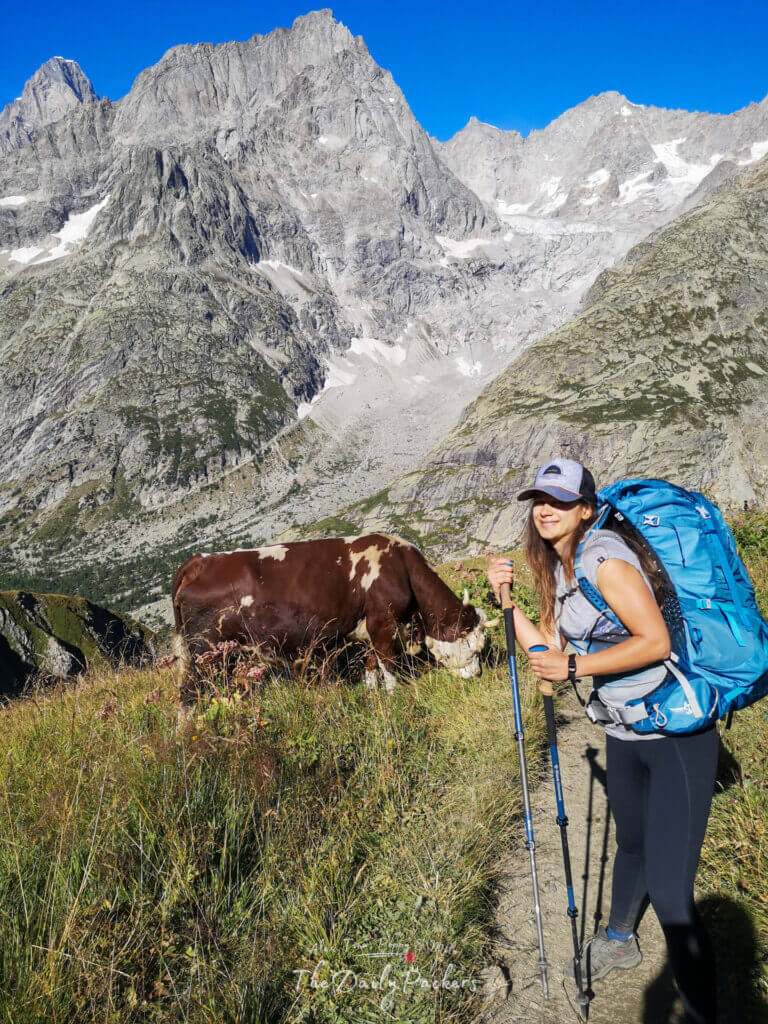
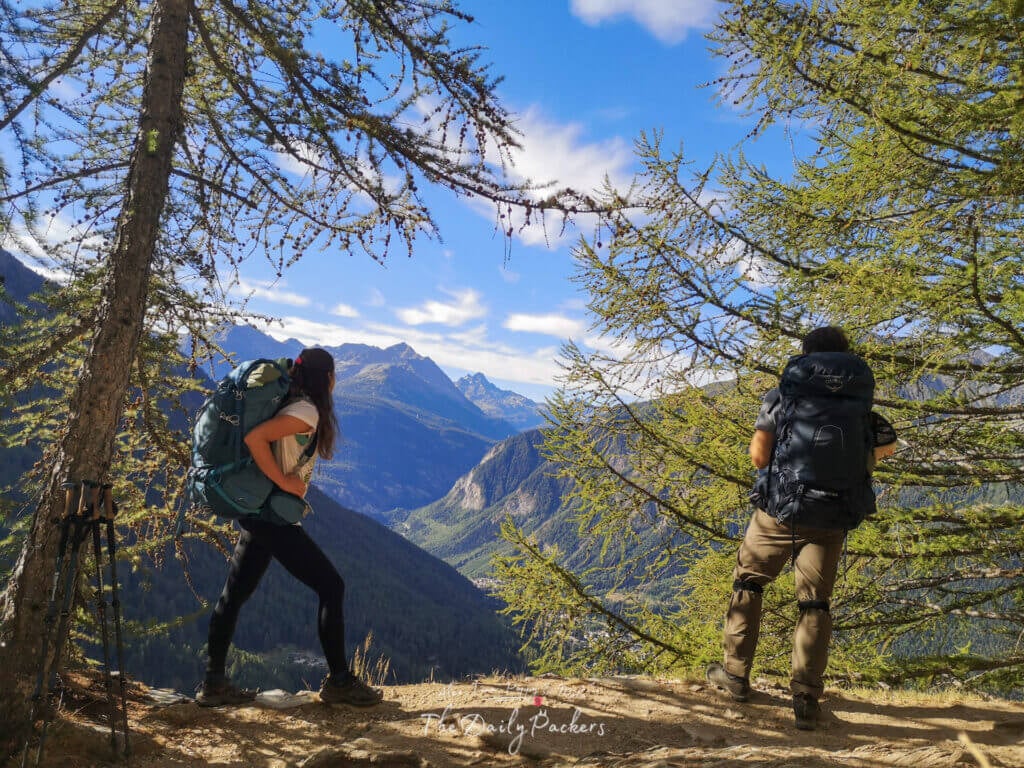
- A comfortable backpack – You’ll be carrying it every day, so ensure it fits well and distributes weight properly.
- Walking poles – A must-have for reducing strain on your knees and providing extra stability on steep ascents and descents.
Packing smart will make your Tour du Mont Blanc experience much more enjoyable!
Tip: Always travel with a filtered water bottle — it saves money, reduces plastic waste, and keeps you hydrated wherever you go.
How many kilos should my pack be?
There isn’t a one-size-fits-all answer to that question, as it largely depends on your physical condition and hiking style. However, a good rule of thumb is to keep your pack as light as possible to make the trek more enjoyable. Here’s a general guideline for pack weight based on the type of hiker you are:
- Camping the entire TMB: Your TMB packing list will be the heaviest, as you’ll need to carry a tent, cooking gear, and extra supplies. Aim to keep your pack under 13kg to avoid excessive strain.
- Mixing camping and refuges: If you plan to camp some nights and stay in refuges on others, your packing list for the Tour du Mont Blanc will be slightly lighter. Keep your pack weight between 9kg and 12kg by skipping cooking equipment and opting for lighter gear.
- Staying only in refuges: Those relying entirely on mountain huts will have the lightest TMB packing list. You won’t need camping gear, so your pack should ideally stay around 7 to 8kg maximum for optimal comfort.
Regardless of your hiking style, the key is to pack light and efficiently. Overpacking will make the trek unnecessarily difficult, so focus on bringing only the essentials.
Gears
Footwear – Shoes
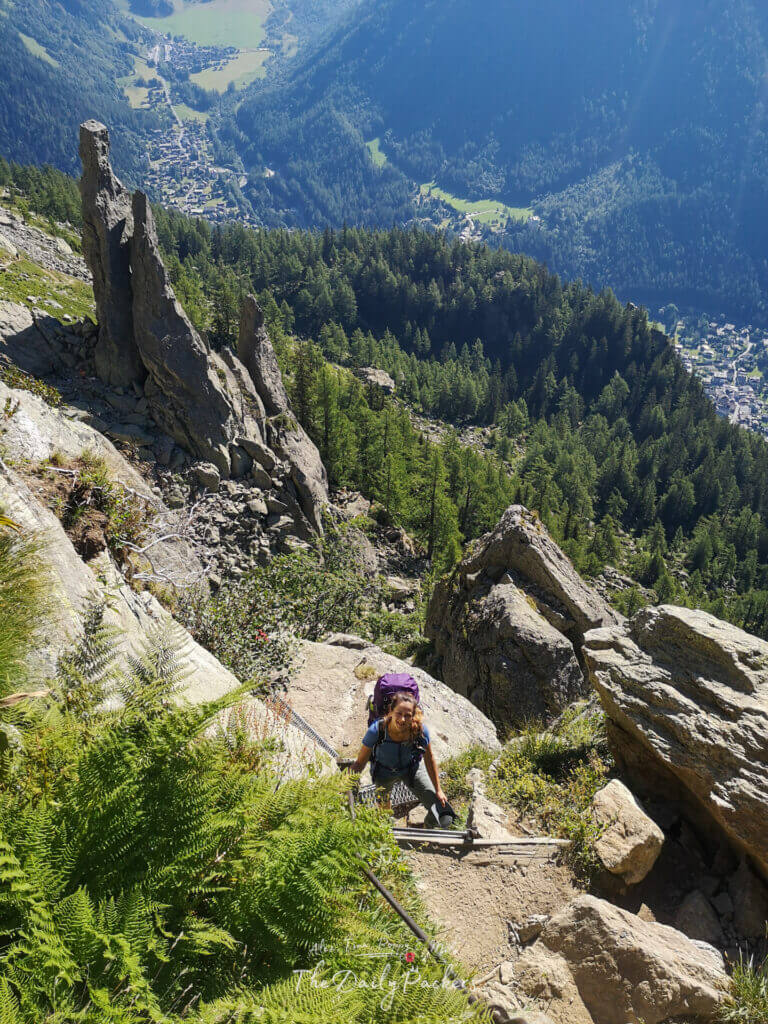
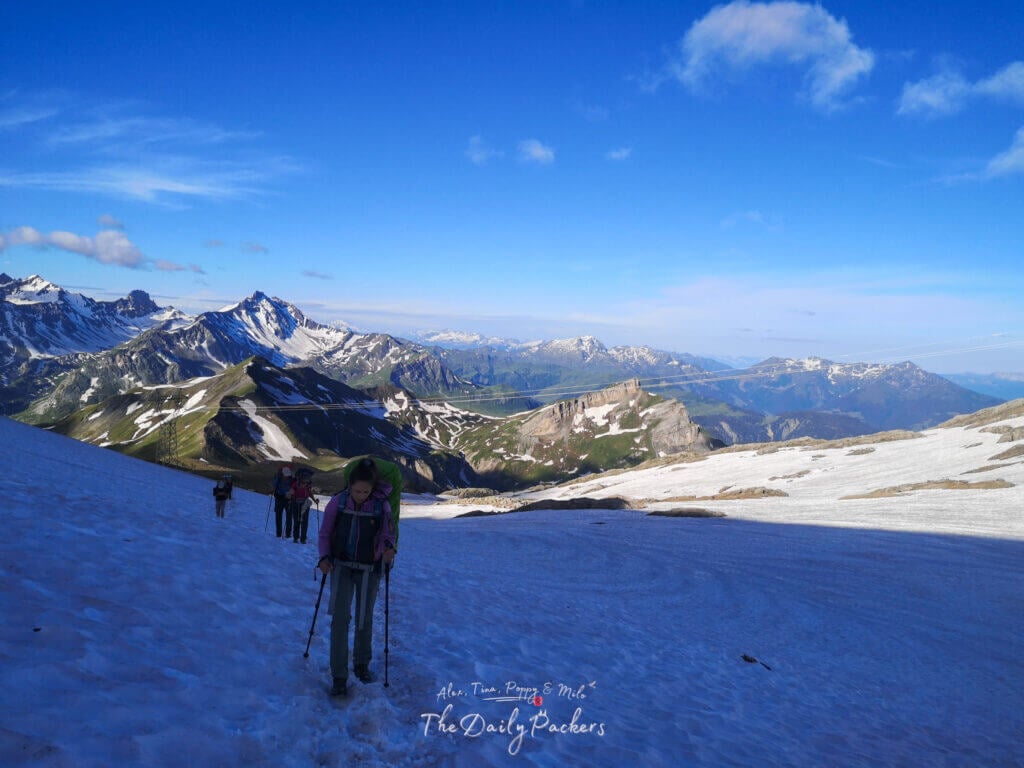
Having the right footwear for your Tour du Mont Blanc is essential. This multi-day trek takes you through mountain terrain, dirt trails, rocky paths, snow-covered sections, and river crossings, so investing in high-quality hiking shoes or boots is crucial.
When selecting what to bring for the Tour du Mont Blanc, consider fit, durability, and protection. One key factor is ensuring enough space in front of your toes. Hiking footwear tends to run slightly larger than regular shoes, allowing room for your feet to move during descents. Without enough space, your toes will hit the front of your boots, leading to discomfort and, in some cases, lost toenails.
Light vs. Heavy Boots – What’s Best for the TMB?
- Light boots or hiking shoes (e.g., Salomon X Ultra 4 Mid, Brooks Cascadia 18 or Salomon X Ultra 4) are comfortable and breathable, ideal for short hikes or warmer conditions. However, lighter shoes may wear out faster on long-distance treks like the TMB.
- Heavy-duty boots (e.g., Merrell Men’s Moab 3 Mid or Salomon QUEST ELEMENT GORE-TEX ) provide better durability, ankle support, and waterproofing. They are more resistant to wear and tear, making them a solid option for the Tour du Mont Blanc packing list.

I (Alex) wore heavy-duty boots, while Tina opted for hiking shoes. In the end, I had much better protection. My boots stayed dry even during river crossings and snowy sections, while Tina’s shoes often got wet. If you want better waterproofing and durability, boots are the safer choice.
One of the biggest mistakes hikers make is wearing brand-new shoes on the trail. Be sure to break in your hiking shoes by walking at least 70km before starting the Tour du Mont Blanc. This ensures they mold to your feet, reducing the risk of blisters and discomfort.
When finalizing your TMB packing list, invest in quality footwear—it will make or break your experience on the trail.
Check our Google Map of the Tour du Mont Blanc
Footwear – Sandals
Adding sandals to your Tour du Mont Blanc packing list may seem like extra weight, but after a long day of hiking, they can be a game-changer for comfort and recovery. Swapping out your hiking boots or shoes at the end of the day gives your feet a chance to breathe and recover, reducing swelling and discomfort.
When deciding what to bring for the Tour du Mont Blanc, opt for sturdy yet lightweight sandals that provide support while still being breathable. Open-toe designs allow airflow, but they should also securely hold your feet to avoid unnecessary strain.
Our Picks for the TMB :
- Alex: Teva Terra Fi 5 Universal Sandals – Men’s – Comfortable, durable, and lightweight, making them great for relaxing after a long hike.
- Tina: Teva Tirra Sandals – Women’s – Supportive and secure while allowing her feet to breathe after hours in hiking shoes.
If you’re camping along the TMB, having sandals is extra useful for walking around campgrounds, using shared showers, or even for quick river crossings where you don’t want to soak your hiking boots.
Though they add a little extra weight, packing a pair of lightweight sandals for the Tour du Mont Blanc packing list is definitely worth it for comfort and versatility.
Tip: We used this MSR tent — super reliable, easy to set up, and held up perfectly in all weather conditions.
Footwear – Socks
When considering what to pack for the Tour du Mont Blanc, high-quality socks are just as essential as your hiking boots. The right socks prevent blisters, reduce moisture buildup, and provide comfort throughout the long days on the trail.
For the best TMB packing list, Merino wool socks are the top choice. Here’s why:
- Moisture-Wicking – They pull sweat away from your skin, keeping your feet dry.
- Breathable & Temperature-Regulating – Keeps your feet cool in summer and warm in cooler conditions.
- Quick-Drying – Essential if you need to wash them along the way.
- Odor-Resistant – Perfect for multi-day hikes as they don’t retain bad smells.
- Comfort & Cushioning – Helps prevent blisters and reduces impact on long treks.

For a 10 to 11-day TMB trek, we recommend packing at least 3 pairs:
- 2 pairs for daily hiking (alternating between them)
- 1 pair for sleeping or backup
Some of the best Merino wool hiking socks include:
- Smartwool Classic Hike Full Cushion Crew Socks – Men’s
- Smartwool Performance Hike Light Cushion Margarita Ankle Socks – Women’s
To prevent blisters, pair your socks with well-fitted hiking boots and test them out before your trip by hiking at least 70 km in them. This way, you’ll be fully prepared for the trail and enjoy a more comfortable adventure!
Backpack
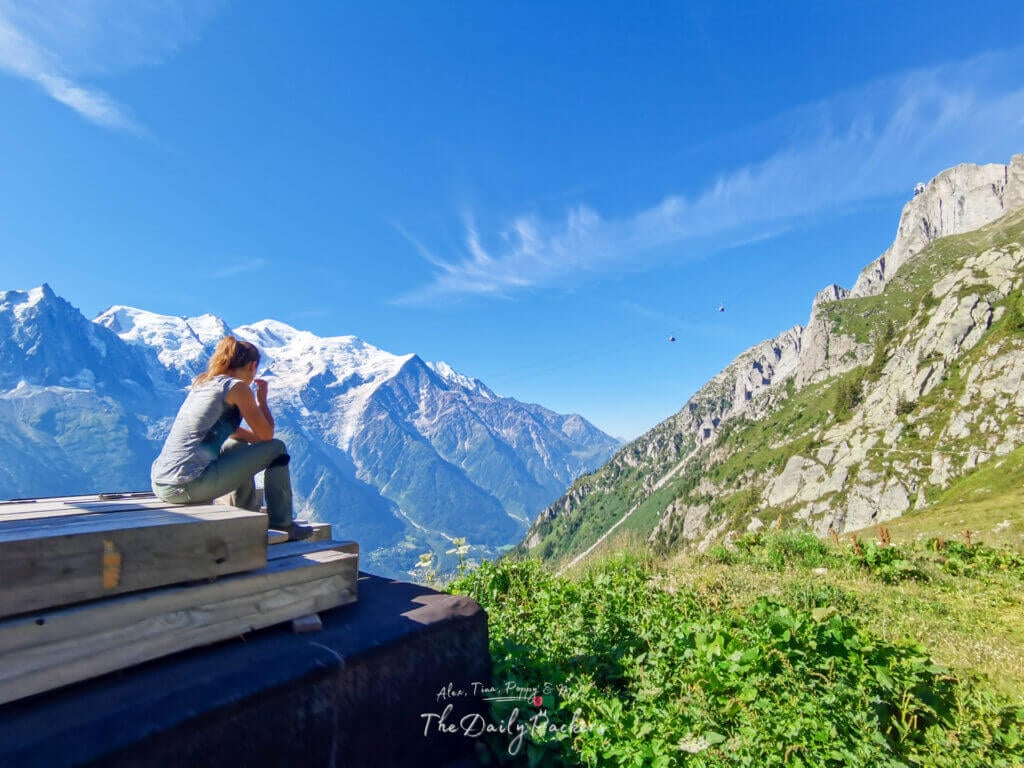
After hiking boots, your backpack is the most important piece of gear for the TMB packing list. You’ll be carrying it all day, every day, with 7 to 13 kg of gear, so comfort and fit are crucial.
What to Look for in a Backpack for the Tour du Mont Blanc
- Proper Fit – Choose a backpack that distributes weight evenly on your hips rather than your shoulders.
- Ventilated Back Panel – Helps reduce sweat buildup and increase comfort on long hikes.
- Adjustable Straps – Ensure the shoulder, chest, and hip straps fit properly.
- Durability – The TMB is a long-distance hike, so opt for a rugged, well-built pack that can handle the journey.
- Rain Cover – Essential! Weather in the Alps is unpredictable, so keep your gear dry.

What Size Backpack Should You Bring for the TMB? The size of your backpack depends on how you’re hiking the TMB:
- Camping: 50L to 70L – You’ll need extra space for a tent, sleeping bag, and cooking gear.
- Refuge stays: 35L to 45L – No need for camping gear, just clothing, snacks, and essentials.
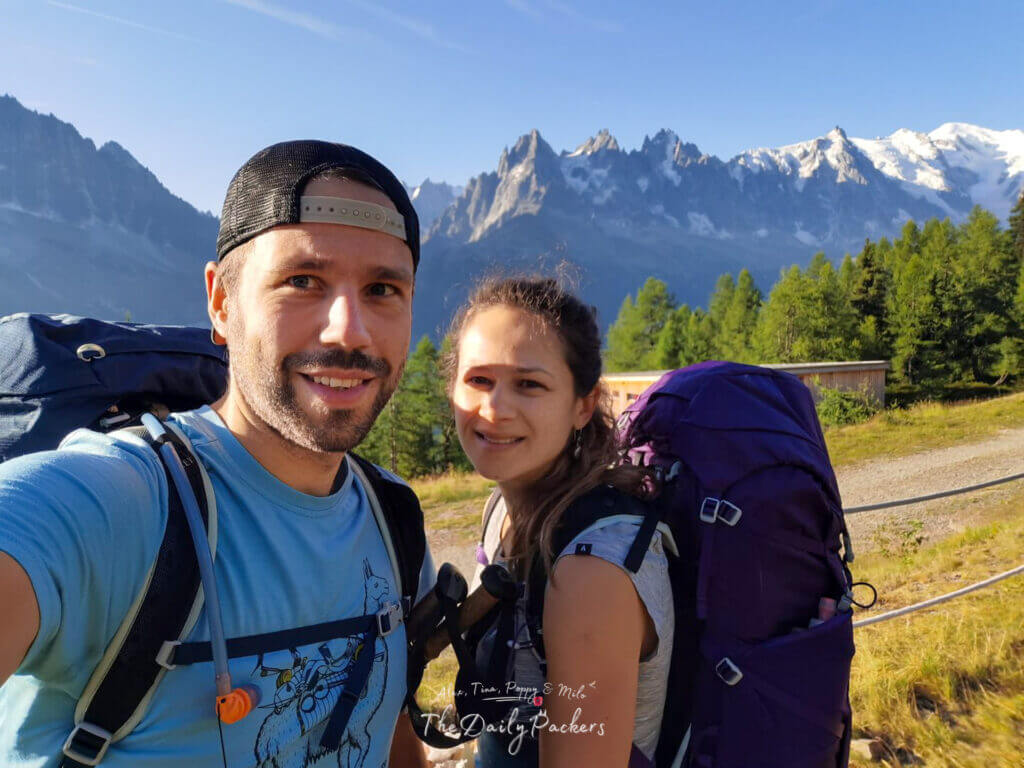
We started with Quechua Forclaz bags, but after upgrading to Osprey Atmos (Alex) and Osprey Aura (Tina) 65L, the difference was game-changing. These packs:
- Provide excellent weight distribution with a hip belt to reduce shoulder strain
- Have adjustable torso lengths for a better fit
- Include a suspended back panel for better ventilation
For refuge hikers, the Osprey Talon 44 (men) or Osprey Tempest 40 (women) are great lightweight options.
Before heading out, test your backpack fully loaded on a few training hikes. Adjust the fit so that most of the weight sits on your hips, not your shoulders. This will make a huge difference over 10+ days of trekking!
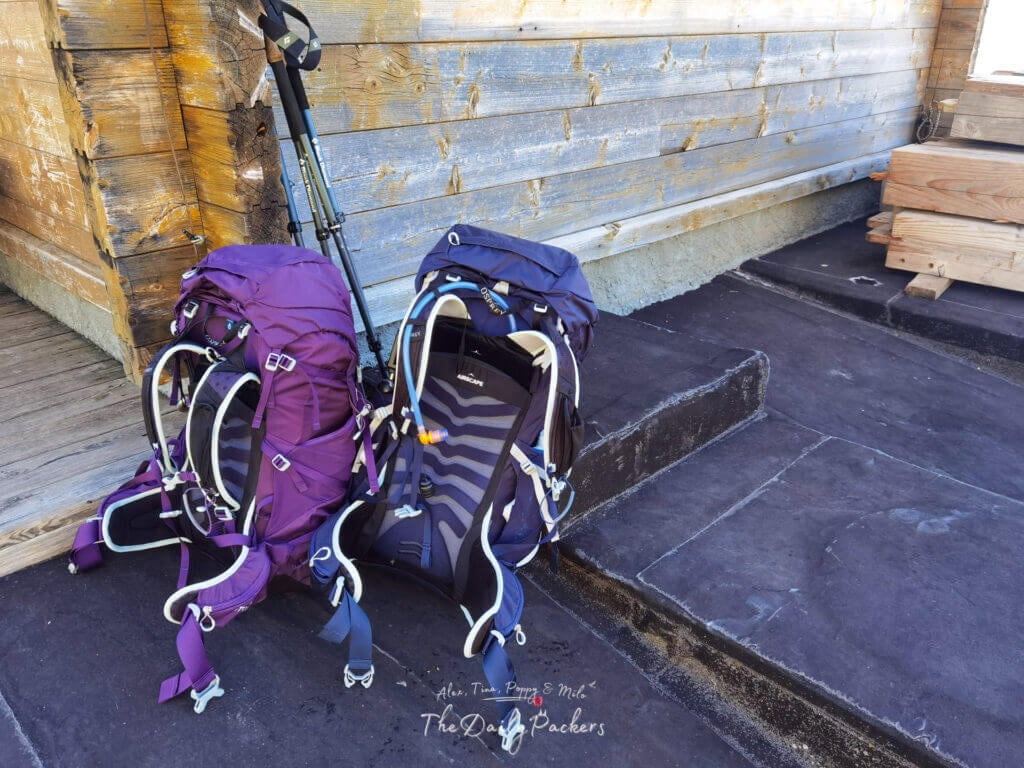
Tip: We hike with Osprey backpacks and can’t recommend them enough — the Talon 44 and Tempest 40 are comfortable, durable, and great for any adventure.
Trekking Pole
Long-distance hikes like the Tour du Mont Blanc put a lot of strain on your knees, ankles, and back. Between carrying a heavy pack, hiking up and down steep trails, and walking for multiple days in a row, your body is under constant pressure. Trekking poles help reduce fatigue and prevent injuries, making them a must-have for your TMB packing list.
Benefits of Trekking Poles for the Tour du Mont Blanc
- Reduce Impact on Knees and Joints – Descending is tough on the knees, but trekking poles absorb some of the shock and reduce strain.
- Improve Balance on Uneven Terrain – The TMB features rocky trails, river crossings, and snow patches. Poles help keep you stable and secure.
- Distribute Weight More Evenly – Instead of all the pressure being on your legs and feet, poles engage your arms and upper body, making hiking less tiring.
- Help on Steep Climbs – When hiking uphill, poles allow you to push off with your arms, reducing leg fatigue.
- Prevent Slips and Falls – Especially useful when trekking on wet rocks, loose gravel, or muddy trails.
- Reduce Fatigue Over Long Distances – Using trekking poles conserves energy, allowing you to hike longer without overworking your legs.

We used to hike without trekking poles, and over time, our knees paid the price. Once we switched, we immediately felt the difference. Our go-to trekking poles are:
- Black Diamond Alpine Carbon Cork (Men & Women) – Durable, lightweight, and adjustable, these poles are perfect for a long-distance hike like the TMB.
Trekking Pole Tips for the TMB
- Use Wrist Straps Correctly – Let your hands rest on the straps rather than gripping the poles too tightly. This reduces hand fatigue.
- Adjust for Different Terrains – Shorten poles for steep uphill climbs, and lengthen them for downhill descents.
- Use Rubber Tips for Road Sections – If you’re walking on pavement or hard surfaces, attach rubber tips to reduce impact.
If you’ve never used trekking poles before, train with them on a few hikes before starting the TMB. Once you get used to them, you’ll never want to hike without them again!

Legs wear
When it comes to hiking gear, nothing beats a good pair of hiking pants. For the Tour du Mont Blanc, you’ll experience changing weather conditions, from hot sunny afternoons to cold mountain mornings, and even unexpected rain or wind. Hiking pants are lightweight, stretchable, and versatile, making them a perfect addition to your TMB packing list.
Why Choose Hiking Pants for the TMB?
- Lightweight & Breathable – Keeps you comfortable even when hiking long distances.
- Stretchable Fabric – Allows for better movement and flexibility on steep climbs.
- Convertible Options – Many hiking pants can be turned into shorts or capris, making them great for hot days.
- Quick-Drying & Moisture-Wicking – Essential for sweaty hikes or if you get caught in unexpected rain.
- Durable & Resistant – Designed to handle rough terrains, scratches from rocks, and changing weather conditions.
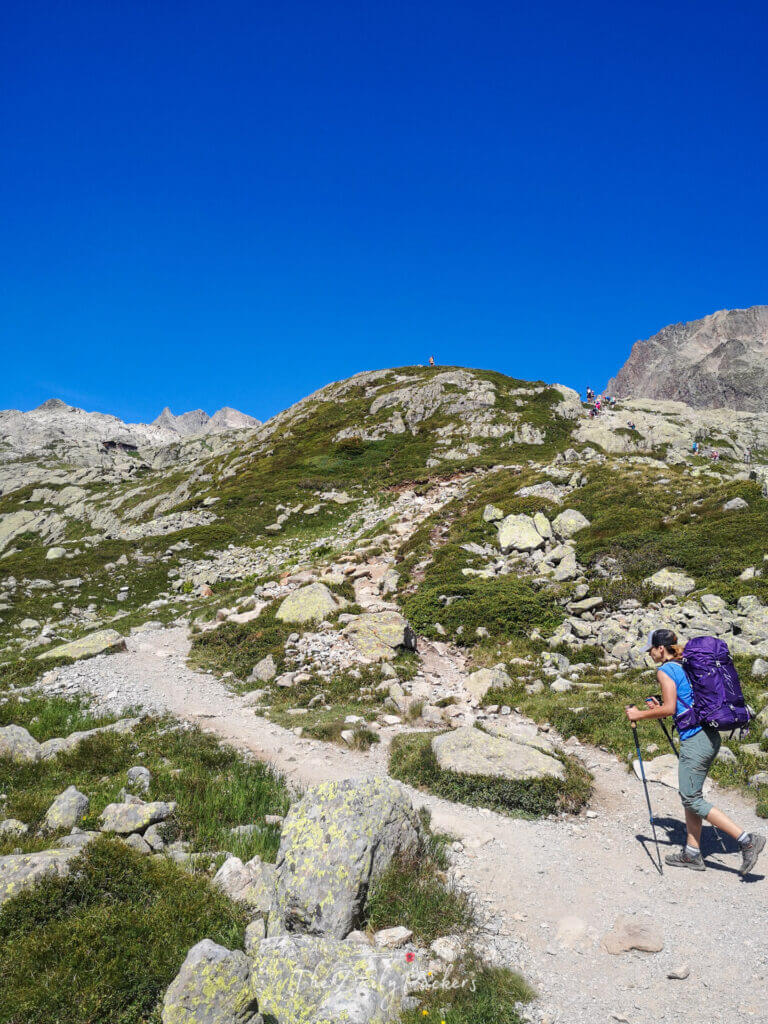
Our Hiking Pants Recommendations for the TMB
- For Men: Columbia Mens Silver Ridge Utility Convertible Pant
- For Women: Under Armour Women’s HeatGear Armour High No-Slip Waistband Pocketed Leggings
After days of hiking and burning calories, your pants may start to feel loose. Bringing a lightweight belt will help keep them in place and add extra comfort throughout your TMB trek.
Make sure to test your hiking pants before your trip to ensure they are comfortable and fit well. A bad pair of pants can cause discomfort and even chafing, which is the last thing you want on a 11-day trek!
Check our Google Map of the Tour du Mont Blanc
Chest wear – t-shirt
When preparing your TMB packing list, one of the most important clothing items is a good hiking T-shirt. A Merino wool T-shirt is an absolute game-changer for long-distance hikes like the Tour du Mont Blanc.
Why Choose a Merino T-Shirt for the Tour du Mont Blanc?
- Odor-Resistant – Wear it for multiple days without smelling bad, thanks to Merino wool’s natural antibacterial properties.
- Moisture-Wicking & Quick-Drying – Helps keep you dry and comfortable, even when you sweat.
- Regulates Temperature – Keeps you cool in hot weather and warm when it’s chilly.
- Soft & Comfortable – Unlike synthetic materials, Merino wool is gentle on the skin and doesn’t cause irritation.
How Many Merino T-Shirts Should You Pack for the TMB?
- If you’re camping → Bring 2 to 3 Merino T-shirts (one for hiking, one for the evening, and a backup).
- If you’re staying in refuges → 2 Merino T-shirts should be enough, as you can rinse one while wearing the other.
Our Merino T-Shirt Recommendations for the TMB
- Men: Icebreaker 150 or 200 Merino T-Shirt (light, breathable, and perfect for multi-day hikes)
- Women: Icebreaker Central Flora Forms T-Shirt – Women’s (slightly thicker but great for cooler conditions)
A high-quality Merino T-shirt will be your best companion on the Tour du Mont Blanc. It keeps you fresh, comfortable, and dry, no matter the weather. Unlike synthetic fabrics, it won’t stink after a single day—which is exactly what you need for a multi-day trek like the TMB!

Tip: We use the DJI Action 4 to film our vlogs — compact, durable, and perfect for capturing every adventure.
Chest wear – Mid layers
When hiking the Tour du Mont Blanc, layering is key. Temperatures can drop significantly in the mornings and evenings, and even during the day, you may experience strong winds or sudden temperature changes at higher altitudes. That’s why having a good mid-layer is essential in your TMB packing list.
Why You Need a Good Mid-Layer for the TMB
- Keeps You Warm – Essential for cold mornings, windy summits, and chilly nights at high altitudes.
- Lightweight & Packable – A good mid-layer won’t take up much space in your backpack.
- Breathable & Moisture-Wicking – Helps regulate body temperature and keeps you dry.
- Versatile – Can be worn alone on cool days or layered under a rain jacket in bad weather.
Our Mid-Layer Recommendations for the TMB
- Men: Rab Men’s Microlight Alpine 700-Fill Down Hooded Puffer Jacket
- Women: Rab Women’s Microlight Alpine 700-Fill Down Hooded Puffer Jacket
Whichever mid-layer you choose, make sure it fits comfortably over your base layer and under your rain jacket. It should provide enough warmth for the coldest parts of the trek while still being light and easy to pack. A high-quality mid-layer will make all the difference on your Tour du Mont Blanc!

Tip: We never travel without our DJI Mini 3 PRO drone anymore — it’s totally worth having to capture places from a whole new perspective.
Chest wear – Rain jacket
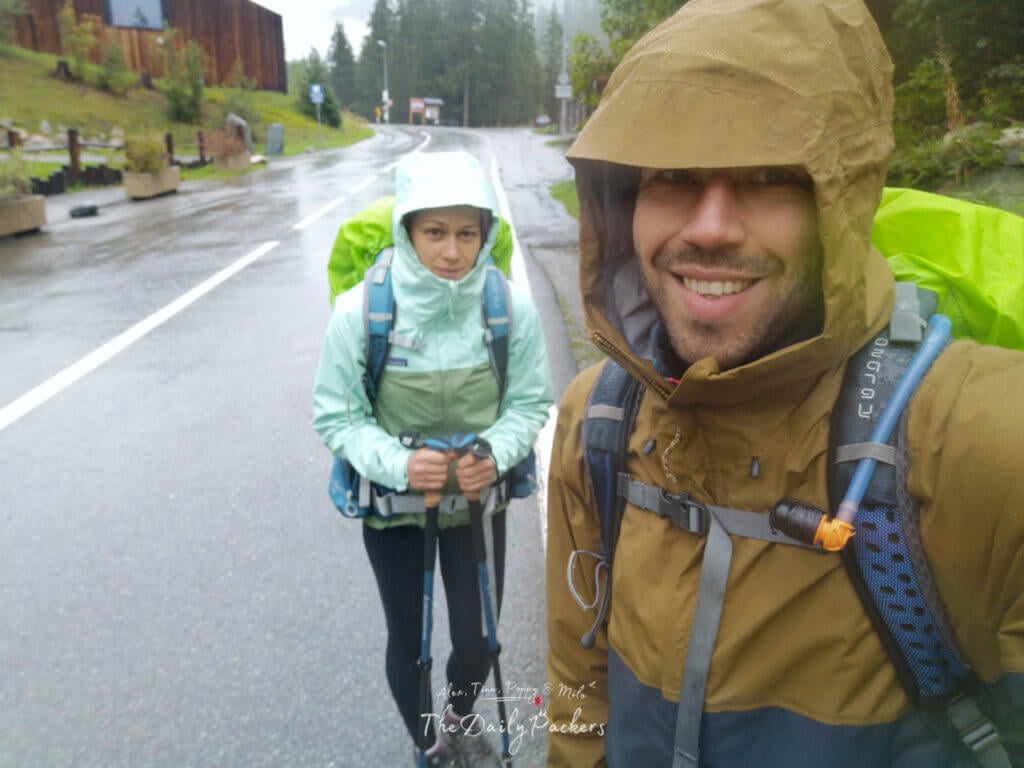
Having a good rain jacket is essential. The weather in the Alps can change quickly, and rain showers are common—even in summer. Your choice will mainly come down to hard-shell vs. soft-shell rain jackets.
Hard-Shell vs. Soft-Shell Rain Jackets: What’s the Best for the TMB?
Hard-Shell Rain Jacket
- Best protection against heavy rain
- More durable & windproof
- Slightly heavier than soft-shells
- Less breathable than soft-shells
Soft-Shell Rain Jacket
- Lightweight & breathable
- Better for light rain & mist
- Can feel damp in heavy rain
- More comfortable for active hiking
We personally prefer hard-shell rain jackets for the Tour du Mont Blanc as they offer better rain protection and wind resistance for mountain weather.

Head gear
When preparing your TMB packing list, sun protection is something you shouldn’t overlook. The Alpine sun can be intense, especially at high altitudes, and proper protection will keep you comfortable and safe throughout your trek.
Must-Have Sun Protection for the Tour du Mont Blanc
- A Cap or Hat – A lightweight, breathable cap or a wide-brim hat will protect your face and head from the strong sun. This is especially important on exposed sections of the trail where shade is limited.
- Sunglasses – The sun’s reflection on snow-covered passes and rocky terrain can be harsh on your eyes. A good pair of UV-protected sunglasses will reduce glare and protect your vision.
- Sunscreen (SPF 50+ recommended) – With the high elevation on the Tour du Mont Blanc, you’re exposed to stronger UV rays. Apply sunscreen in the morning and reapply throughout the day, especially on your face, neck, and hands.
- Lip Balm with SPF – Many hikers forget this, but chapped and sunburned lips are no fun! Keep your lips protected with an SPF lip balm to avoid dryness and cracking.
Even if the weather seems mild, don’t underestimate sun exposure on the TMB. Protecting yourself from the sun will help you avoid exhaustion, dizziness, and sunburns, ensuring a more enjoyable and comfortable trek.
Check our Google Map of the Tour du Mont Blanc
Specific Gears
Battery bank
While hiking the Tour du Mont Blanc, you’ll find opportunities to recharge your phone at most mountain huts, hotels, and some campsites. However, if you rely on your phone for photos, navigation, or emergency contacts, bringing a power bank is highly recommended.
Best Charging Solutions for the Tour du Mont Blanc
- Power Bank (10,000 – 20,000 mAh) – A high-capacity power bank will ensure your phone stays charged for multiple days, especially if you’re camping or staying in remote refuges where charging options are limited.
- Solar Charger – If you’re planning a longer trek or don’t want to rely on charging stations, a solar-powered power bank can be a great option. Clip it onto your backpack during the day to recharge as you hike.
- Multi-Port Charger – If staying in refuges, note that outlets are limited. A multi-port USB charger allows you to charge multiple devices at once or share with fellow hikers.
While some huts and campsites offer charging stations, a backup power source is essential to ensure your phone stays powered for navigation, emergencies, and capturing unforgettable moments. A lightweight, high-capacity power bank is a must-have on any TMB packing list.
Tip: We used this MSR tent — super reliable, easy to set up, and held up perfectly in all weather conditions.
Maps & Guidebook
A great addition to your Tour du Mont Blanc packing list is our custom Google Map for the TMB. Along the trail, you won’t find many signs or detailed information about the mountains, glaciers, and landmarks you’re passing. With our Google Map, you’ll have access to:
- Key trail points & waymarks
- Names of mountains, glaciers & viewpoints
- Campsites, refuges & accommodation options
- Food stops & resupply points
- Transport options & shortcuts
Instead of carrying a heavy guidebook, use our interactive map to enhance your TMB experience and stay informed on the go.

Check our Google Map of the Tour du Mont Blanc
Refuges specific gears
Sleeping in Refuges on the TMB: What to Pack
Staying in mountain refuges along the Tour du Mont Blanc offers comfort compared to camping, but it’s still a basic mountain experience—so you’ll need to bring a few essentials.
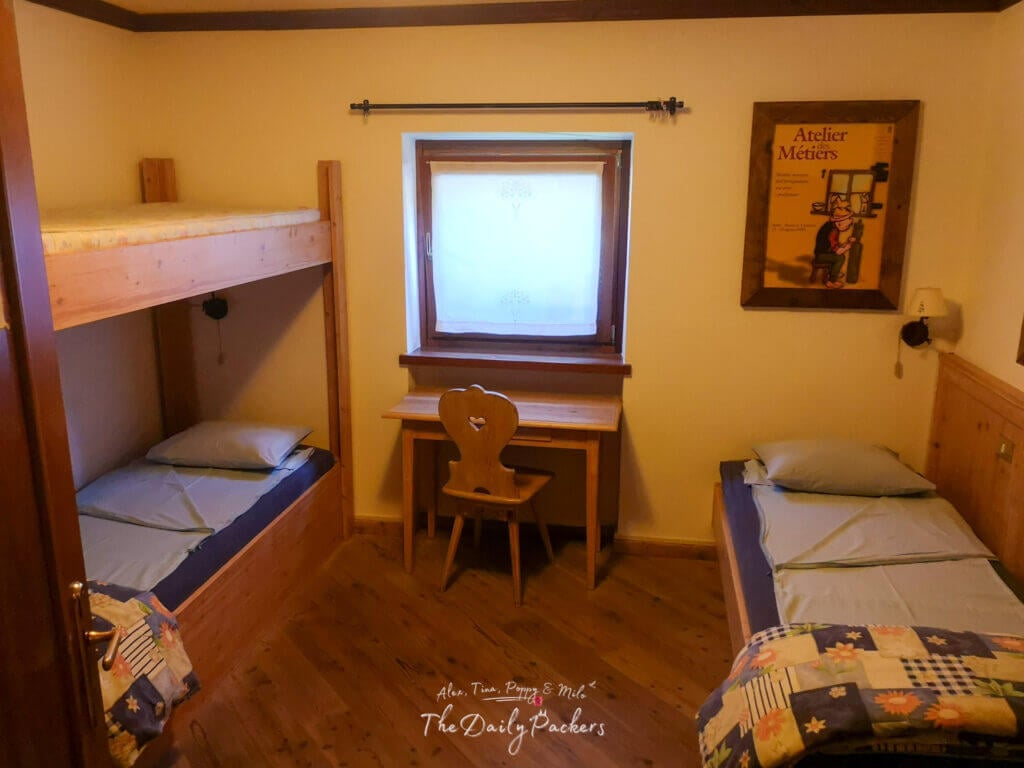
While bedding is usually provided, it’s highly recommended to bring a light sleeping bag or at least a sleeping liner for warmth and hygiene. A microfiber towel is also a must, as most refuges don’t provide them.
If you’re staying in shared dormitories, earplugs and a sleeping mask can be lifesavers to block out noise and light. A small travel pillow might also add some comfort to your night’s rest.
Camping-specific gear
If you’re planning to camp or mix things up with different accommodations, you’ll need to carry a bit of extra gear. But trust us—it’s totally worth it! Some camping spots are absolutely stunning, and with today’s ultralight gear, packing for an outdoor adventure has never been easier.
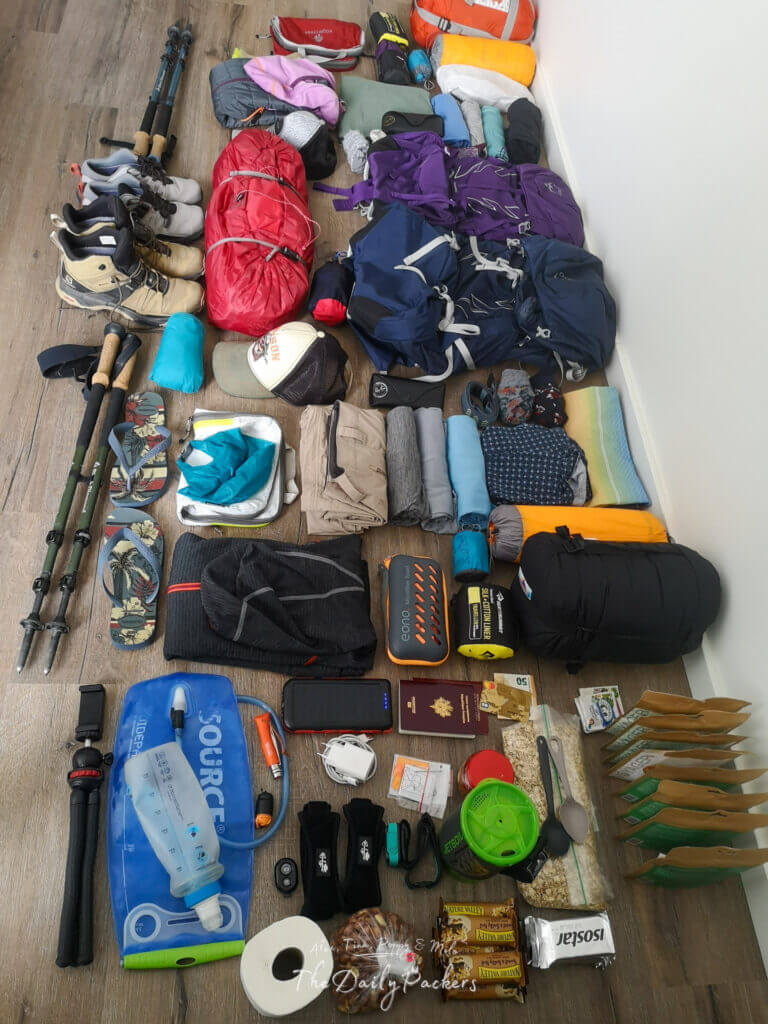
Here’s what we chose for our setup:
- Sleeping bag: Valandré GRASSHOPPER 400 DUVET or Big Agnes Anvil Horn (650 DownTek) – Sleeping Bag– warm, lightweight, and packable.
- Sleeping mat: Sea to Summit Ultralight Insulated – great balance between comfort and weight.
- Sleeping pillow: Sea to Summit Aeros Ultralight Pillow (Regular) – because a good night’s sleep matters, even outdoors!
- Liner: Sea to Summit Silk/Cotton Travel Liner (Traveller) – adds warmth and keeps the sleeping bag fresh.
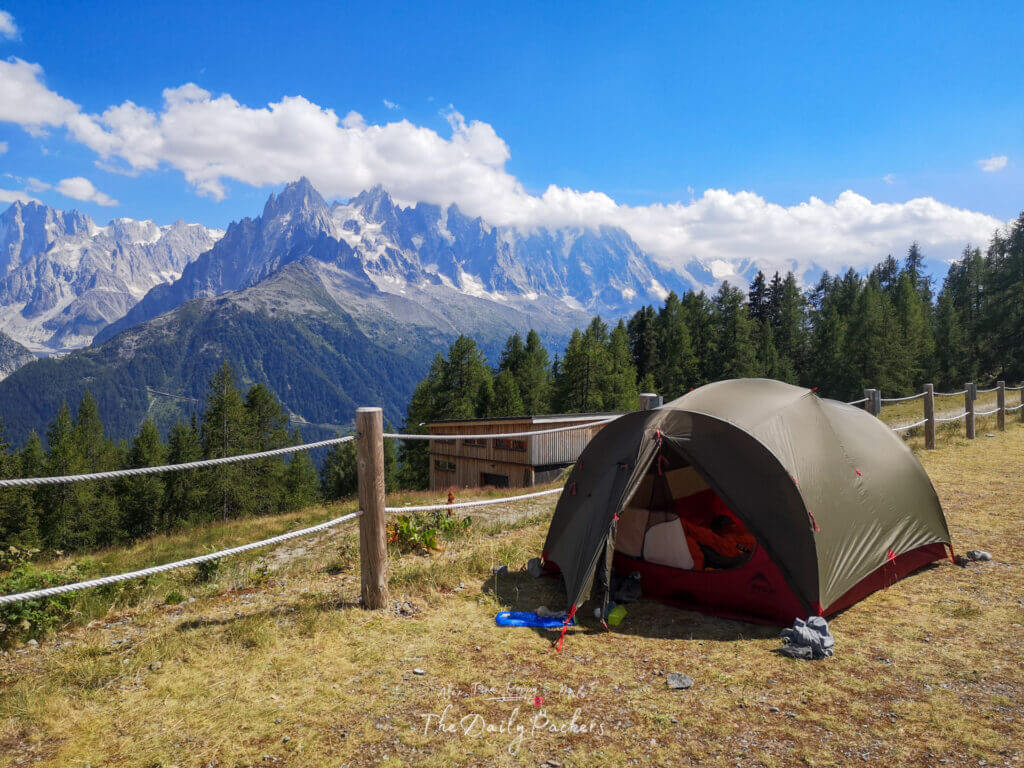
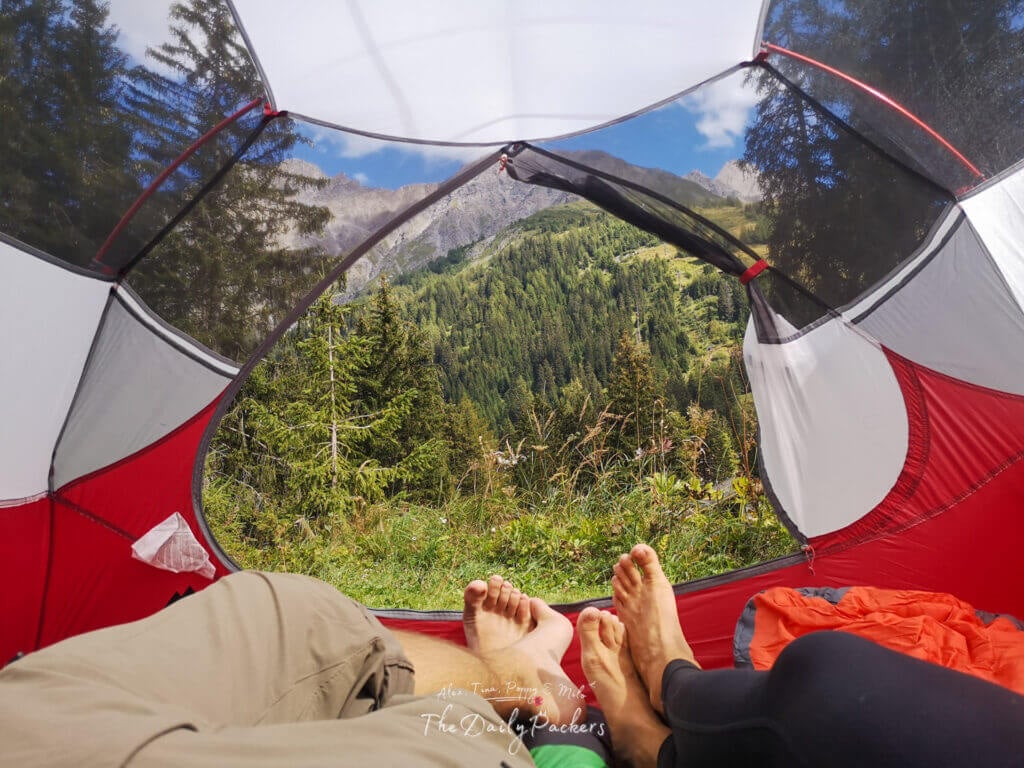
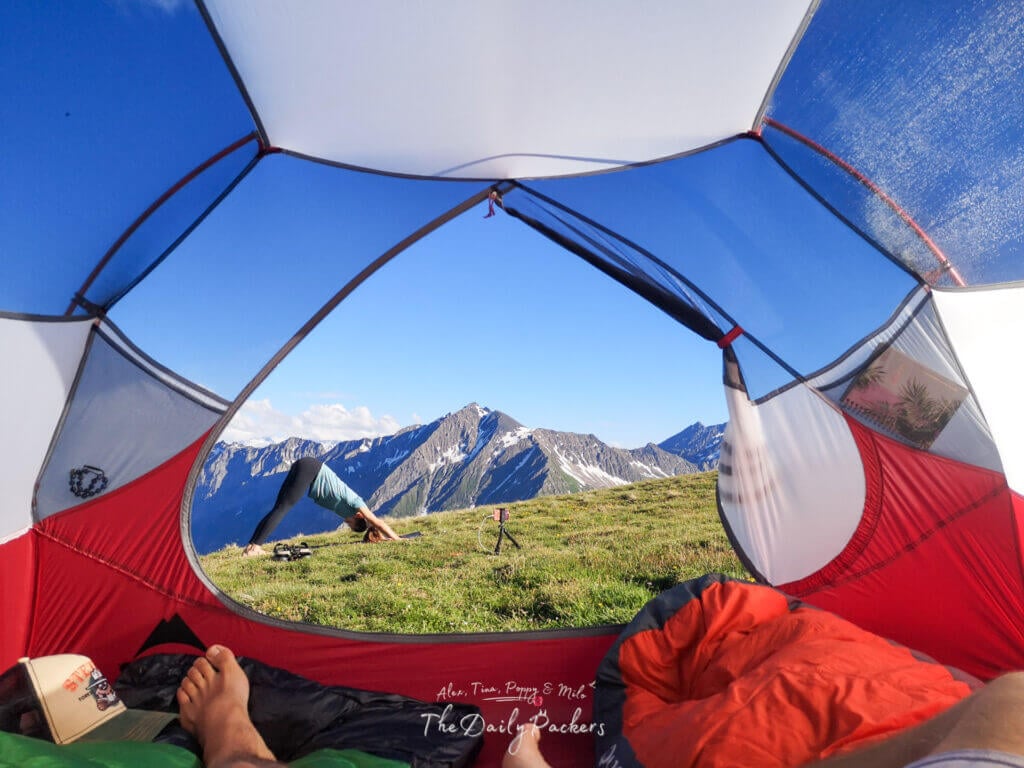
- Tent: MSR Hubba Hubba – our spacious and weather-ready home away from home.
We specifically went for a three-person tent, even though there are just two of us. MSR makes excellent backpacking tents: a one-person tent weighs 1.1 kg, a two-person 1.5 kg, and a three-person 2.1 kg. The extra space means we’re more comfortable, and in case of heavy rain, we can store all our gear inside without feeling cramped. However, as of today, we would recommend a 2-person tent.
If you’re on the fence about camping, we’d say go for it! A few nights under the stars in the right spots can turn a trip into something truly unforgettable.

Read: All our gears and equipments for hiking, blogging, vlogging and so much more…
Cooking specific gears
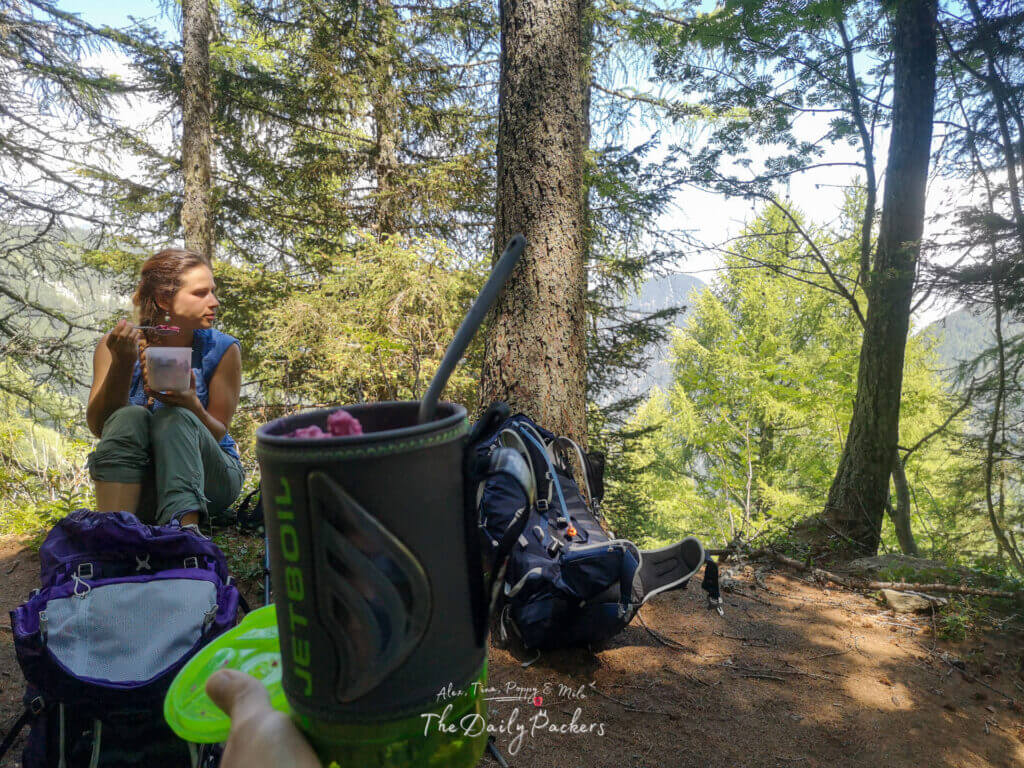
If you’re planning to cook some of your own meals on the road, you’ll need to carry a bit more gear. But the trade-off? You’ll save money, enjoy some incredible camp meals, and have the flexibility to eat wherever you want.
Here’s what we use for our camping kitchen setup:
- Cutlery: Sea to Summit Camp Cutlery Set (3-piece) – lightweight and durable.
- Burner & gas: Jetboil Flash Java Kit Cooking System
With this setup, we can whip up a hot meal anywhere, whether it’s a quick coffee before hitting the trail or a full dinner under the stars. If you’re new to camp cooking, don’t worry—keeping it simple is the key!
Tip: We never travel without our DJI Mini 3 PRO drone anymore — it’s totally worth having to capture places from a whole new perspective.
Other Gears
In addition, don’t forget the essentials for personal care. We always bring dry soap and shampoo—they’re lighter, more compact, and better suited for travel. Other must-haves include:
- Toothbrush & toothpaste – no explanation needed!
- Sunscreen (SPF 50+) – protecting your skin is a must, especially when spending long hours outdoors.
- Toilet paper – trust us, you never know when you’ll need it! We always carry one or two rolls, just in case.
If you’re heading out on a hike or spending time in the wild, here are some additional items you might want to bring along:
- Headlamp – a must-have for early morning starts or setting up camp after dark.
- Swim shorts – perfect for him to relax and unwind in the evenings.
- Swiss Army knife – always useful for quick fixes, food prep, and more.
- Travel tripod – for capturing those epic landscape shots.
- Compression bags – great for saving space and keeping gear organized.
- 3L water pouch – ensures you stay hydrated on longer hikes.
- Flexible water bottles – lightweight and easy to pack when empty.
These small additions can make a big difference in comfort and convenience while on the road or trail. What’s your go-to travel essential?
Read: The Ultimate 11-Day Tour du Mont Blanc Hiking Guide
About the authors
We are Alex and Tina, a French-Serbian couple who met in China back in 2014. We spent three incredible years there before making France our home. Our shared passion for travel has been the heartbeat of our relationship for over 12 years, taking us across 44 countries and counting.
We launched TheDailyPackers in 2019 as a way to document our adventures. In 2026, we reached a major milestone by officially turning our blog into our full-time job. While we are still growing toward financial independence through this platform, every article we write is fueled by our mission to make your voyages easier through in-depth guides, honest advice, and the lessons we’ve learned from our own mistakes.
Our journey has not been without its storms. In 2023, our world changed forever when our first son, Poppy, was stillborn on November 25th. It was, and remains, the hardest chapter of our lives. In 2025, we were blessed with our second little boy, Milo. He has since joined our traveling tribe, and you’ll be seeing him—and the reality of traveling with a little one-on the blog more and more.
We hope to inspire you to explore the world with curiosity and resilience. Thank you for being part of our story.
You may also like those related posts
13 best things to do in Granada, Spain, in 1 to 3 days
20 Best things to do in Bonifacio, Corsica in 3 days
24 Best things to do in Riga, Latvia, in 2 days or more
15 best things to do in Ljubljana, Slovenia, in 1 to 3 days
16 Best things to do in Montevideo, Uruguay, in 3 days
9 Best things to do in Nusa Penida, Bali, in 4 days
Unique Guesthouse Montevideo: In memory of dear Mario 2020
21 Best things to do in Regensburg, Germany, in 2 to 3 days
Pssst, did you know that…
If you purchase something through our links, we earn a small fee. However, you still pay the same. Win-win! And one day we may get to be full-time travel bloggers =)
Find Hotels with Booking.com
Do Yoga with KVY
Buy us a Coffee
Rent a car with DiscoverCars
Find Attractions with GetYourGuide
Find Flights with Expedia
Buy an eSIM with Airalo
Get insured with World Nomads
Get ready with Amazon.com