
Yala National Park Morning Safari
In this article, we’ll share our experience exploring Yala National Park in Sri Lanka, specifically, the Morning Safari.
After considering the different options—morning, afternoon, or full-day safari—we decided to go with the morning safari, as it offered the best chance to see wildlife while avoiding the heat of the day.
And we’re so glad we did! We were lucky enough to spot some of Yala’s most iconic animals, including a leopard, a sloth bear, elephants, and so much more.
In this post, we’ll take you through our full Yala National Park Morning Safari experience, with everything you need to know to plan your own adventure. So if you’re heading to Sri Lanka and thinking about visiting Yala National Park, let’s dive in!

Read: The perfect 2-Week Sri Lanka Itinerary
Cost & Safaris
As mentioned above, there are 3 types of safaris you can choose from in Yala National Park:
- Morning: starts at 4:30am, ends at 12:00pm. Cost 55 USD per person for a 6pax shared jeep with breakfast, VAT, water, and the entrance ticket.
- Afternoon: starts at 1:30am, ends at 6:00pm. Cost 83 USD per person or 140 USD for two for a private jeep with snacks, VAT, water, and the entrance ticket. Afternoon safaris are less crowded and where we book it wasn’t possible to have a shared jeep.
- Full day: starts at 4:30am, ends at 6:00pm. Cost 75 USD per person for a 6pax shared jeep with breakfast, lunch, VAT, water, and the entrance ticket.
We personally booked our morning safari through our accommodation in Tissamaharama (Tissa), which made everything smooth and easy. Most guesthouses in the area can help organize your tour, but you can also book it online if you prefer an option with international reviews.

Tip: You can book your safari online (Morning or Afternoon)
Best time to Visit
The best time to visit Yala National Park depends on what you’re hoping to see and experience. Each season offers something different—from clear, dry conditions perfect for wildlife sightings to greener, quieter landscapes during the rainy season.
- Dry Season (February – July): Ideal for Wildlife Viewing: This is the best time to visit Yala National Park, especially if you’re focused on spotting animals like leopards, elephants, and sloth bears. With fewer water sources, wildlife gathers around the remaining ones, making sightings more frequent. Expect hot, dry weather and great safari conditions—though it can get very warm in the afternoons.
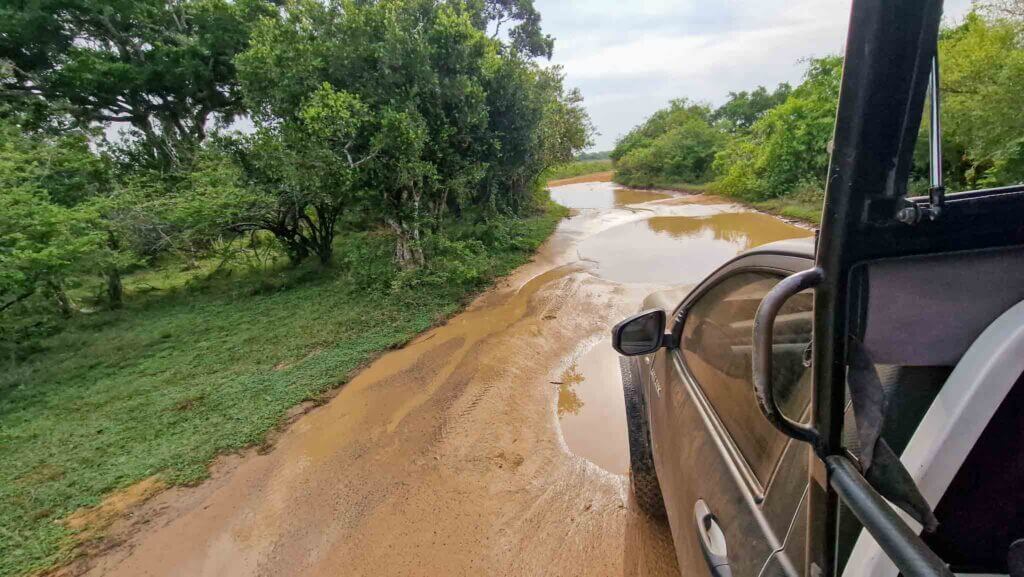
- Monsoon Season (October – January): Lush but Less Active: Yala experiences its heaviest rains during this time, and the park is often partially or fully closed in September and early October for maintenance and safety. While the landscape becomes beautifully green, wildlife tends to be more scattered, and some tracks may be muddy or inaccessible.
- Shoulder Season (August – September): Transitional but Unpredictable: These months mark the transition between dry and wet seasons. While the park can still be open, sightings may decrease and early rains can begin. However, fewer crowds make it a more peaceful time to visit—just keep an eye on the weather.

Here are all your accommodation options in Yala National Park
Understanding Yala National Park
Yala National Park is divided into five blocks, but only three are currently open to the public. In addition to these main areas, there are two adjoining parks: Kumana National Park (also known as Yala East) and Lunugamvehera National Park. Each block has its own name and characteristics—for example, Block 1 is known as Palatupana.
We ended up visiting Block 1, which is also the most visited and popular block—mainly because it offers the highest chances of spotting wildlife, including leopards, elephants, and sloth bears. At the time, we had no idea which block we were going to. Our jeep tour simply took us straight to Block 1 without even mentioning it.
This seems to be the standard route for most safari tours, unless you specifically request something different. That said, you can visit other blocks too. We met other travelers who explored Block 5 independently, but unfortunately, they didn’t have much luck with animal sightings.
So if you’re booking a safari and want the best chance of seeing wildlife, we recommend confirming that your tour will focus on Block 1—especially if it’s your first time visiting Yala.

Check our Google Map of Sri Lanka
Wildlife in Yala National Park – What You Might See
Yala is a vast and diverse reserve made up of lowland woodland, open grasslands, wetlands, lakes, and lagoons. It’s home to an impressive 44 species of mammals and over 215 species of birds, making it one of the best places for wildlife spotting in Sri Lanka.
Here are some of the biggest wildlife highlights you can expect to see on your safari—and how likely you are to spot them:
- Sri Lankan Leopard – Around 50% chance, especially in Block 1. We were lucky to see one!
- Sloth Bear – A rare sight, with only 20–30% chance, but it does happen (we saw one!).
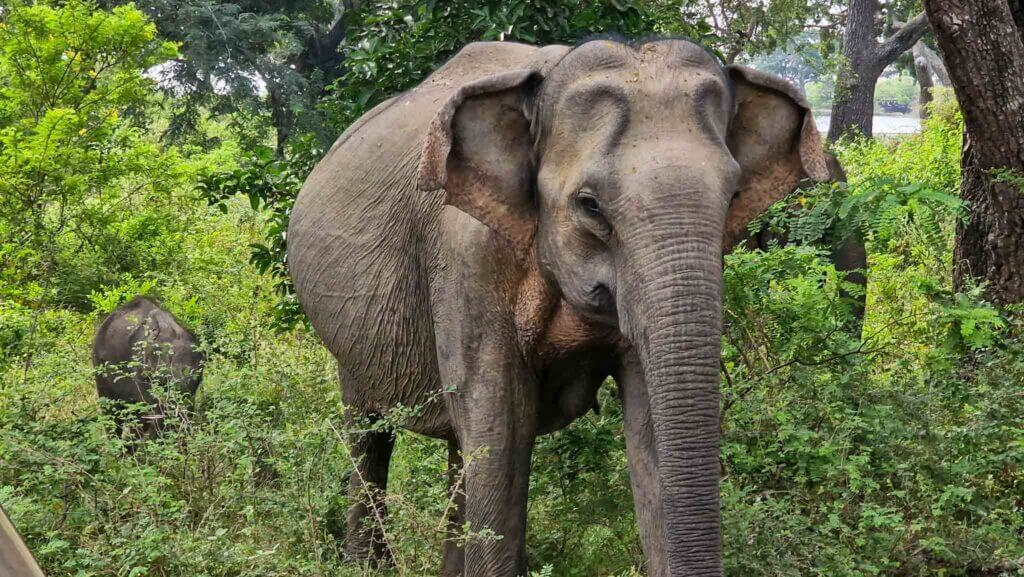
- Sri Lankan Elephants – Almost a guarantee, especially near waterholes.
- Wild Water Buffalo – Nearly 100% chance, often seen cooling off in muddy ponds.
- Spotted Deer & Sambar Deer – Seen throughout the park, usually in herds.
- Peacocks – You’ll see plenty, strutting around or calling from trees.
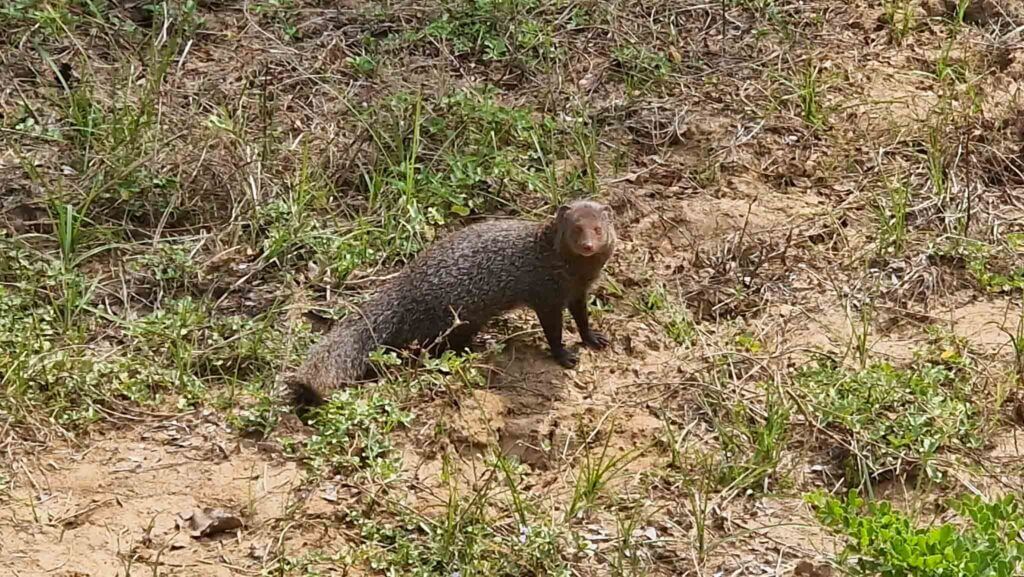
- Mongoose – Quick and curious, often spotted darting across the tracks.
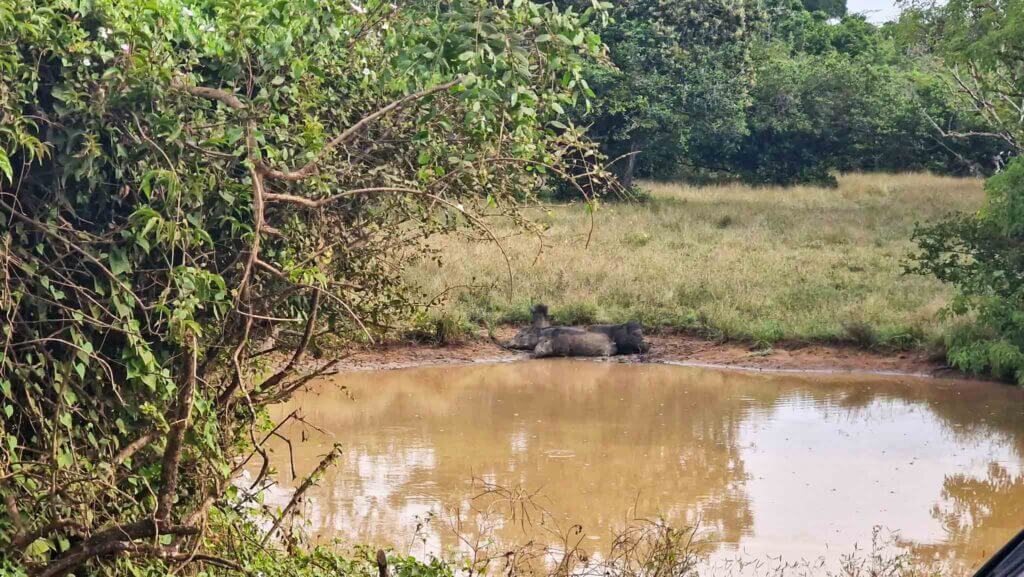
- Wild Boar – Common and usually seen in small groups foraging near bushes.
- Bonus one – Crocodile – The only one we didn’t manage to spot, but they’re definitely there!
With luck and a good guide, you might see many of these in a single morning safari—just like we did.

How to get to Yala National Park
The gateway to Yala National Park is the small town of Tissamaharama, often called Tissa for short. It’s the closest town to the main entrance of the park (Block 1), and where most safari tours begin—especially early morning ones.
Here are the most common ways to reach Tissa:
- From Ella: This is a popular route. You can arrange a private driver through your accommodation. We did this and left in the afternoon, arriving in Tissa by early evening. The drive takes about 3 to 3.5 hours.
- By Bus: Local buses run between Ella, Wellawaya, and Tissamaharama, but be prepared for a longer and less comfortable journey. This option is very budget-friendly.
- From the South Coast (Mirissa, Tangalle, or Galle): Tissa is also easily accessible from Sri Lanka’s southern beaches. The drive takes around 2–4 hours, depending on your starting point.
- By Taxi/Transfer App (PickMe or Uber): These apps can work in some regions, but don’t count on them for the full journey. In many cases, a pre-arranged driver is the most reliable.
Tip: You can book your safari online (Morning or Afternoon)
Where to Stay in Yala National Park
We stayed at La Safari Inn, a guesthouse with great reviews for both the accommodation and its safari tours. The room was affordable, which was perfect for us since we were only spending one night before a 4:30 AM safari. Most guesthouses and small hotels in Tissa offer safari packages, and booking directly through your accommodation is often cheaper and more convenient than online options.
- (€): La safari inn
- (€€): Hotel River Front
- (€€€): Wild Coast Tented Lodge – Relais & Chateaux
Here are all your accommodation options in Yala National Park
Wild Coast Tented Lodge – Relais & Chateaux
If you’re looking to elevate your safari experience with a touch of luxury, consider staying at the stunning Wild Coast Tented Lodge. Located right on the edge of Yala National Park, this Relais & Châteaux property blends seamlessly into its wild surroundings with luxurious cocoon-shaped tents, fine dining, and even its own private safari experiences.
It’s the perfect choice for those wanting a unique, all-inclusive safari escape, complete with gourmet meals, a beachside setting, and expert guides. While it’s on the higher end in terms of price, the experience is truly unforgettable and ideal for honeymooners, special occasions, or anyone looking to splurge on comfort after roughing it elsewhere in Sri Lanka.

Here are all your accommodation options in Yala National Park
Best things to do in Tissa
While Tissa isn’t packed with sights, it’s a quiet town that offers a few small gems if you arrive in the afternoon and want to stretch your legs:
- Yatala Stupa – A beautiful and peaceful ancient stupa surrounded by a moat. Worth a quick stop before sunset.
- Fruit Bat Viewpoint – Just before dusk, head to the trees near the lake where hundreds of fruit bats start flying overhead. It’s a cool and unexpected sight.
- Smoky Kitchen (Restaurant) – A great spot for dinner with a chill vibe and traditional clay pot cooking. You can actually watch them prepare your food—super authentic and tasty.
You can also just wander around town and soak in the quiet rural atmosphere. On our walk back to the guesthouse, we even saw fireflies lighting up the night, which made for a magical end to the day (even if we took a wrong turn and had to backtrack… with a playful stray dog tagging along!).
Tip: You can book your safari online (Morning or Afternoon)
Our Yala Safari Experience
The Morning Adventure Begins
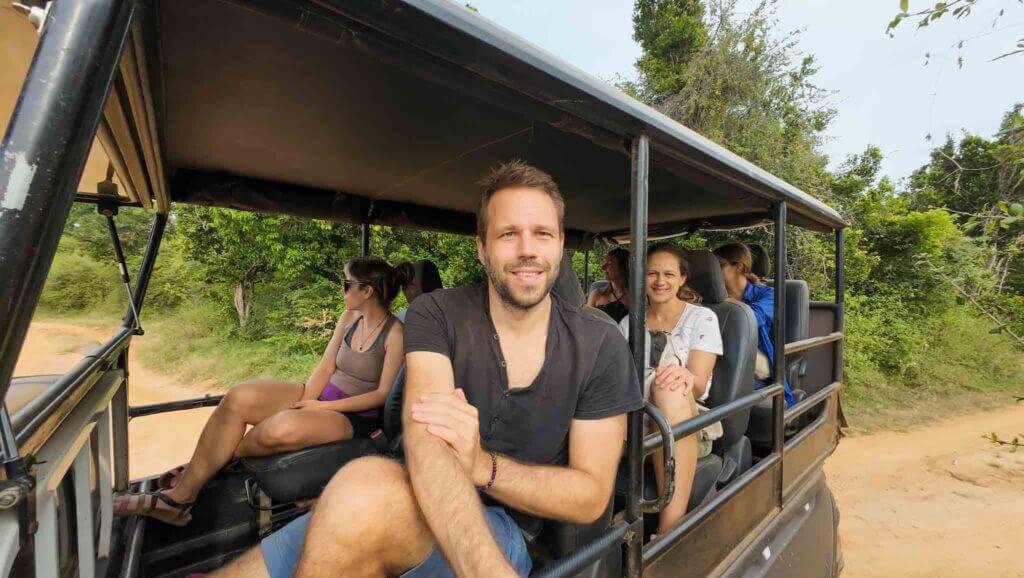
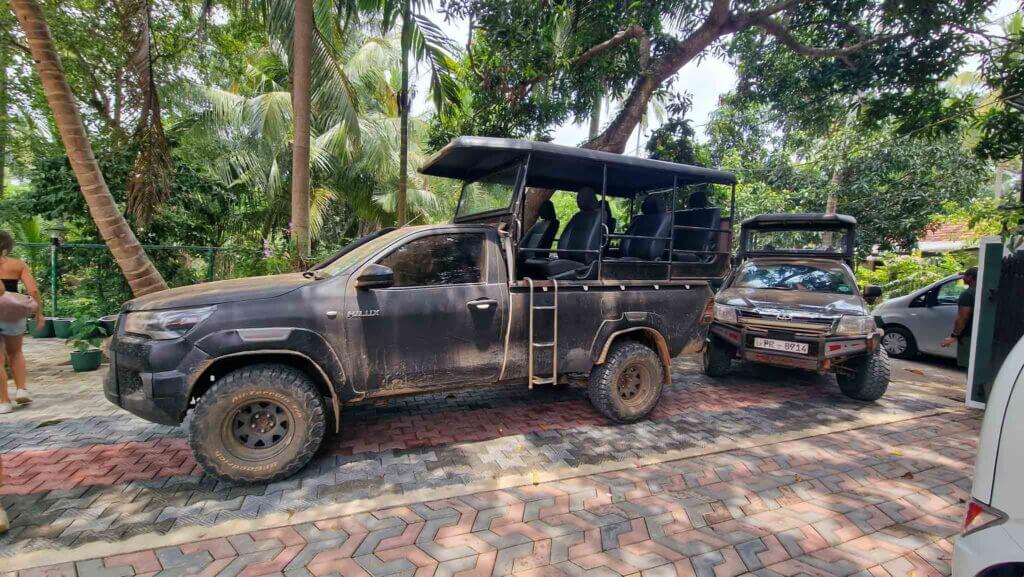
We joined a shared morning safari with a cool group of three other travelers, making it a fun and relaxed vibe right from the start. After our 4:30 AM pickup, we headed straight toward the Yala National Park ticket office, where our driver took care of everything while we waited in the jeep.
By the time we reached the main entrance gate, it was still closed—but we were among the first jeeps in line, which gave us a head start for wildlife sightings.
As the sun began to rise, casting a golden glow over the landscape, the gates opened right at 6:00 AM, and we entered the park at dawn—the best time to spot animals just as they become active. The excitement was real as we rolled in, ready to explore the wild heart of Yala.

Here are all your accommodation options in Yala National Park
Spotting a Sloth bear
As soon as we entered the park, we began spotting some of Yala’s more common residents—spotted deer, peacocks, water buffalo, and plenty of birdlife. It was a beautiful start to the morning.
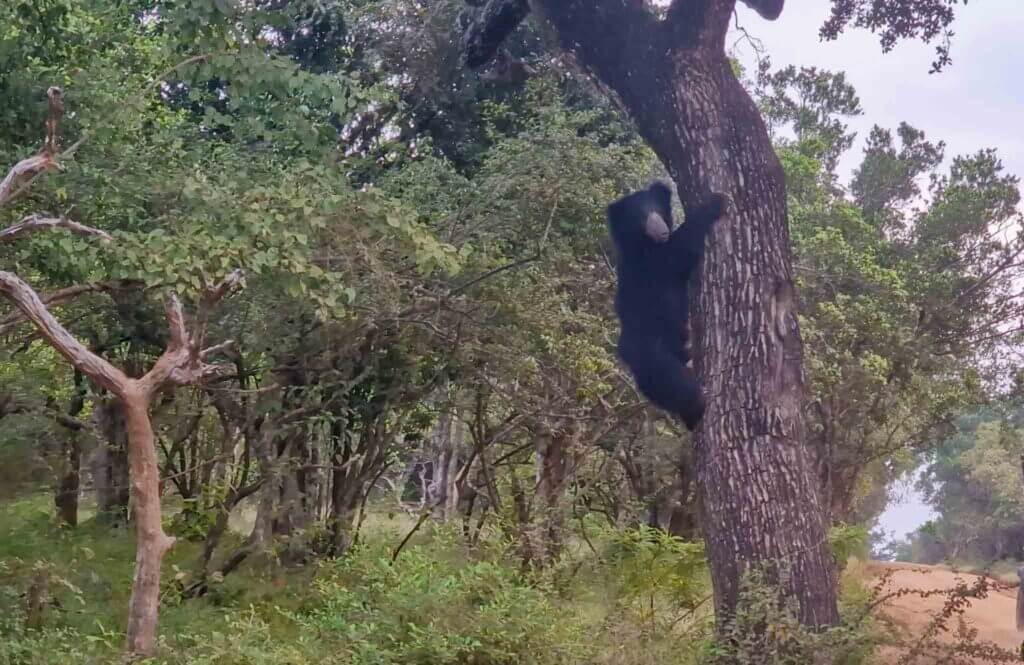
But then, we got incredibly lucky. Not long into the drive, we spotted a sloth bear—one of the rarest and most elusive animals in the park. These shy creatures are usually hard to find, so seeing one early on made the entire experience even more special. Our guide was just as excited as we were!
Tip: You can book your safari online (Morning or Afternoon)
What Luck! a Leopard
We continued deeper into the park, cruising slowly along the dirt tracks, and then—another stroke of luck—we spotted a leopard! It appeared only briefly before disappearing into the bushes, and unfortunately, I wasn’t quick enough to capture it on camera. Still, it was an incredible moment, and definitely one of the highlights of the safari.
We stayed around the area for a while, hoping it might come back out, but no such luck. That said, the time wasn’t wasted—we spotted plenty of stunning birds nearby, from colorful bee-eaters to majestic eagles perched in the trees. Yala is truly a paradise for birdwatchers, too.
Rest of the morning
We continued exploring different corners of the park, and the wildlife just kept coming. We saw graceful peacocks, a few curious mongooses darting across the path, playful monkeys swinging through the trees, massive water buffalo, and several groups of spotted and sambar deer calmly grazing in the open.
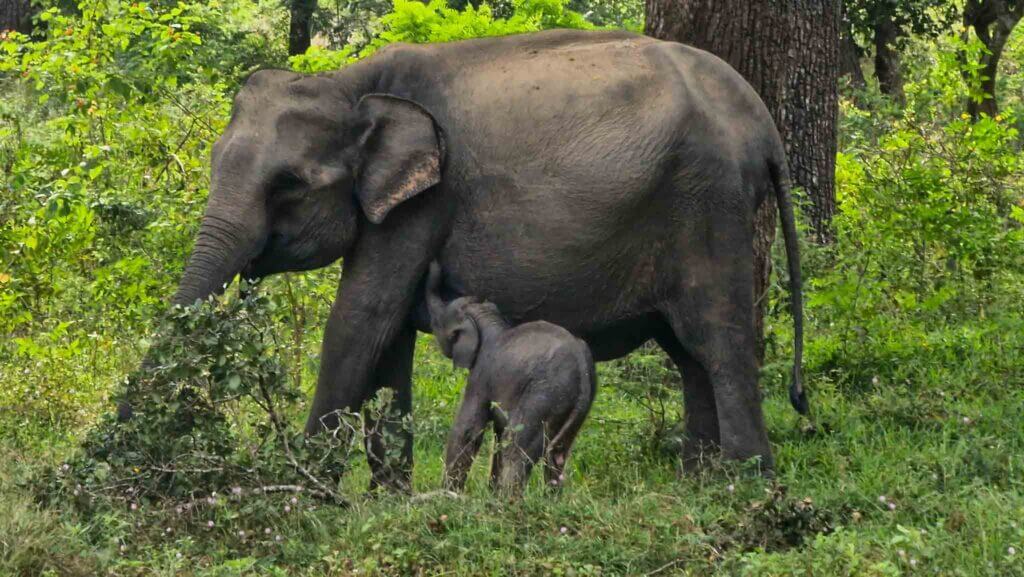
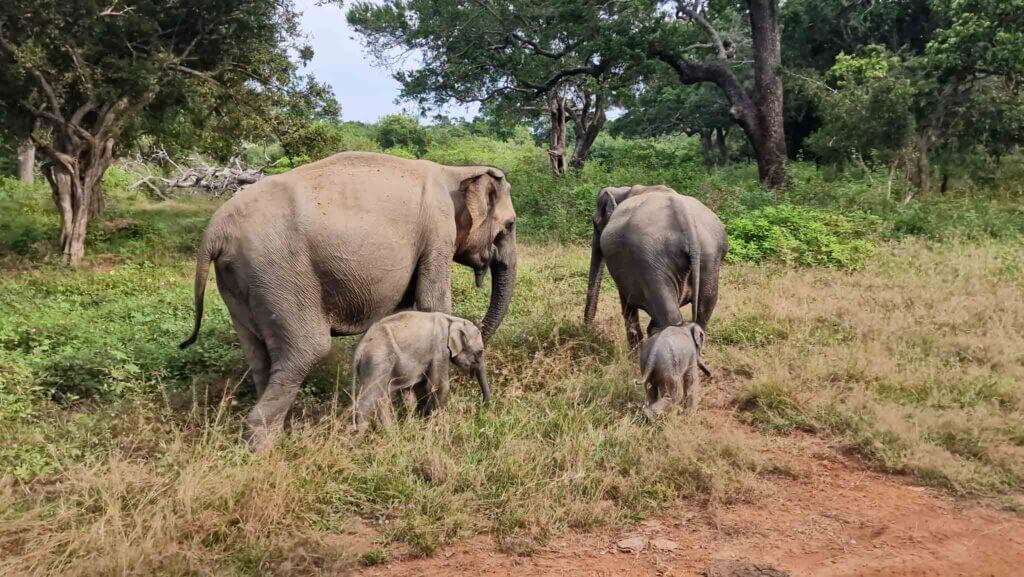
And then, just before heading back for lunch—the grand finale: a small herd of elephants, including a few adorable babies. They were incredibly close to the jeep, calmly munching on leaves, completely unfazed by our presence. It was such a peaceful and intimate moment—definitely one of the highlights of the entire safari.
Here are all your accommodation options in Yala National Park
Breakfast
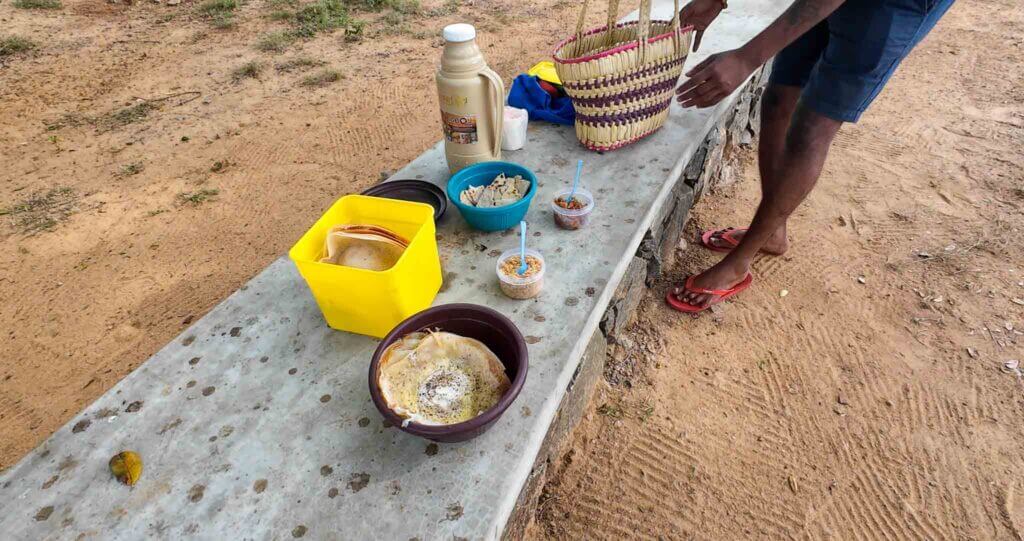
Around 9:00 AM, it was time for a much-needed breakfast stop, and we headed to Patanangala Beach, a peaceful coastal spot right inside Yala National Park.
The area is well set up for a break, with toilets, sinks, and even soap—which felt amazing after the early start and a few hours of dusty safari roads. We took a moment to freshen up before digging into a delicious Sri Lankan vegetarian breakfast, packed by our accommodation.
The best part? We enjoyed it with a beautiful view of the ocean. With the sound of the waves and the breeze coming off the sea, it was the perfect way to recharge before heading back into the wild for more wildlife sightings.
The end of the morning safari
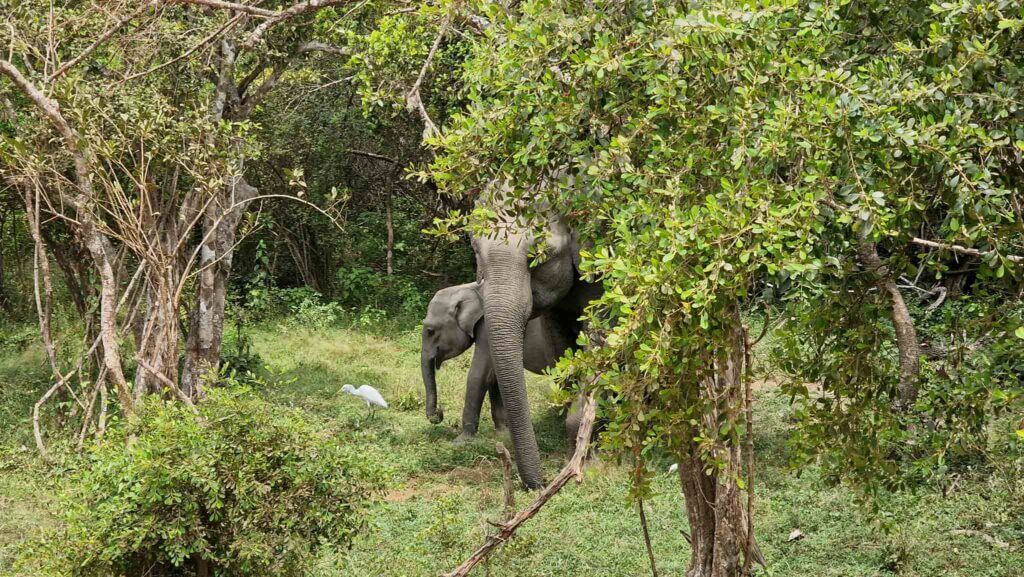
After breakfast, it was time to continue the safari, and the rest of the morning didn’t disappoint. We kept spotting wildlife as we cruised through the lush, green landscapes, with breathtaking scenery at every turn. The light filtering through the trees, the stillness of the lakes, and the calls of the birds created a truly magical atmosphere.
As the morning wore on, it was time to slowly make our way out of Yala National Park. Our morning safari ran from 4:30 AM to around 12:00 PM, and the total cost was about €115 for two people, including the jeep, guide, park entrance, and breakfast.
We absolutely loved the Yala National Park experience and would highly recommend the morning safari—it felt like the best balance of wildlife sightings, cooler temperatures, and great lighting for photography.
Once we got back to our accommodation, we packed up, said goodbye to Tissa, and set off for our next destination: Mirissa.
Read: The perfect 2-Week Sri Lanka Itinerary
About the authors
We are Alex and Tina, a French-Serbian couple who met in China back in 2014. We spent three incredible years there before making France our home. Our shared passion for travel has been the heartbeat of our relationship for over 12 years, taking us across 44 countries and counting.
We launched TheDailyPackers in 2019 as a way to document our adventures. In 2026, we reached a major milestone by officially turning our blog into our full-time job. While we are still growing toward financial independence through this platform, every article we write is fueled by our mission to make your voyages easier through in-depth guides, honest advice, and the lessons we’ve learned from our own mistakes.
Our journey has not been without its storms. In 2023, our world changed forever when our first son, Poppy, was stillborn on November 25th. It was, and remains, the hardest chapter of our lives. In 2025, we were blessed with our second little boy, Milo. He has since joined our traveling tribe, and you’ll be seeing him—and the reality of traveling with a little one-on the blog more and more.
We hope to inspire you to explore the world with curiosity and resilience. Thank you for being part of our story.
You may also like those related posts
Nine Arch Bridge: Sri-lanka’s most famous bridge
Galle Fort: Sri Lanka’s Historic Coastal Gem in 2025
10 Travel Documentaries to Inspire Your Next Adventure
Hill of Crosses: Lithuania’s most incredible site in 2025
The perfect China Itinerary: 2 weeks for first timers
Gordes: Visiting 1 of Provence’s Most Famous Hilltop Villages
7 Proven Tips to travel blog at home
16 best Hotels in Corsica to stay at in 2025
Pssst, did you know that…
If you purchase something through our links, we earn a small fee. However, you still pay the same. Win-win! And one day we may get to be full-time travel bloggers =)
Find Hotels with Booking.com
Do Yoga with KVY
Buy us a Coffee
Rent a car with DiscoverCars
Find Attractions with GetYourGuide
Find Flights with Expedia
Buy an eSIM with Airalo
Get insured with World Nomads
Get ready with Amazon.com