

Introduction
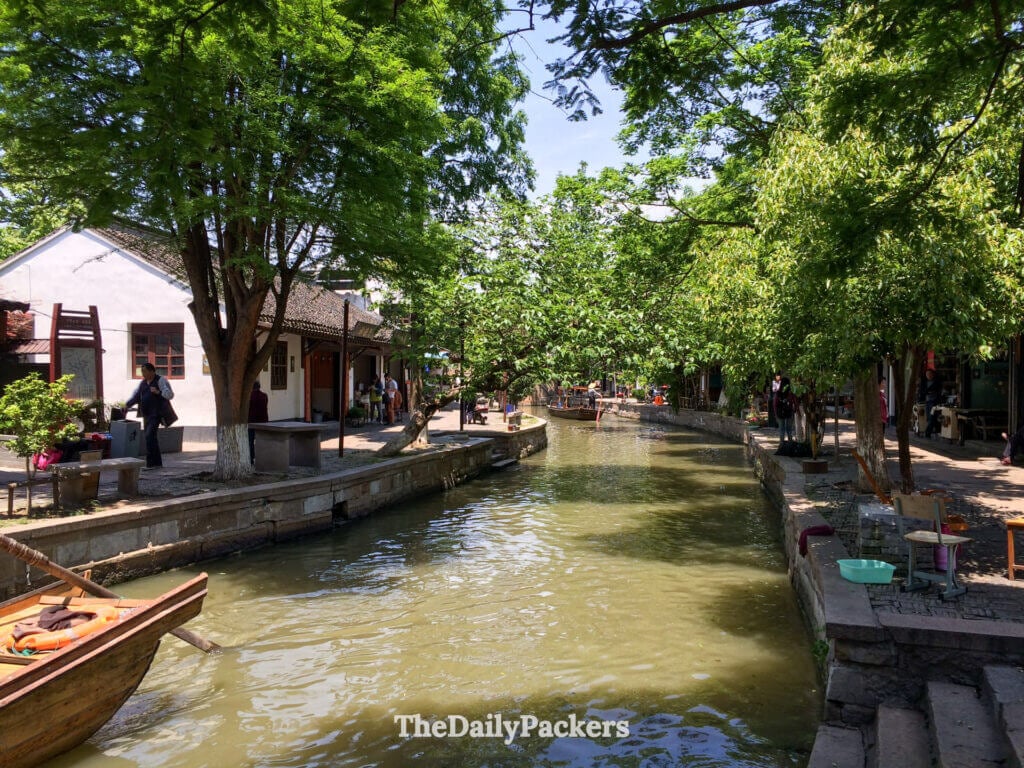
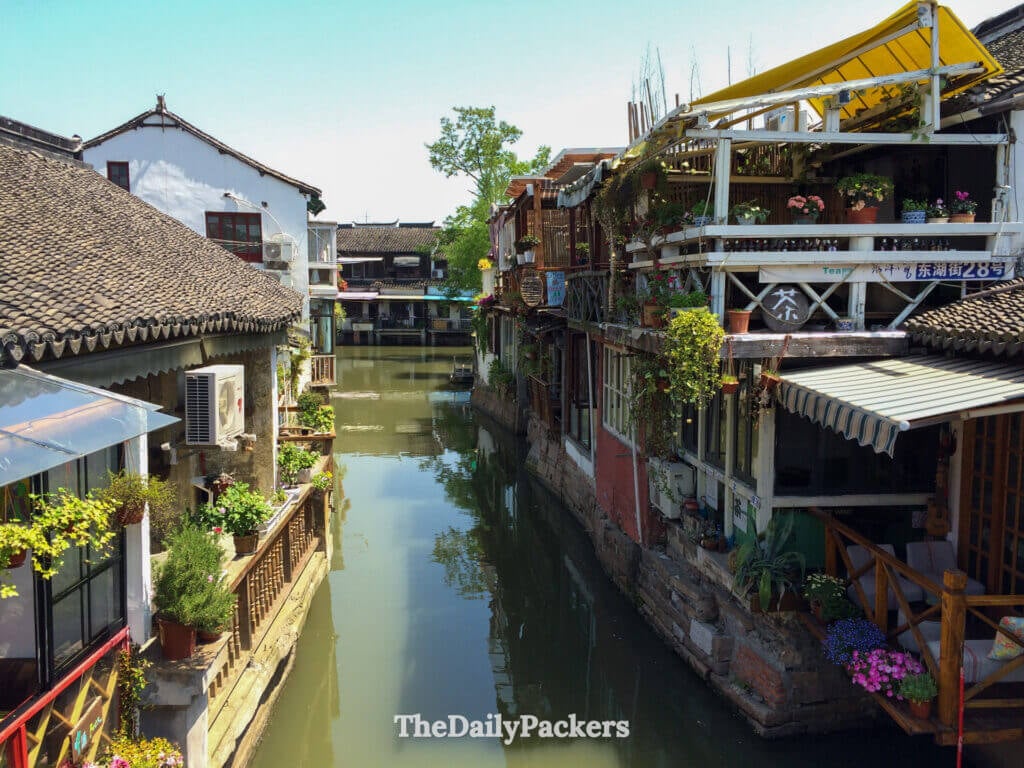
If you’re looking for an easy introduction to China’s famous water towns, Zhujiajiao Water Town is one of the best places to start. Located just outside Shanghai, it offers everything you imagine when you think of a traditional Shanghai water town: narrow canals, arched stone bridges, old wooden houses, and boats gliding quietly through the water.
Zhujiajiao feels lived-in rather than staged. You’ll see locals hanging laundry, shop owners chatting at their doors, and street food vendors working over sizzling pans. It’s lively, photogenic, and surprisingly relaxing, especially once you wander away from the main entrance streets.
I have been twice — once years ago during a high school exchange in Shanghai, and again later while traveling with my best friend through China with stops in Beijing, Shanghai, Xian and Guilin. It’s one of those places that stays enjoyable no matter when you return.
Honestly, it’s the kind of place you immediately think of revisiting, especially since I have never been there with Tina.

Read: 18 best things to do in Shanghai, China, in 6 days
Why visit?
Visiting Zhujiajiao Water Town feels like stepping into a quieter, slower and older version of China, just an hour away from the skyscrapers of Shanghai. With its stone bridges, narrow canals, and centuries-old houses, it’s one of the best places to experience what a traditional Shanghai water town actually looks like.
You visit Zhujiajiao Water Town for its deep historical roots and its role as one of the best-preserved ancient water towns near Shanghai. With more than 1,700 years of history, Zhujiajiao developed during the Yuan and Ming dynasties as an important trading hub thanks to its dense network of canals connecting it to Shanghai and the Grand Canal system.

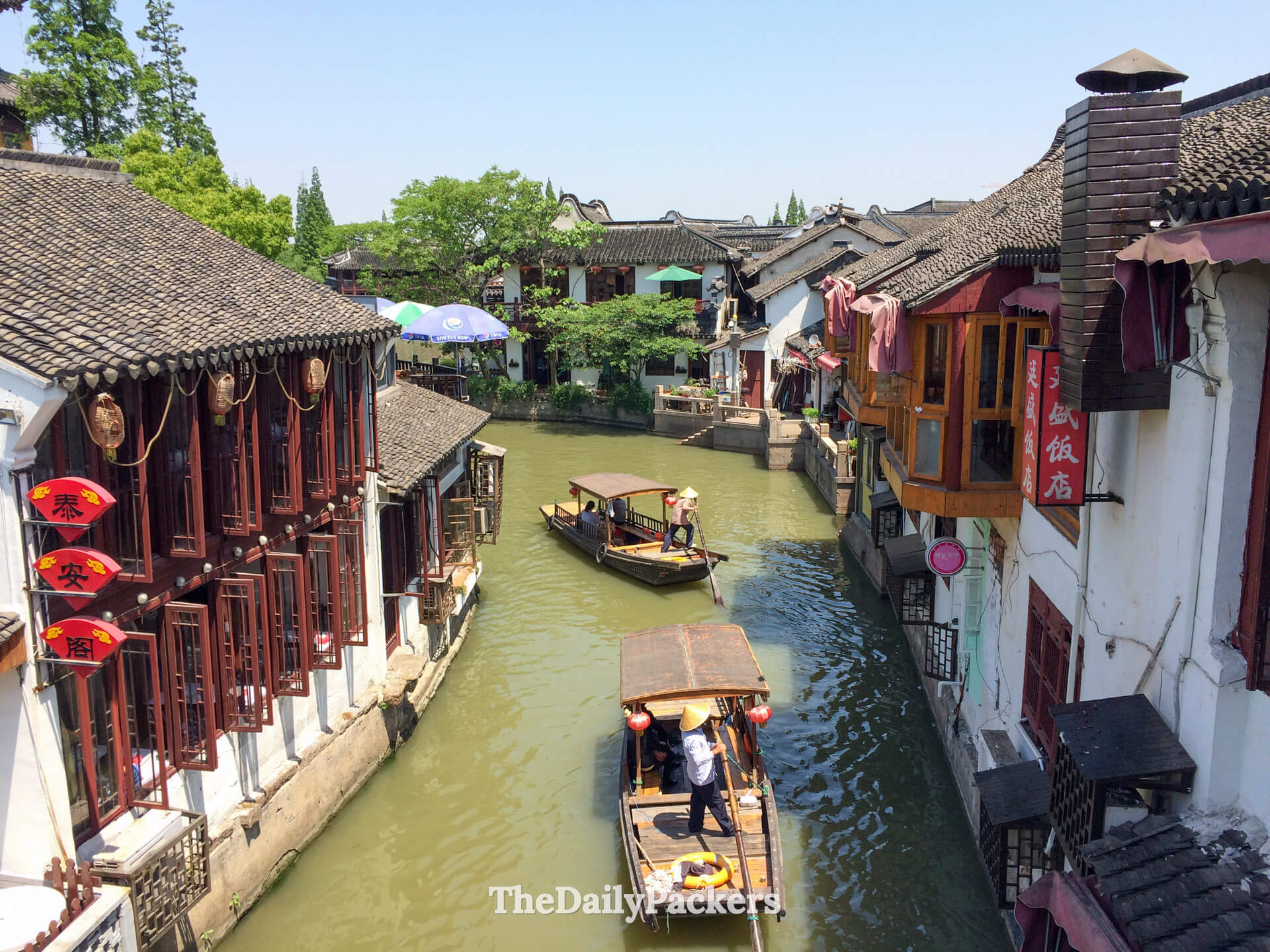
The town was built around water, and that history is still visible today. Stone bridges from the Ming and Qing dynasties span the canals, the most famous being Fangsheng Bridge, the largest and oldest stone arch bridge in Shanghai. These bridges weren’t just decorative; they were essential infrastructure, allowing merchants, scholars, and travelers to move goods and ideas through the region.
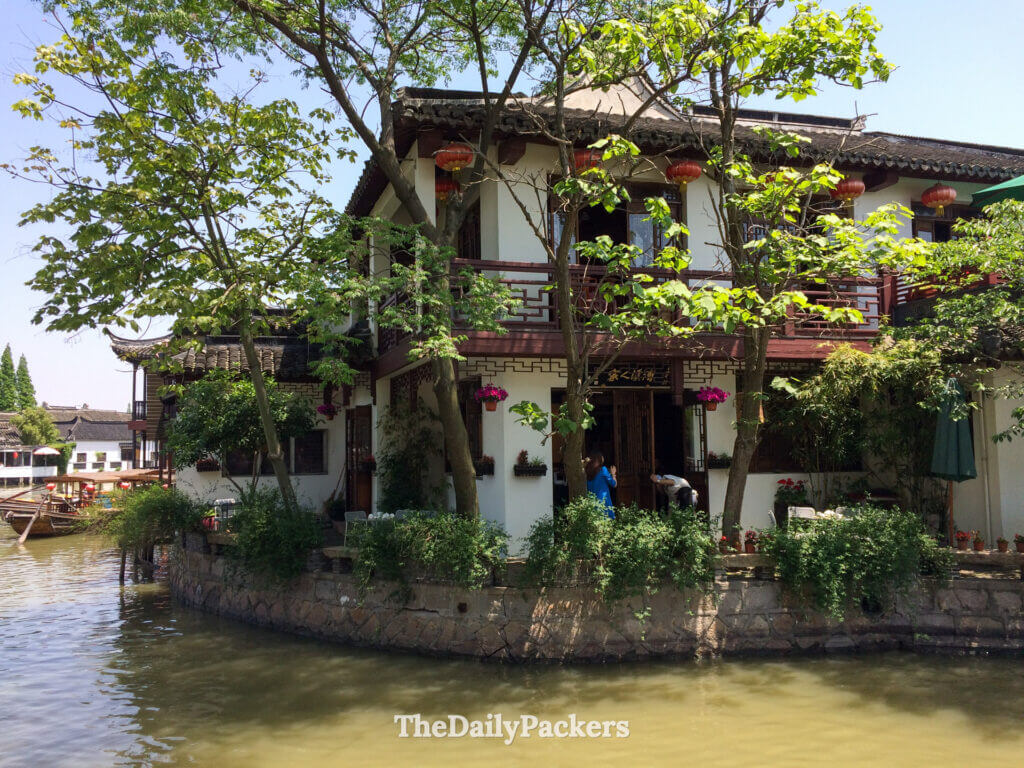
Zhujiajiao’s canals once served as commercial arteries, lined with warehouses, teahouses, rice shops, and private residences belonging to wealthy traders. Walking through the town now, you can still see traditional courtyard houses, wooden facades, and narrow alleyways designed for a life shaped by water rather than roads.
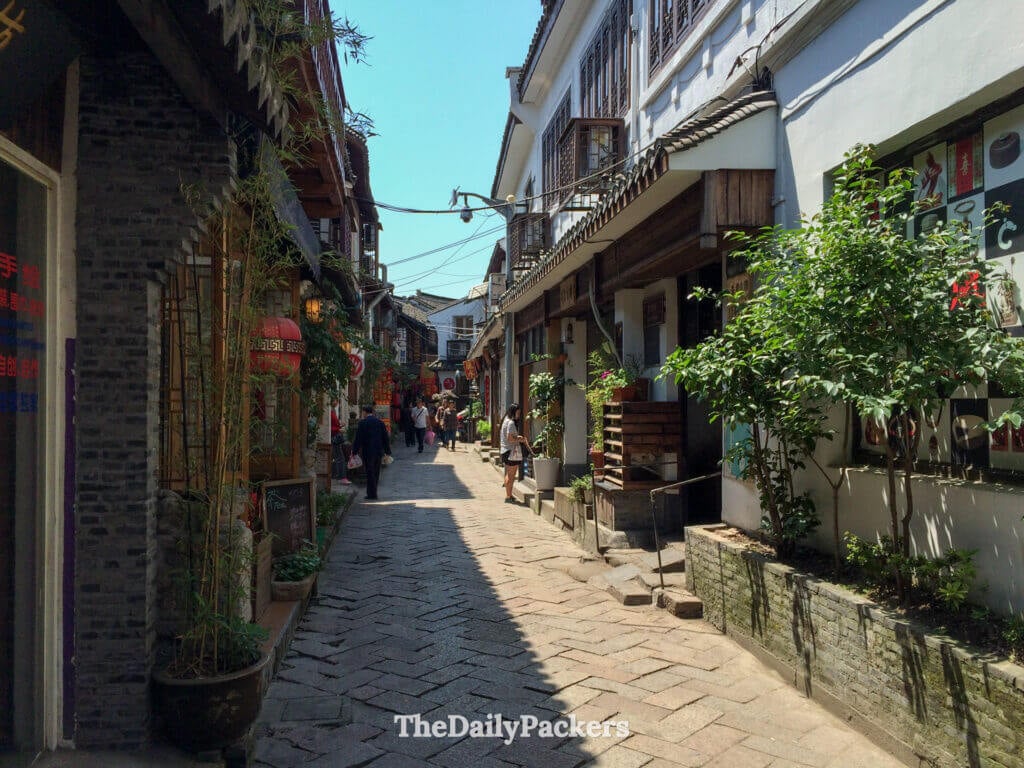
Several historical residences and halls also reflect the town’s past importance. Former homes of officials and merchants, ancestral halls, and small temples tell the story of a community that thrived for centuries through commerce, craftsmanship, and river transport. Unlike museums, these buildings feel woven into everyday life rather than frozen in time.
What makes Zhujiajiao especially interesting is that, despite its age, it has never been abandoned or rebuilt from scratch. It evolved gradually, surviving wars, dynastic changes, and modernization, which is why it feels more authentic than many reconstructed water towns.
If you’re interested in traditional Jiangnan culture, trade history, and everyday life in ancient China, Zhujiajiao offers a rare chance to see how a historic water town functioned and endured, all within easy reach of modern Shanghai.


How to get there
Getting to Zhujiajiao Water Town from Shanghai is easy, affordable, and doesn’t require much planning, which is exactly why it’s one of the best day trips from the city.
The simplest option is the metro. Take Shanghai Metro Line 17 (the light green line) and get off at Zhujiajiao Station. From there, it’s about a 15–20 minute walk to the historic water town entrance. The walk is flat, well signposted, and gradually takes you from modern Shanghai into canal-lined streets.

If you’re short on time or traveling with luggage, you can also take a taxi or DiDi. Depending on traffic and your starting point, the ride usually takes 45–60 minutes. It’s convenient, but traffic can be heavy on weekends.
Another option is joining a guided day tour from Shanghai, which includes transport, a short boat ride, and garden visits. It’s hassle-free, but you’ll have less freedom to wander, which is honestly the best part of Zhujiajiao.
Good to know: Try to arrive early in the morning to avoid peak crowds, especially on weekends and public holidays.

When to visit
Zhujiajiao can be visited all year long, but the experience changes noticeably depending on the season. Located just outside Shanghai, the water town is shaped by canals, stone bridges, and narrow alleys, which means weather plays a big role in how enjoyable your visit feels. What matters most is humidity, temperature, and crowd levels rather than extreme weather.
Spring and autumn generally offer the most comfortable conditions, while summer and winter give very different atmospheres:
- Spring, from March to May, is one of the best times to visit Zhujiajiao. Temperatures are mild, usually between 12 and 25°C, the canals are full, and the town feels fresh and lively. Trees and plants start blooming, making walks along the water especially pleasant. This is a great time to wander without rushing, stop for street food, and sit by the canals. Weekends can be busy, but weekdays still feel manageable.
- Summer, from June to August, is hot and humid. Temperatures often rise above 30°C, and short but intense rain showers are common. Walking around at midday can feel exhausting, but early mornings and late afternoons are surprisingly atmospheric. The town is at its greenest, and reflections on the water look beautiful after rain. Crowds thin out during the hottest hours, which can actually make the experience more relaxed if you plan your timing well.
- Autumn, from September to November, is often considered the most comfortable season overall. The heat fades, humidity drops, and temperatures usually sit between 15 and 25°C. The light is softer, the streets feel calmer, and it’s ideal for photography and slow exploration. Outside of Chinese national holidays, this is one of the most enjoyable times to visit.
- Winter, from December to February, is cold but quiet. Temperatures can drop close to 0°C, and the town loses some color, but it gains a calm, almost timeless atmosphere. Mornings can be misty, canals are still, and you’ll mostly see locals going about their daily routines. It’s not the most photogenic season, but it feels authentic and peaceful.
Tip: No matter when you visit, try to arrive early in the morning. Before tour groups arrive from Shanghai, Zhujiajiao feels slower, quieter, and much closer to the water town it has been for centuries. And be sure to avoid public holidays.

Psst, you can join Tina’s Yoga Studio and get access to hundreds of Yoga, Meditation, and Well-being videos.
How to Visit
The best way to visit Zhujiajiao is to take it slow and let yourself get a little lost. This isn’t a place you rush through with a checklist. It’s a water town meant for wandering, pausing, eating, and watching daily life unfold along the canals.
Once you arrive, start by walking without a plan. Cross a few stone bridges, follow the canals, duck into side alleys, and see where they lead. Some of the most charming corners of Zhujiajiao are away from the main streets, where laundry hangs over the water and locals sit outside chatting or playing cards.
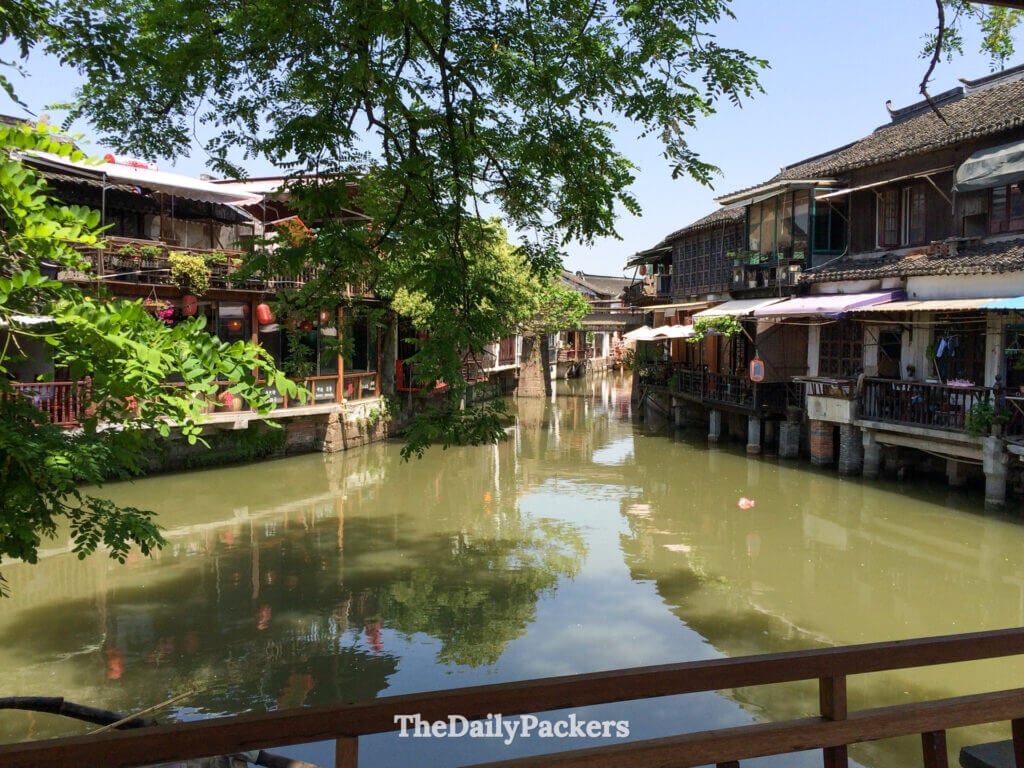
You’ll pass small shops selling calligraphy, local paintings, silk items, and snacks. Take your time browsing and don’t be afraid to negotiate politely, especially for paintings and handmade items. We bought several local paintings here for very reasonable prices just by chatting and showing genuine interest.
Food is a big part of the visit. Try street snacks as you walk — sticky rice dumplings, grilled skewers, and local sweets — then sit down for lunch in a restaurant by the canal. Eating while watching boats glide past is one of the simplest pleasures in Zhujiajiao and worth planning your visit around.

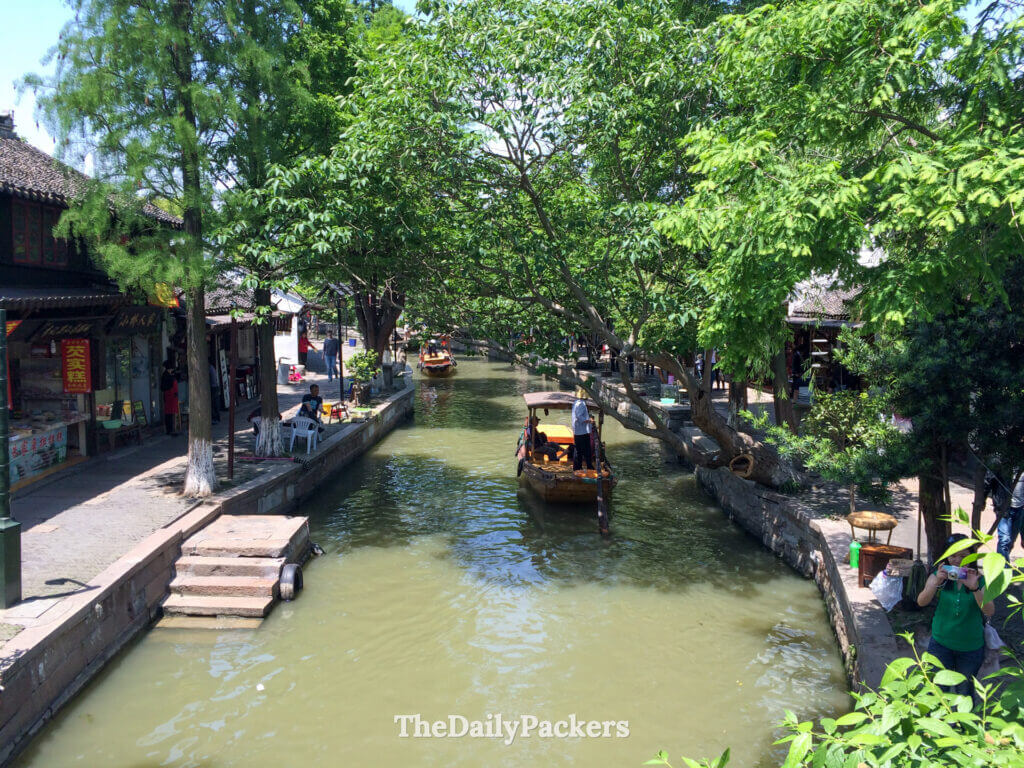
If you want to add something extra, you can take a short boat ride along the canals. It’s not essential, but it gives you a different perspective of the town and is especially nice if you’re visiting for the first time or with family.
Zhujiajiao can easily be visited independently, but it’s also commonly included in guided day tours from Shanghai. These usually combine the water town with a canal boat ride and sometimes a garden or museum visit. Tours are convenient if you’re short on time, but exploring on your own gives you much more freedom to slow down and enjoy the atmosphere.

Plan to spend at least half a day here. A full day is ideal if you want to wander without rushing, eat well, and really enjoy the rhythm of the town.
Tip: Visit on a weekday if you can. Weekends and public holidays get very crowded, and Zhujiajiao is at its best when the streets feel calm and the canals aren’t packed with tour groups.


Here are all your accommodation options in Shanghai
Tickets & Opening Hours
Good news: Zhujiajiao itself doesn’t have a big entrance fee like some other ancient towns. The town is open to visitors all day, every day, and you can wander freely through the canals, bridges, and streets without buying a ticket.
That said, a few specific historical attractions and small sites within Zhujiajiao do require tickets if you choose to visit them — and you can decide whether you want to include them or just enjoy the town on foot.
Opening Hours
- Zhujiajiao Water Town (general area): Open 24/7. You’re free to arrive early morning or stay until evening. Most shops and food stalls begin opening around 9:00–10:00 AM and start closing by 6:00–7:00 PM.
- Paid Sites Within the Town: A handful of historical houses, small museums, or cultural buildings may charge a small admission fee (usually 10–30 RMB per site), and they typically operate between 8:30 AM and 5:30 PM. If you plan to go inside specific attractions (like old residences or a local museum), check the posted hours at the entrance, as smaller locations can vary.
- Boat Rides on the Canal: You can take a short wooden boat ride along the canal — these operate daily from roughly 9:00 AM until early evening (around 5:30 PM), weather permitting. There’s no fixed schedule, and departures run frequently as long as there’s demand.
Tickets & Costs
You don’t need a ticket to enter the water town area itself — that’s the beauty of Zhujiajiao. You pay only for:
- Boat rides (optional): Expect to pay around 200 to 300 RMB (24 to 26€) for a boat, depending on the type of line you take. A boat can fit up to 6 people and last 15 to 20min.
- Combo tickets: Except to pay 60 RMB (7€) per person for a ticket to enter: Kezhi Garden, The Garden Of Harmonious Hearts and Shanghai Helong Art Gallery.
- English Speaking Guide: 400 to 600 RMB (48 to 72€) depending on the duration.
- Day tour from Shanghai: Costs about 118€ per person.

Is it Worth It?
Absolutely — Zhujiajiao is one of the best water towns to visit from Shanghai, especially if you want a place that still feels lived-in rather than overproduced. It strikes a really nice balance between history, atmosphere, and ease of access.
What makes it worth your time is how authentic it still feels compared to some other Shanghai water towns. You’re not walking through a single-ticket attraction; you’re moving through a real town where locals live, cook, trade, and go about their day. You can wander for hours without a plan, cross stone bridges at random, peek into courtyards, and sit by the canal with street food or tea — and that’s exactly how Zhujiajiao is best enjoyed.

It’s also ideal if you’re short on time. As a half-day or full-day trip from Shanghai, it gives you a completely different side of China without the need for long travel or overnight stays. The canals, Ming- and Qing-era architecture, and slow rhythm make it a refreshing break from Shanghai’s pace.
That said, if you’re looking for something untouched or crowd-free, Zhujiajiao might feel a bit busy — especially on weekends and public holidays. It’s popular for a reason. But visit early in the morning or later in the afternoon, and the town quickly regains its charm.
Travel Tips
Zhujiajiao is easy to visit, but a few small tips will make your experience much smoother — and a lot more enjoyable.
- Go early in the morning or late afternoon if you can. Midday, especially on weekends, gets crowded with day-trippers from Shanghai. Arriving before 9am lets you enjoy quiet canals, empty bridges, and a more local atmosphere. Late afternoon is great too, when tour groups start leaving and the light softens over the water.
- Wear comfortable shoes. The old town is made of uneven stone paths and bridges, and you’ll be walking much more than you expect. It’s a place meant for wandering, not rushing.
- Bring some cash. While many shops accept mobile payments, smaller street food stalls and local vendors still prefer cash. This is especially useful if you plan to negotiate for paintings, calligraphy, or handmade souvenirs — bargaining is normal here and part of the fun.
- Don’t overplan. Zhujiajiao is best experienced by getting lost. Skip the checklist mentality, cross random bridges, follow narrow alleys, and sit down whenever something looks inviting. Some of our favorite moments came from unplanned canal-side lunches and quiet backstreets.
- If you’re visiting with kids (and especially thinking ahead to visiting with Milo one day), note that strollers can be tricky on bridges and steps. A baby carrier works much better.
- Finally, if you want a calmer experience, avoid public holidays and long weekends in China. These are peak domestic travel times, and Zhujiajiao can feel overwhelming.

Psst, you can join Tina’s Yoga Studio and get access to hundreds of Yoga, Meditation, and Well-being videos.
Where to stay
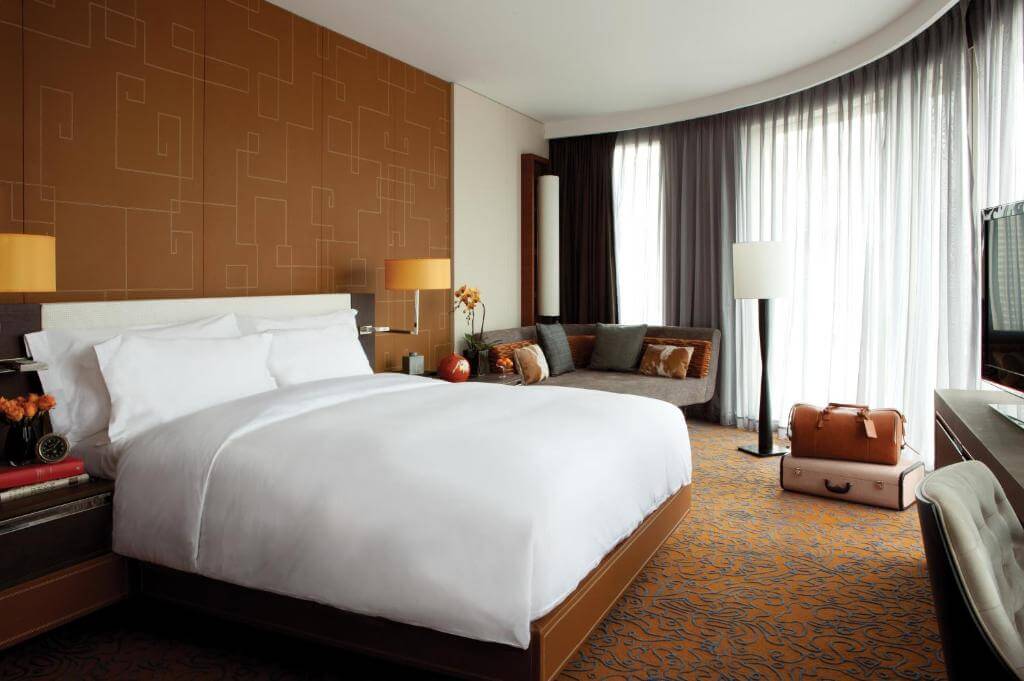
If you’re planning to visit Zhujiajiao Water Town from Shanghai, it makes sense to base yourself in the city. These hotels are excellent choices if you value comfort, location, and atmosphere — and they make getting to Zhujiajiao (by metro or taxi) easy.
Radisson Blu Hotel Shanghai New World: A classic city-center option near People’s Square. Great for first-time visitors, it puts you within easy reach of Shanghai’s major sights like the Bund, Nanjing Road, and the metro lines that take you out to Zhujiajiao. The rooms are spacious and modern, and the service is reliable — perfect after a long day of strolling canals.
The Langham, Shanghai, Xintiandi: If you want style with your comfort, The Langham in Xintiandi is a standout. It’s in one of Shanghai’s most vibrant neighborhoods, full of cafés, restaurants, and nightlife, and still well connected to the metro for your day trip out to the water town. The Langham’s classic design and excellent breakfast make it a real treat.
The Ritz-Carlton Shanghai, Pudong: For a luxury stay with unforgettable views, the Ritz-Carlton in Pudong delivers. Located near Lujiazui’s skyscrapers, you’ll be surrounded by modern Shanghai’s skyline and have easy access to metro Line 2. From here, Zhujiajiao is just a metro ride away — and returning to a plush room with panoramic views at the end of the day is a perfect way to cap off your travels.

Here are all your accommodation options in Shanghai
About the authors
We are Alex and Tina, a French-Serbian couple who met in China back in 2014. We spent three incredible years there before making France our home. Our shared passion for travel has been the heartbeat of our relationship for over 12 years, taking us across 44 countries and counting.
We launched TheDailyPackers in 2019 as a way to document our adventures. In 2026, we reached a major milestone by officially turning our blog into our full-time job. While we are still growing toward financial independence through this platform, every article we write is fueled by our mission to make your voyages easier through in-depth guides, honest advice, and the lessons we’ve learned from our own mistakes.
Our journey has not been without its storms. In 2023, our world changed forever when our first son, Poppy, was stillborn on November 25th. It was, and remains, the hardest chapter of our lives. In 2025, we were blessed with our second little boy, Milo. He has since joined our traveling tribe, and you’ll be seeing him—and the reality of traveling with a little one-on the blog more and more.
We hope to inspire you to explore the world with curiosity and resilience. Thank you for being part of our story.
You may also like those related posts
18 Best things to do in Split, Croatia, In 2 to 9 days
14 Best things to do in Arequipa, Peru, in 2 to 3 days
Best eSIM for International Travel in 2025
Visit Cabo Polonio: The Remote Paradise of Uruguay in 2025
Travel Insurance: is World Nomads the best in 2025?
9 Best things to do in Chartres, France, in 1 day or more
Cat Cat Village: Sapa’s Most Charming Traditional Village
4 Best things to do in Imlil, Morocco, in 2 to 3 days
Pssst, did you know that…
If you purchase something through our links, we earn a small fee. However, you still pay the same. Win-win! And one day we may get to be full-time travel bloggers =)
Find Hotels with Booking.com
Do Yoga with KVY
Buy us a Coffee
Rent a car with DiscoverCars
Find Attractions with GetYourGuide
Find Flights with Expedia
Buy an eSIM with Airalo
Get insured with World Nomads
Get ready with Amazon.com