

Introduction
Planning your first trip to South America can feel overwhelming. The continent is huge, distances are long, and every country seems to deserve months on its own. This 3 weeks South America itinerary is designed to help you make the most of limited time without rushing blindly from place to place.
This exact route was our first introduction to South America, and it turned out to be the perfect balance of culture, adventure, and once-in-a-lifetime landscapes. You’ll travel through Peru, Bolivia, and Chile, starting in the Andes, crossing salt flats and deserts, and ending on one of the most remote islands on Earth.
Along the way, you’ll explore Cusco and Machu Picchu, cross Lake Titicaca, experience the surreal Uyuni Salt Flats, discover the Atacama Desert, wander through Santiago and Valparaíso, and—if you choose to—end the trip on Easter Island. It’s a route that works surprisingly well logistically and showcases some of the most iconic backpacking South America routes.
This south America travel itinerary for 3 weeks doesn’t try to cover everything. Instead, it focuses on a realistic pace, smart connections, and places that truly feel different from one another. If this is your first time backpacking South America, this route is an excellent starting point—and chances are, like us, you’ll already be dreaming about coming back before the trip even ends.


Arriving in South America
For this 3 weeks South America itinerary, the easiest and most efficient entry point is Peru, specifically Cusco. Most international flights from Europe and North America land in Lima, Peru’s main international hub, before connecting onward to the Andes.
You’ll typically fly:
- Home → Lima (LIM)
- Lima → Cusco (CUZ)
There are no direct long-haul flights to Cusco, so a stop in Lima is unavoidable. Instead of staying in Lima, we recommend connecting straight to Cusco if your schedule allows it. Cusco is where the adventure really starts, and spending your energy there makes more sense for a 3-week trip.
Flights between Lima and Cusco are frequent and affordable, operated by LATAM, Sky Airline, and JetSmart. Flight time is around 1 hour 20 minutes.
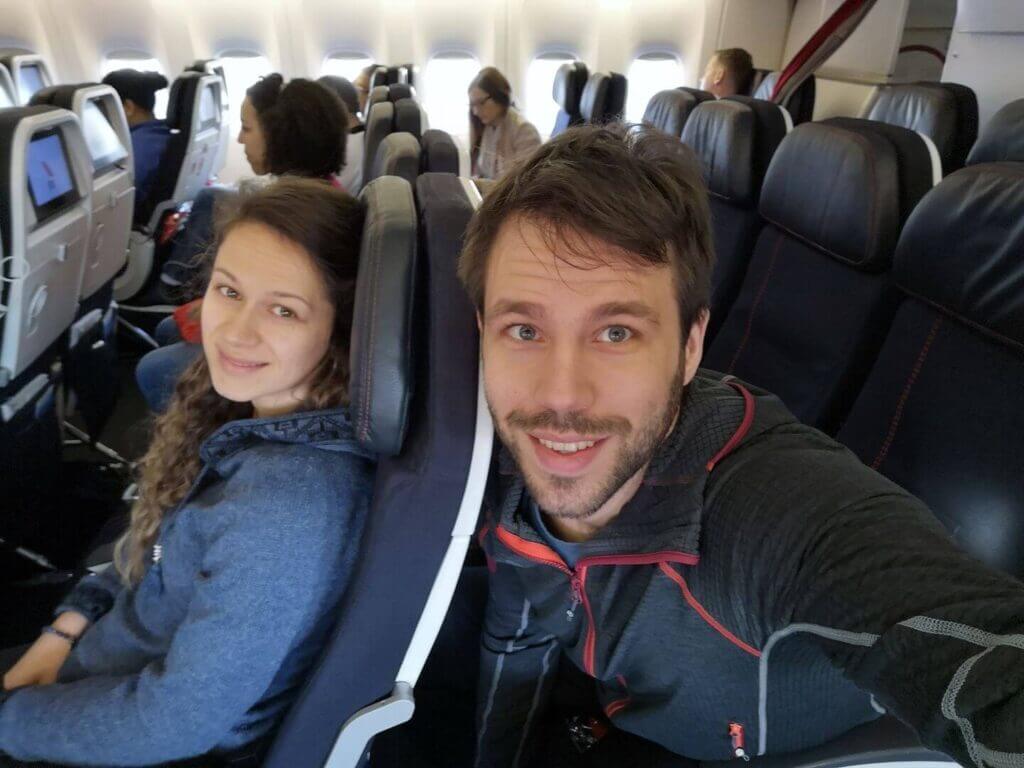
Important altitude tip
Cusco sits at 3,400 meters above sea level, so arriving directly from sea level can feel intense. Once you land:
- Take it slow on day one
- Avoid alcohol
- Drink plenty of water
- Plan light activities only
This itinerary is designed with acclimatization in mind, starting with relaxed city exploration before heading deeper into the Andes.

Open-jaw return flights (highly recommended)
Because this South America travel itinerary ends in Chile, the smartest option is booking an open-jaw flight:
- Fly into Lima
- Fly out of Santiago
This avoids backtracking, saves time, and often costs the same as a return ticket. Santiago is one of South America’s best-connected airports, making the journey home easy.

What about Easter Island?
If you include Easter Island, you’ll fly from Santiago (SCL) to Rapa Nui (IPC). Flights run several times a week and are operated mainly by LATAM. Easter Island is optional but fits surprisingly well at the end of this route.
Documents & entry requirements
For most travelers from Europe, North America, and many other regions:
- No visa is required for Peru, Bolivia, or Chile for short stays (If you are Serbian, or from the Balkans, be sure to make your eVisa to avoid some trouble at the border between Peru and Bolivia)
- Your passport should be valid for at least 6 months
- • Always keep digital and paper copies of your documents
Border crossings on this itinerary are straightforward and commonly used by backpackers.

How to Travel During Your 3 Weeks in South America
Moving around during this 3 weeks South America itinerary is part of the adventure. You’ll combine flights, long-distance buses, local transport, and a few iconic train rides, all of which are well adapted to backpackers and independent travelers.
Flights: saving time on long distances. For large jumps, flying is the most efficient option and surprisingly affordable in South America.
You’ll mainly use flights for:
- Lima → Cusco (to start the trip)
- Cusco → Arequipa (to avoid a very long bus ride)
- San Pedro de Atacama → Santiago
- Santiago → Easter Island (if included)
Low-cost airlines like LATAM, Sky Airline, and JetSmart cover most of these routes. Booking in advance helps, but even last-minute prices are often reasonable.

Buses: the backbone of backpacking South America
Long-distance buses are a key part of any south America travel itinerary. They’re cheap, frequent, and generally reliable.
You’ll mainly travel by bus on:
- Arequipa → Puno
- Puno → Copacabana (border crossing into Bolivia)
- Copacabana → La Paz
- La Paz → Uyuni
- Valparaíso → Santiago
Opt for semi-cama or cama buses whenever possible. They’re worth the extra cost for overnight rides and long distances. Bring layers, as buses can be cold, and always keep valuables with you.

Trains: scenic and practical
Trains are limited in South America, but you’ll use one of the most famous routes on the continent:
- Ollantaytambo → Aguas Calientes (gateway to Machu Picchu)
This train ride through the Sacred Valley is not just transport, it’s part of the experience. Book tickets in advance, especially in high season.

Tours: stress-free for remote areas
Some destinations are simply easier by tour, especially when roads are rough or logistics are complex.
We strongly recommend tours for:
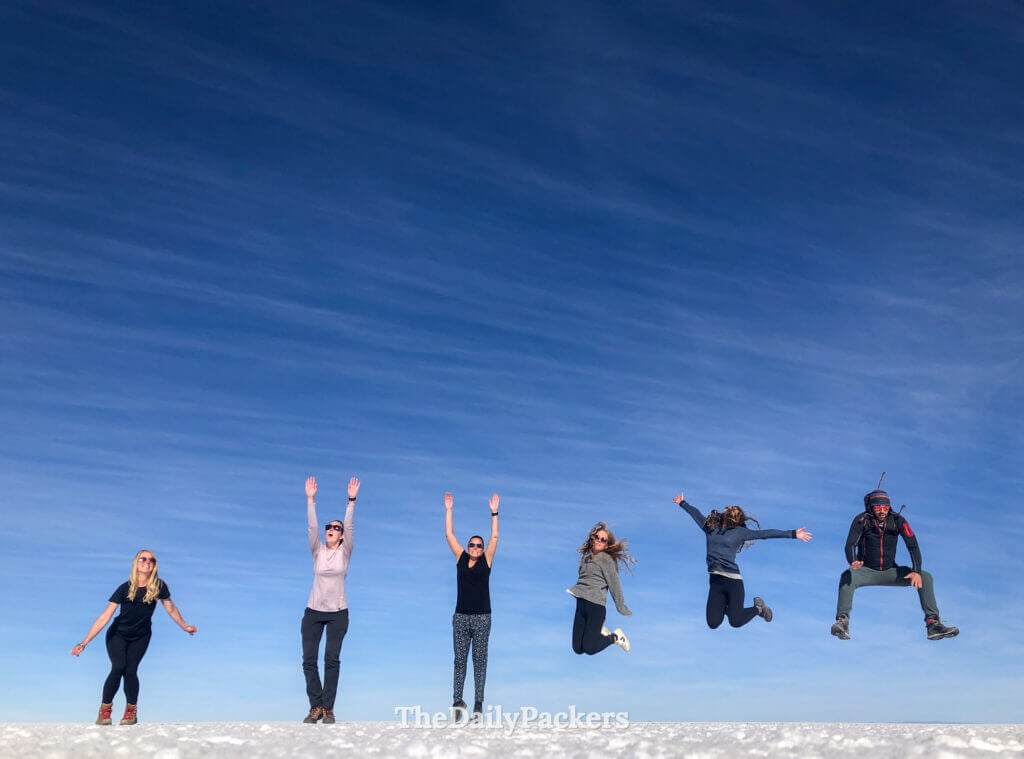
- Uyuni Salt Flats (3-day tour)
- Rainbow Mountain or Humantay Lake (day trips from Cusco)
- Moon Valley in San Pedro de Atacama
Tours include transport, accommodation (for multi-day trips), and guides, making them excellent value.
Local transport: simple and cheap
Within cities, you’ll mostly rely on:
- Walking (historic centers are compact)
- Uber or local taxis (cheap and efficient)
- Local buses for short hops when needed
Uber works well in Peru and Chile and is often safer and cheaper than taxis.


Psst, you can join Tina’s Yoga Studio and get access to hundreds of Yoga, Meditation, and Well-being videos.
Best Time for a 3 Weeks South America Itinerary
Choosing the right time for your 3 weeks South America itinerary makes a huge difference, especially when your route includes Peru, Bolivia, and Chile. With high altitudes, deserts, coastlines, and islands, timing matters more here than in many other regions.
Overall best time: May to September

If you had to pick one window, May to September is the safest and most balanced period for this south america travel itinerary 3 weeks. This period corresponds to the dry season in the Andes, which is crucial for places like:
- Cusco and the Sacred Valley
- Machu Picchu
- Lake Titicaca
- Uyuni Salt Flats
- San Pedro de Atacama
You’ll get clearer skies, more stable weather, and better trekking conditions.

Peru: Cusco, Sacred Valley & Machu Picchu. The best time to visit Peru’s highlands is May to September. During these months:
- Days are mostly sunny and dry
- Trekking conditions are excellent
- Machu Picchu is easier to enjoy without constant rain
Temperatures in Cusco range roughly from 5°C in the morning to 18–22°C during the day. Nights can be cold, so layers are essential. June to August is peak season, meaning more crowds and higher prices, but also the best weather.

Bolivia: Lake Titicaca & Uyuni Salt Flats. For Bolivia, May to October works best.
- Lake Titicaca is clear and crisp, though cold at night
- Uyuni Salt Flats are dry and accessible, perfect for classic salt-flat landscapes
If you’re dreaming of the mirror effect in Uyuni, that happens during the rainy season (January–February), but it comes with road closures and unpredictable conditions, which don’t fit well into a tight south america itinerary.
Temperatures can drop below freezing at night in Uyuni, even in dry season.

Chile: Atacama, Santiago, Valparaíso & Easter Island. Chile adds variety to your itinerary, and timing shifts slightly depending on the region.
- San Pedro de Atacama is great year-round, but May–September offers cooler days and clear skies
- Santiago & Valparaíso are best from October to April, with warmer temperatures and a lively atmosphere
- Easter Island shines from November to March, with warmer weather and calmer seas
That said, visiting Easter Island in shoulder season (April or October) is still a great compromise if you want fewer crowds.

What to avoid if possible
- January & February: Rainy season in Peru and Bolivia, higher risk of landslides and cancellations
- February: Inca Trail is closed for maintenance
- Peak summer in Santiago (January): Hot, busy, and sometimes smoggy
Our honest take
You don’t need perfect weather everywhere, but for a route as packed as this one, May, June, September, or early October hit the sweet spot. You’ll get the best balance between weather, accessibility, and crowd levels across all three countries.


Where to Stay on Your 3 Weeks South America Itinerary
Finding the right accommodation can make a big difference on a 3 weeks South America itinerary, especially when you’re constantly on the move. Throughout Peru, Bolivia, and Chile, you’ll find a wide range of options—from budget hostels and comfortable mid-range hotels to truly unique stays you won’t forget.
In cities like Cusco, Arequipa, La Paz, Santiago, and Valparaíso, staying central makes it easier to explore on foot and soak up local life. Around iconic places such as Machu Picchu, the Sacred Valley, Lake Titicaca, and Uyuni, accommodation becomes part of the experience—think cozy mountain lodges, island stays on the lake, or even sleeping in a hotel made of salt.
Chile adds another layer, with stylish boutique hotels in Santiago, creative guesthouses in Valparaíso, and eco-lodges on Easter Island that let you fully disconnect.
No matter your budget or travel style, this South America travel itinerary for 3 weeks offers plenty of accommodation choices that balance comfort, location, and memorable experiences—perfect for recharging between long travel days and epic adventures.


Don’t forget to book your accommodations in advance – the best places always fill up quickly.
What to Eat
Food is a huge part of the experience when following a 3 weeks South America itinerary, and every country on this route brings something different to the table. Expect simple, hearty dishes, bold flavors, and plenty of surprises along the way.
In Peru, you’ll quickly notice how rich and varied the cuisine is. From local markets and set lunch menus to creative vegetarian and vegan spots in Cusco and Arequipa, eating well is easy and affordable. Bolivia keeps things more traditional, with filling meals designed for high altitude and cold evenings, especially around Lake Titicaca and Uyuni. In Chile, food feels lighter and more international, with great coffee culture, bakeries, seafood, and wine—especially in Santiago and Valparaíso.
Throughout this south america travel itinerary 3 weeks, you’ll eat in local markets, small family-run restaurants, casual street food stalls, and a few memorable sit-down spots. You don’t need to plan every meal—some of the best food moments happen when you simply follow your instincts (or the smell coming from a busy place).

3 Weeks South America Itinerary – What This Route Looks Like
In this 3 Weeks South America Itinerary, we will take you through an unforgettable adventure across South America, visiting some of the most iconic destinations in Peru, Bolivia, and Chile.
- Day 1: Home to Cusco: Travel from your home to Cusco with a stopover in Lima.
- Day 2: Exploring Cusco: Visit Plaza de Armas, San Blas, and the Santo Domingo Convent.
- Day 3: More of Cusco: Explore Christo Blanco, Sacsayhuamán, Qenko, Puka Pukara, and Tombomachay.
- Day 4: Sacred Valley: Visit Chinchero, Maras, Moray, Urubamba, Ollantaytambo, and Aguas Calientes.
- Day 5: Machu Picchu: Visit Machu Picchu and climb Wayna Picchu or Machu Picchu Mountain.
- Day 6: Cusco to Arequipa: Travel by plane to Arequipa and explore the Templo Museo Tercera Orden Francesca and Santa Catalina Monastery.
- Day 7: More of Arequipa: Join a walking tour, visit a chocolate factory, and explore the Yuhanara district.
- Day 8: Arequipa to Puno: Take a bus from Arequipa to Puno and stay overnight.
- Day 9: Puno to Copacabana: Cross the border into Bolivia and explore Copacabana.
- Day 10: Isla del Sol: Take a day trip to Isla del Sol and explore the island’s Incan ruins.
- Day 11: Yampupata: Hike from Yampupata village for beautiful landscapes and views of Lake Titicaca.
- Day 12: To La Paz: Travel by bus from Copacabana to La Paz, then to Uyuni.
- Day 13: Uyuni Day 1: Begin your Uyuni Salt Flats adventure.
- Day 14: Uyuni Day 2: Continue exploring the Uyuni Salt Flats.
- Day 15: Uyuni Day 3 and Moon Valley: Finish the Uyuni tour and visit the Moon Valley in San Pedro de Atacama.
- Day 16: San Pedro de Atacama: Explore San Pedro de Atacama and go biking around the town.
- Day 17: To Santiago: Fly from San Pedro de Atacama to Santiago, Chile.
- Day 18: Discover Santiago: Spend the day visiting Santiago’s parks, museums, and neighborhoods.
- Day 19-23: Easter Island: Explore the iconic Moai statues and other unique landmarks on Easter Island.
- Day 24: Valparaiso: Take a day trip to Valparaiso, Chile’s colorful coastal city.
- Day 25: Return to home
This 3 Weeks South America Itinerary offers a perfect balance of adventure, history, and culture across three of South America’s most remarkable countries.

Don’t forget to book your accommodations in advance – the best places always fill up quickly.
3 Weeks South America Itinerary: day by day breakdown
Day 1 – Arrival in Cusco, Peru
This is your long travel day. You fly to Peru with a stopover in Lima, then continue to Cusco. Cusco sits high at 3,400 m, so don’t plan anything ambitious once you arrive. Check in, drink water, eat something light, and keep the evening simple. If you feel like stepping out, a short walk near your accommodation is enough. The goal is to sleep and let your body start adjusting.


Read: 23 Best things to do in Cusco, Peru, in 2 to 6 days
Day 2 – Explore Cusco’s Historic Center
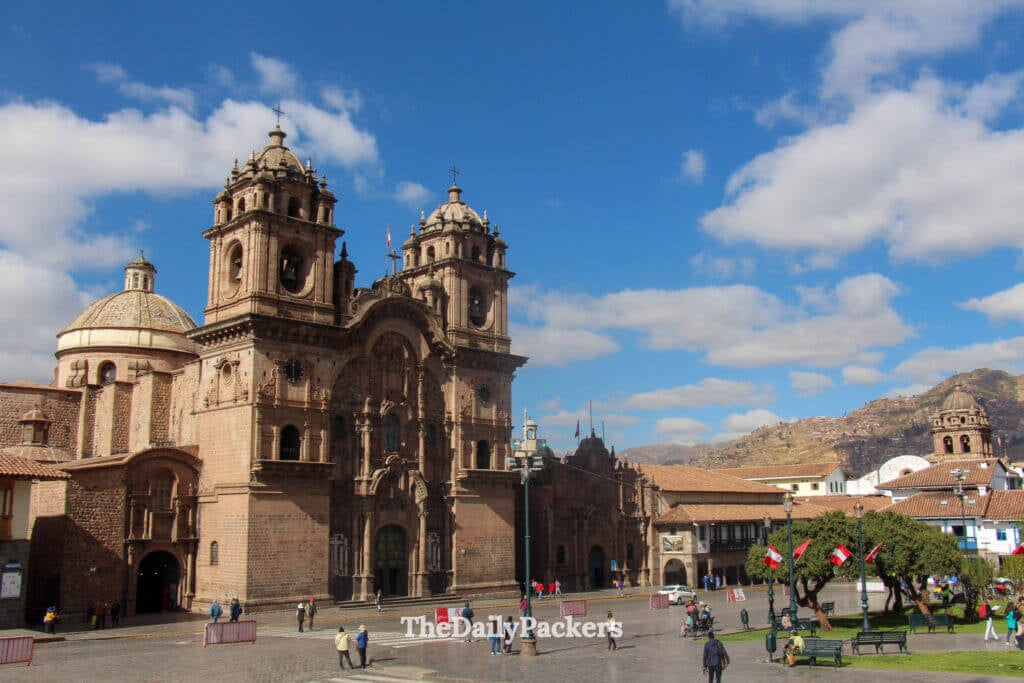
Today is your first real day in the city, but you still keep things gentle. Start at Plaza de Armas, Cusco’s main square and the easiest place to get your bearings. It’s lively without feeling chaotic, and you’ll quickly notice how the city mixes Inca stonework and Spanish colonial architecture.
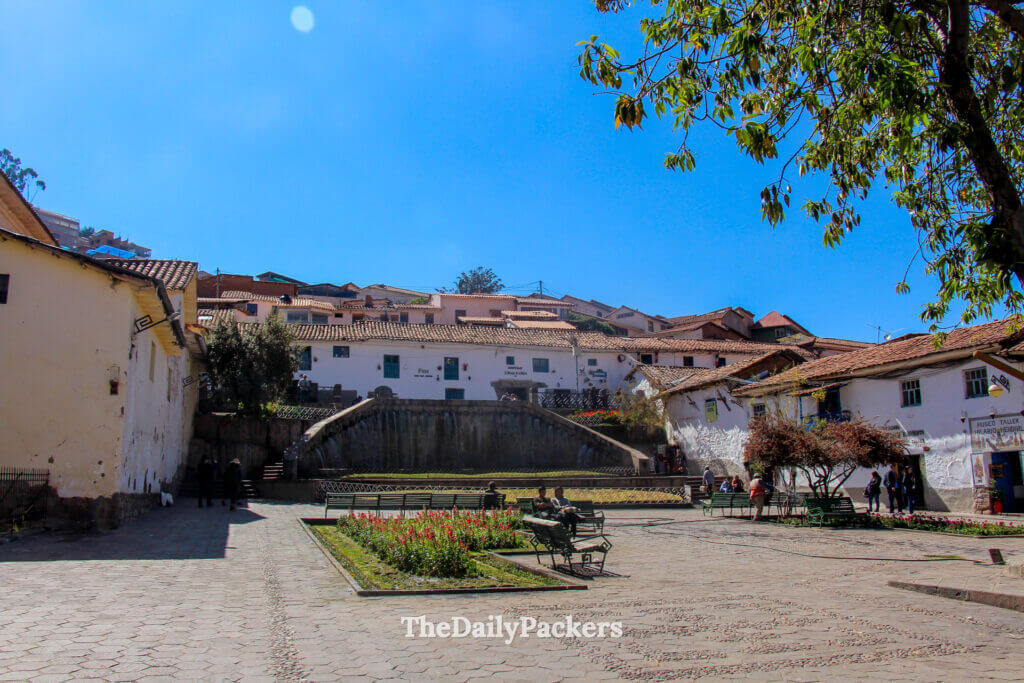
From there, head up to San Blas. It’s a small climb, but it’s also one of the nicest parts of the historic center, with narrow streets, little boutiques, and viewpoints over the rooftops. Take your time, stop for a coffee, and just enjoy the pace.
Later, visit the Santo Domingo Convent. It’s one of the best places in Cusco to understand how the city was built in layers, with Spanish structures sitting directly on top of major Inca foundations. It’s a perfect “history without trying too hard” kind of visit.
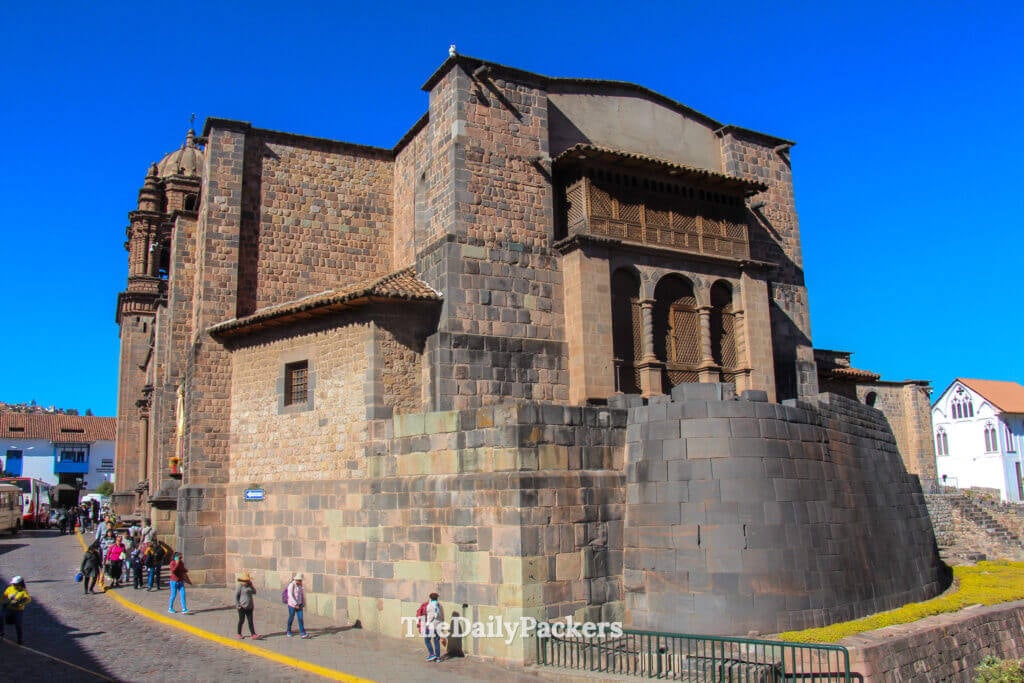
Read: 23 Best things to do in Cusco, Peru, in 2 to 6 days
Day 3: Further Exploration of Cusco
This is your biggest day, when you head above the city to see the iconic Inca sites. Start with Cristo Blanco for the view. It’s a classic lookout over Cusco, and it helps you see just how big the city is once you step back.
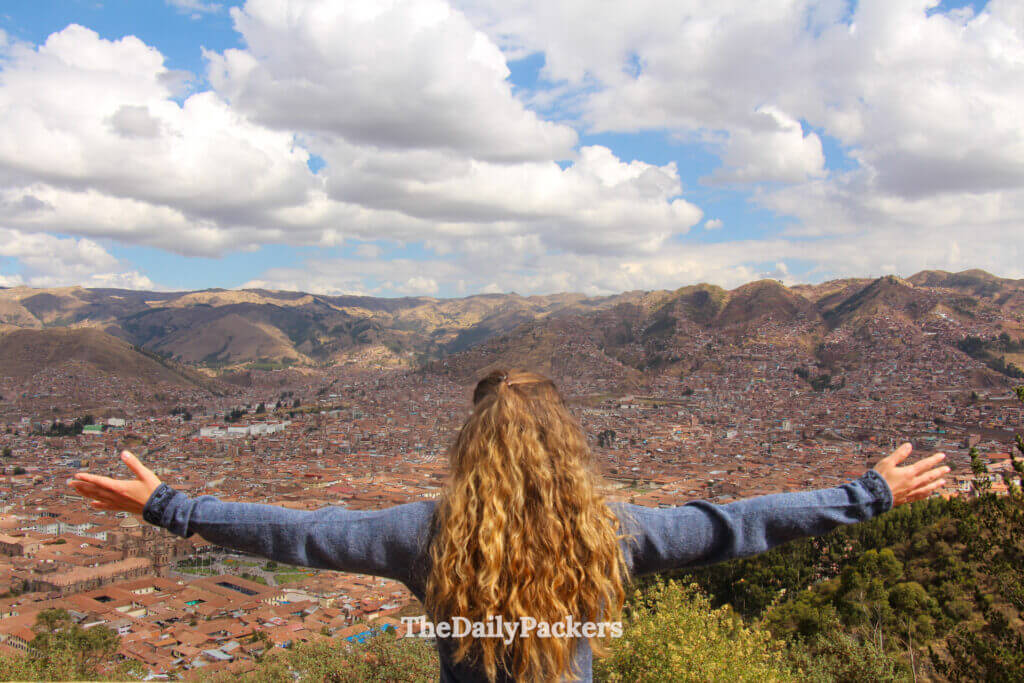
From there, continue to Sacsayhuamán, the most impressive set of ruins near Cusco. The size of the stones and the way they fit together is wild in person. After that, you keep going to Qenko, Puka Pukara, and Tombomachay. These sites are all different, but they make sense as a loop: ceremonial spaces, defensive viewpoints, and water-focused structures that show how advanced the Inca engineering was.

By the end of the day, you’ll probably feel the altitude a bit more. Plan something easy for dinner, then rest, because tomorrow the itinerary shifts into travel mode with the Sacred Valley.

Read: 23 Best things to do in Cusco, Peru, in 2 to 6 days
Day 4: Sacred Valley Adventure
Today is a transition day, but also one of the most scenic and rewarding parts of the trip. You leave Cusco behind and start moving through the Sacred Valley of the Incas, following the same route that once connected important Inca towns and agricultural centers.

Your first stop is Chinchero. This small town is often overlooked, but it’s a great introduction to the valley. You’ll usually stop at a local wool workshop, where you can see how alpaca and llama wool is washed, dyed with natural plants, and woven. It’s informative without being too long, and it gives context to the textiles you’ve been seeing in Cusco.
A few minutes away, you explore Chinchero town itself, with its main square, colonial church, and Inca terraces surrounding it. The views over the valley are already impressive here, especially on a clear day.

Next comes Moray, one of the most fascinating sites in the Sacred Valley. The circular terraces look almost surreal. This was likely an agricultural experimentation site, where the Incas tested crops at different temperatures and altitudes. Walking along the terraces gives you a good sense of how advanced their knowledge was.

From Moray, you continue to Maras, famous for its salt mines. Hundreds of small salt ponds cascade down the hillside, still worked by local families today. It’s one of the most photogenic stops of the day and very different from anything you’ll see elsewhere in Peru.
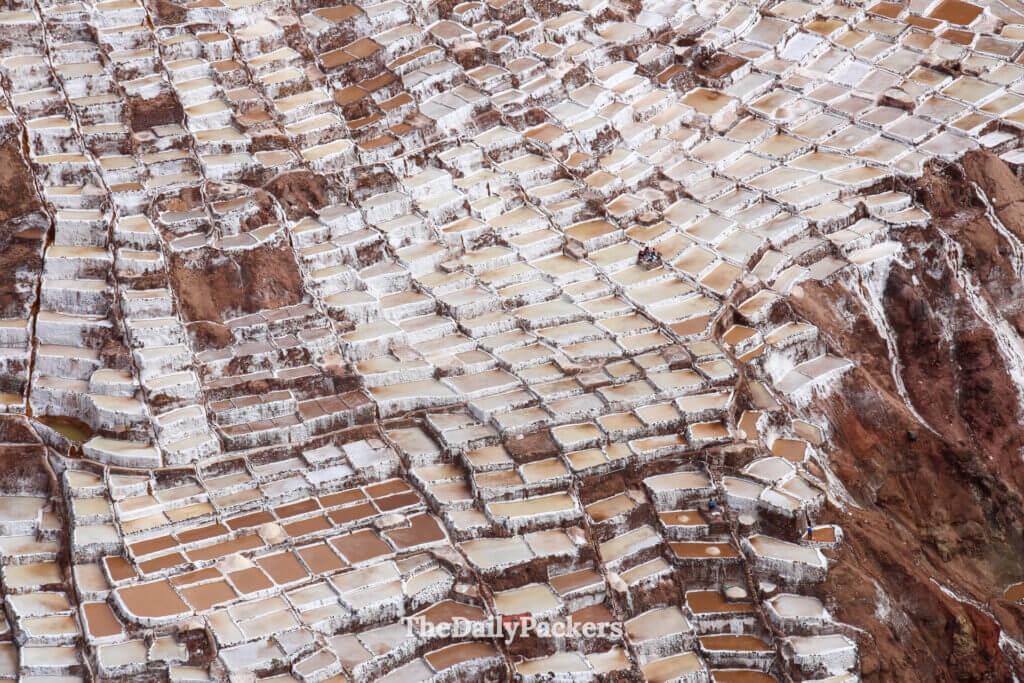
After that, you pass through Urubamba, the geographical heart of the valley. It’s more modern and less touristic, but it’s a good place to see everyday life in the region and often where you stop briefly for food or supplies.
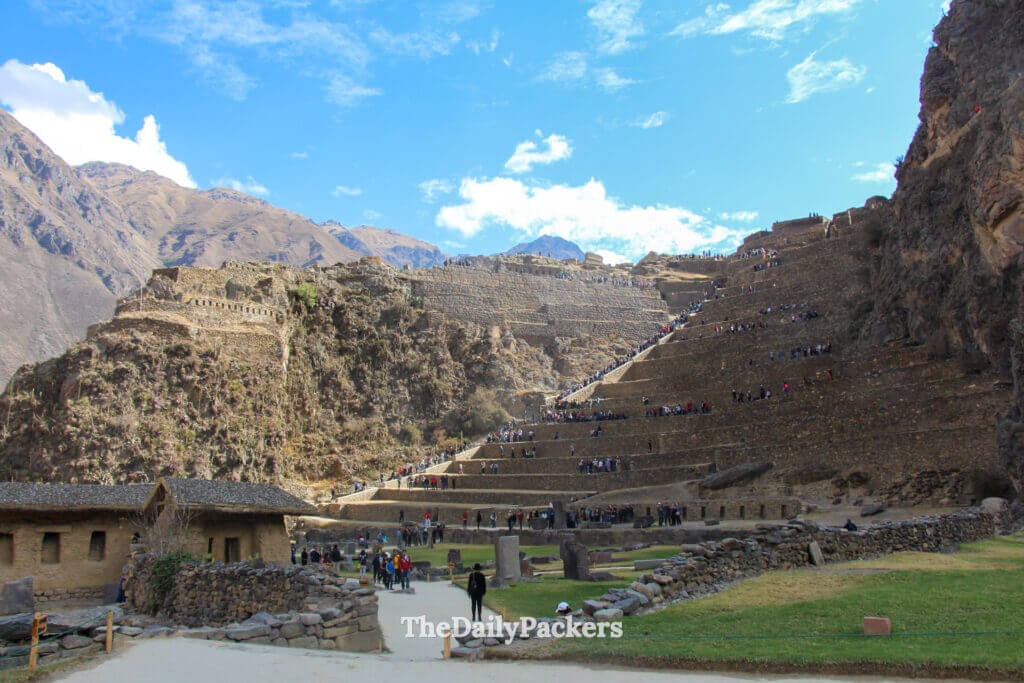
Your day ends in Ollantaytambo, one of the best-preserved Inca towns in Peru. The stone streets, water channels, and massive terraces climbing the mountainside make it feel very different from Cusco. Take time to walk around the village before heading to the train station.
In the late afternoon, you board the train to Aguas Calientes, the gateway to Machu Picchu. It’s a relaxed ride following the river through the valley, and it’s the moment when the excitement really builds. Once you arrive, you check into your hotel, grab dinner, and go to bed early. Tomorrow is the big day.
Read: Sacred Valley of the Inca: An incredible 1-day adventure, Peru
Day 5: The Magnificent Machu Picchu
Wake up early in Aguas Calientes and head to the bus stop before sunrise. The 25-minute bus ride takes you up the mountain to the entrance of Machu Picchu, where you start your visit with one of the official circuits.

Walk through the terraces, temples, and viewpoints, taking time to understand how the city was built and why its location is so extraordinary. If you booked it in advance, continue with the hike to Huayna Picchu or Machu Picchu Mountain for a completely different perspective over the ruins.

By late morning, head back down to Aguas Calientes for lunch, then catch the train back to Ollantaytambo and continue on to Cusco. A long but unforgettable day, and one of the absolute highlights of this South America itinerary.

Read: Machu Picchu: How to Plan the Perfect Trip to Peru’s Icon
Day 6: Traveling to Arequipa
After the intensity of Machu Picchu, this day feels like a reset. Fly from Cusco to Arequipa, which saves you a lot of time and energy compared to the bus. Once you arrive, drop your bags and head straight to the historic center, built almost entirely from white volcanic stone.
Start gently with the Templo Museo Tercera Orden Francesca, a lesser-known but fascinating site where you can walk through cloisters, inner gardens, and former living quarters while learning about Arequipa’s religious history.

From there, make your way to the Santa Catalina Monastery, one of the city’s absolute highlights. You can easily spend two to three hours wandering through its colorful streets, courtyards, and cells, which feel like a city within a city.

End the day by slowing down—find a café around Plaza de Armas, enjoy the view of the cathedral, and take in the calmer pace compared to Cusco.

Read: 14 Best things to do in Arequipa, Peru, in 2 to 3 days
Day 7: Discovering Arequipa
Start the day with a free walking tour, a great way to understand Arequipa’s colonial past, local traditions, and daily life. Tours usually cover Plaza de Armas, the Cathedral, the Church of the Company, and the lively San Camilo Market, where you can see and taste local produce.

In the afternoon, visit a local chocolate factory to learn about Peruvian cacao and try some seriously good chocolate. Later, cross the river to explore the Yanahuara district, known for its quiet streets, white stone arches, and viewpoints overlooking the city and surrounding volcanoes. It’s a great spot to slow down before the next long travel day.

Read: 14 Best things to do in Arequipa, Peru, in 2 to 3 days
Day 8: Arequipa to Puno
This is a long but important travel day. Take a bus from Arequipa to Puno, which usually takes around six hours. The ride slowly climbs in altitude, and you’ll really feel it by the time you arrive near Lake Titicaca. Keep water handy, eat light, and don’t plan anything ambitious for the evening.
Once in Puno, check into your accommodation and head out for a simple walk around the Plaza de Armas if you still have energy. The city itself isn’t the highlight of the region, so this night is mostly about resting and preparing for the border crossing the next day.

Read: Arequipa to Puno: A scenic 6-Hour Bus Guide
Day 9: Puno to Copacabana
In the morning, take a bus from Puno to Copacabana, crossing your first border of the trip. The process is fairly straightforward, but it takes time, so patience helps. Once you arrive in Copacabana, the atmosphere changes immediately—slower, calmer, and centered around Lake Titicaca.

Spend the afternoon walking along the lake, climbing up to one of the viewpoints above town, or simply sitting by the water. Copacabana is small, relaxed, and perfect for adjusting to Bolivia’s pace. Sunset over the lake is a quiet moment you’ll probably remember for a long time.

Read: 7 Best Things to do in Copacabana, Bolivia, in 3 to 4 days
Day 10: Isla del Sol
From Copacabana, take a boat to Isla del Sol, one of the most important sacred sites of the Inca world. The ride across Lake Titicaca is calm and scenic, with deep blue water and wide open skies.

Once on the island, spend the day walking the ancient trails, passing small villages, stone terraces, and Inca ruins scattered along the ridges. The hikes aren’t technically difficult, but the altitude makes everything slower. Take your time, stop often, and enjoy the views over the lake. Staying overnight on the island allows you to experience a peaceful sunset and an incredibly quiet night.

Read: Isla del sol: An epic 1-day adventure in Copacabana, Bolivia
Day 11: Yampupata Village Hike
After returning to the mainland, head to Yampupata, a small rural village overlooking Lake Titicaca. From here, follow a scenic hiking trail along the peninsula, with constant views of the lake and Isla del Sol in the distance.

This hike is one of the most underrated moments of the trip—quiet paths, grazing animals, and almost no tourists. It’s a perfect contrast to the busier sites earlier in the itinerary and a beautiful way to slow down before the long travel day ahead.

Read: Yampupata trail: An unforgettable 1-day hike from Copacabana
Day 12: To La Paz
Leave Copacabana early and travel by bus to La Paz, Bolivia’s chaotic and fascinating capital. You’ll usually pass through the city rather than explore it deeply, but even from the road, La Paz feels intense—dense neighborhoods climbing the canyon walls, cable cars floating overhead.
From La Paz, continue straight to Uyuni, most often on an overnight bus. It’s a long journey, but sleeping on the bus saves time and fits perfectly into a tight South America itinerary. Make sure you have warm clothes—night buses in Bolivia get cold.

Read: Bus from La Paz to Uyuni: The Ultimate 10-Hour Journey Guide
Day 13: Uyuni Day 1
Arrive in Uyuni early in the morning and start your Uyuni Salt Flats tour straight away. Day one usually focuses on the vast white expanse of the salar itself—endless salt, perspective photos, and your first taste of how surreal this place really is.

As the day goes on, you’ll visit small highlights like the salt hotel and remote islands covered in giant cacti. The day ends in a basic but memorable accommodation, often a salt hotel in the middle of nowhere. It’s simple, cold, and unforgettable.

Read: Uyuni Salt Flats Tour: An Epic 3-day Adventure in Bolivia
Day 14: Uyuni Day 2
Day two of your Uyuni Salt Flats adventure takes you deeper into Bolivia’s altiplano. You leave the salt desert behind and enter a completely different landscape made of colorful lagoons, desert plains, and volcanic scenery.
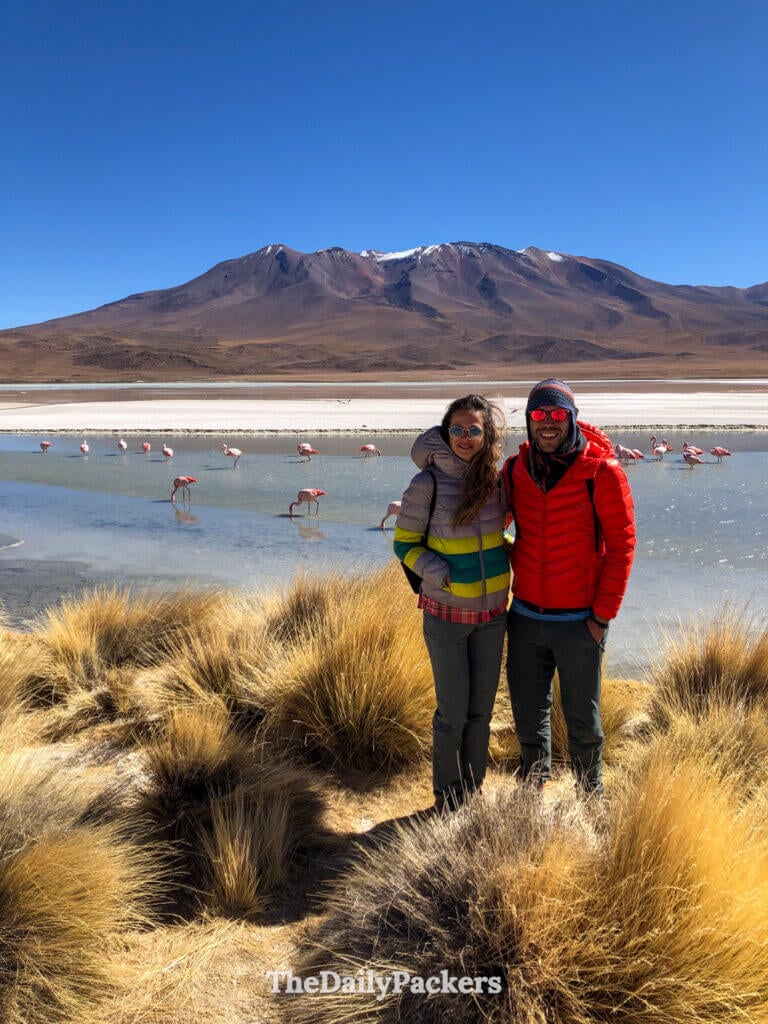
You’ll pass Laguna Cañapa, Laguna Hedionda, and Laguna Colorada, where flamingos gather against red and turquoise waters. The scenery changes constantly, and by now you really feel how remote this part of South America is. The night is usually spent in a very basic lodge at high altitude—cold, simple, but part of the experience.

Read: Uyuni Salt Flats Tour: An Epic 3-day Adventure in Bolivia
Day 15: Uyuni Day 3 and Moon Valley
The final day of the tour is often the most dramatic. You start early to visit geysers, hot springs, and surreal rock formations before crossing the border into Chile.
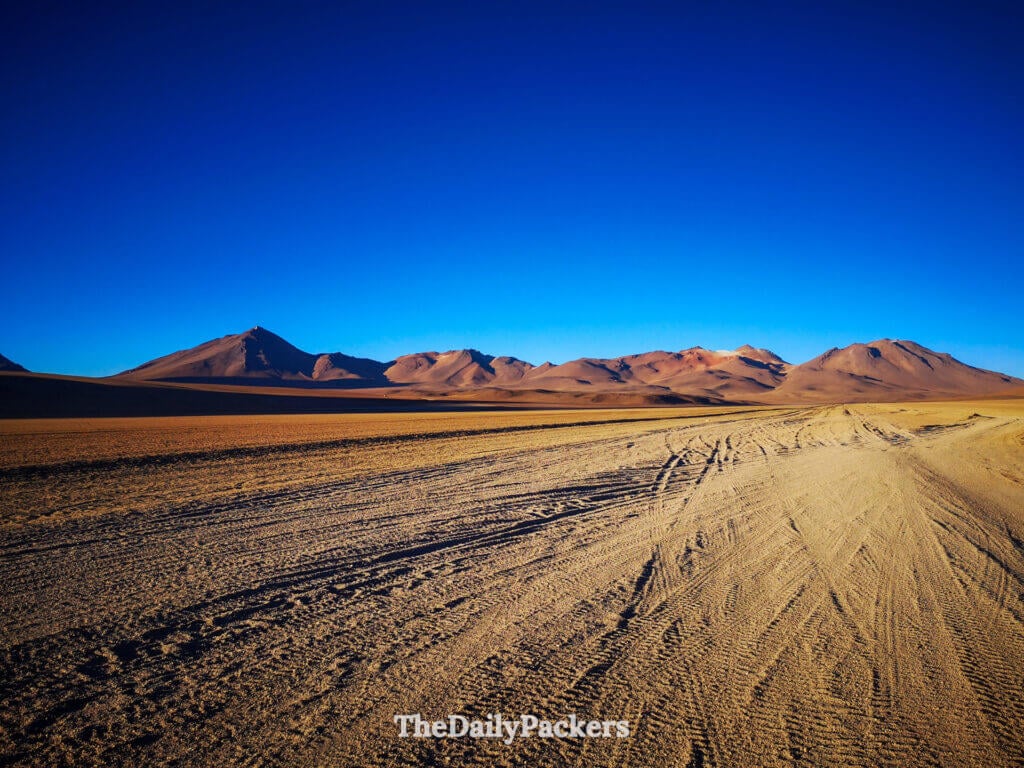
By early afternoon, you arrive in San Pedro de Atacama, a dusty desert town that feels calm after the intensity of Uyuni. If you still have energy, finish the day with a sunset visit to Valle de la Luna (Moon Valley). The landscapes there feel almost unreal, especially after everything you’ve already seen over the past few days.
This transition—from Bolivia’s wild altiplano to Chile’s Atacama Desert—is one of the most memorable moments of the entire 3-week South America itinerary.

Read: Valley of the Moon: 4h sunset tour from San Pedro de atacama
Day 16: San Pedro de Atacama
After the long journey from Uyuni, this day is about slowing down a bit. San Pedro de Atacama is small, relaxed, and perfect for exploring at your own pace. You can wander through the adobe streets, stop by local cafés, and rent a bike to explore the surroundings.

Cycling around town lets you reach places like Valle de la Muerte, viewpoints over the desert, and quiet backroads with volcanoes in the distance. If you skipped Moon Valley the day before, sunset here is still a must.

Read: 10 Best things to do in San Pedro de Atacama in 2 to 3 days
Day 17: To Santiago
Today you leave the desert behind and head south. From Calama Airport, you fly to Santiago, Chile’s capital. The contrast is striking: from one of the driest places on Earth to a busy, modern city surrounded by mountains.
Depending on your arrival time, you can already start exploring a bit—walk through a neighborhood, grab dinner, or simply rest. Santiago is a good reset point in this itinerary before heading toward the coast and Easter Island.

Read: 14 Best things to do in Santiago de Chile, in 1 to 3 days
Day 18: Discover Santiago
This day is all about getting a feel for Santiago. You can start in the historic center around Plaza de Armas, then walk toward Lastarria or Bellavista for cafés, street life, and colorful buildings. If you’re up for a view, head to Cerro San Cristóbal or Cerro Santa Lucía to see the city framed by the Andes.

Santiago isn’t a city you rush. A mix of walking, coffee stops, and a good dinner in the evening is more than enough before your next big flight.

Read: 14 Best things to do in Santiago de Chile, in 1 to 3 days
Day 19: Fly to Easter Island
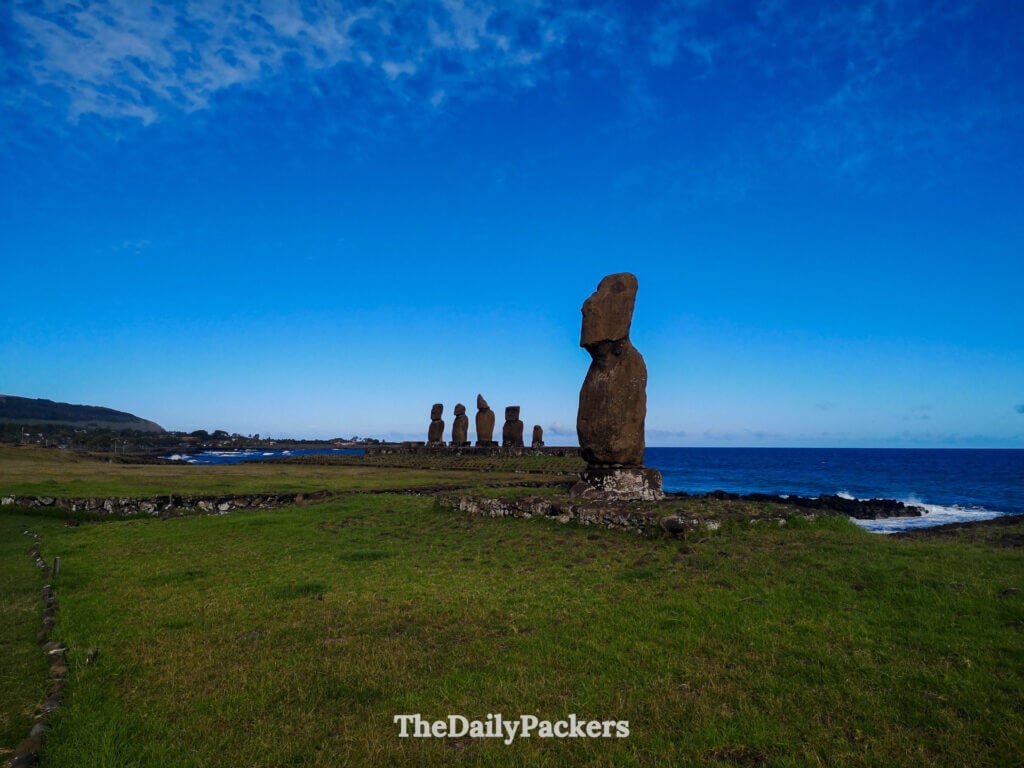
Today is a big one. You fly from Santiago to Easter Island (Rapa Nui), one of the most remote inhabited islands in the world. The flight takes around five hours, crossing the Pacific Ocean.
Once you land, you’ll immediately feel how different the island is—slower pace, ocean everywhere, and a strong Polynesian atmosphere. After checking into your accommodation, keep it easy: a beach walk, sunset by the coast, and an early night to recover from the flight.
Read: 27 Best Things to do on Easter Island, Chile, in 4 to 5 days
Day 20 – Caves & Ahu Akivi
Today is about discovering the quieter side of the island. You explore lava caves like Ana Kakenga, Ana Te Pora, and Ana Te Pahu, once used as shelters and hiding places. Between stops, you pull over at small coastal ahu, often completely empty.

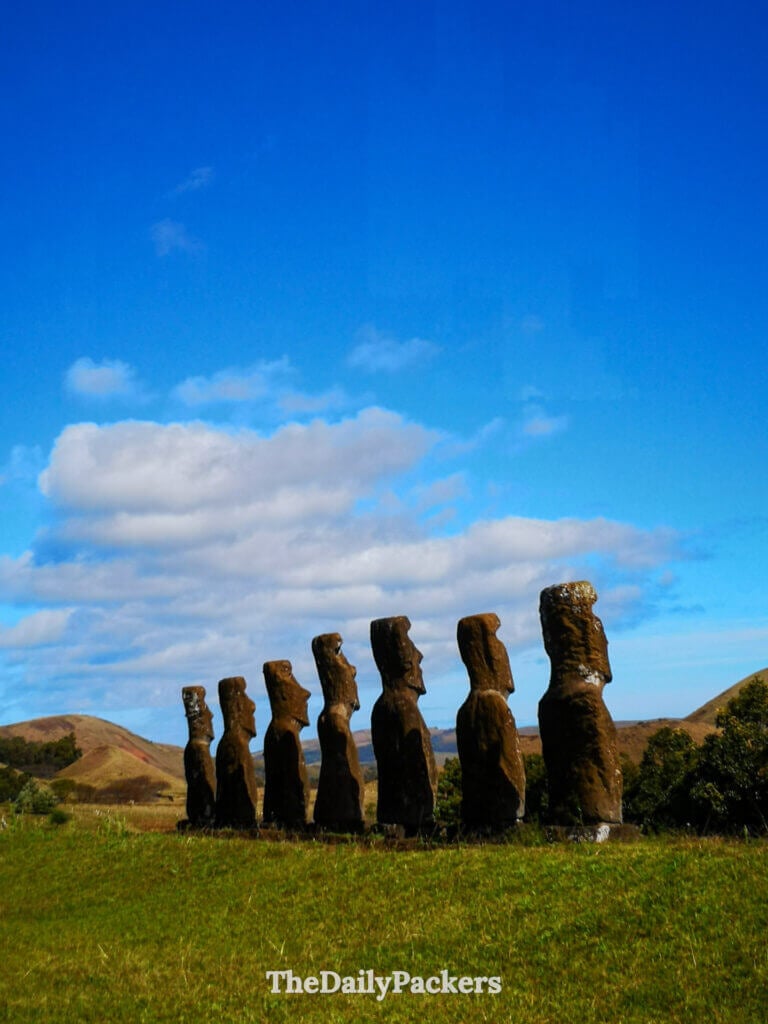
You finish the day at Ahu Akivi, one of the only platforms where the Moai face the ocean. The setting feels peaceful and very different from the more famous sites. End the day with a relaxed evening near the beach or back in Hanga Roa.
Read: Easter Island National Park: Best 1-Day Hiking Adventure
Day 21 – Full Island Loop by Scooter
This is your big exploration day. Renting a scooter, you loop around the island at your own pace. You stop at Ahu Huri A Urenga, Ahu Akahanga, and then reach Rano Raraku, where the Moai were carved straight from the rock.

From there, you continue to Ahu Tongariki, the most impressive platform on the island, before stopping at Papa Vaka and Ahu Te Pito Kura, home to the legendary “navel of the world.” You cool off at Ovahe, relax on the white sand at Anakena, and end the loop at Puna Pau, where the red stone topknots were made.

Read: Road Trip on Easter Island: A Perfect 1-Day Adventure
Day 22 – Rano Kau & Orongo
You start the day with the Te Ara o Te Ao Trail, hiking toward the massive Rano Kau crater. The view over the volcanic lake is one of the most striking on the island.

From there, you explore Orongo, the sacred ceremonial village tied to the Birdman cult, perched above the ocean cliffs. The rest of the afternoon is slow and flexible: coffee in Hanga Roa, coastal walks, or simply resting before the journey ahead.

Read: Te Ara o Te Ao Trail: Hike to Rano Kau and Orongo, Easter Island
Day 23: Return to Santiago
You fly back from Easter Island to Santiago, usually landing in the morning or early afternoon. This day is mainly about transition and rest after several intense days on Rapa Nui.
Once back in Santiago, you check in to your accommodation, grab a relaxed meal, and take it easy. If you have energy, you can go for a short walk in neighborhoods like Lastarria or Bellavista, but there’s no need to overplan. Tomorrow is another full day.
Day 24: Full Day Trip to Valparaíso
You leave Santiago early in the morning for a full day trip to Valparaíso, Chile’s most colorful and creative city. It’s an easy ride by bus or tour and makes for an ideal last destination without changing accommodation.

You spend the day exploring Cerro Concepción, Paseo Dimalow, and Paseo Atkinson, hopping on historic funiculars, chasing murals, and walking along the port area. Valparaíso feels raw, artistic, and very different from Santiago, which makes it a great contrast before heading home.
In the late afternoon or early evening, you return to Santiago for your final night.

Read: 16 Best Things to do in Valparaiso, Chile, in 1 day
Day 25: Return Home
Your South America adventure comes to an end. Depending on your flight time, you head to Santiago airport and fly back home, closing an unforgettable 3 weeks South America itinerary through Peru, Bolivia, and Chile.
About the authors
We are Alex and Tina, a French-Serbian couple who met in China back in 2014. We spent three incredible years there before making France our home. Our shared passion for travel has been the heartbeat of our relationship for over 12 years, taking us across 44 countries and counting.
We launched TheDailyPackers in 2019 as a way to document our adventures. In 2026, we reached a major milestone by officially turning our blog into our full-time job. While we are still growing toward financial independence through this platform, every article we write is fueled by our mission to make your voyages easier through in-depth guides, honest advice, and the lessons we’ve learned from our own mistakes.
Our journey has not been without its storms. In 2023, our world changed forever when our first son, Poppy, was stillborn on November 25th. It was, and remains, the hardest chapter of our lives. In 2025, we were blessed with our second little boy, Milo. He has since joined our traveling tribe, and you’ll be seeing him—and the reality of traveling with a little one-on the blog more and more.
We hope to inspire you to explore the world with curiosity and resilience. Thank you for being part of our story.
You may also like those related posts
12 Best Things to do in Chiang Rai, Thailand, in 3 to 4 days
Riquewihr Christmas Market: The Fairytale Village of Alsace
14 Best things to do in Toulouse, France, in 1 to 3 days
Valensole, Provence: Driving by the Lavender Village of France
20 Best things to do in Ajaccio, Corsica, in 2 days or more
10 Best things to do in Krabi, Thailand, in 3 to 4 days
10 Best things to do in San Pedro de Atacama in 2 to 3 days
10 Best things to do in San Rafaël, Argentina, in 3 days
Pssst, did you know that…
If you purchase something through our links, we earn a small fee. However, you still pay the same. Win-win! And one day we may get to be full-time travel bloggers =)
Find Hotels with Booking.com
Do Yoga with KVY
Buy us a Coffee
Rent a car with DiscoverCars
Find Attractions with GetYourGuide
Find Flights with Expedia
Buy an eSIM with Airalo
Get insured with World Nomads
Get ready with Amazon.com