

Introduction
The Alhambra Palace in Granada is one of those places that instantly transports you to another world. Set on a hill above the city, this ancient Alhambra fortress blends Moorish architecture, quiet gardens, flowing water, and sweeping views over the Sierra Nevada.
Even if you’ve seen photos of the Alhambra of Granada, nothing prepares you for walking through its courtyards, detailed arches, and palace rooms in person.
It’s one of the most visited sites in Spain – and for good reason. We visited the C Alhambra Palace during our Andalusia road trip, and it instantly became one of our favorite stops.
The atmosphere here feels calm and timeless, and every corner tells a part of the region’s history. Whether you’re coming for the architecture, the views, or simply because everyone says you “can’t miss it,” the Alhambra Palace of Granada is a place that stays with you long after the visit ends.
If you’re planning a trip to Andalusia, this guide will help you understand what makes the Alhambra so special, how to organise your visit, and how to make the most of your time inside the palace and its gardens.
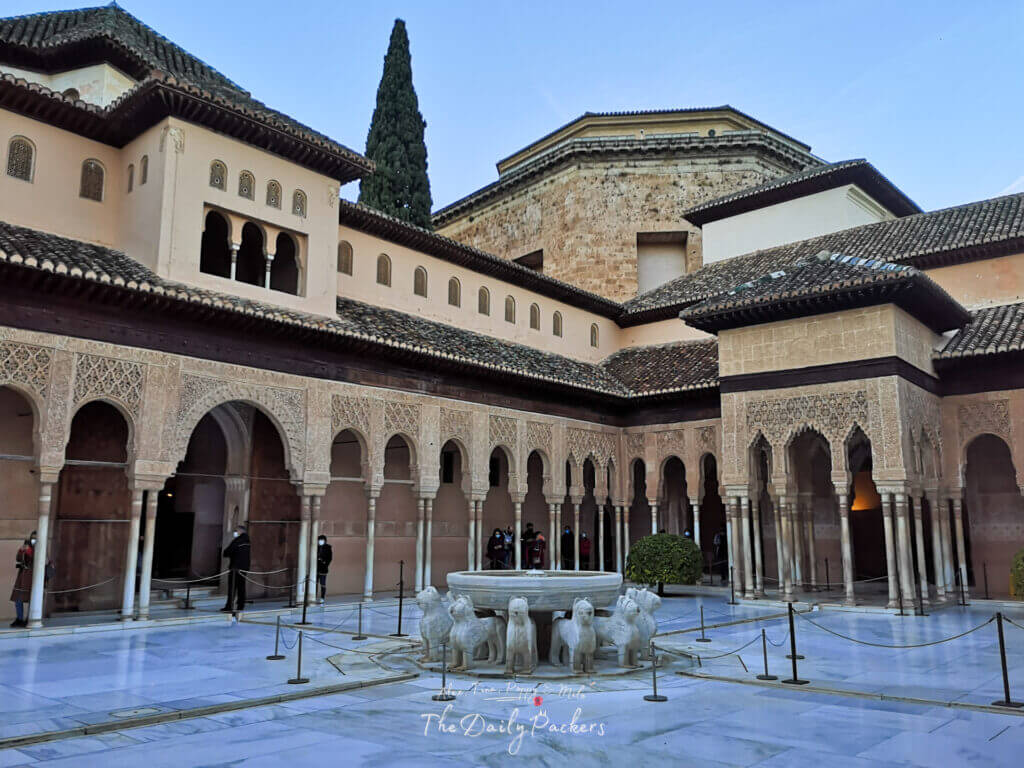

Read: 13 best things to do in Granada, Spain, in 1 to 3 days
Why visit?
The Alhambra Palace in Granada was one of the highlights of our trip through Andalusia. Even after visiting several cities across southern Spain, nothing compared to the feeling of seeing that massive fortress.
Visiting the Alhambra Palace in Granada feels like stepping into a living piece of history. The complex is a mix of palace, fortress, and gardens, built over centuries and shaped by different cultures that passed through Andalusia. What makes it so special is the atmosphere — quiet courtyards, carved stucco walls, long reflecting pools, and that warm Andalusian light that seems to follow you everywhere.
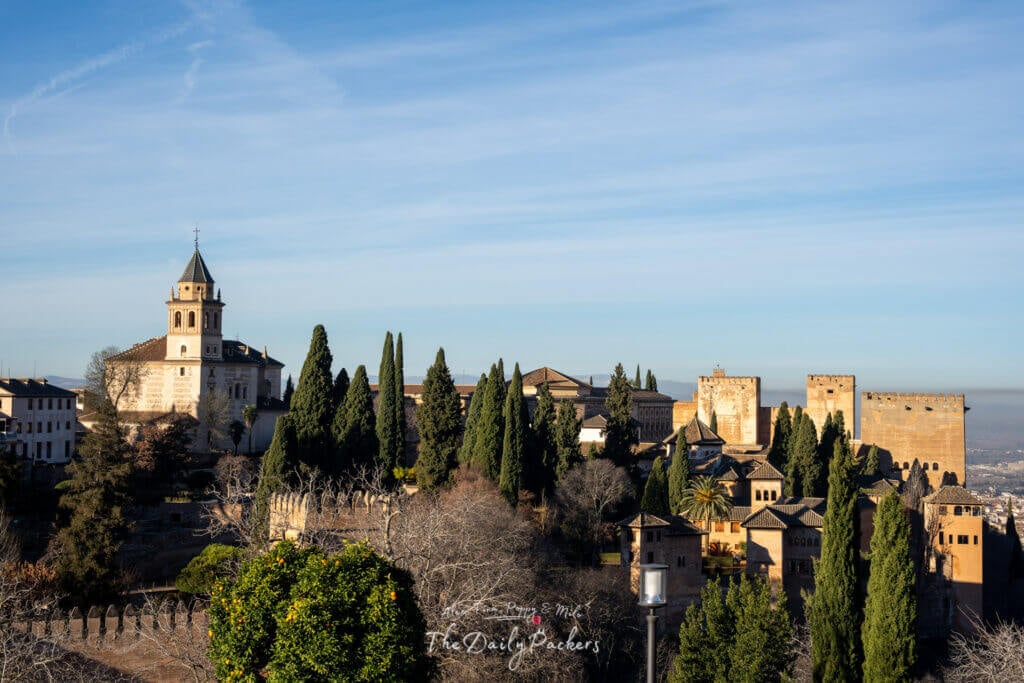
The Alhambra began as a fortress in the 9th century, but it wasn’t until the Nasrid dynasty in the 13th and 14th centuries that it became the extraordinary palatial city we see today. The Nasrid rulers created the famous Palacios Nazaríes, the intricate patios, the fountains, and the delicate woodwork that still look incredibly refined even after hundreds of years.
When the Catholic Monarchs later took control in 1492, they added their own touches, blending Christian styles with existing Islamic architecture.
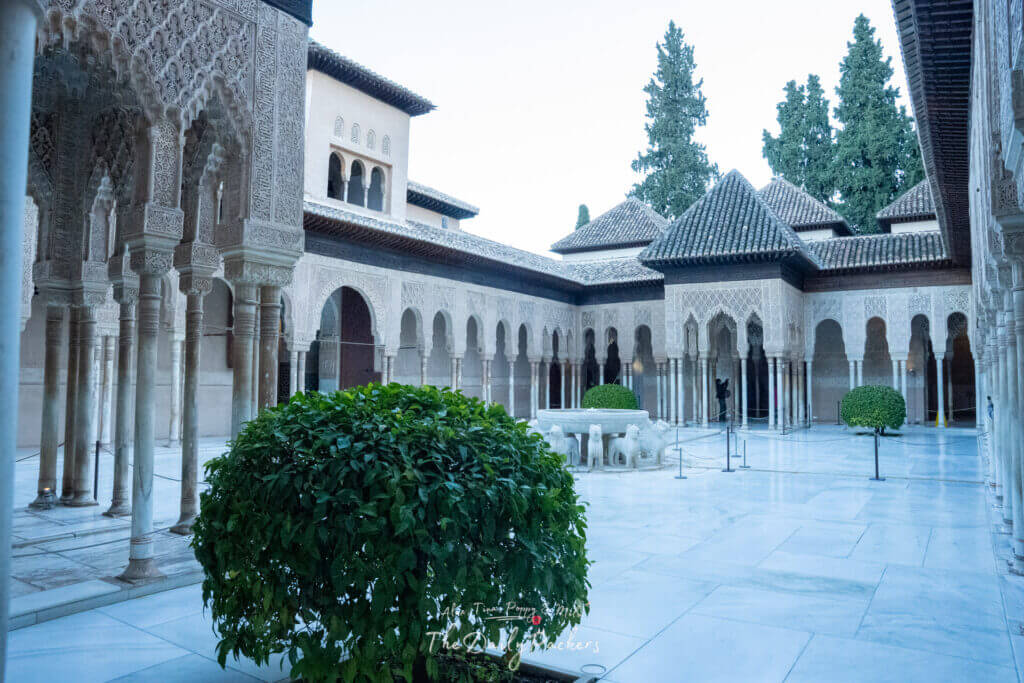

This layered history is part of what makes the Alhambra of Granada unique. You walk through spaces that once hosted sultans, poets, soldiers, and royalty, all while looking over one of the most beautiful cities in Spain.
Whether you’re here for the architecture, the history, the gardens, or simply the views, the Alhambra Palace of Granada is a place you’ll remember long after you leave.


Here are all your accommodation options in Granada
How to Get to the Alhambra
Reaching the Alhambra of Granada is easy, whether you’re staying in the city centre or arriving from elsewhere in Andalusia. The palace sits on a hill above Granada, so the walk can be steep at times, but the views along the way make it completely worth it.
From Granada’s city centre, you have three main options:
- Walk up: This is the most atmospheric way to arrive and the one we opted for. Paths like Cuesta de Gomérez or Cuesta del Rey Chico take you through quiet, leafy areas and give you a beautiful first impression of the Alhambra fortress. It’s uphill, but doable for most people, and takes around 20–30 minutes.
- Take the local bus: Several small red buses (C30 and C32) run regularly from the centre and drop you right next to the entrance. It’s quick, convenient, and ideal if you’re short on time or don’t want to walk in the heat.
- Taxi or rideshare: Taxis in Granada are affordable, and the ride up to the Alhambra Palace in Granada takes just a few minutes. This is the simplest option if you’re travelling with luggage or visiting early in the morning.

If you’re coming from other cities in Andalusia — like Seville, Málaga, or Córdoba — Granada is well connected by train and bus. Once you reach the city, heading up to the Alhambra Palace of Granada is straightforward.
Address: C. Real de la Alhambra, s/n, Centro, 18009 Granada, Spain



When to visit
The Alhambra Palace in Granada is beautiful all year, but your experience can feel very different depending on the season. Granada has hot summers, cool winters, and a lot of visitors during spring and autumn, so choosing the right moment really helps you enjoy the palace at a slower pace.
- Spring (March to May): Temperatures sit around 15–25°C (59–77°F), the gardens are at their best, and the light inside the courtyards is gorgeous. It’s one of the most popular times to visit, so expect crowds, especially in April and May.
- Summer (June to August): Days are hot, often 30–40°C (86–104°F), and the sun can be intense in the open courtyards. If you come in summer, plan an early morning or late-afternoon visit to avoid the heat. Evenings in Granada are lovely, but the palace fills up quickly during this season.
- Autumn (September to November): A great time to explore the Alhambra fortress. Temperatures drop to 15–28°C (59–82°F), the crowds ease a little, and the warm autumn colours add something special to the gardens. We love this period — it feels calm without being empty.
- Winter (December to February): Winters are mild compared to northern Europe, usually 5–15°C (41–59°F), and the palace is much quieter. Some days can be grey or rainy, but walking through the Nasrid Palaces without the big groups is a huge advantage.

Best Time of Day to Visit
The Alhambra Palace in Granada is one of the most visited places in Spain, so choosing the right time of day makes a big difference. The two best moments to explore the palace are:
- Early morning: This is the quietest moment of the day. If you enter with the first time slot, the courtyards, gardens, and viewpoints feel much more peaceful. The light is soft, temperatures are cooler, and the Nasrid Palaces are calmer before the big groups arrive.
- Late afternoon: Another great option, especially in summer. The heat drops, the light becomes golden, and the Generalife gardens look incredible at this time. Visits that start two to three hours before closing tend to feel slower and less crowded.
The one time we try to avoid is late morning, when most tours arrive and the courtyards become packed.
How Long to Spend
To properly enjoy the Alhambra of Granada, plan at least 3 to 4 hours. The complex is larger than many people expect, and it’s worth taking your time:
- Nasrid Palaces – the highlight
- Generalife gardens – peaceful and beautiful
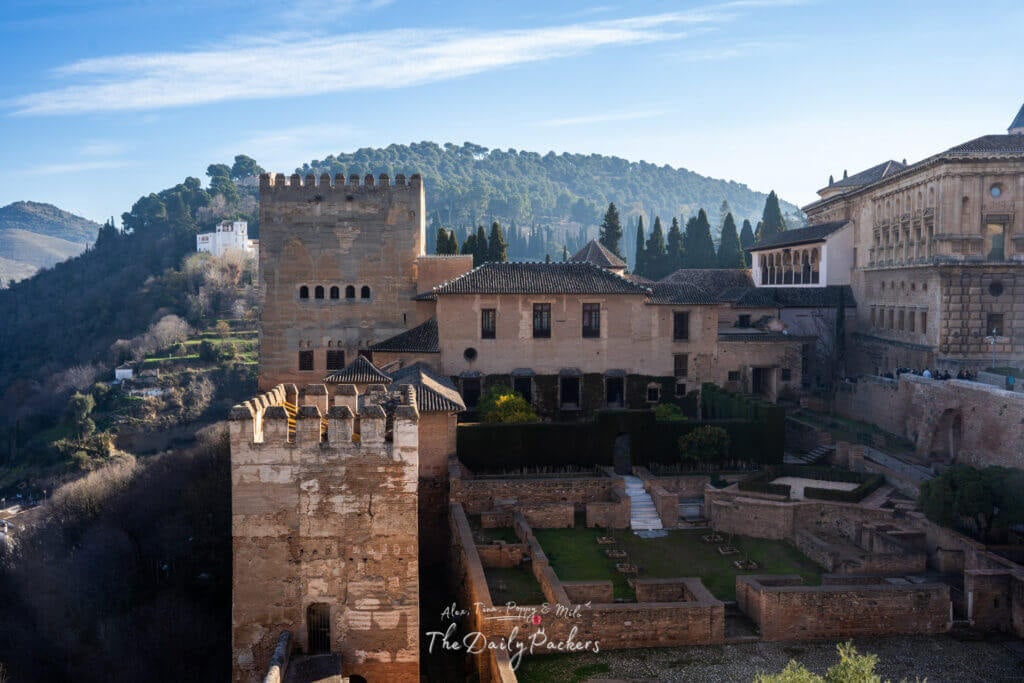
- Alcazaba fortress – amazing viewpoints
- Palace of Charles V – impressive architecture
- Paths, fountains, and smaller courtyards along the way
If you love photography, architecture, or simply wandering slowly, you could easily spend 4 to 5 hours without rushing.

Tip: No matter the season, book your ticket early — the Alhambra Palace of Granada has strict daily limits, and last-minute visitors are often turned away. If you can, aim for the earliest or latest time slots for a more peaceful visit.
How to Visit
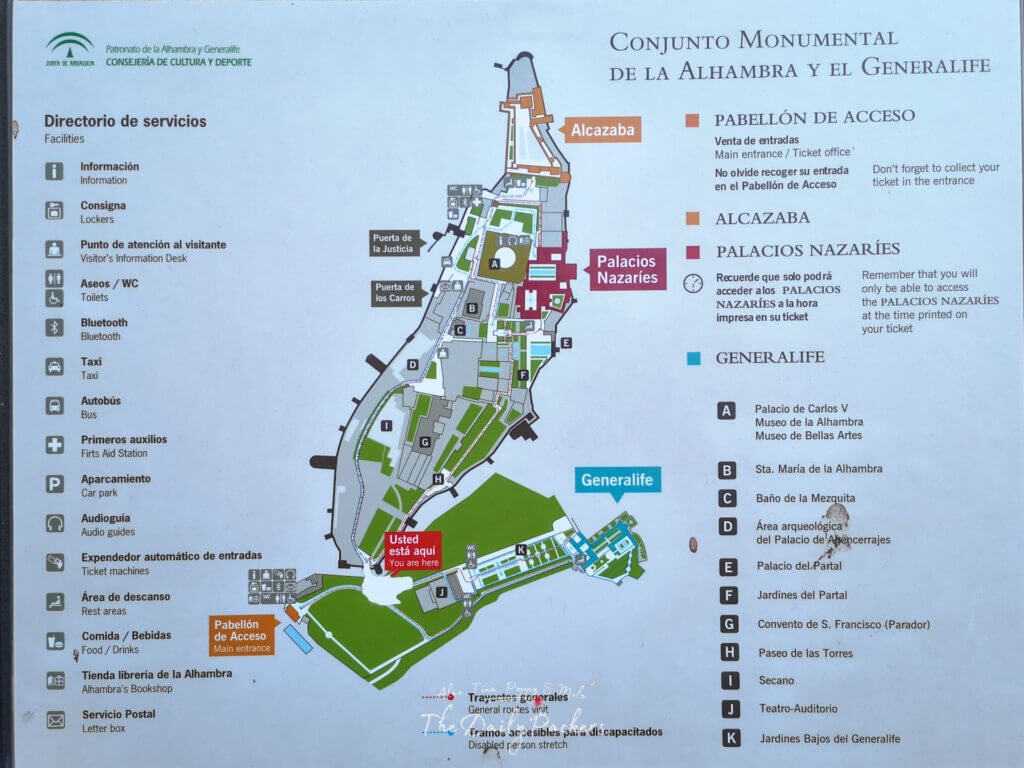
The Alhambra Palace in Granada is big and beautifully spread out across a hill, so following the right order makes your visit smoother and much more enjoyable. Here’s how to explore everything step by step, without feeling lost or overwhelmed.
Most people start their visit to the Alhambra Palace in Granada with the Nasrid Palaces because it’s the only section with a strict timed entry.
If your slot is early, it’s the perfect way to begin, before the heat and the crowds build up. From there, the visit flows naturally toward the palace, the fortress, and finally the gardens and Generalife.
Start with the Nasrid Palaces
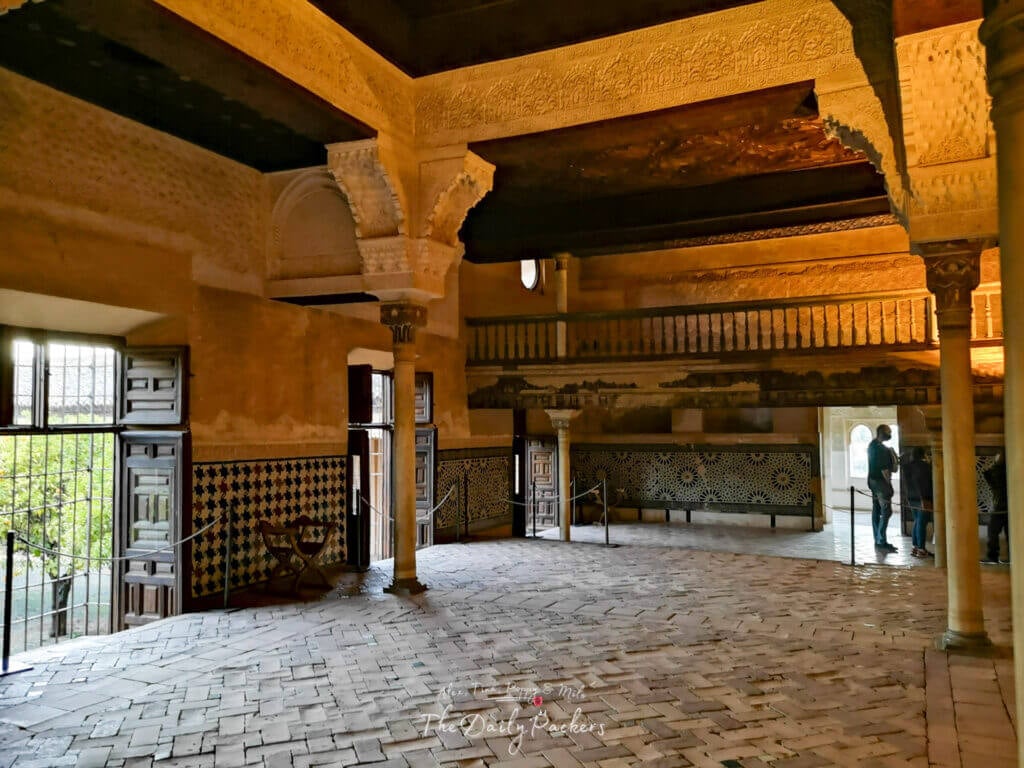
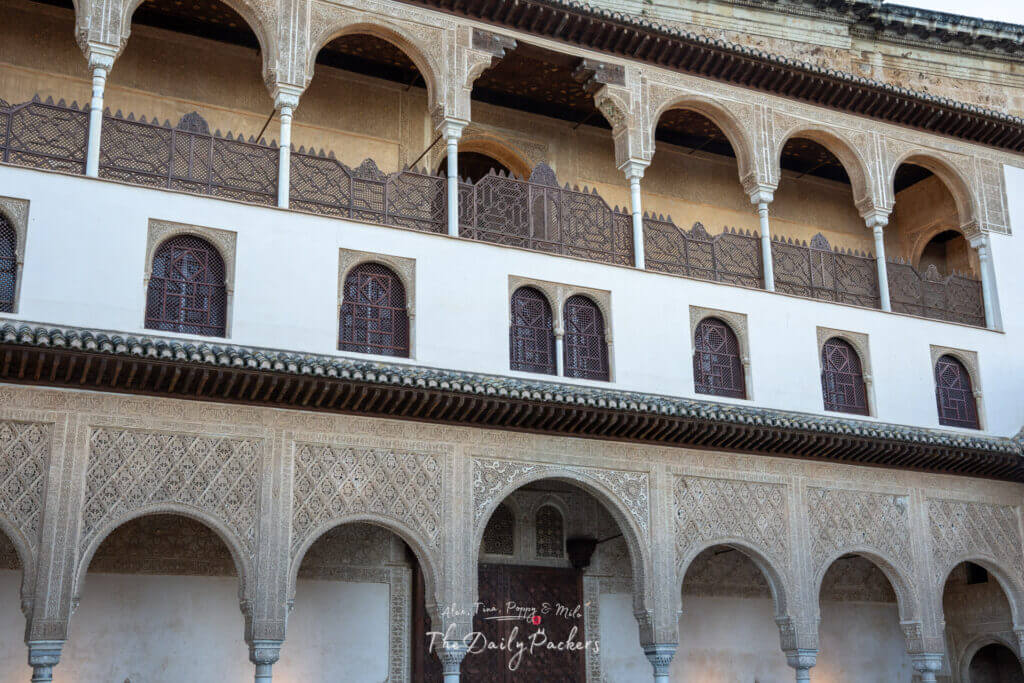
Entering the Nasrid Palaces first is like stepping quietly into another world. Rooms open one after another, always revealing something new — carved stucco walls, delicate arches, and the soft sound of water echoing through the courtyards.
You begin in the Mexuar, a space used for administrative matters, before arriving at the Patio de los Arrayanes and its long reflecting pool.
The Hall of Ambassadors follows, once the throne room of the sultans, and then the Palace of the Lions, which is the most iconic part of the entire Alhambra of Granada. The Courtyard of the Lions looks almost unreal in person, with its columns, marble floors, and the famous twelve-lion fountain at the centre.

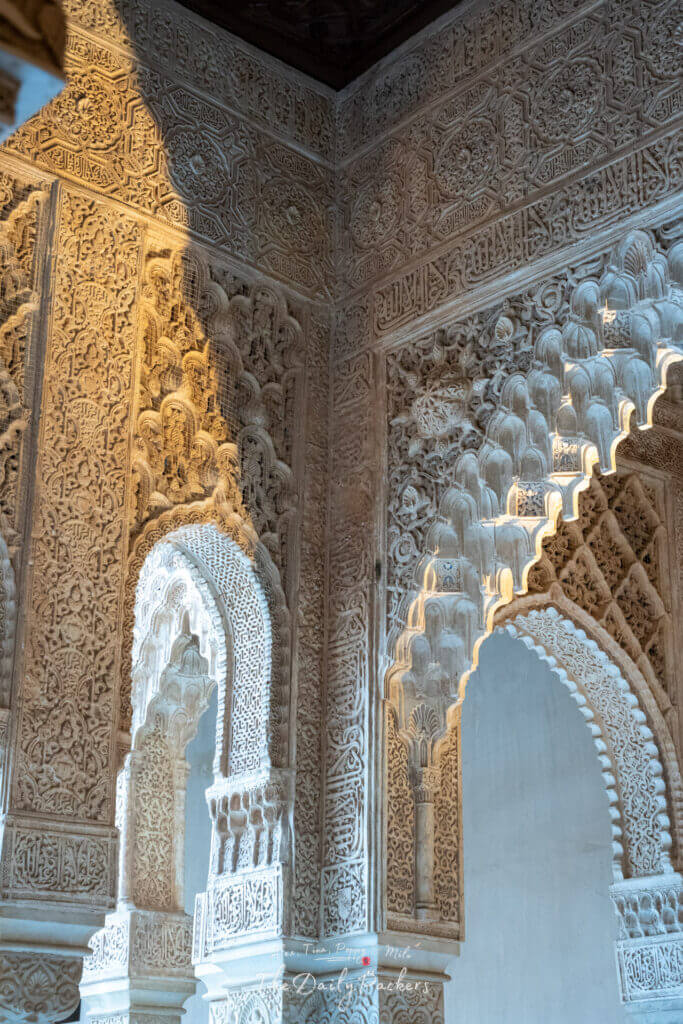
Toward the end, you pass through the Hall of the Abencerrajes and the Hall of the Two Sisters, which both have ceilings so detailed that you end up staring upward far longer than expected. The Mirador of Lindaraja closes the visit beautifully with its view over a quiet garden below.
Walk toward the Generalife Gardens
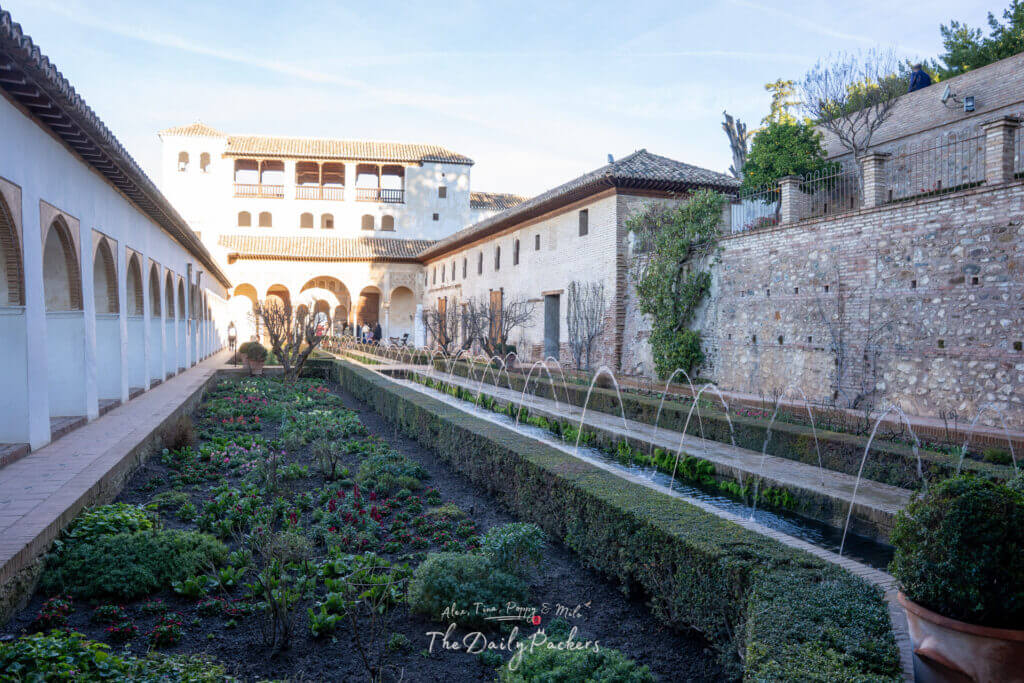
From the exit of the Nasrid Palaces, follow the signposted paths toward the Generalife, the old summer residence of the Nasrid rulers. The walk takes you past shaded courtyards and small fountains before opening into the bright, terraced gardens.

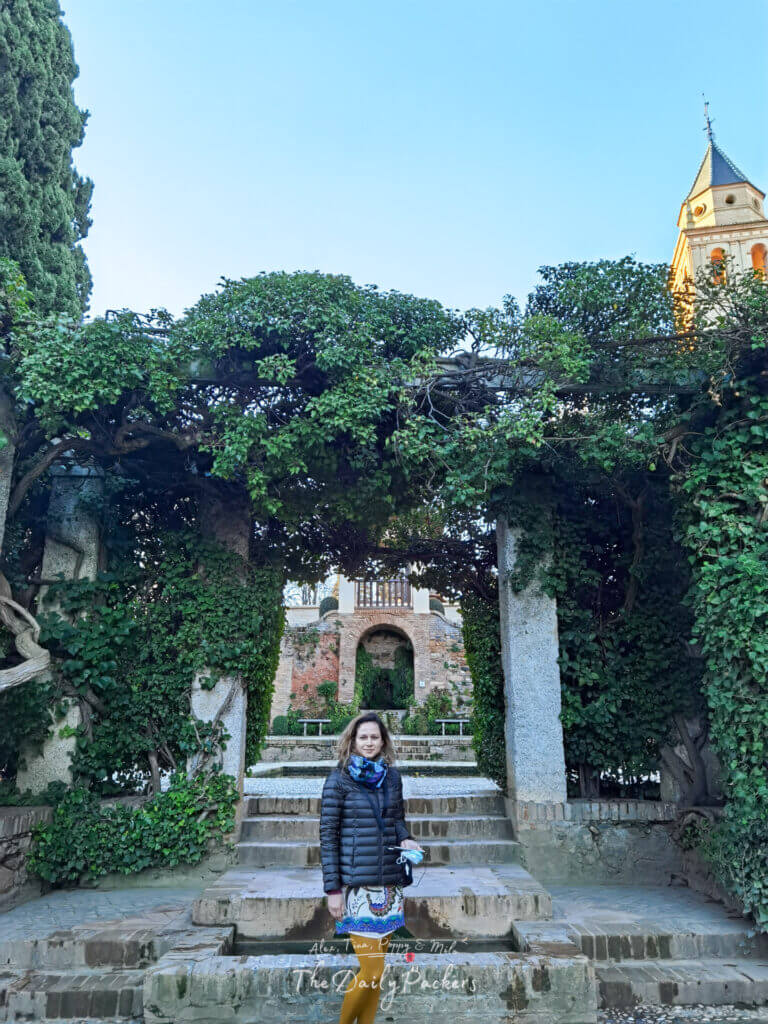
The Patio de la Acequia is the highlight here — a long water channel lined with flowers and arches, with the Alhambra rising on the hill behind you. It’s one of the most peaceful parts of the complex, especially in the early morning or late afternoon.
The upper gardens give you beautiful views over Granada and the Sierra Nevada, and the atmosphere here is slower and more relaxed. It’s the perfect contrast to the detailed interiors of the Nasrid Palaces.

Continue to the Alcazaba Fortress
After the gardens, make your way back across the main paths to the Alcazaba, the oldest and most defensive part of the Alhambra fortress. The walls are thick, the towers tall, and everything feels more rugged.

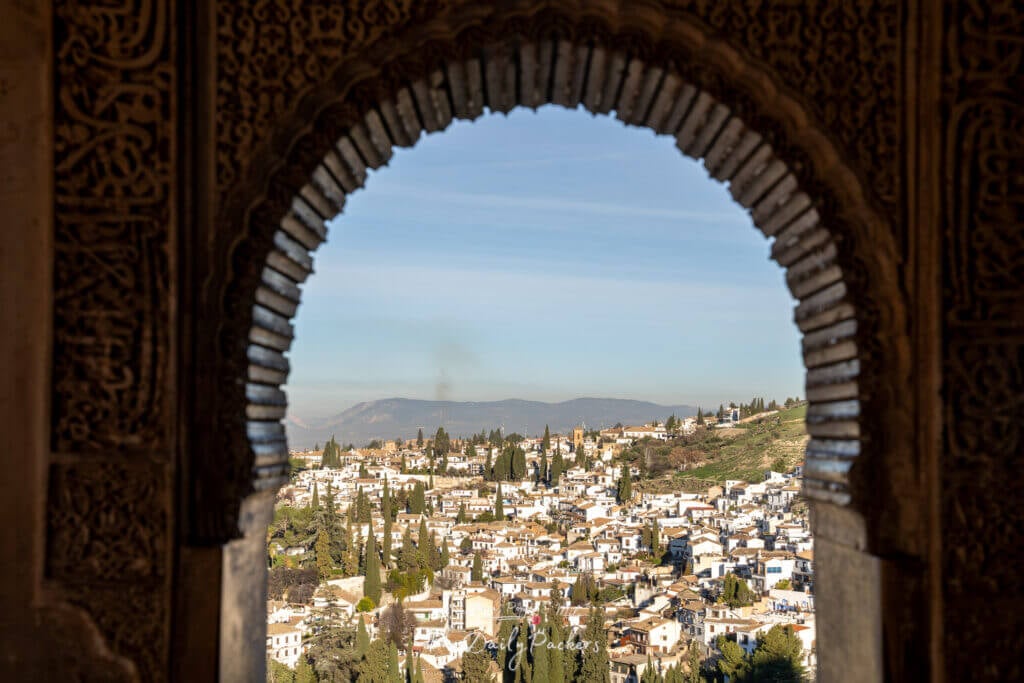
Climb the Torre de la Vela for some of the best views in Granada. From up there, you can see the Albaicín neighbourhood spreading across the hill, the cathedral rising in the distance, and the snow-tipped Sierra Nevada on clear days. The Alcazaba is all about open spaces and views — a nice change after the palaces and gardens.

Finish at the Palace of Charles V
Before you leave, walk through the Renaissance Palace of Charles V, right in the centre of the complex. The circular courtyard inside is unexpected — almost Roman in style — and completely different from the Moorish architecture around it.

You can explore the lower and upper levels or simply take a few minutes to enjoy the symmetry before heading back toward the exit.

Tickets & Opening Hours
The Alhambra Palace in Granada has strict daily limits, so sorting your tickets in advance is essential. It’s one of the most visited sites in Spain, and last-minute availability is rare — especially for the Nasrid Palaces.
Tickets
You can purchase tickets directly from the official website, but guided tours often make the experience smoother, especially if you like having context as you walk through the palaces. Here are the two most common options:
- Alhambra & Nasrid Palaces Tour with Tickets – 54€ – This includes a guided tour and guaranteed entry to the Nasrid Palaces. It’s ideal if you want someone to explain the history, details, and hidden corners you might otherwise miss.
- Alhambra and Nasrid Palaces Entry Ticket – 28€ – This is the standard general entry for the entire complex: Nasrid Palaces, Generalife Gardens, Alcazaba, and more. It’s perfect if you prefer exploring at your own pace.
Remember: your Nasrid Palaces entry time is fixed. If you miss that specific slot, you won’t be allowed inside. The rest of the complex can be visited freely before or after your scheduled entry.
Opening Hours: Hours vary by season, but the general schedule is:
- March to October: 8:30 am – 8:00 pm
- November to February: 8:30 am – 6:00 pm
Night visits are available on certain dates and usually begin around 10:00 pm in summer and earlier in winter.
Tip: Tickets sell out fast — especially the palace entries — so book at least a few days ahead. Morning slots offer the calmest experience and the best light inside the courtyards
Is it Worth It?
Absolutely — visiting the Alhambra Palace in Granada is one of those experiences that stays with you long after you’ve left Andalusia. Even if you’re not usually into palaces or historical sites, the Alhambra feels different. It’s a place where every detail matters: the light in the courtyards, the sound of water running through the channels, the views over Granada, and the intricate patterns covering walls that were crafted centuries ago.

For us, it became one of the highlights of our entire trip through southern Spain. The mix of Islamic and Renaissance architecture, the peaceful gardens, the fortress views, and the Nasrid Palaces all blend together in a way that feels timeless. You don’t rush the Alhambra — you wander, you look up, you slow down. And that’s really where the magic is.
Whether you’re in Granada for a day or a full week, the Alhambra of Granada is worth every minute (and every euro). It’s a masterpiece, and seeing it in person is something we’d recommend to anyone planning a trip to Andalusia.

Travel Tips
Visiting the Alhambra Palace in Granada is easy once you know what to expect, but a few small tips can make the whole experience smoother and far more enjoyable.
- Take Your Time: The Alhambra is bigger than it looks on the map, and rushing through it would be a shame. Give yourself at least half a day — ideally three to four hours — so you can enjoy the Nasrid Palaces, the gardens, and the viewpoints without feeling pressured.
- Arrive Early (or Go Late): The palace complex gets crowded fast. Early morning and late afternoon are the two calmest moments of the day, especially if you want to photograph the courtyards without tour groups passing through every minute.
- Bring Water and Something Light to Eat: There are very limited options inside the complex, and the walking paths can get hot in summer. Having a bottle of water and a small snack will save you from needing to rush out halfway through.
- Wear Comfortable Shoes: You’ll walk a lot — stone paths, stairs, gardens, viewpoints, and slopes. Good shoes make the experience much easier, particularly in the Alcazaba and the Generalife.
- Keep an Eye on Your Nasrid Palaces Time: This is the only part of the Alhambra with a fixed entry slot, and there’s no flexibility. Arrive 10–15 minutes early so you don’t have to run across the complex at the last minute.
- Take a Break in the Generalife Gardens: The Generalife has some of the calmest corners of the entire complex. Its shaded areas and flowing water make it a perfect place to sit down, breathe, and reset before continuing.
- Use the Official Entrance, Not the Side Gates: Some paths around the Alhambra look like shortcuts, but they don’t always lead to an entrance. For a smooth visit, follow signs to the main gate or the Generalife access area.
Tip: Tickets sell out fast — especially the palace entries — so book at least a few days ahead. Morning slots offer the calmest experience and the best light inside the courtyards
Where to stay
Granada offers a wide range of accommodations — from cozy family-run guesthouses to luxurious palaces with views of the Alhambra. Whether you’re a backpacker or looking for a romantic getaway, there’s something for every travel style and budget.
(€) Hotelito Suecia: A charming budget-friendly hotel just a short walk from the city center. The rooms are simple but comfortable, and some have balconies with beautiful city or mountain views. It’s a great choice if you’re looking for value and a quiet atmosphere.
(€€) NH Collection Victoria: This elegant 19th-century building sits right in the heart of Granada, close to the Cathedral and main attractions. The rooms are modern, the breakfast is excellent, and the location couldn’t be better for exploring the city on foot.
(€€€) Seda Club Hotel – Small Luxury Hotels – Small Luxury Hotels of the World: A luxury boutique hotel combining Andalusian charm with modern sophistication. Located near Plaza de la Trinidad, this hotel offers beautifully designed rooms, refined service, and a rooftop terrace perfect for evening drinks.

Here are all your accommodation options in Granada
About the authors
We are Alex and Tina, a French-Serbian couple who met in China back in 2014. We spent three incredible years there before making France our home. Our shared passion for travel has been the heartbeat of our relationship for over 12 years, taking us across 44 countries and counting.
We launched TheDailyPackers in 2019 as a way to document our adventures. In 2026, we reached a major milestone by officially turning our blog into our full-time job. While we are still growing toward financial independence through this platform, every article we write is fueled by our mission to make your voyages easier through in-depth guides, honest advice, and the lessons we’ve learned from our own mistakes.
Our journey has not been without its storms. In 2023, our world changed forever when our first son, Poppy, was stillborn on November 25th. It was, and remains, the hardest chapter of our lives. In 2025, we were blessed with our second little boy, Milo. He has since joined our traveling tribe, and you’ll be seeing him—and the reality of traveling with a little one-on the blog more and more.
We hope to inspire you to explore the world with curiosity and resilience. Thank you for being part of our story.
You may also like those related posts
Arnold Schwarzenegger Museum: A Must-Visit for Fans of the Terminator
TMB Stage 2: Guide from Les Contamines to Col de la Croix du Bonhomme
Plitvice Lakes: Croatia’s most beautiful park in 2 days
Sigiriya Lion Rock: Visit the famous Sri Lanka’s Icon
Sacred Valley of the Inca: An incredible 1-day adventure, Peru
Merzouga to Fes: Best Road to the Moroccan Alps in 1-Day
14 Best things to do in Toulouse, France, in 1 to 3 days
9 best things to do in Jericoacoara, Brazil, in 2 to 4 days
Pssst, did you know that…
If you purchase something through our links, we earn a small fee. However, you still pay the same. Win-win! And one day we may get to be full-time travel bloggers =)
Find Hotels with Booking.com
Do Yoga with KVY
Buy us a Coffee
Rent a car with DiscoverCars
Find Attractions with GetYourGuide
Find Flights with Expedia
Buy an eSIM with Airalo
Get insured with World Nomads
Get ready with Amazon.com