
Why You’ll Love Visiting Aveiro (Or Maybe Why You Won’t)
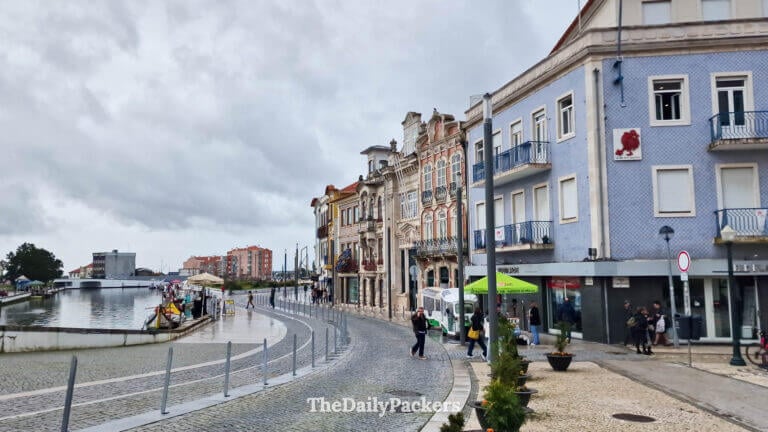
To be completely honest with you, Aveiro was probably the place we liked the least during our time in Portugal. You’ll often see it portrayed online as the “Venice of Portugal,” which sets some pretty high expectations. When we arrived, we didn’t feel like it quite lived up to the hype. Yes, there are a few canals, some cute streets, and beautiful buildings, but it didn’t feel like a “fairytale” in the way places like Colmar in France do.
The city isn’t very large, and you’ll notice cars are pretty much everywhere, which takes away from that magical canal-side vibe you might be expecting. However, every traveler is different! We visited on a cold, rainy day, which definitely didn’t show the city in its best light.
You might love Aveiro if you enjoy Art Nouveau architecture, colorful tiled facades, and a laid-back atmosphere. It’s also incredibly stroller-friendly because it’s so flat, a rare find in Portugal! We’re writing this guide so you know exactly what to expect and can decide if it’s worth the detour for you.

Best Things to Do in Aveiro & Costa Norte
Traditional Moliceiro Boat Tour
If you want to see the city from its most famous perspective, you have to hop on a traditional Moliceiro boat. These slender, colorful vessels were originally designed to harvest moliço (seaweed) from the lagoon to use as fertilizer. Today, they are the icons of Aveiro.
You’ll start your journey along the Central Canal, passing by the striking Art Nouveau buildings that line the water. The tour takes you through the heart of the city, from the Rossio garden to the old Capitania building. One of the coolest parts is cruising down the Canal das Pirâmides. If you visit in the summer, you’ll see the “pyramids” of salt, white mounds drying in the sun, which are a huge part of the local heritage. We skipped the ride because of the heavy rain, but it’s definitely the best way to get your bearings when you first arrive.

Ponte dos Laços de Amizade (Friendship Bridge)
While many cities have “Love Lock” bridges, Aveiro does things a bit differently with the Bridge of Friendship Ribbons. Instead of heavy metal padlocks, thousands of colorful fabric ribbons are tied to the railings, fluttering in the breeze.
It’s a much more vibrant and eco-friendly way to leave a memory behind. You can buy ribbons at nearby shops, write your names or a message on them, and tie them to the mesh. It’s located right over one of the main canals, making it a perfect spot for a photo with the Moliceiro boats passing underneath.

Explore the City Center (Beira Mar & Historical Sites)
You should definitely spend some time wandering through the Beira Mar neighborhood, which is the soul of old Aveiro. This is where you’ll find the Obelisco da Liberdade and the Capela de São Gonçalinho, a tiny chapel dedicated to the city’s patron saint of salt-workers and fishermen.
The streets of Averio are lined with houses covered in intricate traditional tiles (azulejos). We enjoyed just getting lost in these alleys because they feel much more “real” than the main tourist canal.

Circular Pedestrian Bridge (Ponte Pedonal Circular)
For a bit of modern flair, you should head over to the Circular Pedestrian Bridge, often called the “Loop Bridge” by travelers. Unlike the traditional bridges in town, this one is a perfect metallic circle that sits over the junction of two canals. It’s designed so that you can walk the full perimeter, giving you a 360-degree view of the water and the city skyline.
It’s especially great if you’re traveling with a stroller, as we were, because the ramps are wide and smooth. It connects the residential areas with the path leading toward the salt pans, making it a natural stop on your walk.

Salineras (The Salt Pans)
You shouldn’t leave Aveiro without visiting the salt pans, or salinas. For centuries, this area was one of the most important salt-producing hubs in Portugal. Even today, you can see the traditional methods in action. As you walk toward them, you’ll see vast, shallow basins where seawater evaporates to leave behind what locals call “white gold.”
If you visit during the sunnier months, the landscape is dotted with hundreds of small white salt pyramids drying in the sun.

Forum Aveiro
Now, we aren’t usually the type of people to suggest a shopping mall as a “must-do,” but Forum Aveiro is an exception. It was the first open-air shopping center in Portugal, and it’s beautifully integrated into the city’s canal system. Instead of a dark, enclosed building, it’s full of gardens, stone paths, and fresh air.
We found it to be a very convenient spot because we parked at Estacionamento Forum Aveiro, which puts you right in the heart of everything.

Relax in the Parks
If you need a break from the stone streets and canals, you should head to the city’s green lung. Infante Dom Pedro Park is a beautiful spot with a very romantic, old-school feel. It features a large lake where you can see ducks paddling around, stone bridges, and even a charming gazebo. It’s the kind of place where you’ll see local families taking a Sunday stroll or students from the nearby university relaxing between classes.
Right next to it is the Parque da Baixa de Santo António. These parks are connected, and together they offer plenty of shade and wide paths. Since Aveiro is so flat, these parks are incredibly easy to navigate with a stroller.

Sé Catedral de Aveiro (Aveiro Cathedral)
Located right in the heart of the city near the Santa Joana Museum, the Aveiro Cathedral (also known as the Church of St. Dominic) is one of the best things to do in Aveiro. While the outside might look a bit plain compared to some of the flashy tiled buildings in town, you should definitely step inside.
The cathedral was founded in the 15th century as part of a Dominican convent, and you can really feel that sense of history when you walk through the quiet nave. One of the highlights is the bell tower and the beautiful limestone portal.

Costa Nova (Casas Típicas da Costa Nova)
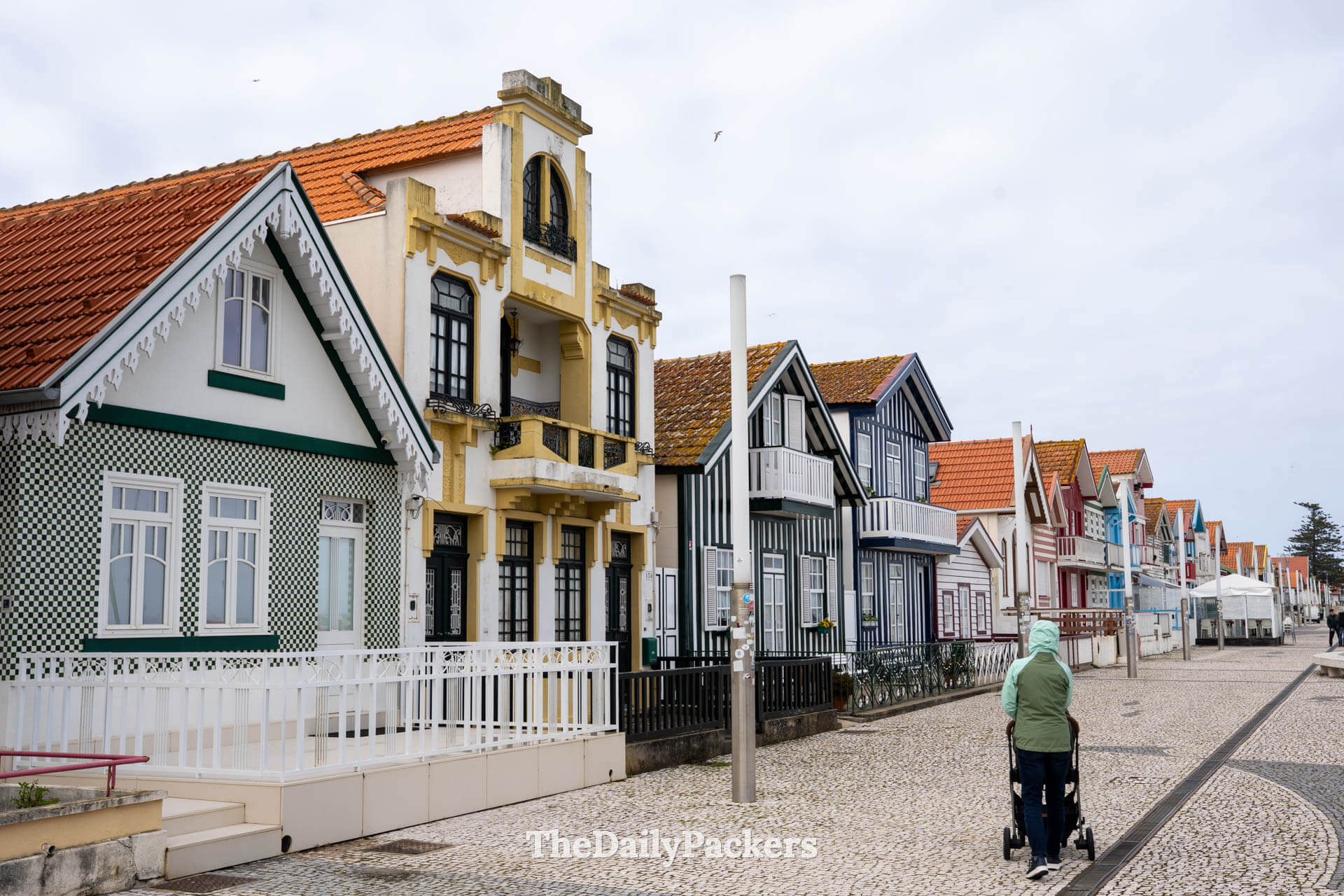
Just a short 15-minute drive or bus ride from Aveiro’s center, you’ll find Costa Nova, which was actually the highlight of the area for us. You’ve probably seen photos of the famous “Palheiros”, these adorable wooden houses painted with bright, colorful stripes (usually red, blue, or green). Historically, these were built by fishermen to store their nets and equipment, and later they were used as vacation homes.

It’s important to know that these famous houses only cover a stretch of a few hundred meters along the main lagoon-side road. It’s a very quick stop, but if you love photography or architecture, it’s a must.
We had a great time walking along the promenade with the stroller, admiring the patterns. Even on a cloudy day, the colors really pop and make the whole place feel cheerful!

Costa Nova (Praia Nova & the Atlantic Coast)
If you walk just a couple of blocks behind the striped houses, the scenery changes completely. You’ll find yourself facing the Atlantic Ocean at Praia Nova. This is a massive, wild beach with long wooden boardwalks stretching across the sand dunes. It’s absolutely beautiful, but you should be prepared for the wind!
When we visited at the end of February, the wind was so strong that it was a bit too much to stay long with Milo. However, if you are visiting in the summer, it’s a fantastic place to spend a few hours.

The Perfect Itinerary: How to Spend Your Days
Since Aveiro and Costa Nova are quite compact, you don’t need much time to see the highlights. In our opinion, the best way to experience this area is as a well-planned day trip. Here is how you can structure your day to make the most of it:
Start your morning by leaving Porto. On your way you can make a quick stop at the Capela do Senhor da Pedra. This is a tiny, hexagonal chapel built right on the rocks in the middle of the beach at Miramar.

Then head to the center of Aveiro. We recommend parking at Estacionamento Forum Aveiro so you are right where the action is. Then head to the Central Canal. This is the best time to hop on a Moliceiro boat tour while the light is soft and the crowds are thinner. After your cruise, take a slow walk through the Beira Mar neighborhood to see the tiled houses and the Fish Market (Mercado do Peixe).

If you want something unique and Instagram-friendly for lunch, head to M Bakery Aveiro. We had an amazing brunch there; the rose-themed decoration is stunning and their croissants are some of the best we’ve had.

After lunch, drive 15 minutes out to Costa Nova. Spend an hour walking along the main road to see the famous striped houses and take your photos. Once you’ve seen the “palheiros,” cross over to the beach side. Walk along the wooden boardwalks of Praia Nova to feel the Atlantic breeze. If it’s a sunny day, it’s a great spot to just sit and watch the waves.
On your way out, make a quick stop at the Salinas (salt pans) on the edge of Aveiro to see the salt pyramids before heading to your next destination.


The Best Time to Visit: Weather & Local Events?
The best time for you to visit Aveiro and Costa Nova is generally between April and September. This is when you’ll find the most sunshine and the best conditions for a boat tour or a walk along the dunes. Since Aveiro is on the coast, it stays a bit cooler than the inland cities, which is great if you aren’t a fan of the intense Portuguese heat.
- Spring (March – May): A lovely time to visit with blooming flowers and fewer crowds. Temperatures average around 15°C to 20°C (59°F – 68°F). You might get some light rain showers, but it’s generally very pleasant for walking.
- Summer (June – August): This is the peak season. Expect the city to be buzzing and the salt pans to be at their most active. Temperatures sit comfortably around 20°C to 27°C (68°F – 81°F). The Atlantic breeze keeps things from getting too hot, but the boat tours have no shade, so bring a hat!
- Autumn (September – November): The weather starts to cool, with temperatures averaging 13°C to 20°C (55°F – 68°F). September is still great, but by November, the “monsoon” vibes can kick in with more frequent rain and wind.
- Winter (December – February): This is the quietest and wettest time. Temperatures range from 8°C to 15°C (46°F – 59°F). As we experienced, a rainy winter day can make the city feel a bit gloomy, and the wind at Costa Nova can be quite harsh.


Tip: We recommend traveling around Portugal in April, May, June, or September. And be sure to download the IPMA App for the most accurate weather forecast in Portugal.
How to Get to Aveiro
The easiest way for you to reach Aveiro is by taking a day tour from Porto, which is what we did on our own. It’s a great way to see the city and the coast without worrying about the logistics, especially if you’re short on time. If you prefer to be independent, you have several solid options.
If you are traveling by car, it is a very straightforward drive and likely the best way to visit if you are using Aveiro as a pit stop between Porto and Coimbra. You can find convenient parking right in the heart of the city at Estacionamento Forum Aveiro or Estacionamento Saba Marquês de Pombal. For those of you driving, here is a little secret we discovered: keep an eye out for Bxpress Aveiro near the Fórum. It was the cheapest gas station we saw in all of Portugal, so it’s worth a stop to top up your tank.

For those traveling by public transport, the train is a fantastic choice. Aveiro is well-connected by the Portuguese rail network, and you can easily catch a train from Porto’s São Bento or Campanhã stations. The ride usually takes about an hour, making it perfect for a DIY day trip.
If you want everything organized for you, there are some great day tours from Porto. We recommend the Aveiro, Cruise, Costa Nova & Capela da Pedra Full Day tour, which covers most of what we’ve discussed. If you are feeling more adventurous and aren’t traveling with small kids, you might prefer the tour that combines Aveiro with the Paiva Walkways and the famous Suspension Bridge.


We recommend to rent a car through Discover Cars with free cancellation. Book your rental car here.
Getting Around the City Like a Local
Once you arrive, you’ll find that Aveiro is a very compact and walkable city. You won’t need much more than your own two feet to see the main sights. One of the best things for families is that Aveiro and Costa Nova are incredibly stroller-friendly. Because the city is so flat, you won’t be struggling with the typical steep hills or endless stairs that you usually find in Portuguese cities like Lisbon or Porto.
To get the most iconic view of the city, you should definitely take a Traditional Moliceiro Boat Tour through the canals. It’s the best way to see the Art Nouveau buildings and the salt pyramids from the water.
To reach Costa Nova from the city center, it’s just a quick fifteen-minute trip. If you don’t have your own car, you can easily hop on a local bus or grab a quick Bolt or Uber.
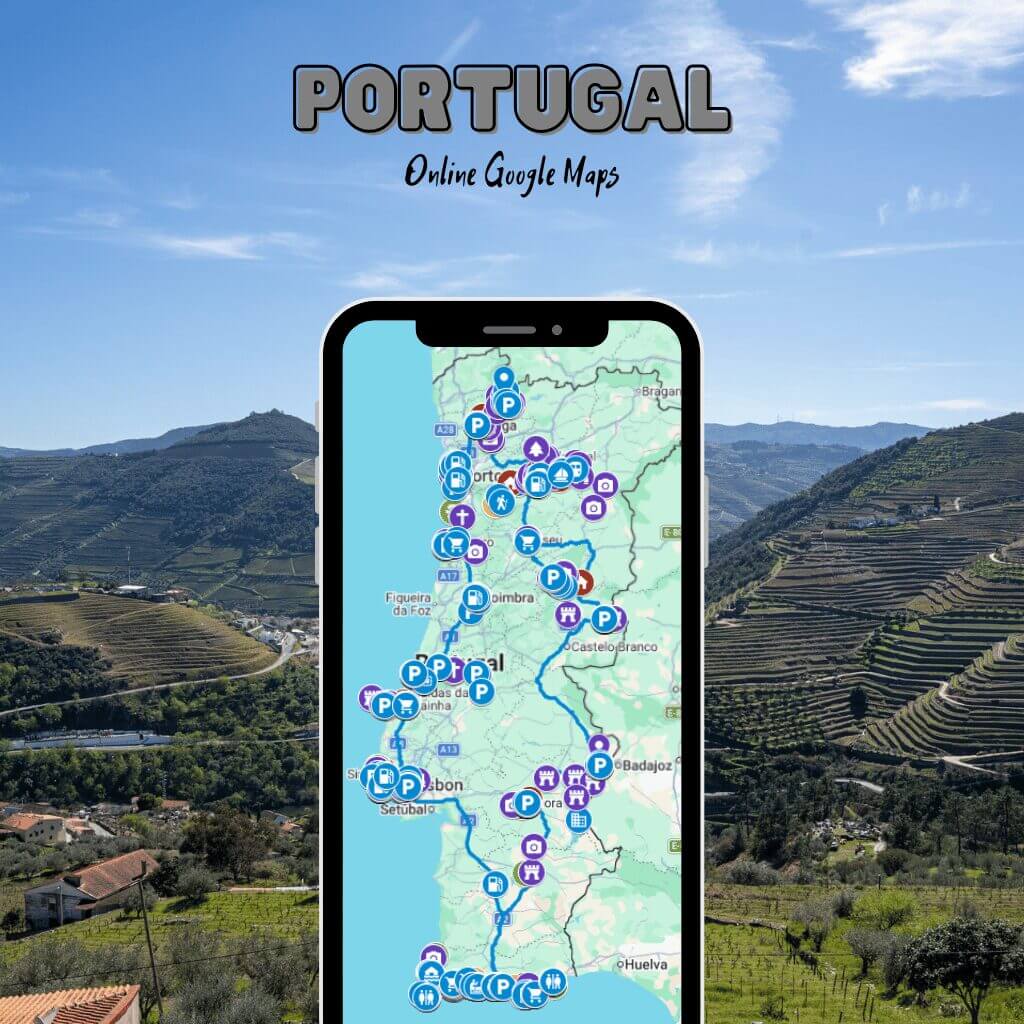
Be sure to check out our Google Maps of Portugal, which includes over 1,000 pins for all the locations you may need.

Where to stay
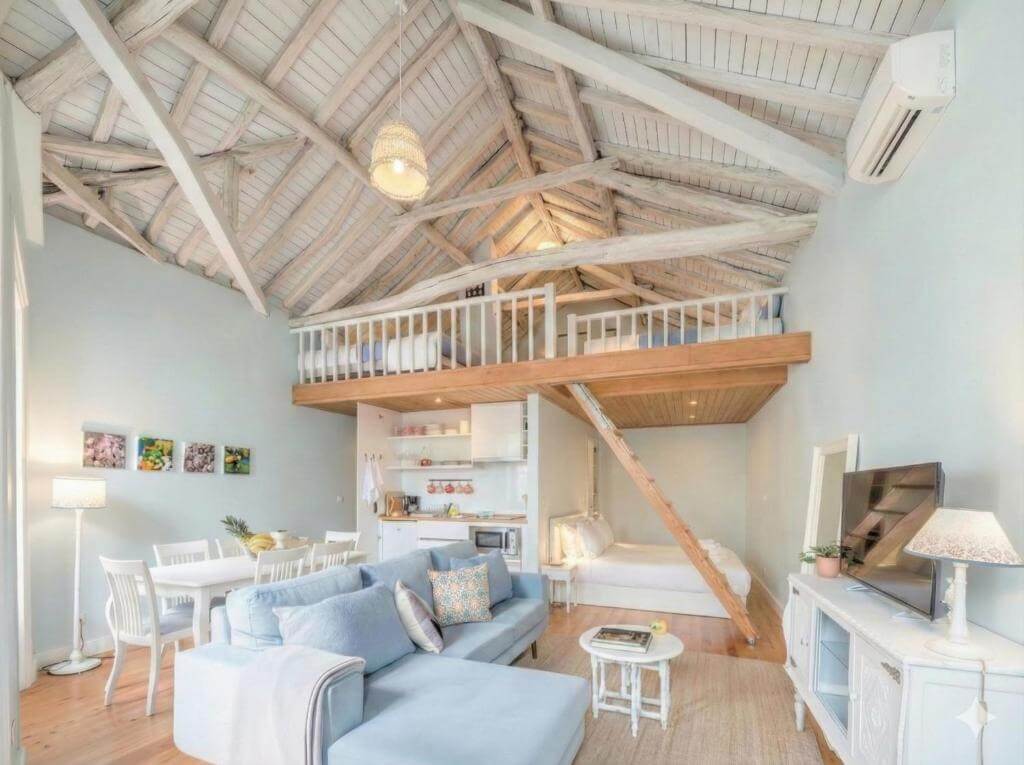
Since you’ll be using Porto as your home base and visiting Aveiro as a day trip, finding the right place to rest your head in the “Big City” is key. We’ve scouted some incredible spots in Porto that feel more like homes than cold hotel rooms, which makes such a difference when you’re traveling as a family or just want some space to spread out.
bnapartments Carregal: This place is a total hidden gem. It’s set in a renovated 17th-century palace. The absolute highlight here is the outdoor swimming pool and the quiet garden, it’s a rare sanctuary right in the city center where you can escape the hustle for a bit.
Village Aparthotel by BOA: If you like contemporary design, you’ll love this spot. It’s a group of beautifully converted townhouses that feel like a tiny, stylish village within the city. The interiors are a mix of Japanese and Scandinavian styles (very “Japandi”), and the attention to detail is amazing, they even have popcorn machines and organic tea kits in the rooms. It’s located right in the bustling Bolhão area, so you’re seconds away from the market.
Look At Me Serviced Lofts & Studios: This is the perfect choice if you want to be as central as possible. It’s literally steps away from the Trindade Metro station (ideal for getting to and from the airport) and the Avenida dos Aliados.
Where to eat
We absolutely loved our time at M Bakery Aveiro. It is a uniquely decorated coffee shop filled with roses and floral accents that make it feel like a secret garden. We had a delicious brunch here, and we can honestly say their croissants are incredible, perfectly flaky and fresh. It’s a great spot to relax and recharge, and the coffee is top-notch too.
If you are looking for a spot to unwind in the late afternoon, Wine Wings Bar is a fantastic choice. It has a great selection of local Portuguese wines and a very welcoming atmosphere. It’s the kind of place where you can sit back, enjoy a glass of Vinho Verde, and just soak in the local vibe.
For a quick caffeine fix or a light snack, Porta do Café is another solid local spot. It’s cozy and friendly, making it a great stop if you’re wandering through the center and need a quiet moment away from the main tourist paths.

What No One Tells You
Even though Aveiro is often called the “Venice of Portugal,” there are a few things you should know before you go so your expectations are in the right place. First of all, while the canals are beautiful, they are much more limited than you might think. Unlike the real Venice or even the fairytale town of Colmar in France, Aveiro is a modern, functioning city. This means you will see cars parked along the canals and modern buildings mixed in with the historic ones, which can take away a bit of that “stuck in time” feeling.
Another thing to keep in mind is the weather. Because it’s located right by the lagoon and the Atlantic, Aveiro can be quite damp and windy. We visited on a rainy day, and it completely changed the city’s vibe. If you’re heading to Costa Nova, the wind can be incredibly strong, even when the sun is out. If you’re traveling with a little one like we were, make sure to bring a windbreaker or an extra layer, as the temperature can drop quickly once you get near the dunes.
Finally, while the “striped houses” are the star of the show on social media, they only cover a very small stretch of the town. You’ll probably spend more time looking for a parking spot than it takes to walk past all the famous houses! It is still absolutely worth the 15-minute drive from Aveiro, but just know it’s a quick photo stop rather than a place to spend an entire afternoon.

What it Costs: Budgeting for Your Day
To give you a realistic idea of what to expect for your wallet, here is a breakdown of our spending during our day trip. Keep in mind that prices can fluctuate, but this should help you plan your budget.
For food and drinks, we spent about 31.70€ at M Bakery for a full brunch. This was one of our bigger treats because the place is so unique, but it was worth every cent for the quality and the atmosphere.
If you’re driving from Porto as we did, you’ll need to factor in fuel and parking. We spent 54.54€ on fuel, though we filled up the whole tank at Bxpress because it was so cheap. Parking in the heart of the city at the Fórum cost us 4.50€, which is quite reasonable for the convenience.
If you decide to do the classic tourist activities, a Traditional Moliceiro Boat Tour is 14€ per person. It’s a standard price across most operators in the city center.
Overall, for a couple or a small family, you can have a very full and exciting day in Aveiro and Costa Nova for around 100€ to 120€, including your transport from Porto and a nice meal.


About the authors
We are Alex and Tina, a French-Serbian couple who met in China back in 2014. We spent three incredible years there before making France our home. Our shared passion for travel has been the heartbeat of our relationship for over 12 years, taking us across 44 countries and counting.
We launched TheDailyPackers in 2019 as a way to document our adventures. In 2026, we reached a major milestone by officially turning our blog into our full-time job. While we are still growing toward financial independence through this platform, every article we write is fueled by our mission to make your voyages easier through in-depth guides, honest advice, and the lessons we’ve learned from our own mistakes.
Our journey has not been without its storms. In 2023, our world changed forever when our first son, Poppy, was stillborn on November 25th. It was, and remains, the hardest chapter of our lives. In 2025, we were blessed with our second little boy, Milo. He has since joined our traveling tribe, and you’ll be seeing him—and the reality of traveling with a little one-on the blog more and more.
We hope to inspire you to explore the world with curiosity and resilience. Thank you for being part of our story.
You may also like those related posts
Plitvice Lakes: Croatia’s most beautiful park in 2 days
19 Best things to do in Nimes, France, in 3 days or more
7 Best Christmas Markets in Alsace, France
Lagoinha do Leste: Hike to Florianópolis’ Hidden Lagoon
12 best things to do in Osaka, Japan, in 4 days or more
Arequipa to Puno: A scenic 6-Hour Bus Guide
7 best Resorts in the Maldives to stay at in 2025
24 Best things to do in Riga, Latvia, in 2 days or more
Pssst, did you know that…
If you purchase something through our links, we earn a small fee. However, you still pay the same. Win-win! And one day we may get to be full-time travel bloggers =)
Find Hotels with Booking.com
Do Yoga with KVY
Buy us a Coffee
Rent a car with DiscoverCars
Find Attractions with GetYourGuide
Find Flights with Expedia
Buy an eSIM with Airalo
Get insured with World Nomads
Get ready with Amazon.com