

Introduction
Beijing, also known as Peking, is the capital of the People’s Republic of China and one of the most dynamic cities in the world and in Asia. Home to over 21 million people and spanning more than 16,400 km², it holds the title of the world’s most populous capital.
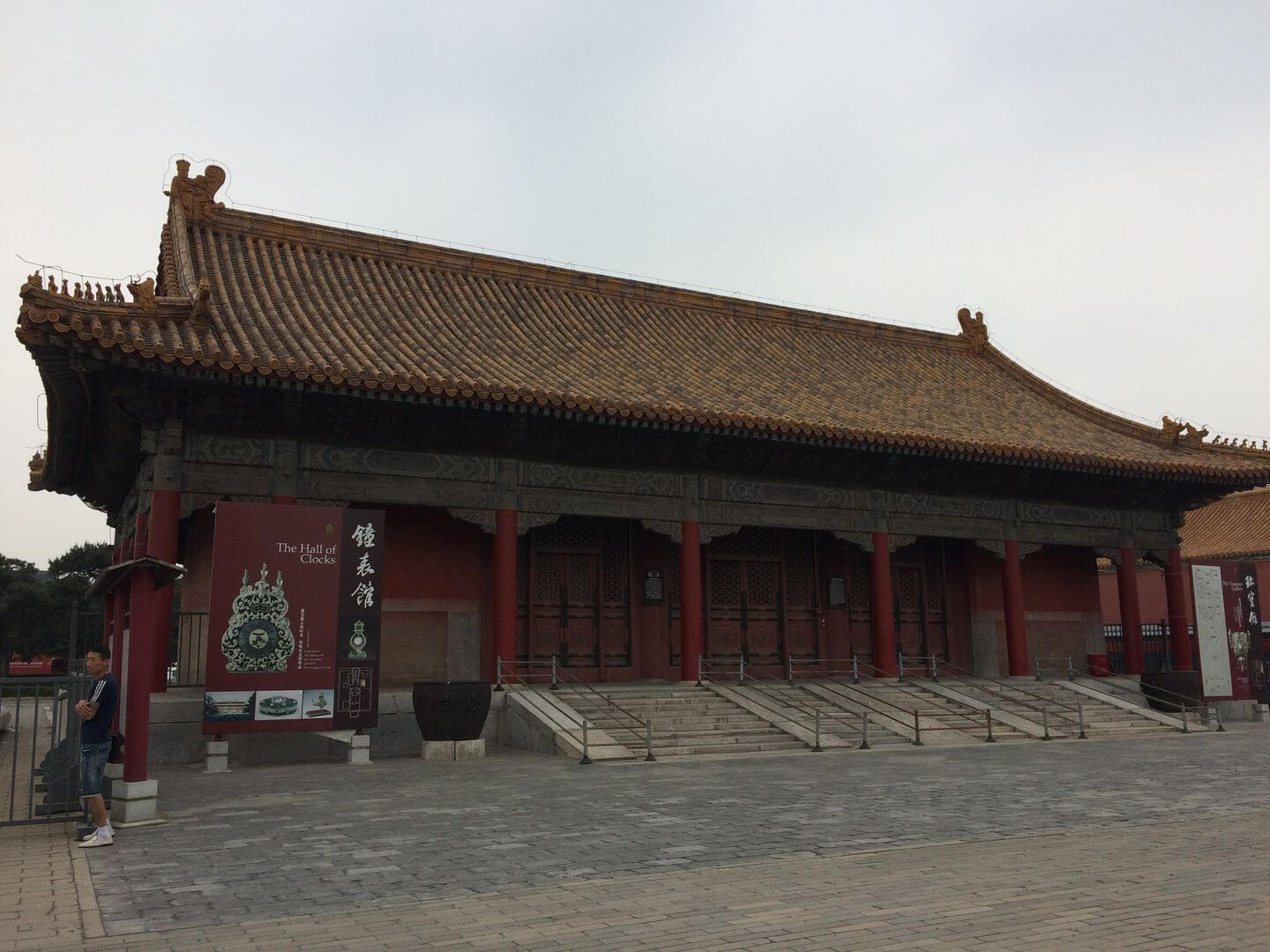
Steeped in history and culture, Beijing boasts an incredible seven UNESCO World Heritage Sites, including the iconic Forbidden City, the Temple of Heaven, the Summer Palace, the Ming Tombs, the archaeological site of Zhoukoudian, and parts of both the Great Wall and the Grand Canal.
You won’t run out of things to do here. From exploring ancient imperial palaces to trying some of the best food in China, Beijing is a city that truly blends the traditional and the modern. It was also one of our favorite cities in China — and the Great Wall? Absolutely breathtaking, especially the quieter, more remote sections.
Getting there
Getting to Beijing is easier than ever, thanks to its well-developed international connections and world-class infrastructure. Whether you’re arriving by plane, train, or bus, this vibrant capital city is incredibly accessible from almost anywhere in the world.
By Air: The most common way to get to Beijing is by flying into one of its two major international airports:
- Beijing Capital International Airport (PEK) – Located about 30 km from the city center, this is the main hub and handles the majority of international flights.
- Beijing Daxing International Airport (PKX) – The newer airport, about 46 km south of the city, is a stunning architectural feat and serves many international and domestic routes.
Both airports are well-connected to the city via express trains, metro lines, and taxis.
By Train: China’s high-speed rail network is extensive and efficient. You can reach Beijing from most major cities, including Shanghai, Xi’an, Guangzhou, and Hong Kong via high-speed trains (G and D class). The main train stations in Beijing are:
- Beijing South Railway Station (for high-speed trains)
- Beijing West Railway Station (for long-distance and regional trains)
- Beijing Railway Station (older, central location for domestic trains)
By Bus: Long-distance buses also operate from nearby cities and provinces, but for most travelers, trains and flights are faster and more convenient.

Moving around
Moving around Beijing is convenient and efficient, especially with its extensive public transportation system:
- Subway: The Beijing Subway is the best way to get around. It’s fast, affordable, and connects all major attractions including the Forbidden City, Summer Palace, and Temple of Heaven. Trains run from around 5:30 AM to 11 PM, and tickets typically cost between 3–6 RMB depending on the distance.
- Bus: Buses cover more ground but are less foreigner-friendly due to limited English signage. Still, they’re cheap (usually 2 RMB with a transport card) and can take you to places not served by the subway.
- Taxi & Ride-hailing: Taxis are plentiful and affordable but drivers often don’t speak English. Use a translation app or show your destination in Chinese. Didi (China’s version of Uber) is also widely used and can be booked in English via its app.
- Bike-sharing: Apps like Meituan and HelloBike offer easy access to dockless bikes. You can ride through Beijing’s historic hutongs and parks, just be cautious of traffic.
- Walking: Many of Beijing’s historic districts like Nanluoguxiang or around the Forbidden City are best explored on foot — but always be prepared for long distances and bring comfy shoes.
When to visit
Beijing is a year-round destination, but the best time to visit depends on the kind of experience you’re looking for. Whether you want to explore ancient palaces, hike the Great Wall, or enjoy vibrant local festivals, each season brings its own charm.
- Spring (April–June): One of the best times to visit Beijing. Expect mild temperatures (15–25°C / 59–77°F), blooming flowers, and relatively clear skies. It’s perfect for exploring historical sites like the Forbidden City or enjoying scenic walks in parks and temples. Fewer crowds than summer and pleasant weather make it a top pick for travelers.
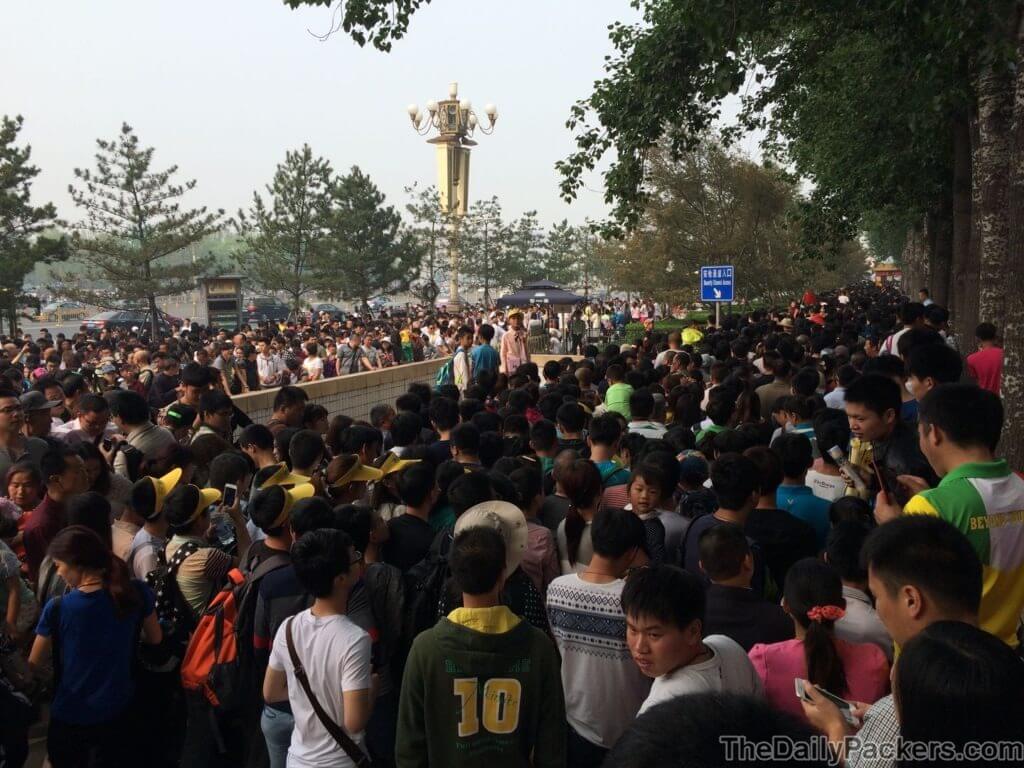
- Summer (July–August): Hot and humid, with temperatures reaching 30–35°C (86–95°F). This is peak tourist season, especially for domestic travel, so major sites like the Great Wall and Summer Palace get very crowded. It’s also the season for local festivals like the Dragon Boat Festival. Be sure to book accommodation and tickets in advance, and start your sightseeing early to avoid the heat.
- Autumn (September–October): The ideal season to visit Beijing, with crisp air, blue skies, and temperatures ranging from 15–25°C (59–77°F). Fall foliage colors the parks and the Great Wall, making this the most scenic time of year. Do note: the first week of October is China’s National Day Golden Week — the busiest travel period of the year. Avoid it if you can.
- Winter (November–March): Cold and dry, with temperatures often below 0°C (32°F), especially in January and February. While not ideal for everyone, it’s a peaceful time to explore the city without the crowds. Plus, snowy views of the Great Wall are absolutely magical. Chinese New Year (late Jan or early Feb) brings traditional decorations and events — but also higher local travel activity.
For the best mix of great weather, fewer crowds, and clear skies, aim to visit Beijing in late April, May, September, or early October. But no matter when you go, try to avoid major national holidays like Golden Week or Chinese New Year if you prefer smaller crowds and smoother travel. If your trip does fall during those times, book transportation and hotels well in advance to avoid disappointment.
Where to stay
Staying in Beijing for 3 to 4 days will give you a great introduction to the city’s rich history, culture, and modern energy. Whether you’re looking for stylish comfort, luxury, or something atmospheric and central, there are plenty of excellent places to stay. Here are some of our favorites:
(€) Happy Dragon Saga Hotel Beijing Tian’AnMen Forbidden City: A charming and affordable boutique hotel just a short walk from the Forbidden City. The rooms are modern, and the rooftop terrace is a peaceful bonus in such a busy city. It’s a great pick if you want comfort, convenience, and good value.
(€€) Legendale Hotel Beijing: Located near Wangfujing shopping street, Legendale Hotel is full of character, with French-style decor, grand staircases, and opulent touches throughout. This hotel blends luxury with old-world charm — ideal for travelers wanting a unique, elegant experience.
(€€€) Waldorf Astoria Beijing: If you’re in the mood to splurge, the Waldorf Astoria offers exceptional service and stunning interiors. Tucked into the heart of the city, it’s a quiet retreat from the urban buzz, with luxurious rooms, an indoor pool, and one of the best breakfasts in town.

What to eat
No trip to Beijing is complete without diving into its rich and flavorful food scene. From iconic dishes to comforting street bites, here are a few must-tries during your stay:
- Peking Duck at Siji Minfu: This is the dish to try in Beijing. Siji Minfu is one of the most beloved spots for authentic Beijing roasted duck — crisp skin, tender meat, and all the traditional fixings. Make sure to reserve ahead; it’s popular with both locals and visitors.
- Jiaozi (Chinese Dumplings): Whether steamed, boiled, or pan-fried, dumplings are everywhere in Beijing. Filled with pork, veggies, or shrimp, they’re the perfect quick snack or comforting meal — especially when dipped in black vinegar and chili oil.
- Jing Jiang Rousi (Shredded Pork in Beijing Sauce): A delicious stir-fried dish of shredded pork in a sweet bean sauce, typically served with thin tofu or pancakes to wrap it in. It’s simple, savory, and addictive.
- Zhajiang Mian (Noodles with Soybean Paste): Thick wheat noodles topped with a rich, salty fermented soybean paste and shredded vegetables. It’s a hearty local favorite and perfect for a casual meal.
And of course, don’t miss out on the street food. Beijing’s food stalls offer everything from grilled skewers to sweet hawthorn snacks and sesame pancakes. The local flavors are often milder than in southern China, so it’s a great place to experiment — if something looks (and smells) good, go for it!

Things to do in Beijing
Hike the Great Wall at Jinshanling
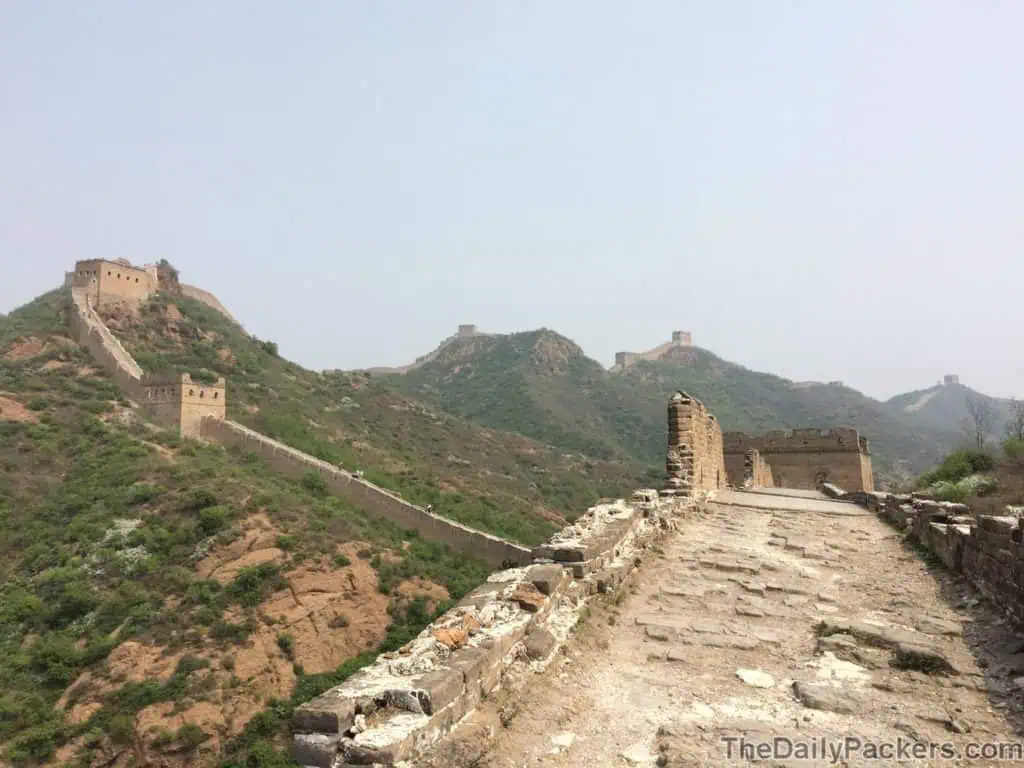
The Jinshanling section of the Great Wall might not be the closest to Beijing, but it’s undoubtedly one of the most breathtaking stretches. Unlike the heavily restored and often crowded parts near the capital, Jinshanling offers a more authentic and rugged experience — with panoramic views, crumbling watchtowers, and far fewer tourists.

This section hasn’t been fully restored, which makes it feel more adventurous and photogenic. It’s the perfect choice if you’re looking for a peaceful hike with stunning scenery.
While there are direct buses from Beijing to Jinshanling, they can be tricky to catch and operate with limited frequency. The easiest and most reliable way to visit is by joining an organized tour, which takes care of the transport and allows you to just focus on enjoying the day.
Pro tip: We actually tried to go on our own, missed the bus, got picked up by a black taxi (unofficial ride), and eventually had to negotiate with a tourist group to catch their return bus back to Beijing. It turned out to be an unforgettable adventure — but if you prefer a smoother day, definitely consider booking ahead!

Visit a Hutong – Step Into Old Beijing
One of the best ways to connect with Beijing’s traditional charm is to explore a hutong — the narrow alleyways formed by lines of siheyuan (traditional courtyard homes). These atmospheric streets offer a glimpse into what everyday life looked like in old Beijing, long before the skyscrapers and mega malls arrived.

Strolling through a hutong is like stepping back in time. You’ll pass red-painted doorways, hidden courtyards, and locals playing chess or sipping tea. Some of the most popular hutongs to visit include Nanluoguxiang, Wudaoying, and the ones near the Bell and Drum Towers. They’re also dotted with cute cafés, street food stalls, boutique shops, and art galleries.

Start Your Day at Jingshan Park – A Panoramic Prelude to the Forbidden City
Before stepping into the grandeur of the Forbidden City, make your way to Jingshan Park, located just across from the palace’s north gate. This peaceful hilltop park offers one of the most stunning panoramic views over the rooftops of the Forbidden City — a perfect way to appreciate its immense scale and symmetry before exploring it up close.
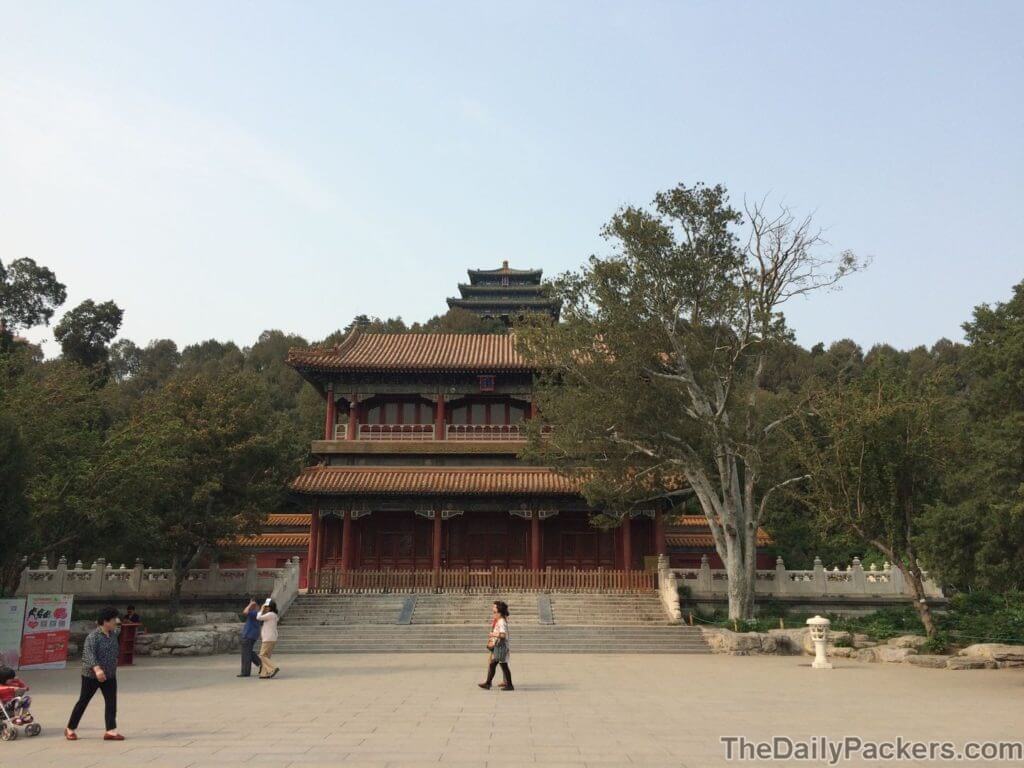
Climb to the top of the central pavilion for sweeping views of Beijing in every direction, from the palace complex to the Drum and Bell Towers in the distance. It’s especially beautiful in the morning when the light hits the golden rooftops and the crowds are still light.
Once you’ve taken it all in, walk downhill and head straight into the Forbidden City (also known as the Palace Museum) through its main entrance — ready to dive into centuries of imperial history.

Step into Imperial History at the Forbidden City (故宫 Gùgōng)
Discover the world of emperors at the Forbidden City, also known as the Palace Museum. This massive palace complex was the heart of imperial China for over 500 years, serving as the home and political center for 24 emperors from the Ming dynasty (beginning with the Yongle Emperor) through to the end of the Qing dynasty.
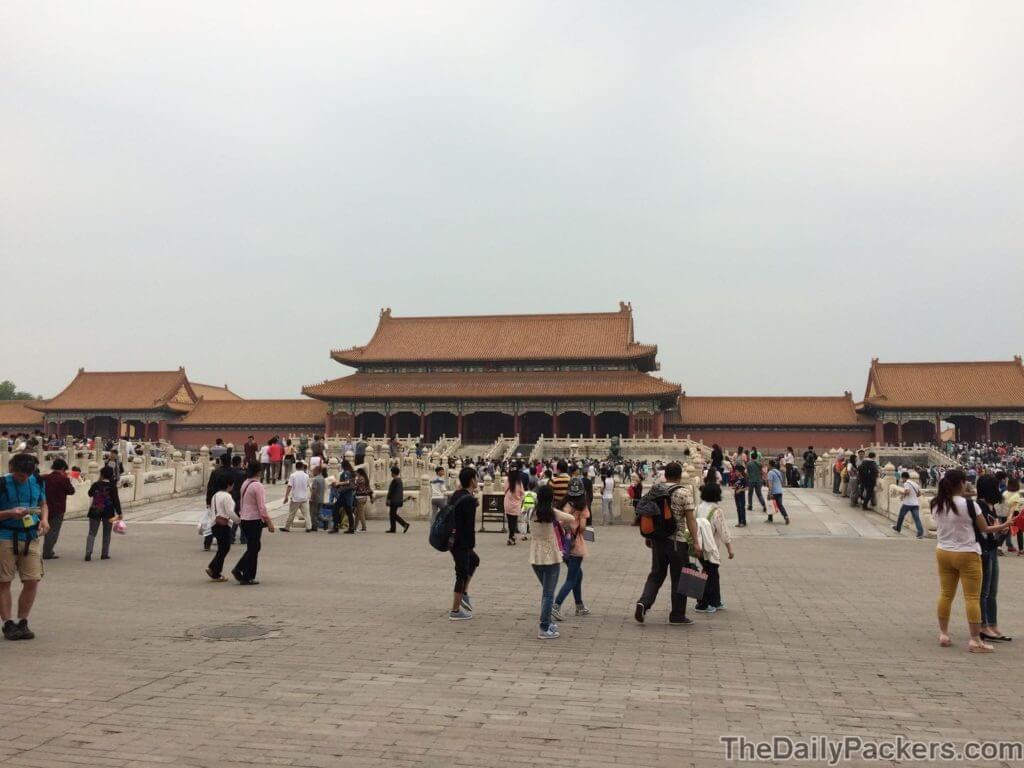
Built in 1420, the Forbidden City is one of the largest and best-preserved ancient wooden structures in the world. As you walk through its grand halls and vast courtyards, you’ll get a glimpse into the lives of emperors, empresses, and their households. The layout reflects ancient Chinese philosophy and showcases traditional architecture at its finest.

Make sure to rent an audio guide or join a tour — the stories hidden within these walls are what truly bring the place to life.

Walk Through History at Tiananmen Square
Make your way to Tiananmen Square, one of the most iconic and historically significant public squares in China — and the world. Located at the heart of Beijing, this vast open space is surrounded by monumental buildings and landmarks that reflect the story of modern China.
On the square, you’ll find the Monument to the People’s Heroes, a towering obelisk honoring those who fought for the country’s liberation. To the west stands the Great Hall of the People, home to China’s legislative meetings. On the east side is the National Museum of China, which holds extensive exhibitions on Chinese history and culture. And at the southern end lies the Mausoleum of Mao Zedong, where you can see the preserved body of the founding leader of the People’s Republic of China.

Stroll Through Qianmen Street and Step Back in Time
Just south of Tiananmen Square, Qianmen Street offers a unique blend of old-world charm and modern energy. This historic pedestrian avenue has been a bustling commercial hub for centuries and remains one of Beijing’s liveliest areas.
As you walk along the street, you’ll pass by Zhengyangmen, the old southern gate of Beijing’s inner city wall. This gate once served as a main entrance to the capital and now stands as a striking reminder of the city’s imperial past.

Qianmen is lined with a mix of traditional teahouses, souvenir shops, and modern brand stores, all set within beautifully restored architecture. Hop on the vintage-style tram if you want a fun ride down the street, or simply wander and soak in the atmosphere.
It’s a great place to grab a bite, shop for local goods, or just people-watch in one of Beijing’s most dynamic historic quarters.

Shop and Snack Your Way Through Wangfujing
Wangfujing is one of the most famous shopping streets in Beijing — a vibrant, modern pedestrian avenue that blends high-end department stores with local flavor. With over 280 shops, it’s the perfect place to browse everything from luxury brands to traditional silk and tea.

But what really makes Wangfujing special is its street food scene. Just off the main road, you’ll find narrow alleys filled with vendors selling everything from candied hawthorn sticks to fried scorpions (yes, really). Whether you’re adventurous or just hungry, this is a must-do for food lovers visiting Beijing.
It’s lively both day and night, making it a great stop to shop, eat, and experience the pulse of modern Beijing.

Wander Through the Summer Palace — A Lakeside Imperial Escape
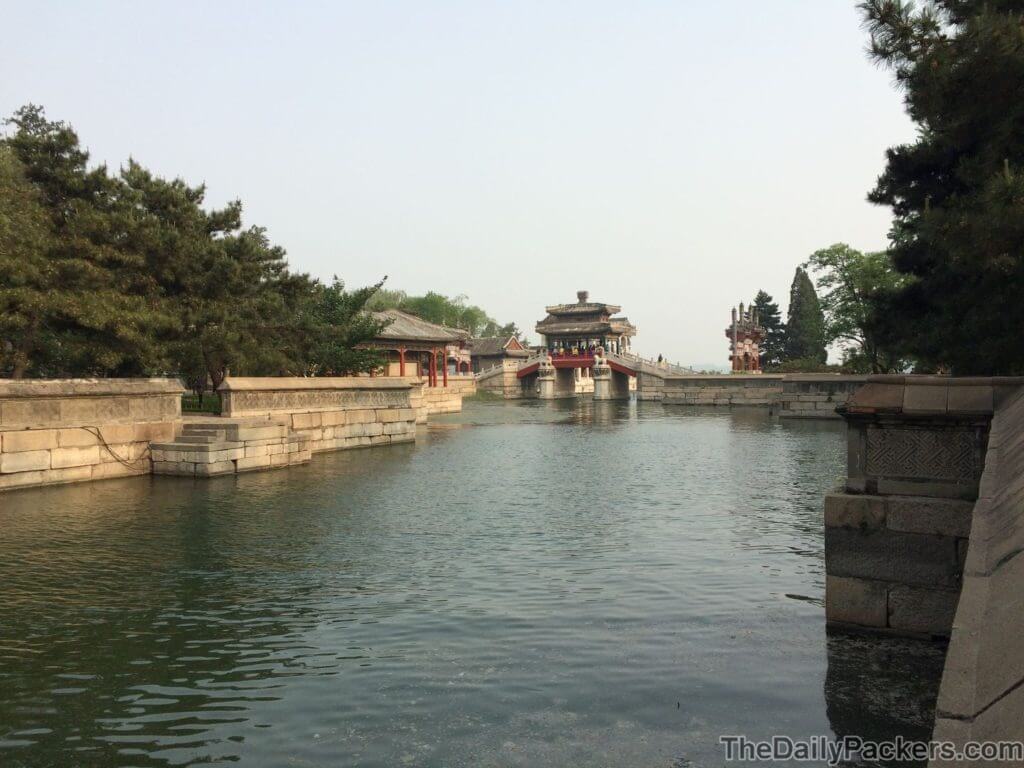
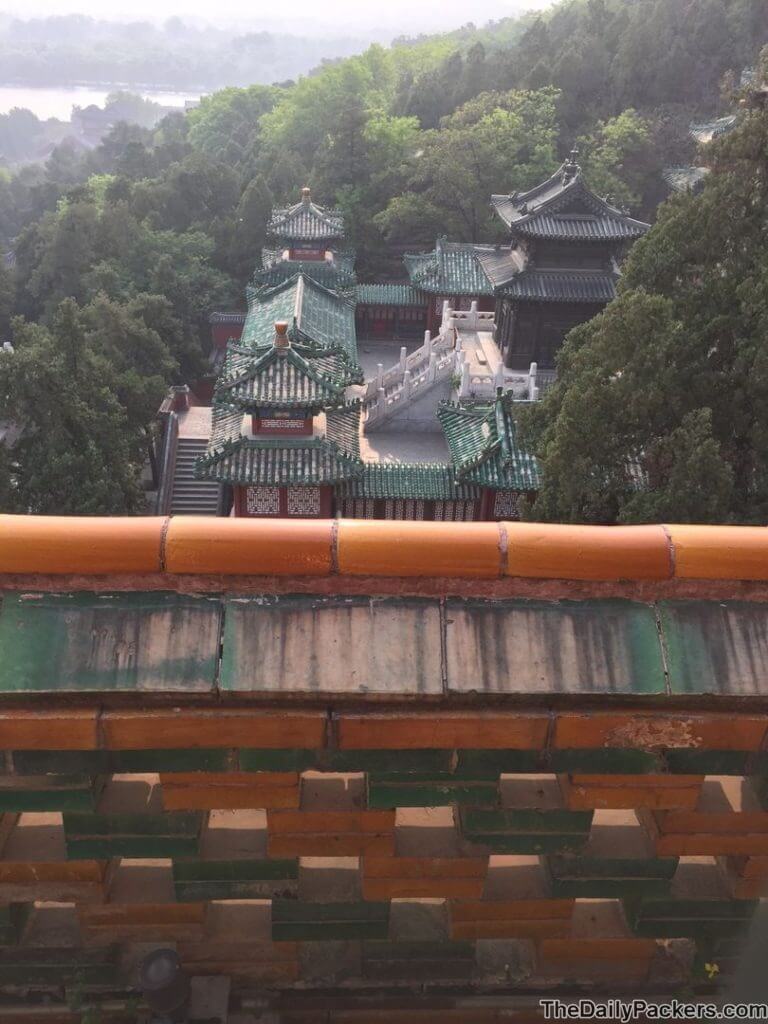
The Summer Palace is one of Beijing’s most stunning and serene landmarks. Once the Emperor’s retreat from the heat of the Forbidden City, this vast imperial complex is now a UNESCO World Heritage Site and a highlight of any visit to Beijing.
Stroll along the covered Long Corridor, admire the artistry of the painted beams, and enjoy panoramic views from the Tower of Buddhist Incense. The palace grounds are dotted with traditional halls, temples, and pavilions, all set against the scenic backdrop of Kunming Lake and Longevity Hill.
Admire the Temple of Heaven — A Masterpiece of Ming Architecture
he Temple of Heaven is one of Beijing’s most iconic landmarks and a must-see for anyone interested in history, architecture, or traditional Chinese culture. This vast religious complex was where emperors of the Ming and Qing dynasties performed annual ceremonies to pray for good harvests and divine blessings.
The highlight is the Hall of Prayer for Good Harvests, a stunning circular building constructed entirely of wood without a single nail. Its rich blue roof tiles and intricate details make it one of the finest examples of Ming architecture.
Set within a peaceful park, the Temple of Heaven is also a great place to witness local life — from tai chi practice to music and dancing in the gardens. It’s a serene yet powerful reminder of the city’s imperial past.

3-day Beijing itinerary
Day 1:
- Start your day with panoramic views at Jingshan Park
- Explore historic Tiananmen Square
- Visit the iconic Forbidden City
- Stroll through lively Qianmen Street
Day 2:
- Wander around the serene Summer Palace
- Discover traditional life in a Hutong
- Shop and snack along Wangfujing
- Admire the architecture at the Temple of Heaven
Day 3:
- Hike the stunning and less crowded Jinshanling Great Wall (day trip)
Dig the Well Before You Are Thirsty 未雨绸缪 Wèiyǔchóumóu
You may also like
About the authors
We are Alex and Tina, a French-Serbian couple who met in China back in 2014. We spent three incredible years there before making France our home. Our shared passion for travel has been the heartbeat of our relationship for over 12 years, taking us across 44 countries and counting.
We launched TheDailyPackers in 2019 as a way to document our adventures. In 2026, we reached a major milestone by officially turning our blog into our full-time job. While we are still growing toward financial independence through this platform, every article we write is fueled by our mission to make your voyages easier through in-depth guides, honest advice, and the lessons we’ve learned from our own mistakes.
Our journey has not been without its storms. In 2023, our world changed forever when our first son, Poppy, was stillborn on November 25th. It was, and remains, the hardest chapter of our lives. In 2025, we were blessed with our second little boy, Milo. He has since joined our traveling tribe, and you’ll be seeing him—and the reality of traveling with a little one-on the blog more and more.
We hope to inspire you to explore the world with curiosity and resilience. Thank you for being part of our story.
You may also like those related posts
3-Month South America Packing List: What to Bring
17 Essential Corsica Travel Tips to Know Before Your Trip
17 Best Things to Do in Lausanne, Switzerland, in 2 to 4 Days
3-week Vietnam Itinerary: The Best of north/central Vietnam
7 Real Downsides of Traveling Without a Plan
Lorient La Base:The Complete Submarine Guide
Northern Thailand: The Perfect 2-week Itinerary
Tam Coc Boat Tour: Exploring Vietnam’s Ha Long Bay on Land
Pssst, did you know that…
If you purchase something through our links, we earn a small fee. However, you still pay the same. Win-win! And one day we may get to be full-time travel bloggers =)
Find Hotels with Booking.com
Do Yoga with KVY
Buy us a Coffee
Rent a car with DiscoverCars
Find Attractions with GetYourGuide
Find Flights with Expedia
Buy an eSIM with Airalo
Get insured with World Nomads
Get ready with Amazon.com