

Introduction
Chiang Rai is one of our favourite places in Thailand. Tucked away in the far north, it feels a world apart from the busy, touristy beaches and towns of the south. It has its own atmosphere — laid-back, friendly, and full of surprises.
Not far from the Golden Triangle where Thailand, Myanmar, and Laos meet, Chiang Rai makes a fantastic base for day trips to see this unique border region. You can visit tea plantations, the famous Monkey Cave, or even stop by fields of pineapples on the way.
But the real highlight? The city is home to some of Thailand’s most striking temples — from the surreal White Temple (Wat Rong Khun) and the darkly artistic Black House (Baan Dam) to the beautifully vivid Blue Temple (Wat Rong Suea Ten).
If you’re heading to Thailand, we think Chiang Rai deserves a spot on your list. It’s a place that blends culture, art, landscapes, and a bit of adventure in a way that’s hard to forget.
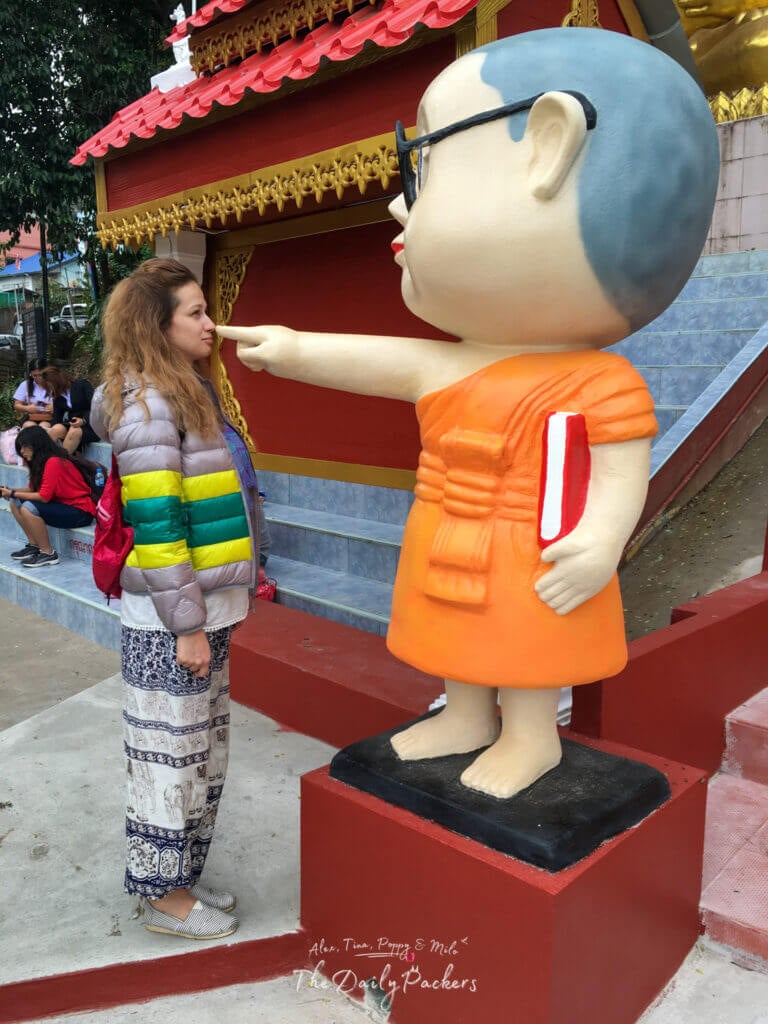

Read: The perfect 3-week Thailand Itinerary: From North to South
Getting there
Chiang Rai is well-connected but still feels a bit off the main tourist trail — which is part of its charm.
If you’re coming from Chiang Mai (as many do), the most common option is by bus. Buses run regularly between the two cities, taking about 3 to 4 hours, depending on the company and type of bus you choose. Green Bus is the most popular service, with several departures daily.
For those who want to travel faster or in comfort, you can hire a private car or van for the journey — great if you’re travelling as a group or with family.
Chiang Rai also has its own small airport (Mae Fah Luang – Chiang Rai International Airport) with domestic flights from Bangkok and other Thai cities. Flights are quick (just over an hour from Bangkok) and often affordable if booked in advance.
If you’re feeling adventurous, you can also arrive as part of a multi-stop northern Thailand trip, combining visits to Chiang Mai, Pai, and Mae Hong Son.
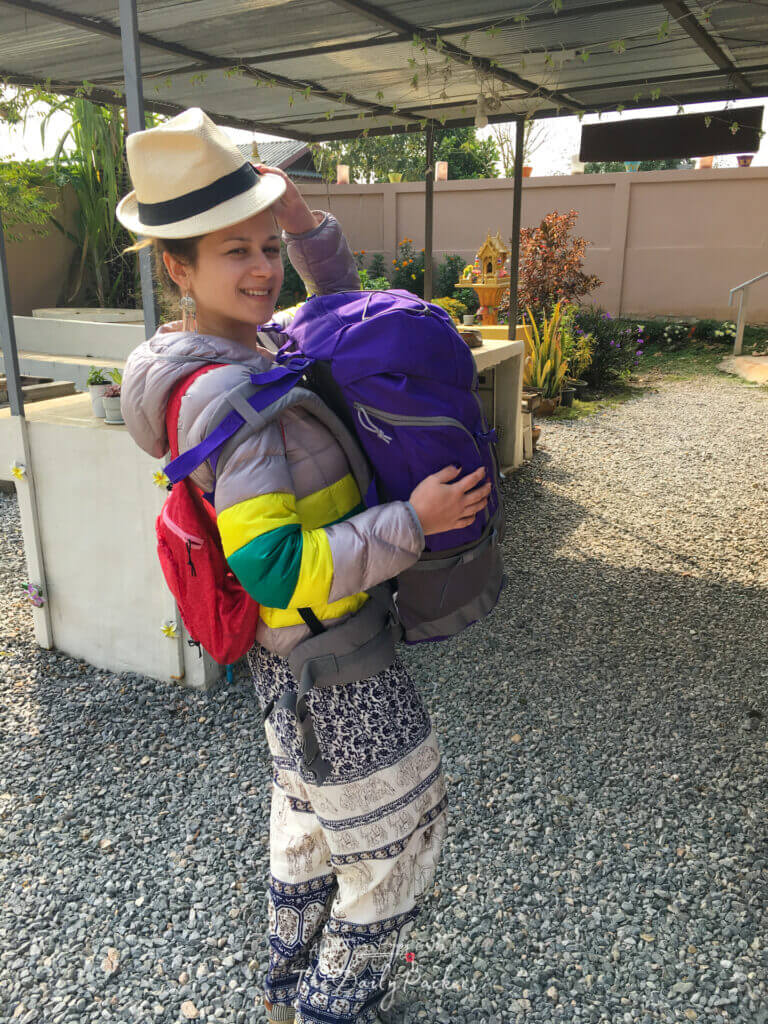
Moving Around
Chiang Rai is a relaxed city that’s easy to explore, but you’ll need some form of wheels to make the most of it. For getting around town, walking works well in the city center itself. Many guesthouses and hotels are close to the night bazaar, markets, and restaurants.
But to visit the main sights (like the White Temple, Blue Temple, Black House, or the countryside), you’ll need transport:
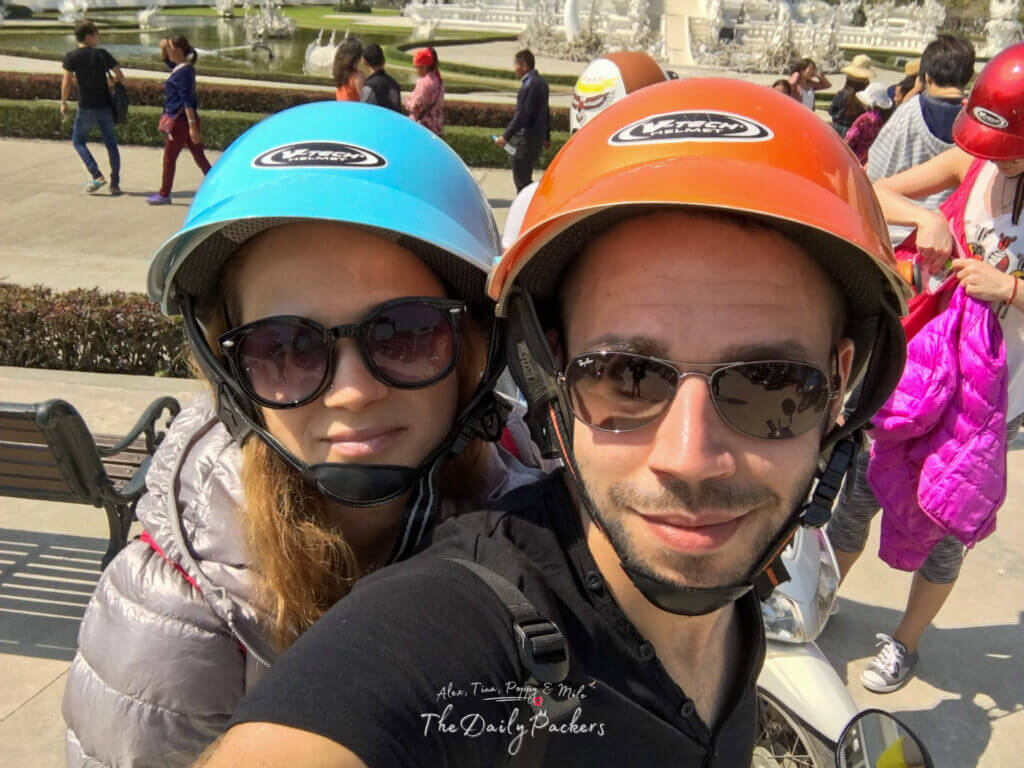
- Scooter rental is our top recommendation. It’s cheap (usually around 200–300 THB per day), flexible, and gives you the freedom to go at your own pace. We used a scooter ourselves, and it was perfect for the short distances between sights.
- Bicycles can be rented in town and are fun for closer temples, but distances between the main sights can make it tiring in the heat.
- Songthaews (shared red trucks) or tuk-tuks can be hired for single trips or for a few hours. Always agree on a price in advance.
- Private drivers or tours are also an option if you want comfort or are travelling in a group. Many accommodations can help arrange these.
Chiang Rai is small and manageable, but getting your own scooter or car is the best way to see everything without hassle.
When to Visit
Chiang Rai is a year-round destination, but the experience changes quite a bit with the seasons. Here’s what you can expect:
- Cool & Dry Season (November to February): The best time to visit. Expect clear skies and comfortable temperatures around 15–28 °C (59–82 °F). The mornings and evenings can be a bit chilly, so pack a light jacket. This is also when the countryside is lush and green after the rains.
- Hot Season (March to May): Days can get hot, with temperatures reaching 30–36 °C (86–97 °F). It’s still dry, making it easy to travel, but the smoky season (from burning in fields) can reduce air quality and visibility. If you’re sensitive to air pollution, check conditions before booking.
- Rainy Season (June to October): Expect showers, usually in the afternoon or evening, but rarely all-day downpours. Temperatures hover around 24–32 °C (75–90 °F). The upside? Fewer tourists, green landscapes, and cooler air after rain. Just bring a raincoat or umbrella.
Recommendation: We visited during the cooler months and found it perfect for exploring temples, riding scooters around the countryside, and enjoying local food. If you can, aim for November to February for the most comfortable travel weather.

Where to Stay
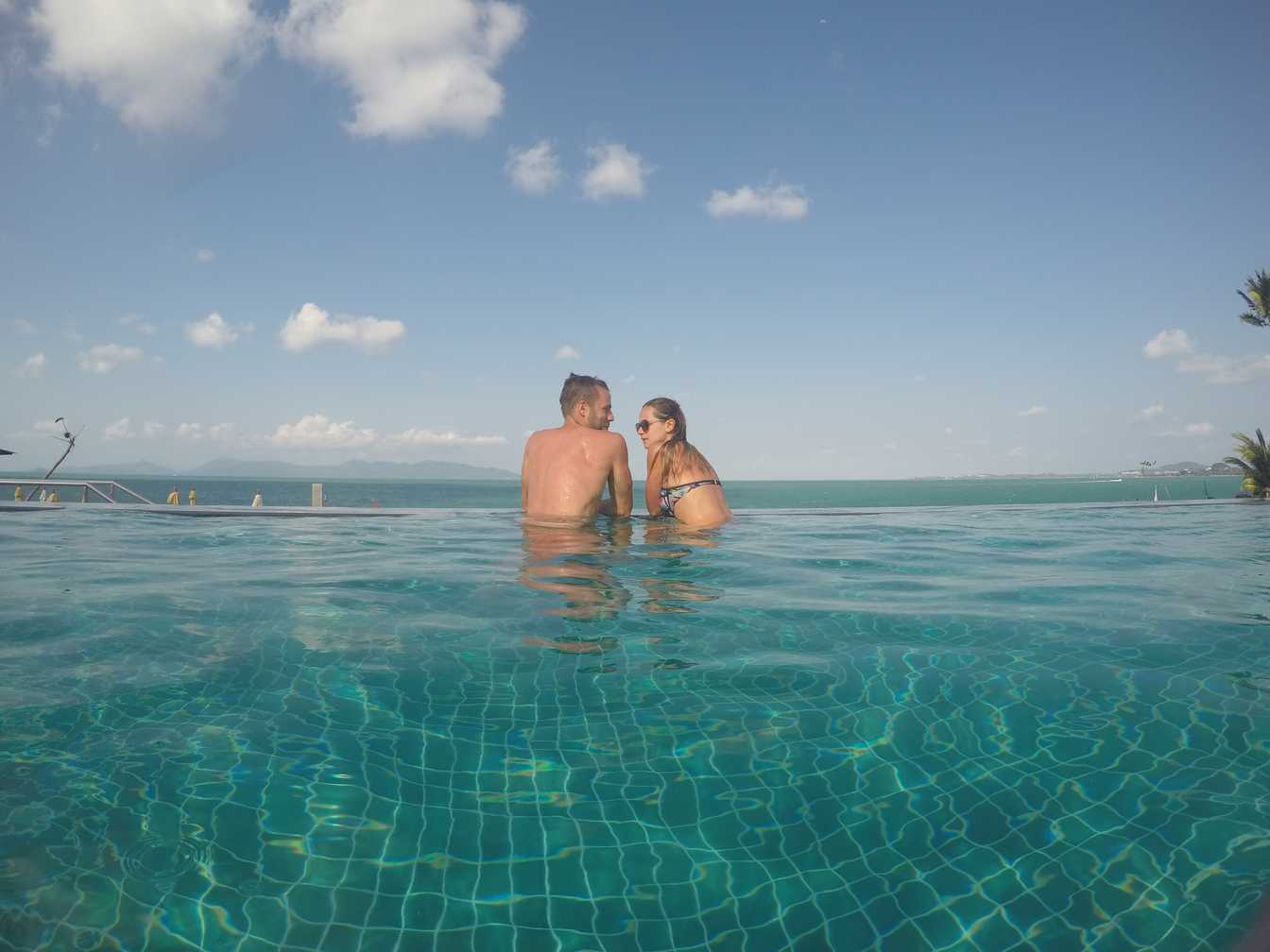
We really recommend spending at least 3 nights in Chiang Rai — it’s the perfect base to explore temples, nearby villages, and the countryside at a relaxed pace. Accommodation here is also one of the best values in Thailand: you can find excellent comfort for a fraction of what you’d pay elsewhere.
(€) Stay In Chiangrai – Great value, comfortable rooms, and friendly service in the heart of the city.
(€€) Le Patta Resort & Hotel Chiang Rai – A well-located option with a pool, spacious rooms, and an easy walk to the Night Bazaar.
(€€€) Le Meridien Chiang Rai Resort, Thailand – Set along the river, this beautiful property offers luxury amenities, excellent dining, and peaceful gardens.
Our real “coup de cœur” was Ban Lom Jen Homestay. Though it’s sadly no longer available, we have such good memories of our stay there — warm hosts, home-cooked food, and the feeling of being part of local life. It really made our Chiang Rai visit extra special.


Here are all your accommodation options in Chiang Rai
What to Eat
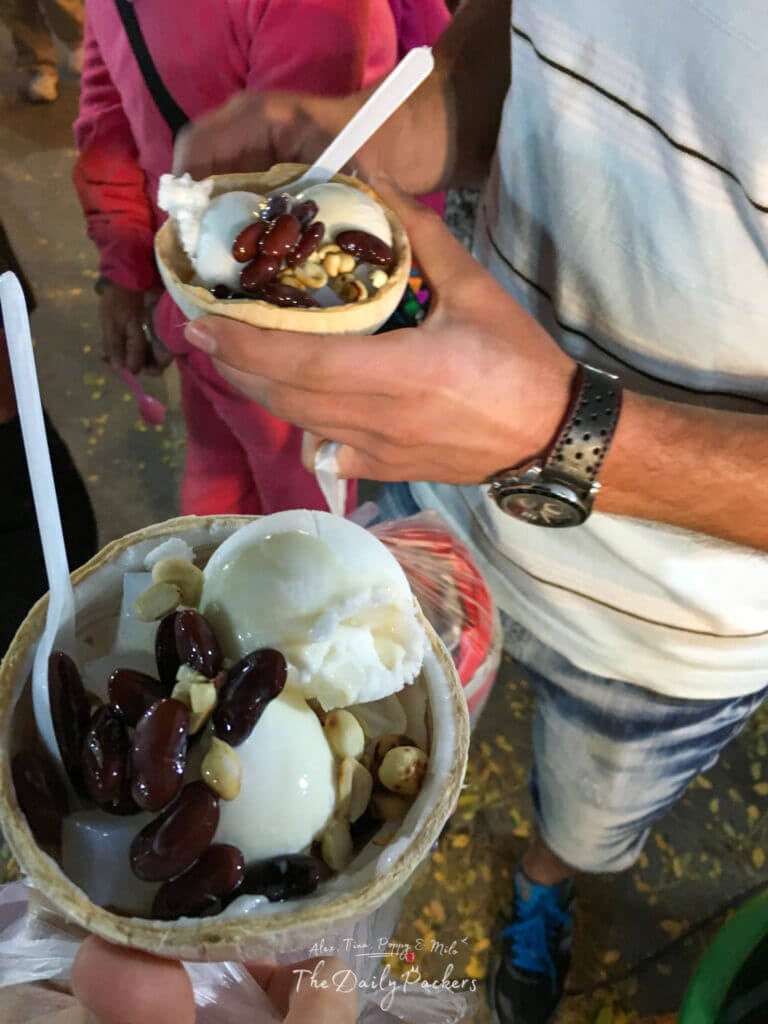
Generally in Thailand, the best food is often the simplest — you’ll find incredible flavour at small street stalls, local markets, and even your guesthouse kitchen. Chiang Rai is no exception. Don’t overthink it — just eat what’s local, fresh, and smells amazing!
Here are some must-try staples:
- Pad Thai – Thai style fried noodles with egg, tofu, shrimp or chicken, peanuts, and lime.
- Som Tam – Spicy green papaya salad, a staple of northern and northeastern Thai meals.
- Pad See Eiw – Thick rice noodles stir-fried with soy sauce, meat, and Chinese broccoli.
- Khao Pad – Simple, comforting Thai fried rice with egg, vegetables, and your choice of meat.
- Gaeng Keow Wan – Green curry with coconut milk, basil, eggplant, and meat or tofu.
- Pad Phak – Stir-fried vegetables in soy or oyster sauce, easy to find and always tasty.
- Kao Niew Ma Muang – Mango and sticky rice, the classic Thai dessert that’s hard to resist.
And here’s a personal tip: if you’re staying at a homestay or guesthouse that cooks meals, go for it! We ate all our meals in our accommodation during our stay in Chiang Rai, and they were genuinely some of the best we had in Thailand. There’s nothing quite like home-style northern Thai cooking.

Tip: We never travel without our DJI Mini 3 PRO drone anymore — it’s totally worth having to capture places from a whole new perspective.
Things to do in Chiang Rai
Visit Baan Dam Museum (Black House)
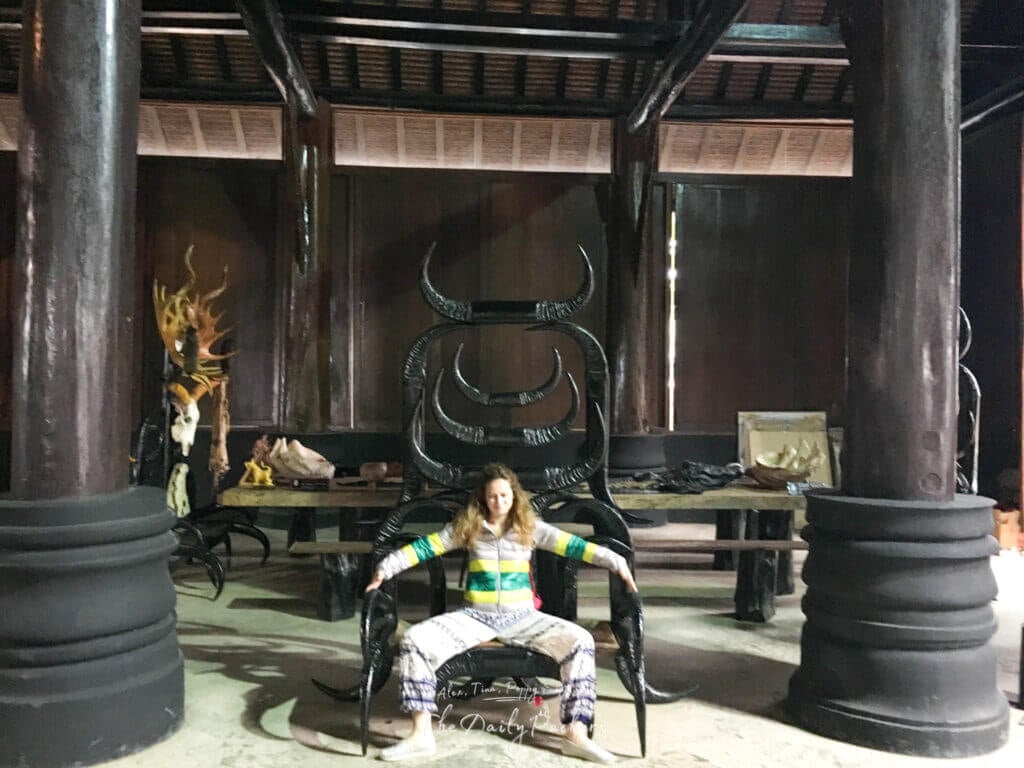
Start your day by exploring the Baan Dam Museum, often just called the Black House. This striking site was created by Thawan Duchanee, a famous Thai artist, and opened fully to the public after his death.

It’s a collection of around 40 traditional northern Thai buildings, all in dark woods and black tones, scattered through lush grounds. The interiors are filled with the artist’s work, animal skins, bones, horns, and sculptures — giving the whole place a moody, slightly morbid but undeniably fascinating vibe.
It’s definitely one of the coolest and most unusual places to see in Chiang Rai, perfect for photos and for getting a sense of Thailand’s modern artistic culture alongside tradition. And yes — entry is usually free or just a small donation.
Here are all your accommodation options in Chiang Rai
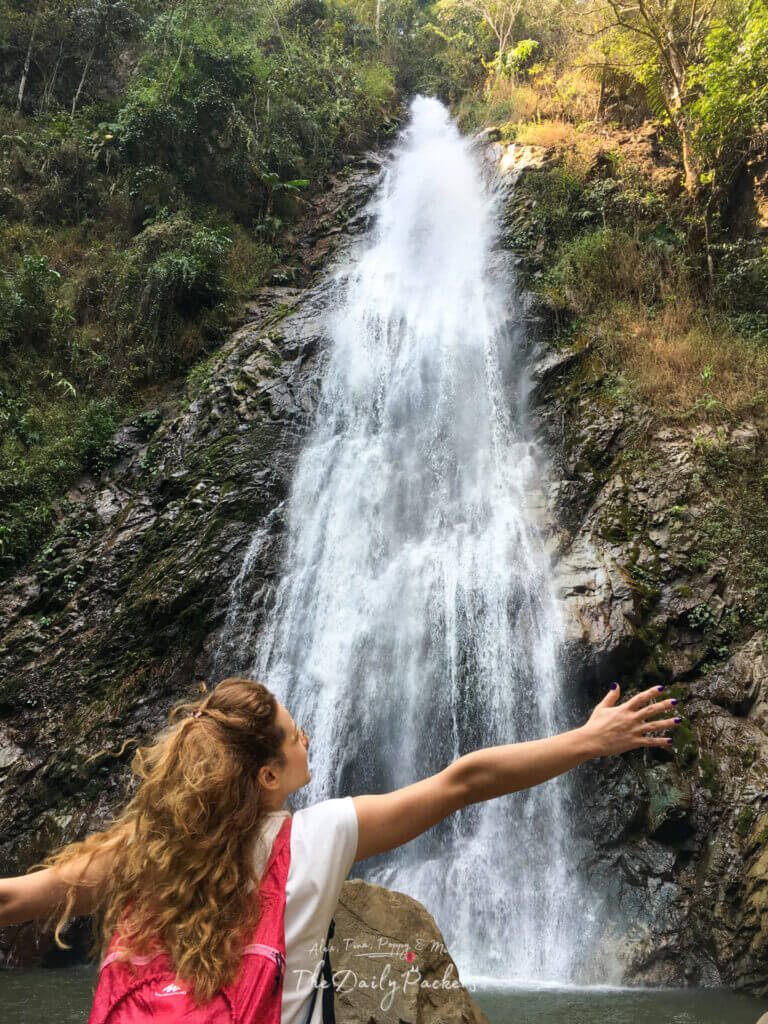
Khun KornHike to Khun Korn WaterfallWaterfall
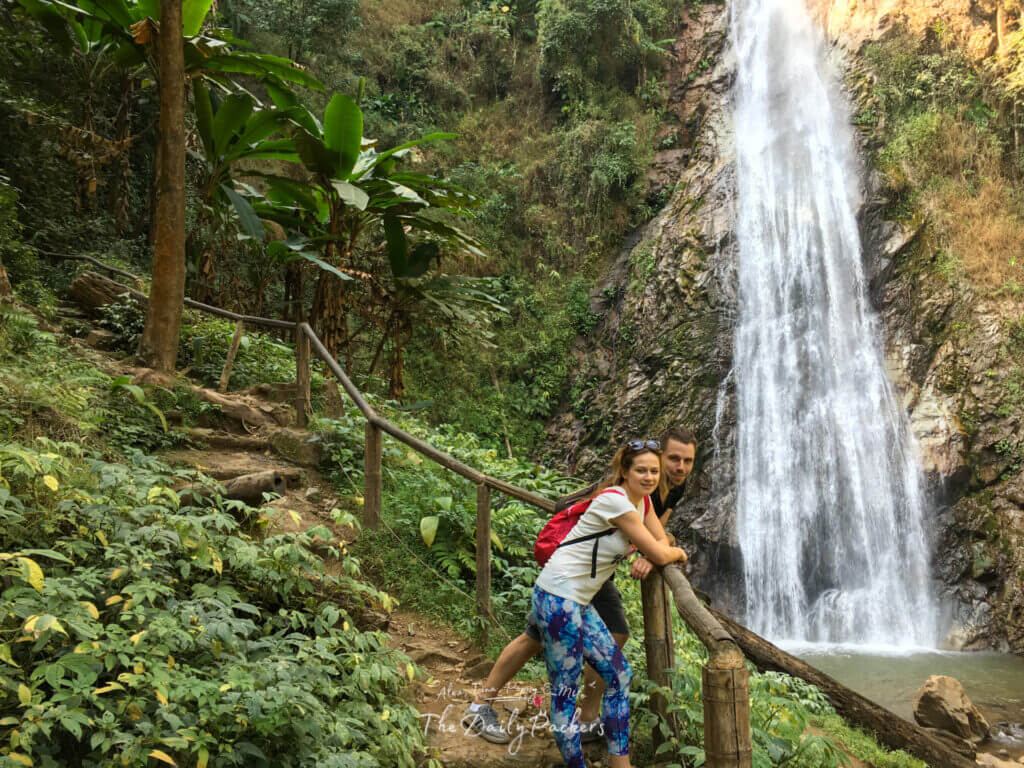
After a scenic 1.4 km walk through lush jungle trails, you’ll reach Khun Korn Waterfall — one of Thailand’s most impressive natural sights. The hike itself is beautiful and not too difficult, winding through bamboo groves and dense greenery before the sound of rushing water grows louder.
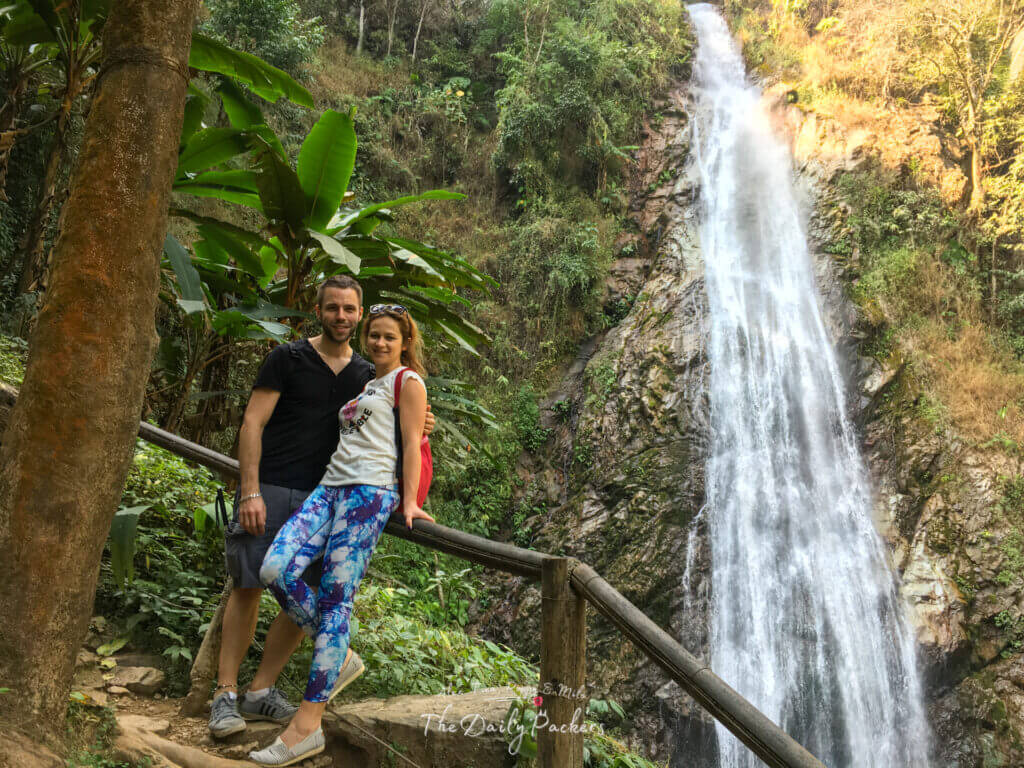
At the end, you’re rewarded with a spectacular 70-meter-high waterfall crashing into a cool pool below. It’s a great spot to rest, take photos, or even dip your feet in the fresh water. If you’re looking to add a bit of adventure and nature to your stay in Chiang Rai, this is the perfect half-day escape.
Stroll Through the Night Market
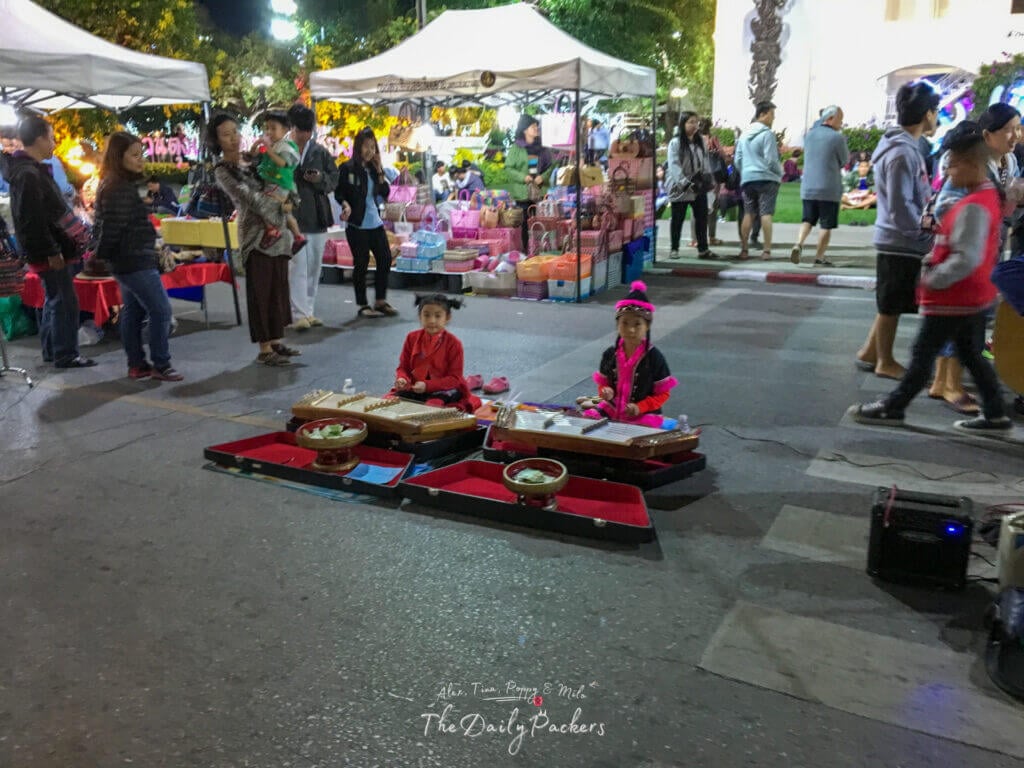
Like many Thai cities, Chiang Rai comes alive in the evening with its vibrant night market. Wander through lively shopping streets lined with colorful stalls, perfect for picking up local crafts, clothes, or unique souvenirs.
But the real highlight is the food. Grab a seat at one of the open-air areas or just graze your way through countless street-food vendors offering everything from grilled meats to fresh fruit shakes. It’s the perfect way to soak up the local atmosphere and end your day in Chiang Rai.
Watch the Clock Tower Light Show
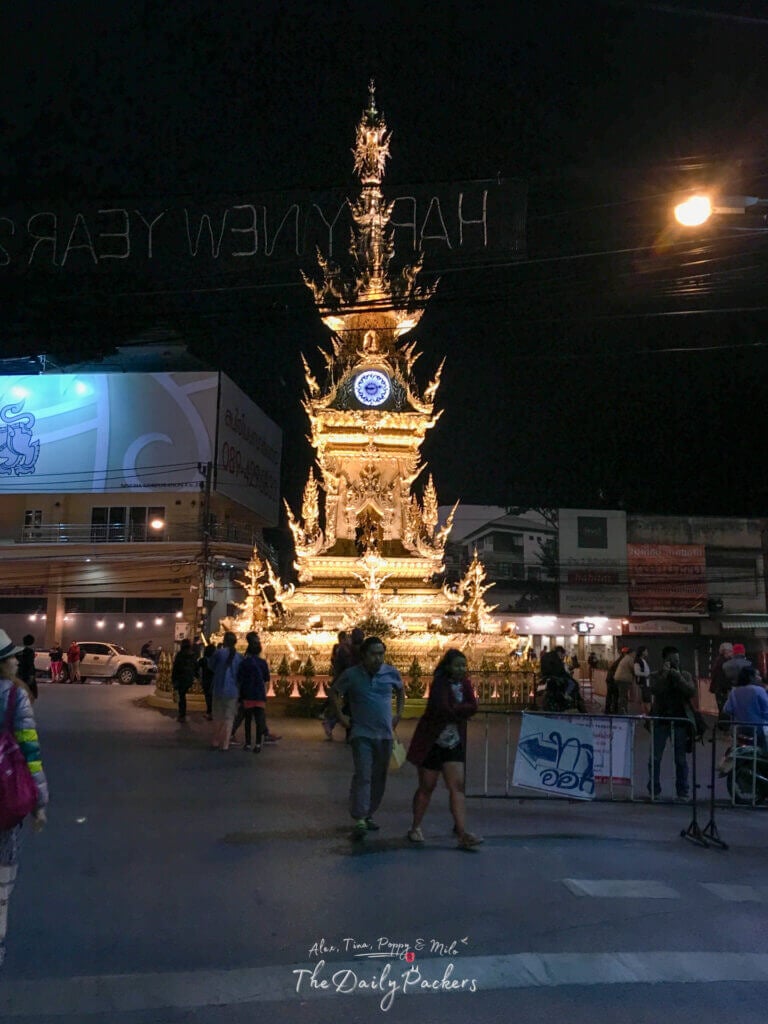
After filling up on delicious Thai food at the night market, head to the iconic Clock Tower in the heart of Chiang Rai’s old center. Designed by the same artist behind the White Temple, this ornate golden landmark isn’t just for telling time—it comes alive every evening with a colorful light and music show.
Visit the Long Neck Village
Start your Golden Triangle day tour with a visit to the Yao village, home to the famous “long neck” Karen people. It’s a striking cultural stop where you can see the distinctive brass rings worn around their necks—a tradition that has fascinated travelers for years. You’ll also find stalls selling local handicrafts, woven textiles, and souvenirs.
That said, this visit can be controversial. Some travelers question whether it feels ethical, describing it as a “human zoo” experience since the villages often rely on tourism for income and visitors pay to take photos.
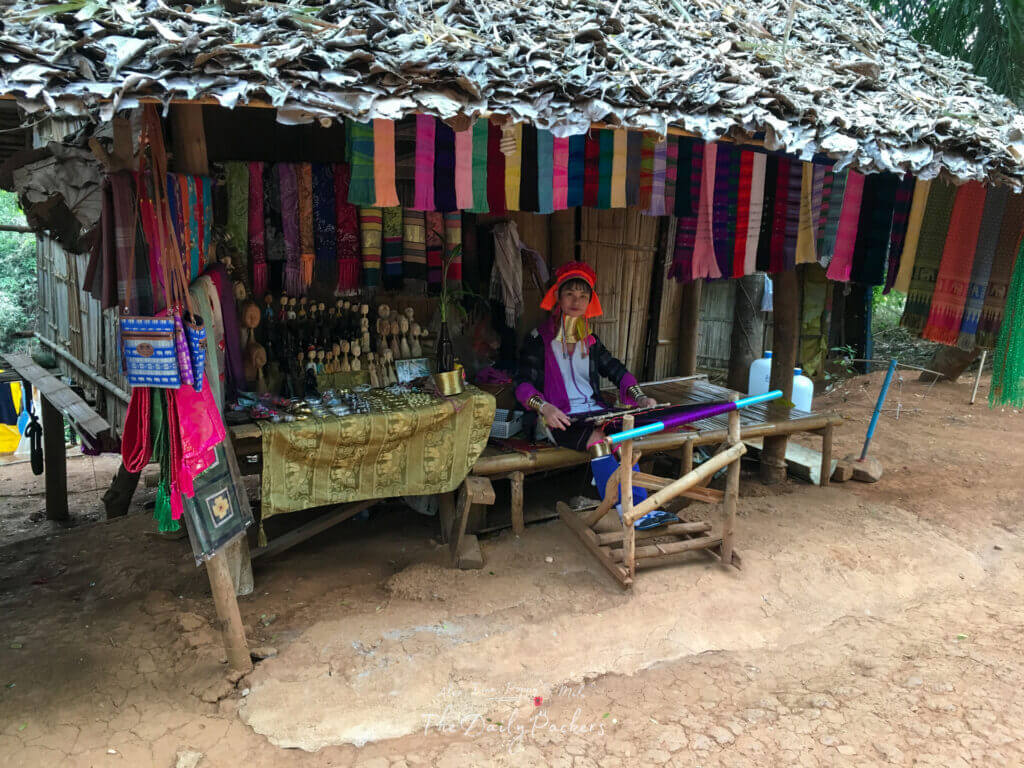
Our recommendation: If you choose to go, do so thoughtfully. Talk with your guide or driver beforehand to understand the cultural context. Be respectful when taking photos. If you’re uncomfortable, you can skip this stop—Chiang Rai has plenty of other incredible sights to fill your day.

Explore Wat Phra That Doi Wao
Add a cultural touch to your Golden Triangle day trip with a visit to Wat Phra That Doi Wao. This hilltop temple is famous for its striking giant scorpion statue—symbolizing protection and strength. The temple grounds themselves are peaceful and atmospheric, with beautifully decorated pagodas and shrines to explore.
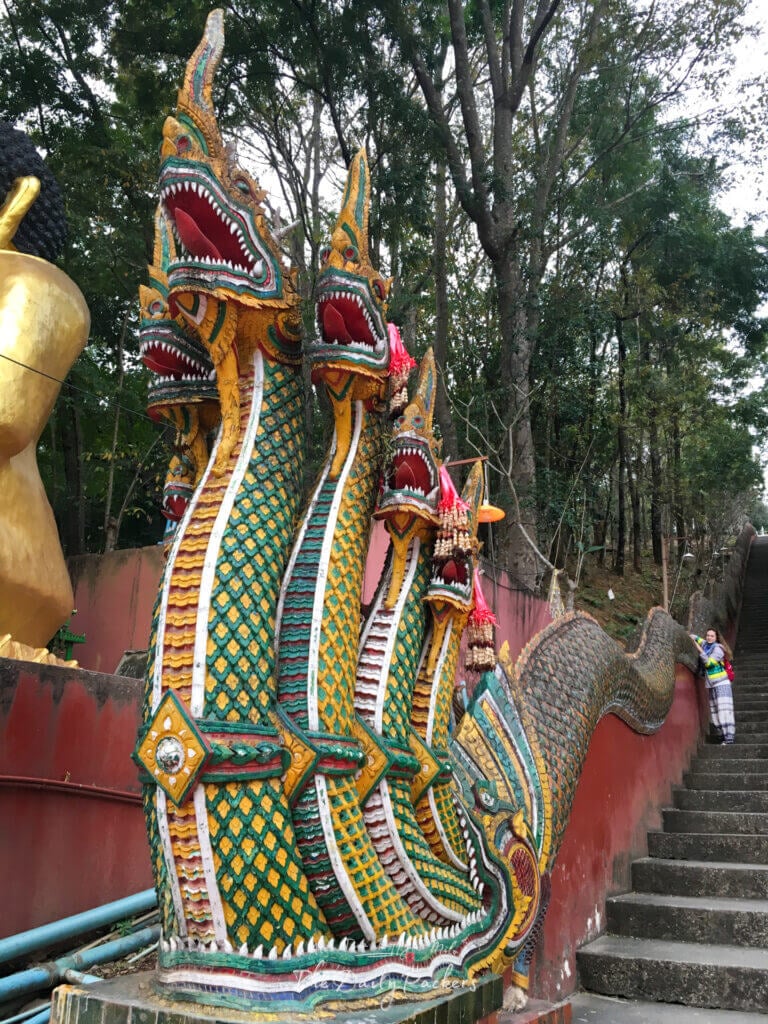
But what really makes it special is the panoramic view: from the temple terrace, you can gaze across the border into Myanmar. It’s a scenic and culturally rich stop that gives you a real sense of how close these countries are, and why this region is called the Golden Triangle.
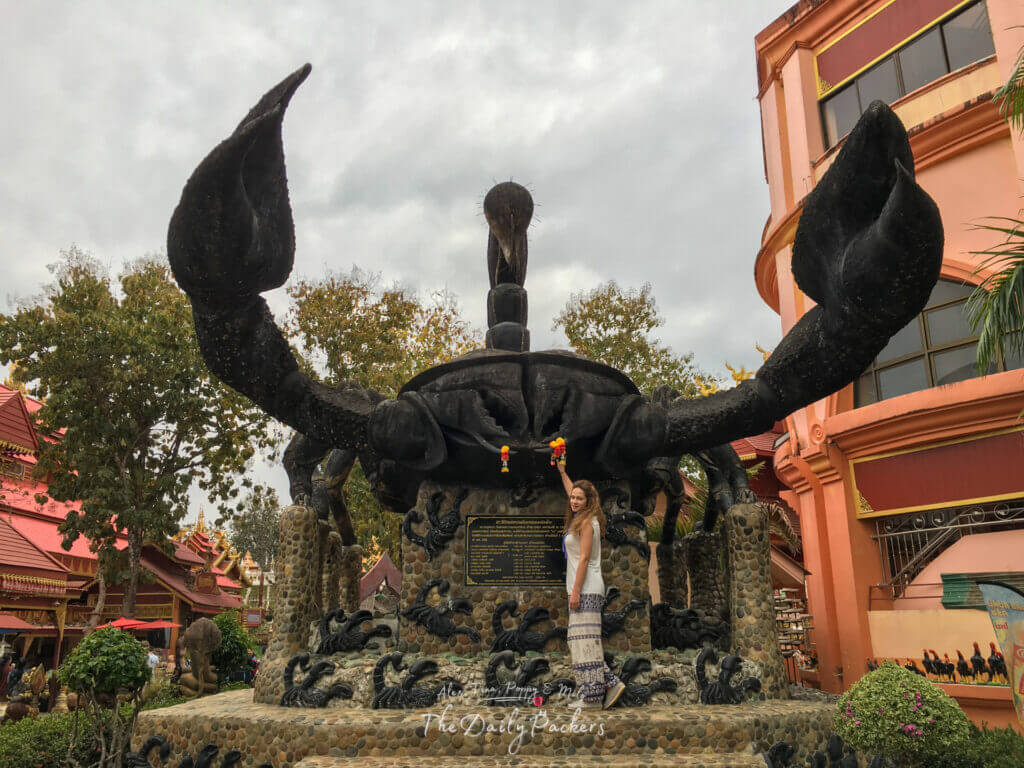
Visit Fish Cave (Tham Pla Temple)
Despite its name, Fish Cave is much more about the monkeys than the fish! Located in a forested area near the mountains, this temple complex is home to large groups of cheeky monkeys that come down from the cliffs for food.
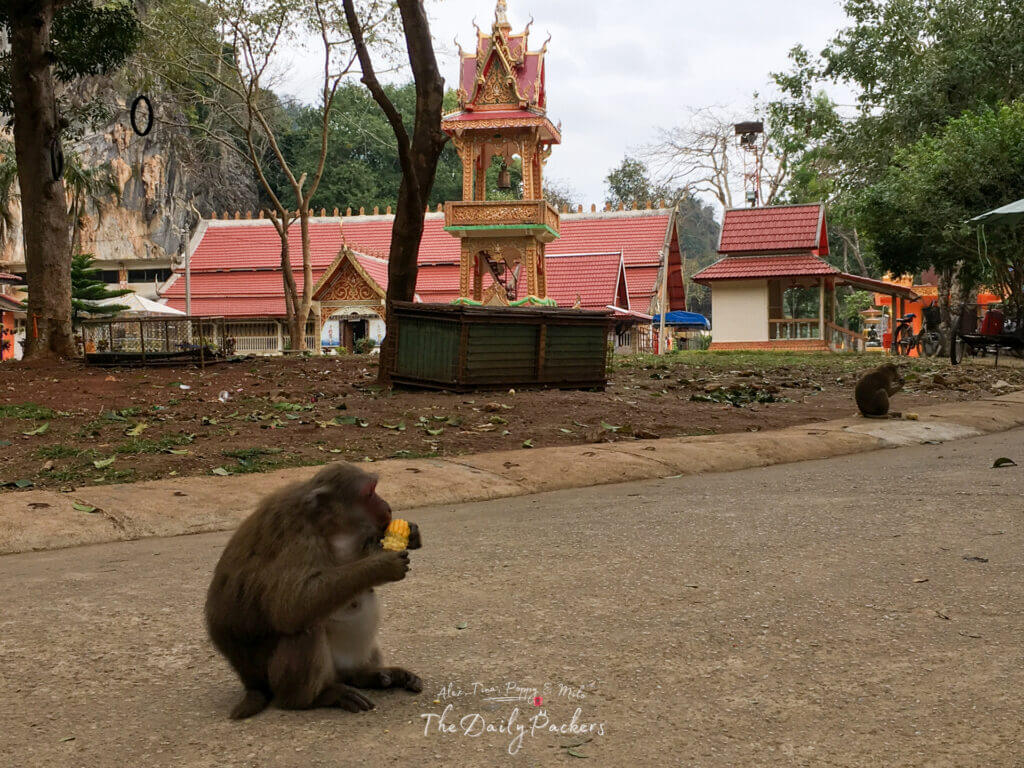
It’s a fun (though slightly chaotic) stop where you can watch monkeys play, climb, and squabble all around the temple grounds. While there is indeed a small cave with sacred fish pools, the real draw is observing the monkey colonies in their natural habitat.
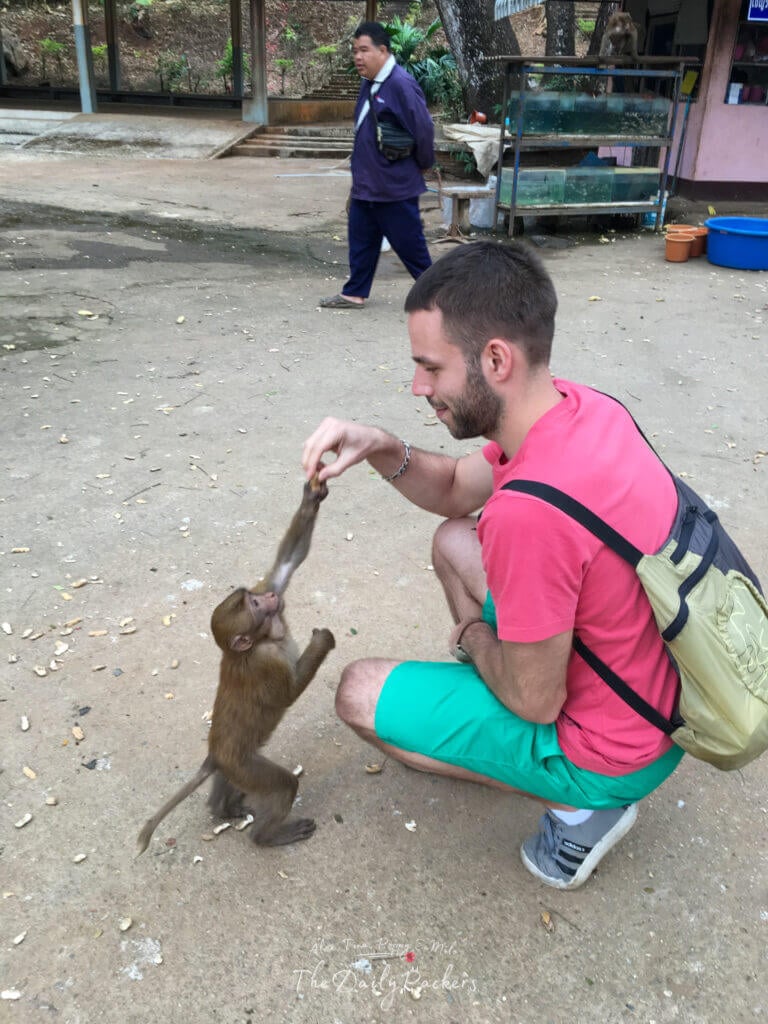

Tip: Be cautious with food and bags—they’re expert thieves and won’t hesitate to grab what they can!
Explore Choui Fong Tea Plantation
During your day trip to the Golden Triangle, make sure to stop at the Choui Fong Tea Plantation, one of Thailand’s largest and most scenic tea-growing estates. It’s not a museum or an educational tour—it’s really about soaking in the incredible green landscape of perfectly manicured tea rows rolling across the hills.
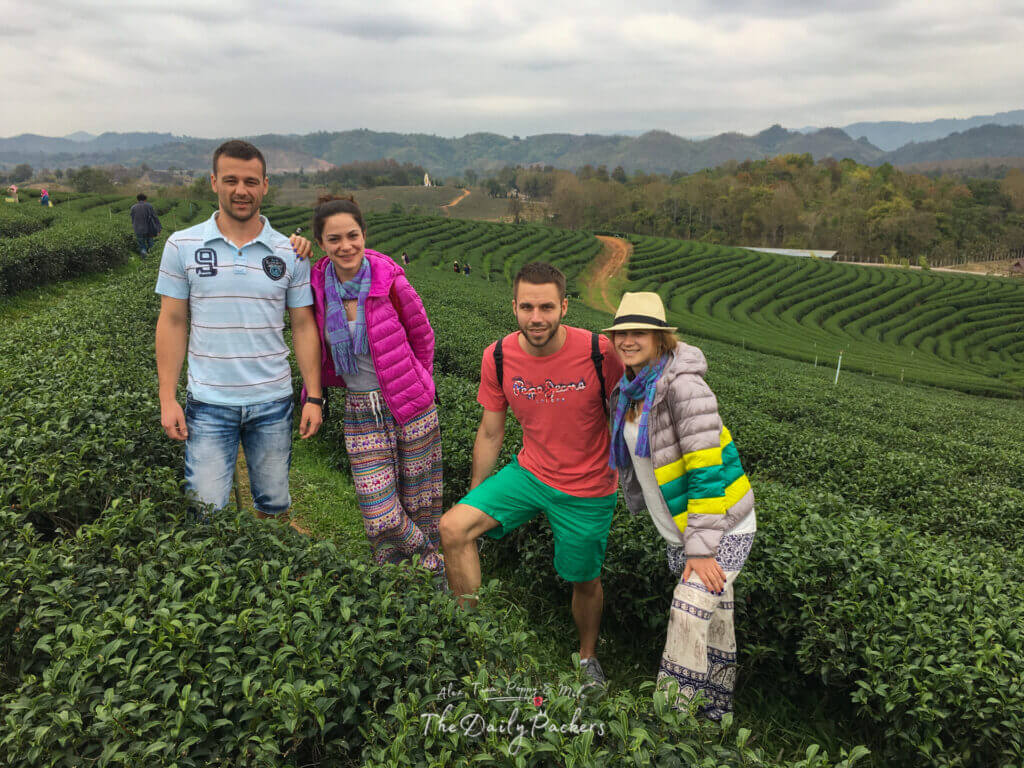
There’s a café at the top with great views where you can try local teas and sweets while enjoying the panorama. Near the entrance, you’ll also see pineapple fields, adding even more tropical charm to the visit.

Tip: It’s a great spot for photos and a relaxing tea break before continuing your journey.
Discover the Golden Triangle
And finally, wrap up your day trip by visiting the legendary Golden Triangle, the meeting point of Thailand, Myanmar, and Laos. This area is famous (or infamous) for its history of opium smuggling and trade, which shaped much of its character in the past.
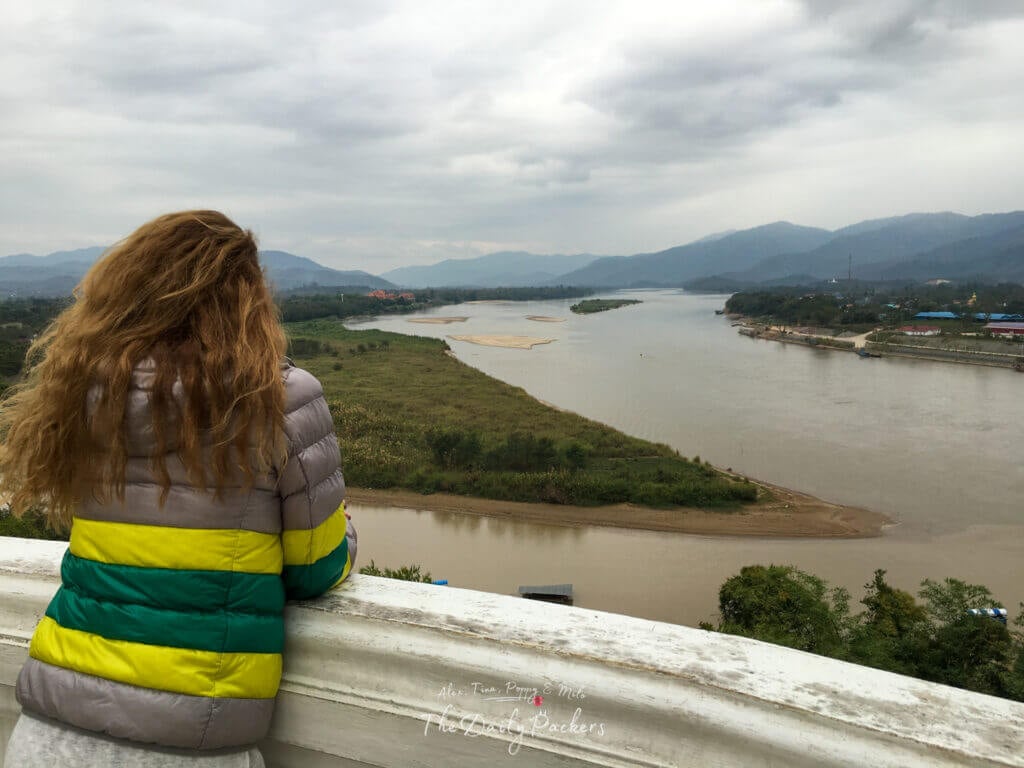
You’ll find a viewpoint with sweeping vistas over the Mekong and Ruak rivers where you can see all three countries at once—a truly unique photo opportunity.
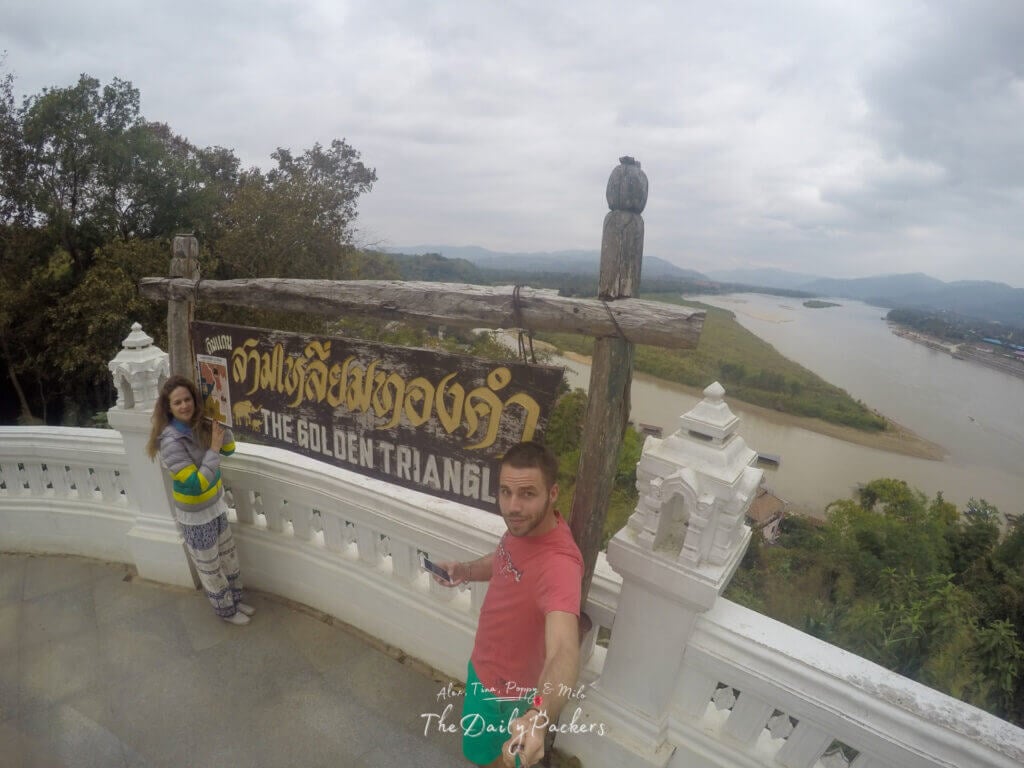
Tip: There’s also a small Opium Museum nearby if you want to learn more about the region’s fascinating and complicated history.
Visit Wat Rong Khun – The White Temple
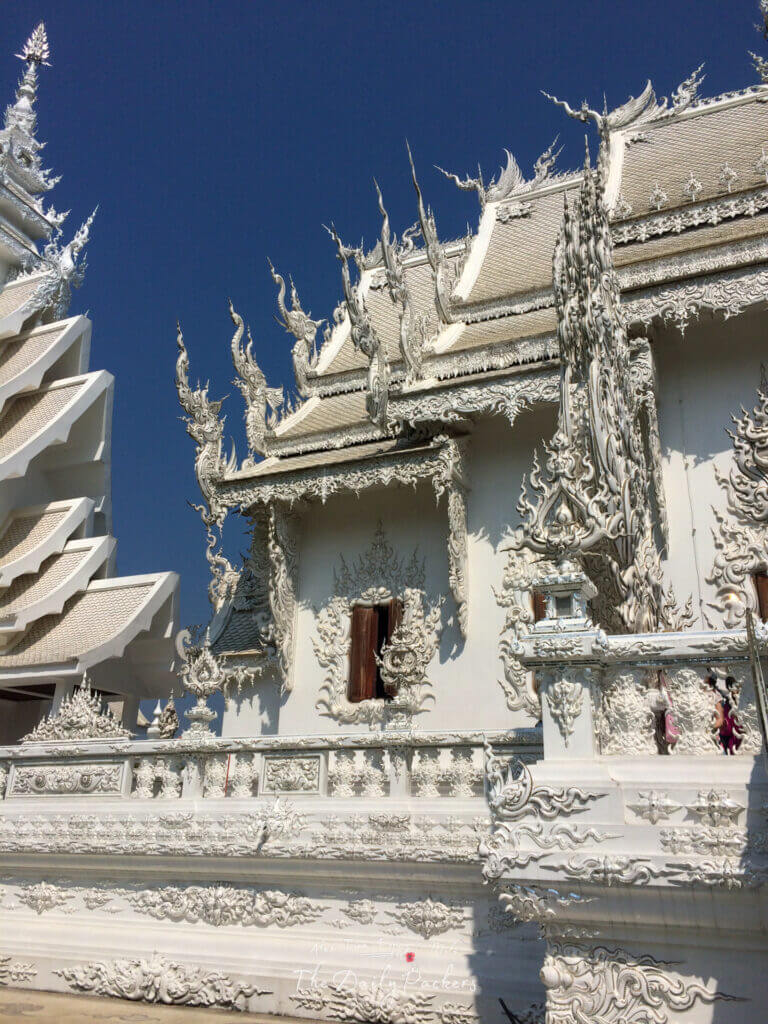
Chiang Rai’s most famous landmark, Wat Rong Khun (the White Temple), is an absolute must-see for anyone visiting northern Thailand. This striking all-white temple isn’t just beautiful—it’s also deeply symbolic, with intricate details that represent the Buddhist journey toward enlightenment.

It was opened in 1997 and is the work of a local artist who funded its restoration himself after the original temple fell into disrepair and the local monk lacked resources. The result is a surreal, dazzling masterpiece of Thai artistry, filled with unexpected modern touches and impressive craftsmanship.
Tip: Arrive early to avoid the crowds and really appreciate all the details in peace.
Explore Wat Rong Seua Ten – The Blue Temple
Less famous than the White Temple but equally captivating, Wat Rong Seua Ten (or the Blue Temple) is a stunning example of modern Buddhist art in Chiang Rai. Completed in 2016, it’s known for its vivid blue coloring, detailed carvings, and striking interior filled with intricate artwork and a giant white Buddha statue.
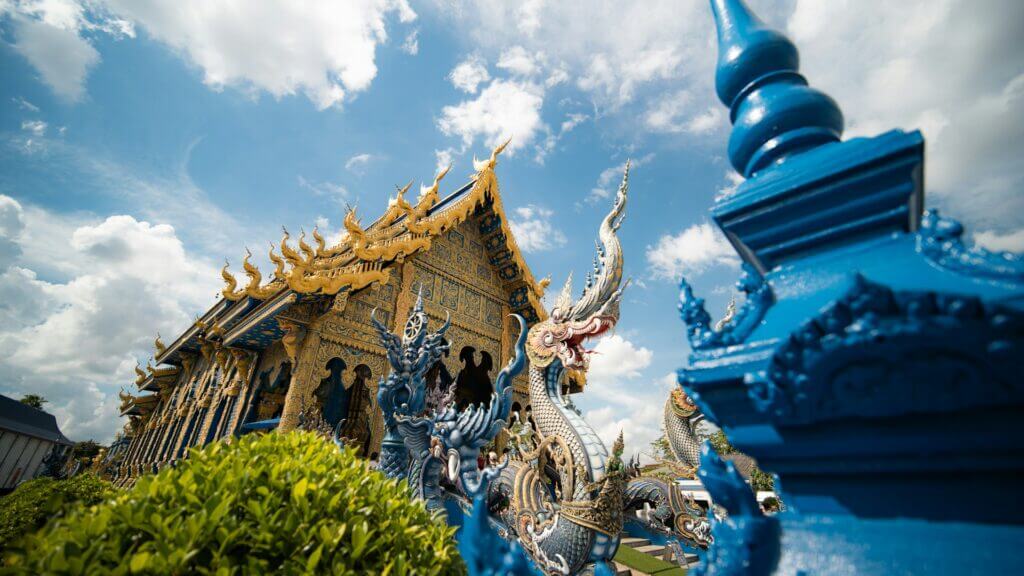
Here are all your accommodation options in Chiang Rai
Visit Wat Huay Pla Kang – The Big Goddess Statue Temple
A bit outside the city center, Wat Huay Pla Kang is one of Chiang Rai’s most impressive and photogenic spots. The highlight is a massive white statue often mistaken for a giant sitting Buddha but actually representing Guan Yin, the Goddess of Mercy.
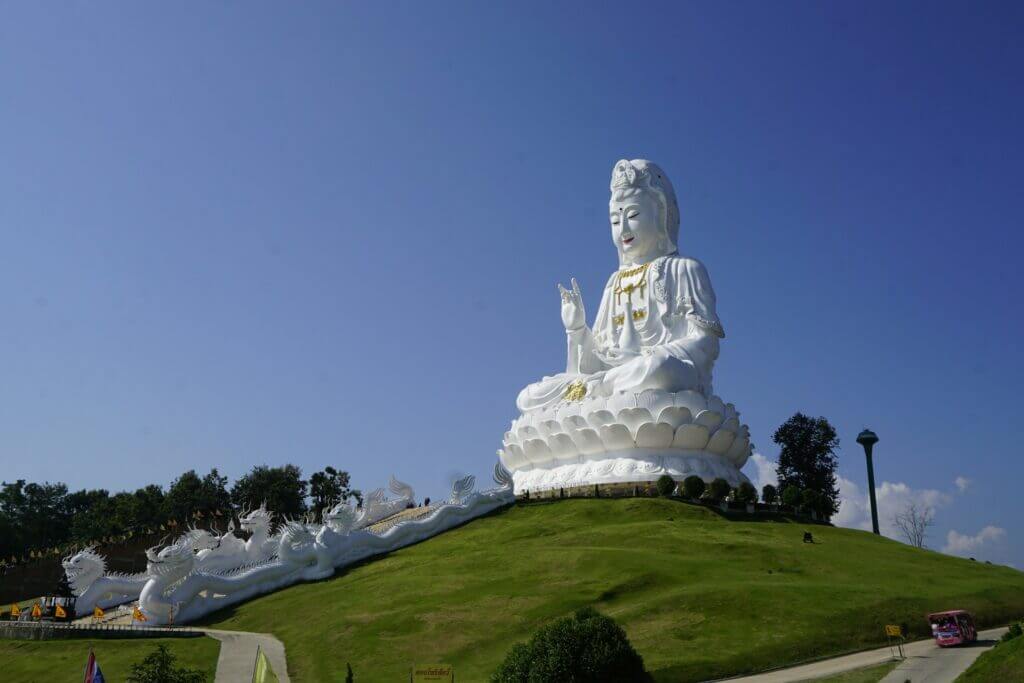
Chiang Rai itinerary
Day 1: First Tastes of Chiang Rai
- Visit Baan Dam Museum (Black House): Start your trip at this striking, slightly eerie art complex created by a local artist. It’s a showcase of traditional northern Thai architecture with dark, moody interiors filled with curiosities.
- Hike to Khun Korn Waterfall: Lace up for a 1.4 km jungle trail leading to one of Thailand’s most impressive waterfalls—refreshing and lush.
- Dinner at the Night Market: Soak up local flavors with classic Thai street food. This lively market is the best place to try everything from grilled meats to rolled ice cream.
- Clock Tower Light Show: After dinner, wander to the center to watch the golden clock tower light up in synchronized colors and music.
Day 2: Exploring the Golden Triangle Region
- Long Neck Village: Learn about the traditions of the Karen tribe, famous for their brass neck rings. It’s a controversial visit for some—take time to consider if it aligns with your travel values.
- Wat Phra That Doi Wao: Stop at this scenic temple known for its giant scorpion statue and views stretching into Myanmar.
- Fish Cave (Monkey Cave): More about monkeys than fish, this temple is alive with cheeky residents eager for snacks.
- Choui Fong Tea Plantation: Sip tea overlooking tiered plantations. The stop is more about landscapes than in-depth tea-making tours, but it’s stunning. Don’t miss nearby pineapple fields.
- Golden Triangle: Finish at this famous border point where Thailand, Laos, and Myanmar meet, once notorious for opium smuggling.
Day 3: Chiang Rai’s Iconic Temples
- Wat Rong Khun (White Temple): Chiang Rai’s star attraction. Intricate, dazzlingly white, and full of symbolic details—it’s a must-see for photos and reflection.
- Wat Rong Seua Ten (Blue Temple): A newer gem with vivid blue walls and ornate details. Less crowded, it’s the perfect follow-up to the White Temple.
Day 4: More Temples and Local Life
- Return to Blue Temple: If you want another look, the morning light is gorgeous.
- Wat Huay Pla Kang (Goddess Statue): Head to this massive white statue and its surrounding temple complex. Climb inside for sweeping views over the countryside.
Read: The perfect 3-week Thailand Itinerary: From North to South
About the authors
We are Alex and Tina, a French-Serbian couple who met in China back in 2014. We spent three incredible years there before making France our home. Our shared passion for travel has been the heartbeat of our relationship for over 12 years, taking us across 44 countries and counting.
We launched TheDailyPackers in 2019 as a way to document our adventures. In 2026, we reached a major milestone by officially turning our blog into our full-time job. While we are still growing toward financial independence through this platform, every article we write is fueled by our mission to make your voyages easier through in-depth guides, honest advice, and the lessons we’ve learned from our own mistakes.
Our journey has not been without its storms. In 2023, our world changed forever when our first son, Poppy, was stillborn on November 25th. It was, and remains, the hardest chapter of our lives. In 2025, we were blessed with our second little boy, Milo. He has since joined our traveling tribe, and you’ll be seeing him—and the reality of traveling with a little one-on the blog more and more.
We hope to inspire you to explore the world with curiosity and resilience. Thank you for being part of our story.
You may also like those related posts
20 Best things to do in Bonifacio, Corsica in 3 days
Cat Cat Village: Sapa’s Most Charming Traditional Village
20 Best Things to do in Havana, Cuba, in 2 to 4 days
Morocco SIM card: Stay Connected in Just 10 Minutes
Normandy landings: Complete guide to the D-Day Sites
Southern Thailand: The Perfect 2-week Itinerary
Colmar Christmas Market: A 3‑Day Guide to Magical Alsace
16 Best Tips to Road Trip Morocco peacefully
Pssst, did you know that…
If you purchase something through our links, we earn a small fee. However, you still pay the same. Win-win! And one day we may get to be full-time travel bloggers =)
Find Hotels with Booking.com
Do Yoga with KVY
Buy us a Coffee
Rent a car with DiscoverCars
Find Attractions with GetYourGuide
Find Flights with Expedia
Buy an eSIM with Airalo
Get insured with World Nomads
Get ready with Amazon.com