

Introduction
When we planned our Morocco itinerary, one of the biggest questions was whether to rent a car or rely on public transportation. After looking at our route—over 2,500 km through cities, mountains, desert, and coast—we quickly realized that without a car, it would be nearly impossible to do everything we wanted. That’s when we decided a full road trip Morocco adventure was the way to go.
We started and ended in Fes, making a complete loop across the country. Our Morocco roadtrip took us to Chefchaouen, Rabat, Casablanca, Essaouira, Marrakesh, Imlil, Telouet, Aït Ben Haddou, Ouarzazate, Tinghir, Merzouga, and Ifrane—all in a tiny Fiat 500 (what an adventure!).
Our family had actually done a vintage car roadtrip Morocco years earlier, which made the idea even more appealing. And honestly, it turned out to be the best decision. Having a car gave us freedom, flexibility, and a chance to see places we’d never reach by bus or train.
In this article, we’re sharing all the best tips to road trip Morocco—from driving in Morocco’s busy cities to handling mountain roads and desert tracks. Hopefully, our experience will help make your journey smoother, safer, and even more enjoyable.

Read: Our complete 2-week Morocco Road Trip Itinerary
Tips to Road Trip Morocco
Price of rental in Morocco
Let’s start with one of the most important tips to road trip Morocco: the rental car. We rented ours for 14 days and booked it a few weeks in advance. To be safe, we also added full insurance.
In total, it cost us 385 €, which comes to about 27.5 € per day. Without the insurance, the price would have been closer to 21.6 € per day. For the flexibility and peace of mind it gave us, it was absolutely worth it.

We recommend to rent a car through Discover Cars with free cancellation. Book your rental car here.
Type of car for your Morocco Road Trip
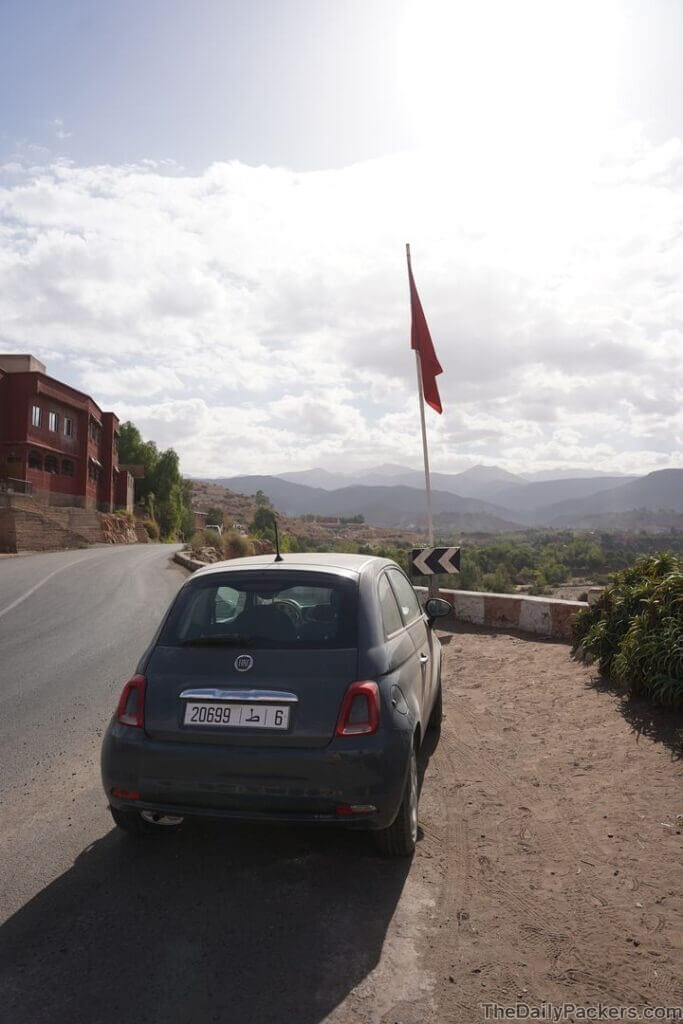
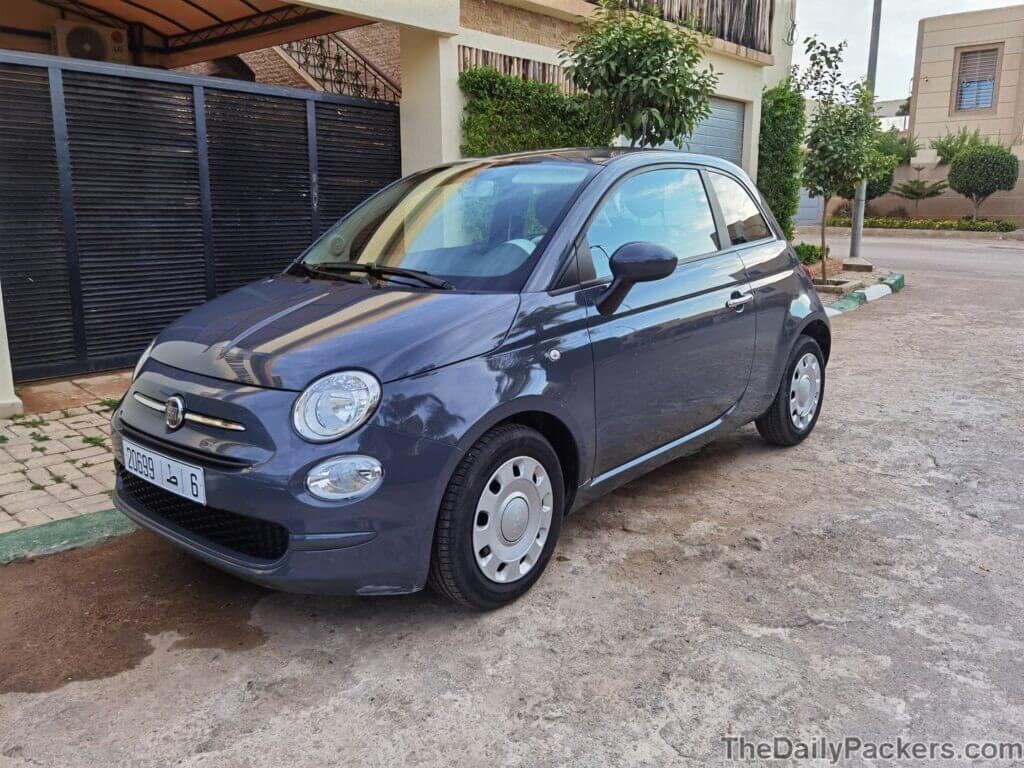
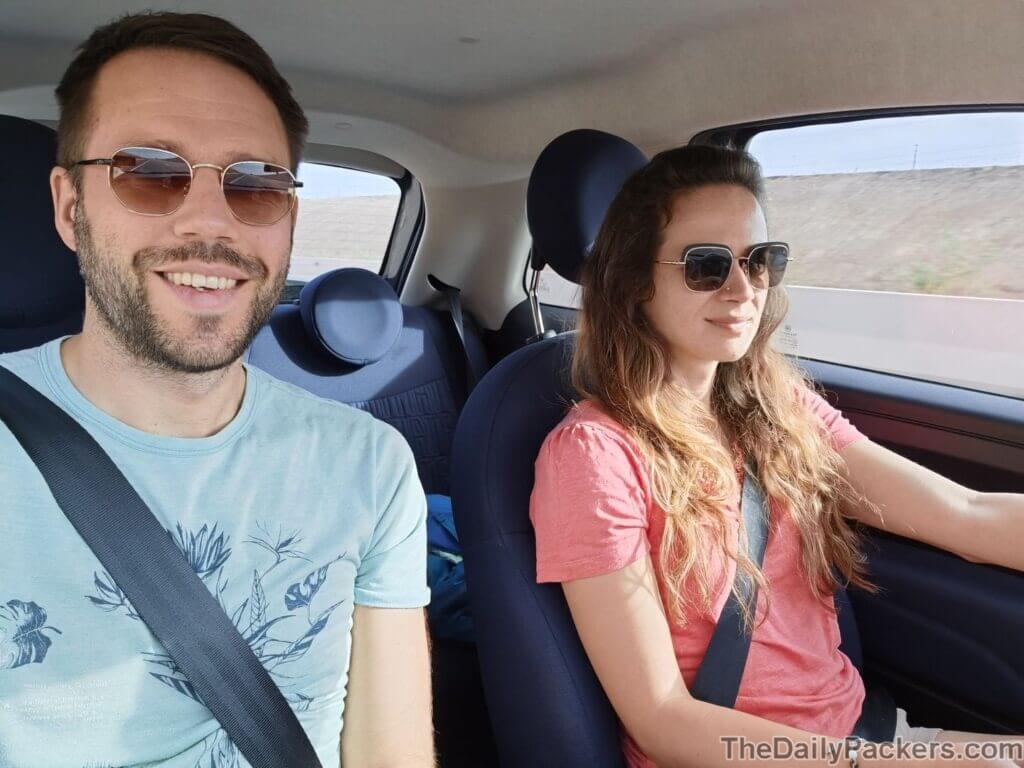
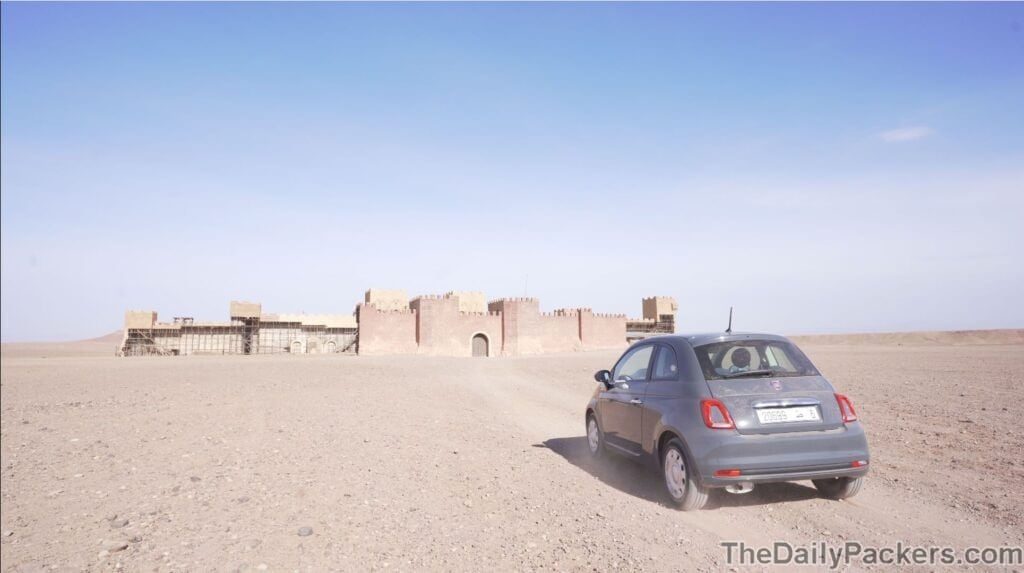
The type of car you choose for your Morocco roadtrip will have a big impact on both the price and the experience. We went for a small car—a Fiat 500—and honestly, it did the job perfectly.
Over 2,500 km, we drove through big cities, tiny villages, winding mountain roads, highways, desert tracks, and even some dirt roads. We never really struggled, and the car was easy to handle in tight spots and when parking in busy medinas.
Traveling light helped too. With just backpacks, the small trunk was more than enough. The lower rental cost and city-friendly size made it the right choice for us. The only downside was overtaking larger vehicles on highways, which felt a bit less comfortable for Tina, though it didn’t bother me much.
Rental company
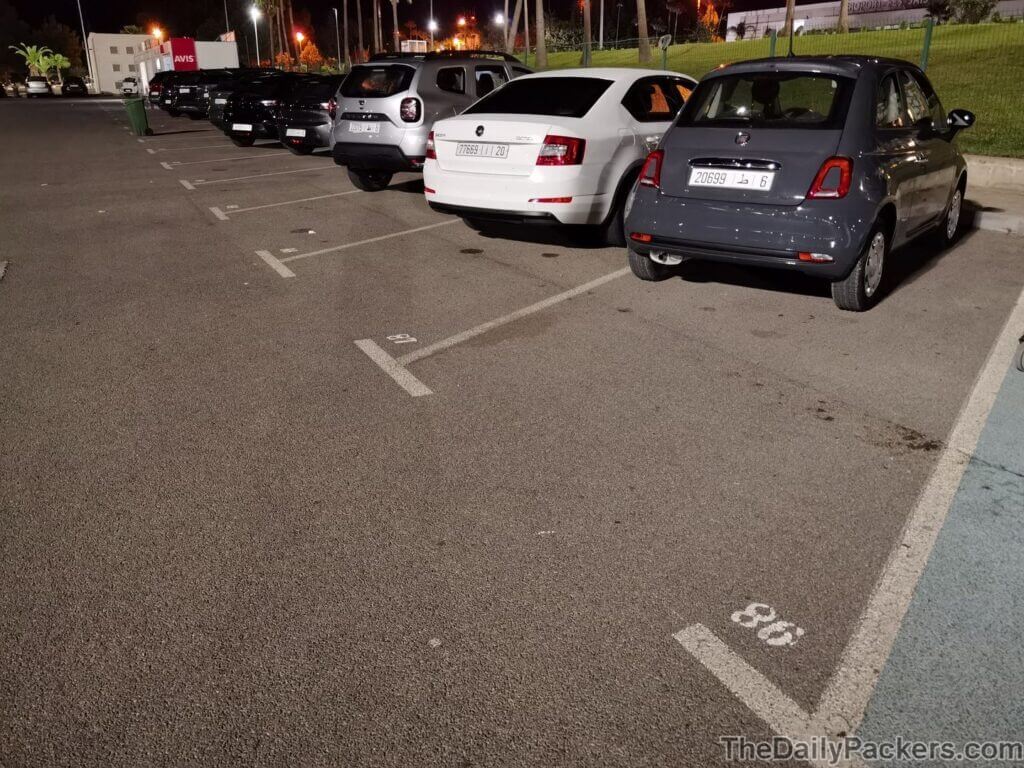
For our Morocco roadtrip, we booked with Budget, picking up and dropping off the car at Fes Airport. The process took a little time since there was only one agent at the desk, but once it was our turn everything went smoothly—the staff was friendly and helpful.
The car itself wasn’t spotless when we received it, but it was in good condition and perfectly fine for the trip. At the end of our rental, we asked if we could drop it off early in the morning instead of the previous evening, and they were flexible as long as the car was fueled and clean. That flexibility made things a lot easier for us.
Don’t be worried about a little damage!
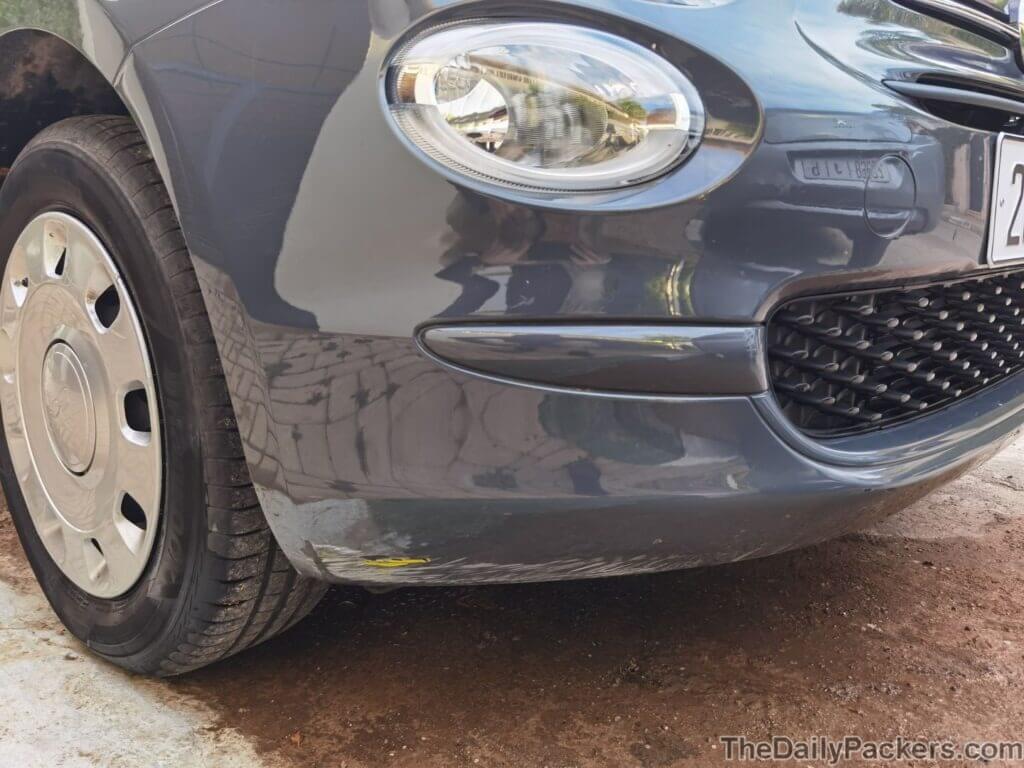
During our Morocco road trip, we ended up scratching the bumper a bit—probably in Rabat when we pulled over to check the map. The sidewalks there are surprisingly high, and with a small car like ours, it was easy to misjudge.
In the end, nothing came of it. Since the rental company had already been flexible with our drop-off time, we just left a small tip in the car (all the coins we had left, about 17 dh) as a thank you. We never heard anything about the scratch afterward.
So, don’t stress too much if you get a small scrape or two while driving in Morocco. It happens, and as long as you’re careful and respectful, it usually works out just fine.

Tip: We use the DJI Action 4 to film our vlogs — compact, durable, and perfect for capturing every adventure.
Refueling the car
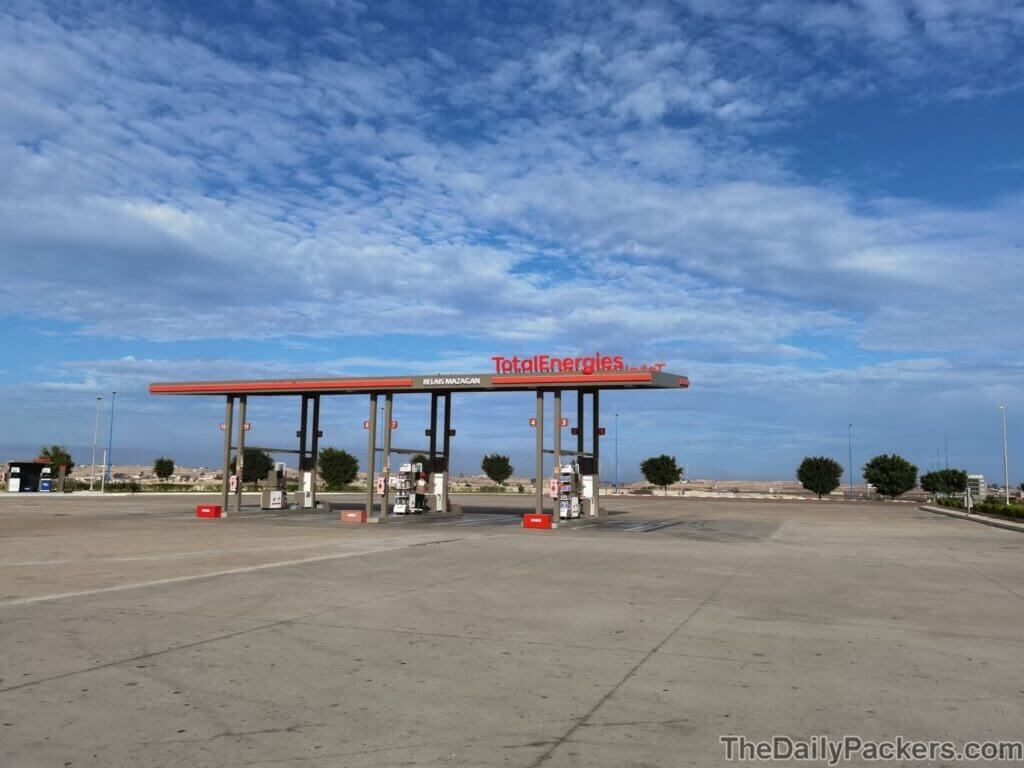
This is probably the easiest part of your Morocco road trip. Gas stations are everywhere, and while prices vary slightly, they’re pretty consistent across the country. The stations themselves are generally clean and reliable.
When you pull in, an attendant will come to you—there’s no self-service. Just tell them how much fuel you want, or say “le plein” if you want a full tank, and they’ll take care of it.
You can pay by cash or card, and it’s common to leave a small tip. Our rule of thumb was 5 dh for refueling and 10 dh if they also cleaned the windshield.

Check our Google Map of Morocco
Cleaning the car
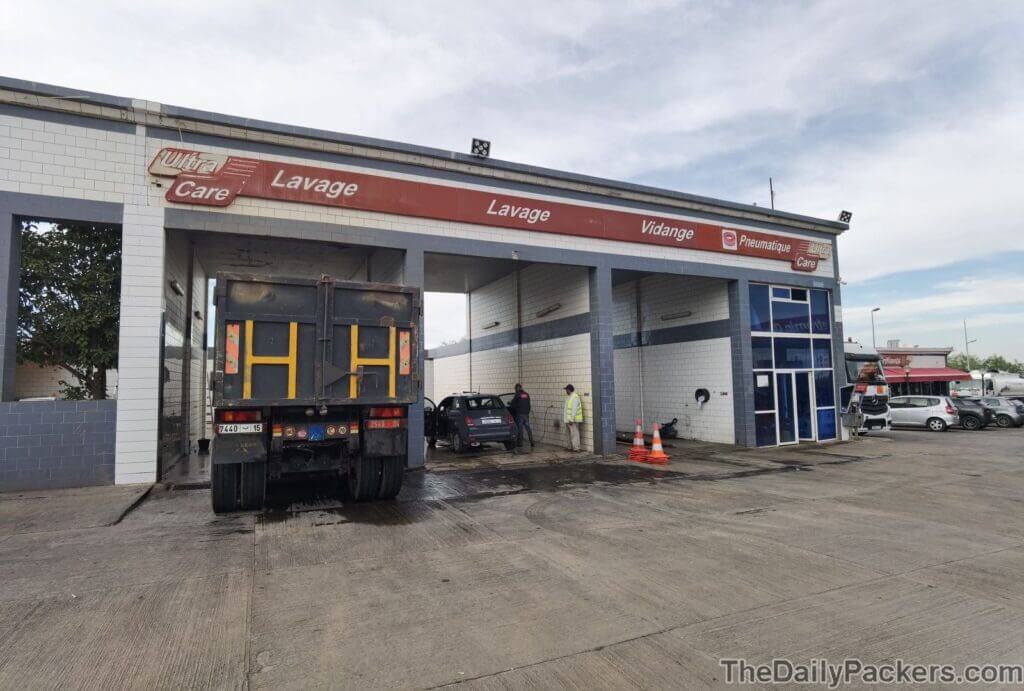
One of the nicest surprises during our Morocco road trip was how good the car washes are. Most gas stations have a washing area, and while a few offer automatic machines, we always went for the manual wash where someone cleans the car by hand.
Just ask for a “lavage” and in about 30 minutes your car will be spotless—inside and out. It’s incredibly thorough compared to what we’re used to back home.
The price is usually 30 dh, and we’d leave a 5 dh tip. It’s definitely worth doing every few days to keep the car comfortable and fresh, especially when driving through dusty mountain roads or the desert.
We recommend to rent a car through Discover Cars with free cancellation. Book your rental car here.
Drive like locals
One of the best tips to road trip Morocco is to simply adapt to the local driving style. In Morocco, things are a bit more flexible than what you might be used to back home, and the sooner you adjust, the easier it gets.
For example, lane markings don’t mean much—drivers often cruise in the middle, and a three-lane road can quickly turn into two and a half. It might feel chaotic at first, but if you go with the flow, it all makes sense.
Surprisingly, though, there isn’t as much honking as you might expect. Traffic feels more like organized improvisation than constant noise. Just keep calm, stay alert, and follow what locals do—you’ll be fine.

Don’t forget to book your accommodations in advance – the best places always fill up quickly.
Roundabout
If there’s one thing to know about driving in Morocco, it’s how the roundabouts work. There are a lot of them—just like in France—but the way locals use them is a bit different.
Instead of looping all the way around, drivers often cut more directly through. For example, if you’re taking the first exit, you simply keep to the right and head out straight away. If you need to go further around, stay more in the middle.
It might feel strange at first, but once you get used to the local flow, it becomes second nature. Keep this in mind during your Morocco roadtrip, and you’ll avoid a lot of confusion.
Road Police
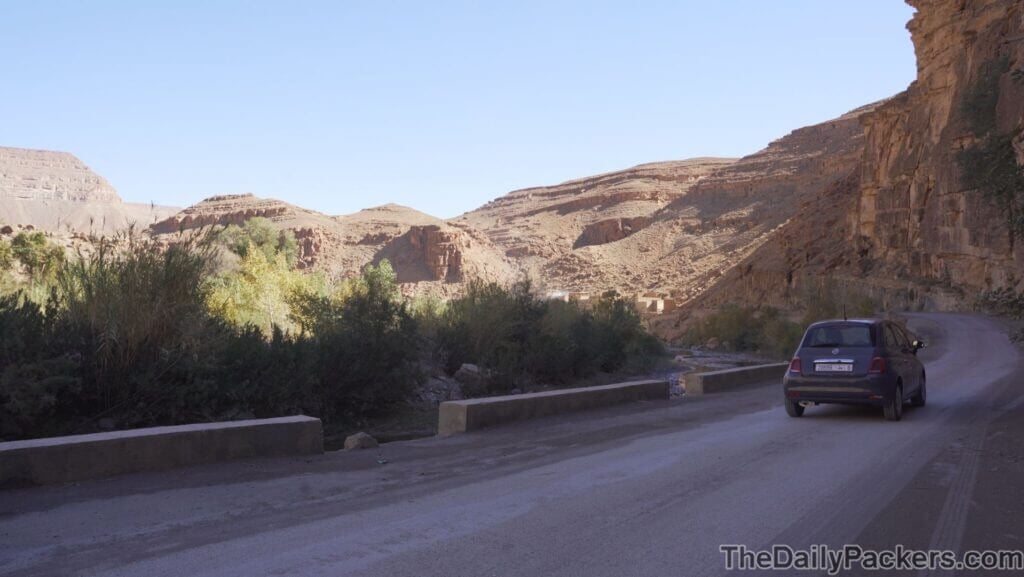
Something you’ll definitely notice on your Morocco road trip is the strong police presence. Officers are often stationed at the entrances of cities, towns, and even small villages. Sometimes they’re just checking traffic, and other times they’re monitoring speed.
We got stopped once for going 71 km/h in a 60 zone while entering a town. The officer asked for my documents—driver’s license, passport, and car papers—and then showed me the radar. I admitted I hadn’t slowed down quickly enough. He asked for 150 dh, but after some discussion, I ended up giving 100 dh, and he let us go.
The only other time we were stopped was in the middle of nowhere, where the officer just asked where we were heading and waved us through.
The takeaway: always slow down when approaching towns or villages, as speed checks are common. And if you do get stopped, stay calm and respectful—it usually goes smoothly.
Check our Google Map of Morocco
Watch out for everything!
One of the most important tips to road trip Morocco is to always stay alert. Obstacles come in all shapes, sizes, and even species.
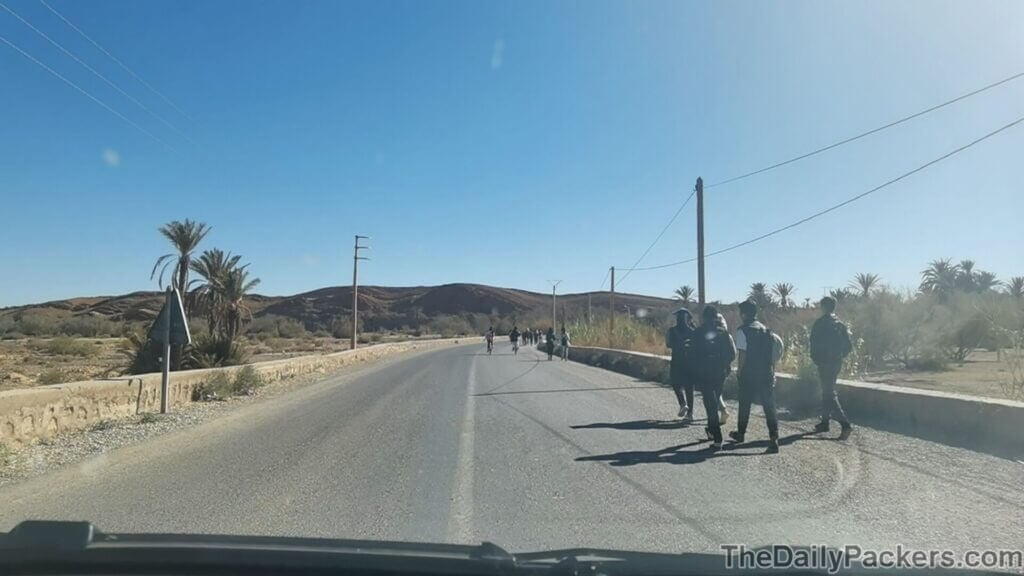
In towns, you’ll often have people, children, or animals crossing the road without warning. Around schools, it can get even busier, with groups of students on foot or bikes weaving between cars.
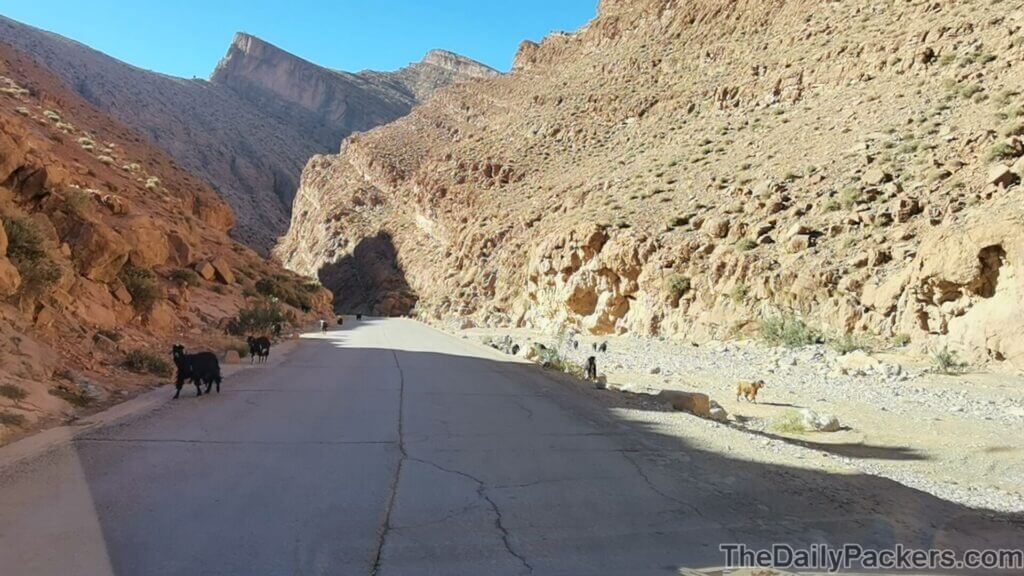
Out in the countryside, it’s common to see donkeys, sheep, or even goats on the road. Sometimes entire herds are guided along by a shepherd. Most of the time they’ll move aside as you approach, but it’s best to slow down and be cautious.
Driving in Morocco is all about expecting the unexpected—if you keep your eyes open, you’ll be just fine.
Pedestrians do not have priority
Another thing to know when driving in Morocco is that pedestrian crossings (zebras) don’t work the same way as in many other countries. Here, cars have the priority, and it’s up to pedestrians to cross carefully.
When passing through towns, it’s completely normal to see people crossing anywhere, sometimes even right in front of your car. They’ll usually move slowly across, sometimes brushing close to your vehicle, but as long as you respect the speed limits, it all works out.
The key is to always stay alert during your Morocco roadtrip—expect people to cross at any time, not just at marked crossings.
Check our Google Map of Morocco
No planning needed
One of the most important tips to road trip Morocco is to always stay alert—obstacles can come in all shapes, sizes, and even species.
In towns, you might suddenly find people, children, or animals crossing the road without warning. Around schools, expect clusters of students and bikes weaving in and out of traffic.
Out in the countryside, it’s common to meet donkeys, sheep, or even goats right on the road. Sometimes entire herds are guided by a shepherd. Most of the time they’ll move aside as you approach, but it’s always best to slow down and stay cautious.
When it comes to driving in Morocco, the golden rule is to expect the unexpected. Keep your eyes open, and you’ll be fine.
Tip: We use the DJI Action 4 to film our vlogs — compact, durable, and perfect for capturing every adventure.
Driving in cities
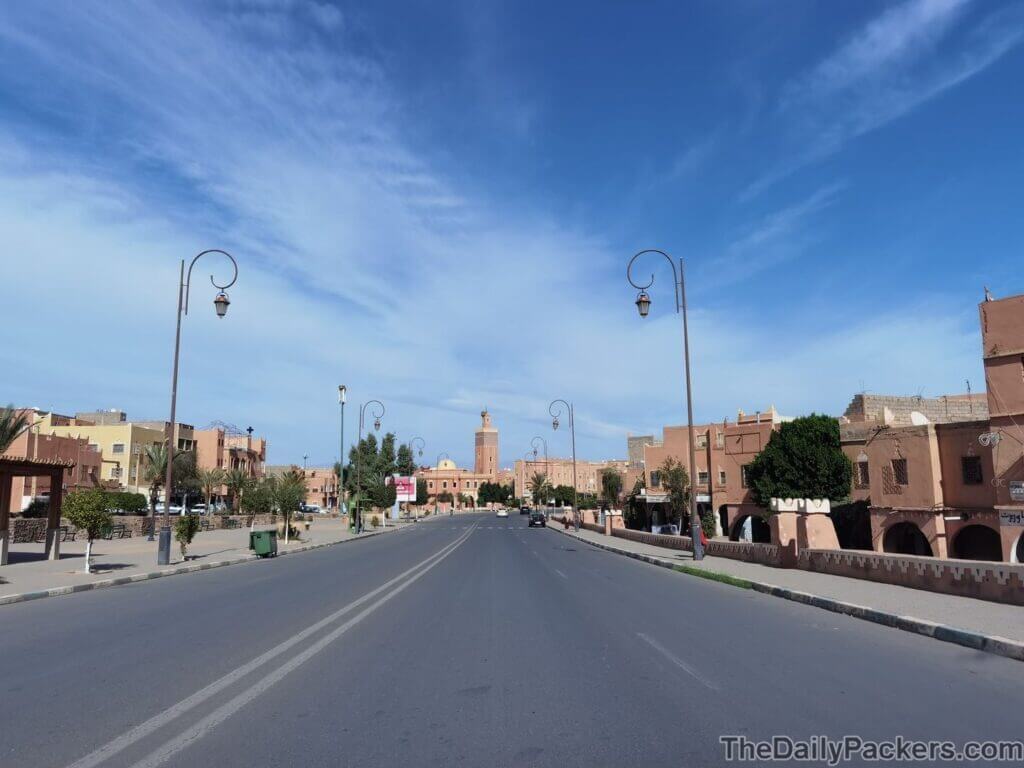
Driving in Moroccan cities can feel a bit more stressful at first—there are more cars, more people, and busier roads. We drove in Fes, Rabat, Casablanca, and Marrakech, and honestly, it was much easier than we expected.
Outside of rush hour, it’s pretty straightforward. During peak times in the morning and evening, it does get busier and requires more patience, but it’s still manageable. The best advice is to follow the local driving style, stay calm, and go with the flow. That’s the key to enjoying your Morocco roadtrip without unnecessary stress.
Check our Google Map of Morocco
Parking
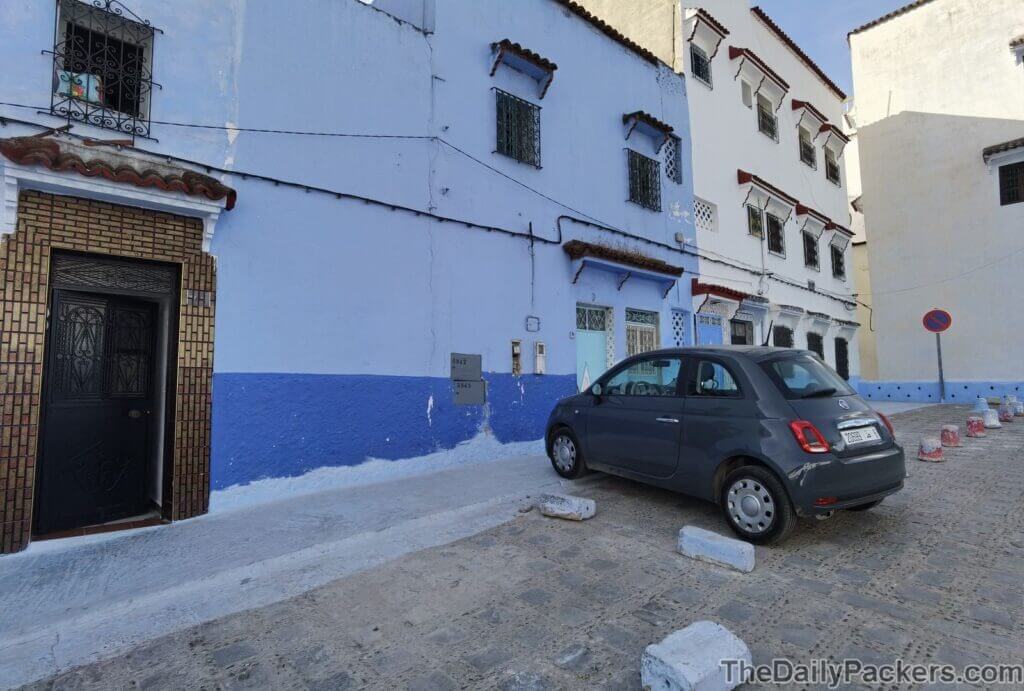
When you’re on a Morocco roadtrip, it’s always easiest to book accommodation that includes parking. That way you avoid the hassle altogether. But of course, that’s not always possible.
In places like Chefchaouen, for example, we had to park in a street parking area. It was simple enough and cost 10 dh per night. One tip from experience: pay the nightly rate that’s asked, and don’t try to bargain if you’re staying multiple nights. We tried negotiating once, and it only created tension when the attendant later asked for more. To avoid this, just pay per night and keep things smooth.
Tip: We use the DJI Action 4 to film our vlogs — compact, durable, and perfect for capturing every adventure.
Roads In Morocco
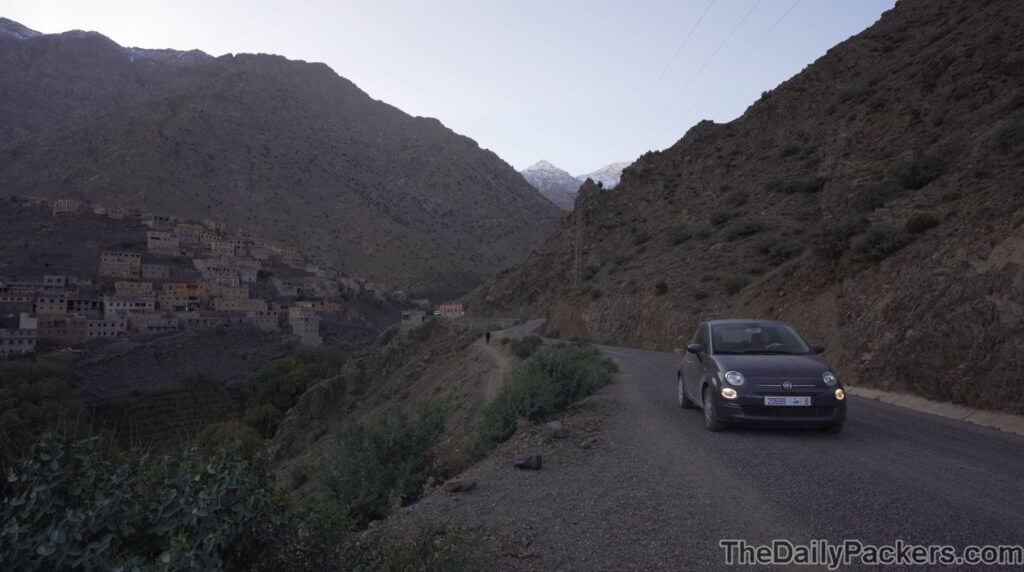
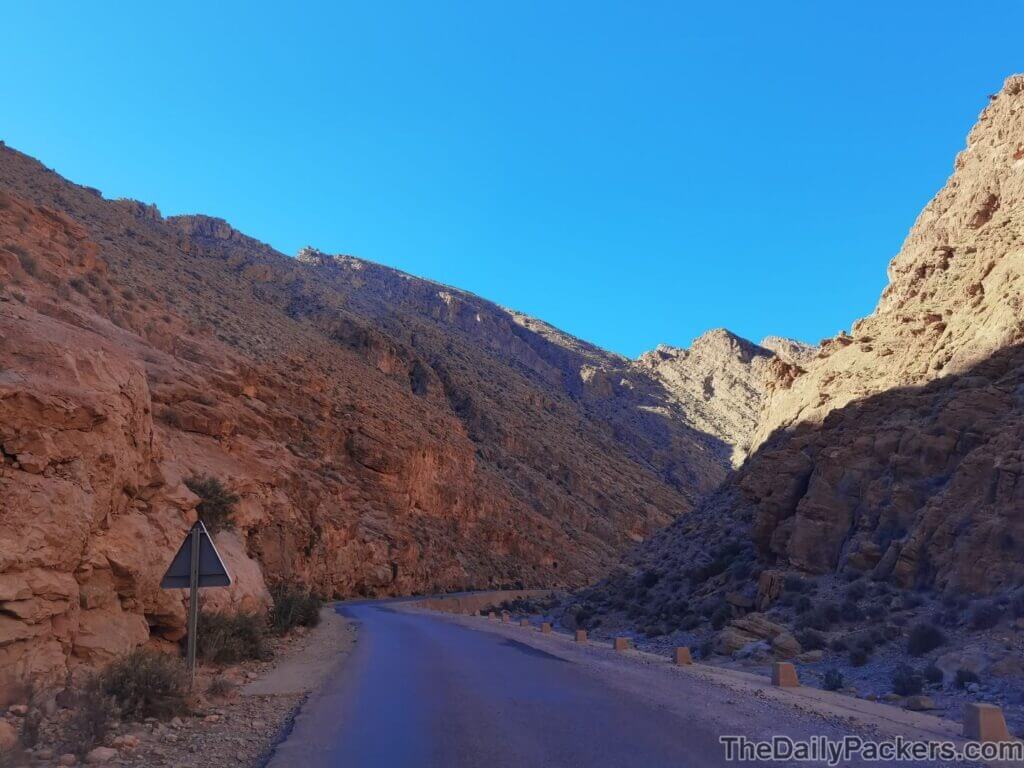
On a Morocco roadtrip, you’ll experience just about every kind of road—smooth highways, winding mountain passes, village streets, and even stretches of dirt road. We drove them all, and it was always manageable.
Some roads are in perfect condition, while others can be bumpy or partly damaged. The key is to take it slow when the surface isn’t great. The bonus is that many of these rougher roads pass through stunning landscapes, so you won’t mind going a little slower.
Read: Our complete 2-week Morocco Road Trip Itinerary
About the authors
We are Alex and Tina, a French-Serbian couple who met in China back in 2014. We spent three incredible years there before making France our home. Our shared passion for travel has been the heartbeat of our relationship for over 12 years, taking us across 44 countries and counting.
We launched TheDailyPackers in 2019 as a way to document our adventures. In 2026, we reached a major milestone by officially turning our blog into our full-time job. While we are still growing toward financial independence through this platform, every article we write is fueled by our mission to make your voyages easier through in-depth guides, honest advice, and the lessons we’ve learned from our own mistakes.
Our journey has not been without its storms. In 2023, our world changed forever when our first son, Poppy, was stillborn on November 25th. It was, and remains, the hardest chapter of our lives. In 2025, we were blessed with our second little boy, Milo. He has since joined our traveling tribe, and you’ll be seeing him—and the reality of traveling with a little one-on the blog more and more.
We hope to inspire you to explore the world with curiosity and resilience. Thank you for being part of our story.
You may also like those related posts
Tam Coc Boat Tour: Exploring Vietnam’s Ha Long Bay on Land
18 best things to do in Ushuaia, Argentina, in 4 to 5 days
The Best Tour du Mont Blanc Packing list 2025
7 Real Downsides of Traveling Without a Plan
Half TMB Guide: Hike the Best of Tour du Mont Blanc
Terracotta Army: Xi’an’s Unmissable Ancient Wonder
Hiking Tour du Mont Blanc: The Best 11-Day Guide
10-day Andalusia Itinerary: The best of the south of Spain
Pssst, did you know that…
If you purchase something through our links, we earn a small fee. However, you still pay the same. Win-win! And one day we may get to be full-time travel bloggers =)
Find Hotels with Booking.com
Do Yoga with KVY
Buy us a Coffee
Rent a car with DiscoverCars
Find Attractions with GetYourGuide
Find Flights with Expedia
Buy an eSIM with Airalo
Get insured with World Nomads
Get ready with Amazon.com