

Introduction
Havana is an enchanting and fascinating city in Cuba, North America. With its rich Cuban history and significant political importance, it’s one of the most fascinating places to visit in the Caribbean. What makes Havana truly unique is its contrasts: on one side, you’ll find beautifully restored colonial squares and grand buildings, while just around the corner, you’ll see crumbling facades and poorer neighborhoods that tell a different story of Cuban life. These contradictions are what make Havana so captivating.
We loved our time in the capital and put together this Havana Travel Guide to help you experience it too.
WIFI in Havana: Staying connected in Cuba works a little differently. There are free open WIFI hotspots on most of the main squares in town, but to access them, you’ll need a local SIM card. You can get one from your hotel or at a local store, and with it, you’ll be able to log in to the city’s WIFI network.
Tours or independent travel?
One of the most common ways to visit Cuba, and Havana in particular, is through a tour agency. Normally, we’re last-minute travelers who never book tours or packages, but for Cuba, we made an exception. We spent two weeks here on a family trip and opted for a package deal. Looking back, it was the right call. Moving from city to city in Cuba isn’t always easy, especially if you don’t speak Spanish. While you can travel independently, for a first trip, we would strongly recommend joining a tour. It makes the experience much smoother and allows you to enjoy more of what Cuba has to offer.


Tip: We use the DJI Action 4 to film our vlogs — compact, durable, and perfect for capturing every adventure.
How to get there
The main gateway to Cuba is José Martí International Airport (HAV), located about 30 minutes outside Havana. Most international travelers, including those from Europe, Canada, and Latin America, arrive directly here. From the airport, the easiest way to reach the city is by taxi. Official taxis are readily available outside the terminal, and a ride to the center of Havana (Habana Vieja or Vedado) costs around 25–30 USD, depending on your destination. Payment is usually expected in cash.
There are city buses as well; however, those are meant for local people. From what we heard, locals don’t like tourists on their buses, especially with luggage.
If you’re already in Cuba, you can also reach Havana by bus. Viazul buses connect Havana with most other major Cuban cities like Varadero, Trinidad, Cienfuegos, and Santiago de Cuba. They’re comfortable, air-conditioned, and reliable, though you’ll need to book your ticket in advance, especially in high season.
For those arriving by cruise ship, Havana’s cruise terminal is right in the heart of the old town — meaning you’ll step off the ship and be surrounded by the city’s main attractions right away.
Renting a car is possible, but it can be expensive, and availability is limited. Roads in Cuba are often in poor condition, so unless you’re planning a road trip, it’s easier to rely on buses, taxis, or tours.

Moving Around
Getting around Havana is part of the adventure, and there are several ways to explore the city depending on your budget and style.
On Foot – The old town (Habana Vieja) is compact, walkable, and best enjoyed slowly. Many of the highlights, like Plaza Vieja, Plaza de Armas, and the Malecón, are within walking distance, so wear comfortable shoes and take your time soaking in the atmosphere.
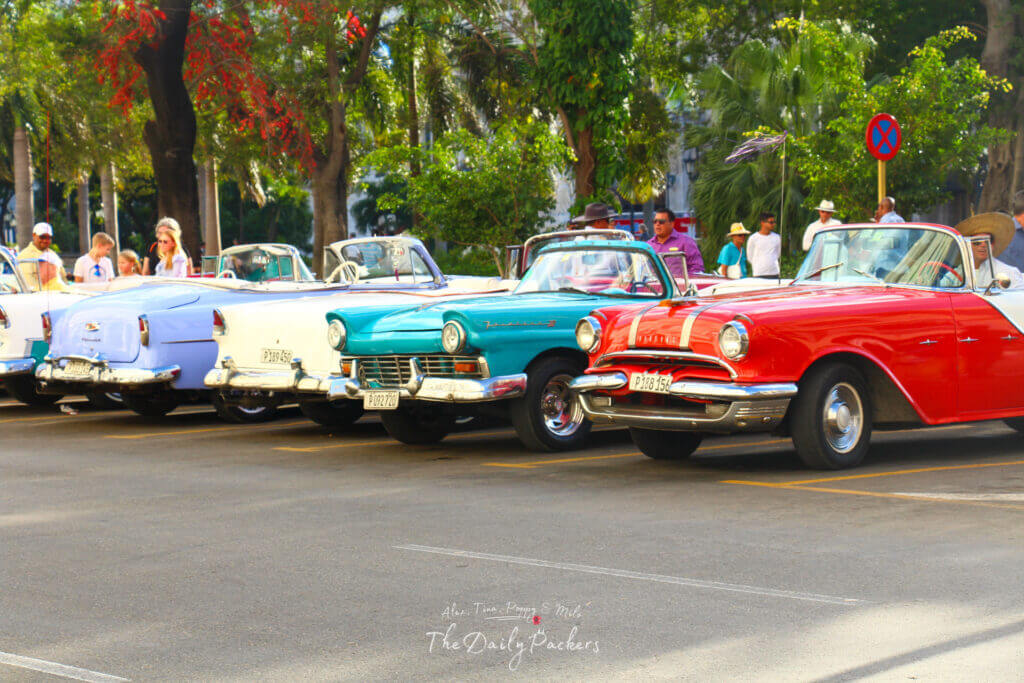
Taxis – You’ll find all sorts of taxis in Havana. Classic American cars from the 1950s are iconic and fun, but usually more expensive since they’re aimed at tourists. Regular yellow taxis are cheaper and metered (though drivers often prefer to negotiate a flat price). For short rides in town, expect to pay 5–10 USD.
Coco taxis and bici-taxis – These are small, quirky vehicles (three-wheelers or bicycle-powered taxis) perfect for short trips. They’re fun to try at least once, but make sure you agree on a price before hopping in.
Public buses – Local buses are extremely cheap, but they’re crowded and not easy to figure out if you don’t speak Spanish. For most travelers, they’re more of an experience than a practical option. We heard that some travellers had really bad experiences on those.
Private transfers or tours – For longer distances, like trips to the beaches of Playas del Este or day trips outside Havana, it’s easier to arrange a driver through your hotel, casa particular, or a tour agency.
Travel tip: Havana traffic can be chaotic, but it’s not aggressive. The biggest challenge is often the lack of street signs, so having an offline map (like Maps.me) is a lifesaver.
When to Visit Havana
Havana is a year-round destination, but the experience changes a lot depending on the season.
- High season (November to April): This is the best time to visit Havana, with warm, dry weather and temperatures around 25–28°C (77–82°F). The skies are mostly sunny, humidity is lower, and it’s perfect for exploring the streets without overheating. Since it’s peak season, expect more tourists and higher accommodation prices.
- Wet season (May to October): During these months, temperatures rise to 30–32°C (86–90°F) with high humidity and frequent afternoon showers. The rain usually doesn’t last long, but it can be heavy. This is also hurricane season (June to November), though major storms are rare. On the plus side, the city feels more relaxed, prices are cheaper, and evenings are still lively.
Festivals and Events
- Havana Jazz Festival (January) – World-famous musicians fill the city with energy.
- Havana Carnival (July/August) – Colorful parades and street parties along the Malecón.
- Habano Cigar Festival (February/March) – A must for cigar enthusiasts.
Travel tip: If you want the perfect balance of pleasant weather and fewer crowds, visit in late November or early March.

Where to Stay in Havana
We’d recommend staying at least 3 nights in Havana to fully enjoy the city’s rhythm, its history, and the atmosphere of the streets. The city offers a mix of options, from historic hotels to charming casas particulares (local guesthouses).
- (€) Casa Particular – Staying in a casa particular is one of the most authentic ways to experience Havana. You’ll live with locals, get homemade breakfasts, and feel the real Cuban lifestyle. You can book many of them through Airbnb or local recommendations once you arrive.
- (€€) Hotel Inglaterra – Havana’s oldest hotel, located right on Parque Central. It has a rooftop terrace with great views and is within walking distance of the main old town attractions.
- (€€€) Gran Hotel Manzana Kempinski La Habana – If you want to splurge, this luxury hotel offers a rooftop pool with panoramic views of the Capitol and old Havana. It’s modern, elegant, and one of the top stays in the city.
💡 Travel tip: Even if you choose a hotel, try to spend at least one night in a casa particular. It gives you a more personal, local experience you won’t find in luxury hotels.

What to Eat Havana Travel Guide
Cuban food is simple, hearty, and full of flavor. In Havana, you’ll find a mix of traditional Cuban dishes and creative twists in paladares (privately run restaurants). Here are some must-try dishes:
- Ropa Vieja – Cuba’s national dish. Slow-cooked shredded beef in a tomato-based sauce with peppers and onions. Usually served with rice and fried plantains.
- Moros y Cristianos – Black beans and rice, a staple at nearly every meal.
- Tostones – Twice-fried green plantains, crunchy and delicious.
- Yuca con Mojo – Cassava root topped with a garlicky citrus sauce. Cuban Sandwich – A pressed sandwich with roast pork, ham, Swiss cheese, pickles, and mustard. Best as a quick lunch.
- Flan – A classic Cuban dessert.
Of course, don’t miss a Mojito or a Cuba Libre — Havana is the birthplace of both!
Where to Eat in Havana
- La Guarida – Probably Havana’s most famous paladar, set in a crumbling yet beautiful mansion. Known for its creative Cuban cuisine.
- El Dandy – A cool, artsy café with cocktails, tapas, and a good vibe.
- El Rum Rum de la Habana: Cigar Wine Bar Lounge serving fresh dishes
Travel Tip: Paladares are the best way to eat in Cuba. They’re privately owned and usually offer better quality and creativity than state-run restaurants.

Things to do in Havana
Go on a Havana Walking Tour
The best way to experience Havana is on foot. The old city (La Habana Vieja) is packed with history, color, and energy, and every corner has a story to tell. You can simply stroll at your own pace, soaking up the colonial architecture, vibrant street life, and the sound of salsa drifting from open windows.
If you want to go deeper, many accommodations can arrange a local guide for you. A guided walking tour is a great way to understand the city’s layered history — from its colonial past to the revolution and beyond. Guides often share stories you won’t find in books and point out hidden details you’d otherwise miss.

Visit Plaza de la Revolución
No trip to Havana is complete without a stop at Plaza de la Revolución (Revolution Square). This vast, open square is one of the most politically significant places in Cuba. It’s here that Fidel Castro and other leaders addressed crowds of over a million Cubans during major events like May Day (1 May) and the 26 July celebrations.
The square has also hosted historic moments beyond Cuban politics — Pope John Paul II and later Pope Francis both held Mass here, drawing huge gatherings.
Today, visitors come not only for the history but also to see the iconic giant murals of Che Guevara and Camilo Cienfuegos on the surrounding ministry buildings, along with the towering José Martí Memorial. Standing here, you can feel the weight of Cuba’s revolutionary past.

Explore the José Martí Memorial
Right across from Plaza de la Revolución, you’ll find the José Martí Memorial, one of Havana’s most striking landmarks. Standing 109 meters tall, this star-shaped tower dominates the square and is dedicated to José Martí, Cuba’s national hero, poet, and writer.
At its base, a large white marble statue of Martí is surrounded by six columns and gardens, making it both a solemn and inspiring site. Inside, you’ll find a small museum about Martí’s life and legacy, and if you head up the tower, there’s an observation deck that offers some of the best panoramic views of Havana.
Fun fact: This is considered the largest monument in the world dedicated to a writer, reflecting just how important Martí is to Cuban identity and history.

Explore Habana Vieja (Old Havana)
If there’s one place you can’t miss in Havana, it’s Habana Vieja, the historic old town. This is the beating heart of the city, where every street tells a story. Declared a UNESCO World Heritage Site, the area is full of charm, contrasts, and contradictions: one moment you’ll be walking past beautifully restored colonial mansions, and the next you’ll see crumbling facades that feel frozen in time.
Most of the top attractions in Havana are located right here — from historic forts and museums to cigar shops, rum houses, and centuries-old churches. The neighborhood is also home to the city’s most famous plazas: Plaza Vieja, Plaza de la Catedral, Plaza de Armas, and Plaza de San Francisco de Asís. Each one has its own character, with cobblestone streets, lively cafés, and locals hanging out on benches.

Relax at Plaza Vieja
Among Havana’s famous plazas, Plaza Vieja (Old Square) is the most beautifully restored and one of the liveliest. Surrounded by colorful colonial-era buildings, many with wrought-iron balconies and arcades, the square feels like stepping into a painting. Today, it’s lined with cafés, restaurants, and bars, making it the perfect spot to take a break from exploring.
Grab a coffee or a mojito on one of the terraces, watch kids chasing pigeons across the cobblestones, and enjoy the vibrant local atmosphere. You’ll often hear the sound of live Cuban music drifting from nearby hotels and restaurants, where bands perform daily, adding even more charm to the square.

Wander Around Plaza de Armas
Plaza de Armas is Havana’s oldest square, dating back to the 1520s, and one of the four main plazas of the city. Originally called Plaza de Iglesia, it changed its name in the late 16th century when the Spanish colonial governor, based in the nearby Castillo de la Real Fuerza, used the open space for military parades and drills.
Today, the square feels more like a peaceful oasis in the heart of Habana Vieja. Shaded by tall royal palms and surrounded by colonial-era buildings from the 1700s, it’s a beautiful place to slow down. You’ll find antique bookstalls, second-hand sellers, and small markets here, giving the plaza a vibrant yet relaxed character.

Stop at Plaza de la Catedral
Discover Plaza de la Catedral, one of the four main squares of Old Havana and perhaps its most elegant. Interestingly, this spot was once a swamp, later drained and used as a naval dockyard. Everything changed in 1727 with the construction of the stunning Havana Cathedral, giving the square its name and transforming it into one of the city’s most prestigious addresses.
Around the plaza, you’ll find some of Havana’s grandest colonial mansions, now housing museums, galleries, and lively restaurants. One of the highlights is the Museo del Arte Colonial (Colonial Art Museum), which showcases furniture and decorative arts from the Spanish colonial era. The square itself is always buzzing with life, with street performers, cafés, and musicians adding to the atmosphere.
Visit Havana Cathedral
Step inside the Havana Cathedral, one of 11 Catholic cathedrals in Cuba and perhaps the most iconic. This Baroque masterpiece is the seat of the Roman Catholic Archdiocese of San Cristóbal de la Habana and dominates Plaza de la Catedral with its striking asymmetrical towers and ornate façade.
Beyond its architecture, the cathedral carries deep historical significance. From 1796 to 1898, it even housed the remains of Christopher Columbus before they were transferred to Seville Cathedral in Spain. Inside, you’ll find a quiet, sacred atmosphere with beautiful chapels, religious artwork, and centuries of history etched into its walls.

Tip: We use the DJI Action 4 to film our vlogs — compact, durable, and perfect for capturing every adventure.
Explore Castillo de la Real Fuerza
Explore Castillo de la Real Fuerza, one of the oldest European fortresses in the Americas. Built between 1558 and 1577, this impressive stone stronghold was originally constructed to protect Havana from pirate attacks. Considered an engineering marvel of its time, the fortress became the first defensive construction guarding the city.
Even if you don’t go inside, the exterior is striking, with its thick walls, bastions, and moat offering a glimpse into Havana’s colonial past. Inside, you’ll find a small museum dedicated to Cuba’s maritime history, including detailed ship models and artifacts that highlight Havana’s role as a key Spanish port in the Caribbean.

Tip: We never travel without our DJI Mini 3 PRO drone anymore — it’s totally worth having to capture places from a whole new perspective.
Discover Fortaleza de San Carlos de la Cabaña
Discover Fortaleza de San Carlos de la Cabaña, the largest fortress in the Americas. Built in the 18th century after the British briefly captured Havana, it was designed to strengthen the city’s defenses and was named in honor of King Carlos III of Spain. Stretching over 700 meters, the scale of the fortress is truly impressive.
Today, visitors can walk through its massive walls, tunnels, and courtyards while enjoying sweeping views of Havana and the harbor. One of the highlights is the nightly Cañonazo ceremony, where actors in traditional uniforms fire a cannon at 9 p.m.—a ritual that once marked the closing of the city gates. It’s a mix of history, tradition, and spectacle that you shouldn’t miss.

Discover Castillo de los Tres Reyes del Morro
Discover Castillo de los Tres Reyes del Morro, one of Havana’s most iconic landmarks perched at the entrance of the harbor. Designed by Italian engineer Juan Bautista Antonelli and built in the late 16th century using slave labor, this fortress was the city’s main defense against pirates and foreign invasions for nearly two centuries.
Morro Castle is both impressive and chilling. Its massive walls and strategic position tell of its military importance, while darker stories linger—like the holes in the rear walls once used to feed prisoners to the sharks below. Until the construction of La Cabaña fortress in 1774, El Morro was Havana’s primary shield.
Today, it remains a symbol of the city, offering sweeping views over the sea and the skyline of Old Havana.

Explore the National Capitol Building
Drive by or explore the National Capitol Building (El Capitolio), one of Havana’s grandest landmarks. Built between 1926 and 1929, its design was inspired by the Capitol in Washington, D.C., and the Pantheon in Paris, blending neoclassical and art deco styles. Cuban and foreign artists worked together to create this monumental structure, which was once the seat of government.
Today, the Capitol is undergoing restoration to once again house Cuba’s National Assembly. Even from the outside, its striking dome and elegant façade are breathtaking, making it one of the city’s most photographed buildings.

Visit the Gran Teatro de La Habana
Pop by the Gran Teatro de La Habana, one of the city’s most impressive cultural landmarks and the home of the Cuban National Ballet. Designed by Belgian architect Paul Belau and built by Purdy and Henderson in 1914, it was constructed on the site of the former Teatro Tacón. Its elaborate neo-baroque façade and grand interiors make it a highlight of Havana’s architecture, and if you’re lucky, you might even catch a performance while you’re there.

Explore the Convento de San Francisco de Asís
Stroll a bit further through the old town until you reach the Basílica Menor y Convento de San Francisco de Asís. Built in its present form in 1716, this striking religious complex once stood as the most important symbol of the Franciscan order in Havana. Its bell tower dominates the surrounding square, and the interior now serves as a concert hall and museum, blending history, architecture, and culture in one beautiful stop.

Relax at Plaza de San Francisco
Right in front of the Convento de San Francisco de Asís lies Plaza de San Francisco, one of the liveliest squares in Old Havana. Once the heart of trade and maritime activity, it’s surrounded by elegant colonial buildings, cobbled streets, and the impressive Lonja del Comercio. The plaza is also where you’ll find the Fountain of the Lions, a marble fountain carved in Italy in the 19th century.
Today, it’s a place where locals and tourists mingle — with cafés, musicians, and street performers adding charm to the historic atmosphere. It’s also a great spot to sit for a while, people-watch, and soak in the spirit of Havana before moving on.

Visit Finca Vigía – Ernest Hemingway’s Home
Step into the world of Ernest Hemingway at Finca Vigía, his former home on the outskirts of Havana. Hemingway lived here for more than a decade, and it’s where he wrote some of his most famous works, including The Old Man and the Sea. The house has been carefully preserved, with many of his personal belongings still on display — from his typewriter and books to hunting trophies and fishing gear.
Walking through the property feels like stepping back in time, giving you a glimpse into the writer’s daily life in Cuba. Outside, you can explore the lush gardens and see his beloved fishing boat, Pilar. It’s a must-visit for literature lovers and anyone curious about the deep connection between Hemingway and Havana.

Stroll the Malecón
No visit to Havana is complete without a walk along the Malecón, the city’s famous seaside boulevard. Stretching for 8 kilometers from Havana Harbor in Old Havana all the way to the Almendares River, the Malecón is both a roadway and a gathering place for locals.
By day, you’ll see fishermen casting their lines, vintage cars cruising past colorful but crumbling buildings, and families enjoying the sea breeze. By night, it turns into one of the most lively spots in Havana, with people socializing, playing music, and watching the waves crash against the seawall. Whether you walk it or drive it in a classic car, the Malecón offers one of the best glimpses into daily Cuban life.

Experience a Night Show at Hotel Nacional
If you want a taste of Havana’s nightlife with a touch of old-world glamour, head to the Hotel Nacional de Cuba. This historic hotel has hosted countless celebrities and political figures over the years, and it still carries that timeless charm. In the evenings, the hotel comes alive with cabaret performances and live music shows.
The atmosphere feels like stepping back into Havana’s golden age — colorful costumes, Cuban rhythms, and plenty of energy. While it’s more polished and touristy than the street music you’ll hear around the city, it’s still a fun way to end your day in Havana. Grab a drink, settle in, and let the show transport you into Cuba’s lively culture.

Have a Drink at La Bodeguita del Medio
No Havana trip is complete without stopping by La Bodeguita del Medio, one of the city’s most iconic bars. Since opening in 1942, it has attracted world-famous names like Salvador Allende, Pablo Neruda, Josignacio, and countless others. The bar proudly claims to be the birthplace of the mojito, the classic Cuban cocktail made with rum, lime, sugar, mint, and soda water—though some dispute the origin story, it’s still one of the best places to sip one.
What makes La Bodeguita truly special is its atmosphere. The walls are covered in signatures, photos, and mementos left by visitors from around the world, each adding to its rich history. It’s part restaurant, part museum, part cultural experience. Whether you go for a mojito, a traditional Cuban meal, or just to soak in the lively vibe, it’s a Havana institution you shouldn’t miss.

More Things to Do in Havana
If you have extra time in the city or want to see more than the main highlights, here are a few additional stops worth adding to your Havana itinerary:
- Museo Nacional de Bellas Artes – Explore Cuban art across the centuries in one building, and international masterpieces in another.
- Museo de la Revolución – Set in the former presidential palace, this museum dives deep into Cuba’s revolutionary history.
- Callejón de Hamel – A vibrant alley full of Afro-Cuban art, murals, and live rumba music on Sundays — a true cultural hotspot.
- Museo del Ron Havana Club – Learn about the history of Cuba’s famous rum and enjoy a tasting.
- Calle Obispo – A lively pedestrian street perfect for wandering, shopping, and catching live music in hidden cafes.
- Cementerio de Cristóbal Colón – One of Latin America’s most beautiful cemeteries, with ornate mausoleums and statues.
- Playas del Este – Just 20 minutes outside Havana, this stretch of beaches is ideal for a quick escape to the sea.
Havana Travel Tips
Bring small gifts for locals
Cuba is an incredible country to visit, but you’ll quickly notice signs of poverty in Havana and beyond. It’s common for locals to ask visitors for small items rather than money. To prepare, pack a few useful things you can give away — soaps, shampoos, pens, pencils, notebooks, or even small perfumes. These everyday items are often hard to find locally and are always appreciated.

Supermarkets and Daily Life in Havana
One thing that will strike you when walking around Havana is the long lines in front of supermarkets or small grocery shops. Many shelves are half-empty, and shortages are still part of daily life for Cubans. As a visitor, you’ll usually find what you need in restaurants or tourist-oriented shops, but keep in mind that these are often out of reach for locals because of the high prices.
If you’re planning a trip to Cuba, it’s a good idea to bring along anything you might really need — toiletries, snacks, or even baby supplies — because you can’t always count on finding them easily once you arrive.
Everyday Trade Between Locals
Because of these shortages, trade and barter have become a normal part of daily life. While not officially encouraged by the law, most Cubans exchange what they have for what they need. A fisherman might trade fresh fish for wood, a farmer might exchange vegetables for clothes, and so on. It’s a reminder of how resourceful and supportive the local community is, even in challenging conditions.
3-day Havana Itinerary
Day 1 :
- Plaza de la Revolucion
- Jose Marti Memorial
- Malecón
- Fortaleza de San Carlos la Cabana
- Castillo de los Tres Reyes del Morro
- Hotel Nacional
Day 2:
- Habana Vieja (Old Havana)
- Plaza Vieja
- Plaza de Armas
- Plaza de la Catedral
- Havana Cathedral
- Castillo de la Real Fuerza
- La Bodeguita Del Medio
Day 3:
- National Capitol Building
- Gran Teatro de la Habana
- Convento de San Francisco de Asís
- The Ernest Hemingway Home and Museum
About the authors
We are Alex and Tina, a French-Serbian couple who met in China back in 2014. We spent three incredible years there before making France our home. Our shared passion for travel has been the heartbeat of our relationship for over 12 years, taking us across 44 countries and counting.
We launched TheDailyPackers in 2019 as a way to document our adventures. In 2026, we reached a major milestone by officially turning our blog into our full-time job. While we are still growing toward financial independence through this platform, every article we write is fueled by our mission to make your voyages easier through in-depth guides, honest advice, and the lessons we’ve learned from our own mistakes.
Our journey has not been without its storms. In 2023, our world changed forever when our first son, Poppy, was stillborn on November 25th. It was, and remains, the hardest chapter of our lives. In 2025, we were blessed with our second little boy, Milo. He has since joined our traveling tribe, and you’ll be seeing him—and the reality of traveling with a little one-on the blog more and more.
We hope to inspire you to explore the world with curiosity and resilience. Thank you for being part of our story.
You may also like those related posts
TMB Stage 2: Guide from Les Contamines to Col de la Croix du Bonhomme
Saleccia & Lotu: Best Beaches of Corsica’s Agriates Desert
10 best things to do in Singapore, in 3 days for first timers
23 Best things to do in Nice, France, in 3 days or more
16 Best things to do in Fes, Morocco, in 3 days or more
17 Best Things to Do in Lausanne, Switzerland, in 2 to 4 Days
How to Spend 1 Perfect Day in Cacheuta and Potrerillos
11 best things to do in Capilla del Monte, Argentina, in 3 days
Pssst, did you know that…
If you purchase something through our links, we earn a small fee. However, you still pay the same. Win-win! And one day we may get to be full-time travel bloggers =)
Find Hotels with Booking.com
Do Yoga with KVY
Buy us a Coffee
Rent a car with DiscoverCars
Find Attractions with GetYourGuide
Find Flights with Expedia
Buy an eSIM with Airalo
Get insured with World Nomads
Get ready with Amazon.com