
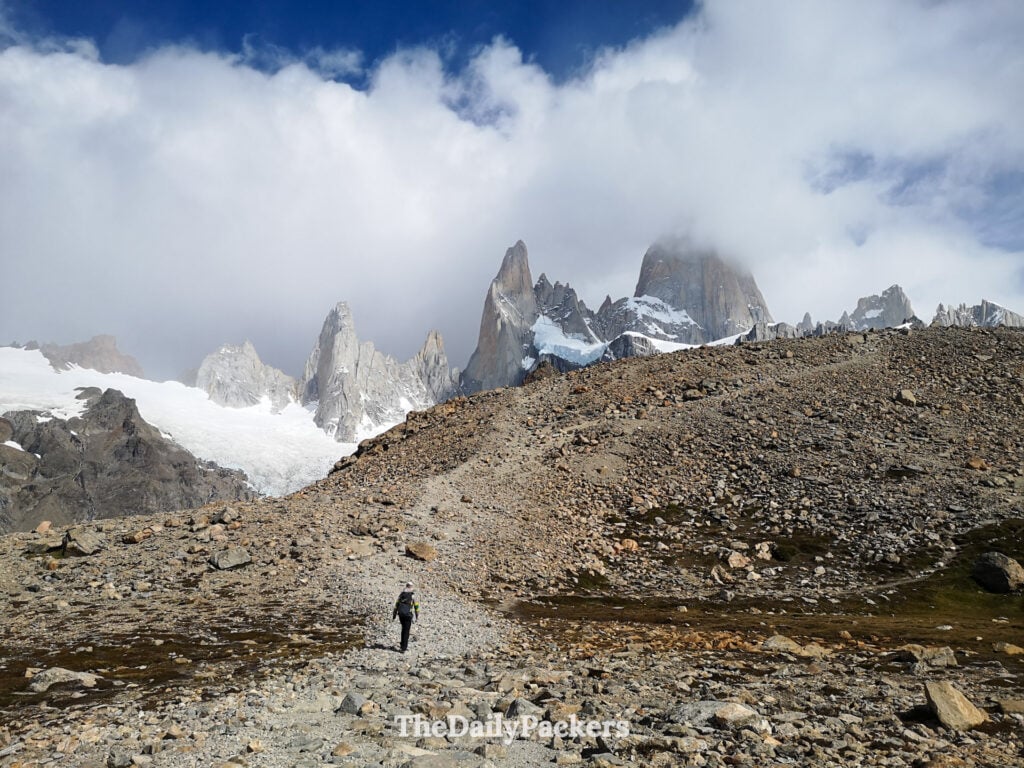
Introduction: Patagonia itinerary
Looking for your next adventure in Patagonia? You’ve come to the right place! We spent over six weeks backpacking Argentina, allowing us to explore the country slowly and deeply—from the vibrant streets of Buenos Aires to the glaciers, mountains, and lakes of Patagonia.
Argentina quickly became one of our favorite countries in the world, and Patagonia is a huge part of that. Whether you’re dreaming of hiking in El Chaltén, exploring the Perito Moreno Glacier, kayaking in Bariloche, or walking with penguins in Ushuaia, this region is filled with unforgettable landscapes and experiences.
In this article, we’re sharing our best Patagonia itineraries, including a 2-week Patagonia itinerary covering the must-see highlights and a 3-week Patagonia itinerary that dives even deeper into Patagonia’s remote beauty. If you have even more time, check out our full 6-week Argentina itinerary, which includes Patagonia plus other incredible regions of the country.
Whether you have 2 or 3 weeks, this guide will help you plan an epic adventure in one of the most breathtaking destinations on Earth!
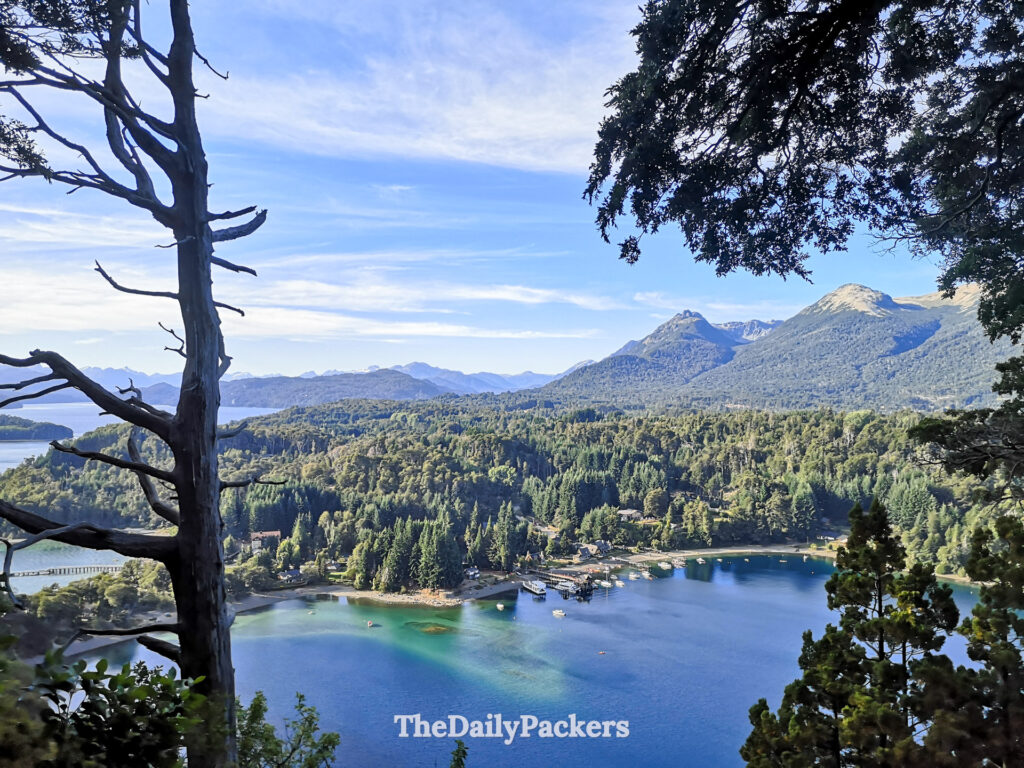

2-Week Patagonia Itinerary overview
- Day 1: Arrive Buenos Aires, fly to San Carlos de Bariloche
- Day 2: Llao Llao Park & Circuito Chico
- Day 3: Villa La Angostura & Los Arrayanes
- Day 4: Refugio Frey vía Cerro Catedral
- Day 5: Cerro Campanario & Kayak on Nahuel Huapi Lake
- Day 6: Fly to El Calafate, shuttle to El Chaltén
- Day 7: Hike to Laguna Torre
- Day 8: Hike to Laguna de los Tres (Fitz Roy)
- Day 9: Transfer to El Calafate & visit Perito Moreno Glacier
- Day 10: Fly to Ushuaia & explore the town
- Day 11: Walk with Penguins & Beagle Channel tour
- Day 12: Hike in Tierra del Fuego National Park
- Day 13: Laguna Esmeralda (morning) & afternoon flight to Buenos Aires
- Day 14: Explore Buenos Aires & fly home

3-Week Patagonia Itinerary overview
The first nine days are the same, and we recommend adding Torres Del Paine in between after El Calafate and before Ushuaia
- Day 1: Arrive Buenos Aires, fly to San Carlos de Bariloche
- Day 2: Llao Llao Park & Circuito Chico
- Day 3: Villa La Angostura & Los Arrayanes
- Day 4: Refugio Frey vía Cerro Catedral
- Day 5: Cerro Campanario (morning) & Kayak on Nahuel Huapi Lake (afternoon)
- Day 6: Fly to El Calafate, shuttle to El Chaltén
- Day 7: Hike to Laguna Torre
- Day 8: Hike to Laguna de los Tres (Fitz Roy)
- Day 9: Transfer to El Calafate & visit Perito Moreno Glacier
- Day 10: Bus to Puerto Natales
- Day 11: Torres del Paine W-Trek
- Day 12: Torres del Paine W-Trek
- Day 13: Torres del Paine W-Trek
- Day 14: Torres del Paine W-Trek
- Day 15: Torres del Paine W-Trek
- Day 16: Bus to Ushuaia
- Day 17: Walk with Penguins on Martillo Island & Beagle Channel
- Day 18: Tierra del Fuego National Park (hike & explore)
- Day 19: Laguna Esmeralda (morning) & afternoon
- Day 20: Flight to & Explore Buenos Aires
- Day 21: Fly home from Buenos Aires

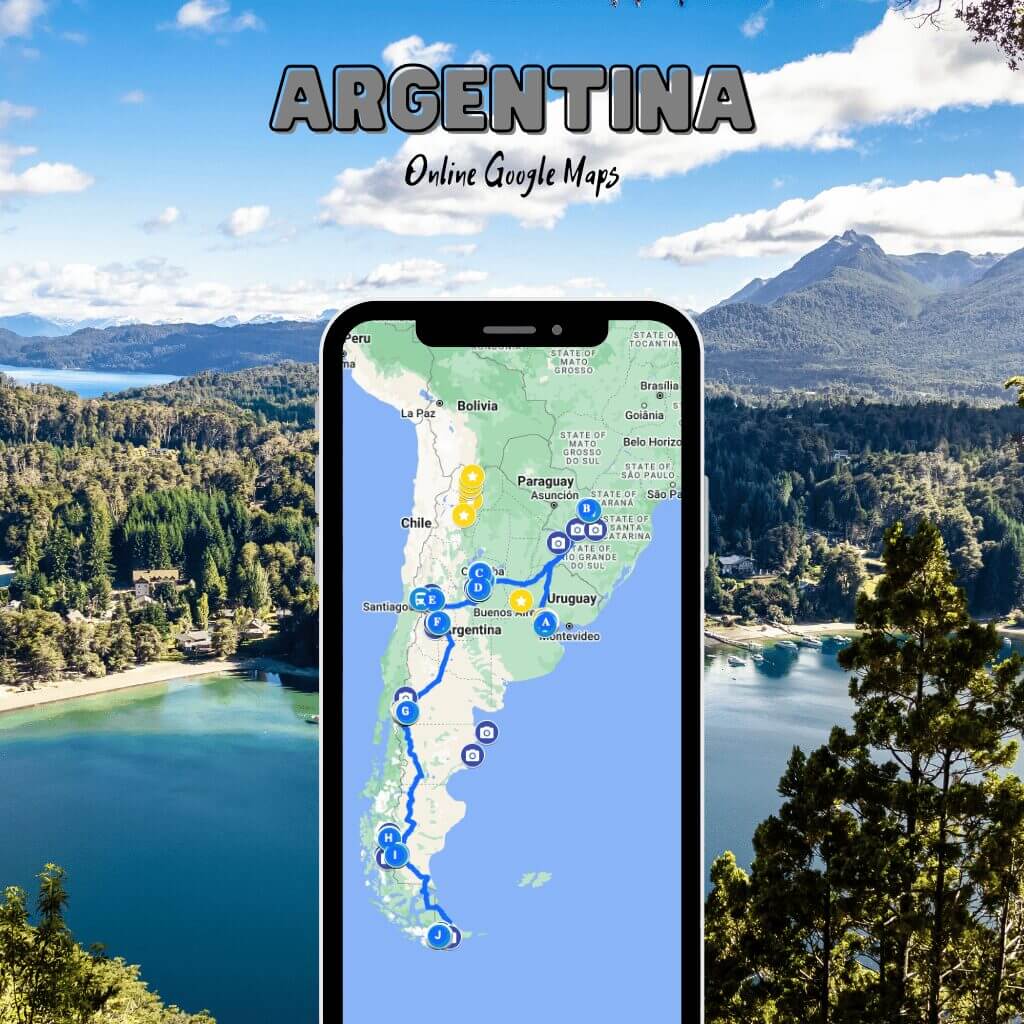
Patagonia itinerary – Day by Day
Day 1: Arrive in Buenos Aires & Fly to Bariloche
Arrive at Buenos Aires’ international airport (Ezeiza – EZE) and transfer to a domestic flight to San Carlos de Bariloche (BRC) in northern Patagonia. This 2-hour flight is the fastest way to kick off your Patagonia itinerary in the stunning Lake District.

Once in Bariloche, check into your accommodation and take a leisurely walk around town to soak in your first views of Patagonia’s breathtaking landscapes. If time allows, enjoy artisan chocolate (a local specialty) or head to the lakefront promenade for panoramic views of Nahuel Huapi Lake before resting up for the adventure ahead!
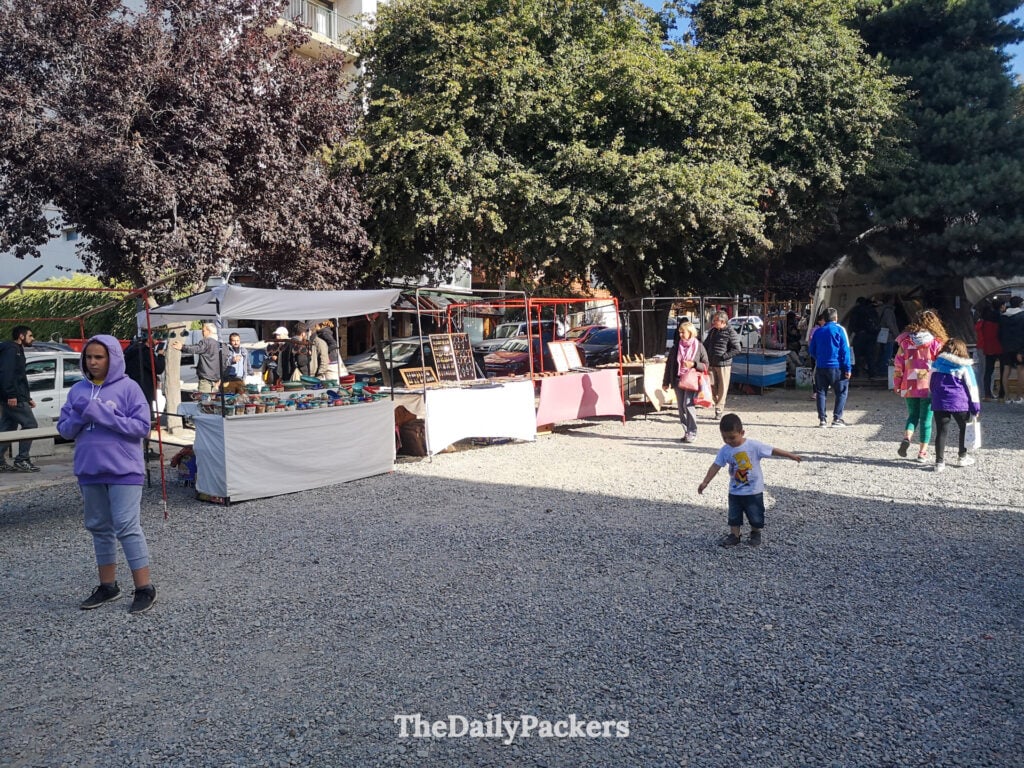
Where to stay in Bariloche:


Read: 18 best things to do in Bariloche, Argentina, in 5 days
Day 2: Hike the Circuito Chico
Start the day by taking a bus to Villa Llao Llao, the gateway to Llao Llao Municipal Park, a must-visit stop on your Patagonia itinerary. This stunning nature reserve is filled with dense forests, towering mountains, and hidden lagoons, making it an ideal spot for a scenic day hike.
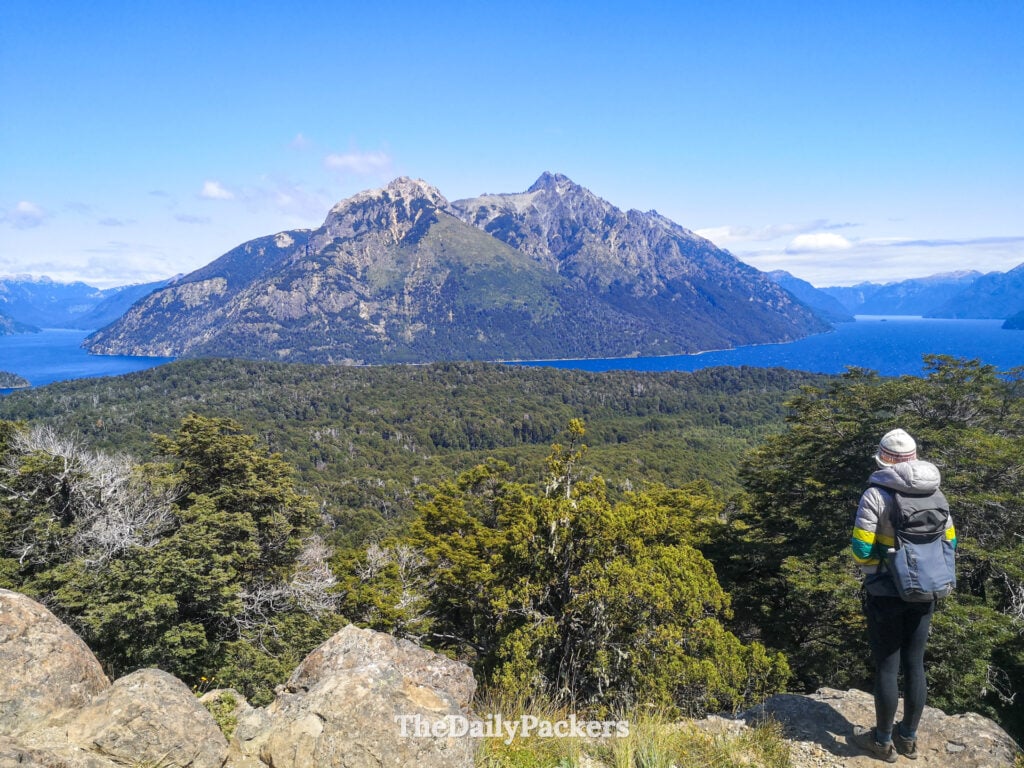
The hiking circuit is easy to moderate and offers several highlights:
- Cerro Llao Llao Summit (1.5-2 hours round trip) – A short but rewarding hike with spectacular views over Nahuel Huapi National Park.
- Hidden Lagoon (Laguna Escondida) – A peaceful, lesser-visited lagoon nestled within the forest.
- Scenic viewpoints along Moreno Lake – Ideal for a quick rest and some great photo opportunities.

After completing the hike, hitchhike or take a bus to the Patagonia Beer Factory, one of the most famous breweries in the region. Here, you can relax with a cold craft beer while enjoying panoramic views of the mountains and lakes—the perfect way to end a day of hiking and adventure in Patagonia!

Read: Circuito Chico Bariloche: The Ultimate 1-Day Hiking Guide
Day 3: Day trip to Arrayanes Forest
In the morning, rent a car or take a bus to Villa La Angostura, a charming lakeside town that’s a perfect stop on your Patagonia itinerary. Located on the shores of Nahuel Huapi Lake, this picturesque town offers quaint streets, a scenic port, and a tranquil atmosphere—ideal for a relaxed morning stroll before heading out on a boat trip to Los Arrayanes National Park.

This national park is home to the famous Arrayanes forest, filled with unique cinnamon-colored trees, some of which are over 600 years old. You can either take a boat to the park and hike back (12 km) or do the round trip by boat if you prefer a more relaxed experience.

Once back in Villa La Angostura, take some time to enjoy the lake views and local artisan markets before returning to Bariloche in the evening.

Read: Los Arrayanes National Park: The Best of Villa La Angostura
Day 4: Refugio Frey via Cerro Catedral (full-day hike)
Start the day early by taking a bus to Cerro Catedral, one of Argentina’s top trekking destinations, and ride the cable car up to Piedra del Cóndor, where your adventure begins. From here, embark on the challenging but rewarding hike to Refugio Frey, a high-altitude mountain hut nestled beside a breathtaking glacial lagoon—one of the most iconic spots on any Patagonia itinerary.

The trail winds through rugged mountain landscapes, rocky ridges, and stunning panoramic viewpoints. Keep an eye out for Andean condors soaring above as you make your way to the refuge. Once at Refugio Frey, take time to relax by the lagoon, soak in the incredible scenery, and, if you’re feeling adventurous, take a quick dip in the icy waters.

For the return, follow the regular trail back to Cerro Catedral to complete the loop hike. The entire trek takes 7-8 hours, so ensure you have proper hiking gear, enough daylight, and plenty of energy for this unforgettable Patagonian adventure.

Read: Refugio Frey via Cerro Catedral: The Ultimate Hiking Guide
Day 5: Cerro Campanario & Kayaking on Nahuel Huapi Lake
Start your day with a morning kayaking adventure on Nahuel Huapi Lake, when the waters are calm and the conditions are perfect for paddling. Glide across the crystal-clear lake, surrounded by breathtaking mountain views, and soak in the serene beauty of Patagonia before the midday winds pick up.

In the afternoon, head to Cerro Campanario, one of Bariloche’s most stunning viewpoints. You can hike up (~30 minutes, steep but short) or take the chairlift to the top. From here, enjoy a breathtaking 360° view of the Andean peaks, deep blue lakes, and lush forests—one of the best panoramic vistas in Patagonia.

This combination of water and mountain adventure makes for an unforgettable day on your Patagonia itinerary, blending peaceful exploration and incredible scenery.

Read: 18 best things to do in Bariloche, Argentina, in 5 days
Day 6: Fly to El Calafate & Transfer to El Chaltén
Wake up early and take a morning flight from Bariloche to El Calafate, the gateway to Los Glaciares National Park. The 2-hour flight offers breathtaking aerial views of Patagonia’s rugged landscapes, glacial lakes, and vast steppe, making for an unforgettable start to this leg of your Patagonia itinerary.

Upon arrival in El Calafate, take a shuttle transfer (3 hours) to El Chaltén, Argentina’s hiking capital. The drive is scenic and breathtaking, with your first glimpses of Mount Fitz Roy appearing on the horizon, a sight that builds excitement for the days ahead.

Once in El Chaltén, check into your accommodation and use the rest of the day to explore the town, stock up on snacks for your hikes, or take a short warm-up walk to Mirador de los Cóndores y Águilas for a stunning sunset view over the mountains. Rest up—tomorrow, the real trekking begins!
Where to stay in El Chalten

Read: 15 Best Things to Do in El Chaltén, Argentina, in 3 to 5-Day
Day 7: Hike to Laguna Torre
Start your day by organizing a shuttle for tomorrow to El Pilar, the trailhead for the Laguna de los Tres hiking loop. Many local agencies and accommodations in El Chaltén can arrange transport, so book your spot in advance to ensure an early start for tomorrow’s big trek.
Once that’s sorted, head off for today’s Laguna Torre hike, one of El Chaltén’s classic trails, known for its stunning views of Cerro Torre, glaciers, and rugged Patagonian landscapes. The trail is around 18 km (11 miles) round trip, with a gradual ascent, making it a moderate hike suitable for most fitness levels.

After 3-4 hours of hiking, you’ll arrive at Laguna Torre, an incredible glacial lake surrounded by jagged peaks and floating icebergs. Take some time to chill by the lagoon, admire the dramatic scenery, and watch the imposing Cerro Torre rise above the landscape.

For an even better perspective of the Torre Glacier, continue hiking to Mirador Maestri, a slightly more challenging but highly rewarding viewpoint that gives you an uninterrupted panorama of the glacier and surrounding mountains.
After taking in the views, make your way back to El Chaltén, rest your legs, and fuel up for tomorrow’s epic Laguna de los Tres hike—one of the most unforgettable treks on any Patagonia itinerary!

Day 8: Hike to Laguna de Los Tres
Wake up early and catch your pre-arranged shuttle to El Pilar, the starting point of the Laguna de los Tres hike, one of the most famous treks on any Patagonia itinerary.

After a few hours of hiking through lenga forests and alpine landscapes, you’ll reach the steep final ascent to Laguna de los Tres—a challenging but incredibly rewarding climb. As you reach the top, you’ll be greeted by breathtaking views of Mount Fitz Roy reflecting in the turquoise waters of the lagoon, making it one of the most iconic sights in Patagonia.

Day 9: Transfer to El Calafate & visit Perito Moreno Glacier
Catch your 7:30 AM transfer to El Calafate (3-hour ride). Drop your bags at your accommodation and head straight to Perito Moreno Glacier, one of the most iconic stops on any Patagonia itinerary.

Walk along the boardwalks for stunning panoramic views of the massive glacier, watching as icebergs calve into the lake. If time allows, take an optional boat tour to get even closer to the towering ice walls.
Return to El Calafate in the evening and enjoy a relaxing night in town, preparing for the next leg of your Patagonia adventure.

Where to stay in El Calafate:

Read: Visiting Perito Moreno Glacier: Everything You Need to Know
Day 10: Bus to Puerto Natales (3-week Argentina itinerary)
The next part of our Patagonia itinerary will be in Chile. Take a bus from El Calafate to Puerto Natales (Chile) (approx. 5-hour ride including border crossing). Once in town, check into your accommodation and start preparing for your Torres del Paine trek.
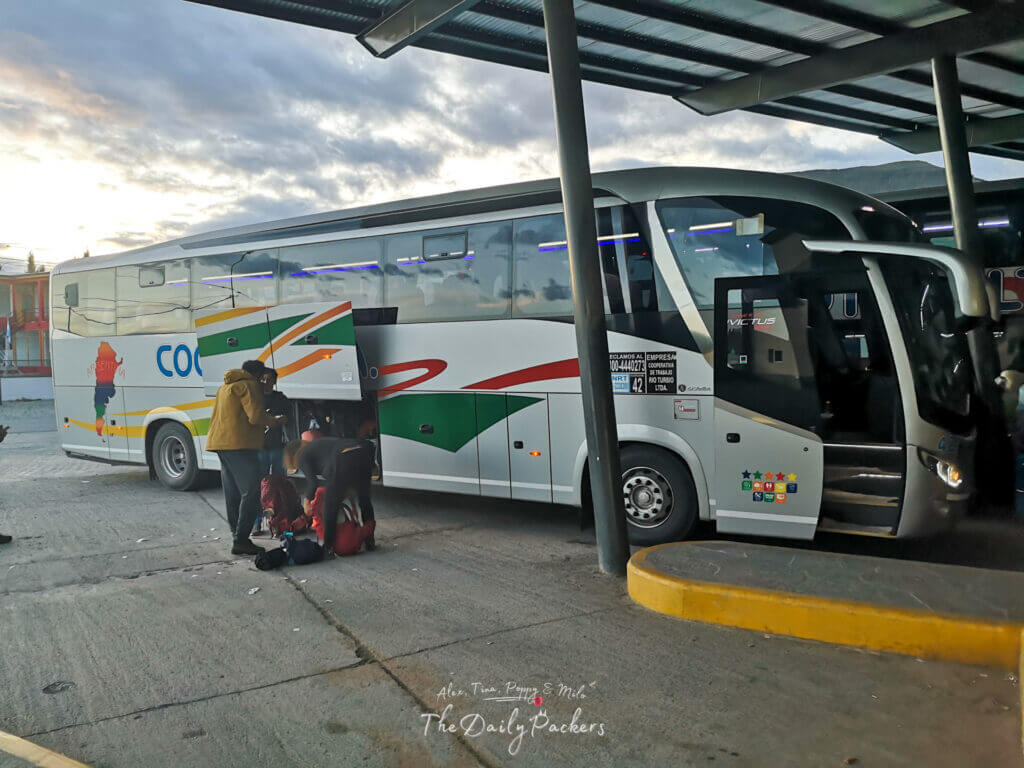
Spend the day buying supplies, renting gear if needed, and packing your bag. Puerto Natales has plenty of outdoor stores, supermarkets, and rental shops, so make sure you’re fully prepared before heading into the park tomorrow!
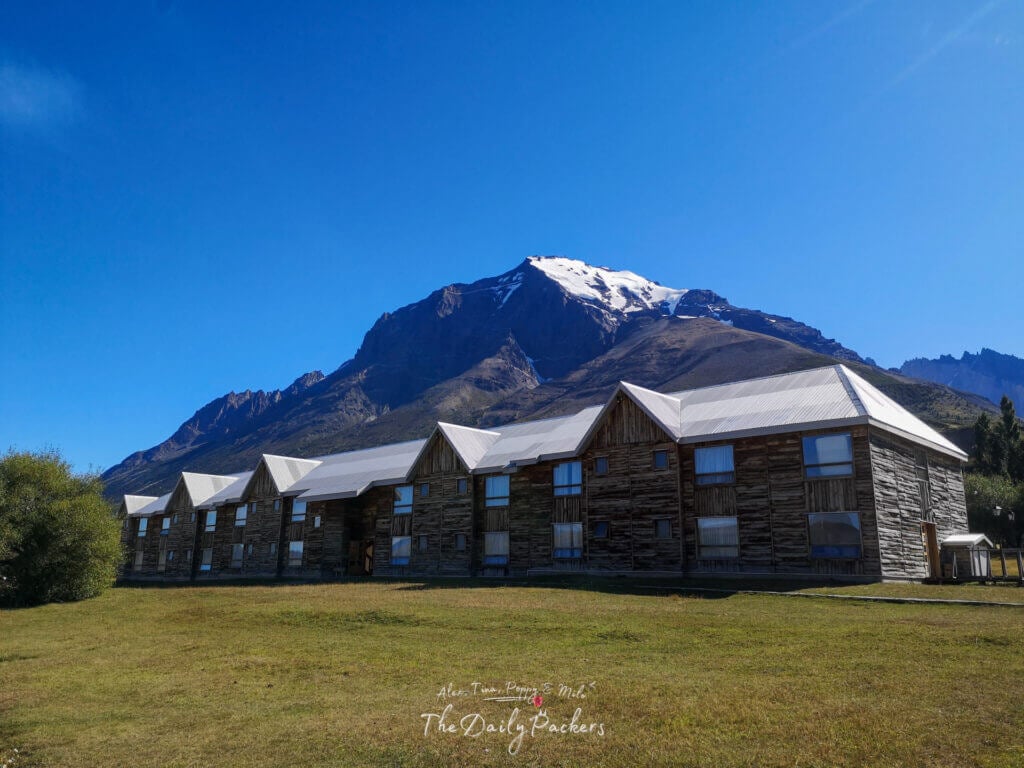
Unique Stay near the Park
- Lodge: Cabañas Lago Tyndall
- Tiny House: Torres del Paine
- Lodge: Konkashken Lodge
Or in Puerto Natales:
- Budget: Puma House
- Mid-Range: Toore Patagonia
- High-Range: Hostal Boutique Factoria Patagoni
Read: Torres del Paine Guide: The Best 5-day W-Trek
Day 11: Torres del Paine W-Trek
Catch the first bus to Torres del Paine National Park from Puerto Natales (approx. 2 hours). Upon arrival, take the catamaran ferry across Lake Pehoé to Paine Grande, the starting point of your trek.

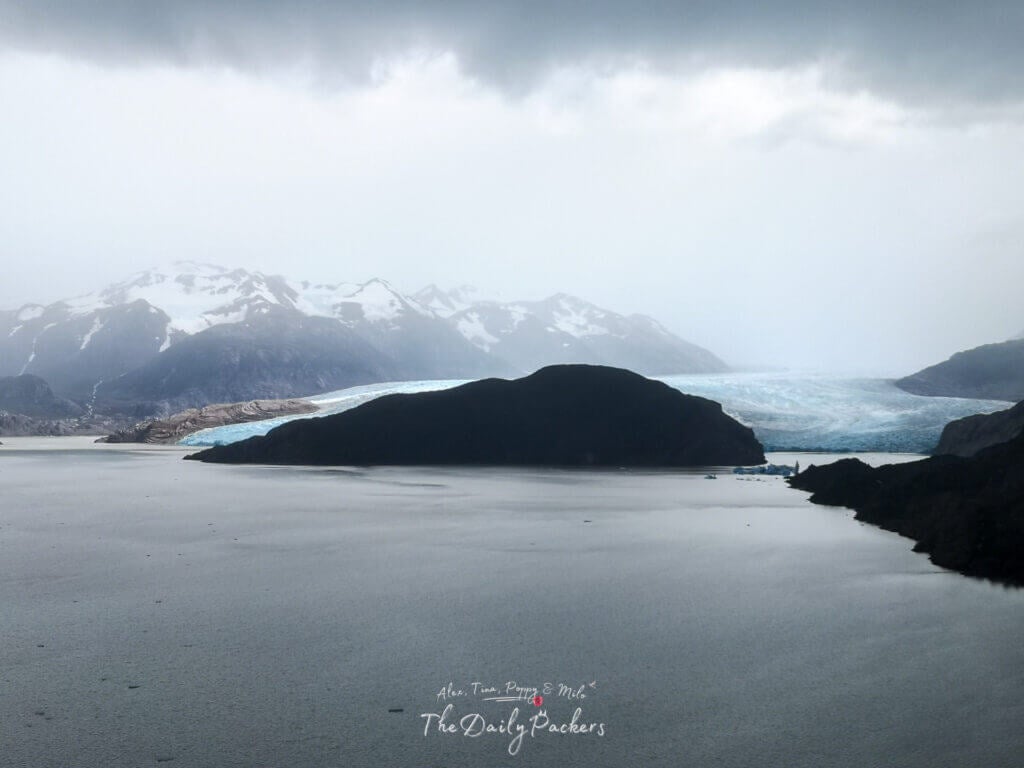
From Paine Grande, begin your hike to Grey Shelter (11 km, ~3-4 hours), passing through rolling hills, lenga forests, and stunning views of Grey Lake. As you approach Grey Shelter, you’ll get your first breathtaking views of Glacier Grey, with floating icebergs and deep blue ice formations.

Settle into the Grey Shelter campsite or refugio, enjoy the evening, and prepare for tomorrow’s adventure!
Read: W-Trek Day 1: From Puerto Natales to Grey Glacier
Day 12: Torres del Paine W-Trek
Wake up early and hike to the Grey Shelter Viewpoint, where you’ll get a stunning panoramic view of Glacier Grey and its floating icebergs. Continue further along the O-Trek route to explore the suspended bridges, which offer an incredible perspective over the glacier and surrounding landscapes.

After soaking in the views, return to Grey Shelter, take a short break, then begin your hike back to Paine Grande (11 km, ~3-4 hours). Once at Paine Grande, settle in for the night, relax, and prepare for tomorrow’s next stretch of the Torres del Paine adventure!

Read: W-Trek Day 2: From Grey Glacier to Paine Grande
Day 13: Torres del Paine W-Trek
Start the day by hiking from Paine Grande to Campamento Italiano (7.5 km, ~2.5 hours), where you’ll leave your heavier gear before continuing to Mirador Británico. This demanding uphill hike offers some of the best panoramic views in Torres del Paine, with dramatic granite peaks, glaciers, and valleys surrounding you.

After soaking in the breathtaking scenery, return to Italiano Camp and continue to Francés Domos (4.5 km, ~2 hours), where you’ll spend the night, resting up for another day of incredible trekking ahead.

Read: W-Trek Day 3: From Paine Grande to Frances
Day 14: Torres del Paine W-Trek
Start your trek from Francés Domos to Chileno (16 km, ~6-7 hours), passing through rolling hills, lenga forests, and incredible viewpoints along the way.
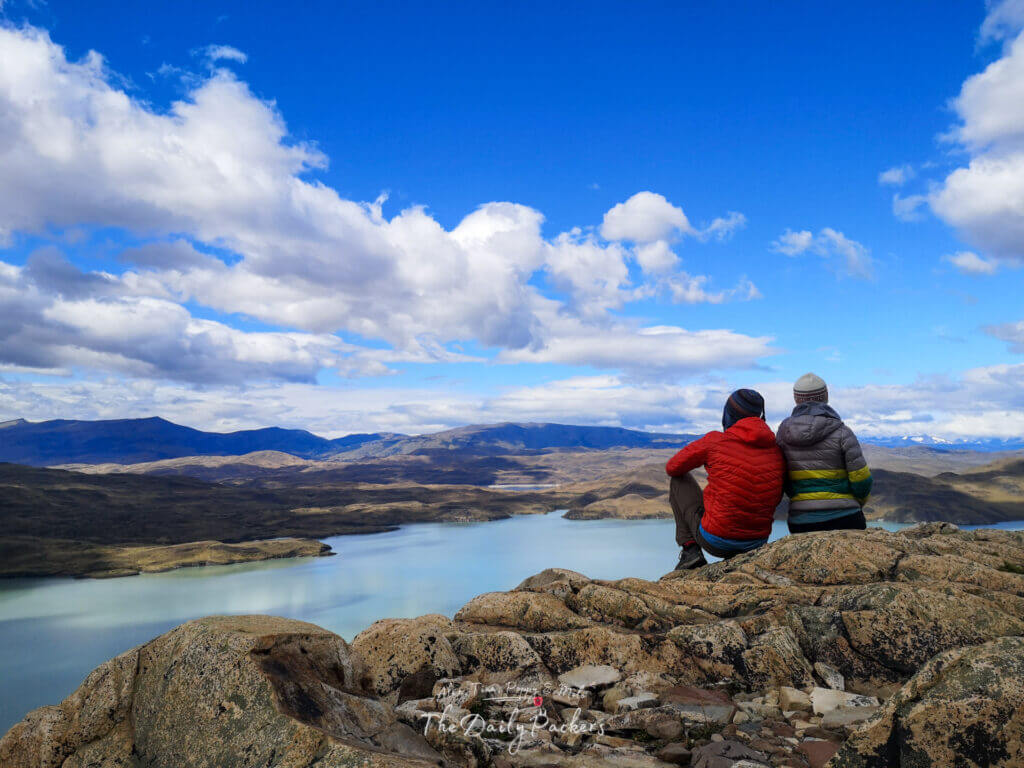
Take a break by the turquoise lake shores, one of the most scenic spots in Torres del Paine, and relax while admiring the towering peaks reflecting on the water. This is the perfect place to chill, soak in the views, and enjoy the peaceful Patagonian wilderness before continuing to Refugio Chileno, where you’ll spend the night.
Rest up—tomorrow is the final push to the legendary Base Torres!

Read: W-Trek Day 4: From Frances to Chileno
Day 15: Torres del Paine W-Trek
Wake up early and begin the final push to the Base of the Towers (Mirador Torres), one of the most iconic hikes in Patagonia (4 km, ~2 hours uphill). The trail is steep but rewarding, leading to the stunning Los Torres Lagoon, where the three granite spires of Torres del Paine rise dramatically above the turquoise water. Take time to soak in the breathtaking view before starting the descent.

Hike all the way back to the park entrance (9 km, ~4 hours downhill), where you’ll catch the bus back to Puerto Natales. Once in town, grab your well-earned meal or drink, then head to the bus terminal to purchase your ticket to Ushuaia (if you haven’t already). Rest up before tomorrow’s long journey to the southernmost city in the world!

Read: Torres Del Paine W-Trek Day 5: From Chileno to Central
Day 16: Travel to Ushuaia – The End of the World
Our Patagonia itinerary is now taking you to the end of the world. Take the bus from Puerto Natales to Ushuaia, a long but scenic journey through Patagonia’s rugged landscapes and the windswept Tierra del Fuego region. The trip includes border crossings and a ferry ride across the Strait of Magellan, making it an adventure in itself.

Once you arrive in Ushuaia, the southernmost city in the world, check into your hotel and take the rest of the day to stroll around town. Walk along the waterfront, visit the Ushuaia sign, and soak in the unique atmosphere of this remote yet lively city.
Before the day ends, organize your Walk with Penguins tour for tomorrow, as spots can be limited. Get ready for another unforgettable wildlife experience in Tierra del Fuego!
Where to stay in Ushuaia:
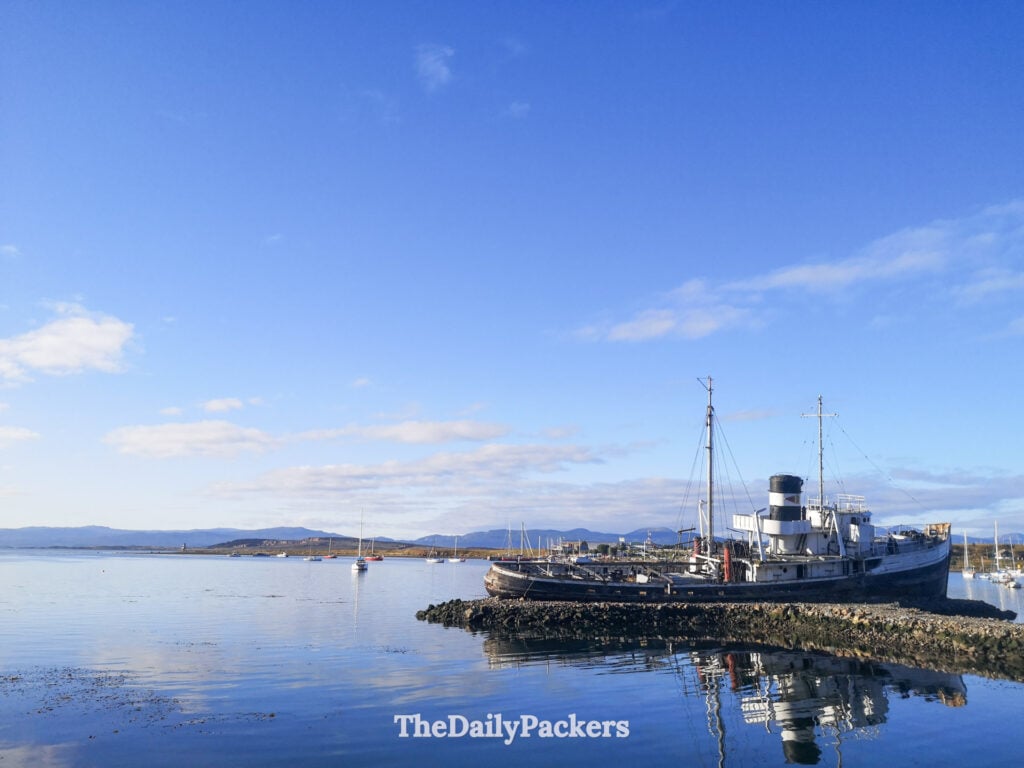
Read: 17 best things to do in Ushuaia, Argentina, in 4 to 5 days
Day 17: Walk with Penguins
Start your penguin adventure by joining your pre-booked tour to Martillo Island (Hammer Island). First, take the bus from Ushuaia, making a stop to admire the famous Flag Trees, uniquely shaped by the relentless Patagonian winds.

Upon arrival at Estancia Harberton, board a boat to Martillo Island, where you’ll step onto a protected sanctuary filled with Magellanic and Gentoo penguins. Walk among them (at a respectful distance) and observe their playful behavior in their natural habitat.

After the penguin experience, return to Ushuaia via a scenic cruise on the Beagle Channel, passing by Les Eclaireurs Lighthouse, also known as the “Lighthouse at the End of the World.” Keep an eye out for sea lions, cormorants, and stunning mountain views along the way.

Read: Walk With Penguins in Ushuaia: Everything You Need to Know
Day 18: Tierra del Fuego National Park
Take a local shuttle from Ushuaia to Tierra del Fuego National Park, the southernmost national park in Argentina. Once inside, choose a hiking trail based on your preference:
- Coastal Trail (Senda Costera) – A moderate 8 km (5 miles) hike along the Beagle Channel, offering stunning waterfront views and wildlife spotting.
- Hito XXIV Trail – A scenic border hike (7 km round trip) leading to the Chile-Argentina border, passing through forests and glacial rivers.
- Cerro Guanaco (Strenuous Option) – A challenging but rewarding climb to a panoramic mountain viewpoint over the national park.
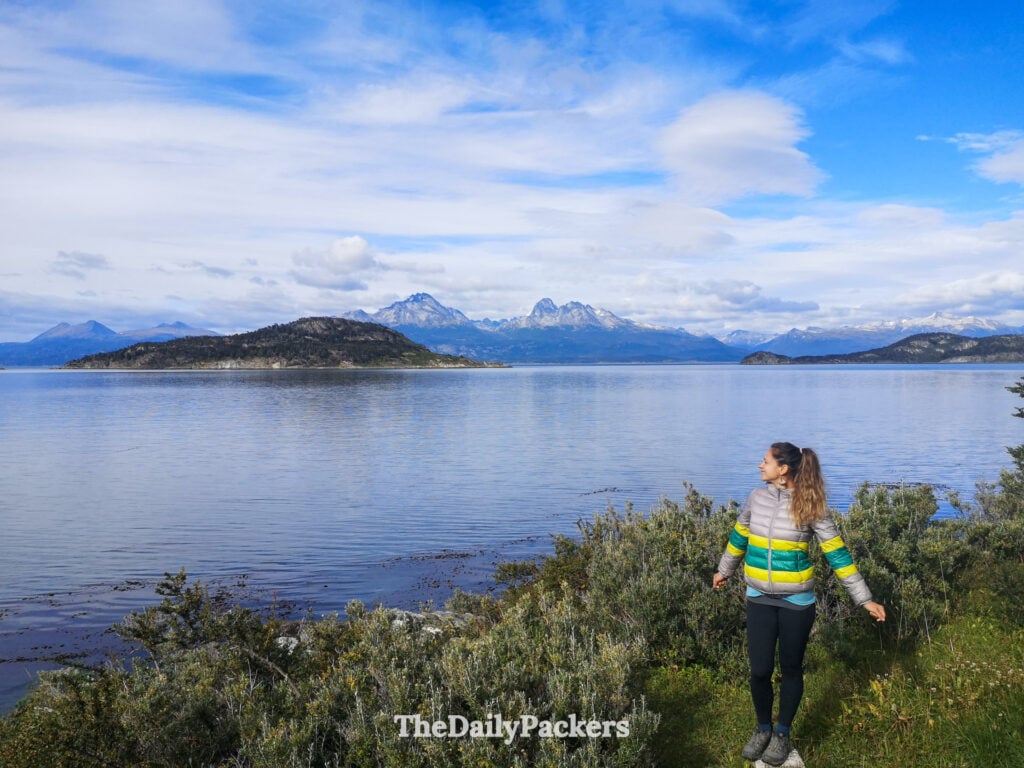
After a day of immersing yourself in pristine nature, return to Ushuaia by shuttle and use the remaining time to explore the town, visit local museums, or enjoy a well-deserved dinner before your last full day in Patagonia.

Read: Hiking in Tierra del Fuego National Park: The Ultimate Guide
Day 19: Laguna Esmeralda
Take a local shuttle from Ushuaia to the Laguna Esmeralda trailhead, about 20 km from town. The moderate 9.7 km (6-mile) round-trip hike takes you through peat bogs, lenga forests, and rugged mountain landscapes before reaching the stunning turquoise lagoon, framed by snow-capped peaks and glaciers.
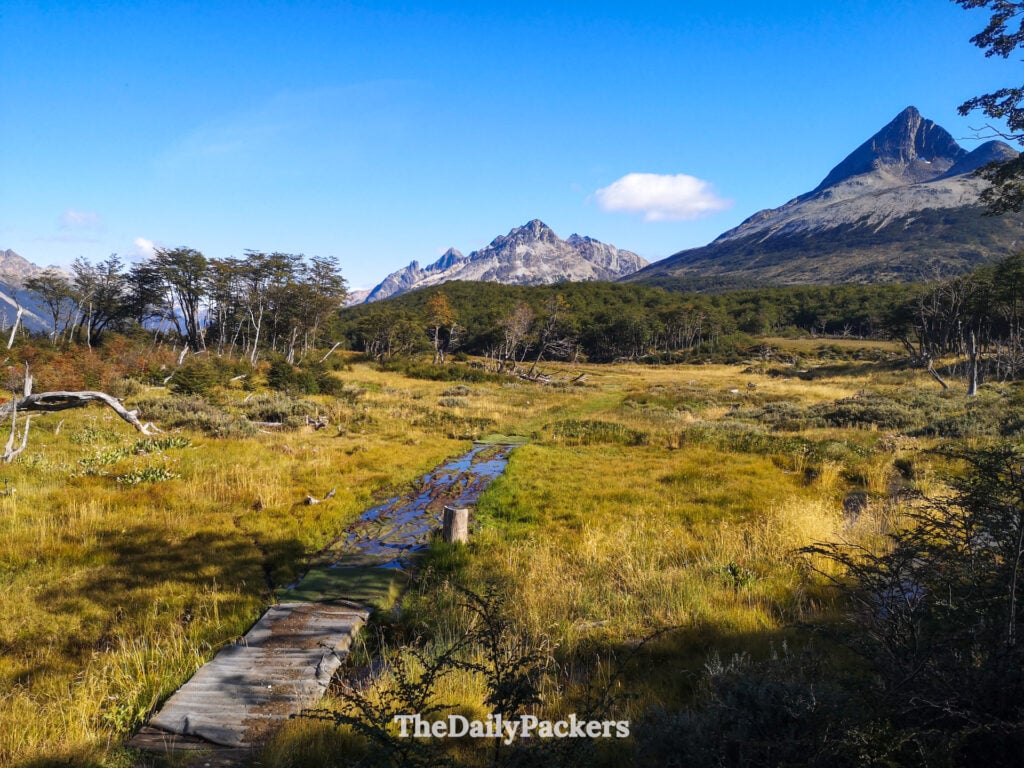
Spend time soaking in the breathtaking views, relaxing by the water, and enjoying the serenity of one of Tierra del Fuego’s most beautiful spots.
Return to Ushuaia in the afternoon, where you can explore more of the town, pick up souvenirs, or enjoy a final meal in the southernmost city in the world before heading back to Buenos Aires tomorrow.
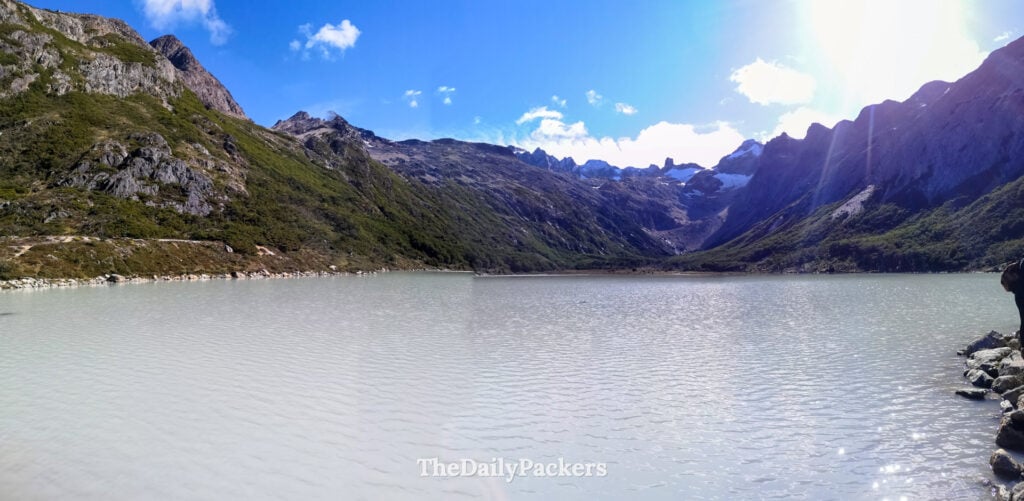
Read: Laguna Esmeralda Ushuaia: The Ultimate 1-Day Hiking Guide
Day 20: Morning Flight to Buenos Aires & Explore the City
After an incredible journey through our Patagonia itinerary, take a morning flight from Ushuaia to Buenos Aires. The flight takes about 3.5 hours, getting you back to the bustling capital by midday.

Once in Buenos Aires, use the rest of the day to explore one last district based on your interests:
- Recoleta – Visit the famous Recoleta Cemetery, stroll through Plaza Francia, and enjoy a coffee at one of the historic cafés.
- San Telmo & Downtown – Walk around the Plaza de Mayo, explore historic streets, and visit the San Telmo Market if it’s the weekend.
- Palermo – Relax in the parks, visit the MALBA Museum, or enjoy the city’s best food scene in Palermo Soho.
End your final Patagonia itinerary’s night in Argentina with a traditional parrilla dinner, or, if you’re up for it, experience a tango show before heading home.

Read: 32 best things to do in Buenos Aires, Argentina, in 2 to 7 days
The Best Time to Visit: Weather & Local Events
The best time to visit Patagonia and do our Patagonia itinerary depends on what activities you want to do. Since this region spans Argentina and Chile, covering glaciers, mountains, fjords, and vast steppe landscapes, the weather varies greatly depending on the season:
Spring (September – November) – A Great Balance of Weather & Fewer Crowds: Spring is a fantastic time to visit Patagonia, as the weather begins to warm up (5–15°C / 41–59°F), and the landscape bursts into bloom with wildflowers and lush greenery. It’s a great time for hiking in El Chaltén, Torres del Paine, and Bariloche, with fewer crowds compared to summer. However, some high-altitude trails may still have snow, and strong winds are common.
Summer (December – February) – The Best Time for Hiking & Outdoor Adventures: Summer is peak season in Patagonia, with the warmest temperatures (10–20°C / 50–68°F) and long daylight hours (up to 17 hours of sunlight per day). This is the best time for hiking, as all major trails in Torres del Paine, El Chaltén, and Bariloche are fully open. The weather is unpredictable, with strong winds, but conditions are ideal for trekking, kayaking, and wildlife spotting. However, crowds are at their highest, and prices for accommodations and tours are more expensive.
Autumn (March – May) – Stunning Foliage & Quieter Trails: Autumn is a beautiful and underrated time to visit Patagonia, with cooler temperatures (5–15°C / 41–59°F) and stunning fall foliage in Bariloche and the Lake District. It’s a great time for hiking, wildlife spotting, and photography, as there are fewer tourists compared to summer. However, some remote trails and lodges begin to close by late April, especially in Torres del Paine and El Chaltén.
- Winter (June – August) – Snowy Landscapes & Skiing: Winter transforms Patagonia into a snow-covered wonderland, with cold temperatures (-5 to 10°C / 23–50°F). This is the best season for skiing in Bariloche, Ushuaia, and Cerro Castor, and it’s also a great time for seeing glaciers in El Calafate without crowds. However, most hiking trails in El Chaltén and Torres del Paine are closed, and some areas become inaccessible due to snow. If you love winter landscapes and want to avoid crowds, this can be a magical time to visit.
Best Time for Patagonia itinerary based on your Trip Type:
- Best for Hiking & Trekking: December – March (Summer & early autumn)
- Best for Avoiding Crowds & Enjoying Scenic Landscapes: September – November (Spring) & March – April (Autumn)
- Best for Skiing & Winter Photography: June – August (Winter)
For the best mix of good weather and fewer crowds, we recommend doing our Patagonia itinerary between November and March, with March being an especially ideal balance of weather and tranquility.

How to get around
Patagonia is a vast and remote region, stretching across Argentina and Chile, with limited infrastructure between key destinations. Depending on your final Patagonia itinerary, you’ll need to combine flights, buses, ferries, and even rental cars to navigate this breathtaking region. Here’s how to get around efficiently:
By Plane – Best for Covering Long Distances
Patagonia is huge, so flying is the fastest and most efficient way to travel between major hubs and be able to do our Patagonia itinerary. Domestic flights save time compared to long overland journeys, but tickets can be pricey during peak season.
Major Airports in Argentine Patagonia:
- San Carlos de Bariloche (BRC) – Gateway to the Lake District
- El Calafate (FTE) – For Perito Moreno Glacier & El Chaltén
- Ushuaia (USH) – The southernmost city in the world
Major Airports in Chilean Patagonia:
- Punta Arenas (PUQ) – For Torres del Paine & Puerto Natales
- Puerto Montt (PMC) – For the Chilean Lake District
- Balmaceda (BBA) – For the Carretera Austral (Aysén region)
Best Routes to Fly:
- Buenos Aires → Bariloche
- Bariloche → Ushuaia

By Bus – Affordable, Scenic & Best for Budget Travelers
Long-distance buses (colectivos) are the most budget-friendly way to travel between Patagonia’s major towns. They are comfortable, reliable, and offer stunning scenery, but travel times can be long and you may not have the time to do all our Patagonia itinerary.
Key Bus Routes in Argentine Patagonia:
- Bariloche → El Chaltén / El Calafate (24+ hours)
- El Calafate → El Chaltén (3 hours, most convenient route)
- El Calafate → Puerto Natales (Chile) (5 hours, including border crossing)
- Puerto Natales → Torres del Paine (2 hours)
- Puerto Natales → Ushuaia (12+ hours, with ferry crossing)
Best for:
- Scenic routes and budget travel
- Getting between national parks & major towns


Check all your bus options on Busbud — it’s simple to compare routes, prices, and book your tickets in advance.
By Rental Car – Best for Freedom & Off-the-Beaten-Path Travel
Renting a car is the best way to explore our Patagonia itinerary at your own pace, especially for places with limited bus connections. However, roads can be challenging (gravel, windy, and remote), so 4WD is recommended for certain areas.
Best Regions for Renting a Car:
- Bariloche & the Lake District – Drive the famous Route of the Seven Lakes
- El Calafate → El Chaltén – Scenic & easy drive (no 4WD needed)
- Chilean Patagonia (Carretera Austral) – Remote but stunning (requires 4WD)
Pros:
- Ultimate flexibility in remote areas
- Allows you to reach hidden gems like Laguna Esmeralda, Villa O’Higgins, and Pali Aike
Cons:
- Expensive fuel & rental fees
- Border crossings with a rental car require special permission

We recommend to rent a car through Discover Cars with free cancellation. Book your rental car here.
About the authors
We are Alex and Tina, a French-Serbian couple who met in China back in 2014. We spent three incredible years there before making France our home. Our shared passion for travel has been the heartbeat of our relationship for over 12 years, taking us across 44 countries and counting.
We launched TheDailyPackers in 2019 as a way to document our adventures. In 2026, we reached a major milestone by officially turning our blog into our full-time job. While we are still growing toward financial independence through this platform, every article we write is fueled by our mission to make your voyages easier through in-depth guides, honest advice, and the lessons we’ve learned from our own mistakes.
Our journey has not been without its storms. In 2023, our world changed forever when our first son, Poppy, was stillborn on November 25th. It was, and remains, the hardest chapter of our lives. In 2025, we were blessed with our second little boy, Milo. He has since joined our traveling tribe, and you’ll be seeing him—and the reality of traveling with a little one-on the blog more and more.
We hope to inspire you to explore the world with curiosity and resilience. Thank you for being part of our story.
You may also like those related posts
Holafly eSIM Review: The Best eSIM for Digital Nomads?
Traveling as a Couple: 5 Real Truths You Should Know
24 Best things to do in Riga, Latvia, in 2 days or more
Plaza de Toros de la Maestranza: Discover Seville’s Historic Bullring
25 Best things to do in Salzburg, Austria, in 2 to 6 days
How to get by bus from Copacabana to La Paz, the complete The Ultimate 5h Journey Guide
Te Ara o Te Ao Trail: Hike to Rano Kau and Orongo, Easter Island
10 Best things to do in Suzhou, China, in 2 days or more
Pssst, did you know that…
If you purchase something through our links, we earn a small fee. However, you still pay the same. Win-win! And one day we may get to be full-time travel bloggers =)
Find Hotels with Booking.com
Do Yoga with KVY
Buy us a Coffee
Rent a car with DiscoverCars
Find Attractions with GetYourGuide
Find Flights with Expedia
Buy an eSIM with Airalo
Get insured with World Nomads
Get ready with Amazon.com