

Introduction
In June 2022, we took a 2-week road trip through the Baltic States, starting in Vilnius, renting a car, and slowly making our way up to Tallinn. Along the way, we explored some of the most scenic, surprising, and off-the-beaten-path places in Lithuania, Latvia, and Estonia.
On our 10th day, after three nature-filled days in Gauja National Park, we left and crossed into Estonia. That day’s drive took us toward Tartu, but instead of heading there directly, we made a couple of spontaneous stops—and one of them turned out to be a real highlight.
Our first stop was Sangaste Castle, a stunning Neo-Gothic manor that looks like it was plucked straight out of a fairytale. It’s even been featured in National Geographic, and once you see it, you’ll understand why. Later, we passed through Otepää, where we took a break by the lake before continuing on to Tartu.
Here is breakdown of the day:
- Gauja national park to Sangaste Castle: 1h50, 137km
- Sangaste Castle to Otepää: 20min, 22.4km
- Otepää to Tartu: 40min, 44.2km
If you’re planning a Baltic road trip from Latvia to Estonia, this route between Gauja National Park and Tartu makes for a scenic and rewarding travel day. And Sangaste Castle is the perfect hidden gem to stretch your legs and take in some history and beauty along the way.

Read: The Perfect 2-Week Baltic States Itinerary
What Is Sangaste Castle?
Sangaste Castle is one of Estonia’s most impressive and unexpected architectural landmarks. Tucked away in the quiet southern countryside, this Neo-Gothic masterpiece looks more like it belongs in the English countryside than the Baltics—but that’s exactly what makes it so special.
The castle was built in the late 19th century by Count Friedrich Georg Magnus von Berg, a visionary nobleman who wanted to combine medieval grandeur with modern innovation. At the time of its construction, Sangaste was considered one of the most advanced manors in the region. It had central heating, double walls for insulation, and even a telephone—years ahead of most estates in Europe.
Its design was inspired by Windsor Castle in England, and you can really see that influence in the turrets, arched windows, and sprawling gardens. Today, the castle serves as a museum, event space, and hotel, offering visitors a chance to step into a slice of Baltic aristocratic history.
Beyond the architecture, what makes Sangaste Castle special is its peaceful atmosphere. Surrounded by forest, open parkland, and walking trails, it’s the kind of place where you can wander slowly, admire the details, and enjoy a quiet break from the road.


Here are all your accommodation options in Tartu
Why Visit Sangaste Castle?
Sangaste Castle isn’t on most mainstream Estonia itineraries—which is exactly why it feels so special when you get there. It’s peaceful, grand, and a little unexpected, making it a perfect stop if you’re traveling between Latvia and Tartu or just exploring southern Estonia.
If you’re into castles, photography, or unique architecture, Sangaste will impress you. The red-brick facade, ivy-covered walls, and fairytale-like towers give it a cinematic feel. Inside, the castle is partially restored and open to visitors, with rooms filled with historical details, antique furniture, and displays about its former owner, Count von Berg.
One of the most interesting facts? Count von Berg wasn’t just an aristocrat—he was also a scientist and agricultural pioneer, credited with developing a hardy strain of rye that’s still grown in Estonia today. The castle’s exhibits do a great job of blending the region’s social history, innovation, and elegance.
Outside, you can walk the gardens, explore the nearby forest paths, or simply take in the tranquility of the grounds. It’s also a great place for a picnic stop, with benches and open spaces perfect for a break during your road trip.
And because it’s still relatively under the radar, you’ll often have the place almost to yourself, which makes the experience all the more magical.


Check our Google Map of the Baltic States
What to Expect When You Arrive
When you first pull into the grounds of Sangaste Castle, the feeling is immediate—you’ve just discovered something few others have. The red-brick turrets rise from behind a cluster of old trees, and the setting feels calm, elegant, and just a little mysterious.
The entrance is well marked, and there’s a small parking area right by the castle, so access is simple. The grounds are open and spacious, with manicured lawns, flower beds, and walking paths that invite you to wander slowly. You’ll find signs that explain the history of the estate and a small visitor center inside the main building, where you can buy tickets and start your visit.
The castle interior is partially restored and full of charming period details—ornate fireplaces, carved woodwork, and arched ceilings. Some rooms are set up like a traditional manor house, while others are used for exhibitions or special events. It’s not a flashy, over-renovated experience—instead, it feels authentic and atmospheric, with just the right amount of historical storytelling.
If the weather is nice, definitely take time to explore the outside. The park surrounding the castle is quiet and green, and you can follow short forest trails from the grounds or just relax in the garden.
Depending on when you arrive, the castle may be hosting weddings, events, or even local markets, so check ahead if you’d prefer a quieter vi


We recommend to rent a car through Discover Cars with free cancellation. Book your rental car here.
Tips for Visiting Sangaste Castle
How to Get There
Sangaste Castle is located in southern Estonia, making it an easy detour if you’re driving from Gauja National Park in Latvia to Tartu. The most direct route is via Otepää, which adds a scenic touch to your day.
- From Tartu: About 1 hour by car
- From Otepää: Around 30 minutes
- From the Latvian border (Valka/Valga area): About 45 minutes
The roads are in good condition, and the drive takes you through peaceful forests and rolling countryside.

Parking and First Impressions
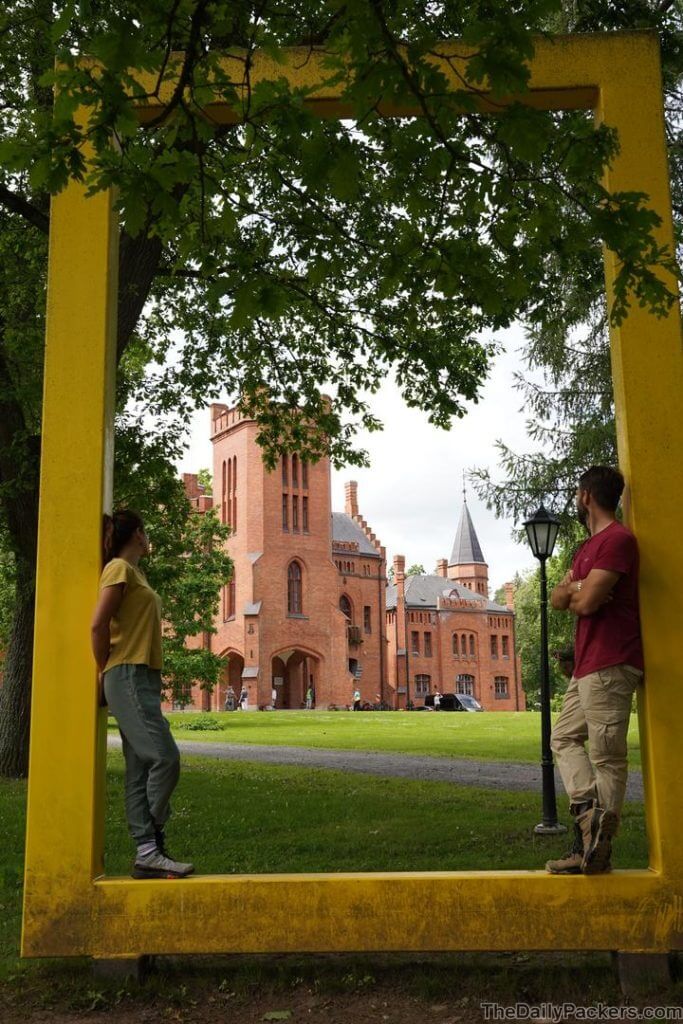
You can park directly in front of the castle’s main gate, which is super convenient. As soon as you step out of the car, you’ll spot the bright yellow National Geographic frame—a fun photo opportunity that marks the exact spot where the magazine captured its famous image of Sangaste.
Here are all your accommodation options in Tartu
Visiting the Castle
The castle is open to visitors, and entrance costs €7 per person. What’s really cool is that you’re free to explore the castle on your own. While it now also operates as a hotel (so a few rooms may be off-limits), you can still wander through most areas, from the basement and old machine room to the main halls and top tower.
There’s no rigid tour path, which makes the experience feel genuine and relaxed, almost like you’ve been invited into someone’s grand home.


Tip: We never travel without our DJI Mini 3 PRO drone anymore — it’s totally worth having to capture places from a whole new perspective.
Lunch and Dining Options
If you’re visiting around lunchtime, there’s a small coffee shop/canteen located just behind the yellow frame, in the area of the former stables. It’s simple but perfect for a casual bite. The pricing is by weight—€1.50 per 100g—and they offer warm, home-style meals and desserts.
There’s also the option to visit the stables themselves, though this requires a separate ticket, which we chose to skip. If you’re into horse history or just curious about the estate’s working past, it could be worth checking out.

Make a Quick Stop at Otepää Lake
If you have some extra time or want to stretch your legs a bit more, consider making a quick stop at Otepää Lake on your way to or from Sangaste. It’s located about 30 minutes away and is one of the largest and most beautiful lakes in southern Estonia.
The lake is surrounded by gentle hills, forests, and walking paths, making it a peaceful place to take a short walk or just enjoy the scenery. In warmer months, it’s also a popular spot for swimming and picnicking. For us, it was the perfect midday break before heading to Tartu.


Other Useful Tips
- Comfortable shoes are a must if you want to roam the gardens or explore any side trails near the castle.
- Bring a camera or phone—the castle is photogenic from every angle, and the National Geographic frame makes for a great shot.
- The grounds are free to wander, so even if you’re short on time or skip the interior, it’s still a worthwhile stop.
- If you want a more immersive experience, consider staying overnight—the castle also functions as a hotel.

Here are all your accommodation options in Tartu
Where to Stay After Visiting Sangaste Castle
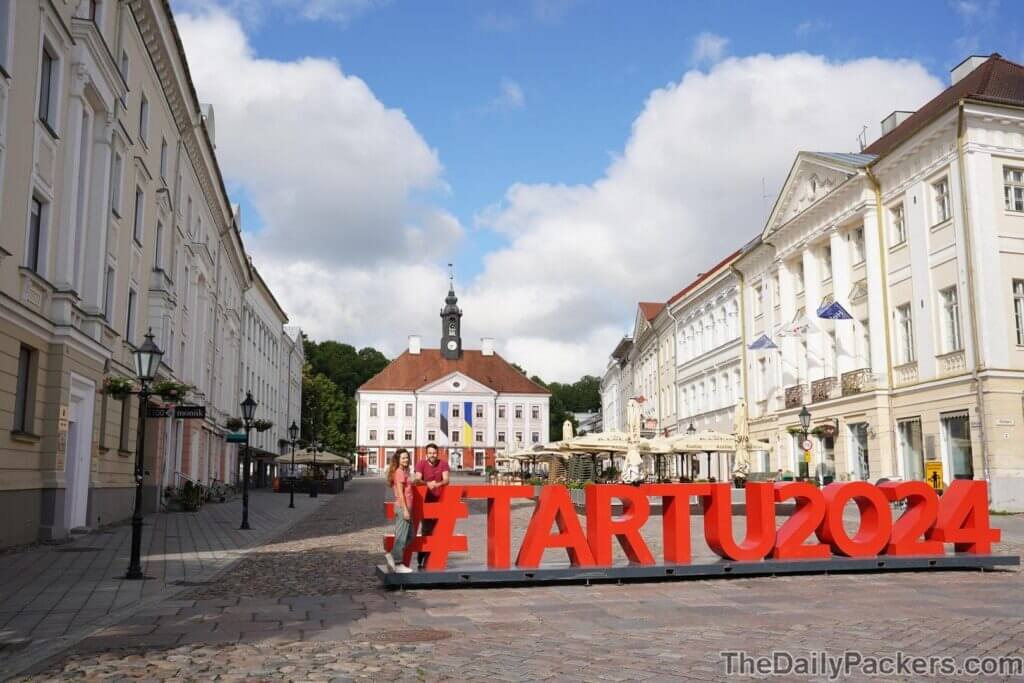
After exploring Sangaste Castle, you’ll likely be heading onward to Tartu, Estonia’s second-largest city and a perfect place to base yourself for the night. It’s just about 1 hour away by car, making it an easy and natural next stop on your Baltic road trip.
Tartu has a laid-back charm, a beautiful old town, and plenty of cafes, parks, and attractions to enjoy. Plus, it offers a range of accommodations to suit every style and budget.
Recommended Places to Stay in Tartu:
- (€) Looming Hostel: A creative and eco-friendly hostel with a relaxed vibe. Perfect for budget travelers who like a bit of personality in their stay.
- (€€) Estonishing Stay Premium Lofts: Modern and stylish loft-style apartments with everything you need for a comfortable stay, including a small kitchen—ideal for couples or longer stays.
- (€€€) Antonius Hotel: Located right in the heart of the city, this elegant boutique hotel offers classic rooms, excellent service, and a touch of luxury with views of the university and Old Town.
Whether you’re arriving in the evening or planning to explore Tartu the next day, spending the night here gives you the chance to unwind after a scenic travel day—with Sangaste Castle as a stunning highlight along the way.
Read: The Perfect 2-Week Baltic States Itinerary
About the authors
We are Alex and Tina, a French-Serbian couple who met in China back in 2014. We spent three incredible years there before making France our home. Our shared passion for travel has been the heartbeat of our relationship for over 12 years, taking us across 44 countries and counting.
We launched TheDailyPackers in 2019 as a way to document our adventures. In 2026, we reached a major milestone by officially turning our blog into our full-time job. While we are still growing toward financial independence through this platform, every article we write is fueled by our mission to make your voyages easier through in-depth guides, honest advice, and the lessons we’ve learned from our own mistakes.
Our journey has not been without its storms. In 2023, our world changed forever when our first son, Poppy, was stillborn on November 25th. It was, and remains, the hardest chapter of our lives. In 2025, we were blessed with our second little boy, Milo. He has since joined our traveling tribe, and you’ll be seeing him—and the reality of traveling with a little one-on the blog more and more.
We hope to inspire you to explore the world with curiosity and resilience. Thank you for being part of our story.
You may also like those related posts
7 Best Things to do in Cayo Santa Maria, Cuba, in 2 to 4 days
The perfect Croatia Itinerary: 7 to 10-day for first timers
Manosque, Provence, the best base to explore Lavender fields
8 Best things to do in Balneário Camboriú, Brazil, in 2 days
How to Get From Capilla del Monte to Villa General Belgrano by Bus
16 Best things to do in Oslo, Norway, in 3 days or more
How to Start a Blog: a 2025 Step-by-step Beginner Guide
23 Best things to do in Nice, France, in 3 days or more
Pssst, did you know that…
If you purchase something through our links, we earn a small fee. However, you still pay the same. Win-win! And one day we may get to be full-time travel bloggers =)
Find Hotels with Booking.com
Do Yoga with KVY
Buy us a Coffee
Rent a car with DiscoverCars
Find Attractions with GetYourGuide
Find Flights with Expedia
Buy an eSIM with Airalo
Get insured with World Nomads
Get ready with Amazon.com