

Introduction
Seoul is the vibrant capital of South Korea and its largest city, home to over 9.7 million people and stretching across 605 km². As a sprawling metropolis, Seoul seamlessly blends cutting-edge modernity with deep-rooted tradition. On one side, you’ll find sleek skyscrapers, bustling tech hubs, and massive shopping districts. On the other, beautifully preserved palaces, ancient temples, and hanok villages that transport you back in time.
What makes Seoul truly fascinating is how it feels like a perfect mix between China and Japan — the food culture, street life, and historical influences often echo China, while the orderliness, design aesthetics, and urban cleanliness bring to mind Japan. It’s a unique blend that gives Seoul its own rhythm and charm.
Whether you’re a culture enthusiast, a foodie, or a shopaholic, Seoul has something to offer everyone — from sizzling street food and bustling markets to tranquil palaces and trendy cafés.
Getting there
Getting to Seoul is quite straightforward, as it’s one of Asia’s major international hubs.
By Air – Incheon International Airport (ICN): Most international visitors arrive at Incheon International Airport, located about 50 km west of the city center. It’s one of the busiest and most modern airports in the world, with direct flights from Europe, North America, Southeast Asia, and Oceania. From Incheon Airport, you have several options to reach downtown Seoul:
- AREX Express Train: The fastest way to Seoul Station (43 minutes, around ₩9,500)
- All-Stop Train: Slightly longer with more stops, but cheaper (₩4,150)
- Airport Limousine Bus: Great for travelers with lots of luggage, with routes to major areas like Gangnam, Myeongdong, Hongdae, and Itaewon (₩15,000–₩17,000)
- Taxi: The most expensive but convenient option, costing around ₩60,000–₩80,000 depending on traffic
By Train – From other parts of Korea: If you’re already in South Korea, Seoul is well-connected by KTX (Korea’s high-speed train). You can reach Seoul from:
- Busan in ~2.5 hours
- Gyeongju in ~2 hours
- Daegu in ~1.5 hours
By Bus: Intercity and express buses arrive at Seoul’s major terminals like Seoul Express Bus Terminal or Dong Seoul Bus Terminal, linking the capital with smaller towns and nearby cities.

Moving Around
Getting around Seoul is incredibly easy thanks to its world-class public transportation system. Whether you’re staying for a few days or exploring for longer, you’ll find it efficient, safe, and affordable.
Seoul Subway – The Best Way to Get Around. The Seoul Metropolitan Subway is the most convenient way to explore the city. With 23 lines covering all districts and major landmarks, it’s fast, clean, and punctual.
- Signage and announcements are in Korean, English, Japanese, and Chinese.
- Use a T-money card, a rechargeable transit card that works for subways, buses, taxis, and even some convenience stores.
- Subway fares start at around ₩1,250 and increase slightly by distance.
- Google Maps doesn’t work well for subway directions—use Naver Map or KakaoMap for navigation.
Buses – Great for Reaching Everywhere. Seoul’s color-coded buses connect places that may not be directly accessible by subway:
- Blue buses cover long distances and major roads.
- Green buses connect neighborhoods and subway stations.
- Yellow buses loop around central areas.
- Red buses are intercity buses to/from suburbs.
Taxis – Affordable and Everywhere. Taxis are relatively affordable compared to Western countries. Basic fares start around ₩4,800.
- You can hail one on the street, use apps like Kakao T, or find them near major attractions and hotels.
- Tip: Many taxi drivers don’t speak English, so show your destination in Korean or use a translation app.
On Foot – Best for Exploring Neighborhoods. Seoul is a very walkable city, especially in districts like Insadong, Bukchon Hanok Village, Hongdae, and Myeongdong. Some hills and stairways may pop up, but in general, sidewalks are wide and well-maintained.

When to Visit
Seoul is a vibrant year-round destination, and the best time to visit really depends on what kind of experience you’re after. Each season has its own charm, from cherry blossoms in spring to colorful festivals in autumn.
- Spring (April to June) – Best for cherry blossoms & mild weather: Spring is one of the most popular seasons to visit Seoul. Temperatures are pleasant, flowers are in full bloom, and cherry blossoms usually peak in early to mid-April. Parks like Yeouido and Seokchon Lake are stunning at this time of year. It’s also a great season for exploring palaces and temples in comfort.
- Summer (July to August) – Hot, humid & festival season: Summers can be quite hot and humid, with temperatures often above 30°C (86°F). It’s also monsoon season, so be prepared for sudden downpours in July. On the plus side, it’s the season of lively night markets, water parks, and music festivals.
- Autumn (September to November) – Best for fall colors & clear skies: If you love crisp air and beautiful foliage, autumn is a fantastic time to visit. From late October to early November, Seoul’s parks and palace gardens turn fiery red, orange, and gold. It’s arguably the best time for photos and outdoor walks.
- Winter (December to February) – Cold but magical: Winter in Seoul is cold, often dropping below freezing, but the city lights up with winter festivals, holiday decorations, and street food stalls serving hot snacks. You can even go ice skating in places like Seoul Plaza. If you’re into skiing, Seoul makes a great base for day trips to nearby slopes.

Where to Stay
Seoul is a sprawling city, so choosing the right neighborhood to stay in can really shape your experience. Whether you’re looking for budget-friendly hostels, boutique-style hotels, or luxury stays, Seoul has it all. Here are three great options across different price ranges and vibes:
- (€) Hostel Korea – Ikseon: If you’re traveling on a budget but still want to stay somewhere stylish and well-located, Hostel Korea in the trendy Ikseon-dong district is a great pick. This area is full of traditional hanok houses, indie cafés, and boutiques. The hostel itself is cozy, clean, and perfect for those wanting to explore the more local side of Seoul without spending too much.
- (€€) Hotel28 Myeongdong: This boutique hotel is in the heart of Myeongdong, one of Seoul’s liveliest neighborhoods, perfect for shopping, eating, and night markets. Hotel28 has a chic cinema-inspired design, super comfy beds, and great amenities. It’s ideal for couples or solo travelers who want a stylish stay in the center of the action.
- (€€€) Four Seasons Hotel Seoul: If you’re looking for a luxurious stay, the Four Seasons is one of the best hotels in Seoul. Located near Gwanghwamun and within walking distance of major palaces and cultural sites, this hotel offers world-class service, multiple fine dining options, a full spa, and panoramic views of the city skyline. Perfect for a relaxing, indulgent city break.

What to Eat
Seoul is a food lover’s paradise. From sizzling street stalls to cozy neighborhood eateries and trendy food markets, the city is bursting with flavor. Whether you’re craving classic Korean barbecue, spicy rice cakes, or something new and unexpected, Seoul has you covered.
Try out the food trucks near Dongdaemun History & Culture Park:
One of the best spots to dive into local street food is right outside Dongdaemun History & Culture Park. In the evenings, a small food truck area pops up offering everything from spicy tteokbokki (rice cakes), hotteok (sweet pancakes), mandu (dumplings), to crispy Korean fried chicken. The variety is fantastic, the food is affordable, and the vibe is energetic — perfect for a casual local experience.

Grab a meal in Bukchon Hanok Village:
After strolling through this beautiful traditional village, don’t miss out on eating at one of the small, tucked-away local restaurants. Many of them serve homestyle Korean dishes like bibimbap, bulgogi, or doenjang-jjigae (soybean paste stew). The ambiance, surrounded by centuries-old hanok houses, adds a special touch to the meal.

Things to do in Seoul
Explore Yeongdeungpo – A Lively Riverside District in Seoul
Yeongdeungpo was one of our favorite discoveries during our stay in Seoul. Located near our accommodation, this vibrant district offered the perfect mix of local culture, riverside relaxation, and modern shopping.

The area around the river is lively and full of charm. We loved strolling along the waterfront, where locals gather to relax, jog, or enjoy an evening meal. There were plenty of small, cozy restaurants lining the streets — from Korean BBQ joints to noodle shops — offering delicious meals in a casual, welcoming atmosphere.

During the day, Yeongdeungpo also shines as one of the top shopping destinations in the city. Home to some of Seoul’s biggest malls, including Times Square Mall, it’s a great place to shop for everything from high-end fashion to local Korean brands. Whether you’re browsing the shops or simply enjoying the air-conditioned break, it’s a fun way to experience modern Seoul.

Tip: Check out the colorful local markets nearby, where you can sample snacks, buy fresh produce, or shop for souvenirs away from the usual tourist areas. It’s the kind of neighborhood that feels both authentic and convenient — a great place to base yourself while exploring the city.

Discover Ihwa Mural Village – Seoul’s Artistic Hillside Neighborhood
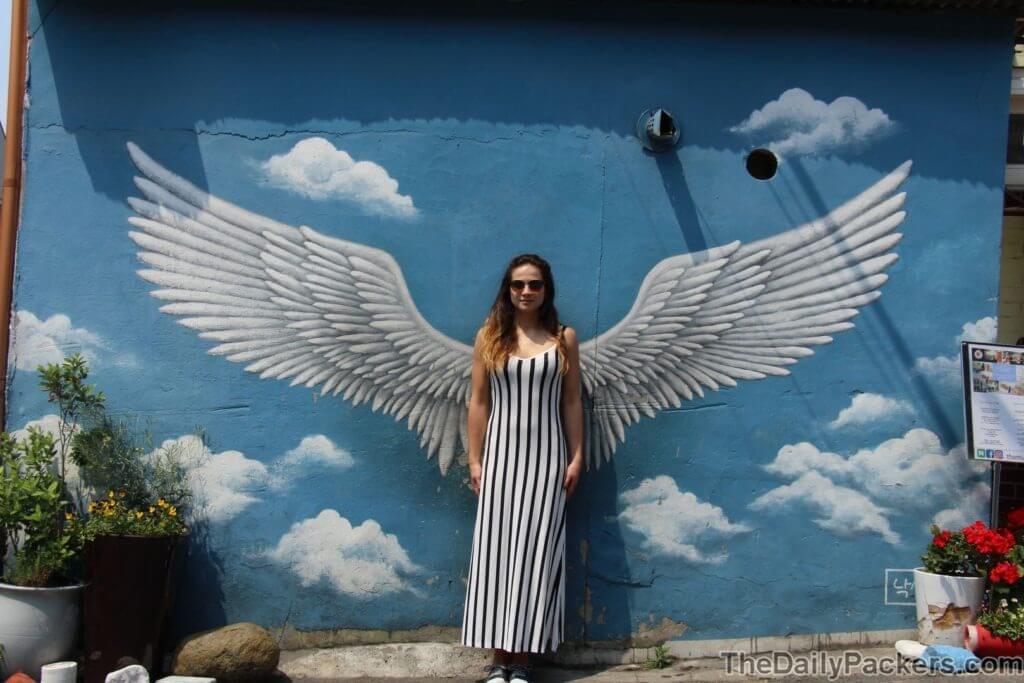
Ihwa Mural Village is a charming hillside neighborhood that turned from a declining area into one of Seoul’s most colorful attractions. In 2006, as part of a public art project led by the Ministry of Culture, Sports and Tourism, over 70 local artists came together to revitalize the district through creative expression.

The narrow alleys and staircases of this once-overlooked village were transformed into an open-air gallery filled with murals, street art, sculptures, and quirky installations. From giant painted flowers to playful cats climbing staircases, the village offers a unique blend of community charm and artistic flair.

Wandering through Ihwa Mural Village feels like stepping into a storybook. You’ll also find small cafés and craft shops run by locals, adding even more character to the area. The neighborhood sits on a slope, so prepare for a bit of walking — but the views over Seoul from the top are definitely worth it.

Tip: Visit in the early morning or late afternoon to avoid the crowds and enjoy the light, which makes the murals even more photogenic. And remember, people live here — so be respectful, quiet, and considerate while exploring.

Explore Gyeongbokgung Palace – The Grandest Royal Palace in Seoul
Gyeongbokgung Palace (경복궁), built in 1395, served as the main royal residence of the Joseon dynasty and is widely regarded as the most beautiful and largest of the Five Grand Palaces in Seoul.
Though it was destroyed during the Japanese invasions and later restored, the palace today stands proudly as one of Seoul’s top historical attractions. As you enter through the grand Gwanghwamun Gate, you’re immediately transported into Korea’s regal past.

nside, you can wander through an expansive complex of traditional buildings, open courtyards, pavilions, and tranquil gardens. One of the highlights is Gyeonghoeru Pavilion, set above a reflective pond, which once hosted royal banquets.
The palace is also famous for its royal guard changing ceremony, held at the main gate. It’s a great chance to see guards dressed in colorful, traditional Joseon-era uniforms, complete with drums and ritual choreography.

You’ll find many locals dressed in hanbok (traditional Korean attire), as wearing one grants you free entrance. There are hanbok rental shops nearby, making it a fun and immersive way to experience Korean culture.
Opening hours: Closed on Tuesdays. Open from 9am to 6pm (last admission at 5pm).
Entry fee: ₩3,000 for adults, or free if you’re wearing a hanbok.

Tip: Arrive early to beat the crowds and catch the changing of the guard ceremony (10am and 2pm are the most popular). Don’t miss the National Palace Museum of Korea and the National Folk Museum, both located on palace grounds.

Visit the Statue of King Sejong – A National Icon at Gwanghwamun Plaza
Located right in the heart of Gwanghwamun Plaza, the Statue of King Sejong honors one of Korea’s most beloved monarchs. King Sejong the Great, the fourth ruler of the Joseon Dynasty, is best known for creating Hangul, the Korean alphabet, and for his contributions to science, literature, and politics in the 15th century.

While the statue itself is an impressive tribute to a historical giant, the surrounding plaza is what really brings it to life. You’ll often find local flea markets, pop-up exhibitions, and street performances taking place here. Families gather, kids splash in the fountains during warmer months, and the wide-open space offers a great view of Gyeongbokgung Palace just beyond.

Explore Ssamziegil – A Creative Shopping & Culture Space in Insadong
Located in the heart of Insadong, Ssamziegil is a vibrant multi-level shopping complex that beautifully blends traditional Korean culture with modern creativity. What makes this place special is its spiral walkway — as you walk up, you’re slowly led through floors of independent boutiques, artisan workshops, art galleries, and charming cafés, without needing to climb stairs.

Every corner of Ssamziegil is thoughtfully decorated with colorful murals, quirky installations, and handmade crafts, making it a popular spot for both shopping and photos. You’ll find everything from handcrafted jewelry and ceramics to calligraphy workshops and modern hanbok rentals.
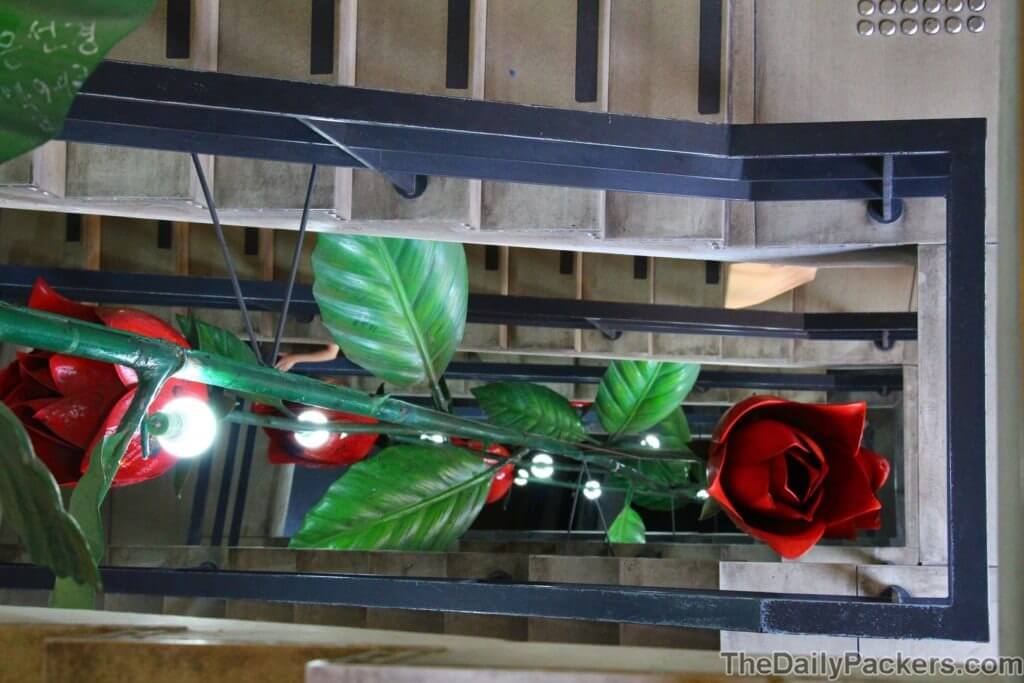
It’s also a great place to grab a drink or snack in one of the rooftop cafés while enjoying views over Insadong’s traditional rooftops.
Tip: Keep an eye out for the “Wishing Wall” on the top floor where visitors leave heartfelt notes.

Visit the War Memorial of Korea – A Powerful Journey Through History
Opened in 1994 and housed in the former headquarters of the Korean Army, The War Memorial of Korea is one of the most significant museums in Seoul. Whether you’re a history enthusiast or just curious about Korea’s past, this museum offers an insightful and moving experience.
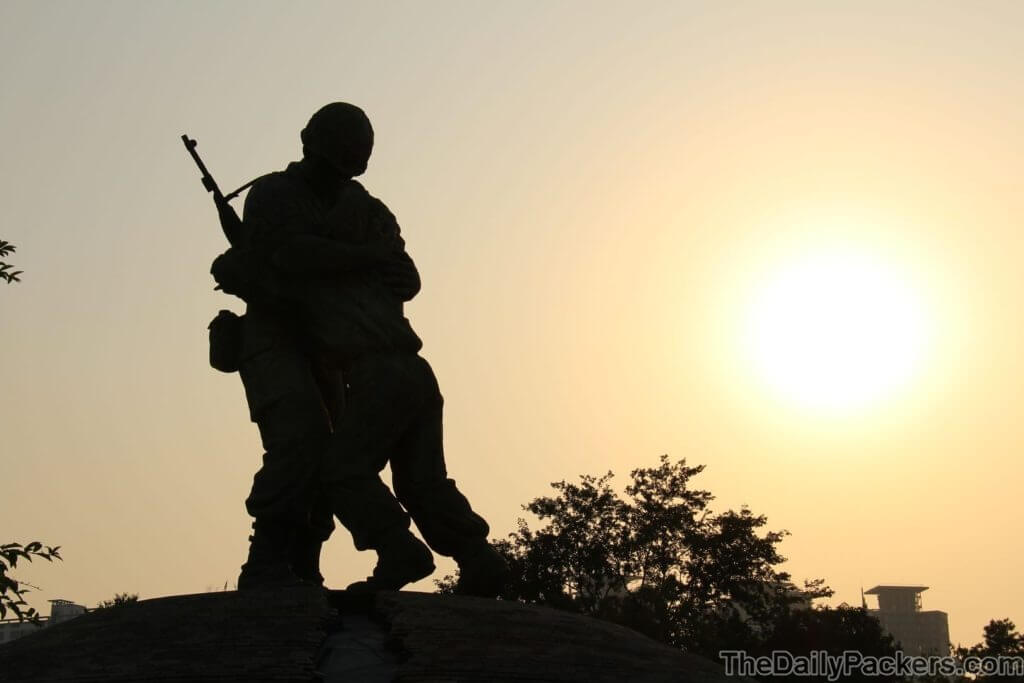
Inside, you’ll find detailed exhibitions on Korea’s military history, from ancient battles to the Korean War and beyond. The displays include historical documents, personal stories, and multimedia presentations, making it both educational and immersive.

Even if military history isn’t your main interest, the outdoor exhibition space is a must-see. It features a huge collection of decommissioned tanks, warplanes, helicopters, and even a naval destroyer, making it fascinating for all ages.
Tip: The museum is free to enter, and it’s a great stop on a rainy day or if you want a deeper understanding of Korea’s resilience and modern identity.

Walk Through History at Bukchon Hanok Village
Bukchon Hanok Village is one of the most iconic places to visit in Seoul. Nestled between Gyeongbokgung and Changdeokgung Palaces, this traditional Korean village offers a rare glimpse into a 600-year-old urban landscape, right in the heart of the capital.

As you wander through the narrow alleys lined with beautifully preserved hanok (traditional Korean houses), you’ll feel like you’ve stepped back in time. Many of these hanoks are still functioning as homes, while others have been transformed into craft workshops, cultural centers, guesthouses, and teahouses.

Take your time to enjoy the peaceful atmosphere, observe the architectural details, and pause for a cup of traditional tea in one of the small local cafés tucked between the homes. It’s also a great area to try on hanbok (traditional clothing) if you want a cultural experience and some great photo opportunities.

Admire the Views from Namsan Seoul Tower (N-Seoul Tower)
Officially named the YTN Seoul Tower, but more commonly known as Namsan Tower or Seoul Tower, this iconic structure rises 236 meters above the city and is the second-highest point in Seoul. Located atop Namsan Mountain, it’s one of the most recognizable landmarks in the city and a popular spot for locals and tourists alike.

You can hike, take a bus, or ride the cable car to reach the base of the tower. The area around the tower is beautiful, especially at sunset, offering panoramic views of the city skyline without even having to go up.

While it is possible to visit the observation deck at the top for a 360° view of Seoul, we personally found it too crowded, and the wait was long. Unless you’re determined to tick it off your list, we recommend just hanging around the tower area, enjoying the view from the platforms, and soaking in the atmosphere.

Tip: Don’t miss the famous “Locks of Love” fence nearby where couples leave padlocks as a symbol of their love.

Experience Dongdaemun History & Culture Park at Night
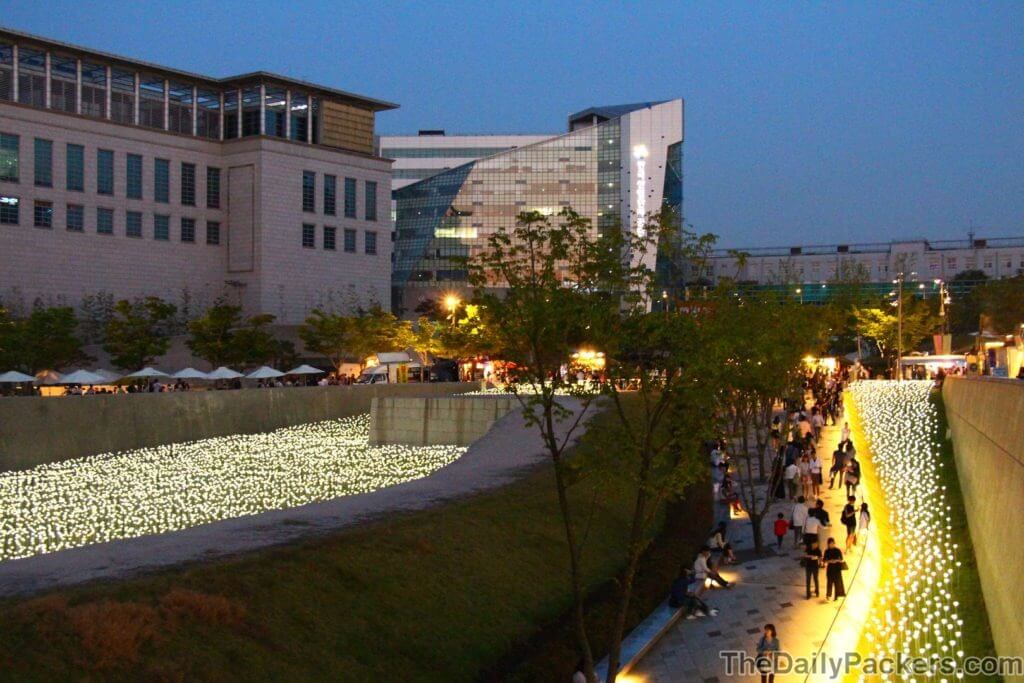
Dongdaemun History & Culture Park is one of the most unique and futuristic places to explore in Seoul — and it becomes even more magical after dark. At night, the area transforms into a glowing light garden, with illuminated installations, LED roses, and ambient lighting that gives the entire complex a surreal, dreamlike feel.
The park is home to the iconic Dongdaemun Design Plaza (DDP), a curvaceous architectural wonder designed by Zaha Hadid. Its flowing lines and reflective surfaces make it a popular spot for nighttime photography. Locals and travelers gather here to walk around, relax on the open lawns, or simply enjoy the vibe of the city at night.
Tip: Grab some snacks or street food from nearby vendors and enjoy a peaceful evening stroll through the light displays. It’s a great way to wind down your day in Seoul.
Additional things to do
If you have extra time or simply want to see more sides of Seoul, here are a few additional experiences that are definitely worth considering:
- Shop in Myeongdong: Myeongdong is one of Seoul’s busiest shopping districts, perfect for beauty lovers, fashion hunters, and street food fans alike. You’ll find global brands, K-beauty products, and dozens of local boutiques — plus enough street snacks to keep you fueled for hours.
- Visit Changdeokgung Palace: A UNESCO World Heritage Site, Changdeokgung is known for its beautiful Secret Garden (Huwon), which you can only visit with a guided tour. The palace itself is less crowded than Gyeongbokgung, offering a more peaceful atmosphere to appreciate traditional Korean architecture.
- Wander through COEX Aquarium: Located inside the massive COEX Mall in Gangnam, this is one of the largest aquariums in South Korea. It’s home to more than 650 species and includes themed zones that are fun for both adults and kids — perfect for a rainy day in Seoul.
- Step into Bongeunsa Temple: Right across from the COEX Mall, Bongeunsa offers a calm retreat from the city buzz. This centuries-old Buddhist temple features beautiful wooden halls, colorful lanterns, and an impressive 23-meter-tall statue of the Maitreya Buddha.
- Hike Bukhansan National Park: If you’re up for something more active, head to Bukhansan National Park for a dose of nature. Just a short subway ride from central Seoul, this park offers excellent hiking trails with sweeping views over the city. Perfect for a breath of fresh air and a different perspective of Seoul.
Our 3-day Seoul Itinerary
Day 1 – Arrival & First Impressions
- Arrive in Seoul and settle into your accommodation
- Explore Yeongdogyo: Wander around this vibrant local district along the river, visit traditional markets, and enjoy a casual dinner in one of the many small restaurants. It’s a laid-back introduction to everyday life in Seoul and a great place to stretch your legs after your journey.
Day 2 – Art, Culture & History
- Ihwa Mural Village: Start your day walking through this colorful, artsy neighborhood filled with murals, sculptures, and a creative community vibe.
- Gyeongbokgung Palace: Visit the most iconic royal palace in Seoul. Don’t miss the changing of the guard ceremony and take time to explore the vast grounds.
- Statue of King Sejong: Learn about one of Korea’s most revered kings at Gwanghwamun Plaza and check out the lively plaza around the statue.
- Ssamziegil in Insadong: End your day in this artsy shopping complex full of galleries, local crafts, tea houses, and snack spots. Perfect for finding unique souvenirs.
Day 3 – Memory, Tradition & Views
- The War Memorial of Korea: A fascinating and moving museum where you’ll gain deeper insight into Korea’s modern history.
- Bukchon Hanok Village: Wander through traditional hanok homes and peaceful alleys that give a glimpse into 600 years of urban Korean life.
- N Seoul Tower (Namsan Tower): Finish your trip with a visit to this iconic tower. Whether or not you go to the top, the area around the tower offers beautiful views and a romantic vibe, especially at sunset.
Day 4 – Departure
- Take one last stroll or grab a final Korean meal before heading to the airport.
You may also like
About the authors
We are Alex and Tina, a French-Serbian couple who met in China back in 2014. We spent three incredible years there before making France our home. Our shared passion for travel has been the heartbeat of our relationship for over 12 years, taking us across 44 countries and counting.
We launched TheDailyPackers in 2019 as a way to document our adventures. In 2026, we reached a major milestone by officially turning our blog into our full-time job. While we are still growing toward financial independence through this platform, every article we write is fueled by our mission to make your voyages easier through in-depth guides, honest advice, and the lessons we’ve learned from our own mistakes.
Our journey has not been without its storms. In 2023, our world changed forever when our first son, Poppy, was stillborn on November 25th. It was, and remains, the hardest chapter of our lives. In 2025, we were blessed with our second little boy, Milo. He has since joined our traveling tribe, and you’ll be seeing him—and the reality of traveling with a little one-on the blog more and more.
We hope to inspire you to explore the world with curiosity and resilience. Thank you for being part of our story.
You may also like those related posts
Hanoi train Street: Still Worth It in 2025?
Hill of Crosses: Lithuania’s most incredible site in 2025
Hellbrunn Palace and Gardens: A Complete Visiting Guide
7-Day Yunnan Itinerary: Discover China’s Southwest Gem
7 best things to do in Shangri-La, China, in 3 days or more
Arnold Schwarzenegger Museum: A Must-Visit for Fans of the Terminator
7 best things to do in Fortaleza, Brazil, in 2 days
Walk With Penguins in Ushuaia: Everything You Need to Know
Pssst, did you know that…
If you purchase something through our links, we earn a small fee. However, you still pay the same. Win-win! And one day we may get to be full-time travel bloggers =)
Find Hotels with Booking.com
Do Yoga with KVY
Buy us a Coffee
Rent a car with DiscoverCars
Find Attractions with GetYourGuide
Find Flights with Expedia
Buy an eSIM with Airalo
Get insured with World Nomads
Get ready with Amazon.com