
Introduction
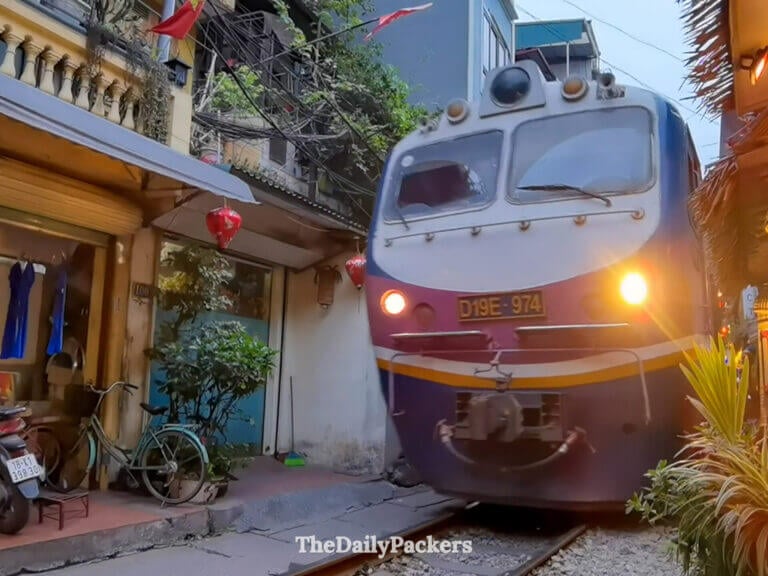
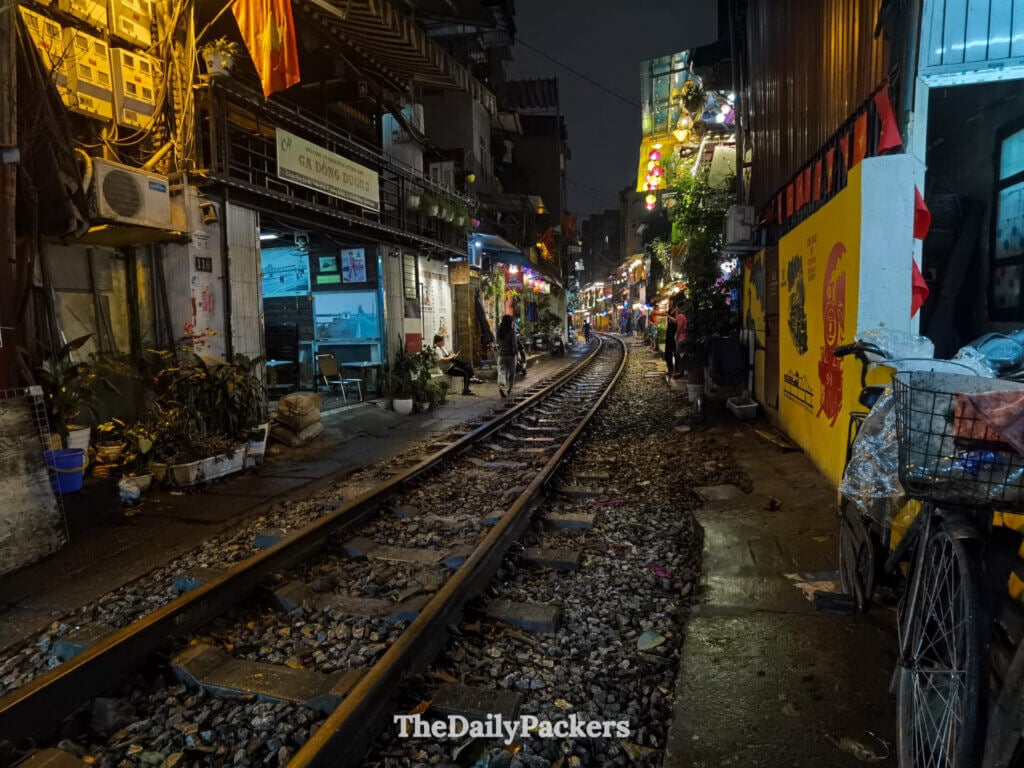
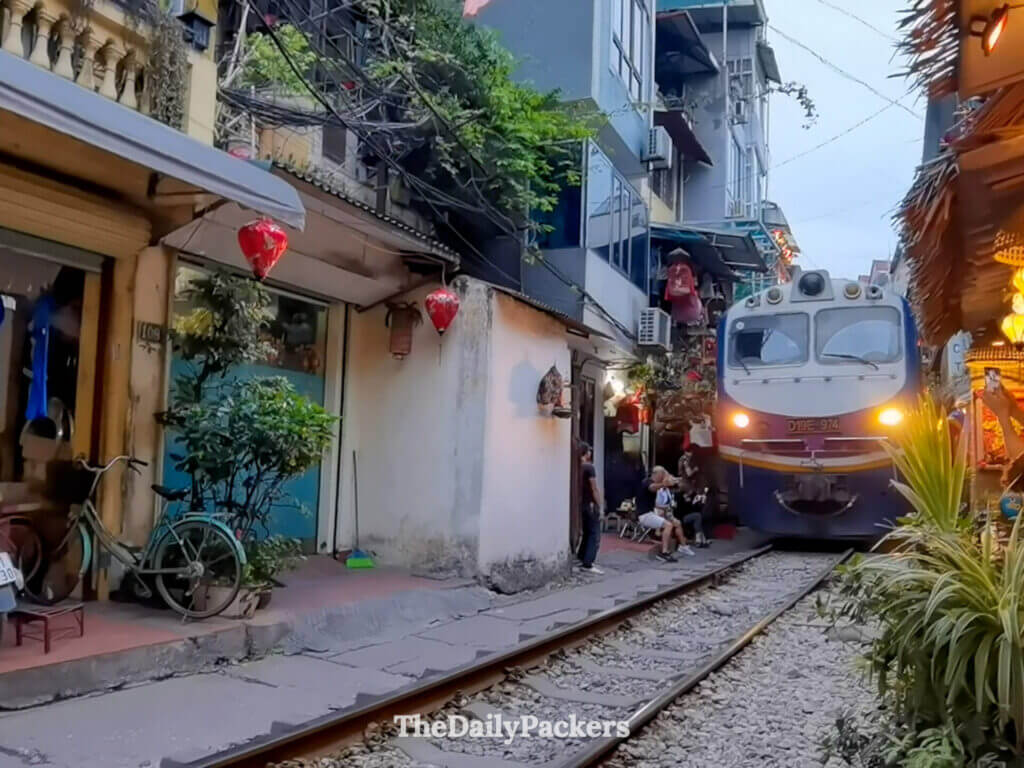
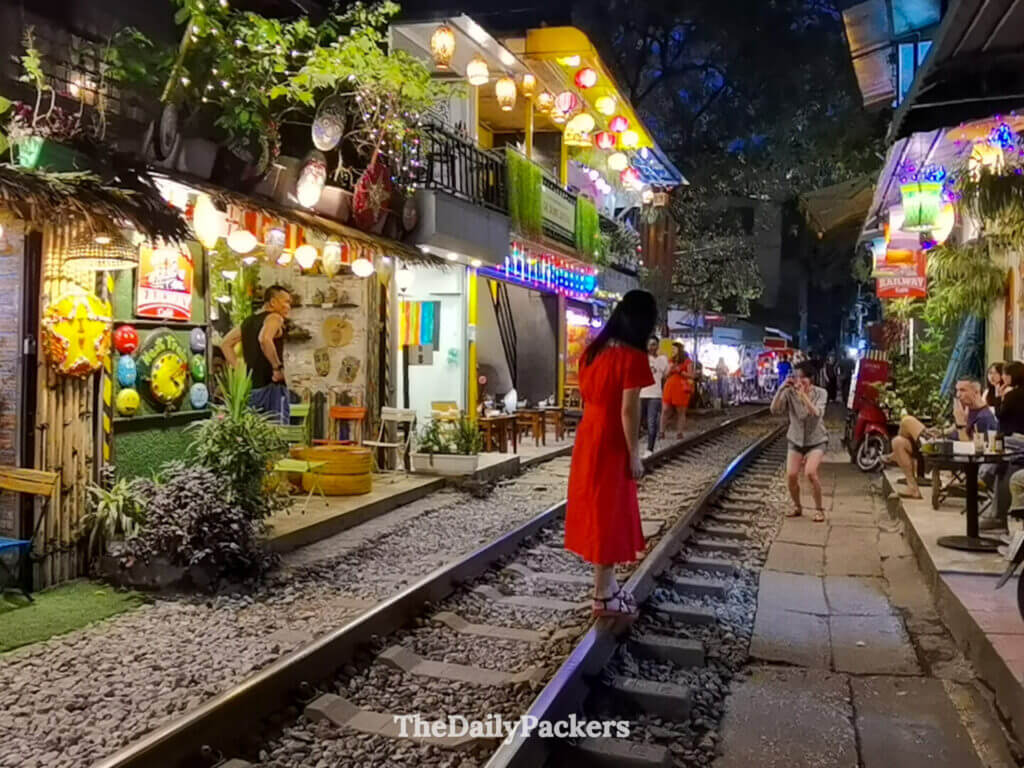
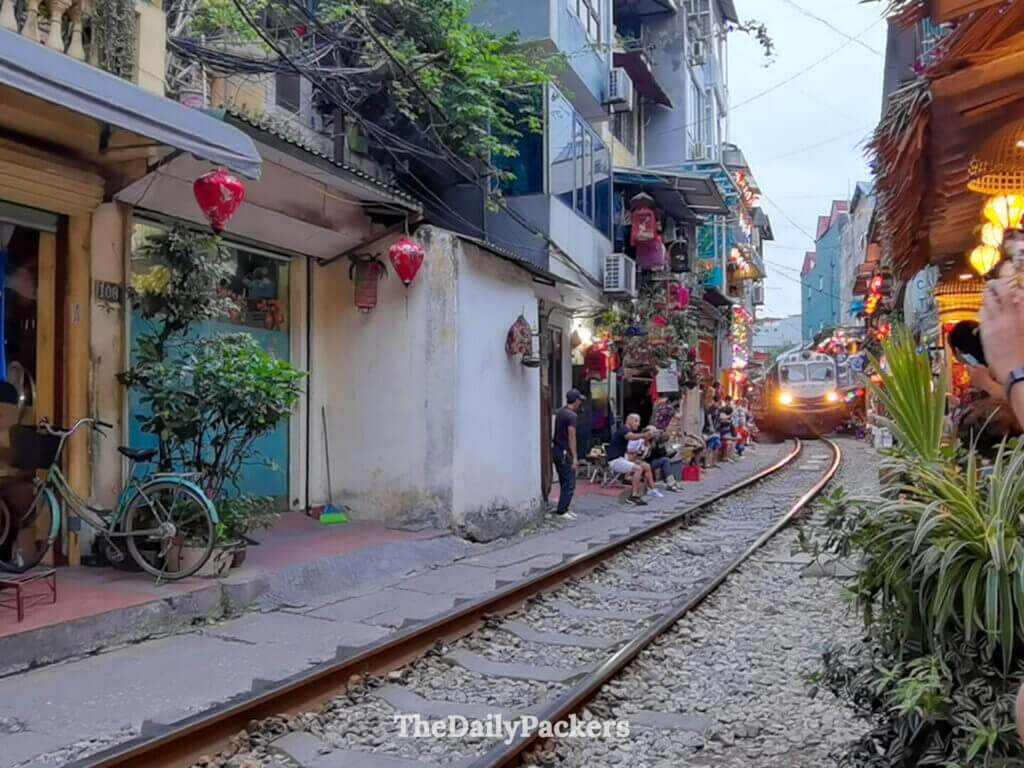
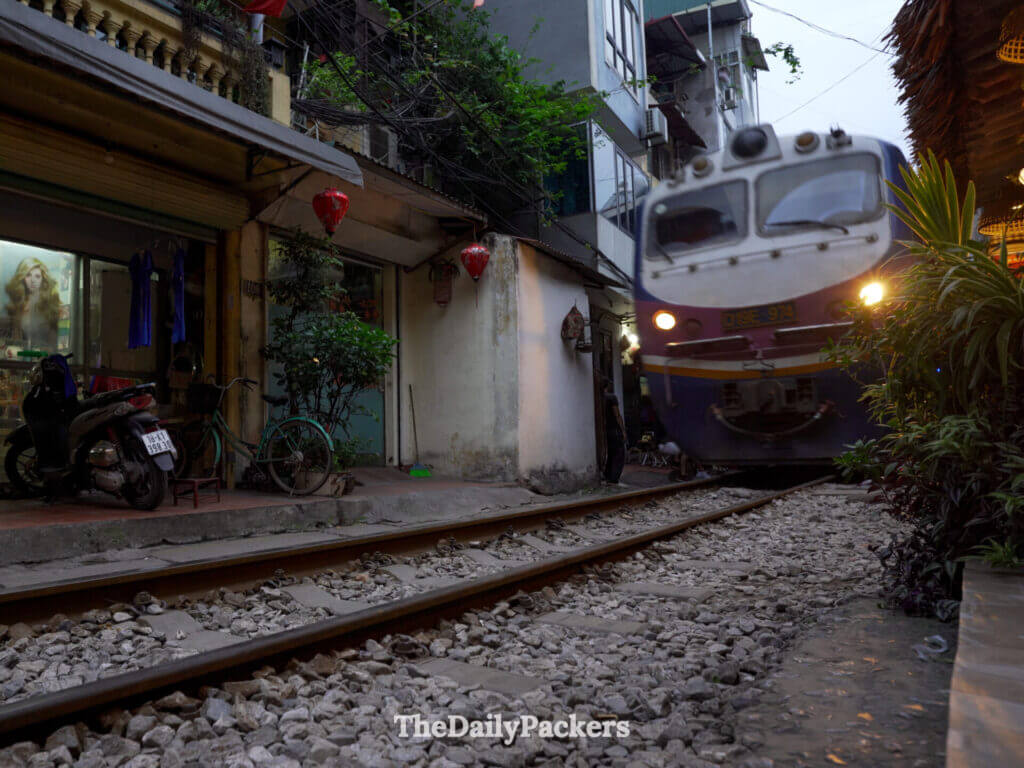
The Hanoi Train Street is one of the most famous spots in Hanoi and Vietnam, where a working railway cuts through a narrow residential street lined with cafés and small shops. Watching a train squeeze past just a few centimeters from the buildings is both thrilling and surreal, making it one of the most photographed spots in the city.
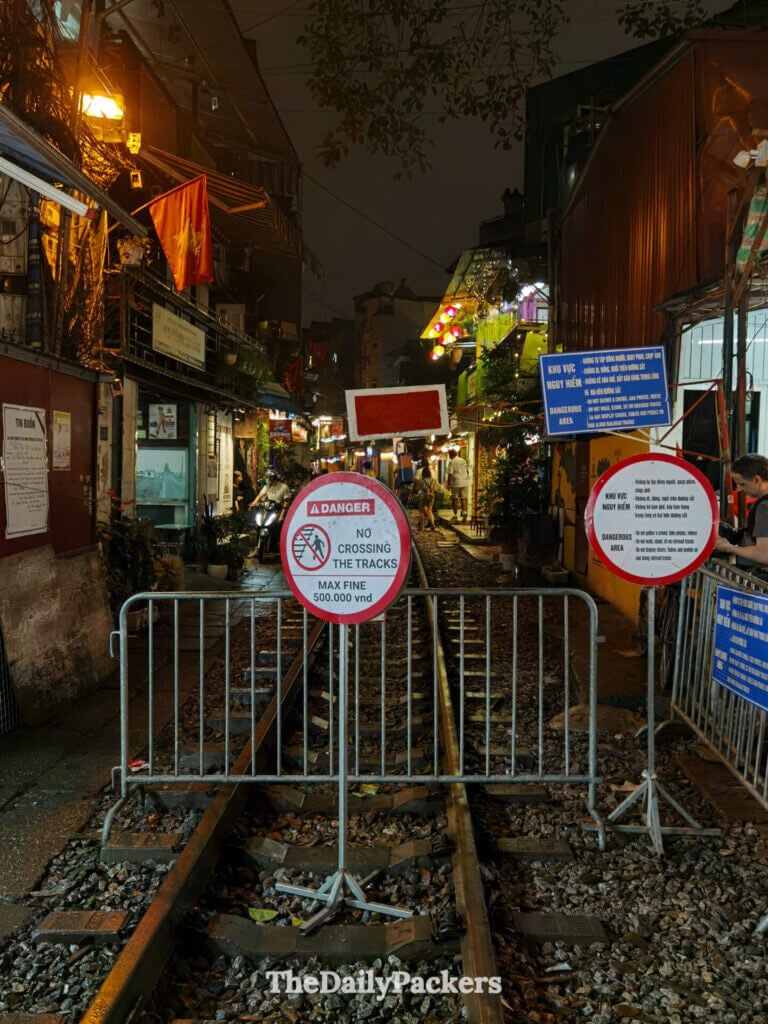
However, in recent years, authorities have closed public access to the tracks due to safety concerns. This means visiting has become a bit tricky — you can’t just walk in anymore. The only way to experience it up close is usually by going through a local café owner who will “escort” you inside, often in exchange for buying a drink.
It’s still possible to enjoy the atmosphere from the ends of the street or nearby viewpoints, but if you want the full experience, plan ahead and connect with a café that’s allowed to host visitors.
Hanoi Train Street At a Glance
Hanoi Train Street isn’t something you can just walk up to anymore; it takes a bit of planning, but it’s worth it once you know how it works.
- The Vibe: A narrow residential street where trains pass just inches from café tables. Loud, thrilling, and very “only in Vietnam.”
- Access: Public access to the tracks is closed. You need to book a table at one of the trackside cafés to get in.
- Cost: No entrance fee, just the price of a drink, generally 30,000 to 60,000 VND (€1 to €2).
- Best Time to Go: Arrive 30 to 45 minutes before a scheduled train, weekday evenings or weekend mornings tend to be less packed.
- How Long to Stay: An hour is plenty for one or two train passes, but the atmosphere is worth lingering in.
- Booking Ahead: Message your chosen café in advance, some take a few days to respond, especially on weekends.
Why visit?
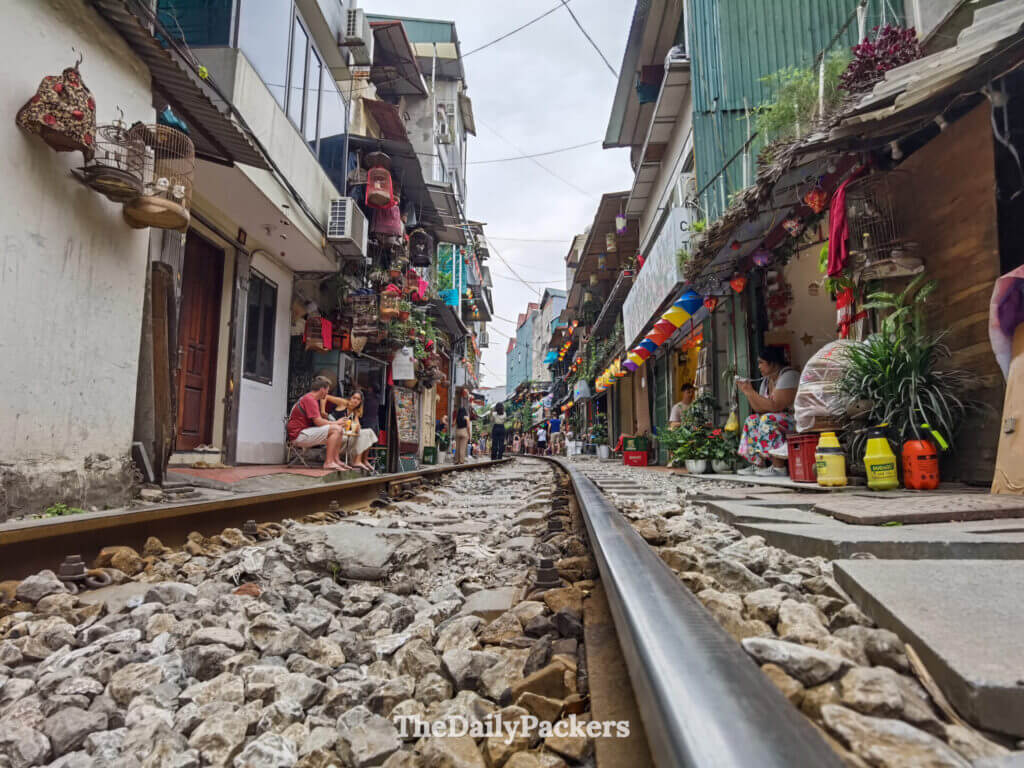
Hanoi Train Street offers a mix of thrill, curiosity, and everyday Hanoi life, all packed into one narrow strip. It’s not every day you see a train weave between houses with barely any room to spare, while just steps away locals are cooking dinner, chatting on their doorsteps, or hanging laundry above the tracks.
Even though most of the street is now officially off-limits without a café booking, that’s actually part of what makes it special: you’re not just watching a spectacle, you’re sitting inside someone’s neighborhood while it happens.

Here are all your accommodation options in Han
From your table, you can sip a coffee or a cold beer and wait for the rumble that means a train is coming. The ground shakes slightly, everyone leans back, and then it’s gone in a few loud, exciting seconds. It’s a proper “only in Vietnam” moment, and one of the more memorable things you can do in Hanoi.
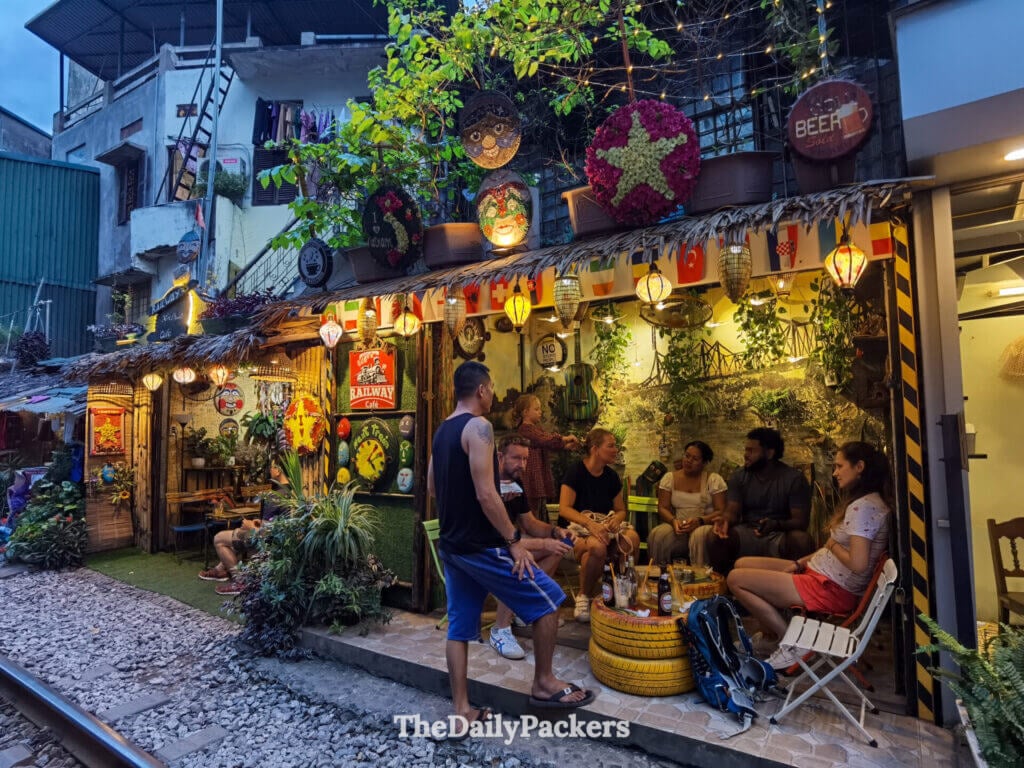
We went in not quite knowing what to expect, and honestly, the wait between trains ended up being just as fun as the trains themselves — we spent almost an hour chatting with a family from Singapore and a couple visiting from Dubai, all of us squeezed onto the same narrow strip of café stools.

How to get there
Hanoi Train Street is located in the Old Quarter, with the most popular accessible section near Phùng Hưng Street, not far from Hanoi’s main railway station. Since the area is now partially closed to the public, you’ll need to enter through one of the cafés that line the tracks. Many of these cafés have direct access to the street and will allow you to stay as long as you order something.

If you’re already in the Old Quarter, it’s an easy 10–15 minute walk. Otherwise, the fastest way to get there is by taking a Grab (Vietnam’s ride-hailing app) or a taxi. Simply type “Hanoi Train Street” into the app, and select the Phùng Hưng entrance.
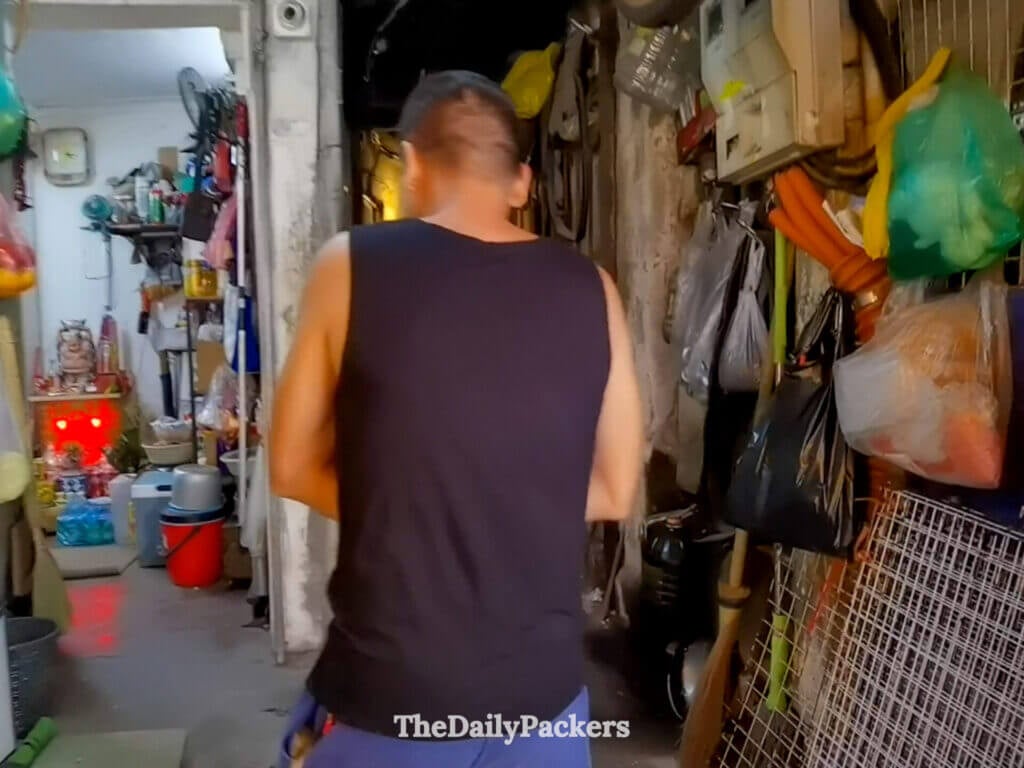
Since public access is now restricted, the best way in is through one of the cafés along the tracks that have official permission to host visitors. We went to Railway Tuan Café (The Original) — and getting in was an experience in itself.
We texted the owner of Railway Coffee on WhatsApp to see when would be the best time to come, and once there, he came to pick us up and personally guided us into the street through the kitchen of another bar.


When to visit
The whole point of Train Street is catching a train passing just inches from the cafés, so timing your visit around the schedule matters more here than at most attractions. The street has its own charm at any hour, but you’ll want to plan around a train time if you want the full experience.
Trains generally run several times a day. Schedules can shift slightly, but these are the times you can typically expect:
Weekdays (Monday to Friday):
- Morning: 8:30, 9:30, 11:50
- Afternoon/Evening: 3:15, 7:50, 9:15, 9:30, 10:00
Weekends (Saturday & Sunday):
- Morning: 6:00, 7:15, 9:30, 11:50
- Afternoon/Evening: 3:30, 5:30, 7:30, 7:50, 9:15, 9:30, 10:00
Aim to arrive 30 to 45 minutes before the train time you’re targeting. That gives you time to settle in, order a drink, and watch the street shift into “train mode” — tables get pulled back, cameras come out, and there’s a nice bit of anticipation building before the first rumble.
We visited on a Sunday and got lucky with two passes in one afternoon, which gave us more than enough time to relax, chat with the other travelers at the café, and not feel rushed between trains.
How to Visit
Hanoi Train Street has been officially closed to casual visitors for safety reasons, so the only way to get in is to be hosted by one of the cafés along the tracks. Once you’re seated, you’re free to enjoy the view and watch the trains pass by.
We arranged our visit through Railway Tuan Café (The ORIGINAL). After calling the owner, he came to meet us and walked us inside the restricted area. Once settled at the café, we were given a good view of the tracks, and it turned into much more than just a sightseeing stop — it became a social moment. We met a lovely family of three living in Singapore (an Australian father, a German mother, and their young daughter) as well as a couple from Spain based in Dubai.

Since it was a Sunday, you’ll often get lucky with two passes in an afternoon rather than one, though this can vary. Between trains, we had two beers and a juice, which came to about 110,000 VND (roughly €3.60) total, and we were in no rush to leave.
If you’re planning your own visit, book or message a café ahead of time to confirm access, especially on weekends when it gets busiest. Arrive early enough to grab a good seat, order your drink, and settle into the wait, the mix of everyday life and adrenaline is what makes this place special.


Tip: Check the Hanoi: Street Food Tour with Train Street & Hidden Alleyways
Tickets & Opening Hours
There’s no official entrance fee for Hanoi Train Street since access only happens through the cafés lining the tracks. Ordering a drink is essentially your “ticket” in. Expect to pay between 30,000 and 60,000 VND (roughly €1 to €2) for a coffee, juice, or beer.
If you’d rather not deal with contacting a café yourself, you can also experience Hanoi Train Street as part of a guided street food tour, which typically includes access to the tracks along with several food stops around the Old Quarter. It’s a good option if you want context from a local guide and don’t want to worry about arranging access on your own.
Here’s a breakdown:
- Café Access – Order a drink and find a seat trackside; cafés often post train timetables and will alert you when a train’s coming, but you need to get in touch with them, and it can take a few days for them to answer.
- Guided Street Food Tour – Combines culinary delights and the thrill of Hanoi Train Street. Perfect if you’d like to go deeper into culture—and keep everything vegetarian-friendly.
Cafés generally keep standard opening hours, from morning until evening, so you can plan your visit around the train schedule and your appetite.

Is it Worth It?
Yes, without a doubt! Hanoi Train Street is one of those places that lives up to the hype. There’s nothing quite like sitting on a tiny stool, sipping a coffee or a cold beer, and feeling the rush of a train passing just a couple of meters away. It’s both a little nerve-wracking and completely fascinating.
Beyond the thrill, it’s also a great way to get a glimpse of daily life in Hanoi. Locals chat outside their doors, kids play in the alley, laundry hangs above your head—it’s a mix of chaos and charm that somehow works perfectly.
Access has become trickier in recent years due to safety rules, but it’s still possible to visit if you go through one of the cafés along the tracks. They’ll often guide you in, make sure you’re safe, and even give you the train schedule. If you want an even smoother experience, you can join a tour like the Hanoi Street Food Tour with Train Street & Hidden Alleyways, which includes great eats and guaranteed access.
For us, it wasn’t just about the train—it was about the atmosphere, meeting people from all over the world, and soaking up this little slice of Hanoi life. It’s busy, it’s loud, and it’s completely unforgettable.
Tip: Check the Hanoi: Street Food Tour with Train Street & Hidden Alleyways
Where to stay
If you’re visiting Hanoi Train Street, it makes sense to stay in or near the Old Quarter so you can walk to most things. Three nights in Hanoi is generally enough time to see the main sights, dig into the street food scene, and still have a bit of downtime.
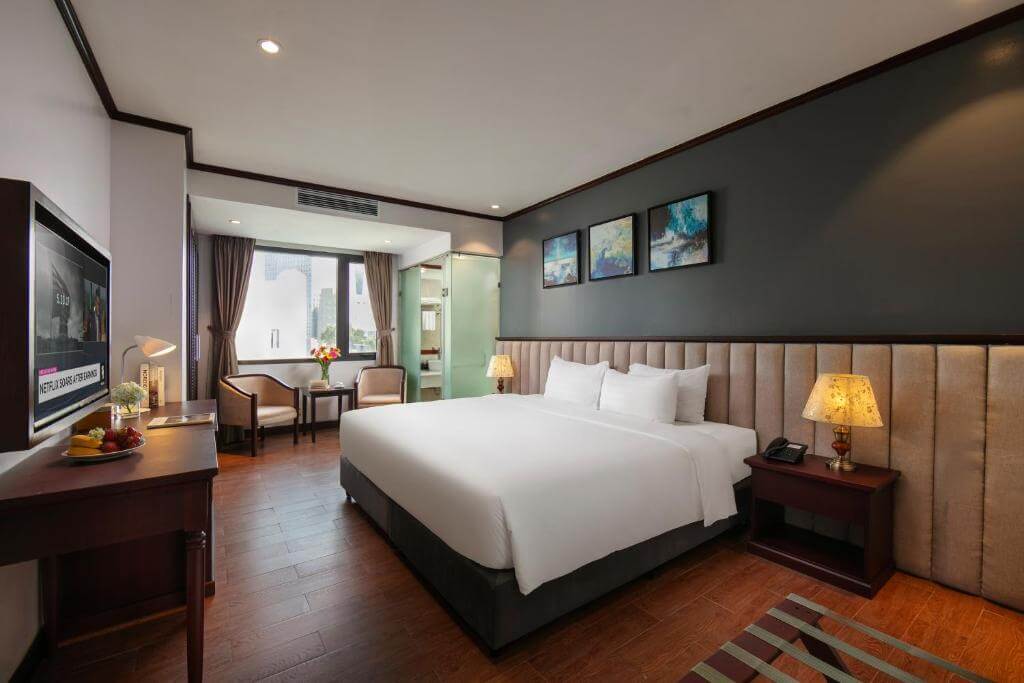
(€) La Passion Premium Cau Go – A solid, well-located pick in Hoan Kiem, close enough to walk to Hanoi Train Street and the lake, with the kind of attentive service that makes up for the modest price tag.
(€€) MAY DE VILLE Corner Hotel – Spacious rooms and modern facilities, just a short walk from Hoàn Kiếm Lake and Hanoi Train Street itself.
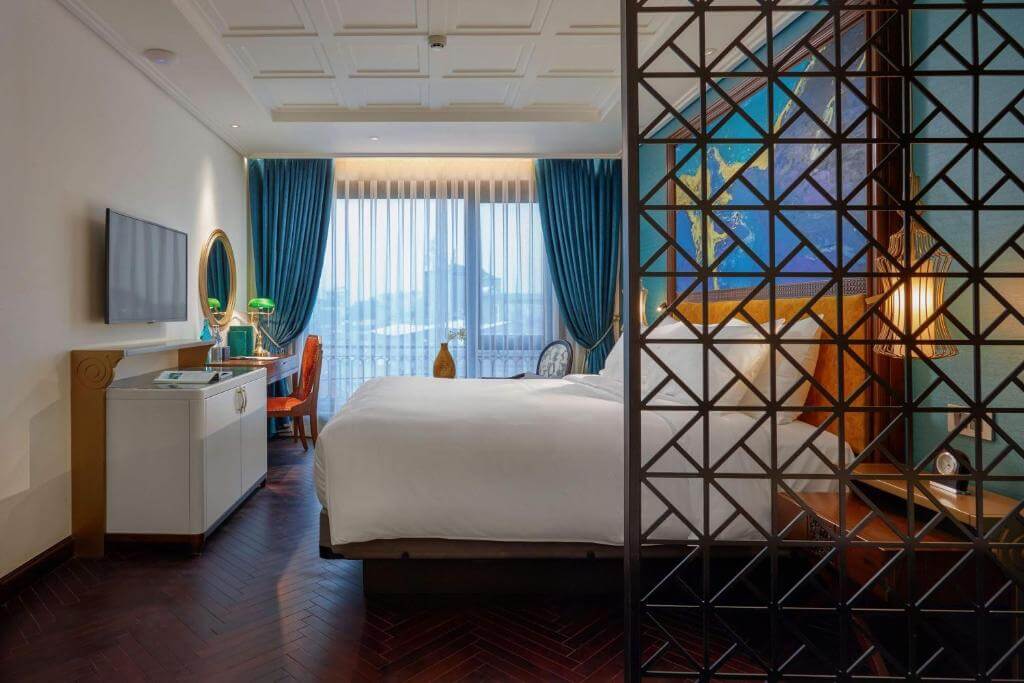
(€€€) Peridot Grand Luxury Boutique Hotel – Stylish and elegant, with a rooftop pool and bar if you want to treat yourselves after a day of exploring.

About the authors
We are Alex and Tina, a French-Serbian couple who met in China back in 2014. We spent three incredible years there before making France our home. Our shared passion for travel has been the heartbeat of our relationship for over 12 years, taking us across 44 countries and counting.
We launched TheDailyPackers in 2019 as a way to document our adventures. In 2026, we reached a major milestone by officially turning our blog into our full-time job. While we are still growing toward financial independence through this platform, every article we write is fueled by our mission to make your voyages easier through in-depth guides, honest advice, and the lessons we’ve learned from our own mistakes.
Our journey has not been without its storms. In 2023, our world changed forever when our first son, Poppy, was stillborn on November 25th. It was, and remains, the hardest chapter of our lives. In 2025, we were blessed with our second little boy, Milo. He has since joined our traveling tribe, and you’ll be seeing him—and the reality of traveling with a little one-on the blog more and more.
We hope to inspire you to explore the world with curiosity and resilience. Thank you for being part of our story.
You may also like those related posts
Hanoi Travel Guide: Best Things to Do in 3 Days or More
Climbing Mua Cave in Ninh Binh: Vietnam’s Best Viewpoint
Tam Coc Boat Tour: Vietnam’s Famous Ha Long Bay on Land
Hue to Hoi An by Sleeper Train: Is 1st Class Worth It?
2-Week Vietnam Itinerary: The Best of North & Central Vietnam
Cat Cat Village: SaPa’s Most Charming Traditional Village
SaPa Travel Guide: Best Things to Do in 4 Days
Hoi An Travel Guide: 16 Best things to do in 4 days
Pssst, did you know that…
If you purchase something through our links, we earn a small fee. However, you still pay the same. Win-win! And one day we may get to be full-time travel bloggers =)
Find Hotels with Booking.com
Do Yoga with KVY
Buy us a Coffee
Rent a car with DiscoverCars
Find Attractions with GetYourGuide
Find Flights with Expedia
Buy an eSIM with Airalo
Get insured with World Nomads
Get ready with Amazon.com